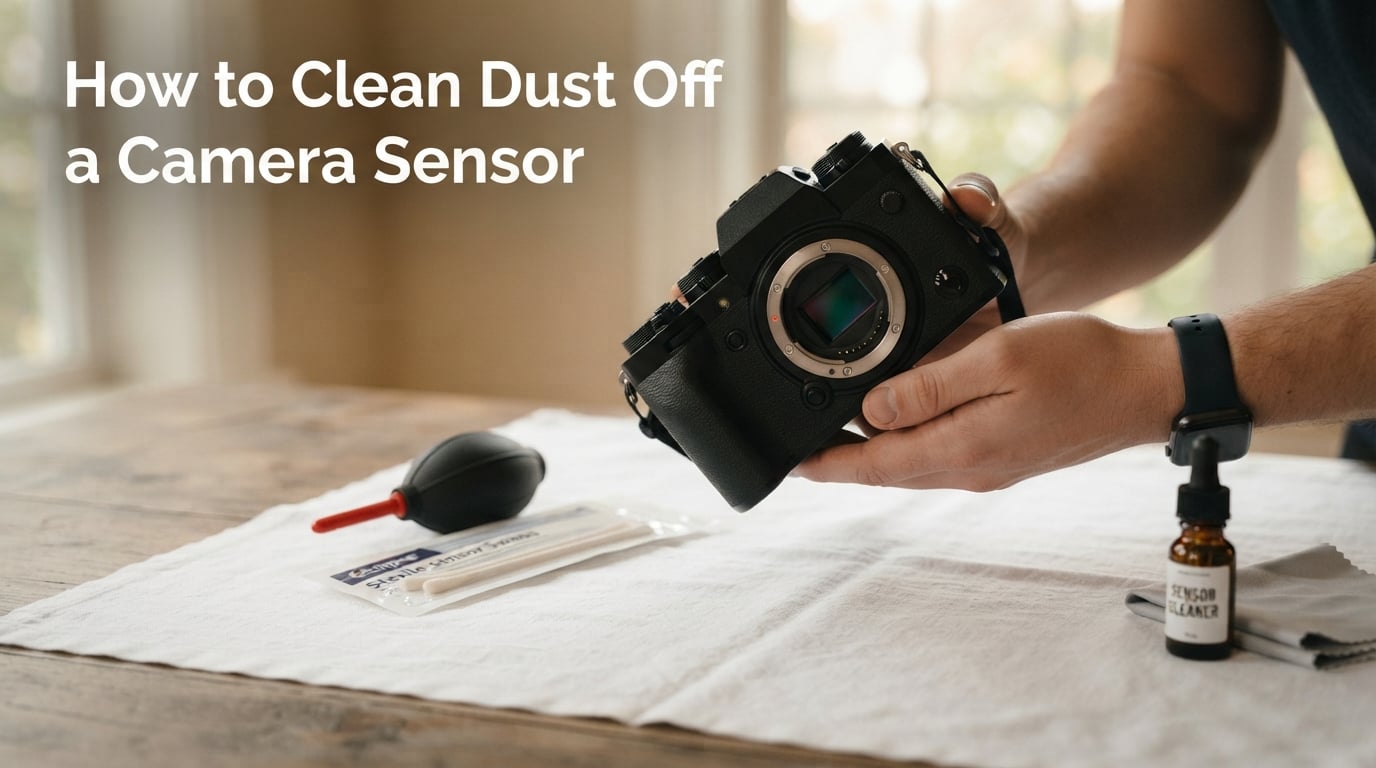
How to Clean Dust Off a Camera Sensor (September 2026)
I noticed the problem the day I shot a wedding at f/11. Every blue-sky frame had three stubborn dark dots…

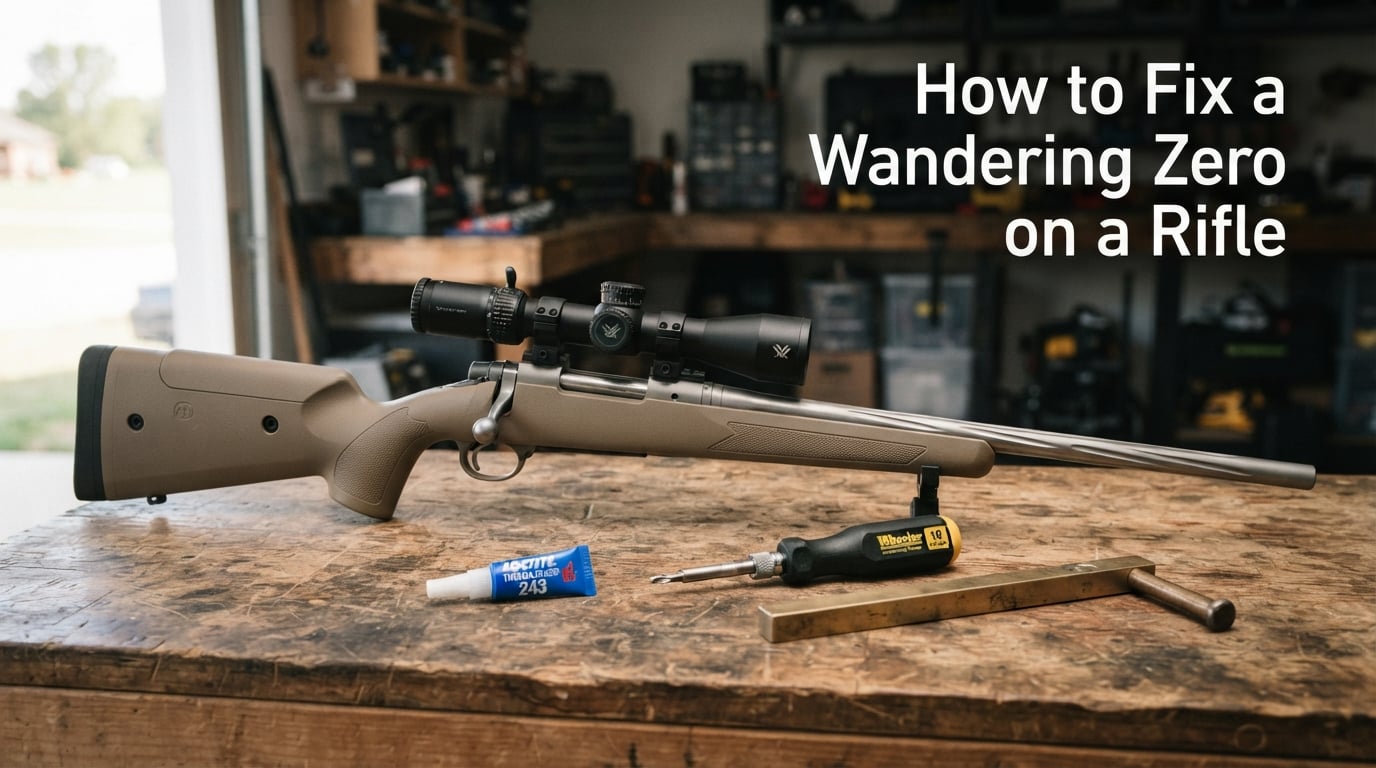
A wandering zero is what shooters call it when a rifle’s point of impact (POI) drifts between trips to the range — or sometimes between individual shots in the same session — even though the scope and mounts have not been touched. The reticle still lines up with the same hold on the target, but the bullet lands somewhere else. In this guide, I’ll walk through how to fix a wandering zero on a rifle using a diagnostic-order method I’ve used on bolt-action precision rigs, AR-platform hunting rifles, and semi-auto precision setups.
I started chasing wandering zeros the hard way: I sent back a perfectly good scope, only to discover the real problem was a pair of loose rings and a dirty set of receiver threads. The frustration was avoidable. Most wandering zeros come from a handful of mechanical causes that you can rule out on the bench with a torque wrench, a tube of thread locker, and about an hour of focused work. If you’ve also been struggling with a rifle that just won’t hold zero, this is the process I now follow before I touch anything expensive.
Below is a complete troubleshooting workflow that takes you from “my zero keeps moving” to a rifle that holds point of aim to point of impact cold and hot, session after session. The diagnosis always runs in the same order: cheapest, most likely mechanical cause first; ammunition and environmental causes second; the scope itself last.
A wandering zero means your rifle’s point of impact changes between range sessions — or between shots within a session — while the scope dials, mounts, and rings remain untouched. It is not the same as a poor group or a “flyer.” A flyer is one cold-bore round that opens a group; a wandering zero is the whole group relocating over time.
Three behaviors almost always mean you have a wandering zero and not just bad ammunition:
If your groups simply scatter or get larger, you may be looking at ammunition consistency, shooter error, or mirage. If the group physically moves, you’re chasing mechanical zero drift. That distinction is the single most important idea behind fixing a wandering zero — and it’s the one that separates a successful bench session from buying parts you don’t need.
Shooters on forums from Snipers Hide to r/longrange and r/precisionrifles consistently rank these seven causes at the top of the wandering-zero list. I work through them in this exact order because each step rules out a variable and adds information to the next test.
Of those seven, the first four are mechanical and bench-fixable by anyone with a torque wrench. Five and six look like zero drift but are actually environment and ammunition. Seven is the rare case where you do send the scope back. If you’re new to this, working through this list in order is the fastest path to a fix.
The mechanical group is where 80% of wandering-zero fixes happen. Every shooter should be able to check these on the bench before paying for a gunsmith or shipping a scope out for warranty work.
Scope rings are the single most common wandering-zero cause I see. The standard symptom is a zero that walks slowly in one direction over the course of a magazine, then returns to roughly the original point of impact after the rifle sits overnight. That pattern almost always means one or more ring screws are not holding the clamp load they should.
The mistake I see most often is using a 1/4-inch drive screwdriver bit with no torque control. Screws feel “tight” at maybe 40 inch-pounds when they need 15–25, and the clamp load is whatever the springs in the threads give you, not what the spec calls for. A quality inch-pound torque wrench (a Wheeler FAT Wrench, a Fix It Sticks system, or a Real Avid Torque kit) takes this guesswork out. For most tactical rings, the cap screws land between 15 and 25 inch-pounds, and you tighten them in a star pattern, not in sequence.
Scope bases bolt to the receiver with small screws — #6-48 or #8-40 are common — that live in pre-tapped holes. Those holes are easy to over-oil during a cleaning session, and oil under the screw head turns into pressure that backs the screw off under recoil. The rifle shoots a perfect first three-shot group, then starts walking. By the end of the magazine the group is two MOA away.
Fix it by removing the bases, chasing each receiver thread with a proper cleaning tap (or a Q-tip and acetone for the casual owner), and re-installing with thread locker. Most scope base screws want around 15 to 25 inch-pounds of torque and a drop of medium-strength Loctite 243. If you skip the cleaner and skip the Loctite, you will be back at the bench in two months.
Even premium rings come off the CNC with tiny machining variations. If the ring halves don’t sit perfectly flat against the scope tube, the tube gets stressed asymmetrically and the internal erector assembly can bind or sit unevenly. That’s a mechanical zero drift waiting to happen. Lapping the rings with a brass lapping bar and a fine-grit compound flattens both halves so the tube sits in them like a piston in a cylinder.
It’s a 20-minute job and one of the highest-leverage bench tasks you can do. Most precision rifle builders lap every set of rings before they go on the rifle. If you’ve never lapped before, watch one video before you start — it’s a simple procedure but it’s worth seeing the technique once.
Cold bore and hot bore mean two different things, and confusing them is how shooters misdiagnose a wandering zero as a barrel defect.
The cold bore shot is the very first round through a barrel that has been sitting long enough to reach ambient temperature — usually overnight. The hot bore group is fired once the barrel has been warmed up with several fouling rounds. Most rifles shoot cold and hot POI slightly differently because the bore geometry changes as the metal heats. A 1-MOA cold-bore shift on a hunting rifle is normal and is not a wandering zero.
What you actually want to compare is your cold-bore group session to session, not cold to hot. The bench diagnostic goes like this:
This is also where anti-cant devices earn their keep — even a half-degree of rifle cant will move POI more than most shooters realize, and it looks exactly like wandering zero on target.
Once you’ve eliminated loose rings and dirty threads, the next tier of causes hides in the round itself or the environment around the rifle.
Velocity variation is the most overlooked wandering-zero cause I see on handload and budget factory ammo threads. A bullet that leaves the muzzle 30 fps faster hits higher and to one side than one that leaves 30 fps slower. If your extreme spread is 40–60 fps across a five-shot string, the group will physically move in a way that looks like zero drift, even with a perfectly mounted scope.
Chronograph three to five lots of the same load and pick the one with the lowest extreme spread. For hunting ammo, you want ES under about 25 fps for consistent cold-bore hits. The shift is not mechanical, but it absolutely looks like a wandering zero to a shooter on the bench.
A brand-new barrel will sometimes shift POI for the first 50–100 rounds as the throat, leade, and lands settle. Forum shooters often describe a “wandering zero” on a fresh custom rifle that’s really just break-in. The fix is patience — fire the break-in schedule your barrel maker recommends, then re-zero once and verify it holds. Don’t chase the zero during break-in; you’ll wear yourself out and you’ll never catch up with the moving target.
Muzzle brakes and suppressors change how the rifle sits in your shoulder and how the barrel vibrates. A heavy suppressor hung off the muzzle can produce real POI shift, especially on a rifle that wasn’t zeroed with the suppressor installed. The fix isn’t mechanical — it’s “zero with the configuration you’ll actually hunt or shoot with.” If you hunt suppressed, zero suppressed.
You don’t need a full gunsmith’s shop to fix a wandering zero, but you do need the right torque control. Screws that hold rings and bases want inch-pounds, not foot-pounds, and the difference between “snug” and “spec” is usually only a few inch-pounds.
The table below covers the torque values you’ll use most often. Always cross-check with your scope and ring manufacturer’s spec sheet — these are good defaults but not universal.
| Fastener | Typical Torque (in-lb) | Notes |
|---|---|---|
| Scope ring cap screws (steel) | 15–25 | Star pattern; snug then final in stages |
| Scope ring cap screws (aluminum) | 10–18 | Lower end for aluminum rings; avoid stripping |
| Scope base screws (#6-48, #8-40) | 15–25 | Medium thread locker; clean threads first |
| Picatinny cross-bolt (one-piece mount) | 30–45 | Per manufacturer spec; check before final |
| Action screws (stock inlet) | 30–65 | Critical — over-torque distorts the action |
| Muzzle brake / suppressor clamp | 20–35 | Per device spec; may include thread locker |
For thread locker, use medium-strength (blue) Loctite 243 for ring and base screws you may want to remove later for service. Use high-strength red Loctite 262 for screws that should never back out under recoil — recoil lug screws and red-dot mount cross-bolts are common examples.
Other tools worth having on the bench: a Wheeler torque screwdriver or Fix It Sticks torque limiter for the small inch-pound range, a brass scope ring lapping kit, a small bottle of acetone or isopropyl alcohol, and a small tube of copper-based anti-seize on the ring exterior if you shoot in wet conditions.
Now that we’ve covered what causes a wandering zero, here’s the bench procedure I follow in order. Each step builds on the last, and each one is reversible if you need to back out and re-test.
If you’d like a deeper walk-through on zeroing after the mechanical fix, our how to zero a rifle scope guide covers the live-fire side of the same workflow.
A mechanical fix doesn’t matter until you’ve confirmed the rifle actually holds zero. The verification step is the part most shooters skip — and the reason they end up back at the bench in a month wondering if the rings tightened properly.
If your zero walks after this, you’ve either missed a mechanical cause or you’re chasing ammo-driven POI drift — both fixable, but the next step is ammo testing, not another ring re-torque.
If you’ve torqued the rings, locked the bases, lapped the ring contact, fired five ammo lots through the rifle, and the zero still walks — there’s a real chance the scope itself is the problem. This is rare, but it happens. Common internal issues include a loose erector spring, a broken tracker wire on a high-magnification zoom, or a reticle mount that was never properly seated at the factory.
The decision guide is short:
If you’re shopping for a replacement scope with a focus on holding zero, our best zero stop rifle scopes roundup walks through models with positive return-to-zero turrets that handle repeat dialing cleanly.
Loose scope rings. Most wandering-zero issues are mechanical, and the number-one mechanical cause is scope ring screws that were never torqued to the correct inch-pound spec. Retorquing in a star pattern with a real inch-pound wrench, and adding medium-strength thread locker to the scope base screws, solves the majority of cases without sending any equipment back.
Yes. Oil, grease, or solvent left in receiver threads acts like a hydraulic jack and lets scope base screws back out under recoil. The fix is to clean each thread with a tap or a Q-tip and acetone, then reinstall the bases with fresh medium-strength thread locker at the correct inch-pound torque.
Most tactical steel scope rings take 15 to 25 inch-pounds on the cap screws, tightened in a star pattern rather than one side at a time. Aluminum rings usually want a lower value, around 10 to 18 inch-pounds. Always cross-check the spec sheet that came with your rings, and use a real inch-pound torque wrench rather than a screwdriver bit.
No, not if the cause is mechanical. Loose rings, dirty threads, and loose bases get worse with recoil, not better. The exception is barrel break-in on a new rifle: the first 50 to 100 rounds can shift POI as the throat and lands settle, and that pattern stabilizes once break-in is complete.
This is normal and is not a wandering zero. Cold-bore and hot-bore points of impact differ on most rifles because barrel geometry changes slightly as the steel heats. A 1 MOA cold-bore shift is acceptable on a hunting rifle. The fix is to zero with the configuration you will actually hunt or shoot with, not to chase the barrel with the scope.
Yes, especially with handloads or budget factory ammo that has a high extreme spread. A 40 to 60 fps spread across a five-shot string moves the group in a way that looks exactly like zero drift. Chronograph several lots and pick the one with the lowest ES and SD, ideally under about 25 fps ES for hunting use.
Mount it on a known-good rifle, fire a cold-bore group, store it for a week, and re-fire. If the zero holds on the second rifle but not the first, your original rifle has the mounting problem. If the zero walks on the second rifle too, the scope itself has an internal issue and is a candidate for warranty or replacement.
A muzzle brake or suppressor can change POI by shifting barrel vibration and how the rifle sits in your shoulder. It is not usually a wandering-zero cause in the mechanical sense — it is more that the rifle is zeroed in one configuration and then shot in another. Always zero with the muzzle device installed if you intend to hunt or shoot with it on.
If you take one thing away from this guide on how to fix a wandering zero on a rifle, take this: most wandering zeros are mechanical, and most mechanical causes are bench-fixable with a torque wrench, a tube of Loctite, and an hour of focused work. Work the diagnostic order from cheapest and most likely to most expensive and least likely. Clean the threads, lap the rings, torque the bases, torque the caps in a star pattern, and verify with a cold-bore check a week later. The scope is almost never the problem on the first pass.
If you want to go deeper on the optics side, our guides on Bushnell rifle scopes, rifle scopes vs red dot sights, and the right rifle sling for your hunting setup are good next reads. The full procedure — diagnose, fix, verify — is the same one we walk through here, and it holds up across every rifle I’ve worked on.