How to Choose a Tactical Flashlight: Complete 2026 September
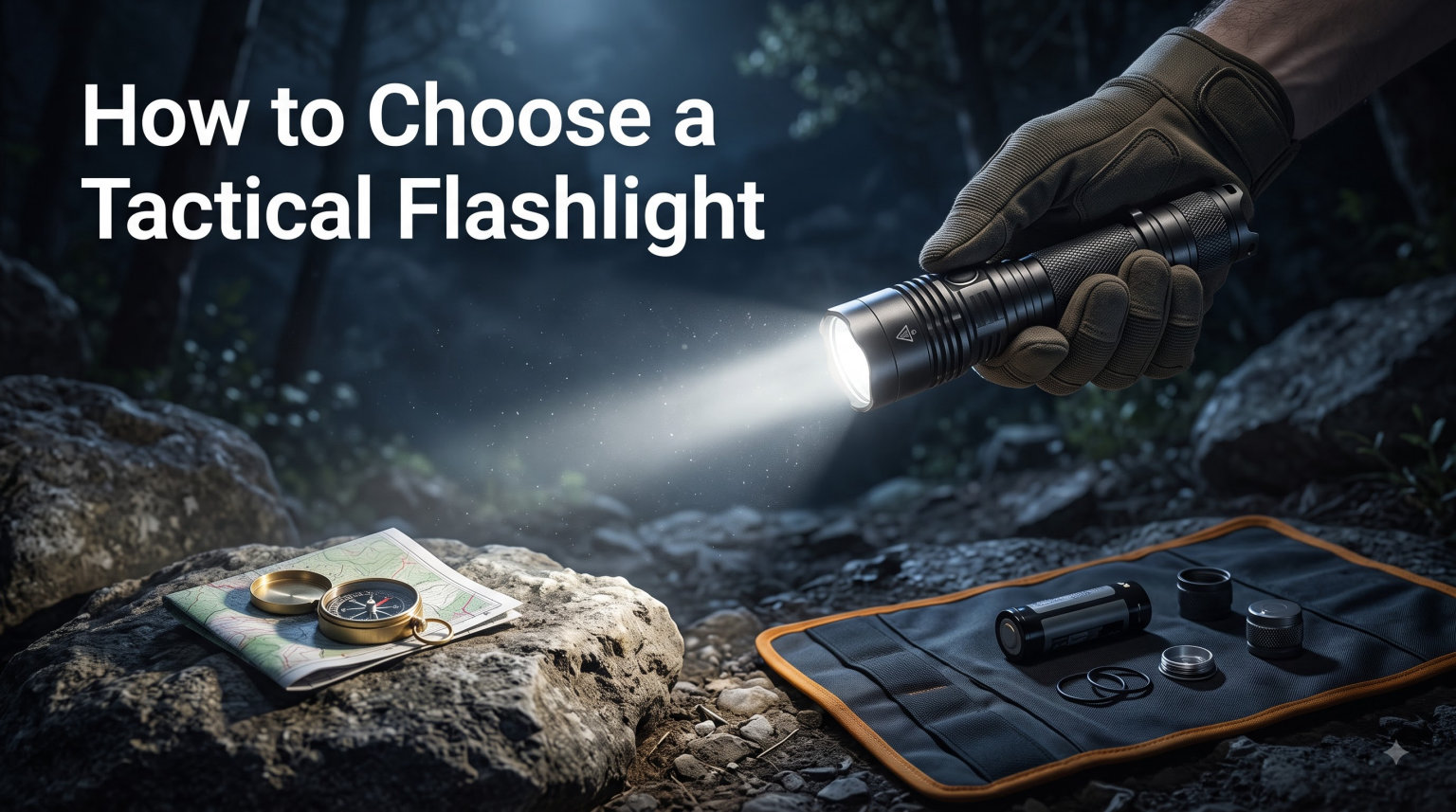
I have spent the better part of five years testing lights on night shifts, range sessions, and backcountry trips, and…

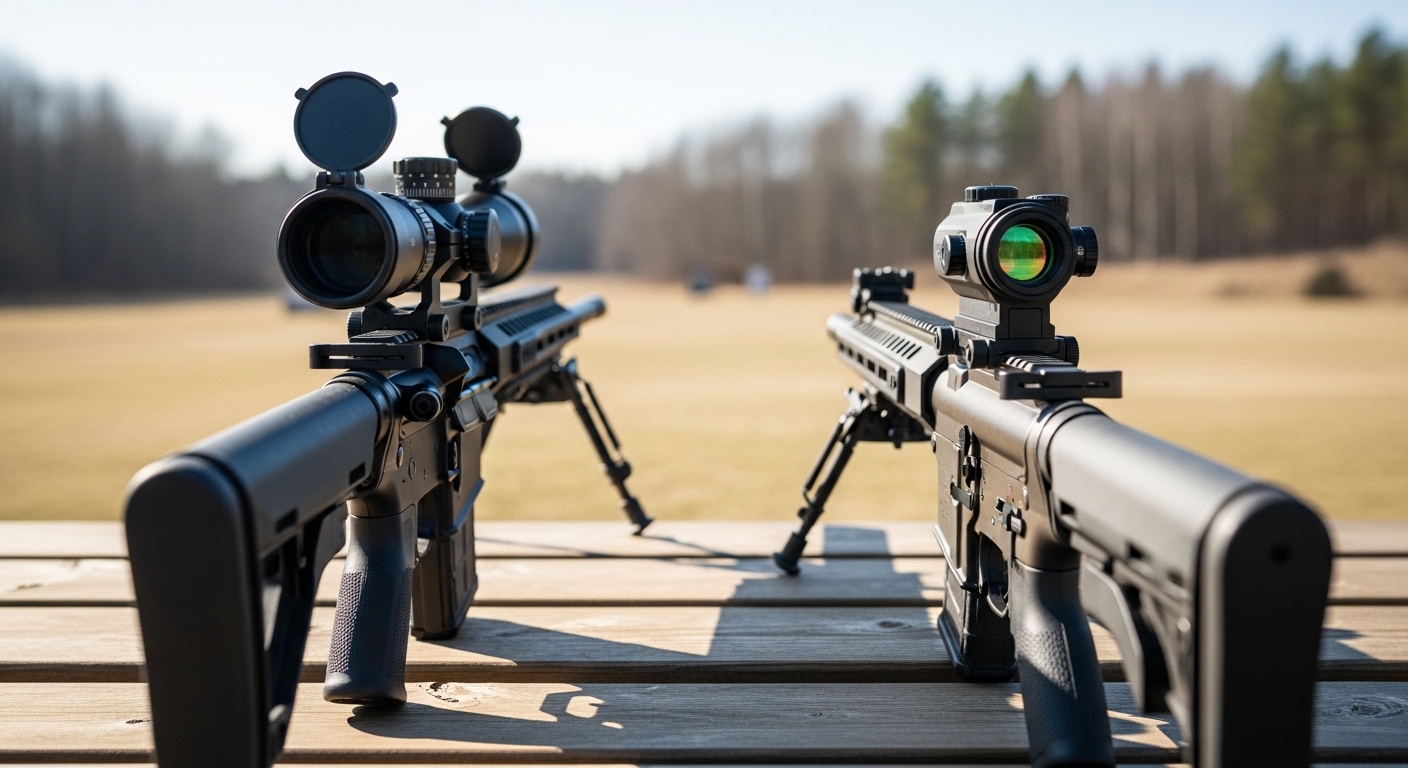
The debate between rifle scopes and red dot sights has been going on for decades. Every new AR-15 owner faces this decision. I have spent over 15 years testing optics across every scenario you can imagine – from 3-gun competitions to hunting elk in the Rockies. After mounting dozens of options and firing thousands of rounds, I can tell you the right choice depends entirely on how you plan to use your rifle.
Most shooters complicate this decision. The truth is simple: red dots excel at speed and close-quarters work, while scopes dominate at distance and precision. Choosing wrong means missed shots, frustrating range sessions, and wasted money. I have seen guys drop $800 on a high-end LPVO only to discover they never shoot past 50 yards. Others bought red dots for hunting rifles and struggled to identify targets at 200 yards.
Red dot sights are faster for targets within 100 yards and allow shooting with both eyes open. Rifle scopes provide magnification for precise shots beyond 100 yards but require proper eye alignment and head positioning. Choose a red dot for home defense and competition. Choose a scope for hunting and long-range precision shooting.
Let me break down everything you need to know about rifle scope vs red dot sight so you can make the right choice for your specific situation.
| Factor | Red Dot Sight | Rifle Scope |
|---|---|---|
| Effective Range | 0-100 yards optimal | 100-1000+ yards |
| Target Acquisition | Extremely fast | Slower, requires alignment |
| Magnification | None (1x only) | Variable (3-9x, 4-12x, etc.) |
| Eye Relief | Unlimited | Limited (3-4 inches typical) |
| Field of View | Wide, both eyes open | Narrow, magnified |
| Weight | Light (5-10 oz) | Heavy (15-30 oz) |
| Battery Required | Yes | No (unless illuminated) |
| Best For | CQB, home defense, competition | Hunting, precision, long range |
A rifle scope is a telescopic sight that magnifies your target and provides a reticle for precise aiming. Scopes use a series of glass lenses to magnify the image like a telescope, allowing you to see targets clearly at extended distances. The reticle – typically crosshairs – appears superimposed on the target, giving you an exact point of aim.
Eye Relief: The distance your eye must be from the rear lens to see the full image. Typical rifle scopes have 3-4 inches of eye relief. Too close or too far, and you lose sight picture.
Scopes come in various magnification ranges. A 3-9x scope can adjust from 3x magnification up to 9x. Variable power scopes let you dial down for close shots and crank up for distant targets. Fixed power scopes like a 4x or 6x offer simplicity and durability.
The reticle world is massive. Duplex reticles feature thick outer lines that taper to thin center crosshairs – excellent for low light. Mil-dot reticles include dots for range estimation and holdover. BDC (Bullet Drop Compensator) reticles have markings for different distances, accounting for bullet drop at various ranges.
Objective lens diameter matters too. Larger objectives (50mm+) gather more light for dawn and dusk hunting but sit higher on the rifle. Compact objectives (24-32mm) allow lower mounting but sacrifice some light transmission.
I have used scopes from $99 budget models to $2000+ premium glass. The difference is real. Cheap scopes blur at maximum magnification, lose clarity in low light, and may not hold zero. Quality scopes from Leupold, Vortex, or Trijicon maintain clarity edge-to-edge and track accurately.
Modern scopes often include illuminated reticles. These use battery-powered LED lighting to brighten the crosshairs in low-light conditions. The illumination is subtle – just enough to see your reticle against a dark background, not enough to replace a night vision device.
A red dot sight is a non-magnified optic that projects an illuminated dot onto a lens. Unlike scopes, red dots do not magnify the image. You see the target at 1x – normal size – with a superimposed red dot showing your point of aim. The dot appears to be projected onto the target itself.
Red dots work through reflection. An LED emits light that bounces off a specially coated lens, reflecting back to your eye as a dot. This technology creates a parallax-free sight picture. The dot stays on target regardless of your eye position – unlike scopes that require precise head alignment.
Parallax Free: The dot remains on target even if your eye moves off-center. This allows fast target acquisition without perfect head position – a huge advantage in dynamic shooting situations.
Dot size matters. Red dots are measured in MOA (Minutes of Angle). A 2 MOA dot covers 2 inches at 100 yards. Smaller dots allow more precision but can be harder to find quickly. Larger dots (4-6 MOA) are fast to acquire but cover more of the target. For most AR-15 applications, a 2-3 MOA dot hits the sweet spot.
Two main red dot styles exist. Open emitter designs lack a top housing, offering a wider field of view but exposing the lens to debris and damage. Closed tube designs protect the lens fully but slightly obstruct your view. Both work – choose based on your environment and preferences.
Battery life varies dramatically. Aimpoint Micro sights run for 5 years on a single battery. Budget options might last 500-1000 hours. Modern red dots from Holosun and Sig include solar panels as backup power. Auto-shutoff features preserve battery when the rifle sits idle.
Red dots shine in close-quarters scenarios. I run timed drills regularly. In my experience, a red dot is consistently 0.3-0.5 seconds faster than a scope on targets within 50 yards. That difference matters in competition and life-or-death situations.
Co-witnessing is a key red dot advantage. You can mount the optic to see your iron sights through the lens. If electronics fail, your backup iron sights remain ready. Absolute co-witness centers the red dot in the aperture. Lower 1/3 co-witness places the dot higher, with irons visible in the lower portion of the lens.
This is the most obvious difference and the primary decision factor. Red dots offer zero magnification. What you see is what you get – life size. A 6-foot target at 100 yards looks… small. You can hit it consistently with practice, but target identification becomes challenging beyond 100-150 yards.
Scopes provide magnification that transforms distant targets. A 9x scope makes that 6-foot target at 100 yards appear as if it is only 11 yards away. You can see antlers, identify game species, and place shots precisely. For hunting or precision shooting beyond 100 yards, magnification is not optional – it is essential.
LPVOs (Low Power Variable Optics) bridge this gap. A 1-6x LPVO gives you red dot speed at 1x and scope precision at 6x. In my testing, quality LPVOs at 1x are nearly as fast as red dots. At 6x, you can reach out to 400-500 yards effectively. The tradeoff is weight, complexity, and cost.
I have hunted with red dots out to 200 yards. It is doable with proper practice. But identifying whether a deer is legal or distinguishing a coyote from a stray dog becomes guesswork. A scope eliminates this uncertainty.
Red dots win the speed contest hands down. Unlimited eye relief means your head can be anywhere behind the optic. Both eyes open shooting preserves depth perception and situational awareness. The dot is naturally drawn to your eye – you do not search for it.
In my training classes, new shooters transition from iron sights to red dots in about 10 minutes. Their hit percentages on close-range targets typically jump from 60% to 90% immediately. The learning curve is that shallow.
Scopes require finding the eye box – that narrow window of perfect alignment. Too far forward, back, high, or low, and you see nothing or a black shadow. Acquiring a proper sight picture takes conscious effort and practice.
For competitive shooting, 3-gun matches, or home defense scenarios with unknown threat locations, red dots dominate. I have run countless drills comparing the two. On a 25-yard target with movement and shooting on the move, the red dot is 30-40% faster.
That said, scopes catch up if you pre-position yourself. In a hunting scenario with a known ambush location, a scope at low magnification works just fine. But for reactive shooting – responding to a threat or transitioning between multiple targets – the red dot reigns supreme.
Scopes enable precision that red dots simply cannot match. At 300 yards, a 2 MOA red dot covers a 6-inch circle. That is larger than a deer’s vitals. You can hit consistently, but fine placement – hitting the exact spot you want – becomes difficult.
A scope at 9x magnification with fine crosshairs lets you thread the needle. I have made headshots on groundhogs at 200 yards with a quality scope. That kind of precision is impossible with a red dot regardless of your skill level.
For hunting, this matters. You want to hit the vitals cleanly for ethical kills. A scope lets you place the shot perfectly. A red dot relies on holding somewhere center-mass and hoping for the best.
Long-range competitive shooting requires magnification. F-class, benchrest, and precision rifle series all use high-powered scopes. Trying to compete with a red dot would put you at an insurmountable disadvantage.
Red dots offer unlimited eye relief. Your eye can be six inches behind the lens or pressed against it – the dot remains visible. This flexibility allows faster target acquisition and more natural shooting positions.
Scopes have limited eye relief, typically 3-4 inches. Place your eye closer or farther, and the image disappears. High-recoiling rifles can punish improper positioning – I have the eyebrow scar to prove it. Scope bite is real and painful.
Field of view differs dramatically. A red dot allows you to see everything around the target. Your peripheral vision remains intact. You see threats, shooting partners, and the environment.
Scopes restrict your view to a tunnel. At 9x magnification, your field of view might be only 15-20 feet at 100 yards. You lose situational awareness. This tunnel vision helps with precision but hurts situational awareness.
For dangerous game or defensive scenarios, maintaining awareness of your surroundings is critical. A red dot keeps you in the fight. A scope puts you in a tunnel.
Red dots require power. No battery, no dot. Quality Aimpoint sights run 50,000 hours (over 5 years) on a single battery. Budget optics might last a few hundred hours. Either way, electronics can fail.
Scopes with non-illuminated reticles require zero batteries. They work forever. The only failure points are mechanical – turrets breaking or lenses shifting. Quality scopes from reputable manufacturers are incredibly reliable.
Illuminated scopes add battery dependency but typically use common CR2032 batteries with 300-600 hour life. Not as good as top-tier red dots, but adequate for most uses.
For a truck gun or defensive firearm that sits unused for months, a mechanical scope has advantages. Grab it and go – no batteries to check, no electronics to fail.
That said, modern red dot reliability is excellent. I have never had a quality red dot fail in the field. Holosun and Sig Sauer make red dots with solar backup, addressing battery concerns effectively.
This is a critical factor that many overlook. If you have astigmatism, red dots may not work well for you. The dot appears blurry, star-shaped, or irregular instead of a crisp circle.
Astigmatism and Red Dots: Astigmatism causes irregular corneal curvature that distorts how light enters your eye. With red dot sights, this manifests as a blurry, blooming, or star-shaped dot. The worse your astigmatism, the more distorted the dot appears.
I work with shooters who have astigmatism regularly. About 30% of my students have some degree of astigmatism. For them, red dots range from annoying to unusable. The dot becomes a cluster of stars or a blob rather than a precise aiming point.
Scopes do not have this issue. The reticle is physically etched into glass, not projected. Even with severe astigmatism, scope reticles appear crisp and clear. If you have vision issues, a scope or prism optic may be your only option.
Prism scopes offer a middle ground. They use etched reticles like scopes but in compact, low-magnification packages. A 1x or 3x prism scope gives red dot size with a crisp reticle that works with astigmatism.
Red dots are compact and lightweight. Most weigh 5-10 ounces with mount. They sit low on the rifle, preserving handling characteristics. Your AR-15 feels nimble and quick.
Scopes add substantial weight. A typical 3-9x scope weighs 15-20 ounces before mounting. LPVOs are even heavier – 20-30 ounces is common. This weight sits high on the rifle, affecting balance.
For hunting rifles that mostly sit still, extra weight matters less. For carbines used in dynamic scenarios, every ounce counts. A heavy scope makes the rifle nose-heavy and sluggish.
Mounting height differs too. Red dots co-witness with iron sights, maintaining a consistent cheek weld. Scopes require higher mounts, forcing your head higher on the stock. This changes your shooting position and may require a stock with adjustable comb height.
For home defense, a red dot is the clear winner. Distances are typically across a room – 7 to 25 yards maximum. You need speed more than precision. Both eyes open shooting helps you maintain awareness of family members and other threats.
In home defense scenarios, adrenalin affects your vision. Finding a scope eye box under stress is difficult. A red dot is intuitive – point and shoot. I have run countless force-on-force scenarios. Red dot equipped shooters consistently outperform those using magnified optics.
Home Defense Recommendation: Red dot sight with backup iron sights. Quality option from Aimpoint, Holosun, or Trijicon. Reliability and simplicity matter most.
Hunting applications depend entirely on your quarry and terrain. For deer hunting in eastern woods where shots are under 100 yards, a quality red dot works fine. But for western hunting where 300-yard shots across canyons are common, a scope is mandatory.
Ethical hunting requires precise shot placement. You need to hit the vitals cleanly for a quick kill. A red dot covering 6 inches at 200 yards makes this difficult. A 3-9x scope lets you place the bullet exactly where you want.
For dangerous game like bears or hogs, I prefer a low-power variable optic. The 1x setting gives you speed for close encounters. Crank to 4x or 6x if you spot a bear at 200 yards across a meadow.
Hunting Recommendation: 3-9x or 2.5-10x scope for most hunting. 1-6x LPVO for dangerous game or dense terrain. Red dot only for short-range predators like coyotes under 100 yards.
Competition dictates your optic choice. 3-gun matches typically allow magnified optics but heavily favor red dots or LPVOs due to stage designs involving close targets, movement, and transitions.
USPSA and IDPA pistol caliber carbine divisions are red dot dominant. Speed matters more than precision when targets are 10-50 yards. Top competitors run simple red dots for fast transitions.
Precision rifle series (PRS) matches require high magnification. Stages involve targets from 300-1000 yards. You will not be competitive without a scope with 10-25x magnification.
The AR-15 platform is incredibly versatile. Your choice depends on your intended use. A general-purpose carbine for range use and home defense works excellently with a red dot. You can hit man-sized targets to 200 yards with practice.
If your AR-15 serves as a hunting rifle or you frequently shoot past 200 yards, an LPVO makes sense. The 1x setting gives you red dot speed. Dial up to 4x or 6x for longer shots. In my experience, a quality 1-6x LPVO is the most versatile AR-15 optic available.
LPVOs (Low Power Variable Optics) offer the best of both worlds. A 1-6x or 1-8x LPVO gives you true 1x with both eyes open capability like a red dot, plus magnification for distance. The downside is weight and cost.
Magnifiers are another option. Add a 3x or 5x magnifier behind your red dot, flip it aside when not needed. This gives you red dot speed and scope magnification in one package. The tradeoff is weight and the magnifier only works with the red dot – not a true 1x scope alternative.
Combination setups run both optics. A red dot on a 45-degree offset mount with a primary scope gives you instant transition. Rotate the rifle 45 degrees, and the red dot appears for close targets. I have used this setup on competition rifles – it works but adds complexity and weight.
Neither is universally better. Red dots excel in speed and close-quarters scenarios under 100 yards. Regular scopes provide magnification for precision shots beyond 100 yards. Your intended use determines which is better for your situation.
Yes, but with limitations. A 2 MOA red dot covers 6 inches at 300 yards – larger than a vital zone. You can hit a man-sized target consistently with practice, but precise shot placement is difficult. For hunting or precision at this distance, a scope is strongly recommended.
Red dots have no magnification, limiting effectiveness beyond 100-150 yards. They require batteries to function. People with astigmatism see a blurry, star-shaped dot instead of a crisp circle. Electronic components can fail, though quality units are extremely reliable.
For general-purpose AR use within 200 yards, a red dot offers excellent speed and simplicity. For hunting or precision shooting beyond 200 yards, choose a scope or LPVO. Home defense ARs work best with red dots for fast target acquisition in close quarters.
Red dot sights are effective from 0-100 yards for most users. With practice, skilled shooters can hit man-sized targets to 200 yards. Beyond 150 yards, target identification and precise shot placement become challenging due to the lack of magnification.
Red dots often do not work well for people with astigmatism. The dot appears blurry, blooming, or star-shaped instead of a crisp circle. If you have astigmatism, consider a prism scope with an etched reticle or a traditional riflescope instead.
Red dot sights are superior for home defense. Engagements occur at close range where speed matters most. Red dots allow both eyes open shooting, maintaining situational awareness. Finding a scope eye box under stress is difficult compared to the intuitive point-and-shoot nature of red dots.
LPVO stands for Low Power Variable Optic. It offers variable magnification typically from 1x to 4x, 6x, or 8x. At 1x, LPVOs function similar to red dots but with a reticle instead of a projected dot. The advantage is having both red dot speed at 1x and scope magnification for distance in one optic.
The rifle scope vs red dot sight debate comes down to your specific needs. Neither is universally better – they excel in different domains. Red dots dominate close-quarters scenarios with unmatched speed and simplicity. Scopes provide the magnification and precision needed for hunting and long-range shooting.
After 15 years of testing and training, I run both optics on different rifles. My home defense AR wears a red dot. My hunting rifles wear scopes. My competition carbine runs an LPVO for versatility. Match the optic to your mission, and you will not go wrong.