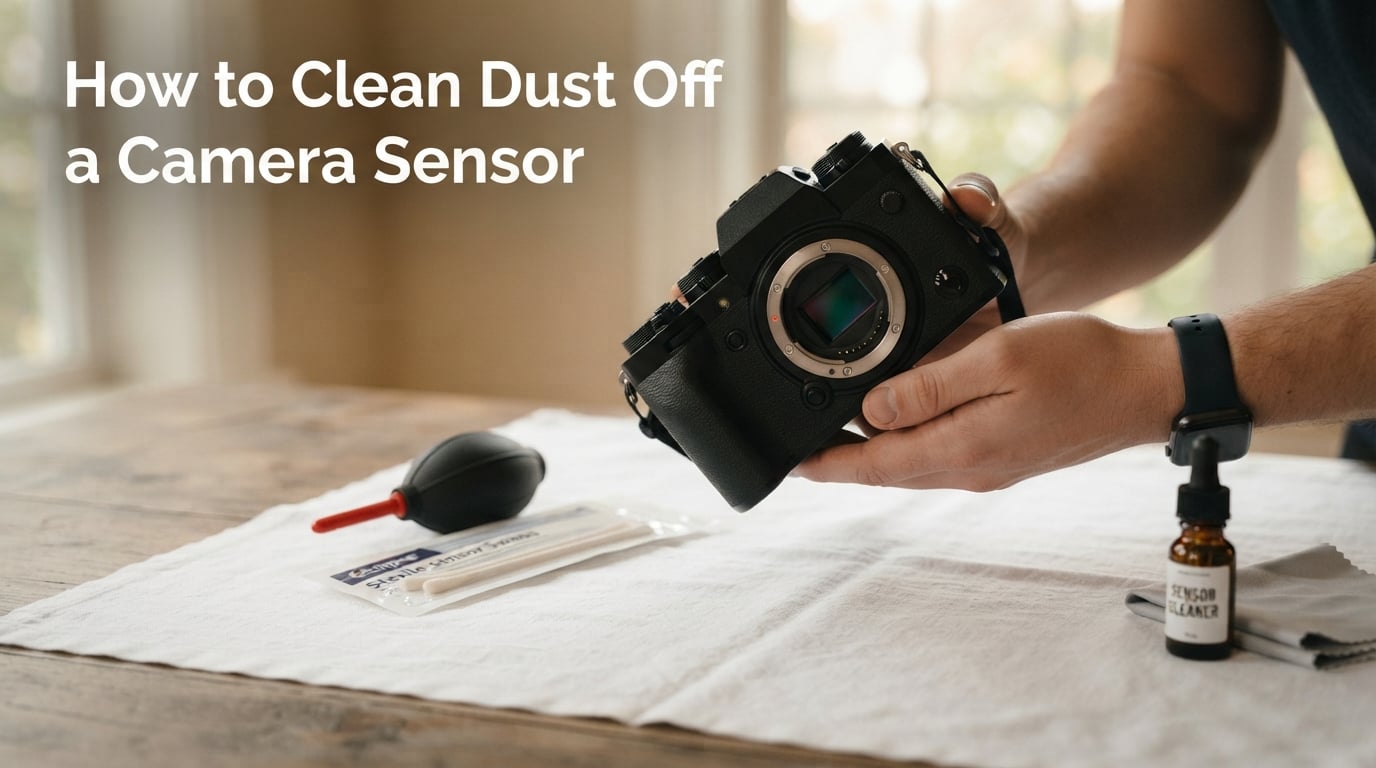
How to Clean Dust Off a Camera Sensor (September 2026)
I noticed the problem the day I shot a wedding at f/11. Every blue-sky frame had three stubborn dark dots…

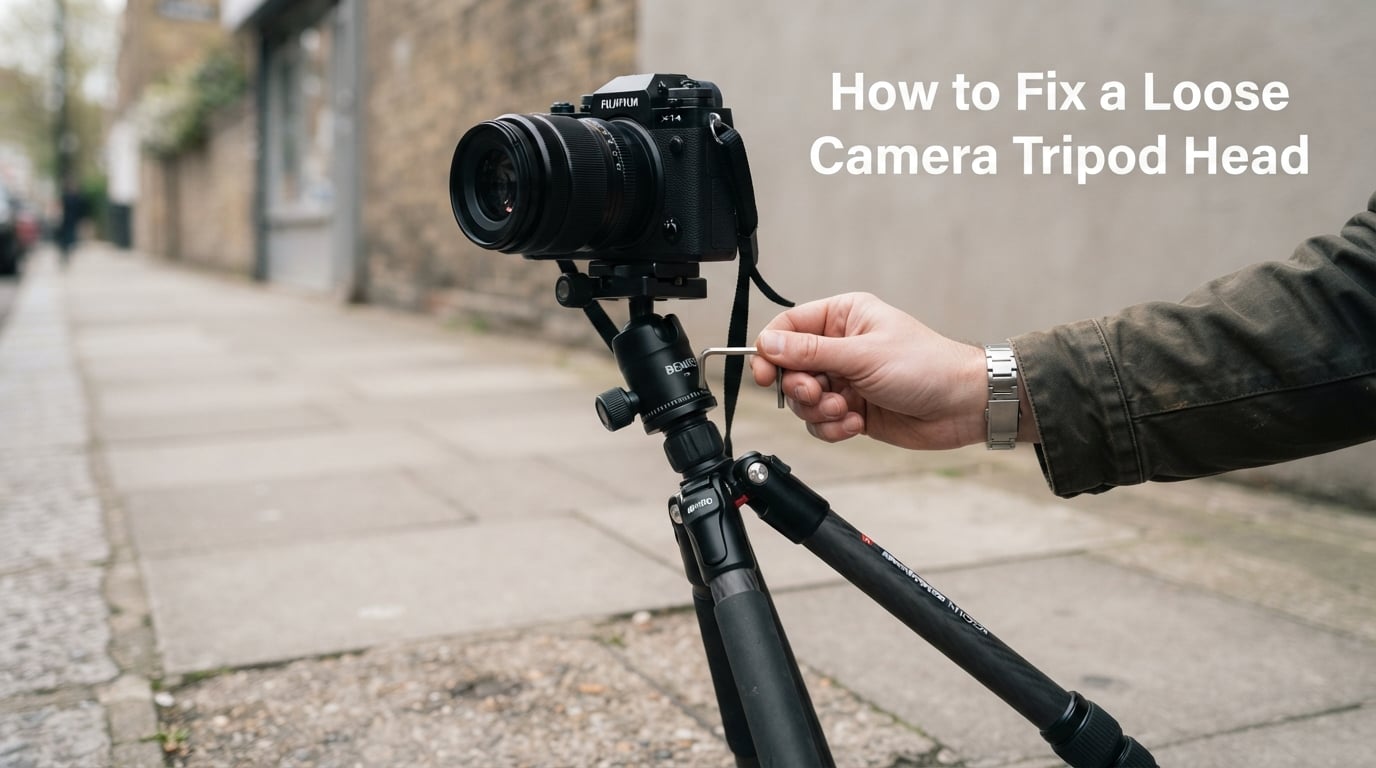
A loose camera tripod head is usually caused by the quick-release plate, the connection between the head and the tripod, or the ball-lock mechanism itself. To fix it, remove the camera, identify which knob is the main ball-lock (not the pan or friction control), reseat the plate, retighten the head-to-base thread, and verify the lock holds the ball before remounting the camera.
I have owned and used tripods for street photography since the early 2000s, and I have rebuilt, retorqued, and replaced more loose tripod heads than I can count. In that time, I have watched beginners make the same handful of mistakes, almost always tightening the wrong knob or assuming a slipping head means a broken head. This guide walks through the diagnosis-first sequence I use, the tools that actually help, and the moment it is smarter to repair than to replace.
Tripod heads fail more often than the legs do. If your tripod head wobbles, drifts, or droops with a camera on it, the fix is usually ten minutes and a single Allen key away. Here is how to do it cleanly in 2026.
Before you start, gather the basics. Most loose tripod heads only need three or four of these items.
If you do not have a strap wrench, a wide rubber band wrapped around a tight knob gives you surprisingly good grip without scratching the head.
A tripod head that feels loose almost always fails in one of three places: the plate, the head-to-base connection, or the locking mechanism itself. Before touching anything, run the camera through a 30-second test to identify the source.
If the camera wobbles side-to-side even with the main lock cranked tight, the quick-release plate is not fully seated or its screw is loose. Remove the camera, reseat the plate, and retighten the plate screw with an Allen key. If the head drifts in one direction during a long exposure, the main ball-lock knob is loose, dirty, or worn; clean the ball, retighten the main knob, and test without the camera. If the head slowly droops downward at the chosen angle, you are probably tightening the pan lock instead of the tilt or ball lock; identify the correct knob, retighten, and retest. If the whole head rotates on the tripod legs, the head-to-tripod base screw is loose; tighten the 3/8-inch or 1/4-20 thread under the head. If a knob spins freely with no resistance at all, the internal thread or cam is stripped; stop forcing it, because this is a warranty or replace decision. If the head locks fine empty but slips the moment a camera is mounted, the head is undersized for the load or your long lens is creating leverage; shift the plate back under the lens centre of gravity, or upgrade the head.
This diagnostic sequence is the fastest way to cut your troubleshooting time in half. Most readers solve the problem at the first or second step.
Every multi-knob tripod head has the same problem: the knobs look interchangeable, and almost no manual tells you which is which. Take 60 seconds to label them in your head before you start.
The ball-lock knob is usually the largest, most prominent knob on a ball head. It controls how tightly the internal ball is clamped. When you turn it clockwise, the ball stops moving.
The pan lock is a smaller knob, often on the base of the head. It only controls horizontal rotation. Tightening it does nothing for tilt or vertical droop.
The friction control (or tension knob) is sometimes a separate dial near the ball-lock. It pre-loads the ball so it does not flop when unlocked. If your head has one, set it first, then tighten the main lock.
Many photographers tighten the wrong knob because they mix up the words. Tilt is the front-to-back angle of the camera. Pan is the left-to-right rotation. If your head droops forward, you need to tighten the tilt lock or ball-lock, not the pan lock. This single naming confusion explains a huge share of the “my tripod head won’t hold tilt position” complaints on photography forums.
Follow these six steps in order. Do not skip ahead. Most loose tripod heads are solved by Step 3 or Step 4.
Take the camera and lens off the head and put them somewhere safe. With the head empty, you can feel exactly where the wobble is coming from. Trying to diagnose a loose head with a 1.5 kg DSLR hanging off it is impossible.
With the camera off, grip each knob in turn and try to move the head. The knob that stops the wobble is the one to tighten. If a knob spins with no resistance at any setting, mark it and move on; that knob is the symptom, not the cause.
Slide the plate out of the clamp, blow off any grit with compressed air, wipe it down with a microfiber cloth, and slide it back in. Listen and feel for the click as it seats against the stop pin. A plate that is one millimetre off its stop will make the whole head feel loose. While you have the plate off, confirm the plate screw is snug with the correct Allen key.
Flip the head over or look at the bottom of the tripod’s center column. You will find a single screw, usually 3/8-inch or 1/4-20, holding the head to the legs. Loosen it half a turn, reseat the head so its bubble level (if fitted) is centered, then retighten firmly. Do not skip this step. A head that has crept a quarter turn on its mount feels loose even when the lock is perfect. If you want a wider tripod-buying primer, our tripod selection guide covers how this joint is supposed to behave.
With the head empty, lock the ball, then push firmly on the head in every direction. The ball should not move at all. If it still drifts, the lock is dirty or worn. A short burst of compressed air around the ball socket, followed by a microfiber wipe, fixes more worn-looking heads than any tool. For deeper help on head selection, our ball head guide walks through the lock geometry.
Put the camera back on, lock the head, and frame a test shot. Leave it locked for 60 seconds. If the framing does not move, you are done. If it still drifts, the head is undersized for your gear, not broken. The next section covers that case.
Some loose tripod heads cannot be repaired in the field. The clearest sign is a knob that spins freely with no resistance, no grip, and no change in how the head behaves. That usually means a stripped internal thread or a cracked cam.
Use this decision rule: if the head is still under warranty and the knob spins freely, contact the manufacturer first. If the warranty has expired, weigh the cost of a service against the cost of a new head. Mid-range heads from established brands usually cost less to replace than to repair. For spotting scopes and long-lens setups, our balance guide explains why upgrading the head is often the right call.
Do not force a stripped knob tighter. You will destroy the cam and possibly the ball. A stripped lock is a replace, not a repair.
Tripod head load ratings are nearly always vertical ratings: how much weight the head can hold before the lock gives way. They say almost nothing about lateral force, which is the sideways push a long telephoto lens creates.
A 70-200 mm f/2.8 lens sitting on a small ball head generates strong sideways leverage at the front of the lens, even though the camera body weighs under 1.5 kg. That lateral force exceeds the friction the lock can produce, so the head slips. The fix is not more torque on the knob; it is a longer Arca-Swiss plate slid back under the lens, or a head rated for the actual combined load. Forum threads going back over a decade confirm the same pattern with Manfrotto Element-series carbon tripods and similar travel setups.
Cold weather makes this worse. Metal contracts slightly in the cold, rubber feet stiffen, and small clearances in the lock open up. If you shoot outdoors in winter, plan to re-check the head every 20 to 30 minutes.
A 60-second routine after every few outdoor shoots prevents most loose tripod head problems from coming back.
Never use WD-40, silicone spray, or general lubricating oil on a tripod ball head. The lock depends on friction, and oil makes slipping worse, not better. If a head truly needs lubrication, use a tiny amount of the manufacturer-specified grease on the moving parts only.
If the diagnosis points to a head that is simply too small for your gear, replacement is the right move. Here is how to size the upgrade.
As a rule of thumb, pick a head rated for at least double the weight of your heaviest camera-and-lens combination. Doubling the rating gives headroom for lateral force, wind, and the small jerks that happen during long exposures. If you carry a 70-200 mm f/2.8 or a 100-400 mm zoom, treat the lens as part of the load, not just the body.
Different head types fail in different ways. A ball head slips if the lock wears or the load exceeds the rated friction. A 3-way (pan-tilt) head fails when a single axis is over-tightened and the matching knob wears. A fluid head used for video loses smoothness as the fluid thins over years. A gimbal head, the best choice for very long lenses, almost never loosens at the lock but can drift if the balance point is wrong.
Arca-Swiss is the de facto standard for quick-release plates. If you already own L-brackets, lens plates, or a clamp from another piece of gear, sticking with Arca-Swiss saves you from carrying two sets of plates. Proprietary plates from older Manfrotto, Velbon, or entry-level tripods lock you into a single supplier, which is a reason to switch the head rather than the plate when you upgrade.
The most common reason is tightening the wrong knob. Most multi-knob tripod heads have separate pan, tilt, and main-lock controls; tightening the pan lock does nothing for tilt droop. Remove the camera, work each knob in turn, and confirm which one actually stops the wobble before you keep turning.
No. A ball head lock works by friction. WD-40, silicone spray, and general lubricating oil all reduce friction, which makes the head slip more, not less. Wipe the ball and socket with a dry microfiber cloth and use compressed air to clear grit. Only use the grease the manufacturer specifies, and only on the moving parts.
That is lateral force from your lens. Tripod load ratings are almost always vertical. A telephoto lens creates strong sideways leverage the lock cannot counter. Slide a longer Arca-Swiss plate back under the lens centre of gravity, or upgrade to a head rated for the actual combined load.
Usually not in the field. A knob that spins without engaging the lock usually means a stripped internal thread or a cracked cam. Stop turning it, contact the manufacturer if it is under warranty, and budget for a replacement head otherwise.
Replace the head, not the tripod, in most cases. Tripod legs rarely wear out; heads do. A new head on existing legs is the cheaper, faster fix and lets you step up to a stronger model if your gear has grown.
Most loose tripod heads come down to one of three causes: the wrong knob, an unseated plate, or a worn lock. Diagnose first, then turn anything. If the head locks empty and drifts loaded, you are looking at lateral force, not a broken head, and the fix is balance or a bigger head. And if a knob spins with no resistance at all, stop and replace it.
Run the 60-second maintenance routine after every few outdoor shoots, and your tripod head will outlast the legs it sits on. For a deeper dive into how to choose a ball head for street photography and longer setups, our ball head guide is the next read.
A loose tripod head is one of the easiest problems in photography to fix yourself. Take ten minutes, follow the steps above, and your camera will stay exactly where you put it.