How to Choose a Rifle Bipod (2026)
Choosing the right rifle bipod changed how I shoot at distance. After testing 12 bipods across hunting and competition setups,…

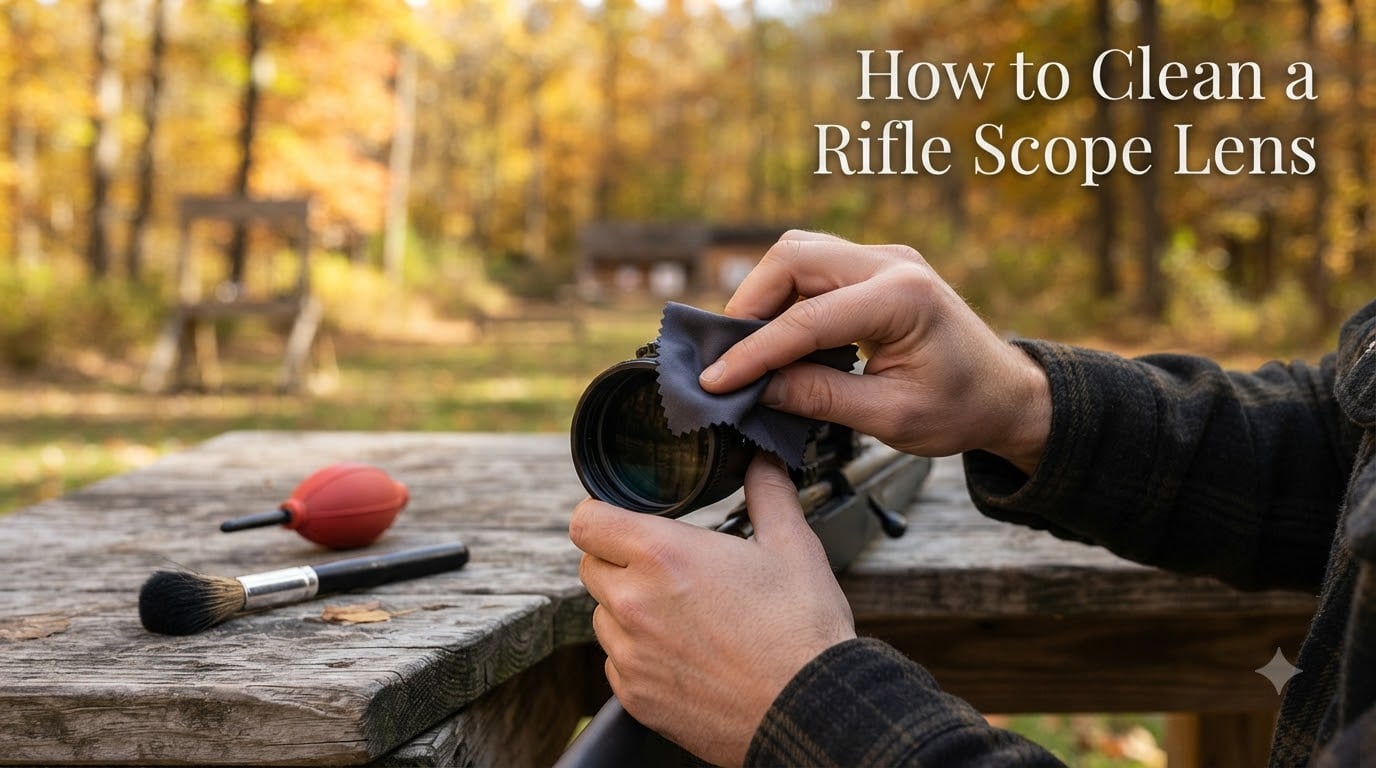
I learned the hard way how to clean a rifle scope lens the right way. After years of hunting and range time, I’ve scratched an objective lens, stripped a coating with the wrong solvent, and watched dirt turn a perfect sight picture into a blurry mess. Now I keep my optics clean and protected without ruining them, and I’ll walk you through the exact process I use.
A dirty scope does more than look bad. Smudges, dust, and debris scatter light before it reaches your eye, and that cuts down on the clarity and brightness your optic was engineered to deliver. Worse, scratching or stripping a coating is permanent. In this guide, I’ll show you how to clean a rifle scope lens the safe way, what tools to grab, and what mistakes to avoid so your glass performs the way it should for years to come.
If you are still picking your optic, our how to choose a rifle scope guide pairs well with this maintenance article, since cleaning technique depends on the coating technology on your specific optic.
The short answer is: only when you actually need to. Over-cleaning is one of the most common mistakes I see from new shooters, and it is the fastest way to wear down a coating prematurely. If the sight picture is sharp and unobstructed, leave the lens alone.
I clean mine when I notice a visible smudge, dust buildup that scatters light, water spots after a rainstorm, or hard debris like mud spatter. After a dusty hunt or a windy day at the range, plan on a quick wipe-down. After a humid morning in the woods or a coastal shoot, water spots and salt residue are your cue to act.
Here is a simple rule of thumb I follow. Check your scope before every outing, and clean it only when something is actually interfering with the image. A clean lens that has just been wiped is more vulnerable to dust attraction than a lens with a thin protective layer of natural buildup, so frequent unnecessary wiping does more harm than good.
Building a small, dedicated cleaning kit is the single best investment you can make for your optics. After testing a dozen setups over the past few years, here is what lives in my range bag and workshop.
For routine smudges and fingerprints, a 90%+ isopropyl alcohol solution mixed with distilled water (roughly 50/50) works extremely well. For heavy grime, dedicated optical cleaners from reputable scope brands are slightly more expensive but are formulated specifically for coated glass. Avoid household ammonia-based cleaners and any solution with acetone.
Distilled water is also worth keeping in your kit. Tap water contains minerals that leave residue, especially when it dries on warm lenses in the sun.
If you want a deeper dive into the optics themselves before tackling maintenance, our rifle scope optical system guide explains why the coatings behave the way they do.
This is the exact process I run through every time I clean one of my scopes. Follow these steps in order, and you will not damage the lens or its coatings.
Hold the scope with the lens facing down and squeeze the blower several times to dislodge dust, sand, and grit. Gravity helps the particles fall away rather than getting blown across the surface. Never wipe a dusty lens first. Trapped grit under a cloth will scratch the coating instantly.
Use your soft lens brush in light, outward strokes starting from the center of the lens. Rotate the brush as you sweep so you are always presenting clean bristles to the glass. This step removes anything the blower missed.
If smudges or fingerprints remain, lightly breathe on the lens to fog it, or apply one or two drops of your 90%+ isopropyl alcohol and distilled water mix to a microfiber cloth. Never apply solution directly to the lens. Liquid can seep past the seal at the edge and fog the interior.
Using the dampened microfiber cloth, wipe gently in a continuous spiral from the center outward to the edge. This motion lifts contaminants off the surface rather than dragging them around. Use light pressure. The weight of the cloth itself is enough.
Flip to a clean section of microfiber or use a second cloth to do a light final buff. Hold the lens up to a bright, even light source and look for streaks or remaining spots. Repeat the process only if needed. Stop as soon as the lens is clean.
For a quick on-the-spot field clean, a lens pen handles steps 2 through 5 in about 30 seconds and lives in my pocket during hunts.
I’ve made almost every mistake on this list at some point, so please learn from my experience. These are the actions that permanently damage coatings or scratch glass.
Modern rifle scope lenses have multiple layers of optical coating, often including anti-reflective, hydrophobic, and scratch-resistant treatments. These coatings are what give you the bright, high-contrast image and weather resistance you paid for, and they are also the most vulnerable part of the optic.
The single biggest risk during cleaning is micro-scratches from grit trapped under your cloth, and chemical attack from harsh solvents. Both strip coatings permanently. Hydrophobic coatings in particular help water bead and run off the lens, and they are sensitive to ammonia and alcohol-based cleaners used at full strength.
To spot early coating damage, hold the lens at an angle to a bright light. Coating damage shows up as rainbow patches, hazy spots, or areas where water no longer beads properly. If you see those signs, switch to a milder cleaning routine and consider sending the scope in for service if the optic is still under warranty.
For scope models where turret adjustment matters to your shooting setup, our guide on rifle scope turret systems explains how to protect those adjustment systems during cleaning too.
Field cleaning happens at the range, in a blind, or on a hunt, often with limited time and gear. Bench cleaning happens at home, on a stable surface, with your full kit.
For field cleaning, I keep the kit small: a lens pen, a single microfiber cloth in a sealed bag, and a small squeeze blower. That covers 90% of field situations. Skip solutions in the field unless you have heavy mud or blood to deal with. Wipe dry first, then deal with residue at home.
For bench cleaning, bring the full kit: blower, brush, multiple microfiber cloths, distilled water, isopropyl alcohol, and a dedicated optical cleaner for stubborn spots. Work on a clean, dust-free table near a window with good light. Bench cleaning is also the time to inspect your scope mounts, check for loose screws, and confirm the turret system is still tracking properly. If you’re shopping for a scope that holds up to this kind of routine, check out our picks for the best rifle scopes under 300 or the best FFP scopes on the market today.
No. Windex and other household glass cleaners contain ammonia, which strips anti-reflective and hydrophobic coatings over time. Use 90%+ isopropyl alcohol mixed with distilled water or a dedicated optical cleaner instead.
Yes, in the right concentration. Use 90%+ isopropyl alcohol diluted with distilled water (about 50/50) and apply it to a microfiber cloth rather than directly onto the lens. Avoid using it on hydrophobic coatings at full strength.
Only when you actually see dust, smudges, water spots, or debris interfering with the image. Routine inspection before each outing is enough. Over-cleaning causes more coating wear than occasional, careful cleaning.
A mixture of 90%+ isopropyl alcohol and distilled water is the most trusted DIY option among experienced shooters. For store-bought solutions, dedicated optical cleaners from major scope brands like Leupold, Vortex, and Sightmark are formulated specifically for coated glass and are the safest choice.
Yes. A lens pen with a soft brush on one end and a carbon cleaning tip on the other is one of the best tools for routine field cleaning. It removes fingerprints and light smudges without liquids and fits easily in a pocket or range bag.
Knowing how to clean a rifle scope lens properly comes down to a few simple principles: clean only when needed, use the right tools, work in the right order, and never use harsh materials or solvents. Stick to a squeeze blower, soft brush, microfiber cloth, lens pen, and 90%+ isopropyl alcohol mixed with distilled water, and your coatings will stay intact for years.
Build a small kit, keep it in your range bag, and run through the five-step process before storage after a hard day in the field. Your scope is one of the most expensive parts of your rifle setup, and a few seconds of proper care after every outing will keep that glass delivering the sharp, bright image it was built for. For more on maintaining the rest of your rifle optic system, browse our other guides on choosing, mounting, and adjusting scopes here on the site.