10 Best Dehumidifiers with Pumps (October 2026)
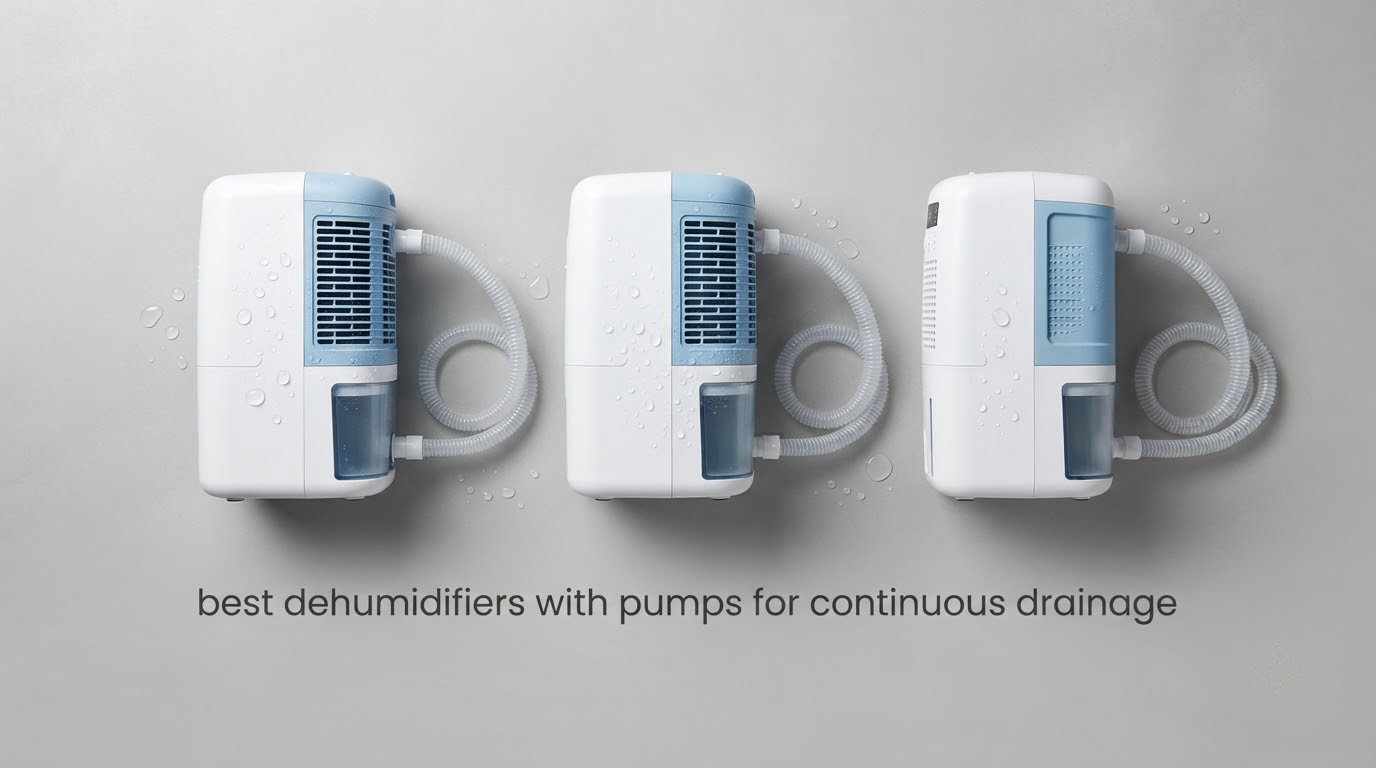
A dehumidifier with a pump has a small condensate pump built into its base that pushes water up and out…

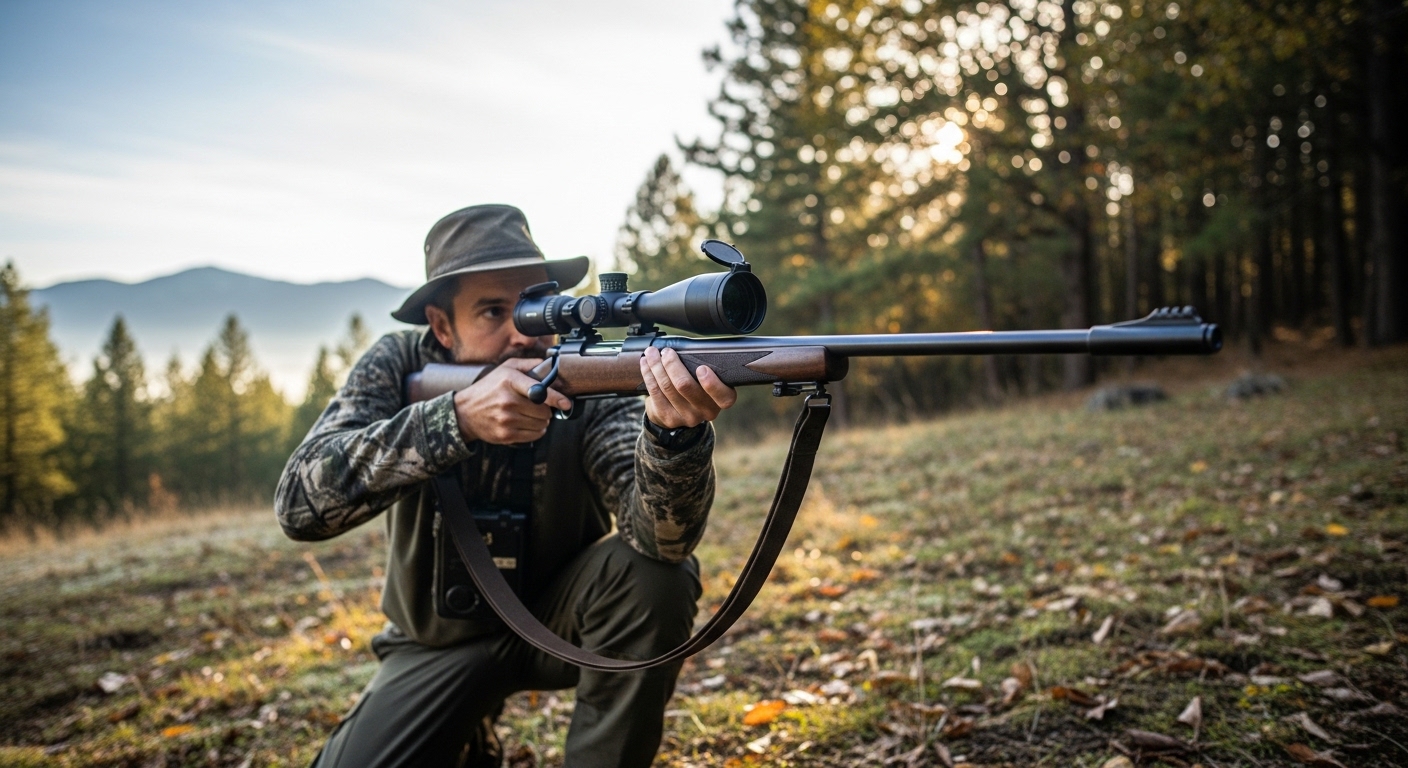
I’ve made the mistake of choosing the wrong rifle scope twice. The first time, I spent $450 on a high-magnification scope for my deer hunting rifle that was completely unusable in the timber. The second time, I cheaped out on a tactical scope that couldn’t hold zero after 100 rounds. Between these two mistakes, I wasted about $700 and three hunting seasons.
To choose the right rifle scope, match the magnification to your shooting distance (3-9x for most hunting under 400 yards), select an objective lens size between 40-50mm for balanced light gathering, pick a reticle type that fits your experience level (duplex for beginners, BDC for experienced hunters), decide between first focal plane for long-range holdovers or second focal plane for better low-light visibility, ensure at least 3.5 inches of eye relief for safety, and expect to spend $300-800 for a quality hunting scope from a reputable brand like Vortex or Leupold.
After 15 years of hunting and sport shooting, I’ve learned that choosing a rifle scope comes down to understanding five key factors: magnification range, objective lens size, reticle type, focal plane, and build quality. Skip the marketing hype and focus on how you’ll actually use the optic.
This guide breaks down exactly what you need to know, with specific recommendations for hunting, target shooting, and tactical applications. I’ll help you avoid the expensive mistakes I made.
Scope numbers confuse everyone at first. I remember staring at “3-9×40” on a box at Cabela’s, having no idea what any of it meant. The clerk explained it in about 30 seconds, and it changed how I shopped forever.
Scope Numbers: The numbers on a rifle scope (like 3-9×40) tell you the magnification range and objective lens diameter. The first set of numbers before the “x” is magnification, and the number after the “x” is the lens size in millimeters.
The first number (or number range) is magnification power. A “3-9x” scope means you can adjust from 3 times magnification up to 9 times. A fixed “4x” scope stays at 4 power only. Higher numbers = more zoom, but also a smaller field of view and less light transmission.
The number after the “x” is the objective lens diameter in millimeters. A “40mm” objective lens measures 40 millimeters across. Larger lenses gather more light, which helps in low-light conditions. But they also add weight and require higher mounting rings.
| Scope Configuration | Magnification | Objective Lens | Best Use |
|---|---|---|---|
| 3-9×40 | 3-9x variable | 40mm | All-around hunting |
| 4-16×50 | 4-16x variable | 50mm | Long-range hunting |
| 1-4×24 | 1-4x variable | 24mm | Close quarters / tactical |
| 6-24×50 | 6-24x variable | 50mm | Target shooting |
| 4×32 | 4x fixed | 32mm | Budget rimfire |
When I bought that first wrong scope, I saw “6-24x” and thought bigger was better. For deer hunting at 100 yards in the woods, 24x magnification is useless. I couldn’t find deer in my scope at close range, and the narrow field of view made scanning impossible. That’s a $450 lesson in reading the numbers correctly.
Magnification determines how much closer your target appears. But more isn’t always better. In fact, too much magnification is one of the most common mistakes I see new shooters make.
Quick Summary: For most hunting within 300 yards, 3-9x magnification is ideal. Target shooters at long range benefit from 16-24x. Tactical shooters need 1-6x for close-quarters versatility. Match your magnification to your actual shooting distance, not what looks cool in YouTube videos.
Fixed power scopes (like 4x or 6x) are simpler, more durable, and have fewer moving parts. Variable power scopes (like 3-9x or 4-16x) offer versatility. I’ve used both extensively, and variables are worth the extra cost for most hunters. Being able to dial down to 3x when a buck appears at 30 yards has saved hunts for me multiple times.
| Magnification Range | Effective Range | Best Application |
|---|---|---|
| 1-4x | 0-200 yards | Tactical, dangerous game, brush hunting |
| 3-9x | 50-400 yards | General big game hunting (most popular) |
| 4-16x | 100-600 yards | Long-range hunting, western hunting |
| 6-24x+ | 300-1000+ yards | Target shooting, competition |
My 6-24x scope mistake taught me an important lesson: high magnification amplifies every little movement. Your heartbeat, breathing, and shake become visible at 20x. For most hunting situations, 9x is plenty. I’ve taken deer at 350 yards with 9x power, and higher magnification wouldn’t have helped me make a cleaner shot.
Consider your typical shooting environment too. Dense timber or brush? Keep it under 9x. Open prairie or mountains? 12-16x helps with shot placement on distant game. Know your hunting grounds before choosing your glass.
The objective lens is the large lens at the front of your scope. Its diameter determines how much light enters the scope. More light means a brighter image, especially important during dawn and dusk when game animals are most active.
Objective lenses typically range from 24mm to 56mm. The sweet spot for most hunters is 40-50mm. My go-to hunting scope has a 44mm objective, which I’ve found balances light gathering with manageable weight.
Larger objective lenses have two main drawbacks: weight and mounting height. A 56mm objective scope is heavy after a day of hiking, and it requires high rings that can make cheek weld uncomfortable. I learned this the hard way on an elk hunt in Colorado, where my 56mm scope felt like it weighed ten pounds by mile three of a stalk.
Exit pupil is a related concept you should understand. It’s the diameter of the light beam leaving the eyepiece, calculated by dividing objective lens size by magnification. A 4×32 scope has an 8mm exit pupil (32 divided by 4). The human eye pupil dilates to about 7mm in darkness, so an 8mm exit pupil provides maximum brightness. But exit pupil shrinks as magnification increases. That same 32mm scope at 8x power only has a 4mm exit pupil, which explains why high magnification looks dark.
Lens coatings matter tremendously for light transmission. Fully multi-coated lenses can transmit over 90% of light, while uncoated glass might lose 50% or more. Always look for “fully multi-coated” on the specs sheet. I once tested two similar scopes side by side—one with quality coatings, one without. The difference was like looking through a clean window versus a dirty one.
The reticle is the aiming point inside your scope—what you probably call “crosshairs.” Reticle choice affects how quickly you can acquire targets and how precisely you can compensate for bullet drop and wind drift.
The duplex reticle is the classic crosshair design that’s thinner in the center and thicker toward the edges. It’s what most hunters grew up using, and for good reason: it’s simple, fast to acquire, and works in almost any situation. My first three scopes all had duplex reticles, and they served me well.
| Reticle Type | Best For | Experience Level |
|---|---|---|
| Duplex | General hunting | All levels |
| Mil-Dot / Mil Hash | Long-range, tactical | Advanced |
| BDC (Bullet Drop Compensator) | Known distances | Intermediate+ |
| German #4 | Low light hunting | All levels |
| Illuminated Center | Low light, against dark backgrounds | All levels |
Mil-dot reticles feature dots or hash marks along the crosshairs that allow for range estimation and holdover. They’re essential for long-range shooting but require training to use effectively. I spent two weekends learning to use a mil-dot reticle properly, and it opened up a new world of long-range accuracy. But for typical deer hunting distances, most shooters never use this capability.
BDC reticles have markings calibrated for specific bullet trajectories. The idea is that you place the appropriate mark on the target instead of dialing adjustments. In theory this works great. In practice, BDC reticles are only accurate if your load matches the factory calibration. I’ve found them hit-or-miss unless you confirm the markings with your actual ammunition.
Illuminated reticles add battery-powered lighting to the center point. They’re game-changers in low light or when shooting against dark backgrounds like timber. My illuminated scope helped me harvest a black bear at last light twenty minutes after I couldn’t see the duplex reticle on my backup rifle. Just remember to check your batteries—I learned that lesson the expensive way.
Focal plane refers to where the reticle is positioned inside the scope. In first focal plane (FFP) scopes, the reticle is placed at the front, so it scales with magnification. In second focal plane (SFP) scopes, the reticle is at the rear and stays the same size regardless of magnification.
Quick Summary: First focal plane reticles grow and shrink with magnification, making holdovers accurate at any power. Second focal plane reticles stay constant size, which is easier to see but only works at one magnification setting. Choose FFP for long-range and tactical use, SFP for most hunting applications.
| Feature | First Focal Plane (FFP) | Second Focal Plane (SFP) |
|---|---|---|
| Reticle Size | Scales with magnification | Constant at all powers |
| Holdover Accuracy | Accurate at any magnification | Only accurate at one power |
| Low Visibility | Reticle gets small at low power | Reticle remains visible |
| Cost | Generally more expensive | Usually more affordable |
| Best Application | Long-range, tactical, PRS | Hunting, general shooting |
FFP scopes excel for long-range shooting because your holdover marks remain accurate regardless of magnification. If you’re dialed to 18x and need to hold 2 mils for wind, those 2 mils are correct. Dial down to 8x to find the target, and the 2-mil holdover is still accurate. This is why FFP dominates precision rifle competitions.
However, FFP reticles can become extremely fine at low magnification. I’ve had moments in the timber where I couldn’t find my FFP reticle against a dark background at 4x power. That’s why illuminated FFP reticles have become so popular—they solve the visibility problem.
SFP scopes maintain a constant reticle size. At 4x or 16x, your crosshair looks the same thickness. This makes SFP superior for low-light hunting situations where you need a clearly visible aiming point. Most hunting scopes are SFP, and for good reason: they work better in the hunting conditions most of us actually encounter.
For my personal rifles, I choose based on use case. My long-range target rifle wears an FFP scope for precise holdovers. My deer hunting rifle wears an SFP scope because I’ve never needed to hold over at 4x power in the deer woods, and I appreciate the constant reticle visibility in those last ten minutes of shooting light.
Beyond magnification and reticles, several technical specs make or break a scope’s real-world performance. These details separate optics that look good on paper from ones that actually perform in the field.
Eye relief is the distance your eye can be from the scope and still see the full image. This isn’t just comfort—it’s safety. Insufficient eye relief means the scope will hit your eyebrow when the rifle recoils. I’ve seen this happen, and it leaves a mark that lasts for weeks. For hard-kicking rifles like magnums, look for at least 3.5 inches of eye relief. For standard calibers, 3 inches is adequate.
Eye Relief: The distance between your eye and the scope’s eyepiece while maintaining a full field of view. Typical rifle scopes offer 3-4 inches of eye relief. High-recoil rifles require longer eye relief to prevent injury from recoil.
Field of view is the width of the area you can see at a specific distance, usually measured in feet at 100 yards. Wider fields of view make it easier to find and track moving targets. As magnification increases, field of view decreases. A 3-9x scope might show 33 feet at 100 yards on 3x but only 14 feet on 9x. For running game or tactical scenarios, field of view matters immensely.
Parallax adjustment corrects for the apparent shift of the reticle against the target when your eye moves off-center. Most hunting scopes are set parallax-free at 100 or 150 yards, which works fine for typical hunting distances. Long-range target scopes need adjustable parallax, usually a knob on the left side. If you’re shooting past 500 yards regularly, parallax adjustment becomes essential for precision.
Turret style affects how you adjust windage and elevation. Capped turrets protect your zero from accidental bumps—ideal for hunting rifles that might ride in a scabbard or case. Exposed tactical turrets allow quick adjustments but can be knocked off zero. For my hunting rifles, I prefer capped turrets. For my target rifle, exposed turrets with a zero stop are mandatory.
Tube diameter (1-inch vs 30mm) affects adjustment range and strength, not image brightness as some believe. A common myth is that 30mm tubes are brighter. They’re not—objective lens size determines brightness. Thirtymm tubes simply provide more internal adjustment range and structural strength. If you need lots of elevation adjustment for long-range shooting, 30mm is advantageous. Otherwise, 1-inch tubes are lighter and less expensive.
A rifle scope takes a beating. It gets jostled in truck beds, banged through brush, and subjected to thousands of foot-pounds of recoil. Quality construction isn’t optional—it’s the difference between a scope that lasts and one that fails at the worst possible moment.
Waterproofing prevents moisture from entering the scope. Quality scopes are O-ring sealed and nitrogen or argon purged to prevent internal fogging. I’ve had a non-sealed scope fog internally on a cold morning, rendering it completely useless for the rest of the hunt. Now I never buy a scope without verified waterproof/fogproof construction.
Shockproof design means the scope can withstand recoil. This seems basic, but I’ve seen scopes lose zero after as few as 50 rounds of .308 Winchester. Quality scopes are tested on recoil simulators for thousands of shots before they leave the factory. My personal benchmark is 500 rounds of full-power ammunition without zero shift before I trust a scope for hunting.
Single-piece tube construction is stronger than multi-piece designs. Avoid scopes with glued tubes or multiple sections. One-piece aircraft-grade aluminum is the industry standard for a reason—it survives what hunting and shooting dishes out.
Warranty support matters more than most shooters realize. Optics are mechanical devices that can fail. When they do, you want a company that stands behind their product. Vortex’s VIP warranty and Leupold’s lifetime guarantee are legendary for good reason—I’ve had both companies replace scopes with no questions asked, even when the damage was arguably my fault.
Scope prices range from under $100 to over $3,000. The good news is that you don’t have to spend a fortune to get quality. The bad news is that there truly is a difference between budget and premium glass. I’ve used scopes across the entire price spectrum, and here’s what your money actually buys.
Quick Summary: Budget scopes ($100-300) offer basic functionality but may have quality control issues. Mid-range scopes ($300-800) provide excellent value with reliable performance. Premium scopes ($800-2000) deliver superior glass and advanced features. Ultra-premium ($2000+) offers diminishing returns for most shooters.
| Price Range | What to Expect | Recommended Brands |
|---|---|---|
| Budget ($100-300) | Basic functionality, decent optics, potential quality control variance | Bushnell, Nikon, Burris |
| Mid-Range ($300-800) | Good glass quality, reliable adjustments, solid warranties | Vortex Crossfire/Diamondback, Leupold VX-Freedom |
| Premium ($800-2000) | Excellent clarity, precise tracking, advanced features | Vortex Viper/PST, Leupold Mark, Trijicon |
| Ultra-Premium ($2000+) | Top-tier glass, battle-proven reliability, professional grade | Nightforce, Schmidt & Bender, Vortex Razor |
In the $100-300 range, you’re buying basic functionality. These scopes will work and can be adequate for hunting, but quality control can be hit or miss. I’ve seen some that perform well above their price point, and others that won’t hold zero. If you’re on a tight budget, look for closeout deals from reputable brands rather than the cheapest option available.
The $300-800 sweet spot is where most hunters should shop. Modern mid-range scopes offer incredible value. My favorite deer hunting scope cost me $429, and it’s been flawless for five seasons. The glass is clear, adjustments are reliable, and the warranty means I never worry about it. This price bracket has seen massive improvements in 2026.
Premium scopes ($800-2000) deliver noticeably better optical quality and more precise adjustments. If you’re shooting long range or spending lots of time behind glass, the upgrade is worth it. I notice the difference most during low-light conditions—premium scopes gather light more effectively and maintain clarity when budget scopes are washing out.
Ultra-premium optics ($2000+) are amazing but represent diminishing returns for most shooters. Unless you’re competing at a high level or shooting professionally, you’ll be just as happy with a scope in the $800-1500 range. I’ve owned scopes costing over $2500, and while they’re spectacular, they didn’t make me a better hunter or shooter.
Do expensive scopes make a difference? Yes, but the returns diminish quickly. The jump from $150 to $500 is massive. The jump from $1500 to $3000? Noticeable, but not life-changing for most applications.
After testing dozens of scopes over the years, I’ve developed go-to recommendations for different applications. These aren’t just random picks—they’re scopes I’ve personally used and would buy again with my own money.
For hunting on a budget, Bushnell’s Engage series and Nikon’s Buckmaster line offer reliable performance without breaking the bank. I guided a client who had a Bushnell Engage on his .270, and we harvested a nice buck at 320 yards. The scope performed flawlessly in low light and held zero perfectly through the trip.
Mid-range hunting is dominated by Vortex and Leupold, and for good reason. The Vortex Diamondback and Leupold VX-Freedom represent exceptional value. My personal go-to hunting scope is a Leupold VX-3HD that has accompanied me on hunts across the West. It’s been dropped, rained on, and subjected to thousands of rounds, and it’s never let me down.
For long-range precision, Vortex’s PST Gen II and Nightforce’s SHV are tough to beat. I run a Vortex PST on my long-range target rifle, and the tracking precision is remarkable. When I dial 10 MOA up, I get exactly 10 MOA. That consistency builds confidence for long shots.
Tactical shooters should look at Trijicon and Vortex’s Razor line. These scopes are built to withstand abuse and provide the features that matter for 3-gun matches or defensive applications. The Trijicon AccuPoint series, with its tritium illumination that requires no batteries, is brilliant for anyone who might need their scope in the dark without warning.
By now, you might feel overwhelmed by options. Let me simplify this into a straightforward process you can use to choose the right scope for your specific needs.
Start by being honest about how you’ll actually use the rifle. Whitetail hunter in the timber? You need different optics than a prairie dog shooter or a 3-gun competitor. Don’t buy what the internet says is best—buy what fits your actual use.
Match magnification to your realistic maximum shooting distance. If you’ve never taken a shot past 200 yards and probably never will, you don’t need 18x magnification. But if you’re planning to hunt antelope in wide-open country, 12-16x will serve you well.
Choose a reticle that matches your skill level and experience. Beginners do great with a simple duplex reticle. Intermediate shooters benefit from BDC or mildot options. Advanced shooters who understand ballistics can leverage FFP mil-based reticles for precision holdovers.
Select your focal plane based on application. Hunters generally prefer SFP for constant reticle visibility. Long-range target shooters benefit from FFP for accurate holdovers at any magnification. There’s no wrong choice—just the right choice for your specific use.
Finally, set a realistic budget and buy the best scope you can afford within that range. Remember that a good scope on an average rifle outperforms an average scope on a great rifle. I’ve seen this proven time and again at the range.
The numbers on a rifle scope indicate magnification power and objective lens size. The first number or range (before the x) shows magnification, like 3-9x meaning 3 to 9 times magnification. The number after the x is the objective lens diameter in millimeters, like 40mm. For example, 3-9×40 means 3-9x variable magnification with a 40mm objective lens.
Plan to spend $300-800 for a quality hunting scope that will perform reliably. Budget options under $300 work for casual use but may have quality control issues. Premium scopes from $800-2000 offer superior glass and advanced features. Ultra-premium scopes above $2000 provide professional-grade performance but represent diminishing returns for most hunters.
For general hunting within 400 yards, 3-9x magnification is ideal and remains the most popular choice. Close-quarters and tactical applications work best with 1-4x for fast target acquisition. Long-range hunting beyond 500 yards benefits from 4-16x or higher magnification. Target shooting at extreme distances may require 20-25x, but higher magnification isn’t always better for most real-world shooting situations.
First focal plane (FFP) scopes place the reticle at the front, causing it to scale with magnification and maintain holdover accuracy at any power. Second focal plane (SFP) scopes position the reticle at the rear, keeping it constant size but making holdovers only accurate at one magnification setting. FFP is preferred for long-range and tactical shooting, while SFP works better for most hunting applications due to better low-light reticle visibility.
Yes, expensive scopes offer better glass quality, more reliable adjustments, superior construction, and better warranties. The jump from $150 to $500 shows massive improvement in clarity and durability. However, returns diminish above $1500 for most shooters. Premium scopes excel in low-light conditions and maintain zero better, but mid-range options from reputable brands serve most hunters excellently without the ultra-premium price tag.
Eye relief is the distance between your eye and the scope eyepiece while maintaining a full field of view. Rifle scopes typically provide 3-4 inches of eye relief. This specification is critical for safety because insufficient eye relief causes the scope to strike your eyebrow during recoil. High-recoil rifles like magnums require at least 3.5 inches of eye relief, while standard calibers can work with 3 inches.
Determine your primary use case first: hunting, target shooting, or tactical applications. Match magnification to your typical shooting distance, with 3-9x for hunting under 400 yards and higher power for long-range work. Choose an appropriate reticle type for your experience level. Select a focal plane based on whether you need FFP holdover capability or SFP visibility. Set a realistic budget between $300-800 for quality performance from reputable brands like Vortex or Leupold.
Objective lens size between 40-50mm provides the best balance of light gathering and manageable weight for most hunters. Small objective lenses (24-32mm) are lightweight but limited in low-light performance. Medium objectives (40-50mm) offer balanced performance for general hunting. Large objectives (50mm+) maximize light transmission but add significant weight and require higher mounting, which can affect cheek weld and rifle handling.
For budget options under $300, Bushnell and Nikon offer reliable performance. Mid-range shooters ($300-800) should look at Vortex Crossfire or Diamondback lines, and Leupold VX-Freedom series. Premium buyers ($800-2000) benefit from Vortex Viper or PST, Leupold Mark series, and Trijicon. Ultra-premium choices include Nightforce, Schmidt & Bender, and Vortex Razor. Warranty support matters as much as brand name, with Vortex and Leupold offering excellent customer service.
A 3-9×40 scope is effective to approximately 400-500 yards for practical shooting purposes. At maximum 9x magnification, you can identify targets and make ethical shots within this range. Target identification depends heavily on conditions and target size. Higher magnification beyond 9x doesn’t always extend effective range because it magnifies shooter movement and reduces field of view, making target acquisition more difficult. Most hunters never need more than 9x for realistic hunting distances.
Choosing the right rifle scope doesn’t have to be complicated. Focus on the five key factors: magnification that matches your shooting distance, an objective lens between 40-50mm for most hunting, a reticle type that fits your experience level, the appropriate focal plane for your application, and quality construction from a reputable brand.
I’ve made expensive mistakes buying scopes that looked impressive on paper but failed in the field. I’ve also been pleasantly surprised by mid-range optics that punched above their weight. The difference usually comes down to matching the scope to the actual use, not buying what looks cool or what internet forums recommend.
Spend within your means, but don’t cheap out on optics. A good scope outlasts multiple rifles and can make the difference between a successful hunt and a missed opportunity. Buy once, cry once, and enjoy your time afield with confidence in your gear.