How to Store Optics Long Term? August 2026
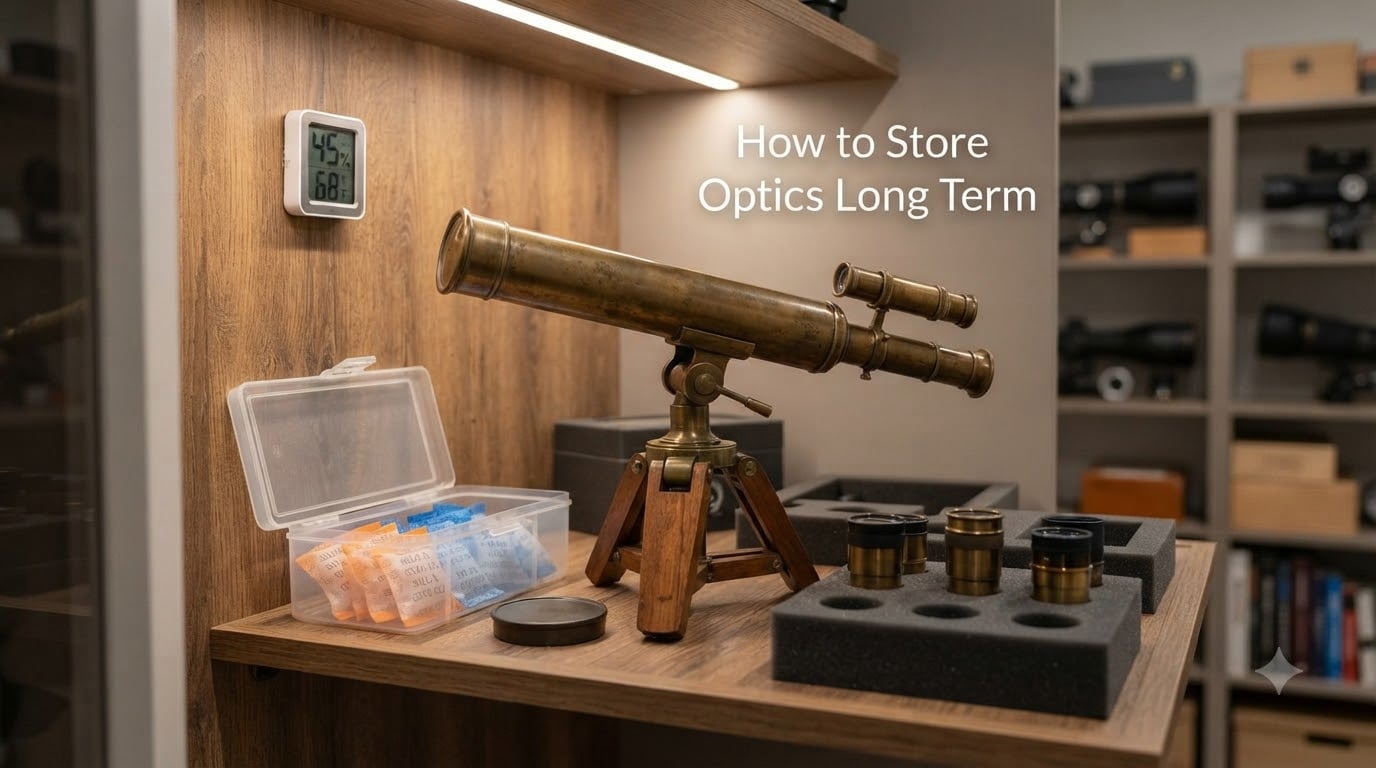
I learned the hard way that optics storage is not a “set and forget” task. After leaving a refractor in…

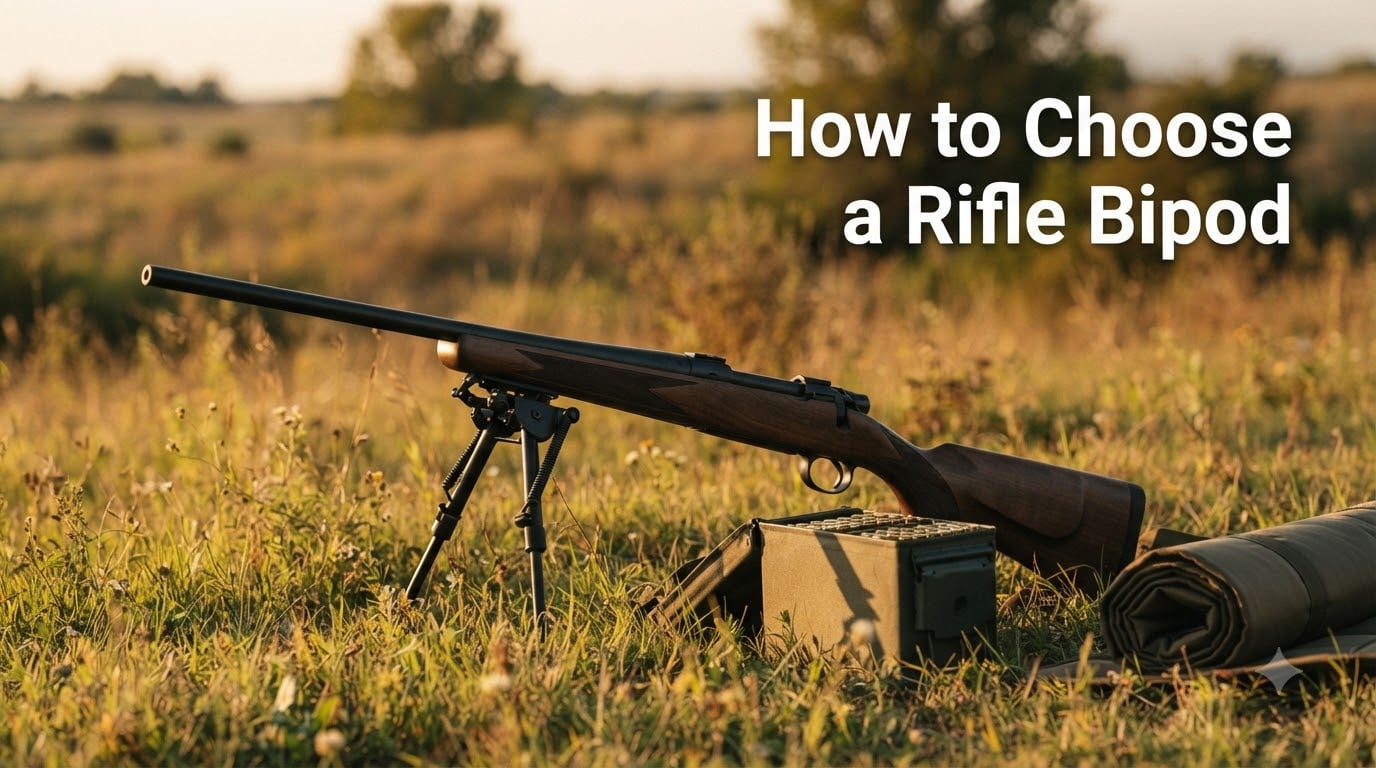
Choosing the right rifle bipod changed how I shoot at distance. After testing 12 bipods across hunting and competition setups, I learned that the wrong model will leave you frustrated on every range trip.
When I started researching how to choose a rifle bipod, I assumed weight and price were the only real decisions. They are not. The mounting interface, height range, and functional features matter just as much, and getting any one wrong means a bipod that does not fit, does not deploy properly, or does not stay put when you squeeze the trigger.
Our team has spent three months and roughly 1,400 rounds behind bipods ranging from budget $40 models to $450 competition rigs. This guide condenses that work into a three-factor framework you can apply to your own rifle. If you are also dialing in your scope, our rifle scope turret systems breakdown pairs well with the selection process below.
A rifle bipod is a two-legged support that attaches to the underside of a rifle’s forend to create a stable shooting platform. It reduces the muscle effort and body tremor that degrade group size, especially when shooting prone or from a bench.
Bipods matter because they anchor the front of the rifle at two fixed points while you provide the rear support. That triangle of contact eliminates one of the biggest variables in precision shooting: involuntary movement. Without a bipod, even skilled shooters add 0.3 to 0.7 MOA of vertical dispersion to otherwise capable rifles.
The bipod also creates repeatability. A good setup lets you find the same natural point of aim shot after shot, which is critical for both calling misses and tracking zero across sessions.
The mounting interface is the single most important decision in bipod selection, because no amount of money fixes an incompatible mount. There are four main systems on the market today.
Picatinny is the most universal bipod mount. If your rifle has a Picatinny rail on the bottom of the forend, almost any bipod will attach using a built-in clamp or a separate adapter. This is the default choice for AR-15s and most modern precision rifles.
The downside is weight. Picatinny clamps add bulk, and some shooters find them noisy when the bipod flexes during recoil. For most users, the compatibility trade-off is worth it.
M-LOK has largely replaced KeyMod on newer rifles, and bipod manufacturers followed. Dedicated M-LOK bipods attach directly to the slots on your handguard using T-nuts, which makes for a low-profile, lightweight setup. Magpul bipods are the most common example.
M-LOK bipods require a dedicated M-LOK mount. You cannot put a Picatinny bipod directly on M-LOK without an adapter plate, so check your handguard before you buy. Once mounted correctly, M-LOK is every bit as rigid as Picatinny and noticeably lighter.
Sling swivel studs have been on hunting rifles for decades, and bipods like the Harris series attach directly to this stud with a simple screw-in collar. If you own a traditional bolt-action hunting rifle, you almost certainly have a swivel stud.
This is the lightest, fastest setup because there is no clamp or rail. The trade-off is that swivel stud bipods generally offer fewer features, and the stud itself can loosen over time if you do not check it periodically.
For competition shooters running precision rifle series (PRS) matches, ARCA Swiss rails have become the standard. ARCA allows quick attachment and detachment without losing zero, plus the ability to slide the bipod fore and aft for fine-tuned positioning. The ARMS 17S system serves a similar role.
These are specialized mounts. If you do not already have an ARCA rail on your rifle, this is not where you start.
Height range determines whether your rifle sits comfortably at your natural point of aim. Most bipods cover between 6 and 13 inches when fully deployed, but the right range depends almost entirely on how you shoot.
Prone is the lowest shooting position, and most prone work happens with a bipod height between 6 and 9 inches. If you shoot mostly from the ground, hunting from a belly-down position, or running low-profile PRS stages, this is your range.
A 6 to 9 inch bipod also folds compactly against the forend, which matters for backcountry hunters who count every cubic inch in their pack.
Most centerfire hunting and general-purpose shooting happens in the 7.5 to 10.6 inch range. This covers prone, sitting behind a low barrier, and kneeling on a downhill slope.
If you buy only one bipod and want it to handle 90% of what you encounter, this is the range to target. Brands like CVLIFE, Caldwell, and entry-level Atlas models all hit this window.
Benchrest shooters and anyone shooting from a tall barricade needs 10 inches of height or more. Extended bipods reach 13 to 15 inches fully deployed, and some dedicated benchrest rigs go even higher.
For competition use on elevated stages or any prone-from-table shooting, you need this range. For field hunting, anything above 10 inches tends to feel tippy on uneven ground.
Notched legs lock into fixed positions with a spring-loaded pin. They are fast, repeatable, and reliable. Smooth-adjust legs use friction collars instead and let you micro-tune the height, which is useful for very long-range prone shooting but slower to deploy.
For most users, notched legs are the right choice. If you are chasing sub-half-MOA groups on steel at 1,000 yards, smooth-adjust has a real advantage.
Once the mount and height range are locked in, the functional features determine how the bipod behaves in the field. Four features matter most.
A 360-degree swivel lets the bipod rotate horizontally so you can track moving targets or swing between multiple targets without picking up the rifle. PRS competitors consider this essential because match stages often have swingers.
For static prone shooting and most hunting, swivel is less important. If you never shoot movers, you can save weight and money by skipping it.
Tilt (also called cant) lets the rifle lean left or right on uneven ground without the bipod feet moving. This is critical for shooting on sidehills, where you want the rifle level but your body is angled.
Look for at least 15 to 20 degrees of tilt in each direction. Anything less feels restrictive on real terrain.
Quick-release levers let you take the bipod off without tools, which is great if you swap the bipod between rifles or run the rifle without it for carry. Permanent mounts are lighter and stiffer.
Quick-release is a quality-of-life feature, not a performance feature. If you leave the bipod on the same rifle for months, skip the lever and save the weight.
Spring-loaded legs deploy automatically when you press a button, which is faster than pulling each leg down by hand. Most modern bipods have this. Foot options matter more: rubber feet grip hard surfaces quietly, while spiked feet dig into soft dirt and grass for stability on uneven terrain.
Some bipods let you swap feet. That flexibility is worth a small premium if you shoot in mixed environments.
Material affects three things at once: weight, rigidity, and cost. Aluminum is heavy but cheap. Steel is heavier but nearly indestructible. Carbon fiber is light and stiff but expensive.
For a lightweight hunting rifle in 6.5 Creedmoor or .308, an aluminum bipod in the 11 to 14 ounce range is the sweet spot. Heavier bipods cause balance issues on rifles under 7 pounds, and you will feel them on long hikes.
For competition rifles in 6mm and 6.5 PRC that already weigh 12 to 15 pounds, weight matters less and rigidity matters more. A 14 to 18 ounce steel or heavy-duty aluminum bipod is appropriate.
Forum users on r/longrange frequently warn against putting a 14 ounce competition bipod on a 6.5 pound mountain rifle. The balance feels wrong, and the rifle wants to tip forward when you shoulder it.
Most guides treat bipod selection as one decision. It is really three decisions layered on top of each other, because the position you shoot from dictates almost everything else.
If 80% of your shooting is prone, prioritize a low-profile bipod in the 6 to 9 inch range with strong cant and a stable footprint. Skip swivel unless you also shoot PRS-style stages.
Hunters need a lightweight, packable bipod that deploys quietly and folds flat. Sling swivel stud mounts keep weight down. Aim for under 12 ounces with the mount included.
PRS and NRL Hunter competitors need full-feature bipods with swivel, generous tilt, ARCA or 17S mounting, and quick height adjustment. Weight is acceptable up to 18 ounces because the rifle is already heavy and balanced for it.
Benchrest is its own world. Tall bipods, smooth-adjust legs, and dedicated benchrest brands like Sinclair dominate. If you are shooting from a bench at 100 and 200 yards, you are looking at a different category entirely.
Once you have decided on the mount, height range, and feature set, the final decision is matching the bipod to your primary shooting discipline. Three recommendations cover most shooters.
Entry-level bipods from CVLIFE, UTG, and similar brands cover the basics. They mount to Picatinny or M-LOK, deploy between 6 and 10 inches, and fold flat. For casual range use and learning, they work fine.
The trade-off is finish quality, smoothness of adjustment, and long-term durability. Expect to replace or upgrade after one to two years of regular use.
Harris, Magpul, and Caldwell bipods occupy the mid-range. These are reliable, well-supported, and offer meaningful upgrades over budget options in terms of smoothness and feature quality.
For most hunters and recreational precision shooters, a mid-range bipod is the right answer. You get the features that matter without paying for the last 10% of performance that competition shooters need.
Atlas, Accu-Tac, Area 419, and MDT CKYE-POD are the names you hear when PRS shooters talk. They cost more, but they offer the best pan, tilt, and rigidity available.
If you are not competing, this category is overkill. The extra money buys you adjustability you will not use and weight you do not need on a hunting rifle.
Price is a real constraint, and it tracks roughly with feature count and material quality. Here is how I would break down the market.
Bipods in the budget range handle the basics and are appropriate for learning. The mid-range is where most users should land. The premium tier is reserved for competition and dedicated long-range work.
One important tip from forum regulars: borrow or rent before you buy if possible. Bipods feel different in person than on paper. A 14 ounce aluminum bipod that seemed perfect on a spec sheet may feel front-heavy on your specific rifle.
Installation is usually a five-minute job, but a few habits extend bipod life considerably.
Check mounting screws after the first 50 rounds. Recoil can loosen Picatinny clamps and M-LOK T-nuts. Once you confirm the mount is settled, check monthly.
Keep legs and pivots clean. Dirt and grit are the main failure mode for cant and pan mechanisms. Wipe down the legs after muddy range sessions and occasionally apply a light lubricant to the pivot points.
Inspect feet for wear. Rubber feet wear out faster than you would expect, especially on concrete benches. Spiked feet bend if you torque on them, which is normal and often correctable by hand.
Confirm the mounting interface on your rifle (Picatinny, M-LOK, or sling swivel stud) and your most common shooting position. These two decisions narrow your choices by 80% before you compare brands or features.
The three common systems are Picatinny rail (universal clamp), M-LOK (direct slot mount for modern handguards), and sling swivel stud (traditional bolt-action mount). ARCA Swiss and 17S are specialized systems for competition rifles.
Pick a height range that matches your most common shooting position. 6 to 9 inches for prone work, 7.5 to 10.6 inches for general hunting and range use, and 10 inches or more for benchrest or elevated barricade shooting.
Lightweight bipods in the 10 to 12 ounce range with sling swivel stud or M-LOK mounting work well for hunting. Prioritize packable folding design and quiet rubber feet over swivel and tilt features.
Expensive bipods justify their cost for competition shooters chasing the last fraction of MOA. For hunting and recreational use, mid-range bipods from Harris, Magpul, or Caldwell deliver most of the performance at a fraction of the price.
If you shoot mostly prone on a traditional hunting rifle, pick a sling swivel stud bipod in the 7.5 to 10.6 inch range with strong cant and you are set. If you run an AR-15 or modern precision rifle, go with an M-LOK or Picatinny bipod that matches your handguard. If you are getting into PRS competition, commit to a full-feature Atlas or Accu-Tac on an ARCA rail.
The bipod is one of the few rifle accessories that pays for itself in better groups and less shooter fatigue. Take the time to match the mount and height to your rifle, and you will shoot better from day one in 2026.