How to Fix Foggy Binoculars 2026
I learned how to fix foggy binoculars the hard way on a 4 a.m. street shoot in Hanoi, when steam…

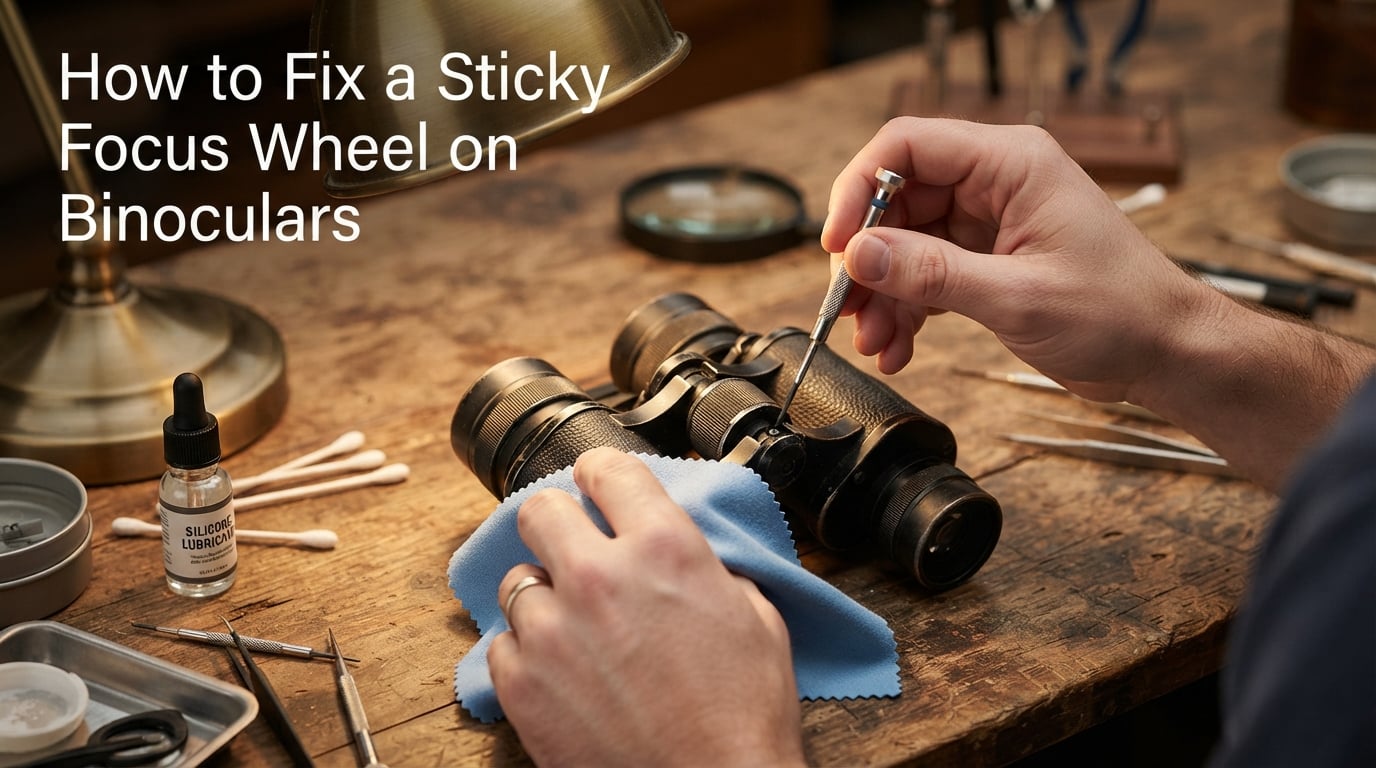
Nothing kills a birding session faster than a focus wheel that suddenly stops mid-rotation. A sticky focus wheel on binoculars is one of the most common mechanical complaints we hear from readers in 2026, and the good news is that most causes are fixable at home with the right lubricant, a clean cloth, and about twenty minutes of patience. In this guide, our team walks through the diagnosis, the tools, the step-by-step repair, and the warnings that save your optics from accidental damage.
If your wheel feels tacky, gritty, or simply frozen solid, the fix below covers every scenario we have encountered in birding, hunting, and astronomy forums over the last decade. You will learn how to tell sticky rubber armor apart from a seized internal mechanism, which lubricant is safe for optical glass, and exactly when to stop and send the binocular in for professional service instead.
Before touching any lubricant, identify whether you are dealing with sticky rubber armor or a sticky internal mechanism. The two problems look similar on the surface but have completely different fixes. Sticky rubber is a surface problem on the outer grip; a sticky mechanism is a lubrication problem inside the bridge.
Sticky rubber armor is what most people actually mean when they ask why has the rubber on my binoculars gone sticky. The black rubber coating on many binoculars degrades over time, especially in warm or humid storage, leaving a tacky residue on your fingers. It feels like the wheel is sticky because the grip itself has broken down. The remedy is to clean the rubber, not to lubricate the focuser.
A sticky mechanism, on the other hand, feels like resistance inside the wheel. The wheel becomes hard to turn, then suddenly releases, or it grinds instead of gliding. This is the classic dried-optical-grease symptom and is the issue this repair guide is built to solve. If you cannot feel grit with your fingers but the wheel fights you as you turn it, you are dealing with the internal mechanism.
Run your thumb across the rubber armor. If it feels tacky like adhesive, you have the rubber degradation issue and should jump to the cleaning method in Step 2. If the rubber feels normal but the wheel resists turning, you are dealing with dried grease inside the helicoid and need the lubrication steps that begin at Step 3.
Gather these before you start. Having everything in one place turns a fiddly job into a twenty-minute task.
The full repair follows eight steps. Most readers only need Steps 1 through 4 to solve the common sticky-focus problem; the later steps are reserved for fully seized mechanisms that need disassembly. Skip ahead to Step 6 if your wheel will not turn at all.
Before doing anything else, gently rotate the focus wheel through its full range about twenty to thirty times. This redistributes any remaining lubricant and can free a wheel that has only mildly stiffened. BirdForum users report that out-of-box stiffness often improves after a few minutes of continuous rotation. Do not force the wheel; if it stops, stop with it.
Dampen a microfiber cloth with isopropyl alcohol (never drip alcohol directly onto the binocular) and wipe the entire exterior rubber, paying special attention to the focus wheel and any bridge rubber. The tacky rubber-debris coating your cloth picks up is exactly what was making the wheel feel sticky. Let the binocular air-dry for five minutes before moving on.
If the wheel still resists, lightly dampen a cotton swab with naphtha and run it around the exposed edge of the focus wheel shaft where it meets the bridge. Do not flood the area; naphtha carries no protective film and will creep into the optical path if over-applied. Rotate the wheel as you apply, so the solvent seeps along the helicoid threads.
After five minutes of drying time, work the wheel again. If motion is smoother, you have completed the most common fix. If stiffness returns within a few days (a known limitation documented on the mflenses forum), move on to Step 5 for a longer-lasting treatment.
Hold the can of pure silicone lubricant six inches from the focus wheel and apply a one-second burst. Rotate the wheel continuously as you spray, so the silicone migrates evenly along the helicoid. Silicone does not dissolve hardened grease but it does coat the threads with a long-lasting slippery film. This is the recommended fix in many camera-repair communities and is also a good match for cold-weather operation when naphtha alone dries too quickly.
If the wheel refuses to turn at all, you are dealing with fully seized grease. Locate the centre screw on the focus wheel (usually a small Phillips or proprietary Torx), apply a tiny drop of naphtha around the shaft where it enters the bridge, and wait ten minutes. Apply gentle rotational force, never more than you can apply with two fingers. If the screw turns but the wheel does not, the helicoid is rusted or the grease has fully solidified.
This is the technique demonstrated in detailed binocular-repair guides for fully seized wheels. Use a hair dryer on medium heat, held about four inches from the focus housing, for thirty seconds. The goal is to soften the optical grease, not to cook the binocular. Move the dryer in small circles to avoid hot spots, then immediately try to rotate the wheel.
If disassembly exposes the helicoid threads, clean them with naphtha and a soft brush, then apply a thin film of lithium-based optical grease (used by camera repair shops, never automotive lithium). Reassemble the wheel, tighten the centre screw snugly without forcing it, and work the wheel through its full range to distribute the fresh grease.
The single most-asked question on binocular and camera forums is what lubricant is safe for binocular focus. Below is a plain-text breakdown of the four products most often mentioned, and our experience using each on real focus mechanisms.
The clear lesson from years of forum discussion: WD-40 dissolves the original grease but leaves a thin film that re-hardens within weeks, often worse than before. Naphtha works for a temporary rescue and is the right call when you do not yet know the lubricant history of the binocular. Silicone spray is the best friend of any binocular owner who wants a five-minute fix without disassembly. Optical lithium grease is the gold standard for a permanent repair but requires the surgery described in Steps 6 through 8.
A surprising number of readers damage their binoculars attempting fixes that look reasonable but ruin the helicoid or strip a centre screw. Here are the mistakes our team has seen most often.
Some focus problems are beyond a home repair. Knowing when to stop protects both your binocular and your wallet. If the helicoid is visibly scored, if the wheel turns but the focus does not change, or if the centre screw refuses to back out after two days of naphtha treatment, the next step is professional service.
Manufacturer warranty service is the right call for any binocular under coverage. Bushnell’s no-questions-asked replacement policy is widely cited by birders; one BirdForum user reported sending in a Legend M with a sticky focuser and getting it back with a fully replaced focus assembly. Nikon offers similar service through authorized repair centers. Vortex’s VIP warranty covers focus issues across the entire binocular, regardless of age. Swarovski and premium European brands route service through dedicated boutiques and turn-around times run several weeks.
Third-party specialists like Suddarth Optical in the United States, or established camera-repair shops in Europe and Asia, can rebuild helicoids with factory-spec lubricants for a fraction of the cost of a new premium binocular. We recommend their service for any binocular over 2026 years old where the focus issue is permanent and disassembly-required.
A focus mechanism that is properly cared for rarely needs the surgery above. Three habits dramatically extend the life of any binocular’s lubricant and prevent the sticky rubber problem that traps so many owners.
Store binoculars at room temperature when not in use. Cold weather thickens grease temporarily and hot car trunks bake the lubricant into a thick paste over a single summer. A padded case in a climate-controlled closet is the single best investment for any binocular owner.
Work the focus wheel weekly even when you are not using the binoculars. Five full rotations spread the lubricant evenly and prevent settling. This is the same principle that keeps mechanical watches running and is the cheapest preventive maintenance available.
Keep the rubber armor clean and dry. Wipe the binocular with a dry microfiber cloth after every use in humid or wet conditions. The sticky rubber problem is mostly a moisture-trapped degradation issue and a dry binocular keeps the rubber factory-fresh for decades.
Sticky rubber armor on binoculars is caused by the breakdown of the outer rubber coating over time, especially in warm, humid, or salty storage conditions. The rubber polymers degrade into a tacky residue that transfers to your fingers. Clean the rubber with a microfiber cloth dampened with isopropyl alcohol (90 percent or higher) and let the binocular air-dry. Avoid spraying any lubricant near the rubber because solvent will accelerate the breakdown.
If a binocular refuses to focus at all, the internal optical grease is either fully solidified or contaminated with debris. First, work the focus wheel through its full range thirty times with gentle pressure. If stiffness persists, apply a tiny drop of naphtha (lighter fluid) around the focus-wheel shaft and rotate continuously. If the wheel still will not turn, apply hair-dryer heat for thirty seconds to soften the grease, then rotate. Send to manufacturer service if the focus does not respond within two days of treatment.
A stiff focus ring is usually caused by dried internal optical grease. Apply pure silicone lubricant in a one-second burst from six inches away while rotating the wheel continuously, so the silicone migrates along the helicoid threads. Work the wheel through its full range immediately afterward. Silicone does not dissolve hardened grease but it does coat the threads with a long-lasting slippery film. For a permanent fix, the rings will need disassembly and lithium-based optical grease replacement.
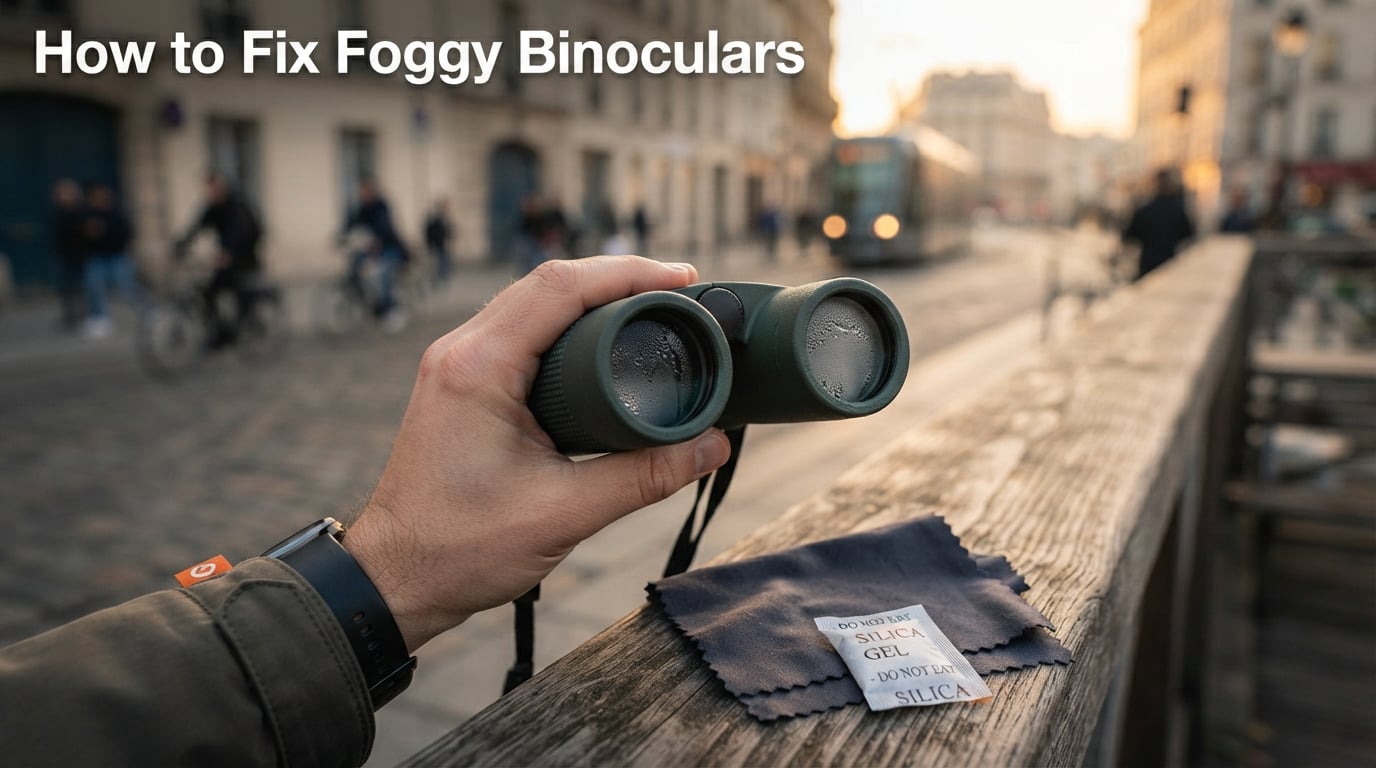
To defog binoculars, bring them slowly to the temperature you will be using them in. Do not wipe the lenses with a cloth when fogged because this can damage the coatings. Instead, let them air-dry or use a low-warm setting of a hair dryer held at least six inches away. Many premium binoculars ship with anti-fog nitrogen purging; if moisture appears inside the optical path, that seal has failed and the binocular needs factory service.
A sticky focus wheel on binoculars is rarely a write-off. Most readers solve it in under an hour with a microfiber cloth, naphtha, and a one-second burst of silicone spray. Use our step-by-step guide above to diagnose the cause, choose the right lubricant, and apply it safely, then build the habit of working the wheel weekly so the mechanism stays smooth for decades.
For readers who want to learn more about binocular care, our team has also published guides on how to focus binoculars, on repairing binoculars at home, on fixing double vision in binoculars, on choosing the right pair for the opera with our best theater binoculars roundup, and on smoother manual-focus work with the best follow focus systems for cameras. If your focus wheel is still sticky after the steps above, send the binocular in for service; a clean, oil-free mechanism will outlast most of us.