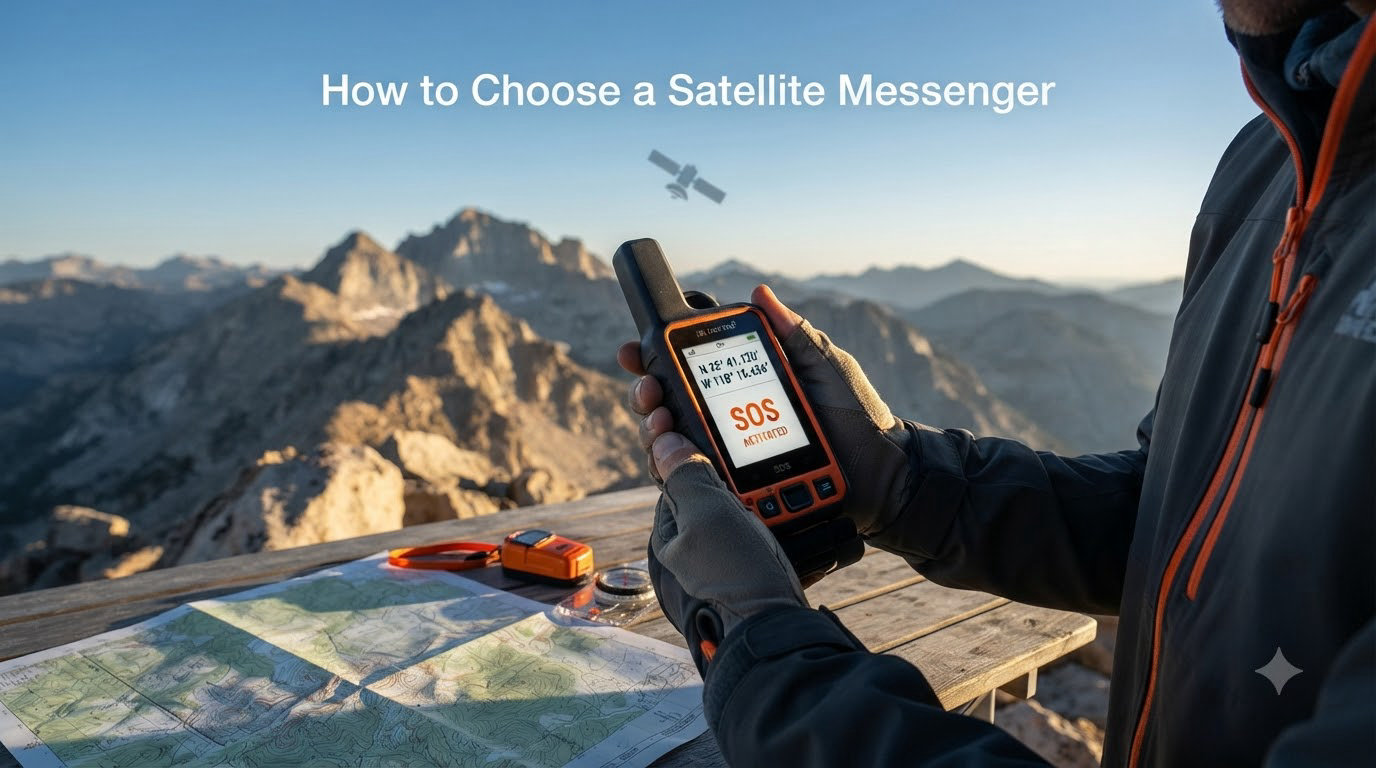
How to Choose a Satellite Messenger 2026
Choosing the right satellite communicator used to feel simple: pick a Garmin inReach, activate a plan, and hit the trail.…

When I started learning how to choose a headlamp for hunting, I made the same mistake most new hunters make: I grabbed the brightest headlamp I could find at the sporting goods store. Two months later, I was crouched in a treestand spooking every deer within 200 yards. The fix wasn’t more lumens. It was the right color, the right beam, and the right battery setup for the conditions I actually hunted in.
Choosing a hunting headlamp isn’t about buying the most powerful light on the shelf. It’s about matching brightness, color modes, beam pattern, battery type, and durability to the way you hunt. After testing more than 20 models over the past four seasons across deer, turkey, and predator hunts, our team has learned which specs matter and which ones just inflate the price tag. This guide walks you through every decision so you can pick the right headlamp the first time.
Whether you’re gearing up for your first pre-dawn sit or upgrading after a frustrating season of bad headlamp choices, this guide will help you understand exactly what to look for in 2026 and beyond.
A hunting headlamp isn’t just a regular headlamp with a camo strap. The features that matter in the field diverge sharply from what hikers or campers need.
The biggest difference is light color. Hunting headlamps almost always include a red or green mode that preserves your night vision and is less visible to deer, hogs, and other game. General-purpose headlamps rarely offer this, and when they do, the color output is usually an afterthought rather than a true, separately regulated LED.
Beam control is another differentiator. A hiker just needs a wide flood beam to see the trail. A hunter often needs a tight, long-distance spot beam to locate a buck 150 yards across a field, then a wide flood for processing an animal or navigating brush. The best hunting headlamps offer adjustable focus or dual beams in one housing.
Finally, hunting headlamps are built for the conditions you actually hunt in. That means rain, sub-freezing mornings, fog, mud, and the occasional drop off a ladder stand. Look for IPX4 or higher water resistance and impact ratings that go beyond a simple “drop test.”
Lumens measure total light output. Beam distance measures how far that light reaches before it drops to moonlight levels. Both matter, but they are not the same thing, and confusing them is the most common buying mistake.
Here’s how I think about lumens for hunting scenarios:
Beam distance, measured in meters, tells you how far the light reaches. For most deer hunting at close to medium range, 60 to 100 meters of throw is plenty. Predator hunters and spot-and-stalk hunters often want 150 meters or more so they can glass a field without walking into it.
One trap I see hunters fall into is buying a 2000-lumen headlamp and using it on the lowest setting all the time. That kind of overkill runs through battery in 45 minutes. A well-regulated 400 to 500 lumen headlamp with a tighter beam will serve you better in the long run.
Runtime matters more than raw lumens once you’re sitting in the dark for four hours. A headlamp that promises 1000 lumens but only delivers it for 90 minutes isn’t useful for a long sit.
There are three battery categories you’ll see:
Cold weather is where battery choice really shows up. Lithium-ion batteries lose significant capacity below freezing. We’ve watched runtimes drop by 30 to 40 percent on 20-degree mornings. If you hunt late season, look for a headlamp with regulated output that maintains brightness as the battery drains, and carry spare cells in an inside pocket close to your body.
When you compare headlamps, look for the runtime at the brightness level you actually plan to use. Marketing claims of “10 hours of runtime” usually refer to the dimmest moon-glow mode. Runtime at 300 lumens is often less than two hours.
This is the question I get asked most: what color headlamp is best for hunting? The honest answer is that each color has a job, and the best hunting headlamps give you all three.
Red light is the classic choice because it preserves your natural night vision. Your eyes adjust back to darkness within seconds after turning off a red LED, which is critical when you’re cycling between checking your phone, scanning with binoculars, and watching a field. Red also reads as less alarming to deer, hogs, and most predators, although this varies by species and pressure level.
Green light is popular among predator and hog hunters because many animals see green as a dimmer light than it appears to humans, and some claim it shows blood trails well. The science is mixed, but green has a real advantage in foggy conditions because green wavelengths scatter less than white light.
White light is still essential for tasks that demand detail recognition: reading maps, field dressing, checking gear, and long-distance spotting. Reserve white for when stealth isn’t a priority.
From a practical standpoint, the best hunting headlamp lets you cycle between colors without clicking through bright white every time. Look for separate buttons or a smart cycle order that goes red, green, off, red. That way you never blast white light and ruin your dark adaptation in the middle of a still hunt.
Beam pattern affects how useful your headlamp feels in the field. There are three basic types.
Flood beams spread light wide and even. They’re ideal for camp tasks, walking trails, and working on an animal. A pure flood beam won’t reach far, so it isn’t useful for spotting across a meadow.
Spot beams focus light into a tight, far-reaching cone. These are what you want for glassing distant edges and locating a moving animal. The downside is tunnel vision. You see the buck but not the trail under your feet.
Adjustable or dual beams combine both, either by sliding the lens to focus the beam, or with two separate LEDs that can be used alone or together. This is the configuration I recommend for most hunters. It costs a little more, but the flexibility is worth it.
When you’re testing a headlamp in the store, shine it against a wall about 15 feet away. If the spot beam shows a clearly defined hot center with a smooth falloff, the optic is good. If the hot spot looks splotchy or has rings, you’ll see those artifacts in the field and they can hide details when tracking.
Hunting is hard on gear. Rain, mud, blood, snow, and the occasional tumble off a tree platform all take their toll. Build quality is a real consideration.
IP ratings describe water and dust resistance. IPX4 means splash-resistant from any direction, which is the minimum I’d accept. IPX7 means the headlamp can survive immersion in a meter of water for 30 minutes. Real-world hunting rarely requires that, but if you wade creeks or hunt heavy rain, it adds peace of mind.
Impact resistance is rarely listed in numbers but matters as much as water rating. A headlamp that survives a 1-meter drop onto hardpack dirt is fine. A headlamp rated for 2 meters is better. Polymer bodies bounce, aluminum housings dent but keep working. The choice depends on your hunting style.
Cold weather performance is the spec most buyers overlook. Below 20°F, plastic straps stiffen, batteries lose capacity, and LCD screens slow down. Avoid touch-sensitive controls if you hunt late season. Look for tactile buttons, removable cells you can keep warm in a pocket, and simple mechanical switches.
I’ve personally had two headlamps fail on cold November mornings: one because the rubber switch cover froze, and another because the strap cracked at the buckle. Both happened at temperatures well within the rated operating range, which is why I now prefer simple, rugged designs over feature-packed models for serious hunting.
A headlamp that bounces or pinches will get left in the truck. Comfort matters more than people think when you’re wearing the light for six hours on a still hunt.
Weight is the biggest comfort factor. Anything over 5 ounces starts to feel heavy after a couple of hours. The lightest hunting headlamps come in around 2.5 ounces, but they usually sacrifice battery life and brightness.
Strap design matters as much as weight. A single-strap headlamp works fine for short walks. For long sits and active hunting, look for a top strap that distributes weight across the crown of your head. Adjustable straps with silicone grippers keep the headlamp from sliding when you sweat or wear a hat.
Try the headlamp on over a winter hat and a baseball cap. If it fits both, it will fit you year-round. Our team has learned this lesson the hard way after buying great headlamps that became useless once a beanie went under them.
The specs above give you the toolkit. The art of choosing a hunting headlamp is applying those specs to the way you actually hunt.
You sit still for hours, then need to navigate quietly in the dark at first light. Prioritize red light mode, lightweight design, long runtime on medium brightness, and a comfortable strap for long-term wear. Skip high-output spot beams unless your stand overlooks an open field.
You cover ground and need to glass far. Prioritize beam distance, adjustable focus, white and green modes, and a removable battery so you can swap spares. Brightness matters more here than on a still hunt, but balance it with weight.
You need to spot dark blood on leaves and grass from 20 to 50 yards. White light at 400 to 600 lumens with a tight beam works best. Green can help on dry leaves and in fog. Color rendering index (CRI) matters more than people realize. Higher CRI makes blood droplets stand out from surrounding vegetation.
You’re stationary but need to react fast. You want quick mode switching, separate buttons for red and white, and a regulated beam that doesn’t flicker as the battery drains. Weight matters because you might be wearing it all morning.
After watching dozens of new hunters make the same buying mistakes, here are the pitfalls I’d warn anyone against.
Don’t buy on peak lumens alone. A regulated 500 lumen headlamp will outperform an unregulated 1500 lumen model over a full evening of hunting.
Don’t ignore strap design. The most expensive headlamp in the world is useless if it bounces every time you take a step.
Don’t skip the red light mode to save money. Once you’ve used a quality red mode in the woods, you won’t go back.
Don’t trust the cheapest Amazon listing. Build quality, beam quality, and LED binning vary widely at the budget end of the market. We’ve tested budget lights that look great in the box and fall apart after one season.
Finally, don’t forget to test your headlamp before season. Charge the battery, click through every mode, walk around your yard at night, and make sure it actually does what you need it to. The middle of a hunt is the wrong time to discover a button doesn’t work the way you thought.
If we had to boil down everything above into one piece of advice, it’s this: choose a headlamp that matches your hunting style, not the one with the biggest spec sheet. A regulated 400 lumen light with red and green modes, IPX7 rating, and a comfortable strap will serve most deer and turkey hunters for years.
For the predator and spot-and-stalk crowd, step up to 600 to 1000 lumens with adjustable focus and a removable battery. The extra brightness and runtime are worth the extra weight.
Whatever you choose, take it out before opening day. Test it in the dark, in the cold, in the rain. Learn its quirks. A headlamp you trust because you’ve used it is worth more than any spec sheet in 2026.
Once you’ve picked your headlamp, pair it with a good knife and a solid pair of binoculars, and you’ll have the three pieces of gear that matter most when the sun goes down.
Red light is the most popular and versatile choice for most hunting because it preserves your night vision and is less visible to deer and most game. Green light works well for predator and hog hunting, especially in fog. The best approach is a headlamp that includes red, green, and white modes so you can match the color to your task.
For most deer and turkey hunting, 300 to 600 lumens is the sweet spot. Predator hunters, hog hunters, and anyone blood trailing at night should look for 600 to 1000 lumens. Pre-dawn treestand hunters can often get by with 100 to 300 lumens. Anything above 1000 lumens is reserved for spotlighting and burns through battery quickly.
Red is generally the best color for deer hunting because it preserves your natural night vision and is harder for deer to detect than white. Some hunters prefer green, especially in foggy conditions, because green wavelengths scatter less than white light. Look for a headlamp that lets you switch colors without clicking through bright white first.
The best headlamp for hunting depends on your style, but a strong all-around choice offers 300 to 600 lumens, separate red and green modes, an IPX4 or higher water rating, regulated output, and a comfortable strap system. Predator hunters benefit from brighter 600 to 1000 lumen models with adjustable focus and removable batteries.
Green light is a popular choice for hog and predator hunting because many of these animals see green as a dimmer light than it appears to humans. Green also performs better in fog than red or white. Red still works and preserves your night vision, so the best option is a headlamp with both colors so you can adapt to conditions.