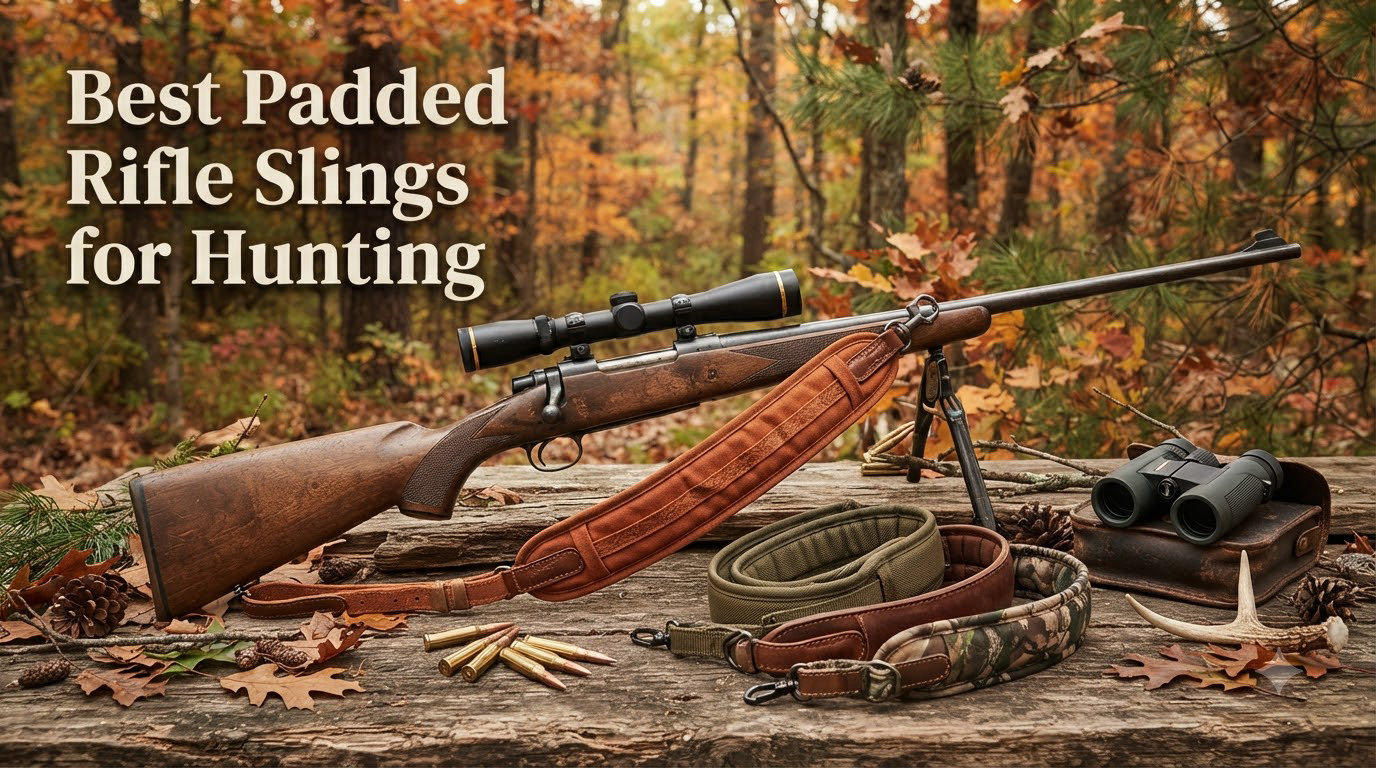
8 Best Padded Rifle Slings for Hunting (September 2026)
After 90 days of field testing across elk country, whitetail ridges, and weekend range trips, I can tell you exactly…

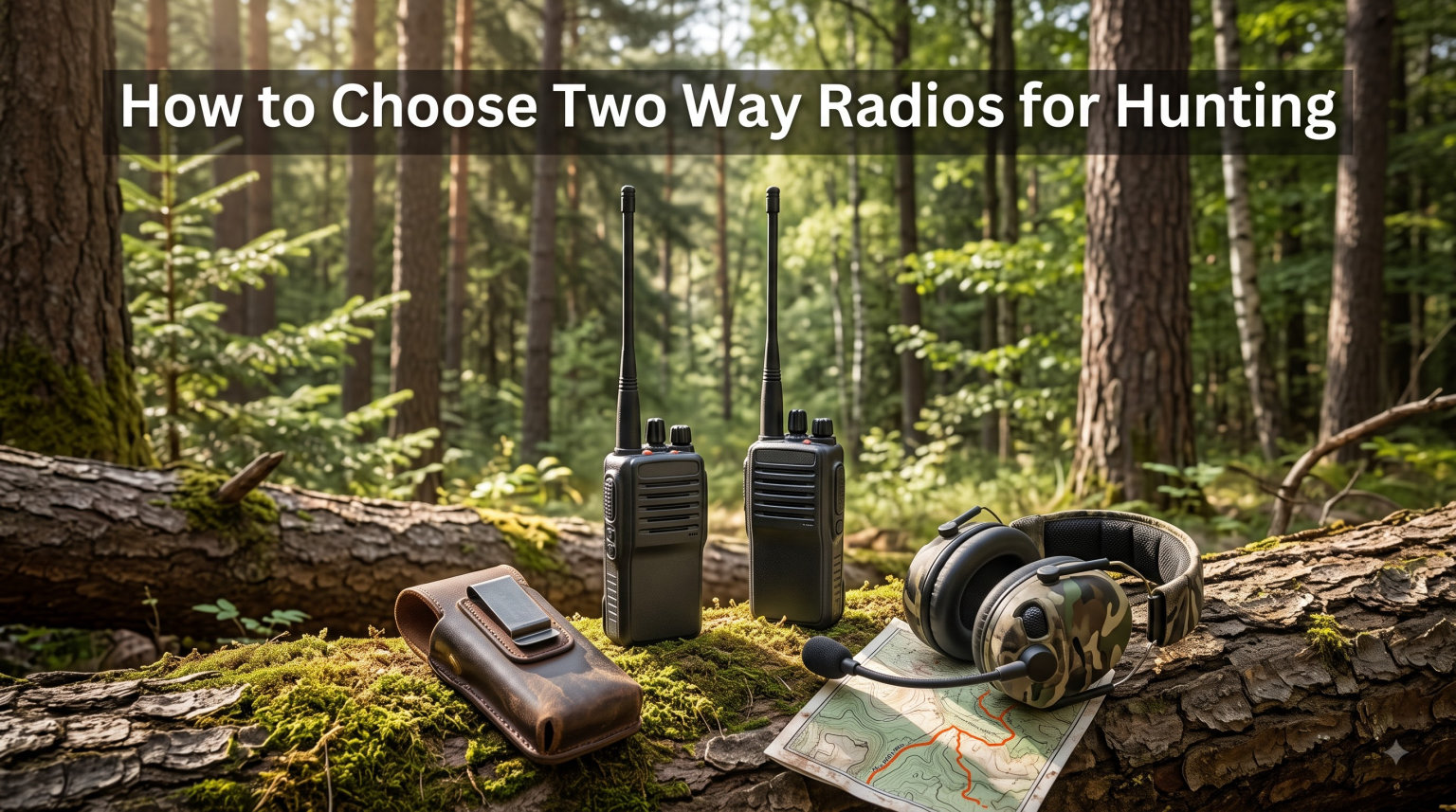
How to choose two way radios for hunting comes down to one question: will your party stay in contact where you actually hunt? I learned this the hard way when a buddy and I counted on a budget pair in steep terrain, only to lose the signal less than halfway across the drainage.
A reliable hunting communication device is not just convenient gear. It helps a spotter and hunter coordinate, lets a group report movement safely, and gives everyone a way to call for help when cell service disappears. This guide explains the features that matter, the limits of advertised range, and the radio type that fits different hunting groups.
Choose a two-way radio by matching the service, range, durability, and battery system to your terrain, group size, and hunt length. Most hunters should start with an FRS radio for a simple, license-free setup, or a GMRS radio for greater power and better performance when licensed users need more flexibility.
For thick brush and short checks between a blind and vehicle, a compact FRS pair is often enough. For mountains, large properties, or a hunting party spread across a ridge, GMRS is usually the stronger choice.
My decision rule is simple: buy for the worst terrain and longest day you reasonably expect, not for a clear view across an open field. A radio that barely works on a calm day is the wrong radio for a safety plan.
FRS and GMRS are the two main choices for hunters in the United States. FRS is simpler and license-free, while GMRS offers more power and can use repeaters when the operator follows FCC rules.
FRS, or Family Radio Service, uses shared frequencies in the 462-467 MHz range and is available without an individual license. FRS radios are limited to lower power, so they work best for hunters operating close together in relatively open or moderately wooded country.
Most FRS hunting radios have fixed antennas and a compact handheld design. That makes them easy to pack, simple to operate, and a good choice for a first radio or for hunters who do not want a license or programming setup.
GMRS, or General Mobile Radio Service, also operates around 462-467 MHz, but permits higher power and repeater use. The FCC requires a GMRS license, and everyone in your hunting party who transmits should be covered by the license rules or operate only as recipients where permitted.
GMRS is a better fit for mountain hunting, large acreages, and groups that need dependable communication through more demanding terrain. It can still be affected by hills, trees, and canyon walls, so repeater access and antenna placement matter.
| Factor | FRS | GMRS |
|---|---|---|
| License | No individual license | FCC license required |
| Power flexibility | Lower-power operation | Higher-power options |
| Best use | Short-range brush and trail communication | Larger areas, mountains, and repeater networks |
| Typical user | Small groups and beginners | Experienced groups and long-range users |
The best range is not the biggest number printed on the box. Range depends on power, antenna height, terrain, foliage, weather, and interference, so a clear-path claim does not predict the distance you will reach in the woods.
Radio makers often describe maximum range under unusually favorable conditions. Those numbers may assume a flat landscape, little obstruction, and a high antenna position; none of those conditions describes every hunting situation.
Use the claimed range as a comparison clue, not a promise. I plan around the distance between the two points where contact matters most, then leave a generous margin for changing conditions.
Thick timber, wet vegetation, ridges, and deep canyons absorb or block radio signals. A valley can create a dead zone even when the two hunters are not especially far apart, while a ridge-top position may carry a signal much farther.
UHF signals, such as the frequencies used by FRS and GMRS, generally perform well around buildings and in wooded areas compared with longer wavelengths. They do not magically pass through solid ground or around a mountain.
A deer hunter communicating from a blind to a vehicle may need only a short, reliable link. An elk hunter coordinating across slopes may need more power, a better antenna, and a plan for repeaters or high ground.
For backcountry trips, I also carry a satellite messenger or personal locator beacon when the hunt is remote. A radio is valuable for immediate party coordination, but it should not be your only emergency backup.
The best hunting radio features are the ones that reduce surprises in the field: weather alerts, a battery plan, simple controls, and enough ruggedness for wet or cold conditions.
Weather resistance is important because hunting often means rain, snow, mud, and condensation. Look for a stated water-resistance rating and sealed construction rather than relying on a vague “weatherproof” label.
An IP rating gives you a more useful starting point than a marketing description. I prefer a radio that can handle rain and a brief accidental drop near water, then use a dry bag or protective case when conditions turn severe.
Plan for enough battery life to cover the entire hunt, including an unexpected delay. Rechargeable packs are convenient for repeated trips, while AA battery backup can keep a radio working when you are far from a charger or vehicle.
For a one-day hunt, a full charge and a disciplined transmit schedule may be adequate. For multiple days, I want a radio that accepts replaceable batteries or can use a protected power bank without exposing the radio to rain.
NOAA weather channels and weather alert functions help you react to a fast-changing forecast when you are away from a vehicle radio. They are especially useful in exposed country where lightning, cold, or sudden storms can change a hunt quickly.
Other helpful features include a flashlight, keypad lock, scan function, emergency alert, and a visible battery indicator. These do not replace a safety plan, but they make the radio easier to use when attention is divided.
VOX voice activation lets a radio transmit when it hears your voice, which can be useful when your hands are occupied. It can also trigger from wind or pack noise, so test the sensitivity before depending on it.
CTCSS privacy codes and DCS digital codes do not make your conversation private or encrypted. They reduce unwanted chatter by filtering transmissions that use the selected code, but other listeners on the same channel may still hear you.
FCC rules make the licensing decision straightforward: ordinary FRS use does not require an individual license, while GMRS operation requires a license. Check the current FCC requirements before relying on a radio, because rules and equipment capabilities can change.
You need an FCC GMRS license before transmitting on GMRS frequencies. A license covers the licensee’s immediate family members under the applicable rules, but every user should understand the authorization and follow the operating conditions.
FRS is the easier choice for hunters who want a radio that works after charging and a few button presses. It remains subject to FCC technical and operating rules, so “license-free” does not mean unrestricted in every circumstance.
Radio service rules are not the same as local hunting, park, fire, or land-use rules. Before hunting in a national forest, state park, or tribal area, check the managing agency and local regulations for any additional restrictions.
Good radio discipline matters as much as good radio hardware. A short, predictable protocol keeps a hunting group coordinated without filling the air with unnecessary conversation.
Choose a channel and privacy code together before the hunt, then make sure every radio is set identically. A privacy code mismatch makes a radio seem broken when the real problem is a menu setting.
Use a simple channel plan for the group and a separate channel for emergency coordination when your equipment and local rules allow it. Keep the radio on scan only when scanning helps; constant scanning can hide a quiet transmission or drain the battery faster.
Press the push-to-talk button, wait briefly, and then speak in a normal voice. Identify who is calling, give the message once, and leave a pause for an answer instead of repeating it immediately.
Keep conversations short, especially when several people share one channel. I use plain phrases such as “two deer moving east,” “wait,” “approach complete,” and “returning to the trail,” because they are easier to understand than long descriptions.
A spotter and hunter should agree on words for hold, move, wind, visibility, and an emergency. The spotter should avoid giving directions that make noise or force the hunter into an unsafe position, and the hunter should acknowledge critical instructions clearly.
Before separating, confirm that each person understands the route, meeting point, battery plan, and what to do if contact is lost. A written plan is much faster to follow than trying to remember several instructions through cold hands.
The most common mistake is choosing solely by maximum range. I also see hunters buy radios with fragile antennas, forget spare batteries, program every privacy code incorrectly, and assume a cell phone is a complete substitute for radio communication.
Do not ignore the antenna or carry a radio loose at the bottom of a pack. A protected clip, charged battery, consistent settings, and a short range test are more valuable than extra channels you never use.
Use the smallest system that reliably covers your real operating area, then add power and features only when the hunt demands them. The right two-way radio is the one your group can operate consistently from the first trailhead check to the final return.
For a pair moving between a vehicle, blind, and nearby stand, FRS is often the practical answer. Choose simple controls, good weather resistance, a comfortable clip, and a battery system you can recharge or replace easily.
For a small group, buy radios from the same family or at least confirm that their channel and privacy-code menus match. A 3-5 person party benefits from NOAA alerts, a shared channel plan, and spare batteries carried by more than one person.
For a larger group or remote hunt, GMRS gives you more power and repeater options, but licensing and programming add responsibility. Carry a second power source, designate a communications lead, and agree on an emergency channel and check-in schedule.
Look for dependable range in your terrain, weather resistance, long battery life, NOAA weather alerts, a secure clip, simple controls, and a clear emergency plan. A privacy code is useful for reducing chatter, but it does not encrypt your conversations.
There is no single best range. Choose enough reliable coverage for the distance between your most separated hunting parties, with extra margin for hills, thick brush, and changing conditions; a satellite messenger can provide backup in remote country.
FRS is best for hunters who want simple, license-free communication over shorter distances. GMRS is better for larger areas, mountains, and repeater use, but it requires an FCC license and more planning.
Weather resistance is very important because rain, snow, mud, and condensation are common in the field. Check the stated IP rating and use a protective case or dry bag when severe weather is possible.
Choose a battery that comfortably covers the longest planned day, plus time for delays. Rechargeable packs suit repeated trips, while AA battery backup or a power bank helps on multi-day and backcountry hunts.
FRS generally does not require an individual license, while GMRS operation does require an FCC license. Check the current FCC rules and the land manager’s regulations before every hunt.
When you choose two way radios for hunting, start with the terrain and the people you need to reach, then select FRS for simple short-range use or GMRS for more power and range after obtaining the required license. I would buy one dependable setup, test it on the actual property, standardize the settings, and carry backup power before opening day.
For 2026, the safest choice is the radio your group can operate calmly, hear clearly, and rely on when the hunt does not go according to plan.


