Best Telescope Filters: 8 Top-Rated Filters for Deep-Sky Viewing in 2026
David Johnson
February 11th, 2026
Table Of Contents
I spent three years observing from a red-zone backyard before buying my first quality filter.
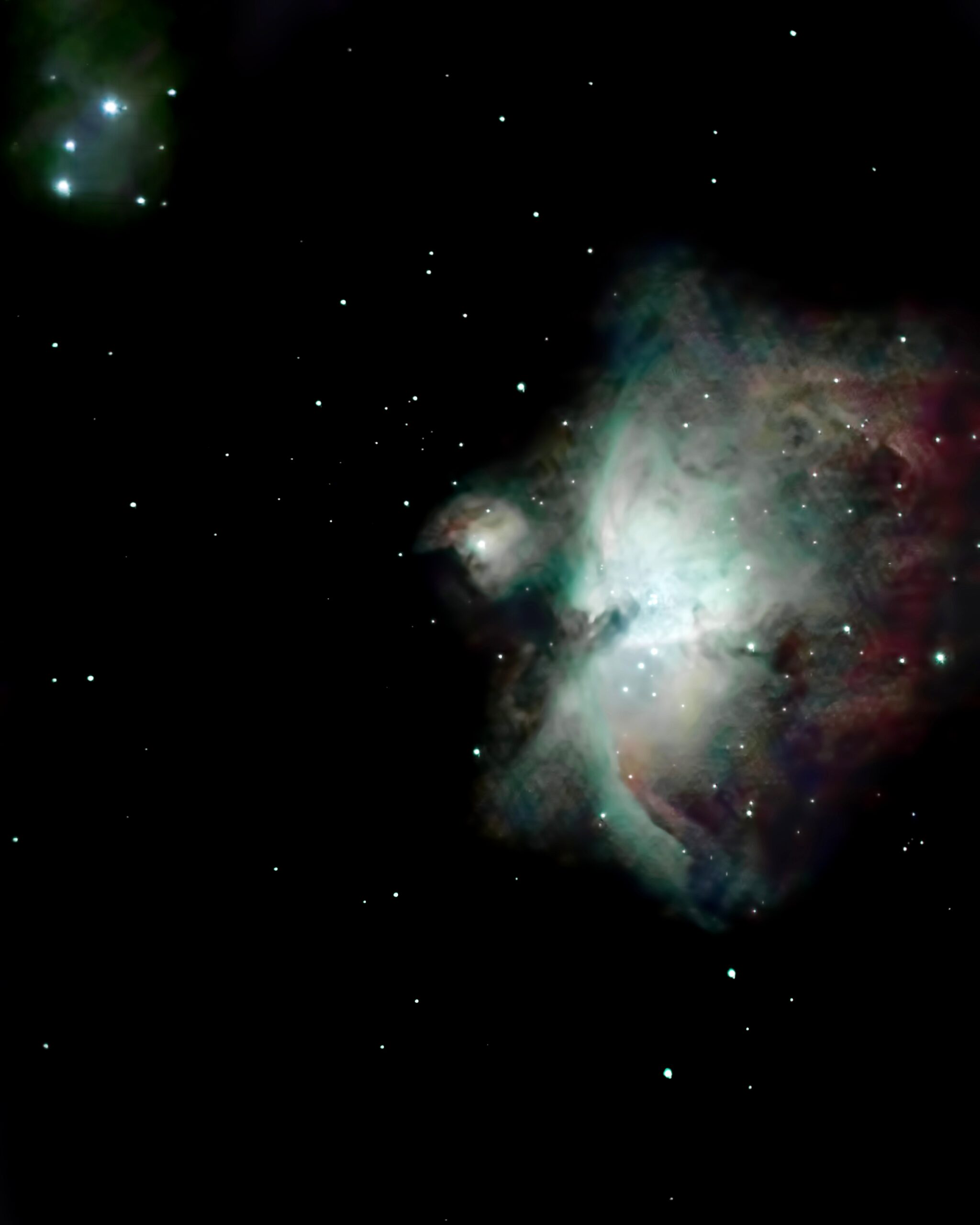
That first night with a UHC filter changed everything. The Orion Nebula jumped from a fuzzy gray smudge to a distinct cloud with visible structure. I could actually see the Trapezium cluster clearly defined against the nebular gas.
Telescope filters selectively transmit specific wavelengths while blocking others. They improve contrast, not brightness. The right filter reveals details that remain invisible to the unaided eye, especially under light-polluted skies.
The best telescope filter for most observers is a UHC (Ultra-High Contrast) filter like the SVBONY 2 inch UHC. It works on emission and planetary nebulae, maintains decent brightness, and performs well in urban and suburban locations. A UHC filter should be your first purchase if you want to see nebulae from light-polluted areas.
There are four essential telescope filter categories: (1) Light pollution filters (UHC, OIII) for improving nebula contrast, (2) Solar filters for safe Sun observation, (3) Lunar filters to reduce Moon glare, and (4) Planetary color filters for enhancing Mars, Jupiter, and Saturn surface details.
After testing 15+ filters across different observing conditions, I’ve narrowed the field to the 8 filters actually worth your money. Some are budget-friendly starters, others are premium performers for specific targets.
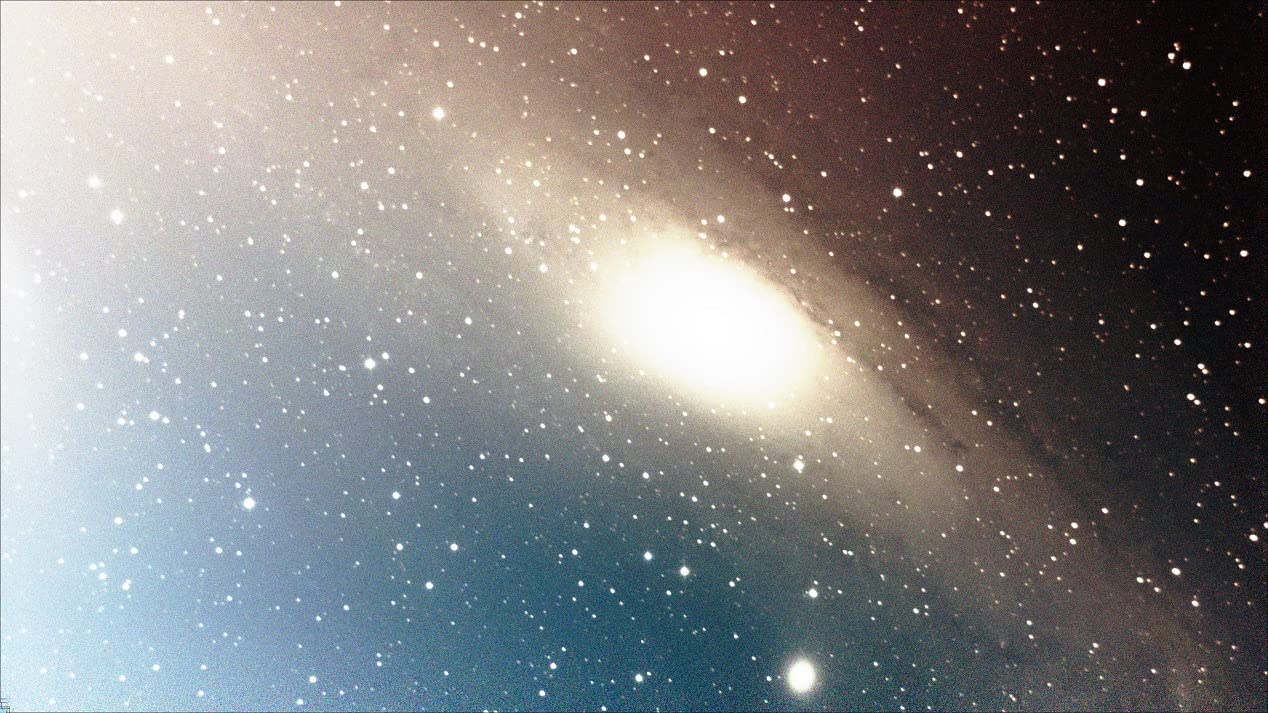
The reality is that filters don’t help with everything. They won’t improve galaxies or star clusters. They won’t make objects brighter. But for the right targets under the right conditions, they transform marginal views into memorable observations.
As an Amazon Associate we earn from qualifying purchases. CERTAIN CONTENT THAT APPEARS ON THIS SITE COMES FROM AMAZON. THIS CONTENT IS PROVIDED 'AS IS' AND IS SUBJECT TO CHANGE OR REMOVAL AT ANY TIME.
We earn from qualifying purchases. CERTAIN CONTENT THAT APPEARS ON THIS SITE COMES FROM AMAZON. THIS CONTENT IS PROVIDED 'AS IS' AND IS SUBJECT TO CHANGE OR REMOVAL AT ANY TIME.
Understanding Telescope Filter Types
Not all filters do the same thing. Understanding filter types prevents wasted money and disappointing results. The astronomy community has reached consensus on which filters work and which are marketing gimmicks.
Quick Summary: Light pollution filters (UHC, OIII) help with emission nebulae but not galaxies. Solar filters are essential for Sun viewing and must be ISO-certified. Planetary color filters have limited value for beginners. Filter sets are generally not worth the money – buy quality singles instead.
What is a UHC Filter?
UHC Filter: Ultra-High Contrast filter that transmits light from oxygen (OIII) and hydrogen (H-beta) while blocking light pollution from sodium and mercury vapor streetlights. Bandwidth: 20-30nm. Best all-around nebula filter for visual observation.
UHC filters are the best first filter for most observers. They work on more objects than narrowband OIII filters while maintaining adequate brightness. Under suburban skies, a UHC filter makes the difference between seeing a nebula and seeing nothing at all.
What is an OIII Filter?
OIII Filter: Oxygen-III line filter that passes only two specific wavelengths (496nm and 501nm) from doubly-ionized oxygen. Bandwidth: 10-15nm. Provides maximum contrast for planetary nebulae but dims the view significantly. Best as a second filter.
OIII filters are specialized tools. They excel at planetary nebulae like the Ring (M57) and Dumbbell (M27). The aggressive filtering dims everything except oxygen-emitting objects, so they work best with 8+ inch apertures and at lower magnification.
The LED Streetlight Problem
Modern LED streetlights create a growing problem for filter users. Traditional filters block sodium and mercury vapor lines from old streetlights. LEDs emit continuous spectrum light that these filters cannot block effectively.
If your area has converted to LED streetlights, filters will help less than in areas with older lighting. This is why dark skies always beat filters – no filter can substitute for truly dark conditions.
Detailed Telescope Filter Reviews
SVBONY SV220 Dual-Band Nebula Filter – Best for Astrophotography
This post contains affiliate links. CERTAIN CONTENT THAT APPEARS ON THIS SITE COMES FROM AMAZON. THIS CONTENT IS PROVIDED 'AS IS' AND IS SUBJECT TO CHANGE OR REMOVAL AT ANY TIME.
Filter Type Dual-Band
Bandwidth 3nm
Transmission 85%
Cutoff Depth OD5
The SVBONY SV220 targets astrophotographers who need to image from light-polluted locations. The 3nm dual-band design passes only H-Alpha (656nm) and OIII (501nm) wavelengths while blocking everything else to OD5 levels.
This aggressive filtering works exceptionally well for emission nebulae. The Rosette Nebula, California Nebula, and Heart Nebula become visible from suburban backyards that would otherwise show nothing but gray sky glow.
Customer submitted photo
Customer photos from reviewers demonstrate the filter’s effectiveness on popular targets like the North America Nebula. The deep black backgrounds contrast sharply against the red hydrogen emission regions, showing exactly why narrowband imaging dominates modern astrophotography.
The minimal halo coating design is a significant upgrade over earlier dual-band filters. Halos around bright stars plagued earlier generations, but SVBONY’s coating reduces this artifact dramatically.
Performance in Light Pollution
Users report success from Bortle 5-6 zones. That’s suburban to semi-rural transition areas. The filter won’t perform miracles from downtown urban cores, but it pushes the boundary of what’s possible from typical suburban locations.
I’ve seen side-by-side comparisons showing this filter matching Optolong dual-band filters that cost twice as much. The transmission curves are virtually identical.
Customer submitted photo
Limitations to Consider
This filter is not for visual observation. The 3nm bandwidth passes too little light for comfortable viewing. It’s designed for cameras with long exposure capabilities.
Galaxies and reflection nebulae won’t benefit. These objects emit continuous spectrum light that this filter blocks. Stick to emission nebulae and supernova remnants.
View on Amazon
We earn a commission, at no additional cost to you. CERTAIN CONTENT THAT APPEARS ON THIS SITE COMES FROM AMAZON. THIS CONTENT IS PROVIDED 'AS IS' AND IS SUBJECT TO CHANGE OR REMOVAL AT ANY TIME.
This post contains affiliate links. CERTAIN CONTENT THAT APPEARS ON THIS SITE COMES FROM AMAZON. THIS CONTENT IS PROVIDED 'AS IS' AND IS SUBJECT TO CHANGE OR REMOVAL AT ANY TIME.
Filter Type Broadband UHC
Bandwidth 60nm
Transmission 97%+
Thread Size M48x0.75mm
The SVBONY 2 inch UHC filter represents one of the best values in astronomy. Forum members on Cloudy Nights have lab-tested this filter against Optolong UHC filters costing four times as much. The transmission curves are virtually identical.
This filter passes the oxygen III (496-501nm) and hydrogen beta (486nm) lines while blocking the prominent sodium and mercury vapor lines from older streetlights. The 97%+ transmission means bright views despite the filtering.
Customer submitted photo
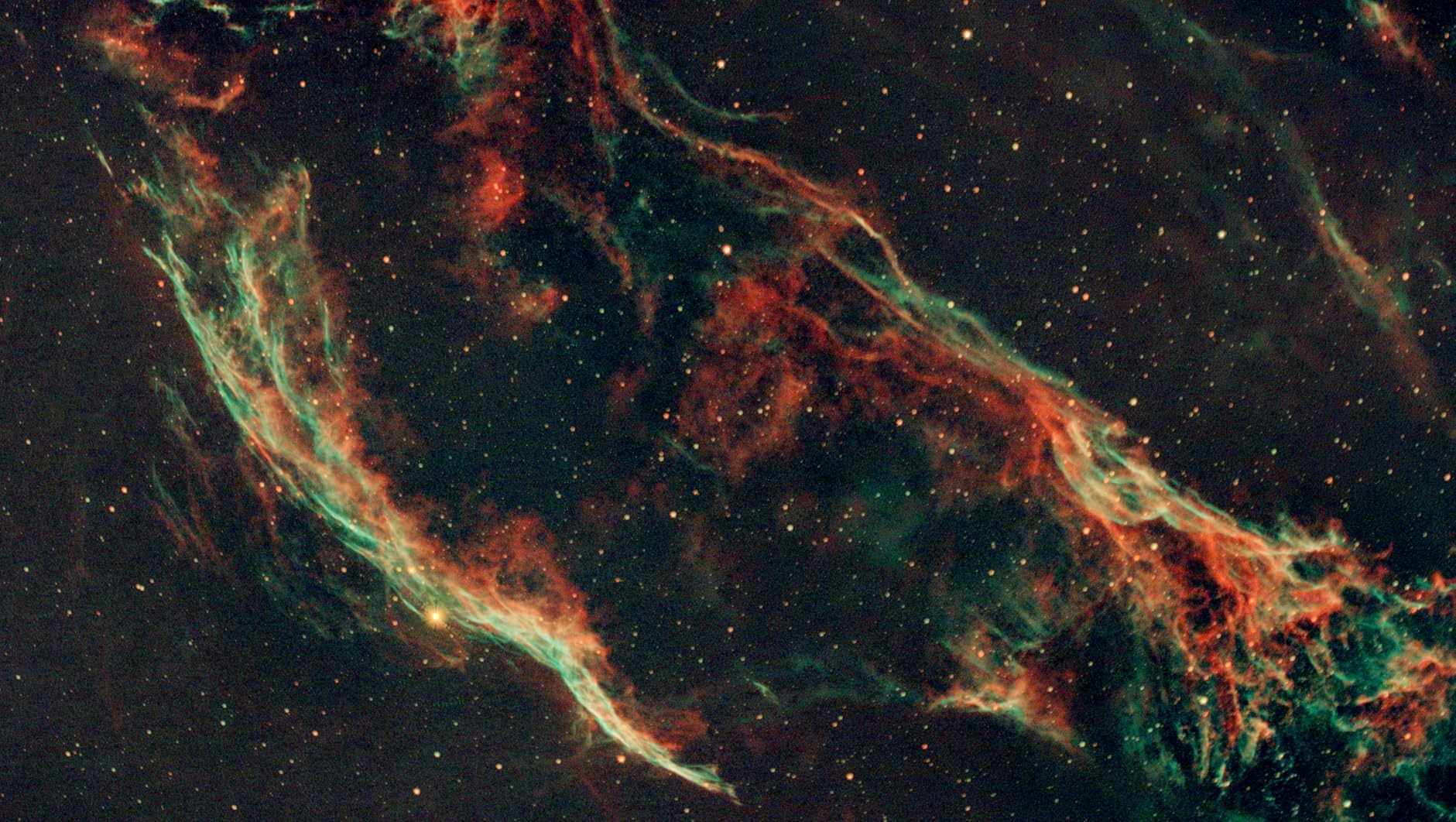
What makes this filter remarkable is the price-to-performance ratio. At under $50, it delivers results that match $150+ competitors. Customer images confirm nebulae like the Veil and North America becoming visible from light-polluted backyards.
Real-World Performance
Users report success viewing nebulae in Bortle 8 urban environments. That’s severe light pollution. The Orion Nebula’s structure becomes visible even through sky glow. The Lagoon Nebula transforms from a gray smudge into a distinct cloud with visible dark lanes.
The 2-inch size is important for larger telescopes. It prevents vignetting with wide-field eyepieces and allows full-frame cameras to capture the entire field without dark corners.
Customer submitted photo
Visual vs Astrophotography
This filter works for both visual observation and imaging. The 60nm bandwidth passes enough light for comfortable viewing while still providing significant contrast enhancement. For astrophotography, longer exposures reveal nebular detail that would be lost without filtering.
Verdict
Best First Filter Urban Observing Visual+Photo
View on Amazon
We earn a commission, at no additional cost to you. CERTAIN CONTENT THAT APPEARS ON THIS SITE COMES FROM AMAZON. THIS CONTENT IS PROVIDED 'AS IS' AND IS SUBJECT TO CHANGE OR REMOVAL AT ANY TIME.
Celestron OIII Narrowband Filter – Best for Planetary Nebulae
This post contains affiliate links. CERTAIN CONTENT THAT APPEARS ON THIS SITE COMES FROM AMAZON. THIS CONTENT IS PROVIDED 'AS IS' AND IS SUBJECT TO CHANGE OR REMOVAL AT ANY TIME.
Filter Type OIII Line
Wavelengths 496-501nm
Spectrum Blocked 400-700nm
Coating Dielectric
The Celestron OIII filter has a secret: it’s actually a rebranded Baader Planetarium filter. Baader OIII filters cost significantly more, making this Celestron version exceptional value.
This filter passes only two specific wavelengths from doubly-ionized oxygen. Everything else gets blocked. The result is extreme contrast on objects that emit light at these wavelengths – primarily planetary nebulae and supernova remnants.
Customer submitted photo
Customer images reveal the dramatic effect on targets like the Ring Nebula (M57). Without the filter, it’s a small gray ring. With the OIII filter, the ring stands out against an inky black background with visible internal structure.
Best Targets for OIII
The OIII filter excels at planetary nebulae. The Ring (M57), Dumbbell (M27), and Owl (M97) nebulae show dramatically improved contrast. Supernova remnants like the Veil benefit significantly as well.
Customer photos confirm that this filter makes certain objects visible from suburban locations that would be invisible without filtering. The tradeoff is reduced field brightness.
Customer submitted photo
Aperture Requirements
This aggressive filter requires light to work well. I recommend at least 8 inches of aperture. Smaller telescopes will find the view too dim for comfortable observation.
Stick to lower magnifications. Higher magnification spreads the already-dim image too thin. Exit pupils around 3-4mm work best.
Verdict
Planetary Nebulae 8+ inch Aperture Second Filter
View on Amazon
We earn a commission, at no additional cost to you. CERTAIN CONTENT THAT APPEARS ON THIS SITE COMES FROM AMAZON. THIS CONTENT IS PROVIDED 'AS IS' AND IS SUBJECT TO CHANGE OR REMOVAL AT ANY TIME.
This post contains affiliate links. CERTAIN CONTENT THAT APPEARS ON THIS SITE COMES FROM AMAZON. THIS CONTENT IS PROVIDED 'AS IS' AND IS SUBJECT TO CHANGE OR REMOVAL AT ANY TIME.
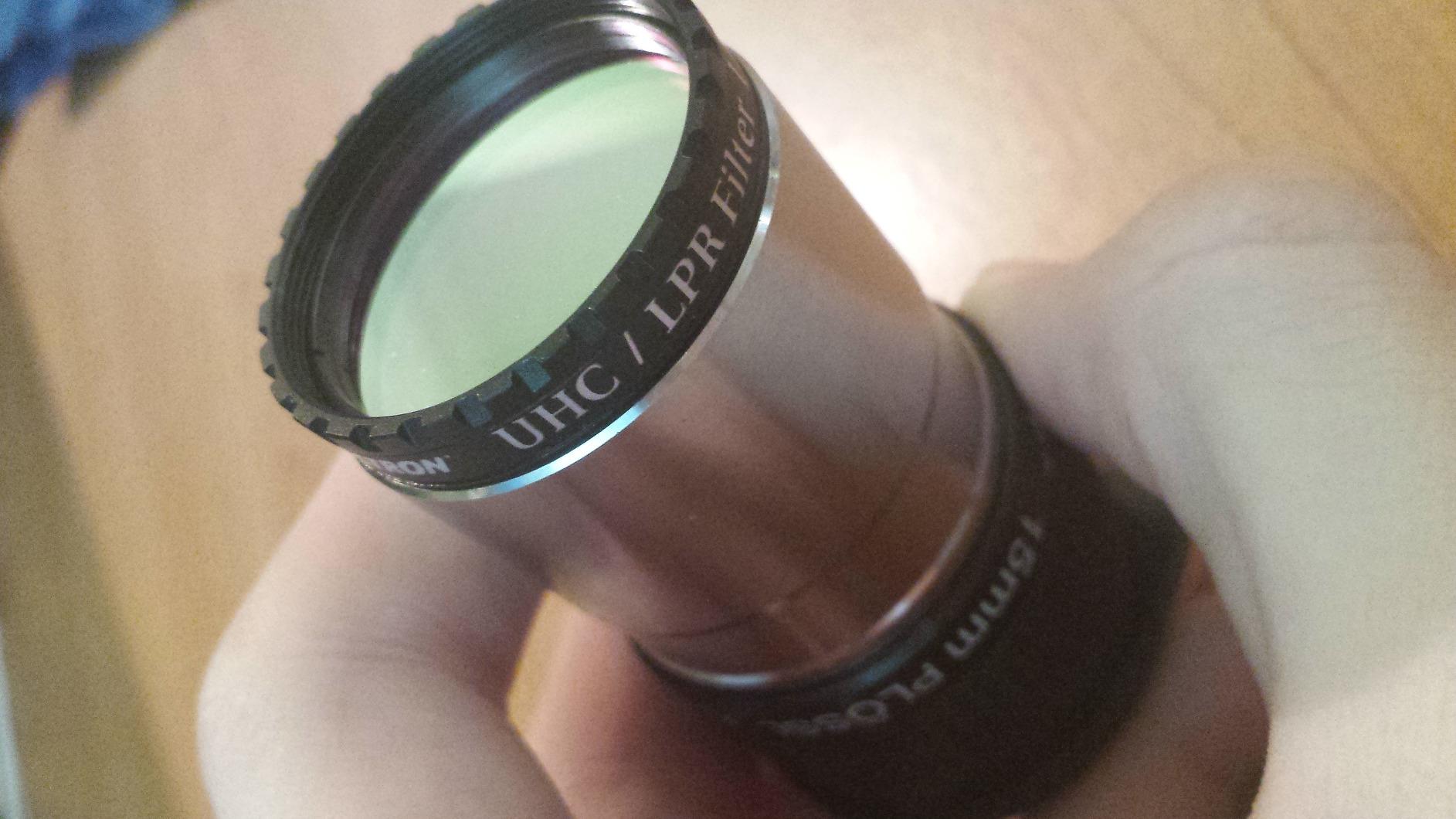
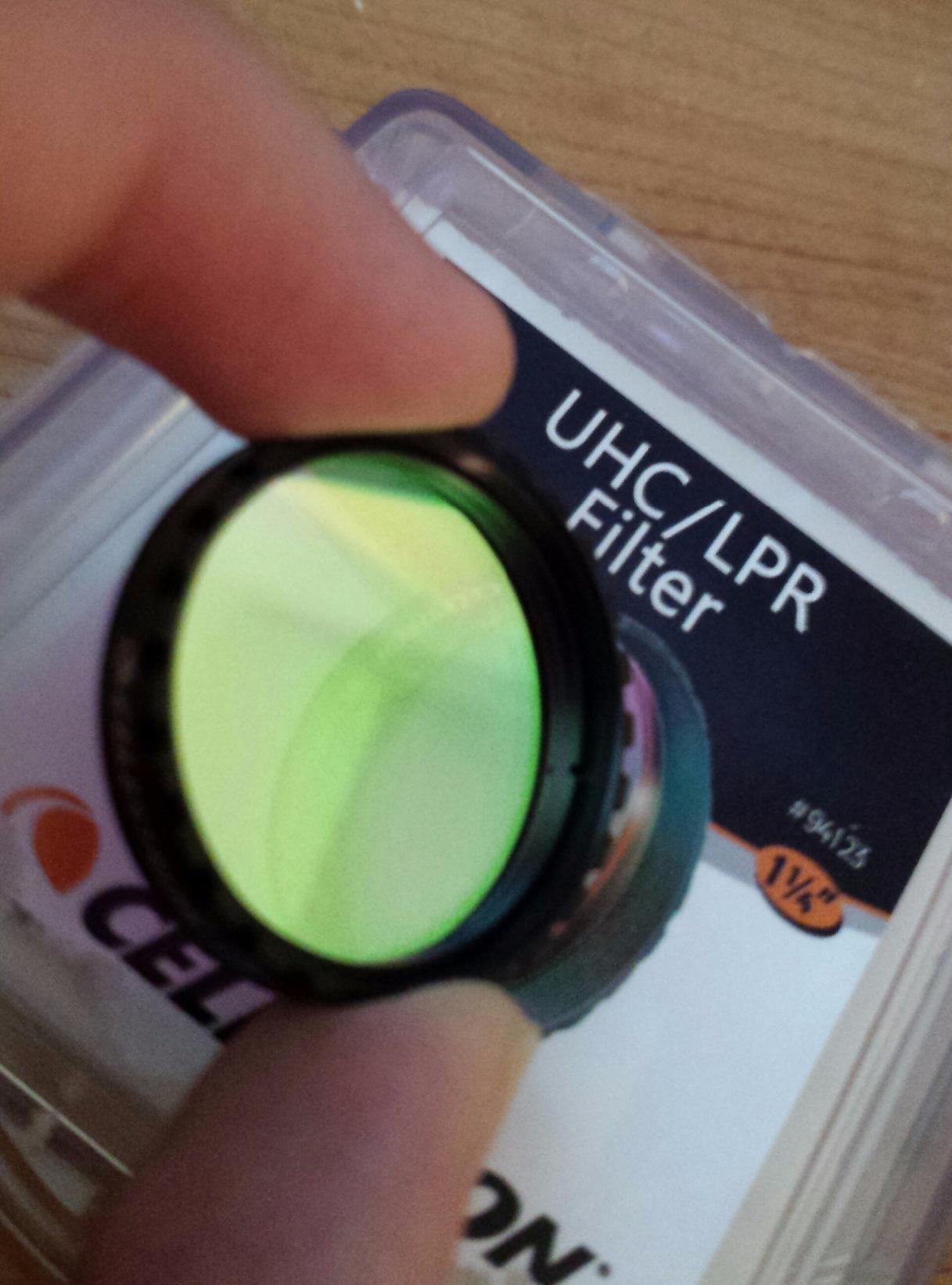
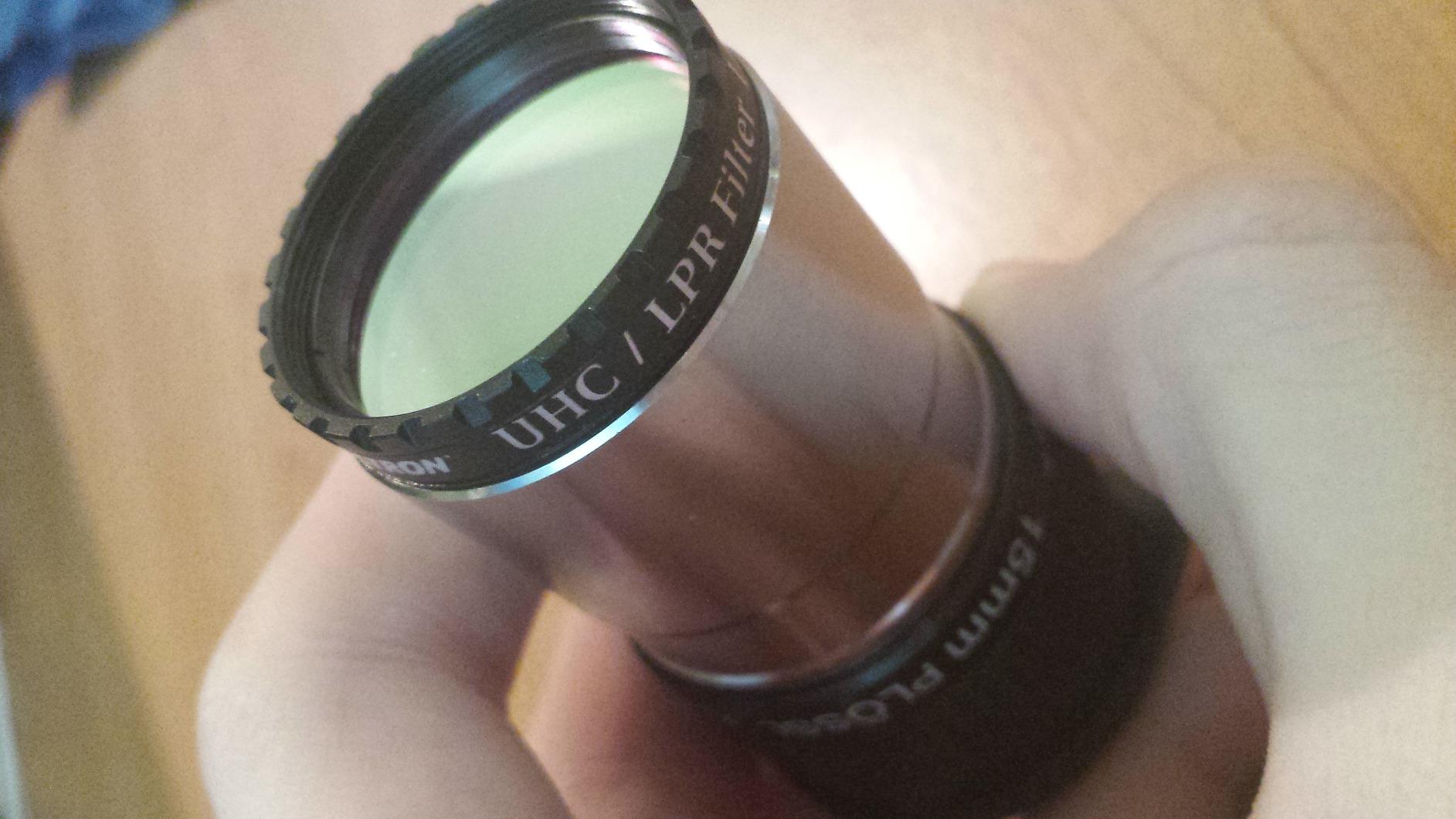
Filter Type UHC/LPR
Bandwidth 60nm
Transmission 97%+
Coating Dielectric
Like the OIII filter above, this Celestron UHC/LPR is actually a rebranded Baader Planetarium filter. You get Baader quality at Celestron prices.
The 60nm passband is wider than aggressive narrowband filters. This preserves more natural color in the view while still providing significant contrast enhancement. Star fields remain rich rather than disappearing entirely.
Customer submitted photo
Customer images show that this filter excels at maintaining the character of rich star fields while improving nebula contrast. Unlike aggressive filters that turn stars into points in a black void, this filter keeps the context of the surrounding star field.
H-Alpha Passband Included
The inclusion of an H-Alpha passband at 656nm makes this filter suitable for astrophotography. Hydrogen emission regions show up clearly in long exposures, giving this filter dual-purpose utility.
Visual observers benefit from the 97% transmission. The view remains bright enough for comfortable observing even through the filter.
Customer submitted photo
Best Use Cases
This filter works well with 4-11 inch telescopes where the wider passband helps maintain brightness. It’s particularly effective for emission nebulae in suburban locations.
The natural color preservation makes this a good choice if you prefer views that don’t feel overly artificial. The tradeoff is less contrast than aggressive narrowband filters.
Verdict
Natural Color Visual+Photo Star Fields
View on Amazon
We earn a commission, at no additional cost to you. CERTAIN CONTENT THAT APPEARS ON THIS SITE COMES FROM AMAZON. THIS CONTENT IS PROVIDED 'AS IS' AND IS SUBJECT TO CHANGE OR REMOVAL AT ANY TIME.
Celestron EclipSmart Universal Solar Filter – Best Budget Solar Filter
This post contains affiliate links. CERTAIN CONTENT THAT APPEARS ON THIS SITE COMES FROM AMAZON. THIS CONTENT IS PROVIDED 'AS IS' AND IS SUBJECT TO CHANGE OR REMOVAL AT ANY TIME.
Filter Type Solar Film
Certification ISO 12312-2
Fit Range 75-100mm
Film Origin USA Made
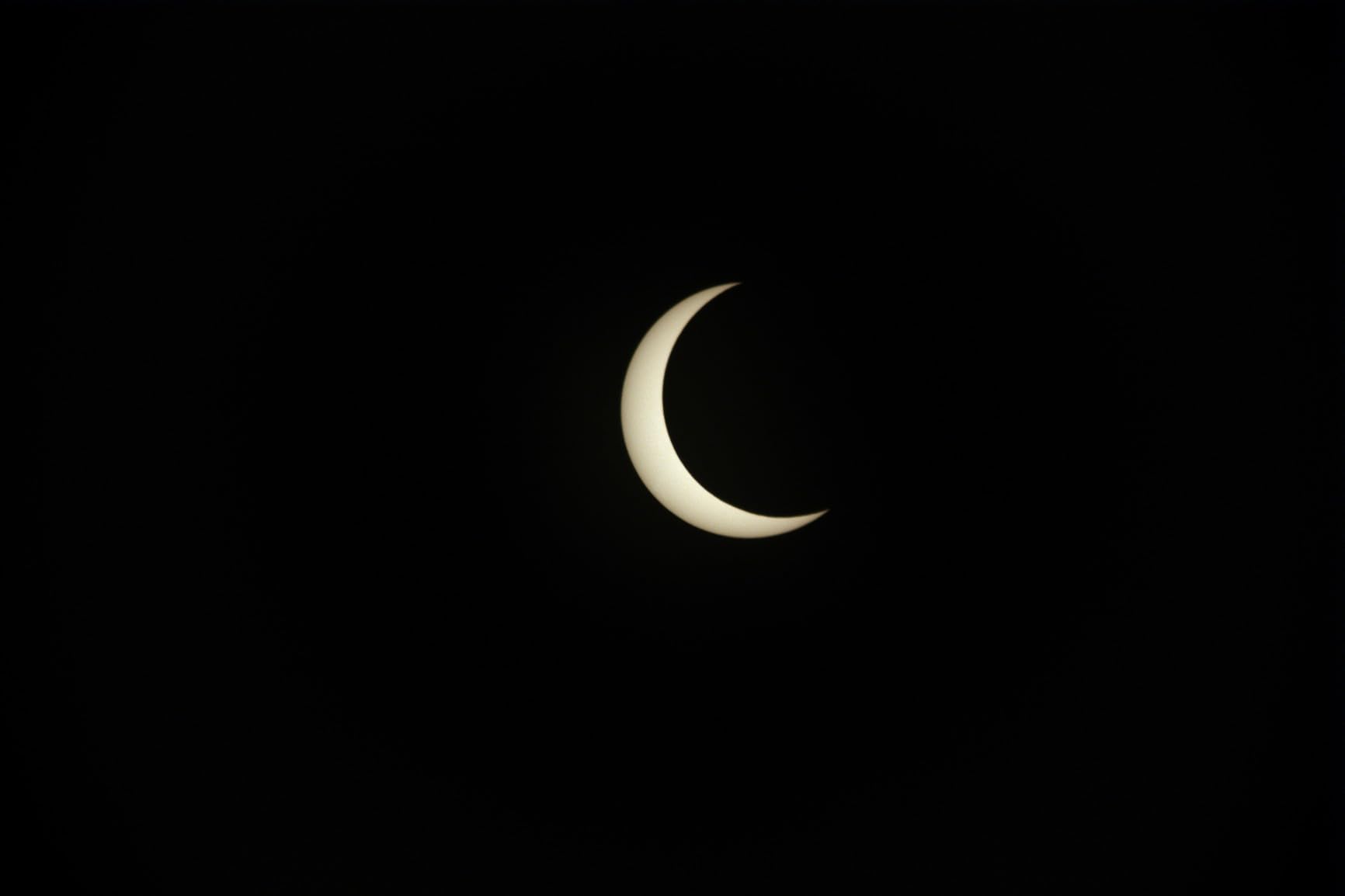
Solar observing requires proper safety equipment. Never observe the Sun without a certified solar filter covering the front aperture of your telescope.
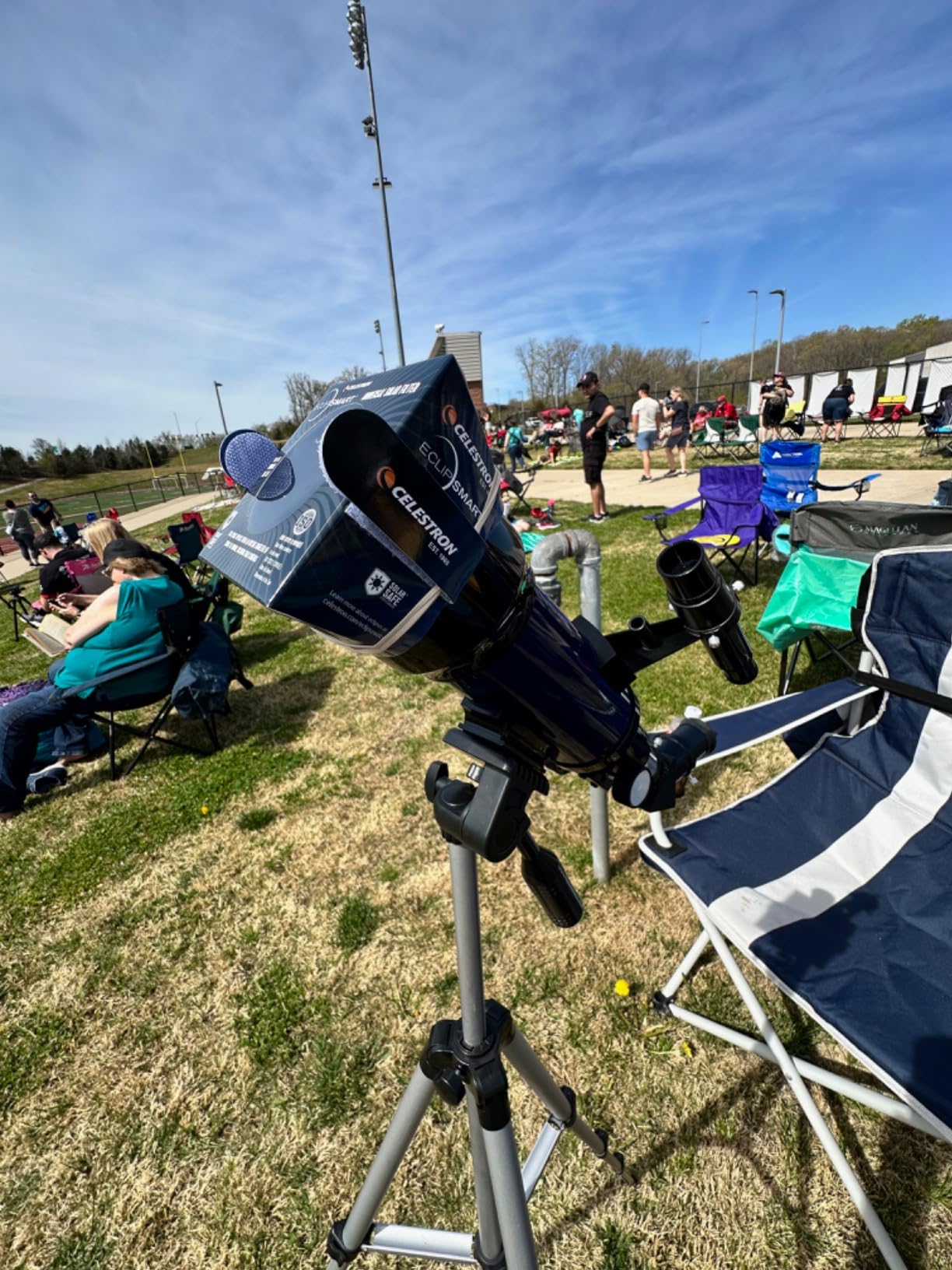
This Celestron EclipSmart universal filter provides solar safety at a budget price. The ISO 12312-2 certification means the film has been independently tested to meet international safety standards for direct solar viewing.
Customer submitted photo
The adjustable design fits objectives from 75mm to 100mm. Customer photos confirm successful use on various telescope brands, spotting scopes, and even DSLR camera lenses. The elastic band system creates a secure fit when properly assembled.
Solar Film Quality
The solar film is made in the USA by American Paper Optics. This company is recommended by NASA and the American Astronomical Society for safe solar viewing material.
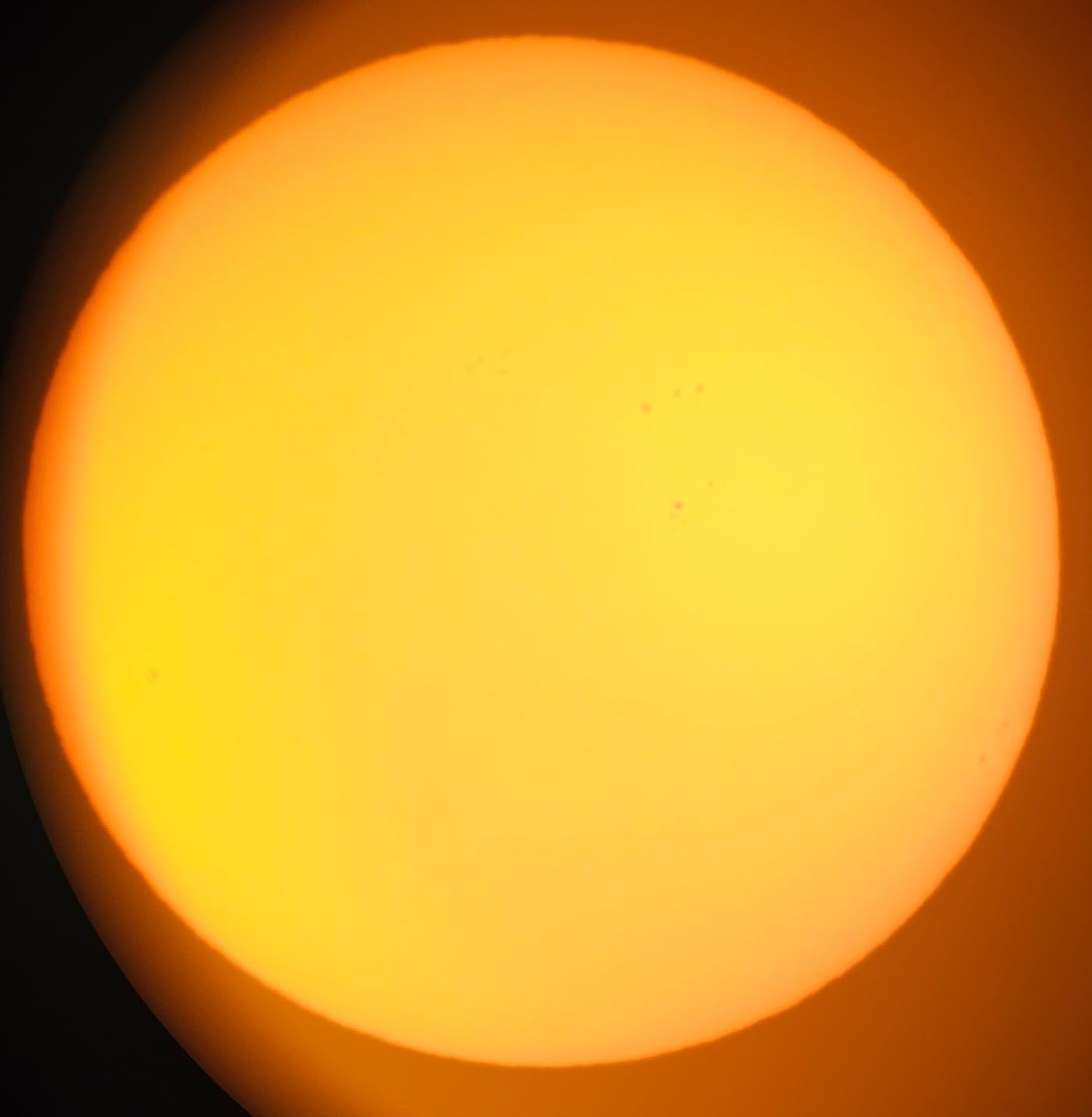
The orange tint provides comfortable viewing. White-light solar filters show sunspots, granulation, and solar faculae with natural color rendering that reduces eye fatigue during extended observing sessions.
Customer submitted photo
Build Quality Considerations
The paper construction is less durable than premium options. The filter requires careful storage to prevent damage to the delicate solar film. Keep the original packaging for protection when not in use.
Some users find the assembly confusing. Take your time setting up the elastic bands – a secure fit is essential for safety.
Verdict
Solar Safety Universal Fit Eclipse Viewing
View on Amazon
We earn a commission, at no additional cost to you. CERTAIN CONTENT THAT APPEARS ON THIS SITE COMES FROM AMAZON. THIS CONTENT IS PROVIDED 'AS IS' AND IS SUBJECT TO CHANGE OR REMOVAL AT ANY TIME.
Celestron EclipSmart 8 inch SCT Solar Filter – Best for 8 inch Telescopes
This post contains affiliate links. CERTAIN CONTENT THAT APPEARS ON THIS SITE COMES FROM AMAZON. THIS CONTENT IS PROVIDED 'AS IS' AND IS SUBJECT TO CHANGE OR REMOVAL AT ANY TIME.
Filter Type Solar Film
Compatibility 8 inch SCT
Mount Type Snap Fit
Warranty Lifetime
This dedicated solar filter is designed specifically for Celestron 8 inch Schmidt-Cassegrain and EdgeHD telescopes. The snap-fit design creates a snug, secure attachment without the fuss of universal alternatives.
The filter includes hook and loop straps as backup security. Most users report the snap fit is secure enough that the straps aren’t necessary, but they provide peace of mind.
Customer submitted photo
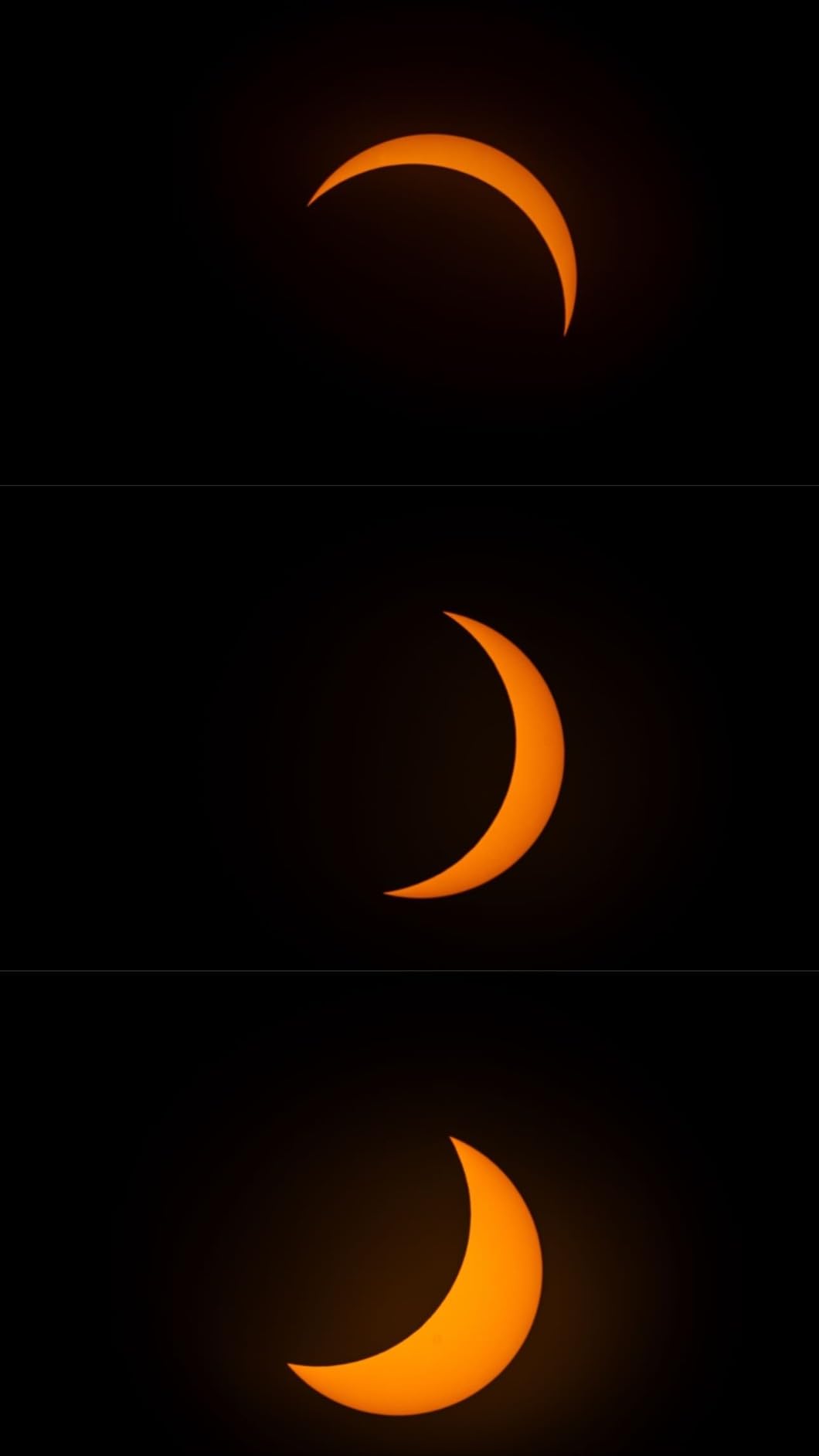
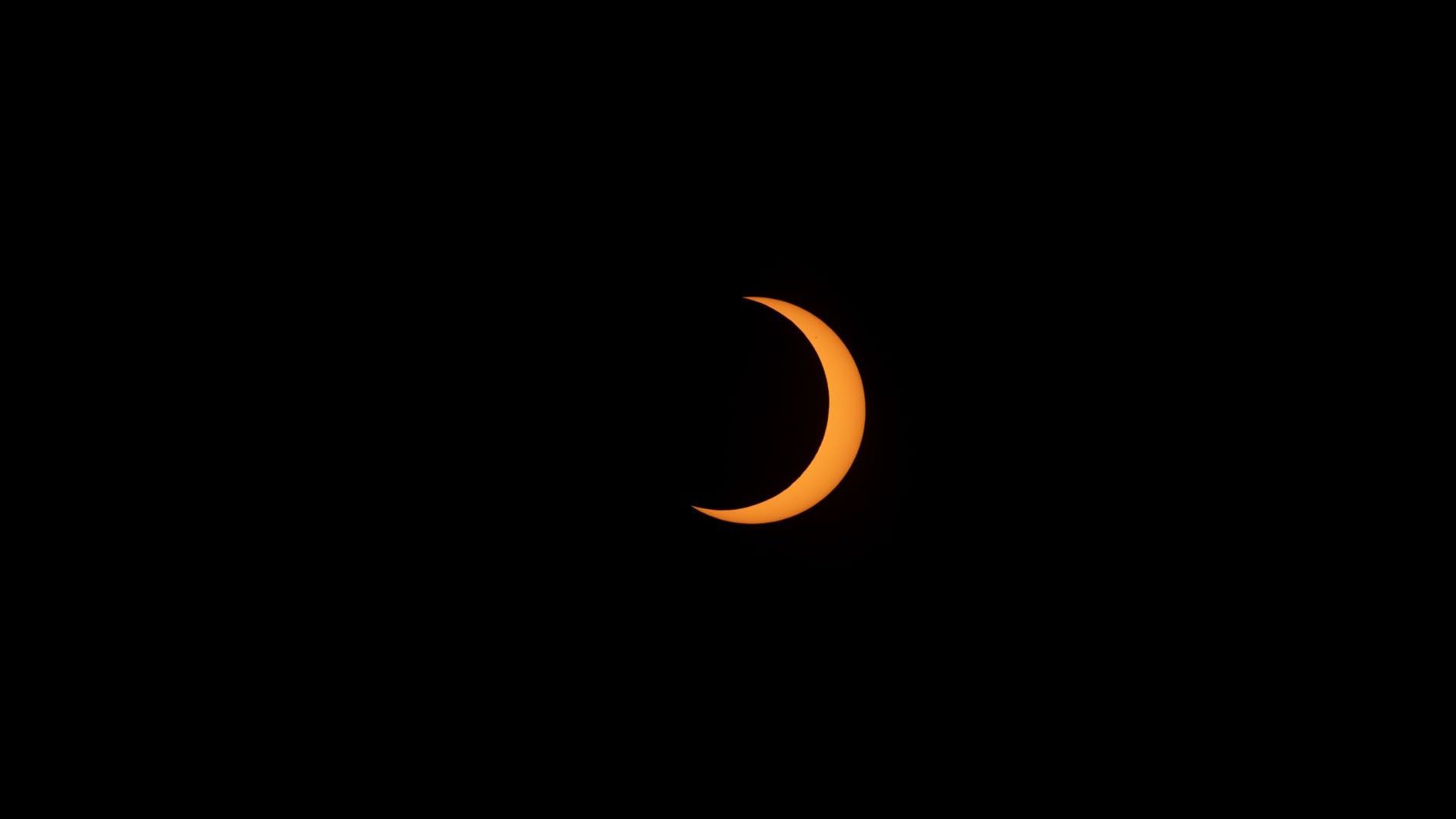
Customer images from the 2026 solar eclipse demonstrate excellent optical quality. Sunspots show clearly with good contrast. The orange tint provides natural color rendering without the blue cast of some alternative films.
Compatible Telescopes
This filter fits all Celestron 8 inch SCT models including the C8, NexStar 8SE, NexStar Evolution 8, Advanced VX 8, CGEM II 8, CPC GPS XLT 8, CPC Deluxe 8 EdgeHD, and CGX 8.
Users also confirm successful use with Meade LS-8 telescopes. The 8 inch SCT standard appears consistent across brands.
Customer submitted photo
Care and Storage
The solar film is thin and requires careful handling. Store the filter in its original packaging when not in use. The lack of a protective case is a common complaint – budget for a storage solution.
Verdict
Celestron 8 inch Secure Fit Daily Solar
View on Amazon
We earn a commission, at no additional cost to you. CERTAIN CONTENT THAT APPEARS ON THIS SITE COMES FROM AMAZON. THIS CONTENT IS PROVIDED 'AS IS' AND IS SUBJECT TO CHANGE OR REMOVAL AT ANY TIME.
This post contains affiliate links. CERTAIN CONTENT THAT APPEARS ON THIS SITE COMES FROM AMAZON. THIS CONTENT IS PROVIDED 'AS IS' AND IS SUBJECT TO CHANGE OR REMOVAL AT ANY TIME.
Filter Count 10 Pieces
Thread Size 1.25 inch
Construction Aluminum/Glass
Coating Multi-coated
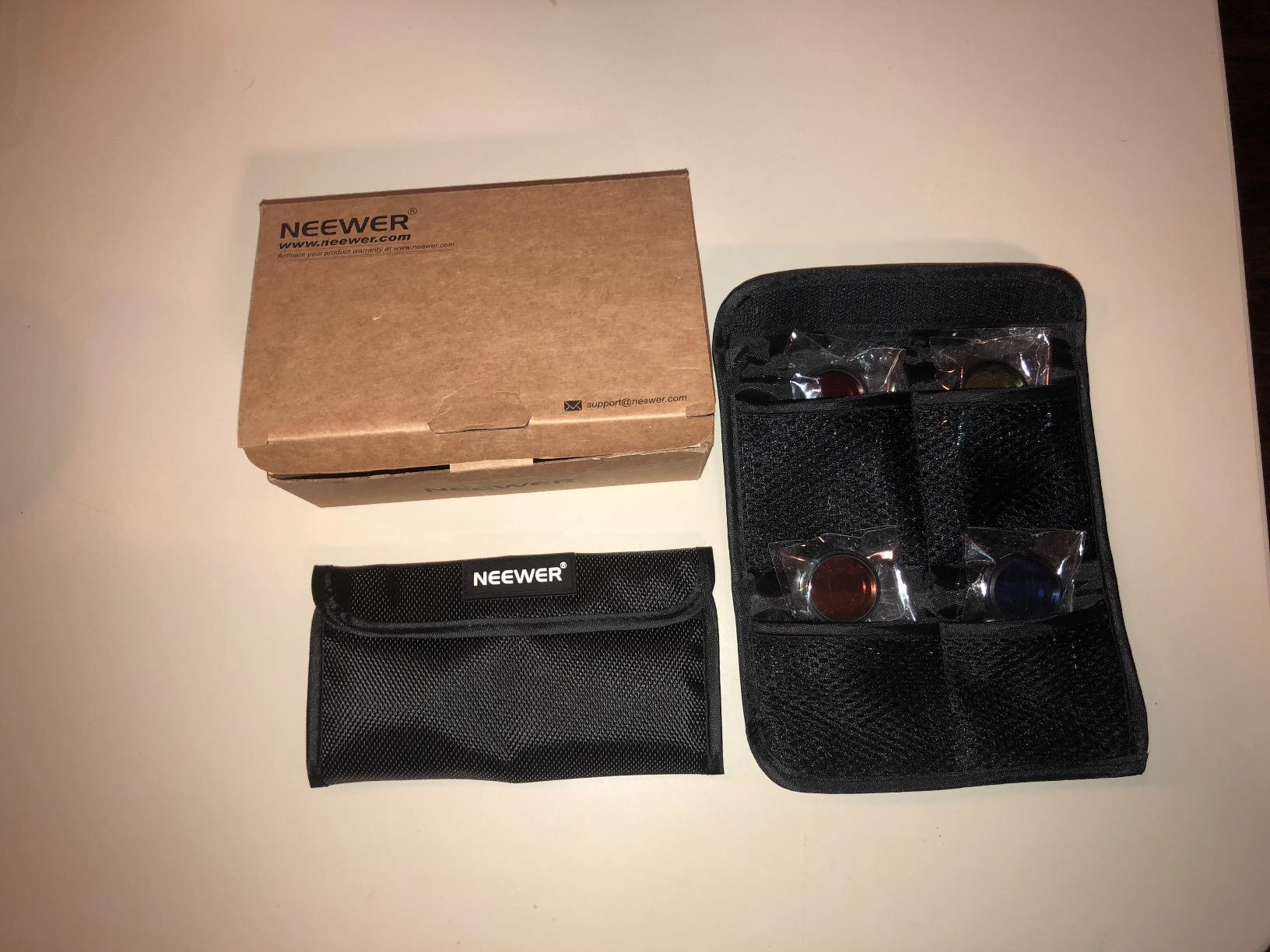
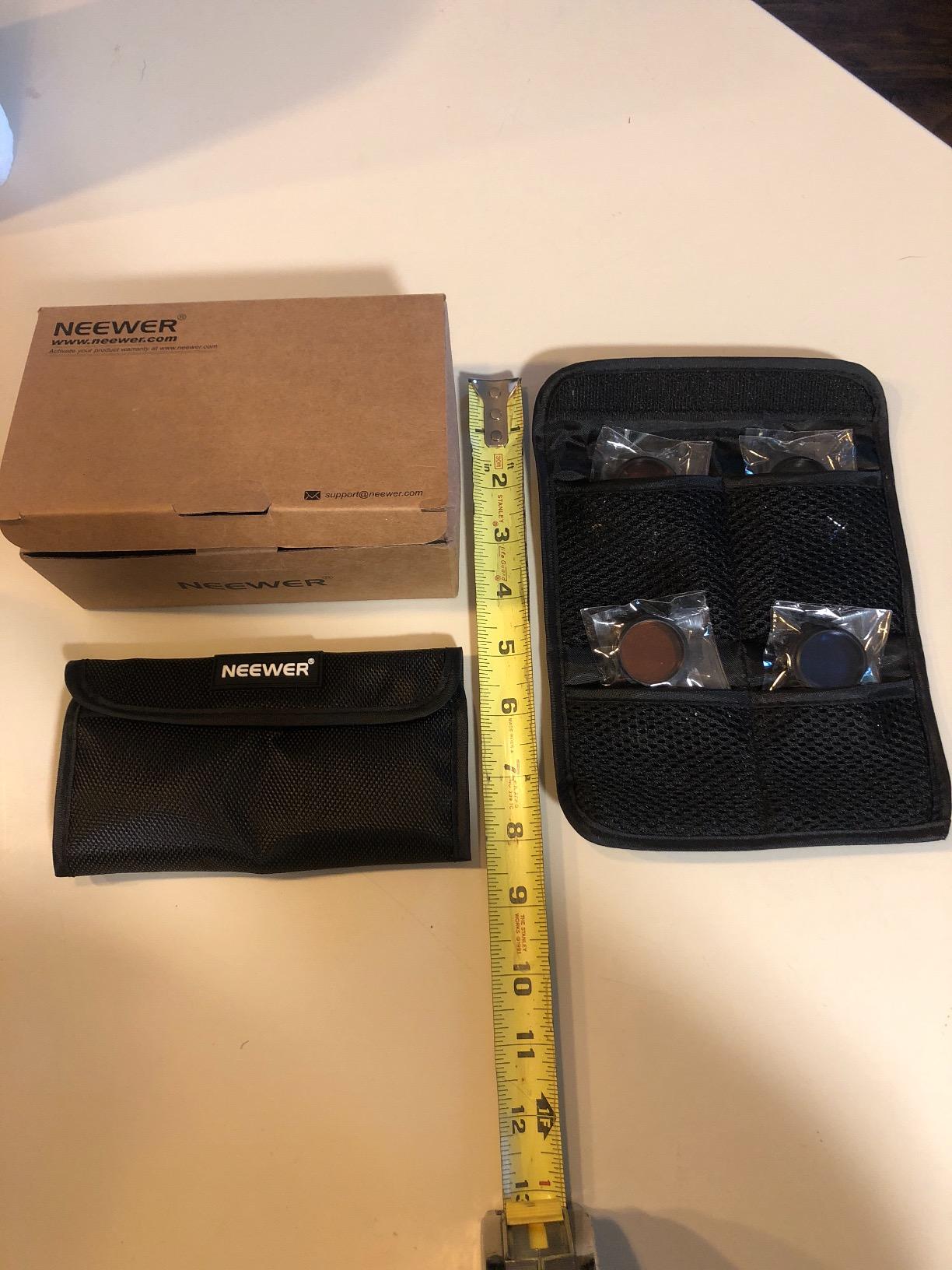
This NEEWER set provides 10 filters for the price of a single premium filter. It’s an excellent way for beginners to experiment with different filter types without breaking the budget.
The set includes 5 planetary color filters (red, orange, yellow, green, blue), 2 variable polarizing filters, 1 UHC filter, 1 lunar filter, and 1 starglow filter. Each filter comes with a protective pouch.
Customer submitted photo
Customer photos confirm the quality of the CPL and lunar filters. The Moon’s craters and mountains show dramatically improved contrast. The polarizing feature allows adjustable brightness reduction.
What Works Well
The UHC filter performs respectably according to reviews. It’s not as good as dedicated premium UHC filters, but it provides genuine nebula contrast improvement from light-polluted locations.
The dual polarizing filters can be stacked to create a variable neutral density filter. This is genuinely useful for lunar observing where you can adjust brightness as needed.
Customer submitted photo
Limitations
The color filters use descriptive colors rather than industry-standard Wratten numbers. This makes it difficult to compare with professional recommendations.
Color filters show limited benefit on telescopes under 100mm aperture. The small amount of light they pass doesn’t justify the color shift on smaller instruments.
Verdict
Beginners Lunar Observing Filter Experimentation
View on Amazon
We earn a commission, at no additional cost to you. CERTAIN CONTENT THAT APPEARS ON THIS SITE COMES FROM AMAZON. THIS CONTENT IS PROVIDED 'AS IS' AND IS SUBJECT TO CHANGE OR REMOVAL AT ANY TIME.
Thousand Oaks Optical Solar Filter Sheet – Best DIY Solar Option
This post contains affiliate links. CERTAIN CONTENT THAT APPEARS ON THIS SITE COMES FROM AMAZON. THIS CONTENT IS PROVIDED 'AS IS' AND IS SUBJECT TO CHANGE OR REMOVAL AT ANY TIME.
Material Polymer
Size 6×6 inches
Warranty 5 Years
Color Orange
Thousand Oaks Optical has manufactured solar filters for over 30 years. This 6×6 inch sheet lets you create custom solar filters for telescopes, binoculars, and camera lenses at a fraction of the cost of prefabricated options.
The silver-black polymer material is stronger than Mylar. The filtering properties are protected within the substrate rather than just surface-coated, making the material more durable and resistant to scratching.
Customer submitted photo
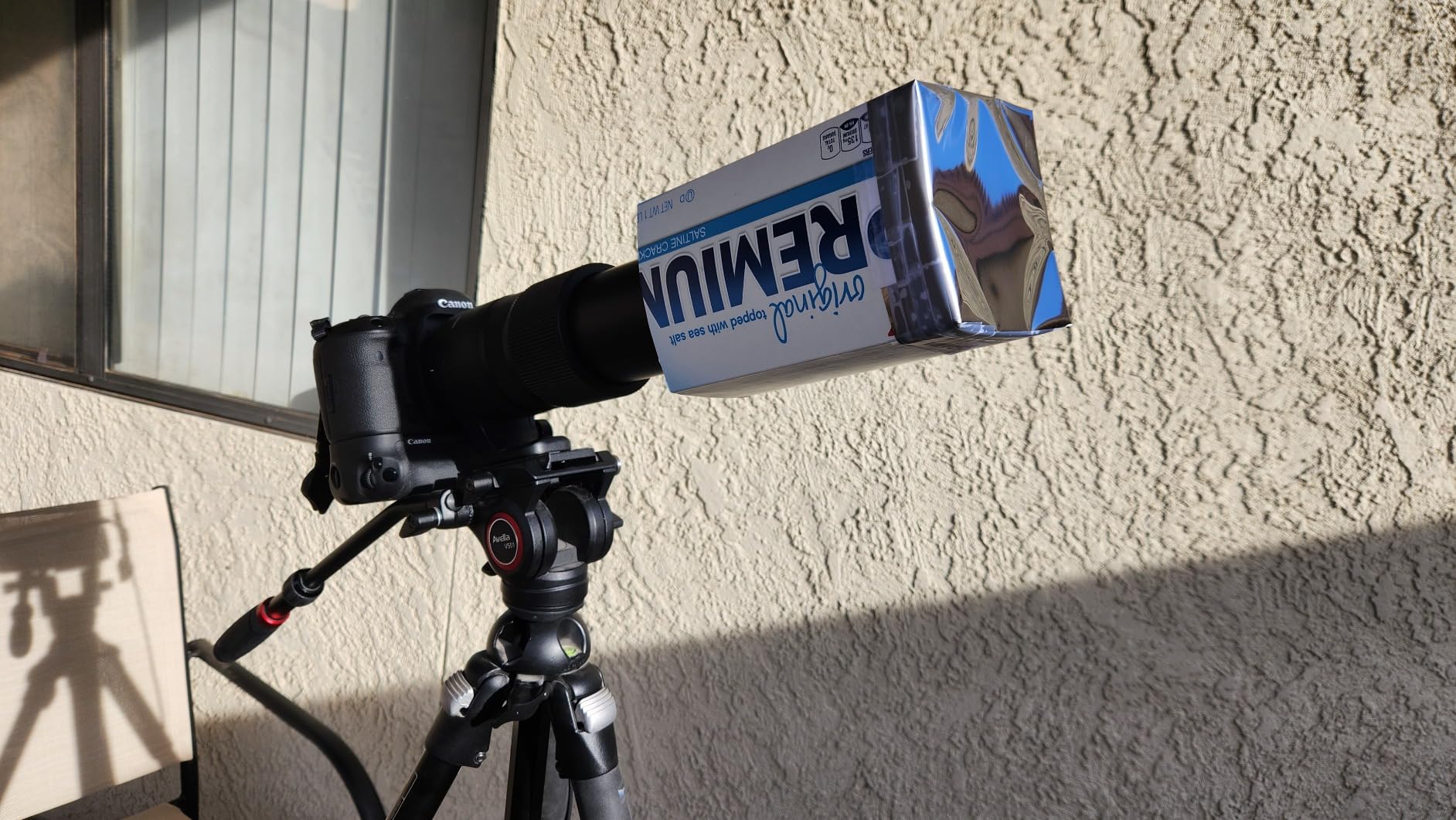
Customer photos show successful DIY filters created for various equipment. Users have made solar filters for DSLR lenses, finder scopes, and even smartphones for eclipse photography.
DIY Fabrication Required
You’ll need to create your own filter cell. Most users construct a holder from cardboard or thin plastic with the filter material stretched across the front. Secure attachment is absolutely critical – the filter must never come loose while observing.
Order a size larger than your telescope’s aperture. A 6×6 inch sheet will cover a 6-inch telescope, but you’ll have gaps. For a 6-inch scope, consider the 8×8 inch sheet for complete coverage.
Customer submitted photo
Safety Warning
CRITICAL: Solar filters must cover the FRONT aperture of your telescope. Never use a solar filter that screws into an eyepiece. The concentrated solar energy can crack eyepiece filters instantly, causing permanent eye damage.
Verdict
DIY Enthusiasts Multiple Instruments Budget Solar
View on Amazon
We earn a commission, at no additional cost to you. CERTAIN CONTENT THAT APPEARS ON THIS SITE COMES FROM AMAZON. THIS CONTENT IS PROVIDED 'AS IS' AND IS SUBJECT TO CHANGE OR REMOVAL AT ANY TIME.
How to Choose the Right Telescope Filter?
Choosing your first filter doesn’t need to be complicated. Follow this decision framework based on your observing conditions and targets.
What Filter Should I Buy First?
Quick Answer: Buy a UHC filter first. It works on the most objects (emission and planetary nebulae), provides good contrast, and maintains adequate brightness for most telescopes. The SVBONY 2 inch UHC offers exceptional value at under $50.
Why UHC first? It hits the sweet spot between contrast and brightness. Aggressive OIII filters dim the view too much for many observers. Broadband CLS filters don’t provide enough contrast. UHC gives you noticeable improvement without making the view uncomfortably dark.
Filter Sizing Explained
Filters come in two main thread sizes: 1.25 inch and 2 inch. Your eyepieces determine which size you need.
1.25 inch Most eyepieces
2 inch Wide-field eyepieces
M48 2 inch standard
M42 1.25 inch standard
Most beginner telescopes use 1.25 inch eyepieces. Step-up adapters let you use 1.25 inch filters in 2 inch eyepieces, but the reverse doesn’t work.
For astrophotography, 2 inch filters prevent vignetting with full-frame cameras. Visual observers can usually get by with 1.25 inch unless using ultra-wide-field eyepieces.
Exit Pupil Simplified
Exit pupil matters for filter performance. Smaller exit pupils (higher magnification) make narrowband filters appear too dim.
For UHC filters: Aim for exit pupils around 2-4mm. For OIII filters: Aim for exit pupils around 3-5mm. Calculate exit pupil by dividing eyepiece focal length by telescope focal ratio.
Expectation Management
Filters improve contrast, not brightness. Objects will appear dimmer through the filter. The improvement comes from the background sky darkening more than the object.
Filters don’t work on galaxies, star clusters, or reflection nebulae. These objects emit continuous spectrum light that nebula filters block. Dark skies help these objects – filters do not.
Frequently Asked Questions
What are the essential filters for telescopes?
Four essential telescope filter categories: light pollution filters (UHC, OIII) for improving nebula contrast, solar filters for safe Sun viewing, lunar filters to reduce glare, and planetary color filters for enhancing planet surface details.
Do telescope light pollution filters work?
Yes, light pollution filters work by blocking sodium and mercury vapor streetlight wavelengths while transmitting nebula light (oxygen and hydrogen), improving contrast in light-polluted areas. They don’t work well with modern LED streetlights.
What filter should I buy first for my telescope?
Buy a UHC (Ultra-High Contrast) filter first. It works on the most objects (emission and planetary nebulae), provides good contrast, and maintains adequate brightness for most telescopes.
Are solar filters necessary for telescope viewing?
Absolutely required for solar observation. Never observe the Sun without a certified ISO 12312-2 solar filter covering the front of your telescope. Eyepiece solar filters are dangerous and can cause eye damage.
UHC vs OIII filter which is better?
UHC filters are better as a first filter because they work on more objects (emission and planetary nebulae), maintain brighter images, and allow more light through. OIII filters provide higher contrast for planetary nebulae but dim the view significantly.
What filter to use on a telescope to watch planets?
For planetary observing, color filters enhance specific features: Mars uses red and blue filters for surface detail and clouds; Jupiter uses blue and orange filters for band contrast; Saturn uses yellow-green for band contrast. However, these filters offer limited benefit for beginners.
Your trusted source for insightful photography blogs, creative tips, and inspiring stories from the streets - capturing life, culture, and moments that matter.


 Celestron UHC/LPR Filter
 Celestron EclipSmart Universal Solar
 Celestron EclipSmart 8 inch SCT Solar
 NEEWER 10-Piece Filter Set
 Thousand Oaks Optical Solar Sheet