8 Best Quivers for Hunting (September 2026)
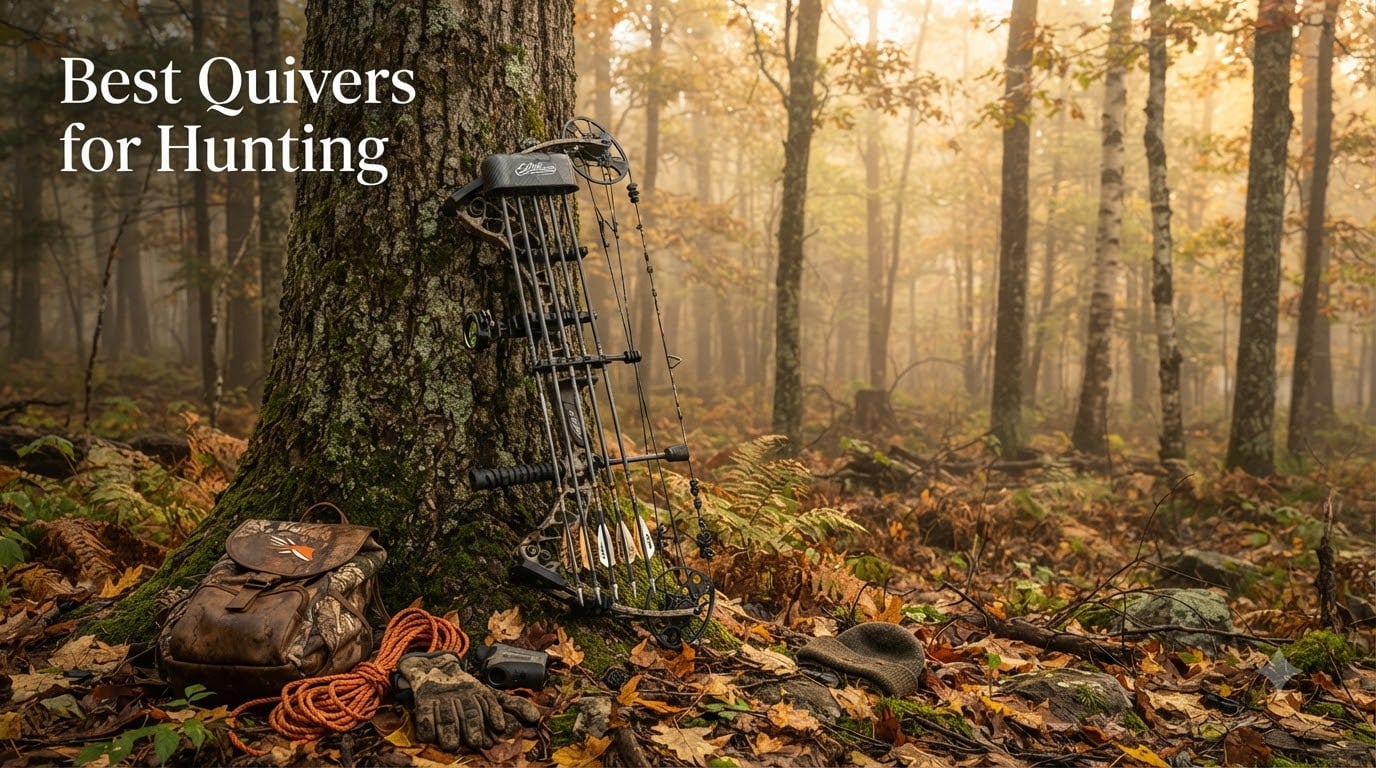
I learned the hard way how much a quiver matters. On a cold November morning in Montana, my cheap plastic…


Every rifle scope displays a code like “3-9×40” or “4-16×50” right on the box, but for new shooters, these numbers might as well be ancient hieroglyphics. I’ve watched dozens of beginners stare blankly at scope specifications, unsure whether more magnification is better or what that second number actually measures. The truth is, understanding what the numbers on a rifle scope mean is the difference between making an ethical shot on a buck and going home empty-handed.
These numbers aren’t marketing fluff—they’re engineering specifications that determine how your scope performs in real hunting situations. The magnification range affects your field of view and target acquisition speed. The objective lens diameter determines how much light enters your scope, which can make or break a dawn hunt. After 15 years of hunting and target shooting across North America, I’ve learned that matching these numbers to your specific needs matters more than chasing the biggest numbers on paper.
In this guide, I’ll decode every number you’ll encounter on a rifle scope and explain what it means for your shooting. We’ll cover magnification ranges, objective lens sizes, zoom ratios, exit pupil calculations, and all those other specifications that confuse beginners. More importantly, I’ll show you how to match the right numbers to your specific hunting or shooting application so you can make an informed decision.
The magnification number always appears first, right before the “x.” This number tells you how much closer the target appears compared to your naked eye. A 4x scope makes your target appear four times larger. At 100 yards, a deer looks like it’s only 25 yards away through a 4x scope. Simple enough.
Fixed power scopes display a single number like “4×32.” The 4x means constant 4-power magnification—no zoom ring, no adjustment. Variable power scopes show two numbers separated by a hyphen, like “3-9×40.” The “3-9” means you can adjust anywhere from 3x at the low end to 9x at maximum. This flexibility is why variable scopes dominate the market today.
Variable Power: A scope with adjustable magnification between minimum and maximum settings. A 3-9x scope can be set at 3x, 4x, 5x, all the way up to 9x. This versatility lets you scan at low power then dial up for precision shots.
Higher magnification isn’t automatically better. This is the single most common mistake I see new shooters make. They buy a 6-24x scope for deer hunting because bigger numbers seem impressive. Then they discover the hard way that anything above 9-10x is nearly useless in hunting situations. Your field of view becomes so narrow that finding an animal through the scope takes forever, and the slightest movement shakes your aim wildly.
For most hunting under 300 yards, 3-9x or 2-10x hits the sweet spot. Use the low end (3x or 4x) for scanning and locating game, then crank up to 7x or 9x for the shot. Target shooters pushing past 500 yards might benefit from 12-25x magnification, but they’re shooting from stable rests at known distances. Tactical shooters using AR-platform rifles often prefer 1-6x or 1-8x LPVOs (Low Power Variable Optics) that allow both-eyes-open shooting at 1x for close-range work. For tactical optics suitable for survival situations, LPVOs offer the versatility needed for both close-quarters defense and medium-range precision.
Here’s something most guides overlook: zoom ratio. This simple calculation tells you how versatile your variable scope really is. To calculate zoom ratio, divide the maximum magnification by the minimum. A 3-9x scope has a 3:1 zoom ratio (9 divided by 3). A 4-16x scope has a 4:1 ratio. Some premium scopes like the Leupold VX-6HD offer 6:1 ratios (3-18x or 4-24x).
Why does zoom ratio matter? Higher ratios mean more versatility in one package. A 3-9x scope with a 3:1 ratio covers most hunting situations adequately. A scope with a 6:1 ratio gives you true 1x capability for close-range shooting while still reaching out to 18x or 24x for longer shots. This versatility explains why high-ratio LPVOs have become so popular for tactical use and dangerous game hunting where shots can range from 10 yards to 400 yards.
Quick Summary: The first number(s) before the “x” indicate magnification power. Higher numbers bring targets closer but narrow your field of view. Variable power scopes offer a range (3-9x), while fixed power scopes stay at one magnification (4x).
The number after the “x” represents the objective lens diameter in millimeters. This is the front lens—the big glass end that points toward your target. In “3-9×40,” that 40mm objective lens determines how much light can enter the scope. Think of it like a window: larger windows let in more light.
Larger objective lenses gather more light, which matters most during low-light conditions. Dawn and dusk are prime hunting times, and that’s when a bigger objective lens pays off. A 50mm objective transmits more light than a 40mm, giving you a brighter image when visibility drops. This extra light transmission can mean the difference between identifying a legal buck and watching a shadow disappear into the timber. Some premium scopes with larger objectives like the Meopta Meostar R1r 3-12×56 excel specifically in low-light conditions with exceptional light transmission.
But bigger objectives come with real trade-offs I learned through expensive mistakes. My first 50mm scope required such high mounting rings that my cheek weld was completely wrong. I had to lift my head off the stock to see through the scope, which ruined my shooting consistency. Large objectives also add significant weight—a 50mm lens can weigh 6-8 ounces more than a 40mm, which matters when you’re carrying a rifle all day in steep country.
Mount height is another consideration. Larger objective lenses require higher rings, which can affect shooting ergonomics. For most hunting applications, 40-44mm objectives hit the sweet spot between light-gathering ability and practical mounting. Western hunters pursuing elk in open country might step up to 50mm for those last-minute shots at dusk. Eastern deer hunters in tight cover often prefer compact 32-36mm objectives that keep the scope low and sleek on the rifle.
| Objective Size | Best For | Trade-offs |
|---|---|---|
| 24-32mm | Rimfire, lightweight rifles, close-range hunting | Limited low-light performance |
| 40-44mm | General hunting, all-around use, balanced performance | Mid-range weight and mounting height |
| 50-56mm | Long-range precision, low-light hunting, western open country | Heavy, requires high mounts, affects cheek weld |
These two specifications interact through a calculation called exit pupil. Exit pupil is the diameter of the light beam leaving the eyepiece, and it’s calculated by dividing the objective size by the magnification. This simple math explains why some scopes work better in low light than others.
A 3-9×40 scope has an exit pupil of 13.3mm at 3x (40 divided by 3) but only 4.4mm at 9x (40 divided by 9). Your eye’s pupil opens to about 5-7mm in low light, depending on your age. If your scope’s exit pupil is smaller than your eye’s pupil, the image appears darker. This is why a 4-12×50 might actually perform better in dim light than a 6-24×50, despite having the same objective size. At maximum magnification, the higher-powered scope squeezes the exit pupil too small for optimal low-light performance.
| 3-9×40 | 13.3mm at 3x, 4.4mm at 9x |
| 4-12×50 | 12.5mm at 4x, 4.2mm at 12x |
| 6-24×50 | 8.3mm at 6x, 2.1mm at 24x |
For low-light hunting, look for exit pupils of 4mm or larger at the magnification you’ll actually use. This explains why 3-9×40 has been the standard hunting scope for decades—it provides a 4.4mm exit pupil at 9x, which is adequate for most dawn and dusk situations. If you hunt in thick cover where shots are close, you’ll likely be at 4x or 5x most of the time, giving you an exit pupil of 8-10mm—more than bright enough for legal shooting light.
Beyond the basic magnification and objective lens size, modern scopes display additional specifications that affect performance. Understanding these numbers helps you make informed decisions and avoid common misconceptions.
The main tube diameter affects adjustment range, not optical quality. This is one of the most persistent myths I encounter. A 30mm tube does not automatically give you a brighter image than a 1-inch tube. The diameter of the main tube simply determines how much internal elevation and windage adjustment the scope can provide.
What 30mm and 34mm tubes do provide is more internal adjustment range. Long-range shooters who dial their turrets for different distances often prefer 30mm or 34mm tubes for the extra travel. A typical 1-inch tube might offer 60-80 MOA of total adjustment, while a 30mm tube might provide 80-120 MOA. This matters when you’re shooting at 800+ yards and need to dial significant elevation.
For most hunting within 300 yards, a 1-inch tube is perfectly adequate. You’re not dialing for distance—you’re zeroing at 200 yards and holding over for anything farther. The 1-inch tube is lighter, uses more common rings, and provides plenty of adjustment for typical hunting ranges. Don’t let anyone tell you that 30mm tubes are “better” optically. That’s simply false.
| Tube Size | Adjustment Range | Best Application |
|---|---|---|
| 1 inch | 60-80 MOA typical | General hunting, lighter weight, common ring compatibility |
| 30mm | 80-120 MOA typical | Long-range precision, extra elevation for dialing, extra-low mounts available |
| 34mm | 120+ MOA typical | Extreme long-range (800+ yards), maximum adjustment range |
Field of view (FOV) is how wide an area you can see through the scope at a specific distance, usually measured in feet at 100 yards. Higher magnification narrows your FOV, while lower magnification widens it. This inverse relationship matters because a narrow FOV makes finding your target difficult, especially on moving game or in dense cover.
For example, a typical 3-9×40 might show 33 feet at 100 yards on 3x but only 14 feet on 9x. That’s a dramatic difference. At 3x, you can scan a wide area and find game easily. At 9x, you’re looking at a narrow window and might struggle to locate a moving animal. This is why experienced hunters keep their scope on low power while scanning or still-hunting, only dialing up once they’ve spotted an animal and are preparing for the shot.
Eye relief is the distance your eye must be from the scope to see the full image. Most scopes offer 3-4 inches of eye relief. This specification matters for both safety and shooting comfort. Get too close, and you’ll see a black ring around the edges. Get too far, and the image will disappear entirely.
I learned the importance of eye relief the painful way. My first magnum scope had only 2.8 inches of eye relief. Under recoil, the scope came back and hit my eyebrow, leaving a bloody cut that required stitches. This “scope bite” is painful, embarrassing, and entirely preventable. For hard-kicking rifles like magnum calibers or lightweight mountain guns, look for 4+ inches of eye relief. It’s not just about comfort—it’s about safety.
Eye relief also affects shooting consistency. If you have to position your head precisely to see through the scope, you’ll struggle with repeatable accuracy. Generous eye relief lets you mount the scope properly and acquire the sight picture quickly, shot after shot. For dangerous game hunting or tactical applications where shots happen fast, consistent eye relief is critical.
Parallax is the apparent movement of the reticle against the target when your eye shifts position. Most hunting scopes are factory-set to be parallax-free at 100 or 150 yards, which works fine for most applications. At typical hunting distances, parallax error is minimal and won’t cause misses.
Long-range precision scopes often include adjustable parallax via a side knob or adjustable objective bell. This becomes important at 300+ yards or at magnifications above 12x, where parallax error can actually cause missed shots. Adjustable parallax lets you focus the reticle precisely on the target plane, eliminating the error that occurs when your eye position shifts slightly.
For hunting, don’t get caught up in parallax adjustment unless you’re shooting long-range varmints or competing in precision rifle matches. A standard hunting scope fixed at 100 yards parallax will serve you perfectly for deer, elk, and most big game at reasonable distances. Parallax adjustment adds cost and complexity—only pay for it if you’ll actually use it.
MOA (Minute of Angle): An angular measurement where 1 MOA equals approximately 1 inch at 100 yards. MOA-based reticles use 1-MOA or 0.5-MOA increments for holdover and windage. Common in hunting scopes and familiar to American shooters.
Mil (Milliradian): An angular measurement where 1 Mil equals 3.6 inches at 100 yards. Mil-based reticles use mil-dot or mil-hash marks for ranging and holdovers. Standard in military applications and precision rifle competition.
Both measurement systems work perfectly well. MOA is more familiar to American hunters and matches the common 1-inch grid thinking. Mil is used by military snipers and precision rifle competitors because the math is slightly more elegant for ranging targets. Neither is inherently “better”—they’re just different systems for the same purpose.
What matters is choosing one system and learning it thoroughly. Mixing MOA turrets with a mil reticle (or vice versa) is a recipe for confusion. If you’re just getting started, MOA is probably more intuitive if you think in inches and yards. If you plan to shoot long-range precision or come from a military background, Mil might make more sense. Learn more about mil-dot reticles and ranging in our dedicated guide.
Focal plane refers to where the reticle is positioned inside the scope. In a First Focal Plane (FFP) scope, the reticle appears to grow and shrink with magnification. This means holdover points remain accurate at any power. If your reticle has mil-dots for holdover, those dots are correct whether you’re at 4x or 16x. See our roundup of the best FFP scopes if you’re interested in exploring first focal plane options.
In a Second Focal Plane (SFP) scope, the reticle stays the same size regardless of magnification. The reticle’s measurements are only accurate at one magnification, usually maximum power. This is why many SFP scopes are marked with a specific magnification where the reticle is “calibrated”—often the highest setting.
FFP is preferred for long-range precision where you might dial to different magnifications. Being able to use your reticle for holdovers at any power is a significant advantage in dynamic shooting situations. SFP works well for hunting and general use, where most shooters simply zoom to maximum power before taking the shot anyway. For most hunting applications, SFP is perfectly adequate and often less expensive.
Different shooting applications require different scope configurations. The key is matching the specifications to how you’ll actually use the rifle, not to what looks impressive on paper. For more detailed guidance on selecting hunting optics, check out our complete guide.
| Application | Recommended Configuration | Why |
|---|---|---|
| Deer Hunting | 2-7×32, 3-9×40, 2-10×42 | Versatile for 50-300 yard shots, balanced weight for all-day carries |
| Long-Range Target | 6-24×50, 8-32×56 | High magnification for precision, large objective for clarity at distance |
| Tactical/3-Gun | 1-6×24, 1-8×24 LPVO | True 1x for close-range both-eyes-open shooting, versatility for transition shots |
| Rimfire | 2-7×32, 4×32 fixed | Lightweight, matches cartridge range, affordable |
| Varmint/Predator | 4-16×44, 6-24×50 | Higher power for small targets at distance. See our guide to varmint hunting scopes. |
| Western Big Game | 3-15×50, 4-18×50 | Longer shots in open country, larger objective for dawn and dusk |
Let me give you real-world examples of how these numbers translate to actual hunting situations. In the tight hardwoods of the Midwest, where shots rarely exceed 80 yards, a compact 2-7×32 is ideal. The low power lets you find a buck quickly in thick cover, and the lightweight scope won’t unbalance your rifle. Contrast that with open-country mule deer hunting, where you might glass a buck at 500 yards across a canyon. A 4-16×50 or 6-24×50 gives you the magnification to evaluate the animal and make an ethical shot.
For dangerous game like grizzly bears or Cape buffalo, close-range capability matters more than long-range precision. A 1-4x or 1-6x LPVO lets you keep both eyes open and acquire the target instantly at close range—the exact situation where you need fast, accurate shots. The same logic applies to defensive or tactical use. In 3-Gun competition or home defense scenarios, you’re engaging targets at 5-50 yards, not 500.
Consider your rifle as well. A lightweight mountain rifle built for steep-country hunting deserves a scope that matches its purpose—a compact 3-9×40 or 2-10×42 that won’t weigh down the package. A heavy-barreled precision rifle built for long-range target work can handle the weight of a 6-24×50 or larger. Match your scope numbers to both your application and your rifle’s characteristics.
I’ve made most of these mistakes myself, and I’ve seen countless others repeat them. Here’s what to avoid when interpreting scope numbers:
Overbuying magnification: The most common error by far. New shooters often think 12-25x is “better” than 3-9x. In reality, most hunters never use above 9-10x in the field. Higher magnification narrows your field of view so much that finding game becomes difficult, and the image shake from even slight movement becomes problematic. Save the high magnification for benchrest target shooting where you’re shooting from a solid rest at known distances.
Thinking bigger objective is always better: A 56mm objective sounds impressive until you try to mount it on a standard rifle. The required high rings destroy your cheek weld and add significant weight. For most hunting, 40-44mm is the sweet spot. Don’t go bigger unless you have a specific reason—like western open-country hunting where you’ll be shooting at legal light.
Believing 30mm tubes are optically brighter: This myth just won’t die. Tube diameter affects adjustment range, not light transmission. A quality 1-inch tube scope from a reputable manufacturer will outperform a cheap 30mm scope every time. Don’t pay extra for 30mm unless you need the additional adjustment range for long-range dialing.
Ignoring eye relief: I learned this lesson with a bloody eyebrow. For hard-kicking rifles, insufficient eye relief isn’t just uncomfortable, it’s dangerous. Look for at least 4 inches on magnum calibers. A scope that hits you during recoil will destroy your confidence and accuracy.
Matching the scope to the rifle, not the use: A 6-24x target scope on a deer rifle is a mistake. You’ll never use the high magnification in hunting situations, and the heavy, bulky scope will unbalance your rifle. Match your scope numbers to your actual shooting application, not to what looks impressive on paper or what your buddy has on his benchrest rifle.
Confusing fixed vs variable power: Some beginners mistakenly believe fixed power scopes are “better” because they have fewer moving parts. In reality, modern variable scopes are incredibly reliable and offer versatility that fixed scopes can’t match. Unless you have a very specific need for a fixed power (like some rimfire competitions), a variable scope will serve you better.
When money is tight, prioritize glass quality over specifications. A 3-9×40 from a reputable manufacturer will outperform a 6-24×50 from a budget brand every time. The optical coatings, lens quality, and assembly precision matter far more than the numbers on the box. I’ve shot with cheap high-magnification scopes that were unusable above 12x due to poor optical quality. The numbers looked impressive on paper, but the reality was disappointing.
Don’t overspend on specifications you won’t use. That extra magnification range or larger objective lens costs money that could go toward better quality glass. Buy the right numbers for your needs from the best manufacturer you can afford. A quality 3-9×40 from Leupold, Vortex, or Nikon will serve you better than a budget 4-16×50 with inferior optics.
Consider your actual use case. If you hunt deer in the eastern hardwoods, a mid-range 2-7×33 or 3-9×40 is perfect. Spend the money on quality rather than unnecessary features. If you’re getting into long-range target shooting, invest in a quality scope with the specifications you’ll actually use—reliable tracking, good glass, and appropriate magnification. Don’t pay for features that sound cool but won’t help you hit your target.
This quick reference guide shows how different scope numbers translate to real-world performance. Use it as a starting point when selecting optics for your specific needs.
| Scope | Magnification | Objective | Exit Pupil | Best Range |
|---|---|---|---|---|
| 3-9×40 | 3x to 9x | 40mm | 4.4-13.3mm | Up to 300 yards |
| 4-12×50 | 4x to 12x | 50mm | 4.2-12.5mm | Up to 500 yards |
| 6-24×50 | 6x to 24x | 50mm | 2.1-8.3mm | 500+ yards |
| 1-6×24 | 1x to 6x | 24mm | 4-24mm | 0-300 yards |
| 2-7×32 | 2x to 7x | 32mm | 4.6-16mm | Up to 200 yards |
| 4-16×44 | 4x to 16x | 44mm | 2.75-11mm | Up to 400 yards |
For example, the 4-12×50 configuration is excellent for all-around hunting use. The 4x low end gives you a wide field of view for finding game, while 12x provides enough magnification for precise shots at extended ranges. The 50mm objective gathers plenty of light for dawn and dusk hunting. This versatility explains why 4-12×50 is one of the most popular hunting configurations.
At the other end of the spectrum, the 1-6×24 LPVO has become the standard for tactical rifles and dangerous game. True 1x magnification allows both-eyes-open shooting at close range, while 6x gives you precision capability out to 300 yards. The compact 24mm objective keeps the profile low and the weight manageable. This configuration proves that bigger numbers aren’t always better—matching the numbers to the application is what matters.
The numbers represent magnification range and objective lens diameter. In 3-9×40, 3-9 means variable magnification from 3x to 9x power, and 40 indicates a 40mm objective lens.
The first number(s) indicate magnification power. A single number like 4x means fixed 4-power magnification. Two numbers like 3-9x mean variable magnification from 3x minimum to 9x maximum.
The second number is the objective lens diameter in millimeters. In 3-9×40, the 40mm objective lens determines how much light the scope can gather. Larger objectives gather more light but add weight.
The 3-9×40 offers 3-9x magnification with a 40mm objective, making it lighter and better for general hunting ranges. The 4-12×50 provides higher magnification and a larger 50mm lens for better low-light performance and longer range, but is heavier and more expensive.
Variable power means the scope can adjust between different magnification levels. A 3-9x scope can be set anywhere from 3x to 9x, letting you use lower power for finding targets and higher power for precision aiming.
The objective lens diameter is the size of the front lens measured in millimeters. It determines how much light enters the scope. Larger objectives gather more light for better dawn and dusk performance but increase scope weight.
Exit pupil is the diameter of the light beam leaving the eyepiece, calculated by dividing objective lens size by magnification. A 3-9×40 has an exit pupil of 13.3mm at 3x and 4.4mm at 9x. Larger exit pupils of 4mm or more are better for low light.
Eye relief is the distance your eye must be from the scope to see the full image. Typical scopes have 3-4 inches. High-recoil rifles need 4+ inches to prevent the scope from hitting your brow during recoil.
Field of view is the width of the area you can see through the scope at a specific distance, usually measured in feet at 100 yards. Higher magnification narrows your field of view, while lower magnification widens it.
The main difference is adjustment range, not optical quality. 30mm tubes allow more internal elevation and windage adjustment for long-range shooting. 1-inch tubes are lighter and sufficient for most hunting applications.
MOA and Mil are angular measurement systems for reticles and adjustments. 1 MOA equals approximately 1 inch at 100 yards. 1 Mil equals 3.6 inches at 100 yards. MOA is more common in hunting scopes, while Mil is standard in military and precision shooting.
First focal plane reticles appear to grow and shrink with magnification, so holdover points remain accurate at any power. Second focal plane reticles stay the same size and are only accurate at one magnification, usually maximum.
For typical deer hunting ranges of 50-200 yards, a 3-9×40 scope is ideal. Use 3x to 4x for scanning and finding deer, then crank to 6x to 9x for the shot. This provides versatility without excessive weight or cost.
Parallax adjustment corrects for the apparent shift of the reticle against the target when your eye moves. Most hunting scopes are set parallax-free at 100-150 yards. For long-range precision shooting beyond 300 yards or at magnifications above 12x, adjustable parallax improves accuracy.
Choose magnification based on your shooting distance and application. For deer hunting under 200 yards, 3-9x is ideal. For long-range target shooting beyond 500 yards, consider 6-24x or higher. For tactical use, 1-6x LPVOs provide close-quarters capability with medium-range precision.
Neither is inherently better—they serve different purposes. A 40mm objective is lighter, mounts lower on the rifle, and works well for most hunting. A 50mm objective gathers more light for low-light performance but requires higher mounting rings and adds weight. Choose based on your specific needs.
3-9×40 means variable magnification from 3x to 9x with a 40mm objective lens. This is the most popular hunting scope configuration, offering versatility for ranges up to 300 yards while maintaining a compact, lightweight profile.
6-24×50 means variable magnification from 6x to 24x with a 50mm objective lens. This is a long-range configuration designed for precision target shooting and varmint hunting beyond 500 yards. It’s overkill for typical hunting applications.
3-9×40 offers less magnification (9x vs 12x) but a wider field of view at low power and better low-light performance due to larger exit pupil at max magnification. 4-12×50 gives you more reach for longer shots but is heavier and more expensive. Choose based on your typical shooting distances.
Zoom ratio is calculated by dividing maximum magnification by minimum. A 3-9x scope has a 3:1 ratio (9 divided by 3). Higher ratios like 6:1 offer more versatility, giving you true 1x capability while still reaching 18x or 24x for longer shots. Zoom ratio affects how versatile the scope is across different distances.
Understanding what the numbers on a rifle scope mean is essential for selecting the right optic for your needs. The magnification range determines how close targets appear and how wide your field of view will be. The objective lens diameter affects light transmission and low-light performance. Together, these specifications define how your scope will perform in real shooting situations.
When choosing a scope, match the numbers to your actual application rather than chasing the biggest specifications on paper. For most hunting under 300 yards, a 3-9×40 or 2-10×42 will serve you perfectly. Long-range target shooters might need 6-24x or higher, while tactical shooters often prefer 1-6x LPVOs for close-range versatility. The key is understanding how these numbers translate to real-world performance and choosing accordingly.
Don’t forget that glass quality matters more than specifications. A quality 3-9×40 from a reputable manufacturer will outperform a cheap 6-24×50 every time. Prioritize optical quality over impressive-looking numbers, and you’ll end up with a scope that serves you well for years to come. Whether you’re hunting deer in the hardwoods or punching paper at 800 yards, the right scope numbers—matched to quality optics—will help you make the shot when it counts.