How to Focus Binoculars: 5-Step Guide 2026
Master binocular focusing in 5 minutes. Learn the correct method for adjusting diopter, interpupillary distance, and center focus wheel to…

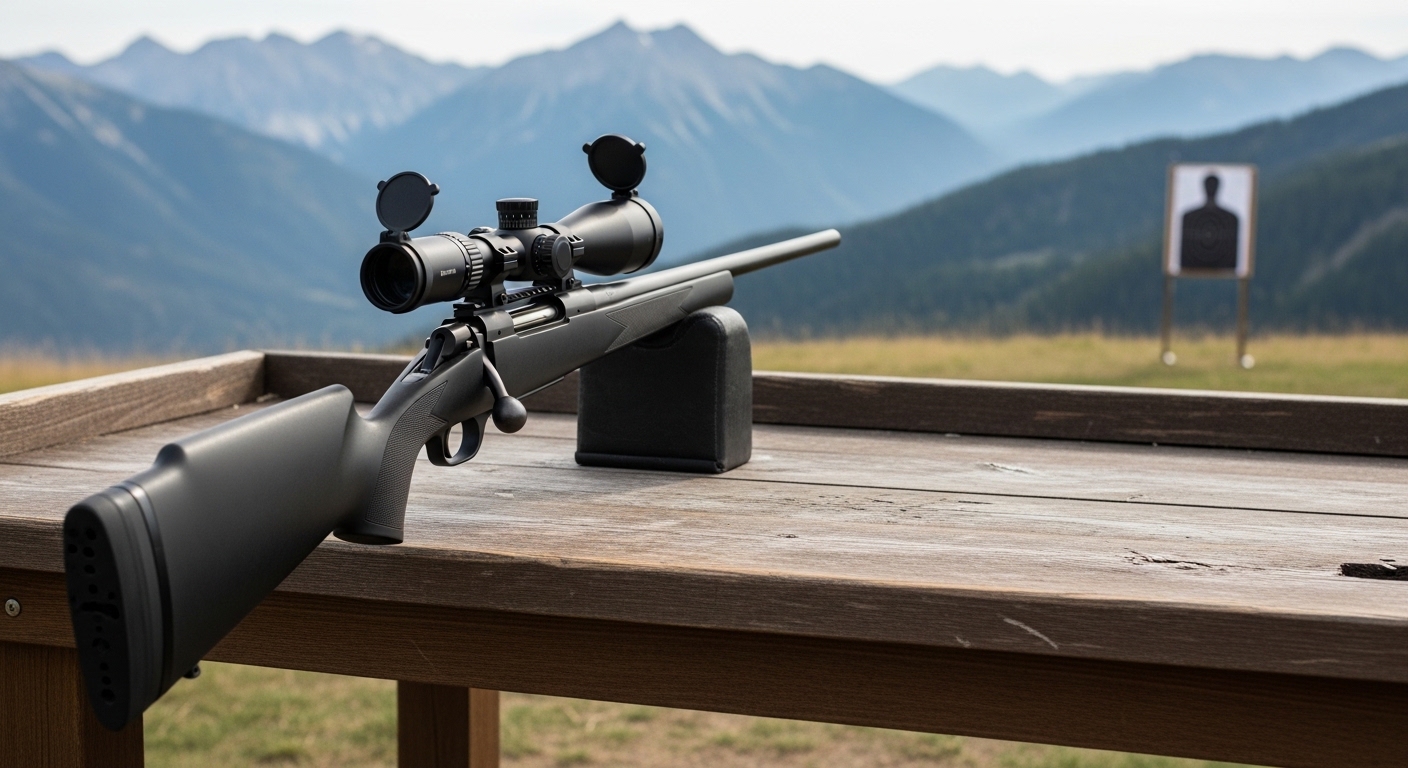
Most hunters buy way more magnification than they actually need. I’ve watched countless shooters struggle to find targets in their scope because they bought a 6-24x for deer hunting in hardwoods. The reality is that 3-9x magnification handles 95% of hunting scenarios under 500 yards.
The best all-around rifle scope magnification is 3-9x for general hunting under 500 yards. Choose 1-6x for close-range dangerous game, 4-16x for western open country, and 5-25x+ for dedicated long-range precision shooting beyond 500 yards.
After spending 15 years hunting across the country and helping dozens of friends choose optics, I’ve learned that magnification is one of the most misunderstood specifications. More magnification isn’t better. In fact, excessive magnification often leads to missed shots and frustrated hunters.
Rifle scope magnification works like a telescope, bringing distant targets appear closer. A 3-9x scope makes your target appear three times larger at minimum power and nine times larger at maximum power. The first number is always minimum magnification. The second number is maximum.
Variable scopes give you flexibility. You can dial down for quick target acquisition, then crank up for precise shot placement. Fixed power scopes, like a 4x or 6x, offer simplicity and durability. They’re popular among dangerous game hunters who need reliability more than versatility.
Fixed power scopes have one magnification. They’re simpler, tougher, and often brighter. Variable scopes adjust between two magnifications. Most hunters today choose variable scopes for their versatility across different shooting situations.
I’ve used both extensively. Fixed 4x and 6x scopes are fantastic for deer hunting in timber where shots happen fast. You never have to worry about what power setting you’re on. But for western hunting where shots range from 100 to 600 yards, a variable 3-15x or 4-16x makes more sense.
Zoom ratio is the relationship between minimum and maximum magnification. A 3-9x scope has a 3x zoom ratio. A 2.5-10x has a 4x ratio. Higher zoom ratios like 5x or 6x give you more versatility but often cost more and can compromise optical quality at the extremes.
Zoom Ratio: The relationship between minimum and maximum magnification. A 3-9x scope has a 3x zoom ratio. Higher ratios like 5x or 6x offer more versatility but typically cost more.
Most quality hunting scopes have a 3x or 4x zoom ratio. This strikes the best balance between versatility and optical performance. Entry-level scopes sometimes claim 6x or even 8x zoom ratios, but I’ve found they often get fuzzy at the extremes.
Distance is the most important factor when choosing magnification. Your typical shooting range should drive your decision, not the occasional long shot you hope to take. Be realistic about where you actually hunt and shoot.
For shots under 150 yards, you don’t need much magnification. In fact, too much power makes it harder to find your target and impossible to shoot offhand. I’ve seen hunters miss easy 80-yard shots because they couldn’t find the buck in their scope at 12x.
Recommended magnification: 1-6x, 2-7x, or fixed 4x
Low power variable optics (LPVOs) with 1-6x magnification are perfect for close-range hunting. You can shoot with both eyes open at 1x, then dial to 6x for a precise shot. Thick timber hunters often prefer simple 2-7x or fixed 4x scopes for their wide field of view.
This is the sweet spot for most deer, elk, and antelope hunting across North America. A 3-9x scope is the classic choice for a reason. It gives you enough magnification for precise shot placement at 300 yards while maintaining a usable field of view at closer ranges.
Recommended magnification: 2.5-10x, 3-9x, or 3-12x
I’ve personally taken dozens of animals in this range with a 3-9x40mm scope. The 9x maximum is plenty for a 300-yard shot on big game. Anything more is overkill and makes finding your target harder. The modern 2.5-10x has become popular because it gives you a slightly wider view at close range while maintaining reach.
Shooting beyond 300 yards requires more magnification for precise shot placement. At 500 yards, a deer’s vitals look small even through 9x. This is where higher magnification starts to justify itself, provided you can hold steady.
Recommended magnification: 3-15x, 4-16x, or 4.5-14x
A 4-16x scope is excellent for this range. You can dial back to 4x for closer shots and have 16x available when you need to pick a spot at distance. I’ve found that 12-15x is usually the practical maximum for field shooting. Beyond that, image shake becomes a real problem.
Dedicated long-range shooting is a specialized pursuit. Target identification and precise shot placement at 600-1000 yards demand high magnification. But this comes with significant drawbacks in terms of weight, size, and usability at normal hunting ranges.
Recommended magnification: 5-25x, 6-24x, or 8-32x
For serious long-range work, I recommend a 5-25x or 6-24x scope. These give you the magnification to see your target and call shots at extreme distances. However, be aware that scopes in this range are heavy, expensive, and nearly unusable for shots under 200 yards due to narrow field of view.
| Distance | Minimum Magnification | Optimal Range | Best For |
|---|---|---|---|
| 50-150 yards | 1-4x | 1-6x, 2-7x | Thick timber, dangerous game |
| 150-300 yards | 3-6x | 3-9x, 2.5-10x | General big game hunting |
| 300-500 yards | 6-10x | 4-16x, 3-15x | Open country, western hunting |
| 500-1000+ yards | 12-15x | 5-25x, 6-24x | Long-range precision, varmint hunting |
Different hunting styles demand different optical setups. A whitetail hunter in Wisconsin needs something completely different from a prairie dog shooter in South Dakota. Let’s break down the best choices for common applications.
Most whitetail shots happen under 200 yards, often in cover. Shots are fast and timber is thick. I’ve taken dozens of whitetails and never needed more than 9x magnification. The classic 3-9x40mm configuration is perfect for this application.
Recommended: 2.5-10x, 3-9x, or fixed 4x
For thick timber hunters, a simple 3-9x or even a fixed 4x is ideal. You need a wide field of view to pick up moving deer in cover. High magnification becomes a liability when you’re trying to find a buck 80 yards away in heavy brush.
Western hunting often involves glassing open country and taking shots at unknown distances. You might spot a bull at 200 yards or 600 yards. Versatility is key here. This is one application where higher magnification ranges make sense.
Recommended: 3-15x, 4-16x, or 2.5-10x for timber elk
For open country elk hunting, I like a 4-16x scope. You can dial down to find animals and crank up for the longer shots that western hunting often requires. If you’re hunting dark timber elk exclusively, a 2.5-10x or 3-9x is plenty.
When you’re hunting grizzly, buffalo, or brown bear, you need fast target acquisition and absolute reliability. These animals can close ground quickly, and you don’t have time to fiddle with magnification rings. Low power is your friend here.
Recommended: 1-4x, 1-6x LPVO, or fixed 2x-4x
Most dangerous game guides recommend variable scopes with 1-4x or 1-6x ranges. Some traditionalists prefer fixed low power scopes for their simplicity. The goal is to find your target instantly and make a shot before the animal closes the distance.
Shooting prairie dogs, coyotes, and foxes involves small targets at long distances. Precision matters more than speed. This is one application where high magnification truly shines. You want to see fur detail at 400 yards.
Recommended: 6-24x, 5-25x, or 4-16x minimum
Varmint hunters benefit from scopes with 20x+ maximum magnification. You’re often shooting from a stationary position with time to get steady. High magnification lets you verify your target and make precise hits on small animals.
Modern sporting rifles and AR platforms excel at 0-500 yards. Low Power Variable Optics (LPVOs) have revolutionized this category. A 1-6x or 1-8x scope gives you true 1x for close-range shooting with enough magnification for 500-yard precision.
Recommended: 1-6x LPVO or 1-8x LPVO
LPVOs are the most versatile scopes available. At 1x, you can shoot with both eyes open like a red dot. Crank to 6x or 8x, and you have enough magnification for precise shooting at medium range. This is why they’ve become standard for tactical competitions and increasingly popular for hunters.
Magnification gets all the attention, but several other factors matter just as much for real-world hunting performance. I’ve seen hunters obsess over magnification while ignoring factors that actually matter more in the field.
As magnification increases, field of view decreases. This is an iron law of optics. At 9x, you might only see 15 feet at 100 yards. At 3x, you might see 35 feet. That’s a massive difference when you’re trying to find a buck in brush.
I’ve lost track of how many times I’ve heard hunters say they couldn’t find their animal in the scope. This almost always happens because they’re at high magnification. For general hunting, a wider field of view is often more valuable than extra magnification.
Your heartbeat, breathing, and muscle tremors are magnified right along with your target. At 15x or higher, even a rock-solid rest shows some movement. Most hunters can’t hold steady enough to use more than 12-15x magnification effectively.
I learned this the hard way years ago, spending $800 on a high-magnification scope and then struggling to use it in the field. Unless you shoot from a stable bench or prone position with excellent technique, 20x+ magnification is wasted. In fact, it often hurts your shooting because the reticle won’t stay steady.
Contrary to popular belief, lower magnification often performs better in low light. At lower powers, the exit pupil (the beam of light leaving the scope) is larger, delivering a brighter image. At higher magnifications, the exit pupil shrinks and the image appears darker.
For dawn and dusk hunting, this matters. A 3-9x40mm scope is often brighter at 9x than a 6-24x50mm is at 24x, despite the larger objective lens on the latter. If you hunt the last 15 minutes of legal light, consider staying at moderate magnification levels.
| 40mm Objective | Lightweight, compact, best for 2-7x to 3-9x scopes |
| 44-50mm Objective | Balanced size, works well with 3-12x to 4-16x scopes |
| 56mm Objective | Maximum light, best for high magnification 5-25x+ scopes |
High magnification scopes are heavy. A 6-24x56mm scope might weigh 24-30 ounces. A 3-9x40mm might weigh 14-18 ounces. That’s a pound of difference on top of your rifle. For hunters covering miles in steep country, every ounce matters.
Larger objectives also require higher mounts. A 56mm objective sits higher above the bore than a 40mm objective. This affects your cheek weld and can make shooting less comfortable. Balance the benefits of high magnification against the practical downsides of weight and bulk.
First Focal Plane (FFP) reticles scale with magnification, staying proportional to the target. Second Focal Plane (SFP) reticles stay the same size regardless of magnification. For most hunting under 10x, SFP is perfectly adequate and often preferable.
For long-range shooting with holdover dots and windage marks, FFP reticles shine. The reticle remains accurate at any magnification. But for typical hunting distances, a simple duplex or BDC reticle in SFP works great and costs less.
Heavy recoiling rifles can be harder to keep on target with high magnification. The scope jump during recoil makes it difficult to spot your hit and get back on target quickly. If you shoot a magnum cartridge, consider moderate magnification ranges.
Light recoiling calibers like .223, 243, and 6.5 Creedmoor are easier to shoot with high magnification. You can watch impacts through the scope. Hard kickers like 300 Win Mag and 338 Lapua make this difficult regardless of magnification.
As shooters age, their eyes naturally lose some ability to focus. Many hunters in their 50s and 60s find themselves wanting more magnification to compensate for declining vision. This is understandable, but be careful not to overdo it.
Higher magnification can help aging eyes see target details, but it also narrows your field of view and magnifies movement. The solution is often quality glass rather than just more power. Premium scopes deliver better resolution and contrast, making target identification easier even at moderate magnification.
If you’re over 50 and struggling with your scope, consider upgrading optical quality before simply buying more magnification. A high-end 3-15x often serves aging eyes better than a budget 5-25x.
After all this analysis, the decision process doesn’t need to be complicated. Start with your primary hunting or shooting distance. Be honest about where you actually take shots, not where you dream of taking them.
Next, consider your terrain. Thick timber hunters need less magnification than open country hunters. Then think about your targets. Big game animals don’t require extreme magnification. Varmints and small targets do.
Finally, be realistic about your shooting ability. High magnification demands steady technique. If you shoot offhand often, keep magnification moderate. Most hunters are best served by versatile ranges like 2.5-10x, 3-9x, or 4-16x.
For general hunting under 500 yards, 3-9x is the ideal all-around magnification. This range gives you enough power for precise shots at distance while maintaining a wide field of view for closer shots. Most hunters never need more than 9x magnification for big game hunting.
Neither is universally better. 40mm objectives are lighter and more compact, making them ideal for hunting scopes. 50mm objectives gather more light for low-light performance but add significant weight and require higher mounts. For most hunting applications, 40-44mm objectives offer the best balance of size and performance.
10x magnification is suitable for shots out to approximately 500-600 yards on big game animals. At this power, you can clearly identify vitals and make precise shot placement. However, most hunters struggle to hold steady at 10x without a solid rest, making lower magnification often more practical in the field.
A 4-24×50 scope provides enough magnification to identify targets at 1000+ yards. However, seeing targets and hitting them are different things. While 24x allows you to see fine details at extreme range, field shooting becomes difficult above 15x due to image shake and narrow field of view.
Yes, 3-9x is more than enough for 95% of deer hunting situations. The vast majority of whitetail deer are taken under 200 yards, where 9x magnification is plenty. In fact, many experienced deer hunters prefer even lower magnification like 2-7x or fixed 4x for faster target acquisition in timber.
For long range shooting beyond 500 yards, a 5-25x or 6-24x scope is ideal. These ranges provide the magnification needed for precise shot placement at extreme distances while still offering usable low-end power for closer targets. However, these high-magnification scopes are heavy and less practical for typical hunting.