Binocular Features Explained: Complete Guide to Specifications 2026
Complete guide to understanding binocular features including magnification, objective lens size, field of view, lens coatings, prism types, and how…

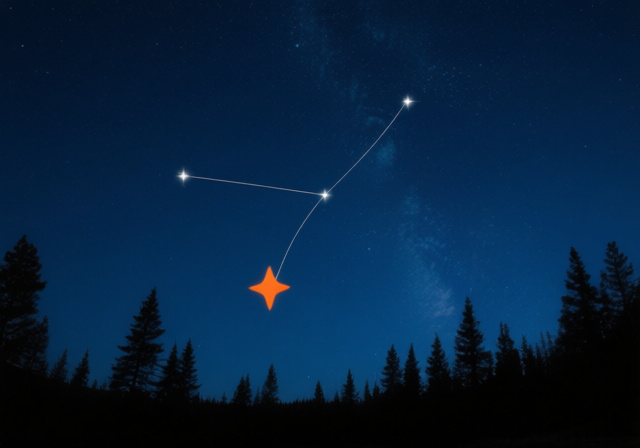
The Aries constellation represents one of the most fascinating celestial patterns in our night sky. While many know it as the first sign of the zodiac, this constellation holds significant astronomical importance beyond its astrological associations. Spanning 441 square degrees in the Northern Hemisphere, Aries sits along the ecliptic path where planets and the moon regularly pass through its domain.
What makes Aries constellation facts particularly interesting is its historical role as the marker of the vernal equinox. Ancient astronomers used Hamal, the constellation’s brightest star, as a crucial navigation point for centuries. Today, amateur astronomers continue to seek out this modest yet meaningful star group during autumn evenings when it reaches peak visibility in the night sky.
Aries Constellation is a small zodiac constellation visible in autumn months. It contains Hamal (alpha star), marks the vernal equinox point, and spans 441 square degrees in the Northern Hemisphere sky.
| Abbreviation: | Ari |
| Genitive: | Arietis |
| Brightest Star: | Hamal (Alpha Arietis, magnitude 2.0) |
| Area: | 441 square degrees (39th largest) |
| Right Ascension: | ~2 hours |
| Declination: | +20 degrees |
| Best Visible: | December evenings (autumn months) |
| Zodiac Rank: | 1st sign of the zodiac |
| Main Stars: | 4 bright stars |
Aries constellation occupies prime celestial territory in the Northern Hemisphere’s first quadrant. The constellation lies along the ecliptic path, making it one of the zodiac constellations through which the sun, planets, and moon appear to pass throughout the year. This positioning makes Aries an important reference point for both ancient and modern astronomers.
Ecliptic: The apparent path the Sun takes across the sky over the course of a year. Zodiac constellations line this path, which is why planets and the moon regularly pass through them.
The Aries constellation location sits in the first quadrant of the Northern Hemisphere celestial sphere. Its precise coordinates place it between right ascension 1h 46m and 3h 29m, with declination ranging from +10 to +31 degrees. This celestial positioning makes Aries visible from almost all locations in the Northern Hemisphere during autumn and winter months, while Southern Hemisphere observers can spot it near their northern horizon during spring.
One of the most significant aspects of Aries constellation facts is the First Point of Aries. This astronomical reference point marks the location of the vernal equinox on the celestial sphere. The vernal equinox occurs when the sun crosses the celestial equator moving northward, signaling the beginning of spring in the Northern Hemisphere. Historically, this point actually lay within the boundaries of the Aries constellation, which is why it bears its name.
The First Point of Aries serves as the zero point for the celestial coordinate system. This means that right ascension measurements begin at this point, similar to how the prime meridian at Greenwich serves as the starting point for longitude on Earth. This makes Aries astronomically important as the reference marker for mapping the entire celestial sphere, regardless of where the equinox point currently appears in the sky.
Due to precession of the equinoxes, the First Point of Aries has actually drifted westward over thousands of years. Today, this point lies in the constellation Pisces, approximately 7 degrees from the Pisces-Aries border. Precession occurs because Earth’s axis slowly wobbles like a spinning top, completing one full cycle every 25,772 years. This gradual shift means that around the year 2600, the equinox point will move from Pisces into Aquarius, beginning what some call the “Age of Aquarius.”
It’s important to understand the difference between the First Point of Aries (a coordinate reference) and the actual constellation Aries. The reference point is fixed in the coordinate system even though it no longer aligns with the constellation’s stars. This distinction often confuses newcomers to astronomy who expect to find the equinox within the constellation’s boundaries. Modern astronomy maintains the traditional name “First Point of Aries” out of historical convention and continuity with thousands of years of astronomical records.
Historical Note: Claudius Ptolemy included Aries in his original 48 constellations cataloged in the 2nd century CE. The constellation has maintained its boundaries and importance throughout astronomical history, making it one of the most enduring patterns in human stargazing tradition.
The best time to see Aries constellation is during autumn evenings. In December, Aries reaches its highest point in the sky around midnight, making it ideally positioned for observation. The constellation remains visible from September through February, with peak viewing occurring in late autumn and early winter. During these months, Aries climbs high enough in the sky to be easily spotted from most locations.
Pro Tip: Urban stargazers should plan for new moon periods when sky darkness is optimal. Even in cities, Hamal’s brightness (magnitude 2.0) makes it visible from moderately light-polluted areas. For the best results, aim for nights when the moon is below the horizon or in its new phase.
Southern Hemisphere observers can spot Aries near the northern horizon during their spring months. The constellation appears lower and smaller from southern latitudes but remains identifiable thanks to Hamal’s distinctive golden glow. Observers in Australia, New Zealand, and southern South America should look for Aries in their October through January months, when it reaches maximum altitude above their northern horizon.
It’s worth noting that Aries constellation visibility differs from zodiac sign dates in astrology. While the astrological sign of Aries runs from approximately March 21 to April 19, the actual constellation is best observed during autumn months. This difference occurs because astrology uses the tropical zodiac, which remains fixed to the equinox points, while astronomy observes the actual positions of stars in the sky. This important distinction helps clarify why Aries the constellation and Aries the zodiac sign appear at different times of year.
Finding Aries constellation requires knowing when and where to look in the night sky. The Ram appears modest but becomes easier to spot with practice and the right techniques. Because Aries isn’t among the brightest constellations, many new stargazers struggle to locate it initially. However, once you recognize its pattern, you’ll find it becomes increasingly familiar each autumn season.
The most reliable method for finding Aries begins with the Great Square of Pegasus. This prominent asterism appears as a large square of moderately bright stars high in the sky during autumn. From the eastern side of the Square, scan about 30 degrees eastward to find a small curve of moderately bright stars. This curved pattern represents the Ram’s head and forms the core of the Aries constellation.
Another effective approach uses the Pleiades star cluster as a starting point. The Seven Sisters form one of the most recognizable star patterns in the night sky and serve as an excellent reference. From the Pleiades, look approximately 15 degrees southeast. Hamal’s distinctive orange hue helps confirm you’ve found the right star group. The three brightest stars of Aries form a gentle arc that resembles a curved line or a simple ram’s head profile.
For observers in North America and Europe, the easiest time to find Aries is in late November and December. During these months, the constellation reaches its highest point in the sky around 9-10 PM local time. Look roughly halfway between the horizon and the zenith in the eastern part of the sky. The constellation’s modest size means it fits comfortably within a typical binocular field of view, making it relatively easy to study once located.
The best time to see Aries constellation is on clear, moonless autumn evenings. December offers optimal positioning when the Ram reaches its highest point around 10 PM. Light pollution affects visibility of fainter constellation stars, but Hamal and Sheratan remain visible from most suburban locations. For the complete experience, seek out darker skies away from city lights, where you can appreciate the full pattern against the rich stellar background.
Urban Observer Note: From major cities, expect to see only Hamal and possibly Sheratan with the naked eye. A pair of 7×50 or 10×50 binoculars will reveal the full constellation pattern even under moderate light pollution. For detailed information on choosing the right magnification, see our guide on best binocular magnification for stargazing.
Moon phase significantly impacts your ability to see fainter stars in Aries. The constellation appears best during the new moon phase when the sky is darkest. During full moon periods, moonlight can wash out the fainter stars, making it difficult to see the complete pattern. Plan your observation sessions for the week surrounding the new moon for optimal viewing conditions. Weather conditions also matter – clear, stable nights with low humidity provide the sharpest views.
Dark adaptation takes about 20-30 minutes for your eyes to reach maximum sensitivity. Avoid looking at bright lights, including phone screens, during this period. Once your eyes are adapted, you’ll be surprised at how many more stars become visible in Aries. Consider using a red flashlight if you need to consult star charts, as red light preserves night vision better than white light.
For naked eye observation, no equipment is needed to appreciate Aries’ basic shape. However, binoculars enhance the experience considerably. I’ve found that 10×50 binoculars provide the ideal balance of light-gathering power and field of view for constellation observing. These specifications offer good magnification while gathering enough light to reveal fainter stars that remain invisible to the naked eye.
Small telescopes (60-80mm aperture) reveal Mesarthim’s double star nature and can show some of the constellation’s fainter members. A wide-field eyepiece (25mm or greater) helps frame the entire constellation pattern. If you’re deciding between viewing equipment options, our comparison of binoculars vs telescope for astronomy can help determine which works best for your needs.
For deep sky object hunting within Aries, larger apertures (6 inches and above) provide significant advantages. Telescopes in this range can reveal NGC 772 and other faint galaxies that smaller instruments struggle to show. Light pollution filters can improve contrast when viewing from suburban locations. Our guide on the best telescope filters for deep sky viewing covers which filters work best for galaxy observation.
Smartphone astronomy apps like Stellarium, Star Walk, and SkyView can be invaluable aids for locating Aries. These apps show real-time sky maps and can help you identify the constellation’s pattern. Many include augmented reality features that overlay constellation patterns on camera views of the actual sky. However, don’t become overly reliant on apps – learning to star hop using traditional methods builds valuable observation skills and deeper familiarity with the night sky.
The Aries constellation stars form a compact but distinctive pattern that rewards careful observation. While not as numerous or bright as some neighboring constellations, Aries contains several noteworthy stars that make it worth studying. The constellation’s stellar makeup includes interesting giants, double stars, and variable systems that provide targets for telescopes of all sizes.
| Star Name | Magnitude | Right Ascension | Declination | Distance (ly) |
| Hamal (α) | 2.00 | 02h 07m 10s | +23° 27′ 44″ | 66 |
| Sheratan (β) | 2.64 | 03h 17m 17s | +20° 48′ 29″ | 59 |
| Mesarthim (γ) | 4.63/4.72 | 01h 53m 32s | +19° 17′ 36″ | 164 |
| Bharani (41 Ari) | 3.61 | 02h 49m 59s | +27° 15′ 38″ | 166 |
| Lambda Arietis (λ) | 4.79 | 01h 57m 56s | +23° 35′ 46″ | 129 |
| R Arietis | 5.5-14.0 | 02h 16m 28s | +25° 02′ 15″ | 1,340 |
Hamal serves as the alpha star and brightest member of Aries constellation facts. This orange giant star shines at magnitude 2.0, making it easily visible to the naked eye even from urban locations. I’ve often used Hamal as an anchor star when teaching beginners constellation recognition because its distinctive golden-orange color helps distinguish it from nearby white and blue stars.
Hamal lies approximately 66 light-years from Earth and has evolved off the main sequence. Its orange color indicates a cooler surface temperature around 4,480 Kelvin compared to our Sun’s 5,778 Kelvin. The star has about 91 times the luminosity of our Sun and spans roughly 14 solar diameters. This substantial size and brightness make Hamal one of the most prominent stars in its region of the sky.
Quick Summary: Hamal is an orange giant 66 light-years away, 91 times brighter than our Sun, and serves as the primary navigation point for finding Aries constellation.
What fascinates me about Hamal is its subtle variability. The star exhibits small brightness fluctuations of about 0.05 magnitudes over approximately 24 days. This subtle pulsation went unnoticed for centuries until modern photometry detected it. The star’s slow rotation period of approximately 66 days contributes to its stable appearance to observers, making it appear as a steady, reliable beacon in the autumn sky.
Hamal’s coordinates place it at right ascension 02h 07m 10s and declination +23° 27′ 44″. This position makes it accessible to observers throughout the Northern Hemisphere. The star’s altitude varies depending on your latitude – at 40° north latitude, Hamal reaches a maximum altitude of about 67 degrees above the southern horizon when it culminates. This favorable positioning makes it an excellent target for observation from much of North America and Europe.
Sheratan ranks as the second brightest star in Aries at magnitude 2.64. This white main-sequence star sits 59 light-years from Earth and forms a close visual pair with Hamal. I find the color contrast between orange Hamal and white Sheratan particularly beautiful through binoculars, making this pair an excellent demonstration of stellar temperature differences for new stargazers.
The name Sheratan derives from Arabic meaning “the two signs” or “the two things,” referring to its ancient role as a marker star along with Hamal. Sheratan has about 2.3 times the Sun’s mass and rotates rapidly, completing a full turn in approximately 76 hours. This relatively rapid rotation causes some flattening at the poles, a common feature among faster-spinning stars.
Sheratan’s coordinates place it at right ascension 03h 17m 17s and declination +20° 48′ 29″. Its spectral classification of A5V indicates it’s a white main-sequence star that will eventually evolve into a red giant in the distant future. The star’s brightness makes it easily visible from suburban locations, and it serves as a key component in the distinctive curved pattern that defines Aries constellation.
While Sheratan appears single to the naked eye, it actually has a faint companion star at magnitude 9.7 that can be detected with small telescopes. This companion star lies about 80 arcseconds from the primary and shares a common proper motion, indicating the two stars form a bound binary system. The wide separation makes this an easy binary to split, even with modest telescopes.
Mesarthim, the gamma star of Aries constellation facts, surprises many observers as a beautiful double star. When studying Aries, Mesarthim’s dual nature often goes overlooked by casual stargazers. The system consists of two white stars of magnitudes 4.6 and 4.7, separated by just 7.8 arcseconds. This nearly equal brightness makes it one of the more aesthetically pleasing double stars in the autumn sky.
Located 164 light-years away, Mesarthim requires binoculars or a small telescope to resolve as two distinct stars. I’ve found it makes an excellent target for new telescope users – the challenge of splitting the pair provides a satisfying achievement. The two components are actually quite different in size and temperature despite appearing similar in brightness. The primary star is a white dwarf while the companion is a blue-white main-sequence star.
Mesarthim’s coordinates place it at right ascension 01h 53m 32s and declination +19° 17′ 36″. The name derives from Arabic and means “the fat sheep,” another reference to the constellation’s ram mythology. This star system provides an excellent example of how stars that appear similar from Earth can have vastly different properties when studied in detail.
For observers with telescopes, Mesarthim offers an interesting challenge. At 7.8 arcseconds separation, most telescopes can split the pair under good seeing conditions. Higher magnifications (100x and above) typically provide the best views. The nearly equal brightness of the components makes for a striking appearance, especially against the dark background of Aries’ relatively star-poor region.
Bharani, designated as 41 Arietis, represents another important star in the Aries constellation. At magnitude 3.61, it ranks as the fourth brightest star in the constellation and helps define the ram’s head shape. Located approximately 166 light-years from Earth, Bharani has coordinates of right ascension 02h 49m 59s and declination +27° 15′ 38″.
This blue-white main-sequence star has a spectral classification of B8Vn, indicating it’s significantly hotter and more massive than our Sun. Bharani burns at a surface temperature of approximately 11,000 Kelvin and has about 3.5 times the Sun’s mass. Stars like Bharani burn through their fuel relatively quickly and have shorter lifespans compared to Sun-like stars, despite being younger in absolute terms.
The name Bharani comes from Indian astronomy and is one of the 27 nakshatras (lunar mansions) used in Hindu astrology. In this tradition, Bharani is associated with the star cluster Pleiades and represents the star that rules over the womb and birth. This cross-cultural naming demonstrates how different civilizations recognized and named the same stars independently.
For amateur astronomers, Bharani serves as a useful navigation point when exploring the northern portion of Aries. Its relatively bright magnitude makes it visible from most suburban locations with the naked eye. Through binoculars, Bharani’s blue-white color contrasts nicely with the warmer colors of other Aries stars like Hamal and Botein.
Lambda Arietis is a fainter star in Aries constellation that becomes an interesting target for telescope users. At magnitude 4.79, it sits right at the limit of naked-eye visibility from truly dark sites. Most observers will need binoculars or a telescope to spot it, especially from light-polluted locations. Lambda Arietis lies approximately 129 light-years from Earth with coordinates of right ascension 01h 57m 56s and declination +23° 35′ 46″.
This star is actually a multiple system, though its components are too close to resolve with typical amateur equipment. The primary component is a yellow-white main-sequence star with a spectral classification of F0V. Stars in this class are slightly hotter and more massive than our Sun, burning with a steady fusion reaction that will eventually exhaust their hydrogen fuel.
Lambda Arietis makes an interesting comparison target when studying stellar colors. Positioned near Mesarthim and Sheratan, observers can contrast its yellow-white appearance against the white and blue-white colors of neighboring stars. This color comparison provides a practical demonstration of how stellar temperature relates to apparent color – cooler stars appear redder or yellower, while hotter stars appear bluer.
R Arietis stands out among Aries constellation stars as a fascinating variable star that changes brightness over time. Located approximately 1,340 light-years from Earth, this Mira-type variable star fluctuates between magnitudes 5.5 and 14.0 over a period of about 186.8 days. Its coordinates place it at right ascension 02h 16m 28s and declination +25° 02′ 15″.
The dramatic brightness range of R Arietis – nearly 8.5 magnitudes – means the star varies from being visible to the naked eye at its brightest to requiring substantial telescopes at its dimmest. This variation occurs because R Arietis is an aging star that has exhausted the hydrogen fuel in its core and expanded into a red giant phase. The star’s outer atmosphere pulsates, causing periodic changes in size and brightness.
For amateur astronomers, R Arietis provides an excellent opportunity to observe stellar variability firsthand. Regular observations over several months will reveal the star’s brightness cycle. Recording magnitude estimates and plotting them over time creates a light curve that matches the predictable pattern of this Mira variable. Some dedicated variable star observers have monitored R Arietis for decades, contributing to our understanding of stellar evolution.
Mira-type variables like R Arietis are important objects of study for professional astronomers as well. Their predictable pulsation periods and brightness ranges provide insights into late-stage stellar evolution. The relationship between period and luminosity in these stars helps astronomers determine distances to remote galaxies, making R Arietis and similar stars valuable cosmic yardsticks.
Botein (Delta Arietis) rounds out the primary stars of Aries at magnitude 4.35. This orange giant lies 168 light-years away and helps complete the ram’s head shape. With coordinates of right ascension 03h 51m 28s and declination +19° 43′ 37″, Botein’s warm color adds contrast to the constellation’s stellar palette. The star’s name derives from Arabic and means “the belly,” referring to its position in the traditional ram figure.
Several other dimmer stars fill in the constellation pattern, though most require optical aid to appreciate fully. The constellation’s relatively sparse stellar population – with only a few bright stars – actually makes it easier to learn for beginners. Once you identify Hamal, Sheratan, and Mesarthim, the rest of the pattern becomes more recognizable. The modest size of Aries means it fits well within a typical binocular field of view, making it an excellent constellation for binocular exploration.
One of the most exciting Aries constellation facts is the Arietid meteor shower, a fascinating celestial event that occurs annually. Unlike most meteor showers visible primarily at night, the Arietids are actually most active during daylight hours, making them unique among meteor showers. This daytime activity explains why many observers have never heard of this impressive shower despite its significant meteor rates.
The Arietid meteor shower typically peaks around June 7th each year, with activity visible from approximately May 22nd through July 2nd. During its peak, the shower can produce up to 60-100 meteors per hour, making it one of the strongest annual meteor streams. However, because the peak occurs during daylight hours, most of these meteors remain invisible to ground observers. Only the few meteors that occur just before dawn or in the early morning hours become visible to dedicated observers.
What makes the Arietid meteor shower particularly interesting is its uncertain origin. While most meteor showers have clearly identified parent comets or asteroids, the source of the Arietids remains a subject of scientific investigation. Some researchers suggest comet 96P/Machholz as the likely parent body, while others propose asteroid 1566 Icarus as the source. The shower’s unusual characteristics, including its daylight activity and radiant position near the sun, make it an intriguing subject for continued study.
Radar Detection: The Arietid meteor shower was first discovered in 1947 using radar systems, not visual observation. Because radar works equally well during daytime, this technology revealed the shower’s impressive activity that had remained hidden from visual observers for centuries.
For amateur astronomers interested in observing the Arietids, the best opportunity comes in the pre-dawn hours around June 7th. During this narrow window, the radiant point near the star 41 Arietis (Bharani) appears above the eastern horizon just before sunrise. Observers may spot a few early Arietid meteors streaking through the pre-dawn sky, creating beautiful streaks against the darkening night sky. These pre-dawn Arietids are typically fast-moving and can appear as bright fireballs.
In addition to the main daytime Arietids, there are two lesser-known branches of this meteor stream. The Delta Arietids occur from December 8th to January 14th, peaking around December 9th, while the Epsilon Arietids are active from October 18th to November 7th, with maximum activity around October 26th. Both of these showers are much weaker than the daytime Arietids, producing only a few meteors per hour at best. However, they provide additional opportunities for meteor enthusiasts to observe activity from the Aries region of the sky.
Photographing the Arietids presents unique challenges due to their timing. The daytime nature of the main shower means standard photography techniques won’t work. However, advanced amateur astronomers with specialized solar filters and daytime photography equipment have successfully captured Arietid meteors against the blue daytime sky. For most observers, the pre-dawn hours offer the best chance to photograph these elusive meteors against a darker background.
The study of the Arietid meteor shower contributes to our understanding of meteor stream evolution and celestial mechanics. By tracking the shower’s activity and radiant position over time, astronomers learn about how meteor streams spread and change as they orbit the sun. This knowledge helps predict future meteor shower behavior and improves our understanding of the small bodies in our solar system that produce these spectacular displays.
The Aries constellation mythology contains one of Greek mythology’s most enduring and dramatic tales. This celestial ram represents the legendary creature that saved two children from sacrifice and whose golden fleece became the object of Jason’s famous quest. The story combines elements of divine intervention, heroic adventure, and divine reward, making it one of the richer mythological narratives in the sky.
According to Greek myth, Aries originated from a magical ram sent by Hermes (or Nephele in some versions) to rescue Phrixus and Helle. The children’s stepmother, Ino, had plotted to sacrifice them to end a famine that plagued the kingdom of Orchomenus. Ino had bribed messengers to deliver a false oracle claiming the children must die to appease the gods. Their father, King Athamas, reluctantly agreed to the sacrifice.
Just as Phrixus and Helle were about to be killed, the golden ram miraculously appeared and urged them to climb onto its back. The ram, sent by the gods as a rescue mission, swooped down and carried the siblings away from their doom. The children mounted the ram, which then flew eastward across the Aegean Sea toward the distant kingdom of Colchis, known for its riches and strange magical practices.
During their flight, tragedy struck when Helle fell from the ram’s back into the sea. According to the myth, Helle either slipped off the ram’s fleece due to the wind or was overcome by dizziness from the height. The place where she fell became known as the Hellespont, the strait that separates Europe from Asia (now called the Dardanelles). Some versions of the myth say that Helle survived and became a sea nymph, but most accounts treat her death as permanent.
Phrixus continued safely to Colchis with the golden ram, where he was welcomed by King Aeetes. In gratitude for his rescue, Phrixus sacrificed the ram to Zeus and hung its magnificent golden fleece in the sacred grove of Ares, the god of war. The Golden Fleece became a sacred object, guarded by a sleepless dragon and imbued with magical properties. It could cure illness, bring prosperity, and even confer kingship upon its possessor.
Mythological Note: The Golden Fleece became so famous that the entire region of Colchis became known as the land of the Golden Fleece. Ancient geographers and historians often referred to the area this way, demonstrating how deeply this myth permeated classical culture.
What strikes me about this myth is how the ram’s selfless sacrifice earned it eternal honor in the stars. The gods placed the ram among the constellations as a reward for its heroism in saving Phrixus. The constellation’s placement as the first sign of the zodiac reflects this noble status, giving it primacy among the zodiacal constellations. The ram’s sacrifice made it worthy of this honored position, forever memorialized in the night sky.
The Golden Fleece later became the prize sought by Jason and the Argonauts in their famous quest. Jason gathered a crew of Greece’s greatest heroes, including Heracles, Theseus, and Orpheus, and sailed the ship Argo to Colchis. There, after completing numerous impossible tasks set by King Aeetes, Jason finally secured the Golden Fleece and returned it to Greece. This quest became one of the most famous adventures in Greek mythology, and its connection to Aries constellation facts adds another layer of significance to this stellar pattern.
The Aries constellation history extends far beyond Greek mythology, with roots reaching back to ancient Babylonian astronomy. Babylonian astronomers recognized these stars as early as 1000 BCE, where they were known as the “Hired Man” or “Laborer” in their astronomical records. The constellation held agricultural significance, marking the time for spring planting and lambing season in the Babylonian calendar.
In Babylonian star catalogs, Aries appeared as the constellation “MUL.LU.HUN.GÁ,” which translates to “The Hired Man.” This agricultural worker figure was associated with the time when farmers would hire workers for the upcoming planting season. The Babylonians observed the constellation’s rising in the spring and used it as a seasonal marker for agricultural activities. This practical application shows how ancient civilizations closely connected astronomy with their daily lives and seasonal cycles.
The vernal equinox point, where the sun crosses the celestial equator moving northward, once lay in Aries during the Babylonian era. This “First Point of Aries” marked the beginning of the astronomical year and gave the constellation its enduring importance despite precession shifting this point into Pisces over millennia. The Babylonians recognized this equinoctial connection and gave Aries special status in their astrological system.
Egyptian astronomy also recognized these stars, though they interpreted them differently. In Egyptian tradition, the ram represented the god Amon-Ra, who was often depicted with ram’s horns. The constellation’s appearance in the sky coincided with important agricultural and religious festivals in the Egyptian calendar. The Egyptians’ association of the stars with their supreme god elevated the constellation’s religious and cultural significance beyond its practical astronomical applications.
Different cultures interpreted these stars uniquely, reflecting their diverse mythological traditions and astronomical understanding. Chinese astronomy saw Aries as part of larger formations including the White Tiger of the West. In the Chinese system, Aries’ stars were incorporated into constellations representing stomach, celestial foodstuff, and the celestial enclosure. These formations were part of a complex system of 283 asterisms that Chinese astronomers used to map the entire sky.
In ancient Persia, Aries was associated with the king and royal power. Persian astronomers connected the constellation with the spring equinox and the beginning of their new year, Nowruz, which still celebrates the arrival of spring. This connection between the constellation and royal authority demonstrates how astronomical observations became intertwined with political and cultural significance in ancient civilizations.
The constellation’s universal recognition across cultures speaks to humanity’s shared celestial heritage. While Greeks saw a heroic ram, Babylonians saw a farm worker, Egyptians saw a god, and Chinese astronomers saw components of a celestial tiger, all civilizations recognized these stars as a distinct group worthy of identification and naming. This cross-cultural recognition of Aries illustrates how the night sky serves as a common canvas that different societies have projected their stories and meanings onto throughout human history.
Ptolemy included Aries in his original list of 48 constellations in the 2nd century CE, cementing its place in Western astronomical tradition. The constellation has maintained its boundaries and importance throughout astronomical history, surviving unchanged through the transformation of astronomy into a modern science. This continuity makes Aries one of the few constellations that has maintained consistent recognition from ancient times to the present day.
While not rich in deep sky objects compared to some constellations, Aries contains several interesting targets for determined observers. The constellation’s position away from the Milky Way plane means it lacks bright nebulae and star clusters, but it does host a selection of galaxies that reward patient observation. For deep sky enthusiasts, hunting these faint galaxies provides a satisfying challenge that tests both equipment and observing skills.
NGC 772 stands as Aries’ premier deep sky object and the primary target for galaxy hunters in this constellation. This face-on spiral galaxy lies approximately 130 million light-years away and shines at magnitude 10.3. I’ve observed NGC 772 through an 8-inch telescope under dark skies as a faint patch with hints of structure, though larger apertures reveal significantly more detail.
The galaxy spans about 5 arcminutes and shows slight elongation through moderate-sized telescopes. Its face-on orientation means the spiral arms appear nearly circular, though they’re quite subtle visually. Larger telescopes (12+ inches) may reveal hints of the spiral structure under excellent conditions, particularly the outer arms that extend from the brighter central region. NGC 772’s discovery by William Herschel in 1785 adds historical interest to this challenging target.
NGC 772’s coordinates place it at right ascension 01h 59m 19s and declination +19° 00′ 29″. This position makes it accessible throughout much of the Northern Hemisphere during autumn months. The galaxy lies approximately 3 degrees south-southeast of the star Mesarthim, making the bright star a convenient finder reference. Centering Mesarthim in your eyepiece and scanning southward will eventually bring NGC 772 into view.
For astrophotographers, NGC 772 presents an excellent opportunity to capture a spiral galaxy image. The galaxy’s face-on orientation creates beautiful spiral patterns when processed correctly. Long exposure images reveal details invisible to visual observers, including dust lanes, star-forming regions, and numerous background galaxies scattered throughout the field. The galaxy’s relative isolation from bright foreground stars makes for clean compositions that highlight its spiral structure.
Imaging Tip: NGC 772 responds well to narrowband filters that highlight hydrogen-alpha emission. The galaxy’s outer arms contain active star formation regions that glow brightly in hydrogen-alpha light, making them stand out against the galaxy’s central bulge. Check our guide on best telescope filters for deep sky viewing for filter recommendations.
Several fainter galaxies populate Aries, providing additional targets for experienced observers. NGC 678 appears as an edge-on spiral galaxy at magnitude 12.0, approximately 130 million light-years away. This elongated galaxy requires 8+ inch telescopes and dark skies to appreciate fully. NGC 678’s coordinates place it at right ascension 01h 49m 26s and declination +21° 58′ 55″, making it relatively easy to locate using the constellation’s brighter stars as references.
NGC 691 presents another challenging target at magnitude 12.2. This face-on spiral galaxy lies approximately 124 million light-years from Earth and spans about 3 arcminutes in diameter. Its coordinates are right ascension 01h 50m 56s and declination +21° 45′ 34″. NGC 691’s relatively uniform brightness and lack of distinct features make it a somewhat unremarkable visual target, though its inclusion in the Herschel 400 list motivates many observers to seek it out.
NGC 1156, a dwarf irregular galaxy, presents a unique deep sky challenge. At magnitude 12.2 and spanning about 2.5 arcminutes, this galaxy appears as a small, faint patch in larger telescopes. Located approximately 18 million light-years away, NGC 1156 is one of the closer galaxies in Aries constellation facts. Its coordinates place it at right ascension 02h 59m 42s and declination +25° 14′ 09″. The galaxy’s irregular structure and lack of symmetry make it an interesting contrast to the more organized spiral galaxies in the region.
Arp 286, a trio of interacting galaxies, presents an advanced imaging challenge for astrophotographers. The group lies over 300 million light-years away and demands excellent conditions and substantial aperture to detect visually. The three components – NGC 772A, NGC 770, and IC 208 – are gravitationally bound and show signs of interaction in photographs. Visual observation of this system requires large telescopes (14+ inches) and exceptional seeing conditions, making it primarily a photographic target.
| NGC 772 | Mag 10.3 – 6-8 inch telescope needed |
| NGC 678 | Mag 12.0 – 8+ inch telescope required |
| NGC 1156 | Mag 12.2 – Challenging target |
| Arp 286 Trio | Mag 13+ – Advanced imaging target |
Photographing Aries constellation offers unique opportunities for night sky photographers. The constellation’s compact size makes it ideal for wide-field shots, while its inclusion in the zodiac path creates interesting composition possibilities. Whether you’re a beginner with a DSLR or an experienced astrophotographer with dedicated equipment, Aries provides rewarding photographic challenges throughout the autumn months.
For capturing Aries with a DSLR or mirrorless camera, I recommend starting with these baseline settings and adjusting based on conditions: ISO 1600-3200, f/2.8 or wider aperture, and 15-25 second exposures depending on your focal length. The “500 rule” helps determine maximum exposure time before stars begin trailing – divide 500 by your focal length in mm to get the maximum exposure time in seconds.
The key to successful constellation photography lies in capturing enough light while keeping star trails minimal. For wide-angle lenses (14-24mm), exposures of 20-30 seconds at ISO 3200 often work well. Longer focal lengths require proportionally shorter exposures to prevent trailing. Don’t be afraid to experiment – different camera sensors perform differently at high ISO settings, and finding the optimal balance requires testing.
Raw file format is essential for constellation photography. Shooting in raw provides the maximum information for processing and allows you to recover details that would be lost in compressed JPEG files. The extra dynamic range and color information in raw files becomes especially important when processing faint constellation stars and deep sky objects within Aries.
Focusing presents one of the biggest challenges in constellation photography. Autofocus systems typically fail on stars, so manual focusing is necessary. Use live view at maximum magnification to achieve critical focus on a bright star near Aries. Alternatively, focus on infinity using distance scales if available, though this method is less precise. Critical focus makes the difference between soft, bloated stars and sharp, pinpoint points of light.
A wide-angle lens (14-24mm on full frame) works best for framing the entire Aries pattern. I’ve had success with both prime lenses and f/2.8 zooms. The key is maximum aperture and sharpness at wide open settings. For APS-C or micro four-thirds cameras, calculate the equivalent focal length – a 10-16mm lens provides similar coverage to a full-frame 14-24mm lens.
A sturdy tripod is non-negotiable for constellation photography. Any camera movement during long exposures will ruin your images. Choose a tripod rated for at least twice the weight of your camera and lens combination. Consider using a remote shutter release or the camera’s built-in timer to prevent shake when triggering the exposure. For more advanced techniques, see our guide on how to take photos through a telescope.
For urban photographers, Aries presents challenges due to light pollution. Light pollution from cities washes out fainter stars and reduces contrast in your images. A light pollution filter helps considerably, but finding darker skies within driving distance dramatically improves results. The difference between urban and dark sky sites is remarkable – you’ll see many more stars in the constellation and achieve cleaner, more detailed images.
Dedicated astronomy cameras (cooled CCD or CMOS) offer advantages for constellation imaging, particularly when targeting deep sky objects like NGC 772. These cameras feature cooling systems that reduce thermal noise during long exposures, allowing for cleaner images at higher ISOs. However, modern DSLRs and mirrorless cameras have improved dramatically and can produce excellent constellation images, especially when using noise reduction techniques in post-processing.
Tracking mounts open up new possibilities for constellation photography. An equatorial mount or star tracker compensates for Earth’s rotation, allowing much longer exposures without star trailing. This enables you to capture fainter stars within Aries and even begin imaging the constellation’s galaxies. While tracking adds complexity and cost, the results justify the investment for serious constellation photographers.
Consider including neighboring constellations in your frame for more interesting compositions. Aries sits between Taurus and Perseus, creating wider possibilities that include multiple zodiac patterns. The Pleiades cluster makes an excellent companion subject when framing wide shots of this region. Position Aries strategically within your composition to create visual balance with other star patterns.
Foreground elements add context and scale to constellation images. I’ve created memorable images by combining Aries with interesting foreground elements – silhouettes of trees, buildings, or horizons add visual interest and help viewers understand the scale of the night sky. Urban scenes with Aries above city skylines create compelling contrasts between the celestial and terrestrial worlds.
Star trails centered on Hamal create compelling images that emphasize the Earth’s rotation. I’ve experimented with stacking hundreds of 20-second exposures over an hour or more, producing circular star trails with Aries as the anchor point. This technique requires careful planning and stable tracking, but the results demonstrate the apparent motion of the stars and create dramatic abstract patterns in the sky.
Seasonal timing affects your Aries compositions. Early in the season (September-October), Aries appears lower in the eastern sky, allowing compositions that include foreground elements to the east. Later in the season (December-January), the constellation appears higher overhead, making it ideal for compositions with northern horizons or framing around trees and buildings. The changing position throughout the season offers creative opportunities for different compositional approaches.
Meteor photography during the Arietid shower presents a unique challenge. While the main peak occurs during daylight, the pre-dawn hours offer opportunities to capture early Arietid meteors. Set up your camera facing east toward Aries in the pre-dawn darkness and use the techniques mentioned above. With luck and patience, you may capture one of these elusive daytime meteors against the darkening sky just before sunrise.
Aries constellation facts reveal a celestial pattern rich in history, mythology, and astronomical significance. From its role as the ancient marker of the vernal equinox to its place in Greek mythology as the heroic Golden Ram, this modest constellation has captured human imagination for millennia. Whether you’re hunting galaxies like NGC 772, observing variable stars like R Arietis, or simply appreciating the distinctive curve of Hamal, Sheratan, and Mesarthim, Aries offers rewarding observations for stargazers of all experience levels.
Understanding Aries constellation facts connects us to centuries of astronomical tradition while providing practical targets for modern observation. The constellation’s convenient autumn placement, accessible bright stars, and fascinating deep sky objects make it an excellent addition to any stargazer’s repertoire. As the nights grow longer and cooler this autumn, take time to find the Ram among the stars and discover for yourself why this constellation has remained significant since ancient times.