Where Do Crows Like To Nest? Complete Guide 2026
American Crows build their nests in the upper third of tall trees, typically 20-60 feet above ground. Learn about their…

One morning last January, I watched my backyard feeders fill with chickadees, cardinals, and juncos as snowflakes began to fall. Within an hour, as the snow intensified, every bird had vanished.
When it snows, birds don’t go anywhere specific. They seek shelter in nearby protected areas like tree cavities, dense evergreens, nest boxes, and thick shrubs. They also rely on remarkable adaptations including feather insulation, the ability to fluff up for warmth, and metabolic adjustments that allow them to survive freezing temperatures.
The birds hadn’t flown south. They were hiding just feet away, tucked into sheltered spots I couldn’t see.
After 15 years of watching backyard birds through New England winters, I’ve learned that the “disappearing act” is actually survival strategy in action.
Birds don’t migrate to warmer climates just because snow arrives. Most seek shelter within their territory, often remarkably close to where they were feeding minutes before.
Quick Summary: Birds shelter in tree cavities, dense evergreens, nest boxes, and man-made structures. Different species prefer different spots, but all locations share common traits: protection from wind, insulation from cold, and safety from predators.
Woodpeckers have it made in winter. The holes they excavated for nesting become cozy retreats when snow falls.
I once watched a Downy Woodpecker disappear into a cavity in an old oak tree during a blizzard. When I checked that same tree three days later, woodpecker droppings on the snow below told me he’d ridden out the entire storm inside.
Natural cavities form in dead trees, loose bark, and branch forks. Chickadees, nuthatches, and titmice all compete for these prime winter rentals.
Evergreens provide the most accessible winter shelter. Dense boughs block wind and hold heat, creating a microclimate that can be 10-15 degrees warmer than surrounding air.
After heavy snowfalls, I’ve found imprints in the snow under spruce and pine branches where birds had spent the night. The snow creates a windbreak, the branches provide insulation, and the bird conserves precious energy.
Cardinals, robins, and juncos frequently use evergreen roosts. In urban areas, hedges and ornamental evergreens serve the same purpose.
Those birdhouses you put up in spring become winter shelters if left in place. Bluebird boxes, in particular, get multi-occupancy during cold snaps.
Several years ago, I opened a nest box for cleaning in late winter and found a pile of feathers and droppings six inches deep. Multiple chickadees had been roosting together, sharing body heat through the coldest nights.
Unlike natural cavities, nest boxes offer birds in developed areas ready-made shelter when natural options are scarce.
Birds adapt to human environments. Barn swallows retreat to rafters, sparrows nest in garage eaves, and some birds even seek shelter in unlocked sheds or open porches during extreme weather.
I’ve seen mourning doves huddled under building overhangs, out of direct snow but still exposed to cold. They’re not picky when conditions get harsh.
Some birds bunker down in snow itself. Ruffed grouse actually dive into soft snow and create snow caves, using the insulating properties of snow to stay warm.
The air space just below snow surface stays surprisingly warm. Dark-eyed juncos and some sparrows will also shelter in ground-level vegetation or under brush piles.
Not all birds face winter. About 40% of bird species migrate, but migration isn’t as simple as “heading south.”
Migration patterns vary dramatically by species and even within species. What looks like abandonment is often just intelligent relocation.
Some species leave entirely. Warblers, swallows, and most flycatchers depart North America completely, traveling thousands of miles to Central and South America.
These birds evolved to rely on insects. When insect populations crash with cold, they must follow the food. There’s simply nothing for them here in winter.
Here’s where things get interesting. Many species exhibit partial migration, where some individuals migrate and others stay put.
Blue jays, for example, are both residents and migrants. Some jays you see all summer migrate south, while others remain year-round. The same is true for robins, goldfinches, and even mourning doves.
Scientists aren’t entirely sure why some individuals leave while others stay. It may relate to age, health, food availability, or even personality. The bold jays stick it out while the cautious ones head south.
Every few years, we see massive movements of northern birds that rarely travel south. These irruption events happen when food supplies in boreal forests crash.
Pine siskins, red crossbills, and evening grosbeaks may pour south in winter 2026 because cone crops failed in Canada. These birds aren’t migrating normally—they’re desperate for food.
Birds don’t check calendars. Migration timing responds to cues: day length, temperature changes, and food scarcity.
Most migratory birds start moving well before snow falls. Many leave in late summer or early autumn, driven by decreasing daylight rather than cold temperatures.
Climate change is disrupting these ancient patterns. Some species now migrate later, migrate shorter distances, or not at all. Robins that once migrated south now overwinter in northern areas where food and open water remain available.
Birds are remarkable survivors. Their bodies operate differently than ours, with adaptations that make winter survival possible.
A bird’s feathers are engineered for warmth. The outer contour feathers repel wind and water. The inner down feathers trap air next to the body, creating an insulating layer.
When a bird fluffs up, it’s not just cute—it’s maximizing dead air space. A fluffed bird can double its insulation value, trapping body heat more effectively.
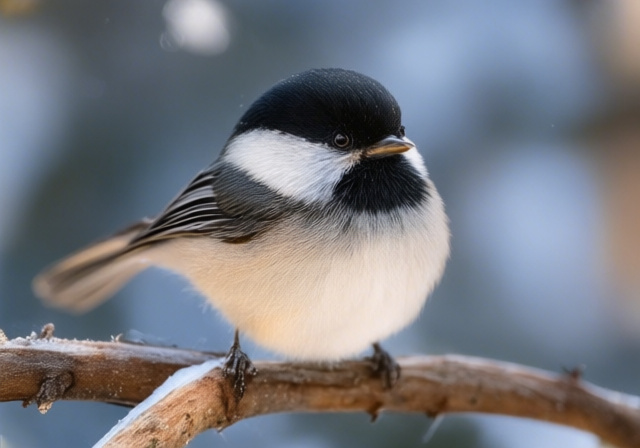
During a particularly brutal cold snap where temperatures dropped to -15°F, I watched a chickadee at my feeder appear nearly spherical. It was so fluffed it looked like a tennis ball with a beak. That fluffing was keeping it alive.
This one still blows my mind. Birds have a specialized blood vessel arrangement in their legs that prevents heat loss.
Arteries carrying warm blood from the heart run right alongside veins carrying cold blood back from the feet. Heat transfers from artery to vein before the blood even reaches the feet.
As a result, bird feet can operate just above freezing while the bird’s core stays toasty. The feet don’t feel cold because they’re essentially kept at the minimum temperature needed to function.
This is why ducks can stand on ice and why Cardinals can perch on frozen branches without frostbite.
Birds run hot. A chickadee’s daytime body temperature hovers around 108°F. This high metabolism generates considerable heat.
But maintaining that temperature costs energy. That’s why winter feeding is so crucial—birds must consume enough calories each day to fuel their internal furnace through the coming night.
Some birds can enter torpor—a temporary state of reduced metabolism and lowered body temperature.
Black-capped chickadees can drop their body temperature from 108°F to as low as 85°F on cold nights, reducing energy expenditure by up to 30%. Hummingbirds use torpor regularly, but even some songbirds activate this survival mode during extreme cold.
It’s not true hibernation, but it allows birds to survive nights when food won’t be available until morning.
Torpor: A temporary physiological state where an animal reduces its metabolic rate and body temperature to conserve energy. Unlike hibernation, torpor typically lasts for hours rather than days or weeks.
Social birds share body heat. Bluebirds sometimes roost together in nest boxes, with as many as a dozen birds crowded into a space meant for one nesting pair.
Crows and starlings gather in large communal roosts, often in urban areas where buildings retain heat. These roosts can include thousands of birds, creating warmth through sheer numbers.
Regular winter is manageable. Severe storms push birds to their limits.
When blizzard conditions hit, birds don’t continue normal activity. They find the best shelter available and essentially shut down. Movement ceases, metabolism drops, and they wait it out.
The birds at your feeders before a storm aren’t “preparing to leave.” They’re fueling up for what might be days without food. I’ve observed feeding frenzies hours before snow arrived, with birds consuming at triple their normal rate.
During the storm itself, birds remain sheltered. They don’t forage, they don’t fly, and they minimize all movement. Energy conservation becomes the priority.
Mortality does occur during extreme storms. Young birds, sick birds, and those already in poor condition may not survive extended periods without food. This is natural selection in action—the strongest individuals survive to pass on their genes.
After the storm ends, birds emerge hungry. Often the first sign that snow has stopped is sudden bird activity. They have limited fat reserves and must replenish quickly.
You can’t control the weather, but you can make winter survival easier for your backyard birds.
Birds need calories in winter. Focus on high-fat, high-protein options:
During extreme cold, I provide suet and sunflower together. The combination gives birds both immediate energy (suet) and sustained nutrition (sunflower).
Winter is the wrong time to skip feeding. Birds that rely on your feeders may not have sufficient backup food sources.
Clear snow from feeders after storms. Brush off platform feeders and knock snow out of tube feeders. I’ve seen birds land on snow-covered feeders and leave immediately—they couldn’t access the food inside.
Place feeders near natural shelter but not where predators can ambush. About 10-15 feet from cover is ideal—birds can escape hawks but still feel secure.
Frozen water forces birds to eat snow for hydration, which requires precious body heat to melt. A heated bird bath can be a lifesaver.
I’ve watched chickadees drink repeatedly from a heated bath during subzero mornings. Water is often harder to find than food in winter.
Leave birdhouses up through winter. Clean them out in fall, then let birds use them as roost boxes.
Brush piles make excellent shelter. Instead of disposing of fallen branches and trimmings, pile them in a corner of your yard. Sparrows, juncos, and wrens will appreciate the cover.
Plant evergreen trees and shrubs. They provide years of shelter while also looking attractive in your landscape.
Keep feeders clean. Winter feeding concentrates birds, which can spread disease. Scrub feeders monthly with mild soap and water, then rinse thoroughly.
Be mindful of predators. Cats kill millions of birds annually. Keep feeders away from hiding spots where cats can ambush, and keep cats indoors during winter feeding hours.
Different birds use different strategies. Understanding these helps you appreciate the variety at your feeders.
| Species | Winter Strategy | Shelter Preference |
|---|---|---|
| Black-capped Chickadee | Year-round resident, uses torpor | Tree cavities, nest boxes |
| Northern Cardinal | Year-round resident | Dense evergreens, shrub thickets |
| Dark-eyed Junco | Migrates from north | Ground shelter, brush piles |
| Downy Woodpecker | Year-round resident | Tree cavities (excavated) |
| American Robin | Partial migrant | Evergreens, communal roosts |
| Blue Jay | Partial migrant | Evergreens, tree cavities |
Birds don’t migrate when it snows. They seek shelter in nearby protected areas like tree cavities, dense evergreens, nest boxes, and thick shrubs. They rely on physical adaptations including feather insulation and metabolic adjustments to survive cold temperatures.
Birds stay warm through feather insulation, fluffing to trap air, counter-current heat exchange in their legs, metabolic heat production, torpor states to conserve energy, and huddling together for shared warmth.
Birds don’t truly hibernate, but some enter torpor—a temporary state of reduced metabolism and lowered body temperature that helps them conserve energy during cold nights.
Birds sleep in tree cavities, nest boxes, dense evergreens, thick shrubs, brush piles, and man-made structures like barns or sheds. Different species prefer different shelter types based on their size and behavior.
Birds eat cached food stored earlier, seeds from winter weeds, tree buds, berries remaining on shrubs, and food from bird feeders including sunflower seeds, suet, peanuts, and nyjer seed.
No, only about 40% of bird species migrate. Many remain year-round, and some species exhibit partial migration where some individuals leave while others stay in the same area.
Birds can freeze to death during extreme weather, especially young, sick, or already-weakened individuals. However, most healthy birds are well-adapted to survive normal winter conditions through their various survival strategies.
Yes, birds use birdhouses and nest boxes as winter shelter. Bluebird boxes in particular often host multiple birds roosting together for warmth during cold winter nights.
Birds don’t go somewhere else when it snows. They adapt, shelter, and survive using strategies refined over millions of years.
Those chickadees that vanished from your feeder haven’t abandoned you. They’re roosting in a tree cavity, huddled together for warmth, waiting for morning to resume their endless search for calories.
The more you understand about winter bird survival, the more remarkable those common backyard birds become. Every chickadee that survives a January night represents evolution in action—adaptation, behavior, and pure resilience.
Next time snow falls and your feeders go quiet, know that your birds are close by, tucked into sheltered spots, waiting out the weather. They’ll be back.