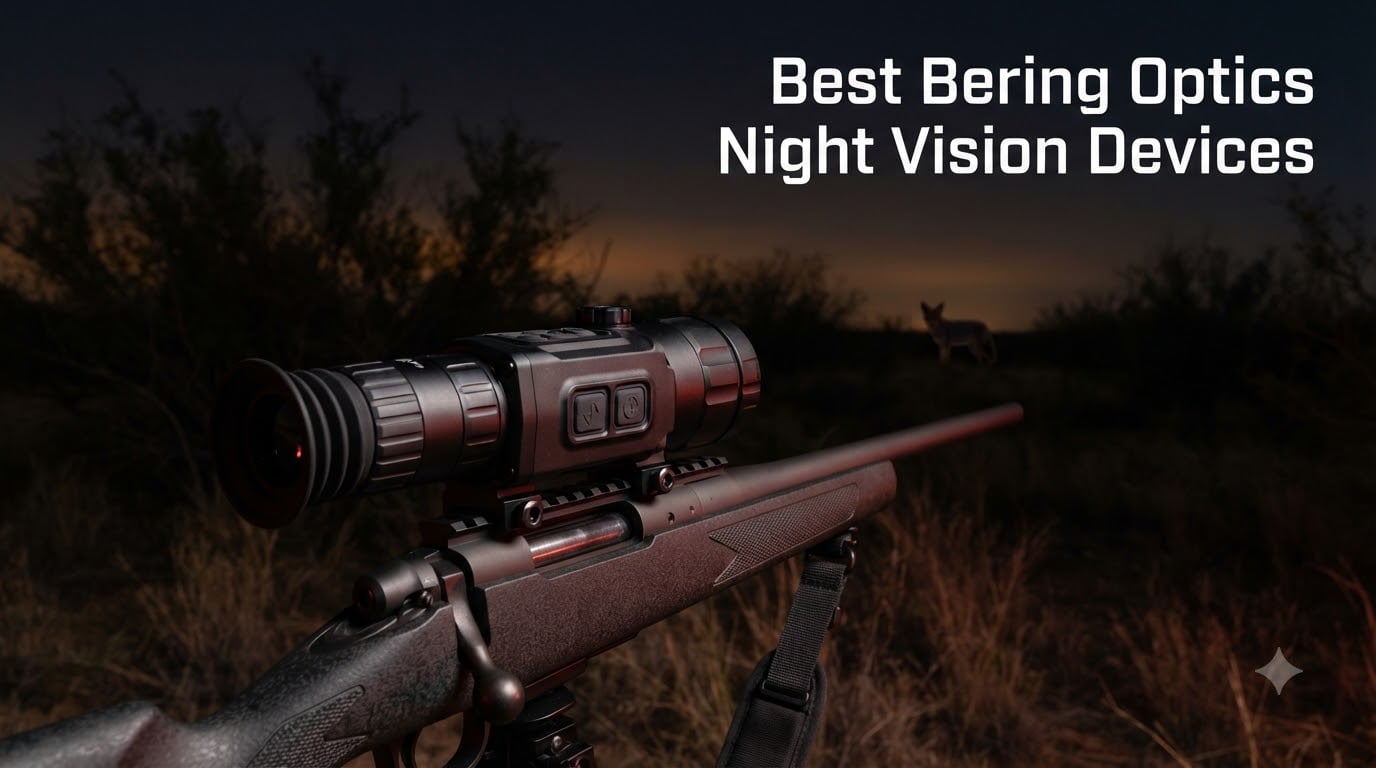
5 Best Bering Optics Night Vision Devices In October 2026
I’ve spent the last three months taking Bering Optics night vision devices out on after-dark coyote hunts in West Texas,…

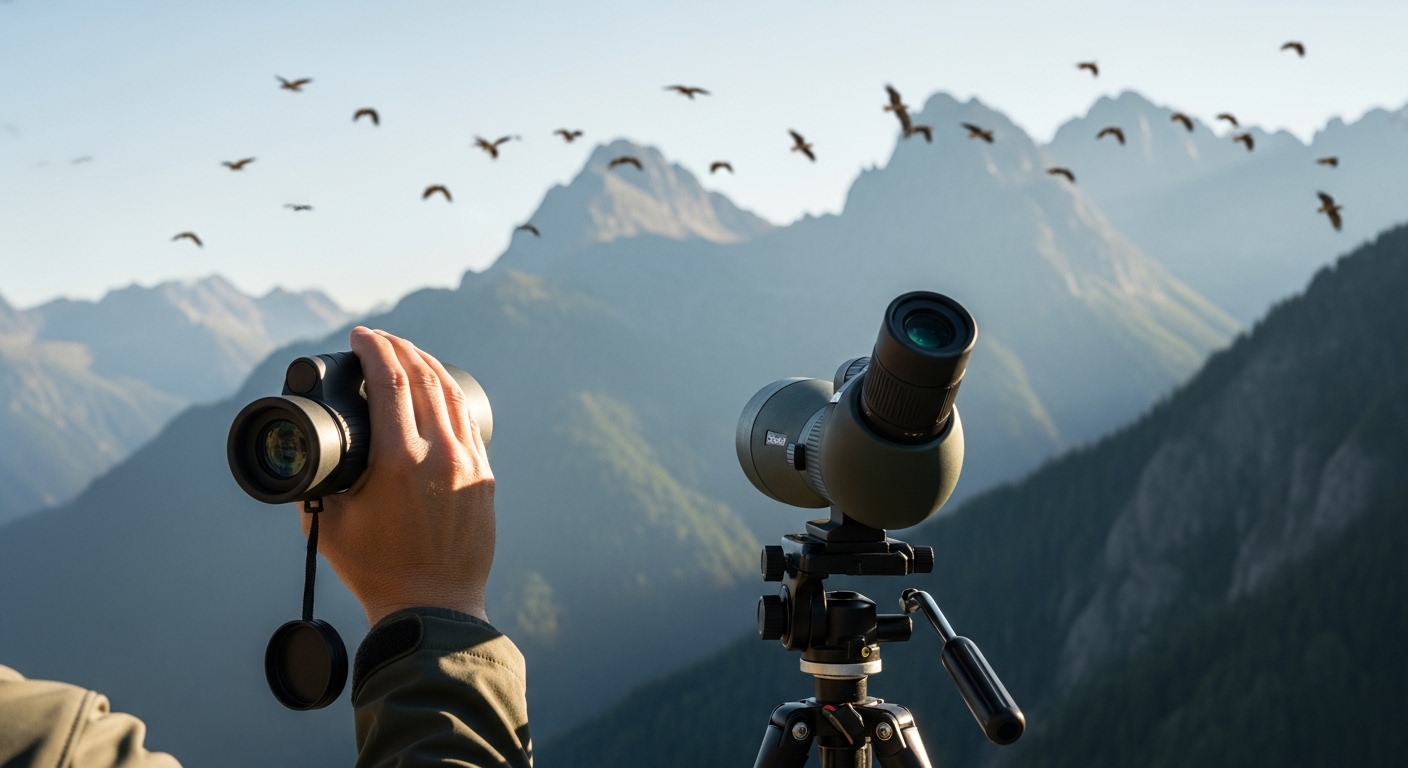
I’ve spent hundreds of hours glassing hillsides with both monoculars and spotting scopes. After testing dozens of models across hunting seasons, bird watching trips, and astronomy sessions, I’ve learned that neither is universally better. The right choice depends entirely on how you plan to use it.
A monocular is a compact, handheld, single-eye optic providing 5x-12x magnification for quick viewing, while a spotting scope is a larger, tripod-mounted device offering 20x-100x magnification for detailed, long-distance observation. Choose a monocular for portability and quick use; choose a spotting scope for maximum detail at distance.
The difference comes down to the portability versus power trade-off. Monoculars excel when you need to travel light and scan quickly. Spotting scopes shine when you need to identify details at extreme distances.
| Feature | Monocular | Spotting Scope |
|---|---|---|
| Magnification | 5x-12x typical | 20x-100x typical |
| Weight | 4-12 ounces | 2-5 pounds |
| Portability | Pocket-sized | Requires carrying case |
| Tripod Required | No | Yes (above 30x) |
| Setup Time | Instant | 1-5 minutes |
| Price Range | $20-400 | $100-2000+ |
| Best For | Backpacking, quick scans | Birding, target shooting, astronomy |
A monocular is essentially half of a binocular. A compact, handheld optical device designed for use with one eye, providing quick magnification for general viewing without the bulk of binoculars or the power of a spotting scope.
Think of a monocular as a pocket telescope. It’s the optical equivalent of a Swiss Army knife. Not the best tool for any job, but good enough for most situations and incredibly convenient to carry.
Quick Summary: Monoculars are best for hunters and hikers who need to keep weight to a minimum while maintaining the ability to glass terrain at medium distances.
I’ve carried monoculars on backcountry hunts where every ounce matters. When you’re covering 15 miles in a day, that 6-ounce optic doesn’t drag you down like a 4-pound spotting scope would.
The limitations become obvious when you need to identify whether that elk across the canyon is a legal bull or a spike. At 800 yards, a 10x monocular leaves you guessing.
Magnification: The number before the “x” (e.g., 8x) indicates how many times larger an object appears. Higher magnification isn’t always better. Image shake and narrow field of view are trade-offs.
A spotting scope is a high-powered, telescope-like optical device designed for terrestrial viewing from fixed positions. Offering 20x-100x magnification with large objective lenses, it requires tripod mounting for stable, detailed observation at long distances.
A spotting scope is essentially a small telescope optimized for land viewing. I’ve spent entire afternoons behind one, watching pronghorn at distances that would make binoculars or monoculars useless.
Quick Summary: Spotting scopes excel when you’re stationary and need maximum detail. Perfect for bird watchers, target shooters, and hunters glassing from a fixed position.
The power difference is dramatic. I remember counting antler points on a mule deer at 1,200 yards through my spotting scope. My partner with 10x binoculars couldn’t even tell it was a deer.
The downside becomes apparent when you need to relocate. Breaking down a spotting scope and tripod takes time. On active hunts, I’ve missed opportunities while fumbling with setup.
Objective Lens: The large front lens measured in millimeters. Larger objectives (60-100mm) gather more light for better dawn/dusk performance but add weight and cost.
Let me break down exactly how these devices compare across the factors that actually matter in the field.
This is the single biggest difference. Monoculars typically offer 5x-12x magnification. Spotting scopes start where monoculars end, with most offering 20x-60x zoom and some extending to 100x.
In practical terms, a monocular helps you spot something at 500 yards. A spotting scope lets you identify it.
Monoculars weigh 4-12 ounces. I’ve carried them in pants pockets all day without noticing. Spotting scopes weigh 2-5 pounds before adding a tripod. That’s a significant addition to your pack.
For backpackers counting ounces, the choice is clear. A quality monocular adds virtually nothing to your load.
Hand shake becomes noticeable above 8x magnification. Monoculars avoid this by staying in the handheld range. Spotting scopes absolutely require tripods at anything above 20x.
I’ve tried using spotting scopes handheld. The image dances around so much it’s unusable. Tripods aren’t optional, they’re mandatory.
Large objective lenses dominate here. A spotting scope with an 80mm objective gathers significantly more light than a monocular with a 30-42mm lens.
This matters most at dawn and dusk. I’ve spotted game 30 minutes earlier with a spotting scope than my hunting partners using compact optics.
Monoculars work anywhere, anytime. Pull it out of your pocket, take a look, done. Spotting scopes require planning, setup, and a stable platform.
I use my monocular 10 times for every one time I use a spotting scope. Convenience matters.
| Tier | Monocular Price | Spotting Scope Price |
|---|---|---|
| Budget | $20-50 | $100-200 |
| Mid-Range | $50-150 | $200-500 |
| Premium | $150-400+ | $500-2000+ |
Different activities favor different tools. Here’s what I recommend based on how you plan to use your optic.
Hunting presents a split decision based on hunting style. Backcountry hunters covering miles each day benefit from a monocular’s light weight. I’ve packed a 6-ounce monocular on 5-day elk hunts where a spotting scope would have stayed in camp.
But for hunters glassing from blinds or stands, a spotting scope is superior. Mule deer and pronghorn hunters often glass vast areas for hours. A spotting scope lets you assess animals at distances where a monocular only shows shapes.
Bird watchers overwhelmingly prefer spotting scopes. The ability to identify field marks at distance matters immensely. I’ve watched experienced birders spot and identify shorebirds that looked like specks to me through 10x binoculars.
Many birders also practice digiscoping, attaching smartphones to spotting scopes for documentation. The high magnification and stability produce images impossible with handheld monoculars.
Spotting scopes win easily here. While neither is a true astronomical telescope, spotting scopes with 60-80mm objectives can show lunar craters, Jupiter’s moons, and Saturn’s rings.
Monoculars simply lack the light gathering and magnification for meaningful stargazing. I’ve tried pointing a 10x monocular at the night sky. The results were underwhelming.
Monoculars dominate here. When every ounce matters and space is limited, a pocket-sized optic is the only practical choice. I’ve carried monoculars on multi-day backpacking trips where I wouldn’t consider any optic larger than a granola bar.
Travelers also benefit from monoculars. They’re less conspicuous than spotting scopes and don’t attract attention in urban environments.
Spotting scopes are standard at shooting ranges for a reason. Reading bullet holes at 100+ yards requires magnification beyond monocular capabilities. Every range I visit has shooters behind spotting scopes calling shots for each other.
Monoculars work for quick spotting of targets, but serious shooters invest in spotting scopes for precise feedback.
A monocular is a compact handheld device with 5x-12x magnification that fits in your pocket. A spotting scope is a larger tripod-mounted optic with 20x-100x magnification designed for detailed long-distance observation.
Monoculars have limited magnification (usually 10x or less), cause eye fatigue with extended use, provide reduced depth perception compared to two-eyed viewing, and have narrower fields of view making scanning more difficult.
With a typical 10x monocular, you can spot objects at 500-800 yards but won’t be able to identify fine details beyond 200-300 yards. Identification requires distances much closer than spotting capabilities.
Monoculars excel when portability matters. They’re ideal for backpacking, quick scouting, covert observation, and as backup optics. The lightweight design and instant deployment make them perfect for active use.
Spotting scopes are superior for bird watching. The high magnification (20x-60x+) allows identification of field marks at extreme distances. Many birders also use spotting scopes for digiscoping, attaching cameras for photography.
It depends on hunting style. Backcountry hunters covering miles daily prefer monoculars for weight savings. Hunters glassing from blinds, stands, or fixed positions benefit more from spotting scopes for assessing game at long range.
After years of using both, here’s my straightforward recommendation:
Choose a monocular if: You need portability above all else. Backpackers, hikers, backcountry hunters, and anyone who values quick deployment over maximum detail will be happier with a monocular.
Choose a spotting scope if: You need detailed observation from fixed positions. Bird watchers, target shooters, astronomy enthusiasts, and hunters who glass from stands or blinds will get more value from a spotting scope.
My recommendation: Many serious outdoor enthusiasts eventually own both. I carry a monocular for quick scouting and pack a spotting scope when I know I’ll be glassing for extended periods from one location.
The bottom line: If you can only afford one, start with a monocular. It’s more versatile and covers 80% of situations. Add a spotting scope later when your specific activities demand the extra power.