How to Choose a Birdhouse (August 2026)
When I put up my first birdhouse fifteen years ago, it was a flimsy pine box from a garden center…

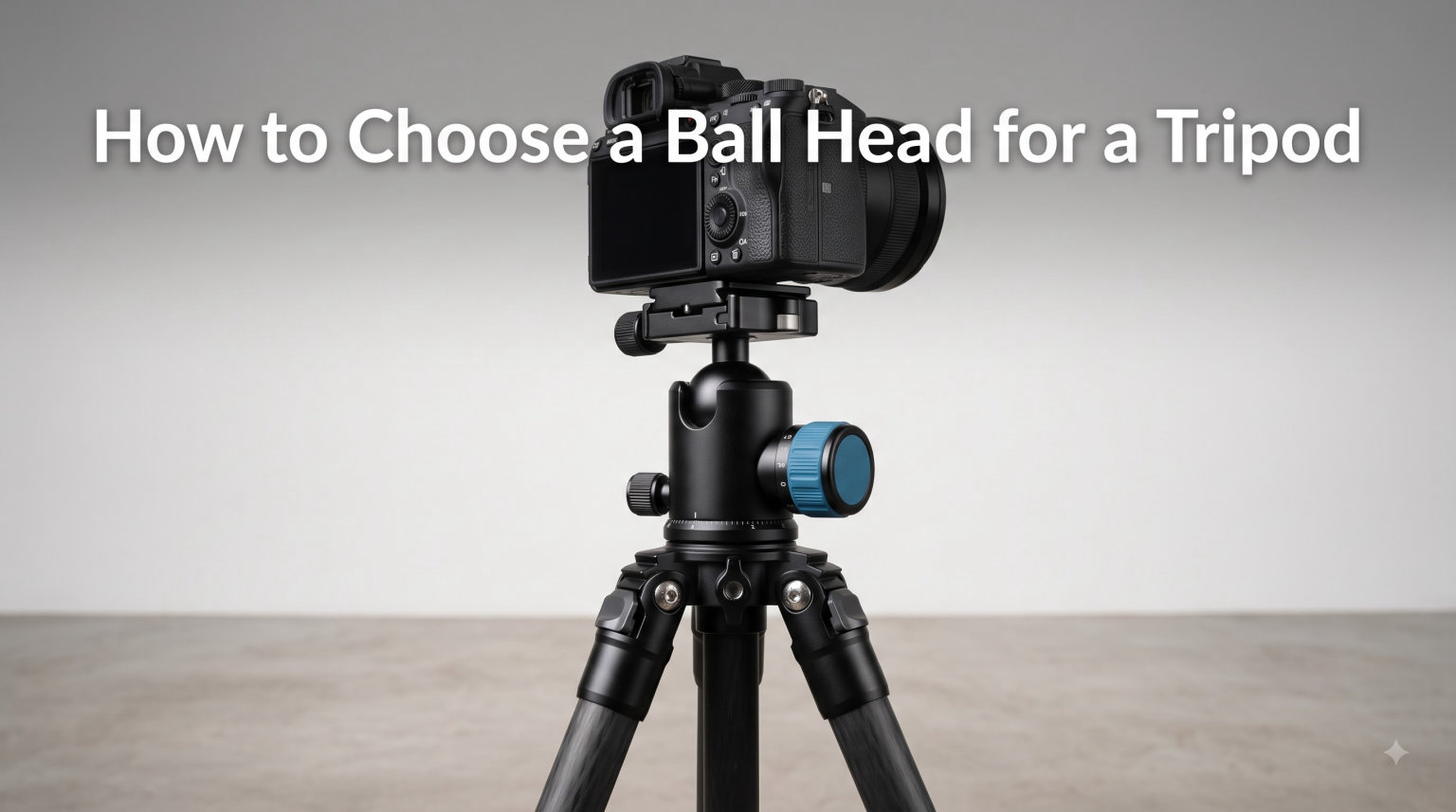
Picking the right ball head for tripod use changed the way I work in the field. After burning through three cheap heads and watching a 500mm lens slowly sink mid-shot, I learned that the head is not an accessory. It is the part that holds your camera exactly where you point it. In this guide I will walk you through the same decision framework I use when helping other street and landscape photographers match a ball head to their tripod, gear weight, and shooting style. Whether you are shooting long exposures at sunrise or handheld video on a busy corner, the criteria below will help you choose a head that is stable, fast, and built to last.
A ball head for tripod mounting is a tripod head that uses a single spherical joint to let you reposition your camera in almost any direction, then lock it down with one knob. Instead of adjusting two or three axes separately, you loosen one knob, swing the camera into the composition you want, and tighten it back up. That single-knob workflow is why ball heads have become the most popular tripod head type for still photography.
The ball head does the actual work of holding your camera steady once the tripod legs are set. A flimsy tripod paired with a heavy ball head is wasted money, and a carbon-fiber tripod with a weak head will still drift under a heavy lens. The head controls three things at once: how much weight it can support without sagging, how smoothly you can adjust composition, and how reliably it stays put after you lock it.
For most photographers who move between landscapes, portraits, street, and travel, a good ball head hits the best balance of speed and stability. That is exactly the trade-off I weigh when matching a ball head to tripod systems I review for the site.
Before diving into ball head specs, it helps to see how a ball head compares to the other common tripod head types. I have used each of these in real shoots, and the table below captures the practical differences I have noticed in the field.
| Head Type | Best For | Pros | Cons |
|---|---|---|---|
| Ball Head | Landscape, travel, portraits, general use | Fast one-knob adjustment, compact, supports most setups | Single point of failure, harder for precise micro-adjustments |
| 3-Way Pan-and-Tilt | Studio, architecture, video | Independent axis control, very precise framing | Slower to adjust, bulkier, more knobs to manage |
| Pistol Grip | Wildlife, sports, action | Trigger-style lock, fast tracking of moving subjects | Limited precision, grip can be awkward on heavy lenses |
| Gimbal Head | Big telephoto lenses for wildlife | Balanced support, effortless tracking | Heavy, expensive, overkill for short lenses |
| Geared Head | Architecture, product, macro | Gear-driven micro-adjustments, very precise | Slow, heavy, expensive |
| Fluid Head | Video | Smooth pans and tilts, drag control | Not ideal for stills, heavier |
For a working photographer who shoots a mix of stills, the ball head wins on speed and versatility. If you only shoot video, a fluid head is hard to beat. If you shoot birds in flight with a 600mm, a gimbal head beats every other option. Match the head to your dominant use case rather than chasing a single best-on-paper choice.
Once you have decided a ball head is the right type, these are the seven criteria I run through for every photographer I advise. Each one ties back to a real-world failure mode I have either lived through or watched someone else live through.
Load capacity is the single most important spec on the box. A ball head rated for 17 lb can technically hold 17 lb, but in practice that is the upper limit, not a working limit. The widely cited rule of thumb from major retailers like B&H is to pick a tripod and head combination rated for 2 to 3 times your heaviest camera and lens setup.
So if your heavy rig (camera body, lens, plate, L-bracket, flash, filter holder) weighs 6 lb, look for a ball head rated for 12 to 18 lb. The extra headroom prevents sag, drift on long exposures, and stress on the locking mechanism over years of use. If you shoot with a 500mm or 600mm prime, treat the load rating as non-negotiable and oversize it generously.
The ball diameter determines how much the head can tilt before binding, and how stable it feels under load. A 36mm ball can usually hold more weight and resist drift better than a 25mm ball, but the head itself gets taller and heavier. For mirrorless setups and shorter lenses, a smaller ball is fine. For full-frame DSLR rigs with 70-200mm f/2.8 lenses or longer glass, I lean toward a 36mm to 40mm ball.
Forum users regularly mention that a well-designed ball head with a 500mm lens can feel solid and stay put, while a poorly designed one with the same lens drifts within minutes. Ball diameter is part of that, but ball quality and housing precision matter just as much.
Ball heads lock with either a twist knob or a lever. Knobs are compact and let you feel exactly how tight you are getting. Levers are faster, easier to operate with gloves, and give a clearer visual cue that the head is locked. The trade-off is that levers can break if stressed sideways, while knobs can round out over time if overtightened.
If you do a lot of cold-weather shooting, a lever is genuinely easier to use with gloves on. If you do studio or controlled work and want fine tactile feedback, a knob wins. Both designs work well when they are well machined. Avoid heads with rough machining ridges on the ball, which is a complaint I see repeatedly in photography forums.
Almost every modern ball head uses a quick release plate that slides into a clamp. The de facto standard is Arca-Swiss, sometimes called Arca-type. Buy a head that is Arca-Swiss compatible and you can swap plates between bodies, L-brackets, and other accessories without rebalancing your kit.
Two clamps are worth considering. Lever clamps lock and release quickly but can loosen if bumped. Screw clamps are slower but hold more securely under heavy vibration, which matters if you travel with a tripod strapped to a backpack. For street and travel work I prefer a quality lever clamp. For landscape work on uneven ground, a screw clamp gives me more confidence.
A separate panning base with its own lock lets you rotate the head horizontally without loosening the ball. This matters for panoramic photography where you need to rotate the camera around the optical center of the lens. Without an independent pan lock, every horizontal adjustment requires loosening and re-tightening the main ball lock, which shifts your composition.
If you stitch panoramas, shoot real estate interiors, or do any kind of nodal point work, an independent pan lock is not optional. Look for a base with clear angle markings so you can rotate in precise increments.
Most ball heads are made of either aluminum alloy or magnesium alloy. Aluminum is heavier but cheaper and very durable. Magnesium is lighter and slightly more expensive, with comparable strength. The differences are small for most photographers, so weight and price usually decide this one rather than raw material choice.
What actually matters more is the quality of machining, the surface finish on the ball, and how tightly the parts fit together. A budget aluminum head with sloppy tolerances will drift faster than a premium magnesium head with tight tolerances. If you can, handle the head in person before buying, or buy from a retailer with a good return policy.
A heavy ball head feels stable but adds weight fast. On a carbon-fiber travel tripod, a 1.5 lb head turns a 2.5 lb travel kit into a 4 lb kit. For hiking and travel, I usually recommend a sub-1 lb head unless you are carrying a heavy telephoto setup.
Ergonomics matter more than most spec sheets suggest. Knobs that are too small or too smooth are hard to grip. Levers that dig into your palm get uncomfortable on long shoots. Community feedback consistently shows that how a head feels in the hand is what separates a head you actually use from one that lives in your bag.
Let me put the 2-3x rule into concrete numbers based on the setups I see most often. For a mirrorless body with a 24-70mm f/2.8 lens, your rig is roughly 3 lb. A ball head rated for 6 to 9 lb is plenty. For a full-frame DSLR with a 70-200mm f/2.8 lens, expect about 5 to 6 lb total, so look for a 10 to 18 lb rated head.
Step up to a 500mm or 600mm prime with a pro body, and you are looking at 8 to 12 lb of camera gear. In that case a 25 lb or higher rated head is the practical minimum. Anything less and you are stressing the locking mechanism on every shoot, which shortens its life and increases drift.
The relationship between ball size and stability is one of those things that sounds simple until you test it. A larger ball gives the head more surface area to clamp against, which translates to less flex and less drift under load. It also typically means a heavier head, since the ball itself is more metal.
In my own testing and in the experiences shared on photography forums, a 36mm to 40mm ball handles a 500mm lens comfortably. A 30mm ball feels marginal. Anything below 25mm is best reserved for compact mirrorless bodies and small zooms. If you ever upgrade to a longer lens, you will probably want to upgrade the head too.
Twist locks are the most common and least likely to break. They work in any orientation, in any weather, and with any kind of glove. The downside is that they can be slow if you are constantly adjusting, and over-tightening them wears out the internals faster than a lever does.
Lever locks are faster and more intuitive. You flip the lever and you know at a glance whether the head is locked. The downside is that they can break if bumped sideways, and they are sometimes harder to operate in extreme cold because the lever mechanism can ice up. For most photographers the choice comes down to feel, but I lean toward levers for fast-moving street and event work and knobs for slower landscape work.
Arca-Swiss compatibility sounds technical but it just means the plate fits the clamp. Buying a head that supports the Arca-Swiss standard means you can use plates from L-brackets, third-party accessories, and other cameras on the same head. Buying a proprietary system locks you into one ecosystem and one set of plates.
For L-bracket users, this is especially important. A quality Arca-Swiss ball head lets you switch between landscape and portrait orientation with one plate, without re-leveling the tripod legs. That alone saves several minutes per shoot when you are working fast.
Material choice is less important than manufacturing quality, but a few real-world issues are worth flagging. Cold weather performance is a recurring concern on photography forums. Some ball heads stiffen up in freezing temperatures because the grease inside thickens. Higher-end heads use lubricants rated for wider temperature ranges, and open designs shed debris and water better than sealed ones.
Debris resistance matters more than people expect. If you shoot on beaches, in deserts, or anywhere with sand and dust, look for a head with a design that sheds particles rather than trapping them in the ball housing. A head that fills with grit will feel rough and may slip under load. For astrophotography and night work, a quality ball head for tripod work in cold, clear conditions is essential because you are often shooting at temperatures where cheaper heads fail.
Ergonomics are the final tiebreaker. If the knobs are too small for your hands, you will not enjoy using the head. If the levers dig into your palm, you will avoid the head. Read long-form reviews, watch comparison videos, and if possible handle the head in person before committing.
A ball head lets you reposition your camera in almost any direction using a single locking knob. It holds the camera steady once locked and supports the full weight of your camera and lens setup.
Match the head type to your main shooting style, then pick a load capacity rated at 2 to 3 times your heaviest camera and lens. Test the locking feel, confirm Arca-Swiss compatibility, and verify the head is stable under your heaviest setup before buying.
A ball head uses a single spherical joint and one knob for fast multi-directional adjustment. A 3-way pan-and-tilt head uses three separate knobs to control pan, tilt, and roll independently, which is more precise but slower to operate.
The best ball head for tripod shooting is one rated for 2 to 3 times your heaviest camera and lens, with Arca-Swiss compatibility, a smooth locking feel, and a ball diameter sized to your lens weight. Match the spec to your gear rather than chasing brand names.
Choosing a ball head for tripod work comes down to matching load capacity, ball diameter, and locking feel to your gear and your shooting style. If you travel light with a mirrorless body, a sub-1 lb head with a 30mm ball is plenty. If you shoot wildlife with a 500mm prime, oversize the load rating and pick a 36mm or larger ball with a solid panning base. Whatever you choose, buy from a brand with a real warranty, handle the head in person if you can, and treat the head as part of your core kit rather than an afterthought. Updated for 2026, the same rule still applies: the head holds the camera, so spend the time to pick the right one.