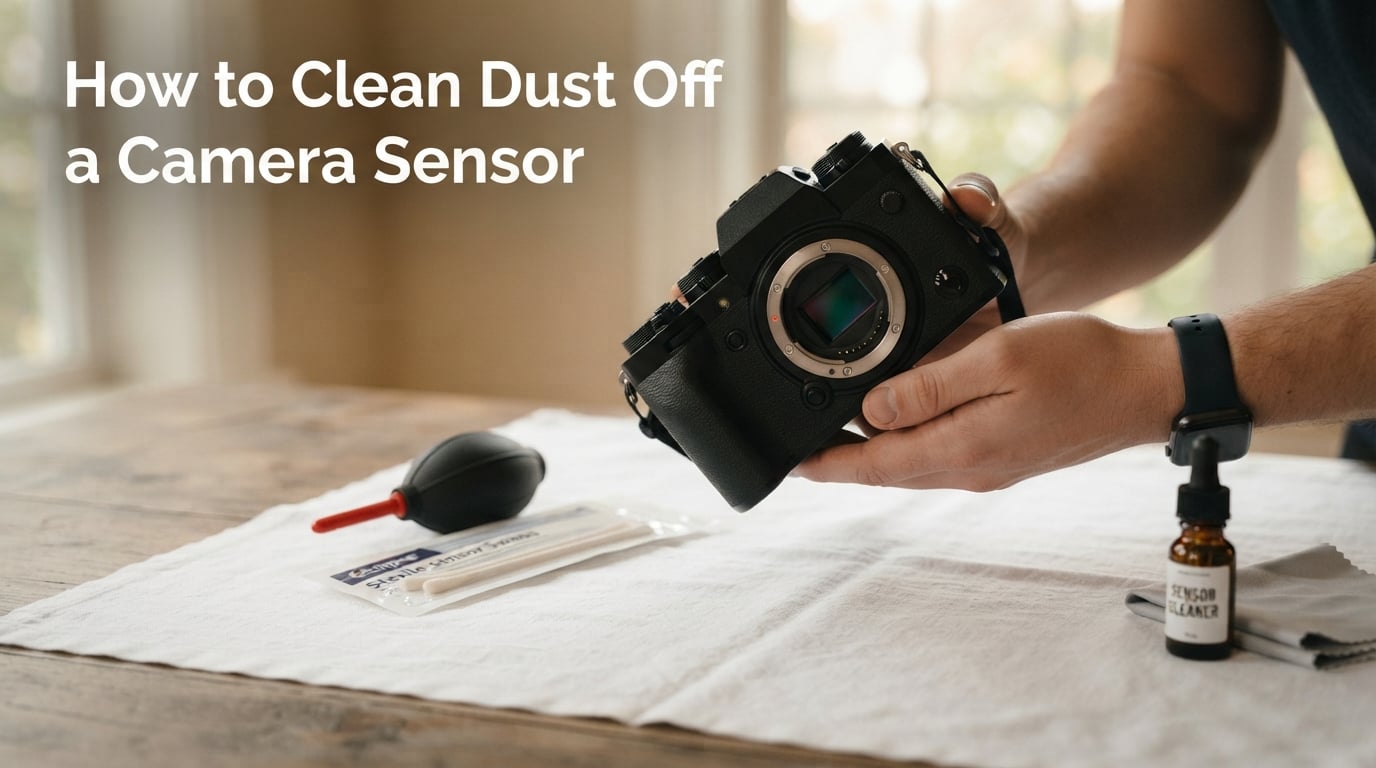
How to Clean Dust Off a Camera Sensor (September 2026)
I noticed the problem the day I shot a wedding at f/11. Every blue-sky frame had three stubborn dark dots…

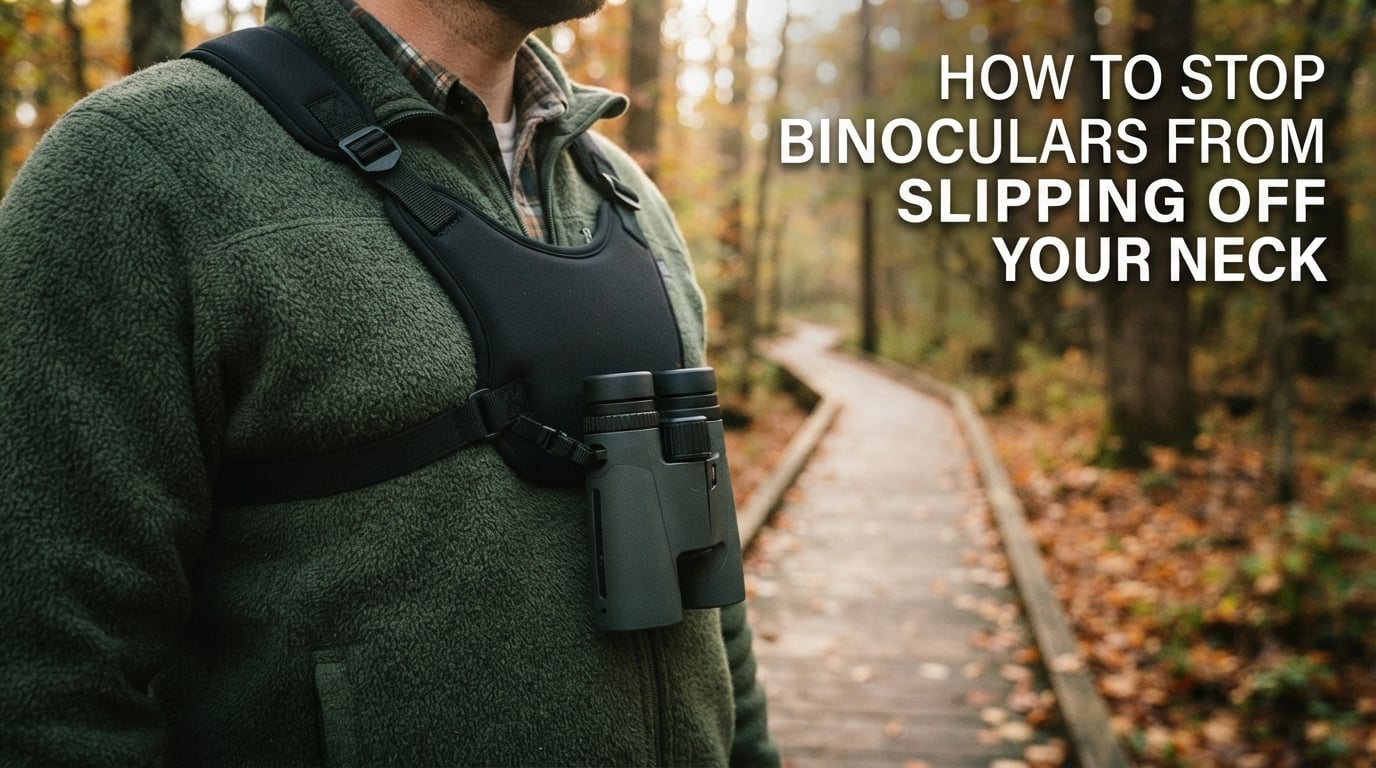
Learning how to stop binoculars from slipping off your neck is one of those small fixes that completely changes a day in the field. I’ve spent dozens of hours birding, hiking, and testing optics with bins hanging from my chest, and the difference between a worn-out factory strap and a properly adjusted wider one is honestly the difference between enjoying a five-mile loop and cutting it short because your neck aches.
The good news: you usually do not need to buy anything new. Most slipping comes down to strap length, the wrong material for your binocular’s weight, or a carry method that simply does not suit your body. In this guide I’ll walk you through the quick fixes our team has used on everything from compact theater binoculars to full-size 15×70 astronomy models, plus the long-term upgrades worth considering in 2026.
The short answer: most binoculars slip because the strap is too long, too narrow, or both. Once a strap hangs past the bottom of your sternum, your walking gait turns the binoculars into a pendulum that swings in rhythm with each step.
BirdForum users call this the pendulum effect, sometimes called harmonization. Your strap length matches your stride frequency, and the binoculars start bouncing in sync with your feet. The longer the strap, the bigger the swing, and the more your neck and shoulders absorb that energy.
A second cause is pressure. The standard nylon strap that ships with most binoculars is roughly 0.5 inch wide. On a 1.5 lb binocular, that concentrates around 3 lbs of force on a thin line across your neck. Double the width to 1 inch and you roughly halve the pressure per square inch, which is why so many birders call wider straps a revelation.
Finally, factory straps tend to be stiff and slippery. Nylon webbing on a bare neck, especially with a fleece or a winter coat on, slides backward with every lean. That is the moment your binoculars end up behind your hip instead of on your chest.
If you only have a few minutes before heading out, start with the fixes below. These come from a mix of forum threads, our own testing, and tips long-time birders have shared over the years.
The most reliable way to stop binoculars from sliding down is to shorten the strap so the binoculars sit high on the chest. Here’s the method our team uses when a strap is too long.
Most binoculars use small plastic or metal bayonet lugs. Press the small tab on each lug and slide the strap loop up and out. If your strap threads through a slot rather than clipping to a lug, note exactly how it was threaded before you pull it free.
Pull 2 to 3 inches of extra strap through the slider on each side. Slide the buckle so the strap forms a tight V above the lugs, not below. This keeps the adjustment clean and prevents the buckle from digging into your collarbone.
Loop the strap end through the binocular eyelet, push the lug back through the loop, and pull until it clicks. Give each side a firm tug to confirm the lugs cannot back out.
Put the binoculars on and bend forward at the hips like you would to look at a low feeder or a tide pool. If the binoculars slide past your sternum, take up another inch. If they pinch your neck, let out a half inch. The sweet spot is roughly the top third of your chest.
If shortening alone does not solve the problem, the next step is a strap that suits your binocular’s weight and your body. The big four materials are neoprene, nylon, leather, and rubber-backed webbing, plus the DIY favorite: paracord.
Here is a quick comparison of the materials you’ll see most often, including how each one handles a 1.5 to 2 lb binocular on a typical 3-hour birding walk.
Neoprene. A synthetic rubber padding wrapped in fabric. Neoprene straps grip the neck softly, absorb shock, and spread weight across a wider surface. This is the material most reviewers name when they say their neck pain disappeared. Downside: neoprene can feel warm in summer and bulky under a coat.
Nylon webbing. The factory standard. Light, cheap, and dries fast. The downside is that thin nylon concentrates pressure on a narrow line and slides easily, especially over synthetic base layers. Wider 1 inch or 1.25 inch nylon straps work much better than the stock 0.5 inch version.
Leather. Beautiful, durable, and quiet against clothing. A wide leather strap pairs well with premium glass and gains character with age. The trade-off is weight: leather adds noticeable heft, and it can feel stiff until broken in.
Rubber-backed webbing. A nylon strap with a grippy rubber strip along the underside. These hybrid straps stay put over a T-shirt or a base layer and cost less than full neoprene. They are the sweet spot for many birders who want grip without bulk.
Paracord or DIY wraps. Cheap, customizable, and field-repairable. A woven paracord sleeve over a thin stock strap adds grip and width without buying anything new. Downside: paracord alone is rough against bare skin, so a fabric sleeve underneath helps.
As a general rule, doubling the strap width roughly halves the pressure on your neck. So if you currently use a 0.5 inch strap, jumping to a 1 inch strap makes a noticeable difference within a single outing. Padded neoprene in the 1.25 to 1.5 inch range is the comfort ceiling for most birders carrying 8×42 or 10×42 binoculars.
A binocular harness is a yoke-style carrier that holds the binoculars against your upper chest, suspended by two shoulder straps. Harnesses shine for long days in the field because they spread the weight across both shoulders and keep the binoculars high and motionless.
Choose a harness if: you carry binoculars for more than two hours at a stretch, you walk uneven ground where the pendulum effect drives you crazy, or you frequently bring your bins to your eyes for short looks and want them already at the right height. Harnesses are also the best option if you have a sensitive neck or upper-back issues.
Stay with a strap if: you want the binoculars easy to slide up to your eyes from a casual position, you wear a backpack or a chest-mounted camera, or you only carry binoculars for short spells. Some harnesses also bounce or slip off bare shoulders if you sized them for winter clothing in summer, so adjustability matters more than brand.
The main learning curve is the fit. A poorly adjusted harness rides too low and slowly creeps down your chest, which puts you right back where you started. Spend 10 minutes with the buckles before your first outing, and re-check the fit when you switch from a T-shirt to a winter coat.
A neck strap is just one option. Some of the most enthusiastic forum users carry binoculars in ways that work better for their specific shape and style of movement.
The coat-pocket method covers most winter situations. Slip the binoculars into a half-zipped fleece pocket or a large coat pocket, with the strap tucked inside. The fabric holds them still, your body warmth prevents lens fogging, and the strap cannot slide backward.
An under-arm holster works for hunters and wildlife photographers who need the binoculars silent and out of the way. The binoculars hang under the armpit and stay still while you walk or crawl.
A chest rig or photographer harness combines a binocular harness with a camera mount, so both pieces of gear live on the same platform. This is a popular option for bird photographers who already carry a long lens.
Finally, a monopod or tripod removes the neck problem entirely. For very heavy binoculars above 10×50, an astronomy session with a monopod feels almost weightless compared to wearing the strap.
A few missteps can quietly undo all your strap work. Watch out for these.
Over-tightening the strap. A strap pulled so tight that it pulls your head forward will feel stable for five minutes and miserable for the next five hours. Aim for snug but not choking.
Strap loops that cross at the back of your neck. If the two strap halves cross high on the back of your neck, every step pulls the binoculars forward. Keep them parallel and they will rest flat on the shoulders.
Skipping the lug click. A lug that is not fully seated looks fine until the binoculars swing on a downhill step and pop free. Always confirm both sides clicked before you leave the house.
Forgetting to re-fit for bulky clothing. A strap that fits perfectly in a T-shirt becomes a chin strap over a winter parka. Test your setup with the clothing you actually wear in the field.
Assuming all binoculars behave the same. Porro prism binoculars tend to swing more than roof prism models because of their offset center of mass. Heavier 10×50 and 12×50 models amplify every mistake. If you carry a porro prism, plan on a wider strap or a harness from day one.
Aim for a fit where you can slide two fingers flat between the strap and your neck. Tighter than that causes hunching and fatigue; looser than that lets the binoculars slide. The binoculars should rest around the top third of your chest when you bend forward.
Slide the adjustment buckle so the strap forms a tight V above the lugs. Most straps allow 2 to 4 inches of shortening this way. If the strap is the knot-style variety used on cheaper binoculars, re-tie the slip knots with a double overhand and trim the tails.
Wide neoprene straps around 1.25 to 1.5 inches wide are widely considered the most comfortable for 8×42 and 10×42 binoculars. For heavier models, a binocular harness spreads weight across both shoulders and prevents neck strain over long walks.
The classic trick is the crooked strap method. Pull one side of the strap up and the other down so the binoculars hang unlevel. The unlevel hang breaks the pendulum rhythm that matches your stride, and the swing dies down within a few steps.
Harnesses spread weight across both shoulders and keep the binoculars high and motionless, which makes them better for long sessions and heavier binoculars. Neck straps are quicker to bring binoculars up to your eyes and are easier to slip on and off, so they are still preferred for casual use.
Most slipping comes down to three knobs: strap length, strap width, and how you wear it. Shorten the strap until the binoculars sit at the top of your chest, switch to a wider neoprene or rubber-backed strap if your neck aches, and use the crooked strap or coat-pocket method when the pendulum effect kicks in.
For casual use, a properly adjusted wider strap is all you need. For long birding walks, hunting days, or any session over two hours with a 10×42 or larger, invest in a harness and spend ten minutes dialing in the fit. You’ll notice the difference on the very first outing, and your neck will thank you by 2026.