
8 Best Binoculars for Elk Bugling (September 2026)
I’ve spent more than 30 days chasing bugling bulls across Colorado, Wyoming, and New Mexico over the past six seasons,…

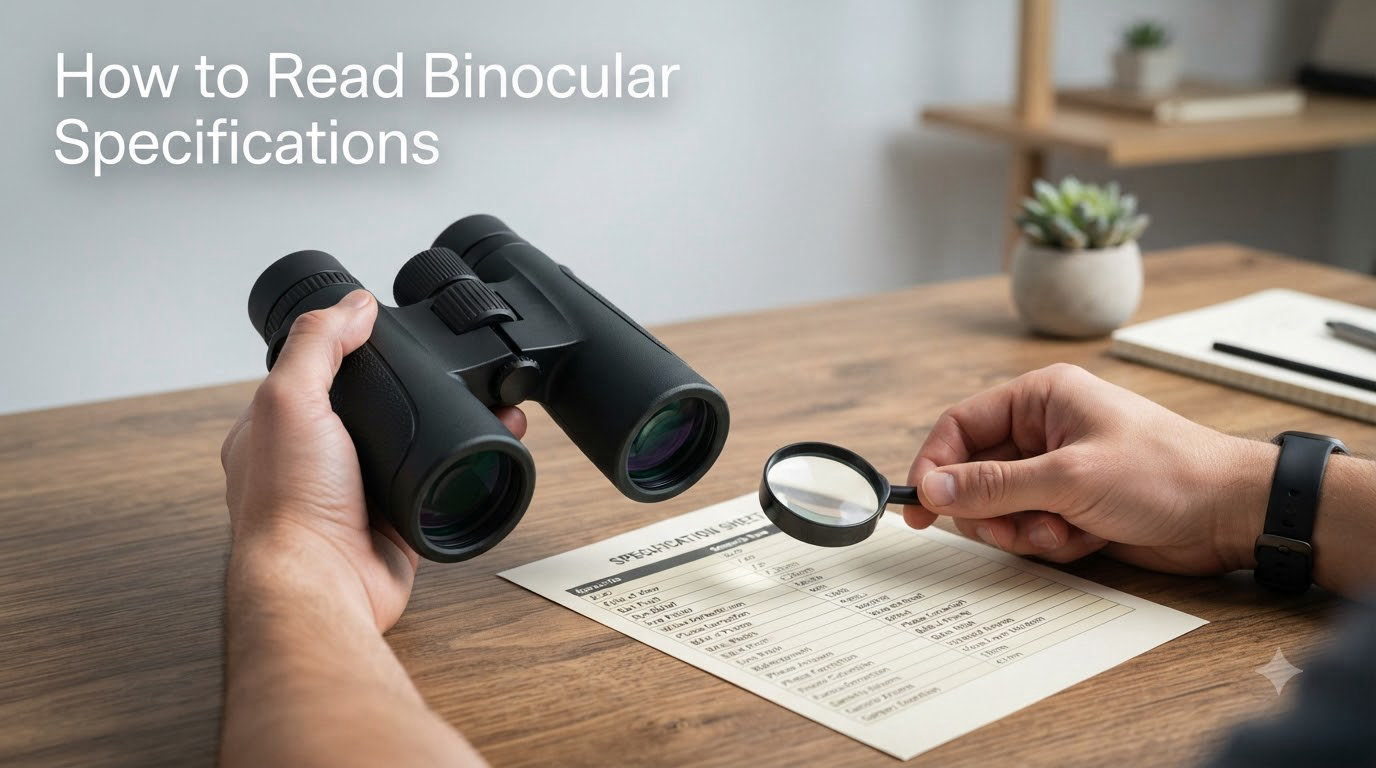
If you have ever picked up a pair of binoculars and wondered what 10×42 or 12×50 actually means, you are not alone. We hear this question constantly from readers shopping for their first serious pair, and the truth is that those two numbers tell you almost everything you need to know about how the binocular will perform. Learning how to read binocular specifications takes about ten minutes once you understand the system, and it saves you from buying a pair that is too heavy, too shaky, or too dim for what you actually want to do.
Our team has spent years testing binoculars across birding, hiking, stargazing, and marine use, and we have learned that spec sheets are not just marketing fluff. The numbers on a binocular directly predict how it will feel in your hands and what you will see through it. In this guide, we walk you through every number on a binocular spec sheet in plain language, with real examples you can apply right away.
The first number in any binocular specification is the magnification power, and it tells you how many times closer an object will appear compared to viewing it with the naked eye. A binocular labeled 8x makes subjects appear eight times closer, while a 10x model makes them ten times closer, and a 12x makes them twelve times closer.
Here is a practical way to picture it. Standing 80 meters from a tree, an 8x binocular makes the tree look as if it were 10 meters away. A 10x model puts you at 8 meters, and a 12x puts you at roughly 6.7 meters. That is a meaningful jump in detail, and it is the single most important number for predicting how a binocular will perform.
Magnification is achieved through a combination of lenses and prisms inside the binocular that bend and magnify the light coming through the front objective lens. The higher the magnification, the larger the image appears, but there are two trade-offs that come with every increase in power.
First, higher magnification amplifies hand shake. At 8x, slight tremors in your hands are barely noticeable. At 12x, the same tremor makes the image dance across your field of view, which is exhausting during long viewing sessions. This is why most birders and hikers prefer 8x or 10x for handheld use.
Second, higher magnification narrows your field of view, which we cover in detail later. The takeaway is that more power is not always better. The right magnification depends on what you are viewing and how stable your viewing platform is.
Most quality binoculars use fixed magnification, meaning an 8×42 is always 8x. Variable or zoom binoculars (like 10-30×50) let you dial between ranges, but they come with optical compromises. Image brightness, sharpness at the edges, and focus consistency all suffer in zoom designs. For most activities, fixed magnification is the smarter choice.
If you want to dig deeper into how magnification affects real-world performance, our complete binocular magnification guide breaks down 8x vs 10x vs 12x side by side.
The second number is the objective lens diameter, measured in millimeters. The objective lens is the front lens, the one farthest from your eye, and its job is to gather light. A 42mm objective gathers more light than a 32mm objective, and a 50mm gathers more than both.
This number directly controls two things: how bright the image will be in low light, and how large and heavy the binocular will be. A larger objective lens is almost always brighter, but it also means a bigger, heavier binocular that takes up more space in your pack.
Light gathering follows the area of the lens, not the diameter. Doubling the diameter roughly quadruples the light gathered, which is why a 50mm objective produces noticeably brighter images than a 32mm in dawn, dusk, or shaded forest conditions. For daytime birding and casual use, 32mm or 42mm objectives are plenty.
For astronomy and serious low-light observation, 50mm or larger objectives are worth the extra weight. If you want to compare these two popular sizes head-to-head, our 8×32 vs 8×42 breakdown shows exactly where each shines.
A pair of 8×32 binoculars typically weighs around 450 grams and fits in a jacket pocket. The same configuration in 8×42 weighs closer to 600 grams and needs a pack. A 10×50 often pushes past 900 grams and usually requires a neck strap for comfortable carrying. Choose based on how far you will be walking and how long you will be out.
Once you know the two numbers, you can decode any binocular on the shelf. Let us walk through the three configurations you will see most often.
An 8×42 binocular offers moderate magnification with a generously sized objective lens, producing bright images and a wide field of view. The 8x keeps hand shake manageable, and the 42mm gathers enough light for dawn and dusk birding. This is the configuration most birding organizations and guides recommend, and it works for almost every hiking and wildlife use case too.
On the forums we read, 8×42 is called the Goldilocks size more often than any other configuration. Birders consistently praise the wide field of view for tracking moving birds and the bright image in low light.
A 10×50 binocular pulls subjects closer while still gathering plenty of light. The extra magnification helps with open terrain, longer distance viewing, and stargazing, but the larger 50mm objective adds weight and bulk. If you have steady hands or use a tripod, 10×50 is a powerful, versatile choice.
12×50 binoculars are excellent for long-distance observation from a fixed position, like scanning a cliff face for raptors or watching ships across a bay. The 12x magnification shows fine detail at distance, but the image will dance if your hands are not braced against something solid. Anything above 12x typically requires a tripod for steady viewing.
If you want to understand how different binocular designs handle these use cases, our types of binoculars guide covers roof and porro prism designs in detail.
Field of view, often abbreviated FOV, tells you the width of the area visible through the binocular at a given distance. Manufacturers usually express it as the width in feet at 1,000 yards (or meters at 1,000 meters) and sometimes as an angular measurement in degrees.
A wider field of view makes it easier to find and track moving subjects like birds in flight, deer in brush, or athletes on a field. An 8x binocular typically has a wider field of view than a 12x with the same objective lens, because higher magnification narrows what you can see. If tracking fast movement matters for your activity, prioritize wider FOV.
Exit pupil is one of the most useful specs on a binocular sheet, and it is calculated with a simple formula: divide the objective diameter by the magnification. For an 8×42, the exit pupil is 42 divided by 8, which equals 5.25mm. For a 10×50, it is 50 divided by 10, which equals 5mm.
The exit pupil is the diameter of the bright circle of light visible at the eyepiece when you hold the binocular away from your eye. Your eye’s own pupil dilates to somewhere between 2mm in bright sun and 7mm in darkness. When the exit pupil matches or is smaller than your eye’s pupil, all the light coming through the binocular reaches your retina.
An exit pupil larger than your eye’s pupil wastes light because your iris blocks part of the image. This is why a 7×50 marine binocular (with a 7.1mm exit pupil) is excellent in darkness when your pupils are fully dilated, and why an 8×25 compact (with a 3.1mm exit pupil) is fine in daylight but disappointing at dusk.
For most general daytime use, an exit pupil between 3mm and 5mm is plenty. For dawn, dusk, and astronomical use, look for an exit pupil of 5mm or more to maximize low-light performance.
The two main numbers tell you most of what you need, but a few additional specs can make or break your experience depending on your situation.
Eye relief is the distance your eye can sit behind the eyepiece and still see the full image. If you wear glasses, you need at least 14mm of eye relief to see the entire field of view while keeping your glasses on. Most quality binoculars in the 2026 market specify eye relief in their specs, and many include twist-up eyecups that let you adjust the distance.
Close focusing distance tells you how close you can get to a subject and still achieve sharp focus. This matters for butterfly watching, insect observation, and close-range nature study. A close focus under 2 meters is excellent for this kind of work, while many 10x and 12x binoculars only focus down to 3 to 5 meters.
Prisms sit inside the binocular and flip the image right-side up. Roof prism designs are slim, compact, and sealed, which is why most modern binoculars use them. Porro prism designs are bulkier but often deliver better depth perception and slightly brighter images at a given price point. Our types of binoculars guide has a full breakdown of the trade-offs.
Waterproof binoculars are sealed against rain, splashes, and brief submersion. Nitrogen purging replaces the air inside with inert nitrogen gas, preventing internal fogging when the binocular moves between temperatures. If you bird in coastal areas, hike in rain, or use binoculars on boats, look for both specs. Our waterproof binoculars guide lists the best sealed options for harsh conditions.
Once you can read the numbers, the next step is matching them to what you actually do. Here is how the spec ranges break down by use case.
Start with 8×42 or 10×42. The 8x gives you a wide field of view for tracking birds in flight and keeps hand shake minimal. The 42mm objective gathers enough light for dawn and dusk activity. This is the birding community’s Goldilocks configuration for good reason. For more guidance, our choosing binoculars for bird watching article goes deep on this use case.
Look at 8×32 or 10×32 if weight matters more than low-light performance. These lighter configurations save your shoulders on long days and still deliver bright images in daylight. If you hike at dawn or in dense forest, step up to 8×42 for better light gathering.
Prioritize large objectives (50mm or more) and exit pupils of 5mm or higher. Magnification matters less than light gathering for astronomy, since you are looking at extended objects like star clusters. A 10×50 is a classic stargazing starter configuration.
Compact 8×25 or 10×25 binoculars give you decent reach without weighing down your neck during a long event. The smaller objective is fine because most sporting events happen in daylight.
Look for 7×50 configurations with rubber armor, nitrogen purging, and waterproof construction. The 7x keeps the image stable on a rocking boat, and the 50mm objective gathers plenty of light for overcast conditions on the water.
Read the two numbers separated by an x. The first number is the magnification power, meaning how many times closer objects appear (8x means eight times closer). The second number is the objective lens diameter in millimeters, which controls how much light the binocular gathers and how large and heavy it will be. For example, 8×42 means 8x magnification with a 42mm front lens.
It depends on your use case. 12×50 gives you more magnification and brighter low-light images, but it is heavier and the higher power amplifies hand shake. 10×42 is lighter, has a wider field of view, and is easier to hold steady. For handheld birding and hiking, 10×42 is usually the better pick. For stationary long-distance viewing or astronomy, 12×50 pulls ahead.
30×60 means 30x magnification with a 60mm objective lens. The 30x magnification is very high and produces a noticeable wobble without a tripod, while the 60mm objective gathers substantial light. This configuration is typically marketed for stargazing or long-distance observation, though quality 30×60 binoculars are rare and many budget versions in this size cut optical corners.
Most birders prefer 8×42 or 10×42 binoculars. The 8x configuration gives the widest field of view and the steadiest image, while 10×42 pulls distant birds closer at the cost of slightly more shake. Look for at least 14mm eye relief if you wear glasses, waterproof and nitrogen-purged construction for all-weather use, and close focus under 3 meters for watching songbirds in nearby branches.
Exit pupil is the diameter of the bright circle of light visible at the binocular’s eyepiece, calculated by dividing objective diameter by magnification. For example, an 8×42 binocular has a 5.25mm exit pupil. It matters because your eye’s pupil dilates to between 2mm and 7mm depending on light. When the exit pupil matches your eye’s pupil, all available light reaches your retina, which is critical for low-light observation.
Learning how to read binocular specifications turns a confusing spec sheet into a clear set of trade-offs you can weigh against your activity. Once you know the two main numbers, exit pupil, and a few extra specs, you can walk into any shop and pick a binocular that fits your needs without overpaying for power you will not use or weight you do not want to carry.
Before you commit, run through this quick cheat sheet. The first number is magnification, and the second is the objective lens diameter in millimeters. Larger magnification brings you closer but shakes more. Larger objectives gather more light but add weight. Exit pupil equals objective divided by magnification. Eye relief of 14mm or more matters if you wear glasses.
If you primarily bird or hike, an 8×42 will serve you well for years. If you watch from a fixed spot or scan the night sky, consider stepping up to a 10×50 or larger. Whatever you choose in 2026, make sure the specs match the way you actually use your binoculars, and the rest of the decision comes down to optical quality and feel.