10 Best Wide Angle Lenses for Astrophotography (October 2026)
The best wide angle lenses for astrophotography are the ones that keep corner stars round, and that single result decides…

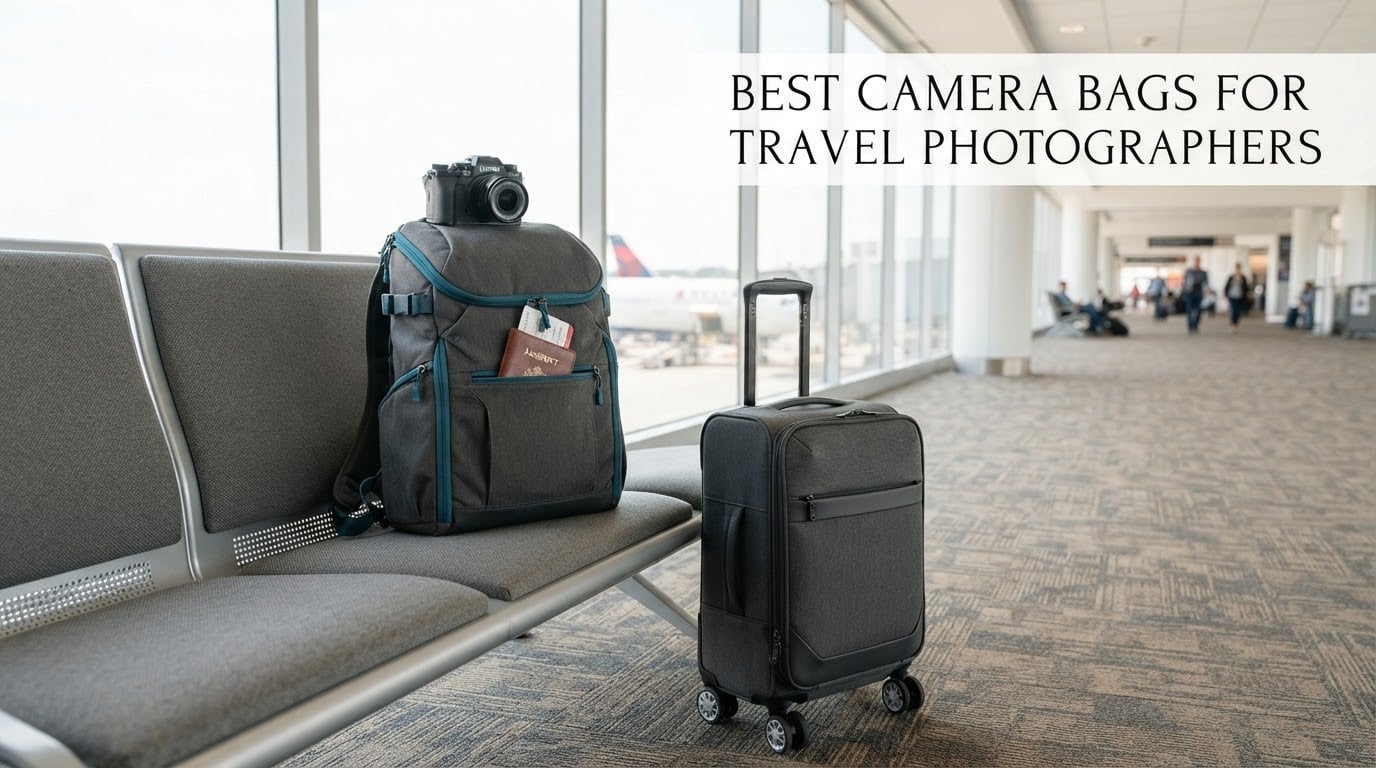
Most travel photographers do not lose gear because a bag is fragile. They lose access to it, because the bag is either too large to fly with or too small to work in. Finding the best camera bags for travel photographers means solving that tension: enough room for a real kit, a shape that clears airline limits, and a harness that stays bearable across a ten-hour walking day. I have carried these packs through terminals, crowded streets, and multi-day trails, and compared what each one does with a mirrorless body, a telephoto, and a laptop in tow.
The category has changed more in the last few years than in the previous decade. Padded inserts that used to be a fixed block now unclip and rearrange, shells that were always fabric now come moulded, and the divide between a camera backpack and a normal travel pack has all but disappeared. If you want a smaller kit carrier for street work, our guide to the best camera sling bags covers that side of the market.
Below, twelve packs, ranked on the things that actually decide whether a trip works: capacity against your real kit, carry-on fit, weather behaviour, harness quality, laptop accommodation, and how fast you can change lenses without setting the bag down. Updated for 2026.


The table below gives you the decision data in one pass. For each pack, the key figures are capacity, empty weight, the largest device it accepts, and how it handles weather. Carry-on verdicts use the common 22 x 14 x 9 in baseline most carriers publish.
| Model | Key Specs | Action |
|---|---|---|
| CADeN Camera Backpack 17L |
|
Check Latest Price |
| BAGSMART Camera Backpack 20L |
|
Check Latest Price |
| Lowepro Tahoe BP 150 |
|
Check Latest Price |
 TARION Small Backpack 12L TARION Small Backpack 12L |
|
Check Latest Price |
 TARION Pro Backpack 15L TARION Pro Backpack 15L |
|
Check Latest Price |
 K&F CONCEPT Hardshell Backpack 22L K&F CONCEPT Hardshell Backpack 22L |
|
Check Latest Price |
 MOSISO Tactical Backpack MOSISO Tactical Backpack |
|
Check Latest Price |
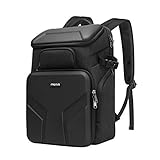 MOSISO PU Hardshell Backpack MOSISO PU Hardshell Backpack |
|
Check Latest Price |
 MOSISO Large PU Flap Backpack MOSISO Large PU Flap Backpack |
|
Check Latest Price |
 Lowepro Truckee BP 250 LX Lowepro Truckee BP 250 LX |
|
Check Latest Price |
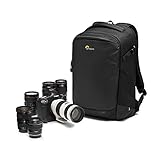 Lowepro Flipside BP 400 AW III Lowepro Flipside BP 400 AW III |
|
Check Latest Price |
 RaLeno Expandable Backpack 22L RaLeno Expandable Backpack 22L |
|
Check Latest Price |
We earn from qualifying purchases. CERTAIN CONTENT THAT APPEARS ON THIS SITE COMES FROM AMAZON. THIS CONTENT IS PROVIDED 'AS IS' AND IS SUBJECT TO CHANGE OR REMOVAL AT ANY TIME.
17L capacity
1.74 lb empty
11 x 5.9 x 15 in
Fits 1 body plus 4 lenses
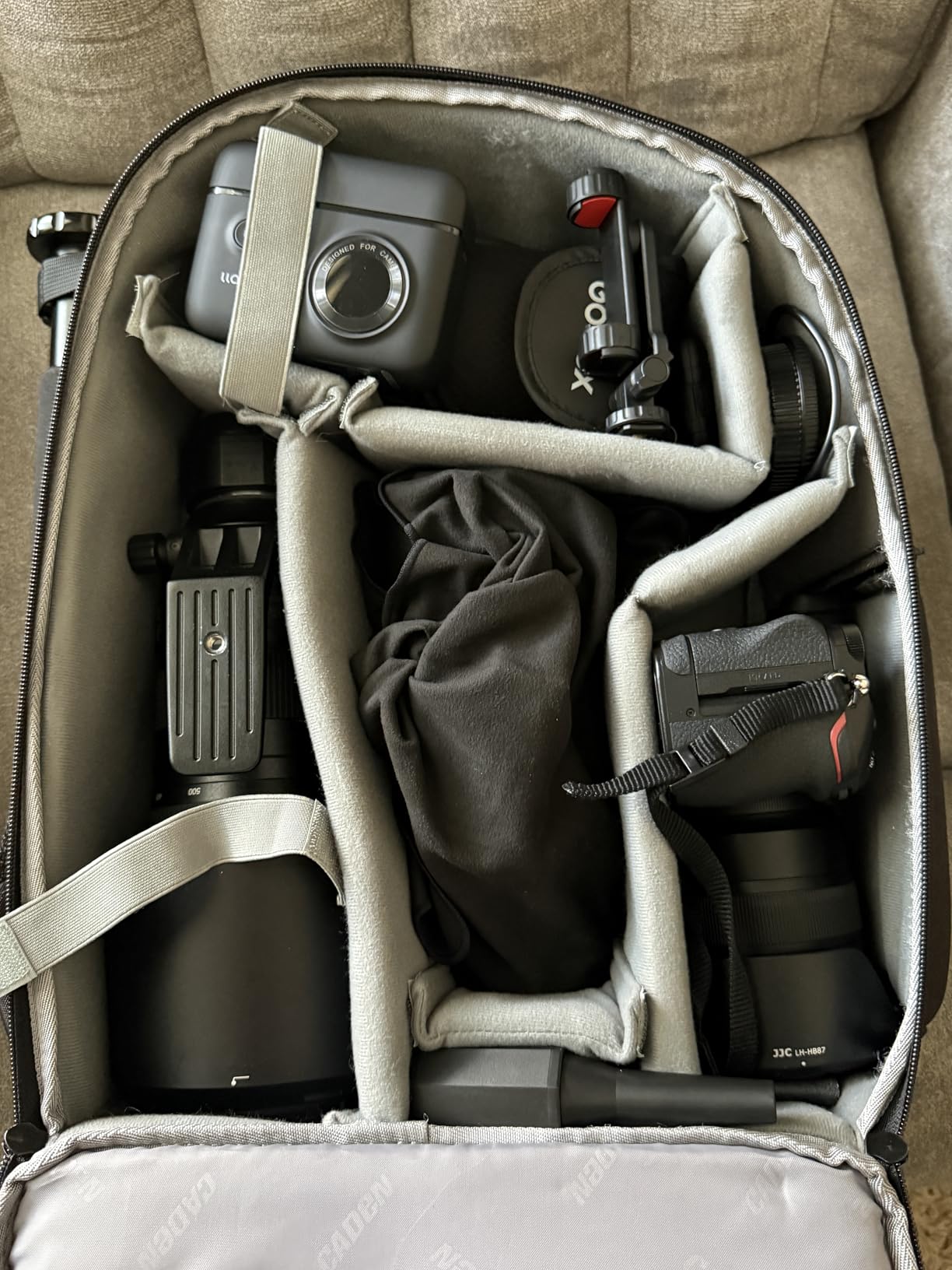
This is the pack I keep reaching for when a trip has one or two hard shooting days and a lot of walking between them. The CADeN has been on my own trips long enough that I stopped counting. At 17 litres and 1.74 pounds empty, it disappears on your shoulders while still swallowing a body and four lenses.
What surprised me was the divider layout for a bag this small. The 7-layer PE foam and PP board padding holds a body flat, and the padded sleeve inside carries the tablet, leaving room for a flash and cables in the top section. That is a genuinely complete kit for street work, a two-week city break, or a road trip where you are out and out until dark.
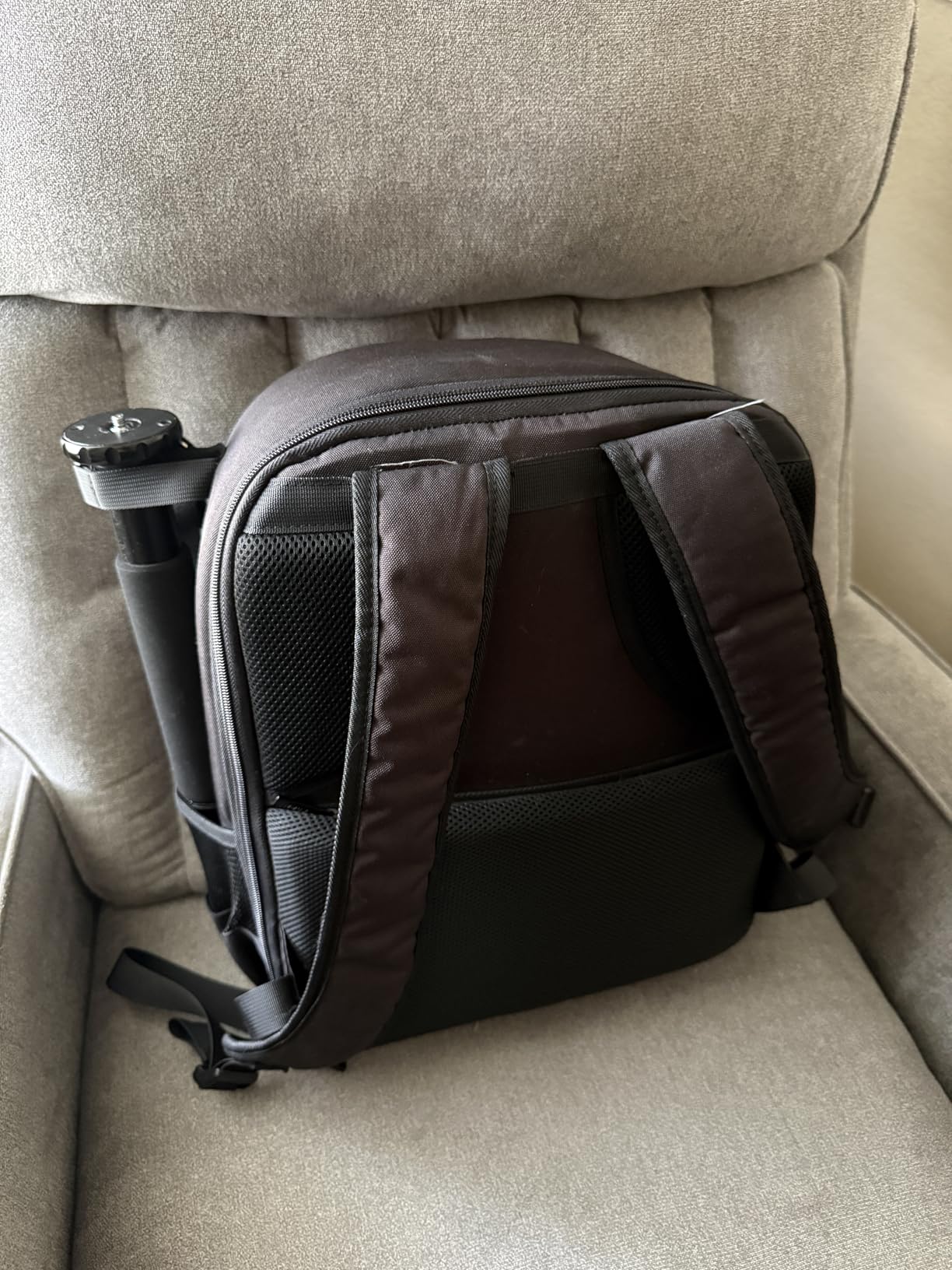
The bar-tack anchorages on the shoulder straps are rated to a 50 kg load, which matters more than it sounds. Most budget packs are stitched at the strap ends with a single bar tack, and that is the first thing to fail after a season of airline handling. The memory foam shoulder padding spreads the load of a full kit across a wider contact area than a flat webbing strap does.
Two carry handles mean you can grab it from the top or sling it horizontally into a rear seat pocket on a train, which is how I used it on an overnight rail run through the Alps.
The manufacturer lists the shell as waterproof, and the alloy zippers are specified as rust-resistant with a multi-year break claim. In practice it shrugged off sustained drizzle without a rain cover, which is the situation most city and coastal trips present. I would still pull out a cover for a monsoon afternoon, since the top opening is the weak point on any backpack of this type.
Here is the honest limit. A 17-litre interior with seven dividers is a two-hands-and-a-jacket space, not a two-body-plus-telephoto space. Reviewers repeatedly note that large pro bodies and long zooms crowd the main compartment, and I agree. Pack to the seams and the shell starts to bow.
For the style of shooting this bag is built for, I pair it with one of our best camera straps for street photographers so a single body can leave the pack entirely.
20L capacity
1.45 kg empty
11.8 x 7.5 x 15.7 in
15-inch laptop compartment
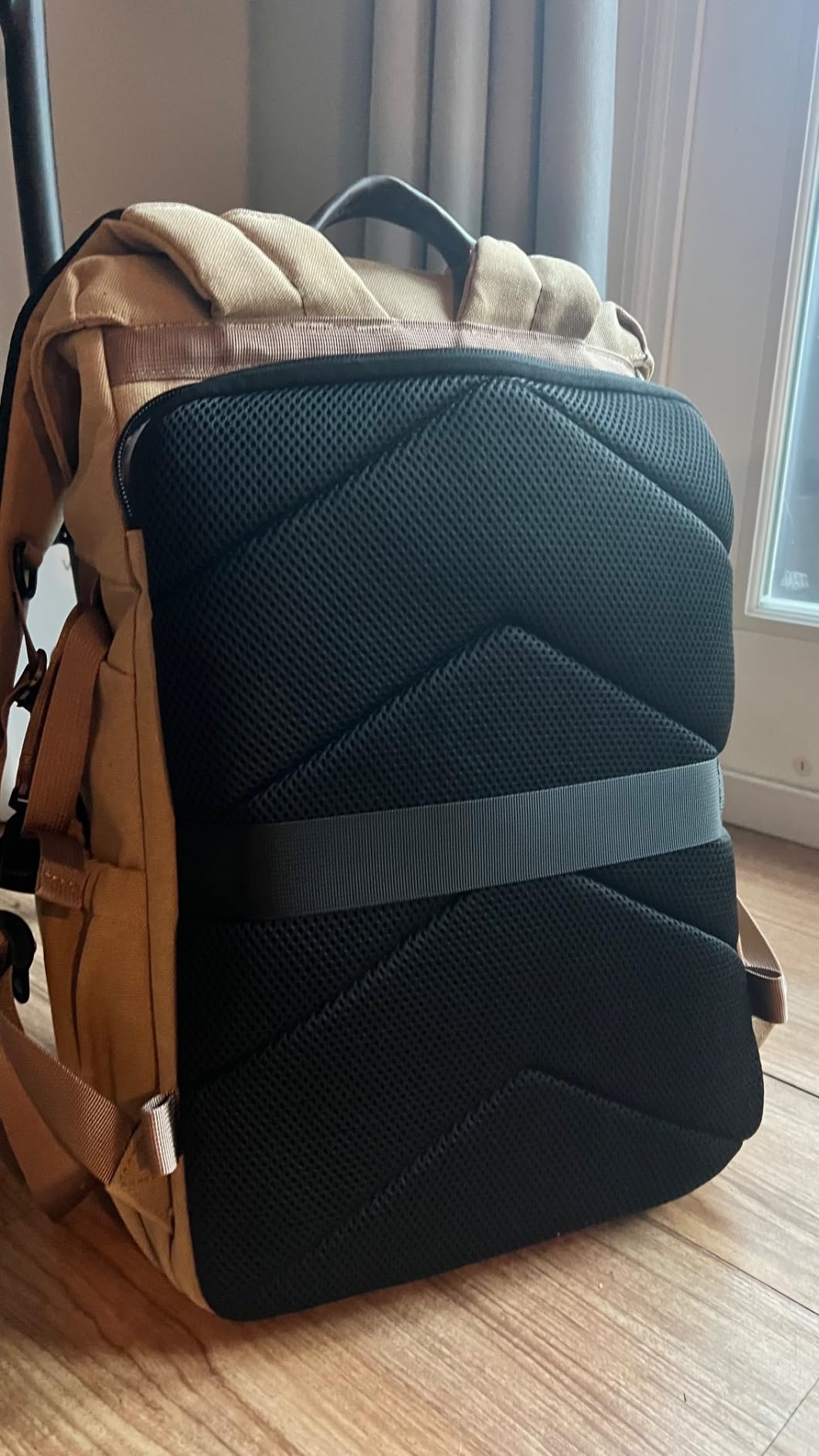
Back comfort is the most under-reported spec in this category, and the BAGSMART is the one I recommend when a trip involves a real trail rather than a city grid. The removable hip belt and adjustable chest strap are the reason. Once the belt is properly set, a loaded 20-litre pack sits on your hips instead of your shoulders, and that single change turns a tiring afternoon into a normal one.
The 20-litre interior takes five padded dividers, and the divider panel unzips entirely so the bag converts into a conventional laptop backpack. I used that conversion on a work trip where the camera stayed in a hotel safe and the laptop came with me everywhere.
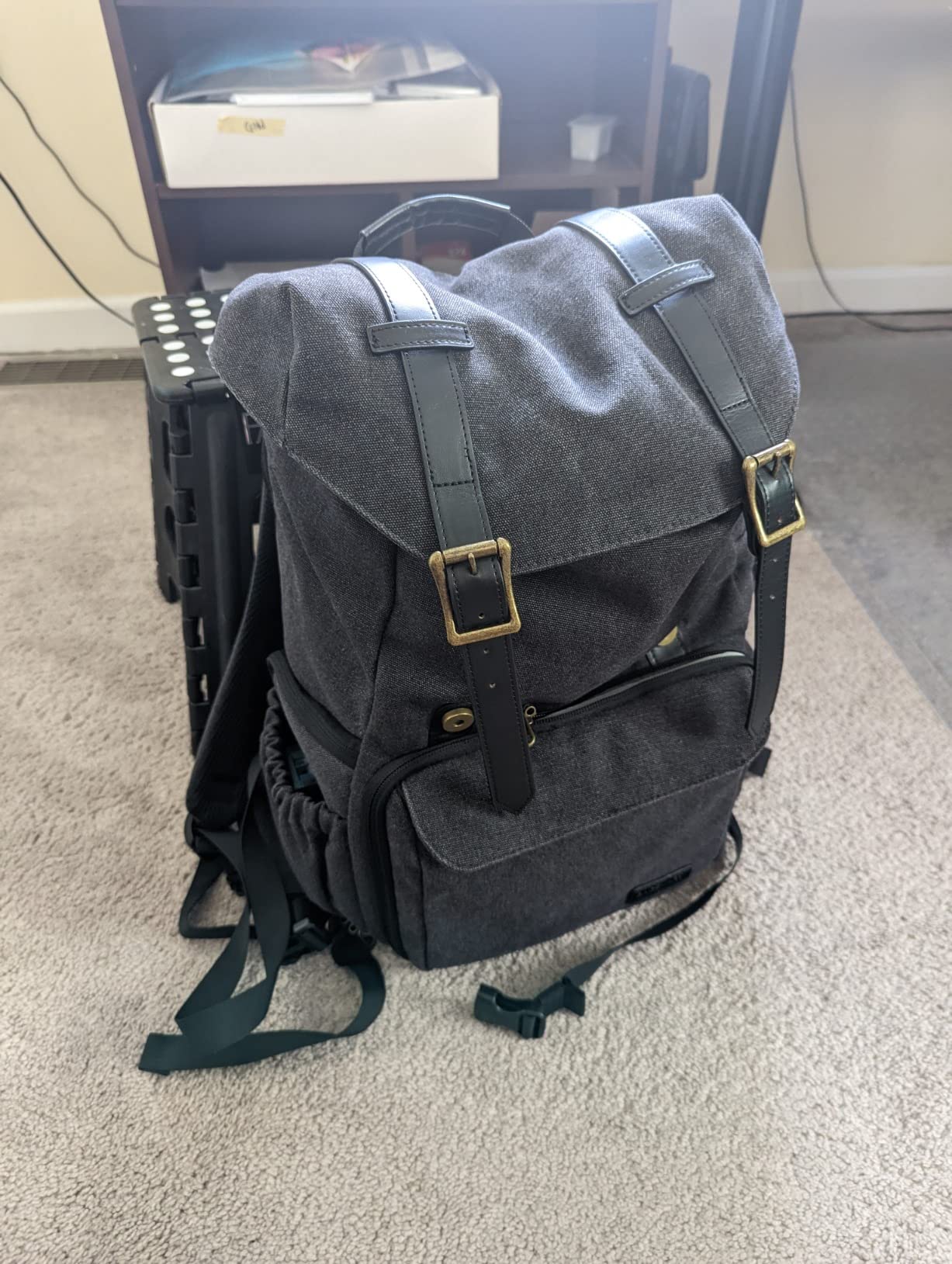
At 11.8 inches deep, 7.5 wide, and 15.7 tall, this fits inside the standard 22 x 14 x 9 in carry-on envelope with room to spare. That margin is not a luxury. Forum complaints about camera bags run almost entirely in one direction: bags advertised as carry-on fail at the gate once you add a jacket and a lens. Measuring before you fly, rather than trusting the label, is the fix.
Lockable zippers and a metal anti-theft hook give you somewhere to loop a cable lock in an airport or a busy hostel. The styling is deliberately plain, reading as an ordinary school or commuter pack rather than a camera bag, which is its own quiet form of protection. Our guide to anti-theft camera bags goes deeper on the lock and tracking options available at each price tier.
The gripes in the reviews are mechanical rather than structural, which is why the bag still holds a 4.6 average over close to 4,900 reviews. The side quick-access door opens on the side that is awkward for a right-handed photographer working a one-handed grip. The magnetic top-compartment clasps need lining up carefully and can let a small item escape if you overfill them. And the included rain cover is thin nylon that soaks through in heavy rain, so treat it as drizzle protection only.
20L capacity
27.5 x 21.7 x 40.3 cm external
Quilted padding, weather resistant
2-year manufacturer warranty
The Tahoe BP 150 is the Lowepro that travel photographers repeatedly praise in forums, and the reason is simple: it is a compact camera pack that does not announce itself as one. It has been on the market long enough that Lowepro’s two-year manufacturer warranty and replacement divider supply are a genuine advantage when something tears on a multi-week trip.
Five compartments and five pockets cover a day kit without a mess. The quilted padding and weather-resistant fabric handle ordinary field conditions, and the grab handle plus tall stretch-mesh pockets give you quick ways to get at a bottle or a spare battery without opening the main compartment.
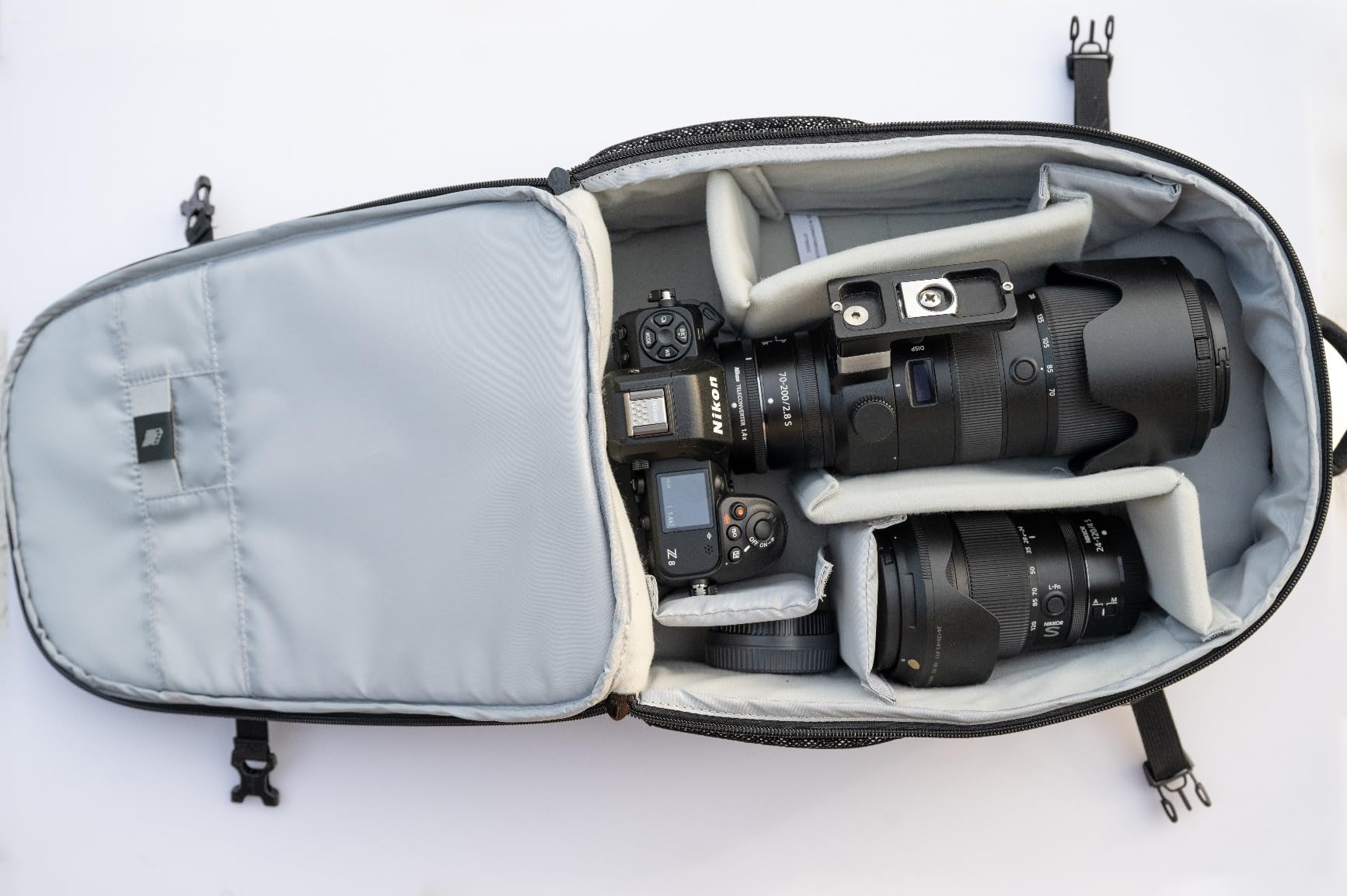
The UltraFlex fold-down panel is the feature that separates this from a plain camera daypack. Fold it flat and it hands its volume to personal gear, so a jacket, a lunch, and a book fit alongside a single body and one or two lenses. Raise it and you get a taller, tighter well for a body with a zoom attached. In practice, on a city day where I only wanted one lens, folding the panel down stopped the bag from feeling top-heavy.
Maximum device size is listed at 10 inches, which means a tablet but not a laptop. If your workflow involves editing on the move, that is a real limit and no amount of creative packing solves it. It is also the single most common laptop-fit complaint across this entire category, so treat the stated number as accurate and buy accordingly.
It suits a mirrorless body with a couple of primes, a day hike, and a traveller who would rather not carry a large pack through a crowded old town. It is wrong for a long telephoto kit, for anyone checking gear into a hold, or for a trip where you are moving hotels every night and need a small suitcase instead of a camera bag.
12L capacity
0.85 kg empty
14.6 x 4.6 x 11.2 in
7 adjustable dividers
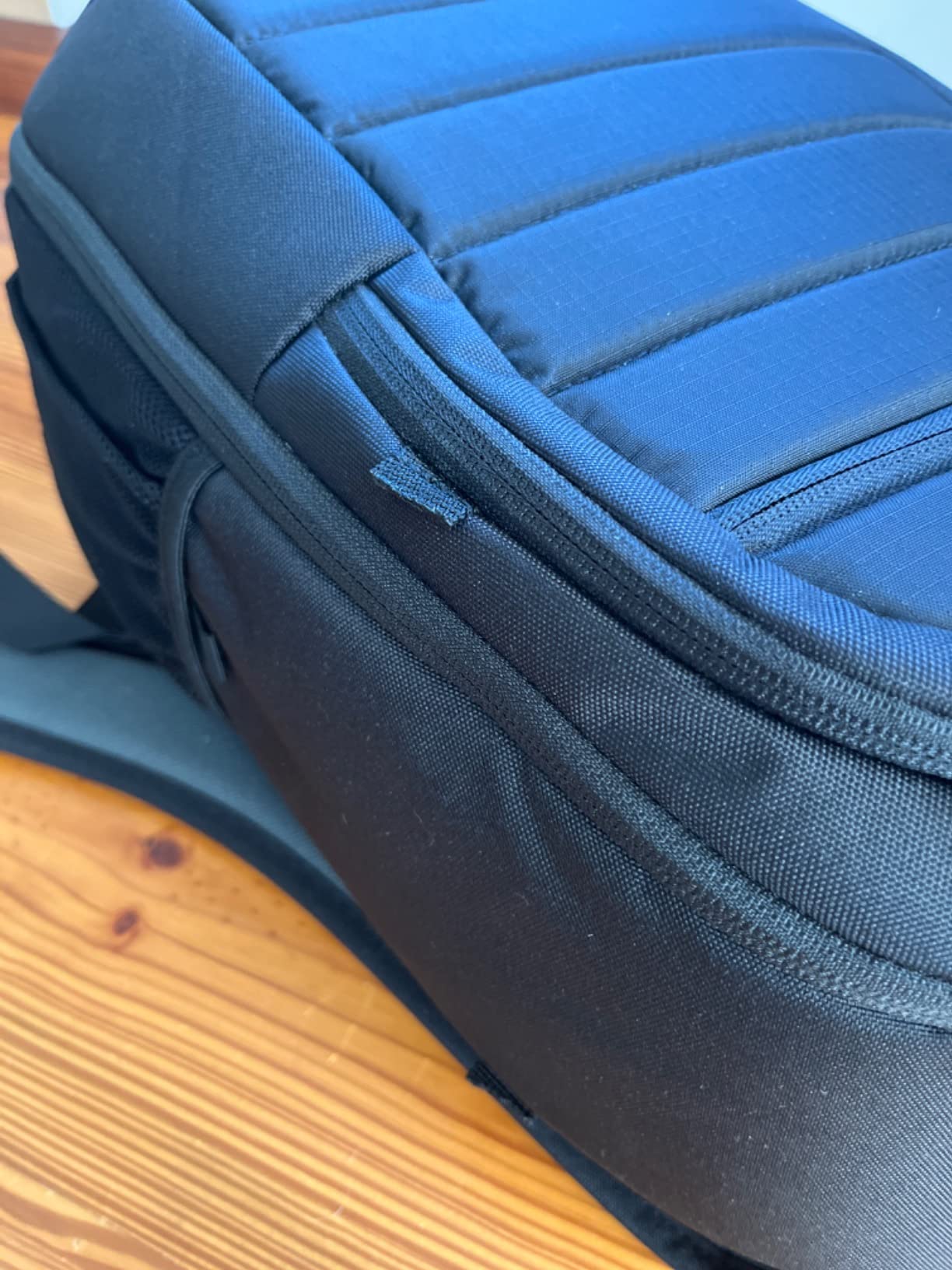
The TARION small stands out at its size because of how it is built. Five layers stack water-resistant Oxford fabric, soft foam, a hardshell PE board, more foam, and a velvet polyester lining. That PE core is the difference: press the front panel and it pushes back instead of collapsing against your front element.
Seven adjustable dividers let you configure it for a DSLR, a mirrorless kit, or a drone with controllers. I found the strip-out easy, and with the dividers gone the bag doubles as an everyday pack, which extends its usefulness well beyond the trip.
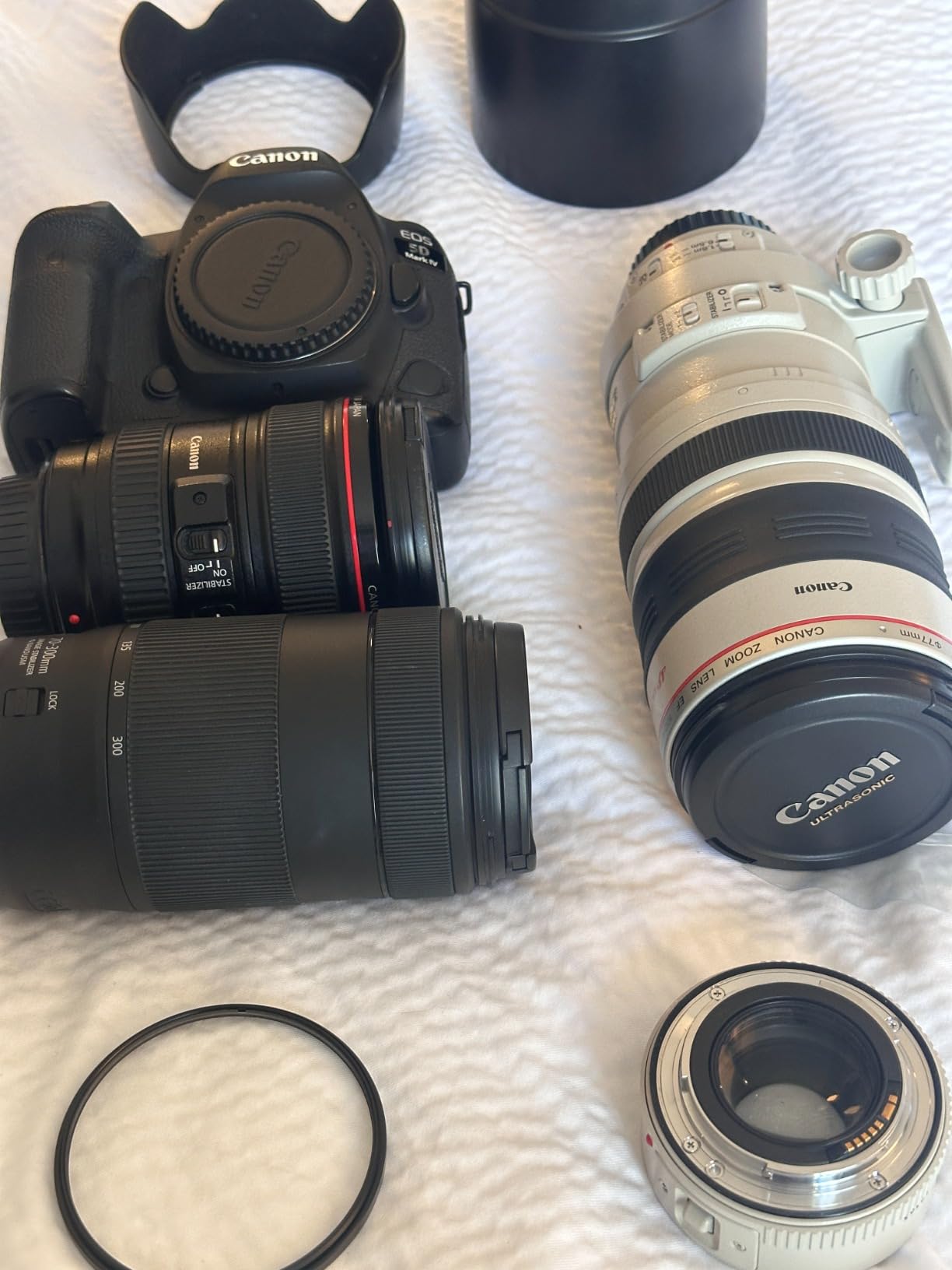
Almost every camera pack offers a tripod carry solution, and almost all of them do it badly. Side mesh pockets and side straps pull a tripod off-axis, which makes a loaded pack sway on every step. This bag uses a dedicated bottom holder with dual straps and clips, so the heaviest, longest object sits centred and low. On a rough path that detail is worth more than any pocket you are not using.
Twelve litres is a compact number. Think one body, two lenses, a spare battery, cards, and little else. Reviewers reach the same conclusion independently, describing it as an excellent personal-item bag to pair with a larger case, or as a single-lens daypack. At 0.85 kilograms it stays out of the way, but there is no hip belt, so anything heavier than that sits entirely on your shoulders.
The smooth-running upgraded zippers and the two-year manufacturer warranty put this small pack ahead of cheaper compact alternatives that offer neither. The included waterproof rain cover adds real protection in humid climates, and the mesh pockets take bottles, cables, and cards without stealing camera space.
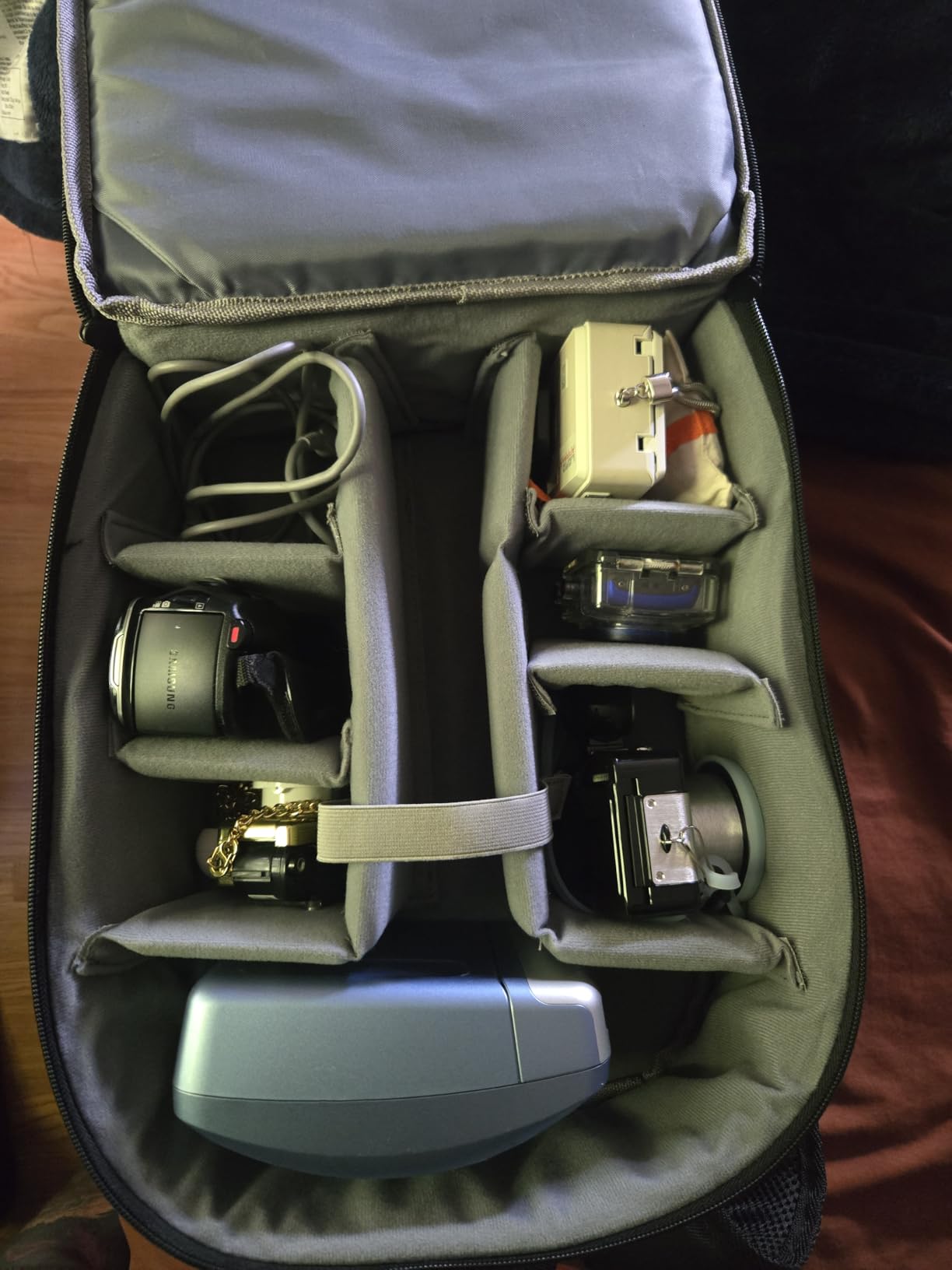
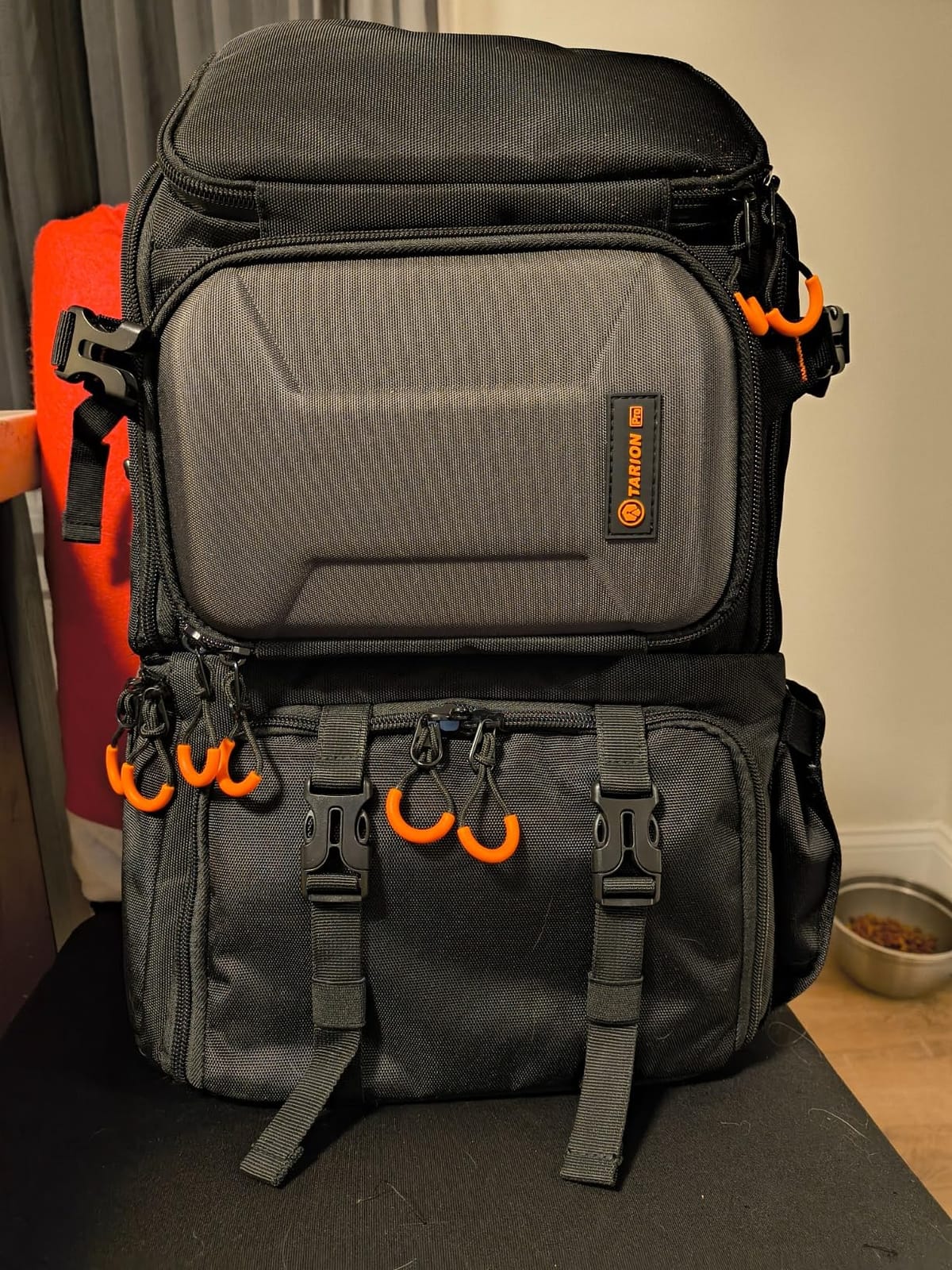
15L capacity
1.45 kg empty
16.1 x 11.0 x 5.7 in
Fits 2 bodies and 6 lenses
Side access is the feature that changes how you work. On this pack you swing open a panel, swap a lens, and close it, all without taking the backpack off or setting it on the ground. On a wet cobbled street or a dusty safari track, not putting your gear down matters more than most people expect before they try it.
TARION builds the PB series in 15, 20.5, 27, 30, and 35 litre versions, and the same access panel carries through the line. I mention that because 15L is the smallest, and owners who outgrow it usually move up within the same family rather than switching brand.
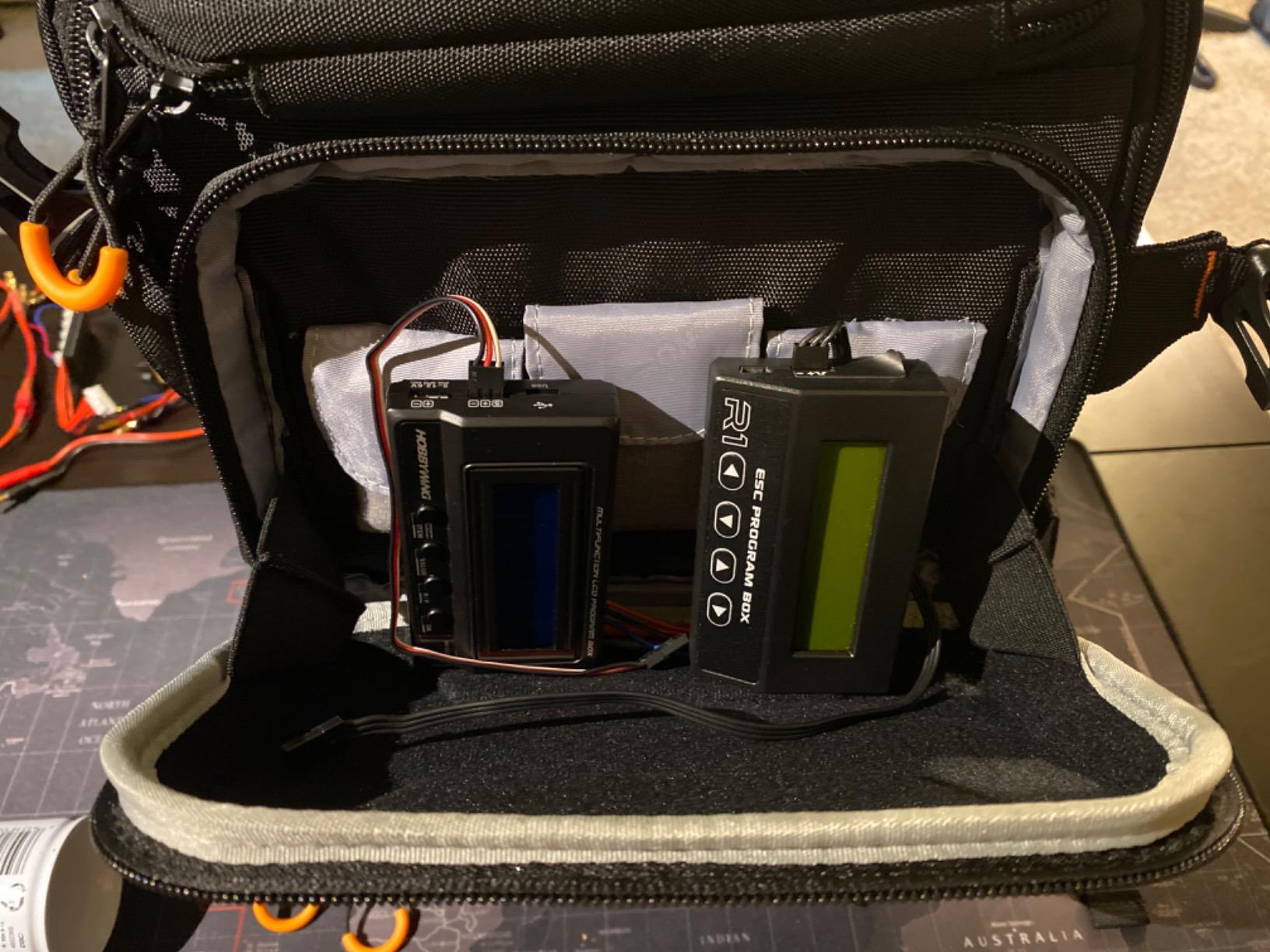
The listed load is two camera bodies and six lenses, or one body with five lenses plus a handheld stabiliser. Behind that sits a padded rear sleeve that takes a 15.6-inch laptop, separated from the optical gear. Separation is the part that matters. A laptop corner pressed against a lens element or a filter stack is how expensive damage happens, and a dedicated vertical sleeve removes the contact entirely.
The rear air-mesh panel is a genuine comfort feature rather than a specification. A flat padded back traps heat against your spine; a spaced mesh layer lets air move. Combined with the compression straps, it spreads the load evenly, which helps on a day that involves more walking than shooting.
At 1.45 kilograms empty, the base weight is noticeable by the end of a long day, and no hip belt is listed, so a fully loaded pack concentrates pressure on your shoulders. If your trip is a genuine multi-day trek rather than a day walk from a base, the truck-style harness of the Truckee BP 250 covered later in this roundup is the better match.
22L capacity
1270 g empty
17.3 x 11 x 7 in
EVA hardshell with foam buffer
When gear insurance is expensive and the transit involves a boot, a bus, or a crowded baggage conveyor, shell type stops being a style question. It is one of the few backpacks in this roundup built around a single moulded EVA piece with a foam buffer layer behind it. Drop it and the impact is absorbed in the foam rather than transmitted to a lens barrel.
The removable modular inserts are the other half of the appeal. They lift out completely, so you can rebuild the interior around a specific kit instead of working around a fixed arrangement. Reviewers rate the build quality and the layout control highly, and it carries one of the strongest average ratings in the group.
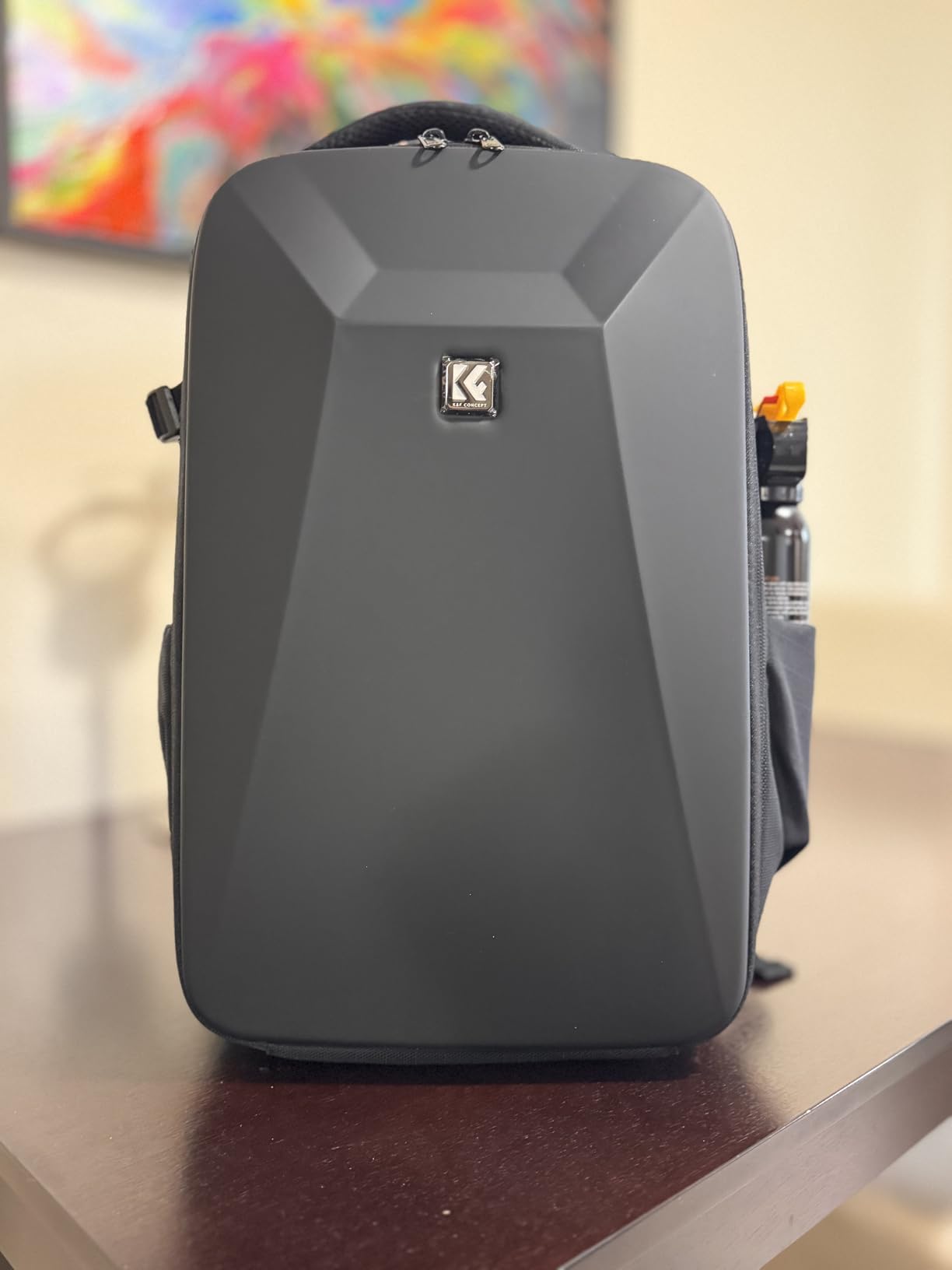
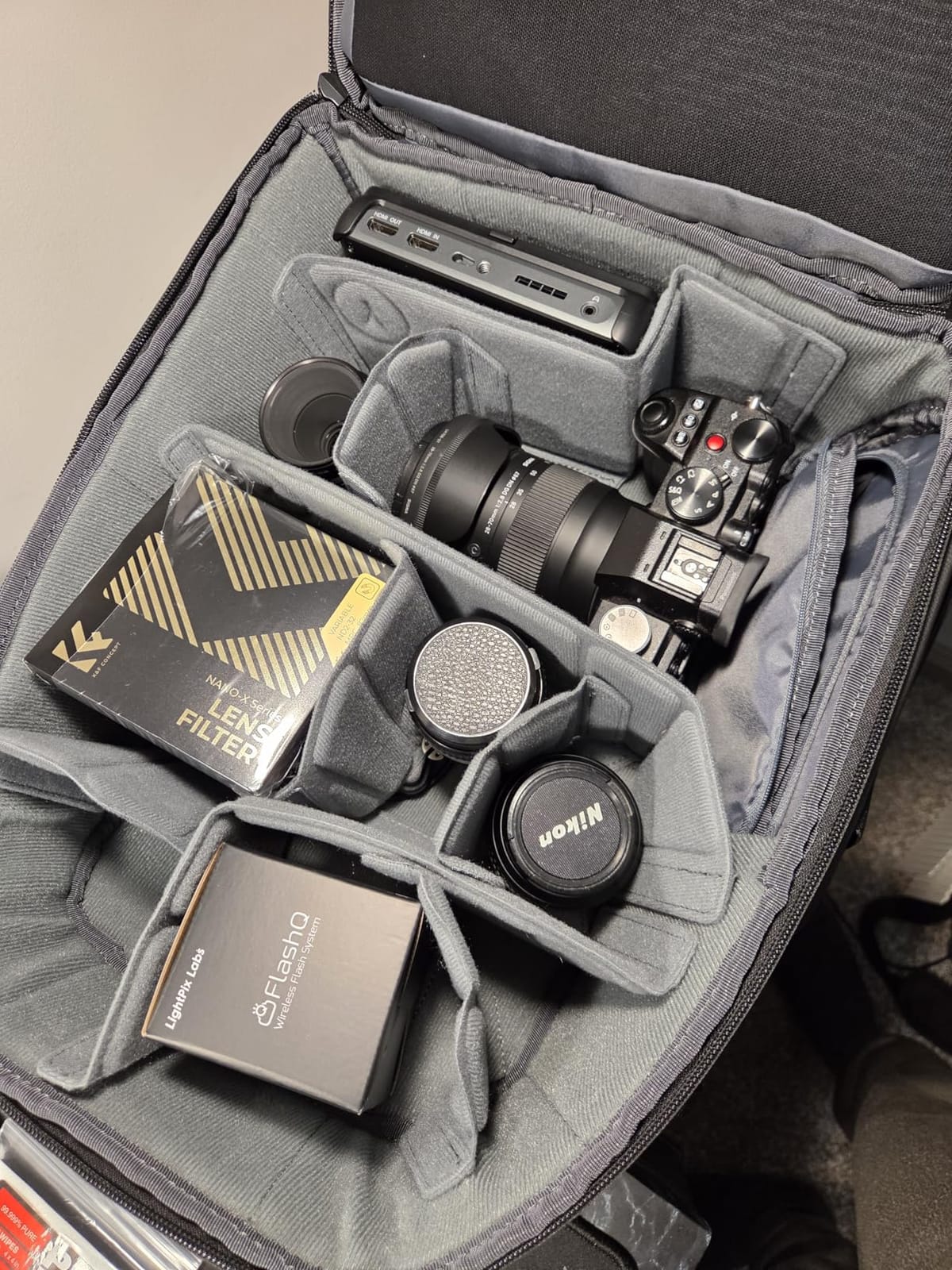
Rather than adjustable cloth walls, the dividers here are discrete removable blocks. For a hybrid kit, that means a body in one cell, a flash in another, and lens slots sized to your actual glass. It takes ten minutes longer than cloth dividers to configure and then stays configured, which is the better trade over a multi-week trip.
A back trolley belt slides over the handle of a rolling case, a side strap holds a tripod, and a side pocket takes a bottle or umbrella. There is also a hidden rear zipper pocket for a passport. The shoulder strap adjusts across a 20 to 38.9 inch range, which is wide enough to fit a range of torso lengths and layers.
This is the honest drawback. The stated brand warranty is six months, which is short compared with the two-year and limited-lifetime terms offered by Lowepro on several packs in this roundup. A hardshell is arguably less likely to fail than a fabric pack, so the risk is lower, but the cover is thinner. If you are buying on a long trip, that difference is worth factoring in.
3 compartment layout
3.3 lb empty
17.13 x 11.81 x 8.27 in
Laptop compartment 13-16 in
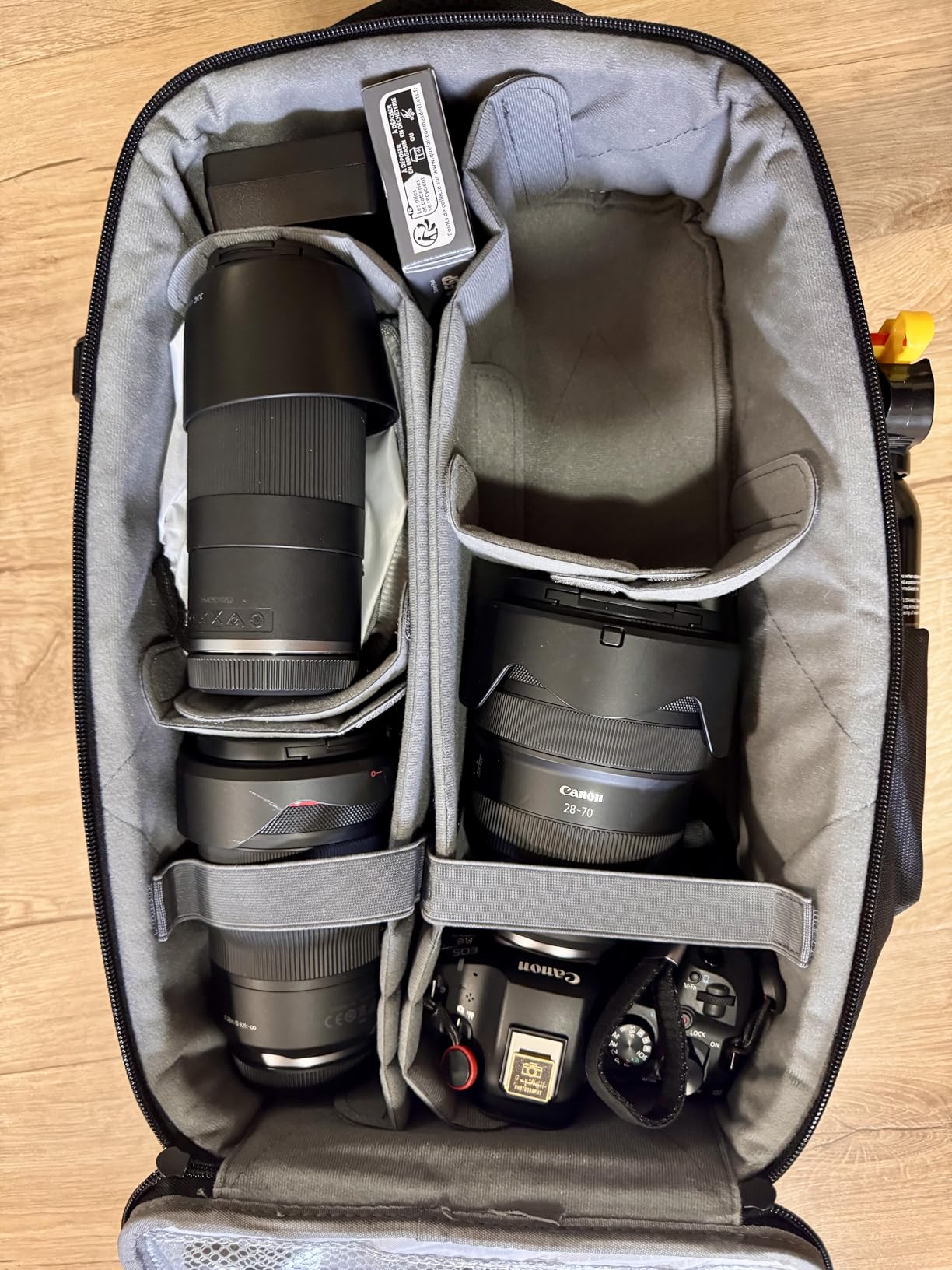
Most camera packs assume you are spending the night near where you are shooting. This one assumes the opposite. Three compartments put a change of clothes, a towel, and food in the upper section, camera gear in the lower, and a laptop up against your back. For a multi-day trip out of a single base, it removes the need for a second bag entirely.
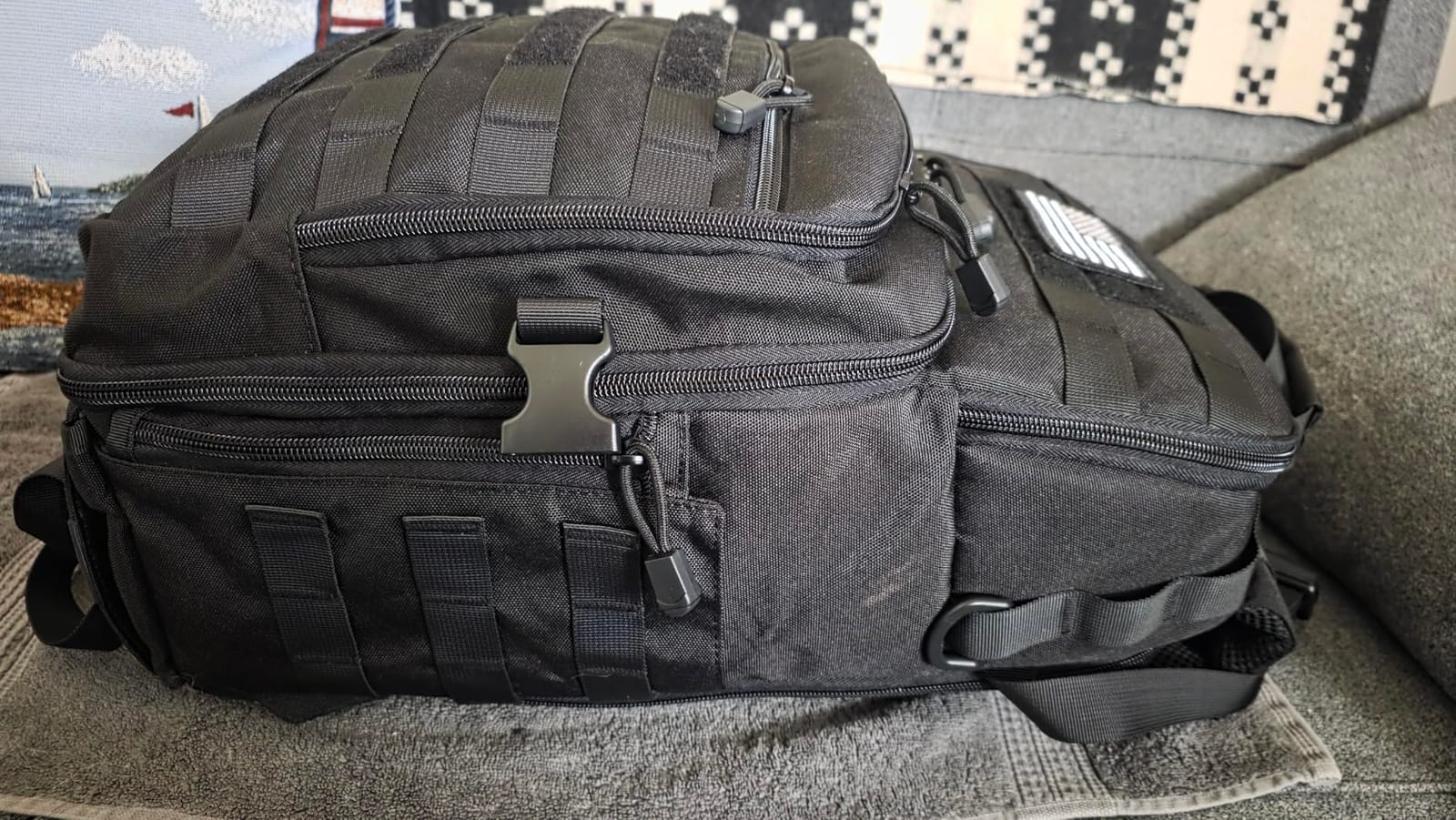
The MOLLE-style webbing with a removable flag patch is a genuine modular point. Pouches, a water bottle carrier, or a first-aid roll clip on where you want them, and the patch comes off when the tactical look is not what you want in a city.
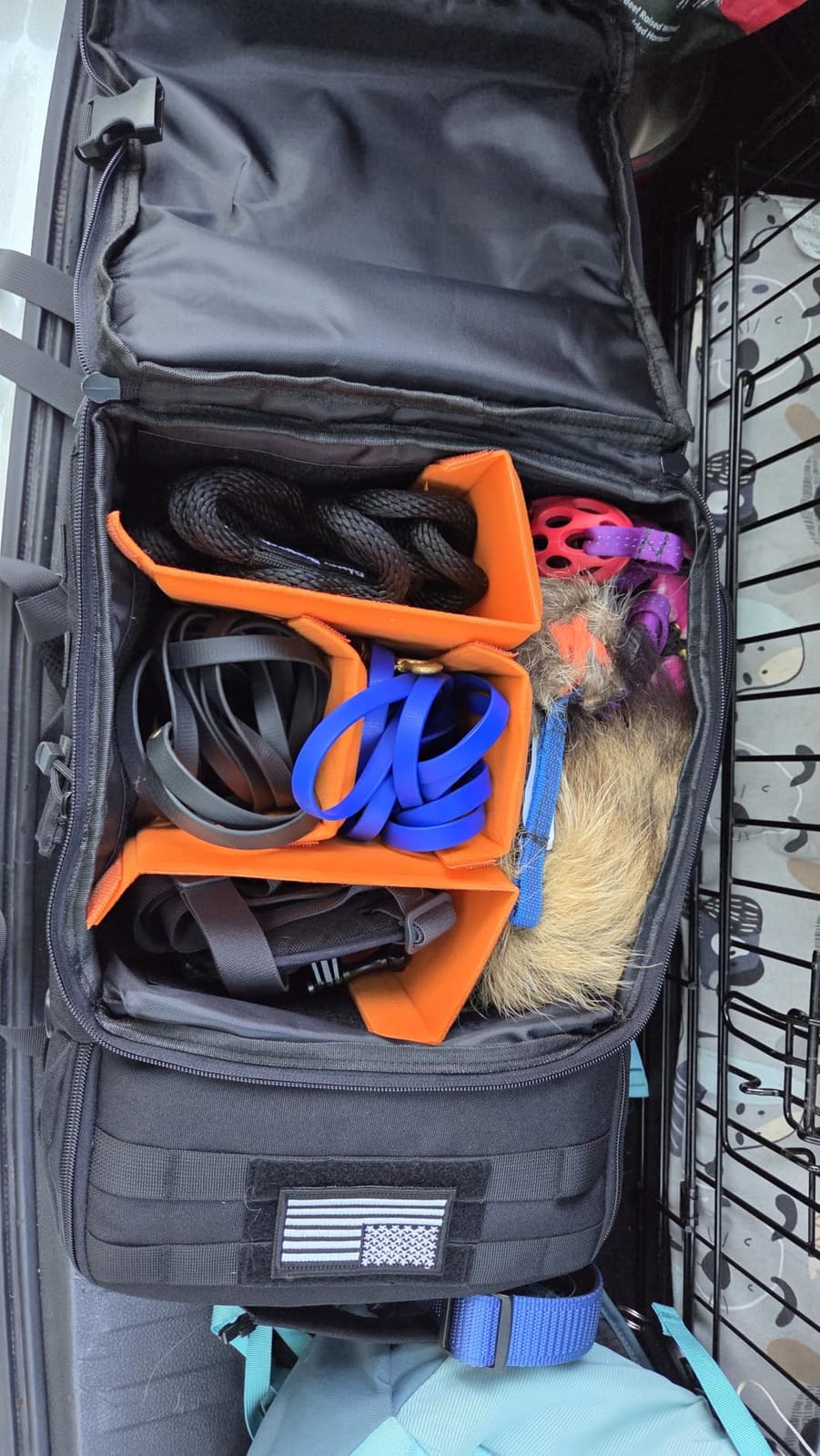
At 3.3 pounds empty, this is one of the heavier packs here before you add a single lens. The side load compression system and reinforced edge and bottom help manage that weight, as do the shaped shoulder strap and back panel. But on a long day the honest comparison is against the CADeN at 1.74 pounds, and the gap is felt.
The laptop compartment takes 13 to 16 inch devices. Compatibility is listed for Nikon D3xxx bodies, Canon Rebel T6, T6i, SL2, and SL3, Sony Alpha A6000 through A6600, and DJI Mavic drones. The removable padded inserts in the lower compartment adjust across those bodies, flashes, and lenses, so the layout adapts rather than forcing your kit into a fixed shape.
Water resistance is listed as moderate. That is enough for drizzle and a beach walk, not enough for sustained rain without a separate cover, which is a fair trade for the soft shell and lower weight class this pack sits in. Front and side access openings mean you can reach a body from a crowded position without turning your back to the street.
17.3 x 11.9 x 6.5 in
3.2 lb empty
PU hardshell flap and top
17.3-inch laptop compartment
The headline here is the 17.3-inch laptop compartment. Most camera packs in this roundup top out at 15 or 15.6 inches, which quietly rules out the larger machines a lot of travel photographers carry. This one fits a full-size workstation, and it is the reason to choose it if you edit on the road rather than dumping files at the end of the trip.
It also stands up on its own. The TPU feet hold the base clear of wet grass, mud, or a tiled airport floor, and the PU hardshell front flap and hardshell top compartment keep the shape when the bag is packed full or dropped into a footwell.
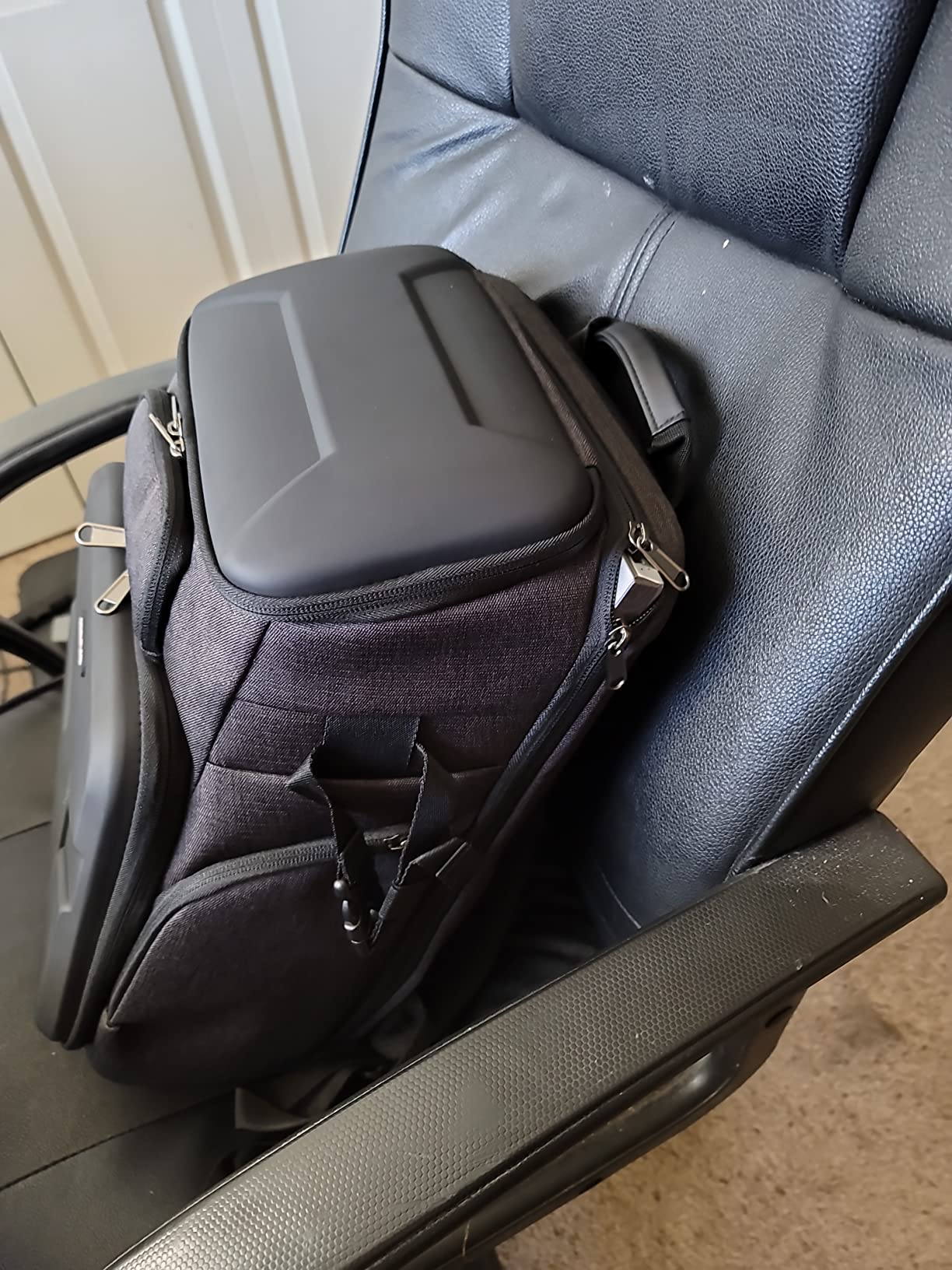
Side access is where a change of direction catches people out. This model opens on the opposite side to earlier MOSISO versions, so if you have used the brand before, the muscle memory will be wrong for a day or two. Straps adjust from 19.4 to 36.5 inches with D-rings for hanging gear, and the back trolley belt slides onto a rolling case.
The laptop sleeve has no padding on the bottom. Set the bag down hard on a stone step and a heavy machine can take the impact directly. That is a specific, avoidable risk: put a folded jacket or a divider panel between the laptop base and the shell floor, and the weakness disappears. The padded dividers in the lower camera section also feel flimsy for the price tier, so treat delicate glass with its own padded sleeve.
Waterproof is listed, and the included rain cover held up in rainy-day travel use according to reviewers. Because the sides are soft, keep it in the cabin rather than checking it, where thrown baggage and conveyor damage would undo the hardshell advantages.
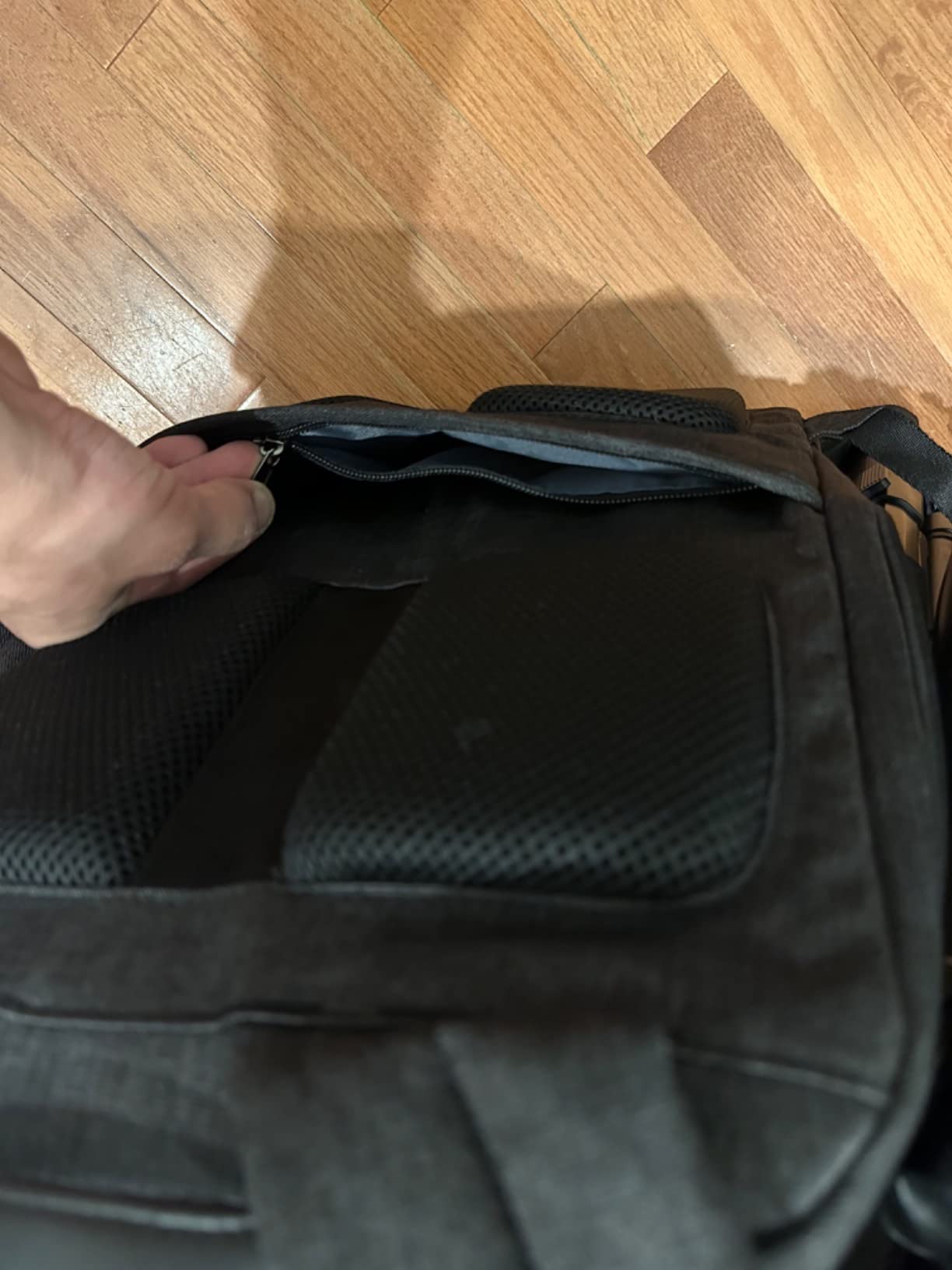
16.93 x 12.2 x 5.91 in
3.7 lb empty
Laptop fits 13-17.3 in
Waterproof PU leather flap
This is the bag to carry when the photography is not the point of being there. A PU leather flap in a clean finish reads as an ordinary commuter bag, which removes the visual marker that tells a stranger exactly where your gear is. On a crowded transit platform or a market in a busy city, that discretion is worth more than another litre of capacity.
Underneath the flap, the lower camera section measures 9.45 x 9.45 x 5.71 inches and takes removable modular inserts for bodies, flashes, and lenses. The laptop compartment runs 13 to 17.3 inches, and the shoulder strap adjusts across a wide 19 to 37 inch range.
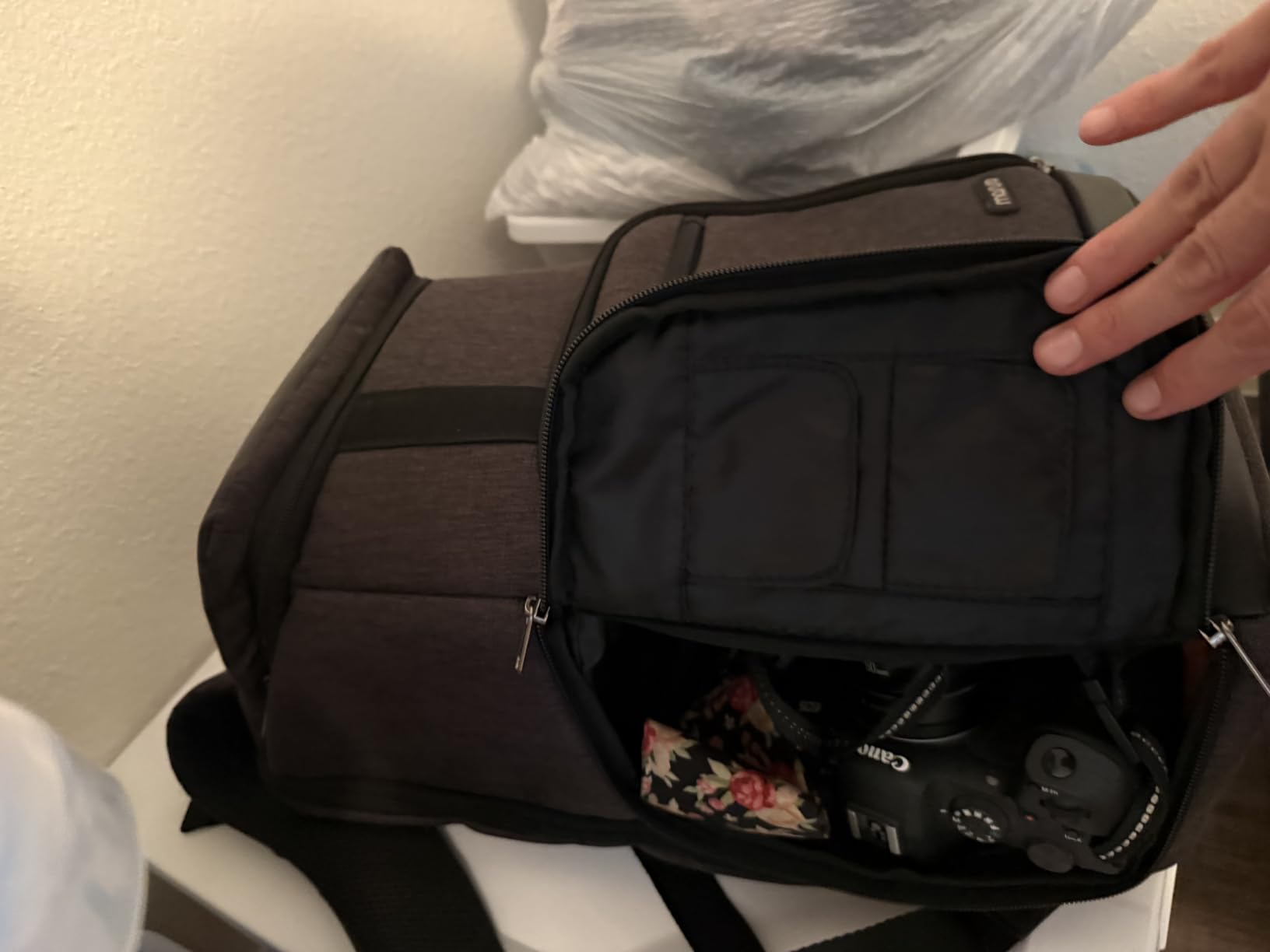
There is a hidden rear anti-theft pocket for a passport, phone, or card, positioned against your back where a pickpocket cannot reach without you feeling it. Combined with the plain exterior, it makes this the most discreet pack here. If you are travelling solo through high-theft destinations, our camera bag guide for street photography covers the same ground with smaller, faster-access options.
At 3.7 pounds empty, this is the heaviest pack in the roundup. That figure is only fair when the kit inside justifies it, and for a body plus several lenses and a large laptop, it does. For a single body and one prime, you are carrying 3.7 pounds of bag for a small mirrorless kit, and the CADeN or the Lowepro Tahoe is a far better use of your shoulders.
The waterproof PU leather flap and the included rain cover give solid wet-weather protection, and the breathable mesh back panel helps in heat. The trade is that PU leather scuffs, collects fingerprints, and can look out of place in a dusty or muddy setting, so it rewards a cleaner trip profile than a fabric pack.
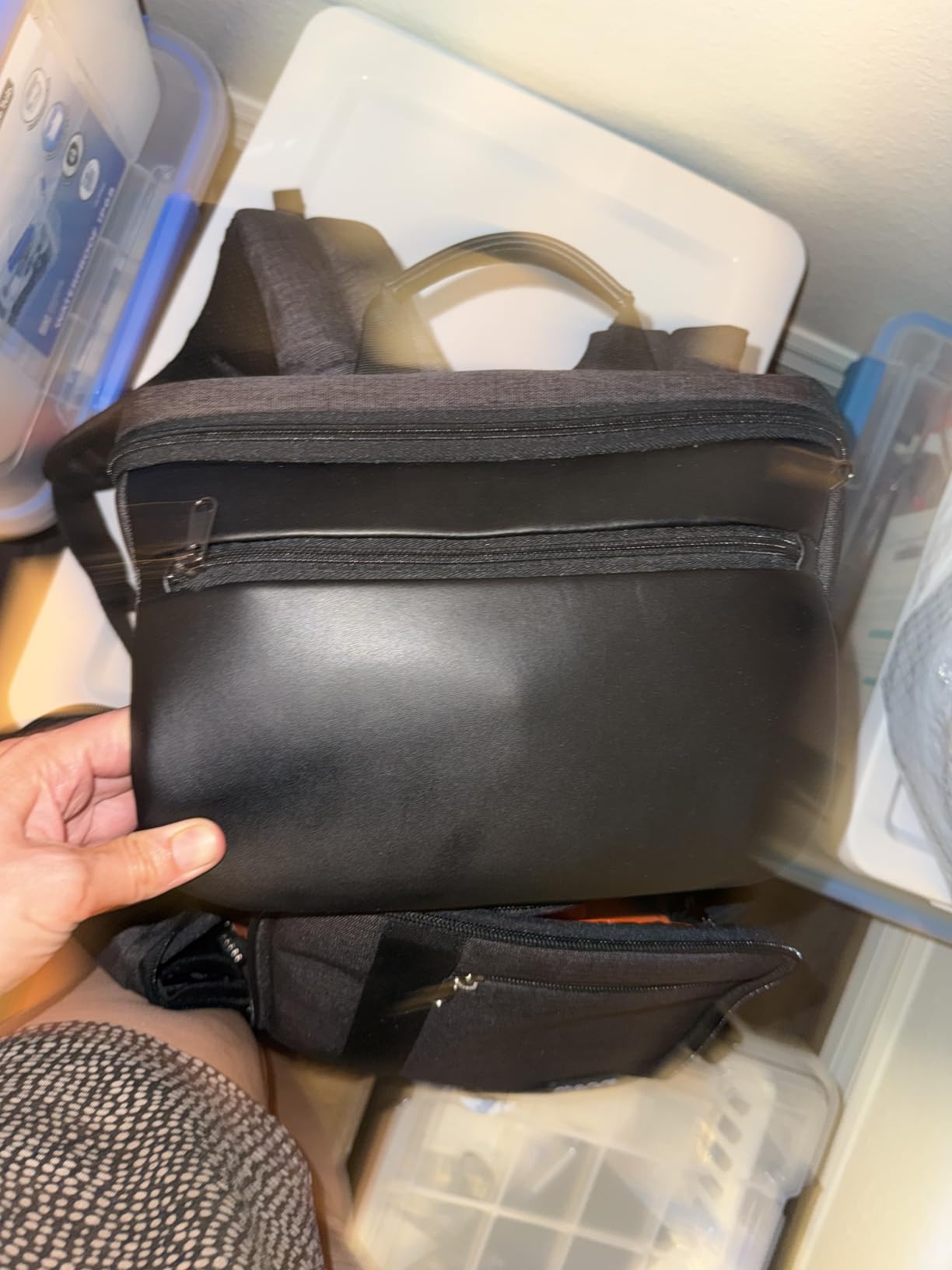
30L capacity
0.68 kg empty
17.32 x 11.81 x 7.87 in
50/50 gear split
Thirty litres sounds like a lot until you try to fly it. The Truckee BP 250 LX manages both because it weighs about 1.5 pounds empty while adding 10 litres over the smaller packs above. That combination of volume and low weight is why it stands apart in this roundup, and it is backed by a limited lifetime warranty rather than a two-year term.
The interior splits 50/50 between personal gear and camera gear. A padded internal pocket takes a 15-inch laptop, and the back loop fits telescoping carry-on handles so you can roll the bag through a terminal with one hand.
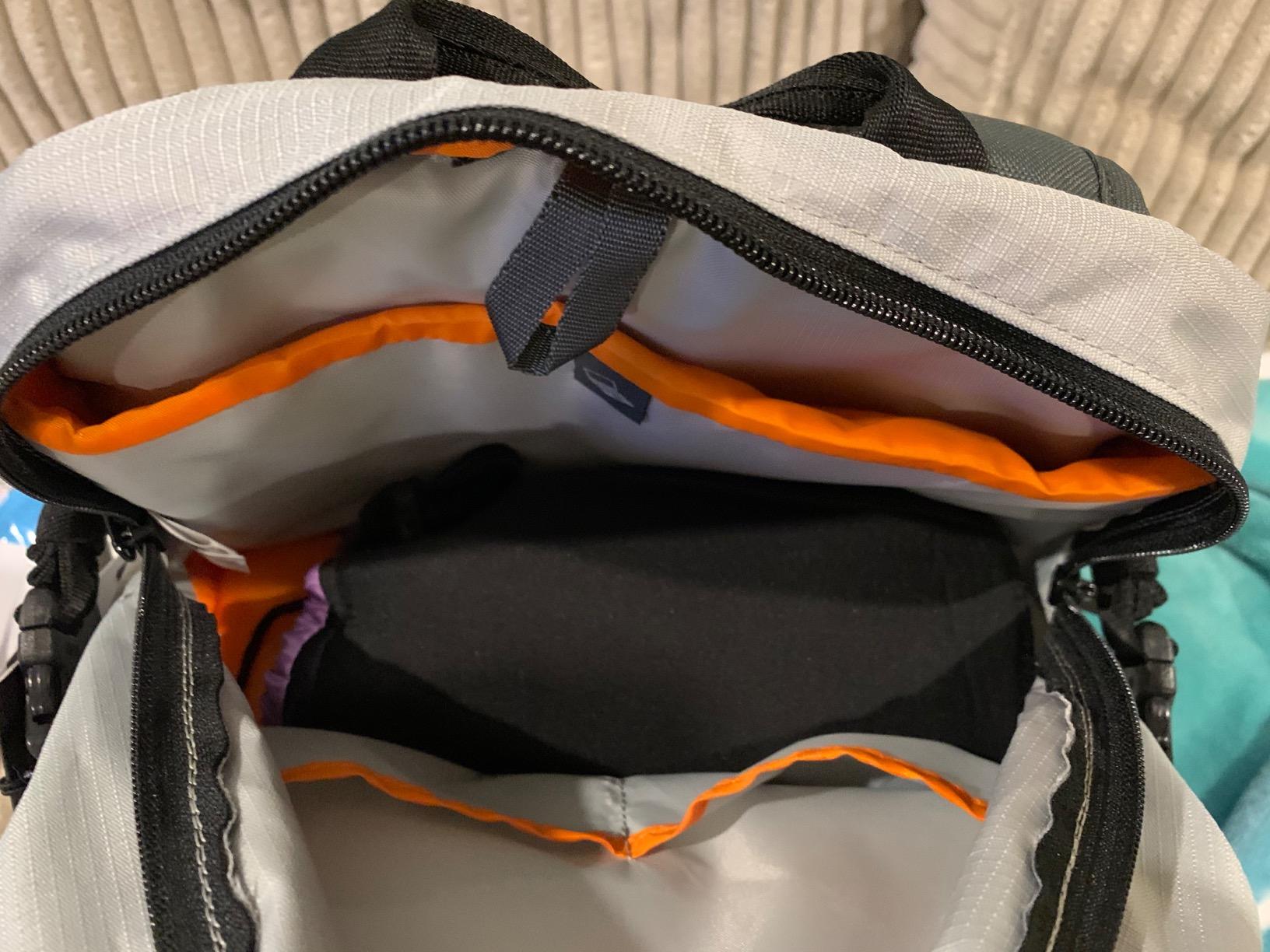
The sternum strap and ventilated wicking mesh back panel do the work here. Mesh sits off the spine and moves moisture away, and the sternum strap keeps the shoulder straps from sliding outward on a steep descent. Without a hip belt, the load stays on your shoulders, but at this weight most photographers can still handle a full day, and several buyers report using the bag as a post-production pack on location.
Be realistic about the lower section. It is built for a compact DSLR or mirrorless body with one or two extra lenses, plus a stabiliser or drone. Owners who add more lenses report the bay feeling tight once the foam inserts are arranged for a second body. Padding across the pack is on the light side too, so it protects against handling far better than against a drop.
The sleeve accommodates up to a 15-inch machine. A 16-inch laptop does not fit, and if that is your device, the 16-inch MOSISO packs later in this list are the answer. The toggle-locking zipper on the camera compartment adds real theft deterrence in a hostel or a shared vehicle, and is the single feature here that most competitors at this volume lack.
16L capacity
1.4 kg empty
9.45 x 12.99 x 18.9 in
Rear and side access
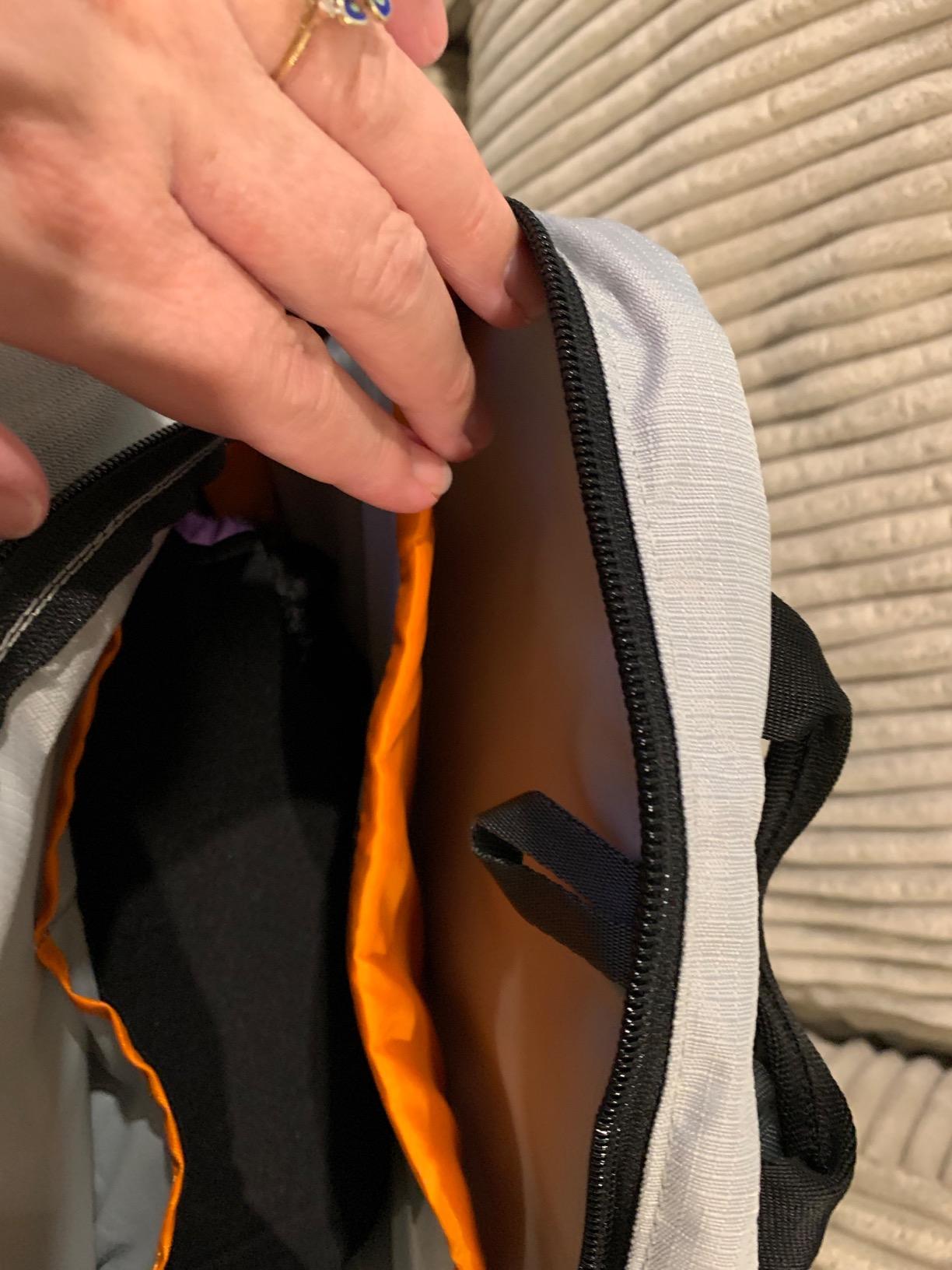
Weather hardening is the reason this bag sits in the Flipside line. Moulded EVA bumpers across the front, a PU coating, and enhanced zippers give it serious element protection. If your itinerary includes rain, salt spray, or a lot of dust, that shell engineering does more for your gear than any amount of extra padding inside.
Two access panels give you two ways in. The rear panel opens when the pack is laid flat, giving full access for a complete reorganisation, and the single side-access door handles fast lens changes while the bag stays on your back.
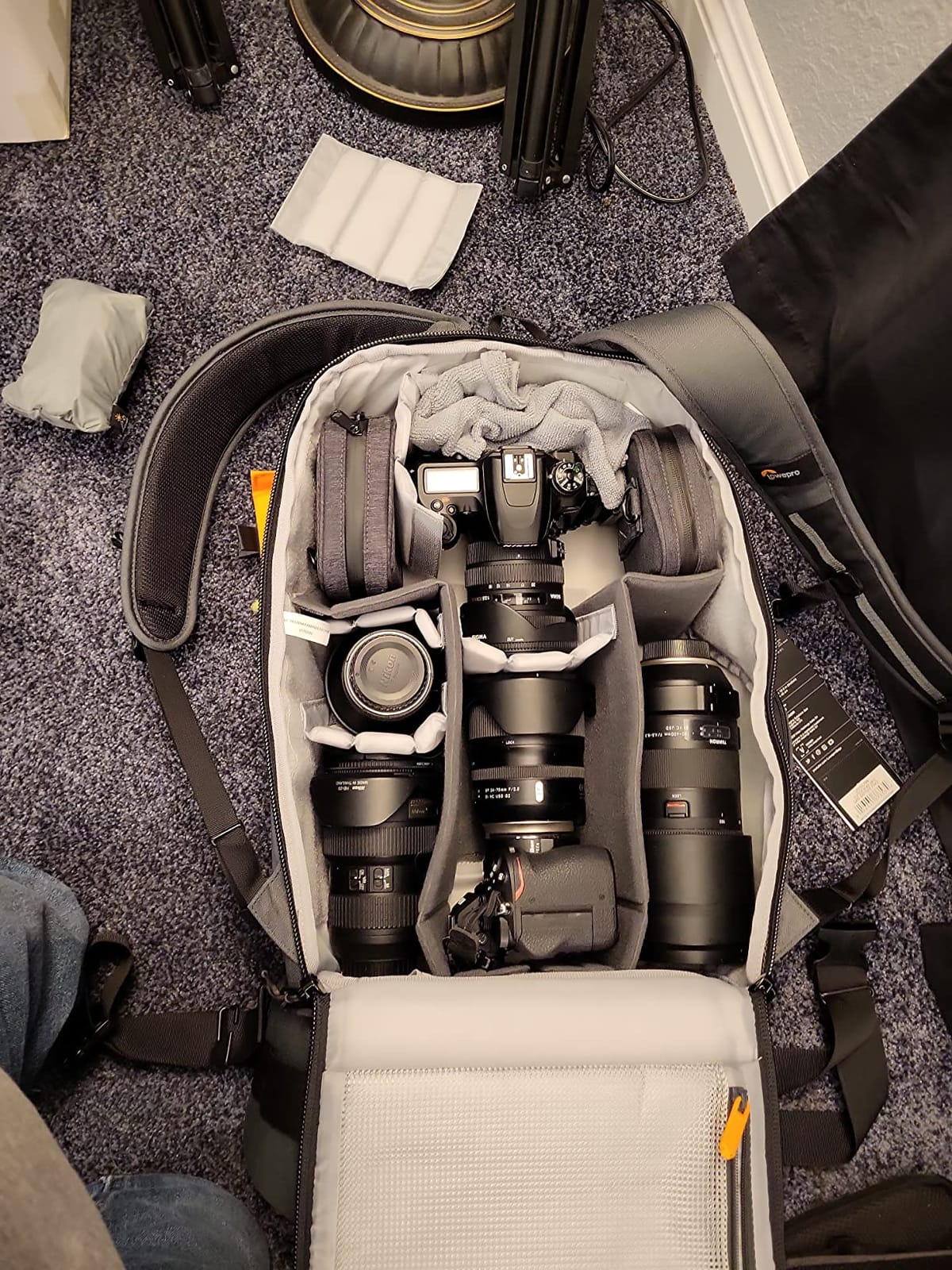
Here is a caveat worth internalising: the bag measures 18.9 inches tall but lists only 16 litres of stated volume. Reviewers return to this point consistently, noting that usable capacity is smaller than the tall dimensions suggest. Measure your actual kit before committing, because the shape is closer to a tall narrow column than a wide box, and long telephotos will not lay flat inside it.
The reorganised divider layout is designed to take a travel tripod, a 10-inch tablet, and a 15-inch laptop together with a mirrorless kit. Maximum device size in the main compartment is listed at 10 inches, so the laptop sits in the divider arrangement rather than a dedicated sleeve. Seven pockets include a removable padded top pocket for cords and chargers, plus front organiser pockets for a smartphone, cables, and a notebook.
This is the lowest-rated pack in the group, and the reason is the capacity-to-size mismatch rather than build quality. If you need a full-frame body plus telephoto plus laptop, it is too small regardless of the weather protection. If you are shooting one compact body in genuinely bad conditions, the protection is genuinely valuable.
22L expanding to 27L
12.8 x 10 x 17.52 in
Rigid shell front
Sealed zippers
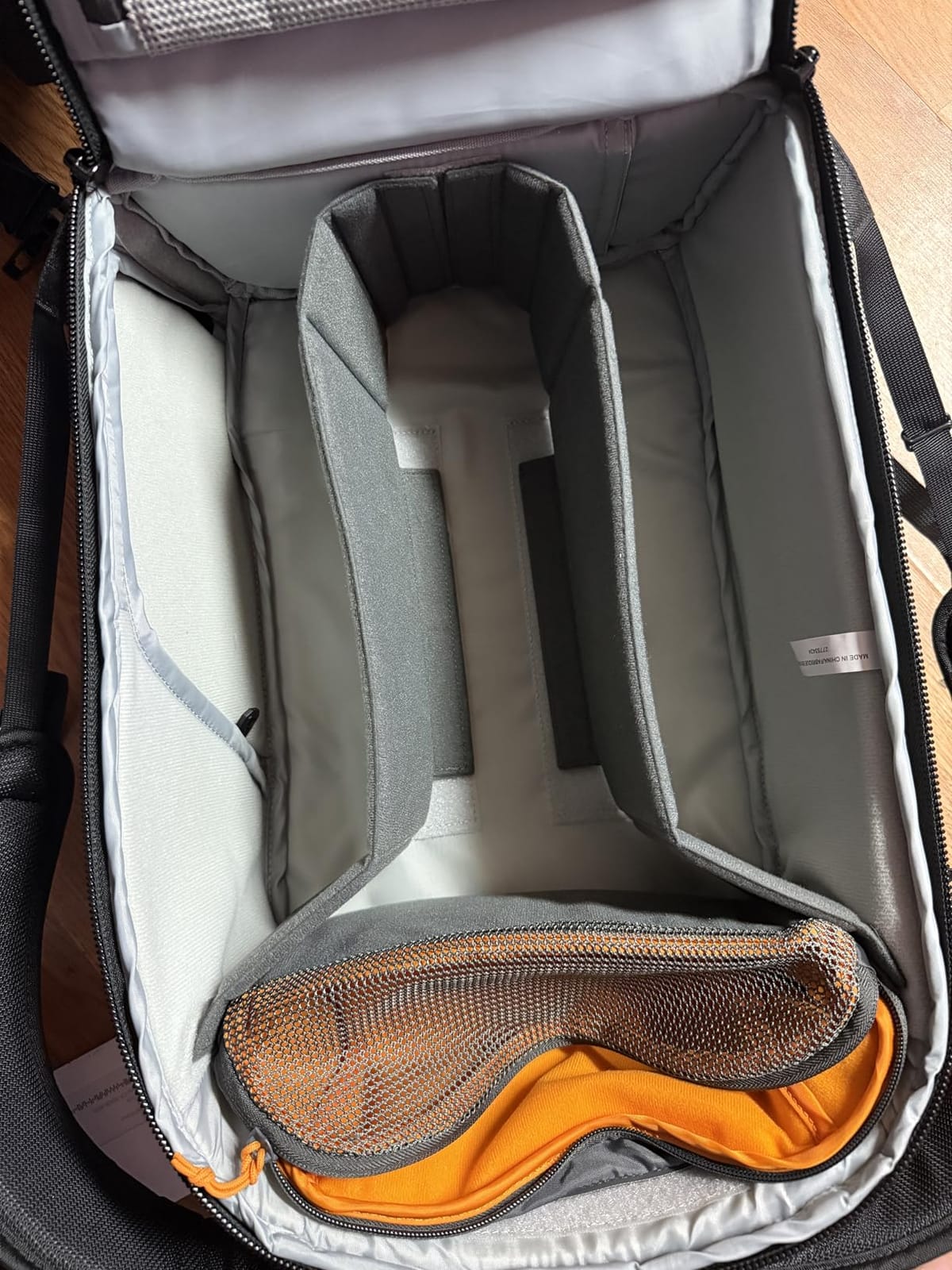
The expansion layer is the idea here. A zippered front section takes the bag from 22 to 27 litres, and that extra five litres is exactly the size of a change of clothes on a two-day trip. You carry one bag instead of a camera pack plus a daypack, and you close it back down when you are back at the hotel.
Inside, the padding is lint-free velvet EVA with three fixed straps, five short dividers, and three long dividers, which gives a high degree of layout control. The load is listed as one DSLR, three to five lenses, and a DJI drone, or a smaller kit with travel clothing filling the expansion section.
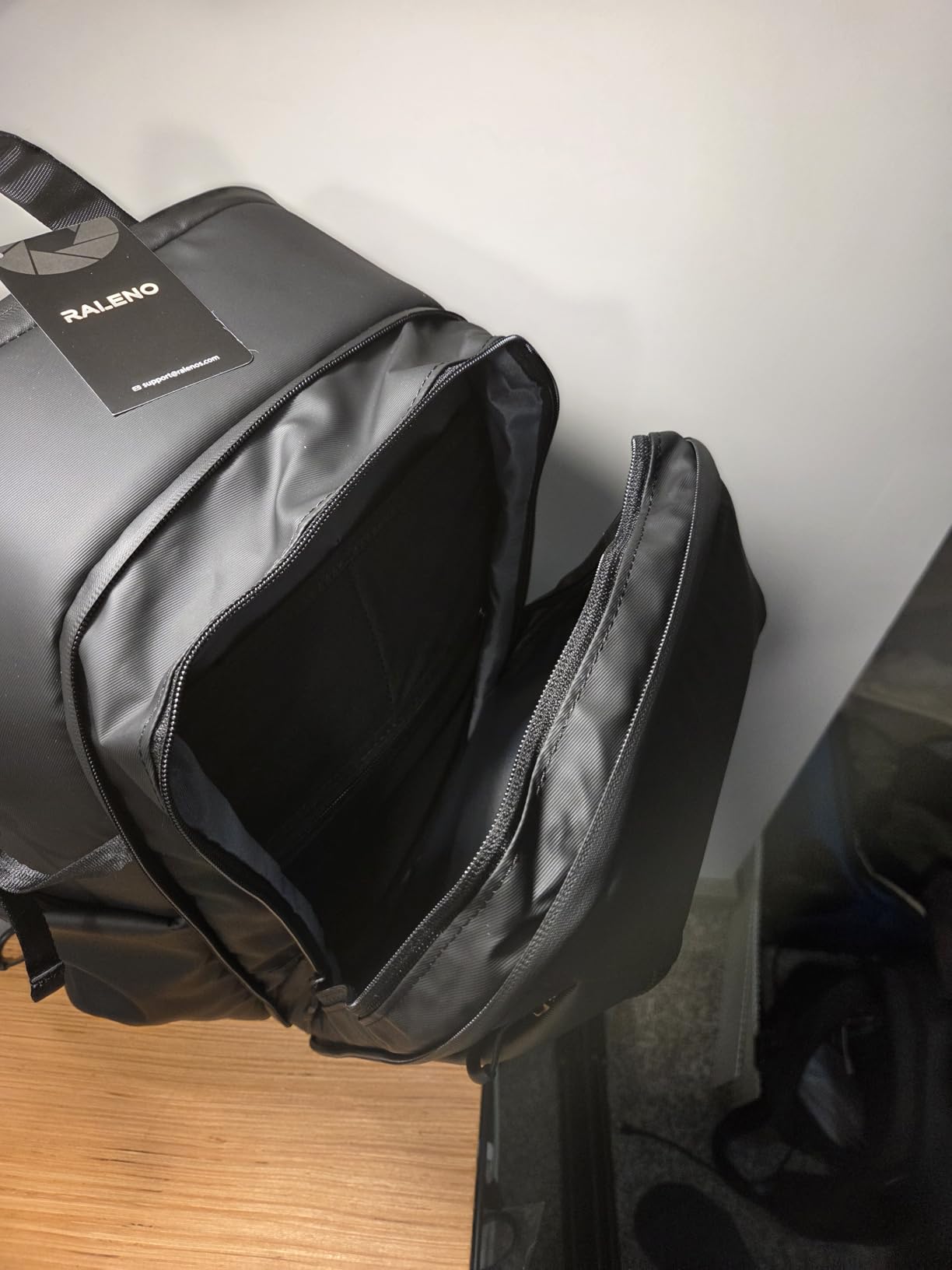
High-density waterproof fabric with sealed zippers is the specification here, and sealed zippers are the part most manufacturers skip. A water-resistant shell with unsealed zipper pulls is only as good as its weakest opening. A rain cover and a tripod holder are included, and the anti-slip bottom pads keep the bag from sliding when you set it down on a smooth floor.
A side camera door handles a lens change, and a front essentials pocket takes the things you want without opening the main compartment. A dedicated 16-inch laptop sleeve and a separate tablet compartment keep a workstation away from glass, and eight pockets cover the small items that otherwise end up loose.
This is the one judgement call in the roundup. It carries the highest share of five-star ratings here, but on a much smaller review base than the established brands, which means less long-term durability evidence. For a trip where the bag gets handled gently between flights, that is acceptable. For a multi-year working kit, I would weight the limited lifetime warranty on the Lowepro Truckee more heavily.
Choosing well comes down to measuring your kit and your itinerary before you look at brands. These seven criteria are the ones that change the outcome of a trip, in roughly the order they matter.
Most carriers publish a carry-on envelope around 22 x 14 x 9 in, or 55 x 35 x 20 cm, and a personal-item limit that is often much smaller. Measure the bag, not the label, and measure it with the dividers in the position you intend to use. The complaint that repeats most across travel forums is a bag advertised as carry-on that fails at the gate because a jacket and one extra lens pushed it over.
Above roughly 35 litres, staying inside a standard carry-on gets difficult. That is the point at which a hard case or a checked-bag approach becomes worth considering, and our guide to rolling camera cases for travel covers that route.
As a working rule, a day pack with one body and two primes needs about 12 to 15 litres. A week with a body, three or four lenses, a laptop, and layers runs 20 to 25. Thirty litres and above is for multi-day trips where clothing and camera gear share one bag. Buying a 30-litre pack for a city weekend means carrying empty volume every day, and the extra weight shows up in your shoulders by hour six.
Water resistant and waterproof mean very different things, and marketing blurs them constantly. Look for sealed or welded zippers, a coated or laminated shell, and a rigid core panel between your gear and the outside world. Waterproof claims without sealed zipper pulls are describing fabric, not a bag you can leave out in a squall.
A hip belt is the single biggest comfort upgrade available, and it is the feature most often left out of manufacturer descriptions. Beyond that, look for a padded back panel, a sternum strap, breathable mesh, and a strap adjustment range wide enough to fit over a winter jacket. Load over 3 pounds without a hip belt becomes a shoulder problem by the end of a walking day.
Stated laptop sizes in this category range from 10 inches to 17.3 inches, and the claim is sometimes for the main compartment rather than a dedicated sleeve. If you edit on the road, buy for your real device size and check whether the sleeve is padded at the bottom. That unprotected base is a real and repeatable complaint on one of the packs here.
Top access suits organisation. Side access suits fast lens changes without removing the pack. Rear access gives full access but usually requires laying the bag down. For street and documentary work, side access wins. For a safari or a fixed-location landscape trip where you set up once, rear or top access is more convenient.
One-bag travellers pair a 26 to 30 litre travel pack with a small dedicated camera sling, which keeps the camera accessible and the clothing separate. Whatever the setup, treat the camera section as the most theft-exposed part of your kit: use a lockable zipper or a cable lock, keep the bag in front of you in crowded terminals, and use the hidden rear pockets on the packs that have them for passports and cards.
The best camera bag for a travel photographer is the CADeN 17L backpack, which holds a body, four lenses, a flash, a tablet, and a tripod at 1.74 pounds empty. It is our overall pick because it combines a genuinely complete kit layout with a weight you can carry all day, and it fits standard airline carry-on dimensions. For larger kits, the Lowepro Truckee BP 250 LX gives you 30 litres with a 50/50 split at a similar light weight.
Most airlines allow a carry-on around 22 x 14 x 9 in, which is 55 x 35 x 20 cm. Measure your bag at its widest point, including the front pocket bulge, and check with your specific carrier since limits vary. Packs up to about 20 to 25 litres typically fit with room for a jacket. Above 30 litres, staying within a standard carry-on becomes difficult and checked baggage may be the more realistic option.
For airline travel, the CADeN 17L and the BAGSMART 20L both fit inside the common 22 x 14 x 9 in carry-on envelope with margin to spare. The BAGSMART adds a removable hip belt and chest strap for heavy walking days, plus lockable zippers. If you need more than 25 litres, the Lowepro Truckee BP 250 LX at 30 litres and about 1.5 pounds is the lightest large option here.
Yes, you can bring both a personal backpack and a camera bag, but the total still has to meet the airline allowance. If your personal backpack fits within the personal-item limits and your camera bag fits within the carry-on limits, you can carry both into the cabin. If the camera bag is checked instead, treat it as a high-value item: use a hard case and never place batteries in checked luggage.
For professionals on multi-week trips, the Lowepro Truckee BP 250 LX is the strongest fit at 30 litres and about 1.5 pounds empty, with a 50/50 split, a locking camera-compartment zipper, and a limited lifetime warranty. If you need drop protection more than low weight, the Ku0026amp;F CONCEPT 22L hardshell uses a one-piece EVA shell and removable modular inserts. Both carry more history than newer listings in this category.
If you carry one body and a couple of lenses and you would rather forget about the bag, take the CADeN 17L. It is the best camera bag for travel photographers who want a complete working kit at the lowest sensible weight, and it stays inside carry-on limits. If your days involve eight or more hours on foot, the BAGSMART 20L takes the load off your shoulders with a proper hip belt.
When you need drop protection more than flexibility, the K&F CONCEPT 22L hardshell is the one to pack. For a large workstation on the road, the MOSISO 17.3-inch models fit a bigger machine than almost anything else here. For a compact kit, a drone, or a personal-item slot on a small aircraft, the TARION 12L is the smallest complete option here.
For a genuine multi-week trip, the Lowepro Truckee BP 250 LX gives you 30 litres at about 1.5 pounds with a limited lifetime warranty, and the RaLeno 22L expanding to 27L is a strong alternative if you want clothing space in the same bag. In heavy rain and rough terrain, the Lowepro Flipside BP 400 AW III is the one I would reach for. Whichever you choose for 2026, measure the bag at its widest point before you book, and pack to fit the airline you are actually flying.