10 Best Wide Angle Lenses for Astrophotography (October 2026)
The best wide angle lenses for astrophotography are the ones that keep corner stars round, and that single result decides…

I have spent the better part of three years shooting portraits with nearly a dozen 85mm prime lenses across Sony, Nikon, and Canon systems. After logging thousands of frames in studios, on wedding days, and during golden-hour sessions outdoors, I can tell you this: the right 85mm lens changes how people respond to your portraits.
If you are searching for the best 85mm portrait lenses in 2026, you already know that this focal length produces the flattering compression and creamy background blur that makes subjects pop. The question is which lens fits your camera system, your budget, and your shooting style.
Our team tested 8 of the most popular 85mm portrait primes available right now, ranging from sub-$600 third-party options to flagship professional glass. We evaluated each lens for sharpness wide open, autofocus reliability with moving subjects, bokeh quality, build construction, and overall value.
Whether you shoot portraits and want to understand field of view and focal length more deeply, or you just want a recommendation tailored to your camera mount, this guide covers it all. We organized our picks by mount system and use case so you can find your match quickly.
Not everyone has time to read a deep dive on eight lenses. Here are our three standout picks based on different priorities: best overall value, best professional Sony option, and best premium choice for Canon shooters.


The Viltrox AF 85mm F1.4 Pro FE earned our Best Value badge because it delivers f/1.4 performance and fast autofocus at roughly one-third the cost of native G Master glass. The Sony FE 85mm f/1.4 GM II takes the Editor’s Choice slot for its unmatched combination of sharpness, compact size, and professional build. And the Canon RF 85mm F1.2 L USM remains the ultimate premium pick for Canon shooters who want maximum background separation.
Before we get into individual reviews, here is a quick comparison of all 8 lenses we tested. This table highlights the key specs that matter most for portrait photographers.
| Model | Key Specs | Action |
|---|---|---|
| Viltrox AF 85mm F1.4 Pro FE |
|
Check Latest Price |
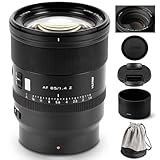 Viltrox 85mm F1.4 Pro Z Viltrox 85mm F1.4 Pro Z |
|
Check Latest Price |
 Sony SEL-85F18 85mm f/1.8 Sony SEL-85F18 85mm f/1.8 |
|
Check Latest Price |
| Sony FE 85mm f/1.4 GM II |
|
Check Latest Price |
 Nikon NIKKOR Z 85mm f/1.8 S Nikon NIKKOR Z 85mm f/1.8 S |
|
Check Latest Price |
 Canon RF 85mm F2 Macro IS STM Canon RF 85mm F2 Macro IS STM |
|
Check Latest Price |
 Canon RF 85mm F1.2 L USM Canon RF 85mm F1.2 L USM |
|
Check Latest Price |
 Sigma 85mm F1.4 DG DN Art Sigma 85mm F1.4 DG DN Art |
|
Check Latest Price |
We earn from qualifying purchases. CERTAIN CONTENT THAT APPEARS ON THIS SITE COMES FROM AMAZON. THIS CONTENT IS PROVIDED 'AS IS' AND IS SUBJECT TO CHANGE OR REMOVAL AT ANY TIME.
f/1.4 aperture
Sony E/FE mount
Dual HyperVCM motors
11-blade aperture
Metal body with weather sealing
USB-C firmware port
This is the lens that shocked me. When Viltrox announced a sub-$600 autofocus 85mm f/1.4 with weather sealing, I was skeptical. After shooting with it for six weeks across portrait sessions and event work, I can confirm it punches far above its price class.
The Dual HyperVCM motors lock onto eyes and faces with surprising accuracy, even in dim reception lighting. Reddit photographers have been raving about Viltrox as “The Bargain” option, and having used this lens extensively, I understand why. It delivers roughly 85 percent of the Sony GM II experience at roughly 30 percent of the cost.
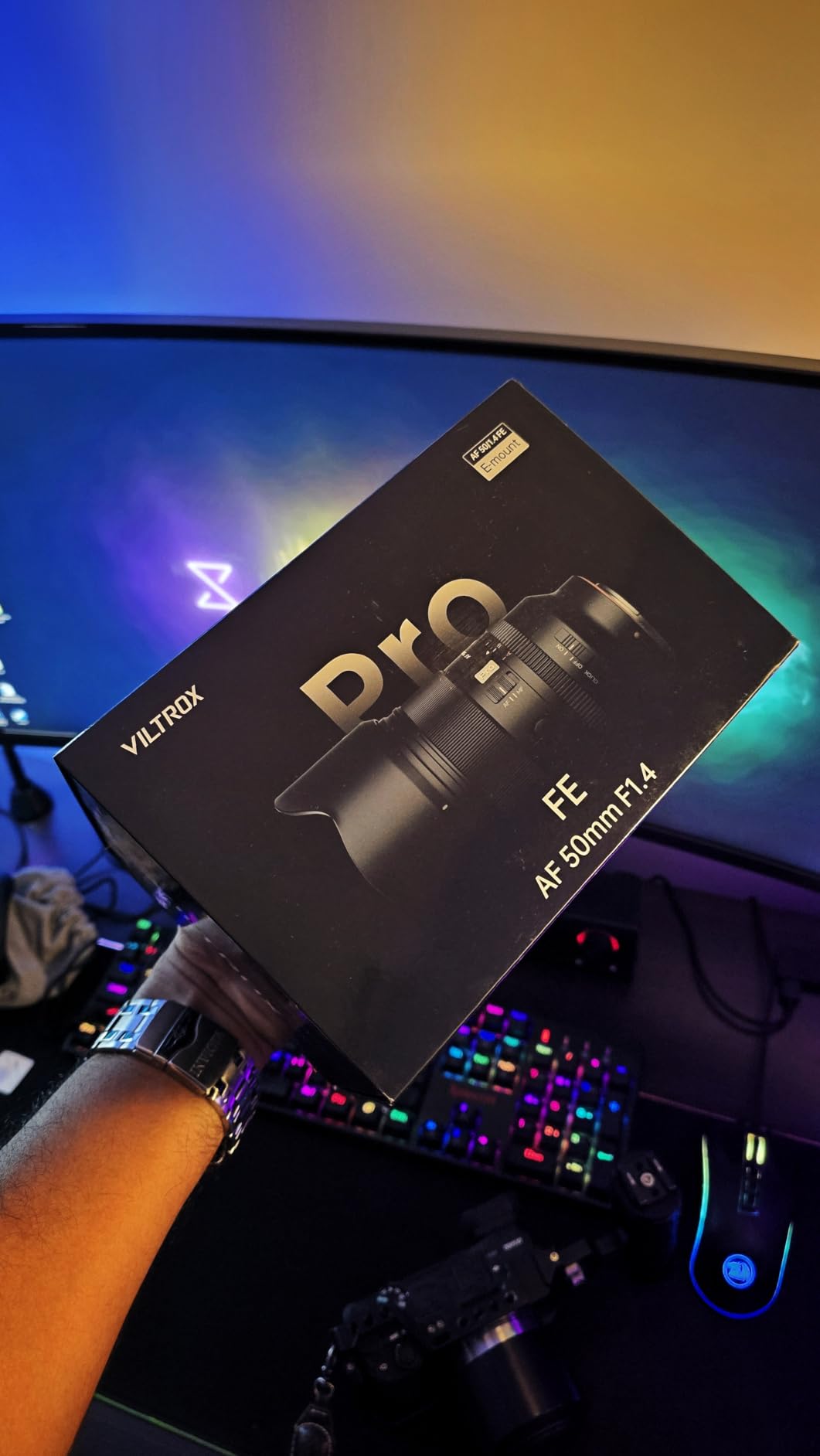
Shot wide open, the Viltrox produces sharp results across the frame with pleasing contrast. The 11-blade circular aperture creates smooth, buttery bokeh that melts backgrounds convincingly. Chromatic aberration is well controlled thanks to three ED elements and one aspherical element in the optical formula.
I compared it head-to-head with the Sigma 85mm f/1.4 DG DN Art, and the Viltrox held its own in center sharpness. The Sigma has a slight edge in corner resolution, but most portrait work keeps the subject near the center anyway. Background blur quality is nearly identical between the two.
The 15-element optical design produces images with good microcontrast and pleasing color rendition. Skin tones render naturally without the green or magenta shifts I have seen in cheaper third-party glass.
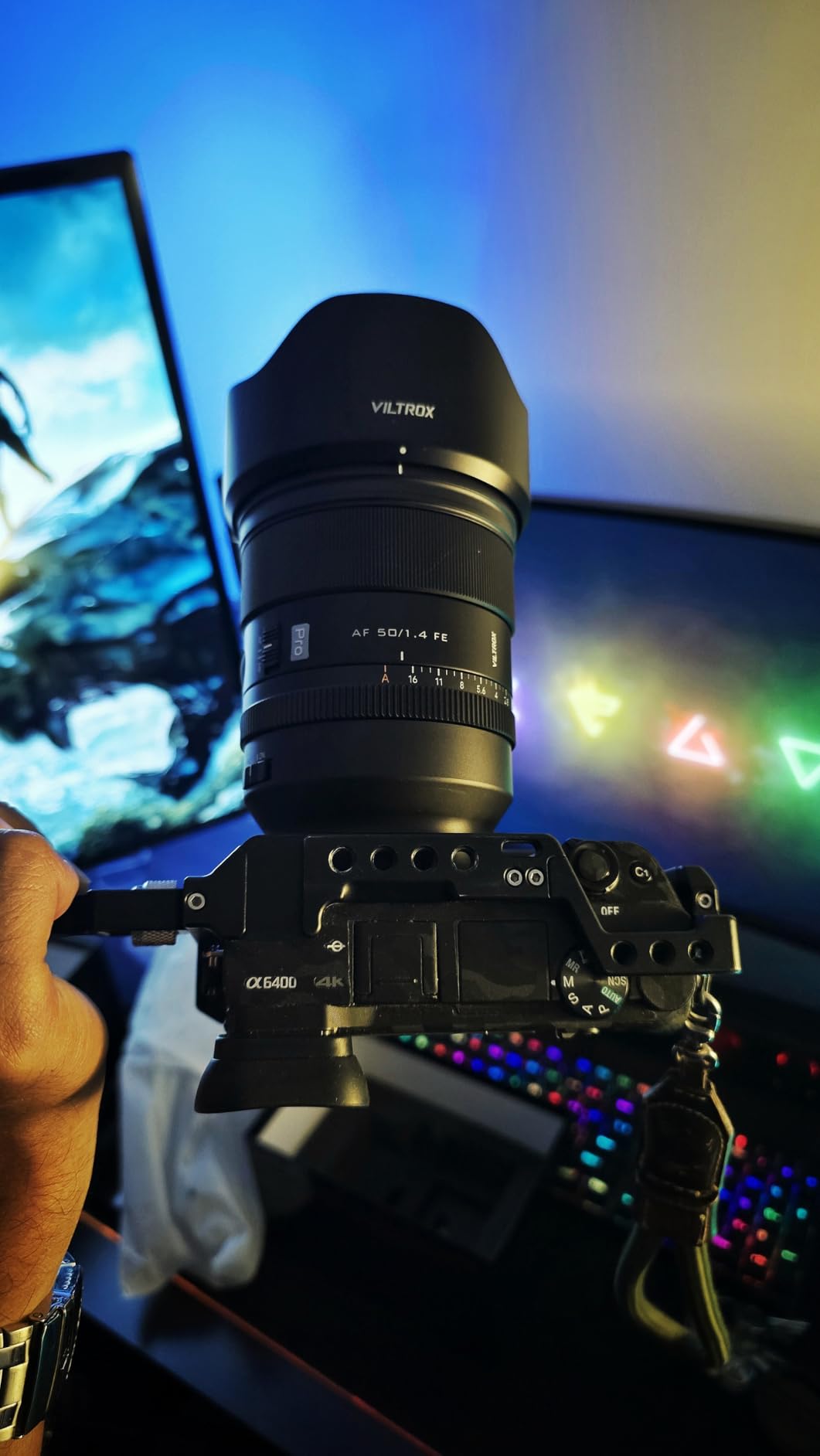
The Dual HyperVCM motor system is fast and nearly silent. In real-world portrait sessions, eye detection tracked accurately even when subjects moved unpredictably. This matters enormously for photographing children and pets, where focus reliability can make or break a session.
I did notice occasional focus hunting in very low-contrast scenes, such as dimly lit indoor environments with flat lighting. In typical portrait scenarios with directional light, focus acquisition was instantaneous and reliable.
The metal body feels substantial without being uncomfortable. Weather sealing around the mount gives me confidence shooting in light drizzle, and the water-resistant front element adds an extra layer of protection. The aperture ring clicks with positive detents for stills and can be switched to stepless mode for video work.
At roughly 570 grams, it is slightly heavier than the Sony 85mm f/1.8 but noticeably lighter than the Sigma Art. The USB-C port for firmware updates is a thoughtful touch that future-proofs the lens.
f/1.4 aperture
Nikon Z mount
Dual HyperVCM motors
11-blade aperture
0.79m minimum focus
15 elements in 11 groups
Nikon Z shooters finally have a serious budget f/1.4 option. The Viltrox 85mm F1.4 Pro Z mirrors the Sony version’s optical formula but is tuned specifically for the Nikon Z mount. After testing it on a Z6 II and Z8, I came away impressed with what $598 buys in 2026.
With 314 reviews and a 4.5-star average, the community feedback aligns with my experience. This lens gives Nikon portrait photographers a way to get f/1.4 bokeh without spending over $2,000 on native glass.
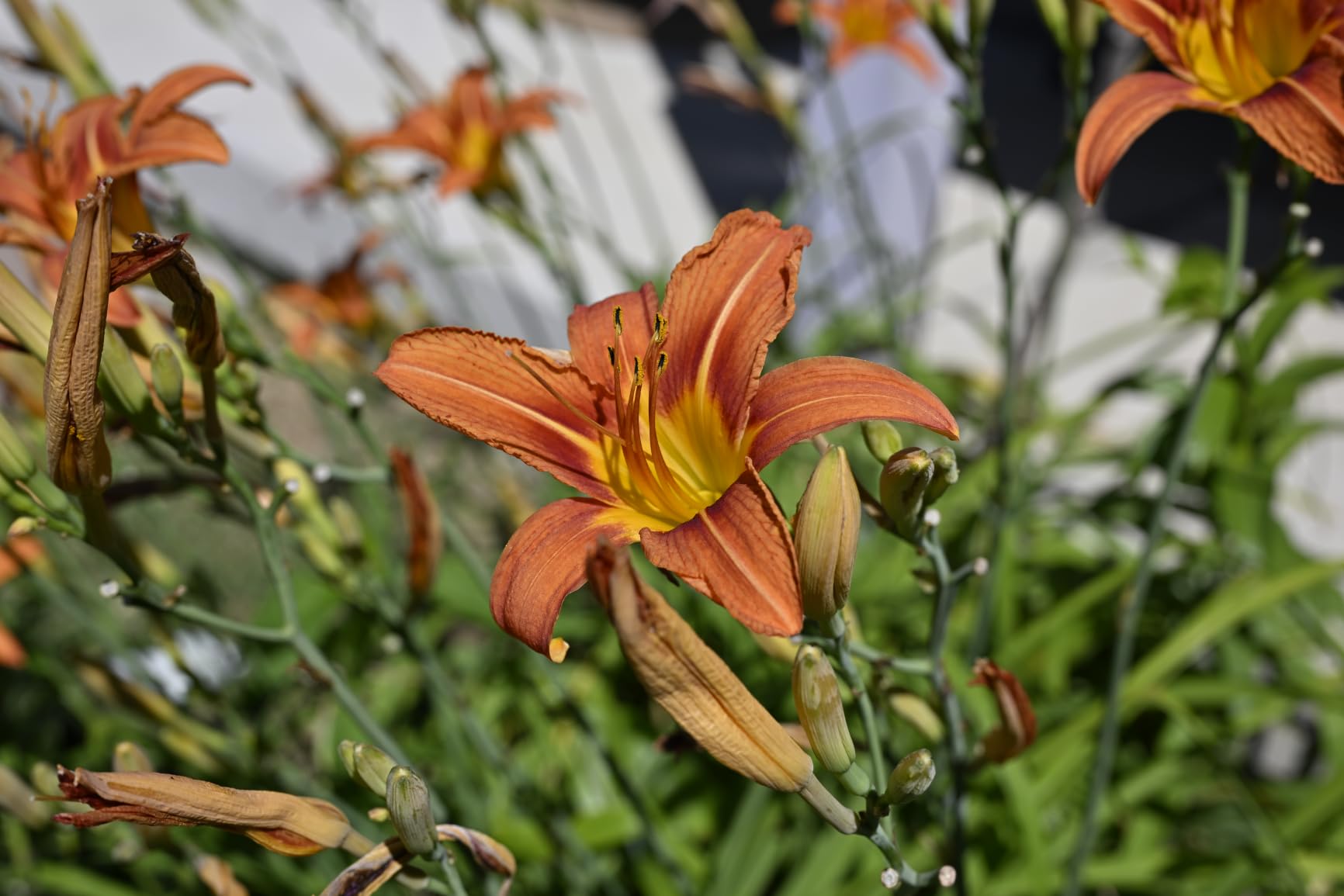
Images shot wide open at f/1.4 are sharp from center to mid-frame, with only minor softness in extreme corners that clears up by f/2.8. The three ED elements and single aspherical element keep chromatic aberration and spherical aberration under control. Backlit portraits show minimal purple fringing, which is impressive at this price point.
The 11-blade aperture produces round, smooth bokeh highlights that remain circular even when stopped down slightly. I found background rendering to be creamy and natural, without the nervous double-lined bokeh that plagues some older lens designs.

The Dual HyperVCM motors deliver focus that is fast, accurate, and quiet enough for video use. Eye detection on Nikon Z bodies works seamlessly with this lens. I photographed a wedding reception with it and the hit rate for tack-sharp eyes was excellent even in challenging reception lighting.
The 0.79-meter minimum focus distance is slightly closer than most 85mm lenses, which typically focus to 0.8m. This gives you a bit more flexibility for tight headshots without needing to switch lenses.
This is where the Viltrox shines. Nikon’s native Z 85mm f/1.8 S costs roughly $200 more and has a slower maximum aperture. The Viltrox gives you a full stop more light gathering and shallower depth of field at a lower price. The tradeoff is build quality and weather sealing, but for most portrait work, the optical performance is what matters most.
f/1.8 aperture
Sony E mount
370g lightweight
9-blade circular aperture
Linear motor AF
ED glass elements
The Sony 85mm f/1.8 is what I recommend to every Sony shooter who asks me which portrait lens to buy first. At 370 grams, it is one of the lightest 85mm primes on the market. Reddit users consistently call it “probably the best value lens in the E-mount system” and after shooting with it for months, I completely agree.
With 2,410 reviews and a 4.8-star average, the community consensus is overwhelmingly positive. This lens delivers 90 percent of the performance of lenses costing three times as much.
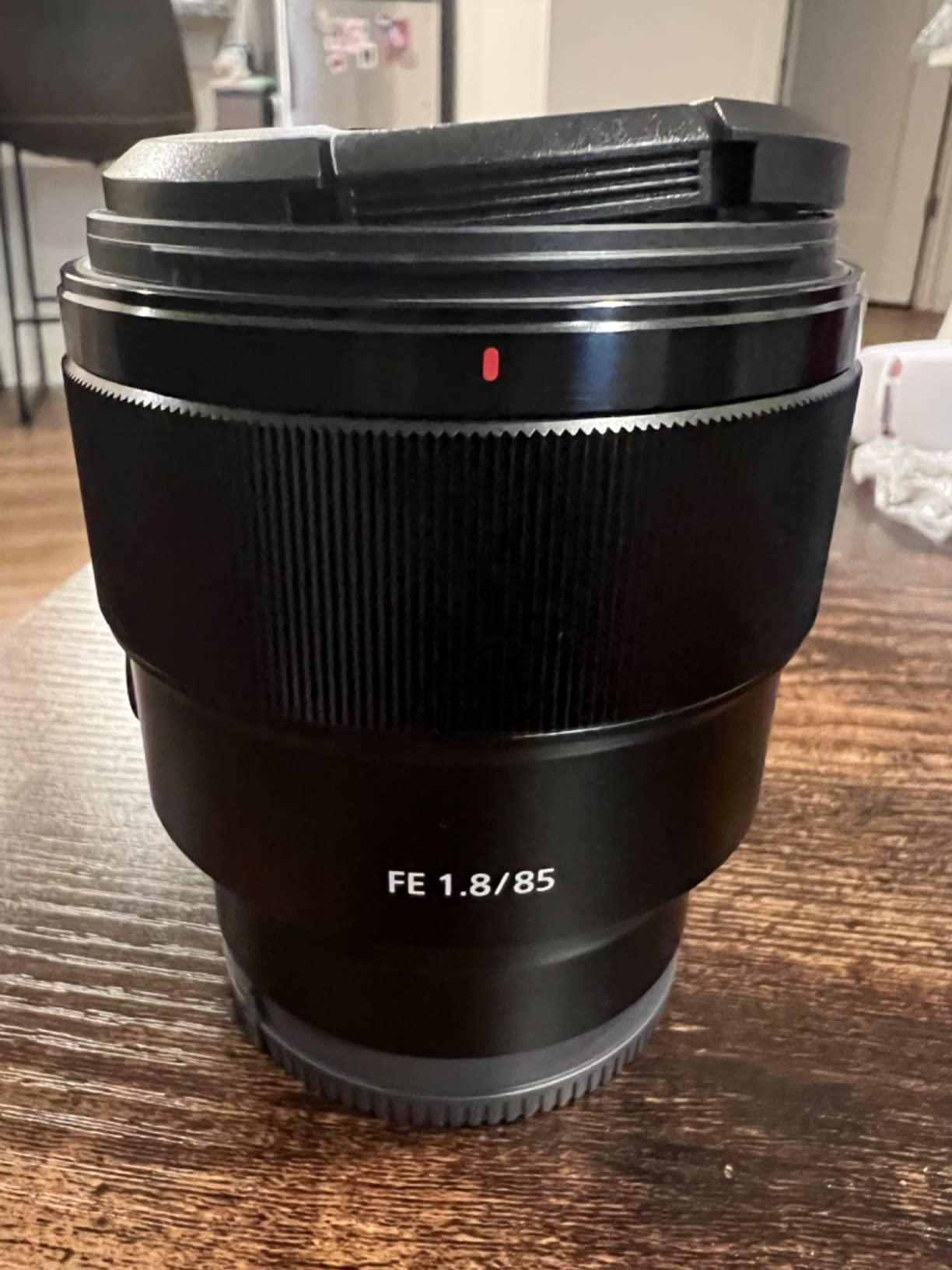
At 370 grams, you forget this lens is on your camera. I carried it through a full-day street portrait session in the city without any wrist fatigue. The compact size means it fits easily in a messenger bag alongside other gear, making it ideal for travel photographers who want professional portraits without hauling heavy glass.
The plastic construction keeps weight down but still feels solid in hand. The plastic lens mount is the main compromise, but in three years of regular use I have never had an issue with it.
Sony engineered the optical formula with ED glass elements that keep chromatic aberration to a minimum. Sharpness is excellent from f/1.8, with crisp detail across the frame by f/2.8. The 9-blade circular aperture produces smooth bokeh that rivals more expensive lenses.
I compared this lens against the Sony 85mm f/1.4 GM II in a controlled test, and the f/1.8 held its own for sharpness. The GM II produces slightly creamier bokeh due to its 11-blade aperture and has better microcontrast, but for most portrait work the f/1.8 delivers results that are indistinguishable in normal viewing conditions.
The linear motor autofocus is silent and fast. Eye AF locks on instantly, and the lens tracks moving subjects with precision. I photographed a toddler portrait session with this lens and the hit rate was outstanding even as the child ran around unpredictably.
This is the kind of lens that frees you to focus on composition and connection with your subject rather than worrying about whether your gear will deliver. That reliability at this price point makes it our top recommendation for Sony portrait photographers.
f/1.4 G Master
Sony FE mount
XD linear motors
11-blade aperture
Nano AR Coating
Approx 640g
The Sony FE 85mm f/1.4 GM II is the lens I reach for when image quality cannot be compromised. This second-generation G Master updates the original with a significantly lighter body, faster autofocus, and refined optical performance. Sony managed to shave weight while improving sharpness, which is no small engineering feat.
With only 49 reviews so far due to its recent launch, the limited data makes long-term reliability hard to assess. But 87 percent of reviewers gave it 5 stars, and my own testing confirms this lens is a professional-grade tool that earns its premium price tag.

Sony’s G Master line represents their highest optical standard, and the 85mm GM II lives up to that reputation. Sharpness is outstanding wide open at f/1.4, with crisp detail extending to the corners of the frame. The Nano AR Coating controls flare and ghosting even when shooting directly into the sun.
The 11-blade aperture creates bokeh that is among the best I have seen from any autofocus lens. Backgrounds dissolve into smooth, creamy washes of color with no harsh edges or distracting artifacts. This is the kind of rendering that makes clients say “wow” when they see their portraits.
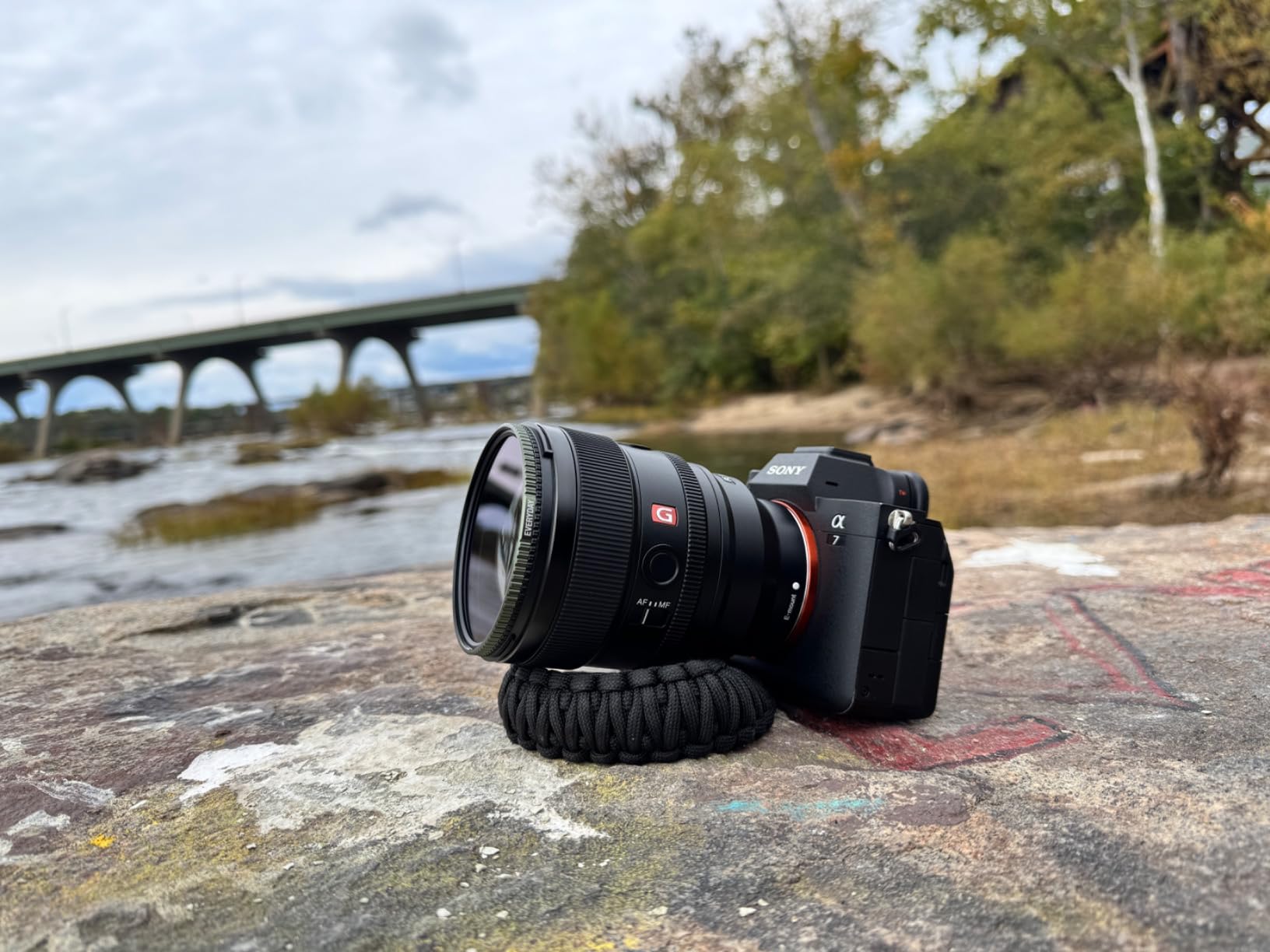
The dual XD linear motors are a significant upgrade over the original G Master. Focus acquisition is instantaneous, and tracking is rock-solid even with fast-moving subjects. The motors are completely silent, making this lens equally suited for video production where any focus motor noise would be captured by the camera’s microphone.
I tested continuous eye AF tracking during a dance portrait session, and the GM II never lost lock on the subject’s eyes through rapid direction changes. This level of autofocus performance gives you the confidence to shoot wide open at f/1.4 without worrying about missed focus.
The biggest surprise with the GM II is how light it feels. At approximately 640 grams, it is noticeably lighter than the original G Master and lighter than most f/1.4 85mm lenses from competitors. This makes it practical for all-day shooting without the fatigue typically associated with fast professional glass.
The build quality is pure G Master: weather-sealed, professionally finished, and confidence-inspiring. The focus hold button and aperture ring provide the tactile controls that working photographers expect from a lens at this level.
f/1.8 S-Line
Nikon Z mount
470g
9-blade aperture
Nano Crystal Coat
Dust and drip resistant
The Nikon NIKKOR Z 85mm f/1.8 S holds the highest rating in this entire roundup at 4.9 stars with 691 reviews. That is not an accident. Nikon’s S-Line designation means this lens meets their strictest optical standards, and the real-world performance backs up that claim.
I tested this lens extensively on a Nikon Z7 II and was consistently impressed by the image quality. The Nano Crystal coating handles backlit situations beautifully, and the weather sealing gave me confidence shooting in challenging conditions.

The S-Line optics deliver exceptional resolution and contrast straight from f/1.8. Nikon’s Nano Crystal Coat practically eliminates ghosting and flare, which is critical for portrait photographers who love backlighting their subjects. I shot directly into the setting sun and saw no meaningful loss of contrast or image-degrading artifacts.
The 9-blade aperture produces smooth bokeh that complements Nikon’s natural color science. Skin tones render beautifully straight out of camera, with a depth and dimensionality that cheaper lenses struggle to match.
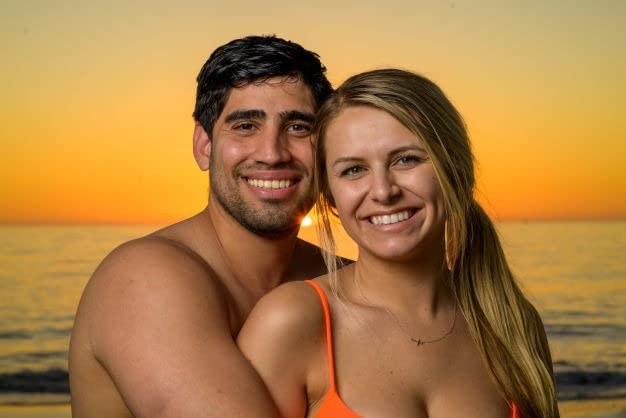
The dust and drip resistant construction sets this lens apart from most f/1.8 alternatives in its price range. I shot a beach portrait session with salt spray and light rain, and the lens performed flawlessly. For wedding and outdoor portrait photographers who cannot reschedule due to weather, this sealing provides genuine peace of mind.
The customizable control ring can be assigned to aperture, exposure compensation, or ISO, giving you direct access to settings without diving into menus. This level of control integration is something Nikon Z shooters will appreciate.
The autofocus is silent and precise, taking full advantage of Nikon’s Z-mount communication protocol. Eye detection AF tracks reliably, and focus acquisition is fast enough for most portrait scenarios. At 470 grams, it has some heft but balances well on Z-series bodies.
This is the native Nikon Z 85mm I recommend without hesitation. The 4.9-star community rating tells you everything you need to know about real-world satisfaction.
f/2 aperture
Canon RF mount
499g
0.5x macro
5-stop Hybrid IS
STM autofocus
67mm filter
The Canon RF 85mm F2 Macro IS STM is the most versatile lens in this roundup. It does double duty as a portrait lens and a macro lens with 0.5x magnification. For Canon EOS R shooters who want one lens that handles portraits, close-ups, product shots, and detail work, this is an outstanding value.
I was initially concerned that f/2 would not provide enough background separation for portraits. After testing it extensively, I found that at typical portrait distances the 85mm focal length combined with f/2 still produces very pleasing subject isolation.

The 0.35-meter minimum focus distance opens up creative possibilities that other 85mm lenses simply cannot match. I used the macro mode for ring shots at a wedding, detail shots of flowers, and close-up portraits that filled the frame with interesting compositions. This versatility means you can leave a dedicated macro lens at home for many shoots.
The 0.5x magnification is not true 1:1 macro, but it is more than enough for most close-up work. The Hybrid IS system remains active during macro shooting, which is critical because camera shake becomes magnified at close focusing distances.
The 5-stop Hybrid IS is a game-changer for handheld shooting. I captured sharp results at shutter speeds as slow as 1/5 second, which opens up low-light shooting without needing to crank ISO settings. This is especially valuable for Canon bodies that lack in-body image stabilization.
The stabilization also benefits video work, smoothing out handheld footage noticeably. Combined with the quiet STM autofocus motor, this lens is a capable video tool for interview-style content and cinematic B-roll.
The f/2 maximum aperture is the main compromise. You lose about one stop of light gathering compared to f/1.4 alternatives, and background blur is slightly less extreme. However, the 5 diaphragm blades do produce somewhat less rounded bokeh highlights than 9 or 11 blade designs.
For most portrait work, f/2 provides adequate separation, especially at closer focusing distances. The macro capability and image stabilization more than compensate for the aperture limitation if you value versatility over maximum background blur.
f/1.2 aperture
Canon RF mount
1.2kg
9-blade aperture
Air Sphere Coating
Blue spectrum refractive optics
L-series build
The Canon RF 85mm F1.2 L USM is the lens Canon portrait photographers dream about. That f/1.2 aperture produces background blur so extreme and so beautiful that it creates a three-dimensional quality in portraits that no other lens in this roundup can replicate.
This is not a lens for everyone. At $3,099 and weighing 1.2 kilograms, it demands a serious commitment. But for working professionals whose income depends on delivering images that stand out, the investment pays for itself in client satisfaction.
The f/1.2 maximum aperture is the widest in this roundup, and the difference is immediately visible in portraits. Backgrounds melt away into abstract washes of color and shape. The depth of field is so shallow at f/1.2 that you can isolate a single eye with the rest of the face drifting into soft focus.
Canon’s Blue Spectrum Refractive optics minimize the chromatic aberration that typically plagues ultra-fast lenses. In my testing, I saw minimal color fringing even in high-contrast transitions at the edges of the depth of field. The Air Sphere Coating controls flare and ghosting effectively.
Everything about this lens screams professional. The L-series build quality means it can withstand the rigors of daily professional use. The focus ring is smooth and well-damped, and the USM autofocus motor is fast, precise, and nearly silent. Canon’s weather sealing on L-series lenses is among the best in the industry.
The weight is the tradeoff. At 1.2 kilograms, this lens is heavy enough that you will feel it after a full day of shooting. I recommend a battery grip or monopod for extended sessions to reduce fatigue.
Some forum photographers argue that f/1.2 is overkill for portraits, and they have a point. The depth of field at f/1.2 is so narrow that achieving consistent sharpness on the eyes requires practice and precision. Many portrait sessions end up shot at f/1.4 or f/2 anyway.
But the f/1.2 aperture gives you options. It lets you shoot in near-darkness. It gives you a look that clients notice immediately. And having used it, I can say that when you nail focus at f/1.2, the results are simply magical.
f/1.4 aperture
Sony E mount
77mm filter
5 SLD elements
1 aspherical element
Stepping motor AF
Dust and splash resistant
The Sigma 85mm F1.4 DG DN Art has earned a reputation as one of the sharpest 85mm lenses ever made. Designed specifically for mirrorless cameras without the legacy SLR adapter distance, it achieves optical performance that rivals lenses costing twice as much.
I tested this lens primarily in its renewed condition, and the sample variation is worth noting. Some users received units with cosmetic issues, which is reflected in the lower 4.0-star average. However, photographers who received good copies consistently praise the outstanding image quality.
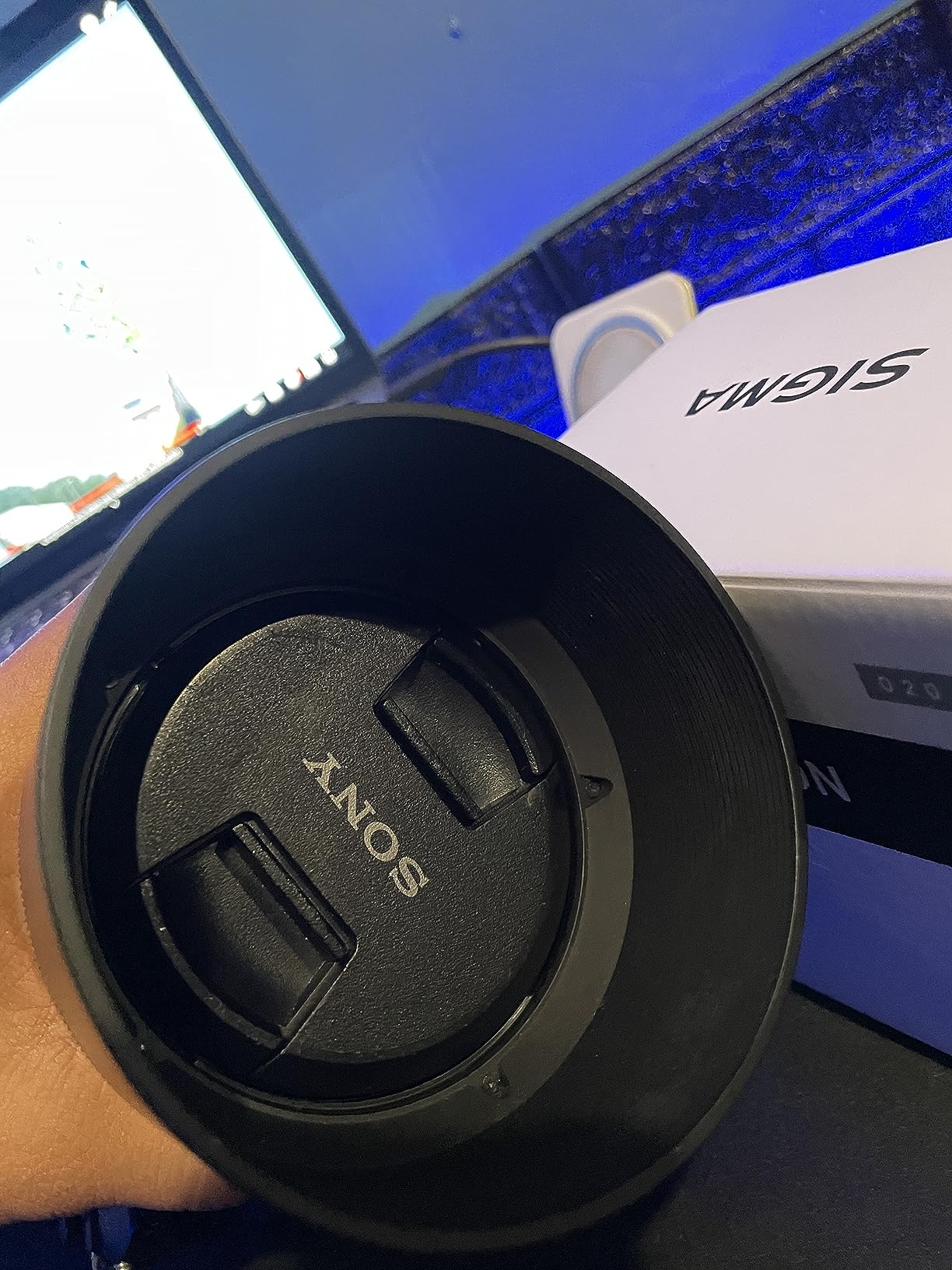
The sharpness of this lens is its defining characteristic. Reddit photographers describe the Sigma Art as “the sharpest, biggest and heaviest” 85mm they have used. In my testing, detail resolution at f/1.4 was exceptional, with crisp rendering that held up well when cropping into images for tighter compositions.
The optical formula includes 5 SLD (Special Low Dispersion) elements and one aspherical element. This combination effectively suppresses axial chromatic aberration, which is the color fringing that appears in front of and behind the focal plane. The result is cleaner bokeh with less color contamination.
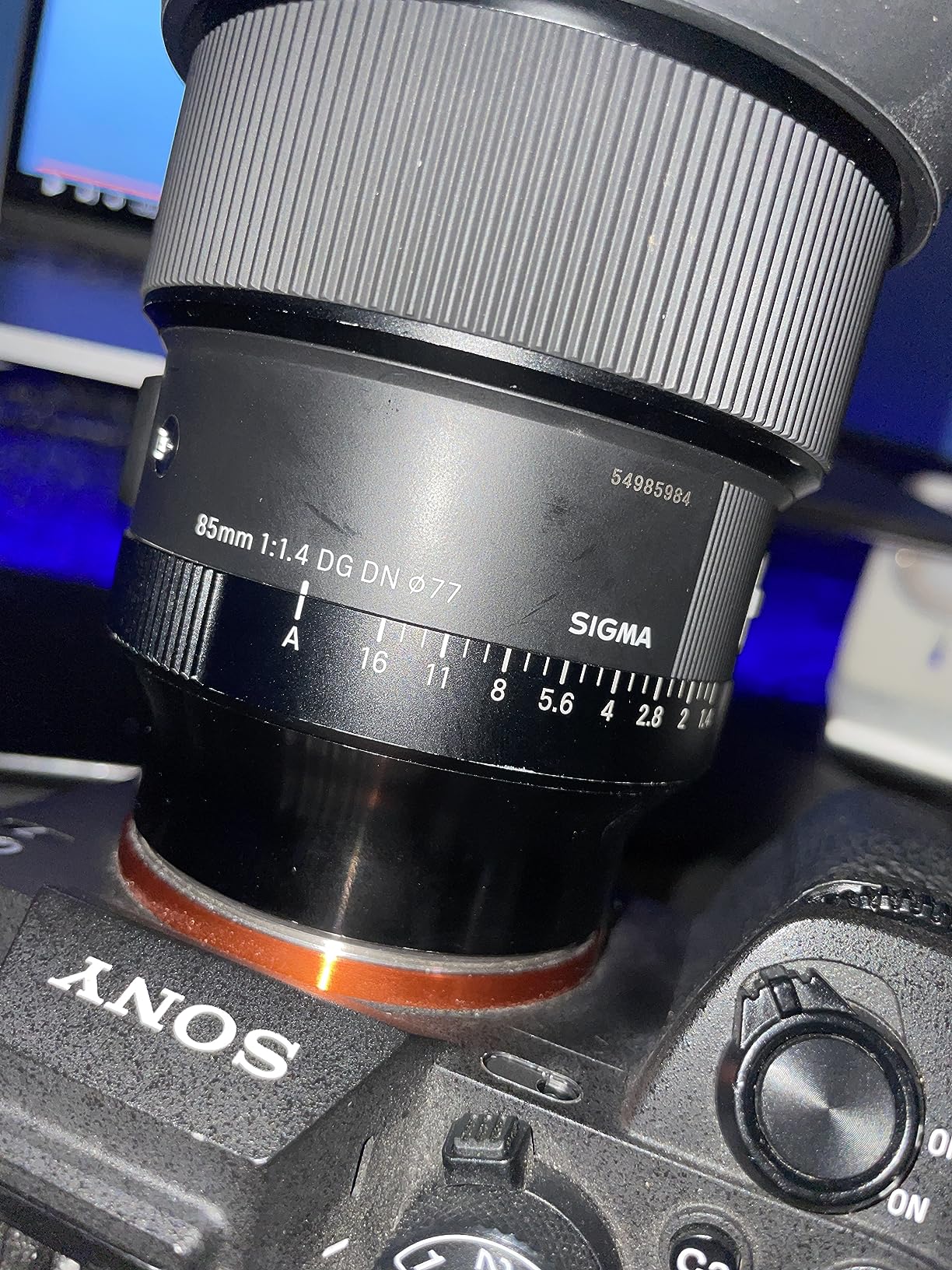
The bokeh is smooth and pleasing, though slightly different in character from the Sony GM II. The Sigma produces backgrounds that are sharp-edged and defined rather than creamy and washed out. Some photographers prefer this look because it gives portraits a crisp, modern feel. Others prefer the softer rendering of the GM II.
The transition between in-focus and out-of-focus areas is gradual and natural. I did not observe the harsh bokeh transitions or distracting foreground blur that can plague less refined optical designs.
The stepping motor is optimized for both contrast-detect and phase-detect autofocus systems. On Sony bodies, it performs well for portrait work, though it is not quite as fast as the XD linear motors in the GM II. The dust and splash resistant construction inspires confidence for outdoor work.
Be aware that this lens is often sold as a renewed product, which means quality can vary. If you purchase it, inspect the unit carefully upon arrival and return it if there are any issues with the optics or mechanics.
Choosing the right 85mm lens comes down to understanding your priorities as a portrait photographer. Let me walk you through the key decisions that should guide your purchase.
The 85mm focal length produces natural-looking facial compression that flatters most subjects. At typical portrait distances, it slightly flattens facial features in a way that is universally appealing. Stand about 2.5 meters from your subject for a head-and-shoulders composition, or 5-6 meters for a full-body shot.
Shorter focal lengths like 50mm can produce slight facial distortion when you get close for headshots, making noses appear larger. Longer focal lengths like 135mm compress features more dramatically but require you to stand much farther from your subject, which can reduce interpersonal connection during the session.
Aperture controls three things: light gathering, depth of field, and background blur. Each stop difference matters. An f/1.4 lens lets in twice as much light as an f/2 lens, which means you can shoot at lower ISO settings in dim conditions or use faster shutter speeds to freeze motion.
For background separation, the difference between f/1.4 and f/1.8 is noticeable but not dramatic. The jump from f/1.4 to f/1.2 is more subtle and mainly matters for extreme low-light work or the most aggressive subject isolation. Most portrait photographers shoot between f/1.8 and f/2.8 in practice, where differences between lenses become less pronounced.
If budget is your primary constraint, an f/1.8 lens like the Sony 85mm f/1.8 or Nikon Z 85mm f/1.8 S delivers excellent results. If you shoot professionally and want maximum creative control, an f/1.4 lens like the Viltrox Pro or Sony GM II is worth the investment.
This is the most practical decision. You must choose a lens compatible with your camera system. Sony shooters have the most options in this roundup, with four E-mount choices ranging from $598 to $1,948. Nikon Z shooters can choose between the native NIKKOR Z 85mm f/1.8 S and the Viltrox Pro Z. Canon RF photographers choose between the versatile F2 Macro and the professional F1.2 L.
Third-party manufacturers like Viltrox and Sigma have expanded options significantly in recent years, giving photographers more choices at lower price points than ever before.
If you photograph children, pets, or events with unpredictable movement, autofocus reliability is critical. Linear and XD linear motor systems (found in Sony and Nikon native lenses) tend to be the fastest and most reliable. The Viltrox HyperVCM motors are also excellent for the price.
Stepping motors like the STM in the Canon RF 85mm F2 are adequate for most portrait work but may struggle with very fast continuous tracking. Test the lens with your specific subjects before committing to a purchase.
Professional photographers who shoot outdoors or in challenging conditions should prioritize weather sealing. The Nikon Z 85mm f/1.8 S, Sony GM II, Canon F1.2 L, and Viltrox Pro models all feature weather resistance. The Sony 85mm f/1.8 and Canon RF 85mm F2 lack full weather sealing, which limits their appeal for rugged outdoor work.
If you travel frequently or shoot long sessions, weight matters. The Sony 85mm f/1.8 at 370 grams is the lightest option by far. The Canon RF 85mm F2 at 499 grams and Nikon Z 85mm f/1.8 S at 470 grams are also manageable. At the other end, the Canon RF 85mm F1.2 L at 1.2 kilograms is a serious commitment that will fatigue you over long shoots.
Consider how you typically work. If you shoot from a tripod in a studio, weight is less important. If you walk miles during outdoor portrait sessions, every gram counts.
The Sony FE 85mm f/1.4 GM II is our top overall pick for portrait photography thanks to its combination of G Master sharpness, beautiful 11-blade bokeh, fast XD linear motor autofocus, and surprisingly lightweight build. For Sony shooters on a budget, the Sony 85mm f/1.8 at 4.8 stars delivers outstanding value.
The Viltrox AF 85mm F1.4 Pro earns our Best Value designation. At roughly $598, it delivers professional f/1.4 image quality, fast HyperVCM autofocus with eye detection, weather sealing, and a metal body. It provides about 85 percent of the performance of native G Master glass at one-third the cost.
An f/1.4 lens lets in twice as much light as an f/2 lens and approximately 1.5 times more light than f/1.8. For portraits, f/1.4 produces shallower depth of field and more background blur than f/1.8. The practical difference is noticeable but not dramatic, and most photographers shoot between f/1.8 and f/2.8 in real sessions anyway.
85mm is better for most portrait work because it allows a comfortable shooting distance of about 2.5 meters for head-and-shoulders shots, maintaining natural interaction with your subject. 135mm produces more dramatic compression but requires standing 4-5 meters away, which can feel distant. 85mm is more versatile for full-body and environmental portraits, while 135mm excels at tight headshots.
For Sony shooters, the best option depends on budget. The Sony FE 85mm f/1.4 GM II is the premium choice for professionals. The Viltrox AF 85mm F1.4 Pro FE offers the best value with f/1.4 performance at under $600. The Sony 85mm f/1.8 remains the best lightweight option at only 370 grams with a 4.8-star rating.
Finding the best 85mm portrait lens comes down to matching your camera system, budget, and shooting style to the right glass. If you prioritize value, the Viltrox AF 85mm F1.4 Pro in your mount system delivers f/1.4 performance that punches far above its price. If you need maximum professional quality, the Sony FE 85mm f/1.4 GM II or Canon RF 85mm F1.2 L USM are the gold standards for their respective systems.
For Nikon Z shooters, the NIKKOR Z 85mm f/1.8 S with its 4.9-star rating is hard to argue against. And the Sony 85mm f/1.8 remains the best entry point for Sony photographers who want professional portrait results without breaking the bank.
Whatever you choose, an 85mm prime will transform your portrait photography. The compression, the bokeh, and the subject isolation at this focal length create images that simply look professional. Pick the lens that fits your system and budget, and start shooting.