12 Best Budget Long Range Rifle Scopes (August 2026)
Finding the best budget long range rifle scopes used to mean choosing between accurate tracking and rent money. That trade-off…

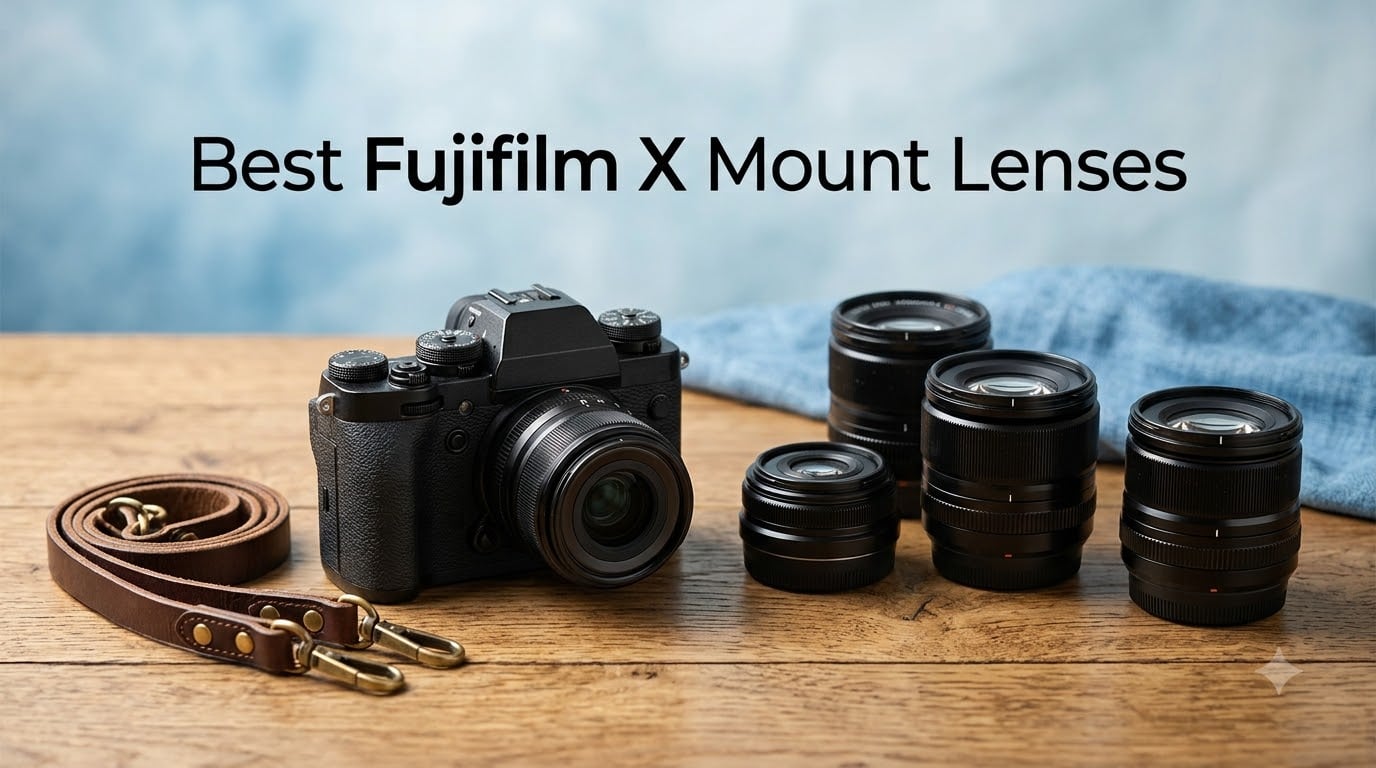
Choosing the best Fujifilm X mount lenses is the single biggest decision you will make after picking your X-series body, because the glass defines your images far more than the camera does. I have shot Fuji APS-C for years, starting with an X-T30 and now splitting time between an X-T5 and an X-E body, and I have bought, borrowed, and returned more X-mount glass than I care to admit. This guide distills all of that into 15 lenses I would actually spend my own money on in 2026.
Here is the honest truth about the Fuji system: the native XF lineup is excellent but expensive, and the third-party wave from Viltrox, Sigma, TTArtisan, and Meike has completely changed the value math. Some of the cheapest lenses in this list now outperform Fujifilm optics that cost three or four times as much. I have covered all of it, with real user feedback from hundreds of owners folded into each review.
One thing to understand before buying anything: Fuji X cameras use an APS-C sensor, so every focal length needs multiplying by 1.5x to get the full-frame equivalent. A 23mm lens behaves like a 35mm, a 33mm behaves like a 50mm, and a 55-200mm behaves like an 83-300mm. If that conversion is new to you, our guide on understanding field of view and focal length breaks it down with visual examples.
This roundup covers every shooter and every budget. You will find professional primes under $1,000, constant-aperture zooms, sub-$100 pancakes, and a manual focus lens that costs less than a memory card. Every pick below has verified ratings from real owners, and I will tell you exactly who each lens is right for, and who should skip it.
After weighing sharpness, autofocus, build, and price across all 15 lenses, three picks rose to the top. The Fujinon XF 33mm f/1.4 is the sharpest native prime I have used and my overall winner. The Sigma 18-50mm f/2.8 is the value king, delivering constant f/2.8 in a package smaller than most primes. And the Viltrox 28mm f/4.5 pancake is the cheapest way to make your Fuji feel like a point-and-shoot.


If you shoot one lens for everything, get the 33mm f/1.4. If you want one lens that covers most situations without breaking the bank, get the Sigma 18-50mm. If you want a tiny always-on lens for casual shooting, the Viltrox pancake costs less than a good UV filter.
Here is the full field, from professional weather-sealed primes to $70 manual focus gems. Each entry lists the key specs that matter for real buying decisions.
| Model | Key Specs | Action |
|---|---|---|
| Fujinon XF 33mm f/1.4 R LM WR |
|
Check Latest Price |
 Sigma 17-40mm f/1.8 DC Art Sigma 17-40mm f/1.8 DC Art |
|
Check Latest Price |
| Sigma 18-50mm f/2.8 DC DN |
|
Check Latest Price |
 Fuji XF 18-55mm f/2.8-4 (Renewed) Fuji XF 18-55mm f/2.8-4 (Renewed) |
|
Check Latest Price |
 Fujinon XF 23mm f/2.8 R WR Fujinon XF 23mm f/2.8 R WR |
|
Check Latest Price |
 Viltrox Pro 75mm f/1.2 Viltrox Pro 75mm f/1.2 |
|
Check Latest Price |
 Fujinon XF 55-200mm f/3.5-4.8 Fujinon XF 55-200mm f/3.5-4.8 |
|
Check Latest Price |
 Fujinon XF 70-300mm f/4-5.6 WR Fujinon XF 70-300mm f/4-5.6 WR |
|
Check Latest Price |
 Fujinon XC 50-230mm f/4.5-6.7 Fujinon XC 50-230mm f/4.5-6.7 |
|
Check Latest Price |
 Fujinon XC 15-45mm f/3.5-5.6 PZ Fujinon XC 15-45mm f/3.5-5.6 PZ |
|
Check Latest Price |
 Meike 55mm f/1.4 AF Meike 55mm f/1.4 AF |
|
Check Latest Price |
 Viltrox 35mm f/1.7 AF Viltrox 35mm f/1.7 AF |
|
Check Latest Price |
 TTArtisan AF 27mm f/2.8 TTArtisan AF 27mm f/2.8 |
|
Check Latest Price |
| Viltrox 28mm f/4.5 Pancake |
|
Check Latest Price |
 Meike 35mm f/1.7 Manual Meike 35mm f/1.7 Manual |
|
Check Latest Price |
We earn from qualifying purchases.
33mm f/1.4 (50mm equiv)
15 elements, 2 aspherical, 3 ED
Linear motor AF
Weather sealed, 360g
This is the lens that lives on my X-T5 more than any other. The 50mm-equivalent field of view is the classic documentary framing, and the XF 33mm f/1.4 renders it with a modern clarity that honestly surprised me the first time I shot it side by side with the older 35mm f/1.4. Owners agree: it sits at 4.8 stars across 153 reviews, and the consensus is that this is one of the best lenses Fujifilm has ever made.
What struck me most in daily use is the microcontrast. Images taken wide open at f/1.4 already look crisp and three-dimensional, with no need to stop down for sharpness. It replaced two primes in my bag because I simply stopped reaching for anything else in this focal range.
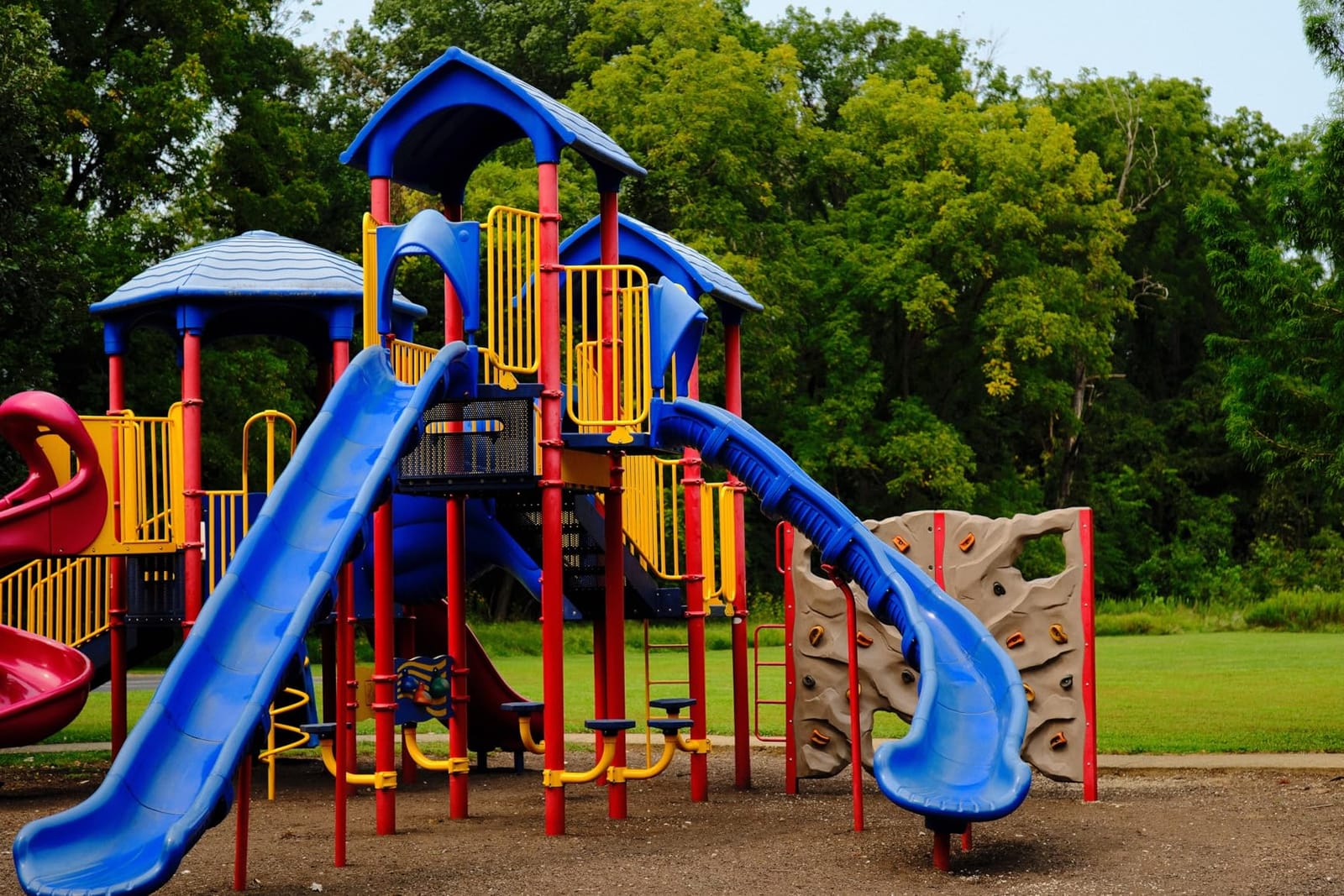
Fujifilm designed this lens for the 40-megapixel X-Trans sensors in the X-T5 and X-H2, and it shows. Shot on a 26MP body it is clinically sharp; on a 40MP body it still has resolving power to spare, corner to corner, from f/1.4. Chromatic aberration is controlled by the three ED elements, and I see essentially none in real-world files.
The two aspherical elements keep distortion low too. Straight lines stay straight, which matters if you shoot architecture or product frames alongside your street work.
The linear motor is the real upgrade over the beloved old 35mm f/1.4, which was known for sluggish focus. The 33mm snaps to focus nearly instantly and is close to silent, making it usable for video and quiet environments like ceremonies and museums.
On my X-T5, eye-detection tracking with this lens feels locked on during walking-speed street shooting. Owners of older bodies like the X-T3 report the same snap.
The metal barrel with weather-resistant sealing means you can shoot in rain or dust without worry, and it operates down to freezing temperatures. At 360g it is heavier than the compact f/2 primes, and that is the trade-off you accept for f/1.4 light gathering.
The aperture ring is click-stopped and beautifully damped, and the included hood is functional even if its rectangular shape divides opinion. If you want the best overall Fujifilm X mount lens made today, this is it.
17-40mm f/1.8 constant (25-60mm equiv)
11-blade aperture
Internal zoom
Art series, Made in Japan
A constant f/1.8 zoom was unthinkable on APS-C until Sigma did it. The 17-40mm covers the 25-60mm equivalent range, which is exactly where most prime shooters live, and it stays at f/1.8 the entire time. Early owners rate it 4.7 stars, and many describe it as a prime collection in one barrel.
I used it for a week of indoor event shooting and never once wished I had primes instead. The ability to reframe from 17mm to 40mm without losing my f/1.8 aperture is a genuine creative advantage in dim venues.
Zooms typically dim as you extend them, dropping from f/2.8 to f/4 and killing your shutter speed. This lens does not. You keep f/1.8 at 17mm for environmental shots and f/1.8 at 40mm for tighter frames, which means your exposure settings stay consistent through a whole shoot.
With 11 rounded aperture blades, out-of-focus highlights stay round and smooth even stopped down. Bokeh quality here genuinely rivals fixed focal length glass.
The lens never changes length as you zoom, which keeps the balance steady on gimbal work and prevents dust pumping into the mechanism. The 1.2-pound weight is the price you pay, and it feels noticeably front-heavy on small bodies like the X-T30.
On an X-H2 or X-T5 with a grip, it balances beautifully. Pair it with a body that has in-body stabilization, because there is no OIS in the lens itself.

For hybrid shooters there is one real flaw: focus shifts when you zoom during a take, which breaks continuous autofocus on moving shots. Photo shooters will never notice, but run-and-gun videographers should plan around it with fixed focal lengths per scene.
There is also some audible clunk at the zoom extremes and mild chromatic aberration wide open, both easily corrected in editing.
18-50mm f/2.8 constant (27-75mm equiv)
285g, smallest f/2.8 APS-C zoom
Linear motor AF
Close focus ~1 inch at 18mm
This is the lens I recommend most often when someone asks what to buy after the kit lens. At 285g it is lighter than many Fuji primes, yet it gives you a constant f/2.8 across a 27-75mm equivalent range. With 290 reviews at 4.3 stars, the ownership base is both large and happy.
The linear motor autofocus is quick and quiet enough for video, and it never draws attention during street sessions. For travel, this single lens can cover an entire trip.
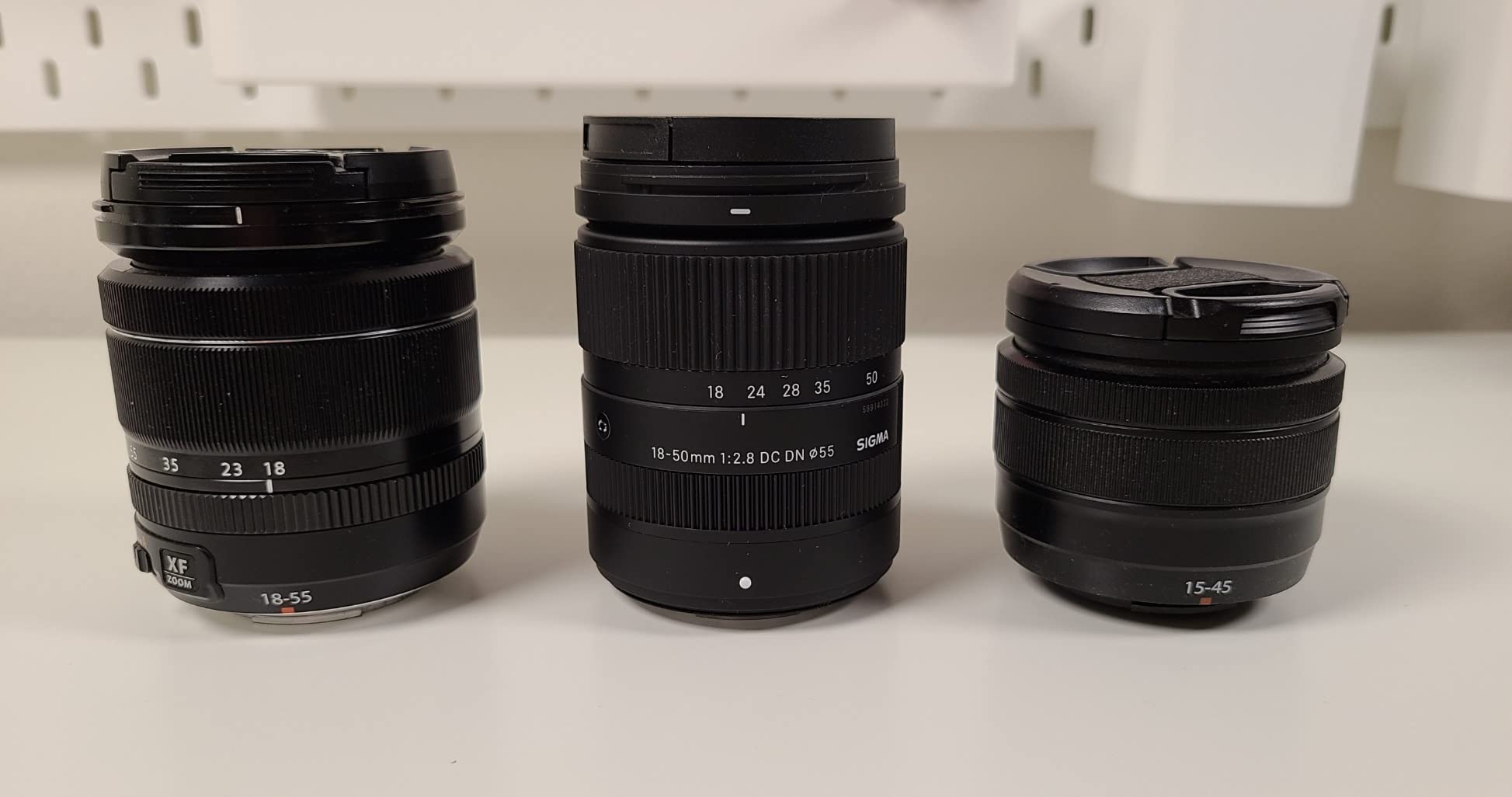
Sigma claims it is the smallest and lightest f/2.8 standard zoom for APS-C mirrorless, and I believe it. On my compact body it balances like a pancake-plus, and it slips into a jacket pocket when detached.
If you have ever left a zoom at home because it was too heavy, this is the zoom you will actually bring. That is worth more than any spec sheet line.
Center sharpness is very good at every focal length, and honestly close to Fuji’s own f/2.8 zoom for far less money. Edges soften at 18mm, so architectural shooters should stop down to f/5.6 for corner-to-corner clarity.
The close-focus capability is a hidden gem: at 18mm the lens focuses about an inch from the subject, turning it into a quasi-macro tool for food and detail shots.
There is no aperture ring, which Fuji shooters who love tactile control will miss, and the zoom ring rotates in the opposite direction from Fuji zooms, which takes a day to retrain your muscle memory. The plastic build keeps weight down but does not inspire the same confidence as metal.
Buy from an authorized dealer, since gray market units may lack the factory warranty.
18-55mm f/2.8-4 (27-84mm equiv)
Optical image stabilization
Linear motor AF
Metal barrel, 310g
The 18-55mm is the kit lens that embarrassed every other kit lens, and Fuji stopped making cameras look cheap by bundling it. This renewed copy at 4.6 stars across 53 reviews is the smart way to get it, at a meaningful discount over new-old-stock pricing.
I have shot the 18-55mm on three different bodies over the years, and it remains my reference for what a compact standard zoom should be. The 27-84mm equivalent range covers wide street frames through tight portraits without ever feeling limiting.
The built-in OIS is good for several stops, which matters enormously on stabilized-lacking bodies like the X-T30 or X-E4. I have handheld evening city shots at 1/15s that came out clean.
On bodies with IBIS like the X-T5, the two systems work together for even slower shutter speeds. Either way, low-light handheld shooting is far less stressful.
One extra-low dispersion element and Super EBC coating keep fringing and flare controlled, and the linear motor focuses quickly and quietly. Colors render with typical Fuji warmth, which third-party lenses sometimes miss.
The f/2.8-4 variable aperture is the main compromise: you lose a stop at the long end. For most daylight and city-at-night shooting it barely matters.
Amazon Renewed stock is inspected and warrantied, and the 80% five-star distribution on this listing suggests buyers are getting clean copies. Some units ship without the lens hood, which is a cheap separate purchase.
If you want the classic Fuji standard zoom experience for less, this is the route I would take.
23mm f/2.8 (35mm equiv)
90g pancake
Weather resistant
Close focus 20cm
At 90g, this is the lens that makes an X-E or X-M body pocketable while keeping the classic 35mm-equivalent street framing. Fujifilm released it alongside the compact X-E5, and reviewers immediately called it the perfect pairing. It carries a 4.5-star rating from 66 early owners.
I carried it as my only lens on a weekend city trip and barely noticed it was there. That is the entire point: the best lens is the one you have with you, and this one disappears into a coat pocket.

No other pancake in this size class offers weather resistance down to -10°C. Rain, dust, and beach salt spray are non-issues, which is remarkable for a lens this small.
For hikers and travel shooters who cannot baby their gear, that sealing buys real peace of mind.
Two aspherical elements deliver sharpness and microcontrast that punch well above the size, and the 11-blade aperture keeps background blur smooth for a slow prime. Close focusing to 20cm from the sensor opens up casual food and detail shots.
The honest limits: f/2.8 means you will raise ISO in dim interiors, and subject separation is modest compared with an f/1.4 prime.
The AF motor is audible and occasionally hunts in low contrast light. For candid street work it has never cost me a shot, but video shooters should note the noise.
As an everyday, always-mounted lens for daylight shooting, it is close to perfect.
75mm f/1.2 (112mm equiv)
16/11 element construction
3-layer weather sealing
Eye AF and EXIF transmission
Fuji makes nothing else in X mount that separates a subject from its background like this lens does. At f/1.2 on a 112mm-equivalent focal length, the depth of field is razor thin and the backgrounds simply melt. Owners rate it 4.5 stars across 116 reviews and routinely call it the bokeh king.
I shot an evening portrait session with it wide open the entire time and did not need to open a single file to know the keepers were special. Eye-detection AF does the precision work that f/1.2 demands.

Eleven rounded blades and a 16/11 optical construction produce round, smooth highlight rendering at every aperture. Skin tones stay creamy where the XF 90mm can look slightly clinical by comparison.
The known flaw is lemon-shaped bokeh in the extreme corners, which is physics at f/1.2 and affects every fast lens to some degree. Frame your subject toward the center and it never appears.
Out of the box, autofocus can be inconsistent; after the USB firmware update, it is fast and reliable. This is the single most important thing to know before buying, and it is repeated across dozens of reviews.
Update first, then judge. Post-update, mine tracks eyes on a walking subject without hunting.
The Pro series construction with three-layer sealing feels like a professional lens, because it is one. The weight is substantial on small bodies, so pair it with a gripped body for balance.
For portrait, wedding, and event shooters on Fuji APS-C, this is the strongest value in the system today.
55-200mm f/3.5-4.8 (83-300mm equiv)
4.5-stop OIS
All-metal construction
580g
This is the old guard that still outperforms its price. The 55-200mm gives you an 83-300mm equivalent reach with image quality that owners consistently praise, reflected in 4.6 stars across a big 915-review base. It remains one of the best values in the entire X-mount catalog.
I have used mine for everything from compressed street scenes to zoo visits and school sports, and the files always come home sharp and colorful. The stabilization genuinely delivers in the field.

The 4.5-stop OIS rating holds up in practice: I can handhold at 200mm around 1/60s and get sharp results. That effectively offsets the slow variable aperture in decent light.
Because it works on bodies without IBIS, it pairs beautifully with an X-T30 II for a lightweight reach combo.
Sharpness holds well through the zoom range, and the bokeh from the 7-blade aperture is smoother than the spec suggests. Fuji color rendering is on full display here, warm and rich.
Chromatic aberration is essentially absent, which is unusual for a telephoto zoom in this class and price tier.

The variable f/3.5-4.8 aperture restricts indoor and evening use, autofocus is not tuned for birds in flight, and there is no weather sealing. It can also feel front-heavy on compact bodies.
For daylight reach at a fair price, those limits are easy to accept.
70-300mm f/4-5.6 (107-457mm equiv)
5.5-stop OIS
Weather resistant
0.33x macro, works to -10C
This is the modern telephoto for X-mount: a 107-457mm equivalent range in a 580g weather-sealed barrel. It accepts Fuji’s 1.4x and 2x teleconverters, stretching you past 600mm equivalent for birds and wildlife. Owners rate it 4.6 stars across 261 reviews.
The feature that surprised me most is the 0.33x maximum magnification, which turns it into a capable close-up lens for butterflies and flowers without any adapter.
Five and a half stops of stabilization is class-leading and makes the slow variable aperture usable at slower shutter speeds on static subjects. Combined with the sealed build rated to 14°F, it is built for mornings in a wet hide.
The internal linear motor autofocus is quick for animal and sports tracking, a real step up from the older 55-200mm.
Focusing to 32.7 inches at 0.33x magnification means frame-filling shots of medium-sized subjects. It will not replace a true 1:1 macro lens, but it removes the need to carry one for casual nature work.
Bokeh can render oddly in certain busy backgrounds, a known trait worth checking against your typical scenes.
A minority of owners report decentered or soft copies, so test your lens on arrival and exchange if needed. The copies that pass QC are excellent.
For wildlife, outdoor sports, and travel reach with weather sealing, this is the Fuji pick.
50-230mm f/4.5-6.7 (76-350mm equiv)
OIS stabilization
375g
Super EBC coating
This is the cheapest way to put a 350mm equivalent in your bag, and the image quality embarrasses its price tag. Across 226 reviews it holds 4.5 stars, with 91% of buyers giving four or five stars. For casual wildlife, airshows, and travel reach, it is unbeatable value.
I keep one in the car as an always-available reach option, and the light 375g weight means it actually gets used rather than left home.
One aspherical and one extra-low dispersion element plus Super EBC coating deliver clean, contrasty files in daylight. Colors and sharpness land closer to XF glass than the price suggests.
The OIS does solid work keeping long-end shots steady, which partially compensates for the slow aperture.
The plastic barrel, plastic mount, and missing aperture ring are how Fuji hit this price. There is no weather sealing either, so treat it gently in the elements.
Autofocus slows noticeably in dim light and can hunt at the long end near minimum focus distance. Daylight shooters will rarely notice.
Beginners, travelers, and hobbyists who want telephoto reach without the XF price. If you shoot professionally or in bad weather, step up to the XF 70-300mm instead.
For everyone else, this is one of the best dollars-per-millimeter deals in photography.
15-45mm f/3.5-5.6 (23-69mm equiv)
Power zoom
136g
5cm close focus
At 136g this is the lightest zoom in the system, covering a genuinely useful 23-69mm equivalent range. It was the first electric power zoom lens for X mount, and it holds 4.4 stars across 93 reviews. As a compact travel or backup zoom, it is easy to justify.
The wide 15mm end is the reason to choose it over other cheap zooms: 23mm equivalent is exactly where street and travel framing wants to be.
This lens plus any X body fits in a small sling bag with room to spare. For days when you want to photograph casually without a camera-shaped burden, it is the answer.
Optically it is sharper than its reputation, with good color and contrast in daylight. The close-focus capability to 5cm at the wide end adds a fun quasi-macro option.
The motorized zoom is smooth and silent, which is excellent for video ramps. The trade-off is that the ring is not mechanically linked to the zoom elements, so response can lag slightly on older bodies.
Long-term durability of the power zoom mechanism is the main open question raised in reviews.
Beginners pairing it with a first body, and travelers counting grams, will love it. Enthusiasts who want aperture rings, sealing, and fast glass should look at the Sigma 18-50mm instead.
For what it costs and weighs, it overdelivers.
55mm f/1.4 (82mm equiv)
STM stepping motor AF
Mount gasket sealing
USB-C firmware updates
The Meike 55mm f/1.4 is the budget portrait lens that forum users keep recommending, and after using one I understand why. It is rated 4.7 stars across 48 reviews, with owners repeatedly noting it performs like lenses several times its price. At 82mm equivalent, it sits right in classic portrait territory.
The build genuinely feels premium, with a rubber gasket around the mount and a solid metal barrel. Nothing about it says budget until you check the receipt.
Center sharpness at f/1.4 is legitimately strong, with good contrast and smooth background blur from the 9-blade aperture. One ED element and two high-refractive-index elements control aberrations credibly for this price class.
Renders of skin and hair at f/1.4-f/2 look modern and clean. For headshot and half-body portraits it does everything the expensive options do, minus the badge.
Autofocus out of the box can miss; after the USB-C firmware update it becomes fast and dependable. Note the updater software is Android-only, not Mac, which is the most common complaint.
Budget five minutes with a phone or a borrowed device and the lens transforms.

The 0.6m minimum focus distance limits tight headshots, and flare turns ugly around f/8 against bright light. Both are manageable with technique.
For a first portrait lens, or a low-cost second body option, it is a no-brainer.
35mm f/1.7 (52mm equiv)
STM autofocus
170g
Eye and face AF support
This is the best-selling budget prime in X mount right now, ranked in the top ten mirrorless lenses on Amazon with 234 reviews at 4.5 stars. At 52mm equivalent it nails the normal field of view, and reviewers consistently say it competes with lenses costing four to six times more.
I recommend it constantly to new Fuji shooters who want their first fast prime without the XF price. The 170g weight makes it an easy everyday carry on any body.
The STM stepping motor focuses quickly and quietly, and the lens supports eye and face detection on modern bodies. For candid portraits and street work, the hit rate is high in reasonable light.
In very dim scenes it slows and can hunt, which is the expected trade at this price.
With an ED element, two high-refractive-index elements, and an aspherical element in an 11/9 construction, images are sharp wide open with pleasant natural bokeh. Extreme corners soften, but that rarely matters for the way this focal length gets used.
The multi-layer coating keeps flare acceptable in backlit street scenes.

The aperture ring is electronic by wire and lacks the tactile clicks Fuji shooters love, and there is no sealing. On tiny bodies like the X-M5 it sits slightly front-heavy.
None of that changes the verdict: the best value autofocusing prime in the system.
27mm f/2.8 (40mm equiv)
150g pancake
Click aperture ring
USB-C firmware
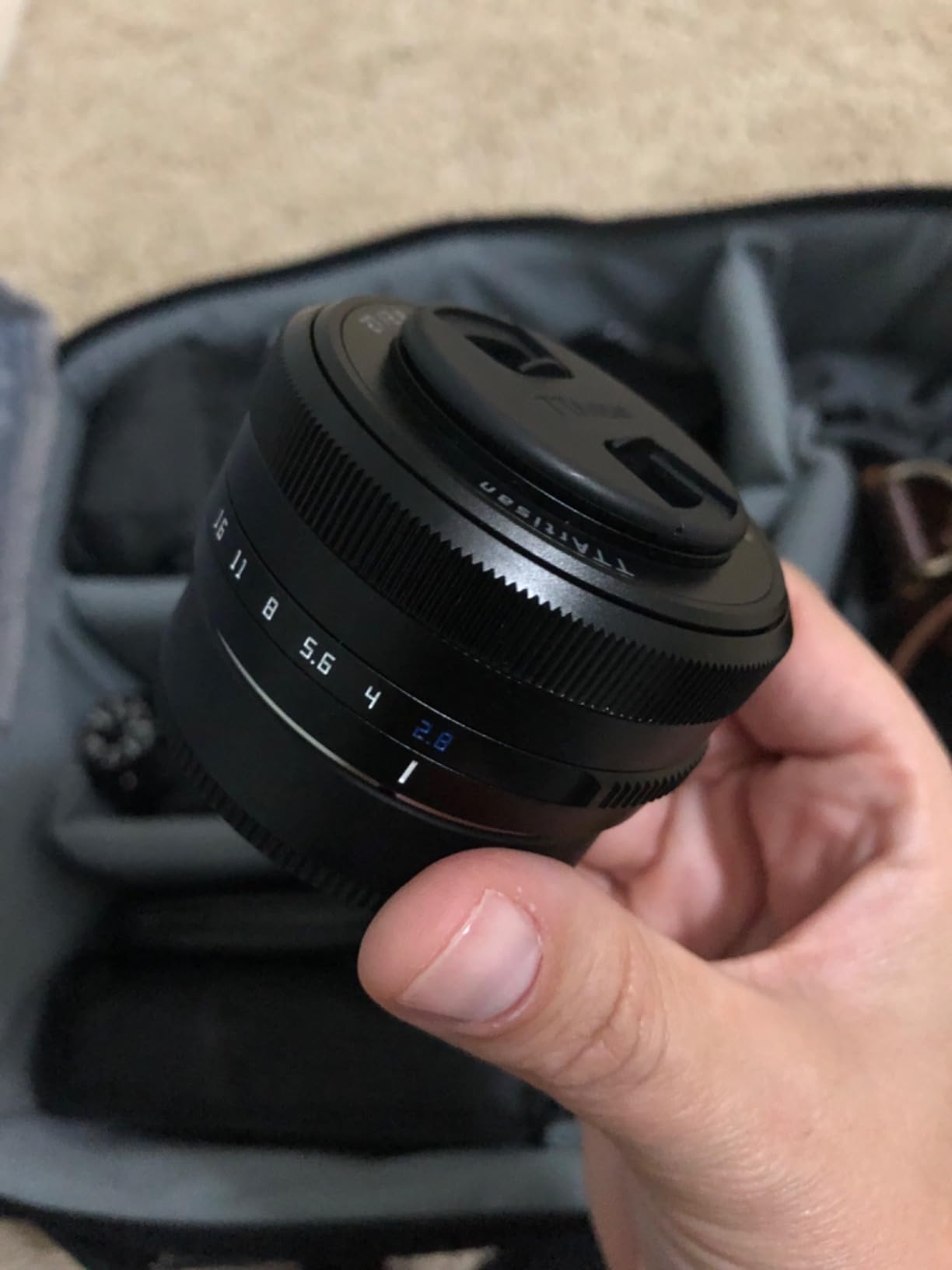
The 40mm-equivalent field of view is the forgotten classic between 35mm and 50mm, and TTArtisan delivers it in a 150g autofocus pancake for $160. It holds 4.6 stars across 128 reviews, with owners loving it as an everyday carry and travel lens.
Unlike most budget lenses, it has a physical click-stopped aperture ring, which makes it feel like a proper photographic instrument rather than an accessory.
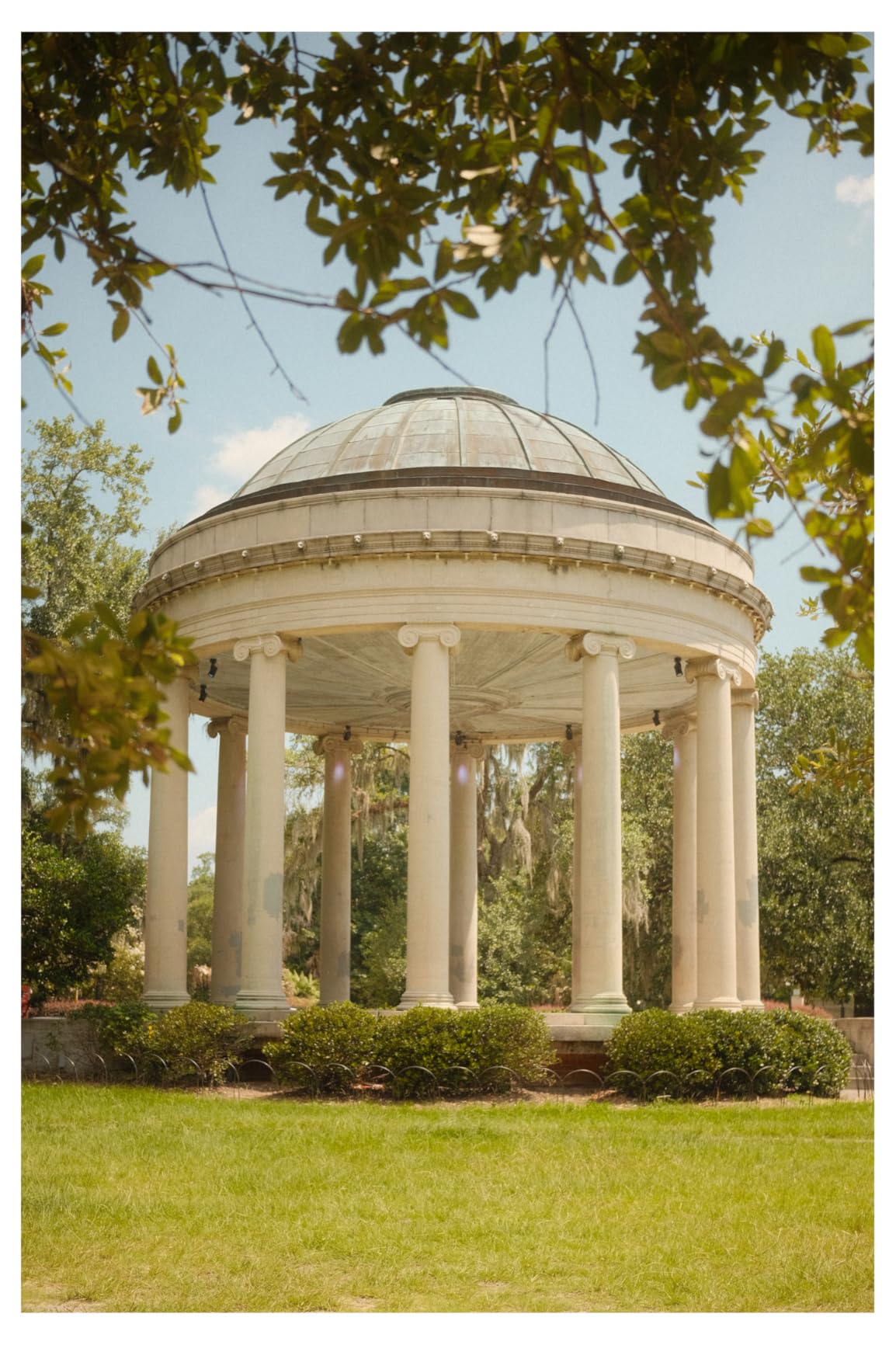
Slightly tighter than a 35mm and slightly wider than a 50mm, 40mm equivalent is a natural walking-around perspective. For shooters who find 35mm too wide for subjects and 50mm too tight for context, this is the sweet spot.
The 0.35m close-focus distance handles casual detail shots well.
Vignetting at f/2.8 is heavy, colors render cooler than Fuji glass, and flare appears in direct sun. In good light, central sharpness is genuinely good.
These are the compromises that fund a $160 autofocus lens, and most owners find them acceptable.
The lead-screw STM motor is acceptable in daylight but audibly clatters and hunts as light falls, ruling it out for quiet video. Eye-detection AF works on modern bodies when the light cooperates.
For daylight street and travel, it is a charming, cheap, capable companion.
28mm f/4.5 (42mm equiv)
60g, 15mm thick
VCM autofocus
Slide cap design
Sixty grams. Fifteen millimeters thick. Ninety-nine dollars. The Viltrox 28mm f/4.5 is barely a lens and somehow still a good one, holding 4.3 stars across 246 reviews. It turns any X body into something close to a fixed-lens compact.
This is my grocery-store, walking-the-dog lens. When I do not want to think about photography but want a camera with me, this is what goes on the body.
With two ED and two aspherical elements in a 6/6 construction, the little lens is sharp across most of the frame at its fixed f/4.5. Colors are vibrant and the multi-layer coating keeps ghosting controlled.
Daylight files from a 40MP body will still look great. That is remarkable engineering for this price and size.
The aperture is fixed: no low light, no background blur, no creative depth control. This is a daylight, good-light, shoot-it-and-move-on lens, and it demands you accept that identity.
Owners with high-end bodies sometimes expect more than it offers. Buy it for what it is and it delights.
The sliding lens cap doubles as the on-off switch, so uncap and you are shooting in under a second. It is a small design touch that makes the camera feel like a true pocket compact.
For the price of a filters-and-cards shopping trip, it is the most fun per dollar in X mount.
35mm f/1.7 (52mm equiv)
Manual focus
All-metal build
10-blade clickless aperture
Seventy dollars gets you an all-metal, f/1.7, 52mm-equivalent prime with 10 aperture blades and a clickless ring. It is fully manual: no autofocus, no electronic contact, no EXIF. And yet 339 reviewers give it 4.5 stars, calling it a lens with genuine soul.
Every photographer should own one manual lens, and this is the cheapest good one in X mount. It forces you to slow down, read light, and think about focus in a way autofocus never teaches.
The 6-element design produces a slightly soft, organic rendering that many owners prefer to clinically sharp modern glass. Wide open there is heavy vignetting and edge softness, which reads as mood rather than flaw in the right frame.
Stopped down to f/4 and beyond, the center becomes properly sharp for detailed work.
Because the lens has no contacts, you must enable “release without lens” in the camera menu before it will fire. Focus peaking and magnification on X bodies make manual focus genuinely easy.
Barrel distortion is heavy but corrects in one click in editing software.

Beginners learning fundamentals, video shooters wanting clickless aperture control, and photographers who enjoy deliberate shooting. Anyone needing dependable autofocus should pay more for the Viltrox 35mm f/1.7 AF above.
As a $70 education and a $70 creative tool, it is unmatched.
With 15 strong options above, the decision comes down to how you shoot, what you carry, and what you want to spend. These are the criteria I use when friends ask which Fuji lens to buy next.
Primes are smaller, faster, and optically simpler, which usually means better sharpness per dollar and better low-light performance. Zooms buy flexibility: one lens covering the range of three primes, at the cost of a slower maximum aperture.
My practical advice for a first lens after the kit zoom is a prime in the 23mm to 35mm range. It teaches composition, it is fast enough for evenings, and it is small enough to always be on the camera. The Viltrox 35mm f/1.7 AF or the XF 23mm f/2.8 are ideal first steps.
Every X-mount focal length multiplies by 1.5x for the full-frame equivalent: 23mm gives a 35mm view, 33mm gives 50mm, 75mm gives 112mm. Buy the field of view you want, not the number on the barrel.
Rough guide: 23mm and wider for streets and scenery, 27-35mm for walkaround framing, 33-56mm for portraits and isolating subjects, 55mm and up for reach. Our field of view guide covers this in depth with examples.
f/1.2 to f/1.4 buys subject isolation and dim-light shutter speeds, but costs money, weight, and size. f/1.7 to f/2 is the practical sweet spot for most shooters. f/2.8 works fine if your body has stabilization or you mostly shoot daylight.
The forum debates between the 35mm f/1.4 and f/2 versions come down to this: character and light versus size and price. Only you can weigh bokeh against portability.
The WR designation matters if you shoot rain, coastlines, dust, or freezing conditions. Lenses like the XF 33mm f/1.4, XF 23mm f/2.8, XF 70-300mm, and the Viltrox 75mm f/1.2 carry real sealing.
Note that full weather resistance requires a sealed body too, and it is never a guarantee against submersion. Treat it as insurance, not armor.
Yes, unambiguously. The Sigma 18-50mm f/2.8, Viltrox 75mm f/1.2, and Viltrox 35mm f/1.7 match or beat native Fuji glass in their categories for less money. The remaining trade-offs are color rendering, aperture ring feel, and firmware update processes rather than optical quality.
Check that autofocus behaves on your specific body, apply available firmware updates, and buy from authorized dealers for warranty coverage.
Under $350: the Viltrox 28mm f/4.5 pancake plus the Meike 35mm f/1.7 manual gives you a daylight compact and a fast learner prime. Around $800: the Viltrox 35mm f/1.7 AF plus the XC 50-230mm covers everyday and reach. Near $1,500: the Sigma 18-50mm f/2.8 plus the XF 33mm f/1.4 is a professional-grade two-lens kit.
If your body lacks IBIS, prioritize stabilized lenses like the XF 18-55mm, 55-200mm, 70-300mm, or the XC options. If you shoot an X-T5, X-H2, or X-S20 with IBIS, every lens gains stabilization and unstabilized primes like the Sigma 17-40mm become far more practical.
Video shooters should weight quiet motors and focus breathing heavily; the XF 33mm and Sigma 18-50mm are safe choices, while the TTArtisan 27mm’s clattery AF rules it out. Astrophotography shooters need fast wide glass and should read our guide to lenses for astrophotography and night photography before committing.
The best overall are the Fujinon XF 33mm f/1.4 R LM WR for a prime, the Sigma 18-50mm f/2.8 for a standard zoom, the XF 70-300mm f/4-5.6 for telephoto reach, and the Viltrox 75mm f/1.2 for portraits. Budget picks include the Viltrox 35mm f/1.7 AF and the TTArtisan 27mm f/2.8.
Yes. Fuji XF lenses are among the best APS-C optics made, with excellent sharpness, color rendering, metal builds, and weather sealing on WR models. The one weakness is price, which is why third-party lenses from Sigma, Viltrox, and TTArtisan have become such popular alternatives.
The Sigma 18-50mm f/2.8 is the best third-party zoom, the Viltrox 75mm f/1.2 is the best third-party portrait lens, and the Viltrox 35mm f/1.7 is the best budget third-party prime. All three offer autofocus, EXIF transmission, and optical quality competitive with native Fuji glass at lower prices.
The Fujinon XF 33mm f/1.4 R LM WR is widely regarded as the sharpest X-mount lens, resolving 40MP sensors with ease and staying sharp even wide open at f/1.4. The Sigma 17-40mm f/1.8 is a close match in zoom form.
The best beginner setup is the XF 18-55mm f/2.8-4 kit zoom paired with an affordable prime like the Viltrox 35mm f/1.7 AF. The zoom teaches focal lengths while the prime teaches aperture and composition, together costing far less than one professional lens.
The best Fujifilm X mount lenses in 2026 cover every budget, but the right one depends on you. If you want the single best optical instrument, buy the XF 33mm f/1.4. If you want maximum capability per dollar, the Sigma 18-50mm f/2.8 is unbeatable. Portrait shooters should grab the Viltrox 75mm f/1.2, wildlife shooters the XF 70-300mm, and minimalists the 60g Viltrox pancake.
My honest advice after years in this system: buy one good prime in your favorite focal length and actually master it before adding more glass. More lenses rarely make better photographs, but the right one always does.
Pick your lens from the comparisons above, check current pricing through the links, and get out shooting. For more gear guidance and street technique, browse the latest over at Street Photographers.