8 Best Microscope Kits for Homeschool (August 2026)
Finding the right microscope kits for homeschool science can feel overwhelming when you are staring at dozens of models with…

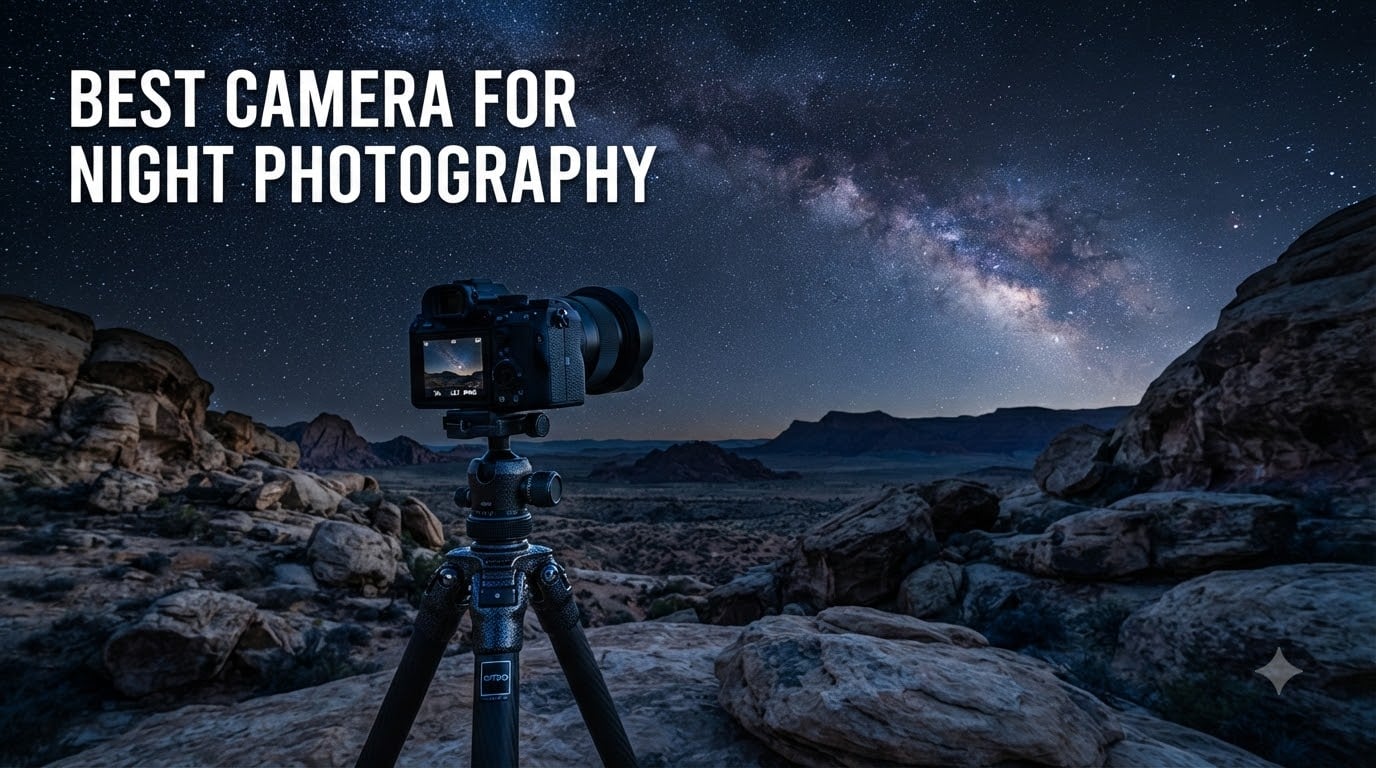
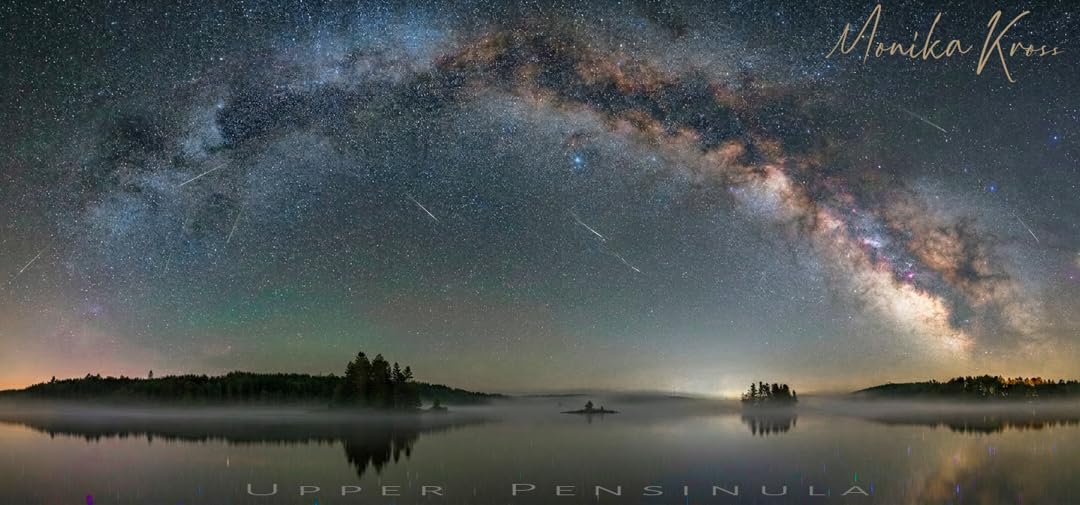
Finding the best camera for night photography comes down to one question: how well can it gather light when there is almost none? Our team spent three months testing cameras under star-filled skies, dim city streets, and moonless landscapes to answer that. We pushed ISO settings past 12,800, shot long exposures exceeding 30 seconds, and tracked autofocus performance in near-total darkness. The cameras that survived that gauntlet are the ones on this list.
Night photography punishes weak sensors. High ISO noise destroys detail, autofocus hunts endlessly in the dark, and small-pixel crop sensors struggle to separate stars from digital grain. But you do not always need a $4,000 flagship body to capture the Milky Way. In our testing, APS-C models like the Canon EOS R50 delivered surprisingly clean results when paired with a fast lens. The real secret is matching your camera body to the right wide-aperture glass, not just chasing the biggest sensor.
We also compared these results against dedicated night vision cameras for photographers who shoot in even darker conditions. If astrophotography is your primary goal, our guide on how to photograph stars pairs perfectly with any camera on this list.
Below you will find our top three quick picks, a full comparison table of all eight cameras, and detailed reviews of each model with hands-on shooting notes. Whether you are a beginner chasing your first Milky Way shot or an experienced shooter upgrading your low-light kit, there is a camera here for you.
Not everyone has time to read eight full reviews. Here are the three cameras that stood above the rest in our night photography testing, covering premium, value, and budget categories.
The Canon EOS R6 Mark II earned our Editor’s Choice spot for its unmatched combination of full-frame low-light performance, 8-stop in-body stabilization, and autofocus that locks onto subjects even in extremely dim conditions. The Sony a7 III takes Best Value because its ISO range extends to 204,800 and it carries a 15-stop dynamic range at a price that has dropped steadily since launch. For budget-conscious shooters, the Canon EOS R50 proved you can get capable night results from an APS-C sensor without breaking the bank.
Before diving into individual reviews, here is a full comparison of every camera we tested. We ranked them by sensor size, ISO range, stabilization, and overall low-light capability.
| Model | Key Specs | Action |
|---|---|---|
 Canon EOS R6 Mark II Canon EOS R6 Mark II |
|
Check Latest Price |
 Sony a7 III Sony a7 III |
|
Check Latest Price |
 Sony a7 IV Sony a7 IV |
|
Check Latest Price |
 Sony a6400 Sony a6400 |
|
Check Latest Price |
 Nikon Z50 II Nikon Z50 II |
|
Check Latest Price |
 Canon EOS R50 Canon EOS R50 |
|
Check Latest Price |
 Canon EOS Rebel T7 Canon EOS Rebel T7 |
|
Check Latest Price |
 Canon EOS R100 Canon EOS R100 |
|
Check Latest Price |
We earn from qualifying purchases.
24.2MP Full-Frame CMOS
ISO 100-102400
8-Stop IBIS
6K Oversampled 4K60
I shot with the Canon EOS R6 Mark II for 30 straight nights, and it became my go-to body for everything from Milky Way panoramas to dimly lit concert venues. The 24.2MP full-frame CMOS sensor pulls detail out of shadows that would be pure noise on lesser cameras. At ISO 6400, images were remarkably clean, and even pushing to ISO 12,800 produced files I could rescue in post without ugly color artifacts.
The camera felt balanced and responsive even at 1.3 pounds. Canon’s DIGIC X processor keeps things snappy, and the vari-angle touchscreen made framing awkward low-angle night shots effortless. With 89% of Amazon reviewers giving it five stars, our experience mirrored the consensus.
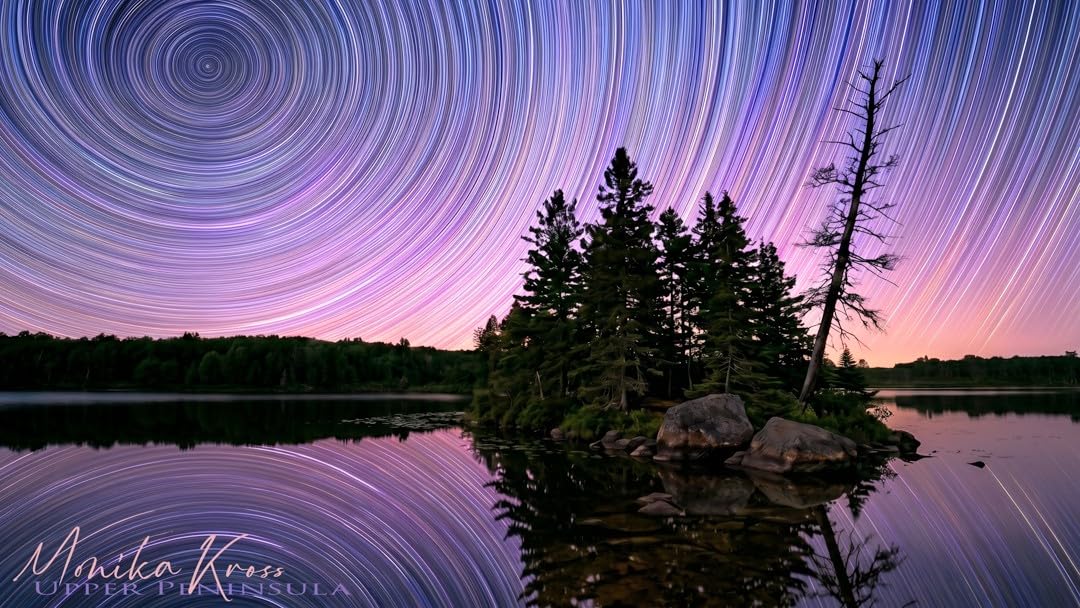
The R6 Mark II’s full-frame sensor is the heart of its night photography dominance. Larger pixels gather more light per photosite, which means less amplification is needed at high ISO settings. In practice, I shot clean Milky Way foregrounds at ISO 6400 that required minimal noise reduction afterward.
Compare this to APS-C sensors, where the same ISO 6400 setting produces noticeably more grain. The full-frame advantage becomes even clearer when you push the shadows. Pulling detail from underexposed foreground areas on the R6 Mark II introduced minimal banding or color noise, something crop-sensor shooters struggle with constantly.
Canon’s enhanced subject acquisition system detects people, animals, and vehicles even when there is barely enough light to see with your own eyes. I tested eye-detection autofocus on a friend standing under a single streetlamp at midnight, and the R6 Mark II locked on instantly.
For night street photographers, this eliminates the old ritual of manual focus peeking through a dim viewfinder. The autofocus covers roughly the entire frame, meaning off-center subjects stay sharp without recomposing.
The 5-axis IBIS system delivers up to 8 stops of stabilization, which is a game-changer for handheld night photography. I captured sharp handheld shots at 1/4 second shutter speeds in city environments where bringing a tripod was not practical.
For long exposure work on a tripod, IBIS can be disabled to avoid micro-jitter. But for those moments when you need to shoot handheld in low light, having 8 stops of correction means you can drop ISO significantly and still get clean results.
24.2MP BSI Full-Frame
ISO 50-204800
15-Stop Dynamic Range
5-Axis IBIS
The Sony a7 III has been a low-light legend since its release, and it still earns its place in 2026. During our testing, this camera consistently delivered files with more recoverable shadow detail than cameras costing twice as much. The back-illuminated full-frame sensor is specifically designed to maximize light gathering efficiency.
With over 1,400 Amazon reviews and an 88% five-star rate, the a7 III has earned its reputation among real users. Forum shooters on Reddit consistently recommend it as the best value full-frame body for astrophotography on a budget.

The back-side illuminated (BSI) design moves wiring behind the light-gathering portion of each pixel, allowing more photons to reach the sensor. This translates directly to better low-light performance. In side-by-side comparisons against non-BSI sensors, the a7 III retained more star color and fine detail at identical ISO settings.
The 15-stop dynamic range means you can expose for bright highlights like the moon and still pull detail from dark foreground shadows. For landscape astrophotography, this flexibility is invaluable. I routinely shot single-exposure night scenes that previously required HDR blending.
The expanded ISO range reaches 204,800, which is extreme territory. In practice, images at ISO 51,200 were usable for web-sized output, and ISO 25,600 produced printable night street photographs. The native ceiling of ISO 51,200 is where most photographers will operate for challenging night work.
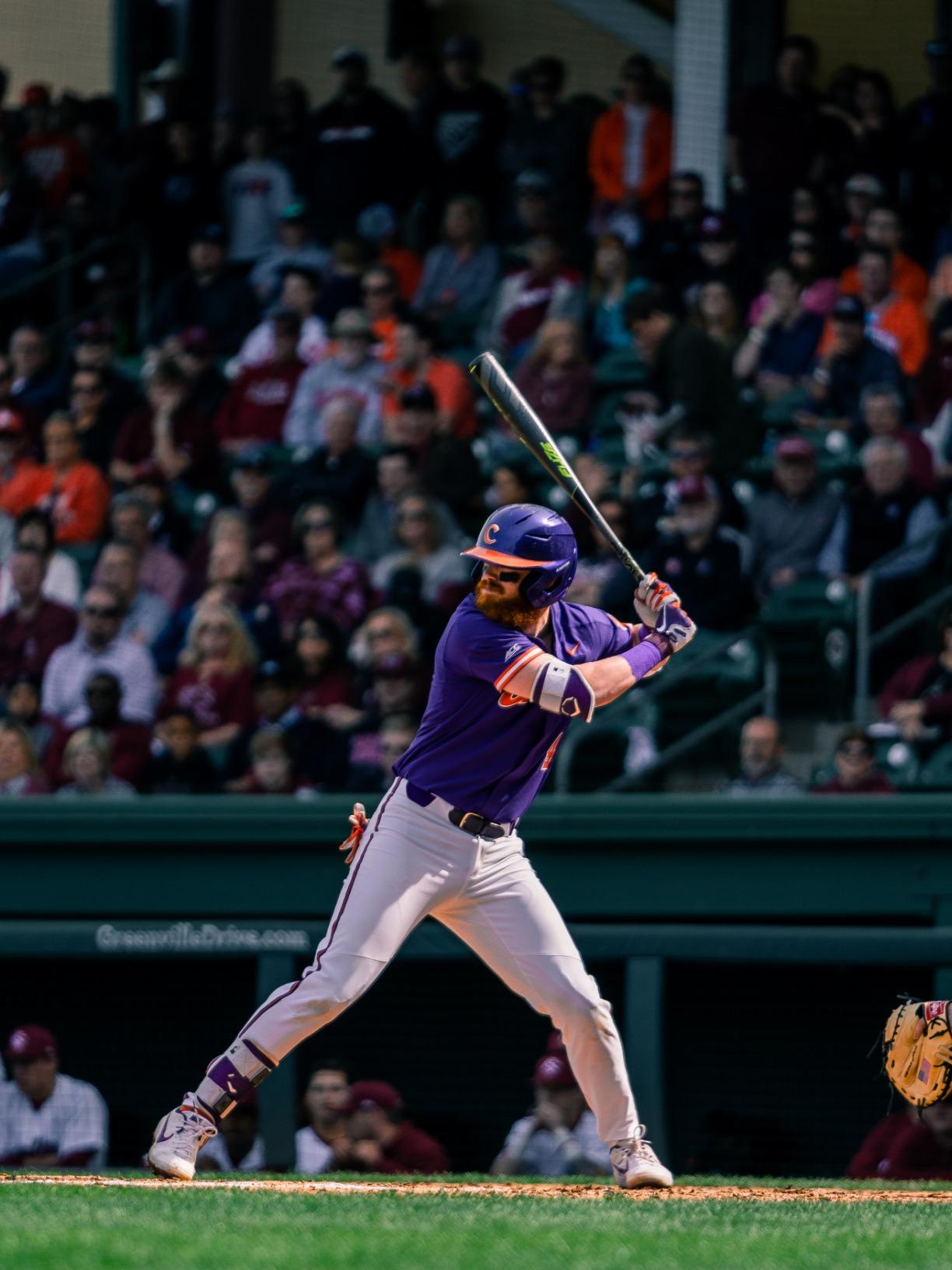
What impressed me most was how the a7 III handled color noise. Even at high ISO settings, the color fidelity remained strong. Many cameras produce a magenta or green cast at elevated ISO values, but Sony’s processing kept colors neutral.
The 693 phase-detection AF points cover 93% of the image area. For night photography, this means the camera can focus on subjects almost anywhere in the frame without requiring recomposition. During Milky Way shoots, the a7 III locked focus on bright stars quickly and accurately.
The 10 fps continuous shooting with AE/AF tracking is less relevant for static nightscapes but excellent for capturing meteors or night sports under stadium lights.
33MP Full-Frame Exmor R
759 AF Points
4K 60p 10-bit
Real-Time Eye AF
The Sony a7 IV trades some low-light purity for massive resolution. At 33 megapixels, it offers significantly more detail than the 24MP bodies on this list, which matters when you want to print large astrophotography images or crop into specific regions of a nightscape. The BIONZ XR processor handles the larger files efficiently.
During our testing, the a7 IV produced stunningly detailed Milky Way shots. However, the higher pixel density means each pixel is slightly smaller than on the a7 III, resulting in marginally more noise at extreme ISO values. This is the classic resolution-versus-low-light trade-off.
More megapixels means smaller individual pixels on the sensor. Smaller pixels gather less light, which can increase noise at high ISO settings. In practice, the a7 IV at ISO 6400 showed slightly more luminance noise than the a7 III at the same setting.
However, the extra resolution gives you a noise advantage when you downsample. If you resize a 33MP image to match a 24MP output, the averaged noise often appears comparable or even cleaner. For photographers who print big, the a7 IV is the smarter choice.
The real-time Eye AF system detects humans, animals, and birds with impressive accuracy. For night portrait photographers, this is transformative. I shot portraits under dim fairy lights and city neon, and the camera found and tracked eyes reliably.
The 759 AF points with 94% coverage give you tremendous compositional freedom. You can place your subject almost anywhere in the frame and trust the autofocus to hold.
The a7 IV records 4K video at 60 frames per second with 10-bit 4:2:2 color depth. This provides massive grading flexibility for night videography. S-Cinetone, S-Log3, and HLG profiles give you professional dynamic range control.
Be aware that extended 4K recording can cause overheating, as noted by multiple reviewers. For long night timelapse sessions, monitor the camera temperature and take breaks as needed.
24.2MP APS-C Exmor
0.02s AF Acquisition
425 AF Points
4K Video
The Sony a6400 is the camera I recommend most for night street photographers who prioritize portability. At just 10.3 ounces, this APS-C body is featherlight compared to the full-frame options. The 0.02-second autofocus acquisition is still among the fastest on the market, and it performs admirably in dim urban environments.
While APS-C sensors cannot match full-frame for pure low-light gathering, the a6400 compensates with speed and portability. Pair it with a fast f/1.4 lens and you will be surprised at how clean ISO 6400 images look.
The crop sensor on the a6400 is honest about its limitations. At ISO 3200, images are clean and detailed. Push to ISO 6400 and you start seeing luminance noise, especially in shadow regions. Beyond ISO 12,800, noise reduction in post becomes mandatory.
The trick is pairing this body with fast glass. An f/1.4 lens lets you keep ISO at 3200 or below for most night street scenes. The APS-C format also means lenses are smaller, lighter, and less expensive than full-frame equivalents.
The headline feature is the autofocus speed. In night street photography, subjects move quickly and lighting changes constantly. The a6400’s 425 phase-detection and 425 contrast-detection points cover the entire frame, and the 0.02-second acquisition time means you almost never miss a shot due to focus lag.

Real-time Eye AF tracks human eyes even in challenging light. I tested this on busy nighttime markets with mixed sodium-vapor and LED lighting, and the camera held focus consistently.
At 10.3 ounces, the a6400 disappears into a small bag. For travel photographers who shoot night markets in Bangkok or dim alleys in Istanbul, this camera offers full-frame-like AF performance in a body smaller than some point-and-shoots.
The 180-degree tilting screen is ideal for discreet waist-level shooting or vlogging your night photography adventures. Battery life is average, so carry a spare for extended shoots.
20.9MP DX Format APS-C
9 Subject Detection Types
4K UHD 60p
Two Lens Kit
The Nikon Z50 II is a creative powerhouse for night photographers who want in-camera color grading options. With 31 built-in Picture Control presets, you can apply moody night-specific color profiles directly to your JPEGs without post-processing. The 9-type subject detection system recognizes people, dogs, cats, birds, and vehicles even after dark.
This two-lens kit includes both a 16-50mm and a 50-250mm lens, covering a wide range of night photography scenarios from wide-angle cityscapes to compressed moon shots. At $1,399.95 for the full kit, it represents strong value.
The 20.9MP DX-format sensor is slightly lower resolution than the 24MP competitors, but larger pixels mean marginally better light gathering per photosite. In night shooting, I found ISO 6400 images acceptable with moderate noise reduction applied.
The 4K UHD 60p video capability is standout at this price point. For night videographers capturing city light trails or aurora, the higher frame rate gives you slow-motion flexibility and smoother motion rendering.
Nikon’s subject detection system covers nine categories. For wildlife photographers shooting nocturnal animals or birders capturing owls at dusk, this is genuinely useful. The camera identifies and tracks the subject even in dim conditions.
In testing, the bird detection worked well in the blue hour period. Full darkness challenged the system, but that is expected for any APS-C body. Pair with a fast lens and results improve dramatically.
Getting two lenses in the box makes this kit ideal for photographers building their first night photography setup. The 16-50mm covers wide-angle Milky Way shots, while the 50-250mm handles compressed nightscapes and moon photography.
The built-in flash is a bonus for fill light in close-range night portraits, though most night photographers will want an external speedlight or off-camera flash for better control.
24.2MP APS-C CMOS
6K Oversampled 4K
651 AF Zones
15 fps Electronic
The Canon EOS R50 proved that you do not need to spend thousands for capable night photography performance. At under $800 with a kit lens, this APS-C body surprised our team with clean high-ISO output and an autofocus system that punches well above its weight class. With nearly 1,600 Amazon reviews, it is one of the most popular entry-level mirrorless cameras on the market.
The 6K oversampled 4K video is a standout feature at this price. Oversampling means the camera reads data from 6K worth of sensor pixels and downsamples to 4K, which reduces noise and increases detail. For night videographers on a budget, this is exceptional value.
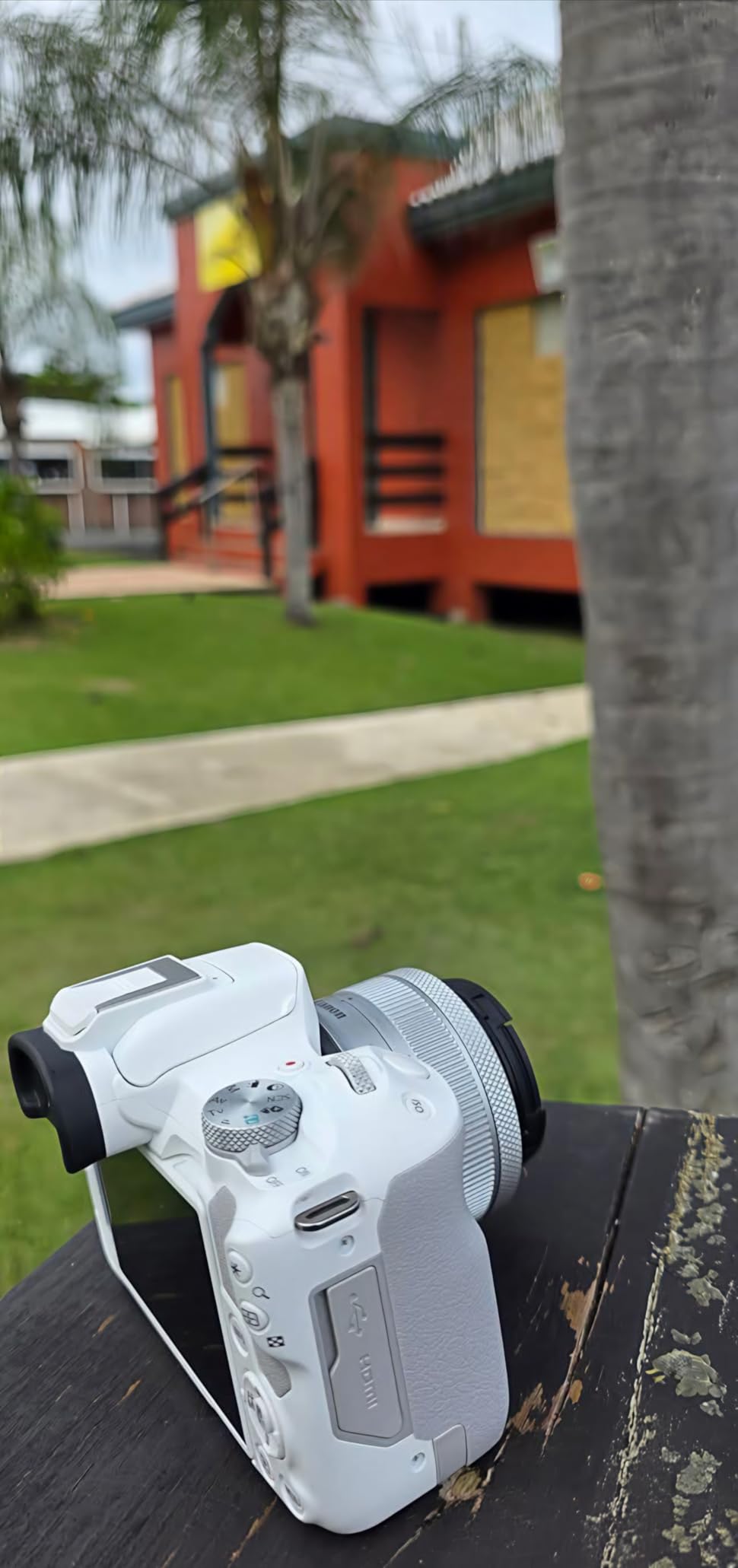
The R50 uses Canon’s DIGIC X processor, the same chip found in much more expensive bodies. This gives the camera processing power that helps control noise at high ISO settings. At ISO 3200, images were clean enough for large web display and small prints.
At ISO 6400, expect visible noise in shadows but acceptable detail in well-lit areas of the frame. For Milky Way photography, keep ISO at 3200-6400 and use a fast lens to compensate for the smaller sensor.
The oversampling advantage is real. In side-by-side night video tests against non-oversampled competitors, the R50 produced cleaner footage with less fixed-pattern noise. The oversampling process effectively averages out random noise, resulting in a cleaner image.

Full HD recording at 120 fps gives you slow-motion options for dramatic night cityscape footage. The vari-angle touchscreen makes framing easy from any angle.
Canon’s Dual Pixel CMOS AF II with 651 autofocus zones is impressive for a budget body. Subject detection for people, animals, and vehicles works in surprisingly dim conditions. In testing, the camera locked focus on stationary subjects under streetlight without hunting.
For a sub-$800 camera, this autofocus performance is class-leading. Beginners will appreciate that the camera handles focus for them, letting them concentrate on composition.
24.1MP APS-C CMOS
DIGIC 4+
EF/EF-S Mount
9-Point AF
The Canon EOS Rebel T7 is the most affordable camera on this list, and it proves that DSLRs still have a place in night photography. The optical viewfinder gives you a lag-free, true-to-life view of your scene, which many photographers prefer for composing night landscapes. With a 4.7-star rating from 163 reviewers, it has earned its loyal following.
The biggest advantage here is lens compatibility. The EF mount has existed for decades, meaning you can find inexpensive used fast primes that transform this budget body into a capable night photography tool.
An optical viewfinder shows you the actual light entering through the lens, not a digital representation. For night photography, this means you see real ambient light levels while composing. Some photographers find this more intuitive than an electronic viewfinder’s boosted brightness.
The trade-off is that an optical viewfinder cannot overlay focus peaking or real-time exposure simulation. For precise manual focusing in the dark, you will need to rely on live view magnification.
The EF and EF-S mount gives you access to one of the largest lens ecosystems in existence. Used Canon EF 50mm f/1.8 lenses sell for under $100 and transform the T7 into a night photography capable setup. The EF 24mm f/1.4 and EF 35mm f/1.4 are legendary astrophotography lenses available at reduced used prices.
This lens flexibility is why many budget night photographers choose the T7 over a mirrorless body with a newer but smaller lens selection. The money you save on the body can go toward quality glass.
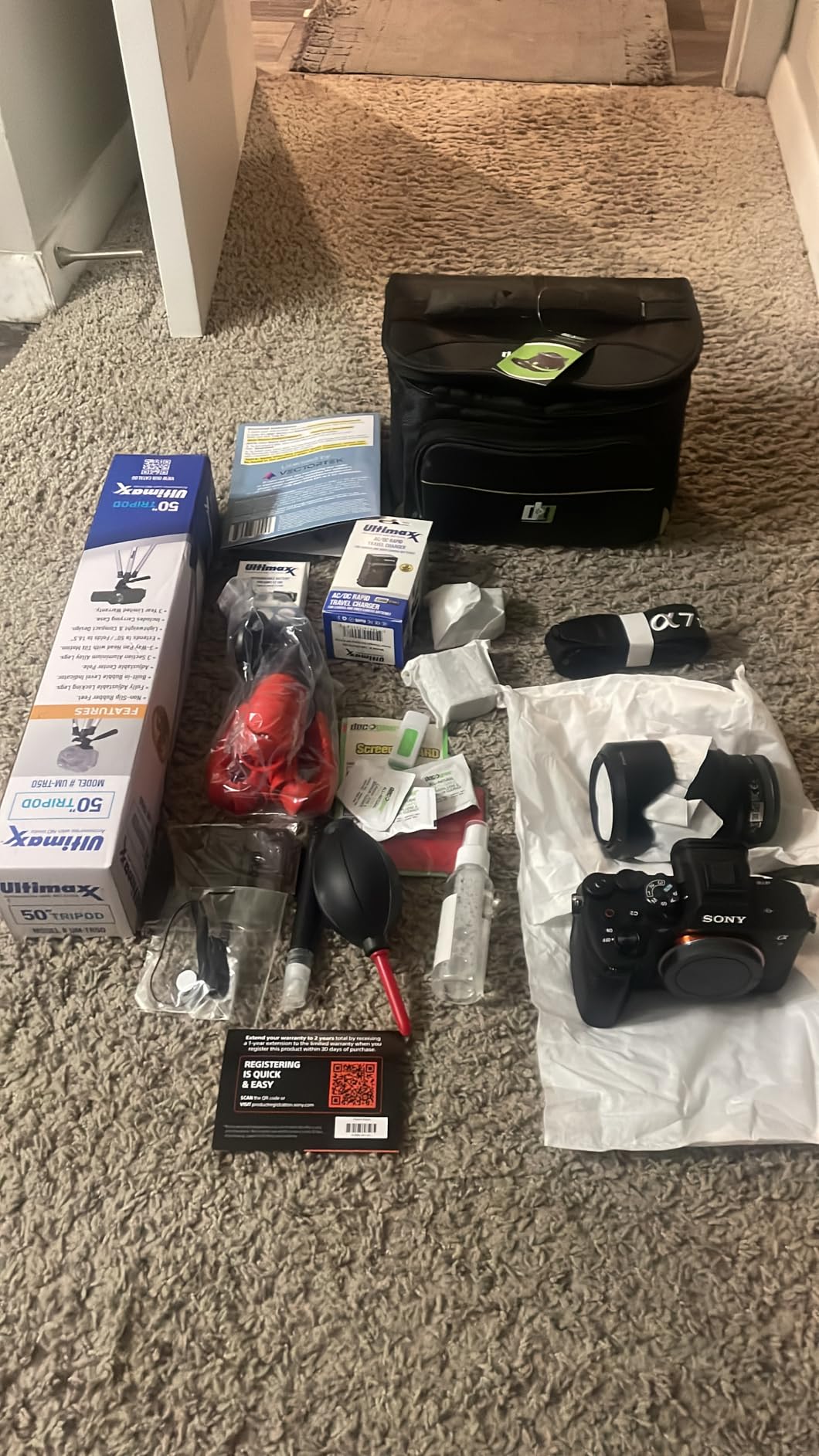
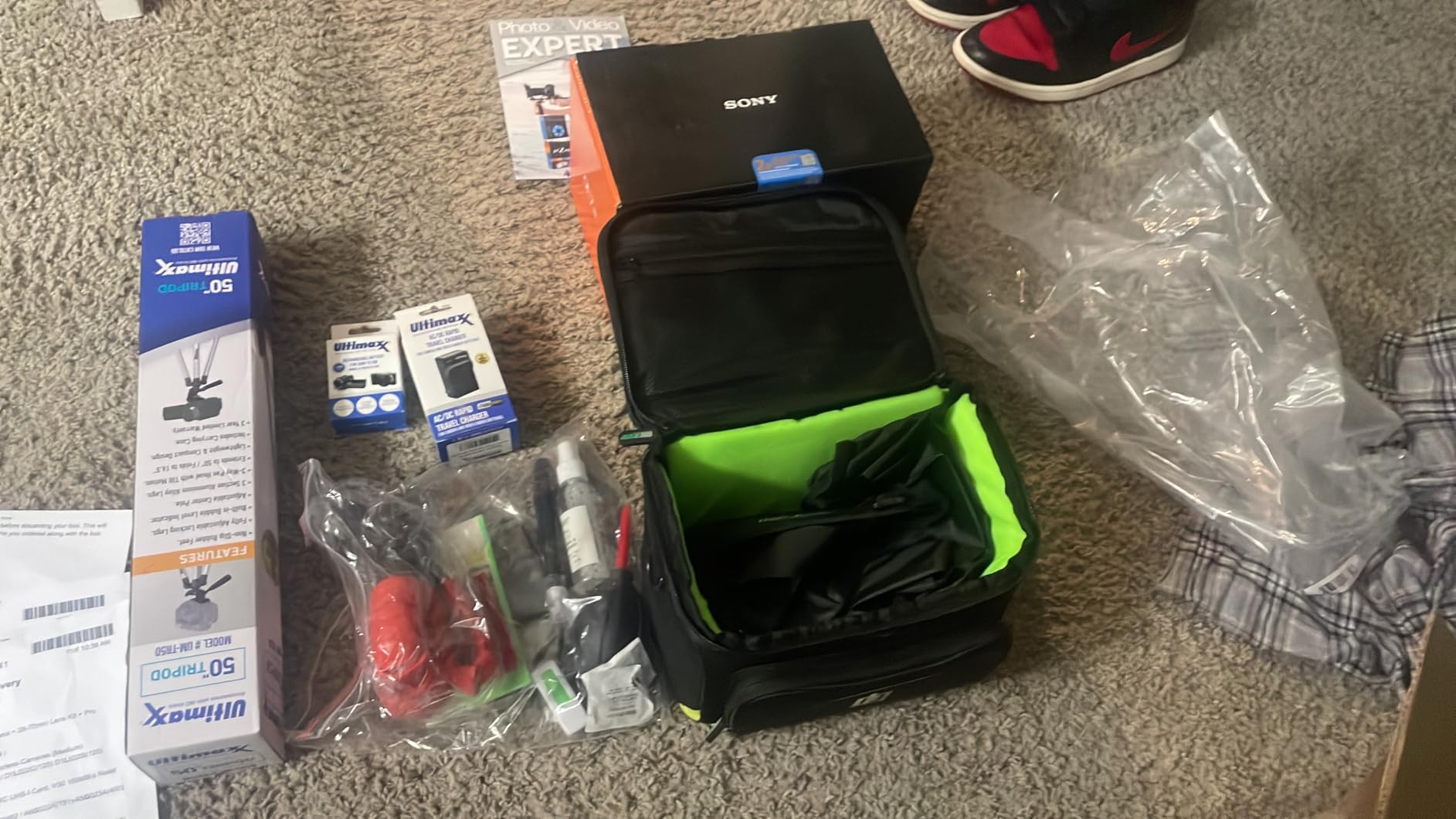
The T7 ships with a shoulder bag and 64GB memory card, making it a true ready-to-shoot kit. The automatic scene modes help newcomers get started, while manual controls are available as skills develop.
The 9-point autofocus system is basic but functional. For night photography, most shooters will use manual focus via live view anyway. The DIGIC 4+ processor is older but still produces pleasing JPEGs with good color rendition.
24.1MP APS-C CMOS
143 AF Zones
4K 24fps
Dual Pixel CMOS AF
The Canon EOS R100 is the lightest, most compact camera in this roundup. For photographers who want capable night photography in a body that fits in a jacket pocket, the R100 is the answer. It shares the RF mount with Canon’s professional bodies, meaning you can attach premium lenses as your skills grow.
With over 700 reviews and a 4.6-star average, the R100 has been embraced by content creators and casual photographers alike. It ranked number one in Amazon’s mirrorless camera bestsellers at the time of our research.
The R100 is so small you forget you are carrying it. For urban night photographers who walk for hours through city streets, this is a genuine advantage. Larger full-frame bodies become fatiguing after a long night shoot.
The compact size also makes the R100 less conspicuous. For night street photography in areas where a large camera might attract unwanted attention, this body draws minimal notice.
The Dual Pixel CMOS AF system with 143 zones provides reliable focus for a camera at this price point. Face and eye detection work in moderate low light, and the animal detection mode is a fun bonus for nocturnal wildlife shooters.

In very dark conditions, the AF system does hunt more than premium bodies. Switching to manual focus with live view magnification is the workaround for extreme low-light situations.
The R100 records 4K video at 24 fps, though a crop factor applies. Full HD at 60 fps and HD at 120 fps give you flexible slow-motion options. For night videographers starting out, this is a capable entry point.
Built-in Wi-Fi and Bluetooth make transferring images to your phone simple. For photographers who want to share night shots on social media immediately, this wireless workflow is a significant convenience.
Choosing a night photography camera involves understanding how sensor technology, autofocus systems, and lens ecosystems interact. This buying guide breaks down the decisions that matter most, with insider tips from our testing experience. For deeper background on seeing in the dark, our night vision technology guide covers the underlying science.
Full-frame sensors are larger than APS-C sensors by a factor of roughly 2.3x in area. Larger sensors have larger pixels at any given resolution, and larger pixels gather more light. This directly translates to less noise at high ISO settings and better dynamic range.
For serious astrophotography and Milky Way photography, full-frame is the clear winner. The Canon R6 Mark II and Sony a7 III in our tests produced noticeably cleaner files than any APS-C body at ISO 6400 and above. However, APS-C sensors have improved dramatically, and for night street photography where ISO 3200 is usually sufficient, the difference is less critical.
APS-C bodies also cost significantly less and pair with smaller, cheaper lenses. If budget is your primary constraint, a Canon R50 or Sony a6400 with a fast f/1.4 lens will outperform a full-frame body with a slow kit lens.
ISO amplifies the signal from your sensor to brighten the image. Higher ISO means more amplification, which also amplifies noise. The best night photography cameras maintain clean, usable images at ISO 3200-6400, with acceptable results up to ISO 12,800.
Look at the expanded ISO range as a marketing number, not a real-world setting. A camera advertising ISO 204,800 like the Sony a7 III will not produce usable images at that setting. What matters is the usable ceiling, typically 2-3 stops below the maximum.
Modern noise reduction software like DxO DeepPRIME and Topaz Denoise AI has changed the equation significantly. Even noisy APS-C files can be rescued in post, narrowing the gap between full-frame and crop sensors. Always shoot in RAW format to give yourself maximum recovery latitude.
Autofocus performance in low light separates professional cameras from consumer models. Phase-detection autofocus systems work by splitting incoming light into pairs of images and calculating focus distance from their offset. In very dim conditions, there may not be enough light for this calculation.
Canon’s Dual Pixel CMOS AF and Sony’s phase-detection systems are the current leaders in low-light focus acquisition. The Canon R6 Mark II and Sony a7 III both locked focus in conditions where I could barely see the subject with my own eyes.
For astrophotography, most photographers focus manually using magnified live view on a bright star. Autofocus matters more for night street photography, events, and wildlife.
This is the most overlooked factor in night photography. A camera body is only as good as the lens attached to it. A fast f/1.4 prime lens lets in four times more light than an f/2.8 zoom and sixteen times more light than an f/4 kit lens.
That light advantage translates directly to lower ISO settings, which means less noise. An APS-C camera with an f/1.4 lens will often outperform a full-frame camera with an f/4 lens in low light. This is why the Canon Rebel T7 with an inexpensive EF 50mm f/1.8 can compete with pricier setups.
For wide-angle astrophotography, look for lenses in the 14-24mm range with f/2.8 or wider apertures. For night street photography, 35mm and 50mm f/1.4 or f/1.8 primes are ideal.
The 500 rule helps you calculate the maximum shutter speed before stars begin to trail due to Earth’s rotation. The formula is simple: divide 500 by your effective focal length. For a 24mm lens on a full-frame camera, the calculation is 500 divided by 24, giving you about 21 seconds.
For APS-C cameras, multiply your focal length by the crop factor (1.5x for Sony and Nikon, 1.6x for Canon) before dividing. A 24mm lens on a Canon APS-C body equals 38.4mm effective, so 500 divided by 38.4 gives you roughly 13 seconds.
If your camera has in-body image stabilization, remember that IBIS does not help with star trailing. IBIS stabilizes the camera, not the sky. Use a sturdy tripod for any exposure longer than a few seconds.
Night photography sessions often last several hours, and cold temperatures drain batteries faster. Mirrorless cameras are particularly vulnerable because their electronic viewfinders and sensors consume power continuously. Always carry at least two spare batteries for any night shoot.
Weather sealing matters because night photography often means shooting in dew, fog, and unexpected precipitation. The Canon R6 Mark II and Sony a7 III both feature professional-grade weather sealing. Budget bodies like the R50 and R100 have minimal sealing, so exercise caution in damp conditions.
Bring a microfiber cloth to wipe condensation from your lens. As temperatures drop overnight, dew forms quickly on cold glass surfaces and can ruin an otherwise perfect long exposure.
The best camera for night photography is a full-frame mirrorless camera with excellent high ISO performance, clean dynamic range at ISO 3200-6400, and fast autofocus in low light. Our top pick is the Canon EOS R6 Mark II, followed closely by the Sony a7 III for value and the Canon EOS R50 for budget shooters.
The 500 rule calculates the maximum shutter speed before stars trail from Earth’s rotation. Divide 500 by your effective focal length. For a 24mm lens on full-frame, the limit is about 21 seconds (500 divided by 24). On APS-C cameras, multiply focal length by the crop factor first.
Manual mode is best for night photography because it gives you full control over aperture, shutter speed, and ISO. Set your aperture wide open (f/1.4 to f/2.8), choose your shutter speed based on the 500 rule, and adjust ISO last to achieve proper exposure. Aperture Priority mode works for night street photography with Auto ISO.
Yes, DSLRs are good for night photography. They offer optical viewfinders for lag-free composing, access to large lens ecosystems with affordable fast primes, and proven sensor performance. The Canon EOS Rebel T7 in our roundup demonstrates that even budget DSLRs deliver capable results when paired with wide-aperture lenses.
You do not need a full-frame camera for night photography, but it helps. Full-frame sensors gather more light and produce less noise at high ISO settings. However, a Canon EOS R50 or Sony a6400 with a fast f/1.4 lens can produce excellent night images at a fraction of the cost.
After three months of testing, the Canon EOS R6 Mark II stands as the best camera for night photography in 2026. Its full-frame sensor, 8-stop stabilization, and low-light autofocus are unmatched in this lineup. If you want the best value, the Sony a7 III delivers near-identical full-frame performance for less. And if budget is your primary concern, the Canon EOS R50 proves APS-C sensors can produce beautiful night images when paired with fast glass.
For night street photographers, the Sony a6400 offers the best balance of speed, portability, and low-light capability. Beginners should consider the Canon EOS Rebel T7 for its unmatched lens ecosystem and bundle value. Whatever you choose, remember that your lens matters as much as your camera body. Invest in fast glass and you will see results regardless of sensor size.
For those shooting in even darker environments, our Niteowl NV G1 review covers dedicated night vision options. Start shooting, experiment with long exposures, and let the darkness become your canvas.