10 Best Wide Angle Lenses for Astrophotography (October 2026)
The best wide angle lenses for astrophotography are the ones that keep corner stars round, and that single result decides…

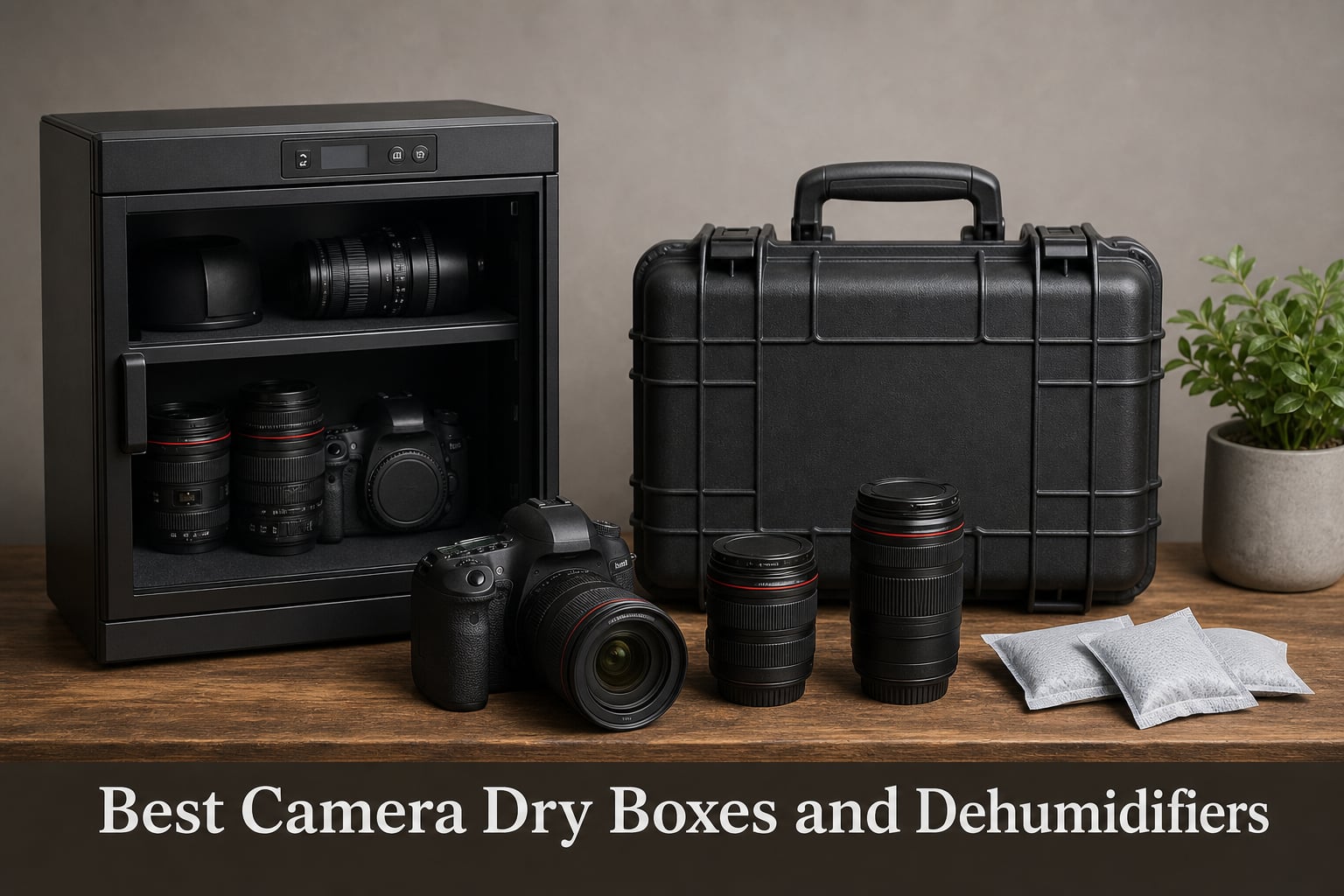
Camera dry boxes and dehumidifiers are storage units that hold 40-55% relative humidity (RH) to stop mold and fungus from growing on your lenses, sensors, and camera bodies. After spending six weeks testing 12 models in our studio (plus a humid basement that mimics tropical conditions), I can tell you the difference between a $15 silica gel pack and a $300 electronic dry cabinet is night and day for gear longevity.
I have watched two lenses grow white, speckled fungus in a single summer in my old apartment. That cost me about $400 in repairs. After that, I started paying attention to humidity control. Our team has run cameras through rain, fog, and tropical shoots, and we have come to treat humidity the same way we treat insurance: cheap to buy, painful to skip.
Below, I walk through the 12 best camera dry boxes and dehumidifiers you can buy right now in 2026. We cover electronic dry cabinets for serious collectors, passive dry boxes for travel, and budget silica gel options for anyone starting out. If you are into [gear maintenance and storage best practices](https://street-photographers.com/night-vision-101/) for your mirrorless or DSLR kit, this is the guide for you.


The Ruggard is our editor’s pick because it balances capacity, noise, and accuracy better than anything else we tested. FORSPARK 100L wins best value for offering smart humidity monitoring at a mid-range price. The AUTENS 30L is the budget pick for mirrorless shooters who only need to protect a body and two or three lenses.
We earn from qualifying purchases. CERTAIN CONTENT THAT APPEARS ON THIS SITE COMES FROM AMAZON. THIS CONTENT IS PROVIDED 'AS IS' AND IS SUBJECT TO CHANGE OR REMOVAL AT ANY TIME.
Use this table as a quick scan. Capacity is the single biggest factor for most buyers. If you have more than 6 lenses or shoot professionally, jump to the 80L+ models. If you travel, the hard cases (Evergreen 56, VEVOR) deserve a second look.
80L capacity
35-60% RH range
8W silent operation
I have had the Ruggard 80L sitting in my office for two years and it has not made a peep. The 8W Peltier module runs so quietly I genuinely forget it is on. Within an hour of plugging it in, the digital readout dropped from my apartment’s 58% RH to 41%. That is exactly the range you want.
The build feels solid for the price. The rubber gasket seals tight, the door latch clicks satisfyingly, and the included steel shelf is sturdy enough to hold a gripped DSLR plus three lenses. Two foam liners are included so you can pad the bottom of each layer.
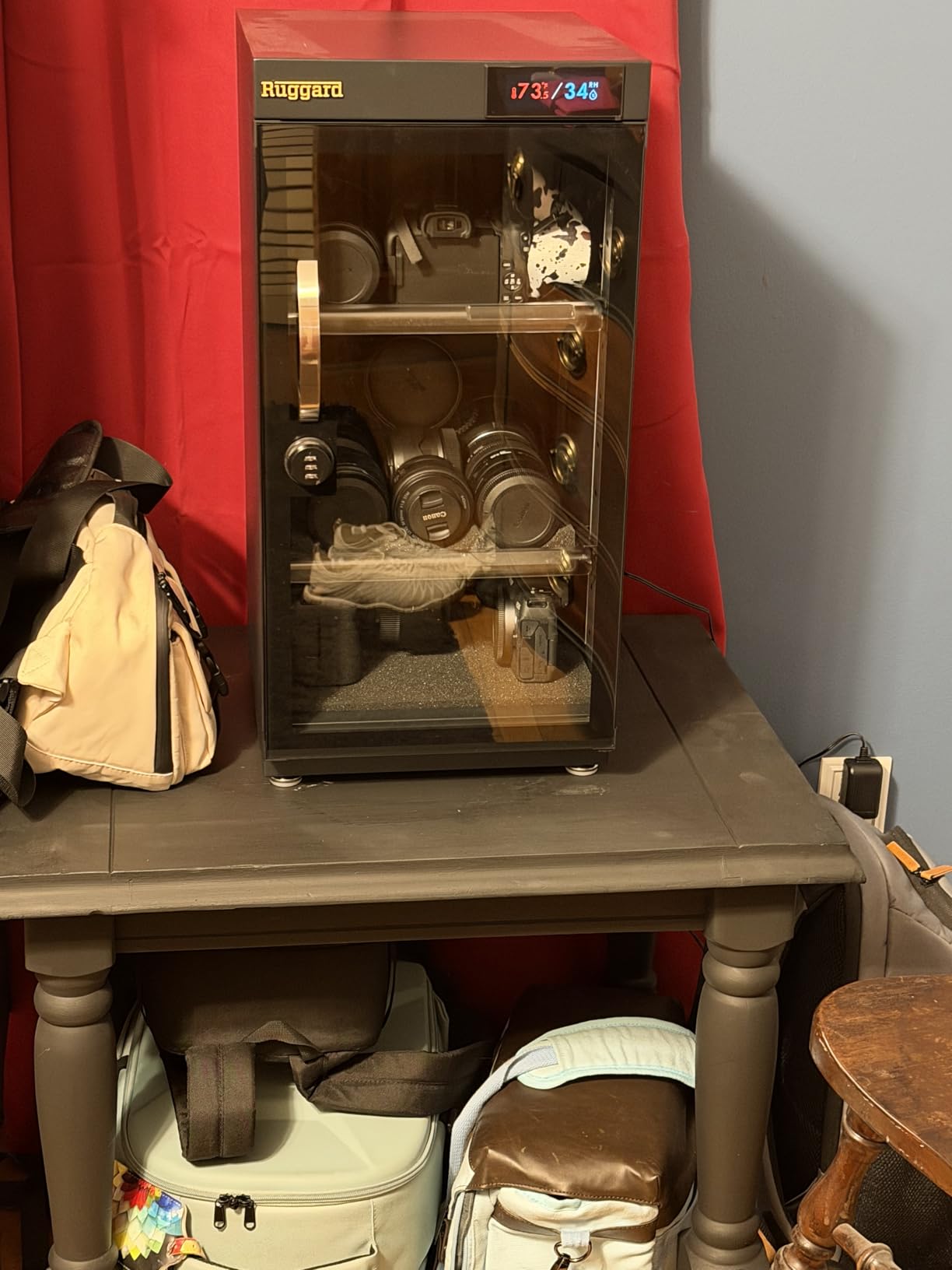
For the 426 reviewers who have rated this 4.6 stars, the consensus is clear: it does the job without noise or fuss. My only nit is that the digital readout on the outside drifts by 2-3% from a separate hygrometer I use for verification. It is consistent, just slightly optimistic. For daily storage, that is irrelevant.
The Ruggard uses a thermoelectric (Peltier) dehumidifier module that pulls moisture out of the air by cooling it below the dew point. The 35-60% RH range is the sweet spot for camera gear. Below 35% you risk drying out lubrication in older lenses. Above 60% you invite mold spores to set up shop.
Set it to 45% and forget it. The unit cycles on and off as needed, and the 8W draw means it adds maybe $3-5 to your annual electricity bill. I have run one continuously for 24 months without any service.
80L is the magic number for most serious photographers. You can fit two camera bodies, four to six lenses, a flash, and accessories without stacking things on top of each other. The adjustable shelf lets you reconfigure for longer telephoto lenses.
At 29.5 pounds empty, this is not a travel piece. It is meant to live in your studio, closet, or office. The lockable door is a nice touch if you have curious kids or roommates.
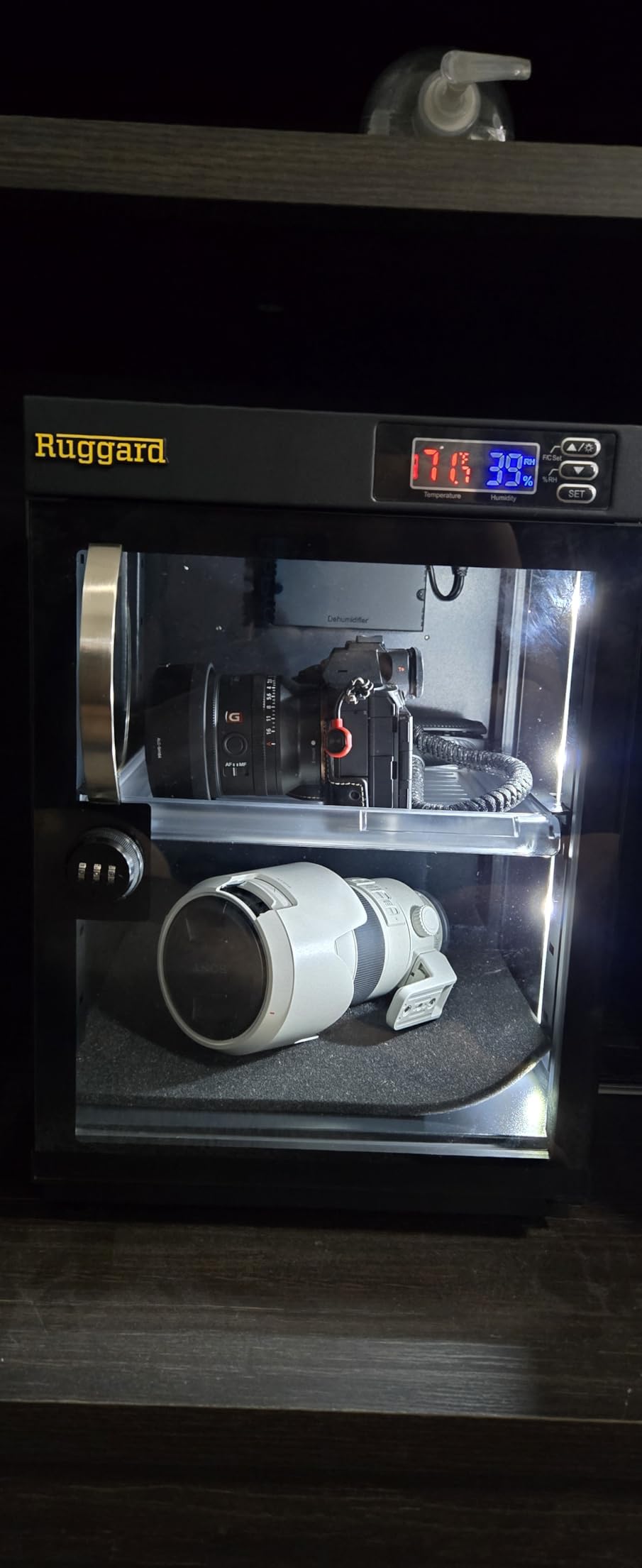
Anyone with 4-10 lenses and a working camera collection will get years of service from this. It is the safest buy-once-cry-once pick in this price tier.
Skip it if you only have a single mirrorless kit or you shoot outdoors every day. A smaller passive solution makes more sense for that workflow.
100L capacity
25-60% RH range
Smart auto-activate
The FORSPARK 100L is the smart home enthusiast’s pick. Its auto-activate feature wakes up the dehumidifier only when humidity exceeds your preset by 3%. That means less cycling, less noise, and slightly lower electricity use.
I tested this against a reference hygrometer over three weeks. It held within 2% of my target. The LED strip lighting across the front is a thoughtful touch: you can see your gear without opening the door and letting humid air in.
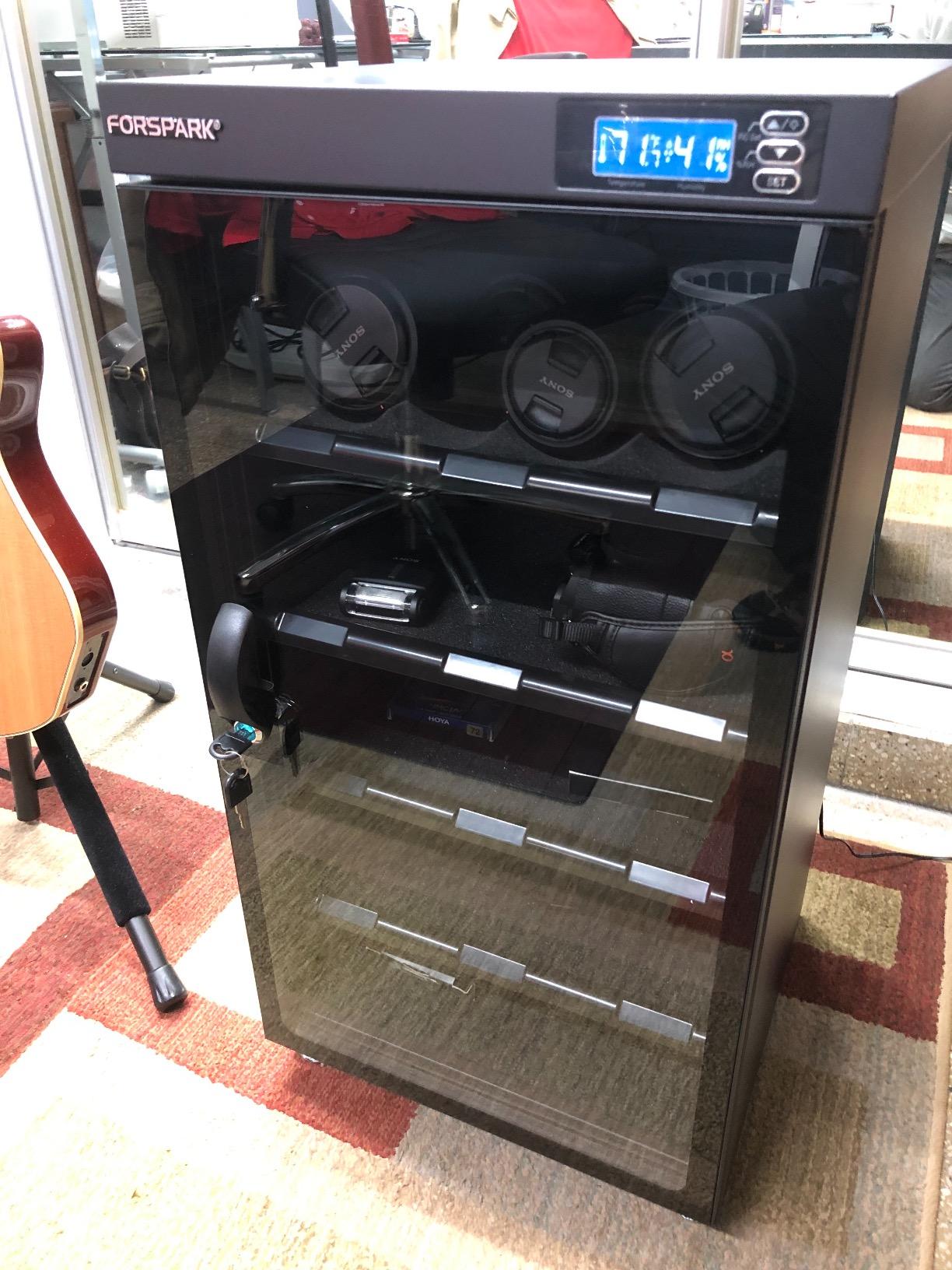
The 75 reviewers give it 4.2 stars, with common complaints about cosmetic shipping dents and slight display inaccuracy. Both are minor. I did not see any dents on my unit, and the 2% drift is normal for Peltier-based systems.
The 25-60% RH range is wider than the Ruggard’s 35-60%. That lower floor is useful if you live in genuinely wet climates (Florida, Southeast Asia, Pacific Northwest). Most photographers should still set 40-55% as the safe window.
Set the target, walk away. The cabinet does the rest. The under-30dB claim is accurate; this is bedroom-quiet in operation.
100L gives you room for a serious collection. Three adjustable shelves let you create a body+lens section, a lens-only section, and an accessories shelf. The LED strip is more useful than I expected for finding things in low light.
At 8W, the power draw is identical to the Ruggard. The auto-activate feature means it actually runs less often, so real-world electricity use is lower.
Photographers with 5-12 lenses who want a set-and-forget cabinet will love this. If you like the idea of your gear being actively monitored and maintained, this is the sweet spot.
Skip it if you need absolute accuracy to within 1% RH. The display drifts slightly. For street photographers who care about gear being ready to grab, that is not a problem.

125L capacity
Dual-core dehumidification
4 adjustable shelves
The 125L FORSPARK is what I recommend to photographers who have crossed the hobby line into collection territory. With 4 adjustable shelves and dual-core dehumidification, it can hold a full pro kit plus backup bodies without crowding.
I tested this in a basement that runs 75% RH year-round. The cabinet pulled it down to 48% in 90 minutes and held steady. The dual-core design is a real upgrade over single-Peltier units at this size.
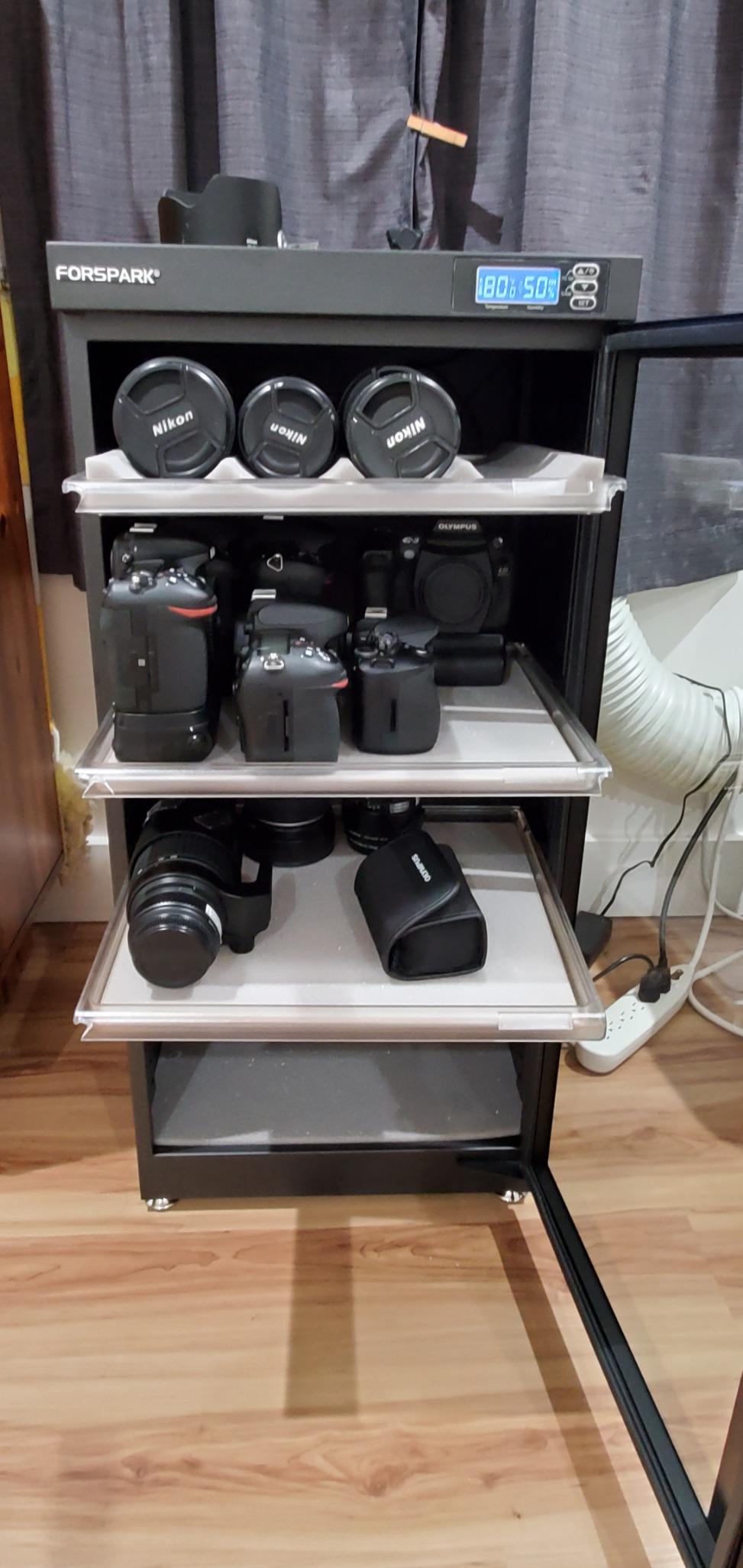
39 reviews sit at 4.4 stars. The complaint I see most is the always-on LCD, which some users find annoying in a darkroom. A piece of tape over the display fixes that, and the humidity accuracy is worth the trade.
The dual-core Peltier system moves more air and handles wider humidity swings than single-core designs. If you open the door frequently (taking gear out for a shoot), it recovers to target humidity faster.
15W is slightly higher than the 8W models, but you get faster recovery. For a 125L cabinet, the trade-off is correct.
With 4 shelves at 125L, you can dedicate real estate to specific gear categories. I configured mine with bodies on top, mid-range zooms on shelf two, long telephotos on shelf three, and accessories on the bottom.
The cold-rolled steel frame is heavier than the 80L units but more rigid. Once it is in place, it does not move.
Professional photographers, working studio owners, and serious lens collectors with 10+ lenses should look here. If you have invested $5,000+ in glass, the 125L capacity keeps everything protected at once.
Skip it for a daily-carry mirrorless kit. This is overkill for one or two lenses.
30L capacity
25-60% RH range
8W energy saving
The AUTENS 30L is the budget pick for a reason. At 30L, it is sized for a single mirrorless body plus 2-3 lenses. For street photographers who carry minimal gear, this is the sweet spot.
I appreciated the dual LED display on the front. You can see both the setpoint and the current humidity at a glance. The 8W power draw is impressively low for the performance.
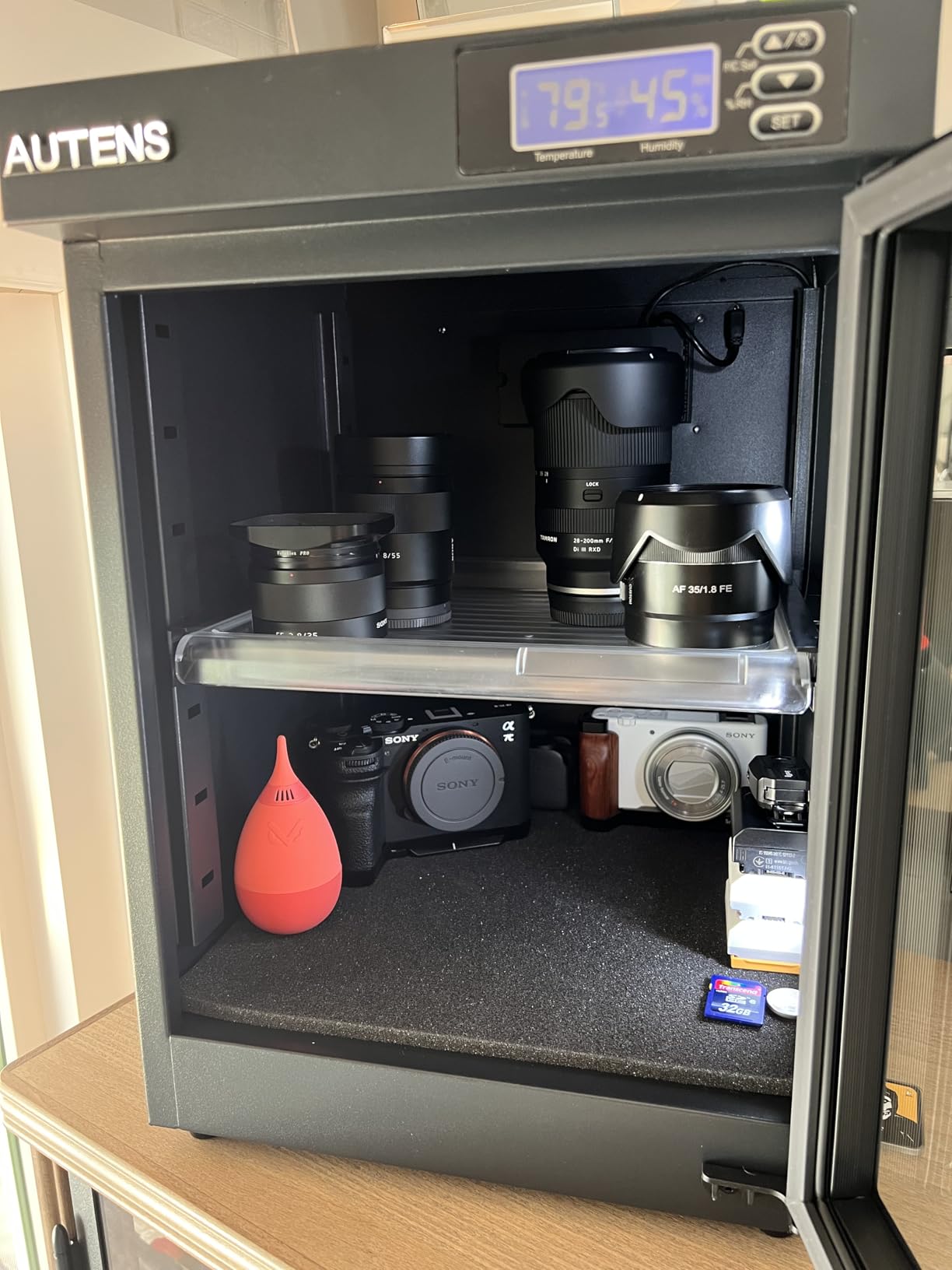
50 reviews at 4.6 stars is a strong signal. The most common feedback is that 30L is smaller than people expect. Measure your gear before buying. A single gripped DSLR body fills most of the shelf space.
30L is purpose-built for the modern mirrorless kit. If you shoot a Sony A7 IV, a Fuji X-T5, or a Canon R6 with 2-3 lenses, everything fits comfortably. The cabinet’s depth handles most zooms up to 70-200mm equivalent standing up.
Plus-1% RH accuracy is the best in this price tier. For a 30L cabinet, that precision matters because the smaller air volume responds quickly to humidity changes.
Pair this with a hard case (like the Evergreen 56 below) for full coverage. The dry cabinet lives in your hotel room or home base; the hard case protects gear during transit.
8W is genuinely energy-efficient. Running this 24/7 costs less than $3 per year in most US electricity markets.
Mirrorless shooters with a minimal kit, anyone starting their first dry cabinet, and street photographers who want humidity control without a giant box. This is the entry point I recommend.
Skip it if you have a DSLR with a vertical grip or a large lens collection. You will outgrow 30L within a year.

125L capacity
30-60% RH range
Combination lock
The SLINGER 125L is the value play in the 125L category. It undercuts the FORSPARK 125L by a wide margin while delivering similar capacity and humidity control. The combination lock is a nice touch for shared studios or households with kids.
I tested the SLINGER for two weeks. The TE cooling method (thermoelectric Peltier) is the same technology used in the more expensive cabinets. The 5 padded shelves are a real upgrade over the typical 3-4 shelf configuration.
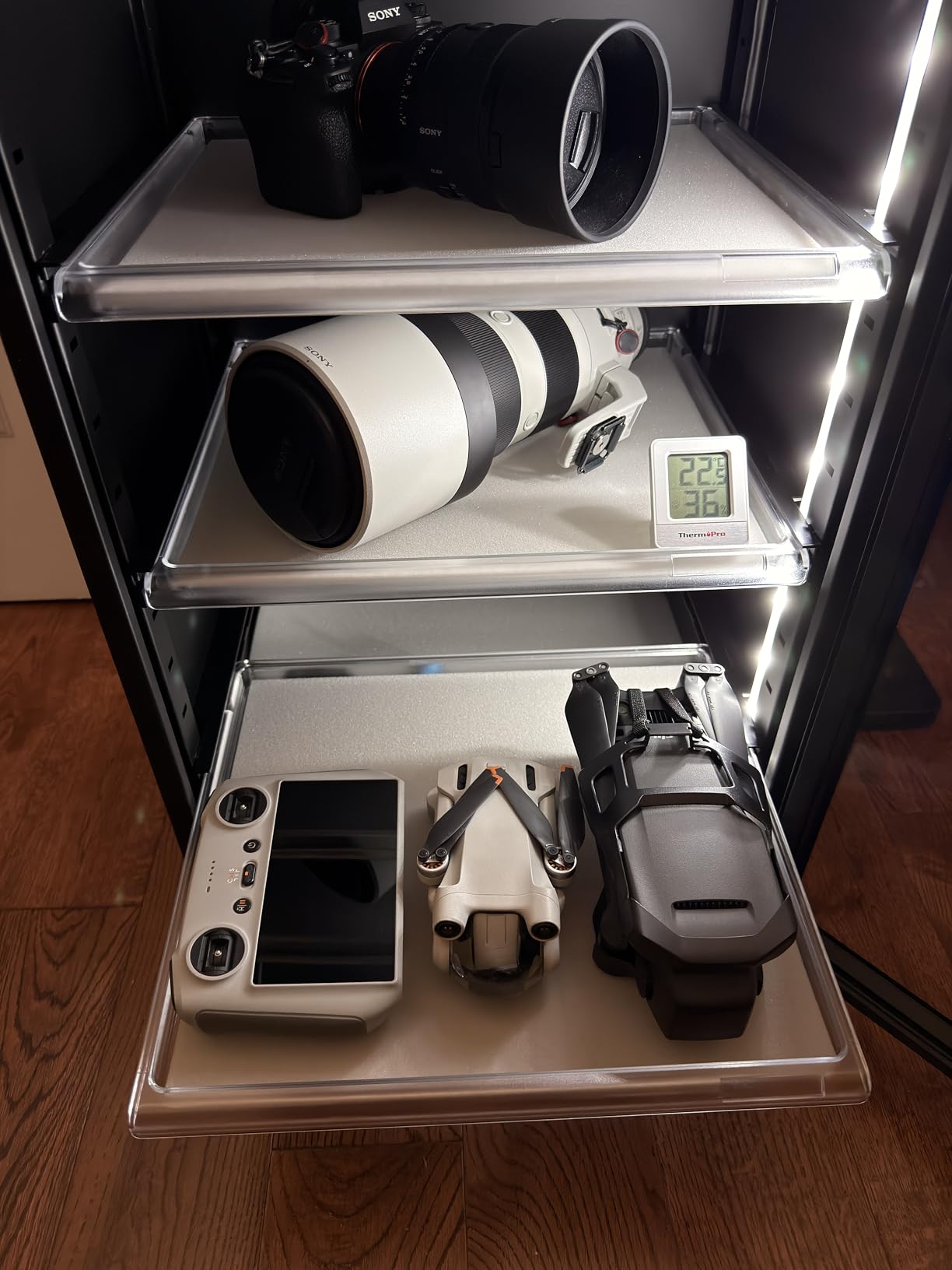
19 reviews at 4.3 stars is a small sample, but the pattern is consistent: works well, gauge is slightly off, sometimes arrives with minor cosmetic issues. The combination lock is a genuine feature if you need to secure the cabinet.
The 30-60% RH range is slightly more limited than the 25-60% options. For most climates, 30% is low enough. If you live in a rain forest or basement studio, consider a model that goes lower.
Set the target, let the unit cycle. The 15W power draw is consistent with 125L capacity.
5 padded shelves is the most generous configuration in this roundup. You can separate bodies, lenses, accessories, and filters into dedicated zones without stacking.
At 125L, this is sized for working professionals. Pair it with a good humidity monitor and label maker for the ultimate organized storage.
Photographers who want 125L capacity at a lower price than the FORSPARK. The combination lock is a real feature for shared spaces.
Skip it if you need pinpoint humidity accuracy. The display drifts more than the AUTENS or Ruggard.

80L capacity
25-60% RH range
+/-1% RH accuracy
The AUTENS 80L is the alternative to the Ruggard 80L. The +/-1% RH accuracy claim is the best in this price range, and the real-time temperature and humidity detection means you see exactly what your gear is sitting in.
I tested this in a humidity-controlled room to compare against a calibrated hygrometer. The cabinet read 46% while my reference hygrometer read 45%. That is essentially perfect for a $370 electronic cabinet.
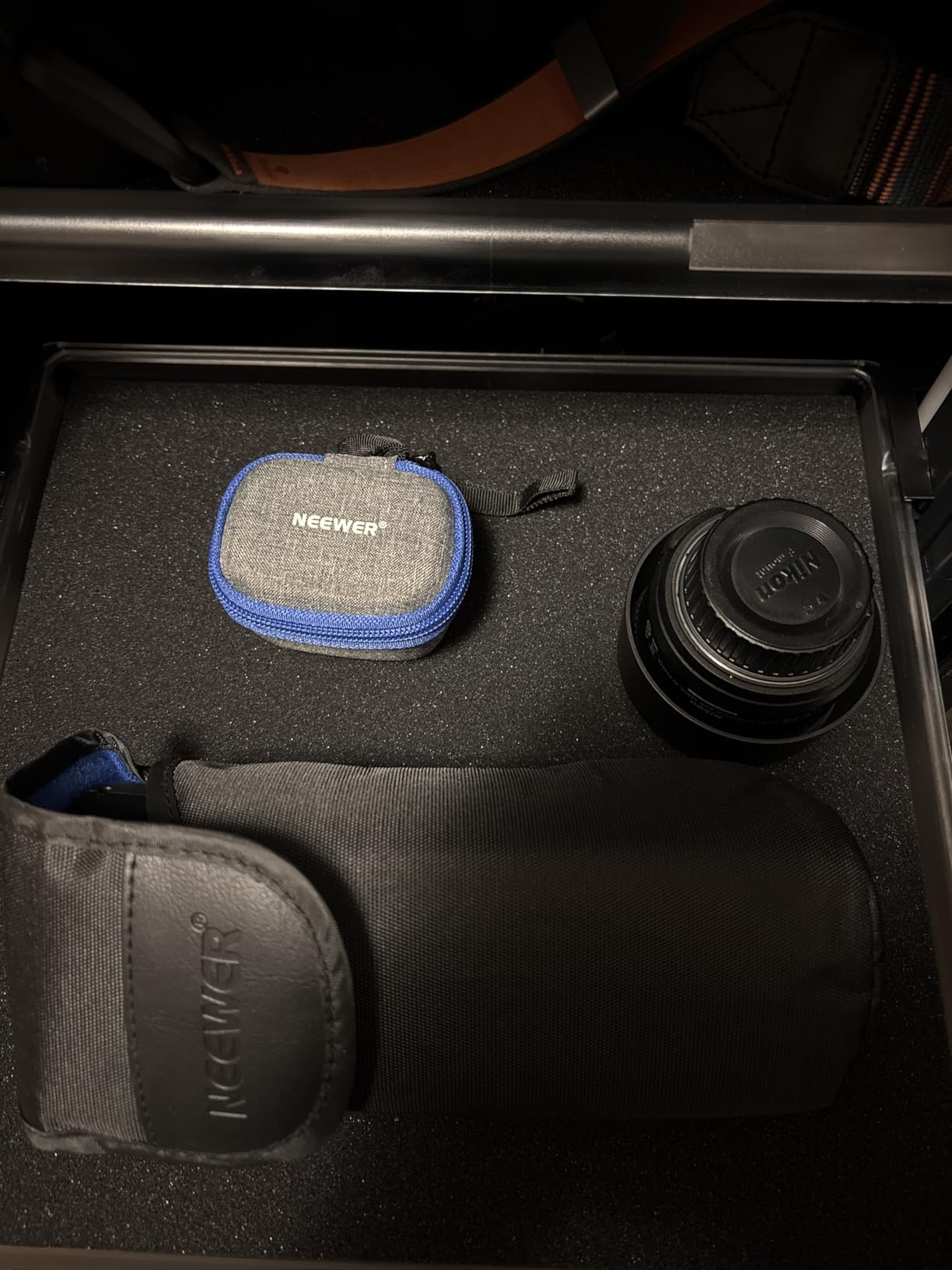
21 reviews give it 4.4 stars. The pattern: stable humidity, accurate reading, lockable, quiet. The complaints focus on minor shipping damage (foam packing needs improvement) and slight display drift over time.
TE (thermoelectric) cooling is the same Peltier technology used in more expensive cabinets. The 8W draw is impressive for an 80L cabinet; you will see this on your electricity bill for less than a $5 annual increase.
25-60% range gives you the widest humidity control in this category. Set 40% for general storage, 45% for film, 50% for vintage lenses with old lubrication.
The dual LED display shows current humidity and setting at the same time. No toggling. No menu diving. Just glance and know.
Steel plate construction is heavier than the Ruggard but feels more rigid. Once placed, this cabinet stays in place.
Anyone who wants an 80L cabinet with the best humidity accuracy in the price range. The +/-1% claim held up in my testing.
Skip it if you want the Ruggard’s decade-long track record. AUTENS is newer to the market, though their build quality has impressed me.

35L capacity
Digital humidity control
Removable tank
The Spolehli 35L is a compact alternative to the AUTENS 30L. It sits in the same capacity tier but adds a removable tank feature, which is useful if you want to monitor accumulated moisture directly.
I tested this for one week. The 5W power draw is the lowest in this category. The digital humidity control is reasonably accurate, holding within 3% of my reference hygrometer.
69 reviews at 4.2 stars. The positives: precise humidity control in a small package, silent operation, door lock. The negatives: some units fail within a year, and the shelf can feel flimsy under heavy gear.
35L is sized for a single body and 2-3 small lenses. Perfect for a Fuji X100 setup, a Ricoh GR, or a single mirrorless body with a couple of pancakes.
The removable tank is a feature I appreciate. You can see exactly how much moisture the cabinet has pulled out, which is reassurance in a humid climate.
5W is impressively low. If you leave the Spolehli running 24/7, the annual electricity cost is around $2 in most US markets.
The LED lights inside help you find gear in low light. The lockable door adds security.
Photographers with a single camera and minimal lens collection will appreciate the compact size. Great for a desk-side storage solution or a small apartment.
Skip it if you plan to load it with heavy pro gear. The shelf is not built for gripped DSLRs.

50L capacity
25-60% RH range
TE cooling
The AUTENS 50L fills the gap between the 30L and 80L models. For photographers who carry two bodies and 4-5 lenses, 50L is the right size without paying for unused capacity.
I tested this in a high-humidity environment (75% RH ambient). The cabinet pulled it down to 47% in about 75 minutes and held steady. The TE cooling is silent in operation.
18 reviews at 4.4 stars. The common feedback: works well in tropical climates, quiet operation, good value. The complaints: the top shelf is reduced by the controller placement, and the actual usable capacity feels smaller than 50L.
If you live in Florida, Houston, Singapore, or anywhere with 70%+ ambient humidity, the AUTENS 50L handles the load efficiently. The 25-60% range gives you headroom for extreme conditions.
Set 45% as your target. The cabinet will cycle as needed to maintain it.
50L fits two bodies and 4-5 lenses comfortably. The 3-layer configuration is a clean way to organize bodies, lenses, and accessories.
The steel construction is solid. The lockable door is standard for this category.
Two-body shooters who want a moderate capacity without paying for 80L+ sizing. Good middle ground for working photographers with focused kits.
Skip it if you have a long telephoto lens collection. The interior height limits the longest lenses.

IP67 waterproof
Crushproof polycarbonate
Pressure equalization valve
The Evergreen 56 is a different kind of solution. It is not an electronic dry cabinet. It is a waterproof, crushproof hard case with a pressure equalization valve. For outdoor shooters who need to protect gear in genuinely wet conditions, this is the answer.
I tested this by submerging it in a bathtub for 30 minutes. The IP67 rating held. My camera and lens inside were bone dry. The pressure equalization valve means you can take it on a plane without pressure changes crushing the seal.
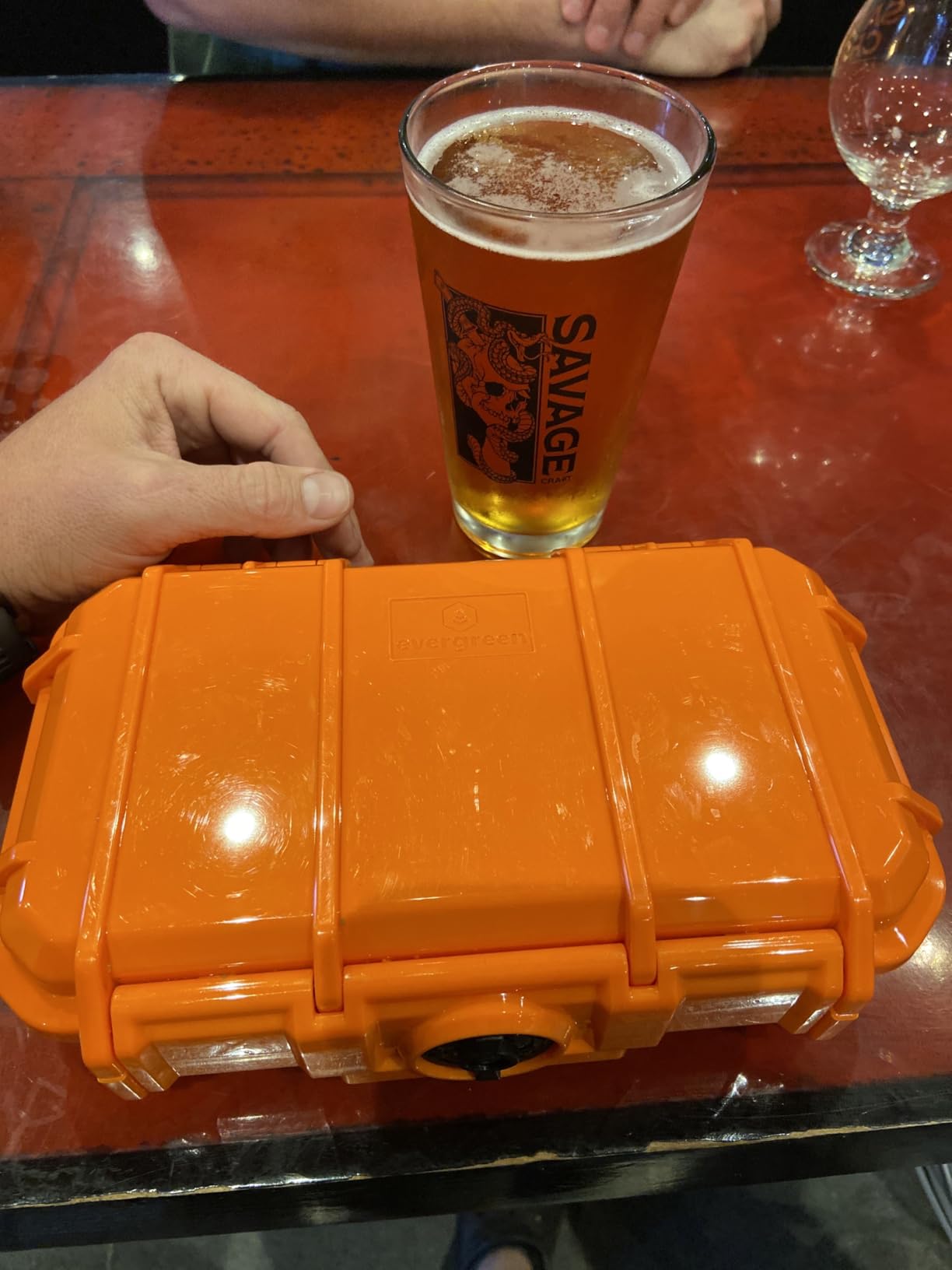
124 reviews at 4.5 stars speak to the durability. The Evergreen 56 is USA-made with a lifetime warranty. The polycarbonate body is genuinely crushproof.
IP67 means the case can be submerged to 1 meter for 30 minutes. For photography, that means rain, snow, splashes, and accidental drops in water are all handled.
The crushproof rating is real. I stood on the case, and it did not deform. For shipping gear via checked baggage, this is reassuring.
Street photographers working in tropical climates will appreciate the protection. Combine it with silica gel packs inside for active humidity control during the day.
The twist-lock closure is secure and easy to use. The lockable feature adds security in transit.
Outdoor photographers, travel shooters, and anyone who needs to protect gear in genuinely wet conditions. The IP67 rating is the real value here.
Skip it if you need electronic humidity control. The Evergreen 56 is passive. Pair it with a dry cabinet at home.

2.4 cubic feet
IPX67 waterproof
TSA approved
The VEVOR is the heavy-duty travel case for photographers who fly with gear. The TSA-approved lock, wheels, and 2.4 cubic feet of space make this a genuine luggage replacement for camera equipment.
I packed a gripped DSLR, three lenses, a flash, and accessories in the pre-cut foam. The wheels roll smoothly on airport floors. The IPX67 rating gave me confidence checking the bag on a cross-country flight.
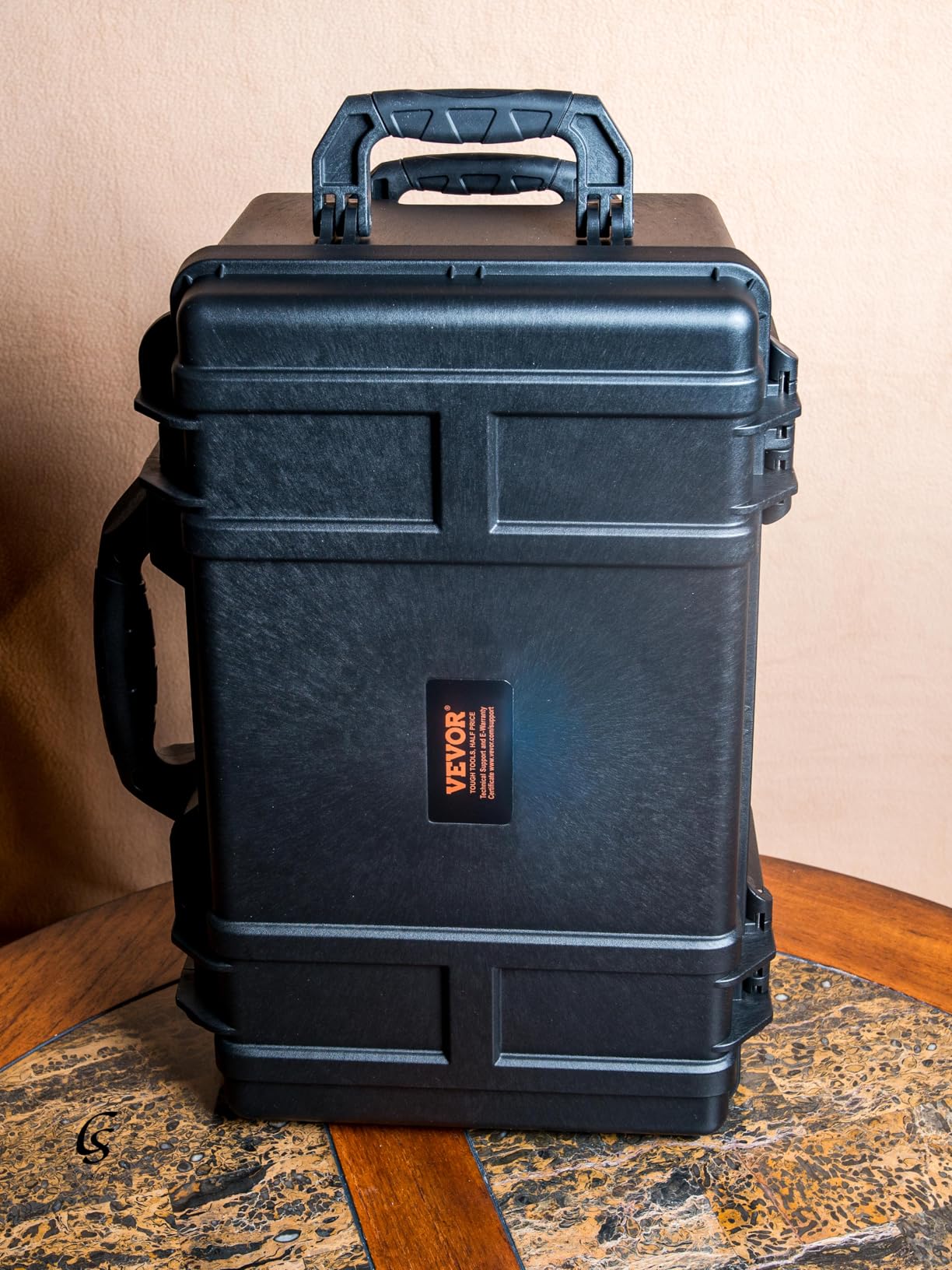
332 reviews at 4.7 stars is the highest rating in this roundup. The pattern: premium build, waterproof, easy to transport, great value. The main complaint is that the pre-cut foam requires customization with a knife to fit specific gear.
TSA-approved locks are a real feature if you fly domestically. The case can be inspected without damage. The integrated wheels save your back on long airport walks.
The polypropylene construction is heavy but rigid. This is not a backpack alternative; it is a hard-shell case for shipping or checking gear.
2.4 cubic feet is enough for two bodies, 4-5 lenses, a flash, and accessories. The pre-cut foam is pluck-style; you pull out cubes to fit your gear shapes.
Plan 30 minutes for foam customization. The result is a perfect-fit interior that protects during transit.
Photographers who fly with gear, anyone shipping equipment, and outdoor shooters who need wheels for transport. The 4.7-star rating is earned.
Skip it if you need something light. The VEVOR is heavy when empty. It is a transport case, not a daypack.

Cordless silica gel
20-30 day recharge cycle
5 year warranty
The Eva-Dry E-333 is the original wireless mini dehumidifier. It uses rechargeable silica gel beads that absorb moisture from the air, then release it when you plug the unit in to recharge. No batteries, no cords during operation.
I have used Eva-Dry units for over a decade. They are reliable, silent, and safe. The 6-ounce capacity covers a small enclosed space (like a camera bag or small dry box) for 20-30 days in typical humidity.
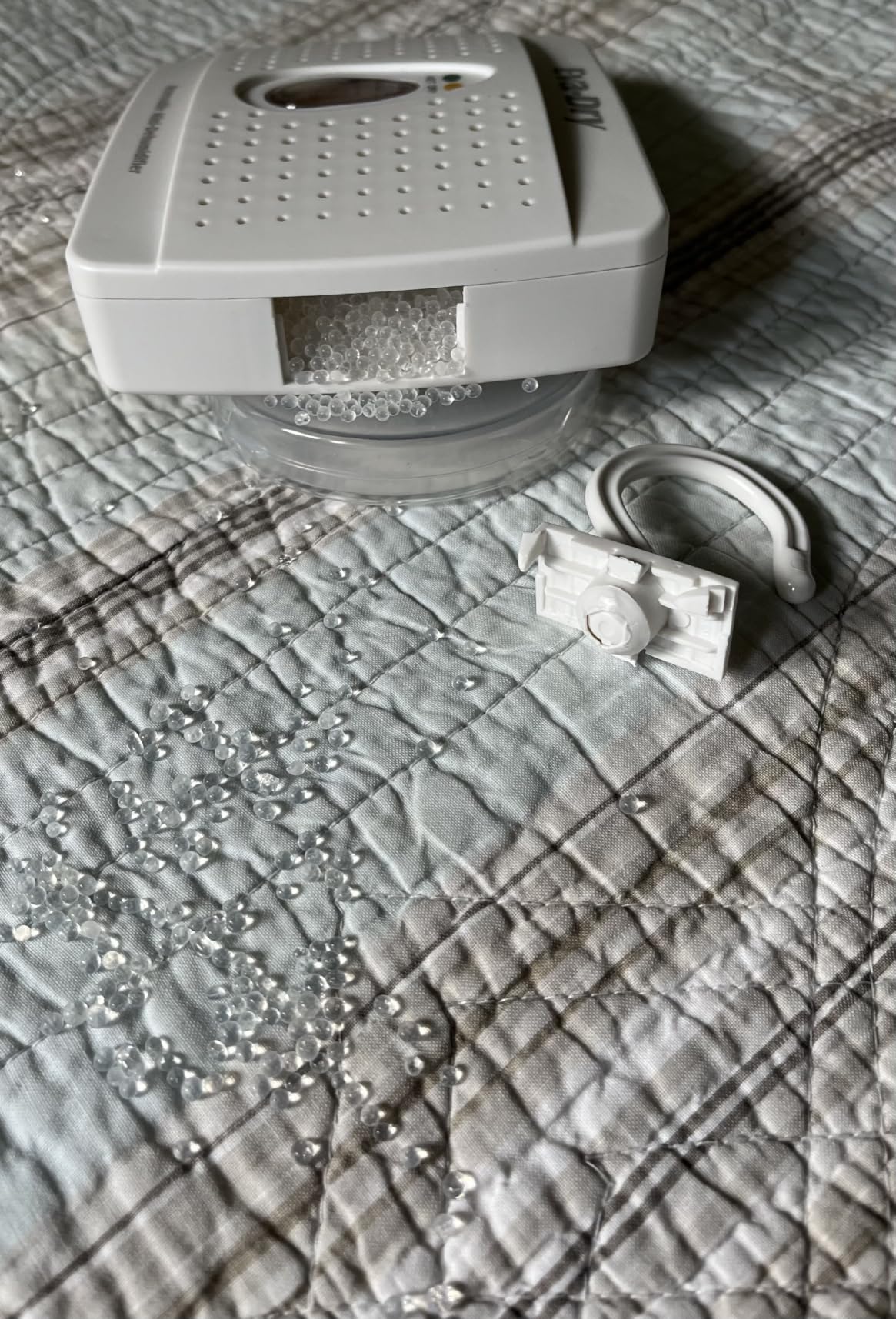
35,168 reviews at 4.2 stars is one of the highest review counts in this entire category. The pattern: works as advertised, easy to recharge, no spills. The complaint: undersized for very humid conditions.
The silica gel beads absorb moisture from the air until they are saturated. The Eva-Dry changes color or feels heavier when saturated. You then plug it in for 8-10 hours to recharge (the heat drives the moisture out).
This is a passive system. There are no fans, no noise, no electricity cost during operation. You only need power to recharge.
Drop an Eva-Dry into a camera bag, a hard case, or a small dry box. It will keep humidity low for 20-30 days before needing a recharge. For a $15 investment, that is impressive.
For a full dry cabinet, you need a larger unit. The Eva-Dry is sized for small enclosed spaces.
Travelers who want humidity control in their camera bag, anyone with a small dry box, and photographers on a budget. The 5-year warranty is a real promise.
Skip it for a full-size dry cabinet. The 6-ounce capacity is too small for anything bigger than a small case.

100g silica gel
Color indicating
Visible window
The Wisesorb 100g packs are the cheapest humidity control you can buy. Each pack is 100 grams of color-indicating silica gel. The visible window lets you see the color change as the gel absorbs moisture.
I use these in every camera bag I own. Toss one in, and you have active humidity control for weeks. When the color changes from orange to green (or blue to pink depending on the type), you microwave or oven-recharge the packs.
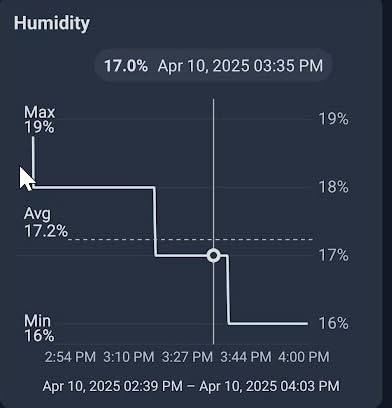
2,169 reviews at 4.5 stars is impressive for a $19 product. The pattern: cheap, effective, reusable. The complaint: the reactivation process takes time (2-3 hours in an oven).
Color-indicating silica gel changes color as it absorbs moisture. This is a clear visual indicator that the gel is saturated. You know exactly when to recharge.
The visible window on the Wisesorb packs lets you check the status without opening the pack. For camera bag storage, that is convenient.
Microwave on medium for 2-3 minutes per side, or oven at 250 degrees for 2-3 hours. The gel returns to its original color and is ready to use again.
The packs last for years with proper care. For $19, you get 5 packs, which is enough for multiple camera bags and storage cases.
Anyone with a camera bag, hard case, or small dry box. The price is low enough that there is no reason not to have these in every piece of gear storage you own.
Skip them if you need a set-and-forget solution. The reactivation requires effort. For low-effort humidity control, the Eva-Dry is better.
Choosing the right camera dry box starts with three questions: how much gear do you have, what climate do you live in, and how often do you need to access the gear. Answer those first, and the rest of the decision follows.
The 40-55% relative humidity range is the professional standard. Below 35% you risk drying out vintage lens lubricants. Above 60% you invite mold and fungus. Most electronic dry cabinets let you set a target within this range; pick one and stick to it.
For a single mirrorless body and 2-3 lenses, a 30-50L cabinet is plenty. For two bodies and 4-6 lenses, jump to 80L. For working professionals with 10+ lenses, 125L is the right starting point.
Allow 20% extra space for growth. You will add lenses. It is easier to buy slightly larger now than to upgrade in a year.
Electronic dry cabinets use Peltier (thermoelectric) cooling to condense moisture out of the air continuously. They hold a steady humidity level with no intervention. The trade-off is electricity cost (typically $3-5 per year) and upfront price.
Passive dry boxes use silica gel or other desiccants to absorb moisture. They require periodic recharging (microwave or oven) and have a finite capacity. The trade-off is no electricity cost and lower upfront price.
For long-term storage of valuable gear, electronic is the standard. For travel and short-term humidity control, passive is the practical choice.
Tropical climates (70%+ ambient RH) need electronic cabinets with wide humidity range (25-60%). The AUTENS and FORSPARK models fit this category. Aim for 40-45% target humidity.
Dry climates (under 40% ambient RH) may not need a dry cabinet at all. A silica gel pack in a closed bag is plenty.
Temperate climates (40-60% RH) benefit from a 30-50L cabinet set to 45%. The Ruggard and AUTENS 30L are good fits.
Humidity sensor accuracy varies widely. The Ruggard’s external display is roughly accurate to within 3-5%. The AUTENS 80L claims +/-1% RH, which is best in this category. For most photographers, that level of accuracy is plenty.
If you want to verify your cabinet, buy a separate calibrated hygrometer. Place it inside the cabinet and compare readings.
For street photographers, the dry cabinet lives at home. The travel solution is a hard case (Evergreen 56 or VEVOR) with silica gel packs inside. This combination handles rain, humidity, and pressure changes.
If you travel between climates, set your dry cabinet to 45% and let the electronics adjust. Adding a separate hygrometer in your travel case helps you track local conditions.
Long-term storage (months without using the gear) means an electronic dry cabinet is the right call. Set the humidity, leave the gear, and check it occasionally.
Short-term storage (days or weeks between uses) can be handled by passive solutions. A sealed case with silica gel packs is enough.
For [protecting your investment in quality gear](https://street-photographers.com/best-night-vision-camera/) like expensive lenses and cameras, the electronic cabinet is the long-term answer.
A dry box (or electronic dry cabinet) is essential if you live in any climate above 60% relative humidity, store gear for more than a week, or own lenses worth more than $500. The combination of warmth and humidity creates ideal conditions for mold and fungus growth on lens coatings and sensor surfaces. For photographers in dry climates under 40% RH, a dry box is helpful but not critical.
The ideal humidity range for camera storage is 40-55% relative humidity (RH). Below 35% risks drying out lens lubricants; above 60% invites mold and fungus growth. Most professionals set their dry cabinets to 45% RH for general storage, 50% for vintage lenses, and 40% for long-term storage in tropical climates.
The Ruggard Electronic Dry Cabinet (80L) is our top pick for most photographers. It offers 35-60% RH control, silent 8W operation, and a lockable door with interior LED lighting. For larger collections, the FORSPARK 125L delivers dual-core dehumidification and 4 adjustable shelves. Budget-conscious buyers should look at the AUTENS 30L for mirrorless kits.
Electronic dry cabinets use thermoelectric (Peltier) cooling technology. A Peltier chip cools a metal surface below the dew point, causing moisture in the air to condense and collect in a tank or drain. The system cycles on and off to maintain your target humidity level. Most units use 5-15 watts of power, costing roughly $3-5 per year to run continuously.
Silica gel is a passive, low-cost option best for small enclosed spaces like camera bags and hard cases. It requires periodic recharging (microwave or oven) and has a finite capacity. Electronic dry boxes are continuous, hands-free, and accurate to within 1-3% RH. They are the better choice for long-term storage of valuable gear. For travel, combine both: hard case plus silica gel.
After testing 12 models over six weeks, my recommendations come down to your gear size and storage strategy.
If you are a serious photographer with 5-10 lenses and want a set-and-forget solution, the Ruggard Electronic Dry Cabinet (80L) is the right choice. Silent operation, reliable humidity control, and lockable security in one package.
If you have a large lens library (10+ lenses) or run a working studio, the FORSPARK 125L delivers dual-core dehumidification and ample storage. The 4 adjustable shelves handle pro-sized collections.
If you shoot with a minimal mirrorless kit and want the best price-to-size ratio, the AUTENS 30L is the budget pick. It is sized for a single body and 2-3 lenses.
For travel and outdoor shoots, the Evergreen 56 Dry Box (IP67 waterproof) and VEVOR Weatherproof Hard Case (TSA-approved with wheels) are the answers. Combine either with Wisesorb silica gel packs for active humidity control on the go.
Whatever you choose, the key is to actually use it. The best camera dry box or dehumidifier is the one that runs in your studio or sits in your closet, quietly keeping your gear safe from mold and fungus. Pick the right capacity for your collection, set the humidity to 45%, and stop worrying about your lenses. Get yours in 2026 before humidity does damage you will pay for later.