What Scope for a Deer Rifle? 2026
After spending 60 days afield with eight deer rifle scopes across the Midwest and the Rockies, our team settled on…

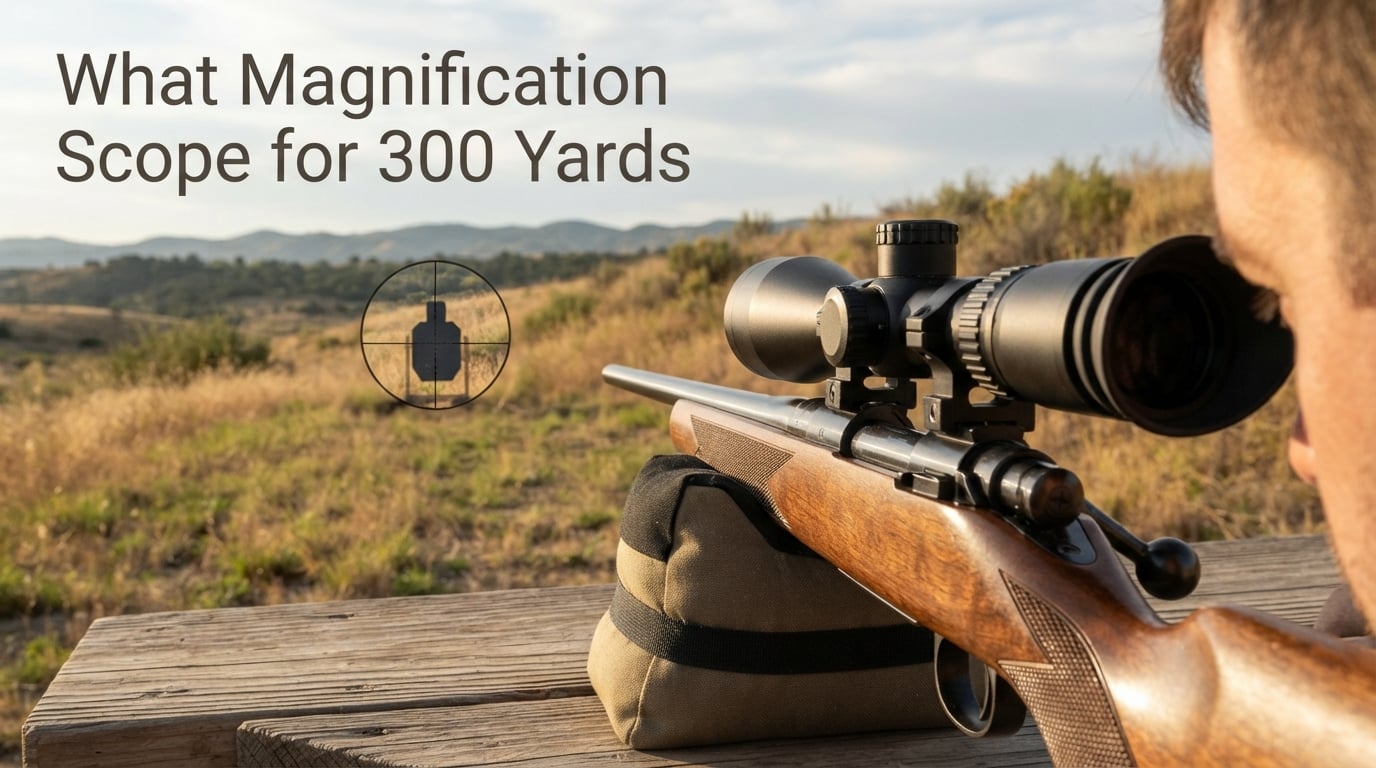
When someone asks me what magnification scope for 300 yards works best, I give them the same answer I gave my hunting buddy last fall: a magnification range of 6x to 9x hits the sweet spot, with a 4x to 12x variable giving you the most versatility. I have spent the last three years shooting whitetail, paper, and steel out to 600 yards with everything from a 3-9x to a 5-25x, and 300 yards is where magnification choices start to matter in a real way.
Three hundred yards is a benchmark distance in the rifle world. It is far enough that iron sights lose their edge, but close enough that you do not need a $2,000 precision rig to hit consistently. It is where hunters, target shooters, and AR-platform shooters all converge on the same question: how much magnification is enough? In this guide, I will walk you through the exact magnification ranges that work at 300 yards, the use-case breakdown I rely on, and the mistakes I have personally made so you do not repeat them.
The short answer: 6x to 9x of magnification is ideal for general shooting at 300 yards, and a 4x to 12x variable scope covers the widest range of use cases at this distance. A classic 3-9x scope is enough for most hunting and recreational shooting, while a 4-16x or 5-25x gives you extra reach for precision work and spotting bullet impacts on paper.
That single sentence is the answer most shooters are looking for. The rest of this article explains why that range works, when you want more, and when less magnification actually performs better at 300 yards. If you want a broader refresher on scope magnification basics before diving in, our complete rifle scope magnification guide is a good companion read.
This magnification distance chart is what I keep taped to the inside of my range bag. It maps distance to the magnification range that actually performs, with example scopes I have personally used or handled at each level.
| Distance | Recommended Magnification | Best For | Example Scopes |
|---|---|---|---|
| 0 to 100 yards | 1x to 4x | CQB, recoil-sensitive shooting, red-dot transitions | LPVOs, red dots, Aimpoint PRO |
| 100 to 300 yards | 3x to 9x | General hunting, recreational target, AR-platform | Bushnell Banner 2 3-9×40, Leupold VX-Freedom 3-9x |
| 300 to 500 yards | 4x to 12x (sweet spot) | Whitetail hunting, mid-range target, versatile use | Vortex Diamondback 4-12x, Leupold VX-5HD 3-15x |
| 500 to 800 yards | 5x to 25x | Precision rifle, PRS-style stages, western hunting | Vortex Viper PST Gen II 5-25x, Nightforce ATACR 4-16x |
| 800 to 1,000+ yards | 10x to 32x+ | Long-range benchrest, ELR, spotting impacts | Sightron S3 8-32x, high-end precision scopes |
Notice that the 300-yard row lands right between the hunting row and the precision row. That is the entire reason this question is so common: 300 yards is the transition zone where a 3-9x starts feeling marginal and a 4-16x starts feeling necessary.
I do not believe in one-size-fits-all magnification advice. The right scope for 300 yards depends almost entirely on what you are doing at 300 yards. Here is the breakdown I walk friends through.
For deer, elk, and similar game, 3x to 9x is the workhorse range. Most hunting shots at 300 yards happen in low light, often in timber transitions, where a wide field of view and reliable target acquisition matter more than spotting your bullet hole. A 3-9x or 4-12x gives you enough magnification to identify the animal and place a careful shot, without the narrow field of view that ruins your situational awareness.
For paper and steel at the range, 4x to 12x or 4x to 16x is the sweet spot. Target shooters want enough magnification to see their groups clearly, but not so much that the wobble of an unsupported position becomes punishing. A 4-16x lets you spot impacts on white paper without cranking the magnification all the way up, and it leaves headroom if you ever stretch out to 500 yards. If you struggle to read your impacts, our guide on spotting scopes for reading bullet holes pairs well with this magnification range.
For precision rifle competitions and PRS stages at 300 yards, 5x to 25x is where serious shooters live. You might not use the top end at 300 yards specifically, but the variable range lets you dial up for distant targets during a stage and dial down for close partials. This is where first focal plane scopes become genuinely useful, because the reticle subtensions stay accurate at every magnification.
For prairie dog and coyote hunting, 6x to 24x is common. Small targets at 300 yards demand more magnification than deer-sized targets, and varmint shooters rarely need the wide field of view a deer hunter does. A 6-24x or 4-16x is a typical varmint setup.
A low power variable optic, or LPVO, is a scope that starts at 1x and goes up to 6x, 8x, or 10x. They are hugely popular on AR-15s and AR-10s because they let you run the scope like a red dot at close range and dial up for distance. The question is whether they have enough magnification to be useful at 300 yards.
The honest answer is that a 1-6x LPVO is on the edge at 300 yards, and a 1-8x or 1-10x is a much better fit. The 6x top end is workable for 300-yard targets on steel, but you will struggle to read fine group details on paper and to identify small varmints at distance. If you are running an AR-platform and 300 yards is your max distance, a 1-10x LPVO gives you the most flexibility.
Where LPVOs fall short at 300 yards is reticle precision. Most LPVOs use second focal plane reticles that are only accurate at the highest magnification setting, and the daylight-bright illumination that makes them great at 1x often washes out at higher magnification. A traditional 4-12x or 4-16x scope will almost always outperform an LPVO at 300 yards and beyond. If you are considering moving beyond 300 yards, our guide to high magnification scopes for long range covers the next step up.
Focal plane is one of those scope terms that confuses new shooters, but the practical impact on your 300-yard setup is real.
In a first focal plane, or FFP, scope, the reticle is etched in front of the magnification lens. That means the reticle scales up and down with magnification. The reticle subtensions stay accurate at every magnification setting. Holdover marks, mil-dot spacing, and ranging references work the same on 4x as they do on 16x.
In a second focal plane, or SFP, scope, the reticle sits behind the magnification lens. The reticle stays the same physical size regardless of magnification. The reticle subtensions are only accurate at one specific magnification, usually the highest setting. At lower magnification, the mil-dots or MOA marks no longer correspond to real-world measurements.
For hunting at 300 yards, SFP is fine and usually cheaper. You will dial your holdover using the turrets, not the reticle, and the reticle stays the same thickness whether you are on 4x or 12x. For precision and PRS work, FFP is the right call because you need consistent reticle-based holdovers when you do not have time to dial.
This is one of my favorite angles on the 300-yard magnification question, and almost no mainstream guide covers it. The caliber you shoot genuinely changes how much magnification you want.
With a 6.5 Creedmoor or .308, your bullet drop at 300 yards is moderate and predictable. Trajectory is rarely the bottleneck for these calibers at 300 yards, so 3x to 9x is plenty for most shooting. You do not need extra magnification to compensate for holdover because the holdover is small.
The .223 drops noticeably at 300 yards, especially with lighter bullets. Shooters who run .223s often want more magnification to read wind calls and verify holdover on distant targets. 4x to 12x or 4x to 16x is a sensible range for .223 work at 300 yards and beyond.
Magnum calibers shoot flat at 300 yards, so magnification for holdover is not the issue. The reason magnum shooters at 300 yards want more magnification is to spot impacts on distant steel or to read conditions at long range. If you run a magnum, you are probably stretching past 300 yards, and 5x to 25x becomes a more natural fit. For magnum-specific scope picks, see our 300 Norma Magnum scope guide.
One piece of community advice that has held up in my testing is the 1x per 100 yards rule. The minimum magnification you want for any given distance equals the distance divided by 100. At 300 yards, that means at least 3x. At 500 yards, at least 5x. At 1,000 yards, at least 10x. It is a rough rule, but it lines up well with what actually works in practice.
Magnification is the headline number, but it is rarely the most important spec on a scope. Here are the factors that actually decide whether you can hit at 300 yards.
I cannot stress this enough. A 3-9x scope with excellent glass will outperform a 5-25x scope with mediocre glass at 300 yards. Resolution, contrast, and color fidelity matter far more than raw zoom. When you compare scopes in a store, look at edge-to-edge sharpness and how well the image holds up at the top end of the magnification range.
Field of view, or FOV, is how wide the world appears through the scope. Higher magnification narrows your field of view. At 300 yards, a wide FOV helps with target acquisition and tracking moving game. If you spend most of your time at 9x or below, you will barely notice the FOV trade-off. If you crank to 20x, the world shrinks dramatically.
Parallax is the apparent shift of the reticle against the target when you move your head. At 300 yards, parallax error can cost you a hit. Many scopes come with a fixed parallax set at 100 or 150 yards, which is wrong for 300-yard shooting. Look for a scope with an adjustable side parallax knob that you can set to 300 yards, or a parallax-free range that starts around 300 yards.
Eye relief is the distance your eye sits behind the scope. Eye box is the forgiveness range where you can still see the full picture. A tight eye box makes magnification much harder to use, because any tiny head movement at high magnification blacks out the image. This is one of the biggest adjustments when stepping up from a 3-9x to a 4-16x.
Your reticle should be visible against the targets you shoot. Thick duplex reticles are great for hunting but obscure small targets. Thin, hash-marked reticles are better for precision and varmint work. Some reticles are illuminated for low-light shooting. Pick a reticle that matches your dominant use case.
These are the five magnification mistakes I see most often, including ones I have made myself.
Cranking a scope to its maximum magnification feels productive, but it shrinks your field of view, amplifies shake, and dulls the image because every scope loses light at the top end of its zoom range. You almost never need to max out the magnification at 300 yards. Stay closer to the middle of the range.
Buying a second focal plane scope for precision work is a common mistake. If you plan to use reticle holdovers rather than dialing, you need FFP. If you plan to dial every correction, SFP works fine.
Shooting at 300 yards with a parallax set to 100 yards produces visible misses that look like shooter error. Set your parallax every time you change distance, or buy a scope with a parallax-free range that covers your typical shooting distance.
A cheap 6-24x scope with poor glass is worse at 300 yards than a quality 3-9x. Magnification amplifies flaws. Spend your budget on glass quality before you spend it on zoom range.
If you are in your 50s, 60s, or beyond, lower magnification scopes can be harder to use because the reticle appears thicker and target details blur. Older shooters often benefit from slightly higher magnification and scopes with adjustable diopters that let you fine-tune focus to your vision. If this sounds familiar, lean toward 4x to 12x rather than 3x to 9x.
Before you spend money on a new scope, there is a simple field test that community shooters have been using for years. Set up a target at your shooting distance divided by your scope’s magnification. For a 300-yard shot with a 9x scope, that means placing a target at 33 yards (300 divided by 9) and looking at it with the naked eye.
What you see at that close range is roughly what the target will look like through your scope at 300 yards. If you cannot comfortably identify the target, aim small features, and pick a hold point with your naked eye at that close distance, you need more magnification or better glass.
Yes. A 3-9x scope is good for 300 yards for most hunting and recreational target shooting. The 9x top end provides enough magnification to identify targets and place accurate shots, while the 3x bottom end keeps a usable field of view. If you want to see bullet holes clearly on paper or push past 400 yards, a 4-12x or 4-16x is a better fit.
A good scope magnification for 300 yards is 6x to 9x for general use, or a 4x to 12x variable if you want one scope that handles close work and distance. The 6x-9x range matches the rule of thumb of 1x per 100 yards and gives enough zoom to identify targets while preserving a wide field of view.
A 6-24×50 scope can be useful from about 100 yards out to 1,000+ yards, depending on glass quality and target size. At 6x it handles close to mid-range shooting, and at 24x it provides the magnification needed to spot bullet impacts at long range. The 50mm objective lens helps gather light for low-light shooting and extended ranges.
A 3-9×40 scope is good for roughly 50 to 300 yards for most practical purposes. The 3x low end handles closer hunting and target work, and the 9x top end is plenty for shots out to 300 yards. Beyond 300 yards, the 9x magnification starts to feel limiting and a 4-12x or 4-16x becomes a more capable choice.
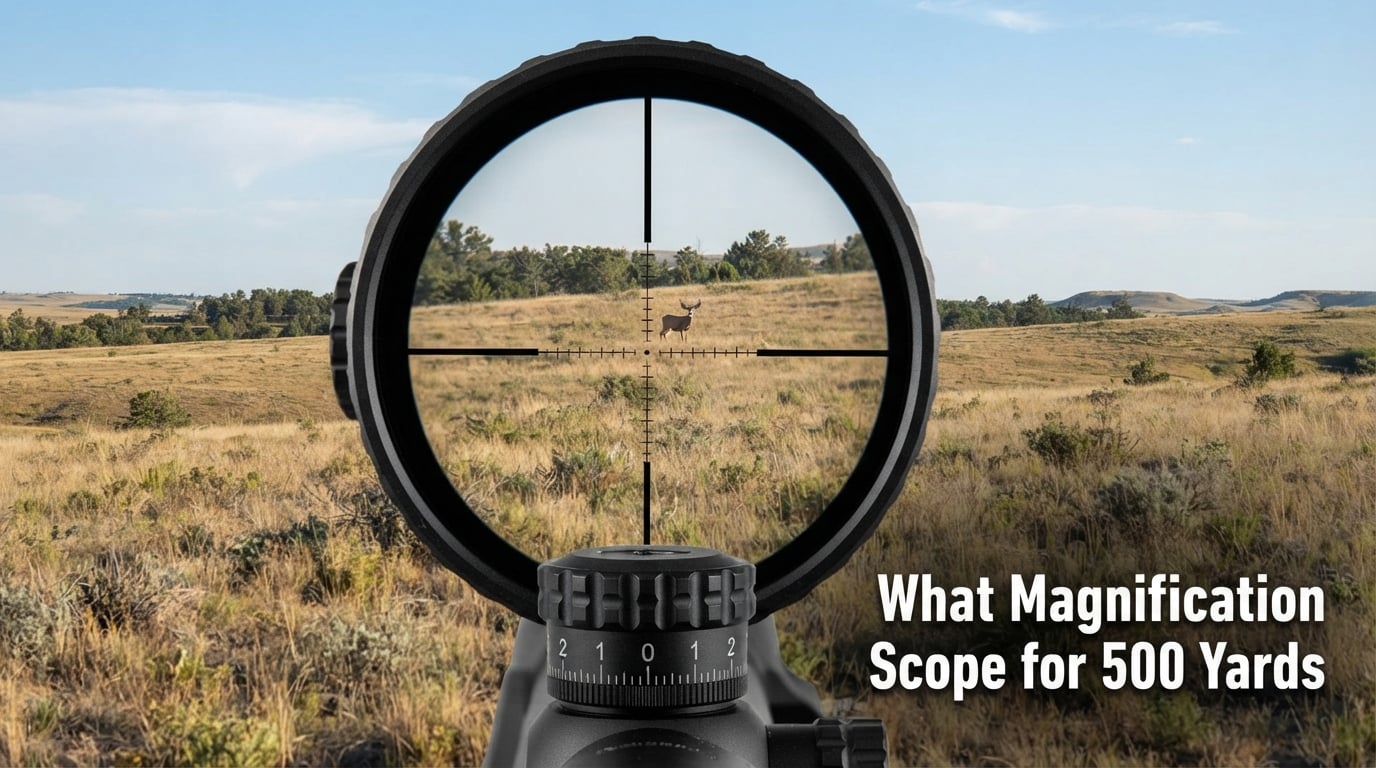
You generally want at least 9x to 12x of magnification to shoot 500 yards comfortably, with a 4-16x or 5-25x variable scope being a common choice. Following the 1x per 100 yards rule, 5x is the minimum, but most shooters prefer 10x or more to read wind, spot bullet holes, and make precise corrections at 500 yards.
The flattest shooting common calibers out to 300 yards are the 6.5 Creedmoor, .243 Winchester, and .308 Winchester, with the 6.5 Creedmoor offering the best combination of flat trajectory, manageable recoil, and modern bullet selection. Magnum calibers like the .300 Win Mag shoot flatter still but add recoil that is not necessary at this distance.
Hitting a target at 300 yards is achievable for most centerfire rifle shooters with practice, but it is harder than it looks. Wind reading, trigger control, and a stable position matter far more at 300 yards than at 100 yards. A scope with at least 6x of magnification, a clean trigger, and consistent practice will get most shooters ringing steel at this distance.
Here is how I would decide if I were starting from scratch today.
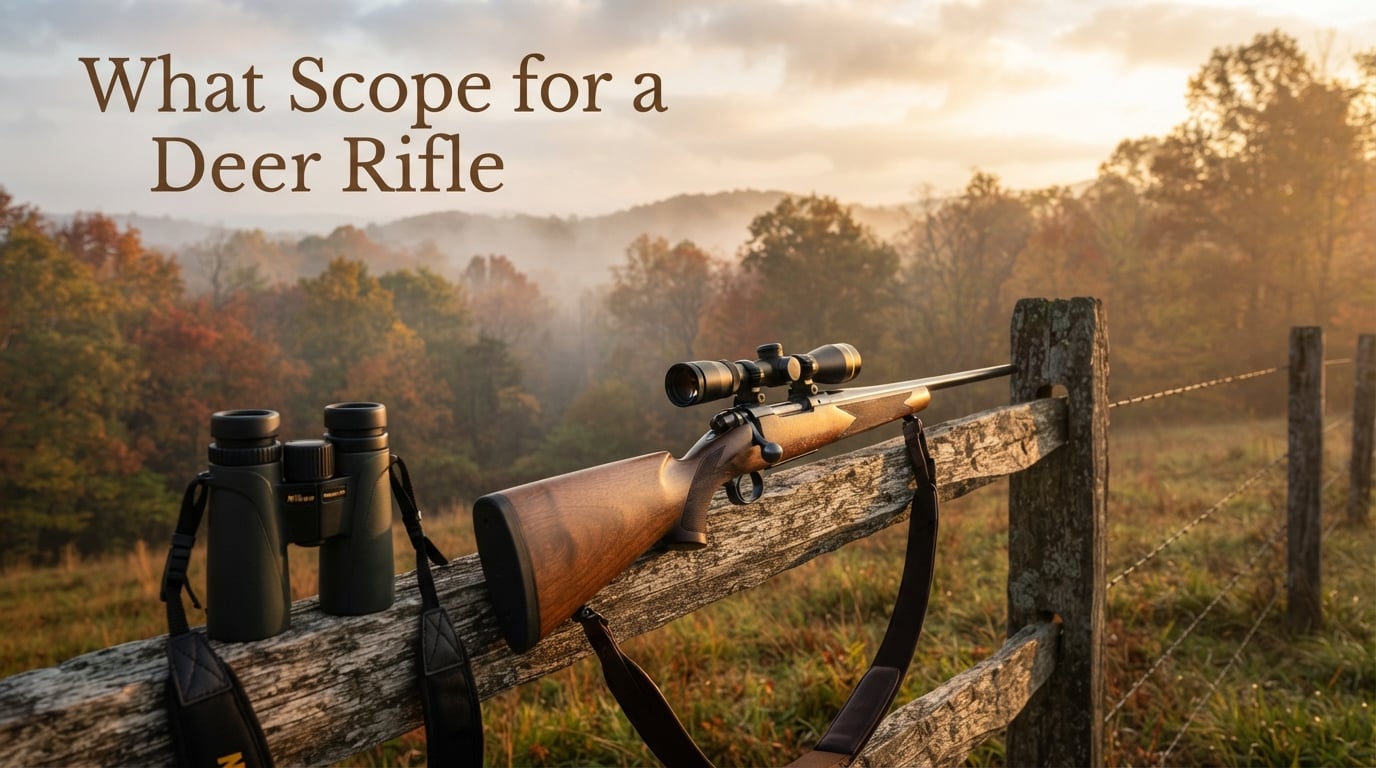
If you hunt whitetail or shoot recreationally at 300 yards, a 3-9x or 4-12x scope is the right pick. The magnification is more than enough, the field of view stays usable, and you can find excellent options without overspending. The Bushnell Banner 2 3-9×40 and Vortex Diamondback 4-12x are both proven at this distance.
If you shoot precision rifle, PRS, or want extra reach past 300 yards, step up to a 4-16x or 5-25x first focal plane scope. The Nightforce ATACR 4-16x and Vortex Viper PST Gen II 5-25x are benchmarks in this category for good reason.
If you run an AR-15 or AR-10 and want one scope that does it all, a 1-10x LPVO is the most versatile option, though a traditional 4-12x will shoot more accurately at 300 yards and beyond.
The bottom line on what magnification scope for 300 yards is simple: 6x to 9x for general use, 4x to 12x for versatility, and 4x to 25x for precision. Match the magnification to your dominant use case, spend your budget on glass quality over zoom range, and use the distance/N test to confirm your choice. If you want to keep refining your setup, our guide to spotting scope magnification is a great next read.