How Do Night Vision Goggles Work? Full Technical Guide 2026
Night vision goggles work by using either image enhancement (amplifying tiny amounts of light) or thermal imaging (detecting heat signatures).…

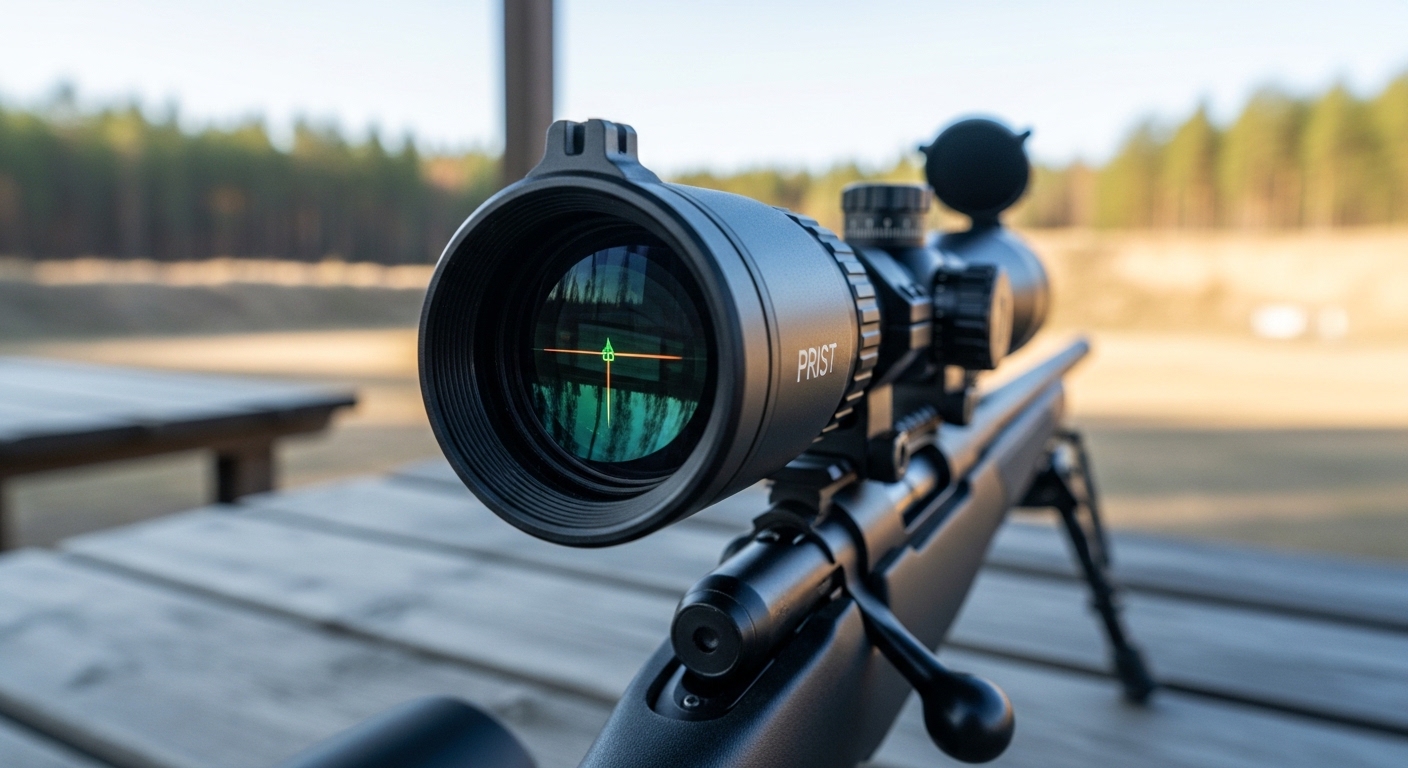
After spending 15 years testing optics across every category, I’ve seen shooters struggle with the same choice: red dot or traditional scope. There’s a third option that bridges the gap perfectly.
A prism scope is a compact firearm optic that uses a glass prism to bend and magnify light instead of traditional lenses. This design creates a shorter, more durable sight with an etched reticle that remains visible without battery power, making it an excellent choice for shooters who need precision magnification in a rugged package.
Think of it as the middle ground between a red dot sight and a variable magnification scope. You get the benefits of both: compact size, durable construction, and precision aiming with a clear reticle that doesn’t disappear when batteries die.
I’ve tested dozens of prism optics over the years, from Trijicon ACOGs to budget-friendly options, and they’ve earned a permanent place in my optic collection. Let me break down exactly what makes prism scopes unique and help you decide if one belongs on your rifle.
Understanding the internal mechanics helps you appreciate why prism scopes behave differently than traditional optics.
Quick Summary: Light enters the objective lens, hits a reflective glass prism that folds the optical path, and exits through the ocular lens. A reticle etched onto glass sits between the lenses, always visible regardless of battery power.
Traditional scopes use an erector tube with multiple lenses arranged in a straight line. This requires a long tube to achieve magnification. Prism scopes replace this complex arrangement with a single glass prism (typically a roof prism design) that bends light at an angle.
This folded optical path is why prism scopes can be significantly shorter than traditional scopes of the same magnification. The prism does the heavy lifting of magnifying the image while taking up less physical space.
The reticle in a prism scope is laser-etched onto a glass element positioned between the objective and ocular lenses. This etching creates physical lines and marks that you can see even without illumination. When batteries die or you choose not to use the illumination feature, your reticle remains fully functional as a black outline against your target.
Etched Reticle: A reticle pattern laser-etched directly onto glass, creating a permanent aiming point visible with or without battery illumination. Unlike projected red dots, etched reticles remain crisp and clear for shooters with astigmatism.
Most prism scopes include some form of reticle illumination, usually via LED or fiber optic systems. This adds contrast in low light but isn’t required for the optic to function. Many also incorporate a diopter adjustment on the ocular lens, allowing shooters to fine-tune the reticle focus to their individual vision.
Prism scopes offer several distinct advantages that make them appealing for specific applications. Here’s why shooters choose them:
1. Compact and Lightweight Design
By folding the optical path with a prism, these optics achieve shorter overall lengths than traditional scopes. I’ve mounted prism scopes on ARs where a full-size scope would throw off the rifle’s balance. The compact form factor makes them ideal for patrol rifles, competition guns, and any platform where weight matters.
2. Etched Reticle Is Always Visible
The reticle is physically etched into glass, not projected like a red dot. This means it works without batteries. I’ve had red dots die at the worst possible moments during matches. With a prism scope, you simply turn off the illumination and keep shooting with the black reticle.
3. Excellent for Shooters with Astigmatism
This is perhaps the biggest advantage. Red dot sights often appear as blurry blobs or starbursts to shooters with astigmatism. The etched reticle in a prism scope remains crisp and sharp regardless of eye conditions. I’ve recommended prism scopes to dozens of friends who couldn’t use red dots effectively, and the transformation in their accuracy is immediate.
4. Rugged and Durable Construction
With fewer moving parts than traditional variable scopes, prism scopes tend to be exceptionally durable. The fixed magnification design means there’s no erector tube to shift under recoil. Military-issue ACOGs have legendary reputations for surviving combat conditions, and civilian prism scopes follow this same durable design philosophy.
5. Better Low-Light Performance Than Iron Sights
The illuminated reticle provides a precise aiming point in dawn and dusk conditions where iron sights become difficult to see. The glass optics also gather more light than bare sights, giving you a brighter image of your target.
6. No Parallax at Design Distance
Most prism scopes are parallax-free at their intended shooting distance (usually 100-150 yards). This means the reticle stays on target even if your eye position shifts slightly, improving accuracy in real-world shooting scenarios.
Prism scopes aren’t perfect for every situation. Understanding these limitations helps you make an informed decision.
Fixed Magnification
Most prism scopes have fixed magnification, typically 1x, 3x, or 5x. You can’t dial up or down like with a variable scope. This limits versatility if you need both close-quarters and long-range capability from a single optic. I’ve run into this issue during 3-gun matches where stages transition from 5-yard targets to 400-yard plates.
Limited Eye Relief
Prism scopes typically offer 2-4 inches of eye relief, significantly less than red dot sights which are essentially parallax-free. You need a consistent cheek weld and proper eye position to see the full field of view. This can be challenging during dynamic shooting or from unconventional positions.
Smaller Eye Box
The eye box is the range of positions where your eye can be while still seeing the full image. Prism scopes have smaller eye boxes than red dots. Move your head slightly, and you’ll lose the picture or see black rings around the edges. This requires more disciplined shooting mechanics.
Heavier Than Red Dot Sights
While compact compared to traditional scopes, prism scopes are heavier than micro red dots. A typical 1x prism weighs 8-12 ounces, whereas quality red dots can weigh under 6 ounces. For weight-conscious builds, this matters.
Higher Cost Than Basic Red Dots
Quality prism scopes start around $200 and can exceed $1,000 for premium models. You can get a functional red dot for under $100. The etched reticle technology and glass quality come at a price premium.
Battery Dependency for Illumination
While the reticle works without batteries, illumination requires power. Unlike some red dots with solar backup or tritium, most prism scopes rely solely on battery power for their illuminated reticle feature. The good news is that illumination is optional, not required for operation.
| Feature | Prism Scope | Red Dot | LPVO | Traditional Scope |
|---|---|---|---|---|
| Magnification | Fixed (1x-6x) | 1x only | Variable (1x-Xx) | Variable (high) |
| Reticle Type | Etched glass | Projected LED | Etched or wire | Etched or wire |
| Battery Required | No | Yes | No (if illuminated) | No (if illuminated) |
| Astigmatism Friendly | Excellent | Poor | Excellent | Excellent |
| Eye Relief | 2-4 inches | Unlimited | 3-4 inches | 3-4 inches |
| Close Quarters Speed | Good (1x models) | Excellent | Excellent (at 1x) | Poor |
| Medium Range Precision | Excellent | Fair | Excellent | Excellent |
| Typical Price Range | $200-800 | $100-500 | $300-1500 | $150-1000+ |
Red dots excel at close-quarters speed with unlimited eye relief and heads-up viewing. You don’t need perfect cheek weld, and target acquisition is lightning fast up close. However, red dots struggle with precise aiming at distance and appear blurry to shooters with astigmatism.
Prism scopes trade some close-quarters speed for precision capability at range. The etched reticle provides a clear aiming point for shooters with vision issues, and fixed magnification helps identify and engage targets at medium distances. For general-purpose rifles that might see both home defense and range use, a 1x or 3x prism offers more versatility than a red dot alone.
LPVOs have become incredibly popular for their versatility. They zoom from 1x to 4x, 6x, or even higher, giving you true CQB to medium-range capability in one optic. This flexibility is hard to beat.
However, LPVOs are typically longer, heavier, and more expensive than prism scopes. They also require more frequent adjustments to switch between magnification levels. For shooters who know their primary engagement distance and don’t need the zoom versatility, a fixed prism scope offers similar performance in a more compact, durable, and often more affordable package.
Prism scopes come in specific magnification levels, each optimized for different applications. Understanding these helps you choose the right optic for your needs.
One-power prism scopes function as red dot alternatives with the benefits of an etched reticle. They provide a clear aiming point without magnification, making them ideal for close-quarters use. I’ve found 1x prisms particularly valuable for home defense rifles where battery failure isn’t an option and for shooters with astigmatism who can’t use red dots effectively.
The main advantage over red dots is the crisp reticle. The main disadvantage is reduced eye relief compared to unlimited eye relief red dots. For target shooting and competition within 100 yards, 1x prisms are excellent choices.
Three-power prism scopes represent a sweet spot for general-purpose use. They provide enough magnification to identify threats and make precise hits out to 300-400 yards while maintaining enough field of view for closer engagement. Many military rifles use 3x or 4x fixed optics for this reason.
I’ve run 3x prisms on patrol rifle courses and found them excellent for 50-250 yard engagements. The fixed magnification becomes a limitation if targets appear at 5 yards or 500 yards, but for realistic shooting scenarios, 3x hits the mark.
Five-power and higher prism scopes excel at designated marksman roles. They provide clear target identification and precise aiming at medium to long ranges. Hunters and target shooters who need to make precise shots at 300-600 yards often choose 5x prisms.
The tradeoff is reduced close-quarters capability. At 5x, finding and tracking close targets becomes difficult. These optics work best when paired with a backup iron sight or offset red dot for close-range engagements.
Prism scopes shine for specific users and applications. Here’s who benefits most from this optic type:
Shooters with Astigmatism
If red dots appear as blurry blobs to you, prism scopes are a game-changer. The etched glass reticle remains crisp and sharp regardless of your vision. I’ve seen shooters dramatically improve their accuracy simply by switching from red dots to prism scopes.
General-Purpose Rifle Owners
For rifles that serve multiple purposes home defense, range shooting, maybe hunting a 1x or 3x prism scope offers excellent versatility. You get the close-quarters capability of a red dot with the precision of a magnified optic, all in a durable package that doesn’t require batteries to function.
Tactical and Patrol Rifle Users
Law enforcement and security professionals often choose prism scopes for their durability and battery independence. When your life might depend on your gear, equipment that works without batteries is valuable. The fixed magnification also simplifies training and operation under stress.
Hunters
Hunters appreciate the compact size and lighter weight of prism scopes compared to traditional variables. A 3x or 5x prism provides plenty of magnification for most hunting situations while being easier to carry through the field all day. The etched reticle also works in any lighting condition, with or without illumination.
Budget-Conscious Shooters
While premium prism scopes are expensive, mid-range options offer excellent value. You can get a quality prism scope for $200-300 that provides features and performance approaching $500+ LPVOs. For shooters wanting magnified optic performance on a budget, prisms are worth considering.
Prism optics have a longer history than many shooters realize. The first prism sights appeared during World War I, with the Warner & Swasey Company developing the M1908 Musket Sight for the M1903 Springfield rifle. These early optics used reflective prisms to provide magnification in a compact package for military snipers.
During the same era, German optics company Carl Zeiss developed the Glasvisier 16, an innovative prism sight designed for low-light combat. These early designs established the fundamental principles still used in modern prism scopes: folded optical path, compact size, and fixed magnification.
Prism scopes gained widespread recognition with the introduction of the Trijicon ACOG (Advanced Combat Optical Gunsight) in the 1980s. The ACOG became standard issue for U.S. military forces and proved the concept of a rugged, fixed-magnification combat optic. Its success in combat spawned numerous imitators and established prism scopes as legitimate options for tactical and sporting use.
In 2026, prism scopes have evolved from military specialty items to mainstream options available at every price point. Budget brands now offer prism scopes under $200, while premium manufacturers continue pushing the boundaries with advanced reticle designs and improved optical quality.
Prism scopes excel at general-purpose rifle use, providing versatility between close-quarters and medium-range engagements. They’re ideal for shooters with astigmatism who can’t use red dots effectively, hunters wanting compact magnified optics, and anyone needing a durable optic that functions without batteries.
The main difference is magnification capability. Prism scopes have fixed magnification (typically 1x, 3x, or 5x) while LPVOs offer variable magnification from 1x up to 4x, 6x, or higher. LPVOs are more versatile but typically longer, heavier, and more expensive. Prism scopes are more compact and durable with simpler operation.
No, prism scopes do not require batteries to function. The etched reticle is always visible as a black outline against your target. Most prism scopes offer optional illumination powered by batteries, but this is a feature enhancement rather than a requirement for operation.
Prism scopes use an etched glass reticle and typically offer fixed magnification, while red dots project an LED dot onto a lens. Prism scopes work better for shooters with astigmatism and provide precision aiming at distance. Red dots offer unlimited eye relief, faster target acquisition at close range, and are typically lighter and simpler.
Prism scopes are used for general-purpose rifle applications including home defense, tactical training, hunting, competition shooting, and target practice. They bridge the gap between red dot sights and traditional scopes, making them popular for do-all rifles that need to perform in various scenarios.
Yes, prism scopes are excellent for shooters with astigmatism. Unlike red dots which often appear as blurry blobs or starbursts to astigmatic eyes, the etched reticle in a prism scope remains crisp and sharp regardless of vision conditions. This makes prism scopes one of the best optic choices for astigmatic shooters.
Prism scopes occupy a unique niche in the optics world. They’re not the absolute best at any one thing, but they’re very good at almost everything. For shooters who want a single optic that can handle close-quarters work, medium-range precision, and everything in between, prism scopes are worth serious consideration.
The etched reticle advantage alone makes them invaluable for astigmatic shooters who’ve struggled with red dots. The battery-independent operation provides peace of mind for home defense and duty use. And the compact, durable construction suits them for hard-use applications where traditional scopes might be too bulky or fragile.
After years of testing optics across every category, I still keep prism scopes in my regular rotation. They may not have the versatility of an LPVO or the pure speed of a red dot, but for real-world shooting where reliability and practical performance matter, prism scopes earn their place on the rail.