How to Choose a Tactical Flashlight: Complete 2026 October
I have spent the better part of five years testing lights on night shifts, range sessions, and backcountry trips, and…

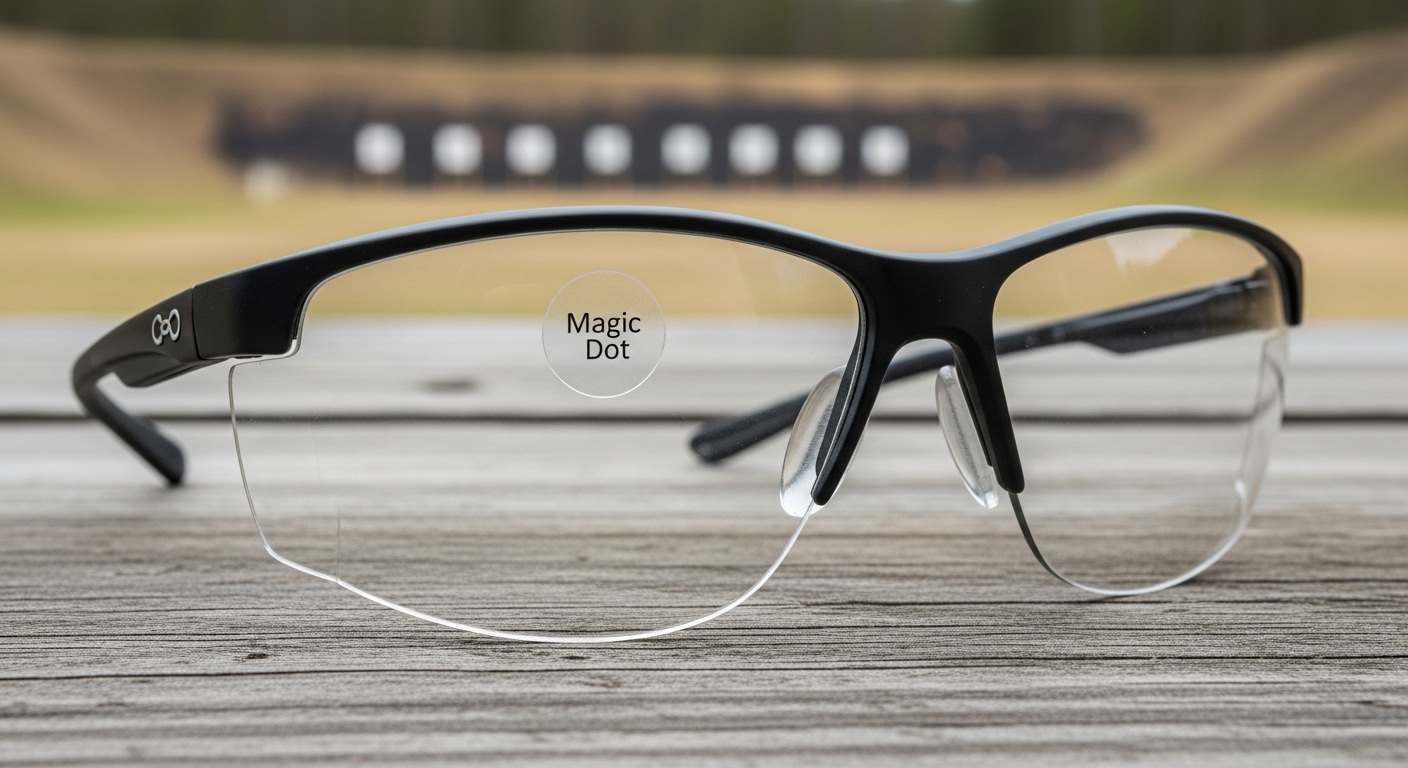
If you’ve ever wondered why your shots consistently land off-target despite perfect sight alignment, magic dots for shooting glasses might be the solution you’ve been missing. These small adhesive dots correct cross-eye dominance issues that affect approximately 10-15% of shooters. I’ve seen students go from scattered patterns to tight groups within minutes of applying one correctly.
Magic dots work by selectively blocking the non-dominant eye’s view of the front sight while maintaining full peripheral vision and depth perception. Unlike eye patches that completely block one eye, magic dots provide targeted vision correction that lets you keep both eyes open. This makes them particularly valuable for hunting and tactical situations where situational awareness matters.
In this comprehensive guide, you’ll learn exactly what magic dots are, how they work, and step-by-step instructions for proper placement. I’ll also cover expert insights from champion shooters, discipline-specific considerations, and how magic dots compare to other eye dominance solutions. Whether you shoot shotgun, rifle, pistol, or bow, understanding eye dominance correction can dramatically improve your accuracy.
Magic dots are small semi-transparent adhesive dots (typically 1/4 to 1/2 inch diameter) applied to shooting glasses lenses. They partially block the non-dominant eye’s view of the front sight, forcing the shooter’s dominant eye to establish proper sight picture. These training aids correct cross dominance, double vision, ghost imaging, and hand/eye coordination problems for shooters.
These dots have been used in shooting sports for decades. Competitive shooters discovered them as an alternative to eye patches and blinders. The name “magic dots” comes from how dramatically they can improve shooting accuracy almost instantly.
Popular brands include Morgan Optical, GunGoddess, and Briley. These companies purpose-manufacture dots specifically for shooting applications. However, many shooters also use DIY alternatives like small pieces of scotch tape or office supply dots.
Magic dots come in several varieties to suit different preferences. Basic translucent dots are the most common and versatile. Some shooters prefer frosted dots for more complete blocking. Others opt for small circular stickers or rectangular strips depending on their specific needs. Color matching options are available to coordinate with different lens tints.
Quick Summary: Magic dots are a low-tech, high-impact solution for eye dominance problems. They cost less than $5 for DIY versions or $17-19 for commercial packs, require no special equipment, and can be removed or repositioned instantly. The semi-transparent design maintains peripheral vision unlike traditional eye patches.
Eye dominance is your brain’s preference for visual input from one eye over the other. Just like being right or left-handed, your brain favors one eye for detailed focusing. This preference is crucial for shooting because proper sight alignment requires your dominant eye to align with the sights.
Most people have dominant eye alignment with their dominant hand. Right-handed shooters are usually right-eye dominant. Left-handed shooters are typically left-eye dominant. This natural alignment makes shooting intuitive and accurate.
Understanding eye dominance is also important when using binoculars and other optics. The same visual processing that affects shooting also impacts how you use hunting optics and glassing equipment. Proper eye dominance ensures you get the full benefit from your optical gear.
But cross-eye dominance changes everything. A right-handed shooter with left-eye dominance faces a real challenge. Their natural hand position conflicts with their dominant eye placement. This mismatch causes consistent aiming errors that frustrate shooters who don’t understand the root cause.
Cross-Eye Dominance: A condition where your dominant eye is on the opposite side of your dominant hand. For example, a right-handed shooter with left-eye dominance has cross-eye dominance. This affects approximately 10-15% of the population and can significantly impact shooting accuracy.
In my experience training hundreds of shooters, about 10-15% have some degree of cross-eye dominance. Many never discover this until they start shooting and struggle with accuracy. They often blame their technique or equipment when the real issue is visual processing.
Eye dominance affects shooting because your brain naturally combines input from both eyes. When both eyes see the front sight clearly, your brain might choose the non-dominant eye’s image. This causes aiming errors where the shot lands off-target despite perfect sight alignment.
Testing eye dominance takes less than 30 seconds. I teach this to every new student because knowing your dominant eye is fundamental to shooting accurately. The test below is the most common method used by shooting instructors.
If your dominant eye matches your dominant hand, you have aligned dominance. If they’re opposite, you have cross-eye dominance. This simple test can explain years of shooting frustration in just seconds.
There’s also an alternative method some shooters prefer. Extend one arm with your thumb up. Sight a distant object past your thumb with both eyes open. Close one eye at a time. The eye that keeps your thumb aligned with the object is your dominant eye. Use whichever method feels more natural to you.
Magic dots work by selectively blocking visual information from the non-dominant eye. The dot obscures the front sight while leaving peripheral vision intact. This selective blocking is what makes magic dots so effective compared to other solutions.
Your brain naturally combines input from both eyes to create a single image. When both eyes see the front sight clearly, your brain might choose the non-dominant eye’s image for aiming. This causes shots to land off-target even when your sight picture looks perfect.
The magic dot changes this equation by exploiting binocular rivalry. When both eyes receive different information, your brain must choose which to process. By blocking the front sight from the non-dominant eye, your brain has no choice but to use the dominant eye for aiming. This happens automatically without conscious effort.
Quick Summary: The magic dot doesn’t block your entire field of view. It only obscures the critical area where the front sight appears. You maintain full peripheral vision and depth perception, making magic dots superior to eye patches for hunting and tactical applications.
This targeted approach is different from an eye patch. A patch completely blocks one eye’s vision, affecting depth perception and situational awareness. Magic dots provide precision vision correction without these drawbacks. You can track moving targets, maintain awareness of your surroundings, and shoot with both eyes open naturally.
The science behind this involves binocular rivalry and how your visual cortex processes competing images. When one eye’s view of the sight is blocked, the dominant eye’s input takes priority. This happens at a subconscious level, allowing you to focus on shooting technique rather than visual processing.
I’ve worked with shooters who tried patches and hated them. They felt disconnected and struggled with depth perception. Some even experienced dizziness or disorientation. Magic dots solved their eye dominance issues without these side effects, allowing natural shooting with both eyes open.
Champion shooters and experienced instructors have relied on magic dots for years. Here are some key insights from those who have used these training aids extensively in competition and instruction.
“I would try to put the dot right over your sight path. Pick up the gun and look through the glasses and you want to occlude your non-dominant eye’s sight. The dot placement has to match your actual shooting position, not how you stand normally.”
— Experienced shotgun shooter, r/ClayBusters forum
This advice highlights the most common mistake new dot users make: placing the dot while standing normally instead of in shooting position. Your head position changes significantly when mounting a firearm, especially shotguns. The dot must be placed while you’re actually in your shooting stance.
Another common recommendation from experienced shooters concerns the inside vs. outside lens placement debate. While most commercial dots are designed for outside placement, some shooters prefer placing dots on the inside of the lens. This protects the dot from being knocked off and can reduce visual distortion. However, inside placement may cause the dot to contact your eyelashes depending on your facial structure.
“Switching hands if you can learn it will probably be the better long-term solution. But for immediate improvement, magic dots are the fastest way to fix cross-dominance issues. They work for about 80% of shooters who try them.”
— Competitive shooting instructor
While learning to shoot with your non-dominant hand can provide a permanent solution, it takes months of dedicated practice. Magic dots offer immediate improvement while you decide whether to invest the time in learning a new shooting style. Many shooters use dots temporarily while developing the skill to switch sides.
Magic dots are available from several sources ranging from commercial shooting supply companies to simple DIY options. Commercial dots typically cost between $17-19 and offer better adhesion, consistent sizing, and color options to match your lens tint.
For shooters on a budget, DIY alternatives work surprisingly well. Small pieces of scotch tape or painter’s tape can be layered to adjust opacity. Office supply stores sell small circular stickers or price tags that function similarly to commercial magic dots. The advantage of DIY options is that you can test the concept before investing in commercial products.
When purchasing magic dots, consider the lens color you’ll be applying them to. Some brands offer color-matched dots that blend better with different lens tints. This can be less distracting visually and may be preferred for aesthetic reasons. Clear or translucent dots work on any lens color.
Different shooting sports present unique challenges for eye dominance correction. The placement and size of your magic dot may vary depending on whether you shoot shotgun, rifle, pistol, or archery. Understanding these discipline-specific considerations will help you get the best results.
Shotgun sports like sporting clays, trap, and skeet require consistent mount and head position. The magic dot should be placed while mounted in your shooting stance, as your head position changes significantly when you shoulder the gun. Most shotgun shooters prefer smaller dots placed slightly toward the lens center since the bead sight is close to your eye.
Shotgun shooters benefit greatly from magic dots because the sport requires both eyes open for tracking moving targets. An eye patch would make judging target speed and distance much more difficult. Magic dots maintain the peripheral vision essential for shotgun sports while correcting eye dominance issues.
Some competitive shotgun shooters use different dots for different stations or presentations. The changing target angles in sporting clays can sometimes require dot repositioning. Many shooters keep a small kit with various dot sizes for fine-tuning during practice sessions.
Rifle shooters typically use scopes or iron sights at greater distances. The magic dot placement for rifle shooting should be determined while you’re in your normal shooting position, whether prone, seated, or standing. Your head position varies significantly between these positions, so choose your most common shooting stance for dot placement.
Rifle shooters using scopes may find they need less aggressive dot placement than shotgun shooters. The magnified scope image changes the visual dynamic, and some cross-dominant rifle shooters find they can shoot accurately with a very small dot or even no dot when using a scope. However, iron sight rifle shooters benefit from magic dots just as shotgun shooters do.
Hunters using rifles should practice with their magic dots in various positions they might encounter in the field. Shooting from a tree stand, ground blind, or off-hand stalking position all affect head position. You may need to experiment with dot placement to find what works across different hunting scenarios.
Pistol shooting typically involves both eyes open for defensive and competitive applications. Magic dots work well for pistol shooters who struggle with cross-eye dominance. The dot should be placed while holding the pistol in your normal shooting grip with arms extended.
Defensive pistol shooters especially benefit from maintaining peripheral vision. An eye patch creates a significant disadvantage in a self-defense situation where situational awareness is critical. Magic dots allow defensive shooters to correct eye dominance while maintaining full awareness of their surroundings.
Competitive pistol shooters may find that dot placement needs adjustment between different shooting positions. Bullseye shooters who fire one-handed may need different placement than action pistol shooters who use two-handed holds. Test your dot placement in the positions you’ll actually use during competition.
Archery presents unique eye dominance challenges. Many archers actually shoot with both eyes open, making magic dots a viable solution for cross-dominant archers. The dot should be placed while at full draw in your anchor position, as this is when alignment matters most.
Some archers use a different approach entirely, learning to shoot with their non-dominant eye or switching bow sides. This can be a more permanent solution but requires significant retraining. Magic dots offer an immediate improvement while you decide whether to invest in learning to shoot from your dominant eye side.
Traditional archers who shoot instinctively may find they need less aggressive eye dominance correction than sight shooters. The instinctive shooting style relies less on precise sight alignment and more on feel. However, consistent eye dominance still improves accuracy even for instinctive shooters.
Proper placement is critical for magic dots to work effectively. I’ve seen students place dots incorrectly and wonder why their shooting didn’t improve. Follow these steps carefully to ensure your magic dot is positioned for maximum effectiveness.
If you haven’t already, use the test above to confirm which eye is non-dominant. This is where you’ll place the dot. Remember, the dot goes on the non-dominant eye’s lens, not the dominant eye.
For a right-handed shooter with left-eye dominance, the dot goes on the left lens. For a left-handed shooter with right-eye dominance, place it on the right lens. This seems counterintuitive to some shooters, but the goal is to block the non-dominant eye’s view of the sight.
Double-check your eye dominance if you’re unsure. I’ve worked with shooters who thought they were cross-dominant but actually had aligned dominance. An incorrect diagnosis leads to ineffective dot placement. Take the time to confirm your eye dominance before proceeding.
Put on your shooting glasses and take your normal shooting stance. Hold your firearm in your standard shooting position. This is crucial—the dot must be placed while you’re actually in your shooting position, not standing normally.
Don’t try to place the dot while standing normally. Your head position changes when you mount a firearm, especially shotguns. The dot placement that works while standing normally often won’t work when you’re actually in shooting position.
If you shoot multiple positions (prone, seated, standing), choose the position you use most often. Some shooters maintain different glasses with dots placed for different positions. This is common among competitive shooters who shoot from various positions during competition.
Look through your glasses with both eyes open. Notice where the front sight appears in the non-dominant eye’s field of view. This is where the dot needs to go. The goal is to block the front sight from the non-dominant eye only.
Some shooters find it helpful to close their dominant eye briefly to see exactly where the sight appears through the non-dominant eye. This makes the placement more obvious. Just remember to open both eyes again before applying the dot.
The dot should be positioned so it blocks just the front sight area, not your entire field of view. This targeted blocking is what makes magic dots superior to eye patches. You want to maintain as much peripheral vision as possible while still blocking the sight from the non-dominant eye.
Have someone else place the dot on your lens while you maintain your shooting position. This is much easier than trying to do it yourself. Your helper can see exactly where the sight appears on your lens and place the dot precisely.
If you must do it alone, use a mirror. Watch your reflection and apply the dot where you see the front sight positioned. This takes some practice but can be done effectively. Alternatively, some shooters mark the lens position with a washable marker first, then apply the dot to the marked spot.
Ensure your lens is clean before applying the dot. Use isopropyl alcohol to remove oils and residue. A clean lens ensures better adhesion and prevents the dot from falling off during shooting sessions. Let the lens dry completely before applying the dot.
With the dot applied, check your sight picture. The front sight should be clear in your dominant eye and blocked in your non-dominant eye. You should still see everything else with both eyes. The dot should only block the critical sight area.
Test fire a few rounds and evaluate your results. You should see immediate improvement if the dot is placed correctly. Shots should group closer to your point of aim. If you don’t see improvement, the dot may need repositioning.
Quick Summary: Start with a small dot about 1/4 inch in diameter. You can always make it larger if needed. Better to start small and adjust than to start too large. If you still see double vision or ghost images, the dot needs to be larger or repositioned.
Problem: I still see two front sights or ghost images.
Solution: The dot is too small or misplaced. Enlarge it slightly or reposition it closer to where the front sight appears. Try layering a second dot over the first to increase opacity. Ensure the dot is actually blocking the sight from your non-dominant eye by checking in your shooting position.
Problem: I can’t see the target clearly.
Solution: The dot is too large or too central in your vision. Replace it with a smaller dot positioned more toward the lens edge. The dot should block only the sight, not your view of the target area. Reposition the dot slightly away from the center of your lens while still blocking the sight.
Problem: The dot keeps falling off.
Solution: Clean your lens thoroughly before applying. Use isopropyl alcohol to remove oils. Consider purpose-made shooting glass dots with better adhesive. Some shooters apply a small amount of optically clear adhesive to help the dot stay in place. However, be careful with adhesives on expensive lenses.
Problem: The dot works for one shooting position but not others.
Solution: This is common among shooters who use multiple positions. Consider having dedicated glasses for different positions, or choose a compromise placement that works acceptably for all positions. Some competitive shooters keep multiple pairs of glasses with dots optimized for different stages.
Magic dots aren’t the only solution for eye dominance issues. Different approaches work better for different shooters and situations. Understanding the pros and cons of each method will help you choose the best solution for your specific needs.
| Solution | Cost | Peripheral Vision | Best For |
|---|---|---|---|
| Magic Dots | $5-20 | Fully maintained | Hunting, competition, tactical |
| Eye Patch | $3-10 | Completely blocked | Initial training, bench rest |
| Shooting Blinders | $15-40 | Partially maintained | Target shooting, competition |
| Scotch Tape | $2-5 | Fully maintained | DIY testing, budget option |
| Electronic Sights | $100-500+ | Fully maintained | Tactical, competition, modern rifles |
Magic dots offer the best balance of effectiveness, cost, and maintained situational awareness. They’re particularly valuable for hunting and tactical applications where losing peripheral vision could be dangerous. The low cost also makes them an excellent first option to test before investing in more expensive solutions.
Eye patches provide complete blocking but eliminate all peripheral vision from one eye. This affects depth perception and situational awareness. Patches work well for initial training or bench rest shooting where peripheral vision matters less. However, they’re generally not recommended for hunting or defensive applications.
Shooting glasses with built-in blinders offer a more professional appearance than patches or dots. Many competitive shooters prefer them for this reason. However, blinders typically block more peripheral vision than magic dots and may require purchasing specialized eyewear. For pure shooting sports applications where appearance matters, blinders are a solid choice.
The tape method is essentially a DIY version of magic dots. Scotch tape or painter’s tape can be layered to adjust opacity. This costs virtually nothing and allows you to test the concept before buying commercial dots. The downside is that tape doesn’t look as professional and may not adhere as well as purpose-made dots.
Electronic sights like red dot optics work around eye dominance issues rather than correcting them. Both eyes remain open while the dot appears on the target. This doesn’t solve the underlying issue but provides an effective workaround. Electronic sights are expensive but offer additional benefits beyond eye dominance correction. Modern hunting optics often include electronic sight options.
After years of working with shooters struggling with eye dominance, I’ve collected tips that can help you get the most out of magic dots. These insights come from real-world experience on the range and in competition.
Most new dot users start with a dot that’s too large. Begin with the smallest dot that effectively blocks the sight. You can always make it larger if needed by layering another dot or switching to a larger size. A smaller dot maintains more of your field of view and is less distracting.
I recommend starting with a 1/4 inch dot for most shooters. This size blocks the sight area while preserving most of your peripheral vision. If you still experience double vision or ghost imaging, gradually increase the size until the problem resolves. This incremental approach helps you find the minimum effective size.
Don’t evaluate your dot placement while standing normally or in dry fire only. The real test is live fire from your actual shooting position. What works in dry fire may change when recoil and real shooting dynamics are involved.
Take time to test your dot placement in various positions you might use. If you hunt from different positions, practice from all of them. Competitive shooters should test dots in the actual positions they’ll use during matches. This comprehensive testing ensures your dot works when it matters most.
Dots eventually lose their adhesive and fall off. Keep spares in your range bag so you’re not caught without one. This is especially important before competitions or hunting trips. A dot falling off mid-competition can ruin your performance.
Some shooters keep a small “field kit” with various dot sizes, lens cleaning supplies, and even a small mirror for emergency dot replacement. This preparedness ensures you can always maintain proper eye dominance correction regardless of where you’re shooting.
If you shoot multiple disciplines or positions, consider having dedicated glasses for each use. A dot placed for shotgun shooting may not work well for pistol shooting. Maintaining multiple pairs avoids constant repositioning.
Competitive shooters often have specific glasses for different stages or events. Hunters might have one pair for tree stand hunting and another for ground blinds. This specialization ensures optimal dot placement for each situation without the need for constant adjustment.
| Pros | Cons |
|---|---|
| Minimal cost – Dots cost $5-20 for commercial versions, under $5 for DIY | Placement precision – Requires careful positioning in shooting stance |
| Maintains peripheral vision – Both eyes remain fully functional | May need adjustment – Different positions require different placement |
| Easy to remove or reposition – No permanent modification to glasses | Not a permanent fix – Training aid, not a cure |
| Works for all shooting disciplines – Shotgun, rifle, pistol, archery | Some shooters dislike any lens obstruction |
| No depth perception loss – Maintains full situational awareness | May not work for severe cross-dominance |
| Immediate improvement – Most see results within minutes | Adhesive can fail – Dots eventually fall off |
Magic dots excel as training aids for cross-eye dominance. I’ve used them with students who saw immediate improvement in their shooting. However, they’re not right for everyone. Some shooters never adjust to having anything on their lens and prefer alternative solutions.
The low cost and immediate effectiveness make magic dots an excellent first option for anyone struggling with eye dominance issues. You can test whether this solution works for you without investing in expensive equipment. If dots don’t work, you can explore other options without significant financial loss.
For hunting and tactical applications, magic dots are superior to eye patches because they maintain situational awareness. In defensive scenarios or when hunting dangerous game, losing peripheral vision could be dangerous. Magic dots provide eye dominance correction without this significant drawback.
Magic dots aren’t the only solution for eye dominance issues. Different approaches work better for different shooters depending on their specific situation, discipline, and personal preference. Understanding all available options helps you make an informed decision.
Traditional eye patches completely block one eye’s vision. They’re simple, inexpensive, and effective at eliminating cross-dominance issues. Patches cost between $3-10 and are available at most pharmacies or sporting goods stores.
However, patches eliminate depth perception and situational awareness. I find them most useful for initial training but limiting for long-term use. For bench rest shooting or other stationary applications where peripheral vision matters less, patches work well.
The main disadvantage is the complete loss of one eye’s vision. This affects distance judgment and awareness of your surroundings. For hunting or defensive shooting, this creates a significant disadvantage that most shooters find unacceptable.
Many shooting glasses come with removable blinders or opaque lenses. These block the non-dominant eye more thoroughly than magic dots but less completely than patches. Blinders are built into dedicated shooting eyewear and provide a more professional appearance.
Blinders work well for target shooting where peripheral vision matters less. For hunting or defensive shooting, they can be too restrictive. However, competitive shooters often prefer them for the professional appearance and consistent performance.
The cost of shooting glasses with integrated blinders ranges from $50-200 depending on the brand and features. This is significantly more expensive than magic dots but provides a more integrated solution. Some shooters find the investment worthwhile for competition use.
A simple piece of translucent tape works like a magic dot. This is the budget-friendly DIY approach that costs virtually nothing. Scotch tape or painter’s tape can be layered to adjust opacity.
The tape method functions identically to purpose-made dots. It’s not pretty, but it’s an excellent way to test whether this approach works before investing in commercial products. Many shooters start with tape and upgrade to commercial dots once they confirm the method works for them.
The main disadvantage is appearance. Tape on shooting glasses doesn’t look professional and may draw attention. Adhesive residue can also be an issue when removing tape. For practice sessions or testing, tape works fine. For competition or public appearances, commercial dots look much better.
Some shooters place a small dot on the CENTER of their non-dominant lens, not where the sight appears. This forces the brain to ignore the entire image from that eye rather than just blocking the sight area.
This is a more aggressive approach that works for severe cross-dominance cases. By blocking the central vision, the brain learns to rely entirely on the dominant eye. It’s more disruptive than traditional magic dot placement but can be more effective for difficult cases.
The disadvantage is greater loss of peripheral vision from the non-dominant eye. This approach is closer to an eye patch in effect but with a slightly less complete blocking. I recommend this only if traditional magic dot placement doesn’t work.
Some shooters train themselves to use their non-dominant eye for aiming. This takes time and practice but eliminates the need for vision aids entirely. It’s a permanent solution rather than a workaround.
I’ve seen shooters successfully make this switch over several months. It requires dedication and regular practice, but the result is natural shooting without any aids. This approach appeals to shooters who dislike having anything on their glasses or who want a permanent solution.
The main disadvantage is the time and effort required. You’ll need to practice regularly for months to build new neural pathways. During this transition period, your shooting may temporarily get worse before it improves. Not all shooters have the patience or discipline to complete this process.
Some cross-dominant shooters learn to shoot from their dominant eye side instead of their dominant hand side. This aligns eye dominance with shooting position and eliminates cross-dominance issues entirely.
This is similar to learning to shoot with your non-dominant eye but involves changing your entire shooting stance and grip. It’s a comprehensive solution that addresses the root cause rather than working around it. Many competitive shooters have successfully made this switch.
The disadvantage is that you must relearn shooting from the ground up. Your stance, grip, trigger control, and recoil management all change. This represents a significant investment of time and effort. However, for dedicated shooters, it provides a permanent solution without any equipment modifications.
Red dot sights and other electronic optics can help with eye dominance. Both eyes remain open while the dot appears on the target. This doesn’t solve the underlying issue but works around it effectively.
Electronic sights are more expensive than other solutions but offer additional benefits beyond eye dominance correction. They provide faster target acquisition and work well in low light conditions. Many modern rifles and pistols are equipped with electronic optics for these reasons.
The cost is the main disadvantage. Quality electronic sights range from $100-500 or more. However, if you’re already planning to upgrade your sights, choosing an electronic optic can solve your eye dominance issue while providing other benefits. Night vision and electronic optics also work well for shooters with eye dominance issues.
Magic dots work for most shooters with mild to moderate cross-eye dominance. They help about 80% of my students see immediate improvement. However, severe cross-dominance may require more aggressive solutions like an eye patch or switching shooting sides. Some shooters with neutral eye dominance (no clear dominant eye) may also find magic dots less effective.
Place the dot on the lens of your non-dominant eye, positioned where the front sight appears when you’re in your shooting position. Stand in your normal shooting stance and have someone mark where the front sight is visible on that lens. The dot should block just the sight area, not your entire field of view. Critical: place the dot while mounted in your actual shooting position, not while standing normally.
Yes, magic dots are excellent for hunting because they maintain your peripheral vision and depth perception. Unlike eye patches, you won’t lose awareness of your surroundings. Many hunters prefer magic dots for this reason, especially when hunting moving game or in varied terrain. Magic dots work particularly well when glassing with premium hunting optics that require proper eye alignment.
Magic dots are a training aid, not a permanent fix. While using them, you’ll develop muscle memory for proper sight alignment. Some shooters find they can eventually remove the dots after extended training. However, most cross-eye dominant shooters need to continue using some form of vision correction. Permanent solutions require learning to shoot with your non-dominant eye or switching shooting sides, which takes months of dedicated practice.
Most shooting organizations allow magic dots in competition. They’re generally considered eyewear, not performance-enhancing equipment. However, rules vary by organization and discipline. Always check your specific competition’s rulebook before competing with any vision aids. Major organizations like USPSA, IDPA, and NSSA typically permit magic dots, but local matches may have different rules.
Purpose-made magic dots can last through several shooting sessions if handled carefully. The adhesive weakens with removal and reapplication. Most shooters replace them every few weeks or when they start lifting. Keep your dots in their original packaging to preserve adhesive quality. DIY options like tape typically need replacement after each session but cost virtually nothing.
Most commercial magic dots are designed for outside lens placement. However, some shooters prefer inside placement to protect the dot from being knocked off and reduce visual distortion. Inside placement may cause the dot to contact your eyelashes depending on your facial structure. Test both placements to see which works better for you. Inside placement can be more comfortable for some shooters but may be harder to adjust.
Yes, scotch tape or painter’s tape works as an effective DIY alternative to commercial magic dots. Layer the tape to adjust opacity until it blocks the sight from your non-dominant eye. This costs virtually nothing and allows you to test the concept before buying commercial dots. The disadvantages are appearance (tape looks less professional) and potentially weaker adhesion. Many shooters start with tape and upgrade to commercial dots once they confirm the method works.