7 Best Rechargeable Tactical Flashlights (September 2026)
I spent the last three months testing seven rechargeable tactical flashlights side by side, and the difference between a $25…

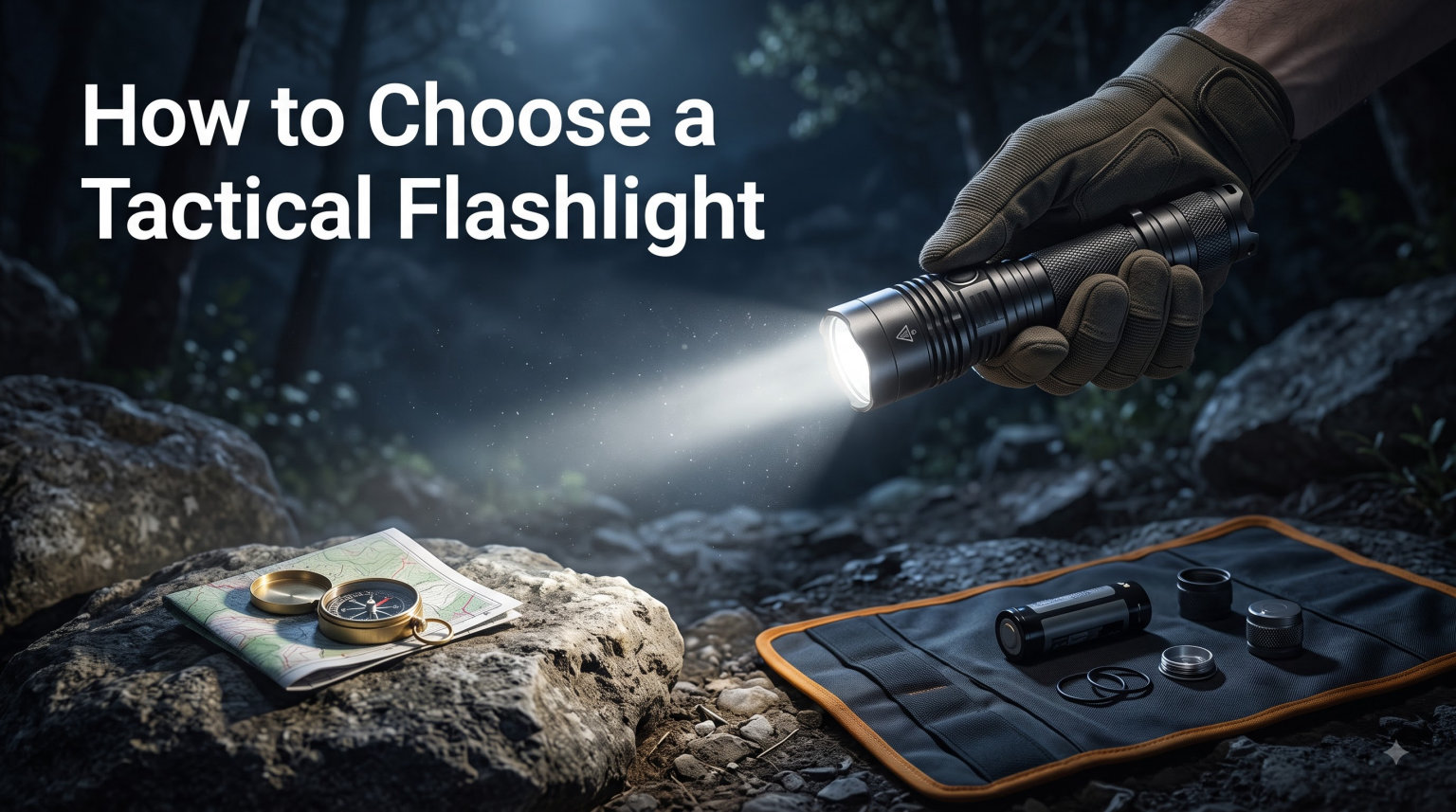
I have spent the better part of five years testing lights on night shifts, range sessions, and backcountry trips, and I still see people waste money on the wrong flashlight every single month. If you want to know how to choose a tactical flashlight without falling for marketing hype, this guide is for you. We will cover brightness in real numbers, build quality, battery choices, switch types, and the exact decision framework our team uses when we evaluate a new light.
Here is the short version before we get into details: a true tactical flashlight puts out roughly 1,000 to 3,000 lumens from a focused LED beam, activates through a tailcap switch with momentary-on control, survives drops onto concrete thanks to aircraft-grade aluminum construction, carries an IPX8 waterproof rating, and includes a strobe mode you can reach without thinking about it.
The long version matters more, though, because your use case changes almost every recommendation. A duty flashlight riding on a patrol belt has different demands than an EDC light in a jacket pocket or a weapon-mounted light on a home defense rifle. By the end of this article you will know exactly which specifications deserve your money and which ones are pure tacticool decoration.
And if your interest leans toward shooting applications, pairing the right light with proper low-light shooting practice with tactical flashlights will do more for your readiness than any spec sheet upgrade ever will.
A flashlight becomes tactical when three things come together: instant one-handed activation, output high enough to disorient or identify a threat, and construction that survives abuse. Miss any one of these and you have a regular flashlight wearing camouflage.
Regular household flashlights optimize for runtime and comfort. They twist on slowly, produce a soft flood of light, and use plastic housings that crack when dropped. None of that works when your heart rate spikes at 3 a.m. and you need light now.
Tactical lights flip those priorities. They turn on instantly with a firm press, throw a tight beam that reaches across a room or down a driveway, and shrug off impacts that would kill a consumer light. The forum communities over at r/flashlight call out fake “tacticool” lights constantly, and their test is simple: would this light work if you were stressed, cold, and operating it one-handed?
That question drives everything below. Let’s break down each specification so you can answer it confidently before you spend a dime.
You choose a tactical flashlight by evaluating six specifications in order of importance: brightness and beam pattern, durability ratings, power source, switch design, user interface, and size for your carry method. Getting these six right accounts for about 95 percent of real-world performance.
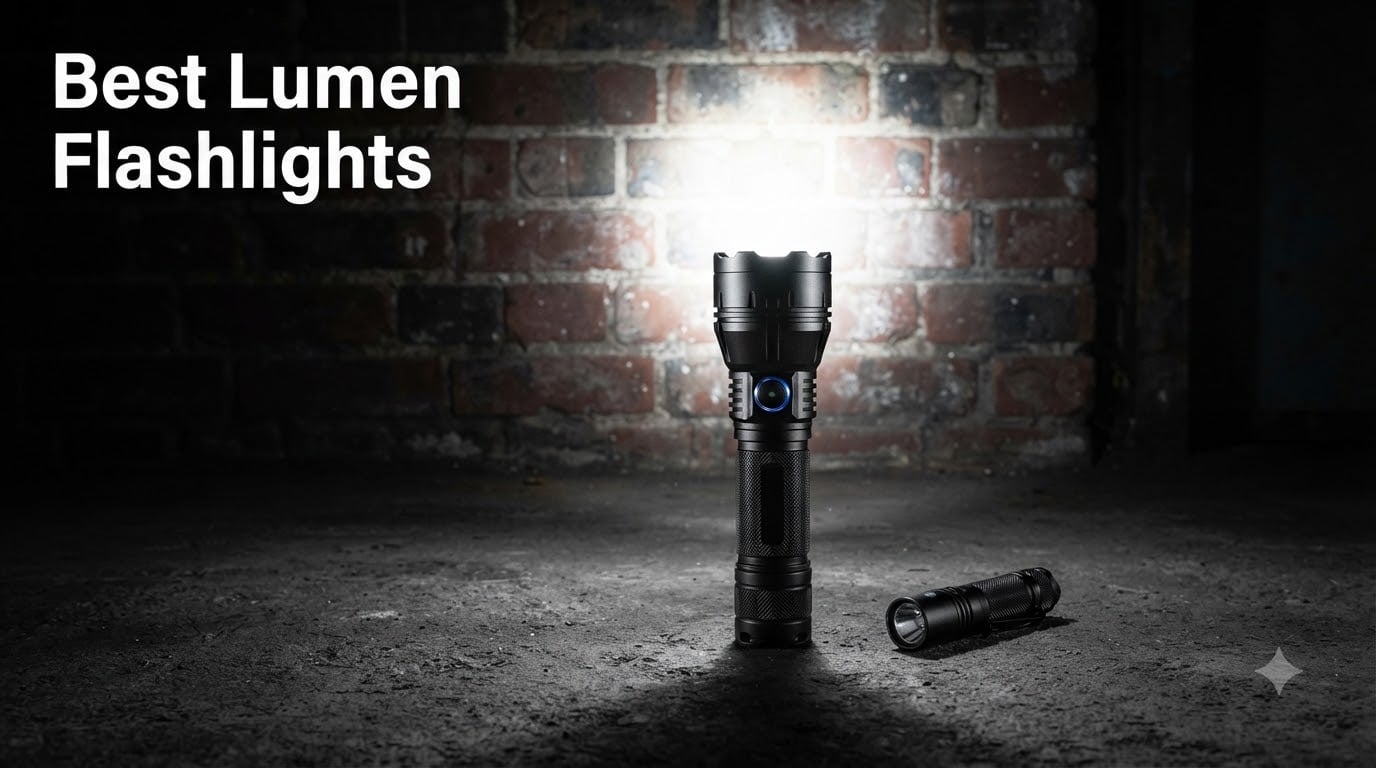
Lumens measure total light output while candela measures beam intensity at its brightest point. This distinction confuses buyers constantly, so here is the practical version.
Lumens tell you how much total light the LED produces. More lumens generally means more overall illumination, which helps flood a room or a backyard.
Candela tells you how tightly that light is focused. A 1,000-lumen light with high candela throws a concentrated hotspot 200 meters downrange; the same 1,000 lumens with low candela might only reach 60 meters but lights up everything nearby.
For tactical use, candela matters more than most people realize. Identifying a threat at distance requires beam intensity, not just raw output. When you compare two lights with identical lumen claims, check the beam distance figure in meters. That number, derived from candela, tells you which light actually reaches farther.
One warning from hard experience: peak lumen claims assume a fresh battery and short turbo bursts. Many cheap lights dim dramatically within minutes because their thermal management cannot sustain the output. Quality manufacturers publish sustained-output figures alongside peak figures. If a brand only advertises peak numbers, treat that as a red flag.
A tactical flashlight must be built from aircraft-grade aluminum with a hard-anodized finish, survive drops of at least one meter onto concrete, and carry a water resistance rating of IPX7 or better. Anything less will eventually fail you.
The aluminum body is not cosmetic. Aluminum conducts heat away from the LED during sustained high output, and it survives being dropped, stepped on, or used as an impact tool. Hard-anodized coatings resist scratches far better than paint, which is why nearly every professional-grade light uses them.
Waterproof ratings follow the Ingress Protection system:
Impact resistance deserves equal attention. Manufacturers rate drop survival in meters, and reputable brands test this repeatedly rather than once. A light rated for two-meter drops gives you margin for the time it slips off a tailgate onto asphalt.
For weapon-mounted lights, there is an extra layer: fully potted electronics. Potting means the internal circuitry is encased in compound so recoil vibration cannot shake solder joints loose. Users on firearm forums report unpotted lights failing within hundreds of rounds while potted units run for years. If a light will live on a rifle or shotgun, potting is non-negotiable.
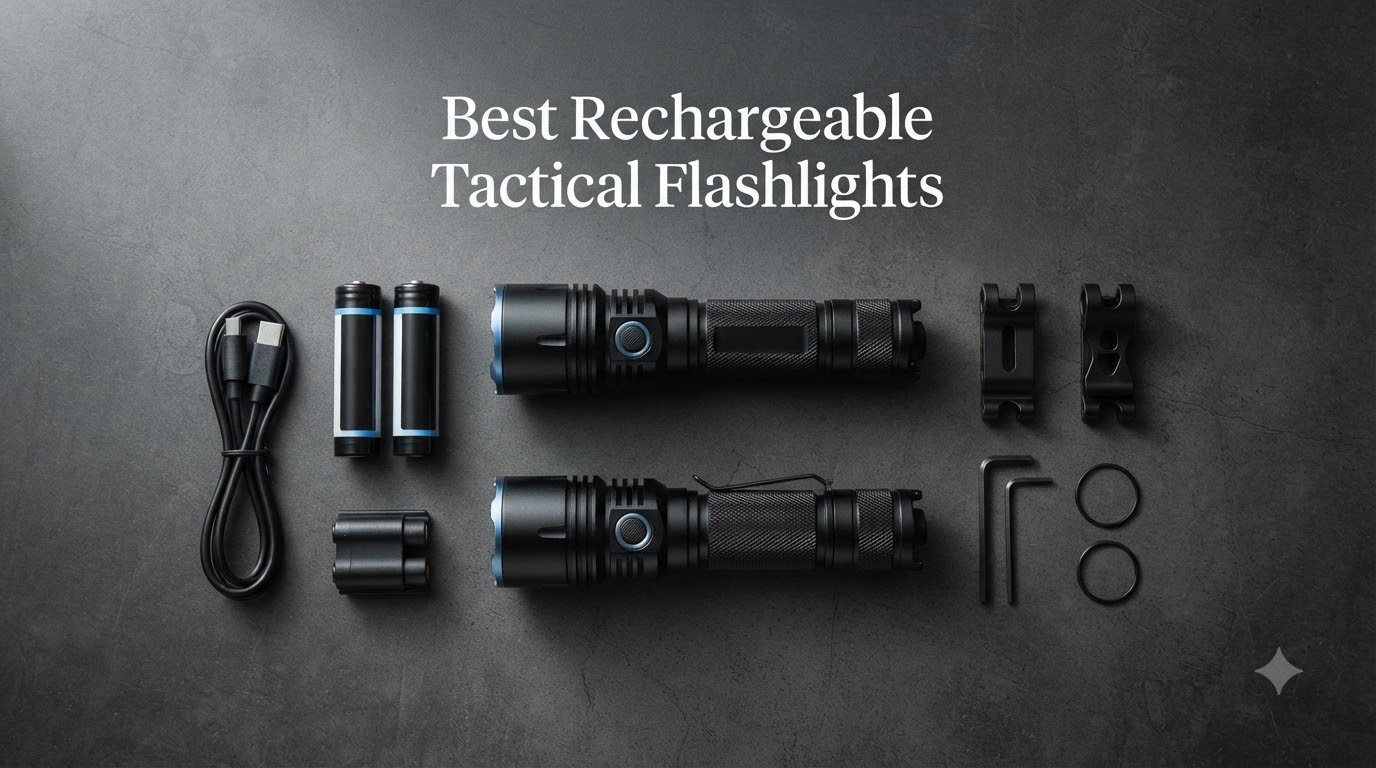
Rechargeable lithium-ion batteries save money over time and deliver higher output, while disposable CR123A cells offer a ten-year shelf life and better cold-weather reliability. Most experienced users settle somewhere in the middle.
Here is how the common battery types stack up:
| Battery Type | Voltage | Rechargeable? | Shelf Life | Best For |
|---|---|---|---|---|
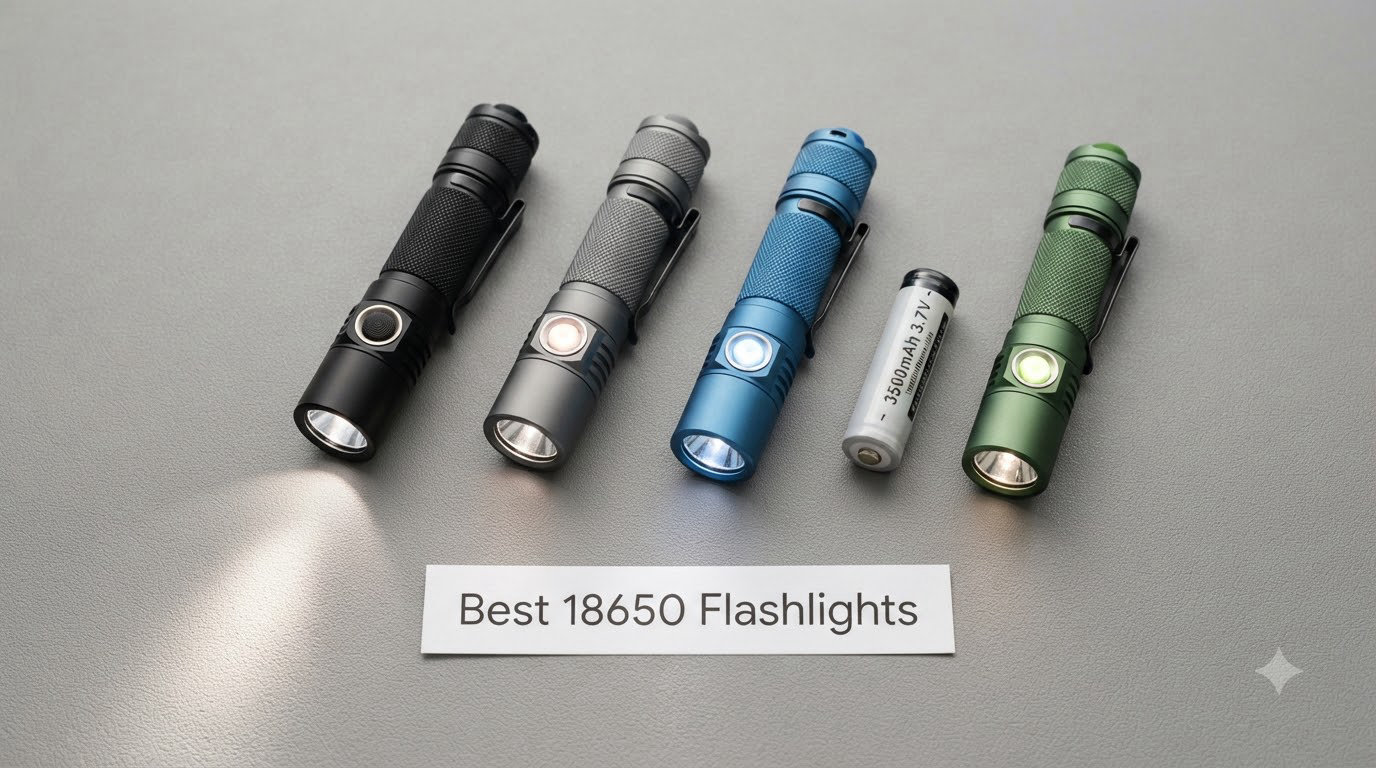
| 18650 Li-ion | 3.7V | Yes, 300–500 cycles | Holds charge months | Full-size tactical lights, best value per run |
| 21700 Li-ion | 3.7V | Yes, 300–500 cycles | Holds charge months | High-output lights needing long runtime |
| CR123A Lithium | 3V | No | About 10 years | Emergency spares, cold weather, compact lights |
| AA / AAA Alkaline | 1.5V | No (NiMH versions yes) | 5–10 years | Availability anywhere, budget lights |
The honest trade-off nobody markets: rechargeable batteries demand discipline. A light left on a shelf with a depleted 18650 is useless in an emergency, while a CR123A stored for a decade still fires up. Our team keeps rechargeable cells in daily-carry lights and CR123A-powered lights staged for emergencies.
Battery availability also matters more than people expect. Before buying, ask whether you can find replacement cells locally or whether you depend entirely on shipping. Forum veterans consistently rank hard-to-find batteries among their biggest regrets with otherwise great lights.
A tailcap switch wins under stress because you can activate it with a firm forward press using your thumb or support hand, even gloved, without changing your grip. This is why virtually every duty flashlight uses rear-mounted activation.
The critical feature is momentary-on. Press halfway and the light runs; release and it goes dark. Full press locks it on. Momentary control lets you flash brief bursts for identification while preserving night vision and avoiding telegraphing your position. It sounds like a small thing until you practice with it, then it becomes indispensable.
Side switches occupy the alternative camp. They enable mode cycling and memory functions, and some users prefer them for everyday tasks. The problem appears under adrenaline: side switches require a finger reposition and a lighter touch, both harder with gloves, cold hands, or shaking hands.
The best compromise many professionals choose is a dual-switch layout: tailcap for tactical activation, side switch for mode changes during calm moments. Whatever you pick, test the switch with gloves on before committing. A switch you cannot reliably operate while wearing winter gloves is the wrong switch.
Two well-chosen modes beat eight mediocre ones for tactical work. Experienced users overwhelmingly prefer a straightforward Hi-Lo interface with high as the default, because complexity collapses when stress rises.
The forum consensus surprised me when I first researched it. Enthusiast communities that love programmable multi-mode lights for hiking still recommend simple interfaces for defensive use. Their reasoning holds up: under adrenaline, fumbling through firefly, low, medium, high, and strobe sequences means your light ends up in the wrong mode at the worst moment.
What you genuinely need:
Two related features deserve a mention. A lockout function prevents the light from accidentally switching on inside a pocket or bag, saving both battery and your thigh from surprise burns. A mode memory function restarts the light in its last-used setting, which most users want set to high.
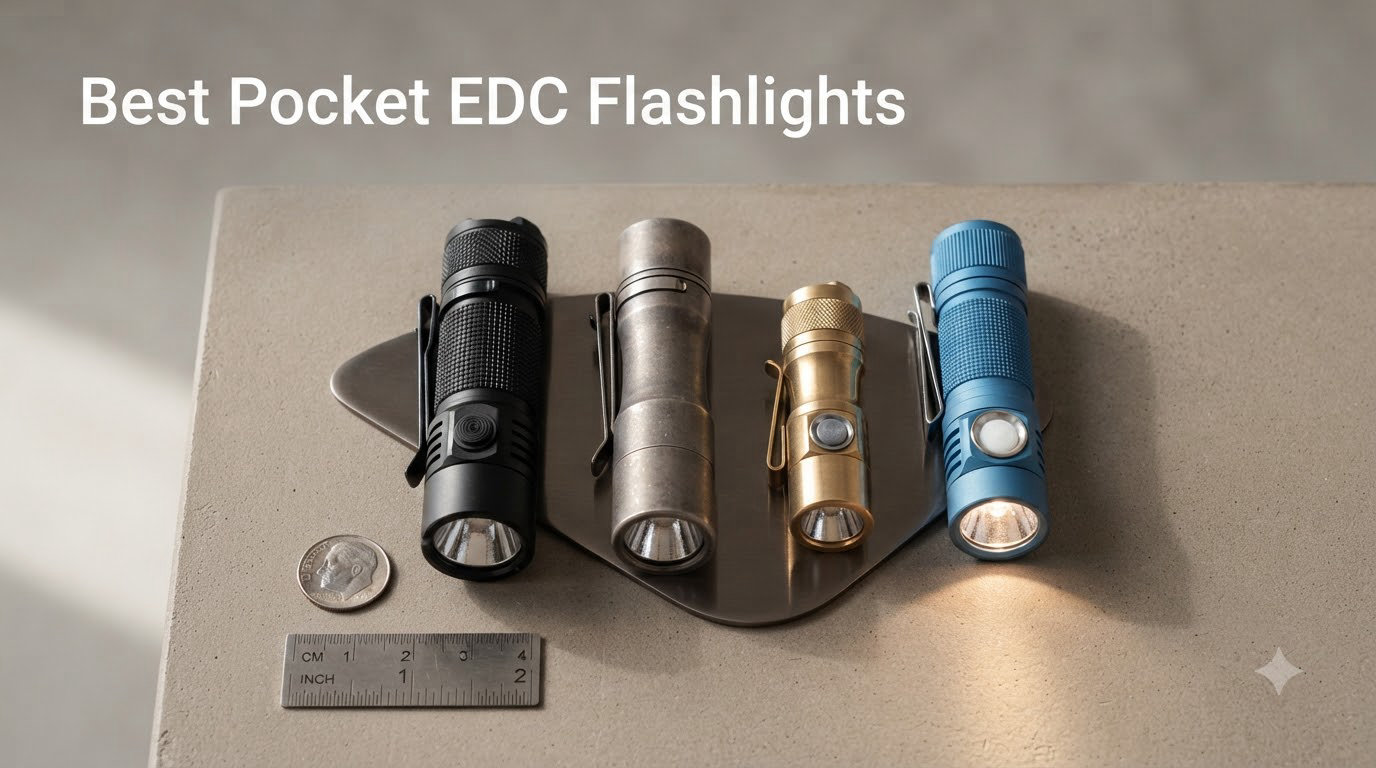
Match the light’s size to its job: pocket-sized EDC lights run one to four inches, duty lights run five to seven inches for grip and holster compatibility, and weapon-mounted lights prioritize compactness over everything except durability.
An EDC tactical flashlight lives or dies by pocketability. Around one inch of body diameter fits standard pockets and holsters, and weights near three ounces disappear during daily carry. Push past that and you will start leaving the light at home, which defeats the entire purpose.
Duty lights trade some portability for control. Longer bodies give your support hand a proper grip position, accept larger batteries for extended runtime, and fit standard belt holsters. Patrol officers and security professionals typically land here.
Anti-roll design is a small feature with outsized value. Crenulated or flat-sided bezels keep the light from rolling off a hood, table, or vehicle dash. It costs nothing and saves constant irritation.
Handheld lights win on versatility and everyday usefulness, while weapon-mounted lights win on target discrimination during a defense scenario. Most serious users eventually own one of each.
A weapon-mounted light keeps your support hand free and aligns illumination with your muzzle, letting you identify what you are aiming at before any trigger decision. That identification step is both a legal and ethical necessity in home defense. The downsides: it illuminates your own position, adds weight to the firearm, and does nothing for finding your way around a dark house when the gun is in the safe.
A handheld light works everywhere: walking the dog, checking a noise, searching a blackout, or signaling for help. Its weakness is that it occupies a hand and requires technique training to pair with a firearm safely.
If you can only buy one first, buy handheld. It serves every scenario including the ones a weapon-mounted light cannot touch, and the skills transfer directly when you add a rail-mounted unit later.
You need between 350 and 600 lumens for general tactical use, though specific scenarios shift that number in both directions. This range matches what experienced users on r/flashlight and CandlePower Forums consistently identify as the practical sweet spot.
| Scenario | Recommended Lumens | Why |
|---|---|---|
| Everyday carry and close tasks | 100–300 | Enough for navigation without blinding yourself indoors |
| Home defense | 500–1,000 | Identifies threats across a room and disorients intruders |
| Duty and patrol use | 600–1,000 | Balances indoor usability with outdoor reach |
| Outdoor search and property checks | 1,000–3,000 | Throws far enough to scan yards, treelines, and fields |
| Weapon-mounted rifle light | 800–1,500+ | Must overcome muzzle blast shadow and reach beyond handgun distances |
Note the nuance on extreme brightness. Output above 1,500 lumens bounces off white walls and ceilings indoors, temporarily degrading your own vision along with everyone else’s. Save turbo modes for outdoor distances where they shine, literally.
Follow this five-step framework and you will land on the right light in about ten minutes instead of scrolling review sites for a week.
Step 1: Define your primary scenario. Write down the single situation you are actually preparing for. Home defense, night walks, duty carry, and trail use lead to different answers, and pretending one light excels at everything is how bad purchases start.
Step 2: Set your brightness floor. Use the table above. Indoor defense starts around 500 lumens, outdoor scanning wants 1,000-plus. Anything marketed primarily on 10,000-lumen numbers is selling spectacle, not utility.
Step 3: Choose your power philosophy. Daily use favors rechargeable 18650 or 21700 platforms. Emergency staging favors CR123A. Mixed approach? Look for dual-fuel lights that accept both.
Step 4: Verify the physical essentials. Tailcap switch with momentary-on, aircraft-grade aluminum body, IPX7 rating minimum (IPX8 preferred), and a simple interface defaulting to high. These four boxes ticked eliminate most of the market.
Step 5: Check the brand’s reputation and warranty. Professionals gravitate toward manufacturers with documented law-enforcement and military track records precisely because those contracts demand proven reliability. A lifetime warranty backed by responsive service separates serious companies from drop-shippers.
The most common buying mistakes are chasing maximum lumens, trusting peak-output marketing, ignoring switch ergonomics, and buying complicated interfaces. Each one shows up constantly in user complaints, and each one is easy to dodge.
Mistake 1: Believing peak lumen numbers. A light claiming 5,000 lumens often sustains half that after ninety seconds of heat throttling. Read independent runtime graphs when available.
Mistake 2: Buying ultra-cheap “tactical” lights. Lights under roughly twenty dollars frequently dim quickly, feel flimsy after one drop, and use switches that fail within months. The forums document this failure pattern endlessly. Buy once.
Mistake 3: Ignoring glove compatibility. Test switch operation with the gloves you would actually wear in winter. Tiny recessed buttons fail this test every time.
Mistake 4: Mounting an unpotted light to a firearm. Recoil destroys loosely assembled electronics faster than anything else. Insist on potted internals for anything rail-mounted.
Mistake 5: Storing rechargeable lights empty. Lithium-ion cells degrade sitting at zero charge. Top them off monthly or stage a disposable-battery backup light beside them.
Between 350 and 600 lumens covers most tactical applications, with 500 to 1,000 lumens ideal for home defense and 1,000 to 3,000 lumens for outdoor searching. Experienced users consistently cite 350-600 as the practical sweet spot, since extreme output causes glare indoors.
No, 1,000 lumens is effective for home defense in open rooms and hallways, though it reflects off light-colored walls and can degrade your own dark adaptation in tight spaces. Many users prefer 500-800 lumens indoors and reserve higher outputs for outdoor use.
A tactical flashlight combines instant one-handed activation through a tailcap switch with momentary-on control, 1,000+ lumen output capability, aircraft-grade aluminum construction, an IPX7 or IPX8 waterproof rating, and defensive modes such as strobe. Regular flashlights lack the activation speed, beam focus, and ruggedness.
Rechargeable lights cost less to run and support higher outputs through 18650 or 21700 lithium-ion cells, making them better for frequent use. Disposable CR123A batteries hold a charge for about ten years, so many users keep rechargeable lights for daily carry and CR123A lights staged for emergencies.
Special operations units commonly use lights from Streamlight, SureFire, Modlite, and Fenix, chosen for proven recoil durability, potted electronics, and consistent quality control. Exact loadouts vary by unit and mission, and military procurement prioritizes reliability over headline brightness numbers.
Choosing the right tactical flashlight comes down to matching six specifications to your actual scenario: appropriate lumens, aluminum construction, a trustworthy power source, a tailcap switch, a simple interface, and the right size for how you will carry it. Nail those and even a modestly priced light will outperform an expensive one chosen on hype.
If you prioritize everyday versatility, go with a compact handheld EDC light in the 300-to-600-lumen range. If you need maximum output for property checks or outdoor search, choose a full-size 18650 or 21700 platform pushing 1,000 to 3,000 lumens. And if your scenario centers on home defense, add a potted weapon-mounted light to a reliable handheld rather than replacing it.
Whatever you pick, buy from a manufacturer whose lights professionals bet their lives on, then actually practice with it in the dark. A light you have trained with for even one hour beats an untested flagship every single time. The right choice in 2026 is the one matched to your hands, your scenario, and your habits — now you know exactly how to find it.