10 Best Compact Survival Binoculars (September 2026)
I keep two pairs of compact binoculars: one in my daypack and one in the bug-out-bag in the closet. Over…

If you have ever finished a long hike with a stiff neck and sore shoulders, you already know why so many outdoor enthusiasts switch from a basic neck strap to a proper binocular harness. Learning how to use a binocular harness correctly changes the way you carry optics in the field, and once you feel the difference, you will not want to go back.
I have been running harnesses for everything from dawn glassing sessions in the Rockies to slow weekend bird walks. In this guide, I will walk you through exactly how to put one on, adjust it, and get the most out of it in real conditions. Whether you are a hunter, birder, or casual hiker, this is the setup process I wish someone had shown me on day one.
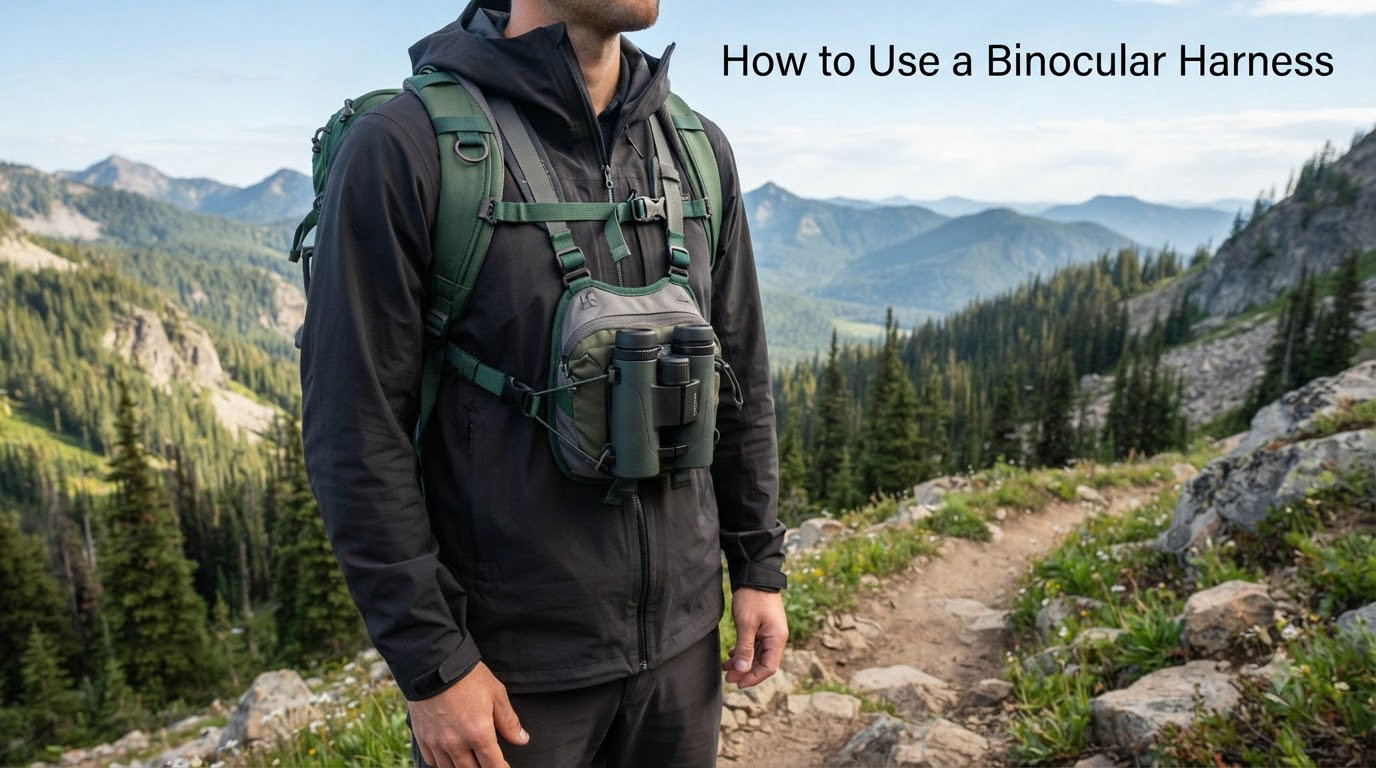
A binocular harness is a wearable carrying system that distributes the weight of your binoculars across your shoulders and upper back rather than letting it hang from your neck. Most designs use two shoulder straps connected across the back, with the binoculars resting high on your chest at roughly collarbone level. Quick-release clips or tethers hold the optics in place until you need them.
The main reason people switch is simple comfort. A standard neck strap puts the full weight of the binoculars on a single pressure point, and after a couple of hours, that pressure turns into real neck strain. A harness spreads the load across two shoulders and your upper back, which is exactly where your body is built to carry weight.
Beyond comfort, harnesses keep binoculars from bouncing against your chest while you hike, give you faster one-handed access, and often include storage for a rangefinder, calls, or extra batteries. If you have ever missed a trophy buck or a rare warbler because you were fumbling with a neck strap, the upgrade pays for itself quickly.
Before you learn how to use a binocular harness, you should know that there are two main styles on the market. The first is the minimalist strap-style harness, which is essentially two elastic or webbing straps that cross in the back and hold your binoculars against your chest. These are lightweight, packable, and ideal for birders and hikers who want a no-fuss carry.
The second is the chest pack harness, which adds a structured pouch or shell around the binoculars. Think of brands like Badlands, Marsupial, or Vortex GlassPak. The shell protects your optics from branches and rain, often includes a magnetic closure for silent operation, and frequently has extra pockets for a rangefinder or wind checker.
For hunters crawling into a tree stand or pushing through thick brush, a chest pack is the better choice because it shields the binoculars and stays quiet. For birders and hikers on established trails, a strap-style harness keeps things light and breathable. If you already own a quality pair like those in our 10×42 binocular guide, match the harness to how you actually move, not how it looks on the shelf.
Once you pick a style, the actual setup takes only a few minutes. Here is the process I run through every time I fit a new harness, from unboxing to glassing that first ridge.
Most harnesses come with small plastic loops or quick-release clips that thread through the lugs on either side of your binocular barrel. Open the loop, slide it through the lug, and close it back on itself. Make sure the clip faces outward so the binoculars will sit upright when lifted. If your binoculars do not have attachment lugs, you will need an aftermarket swing-out adapter before moving on.
Slip the harness over your head the way you would a jacket, with the strap buckle in the back. The two shoulder straps should sit comfortably on your shoulders without digging in. If the harness has a sternum strap, leave it undone for now and adjust it later.
With the harness on but the binoculars not yet clipped in, pull the shoulder straps to find the right riding height. The binoculars should sit high on your chest, roughly level with your collarbone, when fully clipped in. Lower than that and they bounce against your stomach. Higher than that and they push into your throat when you look down.
Now clip each side of the harness to the loop you attached in Step 1. You should hear a small click or feel the buckle lock into place. Gently lift the binoculars by the bridge to confirm both clips are secure. If one side detaches, check that the loop is threaded correctly and try again.
Most harnesses include a small elastic or adjustable tether that runs from the harness up to the binocular bridge. This tether keeps the binoculars snug against your chest so they do not swing when you walk downhill. Pull the tether until the binoculars sit flat against your body, but not so tight that they are hard to lift. A good test: walk 20 paces and the binoculars should not bounce.
If you are wearing a heavy jacket or rain shell, loosen the shoulder straps a half inch so the harness sits on top of the layers instead of digging in. For still hunting, tighten the tether slightly to keep the binoculars quiet. For long hikes, loosen it so you can lift the binoculars without tugging at your shoulders. This step is the difference between a harness you forget you are wearing and one you keep wanting to take off.
Finally, practice lifting the binoculars to your eyes using only your dominant hand. The clip should release cleanly with a small lift, and the binoculars should naturally find your eye position. If you have to use both hands, the tether is too tight or the clips are not aligned. Re-adjust and repeat until the draw feels effortless.
Setup is only half the battle. After hundreds of hours in the field, here are the small adjustments that make the biggest difference day to day.
Match the harness to the season. Summer calls for breathable mesh and minimal back coverage. Winter demands wider straps that distribute weight over a heavy jacket. If you wear a pack often, look at our waterproof binocular guide for models that pair well with a fully loaded harness system.
Choose magnetic closures for quiet situations. Traditional buckles click. Magnetic closures, like those on a Marsupial or Badlands harness, are silent. For bowhunters and turkey hunters, that small detail is the difference between filling a tag and going home empty.
Use the extra pockets. Most chest pack harnesses include a rangefinder pouch and small shell loops. Load them up so your hands stay free and your pockets stay empty. A wind checker, call, and lens cloth all fit comfortably without unbalancing the harness.
Check the elastic after a year of use. Forum users consistently report that elastic harnesses lose tension after 12 to 18 months of regular use. Once the binoculars start to droop, replace the straps or the tether. It is a $15 fix that restores the entire system.
Pair your harness with the right binoculars. A great harness cannot save a poorly sized binocular. If you are still shopping, our binocular buying guide for bird watchers and Bushnell binocular roundup are good places to start. The right match makes the harness feel like part of the binocular, not an accessory.
Reduce fatigue on long glassing sessions. A proper chest harness shifts weight off your arms and onto your skeletal frame. If you spend hours behind glass, you will notice you can stay on the tripod much longer without your arms shaking. This single change, more than magnification or objective size, is why serious glassers swear by harnesses.
Even a great harness can feel wrong if it is set up wrong. These are the mistakes I see most often, and they all have simple fixes.
Setting the binoculars too low. If your binoculars hang at belly-button height, every step creates a pendulum effect. Raise the shoulder straps until the binoculars sit at collarbone level and the bouncing stops.
Over-tightening the tether. A tether that is pulled too tight makes the binoculars hard to lift and puts stress on the attachment lugs. Snug is good, vice-grip is not.
Ignoring winter layering. A harness fitted in a t-shirt will feel completely different over a puffy jacket. Re-adjust every time you change layers significantly. This is the single biggest complaint I see on birding and hunting forums.
Buying a noisy buckle for a quiet hunt. Standard plastic buckles can snap loudly. If quiet operation matters, choose a magnetic closure or fabric-covered buckle from the start. Switching later means buying a new harness.
Skipping the one-handed draw test. If you cannot bring the binoculars to your eyes with one hand, the harness is too tight or the clips are misaligned. Fix it before you are standing in front of the buck you have been waiting all season to see.
Yes, for almost anyone who uses binoculars for more than a few minutes at a time. A quality binocular harness distributes weight across your shoulders and back, eliminates neck strain, prevents bouncing, and gives you faster one-handed access than a standard neck strap. Most users notice the difference within a single outing.
Popular and well-reviewed brands include Badlands, Vortex (GlassPak Pro), Marsupial, Eberlestock, Kuiu, and Alpine. The best choice depends on your activity: bowhunters usually prefer silent magnetic closures from Marsupial or Badlands, hikers like the lightweight Vortex GlassPak, and birders often prefer simple elastic strap harnesses from Nikon or Vanguard.
You need one if you use binoculars for extended periods, carry heavier models above 10×42, hike rough terrain, or want hands-free access while hunting or birding. You can get by without one for occasional short use with compact binoculars, but anyone with regular outdoor optics use will feel the upgrade immediately.
Binocular harnesses use two shoulder straps that cross in the back to hold the binoculars against your chest at collarbone height. Quick-release clips attach to the binocular lugs, and an adjustable tether keeps them snug. The design shifts weight from your neck to your shoulders and upper back, which is a much stronger and more comfortable way to carry heavy optics.
Learning how to use a binocular harness is one of those small skills that quietly upgrades every minute you spend outdoors. Once your binoculars sit at the right height, ride without bouncing, and lift with one hand, you stop thinking about the gear and start thinking about what you are looking at.
Take ten minutes this week to fit your harness properly, run through the seven steps above, and test it on a short walk. If you do not already own one, start with the activity you do most often and pick the style that matches. For a deeper look at how the right binocular pairs with the right harness, our binocular magnification guide is a useful next read.