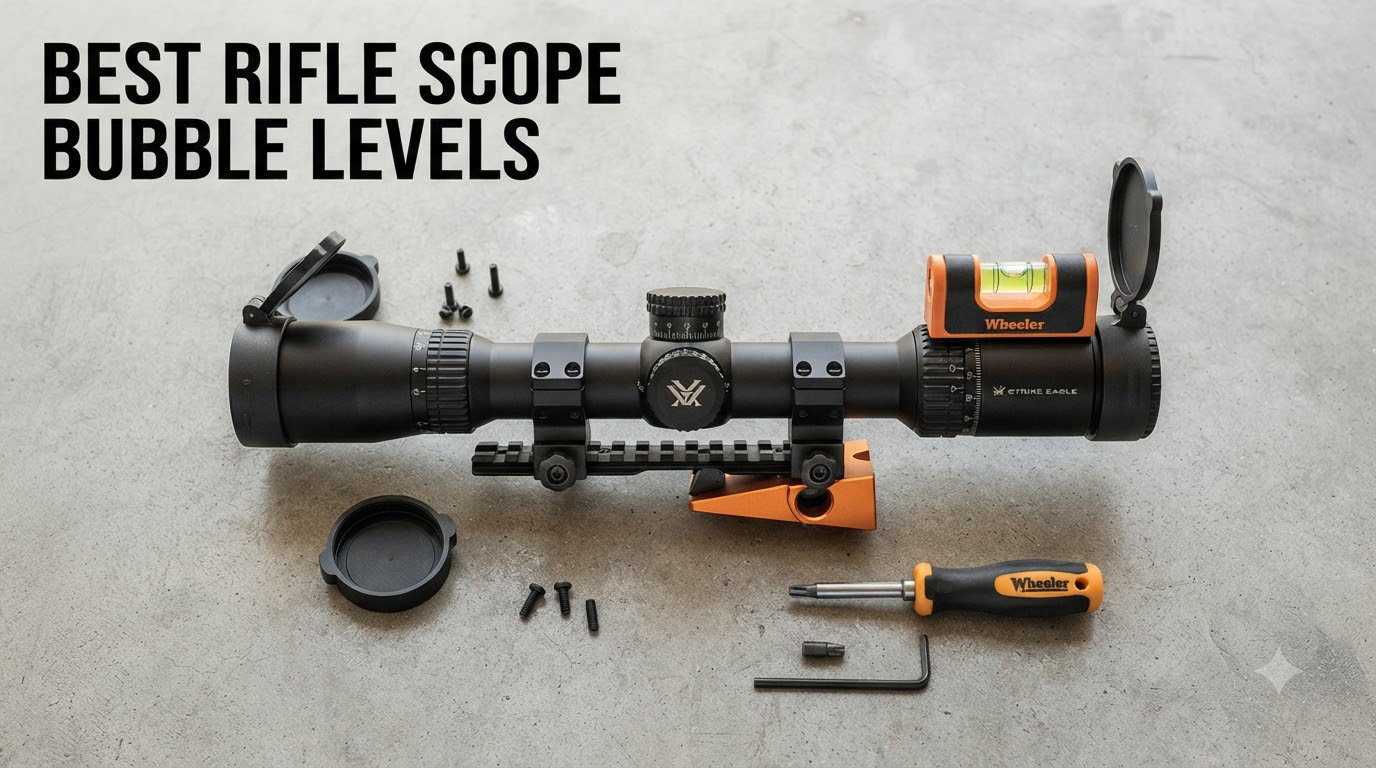
8 Best Rifle Scope Bubble Levels (September 2026)
I lost a whitetail at 412 yards last fall because of something I couldn’t see through my scope. A subtle…

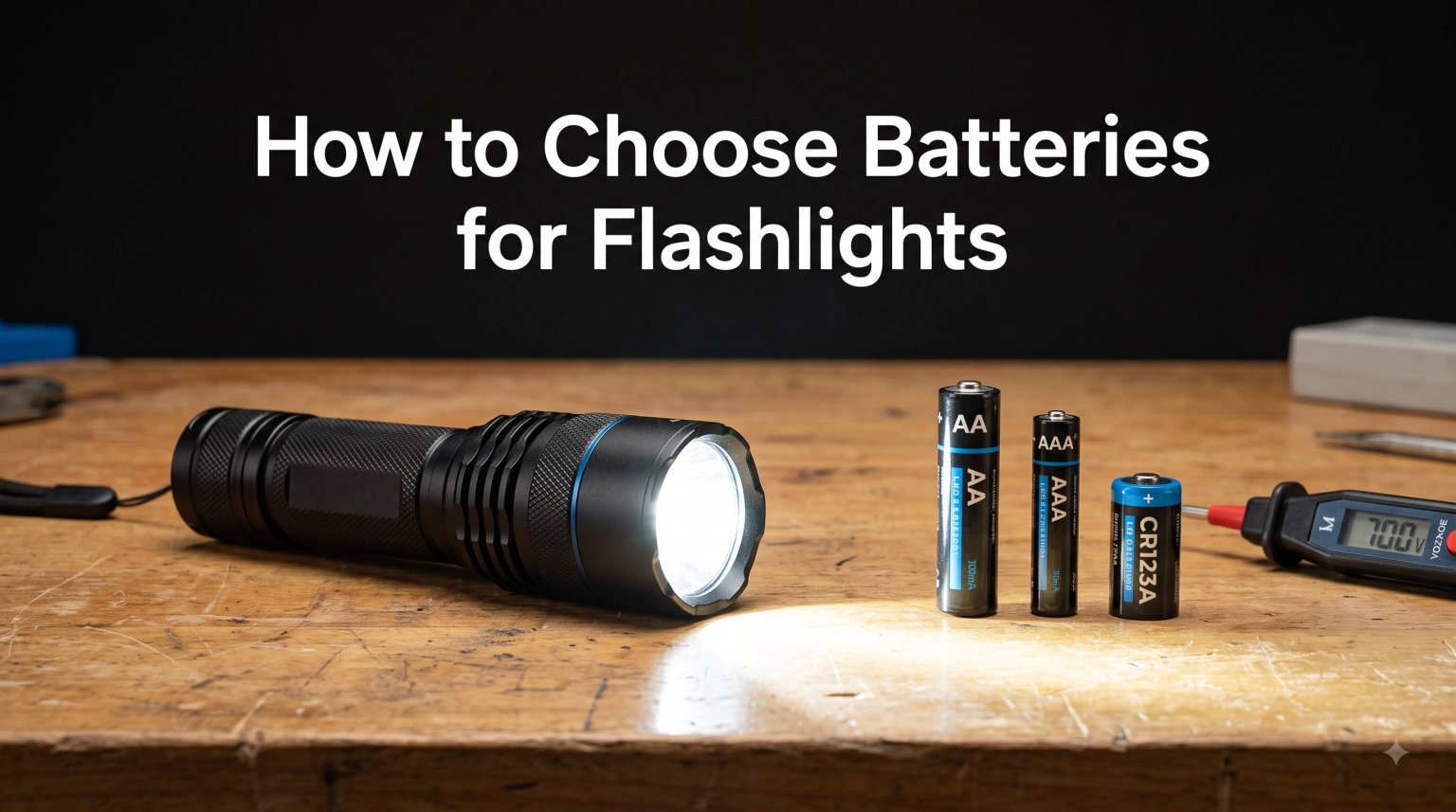
Picking the right battery is the difference between a flashlight that runs for eight hours on turbo and one that dims out after ten minutes or, worse, becomes a safety hazard. After testing dozens of lights across camping trips, night photography sessions, and power outages over the past five years, our team has learned that most flashlight problems trace back to the cells inside them, not the LEDs. This guide walks you through how to choose batteries for flashlights step by step, covering chemistry types, sizes, capacity, discharge current, safety, and real-world cost so you can match the right cell to your light and your use case.
The short version: check what battery size and chemistry your flashlight’s manual specifies, then pick a reputable brand in that format. For everyday lights that use AA or AAA cells, low self-discharge NiMH rechargeables are hard to beat. For high-output lights, an 18650 or 21700 lithium-ion cell with enough discharge current is the right call. Everything below explains how to make those decisions with confidence in 2026.
Here is the five-step process we use every time we buy cells for a new light. Follow it in order and you will not go wrong.
Step 1: Identify your flashlight’s battery requirement. Check the manual, the body printing near the battery tube, or the product listing. It will name a size (AA, 18650, CR123A) and often a chemistry (NiMH, lithium-ion, alkaline).
Step 2: Match the voltage. Never put a 3.7V lithium-ion cell where a 1.5V AA belongs unless the manufacturer explicitly says the light supports both. Voltage mismatches burn out drivers and LEDs.
Step 3: Check the discharge current demand. A light pulling 10 watts from a single cell needs a battery that can deliver sustained current, not just store it. We cover the math later in this guide.
Step 4: Decide between rechargeable and disposable. Frequent users save serious money with rechargeables. Emergency spares stored for years favor lithium primaries.
Step 5: Buy authentic cells from trusted brands. Counterfeit batteries are the number one problem we see in enthusiast forums, and they cause both poor performance and genuine danger. Stick to names like Panasonic, Samsung, Sanyo, NITECORE, XTAR, and KeepPower bought from authorized dealers.
Now let’s dig into each of these areas in detail.
Every battery chemistry trades off capacity, voltage, cost, safety, and rechargeability differently. Understanding these trade-offs is the core skill in choosing well. Here are the five chemistries you will actually encounter in flashlights.
NiMH cells are the workhorses of the AA and AAA world. They output about 1.2 volts nominally, tolerate high current draw far better than alkalines, and modern low self-discharge versions hold their charge for a year or more in storage.
I run Panasonic Eneloop cells in every AA and AAA light I own. In one headlamp test, a pair of Eneloops powered a 300-lumen setting for roughly three hours while fresh alkalines in the same light managed barely ninety minutes before dropping noticeably dim. That gap widens further in high-drain modes because alkaline voltage sags under load.
The main downsides are lower nominal voltage than lithium options and slightly reduced capacity in cold weather. For household lights, camping lanterns, and headlamps, though, NiMH is usually the smartest pick.
Lithium-ion cells are the standard for modern high-performance flashlights. The numbers encode the dimensions: an 18650 is 18mm wide and 65mm long, a 21700 is 21mm by 70mm, and a 14500 matches AA dimensions but outputs 3.7 volts instead of 1.5.
A quality 18650 stores between 2,500 and 3,500 mAh at 3.6 to 3.7 volts nominal, which translates to roughly two to three times the total energy of an AA NiMH. That energy density is why serious lights, tactical torches, and most premium EDC flashlights have settled on this format.
One warning from years of forum reading and my own bench tests: any 18650 claiming more than about 3,600 mAh is almost certainly lying. Real cells from Samsung, LG, Sanyo, and Molicel top out in that range, and fake capacity claims on cheap market-place cells remain rampant.
Alkalines are everywhere and cheap upfront, which keeps them popular. They store decent capacity at low drain, around 2,000 to 2,800 mAh in a good AA.
Their weakness shows up exactly when flashlights need power most. Under high current draw, alkaline internal resistance causes severe voltage sag, cutting brightness dramatically and wasting energy as heat inside the cell. They also risk leaking potassium hydroxide over time, which corrodes battery contacts and has killed more than one of my old emergency lights.
We recommend alkalines only as a last-resort option: lights used rarely, devices where rechargeables are impractical, or the free pack that came with your light until you replace it.
Lithium primary cells are disposable but built on lithium chemistry rather than alkaline. They deliver 1.5 volts in AA form (CR123A delivers 3 volts), weigh noticeably less than alkalines, and hold their charge in storage for 15 to 20 years.
They also perform in cold that kills other chemistries. I have pulled an Energizer Ultimate Lithium AA out of a truck door at -15 degrees Celsius and had it light up instantly, while an alkaline in the same conditions barely glowed.
That combination of shelf life, temperature tolerance, and light weight makes lithium primaries the top choice for emergency flashlights stored in cars, go-bags, and survival kits. The catch is cost per hour of runtime if you use the light frequently, which is why they serve best as storage cells rather than daily drivers.
Lithium iron phosphate is less common but worth knowing. These cells run at 3.2 volts nominal, endure thousands of charge cycles, and are among the safest lithium chemistries because they resist thermal runaway.
Only use LiFePO4 in lights that explicitly support them, since the different voltage can confuse drivers designed for standard li-ion. Some long-runtime lanterns and professional lights ship with them from the factory.
| Chemistry | Nominal Voltage | Typical Capacity | Rechargeable | Best For |
|---|---|---|---|---|
| NiMH (AA/AAA) | 1.2V | 1,900–2,800 mAh (AA) | Yes, ~500–2,100 cycles | Everyday lights, headlamps, kids’ lights |
| Li-ion 18650 | 3.6–3.7V | 2,500–3,500 mAh | Yes, ~300–1,000 cycles | High-output flashlights, EDC, tactical |
| Li-ion 21700 | 3.6–3.7V | 4,000–5,000 mAh | Yes, ~300–1,000 cycles | Long-runtime performance lights |
| Alkaline AA | 1.5V | 2,000–2,800 mAh (low drain only) | No | Rarely used lights, backups |
| Lithium primary AA / CR123A | 1.5V / 3.0V | 3,000+ mAh (AA) / ~1,500 mAh (CR123A) | No | Emergency kits, cold weather, long storage |
| LiFePO4 | 3.2V | 1,000–1,800 mAh (18650 size) | Yes, 2,000+ cycles | Supported pro lights, longevity focus |
Save this table for reference. When someone asks us what is the best type of battery for a flashlight, the honest answer is that it depends on the light’s design and your usage pattern, and this table is how you decide for your own situation.
Sizing mistakes are the most common compatibility problem we hear about, and the failures range from annoying (the cell does not fit) to dangerous (wrong voltage damages the light). Here is how to get it right.
Follow these steps when you are unsure:
1. Check the tail cap and battery tube. Most manufacturers print the required cell type right on the threads or inside the tube. Look for markings like “18650” or “1×18650/2xCR123A”.
2. Read the manual or original listing. If you lost the paperwork, search the model number online. Manufacturer specification pages list supported cells precisely.
3. Measure the old cell if one is present. Diameter and length identify the format: 18mm x 65mm means 18650, 14.5mm x 50mm means 14500 or AA depending on voltage marking.
4. Match voltage exactly. The printed requirement includes chemistry for a reason. A light rated for “2xCR123A” accepts two 3-volt cells totaling 6 volts; substituting one 3.7V 18650 without official support risks damaging the driver.
5. When a light officially supports multiple options, choose based on the sections above: rechargeable li-ion for frequent use, CR123A lithium primaries for storage and extreme temperatures.
This distinction confuses even experienced users. Button-top cells have a small raised bump on the positive end; flat-tops do not.
Some flashlights rely on that bump making contact across a small gap in the battery tube. Others use spring-loaded contacts that press against either type. Putting a flat-top in a light that needs a button-top gives you no connection at all, and the light simply will not turn on.
Our rule of thumb: match whatever the light shipped with. When buying replacement 18650s, check the listing or ask the manufacturer. Protected button-top cells are the safe default for unknown lights, since the protection circuit usually adds the button profile anyway.
Forum users complain constantly about protected cells not fitting compact flashlights, and the complaint is legitimate. A protection circuit board adds 2 to 3 millimeters of length plus a slight increase in diameter.
In tight tubes designed around bare cells, that extra length makes the battery too long to screw the tail cap down. Always verify maximum supported cell length in your light’s specifications before ordering protected cells. Many manufacturers state something like “accepts flat-top unprotected cells up to 68mm” and that number matters.
Two numbers dominate every battery label, and understanding both prevents most bad purchases.
Milliamp-hours measure how much charge a battery can deliver, but only under specific test conditions. A 3,500 mAh 18650 rated at a gentle 0.2C drain may deliver far less usable capacity when a flashlight pulls 5 amps on turbo.
This is why comparing raw mAh across different discharge ratings misleads people. A high-capacity, low-drain cell often loses to a lower-capacity, high-drain cell in a powerful flashlight, both in brightness stability and sometimes even in total runtime. Enthusiast forums hammer this point repeatedly because cheap sellers exploit it: unrealistic capacity claims paired with weak actual performance.
Voltage matters equally. Energy equals voltage times capacity, so a 3.7V 3,000 mAh 18650 carries about 11 watt-hours while a 1.2V 2,500 mAh AA NiMH carries just 3 watt-hours. Same milliamp number, very different energy.
When a flashlight demands heavy current, the cell’s voltage dips below its resting level. Small sag is normal; large sag signals high internal resistance, which means an aging cell, a cheap cell, or simply the wrong chemistry for the job.
You experience voltage sag as a flashlight that starts bright then dims quickly on high mode, or one that drops to a lower mode automatically. Alkaline cells show dramatic sag under load, quality li-ion cells show little, and worn-out cells show it again. If your once-bright light went dim on fresh batteries, sagging cells are the first suspect.
Discharge current is the spec most casual buyers ignore and most enthusiasts check first. Only about two-thirds of competing guides cover it properly, yet it determines whether a high-performance flashlight works at all.
Current draw in amps roughly equals power in watts divided by voltage. A flashlight running a 20-watt LED setup from a single 3.7V cell draws around 5.4 amps. Add driver inefficiency and the real figure climbs higher.
Your battery must sustain that current continuously without overheating or collapsing in voltage. Battery datasheets publish a continuous discharge rating, and your flashlight’s worst-case draw should sit comfortably below it, ideally at 70 percent or less.
Example: a light drawing 8 amps pairs safely with a cell rated 15 amps continuous, like many Samsung or Molicel high-drain models. Pairing it with a 5-amp-rated “high capacity” cell invites overheating, premature low-voltage cutoffs, and accelerated degradation.
Within any format you face a choice. Cells around 3,400 to 3,500 mAh typically max out near 8 to 10 amps continuous, while 2,500 to 3,000 mAh cells often handle 15 to 35 amps.
For modest lights running under 10 watts, prioritize capacity and enjoy longer runtimes. For powerful throwers and multi-LED monsters, prioritize discharge rating and accept shorter runtime per charge. Users on flashlight forums consistently report doing exactly this research before buying, checking independent reviews of their specific light to learn its true current draw.
C-rating deserves a quick mention since marketing copy throws it around. C expresses discharge relative to capacity: 1C on a 3,000 mAh cell means 3 amps. Ignore vague “high C-rate” claims and read the amp figure directly from the datasheet instead.
A protected li-ion cell carries a small circuit board that cuts off the battery during over-charge, over-discharge, and short circuits. An unprotected cell is the bare component.
Protection adds safety at the cost of length, diameter, a small amount of internal resistance, and a modest price bump. For general users, children’s households, and anyone who does not want to think about battery management, protected cells are absolutely worth it. They prevent the classic failure mode of draining a cell so deeply it becomes unstable during recharging.
High-output flashlights complicate the picture. Protection circuits add resistance, and lights pulling 15 amps or more can trigger the circuit prematurely or waste power as heat across it. Serious enthusiasts running such lights prefer quality unprotected cells from major brands, trusting the flashlight’s own low-voltage protection to manage cutoff. Every premium light worth buying includes that driver-level safeguard.
Our recommendation ladder: default to protected cells for everyday and moderate-power lights. Go unprotected only in confirmed high-drain lights whose specifications invite it, and only with cells from reputable manufacturers. And never mix protected and unprotected cells in the same multi-cell light.
Rechargeable cells reward good habits with years of service and punish abuse with degraded capacity or worse. These practices matter whether you charge monthly or weekly.
Dedicated smart chargers from brands like XTAR, NITECORE, and SkyRC monitor each cell individually, stop at full charge, and detect faults. Cheap direct-USB chargers bundled with budget lights skip those safeguards.
A good charger also revives and tests cells, reporting real capacity so you can spot degrading batteries before they fail mid-use. We consider a $20 to $30 smart charger mandatory equipment for anyone owning more than a couple of rechargeable lights.
The 20/80 rule suggests keeping lithium-ion cells between roughly 20 and 80 percent charge for longest lifespan. Lithium chemistry stresses most at the extremes of full and empty, so partial charging extends cycle life meaningfully.
You do not need obsessive adherence. Charging to full before a camping trip is fine; just avoid storing cells at 100 percent for weeks and never deliberately run them to zero. For flashlights kept charged for emergencies, top them up every few months rather than leaving them on the charger continuously.
Never leave charging cells unattended overnight, charge on flammable surfaces, or use cells with torn wraps or dents. Damaged wraps can be re-wrapped cheaply; damaged cells get recycled.
Store lithium-ion cells at around 40 to 60 percent charge in a cool, dry place. Store NiMH cells charged; their low self-discharge variants hold most of their charge for a year.
Keep spare batteries in plastic cases so loose metal objects cannot bridge the terminals in a pocket or drawer. A pocketed bare 18650 touching keys or coins is a genuine fire hazard, and it is the accident protection circuits exist to prevent.
Almost nobody talks about how heat and cold reshape battery behavior, yet outdoor users feel it constantly. Here is what actually happens.
Cold slows the chemical reactions inside every battery, cutting available capacity and raising internal resistance. Alkaline cells suffer worst, losing well over half their effective capacity below freezing. NiMH handles moderate cold reasonably well. Standard li-ion loses meaningful capacity in deep cold but recovers it fully once warmed.
Lithium primary cells are the standout performers, working reliably to -40 degrees Celsius in the case of Energizer Ultimate Lithium. For winter camping, ice fishing, or a car kit in snowy climates, lithium primaries earn their premium. One trick from cold-weather photographers: keep spare batteries in an inside pocket close to body heat and rotate them into the light as needed.
Heat attacks batteries from the opposite direction, accelerating permanent degradation. A li-ion cell stored in a hot car at full charge ages several times faster than one kept cool at partial charge. Running a high-output light on turbo in summer heat compounds the stress on both the cell and the LED.
Practical rules: never store flashlights with batteries installed in vehicles or attics for long periods, avoid charging cells while they are warm, and give turbo-mode lights a break when ambient temperatures climb. If a battery ever feels hot to the touch during normal use, retire it.
Different lights serve different jobs, and the ideal cell changes with the job. These pairings reflect both our testing and consistent community consensus.
Small EDC lights typically run on a single 14500, 18350, or AA-sized cell. Rechargeable wins here because usage frequency amortizes the cost fast. A quality USB-C rechargeable 14500 or a tray of Eneloop AAs covers most needs, and keeping one spare charged in a drawer eliminates anxiety.
Tactical lights demand high burst output and absolute reliability. Most run dual-fuel designs accepting 2xCR123A or a single 18650. For duty use where the light sits ready for months, CR123A lithium primaries offer stable shelf life and consistent output. For active frequent use, a protected high-quality 18650 from KeepPower or NITECORE balances safety and performance.
Multi-day trips favor formats where spares are easy to carry and share between devices. AA NiMH systems shine because the same cells power headlamps, lanterns, and GPS units, and a solar charger or power bank replenishes them. Bring double the cells you expect to consume; cold nights shorten runtime.
Lights stored for emergencies need cells that survive years untouched. Lithium primaries are the definitive answer, holding 90 percent of charge beyond a decade in some cases. Pair every emergency flashlight with fresh lithium primaries and a written date on the light with masking tape. Check and rotate every couple of years.
Headlamps split between AAA, AA, and proprietary li-ion packs depending on price class. For recreational use, AA or AAA NiMH keeps things simple and interchangeable. For running and high-output models, USB-rechargeable integrated packs or 18650 platforms reduce weight at the front of your head and simplify charging.
Upfront prices mislead. What matters is cost across years of ownership, and there rechargeables win by an enormous margin.
Consider a realistic scenario: a household flashlight used thirty minutes weekly, consuming four AA alkalines yearly at roughly $1 per cell. Over five years that is about $20 in alkalines, plus the corrosion risk in the light. Four Eneloop AAs cost around $12 once and survive 500 to 2,100 cycles, meaning one set likely outlives the flashlight itself. Even adding a smart charger, the rechargeable path costs roughly half as much over five years, and heavy users see far bigger gaps.
The environmental math favors rechargeables even more strongly. A single NiMH cell displaces hundreds of disposables over its life, slashing both manufacturing footprint and landfill volume. When disposables reach end of life, never bin them: most hardware stores, electronics retailers, and municipal transfer stations accept batteries for recycling free of charge. Tape lithium cell terminals before recycling to prevent shorts in collection bins.
The one place disposables still make sense is infrequent-use storage, where lithium primaries’ shelf life beats everything. Choose by usage frequency: often means rechargeable, rarely means lithium primary.
Counterfeit cells deserve their own section because they are the dominant complaint in every flashlight community we follow. Fakes range from harmless underperformers to dangerous cells with wildly inflated ratings.
Capacity claims beyond physical limits top the list. As noted earlier, treat any 18650 advertised above 3,600 mAh as fake, and be skeptical of 9,900 mAh “ultra” AA cells sold in bargain packs. Real engineering does not work that way.
Suspicious pricing follows. Genuine Samsung, LG, and Sanyo cells cluster in a known price band; offers far below it signal counterfeits or aged reclaimed cells re-wrapped as new. Vague listings without brand names or datasheet references are another giveaway, as are weight discrepancies, since genuine 18650s weigh around 45 to 50 grams and fakes often pad with filler.
Buy from authorized dealers and specialized retailers with reputations to protect: dedicated battery vendors, established flashlight retailers, and direct manufacturer stores like XTAR, NITECORE, and Fenix. Marketplace sellers remain risky territory for branded cells; if you must use one, verify seller history and cross-check packaging details against the manufacturer’s authentication guides.
Community trust signals converge on a short brand list: Panasonic and Sanyo for NiMH, Samsung, LG, Molicel, and Sanyo for li-ion cells, and NITECORE, XTAR, KeepPower, and Fenix for complete protected cells and charging gear. Independent reviewers publish teardown and capacity-test data on all of these, and five minutes of verification protects years of use.
Even good batteries underperform when neglected. These fixes resolve the problems we encounter most.
Batteries not fitting. Confirm the cell format first, then check whether protection-circuit length exceeds the tube’s maximum. Switching to a flat-top unprotected cell from a reputable brand solves most cases, provided the light manages low-voltage cutoff itself.
Light dimmer than expected. Test with known-good, fully charged cells. If brightness returns, your old cells were sagging or depleted; if not, clean the contacts with isopropyl alcohol and a cotton swab, since oxidation adds resistance exactly where you cannot afford it.
Runtime shrinking over months. Rechargeable cells age, and capacity fades gradually with cycle count and heat exposure. When runtime drops to roughly 80 percent of new, plan replacement; below 70 percent, replace outright. Date-mark cells when purchased so aging stays visible.
A light that sat unused won’t start. Deeply discharged cells trip protective cutoffs, and corroded alkalines interrupt contact. Clean contacts thoroughly and swap in fresh cells. If an alkaline leaked, neutralize the residue with a vinegar-dipped swab, dry completely, and inspect for pitting before trusting the light again.
Check the battery tube, tail cap, or manual for printed specifications, which usually name the exact size and chemistry, such as 1×18650 or 2xCR123A. If the marking is missing, measure an existing cell: 18mm by 65mm indicates an 18650, while a 14mm cell could be AA or 14500 depending on its voltage marking. Always match the stated voltage, since installing a 3.7V lithium-ion cell in a light designed for 1.5V cells will destroy the driver circuit.
For frequently used lights, low self-discharge NiMH rechargeables (like Eneloop) in AA/AAA formats or quality 18650 lithium-ion cells offer the lowest cost and strong performance. For emergency lights stored long-term, lithium primary cells win with 15-20 year shelf life. There is no single best battery; the right choice depends on how often you use the light and the conditions it faces.
Look at the battery itself: the flat end marked with a minus sign is negative, and the end with a raised button or nub marked plus is positive. Inside the flashlight, springs usually touch the negative end while the positive end contacts a firm point. Match the battery markings to the polarity diagram stamped inside the battery tube, and insert cells one at a time following the direction arrows if multiple cells stack together.
The 20/80 rule advises keeping lithium-ion batteries charged between about 20 and 80 percent instead of fully charging and fully draining them. Lithium chemistry experiences the most stress at charge extremes, so staying in the middle range extends cycle life significantly. For flashlight owners this means topping cells up periodically rather than leaving them at 100 percent or running them to empty.
No, fit alone is not enough; voltage and chemistry must match the manufacturer specification. A 14500 lithium-ion cell fits where an AA goes but delivers 3.7V instead of 1.5V, which will damage most AA-only lights. Similarly, mixing old and new cells or different chemistries in multi-cell lights causes uneven discharge and potential leaks.
Lithium primary cells last longest in storage, retaining charge for 15 to 20 years, making them ideal for emergency flashlights. During active use, 21700 lithium-ion cells deliver the longest runtimes thanks to 4,000 to 5,000 mAh capacity at high voltage. Among rechargeables, low self-discharge NiMH cells hold their charge better than standard NiMH when the light sits idle.
Choosing well comes down to matching three things: what your flashlight specifies, how often you use it, and where you use it. Read the cell requirement, respect the voltage, check discharge current against your light’s output, and buy authentic cells from brands with published datasheets.
If you prioritize simplicity and value, low self-discharge NiMH in AA and AAA formats will serve nearly every household light beautifully. If you need maximum performance from a high-output light, invest in quality 18650 or 21700 lithium-ion cells with adequate discharge ratings and a proper smart charger. And if your flashlight waits in a drawer or car kit for emergencies, load it with lithium primaries and forget about it for years.
Battery technology keeps improving, but the selection logic in this guide stays constant. Get the match right in 2026 and your flashlights will reward you with brighter beams, longer runtimes, and years of trouble-free service.