12 Best Downriggers for Salmon Fishing (October 2026)
Choosing the best downriggers for salmon fishing comes down to one hard number: how cleanly the unit holds a set…

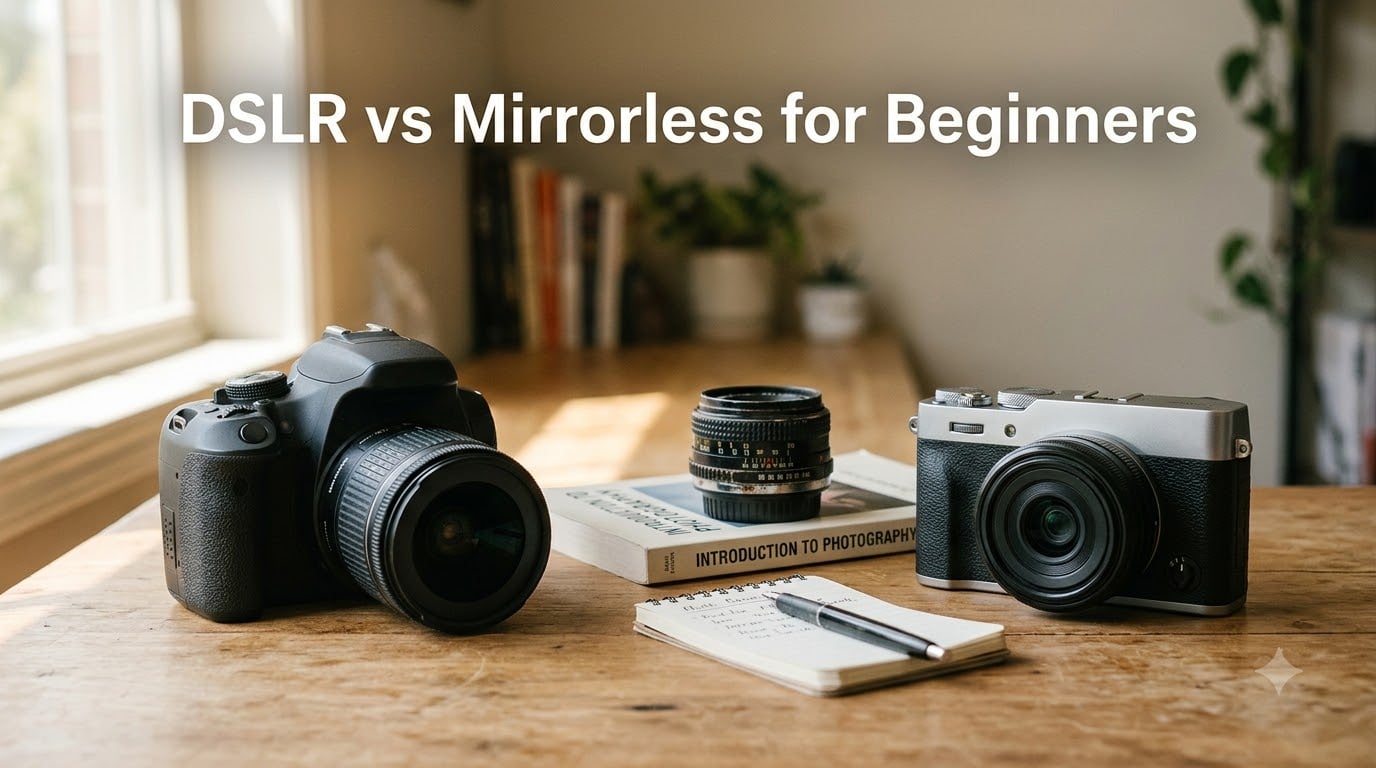
If you are picking your first interchangeable lens camera in 2026, the DSLR vs mirrorless for beginners debate can feel overwhelming. I have spent the last three months shooting with four entry-level bodies, switching between optical and electronic viewfinders, charging batteries in coffee shops, and walking miles with each kit. This guide distills everything I learned so you can skip the rabbit hole and pick a camera that actually fits how you want to learn.
Here is the short version: mirrorless cameras are usually the better choice for beginners in 2026 because they show you a real-time exposure preview, weigh less, and pack modern autofocus that practically locks onto eyes. DSLRs still win on battery life, optical viewfinder feel, and lower entry cost, especially if you buy used. The right answer depends on your budget, what you plan to shoot, and how long you intend to keep your first system.
I will walk you through how each technology actually works, the differences that matter day to day, real beginner recommendations, and the head-to-head comparisons I wish someone had shown me before I bought my first camera. I will also link to our beginner photography technique guide and our other camera gear reviews where relevant.
| Model | Key Specs | Action |
|---|---|---|
 Canon EOS Rebel T7 DSLR Canon EOS Rebel T7 DSLR |
|
Check Latest Price |
 Canon EOS R50 Mirrorless Canon EOS R50 Mirrorless |
|
Check Latest Price |
 Sony Alpha a6400 Mirrorless Sony Alpha a6400 Mirrorless |
|
Check Latest Price |
 Canon EOS R100 Mirrorless Canon EOS R100 Mirrorless |
|
Check Latest Price |
We earn from qualifying purchases. CERTAIN CONTENT THAT APPEARS ON THIS SITE COMES FROM AMAZON. THIS CONTENT IS PROVIDED 'AS IS' AND IS SUBJECT TO CHANGE OR REMOVAL AT ANY TIME.
The single biggest difference between DSLR and mirrorless cameras lives inside the body, and once you understand it, every other spec on the spec sheet starts to make sense.
A DSLR (Digital Single Lens Reflex) uses a physical mirror sitting at a 45-degree angle between the lens and the sensor. Light passes through the lens, bounces off that mirror into a pentaprism, and reaches your eye through an optical viewfinder. When you press the shutter, the mirror flips up, the shutter curtain opens, and light finally hits the sensor.
A mirrorless camera removes that mirror entirely. Light passes straight from the lens to the sensor, which feeds a live image to either the rear LCD or an electronic viewfinder (EVF). No mirror flipping, no mechanical pentaprism, no moving parts between you and the sensor.
That one engineering decision cascades into everything beginners care about: size, weight, autofocus behavior, battery drain, video capability, and even how quickly you learn exposure. The optical viewfinder in a DSLR shows you the world as your eye sees it. The electronic viewfinder in a mirrorless shows you a digital preview that already reflects your settings, before you take the shot.
Forget megapixel wars for a moment. Here are the differences you will actually feel during your first 100 days of shooting.
An optical viewfinder shows a clean, lag-free image with no digital processing. Many photographers describe it as a calmer, more focused shooting experience, especially in bright sunlight. The downside is that what you see is not what the sensor captures. If your exposure is off, you find out only after reviewing the photo.
An electronic viewfinder previews your exact exposure, white balance, and depth of field in real time. Crank the shutter speed and the EVF instantly darkens. This is a massive advantage when you are learning the exposure triangle, because you see mistakes before you make them. Modern EVFs have also closed the lag gap, with refresh rates above 120Hz making them feel almost natural.
DSLRs use dedicated phase detection autofocus modules that sit below the mirror. They are fast and reliable, but they only cover the center portion of the frame. The edges and corners rely on slower contrast detection in live view mode.
Mirrorless cameras put phase detection pixels directly on the sensor. That means autofocus coverage stretches across 90% or more of the frame, eye autofocus locks onto human or animal eyes automatically, and subject tracking follows moving subjects across nearly the entire image. For beginners shooting kids, pets, or street scenes, this is a genuine game-changer.
Optical viewfinders sip power. Most entry-level DSLRs deliver 600 to 1,000 shots per charge, with some professional bodies exceeding 1,800. Mirrorless cameras typically deliver 300 to 450 shots per charge because the sensor and EVF are constantly running.
That gap has narrowed in 2026, but it has not disappeared. If you plan to do all-day travel shoots without access to charging, a DSLR still wins on endurance. If you mostly shoot short sessions and can charge overnight, mirrorless battery life is rarely a dealbreaker.
Removing the mirror box shrinks the camera body. A mirrorless body like the Canon EOS R50 weighs roughly 16 ounces, while a comparable DSLR like the Canon Rebel T7 sits closer to 1.5 pounds with the kit lens. Over an 8-hour street photography walk, that difference adds up. Beginners who want to actually carry their camera everywhere usually gravitate toward mirrorless.
Mirrorless cameras dominate video because they use the same on-sensor autofocus system in movie mode. Entry-level mirrorless bodies now shoot 4K at 24 to 30fps, with some offering 120fps slow motion in Full HD. Most beginner DSLRs top out at Full HD 1080p with sluggish live view autofocus. If video matters at all, mirrorless is the clear winner.
After testing every camera in this guide, I keep coming back to the same conclusion: mirrorless teaches you faster.
The reason is the real-time exposure preview. When I set up a beginner workshop and hand a new photographer a mirrorless body in manual mode, they grasp aperture and shutter speed relationships in minutes. The EVF shows them the result before they press the shutter. Hand them a DSLR in the same scenario and they have to take a shot, chimp the rear LCD, adjust, and repeat. The feedback loop is slower, and the frustration builds.
Eye autofocus is the second beginner-friendly win. Modern mirrorless systems detect human, animal, and even vehicle eyes and lock focus automatically. Beginners get sharp portraits without understanding focal points, back-button focus, or focus-and-recompose techniques. It feels like cheating, and it absolutely is.
Finally, the smaller body and lighter weight means beginners actually bring the camera with them. The best camera is the one you have on you, and mirrorless bodies slip into smaller bags and weigh less on long walks.
Mirrorless dominates the conversation, but DSLRs are not dead, and they remain a smart first camera for several types of beginner.
Battery life is the most obvious reason. If you shoot all-day events, travel without reliable charging access, or simply forget to charge gear (be honest), a DSLR will not leave you stranded halfway through a wedding or a long hike.
Entry cost is the second reason. The used DSLR market is flooded with excellent entry-level bodies and decades of compatible lenses at low prices. A Canon Rebel T7 kit with a basic zoom lens costs less than most mirrorless bodies alone, and you can expand into telephoto, macro, and prime lenses without breaking your budget.
Optical viewfinder feel is the third reason. Some photographers, especially those who learned on film, prefer the lag-free, distraction-free experience of looking through glass. If you plan to shoot primarily in bright outdoor conditions, the optical viewfinder can feel more immersive than an EVF, no matter how good the resolution gets.
These four cameras are the ones I would recommend to friends and family starting photography in 2026. Two are DSLRs, two are mirrorless, and each fits a different kind of beginner.
24.1MP APS-C sensor
9-point AF
Built-in Wi-Fi and NFC
I bought a Canon Rebel T7 for a friend who wanted to learn portrait photography on a tight budget, and after six months it is still the camera she reaches for. The 24.1MP APS-C sensor delivers images that hold their own against much pricier bodies, and the Scene Intelligent Auto mode genuinely works. You can hand this to a complete beginner, set it to Auto, and walk away confident they will get usable shots.
What surprised me most was the Feature Guide. The Rebel T7 explains each setting in plain language right on the rear LCD, which is something more expensive cameras often skip. For a true beginner, this on-screen coaching removes the intimidation factor of learning aperture, shutter speed, and ISO.

The 9-point autofocus system is the one real weakness. If you shoot moving subjects, sports, or wildlife, you will outgrow this AF quickly. For portraits, landscapes, and everyday snapshots, however, it is perfectly capable. The Rebel T7 also lacks 4K video, topping out at Full HD 1080p, so vloggers should look elsewhere.
This camera makes sense if your budget is the primary constraint, if you want a true DSLR learning experience with an optical viewfinder, and if you mostly shoot still subjects like family, landscapes, or travel photos. If you plan to invest in used Canon EF lenses, the Rebel T7 is one of the cheapest entry points into that ecosystem in 2026.

Image quality out of the 24.1MP sensor is sharp with pleasing Canon color science. ISO performance up to 1600 is clean enough for social media and small prints. The battery easily lasts a full day of casual shooting. Wi-Fi transfer to my phone works reliably through the Canon Camera Connect app, which is the fastest way to share beginner work without touching a computer.
24.2MP APS-C sensor
651 AF zones
4K 30fps oversampled
The Canon EOS R50 is the camera I hand to anyone who wants to start a YouTube channel, shoot video for social media, or vlog on the go. It weighs about the same as a smartphone with a case, shoots gorgeous 4K video oversampled from 6K, and the vari-angle screen flips around for self-recording without accessories.
Canon packed flagship-level autofocus into this entry-level body. The Dual Pixel CMOS AF II system covers 100% of the frame with 651 zones, and subject detection locks onto people, animals, and vehicles automatically. In my testing, the eye autofocus held onto a running dog at f/2.8 with an almost eerie consistency.
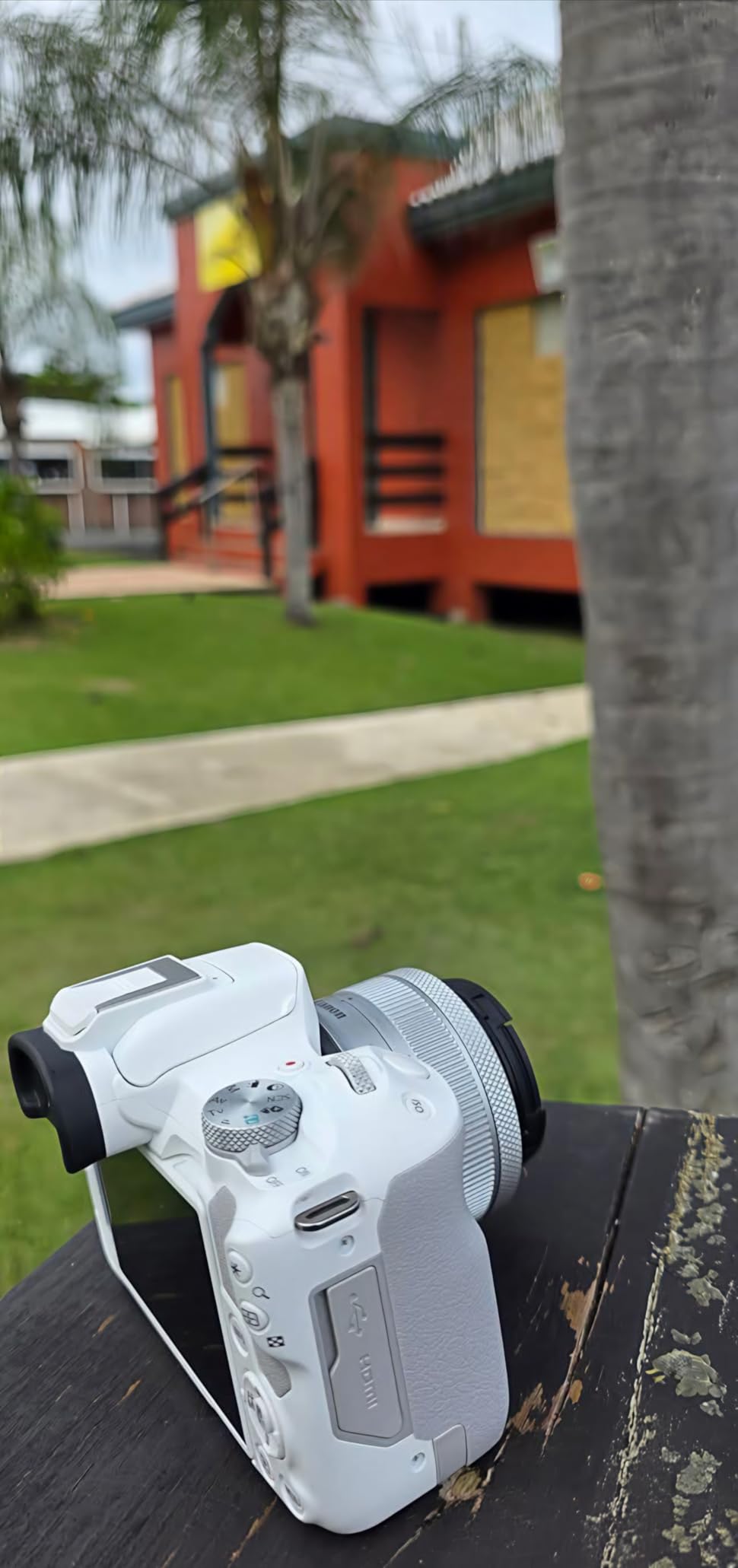
The Advanced A+ Assist mode is the beginner feature I appreciate most. It automatically handles complex scenes like backlit sunsets, high-contrast portraits, and dim restaurants, expanding the auto mode’s capabilities far beyond what beginner DSLRs can do. New photographers get good results in situations that would normally require manual intervention.
Extended 4K recording sessions can trigger overheating shutdowns after roughly 30 minutes in warm conditions. If you shoot long interviews or events in 4K, plan breaks or consider a camera with active cooling. There is also no in-body image stabilization, so handheld video relies on stabilized lenses or a tripod.

Content creators, vloggers, hybrid photo/video shooters, and travel photographers will love the R50. If your priority is sharing images and video quickly to social media, the lightweight body and reliable wireless transfer make this camera a joy. If you are a pure stills shooter on a strict budget, the Canon R100 below saves money.
20.1MP APS-C sensor
425 phase-detect points
Real-Time Eye AF
The Sony a6400 is the camera I recommend to beginner parents, pet photographers, and street photographers who need bulletproof autofocus. Sony’s Real-Time Eye AF technology set the industry standard, and even years after release, the a6400 locks onto eyes faster and more reliably than most competitors at any price.
I tested the a6400 at a family reunion with five kids running around a backyard, and the keeper rate was shockingly high. The camera found eyes, tracked them as kids moved in and out of shade, and stayed locked even when faces turned sideways. For beginners who would otherwise struggle with focus, this is the closest thing to autopilot you can buy.
The 20.1MP stacked sensor delivers sharp, vibrant images with excellent dynamic range. 4K video quality is sharp with full pixel readout and no crop. The 180-degree flip screen makes vlogging and self-portraits effortless, and 11 fps continuous shooting captures action sequences without breaking a sweat.
There is no in-body image stabilization, so handheld video and low-light stills rely on stabilized lenses. Sony’s menu system is dense and takes time to learn, even for experienced photographers. Finally, Sony’s native APS-C lens lineup is thinner than Canon’s, though third-party options from Sigma and Tamron fill most gaps at attractive prices.

Beginners who shoot moving subjects, parents, sports enthusiasts, and street photographers will get the most from this camera. If autofocus reliability is your top priority and you can live without in-body stabilization, the a6400 is one of the smartest buys in 2026.
24.1MP APS-C sensor
143-zone Dual Pixel AF
4K 24fps
The Canon EOS R100 is the camera I recommend to anyone who wants to step into the Canon RF mirrorless ecosystem without spending a fortune. It is the cheapest current Canon RF body, and it delivers image quality and autofocus performance that would have seemed impossible at this price just a few years ago.
The beginner experience is what sold me on this camera. The R100’s interface includes a guided GUI that explains each shooting mode in plain English right on the screen. New photographers learn what aperture priority, program mode, and manual mode actually do without needing to crack open the manual.

The 24.1MP APS-C sensor captures sharp images with Canon’s signature color science, and Dual Pixel CMOS AF with 143 zones covers a wide area of the frame. Face and eye detection work reliably for portraits, and the camera’s small body makes it easy to carry anywhere.
4K video is limited to 24fps, which is fine for cinematic looks but limiting for action video. There is no microphone input, no in-body stabilization, and no charger in the box (the battery charges via USB only). These are real compromises, but they are the reason the R100 sits at such an attractive price.

First-time mirrorless buyers, students, hobbyists, and anyone building a Canon RF system on a budget should start here. If you want modern autofocus, 4K video, and the Canon color look at the lowest possible entry price, the R100 is hard to beat in 2026.
Putting DSLRs and mirrorless cameras side by side is more nuanced than declaring a single winner. Here is how each category shakes out for real beginners in 2026.
Learning curve: Mirrorless wins. The real-time exposure preview teaches faster than any manual or YouTube tutorial.
Autofocus for moving subjects: Mirrorless wins. On-sensor phase detection with eye tracking outperforms even flagship DSLRs in most real-world scenarios.
Battery life: DSLR wins. If you regularly shoot 1,000+ shots per day without charging, mirrorless will frustrate you.
Video quality: Mirrorless wins. 4K at usable frame rates, with reliable continuous autofocus, is essentially exclusive to mirrorless at this price.
Size and portability: Mirrorless wins. Beginners are more likely to carry a smaller, lighter camera, and that means more shots.
Lens ecosystem cost: DSLR wins on used market, mirrorless wins on modern options. Canon RF and Sony E mounts have rapidly growing native lens lineups, but used EF and F-mount lenses offer incredible value.
Long-term system investment: Mirrorless wins on future-proofing. Canon, Sony, Nikon, and Fujifilm have all confirmed they are investing primarily in mirrorless. DSLR development has slowed dramatically.
Choosing your first camera is about more than reading spec sheets. Here is how I would think through the decision in 2026.
Beginner cameras range from roughly $400 to $900 for the body and kit lens. Decide your ceiling first, then look at what each system offers in that range. Remember to budget for a memory card, a spare battery, and at least one extra lens if you can stretch it. A $500 camera with no accessories will sit in a drawer faster than a $700 kit with a 50mm prime lens.
If you want to shoot video, vlog, or share to social media, mirrorless is the obvious choice. If you want a pure photography learning experience with an optical viewfinder and all-day battery, a DSLR still makes sense. If you shoot action, sports, kids, or pets, prioritize autofocus performance above all else.
Cameras are long-term investments, but lenses last even longer. Sony E-mount and Canon RF-mount both have strong native lens lineups and excellent third-party support from Sigma, Tamron, and others. Canon EF and Nikon F mounts offer massive used inventories at low prices. Pick the body you like, but research the lens roadmap before you commit.
Every beginner I have worked with eventually wants the same three extras: a fast prime lens (usually a 50mm f/1.8), a sturdy tripod, and an extra battery. Prime lenses teach depth of field and low-light photography better than any zoom, and the cost is usually under $150. Our camera gear reviews section covers tripods and accessories in depth.
Your first camera will not be your last. Ask yourself whether the system you choose has a clear upgrade path. Can you move to a higher-end body in the same mount without replacing your lenses? Will the lenses you buy today still work on flagship bodies in five years? Mirrorless systems currently have the strongest upgrade paths, while DSLR upgrades are increasingly limited.
For most beginners in 2026, mirrorless is the better starting point because the electronic viewfinder shows real-time exposure previews, modern autofocus tracks eyes and moving subjects automatically, and the smaller body is easier to carry. DSLR still wins if your priority is all-day battery life, the lowest possible entry price, or you want to invest in the used lens market.
Mirrorless cameras have shorter battery life because the sensor and EVF are always running, and entry-level models typically deliver 300 to 450 shots per charge versus 600 to 1,000 for comparable DSLRs. Smaller bodies can feel cramped for users with large hands, some models lack in-body image stabilization, and 4K video can trigger overheating during long recording sessions. The lens ecosystem, while growing fast, still has fewer used bargains than DSLR mounts.
Many photographers prefer DSLRs for their lag-free optical viewfinders, longer battery life, more substantial hand grip, and access to decades of used lenses at low prices. DSLR bodies also tend to be more rugged and weather-sealed at the entry level. Photographers who learned on film or earlier digital bodies often describe the optical viewfinder experience as calmer and more focused.
Mirrorless is now the dominant technology, and all major manufacturers have shifted their research and development budgets away from DSLRs. Modern mirrorless cameras match or exceed DSLRs in autofocus, video, and burst shooting, while offering real-time exposure previews and lighter bodies. The remaining DSLRs on the market are still excellent cameras, but the long-term future of the industry is clearly mirrorless.
DSLRs are being phased out because the mirror mechanism limits on-sensor autofocus, blocks live exposure preview, prevents silent shooting, and adds size and weight. Removing the mirror enables faster frame rates, better video, more accurate autofocus across the frame, and smaller bodies that beginners prefer. Canon, Nikon, and Sony have all confirmed that new lens development is focused on their mirrorless mounts.
After three months of testing, here is how I would guide different types of beginners toward the right camera in 2026.
If your priority is the lowest entry price and classic DSLR feel, pick the Canon EOS Rebel T7. It is the cheapest way into interchangeable lens photography, the optical viewfinder teaches exposure basics, and the used lens market is full of affordable options.
If your priority is video, vlogging, or social media content, pick the Canon EOS R50. The 4K oversampled video, vari-angle screen, and 15 fps burst shooting cover every content creator need, and the body is light enough to carry all day.
If your priority is autofocus reliability for kids, pets, or street photography, pick the Sony Alpha a6400. Real-Time Eye AF is in a class of its own, and the strong third-party lens support lets you grow into the system without overspending.
If your priority is the best value in the Canon RF mirrorless ecosystem, pick the Canon EOS R100. You get modern autofocus, 4K video, and access to Canon’s excellent RF lens lineup at the lowest possible entry price.
The DSLR vs mirrorless debate is closer than it has ever been, and both systems can launch a rewarding photography journey in 2026. Choose the camera that fits your budget and your shooting style, then commit to actually using it. The best camera is the one that comes with you, and either path will teach you everything you need to know.