
10 Best 12v Portable Fridge for Truck Picks (September 2026)
Disclosure: We earn from qualifying purchases made through the links on this page. Ask a long-haul driver what the worst…


A camper van roof rack is a load-bearing platform that bolts to factory roof rails or mounting points and gives you somewhere to put solar panels, a roof fan, an awning, a light bar or a box of gear. After comparing every major rack style across the three dominant chassis, the AA-Racks AX302 comes out on top for most builds, the MELIPRON Ford Transit rack is the pick for Transit owners, and the VANNCAMP Sprinter rack is the one to beat if solar is the main reason you are up there. There are three architectures to understand first: a low-profile crossbar platform, a welded deck you can stand on, and a DIY 80/20 T-slot rail build.
I have spent the last few weeks pulling the specifications, the review language and the real-world complaints for eight of the highest-rated van racks currently on the market, and matching each one to the chassis it actually fits. Every product below is vehicle-specific, which matters more than it sounds: a rack that bolts to a 2015-on Transit mounting hole does not bolt to a Sprinter drip rail, and a Transit Connect bracket is a different part entirely.
The category splits along one axis that buyers routinely get wrong. Ladder racks for contractors and campervan roof racks share a mounting standard, but only one of those two groups is designed to carry a panel of glass or a rooftop awning. Community threads about this topic keep circling the same three worries: extra fuel consumption, highway noise, and which setup is actually practical. One r/vandwellers poster put it plainly, noting the rack will usually sit empty, maybe with one solar panel added later. That is a fair argument for buying lighter and smaller than you think you need.
Weight is the number that quietly decides most purchases. The racks in this roundup span from 32 pounds on the AA-Racks system to 59 pounds on the ECOTRIC steel set, and a welded deck for a Sprinter runs heavier still. Every pound you put up there comes straight out of your payload budget, which is already spoken for by the conversion, the water tank and the batteries.
Height is the second number. A late-model Sprinter 144 Passenger with the factory high-roof air conditioning is already a tall vehicle, and stacking a rack on top pushes total height toward territory where parking garages become a gamble. Engineers Who Van Life documented a build that reached 10 feet 3 inches total and failed to clear a parkway bridge, which is exactly the kind of anecdote that changes how people spec a rack. If you are near that ceiling, a low-profile crossbar system is safer than a deck.
What follows is a full pass over eight racks, the buying criteria that actually separate them, and an honest note on where each one falls short.
These three came out ahead on the combination of rating strength, review volume, weight and chassis coverage. Full details on each are further down.


All eight racks below are vehicle-specific. The chassis column matters more than any other spec here, because fitment is what determines whether a rack can go on your van at all.
| Model | Key Specs | Action |
|---|---|---|
| AA-Racks AX302 Aluminum Van Ladder Rack |
|
Check Latest Price |
| MELIPRON Van Roof Ladder Rack for Ford Transit |
|
Check Latest Price |
| VANNCAMP Aluminum Roof Rack for Sprinter 144 High Roof |
|
Check Latest Price |
 StarONE Van Ladder Rack for Ford Transit StarONE Van Ladder Rack for Ford Transit |
|
Check Latest Price |
 MELIPRON Van Roof Ladder Rack for Ram ProMaster MELIPRON Van Roof Ladder Rack for Ram ProMaster |
|
Check Latest Price |
 ECOTRIC 59in Roof Rack for Chevy Express and GMC Savana ECOTRIC 59in Roof Rack for Chevy Express and GMC Savana |
|
Check Latest Price |
 MELIPRON Aluminum Crossbar Rack for Transit ProMaster and Nissan NV MELIPRON Aluminum Crossbar Rack for Transit ProMaster and Nissan NV |
|
Check Latest Price |
 TideFree Ladder Roof Rack for Ford Transit Connect TideFree Ladder Roof Rack for Ford Transit Connect |
|
Check Latest Price |
We earn from qualifying purchases. CERTAIN CONTENT THAT APPEARS ON THIS SITE COMES FROM AMAZON. THIS CONTENT IS PROVIDED 'AS IS' AND IS SUBJECT TO CHANGE OR REMOVAL AT ANY TIME.
32 lb aluminum
750 lb max load
Fits 2013-on ProMaster and 2015-on Transit
3 bars at 72 inches
This is the rack I keep coming back to. At 32 pounds it is among the lightest systems in this roundup, and it is also one of the few that gives you three 72 inch bars of usable surface without turning into a full expedition deck. That combination is why it takes the top spot: it does the job for the majority of builds without adding height you will regret.
The construction is straightforward and hard to argue with. Three extruded aluminum crossbars sit on a mounting base made from Gauge 10 aluminum, which is 3.5 mm of actual material, and the hardware throughout is stainless steel. Buyers consistently describe it as strong and durable, and the 4.6 rating across 74 reviews is backed by a heavy share of five-star feedback.
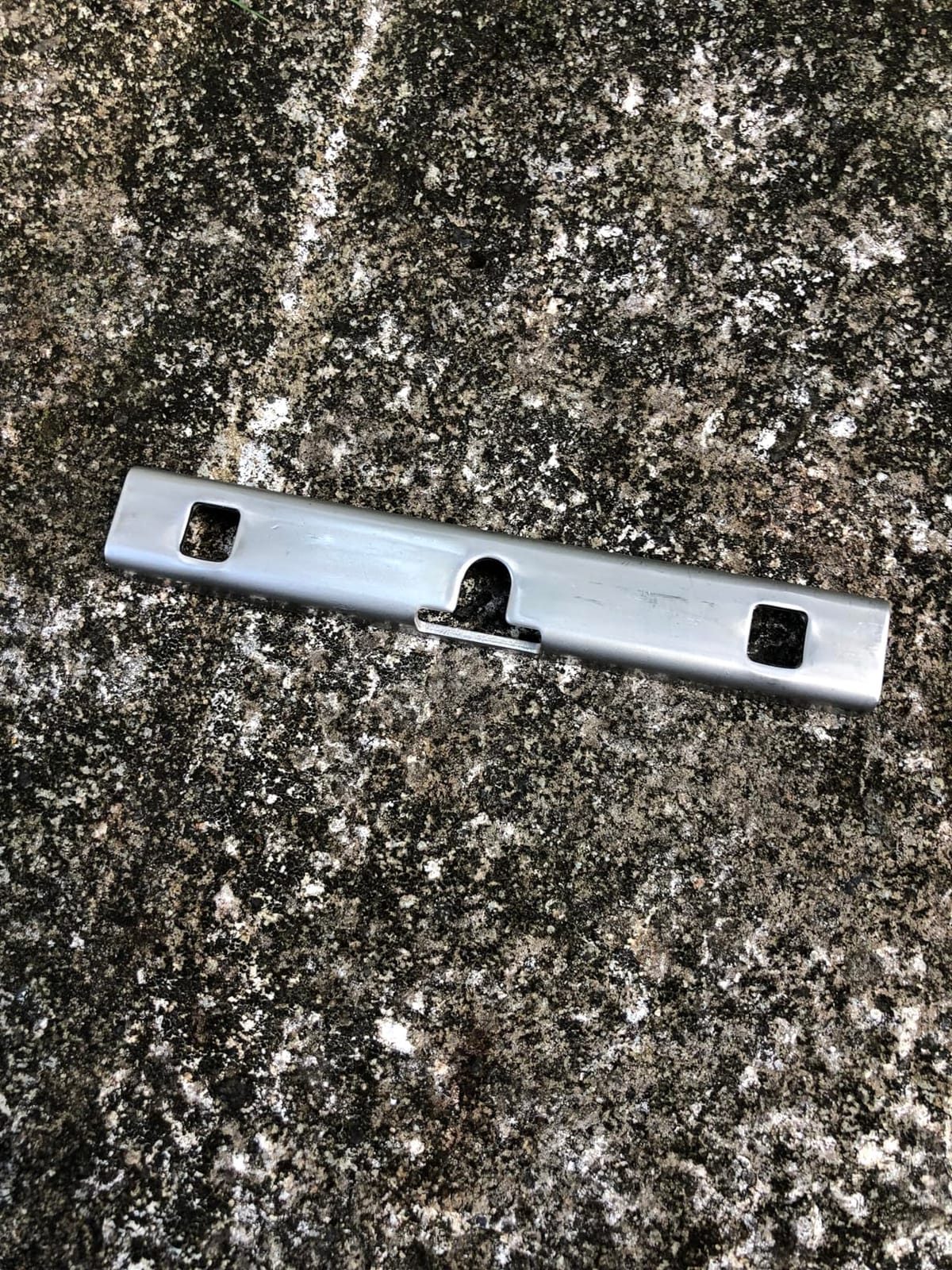
Where it earns its rating is the weight-to-capacity ratio. A 750 lb maximum load capacity across three bars is far more than a camper van needs, and the low mass means the payload hit is minor next to a heavier steel rack doing the same job. The included ladder stoppers mean you can strap a folding chair or a length of timber down without buying extra hardware.
Each bar runs 72 inches, which is long enough to carry a full-length solar panel or a pair of kayaks without overhang turning into a highway problem. On a high-roof ProMaster or a long-wheelbase Transit, the bars also sit far enough forward and back that you can position gear around a factory roof vent or an air conditioning unit instead of stacking everything behind one obstruction.
Because the bars are fixed-length rather than telescoping, position adjustment comes from where you mount the feet, not from sliding the bar itself. That is a limitation on vans with awkward factory layouts, and it is the main reason van-specific modular racks exist at all.
Payload on a full conversion is tight. Water, grey tank, inverter, lithium bank, cabinetry and the occupants all draw from the same number as the GVWR calculation. Adding 32 pounds up high is one of the lighter commitments you can make, and unlike a welded deck it leaves the option of removing it for a long highway stretch.
The high mounting position does put more of that mass above the roof line, which affects handling more than it affects the payload figure. On a high-roof van with factory air conditioning already on the roof, the 32 pounds lands close to the vehicle’s centre of gravity, so drive it smoothly.
There is no wind fairing on this rack. Owners mention the bars are noticeably loud at highway speed, which is the exact complaint that dominates vanlife forums. If your build is mostly highway miles, that noise is a real cost even though the rack itself performs well.
Fitment is also narrow. This is a 2013-on Ram ProMaster and 2015-on Transit part, so it is not a Sprinter option and not a Transit Connect option. The white powder coat is another minor annoyance, because it shows dirt and road film faster than a black or bare aluminum finish.
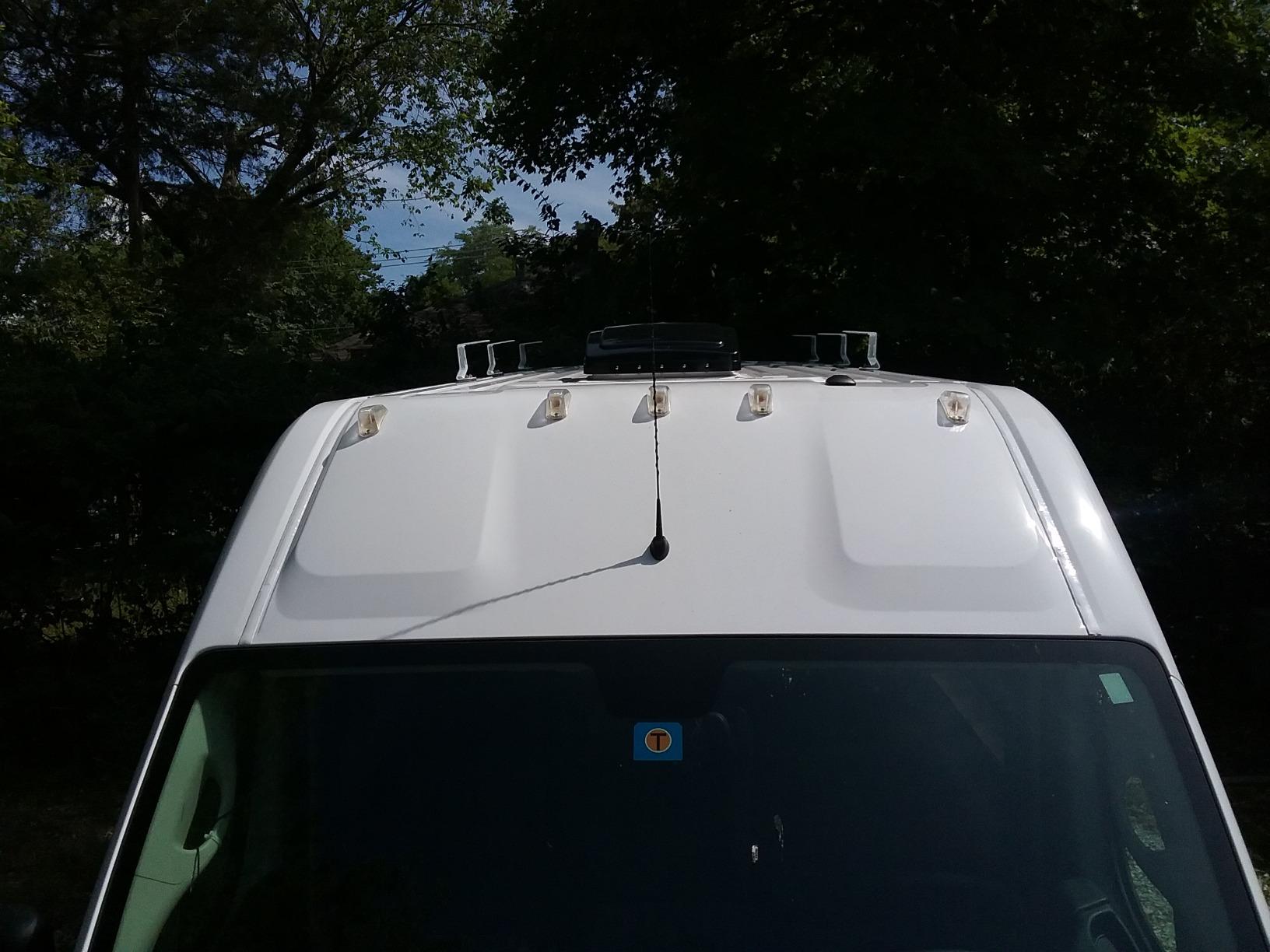
Bottom line: if you want one rack that fits the two most common full-size van chassis, carries serious weight and adds almost nothing to your total height, this is the one.
Alloy steel with powder coat
800 lbs load capacity
No-drill factory mounting
Fits 2015-2026 Transit 150/250/350
With 122 reviews, this is the most widely reviewed Transit-specific rack in the group, and the category rank reflects that. It is built as a contractor rack, which for a van build means a genuinely heavy structure that shrugs off a stack of firewood or a set of wheels. Buyers highlight the corrosion resistance and the way the ladder guides and straps stop cargo shifting in transit.
The 800 lbs load capacity is far beyond what a camper conversion needs. What matters more is that the steel frame does not flex, and reviewers describe it as solid once the bolts are torqued.
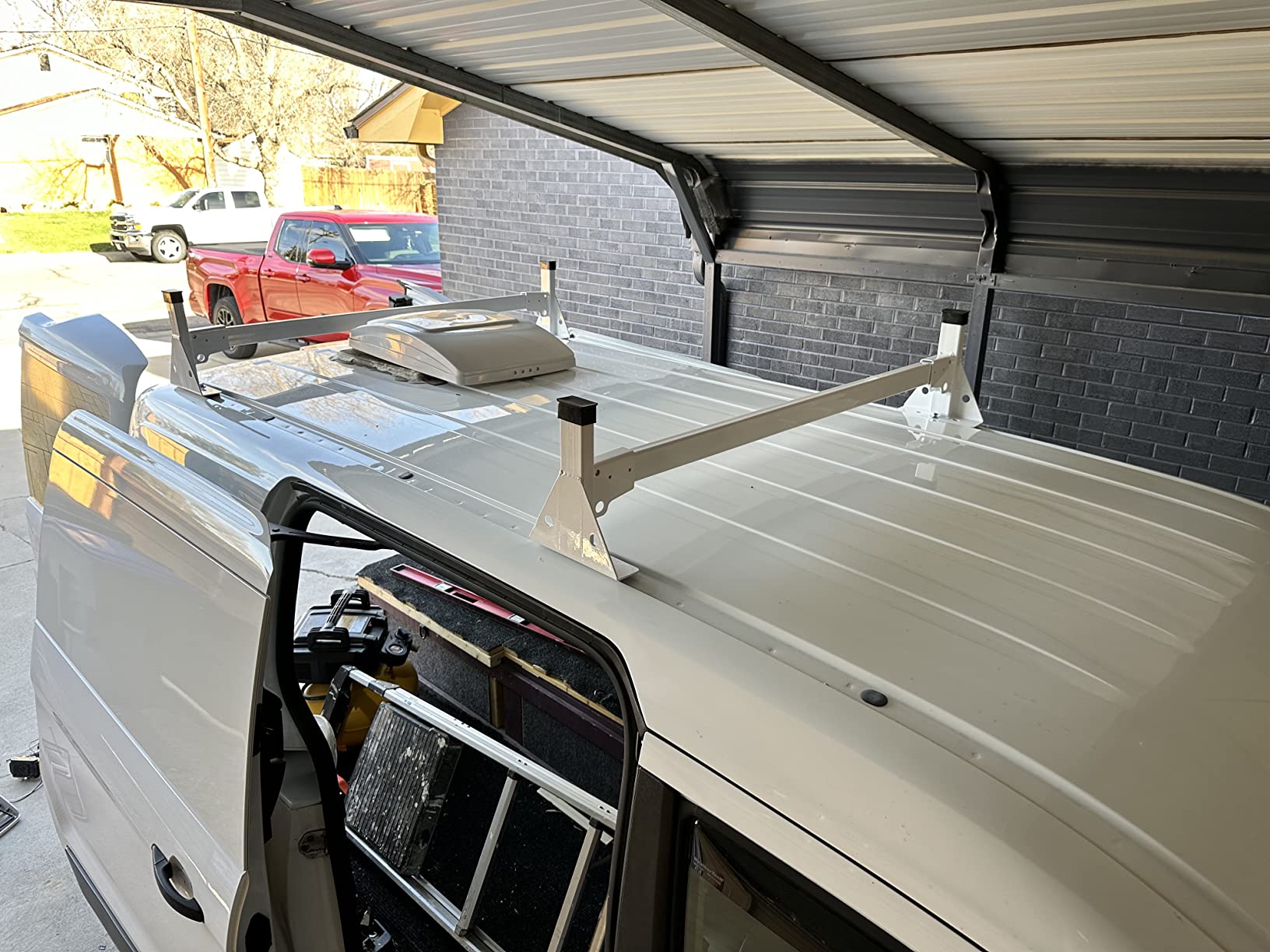
Every rack here mounts at factory points rather than through drilled holes, and that is the single most important feature for anyone who cares about leaks or resale. The Transit has a regular pattern of factory mounting points along the drip rail, and this rack uses them. Nothing pierces the roof skin.
For a leased vehicle or a van you plan to sell, that reversibility is worth more than any accessory. Pull the bolts, fill nothing, and the roof is exactly as it was.
Steel is heavy, and this rack lists at 24 kg. Compared with the 32 pound aluminum AA-Racks system, you are adding meaningful mass to the highest part of the vehicle. The powder coat resists rust, but every kilogram up there eats payload and adds drag at speed.
There is also a format consideration worth knowing before you order. This is a ladder rack, so accessories mount to the bars with straps, clamps and ladder stops rather than sliding into a T-slot. That is exactly what you want for timber and pipe, and less tidy for a neatly levelled solar panel. If panels are the priority, look at a T-slot platform instead.
This rack fits 2015-2026 Ford Transit 150, 250 and 350 across low, mid and high roof, including the 130 inch and 148 inch wheelbases and the extended variant. It does not fit the Transit Connect, which uses an entirely different roof profile and mounting pattern.
If your build includes a factory roof vent or air conditioning unit, plan the bar positions around it. Fixed-length bars cannot slide past an obstruction, which is the trade you accept for a rigid steel frame.
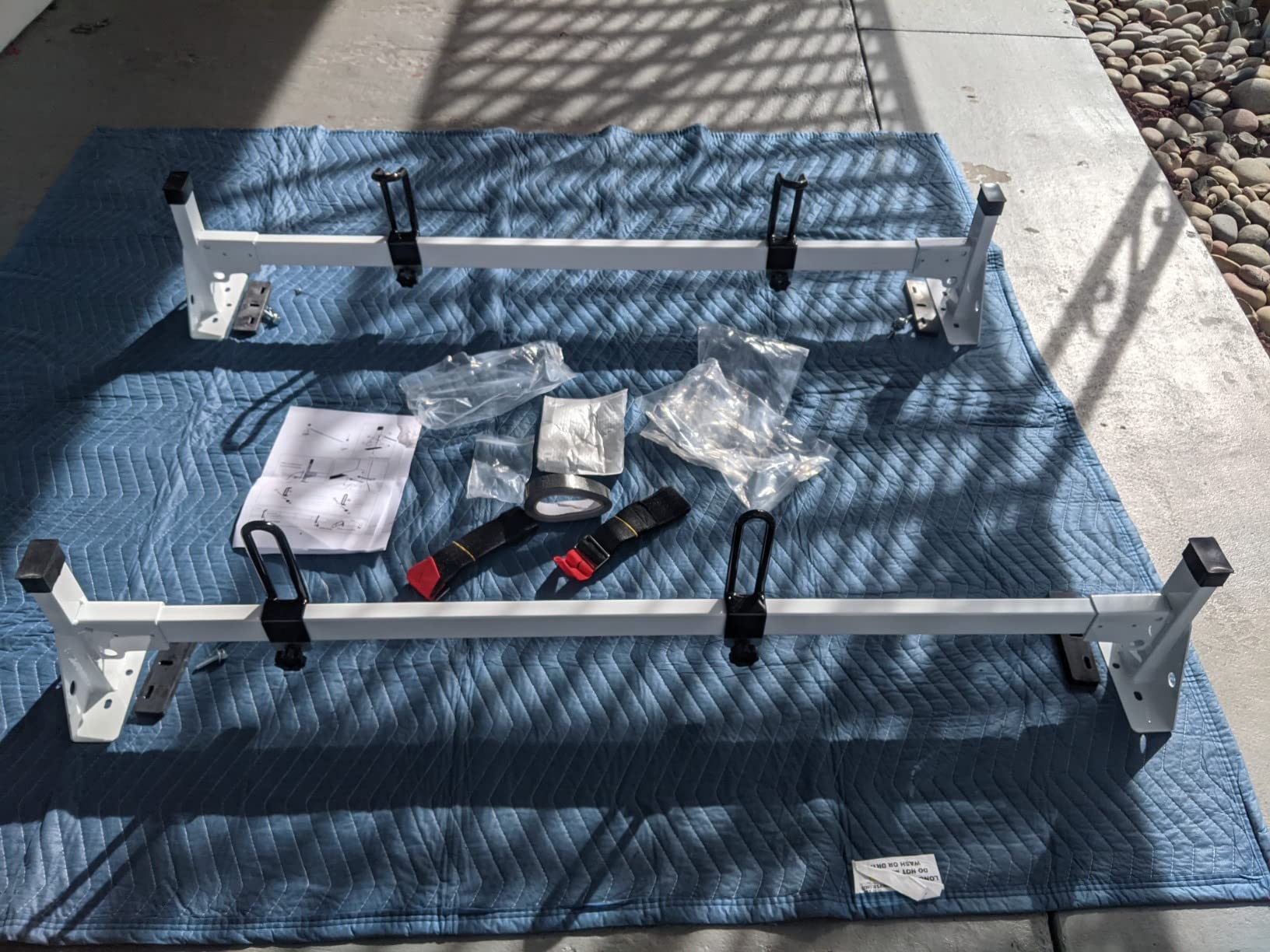
For a Transit that doubles as a work van, this is a hard system to argue with. For a pure weekend camper chasing fuel economy, the aluminum alternatives weigh less and stay quieter.
67 lb all-aluminum build
Sliding crossbar rails
Integrated wind fairing
Sprinter 144 high roof 2007-2026
This is the only Sprinter-specific rack in the group, and it is built for the way most people actually use a Sprinter roof: panels, an awning and a light bar, all mounted low and close to the body. The 4.8 average rating is the highest here, and the review language is unusually specific about what owners like, which is usually the sliding crossbar rails and the recessed crossmembers.
Sliding bars matter more than they sound. On a Sprinter 144 high roof with the factory air conditioning unit, a fixed bar rack forces every accessory into the same 12 inches of space. Sliding rails let you spread the load around obstructions and still keep the whole footprint tight.

The crossbars use a dual-slot rectangular extrusion, which gives you a mounting standard with far more options than a plain round or flat bar. Drop-in T-nuts slide into the slots, so anything with a matching T-slot bolt head can be mounted anywhere along the bar rather than only at a fixed set of clamps. That is the detail that separates this from a contractor ladder rack.
Reviewers also note the recessed crossmembers conceal the solar panels from the airflow, which cuts panel temperature on a hot day. That translates directly into more harvest in summer, and it is the kind of quiet engineering decision that pays for itself.
The rack is built to accept common awnings, side ladders and roof decking panels, so a single purchase can grow into a full platform without introducing a second mounting standard.
The integrated front wind deflector is the main reason this rack scores well on noise complaints, which is the single most common thread in van roof rack discussions. A body-hugging profile with a fairing at the leading edge moves air over the rack instead of letting it slam into a flat face.
One recurring complaint is that the fairing is slightly wider than the crossbars, leaving a small gap that some owners shim to stop an intermittent whistle. It is a minor fix but worth knowing before you chase the noise on the road.
This rack fits the Mercedes-Benz Sprinter 144 inch high roof from 2007 through 2026, and it requires roof rails. It does not fit the standard roof model, and variants exist for the 170 inch wheelbase and the 170 inch extended wheelbase.
That roof-rail requirement is a meaningful restriction. The high-density air conditioning Sprinter is the hardest common configuration to rack because the unit occupies the centre of the roof, and the mounting points around it are not uniform. Owners on sprinter-source have documented pairing a full safari-style deck with a Fiamma awning on a late-model 144 Passenger with the factory high-roof air conditioning, which tells you it is solvable but requires planning the cutouts before ordering.
Several buyers report a single-person install, and the hardware is straightforward 304 stainless steel. The pain point is documentation: instructions are described as imperfect and copy-pasted across wheelbase variants, so check that the manual matches your specific model.
Another practical note from owners: the blind nuts are difficult to attach once you are up on the roof, and the fairing support brackets are far easier to assemble on the ground first. Budget an hour and do the fiddly bits before you climb up.
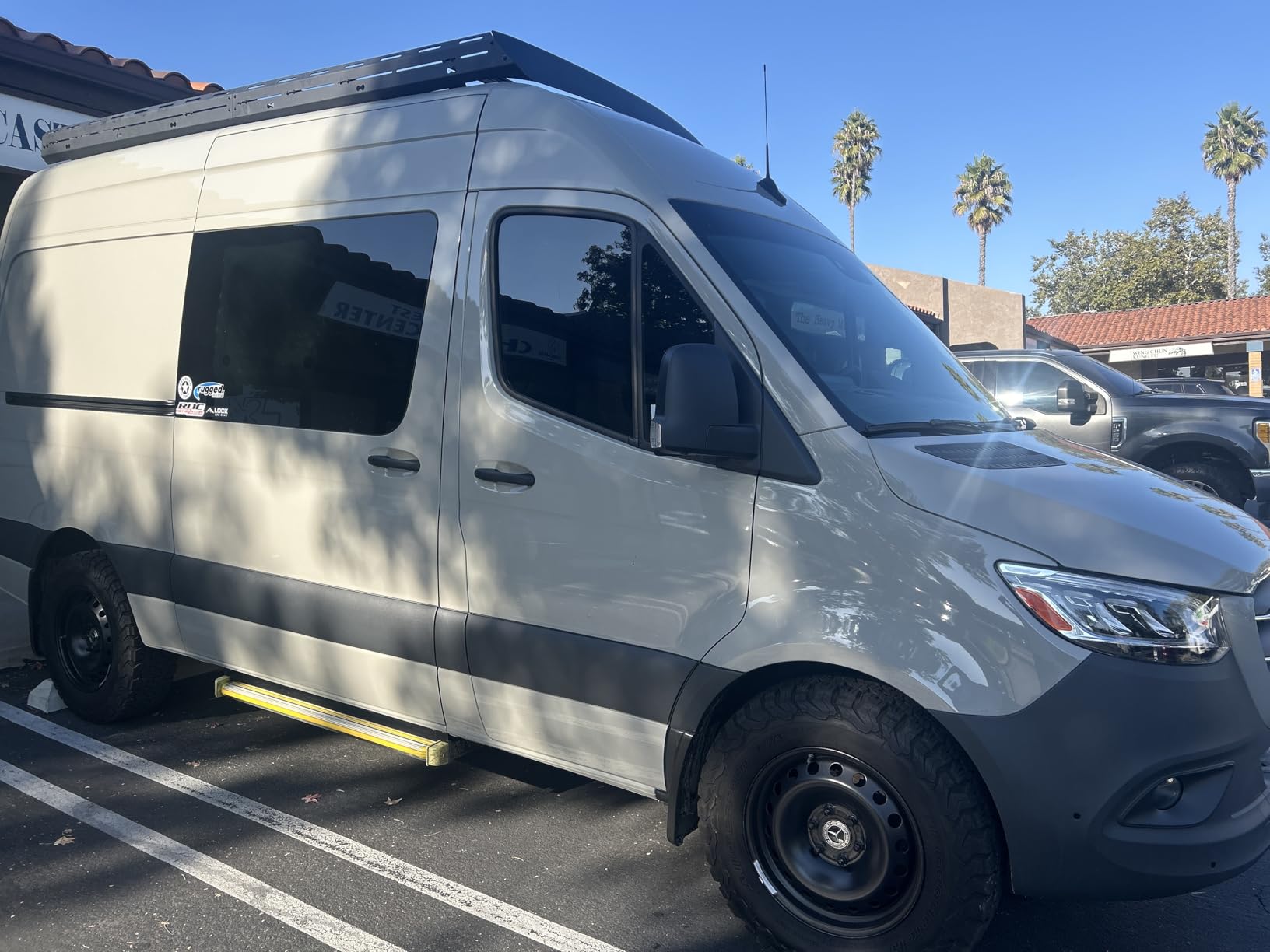
At 67 pounds it is not the lightest rack here, but the sliding rails and the low-profile T-slot layout make it the most versatile option for a solar-equipped Sprinter. If your van is a Transit or a ProMaster, this is not your rack.
45 lb rack
800 lbs load capacity
Rear cargo roller
Fits 2015-2026 Transit 150/250/350
The defining feature on this one is the rear cargo roller, and buyers single it out more than anything else. Sliding a ladder or a length of timber up a roller is dramatically easier than lifting it onto a flat bar, which is a genuine advantage if you are working solo.
Everything else is a solid contractor package. Three bars, hook-and-loop tie-down straps, ladder stops, ladder guides, pre-drilled mounting points and anti-scratch rubber strips along the bars. The rubber gaskets at the base stop water getting under the feet.
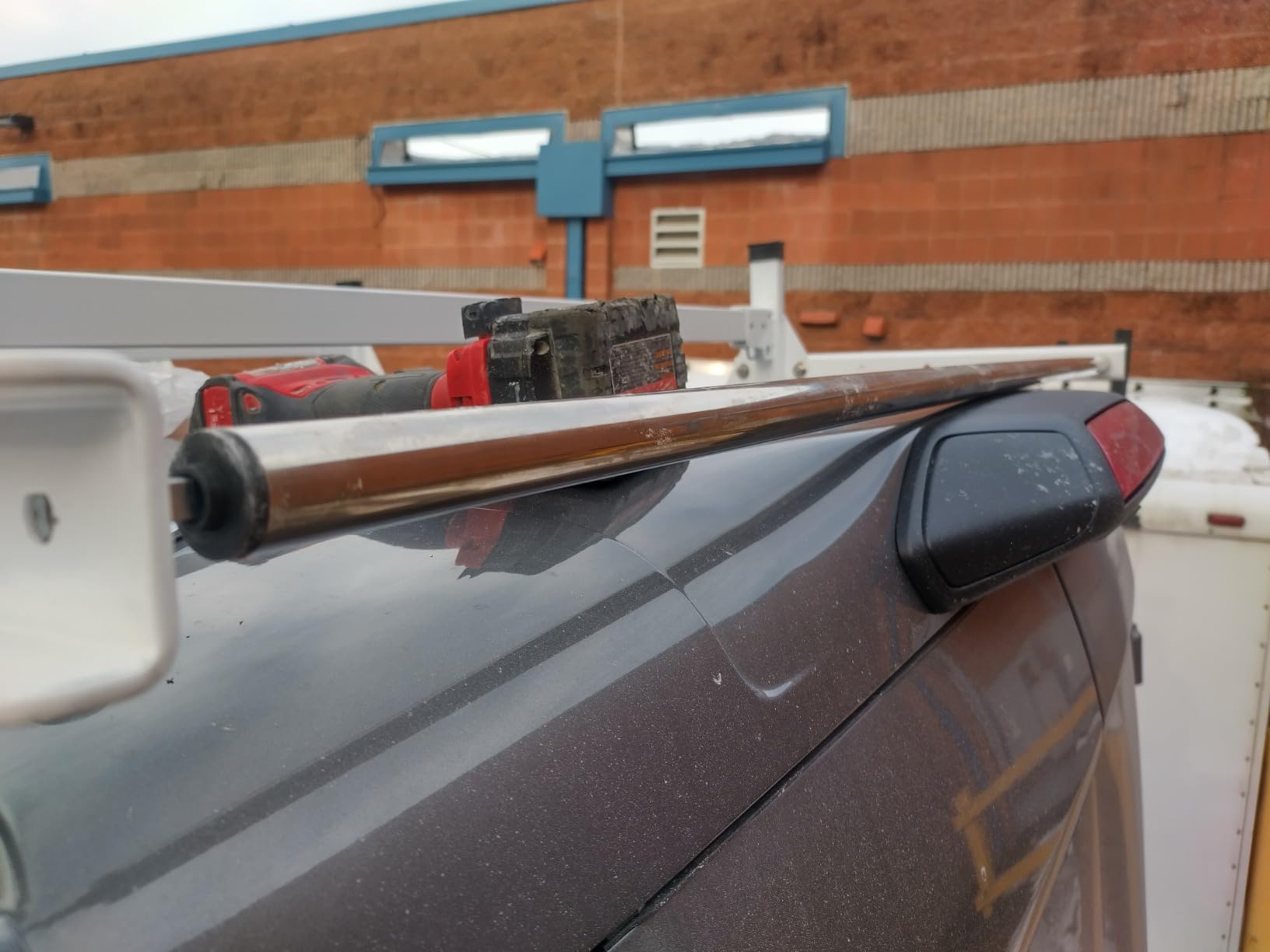
Manufacturer claims put the effort saving at up to 70 percent when loading long heavy equipment, and the mechanics back that up. The roller is positioned at the rear of the rack so a ladder pivots up and rolls in rather than being wrestled over a crossbar. On a van build, that same feature makes it easy to load bulky items like a spare wheel, a kayak or a boxed rooftop unit.
Both a standard roller and an extend roller variant are offered, so check which one suits your overhang before ordering. The extend version is the one to pick if you regularly load items wider than the rack.
Anti-scratch rubber strips run along the top of the crossbars, which matters if you are strapping something with a painted or powder-coated surface. Owners of white and clear-coated gear will appreciate that they can slide a box across the bars without marring it.
The base gaskets are the quieter win. They sit between the mounting feet and the roof, and they reduce the chance of water creeping under a foot and into the roof cavity, which is the exact failure that scares van owners most.
At 45 pounds this is not a light rack, and the 4.2 average across 60 reviews shows more mid-range feedback than the AA-Racks or VANNCAMP systems. Those mid-tier comments cluster around fit and damage in transit rather than core function, which is still worth considering if you are shipping to a remote build location.
It is also the heaviest rack in this group, which is the trade you make for the roller. If payload headroom is already thin on your build, the lighter AA-Racks system is the safer starting point.
It is engineered exclusively for 2015-2026 Ford Transit 150, 250 and 350, and it is not compatible with the Transit Connect. Mounting is at factory roof holes, so there is no drilling into the roof skin, and all bolts, nuts and washers are included.
For a Transit camper that carries gear as well as a living space, the roller earns the extra weight over a lighter plain bar set.
Powder-coated alloy steel
800 lbs load capacity
Integrated rear roller
Fits 2013-2026 ProMaster 1500/2500/3500
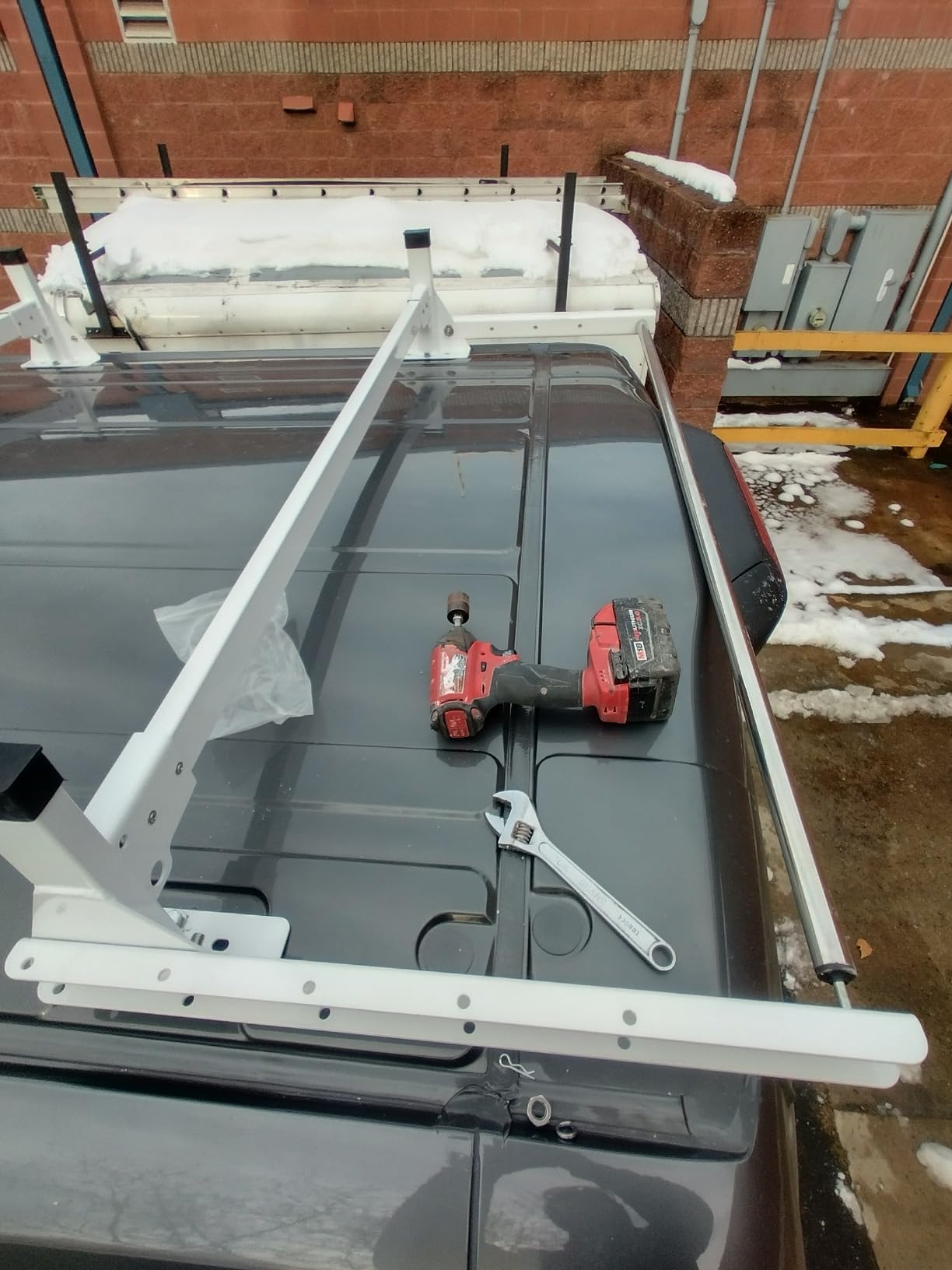
This is the ProMaster counterpart to the MELIPRON Transit rack, and it covers the 2013-2026 RAM ProMaster 1500, 2500 and 3500 in low and high roof configurations. Owners describe it as a no-flex steel rack with a clean finished look, and the 4.4 rating reflects a build that does what it says.
At 27 kg it is a heavy rack, so treat it as a working-van choice rather than a weight-sensitive one. What you get in exchange is a structure that shrugs off a full load of timber or a stack of pipe.
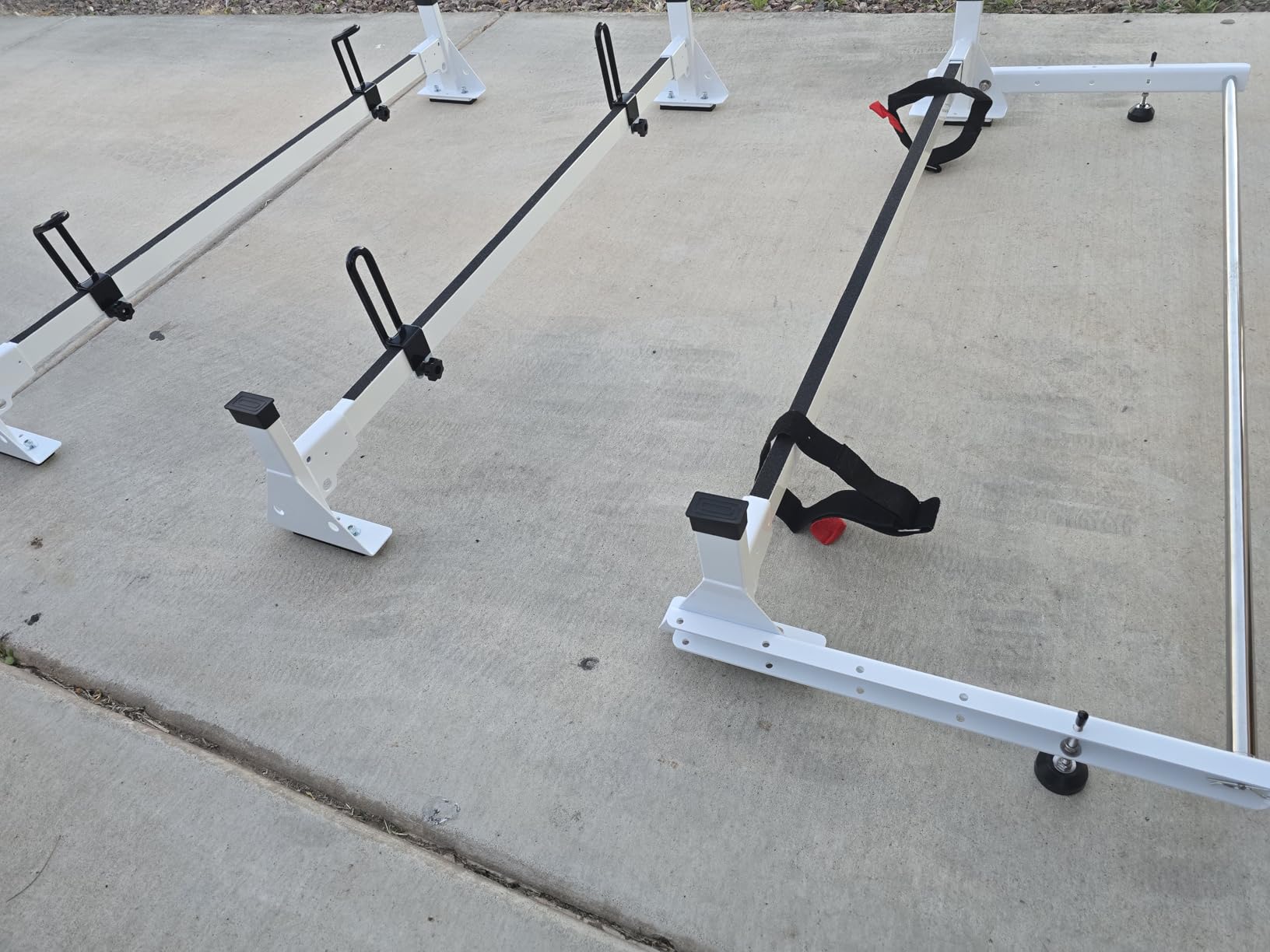
Powder-coated steel is the right material if your van lives outside in rain and snow. The coating resists rust, and the frame itself is stiff enough that reviewers specifically mention the absence of flex after installation, which is what separates a real rack from a light duty one.
The box presentation is also worth noting: parts arrive individually wrapped and protected, which reduces the chance of arriving with bent components. One order did come in with missing hardware, so count the pieces against the manual before you start.
The most substantive negative feedback here is specific and consistent. The grip tape on top of the crossbars peels away, and a reviewer describes the rear roller bar as too thin and prone to bending under a real ladder load. If your plan involves heavy loading, budget for a replacement roller or plan to load with care.
Installation instructions are described as vague, and the manual needs reading carefully. It is a straightforward factory-point bolt-on job rather than a complex build, but do not skip the instructions because the hardware looks self-evident.
It fits 2013-2026 RAM ProMaster 1500, 2500 and 3500 low and high roof models and mounts at factory points with no drilling. Confirm your specific roof and wheelbase combination against the fitment chart before you order, because a mismatch here means a rack that simply will not bolt on.
For a high-roof ProMaster with a roof fan or factory air conditioning, fixed bars mean you are choosing where the obstruction goes. Check the position of your vent against the bar layout before you commit, because the bars do not slide.
Nothing pierces the roof skin, which is the deciding factor if the van is leased or if you expect to sell it inside a few years. Remove the bolts and the roof is unmarked.
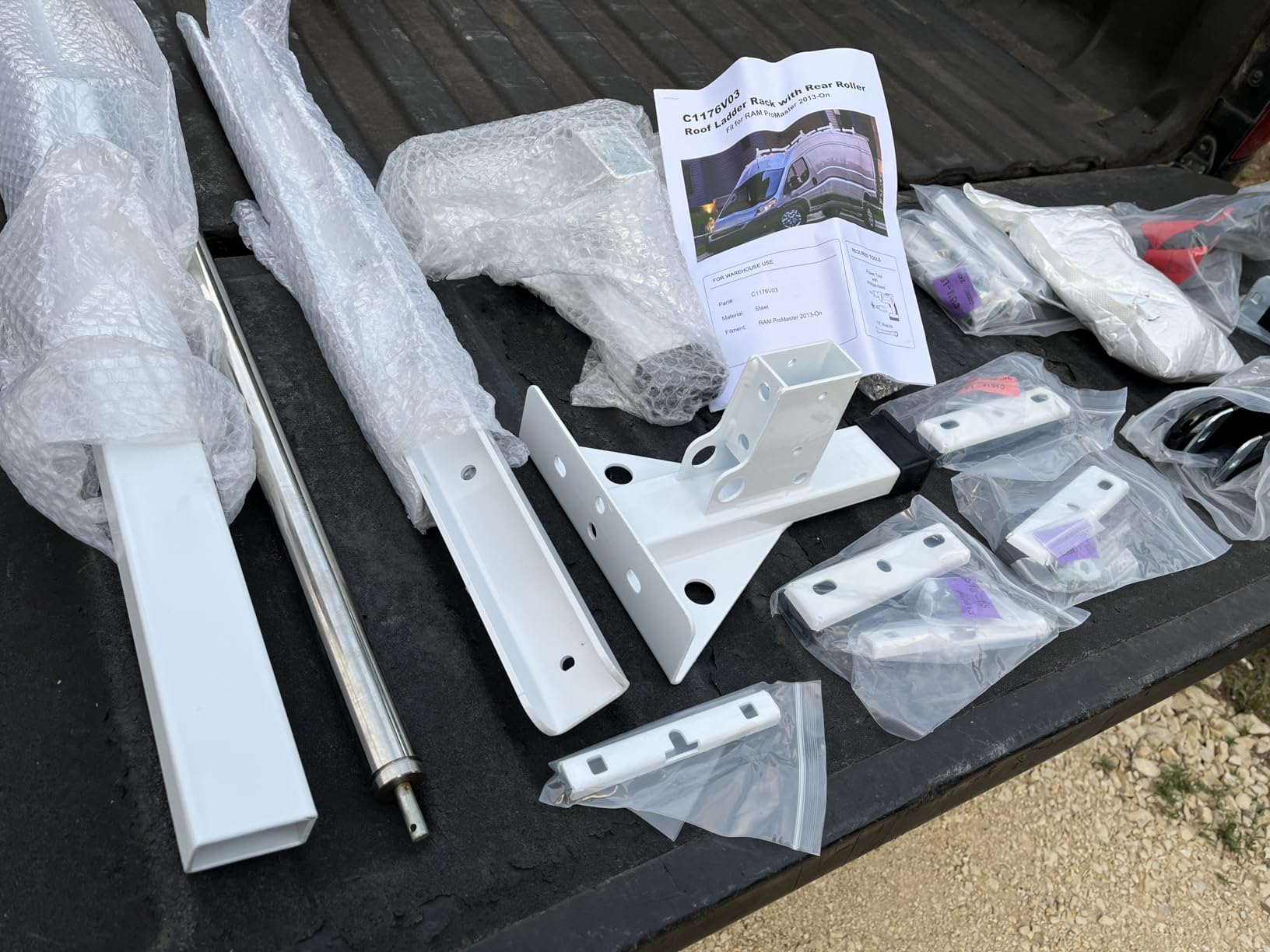
If the ProMaster is a tool van first and a camper second, this is the right rack. If it is a camper first, the 27 kg is the number to argue with.
14-gauge alloy steel
850 lb total capacity
59 inch length
Three bars with clamps and straps
With 462 reviews this is by far the most reviewed rack here, and it is the one to look at if your camper is built on a Chevrolet Express or GMC Savana rather than a Sprinter, Transit or ProMaster. Those two chassis get almost no coverage in vanlife roundups, which makes this pick genuinely useful for a large group of builders.
The steel is 14 gauge, each bar is rated to 250 lbs, and total capacity is 850 lbs. At 59 pounds it is one of the heavier items in this roundup, and the 59 inch length includes the stand, so the usable bar length is a little less than that number suggests.

A 4.0 average across 462 reviews tells a different story than a 4.6 across 74. The ECOTRIC rack has years of long-term owners reporting that it still works and has not failed structurally, which is the durability signal you cannot get from a short review history.
The one-star share is also meaningful, and those reviews cluster on packaging and missing instructions rather than on the rack failing. That is a fixable problem, but it is a problem.
This is the honest downside. The rack is sold as a split unit of three bars and mounting hardware, and it arrives in packaging thin enough that bent rail mounts and chipped paint are a recurring complaint. Several owners repaint after fitting.
There are no instructions in the box. Installers work it out by matching the clamps to the drip rail, but expect to spend a few minutes on a flat roof. The upside is that on a flat-roofed Express or Savana there is nothing to negotiate, and a single person can fit it in roughly half an hour.
This is a flat, high-mounted steel rack on a full-size van, which is the worst-case geometry for wind noise. Owners report a noticeable increase in noise at highway speed, and that is the same complaint that drives people toward low-profile aluminum racks or fitted fairings.
If your van is a camper rather than a ladder hauler, that noise is a daily cost for the life of the vehicle. Mounting a wind deflector ahead of the rack is the usual mitigation, though it adds height and complexity of its own.
It fits 1996-on Chevrolet Express and GMC Savana 1500, 2500 and 3500, using upright clamps, drip rail clamps and straps. The galvanized clamps have protective rubber covers, and the painted surface resists rust even where buyers report cosmetic surface rust appearing over time.
At 850 lbs total and 250 lbs per bar, capacity is never the limiting factor. Height, weight and noise are the trade-offs you are actually deciding.
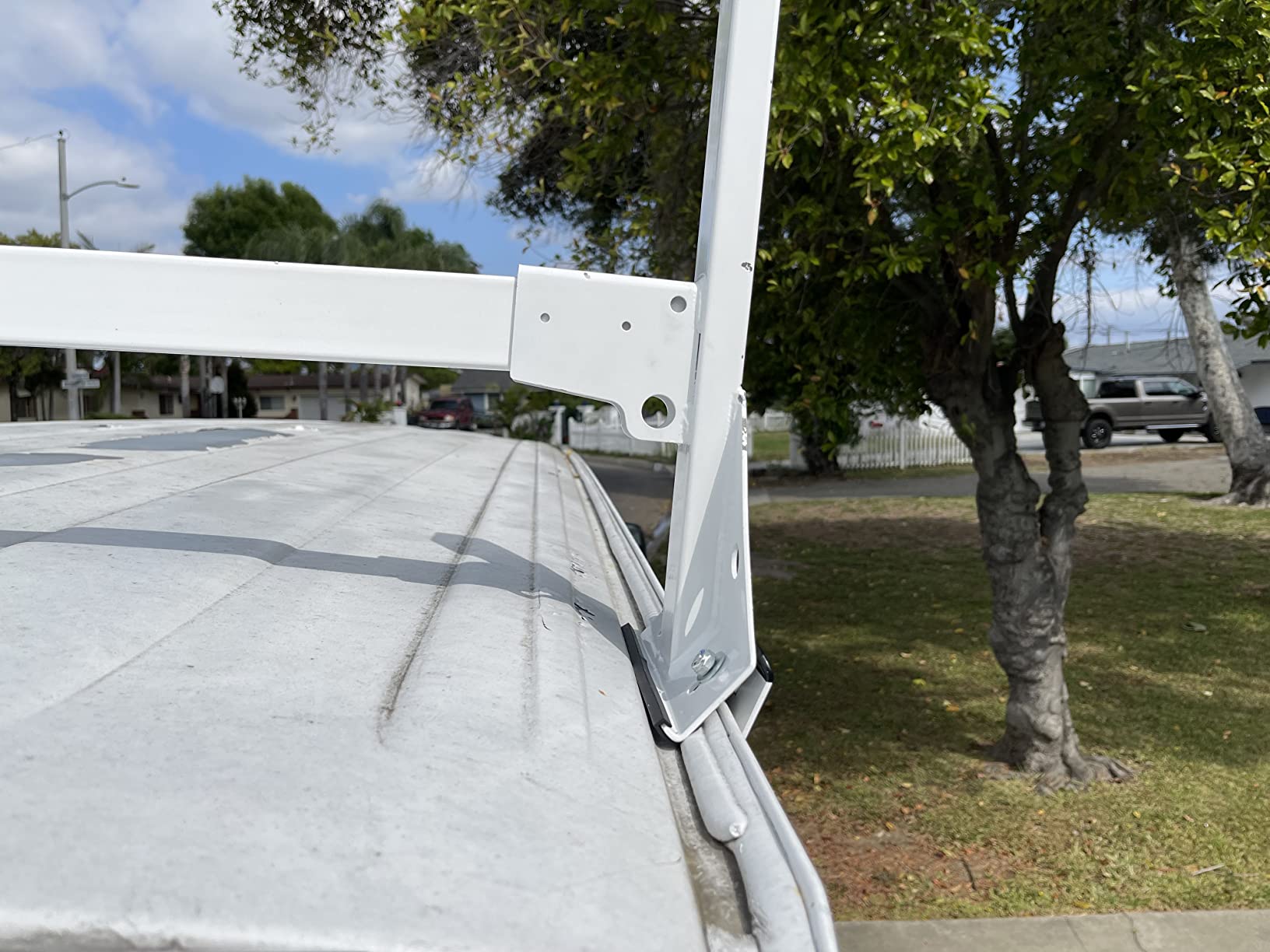
Short screws and a non-adjustable fit show up in a minority of reviews, so check the mounting hardware length against your roof rail before ordering.
Aluminum with stainless hardware
No-drill factory mounting
C-shaped aerodynamic bars
Fits Transit, ProMaster and Nissan NV
This is the only rack in the group that covers three full-size van chassis at once: Ford Transit 150/250/350, Ram ProMaster 1500/2500/3500 and Nissan NV1500/NV2500/NV3500. If you are unsure which van you will end up with, that breadth is worth something.
The C-shaped aluminum bars are the interesting part. Owners consistently credit the rubber sealing strips fitted into the upper and lower channels with a noticeable drop in wind noise, which is the most common complaint across every rack in this roundup.
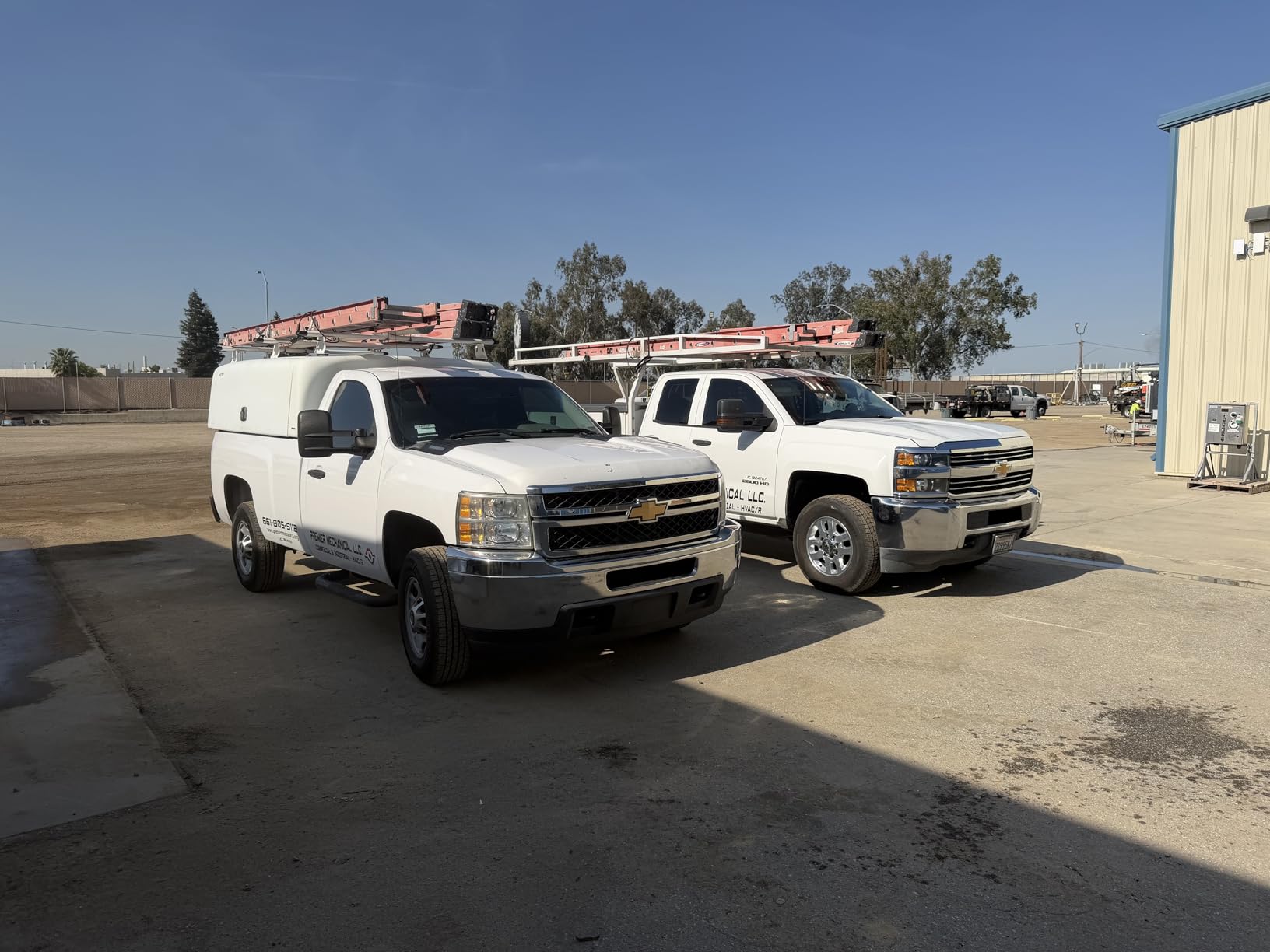
This is the most important warning in the entire roundup. The U-shaped mounting brackets do not seal the factory roof access holes, and a well-documented owner account on a Transit camper describes water getting into the van until the brackets were reversed and gasketed by hand.
The supplied components offer no sealing option, and the installation guide reportedly contained errors. If you fit this rack to a camper van, plan to add gaskets or a sealing washer set as a separate step. Doing that job yourself takes an afternoon with basic tools, and skipping it risks exactly the outcome every van owner fears.
The rubber channel strips are the whole trick. Owners who fitted them report a significant reduction in highway noise compared with bare bars, and buyers who skipped them report loud noise. That makes the strips effectively mandatory on this rack rather than optional.
The C-shaped profile is also inherently quieter than a flat-topped bar because it lets air flow over the top surface rather than breaking against a flat face. On an aluminum rack in this class, that is a sensible combination for a van that spends time at highway speed.
The build is reinforced aluminum with stainless steel hardware throughout, which keeps corrosion risk low and the roof load modest. End caps, adjustable tie-downs and holes in the mounting base give multiple fixation points for straps and accessories, so you are not limited to two clamp positions.
One note on load figures: the current listing details for this variant do not publish a verified maximum load, so check the spec on Amazon before you load it. If the published capacity matters to your build, confirm it against the packaging rather than a secondhand review quote.
Two or three bar versions are offered, in black and white, so you can choose how much roof area you actually want to carry. Two bars is the lighter option and the one most camper builds should pick.
Reviewers are direct about it: without modification, this rack is unsuitable for a camper van build, precisely because of the sealing issue. If you are not willing to gasket the brackets yourself, choose a rack that arrives sealed.
Some orders also arrive with missing nuts, and the 22-review history is the thinnest of the aluminum options here, so there is less long-term data behind it.
Two aluminum crossbars
Adjustable 23 to 57.48 inches
Anodized finish
Fits 2014-2026 Transit Connect
The Transit Connect is the smallest platform in this roundup, and a rack for it is the entry point for a lot of first-time van builders. This one earns its place with a 4.5 rating across 38 reviews, an anodized aluminum finish and an adjustable span of 23 to 57.48 inches that lets it follow you to a different van later.
Buyers find it easy to fit, well made for the money, and capable of carrying real weight. Owners report using it for ladders, crates and awnings, and the package includes crossbars, four end supports, stainless screws, an Allen wrench, spare parts and instructions.
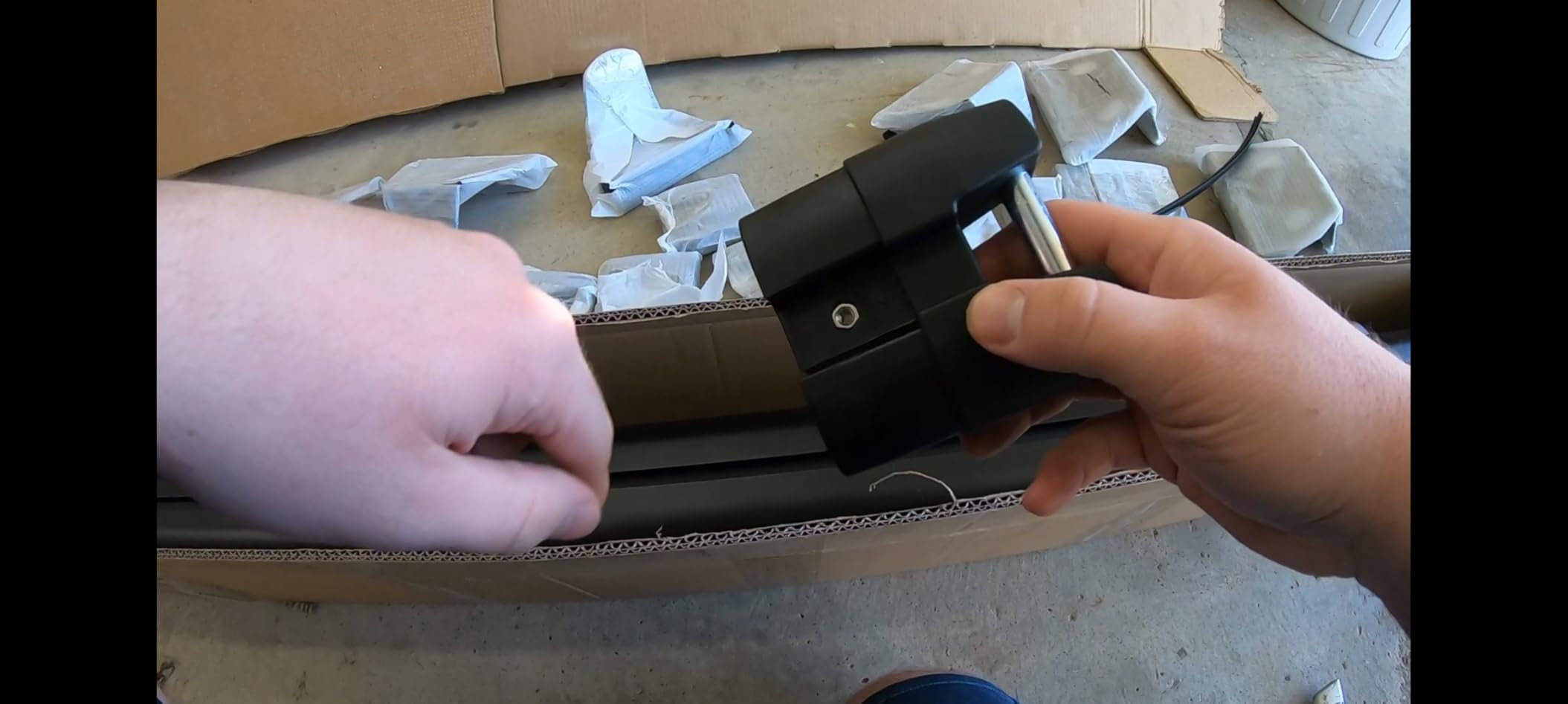
The substantive complaints here are about build precision rather than strength. The supplied brackets have sharp, un-deburred edges straight from the powder coating line, which is worth checking with gloves on before you bolt anything down.
More significant, the 7.5 degree rubber wedge angle does not match the 9.5 degree Transit Connect roof profile, so the brackets sit misaligned and final assembly takes more care than it should. Some hardware may also need larger fender washers for a solid seat on thin roof metal.
This rack is designed exclusively for the Ford Transit Connect 2014-2026. It is not for the 2010-2013 Transit Connect and not for the Ford Transit, despite the similarity in the name. A variant is offered for a van, pickup truck cap and topper combination if you move vehicles.
As with several racks in this roundup, check the currently published load figure on the product page before you rely on it. Buyers are loading this rack with real weight, but the safe approach is to confirm the number yourself and stay well under it.
Owners report whistling at speeds above roughly 60 mph. Two narrow aluminum bars with a lot of air around them create a tuning-fork effect, and the fix that works on the MELIPRON C-bars, the rubber channel strips, is not fitted here.
For a budget build driven on local roads and campground loops, that is an acceptable trade. For a cross-country run at highway speed, expect to hear it.
The instructions may belong to a different rack, and the end caps may need adjustment to fit as designed. Give yourself an extra half hour and file the edges before you start.
Every rack here does the same job, so the decision comes down to five things: chassis, architecture, weight, height and how the rack handles noise. Here is how each one actually matters.
Three architectures cover almost every van build. A crossbar platform gives you straps, tie-downs and T-slot accessories with minimal height and weight, and it is what most of the racks in this roundup are. A perforated or slatted deck bolts a solid surface across the whole roof so you can stand on it, mount anything anywhere and stack cargo, at the cost of significant weight and height. A DIY 80/20 T-slot rail gives you the same versatility as a deck using off-the-shelf extrusion you cut to length, which is the cheapest path to a custom platform.
Choose a crossbar platform if you are carrying panels, an awning and light gear. Choose a deck if you plan to stand on the roof, haul a bulky item like a rooftop tent or want an uncluttered mounting surface. Choose 80/20 if you want a custom fit around a specific vent or fan position and enjoy the build.
Do the arithmetic before you buy. Take your van’s GVWR, subtract the curb weight of the finished conversion including water and gear, and what is left is your remaining payload. The rack is drawn from that, along with everything else you add.
Across the racks here, weights run from 32 pounds to 59 pounds before you add a solar panel, an awning and a fan. Roof weight also sits at the top of the vehicle and affects handling before it affects the payload number, and a lift kit or high-clearance setup makes the same mass matter more.
This is the most-asked question in van roof rack forums and almost nobody answers it with numbers, so here is the honest version. Fuel economy loss from a roof rack is a drag problem first and a weight problem second. What matters is how much frontal area the rack presents to the air and how abruptly that area changes along the vehicle’s length.
A flat deck creates a hard step in the airflow, and the air has to separate and reattach behind it, which is turbulent and expensive. A rack with a front fairing and a body-hugging profile presents a smoother shape, so the same weight costs less. That is why the VANNCAMP system, with an integrated fairing and recessed crossmembers, is quieter and less of a drag than the flat steel bars on the ECOTRIC rack.
Weight matters too, but less than most people assume. A van carrying a full conversion is already heavy, so the marginal penalty of 30 extra pounds on the roof is smaller than the penalty of 30 extra pounds in the cargo bay, where it does not create drag. The practical rule: choose the least frontal area you can live with, then choose the lightest version of it.
Here is a method you can actually use. Start with your van’s published roof height, add the rack height from its lowest point to its highest point including any fairing, then add the height of whatever sits on top of the rack such as a fan, awning housing or light bar. That total is your real clearance number, and it is the one that has to clear the lowest structure on your route. Measuring before you buy is a habit that carries over to any rack, from a fixed gym rig to the storage racks we tested for a home gym.
Check the height of the lowest garage you use regularly, not the posted maximum. The gap under a low bridge is often several inches below its sign. Engineers Who Van Life built a Quigley-lifted Transit that reached 10 feet 3 inches total and did not clear a parkway bridge, which is a useful reminder of what a lift plus a rack plus accessories adds up to.
If your running total is close to a limit, a low-profile crossbar system is the answer. A deck is a large, flat, high surface that turns a marginal clearance into a failed trip.
People ask whether Thule or Yakima is better, and the honest answer is that neither is wrong, they are a different category. Yakima, Thule, Rhino-Rack and Malone build excellent general-purpose crossbars and cargo carriers with strong reputations for dependability. A long-running discussion on the paddling forum asks whether there is any real performance difference between the major brands, and the consensus there is that for ordinary loads there is not much.
What the mainstream brands do not do is solve the van problem. They do not know where a Sprinter high-density air conditioning unit sits, they do not publish per-wheelbase clearance, and their mounting hardware is designed for a roof rail rather than the factory mounting points a van offers. Van-specific makers build the bracket for your chassis, and that is the actual value difference.
For a camper van, I would choose the van-specific rack even if a Yakima bar would be cheaper, because the fit around vents, fans and factory rails is the thing that determines whether the build is usable. Save the mainstream brands for a car, a boat or a truck bed.
Every rack in this roundup mounts at factory points or roof rails, so none of them require drilling. That matters for two reasons: drilling into a van roof is a leak risk you do not need, and holes wreck resale value on a vehicle you might sell or return.
One final check before you commit: a roof rack is the one part of a van you cannot easily see from the ground, so a habit of inspecting what is above you is worth building. We have written up how crews document roof condition at distance in our guide to thermal cameras for roof inspection, and the same habit of looking before you decide on hardware pays off here.
The harder problem is fitment around rooftop equipment. If you have a factory high-density air conditioning unit, a roof fan or a non-standard vent position, the bar layout is what determines whether the build works, and fixed bars cannot slide past an obstruction. A rack with sliding crossbars, such as the VANNCAMP system, solves this properly.
For a leased van, add one more criterion: confirm the mounting hardware is fully reversible. Factory-point bolt-on racks come off with no residue. Anything that uses adhesive or clips into a vent housing may not.
If the van doubles as a photography rig, the glass you carry is a payload decision too, and our roof prism binocular picks are chosen with the same weight-versus-optics trade-off in mind.
The best roof racks for vans depend on chassis and use. The AA-Racks AX302 is the strongest all-round option, fitting 2013-on Ram ProMaster and 2015-on Ford Transit vans with 750 lb capacity at 32 lbs. The MELIPRON Ford Transit rack suits working vans, and the VANNCAMP Sprinter rack is the best low-profile option for solar panels thanks to its sliding T-slot crossbars.
For camper vans, the best brands are the van-specific makers who build brackets for your exact chassis, including VANNCAMP, AA-Racks, MELIPRON, StarONE, ECOTRIC and TideFree. Mainstream automotive brands such as Yakima, Thule, Rhino-Rack and Malone build dependable general-purpose crossbars, but they do not account for factory roof vents, high-roof air conditioning units or factory mounting points on a van.
Quality in a van roof rack comes from three things: material, hardware and fitment. Extruded aluminum with stainless steel hardware resists corrosion and keeps weight low. Powder-coated 14-gauge steel is heavier but far more rigid for heavy cargo. The best quality racks are vehicle-specific, so the brackets are engineered for your roof rails and factory mounting points rather than adapted to fit.
Among the racks reviewed here, the VANNCAMP Sprinter aluminum rack holds the highest average rating at 4.8 across 28 reviews. The AA-Racks AX302 follows at 4.6 across 74 reviews, and the TideFree Transit Connect rack sits at 4.5 across 38 reviews. The ECOTRIC rack for Chevy Express and GMC Savana vans has the largest review base at 462 reviews with a 4.0 average.
For a camper van, neither is usually the right choice. Yakima and Thule build dependable general-purpose crossbars and cargo carriers, but they are designed for roof rails on cars and trucks rather than the factory mounting points, roof vents and high-roof air conditioning units found on a Sprinter, Ford Transit or Ram ProMaster. A van-specific rack fits your chassis properly and mounts without drilling.
You lose fuel economy mainly to drag rather than weight, so frontal area matters most. A flat deck forces air to separate and reattach, creating turbulence, while a low-profile rack with an integrated front fairing and a body-hugging profile costs far less. Weight is a secondary factor. In practice, choosing the least frontal area you can live with recovers more economy than chasing the lightest rack available.
If you want one answer, take the AA-Racks AX302. It weighs 32 pounds, carries 750 lb, mounts without drilling and covers the two most common full-size van chassis. It is the pick we would put on our own van.
If you drive a Sprinter 144 high roof and your roof is for solar, choose the VANNCAMP rack for its sliding dual-slot T-slot crossbars, recessed crossmembers and integrated wind fairing. If your Transit doubles as a work van, the MELIPRON steel rack gives you the most rigid frame and the most reviews, at the cost of weight. If you need fast solo loading, the StarONE rack puts a roller at the rear.
A ProMaster owner who works out of the van should look at the MELIPRON ProMaster rack, while the ECOTRIC system is the only serious option here for a Chevrolet Express or GMC Savana camper, and the TideFree rack covers the smaller Transit Connect at the entry level. The MELIPRON aluminum crossbar rack fits Transit, ProMaster and Nissan NV at once, but only if you are willing to gasket the mounting brackets yourself before it goes near a camper roof.
Whatever you pick, do the total-height arithmetic and the payload arithmetic before you order. Both take five minutes, and either one can change your mind.