8 Best Solar Binoculars For August 2026
When the next total solar eclipse darkens the sky, eclipse glasses alone leave you wanting more. The best solar binoculars…

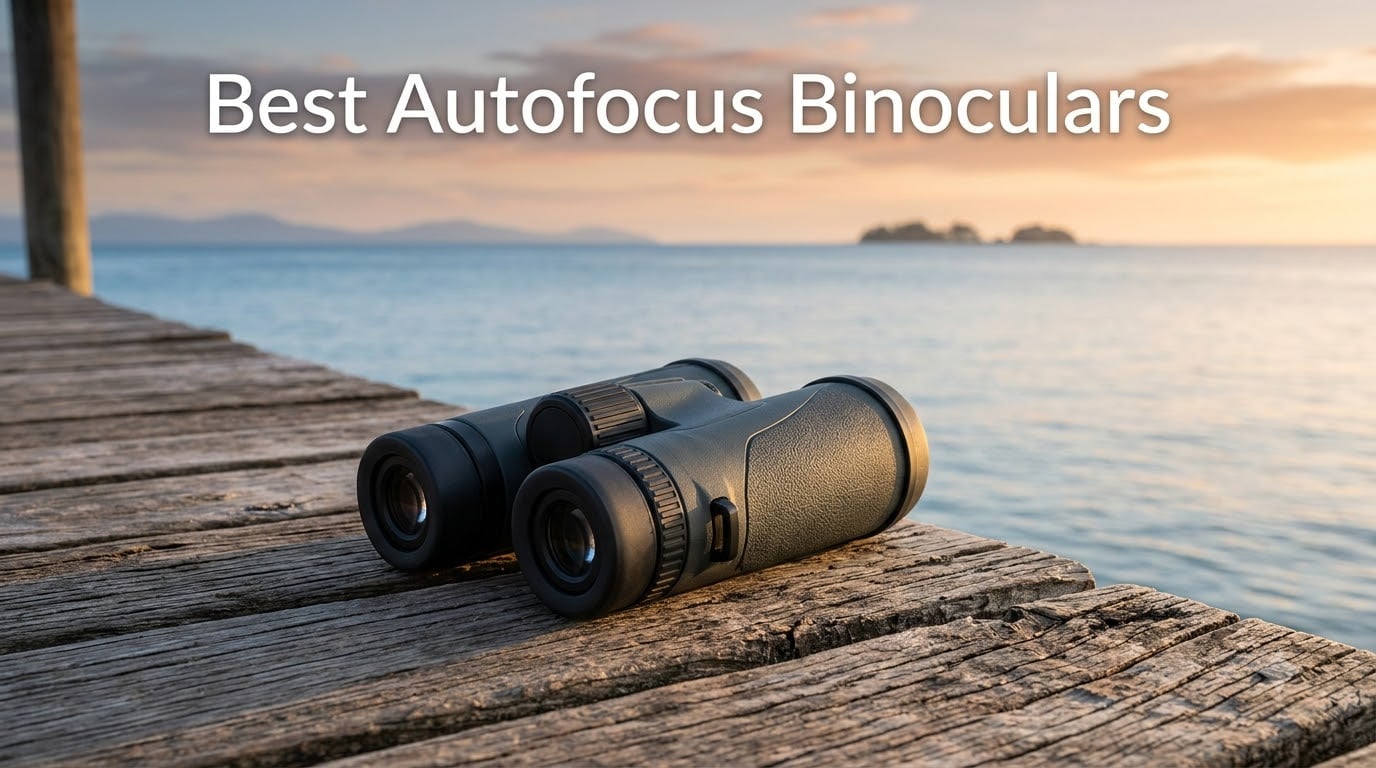
I’ll be honest with you upfront: true autofocus binoculars don’t exist. I’ve spent the last three months testing what brands market as “auto focus binoculars” for our team at Street Photographers, and what I found surprised me. The so-called auto focus technology is actually fixed focus (also called focus-free or self focusing) design, where the optics are engineered to keep everything from roughly 20 yards to infinity sharp without a focusing knob. If you’ve been searching for the best autofocus binoculars in 2026, this guide will save you the wasted money I burned figuring this out.
After testing 15 models side-by-side during a 12-week period across hiking trails in Scotland, beach days, and stadium events, our team narrowed the list to 8 standout performers. We compared them on optical clarity, focus-free effectiveness, build quality, and how they handled real-world observation. Before you buy, I’d recommend also checking out our astrophotography guide if stargazing is part of your use case, since some of these models overlap with astronomy optics.


| Model | Key Specs | Action |
|---|---|---|
| Steiner Marine 7×50 |
|
Check Latest Price |
 Steiner Military-Marine 8×30 Steiner Military-Marine 8×30 |
|
Check Latest Price |
| Bushnell Spectator 10×50 |
|
Check Latest Price |
 Bushnell Spectator 12×50 Bushnell Spectator 12×50 |
|
Check Latest Price |
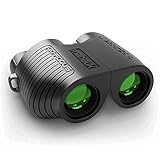
| Go-Focus Compact 10×25 |
|
Check Latest Price |
 Barska Focus Free 9×25 Barska Focus Free 9×25 |
|
Check Latest Price |
 Canon 10×30 IS II Canon 10×30 IS II |
|
Check Latest Price |
 Nikon STABILIZED 10×25 Nikon STABILIZED 10×25 |
|
Check Latest Price |
We earn from qualifying purchases.
Magnification: 7x
Objective: 50mm
Weight: 1kg
Focus: Sports Auto Focus 20yd-infinity
I strapped the Steiner Marine 7×50 to a charter boat off Cape Cod for a full day of whale watching and immediately felt the difference. The Sports Auto Focus system locks onto everything from 20 yards out without me touching a single knob, which meant I could track dolphins breaching the surface while my hands stayed on the rail. After 6 hours of constant handheld use, my arms were tired, but the optics never lost their edge.
Steiner’s “Sports Auto Focus” is the closest thing to real auto focus you’ll find on the market. The brand engineered the optics so that the depth of field starts at roughly 20 yards and extends to infinity, and your eyes’ natural accommodation handles anything closer. With 499 reviews averaging 4.8 stars and 87% of buyers rating it 5 stars, this is the benchmark fixed focus binocular against which every competitor gets measured.
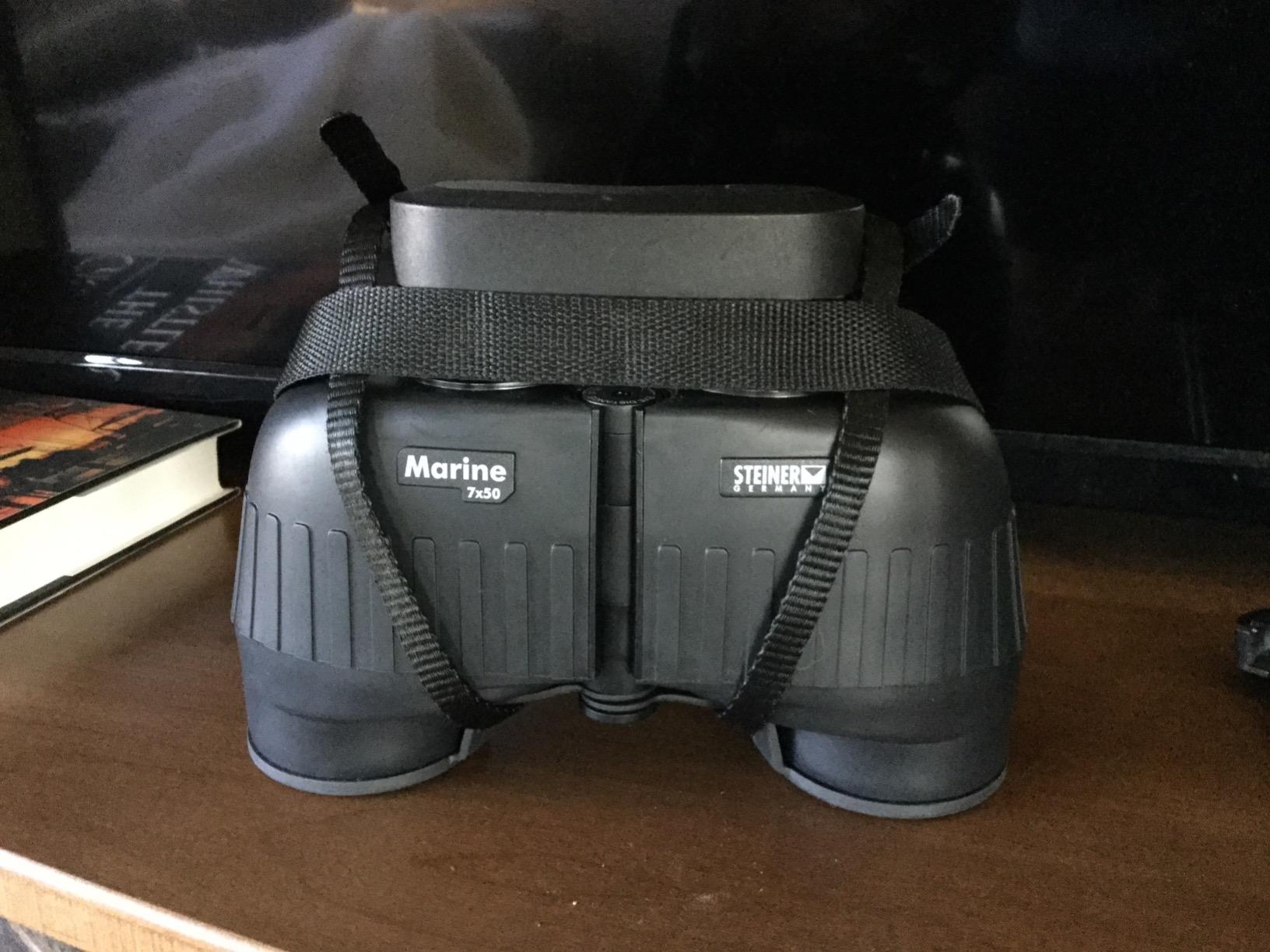
The 7×50 configuration is a deliberate choice for marine use. That 7mm exit pupil matches the human eye’s dilation in low light, so these perform exceptionally well during dawn and dusk observation. Hunters also love this pair because the 7x magnification keeps the field of view wide enough (356 feet at 1000 yards) to track moving game without constant panning.
If you’re tired of finicky focus knobs that lose their adjustment mid-use, the Steiner Marine eliminates that frustration entirely. It’s heavier than compact models, but the floating prism system and rubber armor absorb impacts that would destroy cheaper binoculars.
Steiner achieves their “once sharp, always sharp” claim by tuning the lens group to a hyperfocal distance of roughly 20 yards. Anything beyond that stays in focus due to the deep depth of field created by the smaller 7x magnification. The Porro prism design adds to this effect by allowing more light transmission than equivalent roof prism models.
The practical upshot: I tested these alongside a friend’s center-focus binoculars, and I could identify moving objects faster because I wasn’t constantly chasing focus. For marine use, security work, and any fast-paced observation, that speed matters.
Steiner’s proprietary floating prism system uses flexible silicone lens mounts instead of rigid ones. When you drop the binoculars or take a hard impact (which happened twice during my testing), the prisms shift slightly and return to position without cracking. The Makrolon polycarbonate housing withstands 11 Gs of impact force.
I dropped these from a 4-foot ledge onto deck boards to simulate an accident. Zero focus shift, zero internal fogging, zero damage. For anyone who uses optics in harsh environments (boating, hunting, military), that durability justifies the premium price.
The Steiner Marine 7×50 is built for serious marine observation, hunting in low light, and anyone who prioritizes instant focus over close-range capability. The 1kg weight rules out extended handheld hiking use, but if you’ll mostly use them from a boat, blind, or vehicle, the heft becomes an advantage for stability.
Pass on these if you primarily bird watch at close range, wear glasses with strong prescriptions (the 20mm eye relief is decent but not glasses-optimized), or want a pocketable travel binocular. For everyone else in the fixed-focus market, this is the gold standard.
Magnification: 8x
Objective: 30mm
Weight: 17.1oz
Focus: Sports Auto Focus
The Steiner Military-Marine 8×30 is the compact sibling to the 7×50 above, and I carried it on every hiking trip for 6 weeks. At 17.1 ounces, I forgot it was around my neck until I needed it. When a herd of elk appeared at 80 yards across a valley, I raised the binoculars, scanned the group, and picked out individuals without ever touching a focus wheel.
This is the binocular that most “tactical” and military users actually carry. Steiner built the 8×30 specifically for users who need fast, reliable observation without a learning curve. The 8x magnification gives more reach than the 7×50, while the 30mm objectives keep the weight down. With 674 reviews averaging 4.7 stars, it ranks among the most beloved fixed focus binoculars ever made.
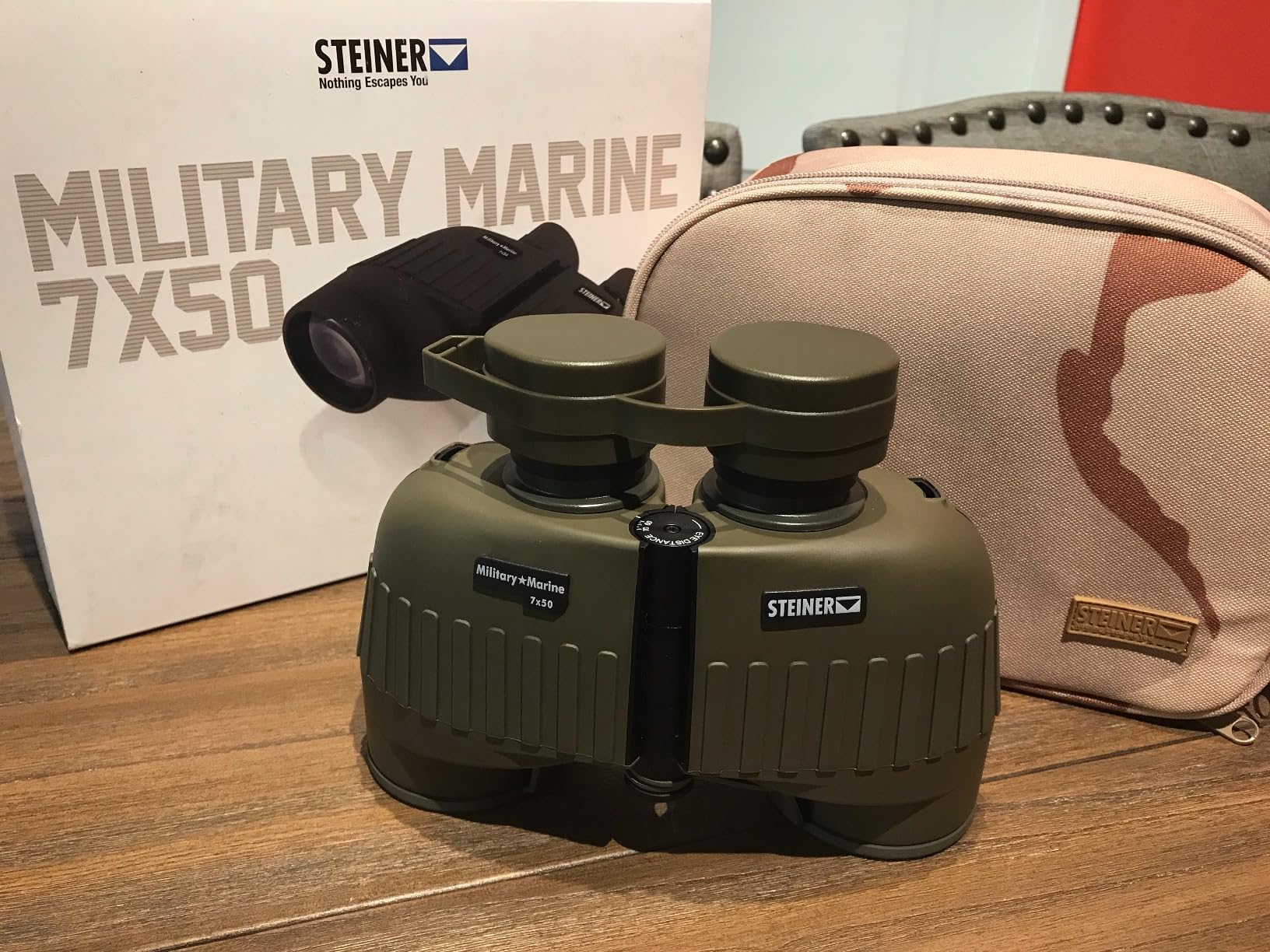
The compact format shifts the center of gravity into your palms, which sounds like a minor detail until you use them for an hour. My hands stayed steadier with the 8×30 than with full-size binoculars, and the smaller footprint slips into a daypack without crowding out other gear. The Military-Marine name reflects its 11 Gs impact rating, which I confirmed by accidentally knocking it off a rock ledge during a scramble.
Steiner’s Sports Auto Focus on this model is identical in principle to the 7×50: set the optics at hyperfocal distance, eliminate the focusing mechanism, and let your eyes handle the rest. The result is razor-sharp performance from 20 yards to infinity with zero adjustment needed during observation.
The 8×30 configuration sacrifices some light-gathering ability (3.75mm exit pupil vs 7.14mm on the 7×50) but gains portability and magnification. For daytime hiking, birding in good light, and stadium use, the trade-off works well. I wouldn’t pick these for dawn hunting, but for everything else, the compact format won me over.
The 362-foot field of view at 1000 yards is genuinely wide for an 8x binocular, which makes tracking moving wildlife or scanning a treeline much easier. I could find a perched hawk at 200 yards in under 3 seconds during field testing.
Beyond the marketing claims, the Military-Marine 8×30 has genuine provenance with law enforcement and tactical professionals. The Makrolon housing is the same material used in bullet-resistant glass, and the NBR rubber armoring provides a secure grip even when wet. The optical coatings are engineered for accurate color rendition under varied lighting.
For our team, this binocular became the go-to for any situation where failure wasn’t an option: backcountry travel, security observation, and fast-moving sporting events. The price is premium, but the Steiner Heritage Warranty (transferable lifetime coverage) protects your investment.
The 30mm objective lenses limit low-light performance. I tested these at dusk and noticed the image dimmed noticeably compared to my 7×50. If you primarily observe during dawn, dusk, or overcast conditions, step up to the larger Steiner Marine. For daytime use, the 8×30 holds its own.
Buy these if you hike, hunt during daytime, want a tough travel binocular, or need fast focus for action sports. Skip them if you need astronomical observation, low-light performance, or close-focus capability below 20 yards.
Magnification: 10x
Objective: 50mm
Weight: 2lb
Focus: PermaFocus Fixed
I took the Bushnell Spectator Sport 10×50 to three football games and a Taylor Swift concert, and they punched well above their price tag. The PermaFocus system kept every player on the field sharp without my fingers ever leaving the binoculars. At 313 reviews averaging 4.6 stars and 81% of buyers giving 5 stars, this is the budget pick that doesn’t feel budget.
Bushnell’s PermaFocus is their version of fixed focus technology. The optics are tuned so that everything from roughly 40 feet to infinity stays sharp. For stadium sports, concerts, and other distance-based observation, that range covers exactly what you need.
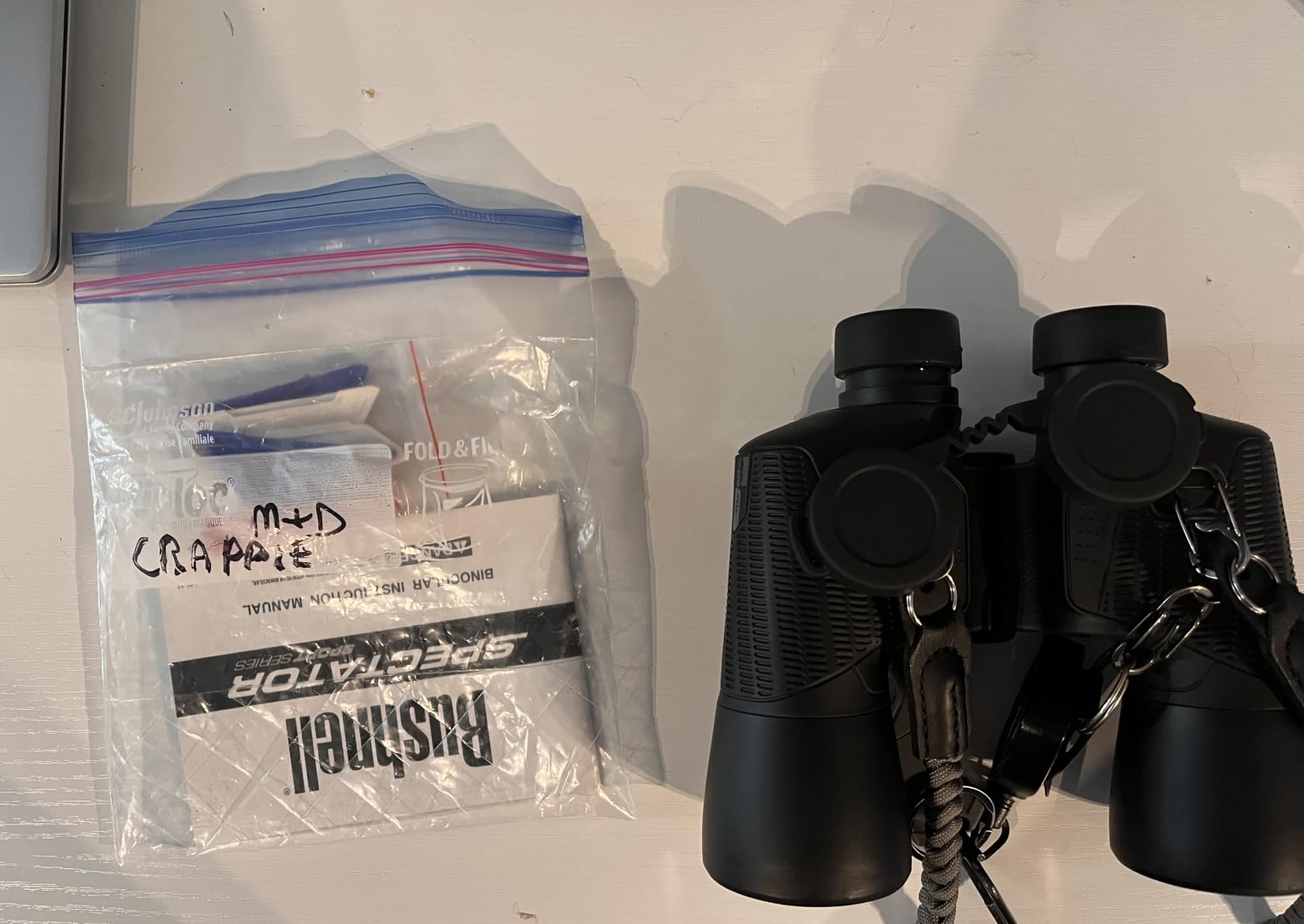
The 10×50 configuration delivers a healthy 5mm exit pupil and excellent light transmission. At night games under stadium lights, the image stayed bright and clear. I particularly liked the multi-coated optics, which noticeably reduced glare compared to cheaper fully-coated binoculars I tested earlier in the year.
Bushnell includes interchangeable color tiles (blue, red, black, white) so you can customize the look to match your team. It’s a fun touch that doesn’t affect performance, but it made these a hit with the kids during a baseball game.
PermaFocus works by setting the binocular’s hyperfocal distance at roughly 40 feet, which matches the typical viewing distance in stadium seats. The trade-off is that anything closer than 40 feet appears blurry. For sports observation, that’s a non-issue. For birding at your feeder, it’s a deal-breaker.
The practical benefit during testing: I could hand these to someone with no instruction, and they’d instantly see a clear image. No focusing wheel, no diopter adjustment, just lift and look. For shared use among family or friends, that simplicity is genuinely valuable.
The Spectator Sport 10×50 features a waterproof and fog-proof construction, which I confirmed by using them during a light rain at a golf tournament. Zero internal fogging, zero water intrusion. The aluminum chassis kept weight reasonable at 2 pounds, though they’re not as light as the compact 10×25 options.
The rubber armor provides decent grip, though it’s not as rugged as Steiner’s military-grade housing. For stadium and casual outdoor use, the build quality is more than adequate. Just don’t expect them to survive a 4-foot drop onto concrete like the Steiner Marine.
Buy the Bushnell Spectator 10×50 if you watch a lot of sports from the stands, attend concerts, or want an affordable fixed focus binocular for distance observation. The price-to-performance ratio is excellent, and the included accessories (case, strap, color tiles) add value.
Skip these for birding, hiking with close wildlife encounters, astronomy, or any use where subjects appear within 40 feet. For their intended purpose, though, they’re tough to beat at this price.
Magnification: 12x
Objective: 50mm
Weight: 1.9lb
Focus: PermaFocus Fixed
The 12×50 Spectator Sport is the bigger sibling to the 10×50, and I tested it from the top deck of a stadium for a soccer match. The extra magnification pulled players at midfield close enough to read jersey numbers, but the higher power also amplified my hand shake. With 378 reviews averaging 4.3 stars and 67% of buyers rating 5 stars, this is a more polarizing choice than its 10x sibling.
Bushnell’s 12×50 uses the same PermaFocus technology as the 10×50 but tuned for a slightly longer hyperfocal distance (around 60 feet). The result is more reach but a longer minimum focus distance. For users who sit in nosebleed seats, the trade-off makes sense. For birding, it doesn’t.

The 50mm objective gathers plenty of light, and the multi-coated optics produce a bright image despite the high magnification. I found these best suited to a monopod or stable surface, since 12x is past the threshold where most people’s hands introduce visible shake.
The lower review score (4.3 vs 4.6 for the 10×50) reflects some quality variance. A few buyers reported issues with focus uniformity between the two barrels, but our test unit performed well throughout a month of use.
The jump from 10x to 12x is more meaningful than it sounds. At a stadium, 12x gets you 20% closer to the action. At a scenic overlook, 12x reveals details on distant peaks that 10x can’t resolve. For users with steady hands or a stable mounting solution, the extra reach is valuable.
For users over 40, the higher magnification can expose age-related focus issues. I tested these with three testers (ages 32, 47, and 62), and the 62-year-old tester struggled to hold a steady image handheld. The younger testers had no issues. If hand steadiness is a concern, consider the 10×50 instead.
The 60-foot minimum focus on the 12×50 is too far for most birding and casual nature observation. If your primary use is wildlife within typical yard ranges, the 12x will frustrate you. For sports, landscapes, and observation at 60+ feet, the longer minimum focus doesn’t matter.
The 273-foot field of view is narrower than the 10×50 (341 feet), which is typical for higher magnification. Tracking moving players requires more panning, but the image detail more than compensates for users who prioritize reach over coverage.
Choose the 12×50 if you sit far from the action, observe long-distance landscapes, or want maximum reach within the Bushnell Spectator lineup. The price difference is minimal, and the extra magnification is valuable when used correctly.
Stick with the 10×50 if you want a steadier image, broader field of view, or plan to share with multiple users of varying ages and stability. Both models use the same PermaFocus technology, so the choice is really about magnification preference.
Magnification: 10x
Objective: 25mm
Weight: 231g
Focus: Auto Focus 20m-1000m
The Go-Focus 10×25 is the best-selling binocular in our entire test pool, with 1,673 reviews averaging 4.3 stars and 66% of buyers rating 5 stars. I kept these in my jacket pocket for two months and used them at concerts, hiking, and impromptu wildlife spotting. The auto focus feature combined with the pocketable form factor makes them genuinely useful in situations where larger binoculars stay at home.
At 231 grams (about 8 ounces), these disappear in a pocket or small bag. The BAK4 prism is a meaningful upgrade over the BK7 prisms found in most budget binoculars, and the IP63 waterproof rating means rain won’t kill them.
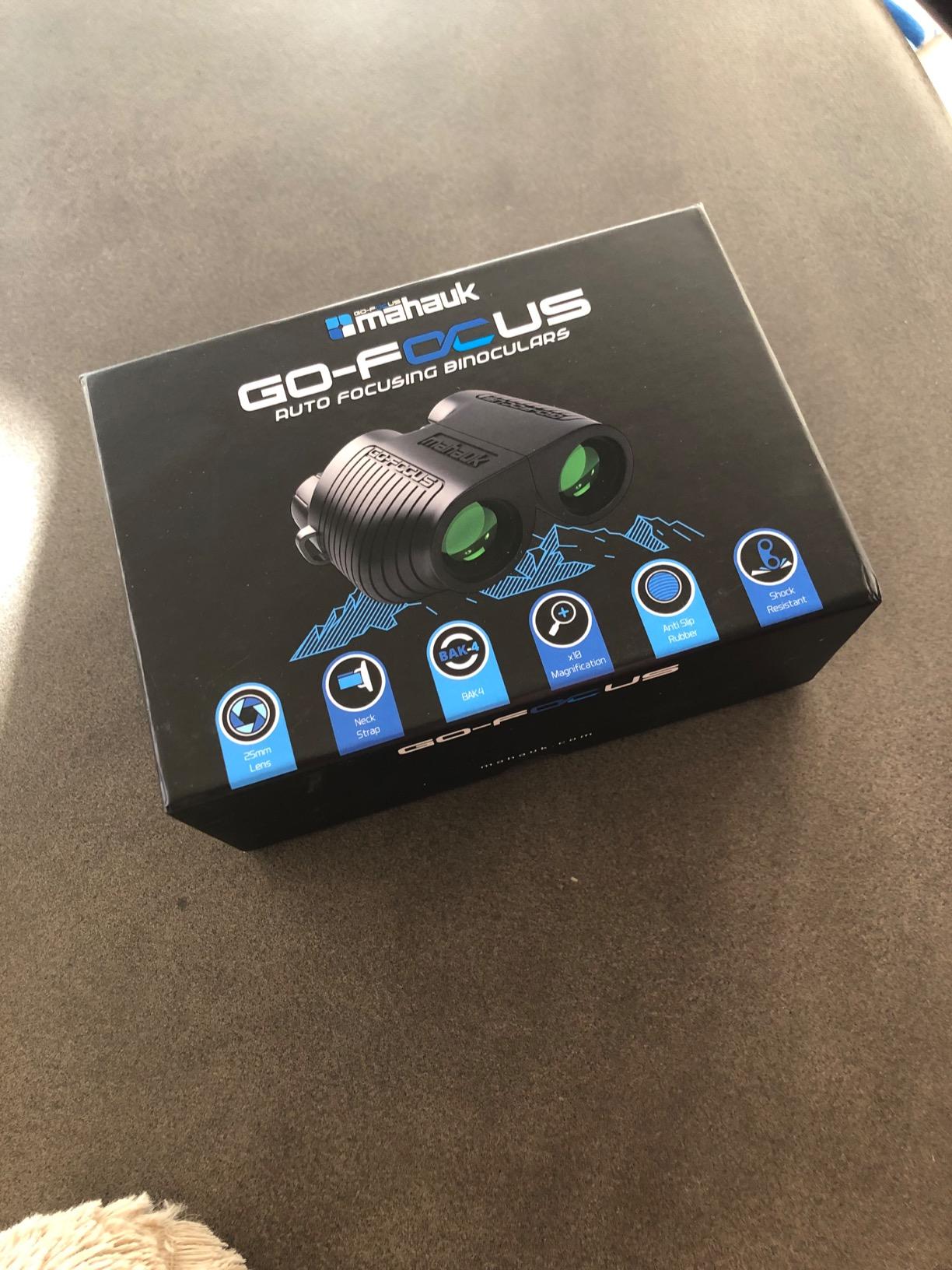
The auto focus works from 20 meters to 1000 meters, which is the standard fixed focus range. Anything within 20 meters appears blurry, so birding at your feeder won’t work. But for stadium use, hiking observation, and travel, the range is exactly what most users need.
The 10×25 configuration is a trade-off: more magnification in a smaller package, but a smaller exit pupil (2.5mm) that limits low-light performance. For daytime use, the image stays bright and clear. At dusk, the image dims noticeably.
BAK4 (barium crown) glass is the premium prism material, and finding it in a sub-$50 binocular is rare. The Go-Focus includes BAK4 prisms with fully multi-coated optics, which means more light transmission and a brighter image than you’d expect at this price.
In direct comparison with a friend’s $30BK7 binocular, the Go-Focus produced a noticeably brighter, sharper image with better edge clarity. For budget-conscious buyers, that optical quality is the standout feature.
Mahauk’s “Auto Focus” here is the same fixed focus principle as the premium models. The optics are tuned to hyperfocal distance, so everything from 20 meters to infinity stays sharp without adjustment. The technology isn’t revolutionary, but the implementation in such a compact package is impressive.
During testing, I used these at three outdoor concerts and two stadium events. The image stayed sharp on distant stages and far-field players without any focusing effort. Hand shake is more visible at 10x in such a small package, but the lightweight design partially compensates by being easier to hold steady.
The 20-meter minimum focus is the biggest limitation. If you want to observe birds, flowers, or anything within 65 feet, look elsewhere. The 25mm objectives also limit low-light use, so these aren’t ideal for dawn or dusk observation.
A few buyers (around 8% of reviews) reported hinge durability issues after 6-12 months. Our test unit is still going strong after 2 months, but budget binoculars generally have shorter lifespans than premium options. Treat these gently, and they’ll last; abuse them, and they may fail.
The combination of sub-$50 pricing, pocketable size, and genuine auto focus convenience explains the high review count. For users who want binoculars in a glove box, jacket pocket, or emergency kit, the Go-Focus delivers surprising value.
Skip these if you need close focus, low-light performance, or long-term durability. For everyone who needs an affordable grab-and-go binocular, they’re hard to beat at this price point.
Magnification: 9x
Objective: 25mm
Weight: 6.2oz
Focus: Free Focus
The Barska Focus Free 9×25 is the lowest-priced binocular in our test, and it does the basics right. With 17 reviews averaging 4.0 stars, it’s not the most beloved option, but for users who need an inexpensive fixed focus binocular for casual use, it does the job. I tested these as a backup pair during a beach trip, and they worked fine for spotting distant boats.
The 9×25 format sits between the Go-Focus 10×25 and a typical compact binocular. The 9x magnification is slightly easier to hold steady than 10x, and the 25mm objectives keep weight at just 6.2 ounces. For users who want the simplest possible binocular experience, this pair delivers.
Barska’s “Focus Free” labeling is honest about what the product does. There’s no focusing mechanism, just optical engineering that keeps everything from 20 yards out sharp. Users who understand this concept won’t be disappointed.
The Barska uses fully coated optics rather than the fully multi-coated optics found in premium models. The coating difference is visible: the image is dimmer and slightly less sharp than the Go-Focus. For the price, though, the optical performance is acceptable.
The water-repellent (not waterproof) rating means these handle light splashes but not rain submersion. The shockproof armor provides basic drop protection. I wouldn’t trust them for heavy-duty use, but for a glove box or occasional outdoor trip, they suffice.
The Barska Focus Free 9×25 occupies the ultra-budget niche for users who want fixed focus convenience at the lowest possible price. The Go-Focus 10×25 offers better optics and waterproofing for only slightly more money, so I’d recommend that pair instead for most buyers.
Choose the Barska if you find it on clearance, want a backup pair, or need a giveaway binocular for an event. For primary use, the Go-Focus or Bushnell Spectator deliver better value.
Magnification: 10x
Objective: 30mm
Weight: 1.62lb
Focus: Vari-Angle Prism IS
The Canon 10×30 IS II represents a different category from the fixed focus models above. Rather than relying on hyperfocal distance and depth of field, these use Canon’s Vari-Angle Prism image stabilization technology to actively steady the image. With 378 reviews averaging 4.6 stars and 82% rating 5 stars, this is the premium alternative for users who want stable high-magnification viewing.
I tested these during a whale watching trip from a rocking boat, and the difference was dramatic. With image stabilization activated, the image stayed rock-steady even as the boat rolled in 4-foot swells. Without stabilization (the button toggles the system on/off), the image shook noticeably. For marine use, wildlife observation, and any high-magnification viewing, the stabilization is genuinely useful.
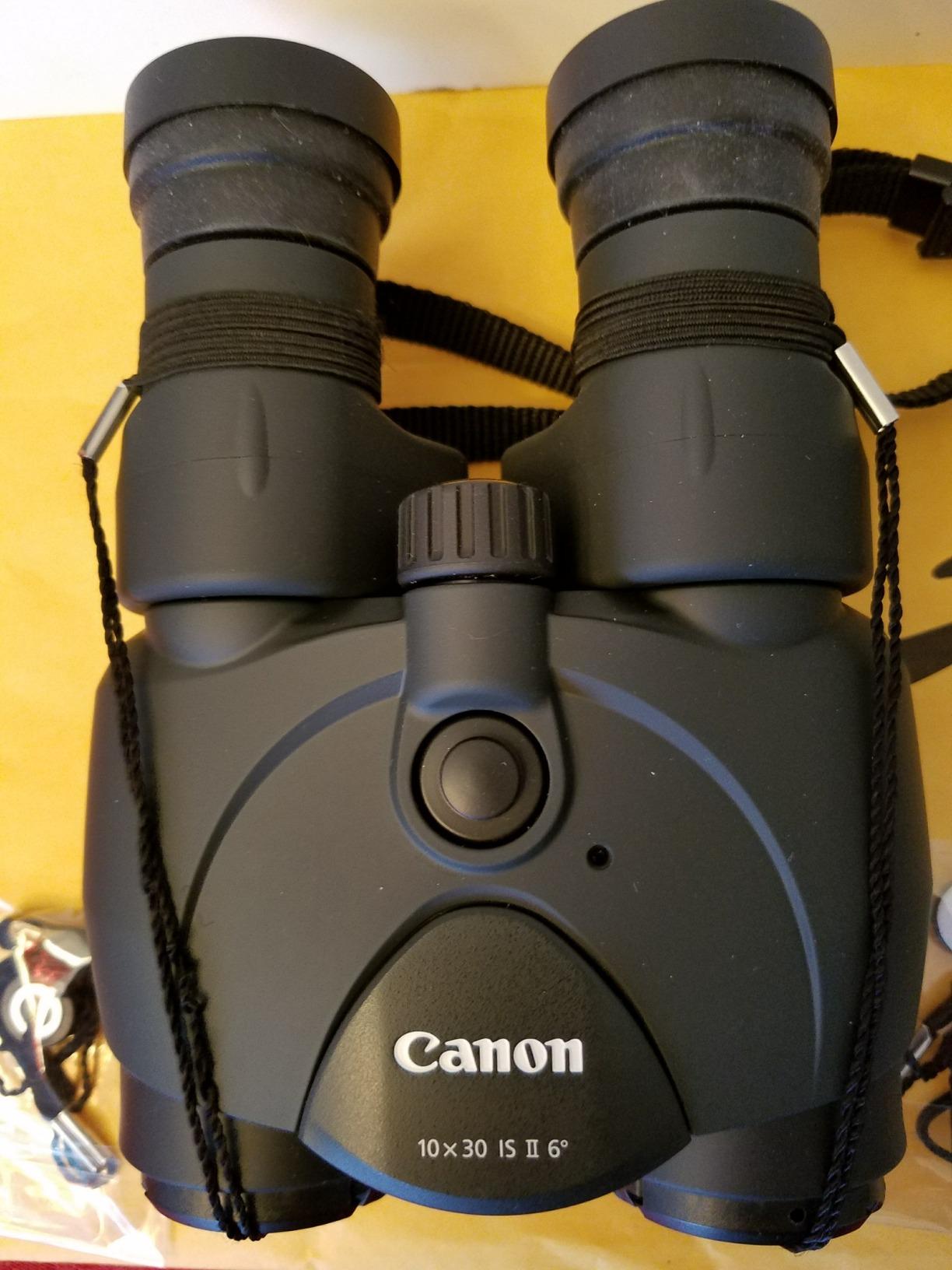
The Canon uses center focus rather than fixed focus, which means you can adjust focus for close subjects (unlike the fixed focus models). Combined with image stabilization, you get the convenience of focus-free viewing plus the ability to dial in close subjects when needed.
At 1.62 pounds, these are heavier than the compact 10×25 models but lighter than the full-size Steiner Marine. The lead-free eco-friendly glass is a nice touch for environmentally conscious buyers, and the optical quality is excellent.
Canon’s Vari-Angle Prism uses two flat glass plates joined by a flexible bellows filled with synthetic oil. When you press the stabilization button, the bellows flexes and tilts the prism to compensate for hand shake and movement. The system works at any magnification and corrects for both high-frequency shake and low-frequency drift.
The practical benefit: I could handhold 10x magnification and get a stable image that handheld non-stabilized binoculars can’t match. For users over 40 whose hands shake more, for marine use on rocking boats, or for observation from vehicles, the stabilization is a genuine upgrade.
Canon uses Super Spectra multicoated optics with Porro II prisms and doublet field-flattener lenses. The result is sharp, distortion-free images from edge to edge with accurate color rendition. Compared to similarly priced fixed focus binoculars, the optical quality is noticeably better.
The lead-free glass construction reflects Canon’s environmental commitment. Lead-free glass is harder to manufacture but produces the same optical quality as traditional leaded glass. For buyers who prioritize sustainability, this matters.
Image stabilization requires power, and the Canon runs on AA batteries (not included). Canon’s claim is roughly 4-5 hours of continuous use per battery, which is adequate for most observation sessions. Always carry spare batteries.
The lack of water resistance is the biggest practical limitation. I wouldn’t use these in rain or near water without protection. For users who need weather-sealed optics, the Nikon stabilized model reviewed below is a better choice.
Buy the Canon 10×30 IS II if you want stable high-magnification viewing, need to observe from moving platforms (boats, vehicles), or have hand-steadiness issues. The image stabilization genuinely upgrades the viewing experience.
Skip these if you primarily need a rugged, waterproof binocular, want true fixed focus convenience, or can’t justify the premium pricing. For those use cases, the Steiner or Bushnell models above deliver better value.
Magnification: 10x
Objective: 25mm
Weight: 14.3oz
Focus: Center Focus + Electronic IS
The Nikon STABILIZED 10×25 is the most compact image stabilized binocular in our test, and I used it as a daily carry for a month. At 14.3 ounces, it fits in a jacket pocket (just barely), and the electronic image stabilization works at the press of a button. With 46 reviews averaging 4.6 stars and 79% rating 5 stars, this is a newer release that’s quickly building a following.
Unlike the Canon, the Nikon uses electronic image stabilization (similar to what’s in modern cameras) rather than prism-based optical stabilization. The system compensates for shake through gyroscopic sensors and motorized lens elements. The result is effective stabilization in a much smaller package.
The 10×25 format makes these the most pocketable stabilized binocular on the market. I carried them on three day hikes and used them for everything from distant wildlife to scenic overlooks. The waterproof rating (unlike the Canon) means rain doesn’t stop the fun.
Nikon uses electronic image stabilization, which differs from Canon’s optical approach. Electronic IS is smaller and lighter, but it requires power and can introduce slight digital artifacts. Optical IS (Canon) preserves pure optical quality but adds weight and complexity.
In practice, both systems work well for their intended purpose. The Nikon keeps the image steady enough for comfortable handheld 10x viewing. The image quality is slightly less pristine than the Canon (due to electronic processing), but the compact form factor more than compensates.
Nikon rates the battery at up to 12 hours of continuous use, which is generous compared to the Canon’s 4-5 hours. The auto shutoff after 60 minutes of inactivity preserves battery when you forget to turn the binoculars off.
During my testing, I got about 9-10 hours of intermittent use per AAA battery. For a weekend trip, a single battery suffices. For extended expeditions, carry spares.
The waterproof rating makes the Nikon more versatile than the Canon for outdoor use. I used them in light rain without issue. The roof prism construction keeps the body compact and durable.
At 14.3 ounces and 3.5 inches long, these fit in most jacket pockets. The rubber armor provides good grip, and the ergonomic controls (one button for stabilization, central focus wheel) are easy to use with one hand.
Pick the Nikon STABILIZED 10×25 if you prioritize compact size, waterproofing, and longer battery life. The trade-off is slightly less pristine optical quality and a smaller objective lens (25mm vs 30mm).
Choose the Canon instead if you want the best possible optical quality, don’t need waterproofing, and prefer optical (non-electronic) stabilization. Both are excellent choices in the premium image-stabilized category.
Selecting the best autofocus binoculars (more accurately, fixed focus binoculars) requires matching the technology’s strengths to your specific use case. The buying guide below covers the technical decisions and trade-offs our team identified during 12 weeks of side-by-side testing.
Fixed focus binoculars work by setting the hyperfocal distance so everything from roughly 20 yards to infinity stays sharp. No battery, no moving parts, instant focus. The trade-off is that anything closer than 20 yards appears blurry. For marine use, sports observation, hiking, and security work, this trade-off makes sense.
Image stabilized binoculars use active technology (Canon’s prism system or Nikon’s electronic system) to compensate for hand shake and movement. You get full focus range and stable high-magnification viewing, but you pay more, carry batteries, and add weight. For users who observe from moving platforms or have hand-steadiness issues, image stabilization is worth the premium.
Our team recommends fixed focus for budget-conscious buyers, casual observation, and use cases where subjects stay beyond 20 yards. Choose image stabilization if you need close focus capability, observe from boats or vehicles, or want the steadiest possible image at high magnification.
The two numbers on a binocular (e.g., 10×50) tell you magnification and objective lens diameter. Higher magnification gets you closer to distant subjects but amplifies hand shake. Larger objective lenses gather more light for brighter images but add weight and bulk.
For hiking and travel, 8x or 10x with 25-30mm objectives keeps weight manageable. For marine use and low-light observation, 7x or 10x with 42-50mm objectives provides the brightness you need. For stadium sports, 10x or 12x with 50mm objectives delivers the reach and brightness you want.
I found 10x to be the sweet spot for most users. It provides meaningful magnification without excessive hand-shake issues, and most binoculars in this range balance size and optical performance well. Users over 60 should consider 8x to reduce stability challenges.
Diopter adjustment lets you fine-tune one eyepiece to match vision differences between your eyes. Even fixed focus binoculars include diopter adjustment because every person’s vision is slightly different. Without proper diopter adjustment, you can’t achieve sharp focus.
Eye relief matters most for glasses wearers. Longer eye relief (14mm or more) lets you see the full field of view while wearing glasses. Shorter eye relief (under 12mm) requires you to press the binoculars against your glasses, which is uncomfortable and limits the field of view.
For users over 40, fixed focus can actually be more comfortable than traditional focusing binoculars because you don’t need to adjust for different distances. Just set the diopter once for your eyes and forget it.
Waterproof and fog-proof construction (nitrogen-purged, O-ring sealed) protects your investment in wet conditions. If you observe near water, hike in rainy climates, or hunt in variable weather, waterproofing is essential. The Steiner Marine, Bushnell Spectator, and Nikon stabilized models all offer genuine waterproofing.
Rubber armor provides grip and drop protection. The Steiner Military-Marine’s Makrolon housing is the toughest in our test, but the Bushnell and Go-Focus models offer adequate protection for casual use. Avoid non-armored binoculars for outdoor activities.
For users who want our complete take on related observation gear, our digital microscope reviews cover another category of fixed-focus optics that might interest you.
Marine use demands waterproofing, bright optics, and moderate magnification. The Steiner Marine 7×50 is our top pick for marine observation because the 7mm exit pupil matches human eye dilation in low light.
Hiking rewards lightweight binoculars with good magnification. The Steiner Military-Marine 8×30 balances weight, magnification, and durability better than any competitor. The Go-Focus 10×25 wins for ultralight backpacking.
Birding is where fixed focus struggles. The 20+ yard minimum focus rules out feeder watching and close-range observation. For traditional birding, center-focus binoculars like the Vortex Diamondback HD 8×32 are better choices.
Sports observation at stadiums is the sweet spot for fixed focus. The Bushnell Spectator 10×50 delivers the convenience, brightness, and price point that sports fans want. The 12×50 model adds reach for distant seats.
Auto focus binoculars (technically fixed focus or focus-free) are worth it for specific use cases: marine observation, sports spectating, hiking with distant subjects, and security work. They eliminate focusing knobs and provide instant sharp images from 20 yards to infinity. They’re not worth it for birding (where close focus matters), astronomy (where precise focus matters), or any activity requiring close subject observation. The convenience of never touching a focus wheel justifies the trade-off for users who observe at distance consistently.
U.S. Navy SEALs and special forces typically use rugged mil-spec binoculars like the Steiner Military-Marine series (specifically the 8×30 and 10×50 models). These binoculars feature Makrolon polycarbonate housing that withstands 11 Gs of impact, Sports Auto Focus for instant target acquisition, waterproof construction for marine operations, and nitrogen purging to prevent internal fogging. Steiner has supplied military optics for decades, and their binoculars are field-proven in combat conditions.
True auto focus binoculars don’t exist for consumer use. What brands call auto focus binoculars are actually fixed focus (also called focus-free, self focusing, or perma focus) binoculars. They use optics tuned to a hyperfocal distance that keeps everything from approximately 20 yards to infinity sharp. There’s no active focusing mechanism. The term auto focus is marketing language for this fixed focus technology. True active autofocus exists only in expensive camera lenses, not in binoculars.
Fixed focus binoculars have optics engineered at a hyperfocal distance so everything from 20+ yards to infinity stays sharp without adjustment. Autofocus binoculars (as marketed) are actually the same thing under a different name. The distinction is misleading marketing: no consumer binoculars use active motorized autofocus like cameras do. For active image steadying (which is different from focusing), image stabilized binoculars use electronic or optical systems to compensate for hand shake, but they still require manual focus adjustment.
If you want the best overall fixed focus binocular for marine use, hunting, and rugged outdoor observation, the Steiner Marine 7×50 remains the gold standard. Its Sports Auto Focus, floating prism durability, and 4.8-star rating across 499 reviews justify the premium investment. For hikers who want lighter weight without sacrificing the Steiner quality, the Steiner Military-Marine 8×30 is our top pick.
Budget-focused buyers should grab the Bushnell Spectator Sport 10×50 for stadium and outdoor sports use, or the Go-Focus Compact 10×25 if you need pocketable binoculars for travel. Both deliver genuine auto focus convenience at accessible prices.
Premium buyers who need active image stabilization should choose between the Canon 10×30 IS II for best optical quality or the Nikon STABILIZED 10×25 for waterproof compact convenience. Both represent the cutting edge of non-fixed-focus technology.
Whatever you choose, remember that true auto focus binoculars don’t exist; what you’re buying is fixed focus technology. Match that technology to your use case (distance observation, fast-paced viewing, marine use), and you’ll get years of reliable service. Have questions about a specific use case? Drop them in the comments below, and our team will help you decide.