
10 Best Sunglasses for Baseball Players (September 2026)
After testing more than a dozen pairs of sport sunglasses across practices, scrimmages, and day games over the past two…

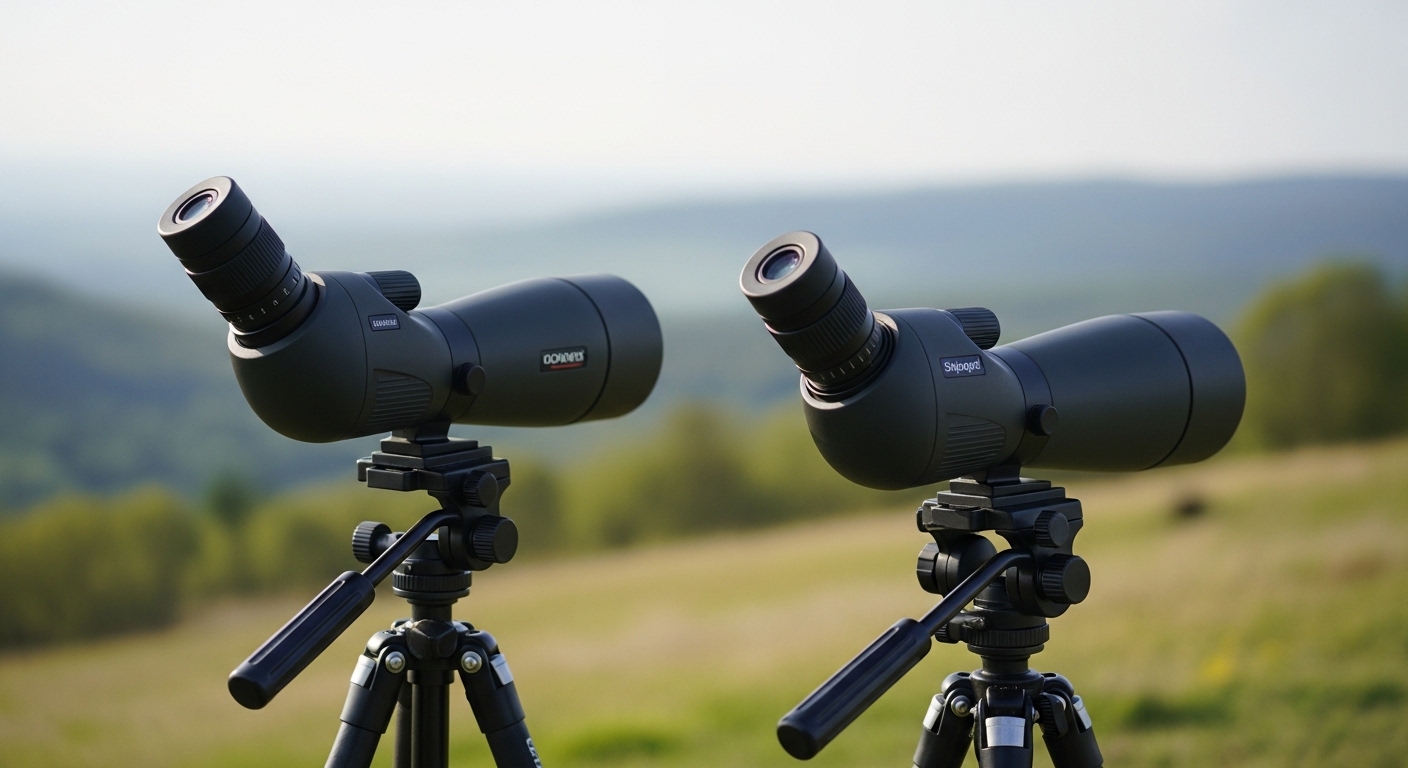
After spending 15 years glassing across the West and testing dozens of setups side by side, I’ve learned that the angled versus straight debate isn’t about which is objectively better. It’s about which configuration matches your specific needs in the field.
The angled spotting scope offers superior comfort for long viewing sessions, easier sharing between people of different heights, and better compatibility with shorter tripods. The straight spotting scope excels at faster target acquisition, works better with vehicle window mounts, and packs more efficiently in a backpack.
In 2026, most optics manufacturers price both configurations identically. For example, Swarovski’s ATX angled and STX straight modules both cost the same MSRP. This means your decision should be based entirely on how you plan to use the optic, not your budget.
| Feature | Angled Spotting Scope | Straight Spotting Scope |
|---|---|---|
| Neck Comfort | Superior | Can cause strain |
| Target Acquisition | Slower learning curve | Intuitive and fast |
| Tripod Height Needed | Shorter works | Taller required |
| Window Mount Compatible | Awkward | Excellent |
| Sharing Between Users | Easy for different heights | Requires tripod adjustment |
| Packability | Less streamlined | More compact |
| Digiscoping | Easier camera alignment | More difficult |
| Prone Shooting | Challenging | Natural positioning |
Glassing: The practice of using optics (binoculars or spotting scopes) to systematically scan terrain for wildlife, game animals, or targets. Hunters typically glass for hours at a time, making comfort a critical factor.
Angled spotting scopes position the eyepiece at a 45-degree angle from the main tube. This design has become the preferred choice for most bird watchers and many hunters who prioritize comfort during extended viewing sessions.
Straight spotting scopes align the eyepiece directly with the main barrel, creating a straight-line optical path. This traditional design appeals to hunters who value fast target acquisition and shooters who need a setup that works from prone positions.
Target Acquisition: The process of locating and centering a target in your field of view. Faster target acquisition means less time fumbling with optics and more time evaluating game or spotting bullet impacts.
The right configuration depends on your specific use case. Here’s my recommendation based on how you’ll actually use the optic in the field.
Most hunters benefit from angled scopes. The comfort advantage during long glassing sessions outweighs the slightly slower target acquisition. I’ve glassed for 8-10 hour days in elk country, and the angled design saved me from significant neck strain. However, if you primarily hunt from vehicles or do extensive road hunting, the straight scope’s window mount compatibility might be the deciding factor.
Angled scopes are the clear winner here. Birders typically glass for extended periods, frequently share optics with groups, and often engage in digiscoping. The comfort, sharing ease, and camera alignment advantages all align perfectly with bird watching needs. The slower target acquisition is rarely an issue since birds are usually stationary when spotted.
Straight scopes have the edge for target shooting. The prone position compatibility is crucial, and faster target acquisition helps spot bullet impacts quickly. When you’re trying to see impacts at 800+ yards, every second counts. Additionally, many shooting ranges have benches positioned lower, making straight eyepieces more practical.
This is a toss-up depending on your priorities. If weight is your primary concern, angled scopes let you use a shorter, lighter tripod. But if streamlined packing matters most, the straight scope’s profile packs slightly cleaner. I’ve used both on backcountry hunts and found the weight savings from a shorter tripod usually gives angled scopes the advantage.
Angled scopes win hands down for digiscoping. The eyepiece angle makes camera attachment and viewing much more comfortable. Photographers who spend hours waiting for wildlife shots appreciate the neck relief, and the ability to share the view with assistants without adjusting equipment is valuable.
Quick Decision Framework:
Neither is objectively better. Angled scopes excel at comfort and sharing, while straight scopes offer faster target acquisition and better vehicle compatibility. Choose based on your primary use case rather than looking for a universal winner.
Yes, but it’s awkward. The angled eyepiece conflicts with window mount positioning, making it uncomfortable to view from inside a vehicle. Straight scopes are significantly better for vehicle-based glassing.
Most military spotters use straight scopes for faster target acquisition and better compatibility with prone positions. However, some specialized units use angled scopes for specific applications like urban surveillance where extended viewing from elevated positions is common.
At 20x magnification, you can identify deer-sized game clearly out to 800-1000 yards. At 60x, you can resolve antler points or bullet holes on targets at 500-700 yards depending on atmospheric conditions. High magnification is limited by heat mirage and air quality.
After guiding dozens of fellow hunters through this decision and testing both configurations extensively across multiple seasons, my honest recommendation is this: if you’re buying your first serious spotting scope, go angled. The comfort advantage during long glassing sessions is something you’ll appreciate every single time you’re in the field.
But if you primarily hunt from a vehicle, spend most of your range time at the shooting bench, or value intuitive target acquisition above all else, the straight design will serve you better. The key is matching the configuration to how you actually hunt and shoot, not following internet dogma.
Both configurations deliver identical optical performance from the same manufacturer. In 2026, this debate remains active because both options have genuine merit. The “right” choice is the one that fits your specific needs in the field.