What Magnification Binoculars for Hunting (October 2026)
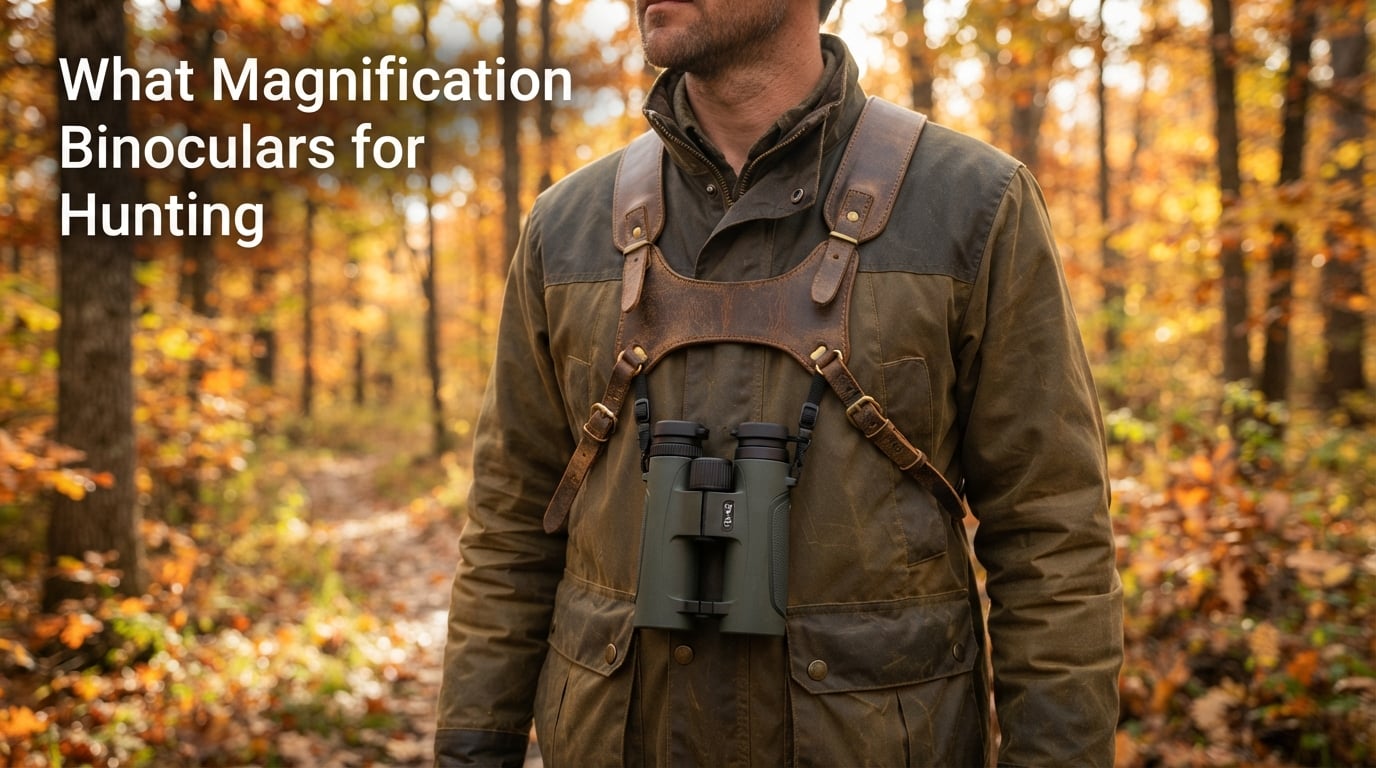
Picking the right magnification for hunting is the single most important decision you’ll make when buying binoculars. I have spent…

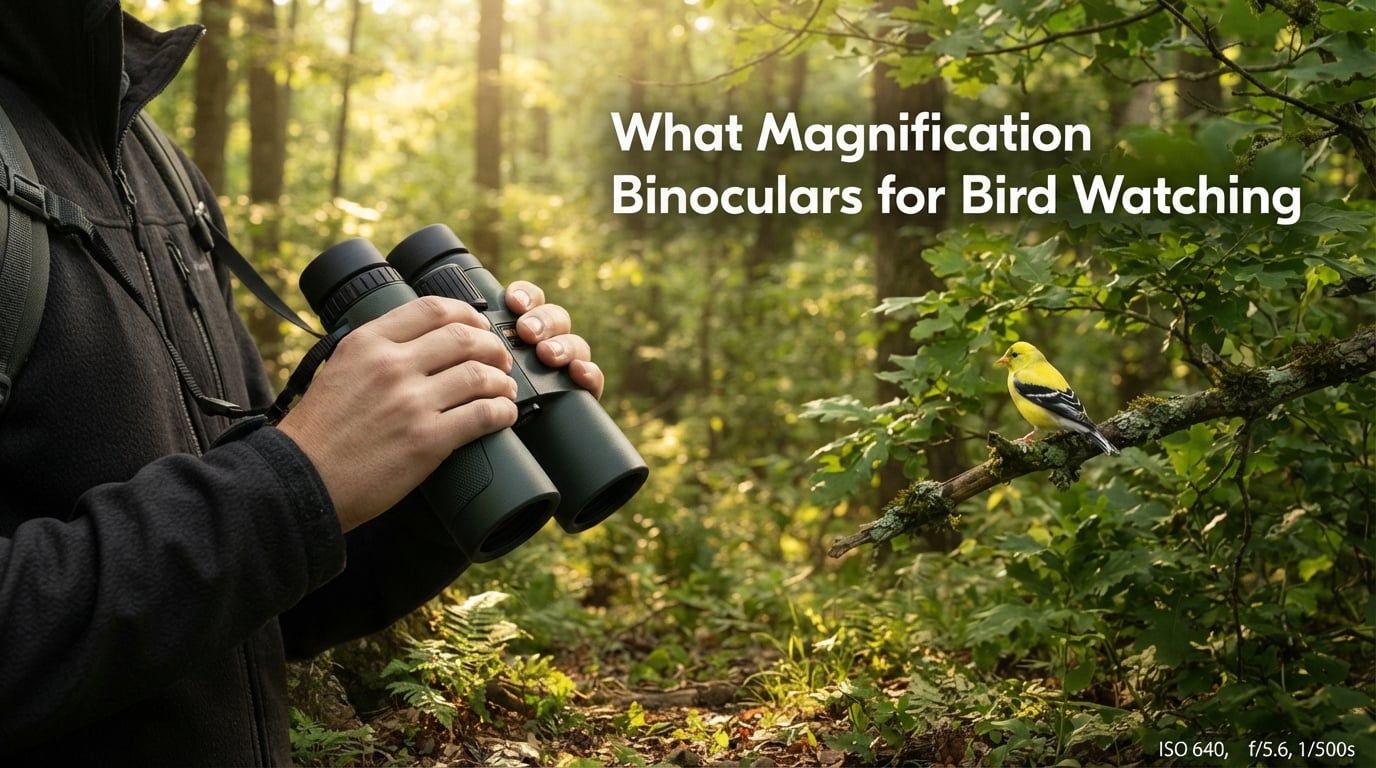
When someone asks me what magnification binoculars for bird watching they should buy, my answer almost never starts with a specific zoom number. It starts with a question: where will you bird, and how steady are your hands? After testing dozens of models over the last few years with our team, and borrowing gear from friends ranging from casual backyard feeders to licensed ornithologists, the consensus answer keeps coming back to the same place: 8×42. It’s the binocular size more birders reach for than any other, and the choice I’d hand to a beginner without hesitation.
This guide is the conversation I wish I’d had when I bought my first pair. We’ll walk through what magnification actually does, why 8x dominates the conversation, when 10x (or higher) makes sense, and how to match the spec to your habitat, your eyes, and the birds you actually want to see. If you’re also choosing your first pair from scratch, our complete guide to choosing binoculars for bird watching pairs well with this one.
Most birders should start with 8×42 binoculars. The 8x magnification brings a songbird in a tree close enough to identify without amplifying your hand-shake. The 42 mm objective lens gathers enough light for dawn, dusk, and shaded forests. Together, they deliver a bright, wide, steady view that makes finding and tracking birds easier than 10x or 12x models at the same price.
Every binocular spec follows a simple format: AxB. The first number is the magnification; the second is the diameter of the front lenses in millimeters. So 8×42 means the image appears eight times closer than with the naked eye, and the front lenses are 42 mm across.
Magnification controls how much detail you can see at distance. It also narrows your field of view and amplifies any movement in your hands. The objective lens controls how much light enters the binocular, which affects brightness and image clarity, especially in low-light conditions.
Here’s how the most common birding sizes break down:
For a full primer on every spec you might see, our how-to guide on choosing birding binoculars covers objective lens, prisms, coatings, and weather sealing in detail.
Walk into any birding festival and count the binoculars hanging from straps. Most will read 8×42 on the front. That isn’t a coincidence or a marketing campaign; it’s the result of decades of field experience distilled into a default.
Three properties make 8×42 the consensus pick:
On Reddit’s r/birding, the most-upvoted beginner advice almost always begins with “get 8×42.” Users upgrading from 10x back to 8x often describe the 8x as feeling “easier, brighter, and more relaxed.” That real-world feedback is the strongest signal in the hobby.
The single most common question in birding forums is whether to start with 8x or 10x. Both work. Both will let you watch birds. They just optimize for different priorities.
Here’s the head-to-head:
For forest birding, dense cover, songbirds in trees, and any situation where the bird moves quickly, 8x is the better tool. For open marshes, hawk watches, and long sightlines across fields, 10x pulls in more detail. The hand-shake tradeoff is real: 10x amplifies any tremor roughly 25% more than 8x, which is why older birders and beginners often find 10x frustrating.
If you only own one pair and you bird in mixed habitat, choose 8x. If you specifically hawk-watch or scan open water, 10x is worth the tradeoff. If you’re torn between the two, our monocular comparison guide shows how a single 8x monocular plus a 10x binocular can cover both worlds without doubling your kit.
The second number in AxB is the front lens diameter, and it controls how much light the binocular collects. A larger objective lens produces a brighter image, especially at dawn, dusk, and inside deep forests.
Two practical patterns emerge:
Anything beyond 42 mm (like 50 mm) adds reach and brightness but adds weight fast. For coastal scanning and shorebird identification, larger objectives shine; our coastal bird watching binocular guide goes deeper into 50 mm choices.
Field of view (FOV) is how wide an area you can see at a distance, usually measured in feet at 1,000 yards or meters at 1,000 m. Higher magnification always narrows FOV, which is one reason 8x feels more relaxed than 10x.
For birding, a wide FOV matters because:
If you spend most of your time in dense woods or thickets, prioritize FOV. Stick with 8x. If you watch raptors soaring at distance, FOV matters less and reach matters more.
Eye relief is the distance from the eyepiece to your eye where the full image is visible. If you wear glasses, this number decides whether the binocular actually works for you.
The rule is simple:
Forum threads from glasses-wearers consistently report feeling ignored by most reviews. Don’t make that mistake; eye relief is a binary spec that will quietly ruin an otherwise great binocular if it’s wrong.
Every binocular magnifies your hand-shake along with the bird. At 8x, a small tremor becomes a small wobble. At 10x, the same tremor becomes an obvious jiggle. At 12x, it becomes unusable for most people without stabilization.
This is the single most under-discussed reason 8x dominates the recommendation lists:
If you have any concerns about steadiness, whether due to age, fatigue, caffeine, or just nerves around a rare bird, choose 8x and save yourself the frustration.
The most useful decision shortcut I know is matching magnification to habitat. Here’s the framework our team uses:
If you bird primarily in one habitat, let that habitat drive your choice. If you cover several, default to 8×42 and add a second optic later.
Bird size and behavior shift the answer more than people expect. A useful rule of thumb:
If your list is mostly backyard and woodland birds, 8x wins almost every time.
You’ll see 7×35 in older gear closets and 9x in a few specialty models (Vortex and Leica have shipped mid-magnification options), but the birding world has consolidated around 8x and 10x. The reasons are mostly practical:
If you find a 7x or 9x pair you like, it will work beautifully for birding. Just don’t chase these sizes if it means sacrificing the optical quality of a standard 8×42 or 10×42.
Birding forums have a short list of regrets that show up over and over. These are the ones I tell new birders to skip:
Avoid these five and you’ll be ahead of most first-time buyers.
Children and binoculars have one specific requirement: low weight and a forgiving magnification. The sweet spot is 8×32 or a compact 8×42 that weighs under 20 ounces. 10x pairs frustrate small arms quickly, and the shake becomes unusable within minutes.
For kids, look for:
Many adult birders introduce their kids with a compact 8×32, then graduate to full-size 8×42 once the child is comfortable holding optics steady. This avoids the most common mistake: handing a 10x binocular to a child and watching the hobby die on day one.
A spotting scope is a small telescope mounted on a tripod. Compared to binoculars, scopes offer much higher magnification (15x to 60x) and much narrower fields of view, and they require a tripod or monopod to use.
Use binoculars for:
Use a spotting scope for:
Most birders own binoculars first and add a scope later. If you bird mostly on the move, binoculars alone will serve you for years.
8x is the most widely recommended magnification for bird watching, paired with a 42 mm objective lens (8×42). It balances reach, brightness, steadiness, and field of view better than 7x, 10x, or 12x for the majority of birding situations.
8x is better for forest birding, dense cover, beginners, older birders, and any situation where hand-shake matters. 10x is better for open-country birding, raptors at distance, and waterfowl on lakes or marshes where the extra reach outweighs the narrower field of view.
8×42 means the image appears 8 times closer than with the naked eye (the magnification) and the front lenses are 42 mm across (the objective lens diameter). The first number controls how much detail you can see; the second controls how much light the binocular gathers.
For most birders, yes. 12x amplifies hand-shake, narrows the field of view, and dims the image compared to 8x or 10x. Beginners who buy 12x or 16x binoculars often return them within weeks. 12x is a niche choice for stable, long-distance viewing from a fixed position.
With 8×42 binoculars, you can typically identify a songbird-sized bird at 50 to 100 yards in good light, and detect larger birds like hawks at several hundred yards. Identification depends more on light, the bird’s behavior, and the optic’s optical quality than on magnification alone.
For most birders in 2026, the right answer to what magnification binoculars for bird watching is the same answer experienced birders have been giving for decades: start with 8×42. It is bright, steady, wide, and works in nearly every habitat you’ll encounter. Add a 10x pair or a spotting scope later if your birding takes you into long-distance open country.
Pick the magnification that matches your habitat, your hands, and your glasses, and you’ll spend less time fighting your optics and more time watching the birds.