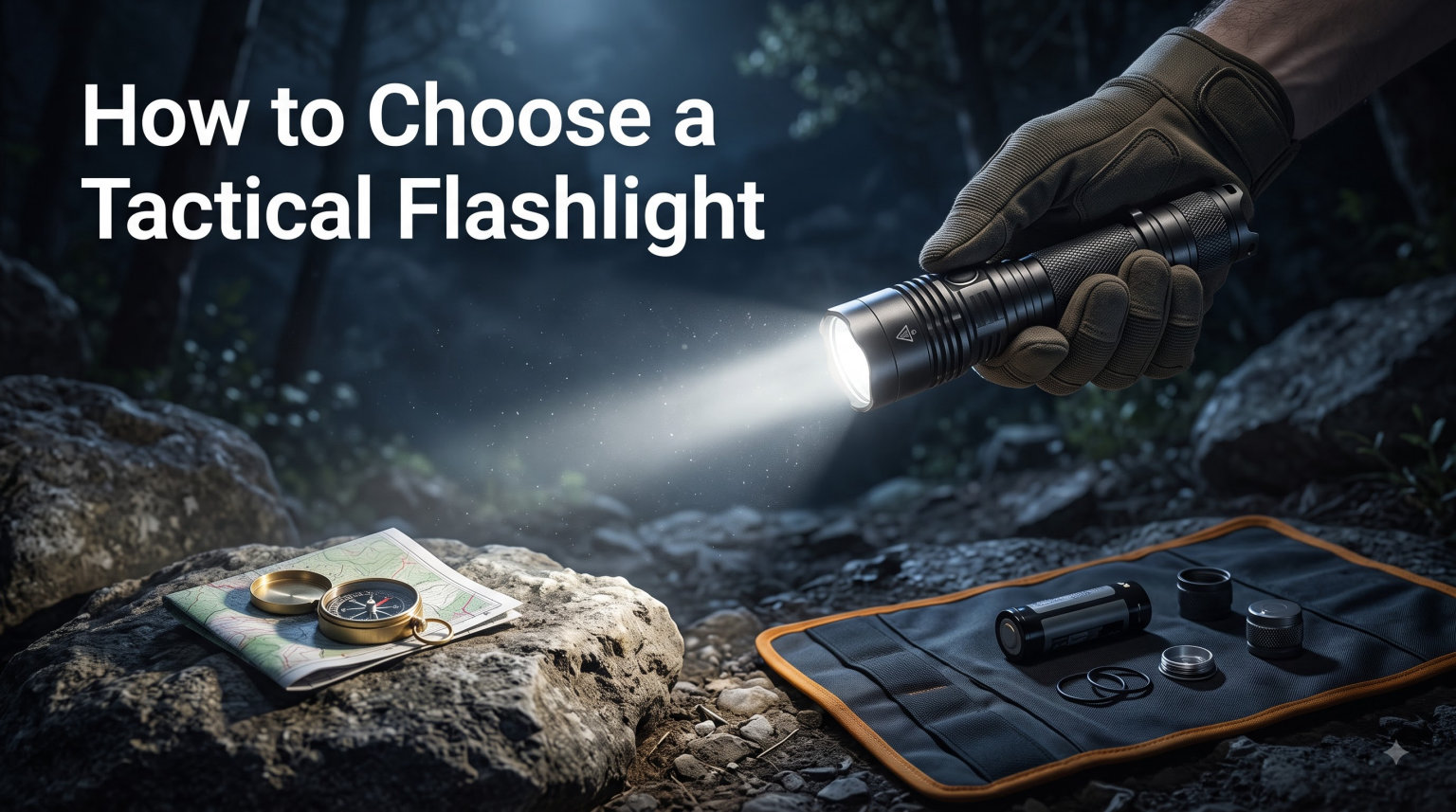
How to Choose a Tactical Flashlight: Complete 2026 September
I have spent the better part of five years testing lights on night shifts, range sessions, and backcountry trips, and…

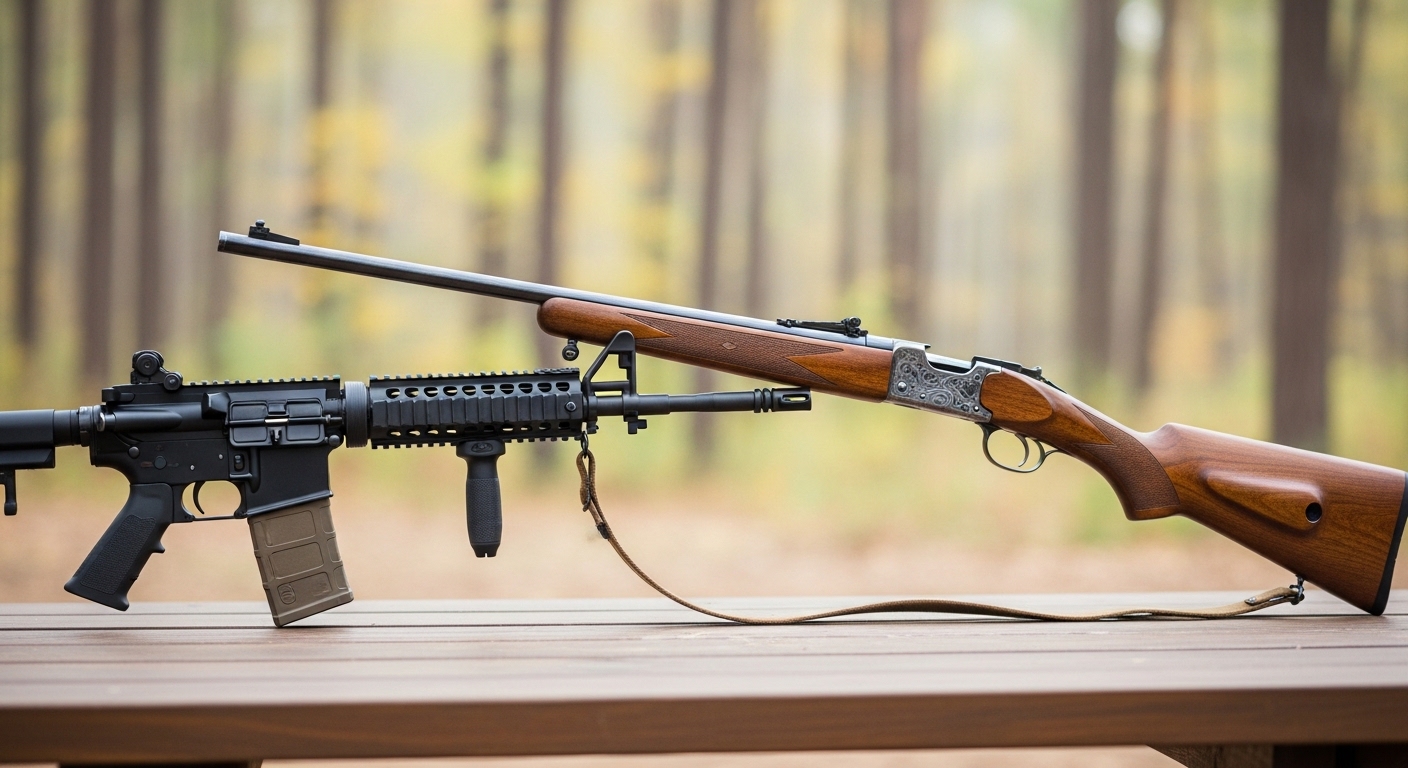
After 15 years of hunting with both platforms, I’ve learned the choice between an AR-15 and a traditional bolt-action hunting rifle isn’t about one being “better.” It’s about matching the tool to your specific needs.
The AR-15 is a lightweight, semi-automatic rifle platform that fires an intermediate cartridge, while a traditional hunting rifle typically refers to a bolt-action rifle chambered in larger calibers designed specifically for taking game animals.
The AR-15 uses a gas-operated semi-automatic action that cycles automatically with each trigger pull, while bolt-action hunting rifles require manually cycling the bolt between shots.
| Feature | AR-15 | Bolt-Action Hunting Rifle |
|---|---|---|
| Action Type | Semi-automatic | Manual bolt-action |
| Common Calibers | 5.56 NATO, .223 Remington, 6.5 Grendel, .350 Legend, .450 Bushmaster | .308 Winchester, 6.5 Creedmoor, .30-06, .270 Winchester, .300 Win Mag |
| Magazine Capacity | 10-30 rounds standard | 3-5 rounds internal magazine |
| Typical Weight | 6-9 pounds | 7-9 pounds |
| Average Cost | $500-$1,500+ | $300-$1,200+ |
| Best For | Predators, varmints, deer-sized game, multi-use | Big game, long-range, traditional hunting |
AR-15: A lightweight, magazine-fed, semi-automatic rifle platform. The “AR” stands for ArmaLite Rifle, not “assault rifle.” It was designed in the 1950s and has become one of the most popular rifle platforms in America.
The AR-15 platform uses a gas-operated system that redirects gas from the fired cartridge to cycle the action automatically. This means you can fire as fast as you can pull the trigger.
I’ve watched new shooters transition from bolt-actions to AR-15s. The learning curve is minimal. The platform is intuitive, ergonomic, and stays on target more easily during rapid fire.
The modular design lets you change barrels, handguards, stocks, and triggers with basic tools. One lower receiver can support multiple upper receivers in different calibers.
Bolt-Action Rifle: A manually operated firearm where the bolt is opened and closed by hand to eject a spent cartridge and chamber a new round. This design has been the standard for hunting rifles for over 130 years.
The bolt-action is simple and proven. You lift the bolt handle, pull it back, push it forward, and rotate it down. That manual operation gives you complete control over each shot.
I’ve taken deer, elk, and pronghorn with bolt-actions. There’s something satisfying about the simplicity. Fewer moving parts mean fewer things can go wrong in the field.
Bolt-actions are available in a wider range of calibers. From the mild .243 Winchester to the powerful .300 Winchester Magnum, you can match your cartridge exactly to your game.
Quick Summary: AR-15s excel at follow-up shots, predator hunting, and versatility. The semi-automatic action and higher capacity make them ideal for situations where you might need multiple shots quickly.
The semi-automatic action is the AR-15’s biggest advantage. A missed shot doesn’t mean a lost animal.
I’ve seen it happen. A coyote appears at 200 yards, you miss, and before it can duck into cover, you have a second shot available. That simply doesn’t happen with a bolt-action.
Most bolt-actions hold 4-5 rounds. AR-15 magazines typically hold 20-30 rounds.
Does a hunter need 30 rounds for deer? Probably not. But for hog hunting, where sounders of 10-20 animals appear, having 20+ rounds available matters.
The AR-15 is like Lego for adults. You can configure it exactly how you want.
I’ve built AR-15s specifically for hunting. Different barrels for different game. Adjustable stocks to fit different hunters. Triggers tuned for precise shots.
Standard 5.56 NATO produces minimal recoil compared to big-game hunting cartridges.
This makes the AR-15 ideal for new hunters, youth hunters, or anyone sensitive to recoil. More practice means better shooting when it counts.
The same rifle used for hunting can serve home defense, target shooting, and competition.
Not everyone wants multiple firearms. The AR-15 platform does everything reasonably well.
Standard AR-15 calibers like 5.56 NATO and .223 Remington are light for big game.
States like Colorado have minimum energy requirements that effectively ban 5.56 for elk and moose. You need larger calibers for ethical harvesting of big game.
AR-15s aren’t necessarily lighter than bolt-actions, but they feel different.
The weight distribution is more rearward due to the buffer system. Some hunters find this affects balance during long carries in the field.
Some states restrict magazine capacity for hunting. Others prohibit semi-automatic rifles entirely for certain game species.
Always check your local regulations. Pennsylvania, for example, permits semi-automatic rifles for deer hunting with restrictions.
Some hunters view AR-15s as “tactical” rather than “hunting” firearms.
This perception is changing, especially with new hunting-oriented calibers like .350 Legend. But traditional hunting camps may still frown upon black rifles.
Quality AR-15s typically cost more than entry-level bolt-actions.
You can find a serviceable bolt-action deer rifle for $300-400. A reliable AR-15 platform usually starts around $500-600 and climbs quickly.
Quick Summary: Bolt-actions offer power, precision, and reliability. They’re the traditional choice for big game hunting and excel at long-range accuracy.
Bolt-actions are available in calibers the AR-15 platform simply can’t handle.
Want to hunt elk? A .300 Winchester Magnum bolt-action delivers 3,500 foot-pounds of energy at the muzzle. That’s three times what a 5.56 produces.
The bolt-action design is inherently more accurate than semi-automatics.
With fewer moving parts and a locked breech, bolt-actions typically shoot tighter groups. This matters for long-range shots on wary game.
Bolt-actions almost never jam. There’s simply less to go wrong.
I’ve carried bolt-actions through rain, snow, and mud. They keep firing when semi-automatics might fail from fouling or debris.
Less complex means easier to clean and maintain.
A bolt-action can be field-stripped in seconds. The AR-15 requires more attention to keep running reliably, especially after heavy use.
Bolt-actions are universally accepted as “hunting rifles.”
You won’t face questions or judgment from other hunters. The traditional wood-stocked bolt-action is part of American hunting heritage.
Basic bolt-actions offer tremendous value for budget-conscious hunters.
Rifles like the Ruger American or Savage Axis deliver genuine hunting capability for under $400. That’s hard to beat for a first hunting rifle.
The manual action takes time to operate.
If you miss or need a second shot on a wounded animal, you’re cycling the bolt manually. That can cost you the opportunity.
Most bolt-actions hold 4-5 rounds.
For typical hunting scenarios, this is sufficient. But for predator hunting or pest control, you may find yourself reloading at inconvenient times.
Traditional bolt-actions are designed primarily for hunting.
They’re less ideal for home defense, competition, or general target shooting. You may need multiple firearms for different purposes.
Some bolt-actions, especially those with heavy barrels for accuracy, can be burdensome on long hunts.
Mountain hunters often pay premiums for lightweight bolt-actions. Weight matters when you’re climbing ridges all day.
| Game Type | Best AR-15 Calibers | Best Bolt-Action Calibers |
|---|---|---|
| Varmints (Prairie Dogs, Groundhogs) | .223 Remington, 5.56 NATO | .223 Remington, .22-250, .204 Ruger |
| Predators (Coyotes, Bobcats) | .223 Remington, 6.5 Grendel | .223 Remington, .243 Winchester, 6.5 Creedmoor |
| Small Game (Fox, Small Deer) | 6.5 Grendel, .350 Legend | .243 Winchester, .270 Winchester |
| Medium Game (Deer, Antelope, Black Bear) | .350 Legend, .450 Bushmaster, 6.8 SPC | .308 Winchester, .270 Winchester, 6.5 Creedmoor, .30-06 |
| Big Game (Elk, Moose, Brown Bear) | Not recommended (use AR-10) | .300 Win Mag, .338 Win Mag, 7mm Rem Mag |
| Hogs | .450 Bushmaster, 6.8 SPC, .300 Blackout | .308 Winchester, .30-06, .450 Bushmaster |
The AR-10 is a larger-frame version of the AR-15 platform that shoots .308 Winchester and similar cartridges. It combines the semi-automatic action and ergonomics of the AR-15 with the power of traditional big-game calibers.
If you want AR-15 features but hunt elk, moose, or bear, the AR-10 is worth considering. You lose some of the light-weight feel but gain serious hunting capability.
The right choice depends on your specific situation. Here’s what I recommend based on common scenarios:
No. The AR-15’s standard 5.56 NATO cartridge produces approximately 1,300 foot-pounds of energy at the muzzle. Most big-game hunting calibers like .308 Winchester (2,600 ft-lbs), 6.5 Creedmoor (2,300 ft-lbs), or .300 Win Mag (3,500 ft-lbs) deliver significantly more power. However, AR-15s are available in hunting calibers like .450 Bushmaster that bridge this gap for deer-sized game.
Yes, absolutely. AR-15s are legal and effective for hunting many types of game. They work excellently for predators (coyotes, bobcats), varmints (prairie dogs, groundhogs), feral hogs, and deer when chambered in appropriate hunting calibers like .350 Legend, 6.5 Grendel, or .450 Bushmaster. Always verify your state’s specific regulations before hunting.
The main differences are: (1) Action type – ARs are semi-automatic while traditional hunting rifles are typically bolt-action; (2) Caliber options – AR-15s use intermediate cartridges while bolt-actions offer a wider range including magnum calibers; (3) Magazine capacity – ARs typically hold 20-30 rounds vs 4-5 for bolt-actions; (4) Customization – ARs are highly modular while bolt-actions are simpler designs; (5) Typical use – ARs serve multiple purposes while bolt-actions are primarily hunting tools.
Some hunters prefer bolt-actions for tradition, legal restrictions in certain states limit semi-auto use for hunting, caliber limitations make standard AR-15s less suitable for big game, the weight distribution feels different during long carries, some hunters view semi-automatics as less sporting, and entry-level bolt-actions typically cost less than reliable AR-15s. However, AR-15 hunting is becoming increasingly popular, especially with new hunting-specific calibers.
It depends on bullet selection and shot placement. Many hunters successfully take deer with .223 Remington/5.56 NATO using premium bonded bullets like the Nosler Partition or Barnes TSX. However, some states have minimum caliber or energy requirements that effectively prohibit 5.56 for deer. For ethical hunting, limit shots to reasonable ranges (under 150 yards) and only take broadside or quartering-away shots. Many hunters prefer larger AR-15 calibers like .350 Legend or 6.8 SPC for deer hunting.
After hundreds of days in the field with both platforms, I’ve come to a simple conclusion: buy both if you can afford it.
There’s no single perfect hunting rifle. The AR-15 excels in certain situations. The bolt-action dominates in others.
My advice to new hunters? Start with a bolt-action in a versatile caliber like .308 Winchester or 6.5 Creedmoor. Learn the fundamentals. Master the art of accurate shot placement.
Then, if you find yourself drawn to predator hunting, hog hunting, or want a dual-use rifle for home defense, add an AR-15 to your collection.
The best hunting rifle is the one you shoot well, carry confidently, and use ethically. Everything else is just details.