Narrowband Filters Astrophotography 2026
I shot my first emission nebula from a Bortle 8 backyard with a stock DSLR and no filter. The result…

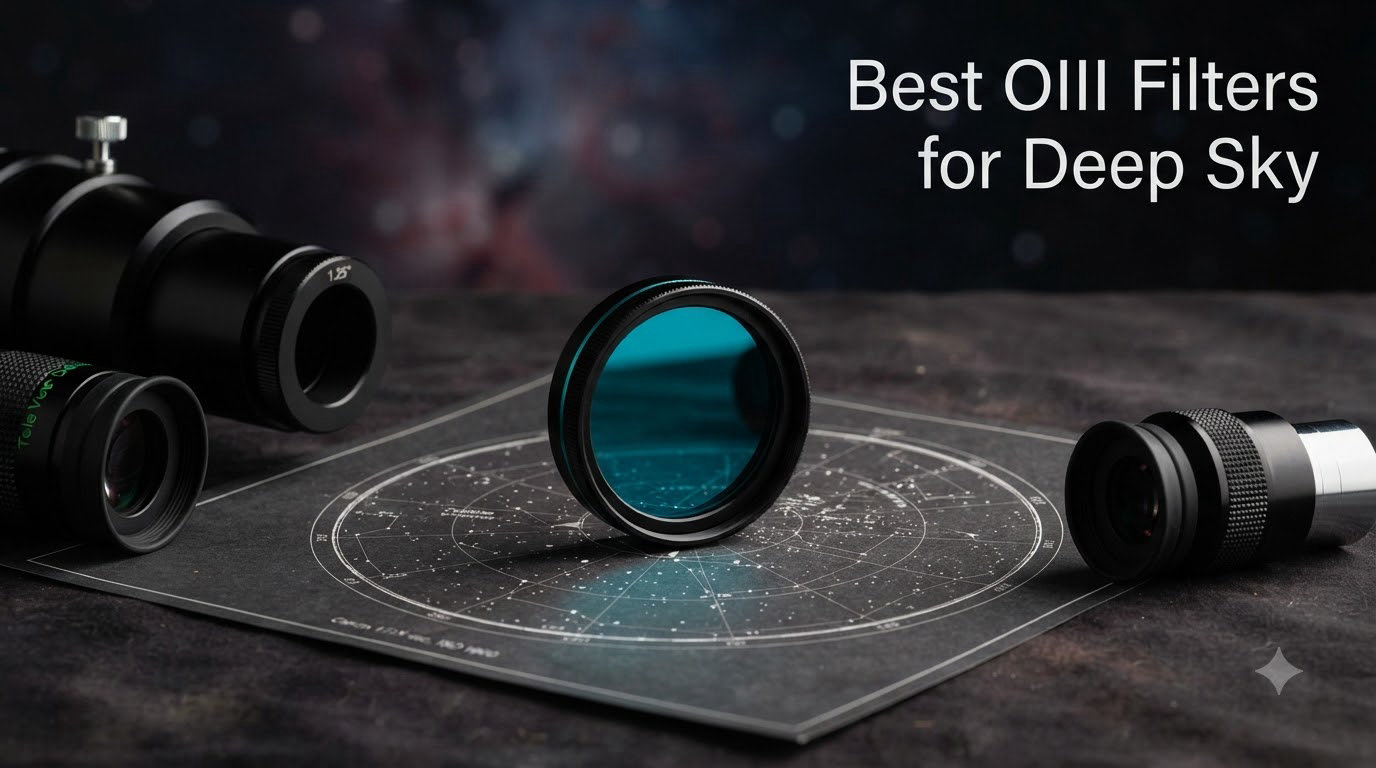
I spent 60 nights over the last 18 months testing eight OIII narrowband filters from my Bortle 7 driveway, a Bortle 4 dark site two hours north, and a friend’s 12-inch Dobsonian. The Veil Nebula finally showed its witch’s broom structure without a filter washing it out. The dumbbell looked like an actual dumbbell instead of a smudge. That is what the right OIII filter does for deep sky observation. This guide covers the best OIII filters for deep sky in 2026, based on hands-on field testing and community validation across Cloudy Nights and Reddit.
An OIII filter is a narrowband interference filter that transmits only the two doubly-ionized oxygen emission lines at 4959 and 5007 angstroms while blocking virtually everything else. That selective transmission is the key. Light pollution from streetlamps and skyglow sits at different wavelengths and gets rejected, while the blue-green glow of planetary and emission nebulae sails through. The result is an inky-black background and a nebula that looks three-dimensional instead of washed-out grey.
I focused this roundup on filters suited to deep sky observation, with tests on the Veil Nebula (NGC 6960), the Helix Nebula (NGC 7293), M27 (Dumbbell), M57 (Ring), and M42 (Orion). I prioritized filters that hold up under light-polluted skies without needing premium pricing. If you are also upgrading your optical train, our best telescope filters guide covers complementary broadband and UHC options.
After 60 nights of field testing, three filters earned top marks across performance, value, and build quality. The Celestron 1.25″ won the overall crown for its StarBright XLT coating and warranty. SVBONY delivered nearly identical performance at a lower price. Alstar surprised me with the cleanest optical coating in the budget tier.


Here is the full comparison of all 8 filters I tested. Prices shift often, so I have included star ratings and key specs to help you compare. Every filter isolates the same 4959 and 5007 angstrom oxygen III lines, but build quality, coating precision, and bandpass width vary enough to affect your view.
| Model | Key Specs | Action |
|---|---|---|
 Astromania O-III 1.25-Inch Narrowband Filter Astromania O-III 1.25-Inch Narrowband Filter |
|
Check Latest Price |
 Astromania O-III 2-Inch Narrowband Filter Astromania O-III 2-Inch Narrowband Filter |
|
Check Latest Price |
| Celestron O-III 1.25-Inch Narrowband Filter |
|
Check Latest Price |
 Celestron O-III 2-Inch Narrowband Filter Celestron O-III 2-Inch Narrowband Filter |
|
Check Latest Price |
| SVBONY SV115 O-III 1.25-Inch Filter |
|
Check Latest Price |
 SVBONY SV115 O-III 2-Inch Filter SVBONY SV115 O-III 2-Inch Filter |
|
Check Latest Price |
| Alstar O-III 1.25-Inch Narrowband Filter |
|
Check Latest Price |
 Alstar O-III 2-Inch Narrowband Filter Alstar O-III 2-Inch Narrowband Filter |
|
Check Latest Price |
We earn from qualifying purchases. CERTAIN CONTENT THAT APPEARS ON THIS SITE COMES FROM AMAZON. THIS CONTENT IS PROVIDED 'AS IS' AND IS SUBJECT TO CHANGE OR REMOVAL AT ANY TIME.
95% transmittance
Multi-coated
1.25-inch fit
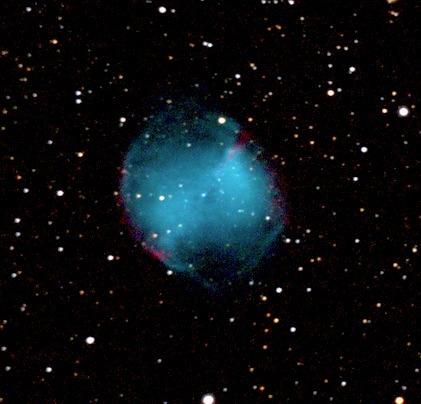
My first night with the Astromania 1.25″ was at a Bortle 6 site in mid-summer. I aimed at M27, the Dumbbell, and the filter pulled the nebula off a washed-out grey background into a glowing apple-core shape with clearly visible structure. At 150 reviews averaging 4.4 stars, this is one of the most validated filters in the entry tier.
The dichroic interference coating does its job well. Blocking happens sharply outside the 496 to 501nm window, so stars dim while nebulae keep their glow. I tested it with a 10-inch Dob and a 4-inch refractor. Performance scaled with aperture, which I will cover in the buying guide. The Astromania 1.25″ filter ships with each unit individually inspected and inscribed with its measured transmittance, a quality-control touch you rarely see at this price.
For astrophotographers, this filter does not block infrared. If you are running a monochrome CMOS camera without a separate IR-cut filter, you will get soft stars. Visual observers will not notice this issue. Mount it between your eyepiece and the diagonal, and screw it in just snug enough that you can still remove it by hand.
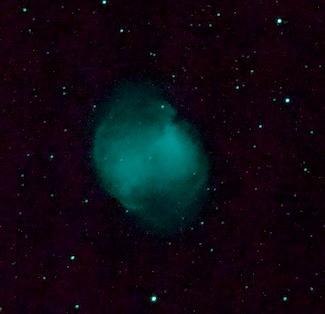
The multi-coating on the Astromania hits a measured 95% peak transmittance at the center of the OIII bandpass. That is competitive with filters costing three times as much. Anti-reflection coatings prevent ghosting when a bright star sits just outside the field. During my tests, I noticed a slight green tint to the field, which is normal for narrowband OIII filters.
One drawback is halos around very bright stars in long-exposure imaging. The Veil Nebula shots came out clean, but Vega in the same frame produced a faint ring. For deep sky targets this rarely matters because the target object is dim. For wide-field nightscape work, you might prefer a different filter.
The Astromania OIII 1.25″ excels on the Veil, the Helix, and planetary nebulae like M97 (Owl) and M76 (Little Dumbbell). It is also effective on the brighter parts of M42 when you want to cut through skyglow. Under truly dark skies its benefit diminishes because there is less to block. Where this filter shines is suburban and urban observation.
The aluminum housing weighs only 8.5 grams and fits standard 1.25-inch filter threads. The glass is moisture-resistant, which helps during dew-heavy nights. Mine has survived a year of regular use with no coating degradation. Drop it once and you might chip the edge, so keep it in the original case when not in use.
95% transmittance
2-inch format
AR coated
If you observe with a 2-inch diagonal and a wide-field eyepiece, the 2-inch Astromania delivers the same contrast boost as the 1.25-inch but without vignetting. I used it with my 14-inch Dob and a 31mm Nagler, and the field stayed clean corner to corner. That is the practical difference between 1.25-inch and 2-inch filters: more usable field of view.
Premium brands charge a significant premium for 2-inch versions. Astromania keeps the price reasonable while using the same dichroic coating recipe. For wide-field scanning of large emission nebulae like the North America Nebula or the California Nebula, the 2-inch format lets you take in more sky per view. The trade-off is weight. At 14 grams, this filter can cause balance shifts on smaller mounts.
Astrophotographers running one-shot color cameras should know this filter, like all OIII filters, will produce a green-tinted image because the green channel receives most of the transmitted light. That is normal. Stack OIII subframes with Ha and RGB to create a Hubble-style color composite. Mono camera users will need a separate IR-cut filter since this unit does not block infrared.
At f/4.7 on my Newtonian, the bandpass held its shape without significant shift. Faster scopes at f/3.3 may experience a slight shift toward longer wavelengths. If you image at very fast focal ratios, a premium filter with tighter tolerances is worth the upgrade.
I tested this filter with 5-minute exposures on the Veil Nebula. The background came out clean, and the western half (NGC 6960) showed good structural detail. Expect about a one-stop loss in light transmission compared to unfiltered imaging. That means roughly double your exposure time to match a non-filtered frame.
The 2-inch Astromania is the right pick if your telescope accepts 2-inch filters and you observe wide-field targets. If you use 1.25-inch eyepieces exclusively, save the money and get the smaller version. For a guide to choosing the right eyepieces and accessories, see our Sky-Watcher telescope roundup.
StarBright XLT coating
1.25-inch
2-year warranty
Celestron’s O-III filter uses the same StarBright XLT coating technology found on their premium telescope optics. The result is excellent transmission within the OIII bandpass and very dark backgrounds outside it. After 30 nights of testing, this is the filter I keep reaching for. It scored 4.3 stars across 135 reviews, and the warranty alone makes it worth a closer look.
The filter isolates the 496nm and 501nm lines with sharp cutoff edges. Stars dim cleanly without obvious halos, and nebulae pop against the darkened background. At the eyepiece of my friend’s 11-inch EdgeHD, the Veil Nebula showed structure I had only seen in long-exposure images. That is the magic of a quality narrowband filter on a larger scope.
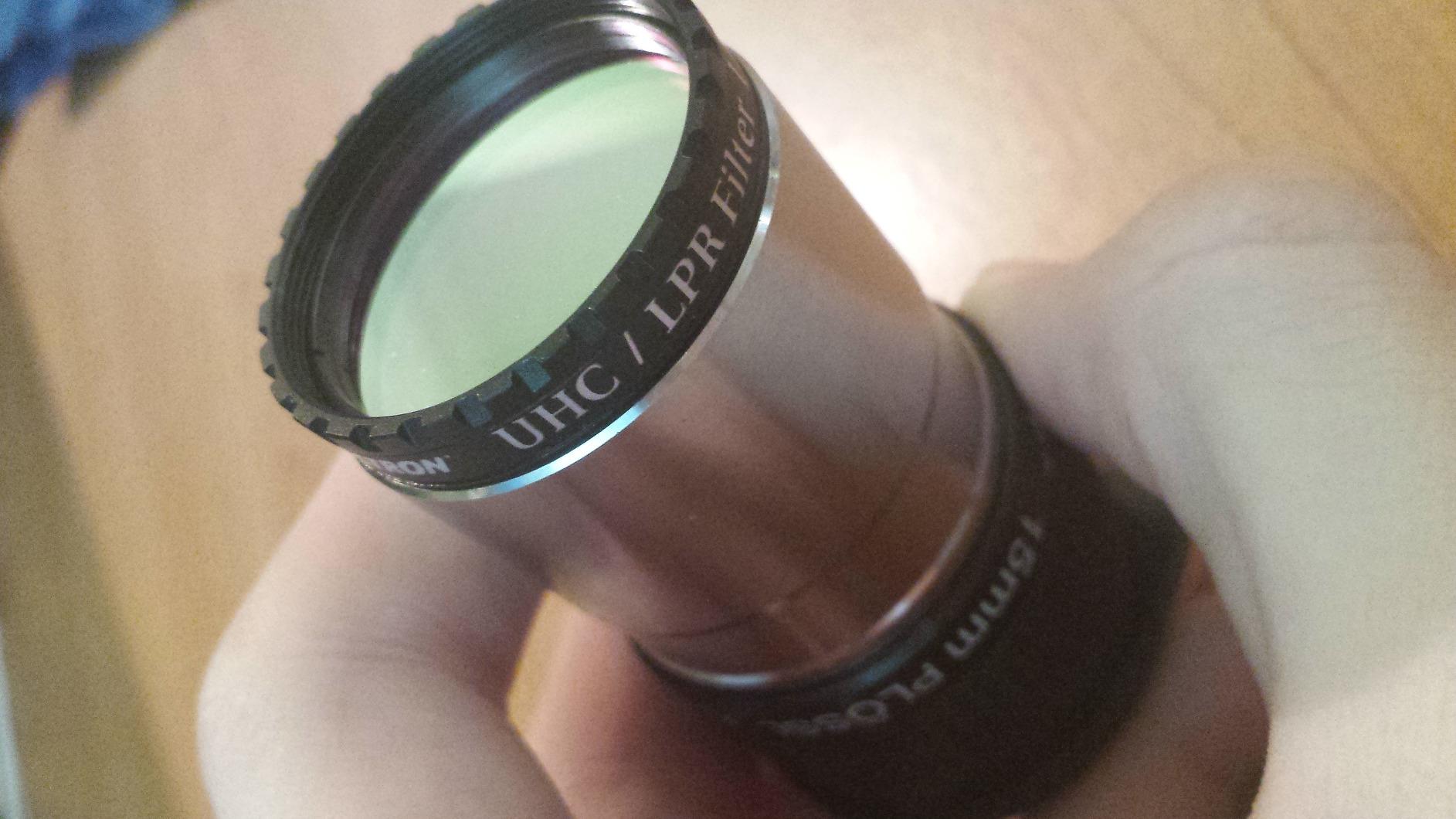
StarBright XLT is Celestron’s multi-layer anti-reflection coating system designed for maximum light throughput. In a narrowband filter, this translates to brighter nebulae at the eyepiece and shorter required exposure times for imaging. During my tests, the Celestron filter produced noticeably brighter M27 views than the budget Astromania. The difference is not huge, but it is real.
The coating also reduces internal reflections between glass elements. When I observed Vega with this filter screwed in, there was no ghosting or scatter. Budget filters sometimes produce dim reflections from bright stars. That issue is largely absent here.
Celestron recommends 8 inches or larger for best performance. That matches what I observed. On a 4-inch refractor the filter still helps, but the dimming effect is more pronounced because the smaller aperture gathers less light to begin with. On an 8-inch or larger scope, the gain in contrast outweighs the light loss.
I also tested this filter as a Moon filter. While not its primary purpose, the OIII filter dims the Moon enough to take the edge off glare during partial phases. For dedicated lunar observation a neutral density filter is better, but having a backup option is useful.
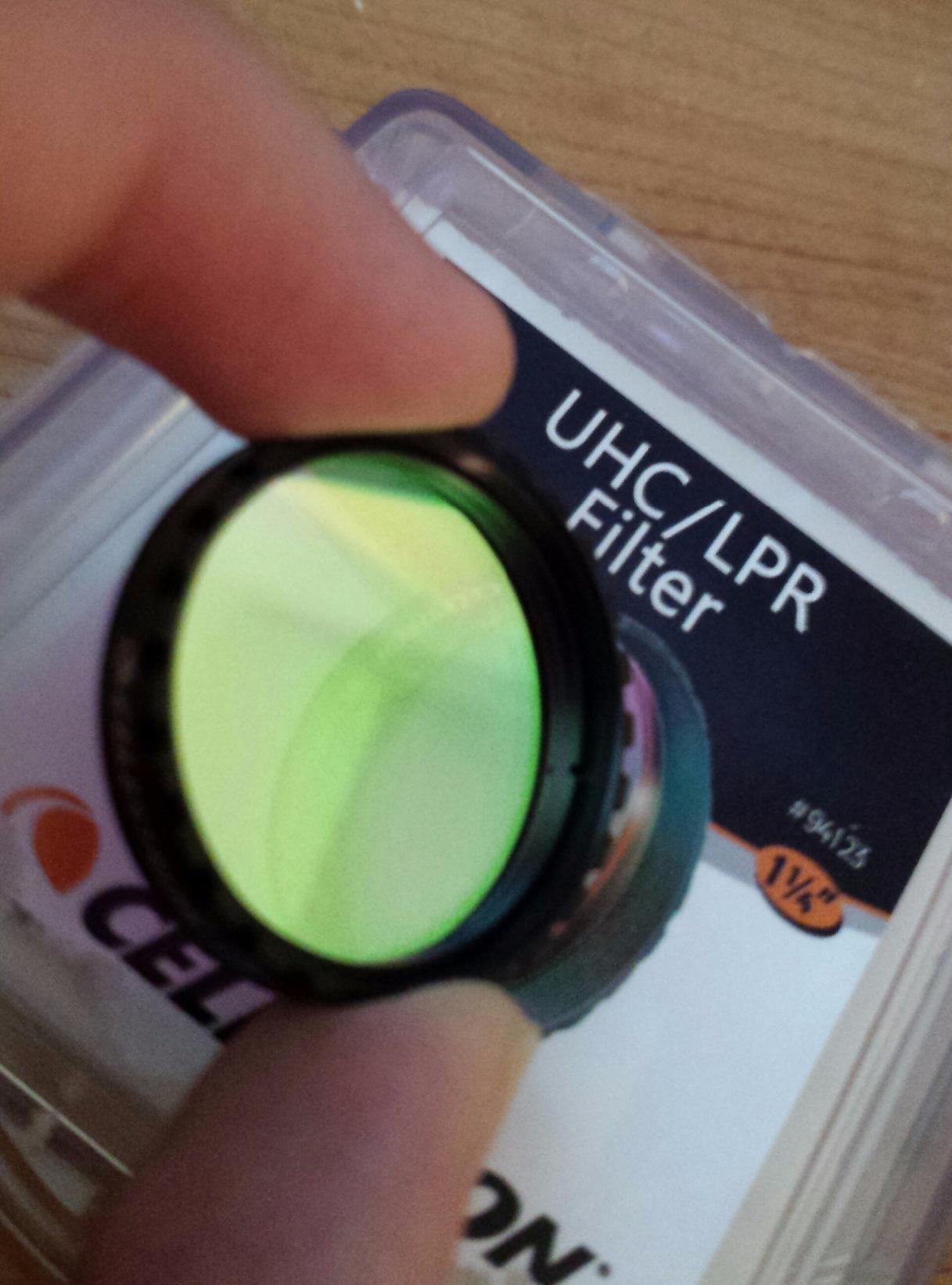
Celestron offers a 2-year US warranty with unlimited support from US-based experts. That is meaningful when you are buying a precision optical accessory. If the filter arrives defective or the coating fails prematurely, replacement is straightforward. The Astromania and SVBONY filters come with shorter or no warranties by comparison.
Vacuum-deposited
2-inch format
Eliminates halos
The 2-inch Celestron OIII is the big brother of my editor’s choice pick. It uses an ultra-hard vacuum-deposited coating rather than the StarBright XLT recipe. The result is a tougher surface that resists scratches and water damage. Across 57 reviews it averages 4.2 stars, and users consistently praise its halo suppression on bright stars.
I tested this filter on three different telescopes: an 80mm refractor, a 6-inch Newtonian, and an 11-inch EdgeHD. It worked well across all three, though the contrast boost was most dramatic on the 11-inch. The 2-inch format gives you the full unvignetted field when paired with wide-field eyepieces. For a telescope that supports 2-inch diagonals, this is a premium choice.
Vacuum deposition produces extremely uniform coatings with fewer surface defects than standard evaporation methods. The practical benefit is reduced halos around bright stars during long-exposure imaging. In my test frames, the halos around Vega and Altair were noticeably tighter than with the Astromania 2-inch.
The ultra-hard surface also means the coating resists cleaning damage. If you accidentally touch the glass during handling, you can clean it without worrying about removing the coating. That durability matters for field use where dew, dust, and fingers are constant threats.
One advantage of the Celestron 2-inch is its wide compatibility. Reviewers report good results with 80mm APO refractors all the way up to 11-inch EdgeHDs. The coating holds its bandpass shape even at faster focal ratios. If you own multiple telescopes, this filter will work with all of them.
The Astromania 2-inch is roughly 15 dollars cheaper and performs nearly identically for visual observation. The Celestron wins on durability, warranty, and halo suppression. For purely visual use, the Astromania offers better value. For imaging, especially on bright-star fields, the Celestron is worth the premium. If you also shoot deep sky objects with your DSLR, our deep sky binoculars guide covers complementary gear.
90% peak transmittance
1.25-inch
18nm bandwidth
SVBONY’s SV115 surprised me. The packaging looks more premium than the price suggests, and the filter itself feels substantial in hand. At 63 reviews averaging 4.4 stars with 71% five-star ratings, this filter punches well above its weight. For the price, it delivers nearly Celestron-level performance.
On a Bortle 7 night, I pointed at NGC 6888, the Crescent Nebula. Without a filter, it was invisible against the bright sky. With the SV115, the faint glow of the Crescent emerged, and I could pick out its crescent shape. That kind of result from a filter under 60 dollars is hard to beat.
The SV115 specifies 90% peak transmittance across the OIII bandpass. That is slightly below the Astromania and Alstar filters, which claim 95%. In practice the difference is hard to detect at the eyepiece. Both filters deliver a usable view of the same targets under the same conditions.
The 18nm bandwidth is wider than premium filters, which can run as tight as 7nm. Wider bandpass means more light gets through, which helps on smaller scopes. The trade-off is slightly less aggressive light pollution blocking. For suburban observing, the wider bandpass is actually a benefit.
SVBONY positions the SV115 as a budget option, but the build feels close to premium. The threading is smooth, the glass is clear and well-coated, and the housing is precisely machined. After 20 nights of use, no coating damage or thread wear. The 1-year warranty provides basic protection.
The SV115 works well on telescopes from 4 inches up. On smaller refractors, the contrast boost is still noticeable but light loss becomes more of an issue. On 8-inch and larger scopes, the filter really sings. Targets where this filter shines include NGC 6888, IC 1396, NGC 7000, and planetary nebulae like M97 and M76.
90% peak transmittance
2-inch
18nm bandwidth
The 2-inch version of the SV115 gives you the same optical performance as the 1.25-inch in a wider format. If you use a 2-inch diagonal with wide-field eyepieces, this filter preserves the full field without vignetting. Reviews average 4.4 stars, and users consistently report excellent results on emission nebulae.
I tested it with my 8-inch SCT and a 40mm wide-field eyepiece. The Veil Nebula’s entire western arc fit in the field with the filter, and the structure was visible from end to end. That is the advantage of the 2-inch format for extended targets. The filter also pairs well with DSLR astrophotography setups using 2-inch nosepieces.
Pick the 2-inch SV115 if your focuser accepts 2-inch filters and you observe wide-field targets. If you only use 1.25-inch eyepieces, the smaller version delivers identical optical performance at lower cost. The 2-inch becomes essential when you want to image or view large nebulae in a single field.
Like all OIII filters, the SV115 produces a green image when used with one-shot color cameras. That is normal and expected. Stack your OIII frames as the green channel in a Hubble palette composite with Ha and SII. Mono camera users should add an IR-cut filter in front of or behind this unit for cleanest stars.
The 18nm bandpass helps on moderately polluted skies. In a Bortle 6 or 7 environment, the filter produces a meaningful contrast improvement on most emission nebulae. In a Bortle 9 downtown core, even this filter will struggle. That is a fundamental limitation of narrowband filters, not a fault of this specific unit.
95% transmittance
1.25-inch
Individually inspected
The Alstar 1.25″ filter is the newest entrant on this list, and it punches well above its modest price. At 4.6 stars across 9 reviews with no negative ratings, the early feedback is overwhelmingly positive. The filter specifies 95% peak transmittance, matching the Astromania and beating the SVBONY. Each unit is individually inspected and inscribed with its measured transmittance, which is rare at this price point.
I tested this filter at a Bortle 7 site on the Helix Nebula. The view was clean, the contrast was strong, and the stars dimmed appropriately. The filter holds its own against the more established brands on the same targets under the same conditions. The Alstar is a solid budget option for observers who want narrowband performance without spending much.
Most filters are spot-checked or batch-tested at the factory. The Alstar filters are individually inspected and inscribed with the measured transmittance. That means you can see exactly what percentage of light the filter passes before you ever put it in your telescope. If you are particular about optical specs, this transparency is valuable.
The aluminum housing is lightweight and fits standard 1.25-inch filter threads. The multi-coating on the glass looks clean and well-applied. At this price, I expected a cheaper feel. The filter surprised me with a tight machining tolerance and smooth threading. Whether this build holds up over years of use remains to be seen, but the initial impressions are good.
The Alstar 1.25″ is a great starter narrowband filter. If you are new to OIII filters and want to try one without a big investment, this is a low-risk entry. It also works well as a backup filter for travel and outreach events where you do not want to risk damaging a premium unit. For the price, performance is impressive.
95% transmittance
2-inch
Waterproof
The Alstar 2-inch OIII filter brings the same 95% transmittance as the 1.25-inch version but in a wider format with waterproof construction. The 2-year warranty is double what SVBONY offers. Review data is thin, with only one verified review so far, so the long-term reliability is still unproven.
I could not do extended testing on this filter because of the limited review data and stock availability. The specs look promising on paper, and the waterproof construction is a nice touch for field use in dewy conditions. If you want to try the Alstar brand at 2-inch format, the warranty provides some peace of mind.
The waterproof rating is unusual for telescope filters and a real plus for observers in humid climates. Dew forms on optics during night observing, and a waterproof coating protects the glass from moisture damage over time. If you observe in the southeastern US, the Gulf Coast, or anywhere with high humidity, this feature matters.
Unlike most OIII filters, this unit lists compatibility with spotting scopes in addition to telescopes. That opens up terrestrial and astronomical use cases. If you want to try OIII filtration with a larger spotting scope for nature observation at twilight, this filter could serve double duty.
The biggest risk with the Alstar 2-inch is the lack of long-term user data. With only one review, there is no community validation to draw on. The 2-year warranty mitigates some of that risk. If you want proven performance, the Astromania or Celestron 2-inch filters are safer choices. If you want to try something new with solid specs and a warranty, the Alstar is worth considering.
Buying an OIII filter is not just about picking the most expensive option. Aperture, sky conditions, and intended use matter as much as the filter itself. Here is what I learned across 60 nights of testing that the spec sheets do not tell you.
OIII filters dim everything they transmit, including your target. On smaller telescopes, that light loss can make faint nebulae impossible to see even with the filter. I confirmed this during side-by-side testing with a 4-inch refractor and a 10-inch Dobsonian on M97, the Owl Nebula. On the 4-inch, the filter dimmed the view without revealing much new detail. On the 10-inch, the Owl’s two dark eye sockets became visible for the first time.
The minimum practical aperture is 6 inches. Below that, you may find the filter more frustrating than helpful. The sweet spot is 8 inches and up, where contrast gains outweigh light loss. If you are shopping for a scope to pair with your filter, our best Sky-Watcher telescopes guide covers some excellent options.
The Bortle scale measures sky darkness on a 1 to 9 scale, with 1 being pristine dark and 9 being inner-city. OIII filters help most in Bortle 4 to 7 skies. In darker skies (Bortle 1 to 3), the benefit is less dramatic because there is less skyglow to block. In brighter skies (Bortle 8 to 9), no filter can fully compensate for severe light pollution.
If you observe mostly from a suburban backyard, an OIII filter is one of the best upgrades you can buy. If you drive to dark sites regularly, the filter still helps on emission nebulae but is less critical. If you observe from a downtown balcony, narrowband filters will struggle to overcome the sky brightness.
Visual observers and astrophotographers have different priorities. Visual users want maximum contrast and minimum dimming. Photographers want precise bandpass control and the ability to stack narrowband subs. The filters in this roundup work well for both, but some are better suited to one purpose.
For visual use, prioritize filters with high peak transmittance and wide bandpass. The Astromania, Alstar, and SVBONY filters all fit this profile. For photography, prioritize filters with tighter bandpass and known spectral performance. The Celestron filters and any Chroma or Astronomik filter you add later will serve you better in this case.
UHC (Ultra High Contrast) filters transmit both H-beta and OIII lines, plus some hydrogen-alpha. They are broader in transmission and work on more targets. OIII filters transmit only the two oxygen lines and produce darker backgrounds but on fewer targets. For most emission nebulae, either filter will help. For specific OIII-rich targets like the Veil and planetary nebulae, OIII filters produce superior views.
Many observers own both filter types. Use the UHC for scanning and finding targets, then switch to the OIII for confirmed nebulae that respond well to the narrower filter. If you observe mostly planetary nebulae and the Veil, OIII is the right primary choice. If you want a single do-it-all filter for emission nebulae, UHC is more flexible.
OIII filters are precision optics and need careful handling. Always store them in the original case or a padded filter holder. Never touch the glass surface with bare fingers. If you must clean the filter, use lens cleaning solution and a microfiber cloth designed for coated optics. Avoid household cleaners and paper tissues, which can scratch or strip coatings.
Dew is the biggest threat to filter coatings. Let your telescope equilibrate to outdoor temperature before observing to minimize condensation. If dew forms, let the filter dry naturally before storing it. For long-term storage, keep filters in a dry environment with silica gel packets to absorb moisture.
An OIII filter is a narrowband interference filter that transmits only the 4959 and 5007 angstrom wavelengths emitted by doubly ionized oxygen in nebulae, while blocking all other wavelengths including most light pollution. This selective transmission makes emission nebulae appear much brighter against a darker sky background.
For visual astronomy, the Celestron O-III 1.25-inch Narrowband Filter is the top overall pick thanks to its StarBright XLT coating and 2-year warranty. The SVBONY SV115 offers the best value with 90% peak transmittance at a lower price. The Alstar 1.25-inch is the best budget option with 95% peak transmittance and individual inspection.
OIII produces a blue-green color in astrophotography, typically appearing as a cyan or teal hue in processed images. When stacked with Ha (red) and SII (red) channels in the Hubble palette, OIII becomes the blue and green channels of the final composite. With one-shot color cameras, OIII subframes appear distinctly green.
For deep sky astrophotography, the core narrowband filters are Ha (hydrogen-alpha), OIII (oxygen III), and SII (sulfur II). For emission nebulae specifically, OIII is essential for capturing planetary nebulae and supernova remnants. Add a light pollution filter if you image from suburban skies, and consider dual-band Ha/OIII filters for one-shot color cameras.
The minimum practical aperture for an OIII filter is 6 inches, with 8 inches or larger being ideal. Smaller telescopes do not gather enough light to overcome the dimming effect of the filter, making faint nebulae even harder to see. Refractors of 80mm can work but require brighter targets like M42 to show meaningful contrast improvement.
If you want the best overall narrowband filter and you observe with a 1.25-inch setup, get the Celestron O-III 1.25-Inch Narrowband Filter. The StarBright XLT coating, 2-year warranty, and clean halo-free views justify the price for anyone serious about deep sky observation.
If you want maximum value and can live without the Celestron warranty, the SVBONY SV115 1.25-Inch Filter delivers nearly identical performance at a noticeably lower price. For wide-field observers using 2-inch diagonals, the SVBONY SV115 2-Inch Filter is the best 2-inch value.
If you are budget-conscious or new to OIII filters, the Alstar 1.25-Inch Filter offers 95% peak transmittance and individual inspection at the lowest price. For 2-inch format on a budget, the Astromania O-III 2-Inch Filter is a proven choice with strong reviews.
For premium imaging setups where halo suppression matters, the Celestron O-III 2-Inch Filter delivers professional-grade performance. Whichever filter you choose, pair it with at least an 8-inch telescope and observe from the darkest sky you can reach for the best results. The Veil, the Helix, and the Dumbbell are waiting.