8 Best Binocular Tripod Adapters (September 2026)
I still remember the morning my hands started shaking so badly I could not focus on a bull elk at…


The numbers on binoculars represent magnification power (first number) and objective lens diameter in millimeters (second number). For example, 8×42 binoculars provide 8x magnification with 42mm objective lenses. Understanding these two numbers helps you choose the right optics for your specific activity, balancing magnification, brightness, and field of view.
I’ve spent countless hours helping beginners decode binocular specifications. The confusion is understandable. Walk into any outdoor store and you’re confronted with walls of options covered in numbers like 8×42, 10×50, 12×32. Without knowing what these numbers mean, most people either buy something inappropriate or overspend on specs they don’t need.
After testing over 50 pairs across different activities, I’ve learned that the best binoculars aren’t necessarily the ones with the biggest numbers. They’re the ones matched to what you actually do. This guide breaks down every number you’ll encounter, with real-world examples from my years of field testing.
Magnification is how much closer objects appear through the binoculars compared to your naked eye. An 8x pair makes objects appear 8 times closer. 10x brings them 10 times closer. Simple enough.
Magnification: The degree to which the observed object appears closer. In 8×42 binoculars, 8x is the magnification, meaning objects appear 8 times closer than with the naked eye.
But here’s what most beginners don’t realize. Higher magnification comes with real trade-offs. I’ve watched countless new birders buy 12x or 16x binoculars thinking they’re “better,” only to struggle with them in the field.
Higher magnification narrows your field of view. Finding and following moving subjects becomes harder. Every tiny hand shake gets magnified too. After 15 minutes of glassing, your arms feel like they’ve been through a workout.
Through testing, I’ve found that 8x is the sweet spot for most handheld uses. It provides enough reach while remaining steady. 10x works if you have steady hands or can brace against something. Beyond 10x, image shake becomes a real problem without support.
Depth of field also decreases with magnification. This means you’ll need to refocus more often as subjects move closer or farther. For tracking birds in flight or following action at a stadium, lower magnification actually performs better.
No, higher magnification is not always better. In my experience, 7x-8x provides the most versatile performance for general use. The image stability and wide field of view outweigh the extra reach of 10x or higher for most activities.
The second number measures the diameter of the objective lenses in millimeters. These are the large lenses at the front of the binoculars. A 10×42 pair has 42mm objective lenses.
Objective Lens Diameter: The size of the front lenses measured in millimeters. Larger objectives gather more light, producing brighter images, but increase size and weight.
Objective lens size directly affects brightness. Larger lenses capture more light, which matters in dawn and dusk conditions. A 42mm objective gathers significantly more light than a 32mm. This is why hunters often prefer 50mm or larger lenses for early morning use.
But bigger objectives mean heavier binoculars. After a full day of birding, every ounce matters. I’ve carried 8x32s that weighed 18 ounces and 10x50s pushing 36 ounces. The difference is exhausting.
Compact binoculars with 25-30mm objectives work great for daytime use. They slip easily into a jacket pocket and won’t weigh you down on long hikes. But in low light, smaller objectives can’t compete with the light-gathering power of larger lenses.
The most popular configuration is 8×42. It balances magnification, brightness, and weight in a way that works for most people and most activities. No wonder it’s the standard recommendation for beginners.
An 8×42 specification means the binoculars provide 8x magnification with 42mm objective lens diameter. This configuration offers excellent versatility for bird watching, hunting, and general outdoor use.
The 8x magnification provides good reach while maintaining image stability. The 42mm objectives capture enough light for dawn and dusk use without being overly heavy. This is why 8×42 is the most popular all-around configuration.
| Configuration | Magnification | Objective Size | Best For |
|---|---|---|---|
| 8×32 | 8x | 32mm | Travel, hiking, daytime use |
| 8×42 | 8x | 42mm | All-around use, birding, hunting |
| 10×42 | 10x | 42mm | Birding, hunting, detail viewing |
| 10×50 | 10x | 50mm | Low light, stargazing, long range |
| 12×50 | 12x | 50mm | Specialized long distance (tripod recommended) |
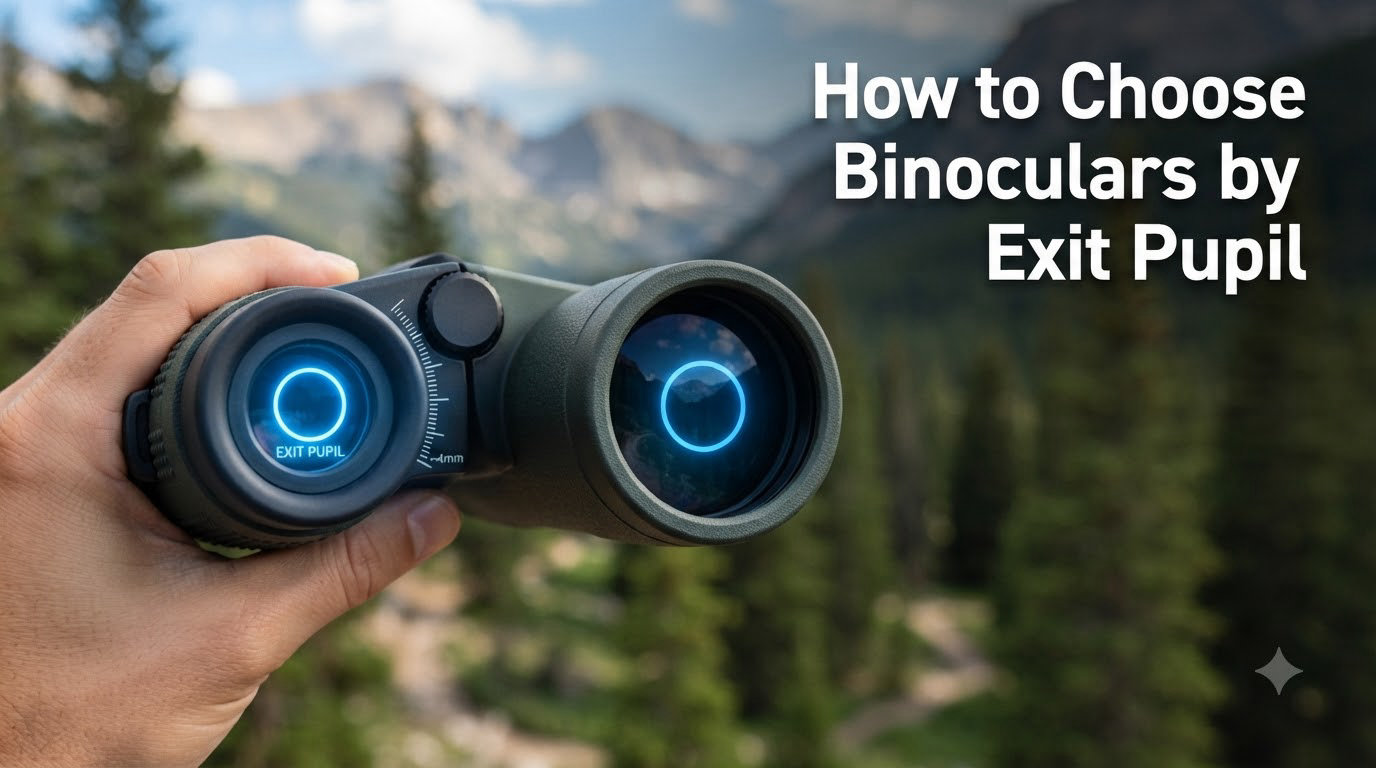
Exit pupil is calculated by dividing the objective lens diameter by magnification. An 8×42 has an exit pupil of 5.25mm (42 divided by 8). This number tells you about low-light performance.
Exit Pupil: The diameter of the light beam exiting the eyepiece. Calculated as objective lens diameter divided by magnification. Larger exit pupils (4mm+) perform better in low light.
Why does exit pupil matter? Your pupil dilates to about 2-3mm in bright light, 4-5mm in dim conditions, and up to 7mm in darkness. If the exit pupil is smaller than your pupil’s dilation, the image will appear darker.
For daytime use, an exit pupil of 2-3mm is adequate. This is why compact 8×25 binoculars work fine for sports or casual viewing. But for dawn or dusk use, you want 4mm or larger.
Exit pupil also affects how easy it is to align your eyes with the optics. A larger exit pupil gives you more forgiveness in positioning. This matters when you’re trying to quickly glass a bird that just landed in a tree.
Formula: Objective Lens Diameter + Magnification = Exit Pupil
Examples:
Field of view is the width of the area you can see through the binoculars at a specific distance. It’s typically measured in feet at 1,000 yards or in degrees.
Field of View: The horizontal width of the visible area through binoculars, usually expressed in feet at 1,000 yards. Wider fields make finding and tracking subjects easier.
A wider field of view helps you find subjects faster and keep them in view. This matters immensely for birding and sports. I’ve struggled to follow warblers in canopy with narrow-field binoculars, while wider optics made tracking effortless.
Magnification and field of view have an inverse relationship. Higher magnification typically produces a narrower field of view. This is one reason I recommend 8x over 10x for beginners. The wider field helps compensate for less experience finding subjects.
Field of view specifications usually appear as something like “330 feet at 1,000 yards” or “6.3 degrees.” To convert between them: 1 degree equals approximately 52.5 feet at 1,000 yards.
Beyond the main two numbers, binoculars have other important specifications that affect performance and usability.
Eye relief is the distance your eyes can be from the eyepiece while still seeing the full image. This specification is critical for eyeglass wearers.
Eye Relief: The distance from the eyepiece to your eye needed for a full view. Eyeglass wearers typically need 15mm or more with the eyecups twisted down.
If you wear glasses, look for eye relief of at least 15-17mm. Many binoculars have adjustable eyecups that twist down, bringing your eyes closer to the optics. Without sufficient eye relief, you’ll see only the center portion of the image.
I’ve seen this frustrate countless glasses-wearing birders. They buy premium binoculars but can’t use them comfortably. Always check eye relief if you wear glasses, especially when buying online.
Close focus is the nearest distance at which binoculars can focus sharply. This matters for birders and butterfly watchers who want to observe subjects at close range.
Binoculars with close focus of 6-8 feet let you observe warblers at eye level or study dragonflies on a nearby perch. Models with 15-foot close focus struggle with nearby subjects. For general use, anything under 10 feet works well.
Twilight factor is a calculated number that helps compare low-light performance between different binocular configurations. It’s calculated by multiplying magnification by objective lens diameter, then taking the square root.
Calculation: Square root of (Magnification x Objective Lens)
Examples:
Note: Higher twilight factors indicate better theoretical low-light performance, but lens quality and coatings matter just as much.
Twilight factor helps compare different configurations. A 10×50 (twilight factor 22.4) should outperform an 8×42 (18.3) in dim conditions, assuming equal optical quality. However, this calculation doesn’t account for glass quality or coatings.
Relative brightness is another calculated metric for comparing image brightness. Square the exit pupil to get this number.
An 8×42 with 5.25mm exit pupil has a relative brightness of 27.6 (5.25 squared). A 10×42 with 4.2mm exit pupil has 17.6 relative brightness. Higher numbers indicate potentially brighter images.
Like twilight factor, relative brightness is a theoretical calculation that doesn’t account for optical quality. A premium 8×32 with excellent coatings can outperform a budget 10×50 with poor glass transmission.
Different activities demand different binocular configurations. Here’s what I recommend based on years of field testing across various pursuits.
Bird watching benefits from a balance of magnification and field of view. I recommend 8×42 as the best all-around choice for birders. The 8x provides enough reach for most identification needs while maintaining a wide field for finding birds.
For forest birding in tight spaces, 8×32 works beautifully. The lighter weight and narrower profile are advantages when you’re carrying optics all day. Open country birders who need more reach might prefer 10×42, but be prepared for a narrower field of view and more noticeable shake.
Hunters often need to glass in low-light conditions. Dawn and dusk are prime movement times. A 10×42 or 10×50 serves most hunters well. The extra magnification helps identify antler details, while larger objectives gather more light.
For western hunters glassing long distances, 12x or 15x binoculars make sense when used with a tripod or tripod-compatible window mount. But for eastern whitetail hunters who might need to glass quickly and quietly, 8×42 or 10×42 are more practical.
Stadium sports demand wide field of view. Players move quickly across a broad area. I recommend 8x or 10x with the widest field of view you can find. Compact 8×25 or 10×25 models work well because you’re not concerned about low light performance.
The key is being able to find and follow action. Ultra-high magnification is useless if you can’t locate the player with the ball.
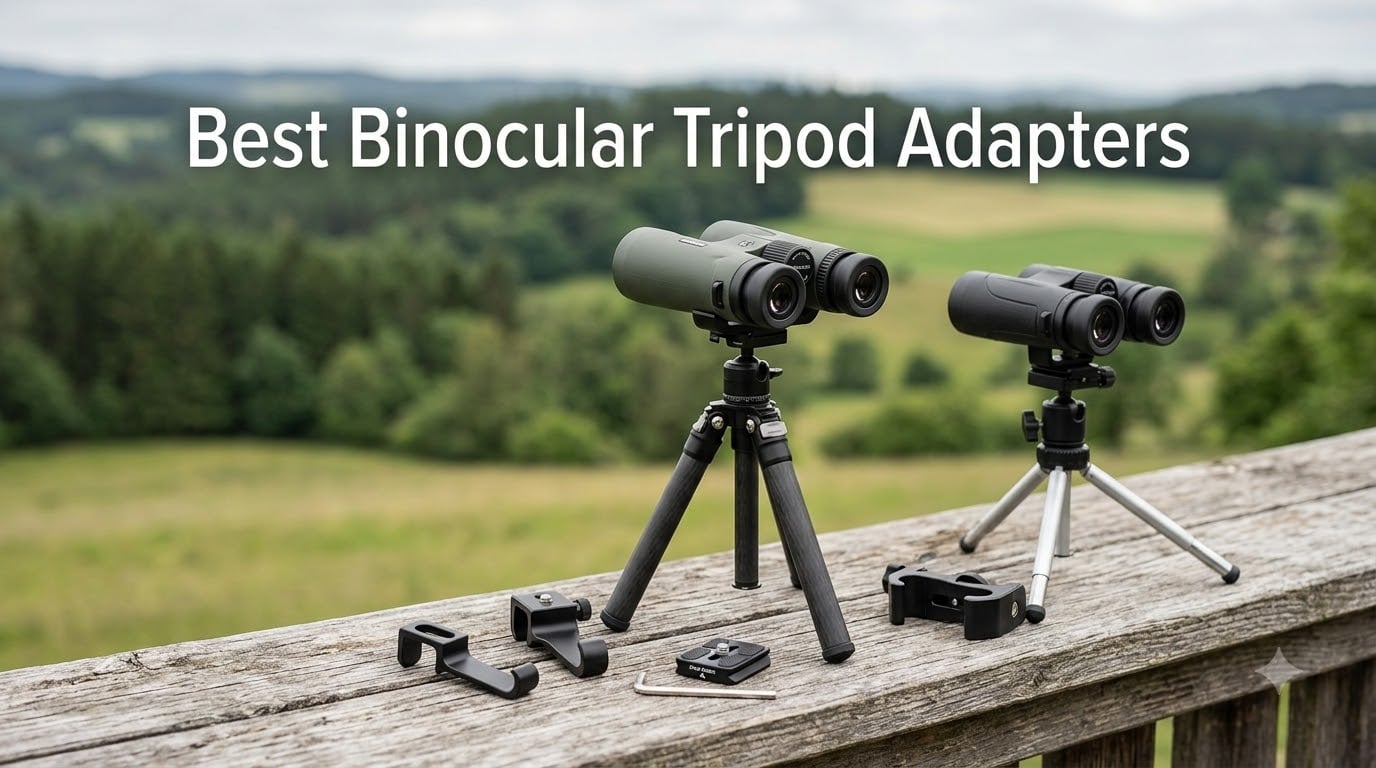
Astronomy binoculars need large objectives to gather as much light as possible. Look for 10×50, 15×70, or even 20×80 configurations. The higher magnifications absolutely require a tripod for steady viewing.
For casual stargazing, 10×50 is a great handheld option. You can see craters on the moon, Jupiter’s moons, and many star clusters. Serious amateur astronomers often step up to 15×70 or larger, but these must be tripod-mounted.
Boating requires waterproof binoculars with individual focus. The constantly moving environment makes higher magnification difficult to use. I recommend 7×50 for marine applications. The lower magnification provides a steady image even on a moving boat, while the 50mm objectives capture plenty of light.
Many marine binoculars also include a compass for navigation. The 7×50 configuration has been the standard for generations of sailors for good reason.
| Activity | Recommended | Why It Works |
|---|---|---|
| Bird Watching | 8×42 or 10×42 | Good field of view, adequate brightness |
| Hunting | 10×42 or 10×50 | More reach and low-light capability |
| Sports Events | 8×25 or 10×25 | Compact, wide field for following action |
| Stargazing | 10×50 or 15×70 | Maximum light gathering |
| Marine/Boating | 7×50 | Steady image on moving water, bright |
| Travel/Hiking | 8×32 or 10×32 | Lightweight, packable |
I’ve seen people make the same mistakes repeatedly when selecting binoculars. Avoiding these errors will save you money and frustration.
Buying too much magnification: New buyers often assume higher magnification is better. But 12x or 16x binoculars are handheld nightmares for most people. The image shake makes them difficult to use, and the narrow field of view makes finding subjects frustrating. Stick to 8x or 10x unless you have a specific need and steady hands.
Ignoring exit pupil for low light: If you hunt at dawn or dusk, compact 8×25 binoculars will disappoint. The small exit pupil can’t match your dilated pupils in dim conditions, resulting in a dark image. Consider 42mm or larger objectives for low-light use.
Overlooking eye relief: Eyeglass wearers who ignore eye relief specs end up with binoculars they can’t use comfortably. I’ve seen this mistake too many times. If you wear glasses, look for 15mm+ eye relief.
Choosing size over suitability: Some buyers want the biggest binoculars available, regardless of how they’ll be used. A 15×70 might seem impressive, but it’s useless for handheld birding. Match your specs to your actual use, not to ego or hypothetical needs.
The debate between 8×42 and 10×42 is common among optics enthusiasts. The answer depends on your priorities and experience level.
8×42 Advantages:
10×42 Advantages:
For most beginners, I recommend starting with 8×42. The wider field of view and steadier image build confidence and success. As you gain experience and your viewing technique improves, you can step up to 10x if you need more reach.
After testing both extensively, I personally use 8×42 for most situations. Only when I’m in open country looking for distant subjects do I switch to 10x. The versatility and ease of use of 8x makes it my go-to configuration.
The numbers tell only part of the story. Optical quality, glass type, and lens coatings dramatically affect performance. A premium 8×42 with ED glass and fully multi-coated lenses will outperform a budget 10×50 with basic coatings.
Lens Coatings: These reduce glare and improve light transmission. Look for “fully multi-coated” optics, which means all air-to-glass surfaces have multiple coatings. This specification matters more than small differences in magnification or objective size.
Prism Glass: BaK4 prism glass is superior to BK7, providing better edge sharpness and light transmission. Higher-end binoculars use ED (extra-low dispersion) glass to reduce chromatic aberration.
Prism Type: Roof prisms produce straight-barreled binoculars, while porro prisms create a traditional zigzag shape. Roof prisms are more compact but typically cost more to manufacture properly. Porro prisms offer excellent value and often better depth perception.
When comparing binoculars, consider these quality factors alongside the basic numbers. A well-made 8×42 will beat a poorly made 10×50 every time.
The first number is magnification power (how many times closer objects appear), and the second number is the objective lens diameter in millimeters. For example, 8×42 means 8x magnification with 42mm objective lenses.
8×42 binoculars provide 8x magnification and have 42mm objective lenses. This popular configuration offers a good balance of magnification, brightness, and weight for general outdoor use.
8x is ideal for most handheld uses including bird watching and sports. 10x works if you have steady hands. Avoid magnifications above 10x for handheld use as image shake becomes problematic.
The second number represents the objective lens diameter in millimeters. Larger lenses gather more light for brighter images in low-light conditions, but increase weight and size.
Exit pupil is calculated by dividing the objective lens diameter by magnification. It indicates low-light performance: 2-4mm works for daytime use, while 5mm+ is better for dawn and dusk viewing.
Field of view is the width of visible area measured in feet at 1,000 yards. Wider fields make finding and following subjects easier. Higher magnification typically produces narrower fields of view.
Not necessarily. Higher magnification narrows your field of view, magnifies hand shake, and reduces image brightness. Most users find 8x-10x optimal for handheld viewing.
8×42 is the most popular configuration for bird watching, offering a good balance of field of view, brightness, and weight. Forest birders might prefer 8×32 for compactness, while open country birders may choose 10×42 for more reach.
Understanding binocular numbers transforms your buying decision from guesswork into an informed choice. The two main numbers tell you about magnification and light-gathering capability, while specifications like exit pupil, field of view, and eye relief help match binoculars to your specific needs.
Start with your intended use, then choose numbers that support it. Bird watchers should prioritize field of view and brightness (8×42). Hunters need reach and low-light performance (10×42 or 10×50). Travelers value compactness (8×32). Match the specs to the activity, and you’ll end up with binoculars that actually serve you well in the field.