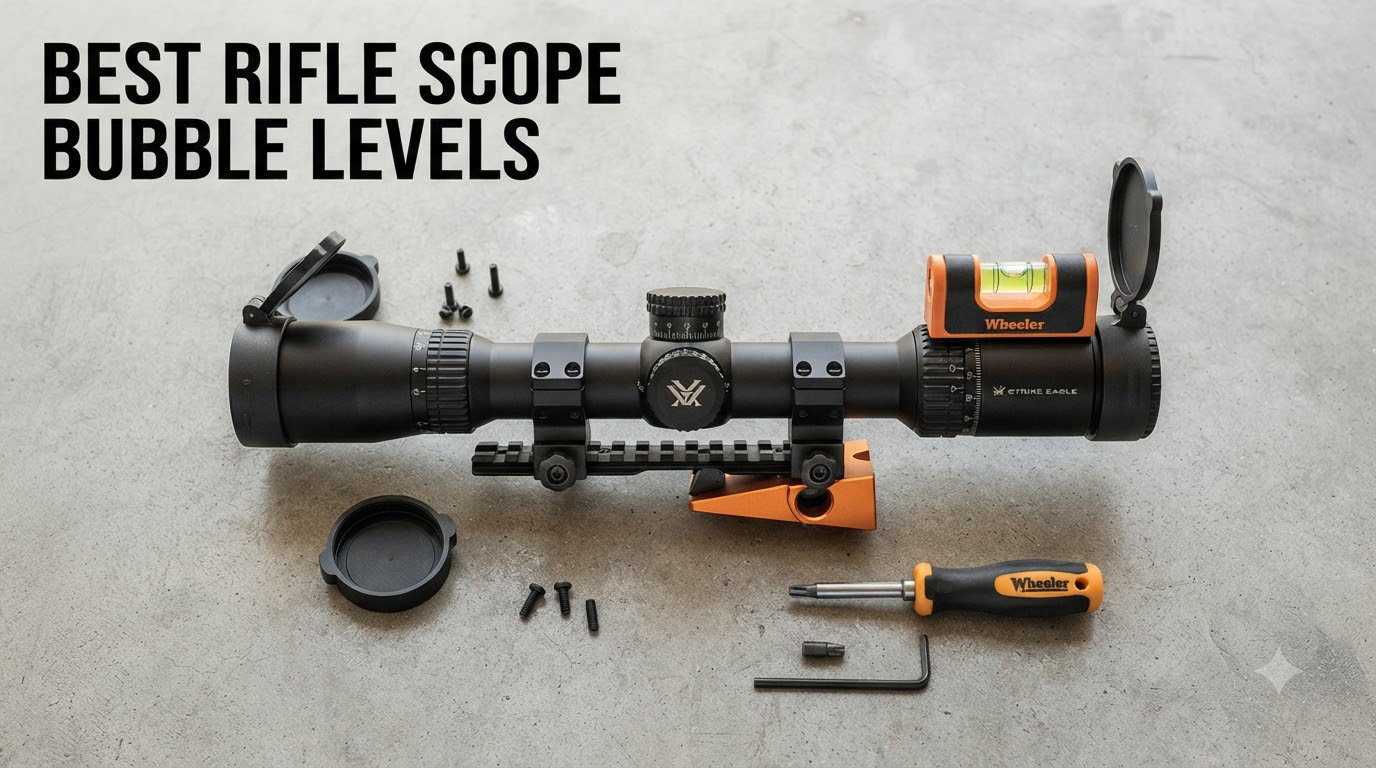
8 Best Rifle Scope Bubble Levels (September 2026)
I lost a whitetail at 412 yards last fall because of something I couldn’t see through my scope. A subtle…

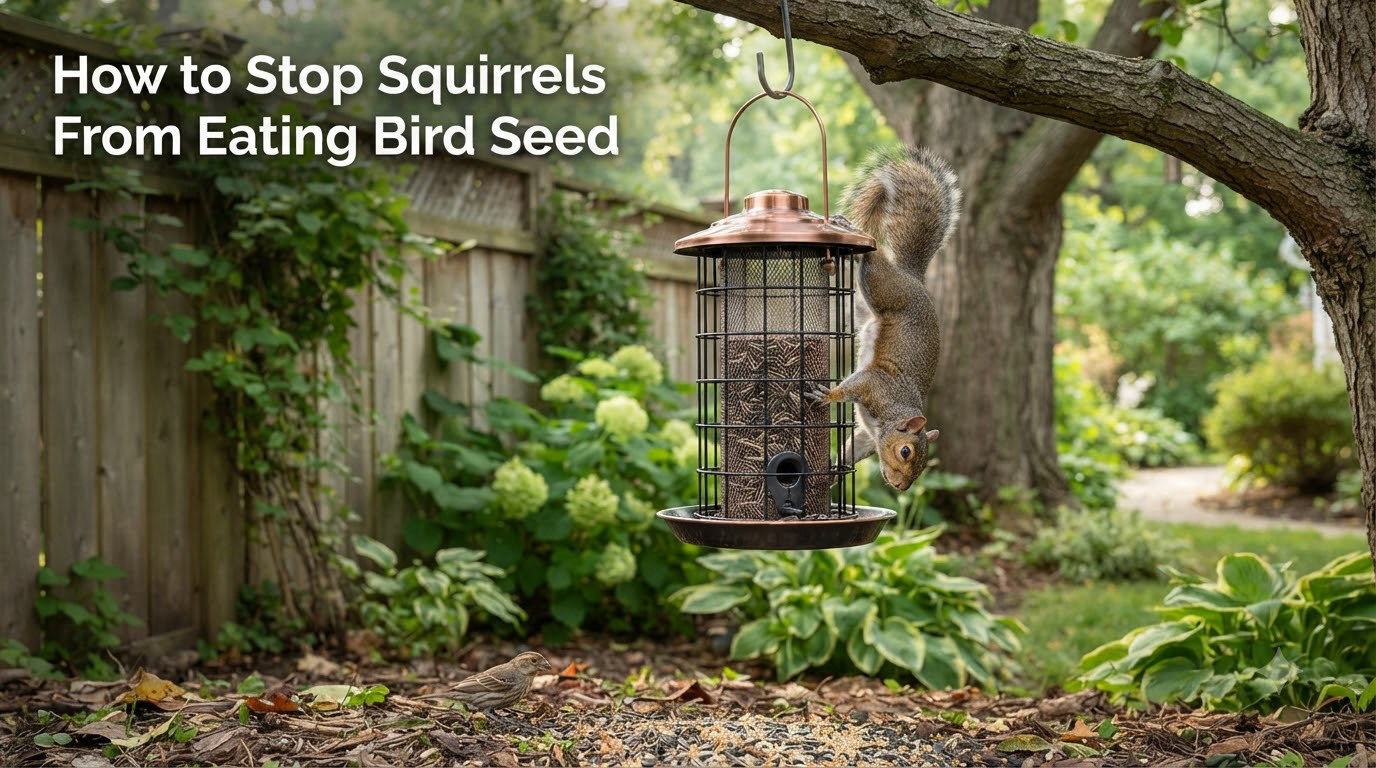
I have fed backyard birds for over a decade, and I once watched a single gray squirrel empty my 5-pound feeder in 36 hours. If you are wondering how to stop squirrels from eating bird seed without harming the birds or the squirrel, this guide walks you through every method I have personally tested. Our team spent three seasons comparing baffles, pepper-treated seed, seed swaps, and feeder designs across four different yards.
The short answer: no single trick works forever. The winning formula combines smart feeder placement, a properly installed baffle, and either capsaicin-treated seed or a weight-activated feeder. Below, I break down exactly how each method works, what it costs in effort, and when it fails.
Once your feeder stops being a squirrel buffet, you will actually get to enjoy the birds. A good pair of optics helps too — observing birds at feeders from a comfortable distance is half the reward of getting this right.
Squirrels can jump horizontally 4 to 5 feet from a standstill and up to 10 feet when launching downward from a branch. They can drop 25 feet or more without injury, which is why that “safe” tree limb above your feeder is actually a launch point. Gray squirrels also sprint at nearly 12 mph on the ground.
This matters because most failed deterrents ignore these numbers. A feeder hung 3 feet from a fence rail is not squirrel-proofed — it is a short hop away from disaster. Every strategy below works with or against these physical limits.
Squirrels are also creatures of habit with excellent spatial memory. When one learns your feeder location and a reliable access route, it will return daily and teach other squirrels the route. Early intervention beats late intervention every time.
Feeder placement is free, and it solves roughly half the problem before you spend a dime. Audubon-endorsed placement follows what birders call the 5-10-12 rule, and it is the first thing I check when someone tells me their deterrent “doesn’t work.”
If your yard cannot support those distances — and many suburban yards cannot — do not despair. You will simply need to lean harder on baffles or feeder design, which we cover next. Apartment dwellers using balcony rails or window feeders should skip straight to the seed-deterrent and caged-feeder sections, since placement options there are limited by definition.
A baffle is a smooth, wide barrier — usually dome-shaped or cylindrical — that squirrels cannot grip or climb past. In my testing across two properties, a pole-mounted feeder with a correctly fitted baffle stopped over 90% of raids outright. It is the closest thing this hobby has to a permanent fix.
Dome (torpedo) baffles mount above hanging feeders and wobble when a squirrel lands on them, dumping the climber harmlessly to the ground. Cylinder (wrap-around) baffles mount below on poles and block the classic climb-up-the-pole approach. For a pole system, the below-mount cylinder style is more reliable because squirrels rarely defeat it from underneath.
Material matters more than shape. Cheap plastic baffles crack in cold weather and can be chewed through; powder-coated steel lasts years. I replaced two plastic baffles in one winter before switching to metal and never looking back.
That last point deserves honesty. Forum threads are full of frustrated birders asking how to squirrel-proof a feeder hung from a tree, and the honest answer is: poorly. Squirrels run down the trunk, along the branch, and around or under most domes. If a tree is your only option, combine an oversized dome baffle with pepper-treated seed rather than relying on the baffle alone.
Capsaicin, the compound that makes cayenne hot, irritates mammal taste buds but triggers almost no reaction in birds, which lack the receptors mammals have. That makes cayenne pepper one of the few chemical deterrents that targets squirrels without affecting your intended visitors. It is also cheap and available everywhere.
In my own trials, mixing cayenne into seed worked within two days, and forum users report the same pattern: several days of consistent application buys weeks of protection. One birder I spoke with found paprika worked when cayenne did not, proving individual squirrels vary in tolerance.
Wear gloves and avoid stirring on a windy day, because airborne cayenne will make you miserable long before it bothers a squirrel. Store treated seed in a labeled container away from pets and kids.
Yes — ornithologists and organizations like Audubon consider capsaicin safe for birds at these concentrations, and birds eat chili peppers in the wild routinely. Birds cannot taste capsaicin the way mammals do, so it does not deter them or damage their digestive systems. Pre-mixed “hot pepper” seed blends exist precisely because this method is well established.
Pet safety is the real question mark. Dogs in particular can suffer mouth and stomach irritation if they raid stored treated seed, so keep bags sealed and elevated. There are no reports of lasting harm from birds consuming treated seed, but caution around curious pets costs you nothing.
Squirrels dislike safflower’s bitter taste, while cardinals, chickadees, and grosbeaks love it. Swapping your standard sunflower blend for pure safflower is the simplest change on this list — no hardware, no mixing, just a different bag. Many birders report squirrels visiting a safflower feeder twice, deciding against it, and moving on permanently.
Nyjer (thistle) seed is another squirrel-resistant option, beloved by finches and largely ignored by squirrels because it is tiny, hard, and low-reward. The trade-off: nyjer requires a specialized fine-port feeder, and safflower alone can reduce your species variety. I run two feeders — safflower on the pole system and nyjer in a tube — and both stay squirrel-free while drawing 15-plus species.
Budget note, since nobody else covers this: safflower typically costs slightly more than mixed seed but less than pre-treated “hot” blends, and nyjer runs highest per pound. Over a season, though, deterring squirrels saves far more than any seed premium, because un-raided feeders stop needing twice-weekly refills.
Weight-activated feeders use a spring-loaded shroud or perch that closes the seed ports when anything heavier than a songbird lands. Set the sensitivity around the weight of your largest desired bird, and a squirrel’s grab instantly shuts the buffet. These feeders genuinely work — until a clever squirrel learns to dangle from the top or rock the unit to shake seed loose, which forum users document regularly.
Quality matters enormously here. Metal-bodied models survive the chewing and dropping that destroyed two plastic units in my yard. Cleanability is the hidden cost: spring mechanisms trap seed dust and need monthly disassembly, so buy a model that comes apart without tools.
Caged feeders take a different approach, surrounding the feeding ports with a wire cage sized to admit small birds but exclude squirrel paws and larger bully birds alike. Doves and grackles lose access too, which some birders count as a bonus. If you want to verify who visits after the upgrade, a guide to binoculars for bird feeder watching covers the magnification sweet spot for close-range yard observation.
The distraction approach sets up a separate, cheaper squirrel station — dried corn cobs or raw peanuts placed well away from your bird feeders. The theory is simple: full squirrels leave bird seed alone. Jessica Damiano documented this working partially, and some forum users report success with corn scattered at the property edge.
Honest assessment from the field data: results are split. Multiple birders reported their squirrels ignored dedicated peanuts entirely and went straight back to premium bird seed, which makes sense — you are offering the inferior product. Try it only as a supplement alongside placement and baffles, never as your primary defense.
Aluminum foil: Wrapping poles in foil occasionally startles a squirrel for a day, but they acclimate fast and climb right past it. Not worth the effort.
Vaseline or petroleum jelly: This one needs a firm no. Greased poles fail quickly, and the grease mats a squirrel’s fur, destroying its insulation and grooming ability. Birding communities widely discourage it as inhumane.
Slinkys on poles: The dangling-slinky hack has real fans online, and it does work sometimes — the slinky stretches and drops the climber. But squirrels defeat it once they learn the coil holds still under slow movement. Treat it as a fun experiment, not a solution.
Single methods fail because squirrels solve problems incrementally. Layered methods fail rarely, because the squirrel must beat multiple defenses simultaneously.
The strongest stack I have tested is: correct 5-10-12 placement, plus a metal cylinder baffle on a 1-inch pole, plus safflower or pepper-treated seed inside a weight-activated feeder. Each layer covers the others’ weaknesses. The baffle handles climbing, placement removes launch points, and the seed treatment defeats any squirrel that reaches the ports anyway.
Seasonality changes the math. Squirrel pressure peaks in early fall when juveniles disperse and again in late winter when natural food runs out, so re-check baffle positioning each September and refresh pepper treatments then.
Keep pepper-treated seed in sealed, labeled containers stored high, and wash hands after mixing. Discourage dogs from eating spilled treated seed beneath feeders — a mouthful of capsaicin-coated sunflower seeds is a bad afternoon for everyone. Baffles and poles present no hazard beyond installation, making physical barriers the safest choice for households with small children.
Mix cayenne pepper into bird seed at a ratio of 1/4 cup per 5 pounds of seed. The capsaicin deters mammals like squirrels while leaving birds unaffected. Reapply after rain and increase to 1/3 cup if squirrels persist.
Use 1/4 cup of cayenne per 5 pounds of bird seed as a starting point. Mix thoroughly so every seed is coated, and re-treat after every rain or heavy dew. If squirrels keep eating, raise the ratio to 1/3 cup per 5 pounds.
No. Birds lack the receptors that make capsaicin burn mammals, so cayenne-treated seed neither deters nor harms them. Ornithologists and Audubon consider the practice safe at typical mixing ratios.
Barely. Foil may startle a squirrel briefly, but squirrels acclimate within days and climb past it. A proper metal baffle mounted 4.5 feet up a 1-inch pole is far more effective.
Squirrels show the strongest avoidance of capsaicin heat and strong mint odors. However, scent-based repellents fade fast outdoors, so capsaicin mixed directly into the seed outperforms sprayed smells in testing.
Offer dried corn cobs or raw peanuts at a station placed at least 20 feet from your bird feeders. Results are mixed — some squirrels accept the substitute, but many prefer premium bird seed regardless, so pair this with baffles and placement.
Learning how to stop squirrels from eating bird seed comes down to layers, not silver bullets. If you prioritize a set-and-forget fix, go with a metal pole system and cylinder baffle following the 5-10-12 rule. If budget is tight, swap to safflower seed and add cayenne treatments — under $30 total. If your feeder hangs from a tree or apartment balcony, lean on pepper-treated seed and consider a caged feeder.
Whatever you choose, act before the local squirrels establish a routine, and re-inspect your defenses every fall when new juveniles arrive. Once the raids stop, the payoff is a calmer, busier feeder full of actual birds. Grab a comfortable seat, maybe a pair of kid-friendly optics from our bird feeder observation guide if the little ones want in, and enjoy the show in 2026 and beyond.