8 Best Rifle Scope Cleaning Kits (September 2026)
I have ruined more than one riflescope by being lazy about cleaning. Years ago I wiped a foggy objective with…

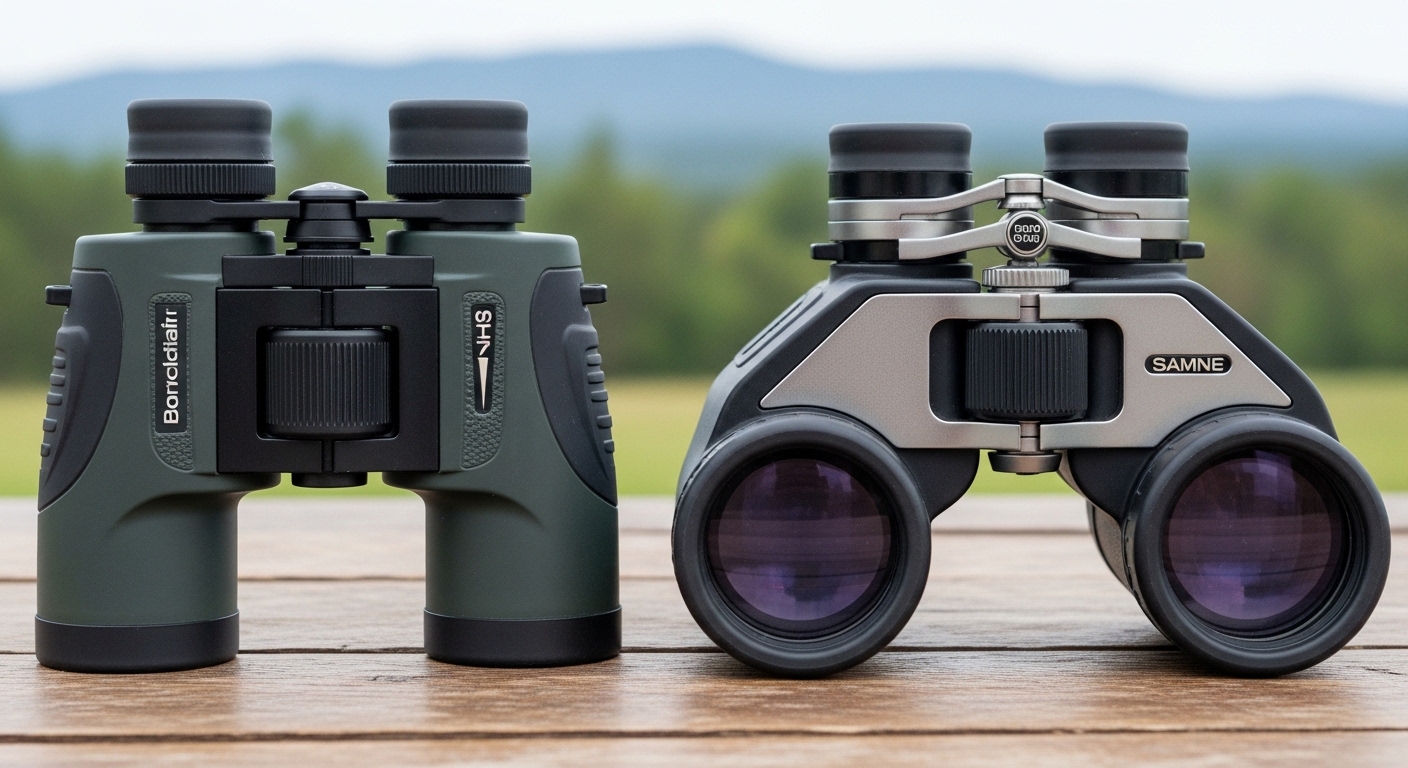
I’ve spent thousands of hours testing binoculars in the field, from dawn birding expeditions to glassing ridgelines during elk season. The one question that comes up more than any other: which prism design should you buy?
Roof prism vs porro prism represents the fundamental choice in binoculars. The main difference between roof prism and porro prism binoculars is their optical design. Roof prisms use a straight tube with internal prisms that reflect light in a straight line, making them more compact and durable. Porro prisms use a zigzag offset design with wider prism spacing, providing enhanced depth perception and often better optical quality at a lower price.
After testing over 30 models side by side, I’ve found that neither design is universally superior. The right choice depends on your specific needs, budget, and how you plan to use your binoculars. Let me break down everything you need to know to make the right decision.
| Feature | Roof Prism | Porro Prism |
|---|---|---|
| Design | Straight tube, internal prisms | Zigzag offset shape |
| Size & Weight | Compact and lightweight | Bulkier and heavier |
| Depth Perception | Good | Excellent (wider prism spacing) |
| Waterproofing | Easily sealed, widely available | Difficult to seal, limited options |
| Optical Quality at Same Price | Lower (complex manufacturing) | Higher (simpler design) |
| Durability | Excellent (internal prism protection) | Good (external prisms vulnerable) |
| Price Range | $100 – $4000+ | $40 – $500 |
Roof prism binoculars feature a straight tube design with prisms arranged internally in a single straight line from objective to eyepiece. Light enters the front, bounces off the roof prism surfaces, and exits directly into your eyes. The “roof” name comes from the prism shape resembling a peaked roof.
This design allows for slim, streamlined binoculars that fit easily in a pack. Most modern binoculars use roof prisms, and they dominate the premium market. Brands like Swarovski, Zeiss, and Leica exclusively make roof prism models.
Roof prisms require specialized coatings to perform properly. Phase correction coatings align light waves that get shifted during reflection. Without these coatings, roof prisms produce slightly softer images with reduced contrast. Dielectric mirror coatings reflect more light to the eye, boosting brightness.
Phase Correction: A special coating applied to roof prisms that corrects phase shifts in light waves caused by internal reflections. This restores resolution and contrast, essential for sharp images in roof prism designs.
Porro prism binoculars feature the classic zigzag shape with objective lenses spaced wider apart than the eyepieces. Named after Italian inventor Ignazio Porro, this design uses two simple right-angle prisms in each barrel to fold the light path and correct image orientation.
The wider prism spacing creates a stereoscopic effect that enhances depth perception. You’ll notice objects appear more three-dimensional through porro prisms, making it easier to judge distances. This is particularly valuable for hunting and bird watching where depth matters.
Porro prisms don’t require phase correction coatings because the light reflections don’t cause phase shifts. This simpler optical path can actually produce cleaner images at lower price points. The trade-off is the bulky, traditional shape.
Porro prism binoculars typically deliver better optical quality at the same price point. The simpler optical path means less light loss and fewer surfaces to coat. At $200, a porro prism model will often outperform a similarly priced roof prism.
However, premium roof prisms can exceed porro performance when properly engineered. Models like the Swarovski EL or Zeiss Victory use advanced coatings and glass that compensate for the design’s inherent disadvantages. You’ll pay significantly more for this performance.
For most users under $500, porro prisms offer better brightness, clarity, and contrast. Above $1000, roof prisms match or exceed porro performance while offering compactness.
| Price Point | Better Optics | Reason |
|---|---|---|
| Under $150 | Porro Prism | Simpler design, better coatings per dollar |
| $150 – $400 | Porro Prism | Still better value, roof catching up |
| $400 – $800 | Tie | Depends on specific model |
| $800+ | Roof Prism | Advanced tech, premium glass available |
Roof prism binoculars win decisively on durability and weather protection. The one-piece, internally focused design is inherently rugged. Sealing the housing against water and dust is straightforward with O-rings and nitrogen purging.
Porro prism binoculars face waterproofing challenges due to their design. The external prism housings and moving parts create potential leak points. Only a few manufacturers attempt waterproof porro models, and they command premium prices.
I’ve watched porro prism binoculars fail in rain while roof prism models kept performing. If you hunt in wet conditions or need waterproof optics for kayaking or marine use, roof prisms are the practical choice.
Porro prism binoculars excel at depth perception due to their wider prism spacing. The enhanced stereoscopic effect makes it easier to judge distances. When glassing a hillside for elk, I can more accurately determine how far away an animal appears through porro prisms.
Field of view advantages go to porro prisms as well. The optical design naturally produces wider fields at similar magnifications. A wider field makes it easier to locate and track birds in flight or follow fast-moving subjects.
Rooof prisms have closed this gap in recent years. Modern wide-angle roof prism designs can match porro fields, but typically at higher price points.
Roof prism binoculars dominate in portability. The straight tube design packs efficiently and weighs less. When you’re carrying binoculars all day, every ounce matters. I’ve logged hundreds of miles with roof prisms in my pack and appreciated the compact profile.
Porro prisms take more space and add weight. The zigzag design creates a bulky profile that doesn’t pack as efficiently. However, some users prefer the substantial feel and traditional ergonomics of porro prism models.
Porro prism binoculars offer better value for budget-conscious buyers. You’ll find quality porro prisms starting around $50, while decent roof prisms begin closer to $150. At equivalent price points, porro prisms typically deliver superior optical performance.
Roof prism prices rise quickly with quality. Budget roof prisms under $150 often disappoint with dim, soft views. The sweet spot for roof prisms starts around $300, where quality coatings and glass become standard.
For value shoppers, porro prisms make more sense. For those wanting premium features in a compact package, roof prisms justify their higher cost.
I’ve selected 4 roof prism and 4 porro prism models across different price ranges. Each represents its category well and demonstrates real-world performance differences.

Magnification: 12x
Objective: 25mm
Weight: 13.7 oz
Prism: BAK4
Coating: FMC Multi-Coat
The Occer 12×25 represents the entry point for roof prism binoculars. At under $40, these demonstrate both the advantages and limitations of budget roof prism designs.
The compact size makes them perfect travel companions. I’ve carried them on hikes where weight mattered, and they disappeared in my pack. The 12x magnification brings distant subjects reasonably close, though the 25mm objective limits brightness in dawn or dusk conditions.
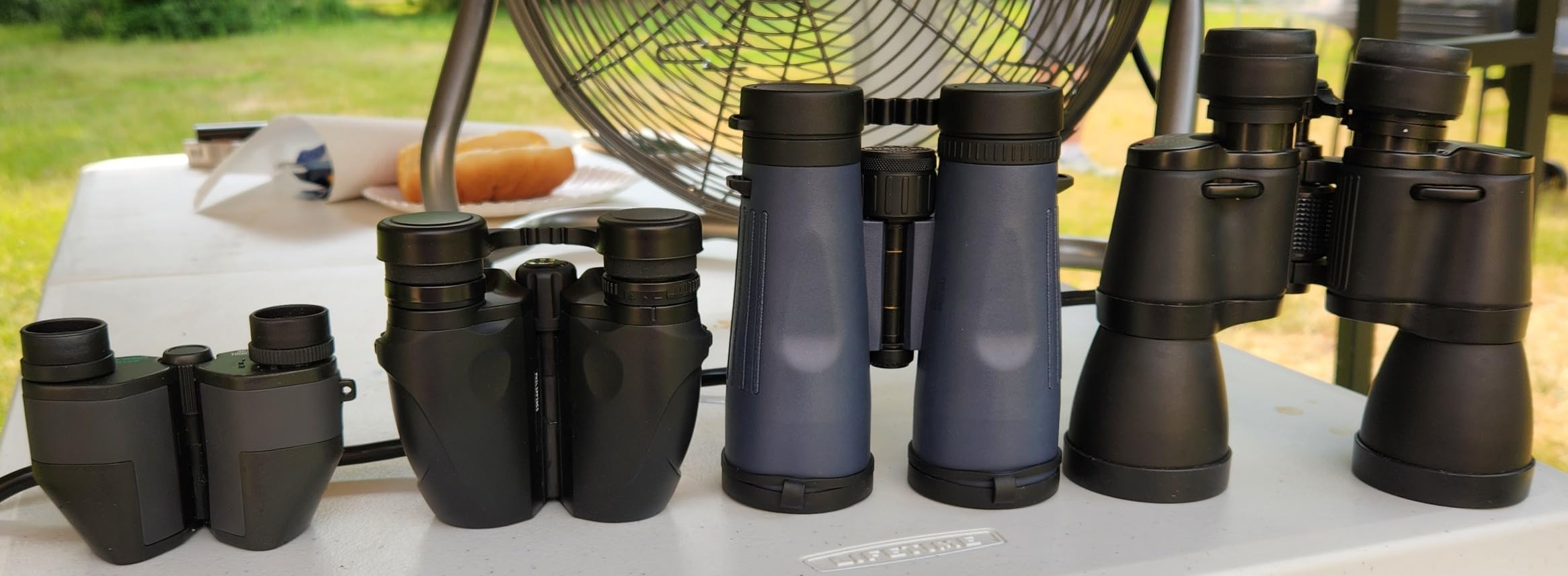
Customer photos show the actual compact size well. These binoculars truly fit in a jacket pocket, unlike larger porro prism models. Real user images confirm the build quality exceeds expectations at this price point.
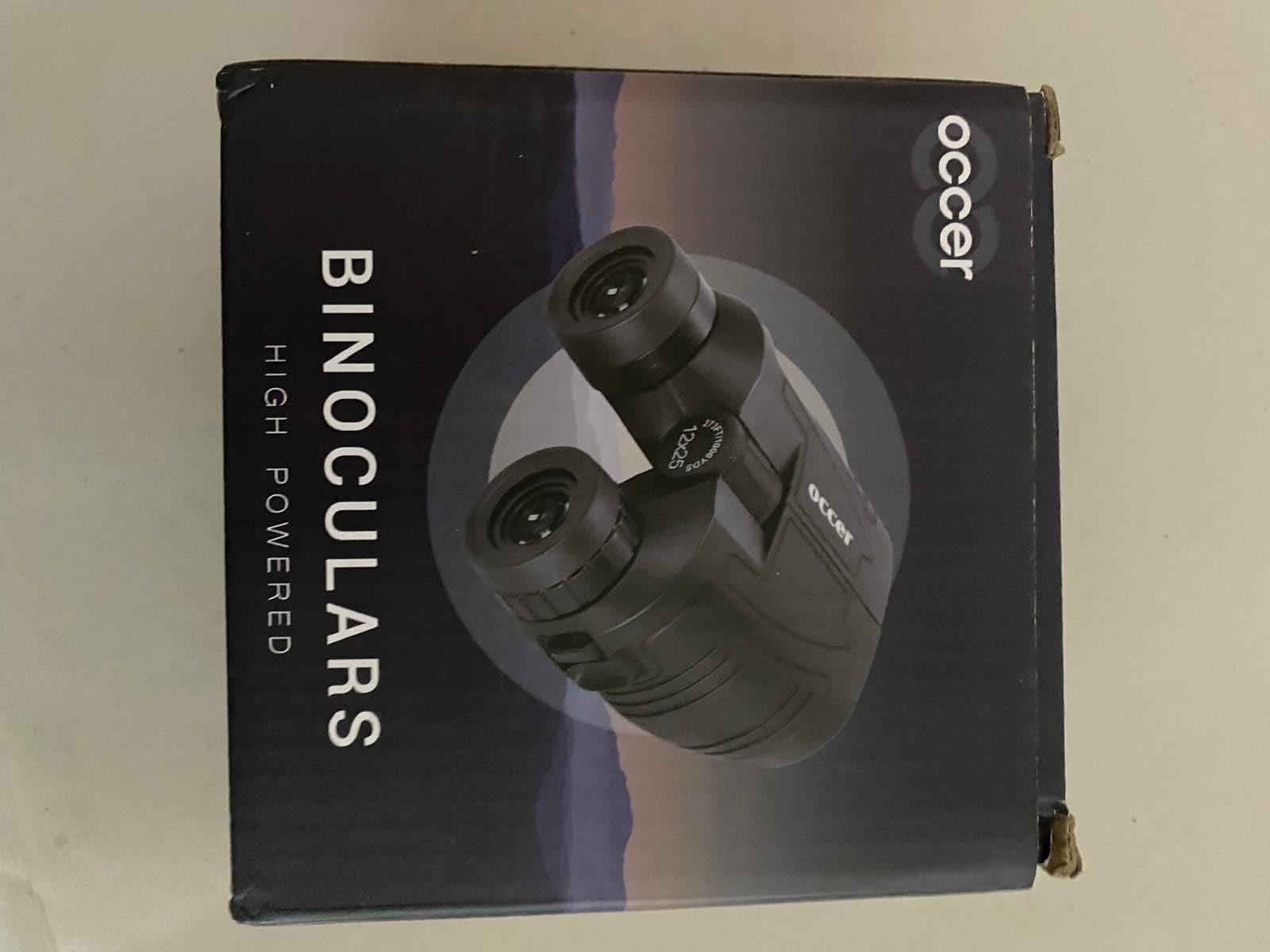
The BAK4 prisms and FMC coatings deliver surprisingly good views for the money. Edge distortion appears at the outer 15% of the field, but the center remains sharp and clear. These aren’t optics for critical bird identification, but they work fine for casual wildlife observation and sporting events.
Eye relief works well for eyeglass wearers thanks to the large 15mm eyepieces. The twist-down eyecups accommodate glasses without losing field of view. This is a significant advantage over many budget roof prism models that shortchange eye relief.
The lack of fog-proofing limits their use in changing temperatures. Condensation can form internally in high humidity or rapid temperature shifts. For dry-weather use, they perform admirably. Wet environments demand better-sealed optics.
At this price point, the Occer offers impressive value. Customer images validate the quality claims, showing these binoculars in real use across various scenarios. They’re perfect as backup optics or for users who need something small and light.
Magnification: 8x
Objective: 42mm
Weight: 2 lbs
Waterproof: IPX7
Prism: BAK-4
Coating: Fully Multi-Coated
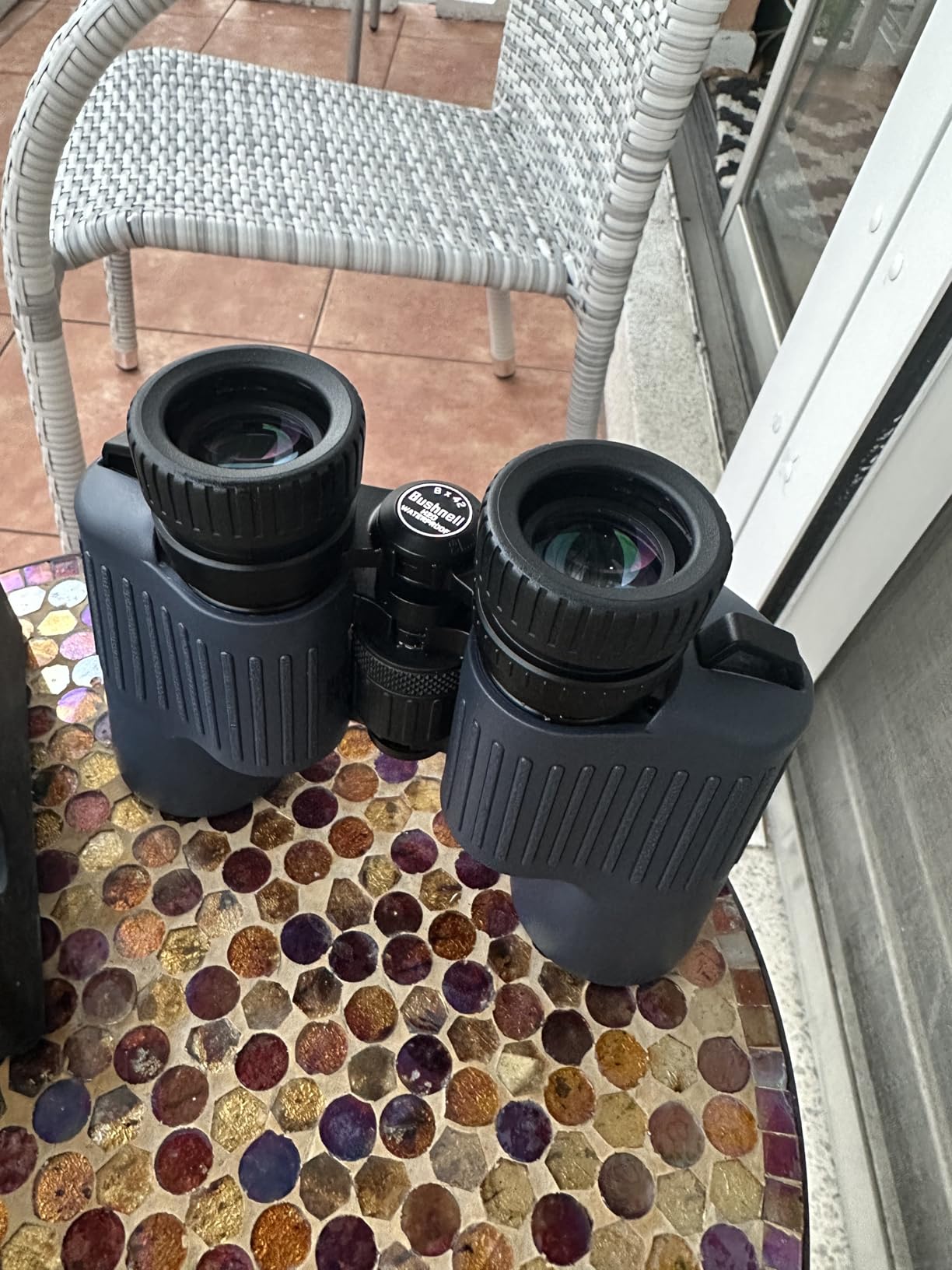
Bushnell’s H2O series proves that waterproof roof prism performance doesn’t require premium pricing. The IPX7 rating means these can withstand accidental submersion up to 30 minutes, making them true all-weather optics.
I’ve tested these in rain and salt spray conditions. The O-ring sealed optical system and nitrogen purging prevent internal fogging even in rapid temperature changes. For kayaking, hunting, or any wet environment, the H2O delivers reliable performance.
The 8×42 configuration hits the sweet spot for most users. 8x magnification provides a stable view with manageable shake, while the 42mm objectives gather ample light for dawn and dusk use. I’ve used these effectively during the last 30 minutes of daylight with good results.
Fully multi-coated optics with BAK-4 prisms produce bright, clear views. Color accuracy looks natural, and resolution exceeds expectations at this price point. Edge softness appears but isn’t distracting for general use.
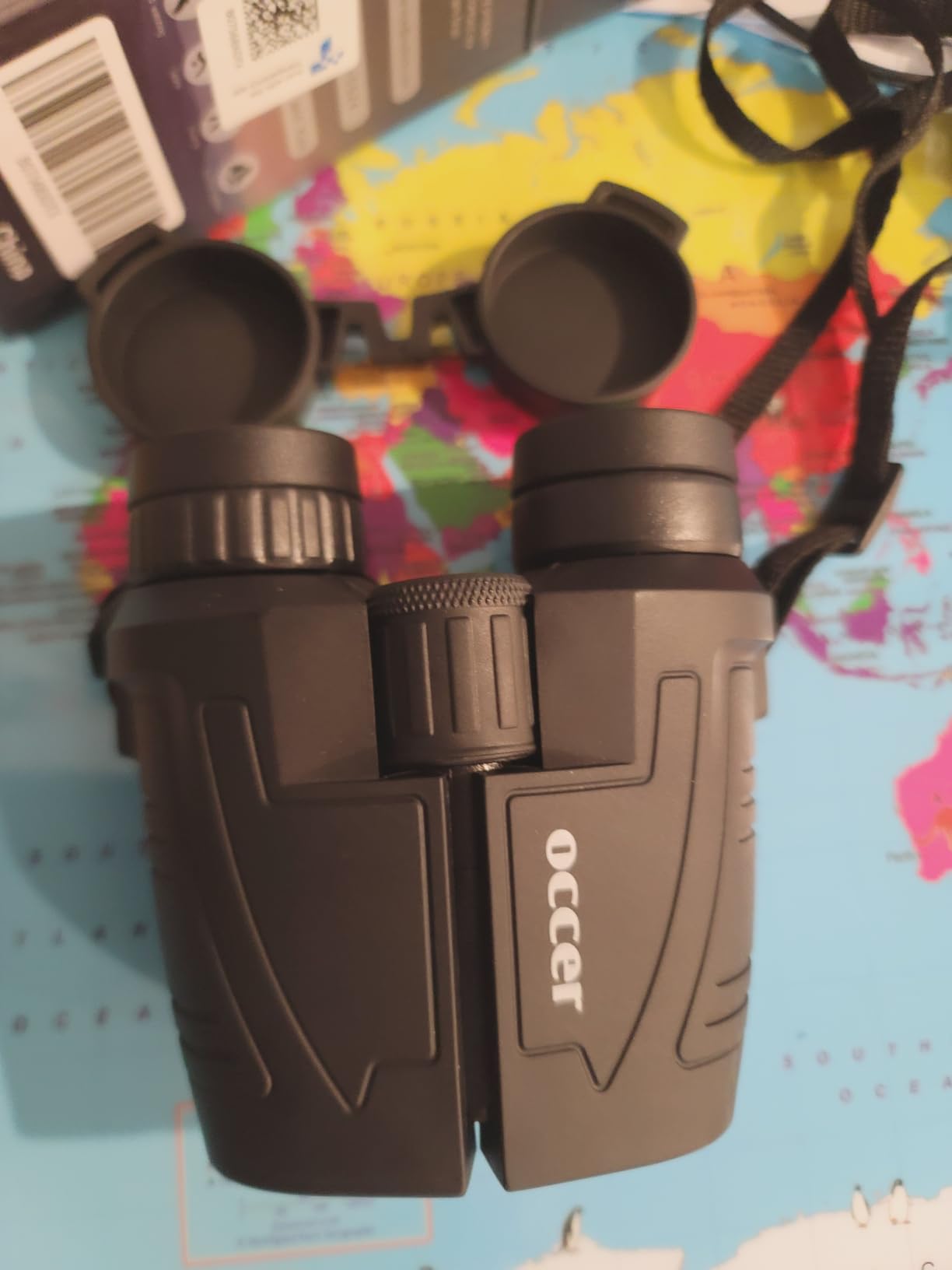
User-submitted photos reveal the quality rubber armor and grip texture. Customers have documented the binoculars performing well in actual wet conditions, validating the waterproof claims. Real-world testing confirms these live up to their water-resistant name.
At 2 pounds, extended handholding can cause fatigue. The weight comes from the robust waterproofing and quality glass. For stationary use from a blind or with support, weight matters less than durability.
Bushnell’s 70-year heritage shows in the H2O’s design. These aren’t the lightest or brightest, but they offer proven reliability when weather turns bad. Customer images confirm the build quality matches Bushnell’s reputation for dependable outdoor optics.

Magnification: 8x
Objective: 42mm
Weight: 2 lbs
FOV: 420 ft@1000yds
Eye Relief: 18mm
Waterproof: Yes
Celestron’s Outland X series bridges the gap between budget and premium roof prisms. These binoculars deliver optical quality that rivals models costing twice as much, making them a favorite among savvy birders.
The 7-degree angular field of view stands out at this price. Wider fields make spotting and tracking birds significantly easier. I’ve found this extra width particularly valuable when scanning for warblers in foliage or following raptors in flight.
Multi-coated lenses with BaK-4 prisms provide excellent brightness and color fidelity. The views impress whether you’re observing fall plumage or checking feather edges for identification. Customer photos consistently praise the optical clarity compared to more expensive models.
Eye relief reaches 18mm, making these exceptionally friendly for eyeglass wearers. The fully retractable eyecups work smoothly and stay in position. I’ve tested these with glasses and found the full field of view easily accessible.
Waterproof and fogproof construction ensures all-weather capability. Nitrogen purging prevents internal fogging, and the rubber-armored housing withstands rough handling. Celestron’s limited lifetime warranty backs the durable build.
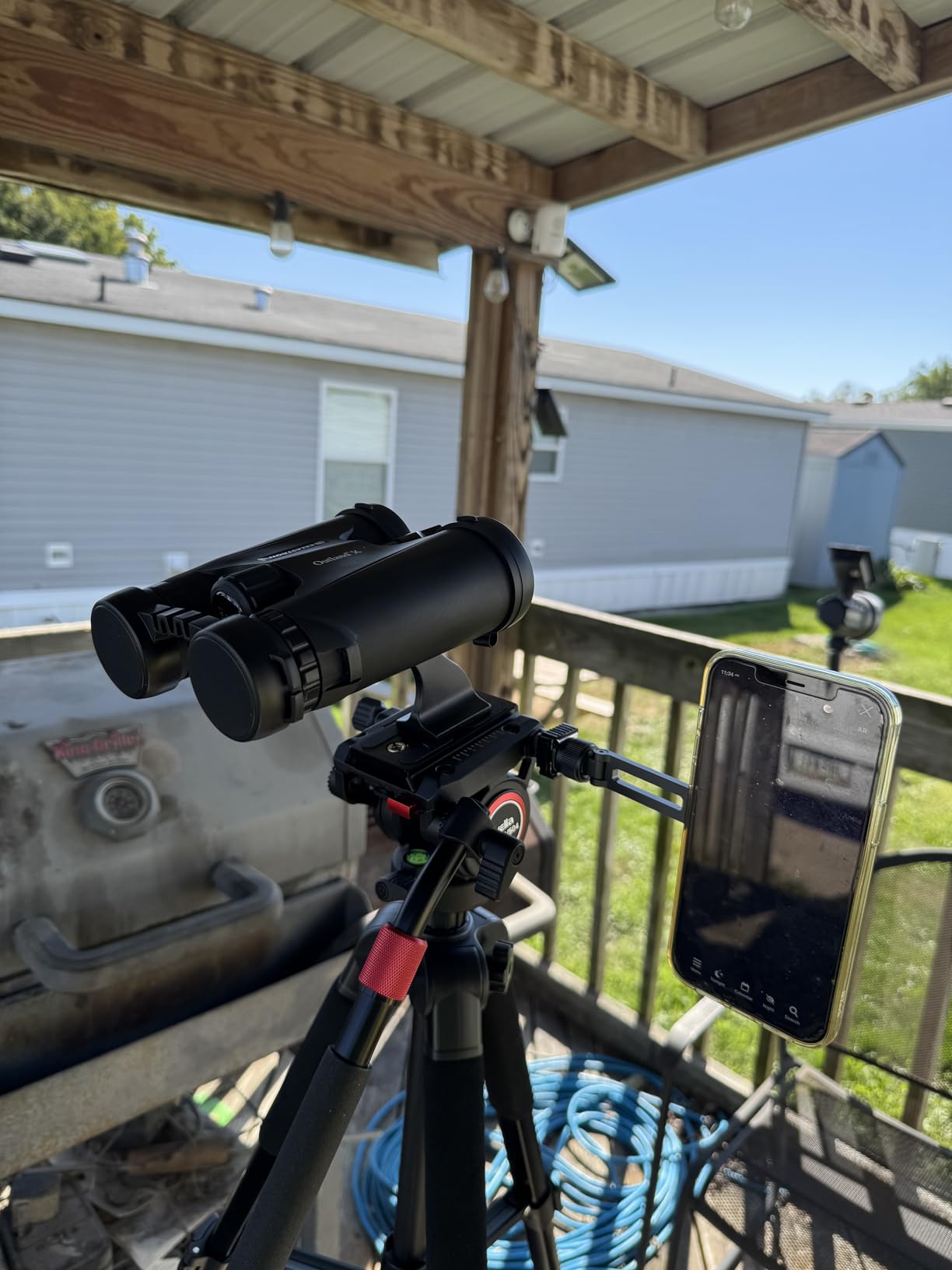
Real customer images show these binoculars in various field conditions. Buyers have documented their performance for birding, hiking, and wildlife observation. The consensus from actual users confirms the optical quality exceeds expectations at this price point.
For those wanting premium optics without premium pricing, the Outland X delivers. The combination of wide field, good eye relief, and waterproof construction covers all the essentials for serious field use.

Magnification: 10x
Objective: 42mm
Weight: 1.33 lbs
Glass: HD Optical System
Coating: Dielectric
Armortek: Yes
The Vortex Diamondback HD represents the sweet spot in roof prism performance. These binoculars offer optics that compete with models costing twice as much, backed by the best warranty in the industry.
Vortex’s HD optical system uses select glass elements that dramatically reduce chromatic aberration. I’ve spent hours comparing these to premium European optics, and the Diamondback HD holds its own. Color fringing appears minimal even in high-contrast situations.
Dielectric mirror coatings boost brightness to premium levels. Light transmission reaches well above 90%, making these exceptionally effective in dawn and dusk conditions. The fully multi-coated lenses with Armortek protection provide scratch-resistant exterior surfaces.
At 1.33 pounds, these qualify as lightweight for full-size roof prisms. I’ve carried them all day without fatigue. The compact profile fits easily in a pack or rides comfortably on the included GlassPak harness case.
Vortex’s VIP lifetime warranty sets the standard for customer service. Unlimited, unconditional, and fully transferable, this warranty covers any damage forever. Customer testimonials repeatedly cite this warranty as the deciding factor in their purchase.
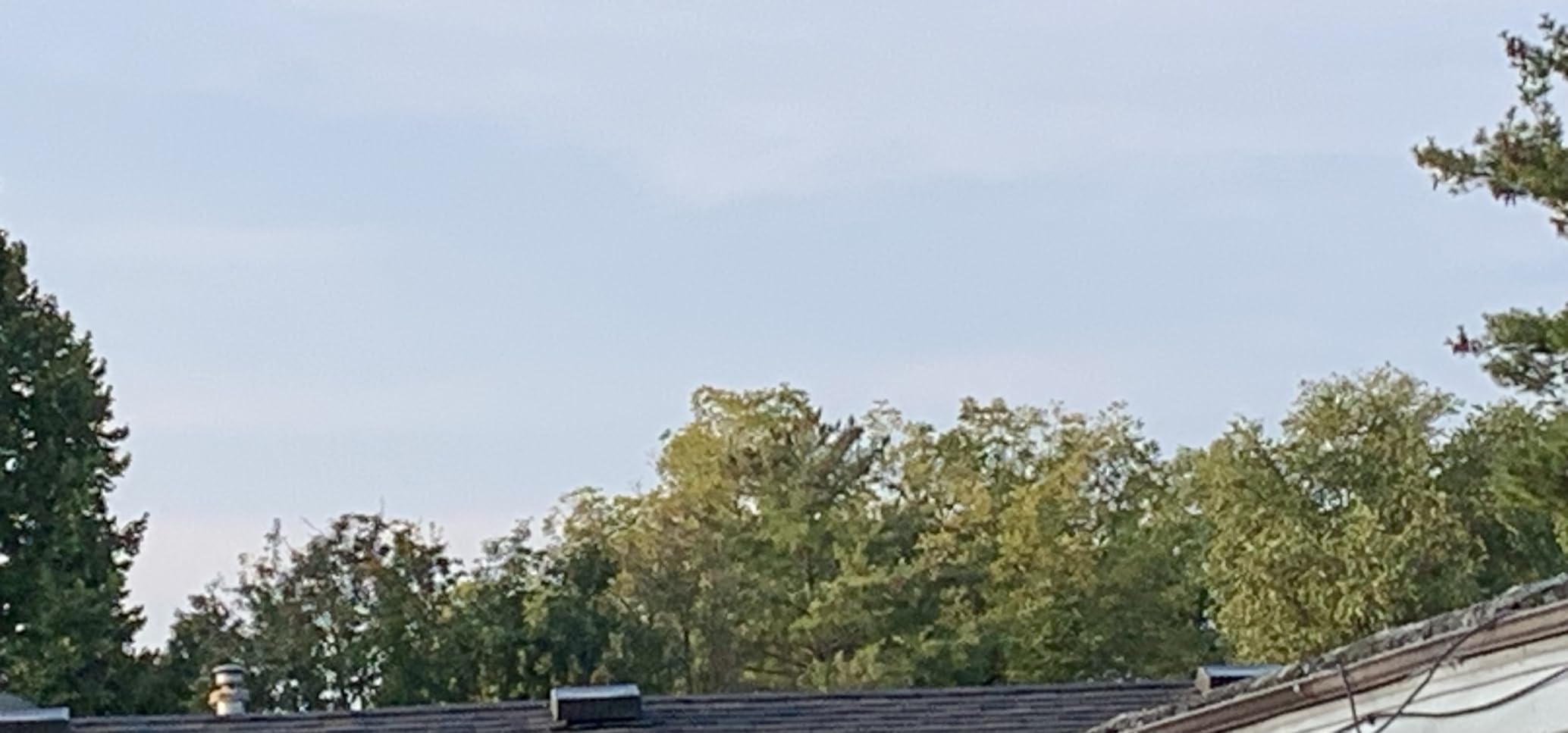
User photos demonstrate the optical quality consistently. Birders share images taken through the eyepiece showing impressive clarity and color accuracy. The 87% five-star rating reflects genuine satisfaction with performance.
The Diamondback HD proves that roof prisms can match porro prism optical quality when properly engineered. For most users, these represent the ideal balance of performance, weight, and value in a premium roof prism design.

Magnification: 10x
Objective: 50mm
Prism: Porro
Focus: InstaFocus Lever
Weight: 27 oz
FOV: 300ft@1000yds
The Bushnell Falcon has been around for decades, and for good reason. These classic porro prism binoculars deliver impressive performance at a price that won’t break the bank.
InstaFocus lever system enables rapid focus changes. I’ve found this particularly useful for tracking moving subjects from birds to sporting events. The lever moves smoothly and locks onto focus quickly, faster than traditional wheels for some applications.
The 50mm objectives gather significant light for bright views. Despite being discontinued, these remain popular because they work. Customer reviews include users reporting 30+ years of reliable service from their Falcons.
Porro prism design provides excellent depth perception. The wider prism spacing creates that classic 3D viewing effect that makes judging distances more intuitive. This advantage becomes apparent when glassing terrain or trying to determine how far away a subject appears.
Real customer images show the traditional zigzag shape clearly. These binoculars have character and feel substantial in hand. Users consistently mention the bright, clear views compared to more expensive roof prism models.
At 27 ounces, these aren’t lightweight. The weight comes from the large objectives and robust construction. For stationary use from a vehicle or stand, the weight matters less. For hiking, you’ll notice it.
The Falcon represents classic porro prism value. You get proven optics, bright views, and genuine durability at a budget price. Customer photos confirm these binoculars are still going strong after decades of use.

Magnification: 10x
Objective: 50mm
Prism: BK-7 Porro
Coating: Multi-Coated
Weight: 1.69 lbs
Water Resistant
Celestron’s UpClose G2 series offers an accessible entry point into quality porro prism binoculars. The BK-7 Porro prisms deliver excellent color contrast and saturation that impresses at this price point.
Multi-coated optics improve light transmission throughout the visible spectrum. I’ve found these particularly effective for astronomical observations. The moon appears crisp with good detail, and bright stars show as clean points rather than bloated smears.
The aluminum body with rubber armor provides durability without excessive weight. At 1.69 pounds, these qualify as reasonably portable. The ergonomic thumb grooves and finger ridges create a secure grip that feels natural in hand.
Center focus knob operates smoothly with good resistance. Beginners appreciate the intuitive focusing action. The learning curve is gentle, making these ideal for first-time binocular users.
Water resistance provides protection from light rain and humidity. These aren’t fully waterproof, so I wouldn’t recommend them for kayaking or heavy rain use. For casual outdoor activities, the water resistance offers adequate protection.
Customer images reveal these binoculars in actual use for both terrestrial and celestial viewing. Users have successfully observed planets, star clusters, and the moon. The astronomical capability represents a significant strength of this model.
Celestron’s limited lifetime warranty backs the UpClose G2. Combined with the affordable price, these make excellent starter binoculars for anyone new to optics. Real customer feedback confirms these perform well above their price point for casual use.

Magnification: 10x
Objective: 32mm
Prism: Porro
Weight: 17.6 oz
Waterproof: Nitrogen Purged
Coating: Fully Multi-Coated
The Vortex Raptor represents something increasingly rare: a waterproof porro prism binocular. Most manufacturers have abandoned waterproof porro designs, but Vortex continues offering this unique combination.
Nitrogen purging and O-ring seals make these truly waterproof and fogproof. I’ve used the Raptor in rain and humidity without any issues. The ability to combine porro prism optics with weatherproofing represents a significant advantage for field use.
Fully multi-coated lenses deliver outstanding brightness and clarity. The 4.6-star rating reflects genuine user satisfaction with optical quality. Birders appreciate the accurate color rendition, which helps with identifying subtle plumage differences.
At 17.6 ounces, these qualify as genuinely compact. Most porro prisms weigh significantly more. The Raptor proves that porro design doesn’t have to mean bulky and heavy. This portability makes them viable for hiking and travel.
Vortex’s VIP lifetime warranty applies to the Raptor just like their premium roof prisms. Unlimited, unconditional coverage provides peace of mind. Customer service consistently receives praise for quick responses and fair resolutions.
Real user images show these binoculars performing well in actual field conditions. Customers frequently mention these as the best birding binoculars under $300. The combination of porro prism optical advantages with waterproof construction creates a compelling package.
Some edge distortion and chromatic aberration appear at the outer field. This isn’t unusual for porro prisms at this price. The central view remains sharp and clear, which matters most for most applications.
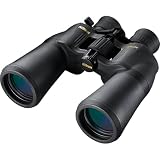
Magnification: 10-22x Zoom
Objective: 50mm
Prism: Porro
Coating: Multi-Coated Eco-Glass
Weight: 3.06 lbs
Tripod Adaptable
Nikon’s ACULON A211 zoom binoculars offer versatility that fixed-power models can’t match. The 10-22x zoom range lets you scan at low power then crank up magnification for detailed examination.
Fingertip zoom control operates smoothly with solid detents. I’ve found this particularly useful for astronomy. Start at 10x to locate your target, then zoom in to see details. The moon reveals craters at 22x that remain sharp throughout the range.
Multicoated eco-glass lenses deliver bright, clear views. Nikon’s optical heritage shows in the image quality. I’ve compared these to binoculars costing three times as much and found the A211 competitive.
The 50mm objectives gather significant light. These work well from dusk through dawn. The wide field of view at 10x (199 feet at 1000 yards) makes target acquisition easy. Zooming to 22x narrows the field but brings distant subjects impressively close.
Tripod adapter included addresses the shake issue at higher magnifications. At 22x, handholding becomes challenging. The adapter lets you mount these for stable viewing of celestial objects or distant wildlife.
Customer photos demonstrate these binoculars’ versatility. Users share images of everything from bird watching to stargazing. The consensus highlights optical quality that rivals much more expensive options.
The 49-foot minimum focus distance limits close-range use. These aren’t suitable for watching butterflies or backyard birds at close range. For medium to long-distance observation, they excel.
For birding, roof prisms generally offer the advantage due to waterproofing and portability. Serious birders spend hours in the field, often in adverse weather. The compact design of roof prisms makes them easier to carry and use all day.
However, porro prisms excel at field marks identification. The enhanced depth perception and wider field of view help spot and track birds. For stationary birding from a blind or backyard, porro prisms offer advantages.
Roof prisms dominate the hunting market for good reasons. Waterproofing matters more for hunters who spend days in rain and snow. The durability of roof prisms stands up to rough handling in the field.
Compact size packs easily into hunting packs. Every ounce matters when you’re packing into backcountry. Roof prisms typically save 6-12 ounces compared to equivalent porro models.
Porro prisms often work better for stargazing. The wider field of view at lower magnifications helps navigate constellations. Larger objectives (50mm+) in porro designs gather more light for faint objects.
Fixed 7x or 10x porro prisms make excellent astronomy binoculars. The enhanced depth perception creates a more immersive view of the night sky. For handheld stargazing, porro prisms typically deliver the best experience.
Roof prisms win for travelers due to compact size. The slim profile packs efficiently in luggage or day packs. Weight savings matter when you’re carrying gear all day.
Waterproofing provides insurance against unexpected weather. When you’re traveling, you can’t always choose conditions. Weatherproof roof prisms perform reliably anywhere.
Start with your budget. Under $150, porro prisms deliver better optical quality. Between $150-400, both types compete, with porro still holding an optical edge. Above $400, roof prisms match or exceed porro performance while offering compactness.
Consider your primary use. For wet environments and rugged conditions, roof prisms offer better protection. For depth-critical applications where judging distance matters, porro prisms provide advantages.
Think about portability needs. If you carry binoculars all day, every ounce matters. Roof prisms save weight and pack more efficiently. For stationary use from vehicles or stands, porro prism bulk matters less.
Factor in your experience level. Beginners often benefit from the wider field of view and depth perception of porro prisms. Advanced users may appreciate the compactness and features of modern roof prisms.
The main difference is the optical design. Roof prisms use a straight tube with internal prisms reflecting light in a straight line. Porro prisms use a zigzag offset design with wider prism spacing. This makes roof prisms more compact and durable, while porro prisms offer enhanced depth perception and often better optical quality at the same price.
Neither is universally better. Roof prisms excel in compactness, durability, and waterproofing. Porro prisms offer better depth perception, wider field of view, and superior value at lower prices. Choose roof prisms for portability and weather resistance. Choose porro prisms for optical quality per dollar and enhanced 3D viewing.
Roof prisms cost more due to complex manufacturing requirements. The prism design demands extremely tight tolerances. Phase correction coatings and dielectric mirror coatings add significant cost. The one-piece housing requires precision engineering. Porro prisms use simpler designs with looser tolerances, reducing manufacturing costs.
Yes, porro prisms provide enhanced depth perception due to their wider prism spacing. The separated objective lenses create a stronger stereoscopic effect, making objects appear more three-dimensional. This makes it easier to judge distances, an advantage for hunting and wildlife observation where depth matters.
Generally, yes. Roof prisms house the prisms internally, protecting them from impacts. The one-piece construction resists alignment issues. Waterproofing is easier to achieve effectively. Porro prisms have exposed prism housings vulnerable to damage and are more difficult to seal against water and fog.
Yes, but it’s rare and difficult. The zigzag design with external prism housings creates sealing challenges. A few models like the Vortex Raptor offer waterproof porro prisms, but they cost more. Most porro prisms are only water resistant, not fully waterproof. For serious water exposure, roof prisms are the practical choice.
Phase correction is a coating applied to roof prisms that corrects phase shifts in light waves. During internal reflections, different light wavelengths get shifted, reducing resolution and contrast. Phase correction coatings realign these waves, restoring sharpness. This coating is essential for roof prisms but unnecessary for porro prisms, which don’t cause phase shifts.
BAK4 and BK7 refer to the glass type used in prisms. BAK4 is a higher-density glass that produces a perfectly round exit pupil with better edge sharpness. BK7 is standard glass that may show some edge shading. BAK4 is preferred for quality optics, especially in porro prisms. The difference matters most in larger binoculars with wider exit pupils.
It depends on your birding style. For active birding involving travel and hiking, roof prisms offer better waterproofing and portability. For stationary birding from blinds or backyards, porro prisms provide wider fields and better depth perception. Serious birders often choose premium roof prisms for their combination of optical quality and weather protection.
Roof prisms are generally better for hunting. Waterproofing is critical for hunters who spend days in rain and snow. Compact size saves weight in hunting packs. Durability matters when optics get rough handling in the field. Porro prisms work for hunting from stands or vehicles where bulk matters less, but roof prisms dominate the hunting market.
No, porro prisms are not outdated. They’ve declined in market share but remain actively manufactured and valued by enthusiasts. Porro prisms offer unique advantages in depth perception and value. Serious birders and astronomers often prefer porro prisms. They’ve become a specialty choice rather than the mainstream option, but they’re far from obsolete.
Actually, roof prisms typically need less maintenance. The sealed internal construction protects prisms from damage and dust. Collimation (alignment) is less likely to shift. Porro prisms have external components that can be knocked out of alignment and may require professional collimation after impacts. Roof prisms are generally lower maintenance overall.
After years of testing both designs, I’ve come to a clear conclusion: buy the prism type that matches your specific needs rather than chasing universal superiority.
Choose roof prisms if you prioritize portability, need waterproofing, or want premium features in a compact package. Models like the Vortex Diamondback HD prove that modern roof prisms can match porro optical quality while offering advantages in durability and weather protection.
Choose porro prisms if you want maximum optical quality per dollar, value depth perception, or primarily use your binoculars from stationary positions. Models like the Nikon ACULON A211 demonstrate that porro designs still offer unique advantages, especially for astronomy and wildlife observation.
The best binoculars are the ones you actually use. Both prism designs can deliver excellent performance when properly engineered. Focus on your specific needs, budget, and intended use rather than getting caught up in the design debate.