Best Scope for Marlin 1894: 8 Top Picks 2026 Tested
I have spent more weekends than I can count behind a Marlin 1894, both in deer stands and at the…

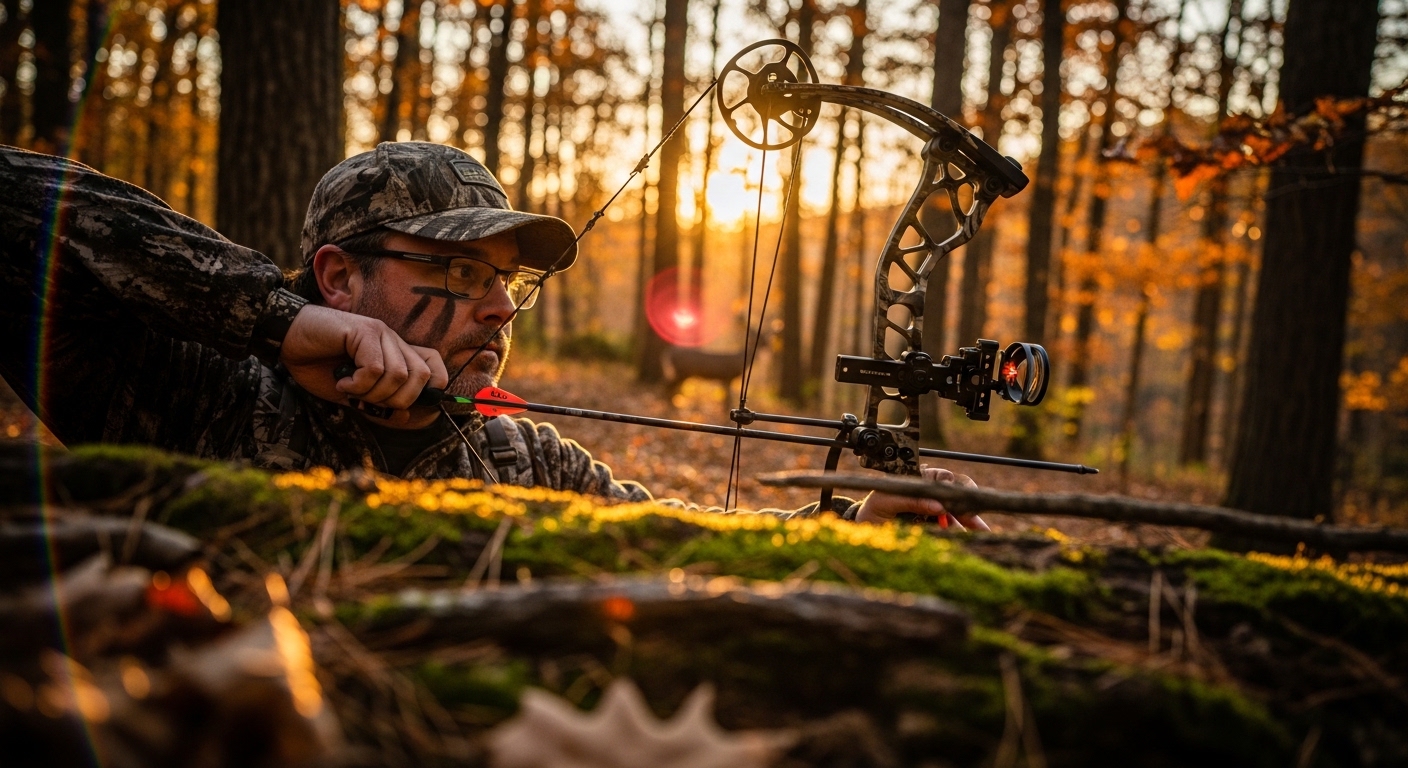
Yes, you can absolutely continue bowhunting with poor vision. The right equipment modifications and techniques can restore your accuracy and confidence in the field.
I’ve watched dozens of hunters face this same frustration. The pins that were crisp five years ago now look like fuzzy glow sticks. That buck at 30 yards is clear, but your sight pins might as well be underwater.
This isn’t about hanging up your bow. It’s about understanding what’s happening and choosing the right solution for your eyes and your hunting style.
Presbyopia: An age-related condition where the eye lens thickens and loses flexibility, typically beginning in your 40s. This makes focusing on close objects like sight pins difficult while distant targets remain clear.
The problem isn’t your commitment. It’s biology. Your eyes are losing the ability to shift focus between near and far objects.
I’ve seen hunters in their 40s suddenly need readers at restaurants. Those same hunters head to the woods and discover their sight pins have turned blurry.
Here’s what’s happening: Your distance vision remains fine. You can spot that deer at 40 yards without issue. But when you try to align your sight pins, your eyes can’t focus on something that close.
By age 50, your eyes require three times more ambient light than they did in your 20s. This explains why dawn and dusk become particularly challenging.
| Solution | Best For | Cost | Difficulty | Legal Status |
|---|---|---|---|---|
| Large Peep | Low light hunting | $15-30 | Easy | All states |
| Verifier Lens | Blurry pins | $40-60 | Medium | All states |
| Clarifier Lens | Blurry target | $40-60 | Medium | All states |
| Single Pin Sight | Field of view | $80-250 | Medium | All states |
| Sight Light | Dawn/dusk hunting | $15-40 | Easy | Check state |
| Bow Scope | Severe presbyopia | $200-800 | Hard | Check state |
| Red Dot Sight | No lens tolerance | $150-300 | Medium | Check state |
| Go Peepless | Maximum light | $0 | Hard | All states |
The simplest solution is often the most effective. If you’re shooting a 1/8 inch peep, stepping up to a 1/4 inch or larger can dramatically improve pin visibility.
I tested this myself last season. Switching from a 3/16 inch to a 1/4 inch peep increased the amount of light reaching my eye by nearly 50%. The difference at dawn was remarkable.
Larger peeps do reduce your precision margin slightly. But for hunting at typical ranges of 20-40 yards, the trade-off is worth it. You gain far more in visibility than you lose in pinpoint accuracy.
The Specialty Archery hooded peep in 1/4 inch is a popular choice among older hunters. It provides excellent light transmission while still maintaining a consistent sight picture.
Quick Summary: A larger peep is the cheapest and fastest fix. Most hunters see immediate improvement. Consider this your first step before investing in other solutions.
A verifier lens acts like reading glasses built into your peep sight. It corrects the presbyopia that makes your sight pins appear blurry.
Here’s how it works: The lens is placed in a special peep housing. It magnifies your pins slightly, bringing them into focus while keeping your target clear.
Shawn Harding from Bowhunter Magazine documented his experience with verifiers at age 48. His pins had developed a crescent-shaped glow that made aiming nearly impossible. After installing a Specialty Archery verifier, his pins snapped into focus.
Verifiers come in different strengths labeled 1 through 6. Strength 6 is the strongest correction. Most hunters in their 50s find success with strengths 4-6.
Important: A verifier that’s too weak won’t fully clear your pins. A verifier that’s too strong will blur your target. Testing different strengths is essential.
Confused about verifiers versus clarifiers? You’re not alone. This is the most common question I get from hunters.
A clarifier does the opposite of a verifier. It clarifies your target, not your pins. Clarifiers are designed for archers using scopes with lenses.
When you shoot a bow scope with a magnified lens, the target might appear blurry due to the magnification. A clarifier in your peep corrects this by sharpening the target image.
The rule of thumb: If your pins are fuzzy, get a verifier. If your target is fuzzy through a scope, get a clarifier. Never use both together.
Pin color matters more than most hunters realize. In low light conditions, not all colors are created equal.
After testing pins side by side at dawn, I found green pins remained visible 8-10 minutes longer than yellow pins. Red pins fell somewhere in between.
The human eye is most sensitive to green light. This is why night vision displays use green. Your retinal cells called cones are tuned to detect green wavelengths more efficiently than any other color.
If you’re currently shooting yellow pins, switch to green. It’s one of the cheapest upgrades you can make. A pack of green fiber optic replacement pins costs less than $25.
A sight light illuminates your pins from behind, making them visible in near darkness. This can extend your effective hunting time by 15-20 minutes each morning and evening.
Most modern bow sights have sight light compatibility. A small LED light mounts to the sight housing and floods your fiber optic pins with light.
I’ve used sight lights for years. The key is adjusting the brightness properly. Too bright and your pins will starburst, creating halos that actually hurt your accuracy.
The best practice is to set your light at the lowest usable brightness. Test it during actual dusk conditions, not in daylight.
Legal Warning: Sight lights are NOT legal for hunting in all states. Colorado, Montana, and several others prohibit electronic lighting devices. Check your local regulations before installing one.
Multi-pin sights with 3, 5, or 7 pins create visual clutter. For aging eyes, fewer pins mean less confusion.
A single pin sight maximizes your field of view. You look through a large circular housing with just one pin to focus on. This reduces eye strain and speeds target acquisition.
The trade-off is you need to adjust your pin for different distances. Most single pin sights have a dial or tape system for quick adjustments.
After helping three hunters switch to single pins, all three reported improved confidence. They appreciated the cleaner sight picture and found the adjustment process became second nature within a few practice sessions.
For severe presbyopia, a bow scope with a lens might be the answer. This is essentially a magnified sight that provides a clear image of both target and pins.
Scopes range from 2x to 8x magnification. Most hunters find 2x-4x to be the sweet spot. Higher magnification makes holding steady more difficult.
The advantage is significant: Both target and pins appear in focus simultaneously. No more choosing between fuzzy pins or fuzzy target.
The downsides are cost and legal restrictions. Quality scopes start around $200 and can exceed $800. Additionally, some states prohibit scopes for hunting game animals.
Red dot sights eliminate the problem entirely. Instead of focusing on pins, you place a glowing red dot on your target. Both eyes can remain open.
These sights project a dot onto a glass lens. The dot appears to be at the distance of your target, which means your eyes never need to focus on something close.
I’ve seen red dots work wonders for hunters with severe vision issues. If verifiers and larger peeps aren’t cutting it, a red dot might be your next step.
Be aware of two limitations: First, battery dependence means you need to check power before each hunt. Second, legality varies by state—always verify your local regulations.
Removing your peep entirely maximizes light transmission. This is called going “peepless” and it’s a legitimate option for hunters struggling with vision.
Without a peep, your eye isn’t forced to look through a small opening. You align your sight housing with your eye naturally. This requires consistent form and anchor point.
The disadvantage is reduced consistency. Your eye position can vary slightly shot to shot, which affects accuracy. However, many traditional archers shoot this way by choice.
If you go peepless, expect an adjustment period. Your shooting form must be solid. I’d recommend practicing for at least a month before hunting season.
| Light Condition | Best Pin Color | Good Alternative | Avoid |
|---|---|---|---|
| Bright Midday | Any color | N/A | None |
| Overcast | Green | Red | Yellow |
| Dawn/Dusk | Green | Red | Yellow, Blue |
| Deep Woods | Green | Red | Blue, Purple |
| Snow Background | Red | Green | Yellow, White |
Sometimes equipment isn’t the only answer. Changing how you aim can compensate for vision limitations.
This technique contradicts what many archers were taught. Instead of focusing on your pins, focus intensely on your target.
When you focus on the target, your pins will appear blurry. But if you have consistent alignment, a blurry pin can still produce accurate shots.
I’ve seen this work for hunters who can’t find a verifier strength that works. By trusting their alignment and focusing on the target, they maintain accuracy despite imperfect pin focus.
Keeping both eyes open improves depth perception and reduces eye strain. Your dominant eye will naturally align with your sight.
This takes practice. Start at close range and gradually increase distance. Within a few weeks, both-eyes-open shooting should feel natural.
Many hunters report that this technique alone reduces visual fatigue during long sits in the treestand.
Vision correction equipment falls under varying regulations across states. Here’s what you need to know:
Sight lights are the most restricted. Colorado, Montana, Oregon, and several other states prohibit any electronic device that projects light onto pins or attaches to your bow.
Bow scopes with magnification are prohibited for big game hunting in many states including Idaho, Nevada, and Washington. However, they may be legal for predator or varmint hunting.
Red dot sights fall into a gray area. Some states classify them as scopes, others as standard sights. Check your specific state’s definition of “legal archery equipment.”
Verifiers, clarifiers, and larger peeps are legal everywhere. These are passive optical devices that don’t project light or magnify the target.
My Recommendation: Contact your state’s DNR directly if you’re unsure about any equipment. Regulations change, and misinformation online could cost you a fine. Get the answer in writing if possible.
Not every solution works for every hunter. Your choice depends on your specific vision problem, budget, and hunting conditions.
If your pins are blurry but target is clear: Start with a verifier lens. This is the classic presbyopia symptom. A Specialty Archery verifier in your peep will likely solve the problem.
If you hunt mostly at dawn or dusk: A larger peep combined with green fiber optic pins should be your first move. Add a sight light if legal in your state.
If you’re on a tight budget: Start with a larger peep ($20) and green pins ($15). These two changes cost less than $40 and help most hunters significantly.
If you have severe vision issues: Consider a bow scope with lens or red dot sight. These are more expensive but provide the most dramatic improvement for serious presbyopia.
If you value simplicity: A single pin sight with a verifier lens offers an excellent balance of effectiveness, cost, and ease of use.
I’ve known hunters who quit because their vision declined. Looking back, most could have continued with the right equipment.
The technology exists. The solutions are proven. From $20 peep replacements to full bow scopes, there’s an option for every budget and every level of vision impairment.
Start with the simplest solution. Test at the range before the season. Give yourself time to adjust.
Your hunting days aren’t over. They just need a little adjustment.
Yes, absolutely. Many hunters continue bowhunting well into their 70s with the right equipment modifications. Verifier lenses, larger peep sights, and specialized bow sights can compensate for presbyopia and other age-related vision changes. The key is identifying your specific vision problem and choosing the appropriate solution.
Presbyopia is age-related loss of near vision that typically begins in the 40s. For archers, this manifests as blurry sight pins while the target remains clear. It occurs when the eye lens thickens and loses flexibility, making it difficult to focus on close objects like sight pins. Verifier lenses are designed specifically to correct this condition.
A verifier lens clears up blurry sight pins. It magnifies your pins slightly, bringing them into focus while keeping your target clear. A clarifier lens does the opposite—it clarifies a blurry target when using a bow scope with magnification. Use a verifier if your pins are fuzzy, use a clarifier if your target is fuzzy through a scope.
Green fiber optic pins are the best choice for low light conditions. The human eye is most sensitive to green light, which allows green pins to remain visible 8-10 minutes longer than yellow pins at dawn and dusk. Red pins are a decent second choice. Avoid yellow and blue pins for low light hunting situations.
It depends on the state. Sight lights are legal in many states but prohibited in others including Colorado, Montana, and Oregon. Some states restrict lighted sights to certain species or hunting seasons. Always check your state’s current regulations before using a sight light for hunting. Contact your DNR directly if you’re unsure.
Verifier lenses come in strengths 1-6, with 6 being the strongest. Most hunters in their 40s need strength 3-4, while hunters in their 50s and 60s typically need strength 4-6. The best approach is to visit a pro shop and test multiple strengths. A verifier that’s too weak won’t clear your pins completely, while one that’s too strong will blur your target.