10 Best Rangefinder Binoculars for Western Hunting (October 2026)
After three months glassing ridges from New Mexico to Montana, our team narrowed down the best rangefinder binoculars for western…

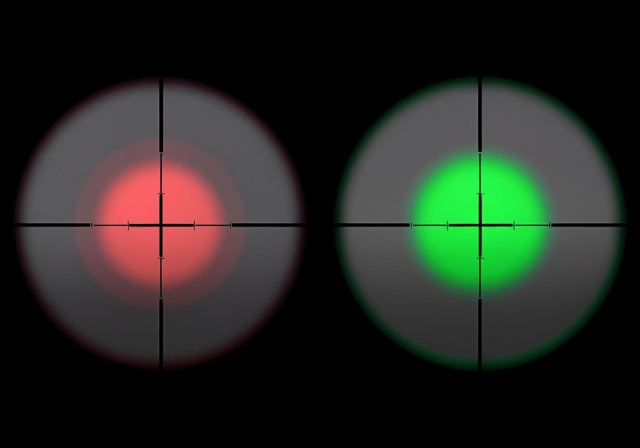
After spending hundreds of hours behind various reflex sights on the range, I’ve learned that the red versus green debate isn’t as simple as picking a favorite color. The choice between reticle colors affects your shooting experience in real, measurable ways.
Green dot sights excel in daylight visibility and eye comfort, while red dots offer superior battery life, night vision compatibility, and lower cost. Neither is universally better – the right choice depends on your eyes, your environment, and your application.
I’ve tested both options extensively across different lighting conditions, and I’ll walk you through exactly what you need to know to make the right choice for your setup.
| Factor | Red Dot | Green Dot | Winner |
|---|---|---|---|
| Daylight Visibility | Good | Excellent | Green |
| Battery Life | 50,000+ hours | 1,000-5,000 hours | Red |
| Eye Comfort | Can cause strain | Less fatigue | Green |
| Night Vision | Compatible | Not compatible | Red |
| Price | $150-600 | $180-650 | Red |
| Astigmatism | More distortion | Less distortion | Green |
Reflex sights work on a simple but brilliant principle. An LED emitter projects light onto a reflective glass lens coated with thousands of microscopic mirrors.
These mirrors bounce the light back toward your eye, creating the appearance of a floating dot superimposed on your target.
The only difference between red and green dots is the LED color. Red LEDs emit light at 620-750 nanometers, while green LEDs operate at 495-570 nanometers.
Wavelength: The distance between light wave peaks, measured in nanometers. Red light has longer wavelengths (620-750nm) while green has shorter wavelengths (495-570nm). Your eyes perceive different wavelengths as different colors.
Your eyes process these wavelengths differently. The human eye is most sensitive to green light in the middle of the visible spectrum, which is why green dots often appear sharper and more defined.
This sensitivity comes from our evolutionary history – we’re optimized to see greens and yellows because that’s the spectrum of plants and vegetation we needed to navigate for survival.
LED Emitter: A light-emitting diode that creates the reticle. Red LEDs are more energy-efficient and have been around longer. Green LEDs require more power and use different materials, making them more expensive to manufacture.
Understanding this science helps explain why each color has distinct advantages and disadvantages in different shooting scenarios.
Red dot sights dominated the market for decades, and for good reason. When Aimpoint introduced the first electronic red dot sight in 1975, they set the standard that green dots are still trying to match in certain areas.
Red dots excel in battery life, night vision compatibility, and cost effectiveness. The technology is mature, reliable, and proven in combat.
1. Battery Life: This is red’s biggest advantage. Red LEDs are incredibly energy-efficient. Most quality red dots claim 50,000+ hours of battery life on a single CR2032 battery.
I’ve had red dots running for over five years on the same battery. That’s not marketing hype – that’s real-world experience.
2. Night Vision Compatibility: If you plan to use night vision devices, red is your only choice. Red light doesn’t bloom through night vision like green does, and most NVGs are optimized for red reticles.
Military units almost exclusively use red dots for this reason. When you’re running nods, you need that compatibility.
3. Low Light Performance: Red stands out better than green in low-light conditions and against dark backgrounds. The longer wavelength penetrates darkness more effectively.
4. Cost and Availability: Red dots cost $30-50 less than their green counterparts. Every major manufacturer offers red dot options, while green availability is more limited.
5. Proven Reliability: Red dots have been combat-proven for nearly 50 years. The technology is mature, dependable, and trusted by professionals worldwide.
1. Daylight Washout: In bright sunlight, especially against green backgrounds, red dots can become harder to pick up quickly. Your eyes are less sensitive to red in bright conditions.
2. Eye Strain: Some shooters experience eye fatigue with red dots during extended shooting sessions. Red sits at the edge of our visible spectrum and requires more focus to process clearly.
3. Astigmatism Issues: If you have astigmatism, red dots often appear blurry or starburst-shaped. The longer wavelength makes optical irregularities more pronounced.
Green dot sights are the newer contender, gaining popularity over the past decade as LED technology improved. They’re not just a gimmick – there’s solid science behind their advantages.
Green dots offer superior daylight visibility, reduced eye strain, and better performance for shooters with astigmatism. The human eye is naturally most sensitive to green light.
1. Daylight Visibility: This is green’s killer feature. In bright sunlight, green dots pop against any background. Your eyes are most sensitive to green wavelengths, making acquisition faster and more instinctive.
I’ve run drills switching between colors, and my split times are consistently faster with green in daylight conditions.
2. Eye Comfort: Because our eyes are optimized for green light, extended use causes less fatigue. During a full day of competition or training, this difference becomes noticeable.
3. Astigmatism Friendly: Green’s shorter wavelength is less affected by astigmatism. Many shooters with minor astigmatism see green dots as crisp while red dots appear blurry or starburst-shaped.
4. Better Contrast: Green provides excellent contrast against most natural backgrounds – especially in environments with vegetation, where red can get lost.
5. Faster Target Acquisition: The eye naturally centers on green light faster than red. This can translate to milliseconds saved in target acquisition – crucial in competition or self-defense scenarios.
1. Battery Life: This is green’s biggest weakness. Green LEDs are less efficient, typically lasting 1,000-5,000 hours on a battery. That’s a fraction of red dot longevity.
However, newer models with solar failsafe technology are closing this gap. Holosun’s solar hybrid systems can extend green dot battery life significantly.
2. Higher Cost: Green dots typically cost $30-50 more than equivalent red models. The green LED technology uses more expensive materials and is more complex to manufacture.
3. Night Vision Incompatibility: Green dots bloom excessively through night vision devices, making them unusable with NVGs. If you run night vision, green is a non-starter.
4. Limited Availability: Not all manufacturers offer green options. You’ll find green dots from major brands like Holosun, Trijicon, and Vortex, but budget options are fewer.
Let’s dive deeper into the specific factors that should influence your decision.
The lighting environment matters more than any other factor in this decision.
Bright Sunlight: Green wins clearly. In full daylight, especially between 10 AM and 3 PM, green dots are faster to acquire and maintain better contrast.
After testing both in midday desert sun, I found green required no brightness adjustment while red needed to be cranked to maximum settings.
Overcast Conditions: It’s a toss-up. Both colors perform well in cloudy weather. Slight edge to green if there’s still bright ambient light.
Dawn/Dusk: Red begins to show advantages. As light levels drop, red’s visibility remains more consistent while green can start to wash out.
Total Darkness: Red dominates. In low-light conditions, red dots stand out better against dark backgrounds. This is especially true in urban environments with artificial lighting.
Battery life matters differently depending on your use case.
| Use Case | Battery Priority | Recommended |
|---|---|---|
| Home Defense (stored) | Critical – check quarterly | Red |
| EDC Carry | Important – check monthly | Red |
| Competition | Less critical – change annually | Either |
| Range Toy | Not critical | Either |
For a home defense gun that sits in a safe most of the year, red’s 50,000-hour battery life means you might change the battery once every five years if you remember to check it quarterly.
Green dots on the same use case would need battery changes annually at minimum. That’s not a huge burden, but it’s something to track.
This factor doesn’t get enough discussion, but it matters significantly for high-volume shooters.
I’ve done 500-round range days with both colors. With red, my eyes feel noticeably more tired by the end. With green, I can keep going without the same strain.
For competition shooters who might fire thousands of rounds in a weekend, green’s reduced eye fatigue is a genuine performance advantage.
The science backs this up. Your eyes have three types of color-detecting cones, and the ones most sensitive to green are also the most numerous. You’re literally built to process green light efficiently.
If you use night vision, the choice is simple: red is mandatory.
Green dots create significant bloom through NVGs, obscuring your target instead of illuminating it. Red dots are designed to work seamlessly with night vision devices.
This isn’t just about military users. Law enforcement, hunters using thermal/NV combos, and even civilian enthusiasts with night vision need red dots.
Red dots win on both counts.
The price gap has been narrowing as green LED production scales, but red remains the more economical choice.
Astigmatism affects about 30% of adults, and it’s the number one topic in forum discussions about red dot sights.
Astigmatism: A common refractive error causing blurred vision at all distances. With reflex sights, astigmatism makes dots appear irregular, starburst-shaped, or distorted. Green’s shorter wavelength is less affected by this optical irregularity.
Many shooters discover they have astigmatism only after trying a red dot sight. The dot that should be crisp appears as a fuzzy starburst pattern.
Green dots often appear sharper to astigmatic eyes. The shorter wavelength is less prone to distortion, and some shooters report green looks nearly as crisp as prism sights or iron sights.
I’ve spoken with dozens of shooters who switched to green specifically for this reason. For mild to moderate astigmatism, green can make a significant difference.
However, green isn’t a cure. Severe astigmatism will still affect green dots, and prism sights or iron sights might be necessary for truly crisp reticles.
The only way to know how astigmatism affects you is to try both colors. Most ranges have demonstrators available, and borrowing a friend’s optic for a few magazines can be eye-opening.
An often-overlooked factor is color blindness, which affects about 8% of men and 0.5% of women.
The most common form is red-green color blindness, which makes it difficult to distinguish between red and green. However, this doesn’t affect dot visibility the way you might expect.
Research and user reports indicate green dots are approximately six times easier for color blind users to see clearly. The brightness and contrast of green light tends to cut through color perception issues more effectively than red.
If you have color vision deficiencies, green deserves serious consideration for your testing.
Different shooting applications prioritize different factors. Let’s break down the recommendations by use case.
For most hunting applications, I recommend green dots.
Best for Hunting: Green Dot
Superior daylight visibility and eye comfort during long sits give green the edge for most hunting scenarios.
Hunting happens during daylight hours when green’s visibility advantage matters most. You might spend hours behind glass, and reduced eye fatigue is valuable.
Exceptions: If you hunt predators at night using night vision, red becomes mandatory. Same for hog hunting with thermal/NV combos.
For home defense and concealed carry, I lean toward red dots.
Best for Self-Defense: Red Dot
Battery reliability, low-light performance, and proven track record make red the safer choice for defensive applications.
Self-defense scenarios are unpredictable. You might need your optic at 2 AM in total darkness. Red’s superior low-light performance could matter.
Battery life is also critical. A home defense gun that sits in a safe for months needs to work when called upon. Red’s multi-year battery life provides peace of mind.
That said, green is absolutely viable for defensive use if you’re diligent about battery maintenance. Just check it quarterly and carry a spare battery.
For competition, green has the advantage.
Best for Competition: Green Dot
Faster target acquisition and reduced eye fatigue during long matches give green competitors an edge.
Competition shooting happens in controlled, daylight conditions. Battery changes between stages are no big deal. Eye fatigue after hundreds of rounds is real.
Many top competitors in USPSA, 3-Gun, and similar sports have switched to green for these reasons.
For pure plinking and recreational shooting, choose whichever you prefer.
Both colors work great for range use. You’re not depending on this optic for life-or-death situations, so fun and personal preference can be your guide.
I recommend trying both if you have the opportunity. Many shooters end up with one of each for different guns.
The reticle color market is expanding beyond red and green.
Holosun now offers gold/yellow dot options, which combine some advantages of both red and green. Gold provides excellent daylight visibility while maintaining better low-light performance than green.
Some manufacturers are experimenting with multi-color optics that allow you to switch between reticle colors based on conditions.
These options are still relatively new and expensive, but they represent an interesting middle ground that might appeal to shooters who want versatility.
Neither is universally better. Green dots excel in daylight visibility and cause less eye strain, making them ideal for competition and daytime use. Red dots offer superior battery life, night vision compatibility, and better performance in low light. The right choice depends on your specific use case, lighting conditions, and personal vision characteristics.
The military primarily uses red dot sights. This is due to night vision compatibility, proven reliability, and superior battery life. Red reticles don’t bloom through night vision goggles like green does, and red’s 50,000+ hour battery life reduces logistical burden. Military units have used red dots since the 1970s with great success in combat environments.
The best color depends on your application. For home defense and night vision use, red is superior. For competition shooting and daytime hunting, green offers advantages. For most new shooters, I recommend starting with red due to its versatility and lower cost. Try both at a range if possible – your personal experience matters more than general recommendations.
Green LEDs use different materials and manufacturing processes than red LEDs. They require more power to produce the same apparent brightness, and the technology is less mature. Green LEDs are more complex to manufacture at scale, leading to a $30-50 price premium. As production volumes increase, this price gap has been narrowing but hasn’t disappeared.
Green dots are generally better for shooters with astigmatism. Green’s shorter wavelength (495-570nm) is less affected by the optical irregularities that cause astigmatism distortion. Many shooters with mild to moderate astigmatism report green dots appear significantly sharper than red dots, which can appear starburst-shaped or blurry. However, severe astigmatism affects both colors.
No, green dots are not compatible with night vision devices. Green light blooms excessively through night vision goggles, creating a washed-out appearance that obscures your target rather than illuminating it. Red dots are specifically designed to work with NVGs and are the only choice for night vision applications. If you plan to use night vision, choose a red dot sight.
After years of testing and thousands of rounds with both colors, here’s my honest assessment:
Choose Green if: You shoot primarily in daylight, compete in high-volume sports, have mild astigmatism, or prioritize eye comfort during extended shooting sessions.
Choose Red if: You need night vision compatibility, want maximum battery life for a defensive gun, shoot primarily in low light, or prefer proven military-grade reliability.
The truth is, both colors work extremely well. Reflex sights are game-changers regardless of reticle color. The difference between red and green is incremental – both are massive upgrades over iron sights.
My recommendation? If you’re unsure, start with red. It’s more versatile, cheaper, and has fewer drawbacks. You can always add a green dot to your collection later and decide for yourself.
Many serious shooters end up owning both – red for night vision guns and defensive pieces, green for competition and daylight hunting.
At the end of the day, personal preference matters. Get behind both colors if you can, trust your eyes, and shoot what feels fastest and most natural to you.