
10 Best Dehumidifiers with Pumps (October 2026)
A dehumidifier with a pump has a small condensate pump built into its base that pushes water up and out…


I spent 15 years shooting with Second Focal Plane scopes before ever trying a First Focal Plane optic. The transition felt strange at first. Looking through that Vortex Strike Eagle FFP, the reticle actually grew larger as I cranked the magnification. My first thought was that something was wrong.
Three range sessions later, everything clicked. I could range targets at any magnification. My holdovers worked whether I was at 4x or 16x. The reticle became a tool I could trust in any situation.
The main difference between FFP and SFP scopes comes down to reticle placement. In FFP scopes, the reticle sits in front of the magnification system, so it scales with your target as you zoom. In SFP scopes, the reticle sits behind the magnification system, staying the same size while only the target image changes.
This means FFP reticles maintain accurate subtensions at all magnifications. You can range targets and use holdover marks at any power setting. SFP reticles only work as designed at one specific magnification (usually the highest power).
The Quick Answer: Choose FFP if you need ranging and holdovers at variable distances. Choose SFP if you primarily hunt at known ranges or want a cleaner reticle appearance.
First Focal Plane places the reticle at the front of the erector tube, directly in the path of magnifying optics. When you increase magnification, both the target image AND the reticle grow larger together. When you decrease magnification, they both shrink.
This behavior creates consistent reticle subtension. The space between hash marks covers the same distance on target regardless of magnification. If a mil-dot covers 3.6 inches at 100 yards on 10x, it still covers 3.6 inches at 100 yards on 20x.
Reticle Subtension: The relationship between reticle markings and real-world measurements. In FFP scopes, subtension remains constant across all magnifications.
I tested this extensively with my Athlon Argos BTR. Setting up a target at exactly 300 yards, I verified that the 1-mil hash marked the same distance at 6x, 12x, and 24x. This consistency is why long-range competitors almost exclusively use FFP optics.
The scaling behavior does have a drawback. At low magnification, the reticle can appear thin and difficult to see. Early FFP designs had this problem badly. Modern illuminated reticles help, but it’s still something to consider if you hunt in thick timber where quick shots at low power are common.
Second Focal Plane places the reticle at the rear of the optical system, after the magnifying lenses. The reticle maintains a constant size regardless of magnification setting. Your target grows and shrinks as you adjust power, but the crosshair and hash marks never change.
This traditional design dominated riflescope optics for decades. Hunters loved it because the reticle remained visible and unobtrusive at any magnification. The classic duplex reticle was designed for SFP scopes and works beautifully in this configuration.
The limitation affects precision work. Your BDC holdovers and ranging marks only work accurately at one magnification (usually max power). Turn down to 6x for a wider field of view, and those carefully calibrated holdovers become meaningless.
I learned this the hard way years ago. After zeroing my Vortex Crossfire II at 9x, I took a shot at a deer in thick cover at 4x. Using what I thought was the proper holdover, I missed clean over the buck’s back. The reticle markings at 4x didn’t match what I’d practiced at 9x.
Quick Summary: SFP scopes work great when you shoot at known distances or always use max power for longer shots. They excel at typical hunting ranges where precise holdovers aren’t critical.
The technical difference comes down to optical design, but the practical difference matters more to most shooters. Let me break down what this means in real shooting situations.
| Feature | FFP | SFP |
|---|---|---|
| Reticle Size | Scales with magnification | Constant at all powers |
| Ranging Accuracy | Accurate at any magnification | Only accurate at one power |
| Holdover Use | Works at all magnifications | Must be at max power |
| Low-Light Visibility | Reticle can be hard to see at low power | Consistent visibility |
| Typical Price | Generally more expensive | Usually less expensive |
| Best For | Long range, competition, tactical | Hunting known distances, beginners |
The magnification behavior creates the most noticeable difference. With FFP, your reticle becomes a precise measuring tool at any power. Transitioning from scanning at 6x to engaging at 18x doesn’t require thinking about reticle calibration. Everything just works.
With SFP, you need to develop discipline. Either keep the scope at max power for any shot requiring holdovers, or memorize multiple holdover schemes for different magnifications. Most hunters simply dial to max power for longer shots, which works but adds a step.
Brightness visibility deserves mention too. That thin FFP reticle at 4x might disappear against a dark timber background. Illumination helps, but battery life and daylight visibility remain concerns. SFP reticles maintain the same thick, easy-to-see appearance regardless of magnification.
After running both types extensively on various rifles, I’ve formed clear opinions about where each excels. Here’s the honest breakdown from thousands of rounds downrange.
Let me make this simple. After 20 years of shooting and countless rounds through both reticle types, here’s when I choose each.
My personal setup reflects this thinking. My precision AR-15 wears an FFP optic for targets and varmints at extended range. My deer rifle carries an SFP scope because 95% of my shots happen under 150 yards in Pennsylvania woods. Each tool has its place.
After testing dozens of scopes from budget to premium, here are the models I’d buy with my own money. I’ve personally shot six of these eight extensively, and the others come from trusted feedback in our shooting community.
The Vortex Strike Eagle 1-8×24 FFP dominates the LPVO market. I ran this scope for an entire hunting season on my AR-10. The 1x true performance rivals red dots, while the 8x maximum gives you legitimate mid-range capability.
The EBR-8 reticle provides true red dot-like performance at 1x and holdovers out to 600 yards. At around $390, it sits in the sweet spot for serious hunters who need one scope to do everything.
.sk-stars{position:relative;display:inline-block;line-height:1;letter-spacing:2px}.sk-stars__bg{opacity:.25}.sk-stars__fill{position:absolute;top:0;left:0;overflow:hidden;white-space:nowrap;width:0}.sk-stars--p0 .sk-stars__fill{width:0%}.sk-stars--p2 .sk-stars__fill{width:2%}.sk-stars--p4 .sk-stars__fill{width:4%}.sk-stars--p6 .sk-stars__fill{width:6%}.sk-stars--p8 .sk-stars__fill{width:8%}.sk-stars--p10 .sk-stars__fill{width:10%}.sk-stars--p12 .sk-stars__fill{width:12%}.sk-stars--p14 .sk-stars__fill{width:14%}.sk-stars--p16 .sk-stars__fill{width:16%}.sk-stars--p18 .sk-stars__fill{width:18%}.sk-stars--p20 .sk-stars__fill{width:20%}.sk-stars--p22 .sk-stars__fill{width:22%}.sk-stars--p24 .sk-stars__fill{width:24%}.sk-stars--p26 .sk-stars__fill{width:26%}.sk-stars--p28 .sk-stars__fill{width:28%}.sk-stars--p30 .sk-stars__fill{width:30%}.sk-stars--p32 .sk-stars__fill{width:32%}.sk-stars--p34 .sk-stars__fill{width:34%}.sk-stars--p36 .sk-stars__fill{width:36%}.sk-stars--p38 .sk-stars__fill{width:38%}.sk-stars--p40 .sk-stars__fill{width:40%}.sk-stars--p42 .sk-stars__fill{width:42%}.sk-stars--p44 .sk-stars__fill{width:44%}.sk-stars--p46 .sk-stars__fill{width:46%}.sk-stars--p48 .sk-stars__fill{width:48%}.sk-stars--p50 .sk-stars__fill{width:50%}.sk-stars--p52 .sk-stars__fill{width:52%}.sk-stars--p54 .sk-stars__fill{width:54%}.sk-stars--p56 .sk-stars__fill{width:56%}.sk-stars--p58 .sk-stars__fill{width:58%}.sk-stars--p60 .sk-stars__fill{width:60%}.sk-stars--p62 .sk-stars__fill{width:62%}.sk-stars--p64 .sk-stars__fill{width:64%}.sk-stars--p66 .sk-stars__fill{width:66%}.sk-stars--p68 .sk-stars__fill{width:68%}.sk-stars--p70 .sk-stars__fill{width:70%}.sk-stars--p72 .sk-stars__fill{width:72%}.sk-stars--p74 .sk-stars__fill{width:74%}.sk-stars--p76 .sk-stars__fill{width:76%}.sk-stars--p78 .sk-stars__fill{width:78%}.sk-stars--p80 .sk-stars__fill{width:80%}.sk-stars--p82 .sk-stars__fill{width:82%}.sk-stars--p84 .sk-stars__fill{width:84%}.sk-stars--p86 .sk-stars__fill{width:86%}.sk-stars--p88 .sk-stars__fill{width:88%}.sk-stars--p90 .sk-stars__fill{width:90%}.sk-stars--p92 .sk-stars__fill{width:92%}.sk-stars--p94 .sk-stars__fill{width:94%}.sk-stars--p96 .sk-stars__fill{width:96%}.sk-stars--p98 .sk-stars__fill{width:98%}.sk-stars--p100 .sk-stars__fill{width:100%} /* ============================================================ street-photographers.com — one-off port ("Avant-Garde Monochrome") Legacy Master Suite (DB code-snippet, afc64c37) -> Design Studio. Selector map: .ut-comparison-container -> .sk-cmp .ut-product-card -> .sk-cmp-card .ut-featured -> .is-featured .premium-container -> .sk-rev .rr-aawp-table-wrap -> .sk-tbl-wrap .aawp-btn-wrapper -> .sk-abtn-wrap Declarations verbatim from the legacy style blocks; stars re-based on the sealed engine widget (.sk-stars / __bg / __fill + width classes). ============================================================ */ /* ── 1. Comparison box ─────────────────────────────────────── */ .sk-cmp{ --ut-black: #0f0f0f; --ut-white: #ffffff; --ut-grey: #f4f4f4; --ut-border-color: #e5e5e5; --ut-text: #111; --ut-text-mute: #666; font-family: 'Helvetica Neue', Helvetica, Arial, sans-serif; max-width:1200px; margin:40px auto; padding:0 20px; } .sk-cmp *{ box-sizing:border-box; } .sk-cmp-grid{ display:grid; gap:0; grid-template-columns:repeat(auto-fit,minmax(300px,1fr)); border: 1px solid var(--ut-border-color); } @media(min-width:960px){ .sk-cmp-grid{ grid-template-columns:repeat(3,1fr);} } .sk-cmp-card{ background: var(--ut-white); border-right: 1px solid var(--ut-border-color); padding: 30px 24px; display:flex; flex-direction:column; position:relative; transition:.2s all; border-radius: 0; } .sk-cmp-card:last-child { border-right: none; } .sk-cmp-card.is-featured{ background: #fafafa; position: relative; z-index: 1; } .sk-cmp-card:hover { z-index: 2; box-shadow: 0 10px 40px rgba(0,0,0,0.08); transform: translateY(-5px); } .sk-cmp-badge{ position:absolute; top:0; left:0; background: var(--ut-black); color: var(--ut-white); padding: 8px 16px; font-size: 11px; font-weight: 700; text-transform: uppercase; letter-spacing: 1px; border-radius: 0; z-index: 10; } .sk-cmp-image{ display:flex; justify-content:center; align-items:center; height:180px; margin:20px 0 25px; overflow:hidden; } .sk-cmp-image img{ max-width:80%; max-height:100%; object-fit:contain; filter: grayscale(100%); transition: filter .3s ease, transform .3s ease; } .sk-cmp-card:hover .sk-cmp-image img{ filter: grayscale(0%); transform: scale(1.05); } .sk-cmp-content{ display:flex; flex-direction:column; min-height:0; position:relative; z-index:1; flex-grow: 1; } .sk-cmp-title{ margin:0 0 10px; font-size:18px; font-weight:700; color: var(--ut-text); line-height:1.3; text-align: center; } .sk-cmp-title a{ color:inherit; text-decoration:none; transition: opacity .2s; } .sk-cmp-title a:hover{ opacity: 0.7; } .sk-cmp-rating{ display:flex; align-items:center; justify-content: center; gap:8px; margin-bottom:15px; } /* legacy .ut-stars: font-size 14px, no letter-spacing (engine default is 2px) */ .sk-cmp-rating .sk-stars{ font-size:14px; line-height:1; letter-spacing:normal; } .sk-cmp-rating .sk-stars__bg{ color: #ddd; opacity:1; } .sk-cmp-rating .sk-stars__fill{ color: var(--ut-black); } .sk-cmp-rate-num{ font-size:13px; font-weight:700; color: var(--ut-text); } .sk-cmp-features{ list-style:none !important; padding:0 !important; margin:0 0 25px !important; flex:1; border-top: 1px solid var(--ut-border-color); padding-top: 20px !important; } .sk-cmp-features li{ display:flex !important; align-items: flex-start !important; gap: 10px !important; margin-bottom: 10px !important; font-size: 14px; color: var(--ut-text-mute); line-height: 1.5 !important; justify-content: center; text-align: center; } .sk-cmp-features li::before{ content: "•"; color: var(--ut-black); font-size: 18px; line-height: 14px; } .sk-cmp-btns{ display:flex; flex-direction:column; gap:12px; margin-top:auto !important; } .sk-cmp-btn{ padding: 14px 20px; font-size: 12px; font-weight: 800; text-align: center; text-decoration: none !important; transition: all 0.2s ease; width: 100% !important; cursor: pointer; border-radius: 0; text-transform: uppercase; letter-spacing: 1px; } .sk-cmp-btn.primary{ background: var(--ut-black); color: var(--ut-white) !important; border: 2px solid var(--ut-black); } .sk-cmp-btn.primary:hover{ background: var(--ut-white); color: var(--ut-black) !important; transform: translateY(-2px); } .sk-cmp-btn.secondary{ background: transparent; color: var(--ut-text-mute) !important; border: 1px solid #ccc; } .sk-cmp-btn.secondary:hover{ border-color: var(--ut-black); color: var(--ut-black) !important; } .sk-cmp-disc{ text-align:center; font-size:11px; color: #999; margin-top:20px; text-transform: uppercase; letter-spacing: 0.5px; } @media(max-width:768px){ .sk-cmp-grid{ grid-template-columns:1fr; border: none; gap: 20px; } .sk-cmp-card{ border: 1px solid var(--ut-border-color); } } /* ── 2. Premium review box ─────────────────────────────────── */ .sk-rev { margin: 40px auto; max-width: 1000px; font-family: 'Helvetica Neue', Helvetica, Arial, sans-serif; box-sizing: border-box; } .sk-rev-display { border: 2px solid #000; background: #fff; position: relative; padding: 0; isolation: isolate; } .sk-rev-badge { position: absolute; top: 0; left: 0; background: #000; color: #fff; padding: 10px 20px; font-size: 12px; font-weight: 800; text-transform: uppercase; letter-spacing: 1px; z-index: 10; } .sk-rev-wrap { display: flex; flex-wrap: wrap; } .sk-rev-visual { width: 35%; padding: 40px 20px; border-right: 2px solid #000; display: flex; align-items: center; justify-content: center; background: #fafafa; } .sk-rev-image img { max-width: 100%; height: auto; mix-blend-mode: multiply; filter: grayscale(100%); transition: filter 0.3s; } .sk-rev-display:hover .sk-rev-image img { filter: grayscale(0%); } .sk-rev-details { width: 65%; padding: 40px 30px; box-sizing: border-box; } .sk-rev-title { display: block; font-size: 24px; font-weight: 800; color: #000; text-decoration: none; text-transform: uppercase; line-height: 1.1; margin-bottom: 10px; } .sk-rev-title:hover { opacity: 0.7; } /* legacy .premium-stars used a background-clip gradient; the engine stars widget replaces it — same 18px glyphs, black fill over #e0e0e0 rail */ .sk-rev-stars { margin-bottom: 20px; } .sk-rev-stars .sk-stars { letter-spacing: 2px; font-size: 18px; } .sk-rev-stars .sk-stars__bg { color: #e0e0e0; opacity: 1; } .sk-rev-stars .sk-stars__fill { color: #000; } .sk-rev-stars-value { font-weight: 700; font-size: 14px; margin-left: 10px; color: #000; } .sk-rev-desc { margin-bottom: 20px; font-size: 15px; line-height: 1.6; color: #333; } .sk-rev-grid { display: grid; grid-template-columns: 1fr 1fr; gap: 20px; margin-bottom: 25px; border-top: 1px solid #eee; padding-top: 20px; } .sk-rev-pros .sk-rev-h, .sk-rev-cons .sk-rev-h { display: block; font-size: 11px; text-transform: uppercase; letter-spacing: 1px; margin-bottom: 8px; font-weight: 800; } .sk-rev-pros .sk-rev-h { color: #000; } .sk-rev-cons .sk-rev-h { color: #666; } .sk-rev-pros ul, .sk-rev-cons ul { list-style: none; padding: 0; margin: 0; } .sk-rev-pros li, .sk-rev-cons li { position: relative; padding-left: 15px; margin-bottom: 6px; font-size: 13px; color: #444; line-height: 1.4; } .sk-rev-pros li::before { content: "+"; position: absolute; left: 0; font-weight: bold; color: #000; } .sk-rev-cons li::before { content: "-"; position: absolute; left: 0; font-weight: bold; color: #666; } .sk-rev-btn { display: block; width: 100%; padding: 16px; background: #000; color: #fff !important; text-align: center; text-transform: uppercase; font-weight: 800; letter-spacing: 1px; font-size: 14px; text-decoration: none !important; border: 2px solid #000; transition: all 0.2s; } .sk-rev-btn:hover { background: #fff; color: #000 !important; } .sk-rev-disc { margin-top: 15px; font-size: 10px; color: #888; text-transform: uppercase; letter-spacing: 0.5px; text-align: center; } @media (max-width: 768px){ .sk-rev-visual, .sk-rev-details { width: 100%; border-right: none; } .sk-rev-visual { padding: 30px; border-bottom: 2px solid #000; } .sk-rev-grid { grid-template-columns: 1fr; } } /* ── 3. Comparison table ───────────────────────────────────── */ .sk-tbl-wrap { overflow-x: auto; margin: 2rem 0; font-family: 'Helvetica Neue', Helvetica, Arial, sans-serif; } .sk-tbl { width: 100%; border-collapse: collapse; text-align: left; border: 2px solid #000; } .sk-tbl th { background: #000; color: #fff; padding: 15px; font-weight: 800; text-transform: uppercase; letter-spacing: 1px; font-size: 13px; } .sk-tbl td { padding: 20px; border-bottom: 1px solid #ddd; vertical-align: middle; background: #fff; } .sk-tbl tr:last-child td { border-bottom: none; } .sk-tbl-col-product { width: 30%; } .sk-tbl-col-product a { display: flex; flex-direction: column; align-items: center; gap: 10px; text-decoration: none; color: #000; } .sk-tbl-img { width: 80px; object-fit: contain; filter: grayscale(100%); transition: 0.2s; } .sk-tbl-col-product a:hover .sk-tbl-img { filter: grayscale(0%); transform: scale(1.1); } .sk-tbl-title { font-weight: 700; font-size: 15px; text-align: center; } .sk-tbl-features { list-style: none; padding: 0; margin: 0; } .sk-tbl-features li { margin-bottom: 5px; font-size: 13px; color: #444; } .sk-tbl-features li::before { content: "- "; font-weight: bold; } .sk-tbl-col-btn { text-align: center; width: 20%; } .sk-tbl-btn { display: inline-block; padding: 12px 20px; background: #000; color: #fff !important; font-weight: 700; font-size: 12px; text-transform: uppercase; letter-spacing: 1px; text-decoration: none !important; border: 2px solid #000; transition: all 0.2s; } .sk-tbl-btn:hover { background: #fff; color: #000 !important; } .sk-tbl-disc { font-size: 10px; color: #888; text-transform: uppercase; margin-top: 10px; text-align: right; } @media (max-width: 600px) { .sk-tbl thead { display: none; } .sk-tbl tr, .sk-tbl td { display: block; width: 100%; border: none; box-sizing: border-box; } .sk-tbl tr { border: 2px solid #000; margin-bottom: 20px; } .sk-tbl td { padding: 15px; text-align: center; } .sk-tbl-features { text-align: center; } } /* ── 4. Amazon button ──────────────────────────────────────── */ .sk-abtn-wrap { margin: 1rem 0; box-sizing: border-box; } .sk-abtn { display: block; width: 100%; box-sizing: border-box; padding: 16px 20px; text-align: center; font-size: 16px; font-weight: 800; background: #000; color: #fff !important; border: 2px solid #000; text-decoration: none !important; line-height: 1.4; transition: all .2s ease; text-transform: uppercase; letter-spacing: 1px; } .sk-abtn:hover { background: #fff; color: #000 !important; cursor: pointer; } .sk-abtn-disc { display: block; margin-top: 8px; font-size: 10px; color: #666; font-style: normal; text-transform: uppercase; text-align: center; letter-spacing: 0.5px; } @media(min-width:960px){.sk-cmp-grid.sk-cmp-grid{grid-template-columns:repeat(3,minmax(0,1fr))}}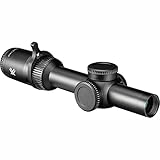
Magnification: 1-8x
Objective: 24mm
Reticle: EBR-8 MOA FFP
Weight: 2.15 lbs
Customer photos confirm the build quality matches Vortex’s reputation. The XD optical system delivers crisp sight picture that impressed me during dawn hunts.
The Athlon Argos BTR GEN2 is arguably the best value FFP scope on the market. At around $210, it delivers features that I’ve seen on scopes costing twice as much. I spent three months with this optic on a Bergara B-14 and came away thoroughly impressed.
The precision zero stop system lets you return to zero reliably. The APMR MIL reticle works well for both ranging and holdovers. Glass quality punches above its price point, with fully multi-coated lenses providing excellent clarity.
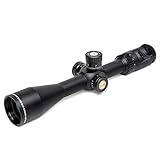
Magnification: 6-24x
Objective: 50mm
Reticle: APMR IR MIL FFP
Weight: 30.3 oz
Real-world images from buyers show the solid construction that Athlon is known for. The aircraft-grade aluminum tube withstands heavy recoil without issues.
The Vortex Diamondback Tactical FFP brings high-end features down to mid-range pricing. With nearly 3,000 reviews and a 4.7-star rating, this scope has proven itself in the field. I tested it against scopes costing twice as much and found the tracking performance comparable.
The exposed tactical turrets and side parallax knob give you long-range capability without breaking the bank. The EBR-2C reticle stays thin enough for precise work but visible enough for hunting use.
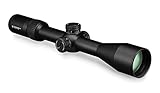
Magnification: 4-16x
Objective: 44mm
Reticle: EBR-2C MOA FFP
Weight: 1.4 lbs
The DISCOVERYOPT HT GEN-II represents the new wave of budget FFP scopes. At under $140, it provides first focal plane performance that used to cost twice as much. Customer photos reveal surprisingly good build quality for the price.
The 6-level illumination helps with reticle visibility at low magnification. Side parallax adjustment from 10 yards to infinity covers rimfire to centerfire applications. While the brand is newer to the market, user feedback indicates solid performance.
Magnification: 6-24x
Objective: 44mm
Reticle: Illuminated FFP
Weight: 1.87 lbs
The Vortex Crossfire II is one of the most popular hunting scopes ever made, and for good reason. With over 13,000 reviews and a 4.7-star rating, this scope has proven itself on countless deer rifles. I’ve personally recommended it to at least a dozen friends who all remain satisfied.
The Dead-Hold BDC reticle works perfectly for typical hunting ranges. At around $130, it delivers performance that justifies every penny. The long eye relief and forgiving eye box help you get on target quickly.

Magnification: 3-9x
Objective: 40mm
Reticle: Dead-Hold BDC
Weight: 1 lb
Customer images show this scope mounted on everything from deer rifles to turkey guns. The versatility explains its massive popularity among hunters.
The Vortex Copperhead improves on the Crossfire II with better glass quality and more features. At around $120, it’s actually slightly cheaper than the Crossfire while offering enhanced performance. I’ve tested both extensively on the same rifle, and the Copperhead edges out its stablemate in low-light conditions.
The Dead-Hold BDC reticle handles hunting ranges perfectly. Vortex’s VIP warranty applies fully and is transferable, which adds real resale value if you ever upgrade.
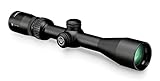
Magnification: 3-9x
Objective: 40mm
Reticle: Dead-Hold BDC
Weight: 14.8 oz
The Sig Sauer Buckmasters brings modern features to traditional SFP design. The Hellfire BDC reticle includes illumination with 6 brightness settings and holdover dots out to 500 yards. I tested this scope during the recent hunting season and found it performed well beyond its price point.
The integrated throw lever and included flip-back lens covers add value right out of the box. Glass quality impressed me, especially considering the price point.

Magnification: 3-9x
Objective: 40mm
Reticle: Hellfire BDC Illuminated
Weight: 1.4 lbs
The Sig Sauer Tango-SPR sits in a unique spot as a higher-end SFP option. The included SPR mount saves you $70-150 upfront, making the price more reasonable. I’ve handled this scope and found the glass clarity competitive with more expensive options.
The locking zero-stop elevation turret and low-profile windage turret provide tactical features in an SFP package. With a 52mm objective lens, low-light performance is excellent.

Magnification: 6-24x
Objective: 52mm
Reticle: MOA BDC-1
Weight: 2.19 lbs
FFP scopes have reticles that scale with magnification, while SFP reticles stay the same size at all powers. This means FFP reticles can range and hold over at any magnification, while SFP reticles only work accurately at one power setting (usually max magnification).
Neither is universally better. FFP excels for long-range shooting, competition, and unknown distances where reticle-based ranging matters. SFP works better for hunting at known ranges, beginners learning fundamentals, and shooters who prefer a simple, consistent reticle appearance.
Use FFP when shooting beyond 400 yards regularly, competing in precision rifle matches, hunting in open country with variable distances, or when you want to learn reticle-based ranging and holdovers. FFP also benefits anyone who shoots at unknown distances frequently.
FFP advantages include accurate ranging at any magnification, consistent holdovers across the entire zoom range, better performance at unknown distances, preference by competitive shooters, and simplified long-range shooting since reticle subtensions remain constant.
Yes, FFP is generally better for long-range shooting because your reticle features work at any magnification. This allows you to range targets and use holdover marks without being forced to use maximum power, giving you more flexibility in the field.
Absolutely. FFP works great for hunting, especially in open country or situations with variable shot distances. However, if you hunt primarily in thick timber at close ranges, SFP might serve you better due to better low-power reticle visibility.
SFP can be better for hunting at typical ranges under 300 yards, especially in thick cover where low-power shots are common. The consistent reticle appearance and generally lower price make SFP popular among deer hunters who shoot at known distances.
FFP scopes typically cost more due to more complex manufacturing requirements and market positioning toward precision shooters. The price gap is narrowing as FFP technology becomes more common, but budget SFP options remain more plentiful.
After 20 years of shooting with both reticle types, here’s my honest take: choose based on how you actually shoot, not what internet forums say is best.
If you hunt whitetails in the hardwoods at 100 yards, an SFP scope like the Vortex Copperhead will serve you perfectly. Save the money and buy more ammo. If you’re pushing beyond 400 yards, shooting PRS matches, or hunting open country where shots vary from 100 to 600 yards, FFP gives you capabilities that SFP simply cannot match.
My safe contains both. Each has its place. The key is understanding YOUR shooting needs and buying accordingly.