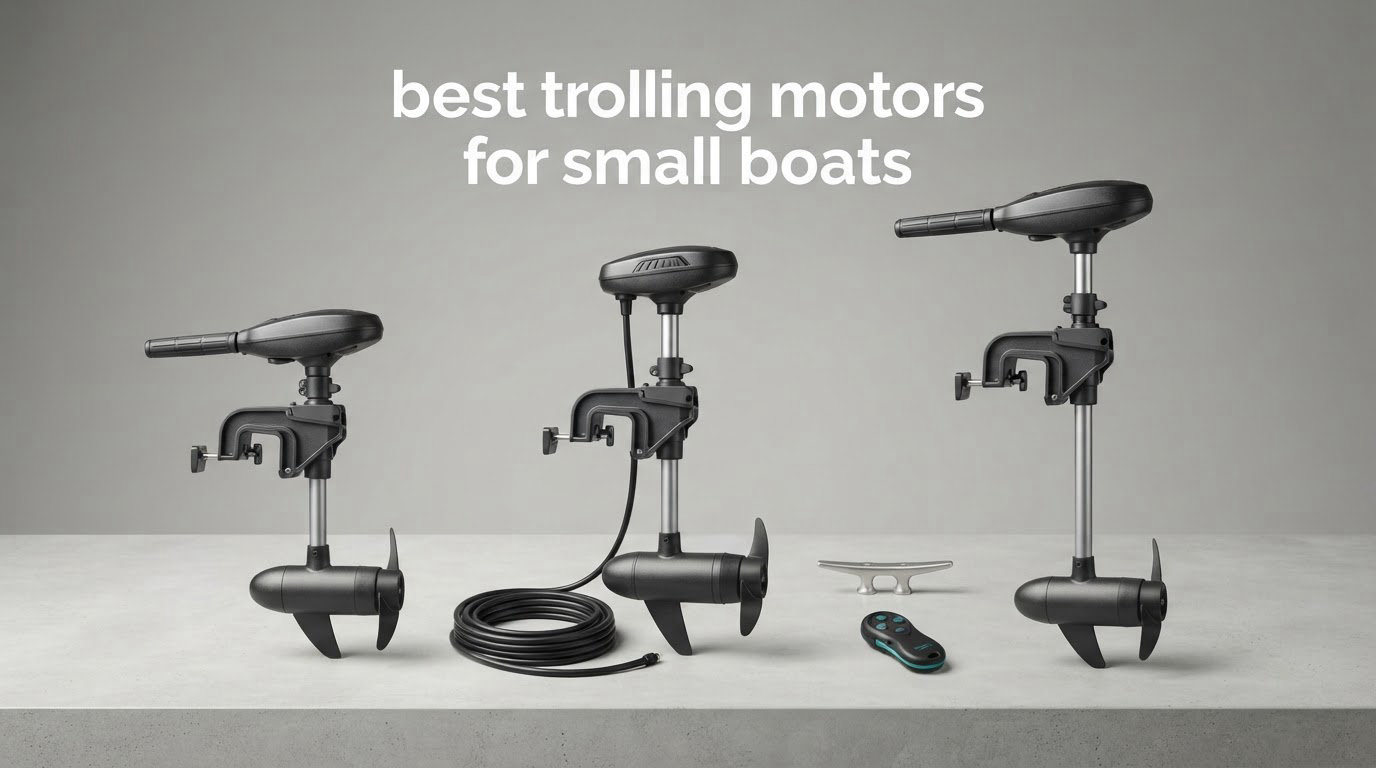
7 Best Trolling Motors for Small Boats (October 2026)
Most small boats are covered by a narrow range: 25 to 55 lb of thrust on a 12V transom mount…

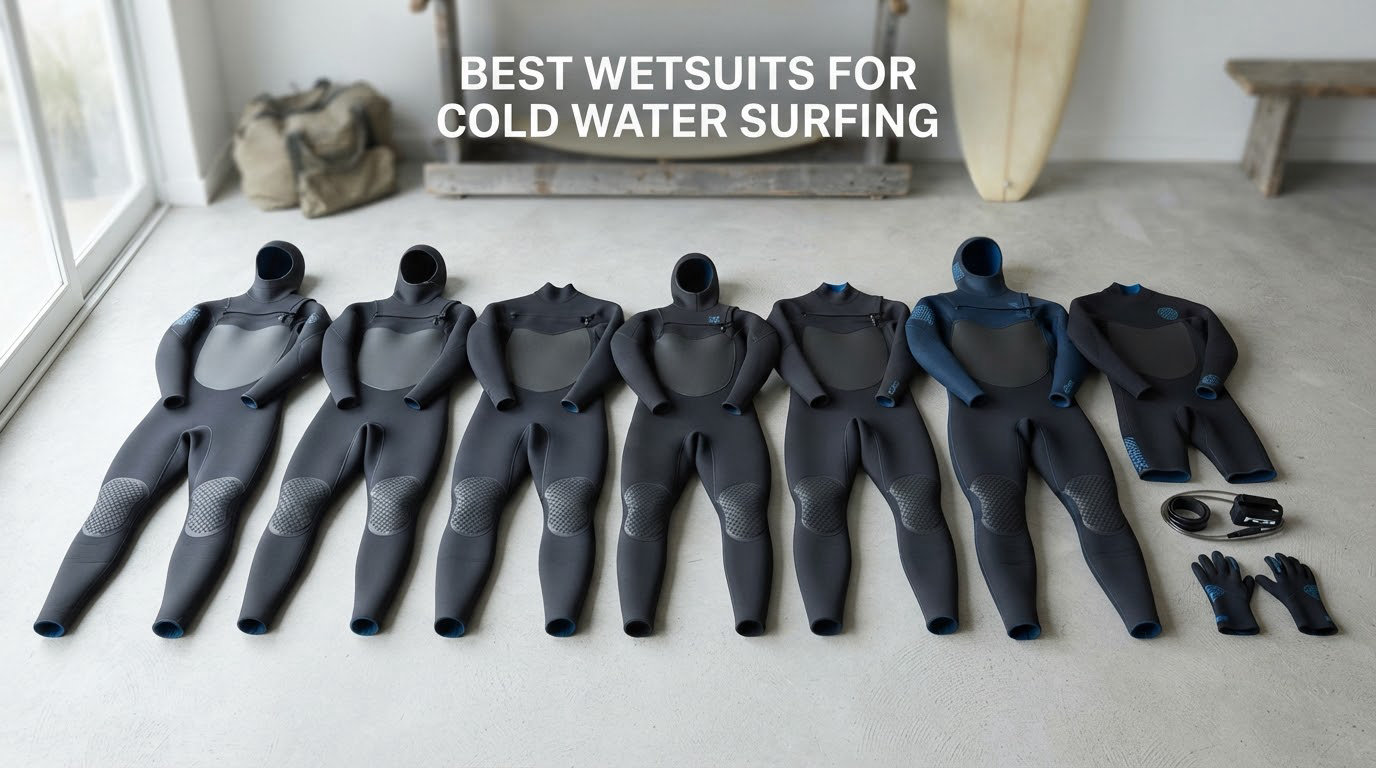
Choosing the best wetsuits for cold water surfing comes down to one number most buyers ignore: the actual water temperature where you paddle out, not the air temperature on the forecast. Our team has been putting full suits through winter sessions for years, and the pattern is consistent: the suit that keeps a surfer comfortable at their home break for two hours is rarely the thickest one on the shelf. It is the one that fits, seals, and is paired with the right accessories. Below is our shortlist of the ten cold water wetsuits worth owning right now, plus the framework we use to choose between them.
Here is the quick version of how warmth actually works. Neoprene traps a thin layer of water between the suit and your skin, your body heats that layer, and the suit insulates you from the cold around it. That is why fit matters more than millimetres. An oversized suit constantly flushes that warm layer out and replaces it with cold water, so a snug 4/3mm can out-warm a baggy 5/4mm every time.
Here is the thickness-to-temperature map we use, matching the bands surfers debate in cold-water forums and filling in the gaps the published charts leave:
How we picked: we weighed every suit on six criteria that matter specifically in cold water rather than in a warm tropical lineup. Thermal rating against its actual thickness, seam sealing method, entry placement and how much it flushes, mobility for paddling and duck diving, the quality of the review base rather than star count alone, and how the suit holds up over multiple seasons. We leaned on owner reports about specific water temperatures and session lengths, since that is the evidence that separates a real cold-water tool from a suit labelled cold-water. Surfer forum consensus that fit beats thickness was a consistent tiebreaker, and so was the number of buyers who still rate the suit highly after a full winter rather than one session.
One note before we start: if you shoot outdoors in the same conditions, our guides to gloves for cold weather and cameras built for cold weather cover the other side of a freezing dawn patrol.


Every suit below is a full body model, and the differences that matter in cold water are thickness zoning, seam sealing, and entry placement. Read the Key Features column first, then use the individual write-ups to decide which trade-off suits your water and your session length.
| Model | Key Specs | Action |
|---|---|---|
| O’Neill Epic 4/3mm Back Zip Full Wetsuit |
|
Check Latest Price |
 Owntop 5mm Wetsuit for Men Women Owntop 5mm Wetsuit for Men Women |
|
Check Latest Price |
| Hevto 5/4/3/2mm Neoprene Full Wetsuit |
|
Check Latest Price |
 Lansru 5/4mm SCR Neoprene Wetsuit Lansru 5/4mm SCR Neoprene Wetsuit |
|
Check Latest Price |
 ZCCO Men’s 5mm Neoprene Full Body Wetsuit ZCCO Men’s 5mm Neoprene Full Body Wetsuit |
|
Check Latest Price |
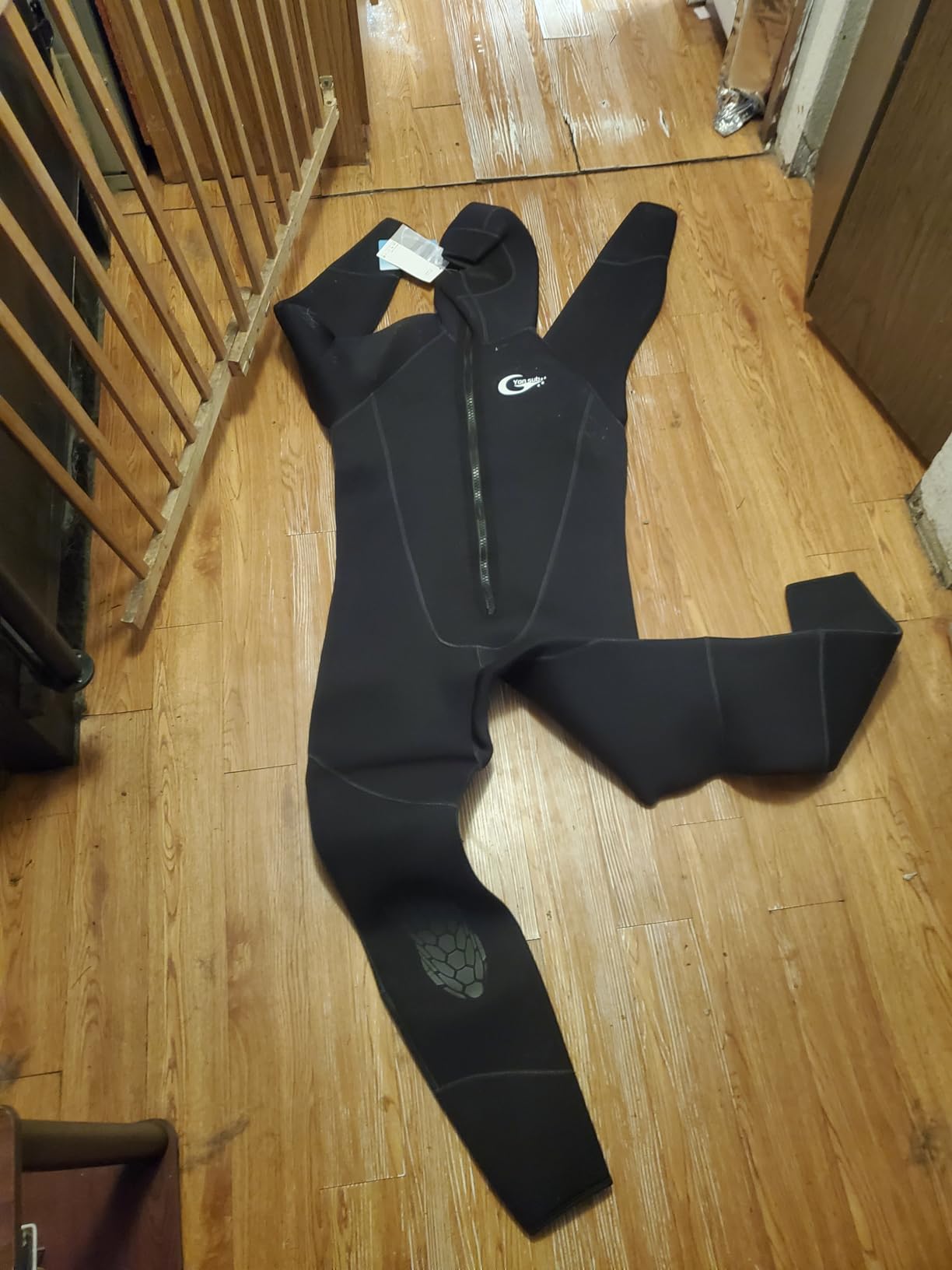
 yonsub 5mm Hooded Full Wetsuit yonsub 5mm Hooded Full Wetsuit |
|
Check Latest Price |
| Ocealite 5/4mm Front Zip Full Wetsuit |
|
Check Latest Price |
 Aunua 5mm Ultra-Stretch Neoprene Suit Aunua 5mm Ultra-Stretch Neoprene Suit |
|
Check Latest Price |
 REALON 3/4mm Neoprene Full Wetsuit REALON 3/4mm Neoprene Full Wetsuit |
|
Check Latest Price |
 O’Neill Hyperfreak 4/3mm+ Chest Zip Full O’Neill Hyperfreak 4/3mm+ Chest Zip Full |
|
Check Latest Price |
We earn from qualifying purchases. CERTAIN CONTENT THAT APPEARS ON THIS SITE COMES FROM AMAZON. THIS CONTENT IS PROVIDED 'AS IS' AND IS SUBJECT TO CHANGE OR REMOVAL AT ANY TIME.
4/3mm full suit
UltraFlex neoprene
GBS seams
Double seal neck
Krypto Armor knees
The Epic 4/3mm is the suit we keep handing to people who ask where to start with a full suit, and it is the most thoroughly owner-tested model in this roundup at 1195 reviews. Owners report using it from the low 50sF right up through the upper 70sF, which is an unusually wide operating window for a 4/3mm and the reason it works as a shoulder-season suit as well as a winter one.
What stands out in use is the shoulder and underarm panel construction. UltraFlex neoprene through the shoulders, arms and lower body gives real freedom for the first two pulls of a duck dive, and owners specifically single out the absence of constriction during long sessions where cheaper 4/3mm suits bind. The chest and back add Smoothskin windproof neoprene plus Fluidflex Firewall, which is a quiet but real advantage at a beach where you sit in the wind between waves.
The durability picture is good rather than flawless. Most buyers report the suit still looking new after a season or more of surfing, swimming and paddleboarding use, and the Krypto Armor knee pads hold up to board contact well. The recurring complaints are honest ones worth knowing: some seams around the knee pads and armpits have split after extended heavy use, and the neck velcro is strong enough to grab neoprene if you fold it back the wrong way when storing the suit.
The corrosion-resistant back zipper is a nice touch that most owners only notice years later. It also comes with a small key pocket and key loop, which sounds minor until you are standing in shorebreak in a hoodie.
This is the Epic’s real strength. Unlike many 4/3mm suits that feel stiff for the first few sessions until the neoprene breaks in, owners describe it as soft from the start and molding to the body with very little flushing. For surfers who spend time paddling rather than standing on a board, that softness compounds across a two-hour session.
Hand-cuff sleeve construction keeps the wrists from creating a water trap, which matters more than it sounds when you are paddling with your hands flat on the board in cold conditions.
Glued and blindstitched seams are the cold-water workhorse construction: the glue does the sealing and the stitch holds the panels together without punching holes through every layer. Combined with the double super seal neck, it keeps the torso layer stable, which is where most of your heat actually lives.
One reviewer noted a small gap in the lower back on a broad-shouldered build, so if you are between sizes and have wide shoulders, read that closely. A separate reviewer also reported declining build quality from the brand over time, which is worth weighing against the very large number of recent positive reviews.
Pick this if your water sits between roughly 50F and 65F, if you want one suit that stretches into milder months, and if shoulder mobility is a priority. It is a strong first full suit and a strong second full suit.
Skip it if you are regularly surfing below 48F, where you want a hood and thicker limbs, or if you are buying strictly for long multi-hour sessions in genuinely cold water and can accept a bulkier profile.
5mm neoprene body
4mm CR cuffs
GBS seams
YKK front zip
UPF 50+
The Owntop 5mm is the one in this group that gets described as warm without qualification by owners who have used far more expensive suits. The listed temperature rating is 10 degrees C, and reviewers report wearing it in genuinely cold water and even under a wetsuit for wear-ins, which suggests the 5mm body is doing what it says.
The front YKK zipper is the feature that converts this from a basic suit into a daily-use one. Getting in and out of a 5mm full suit is the single biggest practical annoyance in cold water, and a front zip solves it in a way a back zip never can. It also means you can change without twisting, which matters if you are surfing before work and doing anything else the same day.
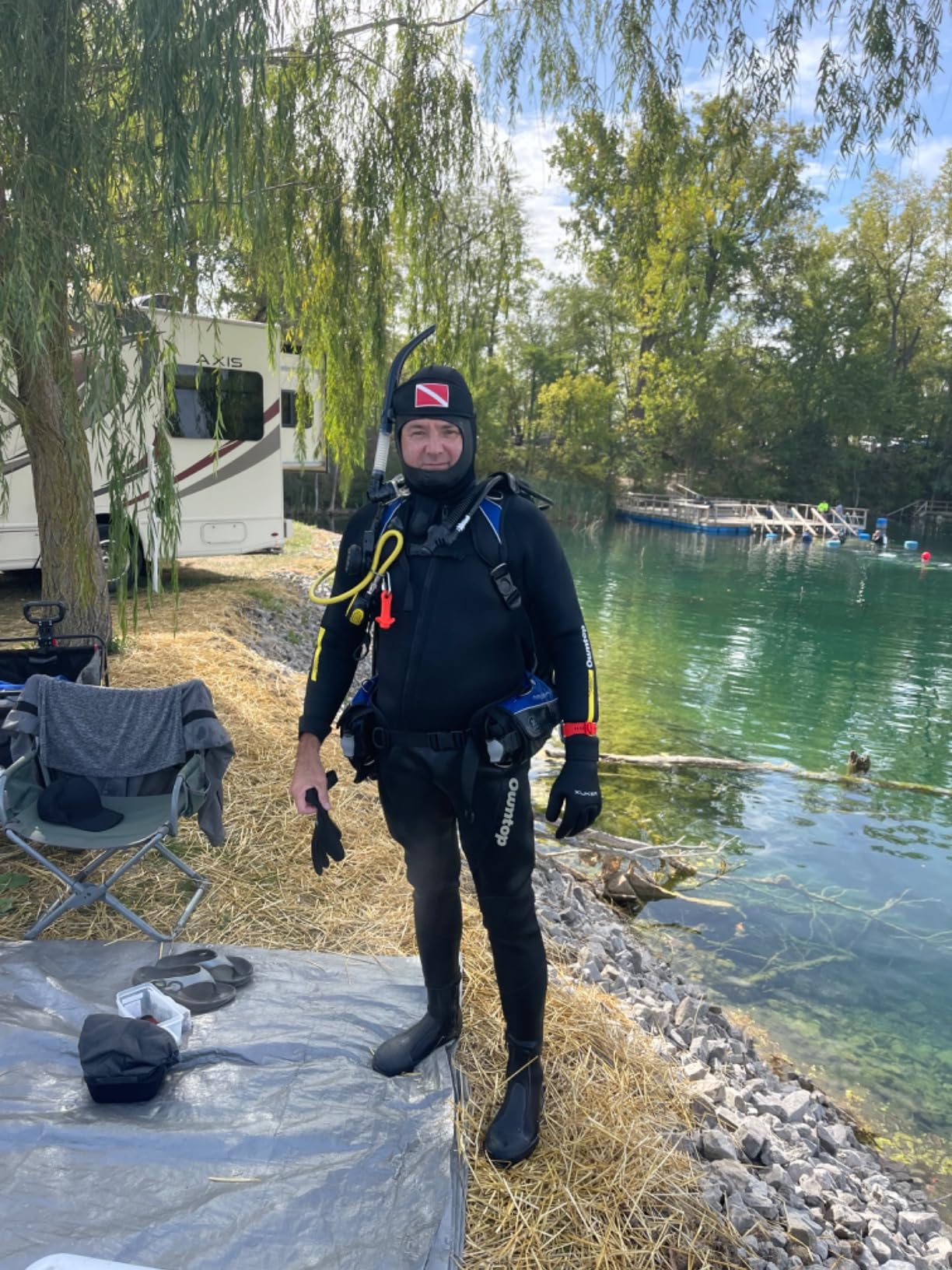
Two details stand out for cold-water surfers specifically. The snug wrist and ankle fit limits infiltration at exactly the points where water gets in, and the UPF 50+ rating is genuinely useful for anyone who does long sessions in exposed conditions where sunburn is the under-discussed risk.
The honest caveat is fit. Sizing runs small and most reviewers recommend going up a full size, with inconsistent texture and thickness through some panels that can feel uncomfortable in places. A few buyers also rate the lengthwise stretch as mediocre, which matters for the pop-up on a duck dive.
In cold water you are wet, you are often in a car park, and you are frequently rushing. A rear zip on a thick suit means pulling it over your head and shoulders with damp arms, which is slow and undignified. A front zip means opening from the chest and peeling it down. It is the difference between a two-minute change and a ten-minute one.
The trade-off is that a front zip adds a length of seam across the chest, and that seam is a potential flush point. With glued and blindstitched construction sealing it properly, the effect is small, but it is one reason the taped premium suits exist.
A flat 5mm with 4mm CR neoprene cuffs is an unusual specification and a useful one. The cuffs being 4mm rather than 5mm keeps wrist and ankle seals supple so they close properly instead of standing proud and letting water in.
Owntop describes the material as 90 percent neoprene and 10 percent nylon. Reviewers repeatedly compare the softness favourably to more expensive made-to-measure suits, though a minority find panel texture and thickness inconsistent enough to notice against the skin.
Pick this if you want one suit for surfing, swimming, snorkelling, canoeing and kayaking, if you surf shorter users who struggle with leg length in full suits, or if getting changed quickly is part of your routine.
Skip it if you are highly sensitive to seam texture against the skin, if you want a warranty behind the purchase, or if your water is regularly below 45F where a hooded 5/4mm will serve you better.
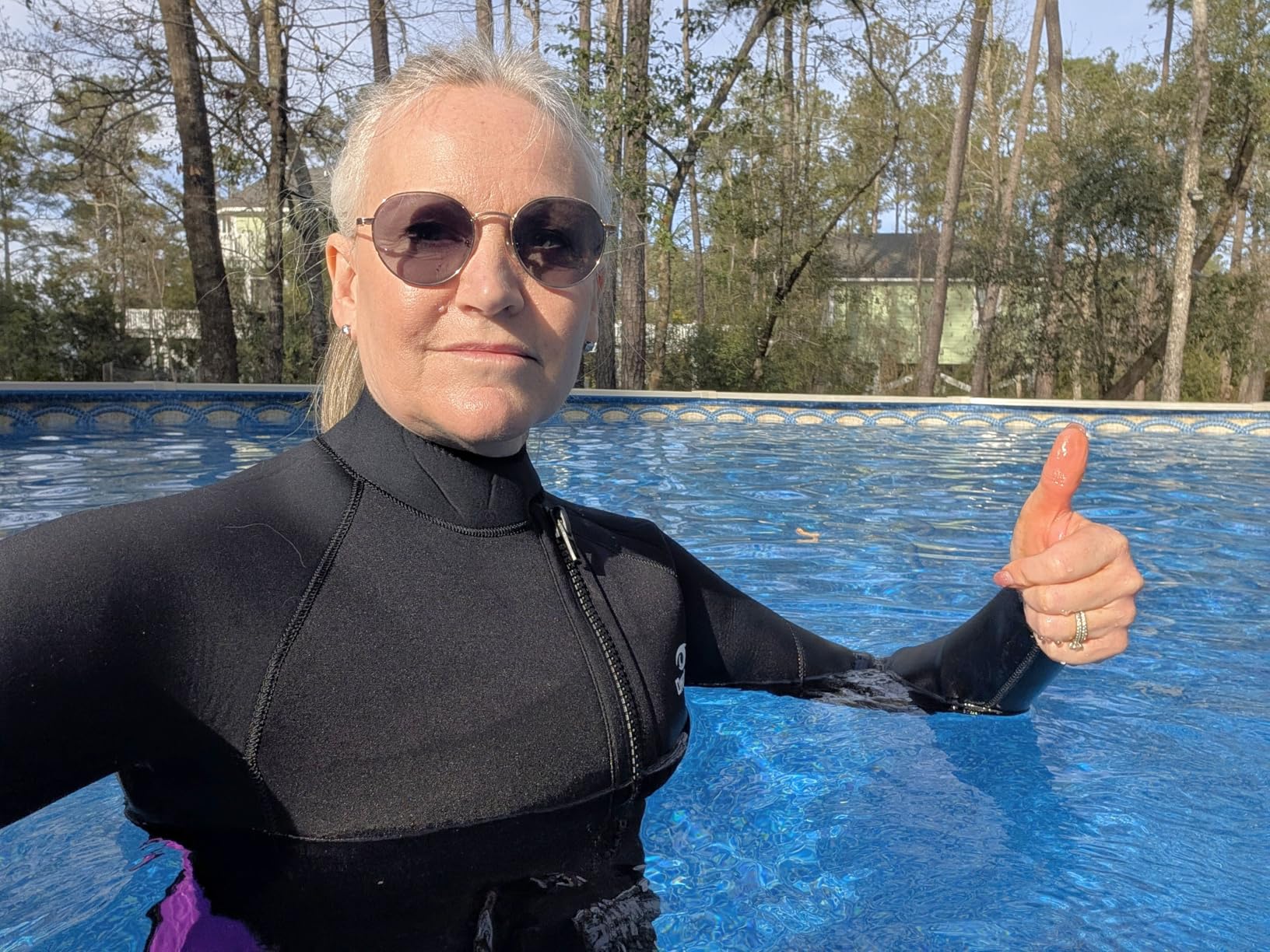
5/4mm CR neoprene
Nylon outer
Glued taped and blindstitched
Reinforced knees
Back zip
The Hevto 5/4mm is the most convincing value argument in this roundup, and the evidence comes from temperature rather than adjectives. Owners report staying comfortable in 40-52F water when they add gloves and socks, which is a serious claim for a suit at this level and covers the band where most UK and North Atlantic surfers spend January to March.
The construction is where the money was clearly not cut. Glued, taped and blindstitched seams mean the panels are sealed in three ways rather than one, and buyers repeatedly state the seams outperform suits costing several times as much. For cold water, seam sealing is the number one spec after thickness, and this one is genuinely strong.
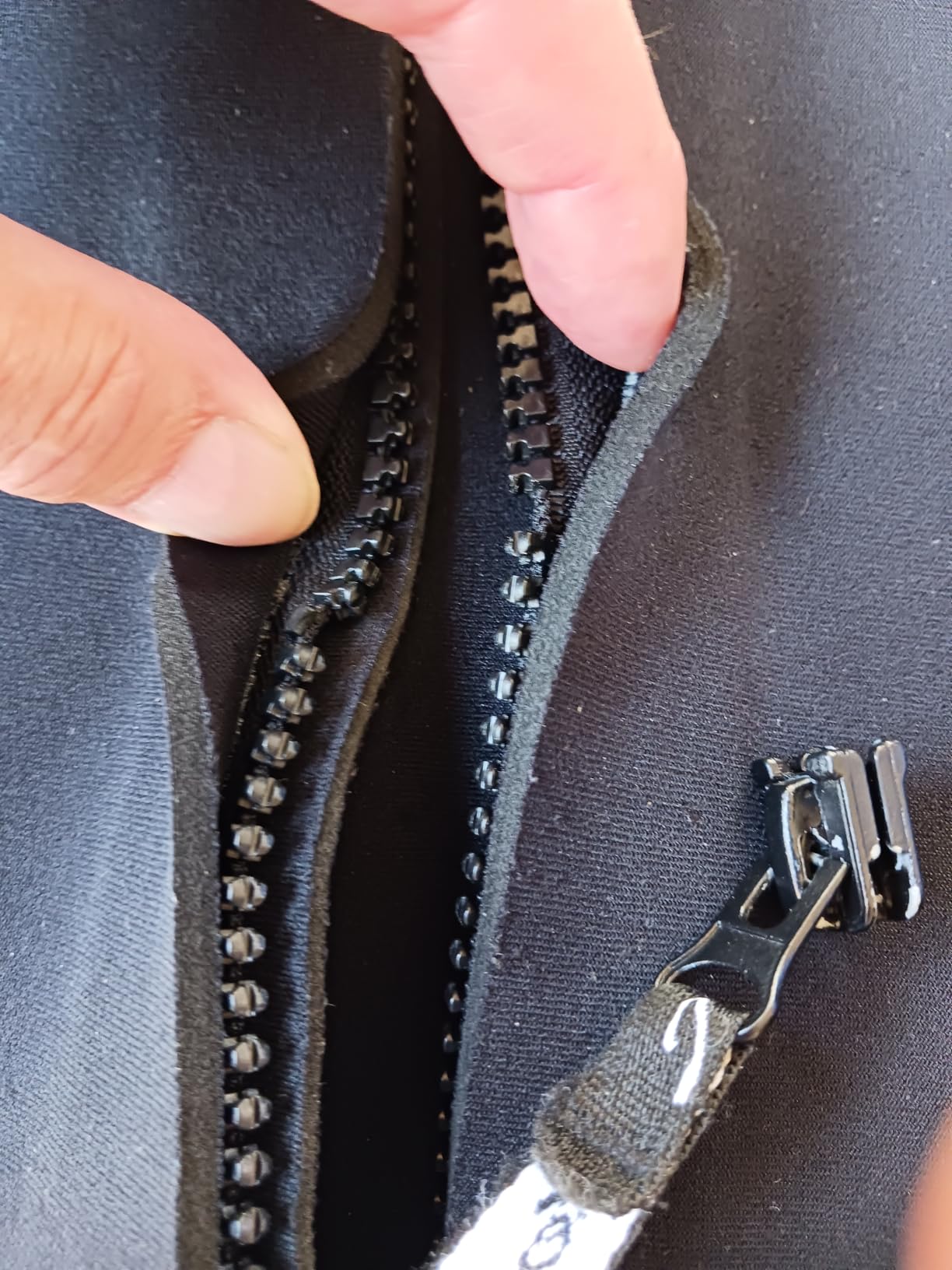
Customer service comes up positively too, with owners reporting a replacement after a zipper failure. That matters more in this niche than it looks, because cold-water wetsuits take more punishment from dunking, rocks and car park gravel than warm-water ones, and a brand that replaces a broken zipper saves you a whole suit.
The limitation is fit precision. The size chart can push buyers one size too large, and taller wearers with long torsos report a tight crotch. Follow the chart rather than your usual brand size and you will be fine, but do not skip the measurement step.
Blind stitching alone is a warm-weather shortcut: the stitch penetrates every layer, creating a path for water. Glued and blindstitched removes that path by bonding the panels first, and taping adds a further barrier on the highest-stress seams. In 45F water, that extra work is what keeps the torso layer stable for a full session rather than an hour.
Reinforced knee panels matter more here than in warm water too, because cold-water surfing usually means more wipeouts against the board and more kneeling in the shallows on a hard board.
The back zipper has an upgraded metal puller and a protective flap, both sensible in cold water where gloves reduce dexterity. The honest downside is that it catches on things and is hard to see when it snags, which is the most-cited mechanical weakness across reviews.
If you are buying for maximum longevity in rough winter conditions rather than for fast changes, a back zip with a metal puller is the more durable choice. If you are changing twice a day, the Owntop’s front zip is easier to live with.
Pick this if your water runs between about 45F and 55F, if you are willing to wear gloves and socks to extend the range downward, and if seam sealing quality matters more to you than brand prestige.
Skip it if you are over six feet with a long torso and sensitive about the crotch fit, or if you change out of it more than once a day and need a front entry.
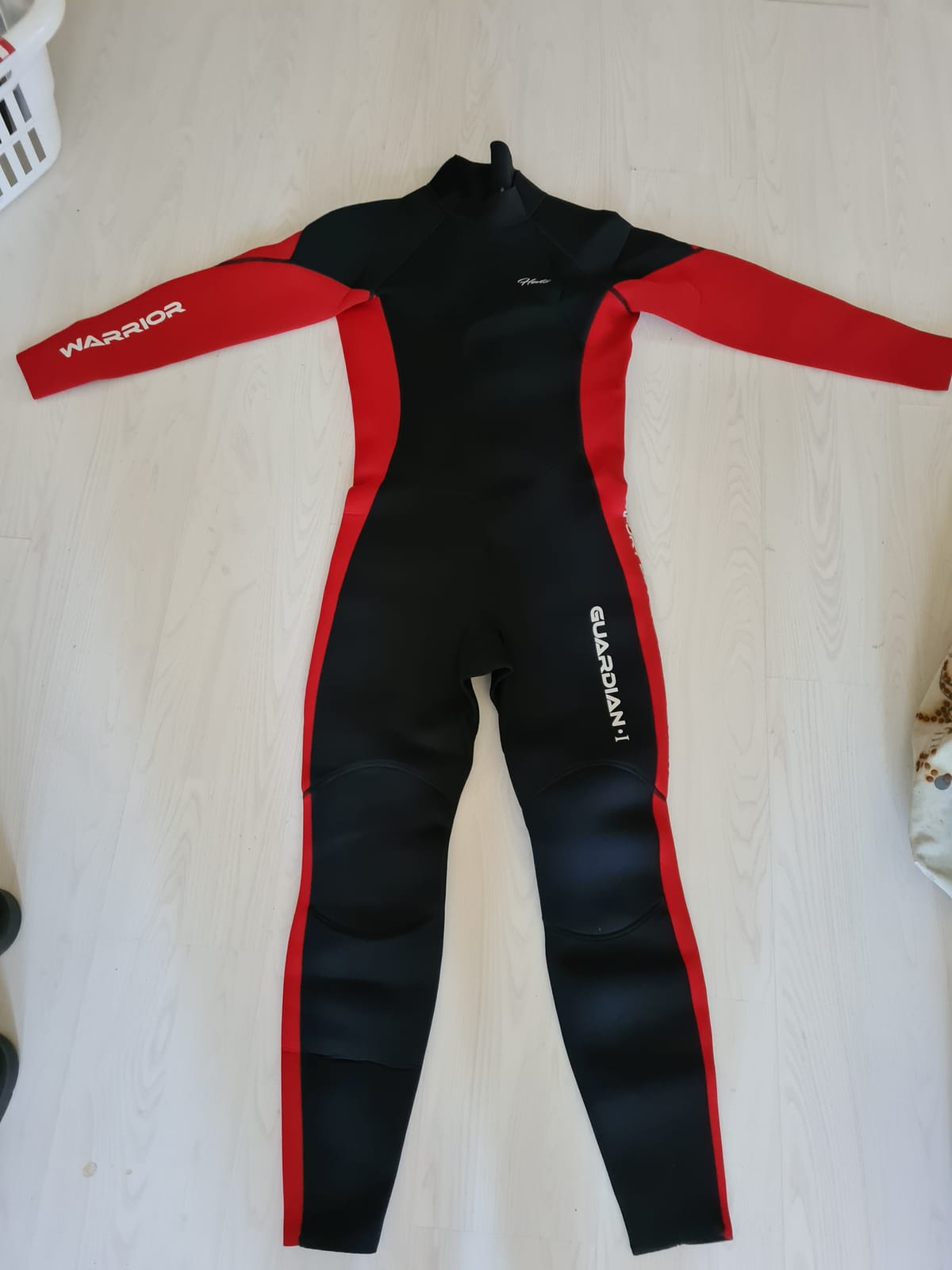
5mm SCR neoprene
4mm CR at neck and limbs
OEKO-TEX certified
Thickened knees
YKK front zip
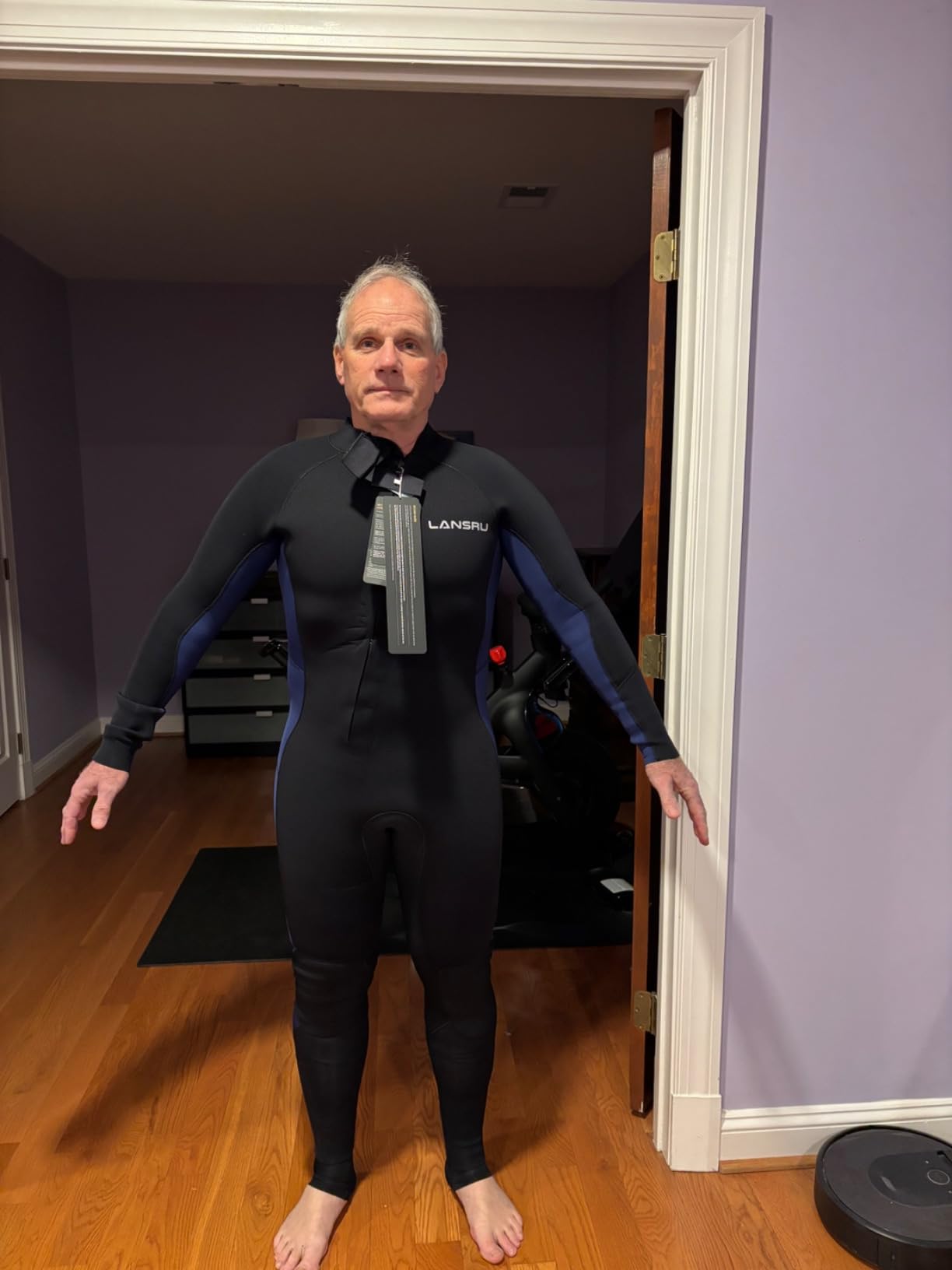
The Lansru sits in the same 5/4mm weight class as the Hevto but solves a different problem. It is built for people whose skin reacts to neoprene, and the two details that matter here are the skin-friendly patch panels and the OEKO-TEX Standard 100 certification on the materials. Owners also single out a noticeably lower rubbery new-odour than comparable suits, which for anyone who shares a vehicle with a surfer is a real quality-of-life win.
Warmth reports cluster around 55F water and multi-day liveaboard use, and owners use it for cold freshwater and Red Sea trips as well as surfing. That makes it the most versatile of the value-tier suits even though its rating sits in the low fours.
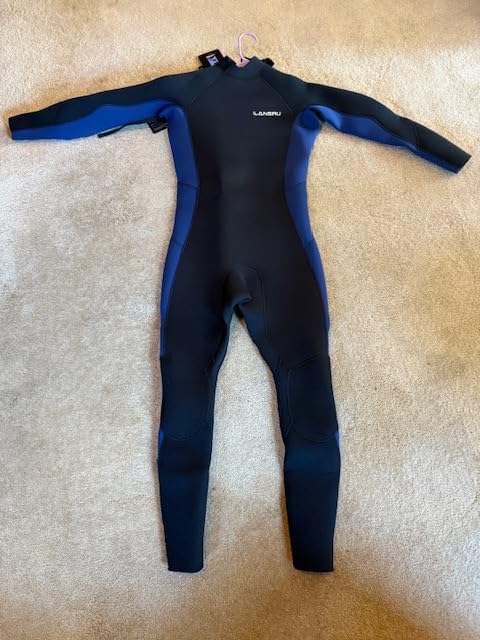
Seams are well finished and the thickened knee panels hold up, with UPF 50+ protection covering sun, sea lice and jellyfish stings. For North Atlantic surfing in winter, jellyfish season overlap is not hypothetical, so that rating is more than a marketing line.
The problem is the size chart, which is internally inconsistent. Chest and waist figures push you one way and height pushes you another, and most buyers end up ordering a size up because the suit runs tight through the arms and chest. Read reviews alongside the chart.
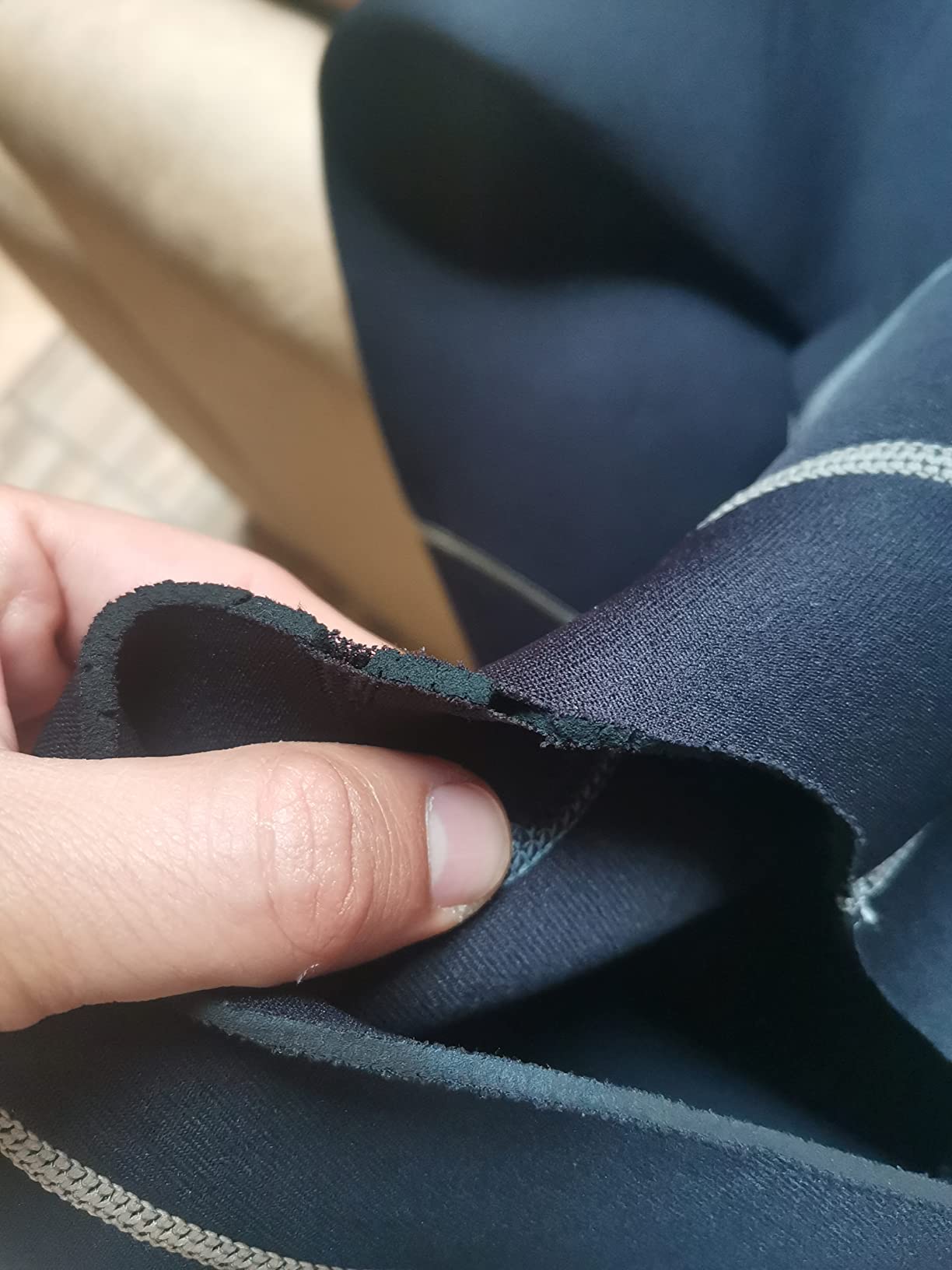
SCR is a chlorine-resistant neoprene blend that keeps its stretch and shape better after repeated wetting and rinsing than standard CR foam, which is why it is common on dive and snorkel suits. Here it is paired with 4mm high-elasticity CR neoprene at the neck and limbs, so the insulating core sits where you need it and the flexible sections sit where you need movement.
The seamless design with super stretchy yarn lining reduces the number of internal joins, which is both warmer and less chafing over a long session.
This is a genuinely buoyant suit, and owners note that diving with it requires a weight belt. For surfing that is irrelevant. For anyone who wants one suit for both surfing and snorkelling, it is worth knowing before you blame yourself for floating.
The bulk at 5/4mm with no ankle or wrist zips is the trade-off against the Owntop. It is harder to get into and out of, and the close arm fit means you need to get the sizing right before it goes on.
Pick this if you react to neoprene or chemical finishes, if you share a car with cold-water surfers, if you want one suit that handles surf, snorkel and cold freshwater, and if you value certified materials.
Skip it if you are buying purely for surfing above 58F where the bulk is unnecessary, if you want a low-profile suit under a wetsuit for diving, or if you are not willing to spend real time on the size chart.
5mm neoprene and nylon
Long front zip
Four arm and leg zippers
Smoothskin seals
Padded knees
The ZCCO solves the problem nobody advertises but everybody hits: changing a thick wetsuit when you are wet and cold. A long front zipper plus four small zippers at the arms and legs means you open the suit along its length rather than peeling it over your head, and owners consistently call it one of the easiest suits to get into and out of.
Warmth is solid rather than remarkable, with 5mm neoprene and a nylon outer construction doing the insulating work. The detail that earns its keep in cold water is the smoothskin inner layer at the collar, wrists and ankles, which is a thin, dense panel designed to sit flat and seal against skin rather than stand up and gap.
Strongly padded nylon knee pads take the abrasion that comes with cold-water wipeouts, and the size range from XS to 4XL is one of the widest in this group, which matters because sizing variance is the most common wetsuit complaint across every brand.
The honest limitation is evidence. With only 80 reviews, there is less long-term wear data than the higher-review suits, and the warranty runs only 3 months. If you keep wetsuits for five years, that is a thin guarantee.
A single front zip still requires you to get your arms through and then pull the whole torso over your head. Adding small zippers at the arms and legs means each section releases independently, so you can open the legs, sit, then work the arms. It is a slower-feeling design that is actually much faster in practice.
On a tall frame the long front zipper can be awkward to reach on its own, which is a good argument for pairing the small zips with a two-step process rather than relying on the main zip alone.
Smoothskin is the right choice for seals because it compresses smoothly and resists the puffy look that standard neoprene develops at the wrists. Tighter seals at those three points reduce the total volume of water cycling through the suit over a long session, which is the single biggest contributor to feeling cold in a suit that should be warm enough.
Add 5mm booties and the ankle seals stop being the weakest point in the system.
Pick this if you surf twice in a day, if you change out of your wetsuit in a public car park, if you are buying your first thick suit and want it to be forgiving, or if you need an unusual size.
Skip it if you want the longest warranty in the group, if you need a suit you can pass down for many seasons with confidence, or if your water is below 45F and you need a hood.
True 5mm thickness
Integrated hood
Front zipper
High elasticity
Long sleeve
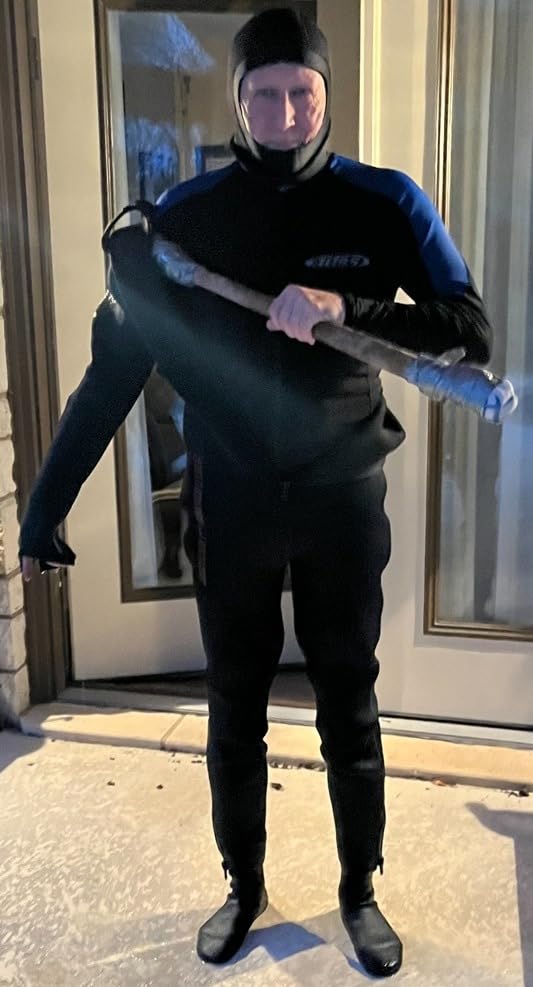
This is the only integrated-hood suit in the roundup, and that single feature changes what water you can surf. Owners report the hood keeping the face warm with no cold even around 50F, which addresses the single complaint that comes up most often in cold-water forums: the torso is fine and the head is what ends the session.
It is also honest about thickness. Reviewers confirm it is true 5mm rather than a thinner panel with a 5mm label, and that matters more than any spec sheet claim, because the difference between 4mm and 5mm on the torso is roughly a full comfort band in cold water.
High-elasticity construction is designed to reduce drag and hold up over seasons of use, and sizing by weight range from M through XXXL is unusually straightforward compared with the chest-and-height charts that trip people up on other budget suits.
There are real compromises. The suit is built for genuinely cold water and is explicitly not a swimming or paddling suit. It runs small, and the integrated hood plus front zip makes it hard to remove when wet, which is a genuine safety consideration in a shorebreak.
A hood helps because the head has a high concentration of blood vessels close to the skin and very little insulating fat. Losing heat there is fast and the sensation is disproportionately unpleasant, which is why cold-water surfers say the hood is often the difference between a full session and a bail-out.
The trade-off is a permanently closed head opening, so you cannot wipe your face, hear conversation clearly, or fit ordinary sunglasses over it. For most winter surfers that is an acceptable trade. For anyone who teaches, works on boats, or surfs in warmer shoulder-season water, it is not.
Almost every review mentions sizing up, and the weight-based ranges make that easy to do. A suit that is correct on the torso but tight through the shoulders will restrict your duck dive, and a tight suit flushes constantly, which defeats the point of the extra thickness.
Reports of early wear on the knee reinforcement and hood are out there, so inspect both areas before the first season rather than after.
Pick this if your water sits around 45-52F, if cold head and hands end your sessions early, if you want one heavy suit for cold-water work rather than a versatile all-rounder, and if you want the most warmth per pound spent.
Skip it if you paddle a lot, if you need to remove the suit quickly in rough conditions, if you surf shoulder-season water and would overheat, or if you are sensitive to the strong new-rubber smell in the first sessions.
5mm torso with 4mm limbs
GBS seams
YKK front entry
Lycra seam binding
PU knee pads
The Ocealite is the design we would build if the brief were one suit that gives 5mm warmth without 5mm bulk. Zoned thickness puts 5mm through the torso and 4mm through the arms and legs, and that single decision is why the shoulder rotation and reach feel as free as they do. Most of your heat comes from the core, so the insulation goes where the heat is and the limbs stay supple.
It pairs that with a YKK front entry zipper and Lycra seam binding at the wrists, ankles and neckline. The binding reduces friction at exactly the points where seams rub through a session, and the YKK front zip keeps the entry honest. Owners rate the fit true to size and the freedom of movement as genuinely good.
The rating sits at 4.5 on 83 reviews, and the negatives are narrow: one report of neck or waist velcro damage after only a few uses, plus some discomfort around the crotch and neck. A fair warning is that many reviews on this listing cover the 3mm variant rather than the 5/4mm cold water version, so read specifically for the thickness you are buying.
Polyurethane foam knee pads and an internal key pocket round out a suit that is clearly designed around surfing rather than around a spec sheet.
Thickness notation works like this: 5/4mm means 5mm in the torso and 4mm in the limbs. Your torso holds the majority of your core heat and is the least mobile region, so extra thickness there costs nothing in range of motion. Your shoulders and elbows are where you need rotation for the duck dive and the push-up, and every extra millimetre there makes a noticeable difference over two hours of paddling.
That is the whole argument for a zoned suit, and it is why a 5/4mm frequently outperforms a flat 5mm for surfing even though the total millimetres are lower.
The front zip removes the biggest practical barrier to owning a thick suit, which is getting in and out of one. In cold water you are wet, often cold, and frequently in a hurry, and the difference between a two-minute change and a ten-minute change is the difference between surfing twice a day and once.
Lycra binding at the neck, wrists and ankles is a comfort and durability feature. It softens the seam edge, reduces chafing under the arms, and helps the seals sit flatter against the skin, which reduces the water volume cycling through the suit.
Pick this if you duck dive often, if you want real torso warmth without feeling like you are wearing a wetsuit two sizes too big, if you value ease of entry highly, and if you want a 5/4mm that suits water around 45-58F.
Skip it if you need maximum insulation below 42F, if you are very sensitive around the neck or crotch, or if you want a warranty longer than none specified.
5/4mm rated to 44F
SuperStretch neoprene
GBS with tape dots
Back zip entry
Internal key loop
Aunua is the suit we would pick for a surfer who spends more time paddling than standing. The SuperStretch neoprene is specified for high range of motion and reduced arm fatigue in long sessions, and that is not a marketing phrase in a suit rated to 44F water. Owners mention arm fatigue directly, which is the complaint that ends long cold sessions even when you are still warm enough.
The seam construction is where the cold-water work happens. GBS seams with internal tape dots combine waterproof adhesive with blind stitching and add small taped reinforcements at stress points, which is a step up in sealing over plain blind stitching and helps the torso layer hold its temperature.
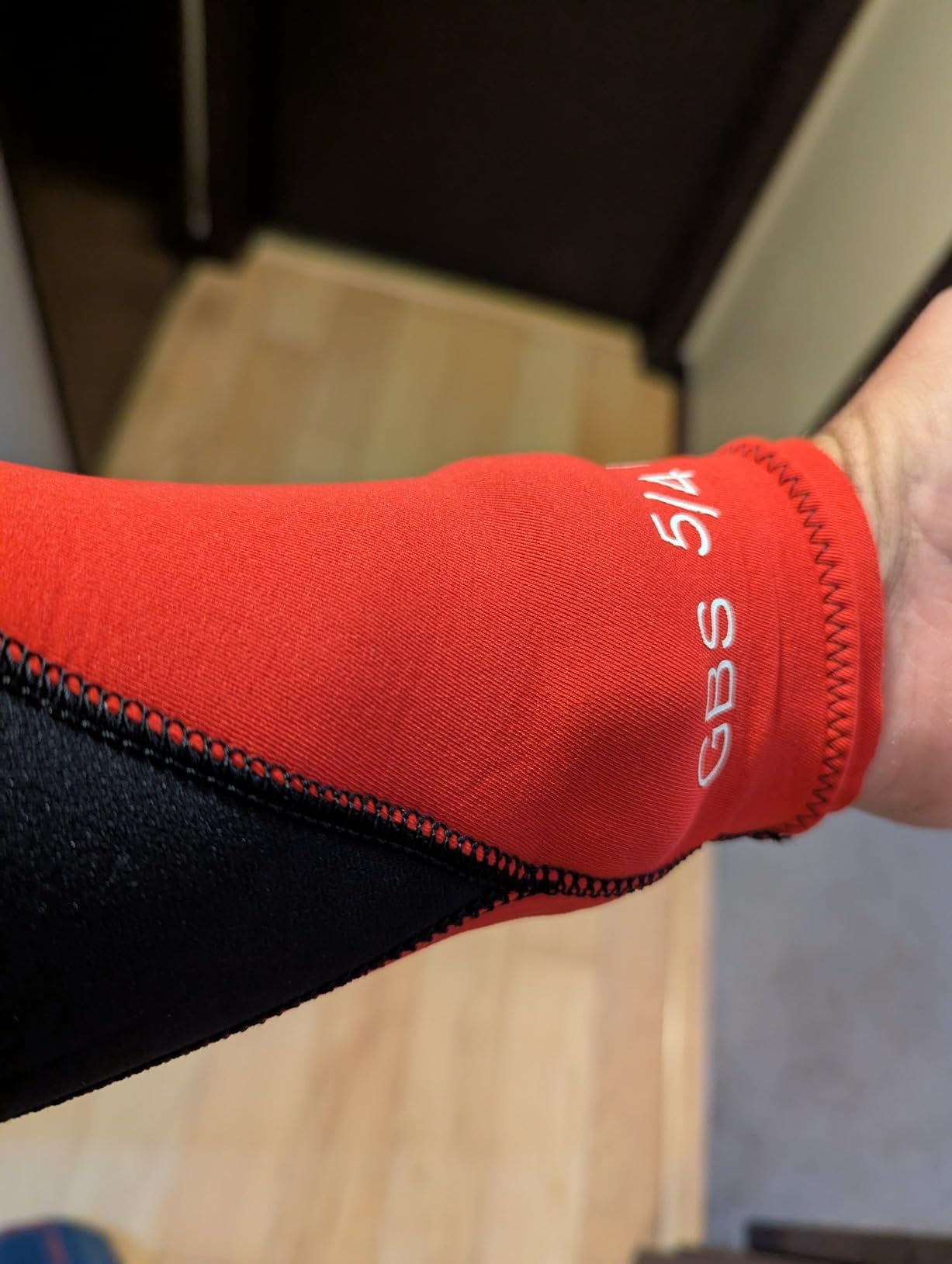
The listed rating of 6 degrees C puts it firmly in genuine cold water territory, and the 5/4mm zoning keeps limbs workable while the torso does the insulating.
Arm fatigue is not only about endurance. When your arms get heavy, your paddling stroke gets slower and shallower, you sit lower in the water, and more of your body heat leaks out through the chest and into the ocean. A suit that keeps you moving is therefore a warmer suit, not just a more comfortable one.
SuperStretch neoprene elongates further before it resists, which reduces the force needed for each stroke. On a long paddle-out or a session with weak swell and lots of waiting, that difference accumulates.
Internal tape dots are small reinforcements at the seam that stop the blind stitch thread from acting as a channel through the neoprene. In cold water, where the thermal gradient between your body and the ocean is largest, every small channel costs warmth.
Add a hood and 5mm booties to this suit and the weakest points, head and ankles, are covered, which is how you get comfortable well below the temperature the torso alone would handle.
Pick this if you paddle long distances, if you surf on weak winter swell and spend a lot of time waiting, if you want a suit rated well below freezing point water without the bulk of a flat 5mm, and if you prefer a back zip because it never snags on a board bag.
Skip it if you change twice a day and want easy entry, if you want a warranty behind the purchase, or if the new-rubber smell is going to bother you in an enclosed car.
3/4mm neoprene
Thickened hips knees elbows
Sealed construction
Back zip entry
Sun coating
The REALON is the shoulder-season pick here, and its listed temperature rating of 68F is the clearest statement of intent. It is built for cool water and long sessions rather than for genuinely cold surf, which is why it sits at the bottom of the roundup even though its rating is among the highest.
The construction is more considered than the rating suggests. It uses 3/4mm neoprene with thickened panels at the hips, knees and elbows, and fully sealed construction to minimise water ingress. Reinforcing the joints is exactly what a surf-specific suit should do, since those are the areas that take the load when you push up on the board.
Owners report warmth in the low 60sF water for extended work on the water, accurate sizing to the chart, and seams with no rough edges after repeated use. Several reviewers compare the quality favourably to high-end wetsuits they owned previously, which is a remarkable verdict for a suit in this bracket.
The back zipper lets the wearer unzip and get out without help, which is the practical benefit in cold water where you should not be standing around waiting for someone. Most rear zips are pull-down designs with a long tab, and this one follows that pattern.
The trade-off versus a chest zip is flush. A back zip leaves the neck and upper back open, so when you duck dive you draw water into the torso and it stays there until you surface. That is a meaningful difference when the water is near the bottom of the range.
The listing title reads 4/3mm while the variant shown is 3/4mm. That is a listing inconsistency rather than a product fault, but it is exactly the kind of detail that produces a disappointing suit, so check which variant you are actually selecting.
If your water dips into the mid-50sF in winter, this is still a usable suit with boots. If it regularly sits in the upper 40s, step up a thickness class instead.
Pick this if your water sits mostly in the upper 50s to upper 60sF, if you want a lighter suit for spring and autumn, if you like unpadded flexibility over a reinforced torso, or if you are pairing it with boots and a jacket for occasional cold days.
Skip it if you need a suit for sustained sub-50F water, if you want the longest review history available in this roundup, or if you want a product page that unambiguously tells you the thickness.
4/3mm+ thickness
Premium neoprene
F.U.Z.E. chest zip
TB3X taped seams
3 pound weight
The Hyperfreak 4/3mm+ is the flush-control specialist. The F.U.Z.E. chest zip puts the entry at the sternum rather than the back or the front, which means the neck and upper back stay sealed and the suit covers your torso from behind. Owners confirm it seals well and that the drain holes limit water trapping, which is the mechanism that stops a duck dive from filling the suit with cold water and keeping it there.
Seam sealing is handled with glued and blindstitched construction plus fully taped TB3X reinforcement in key areas. For surfers who hit the lip, the shoulder and underarm areas are where that taping earns its cost, since those are the panels that fail first on a single-glued suit.
The premium neoprene gives the stretch buyers expect from the Hyperfreak line, and it holds core temperature in 58F class water, which sits right in the middle of the cold-water band most of these other suits target.
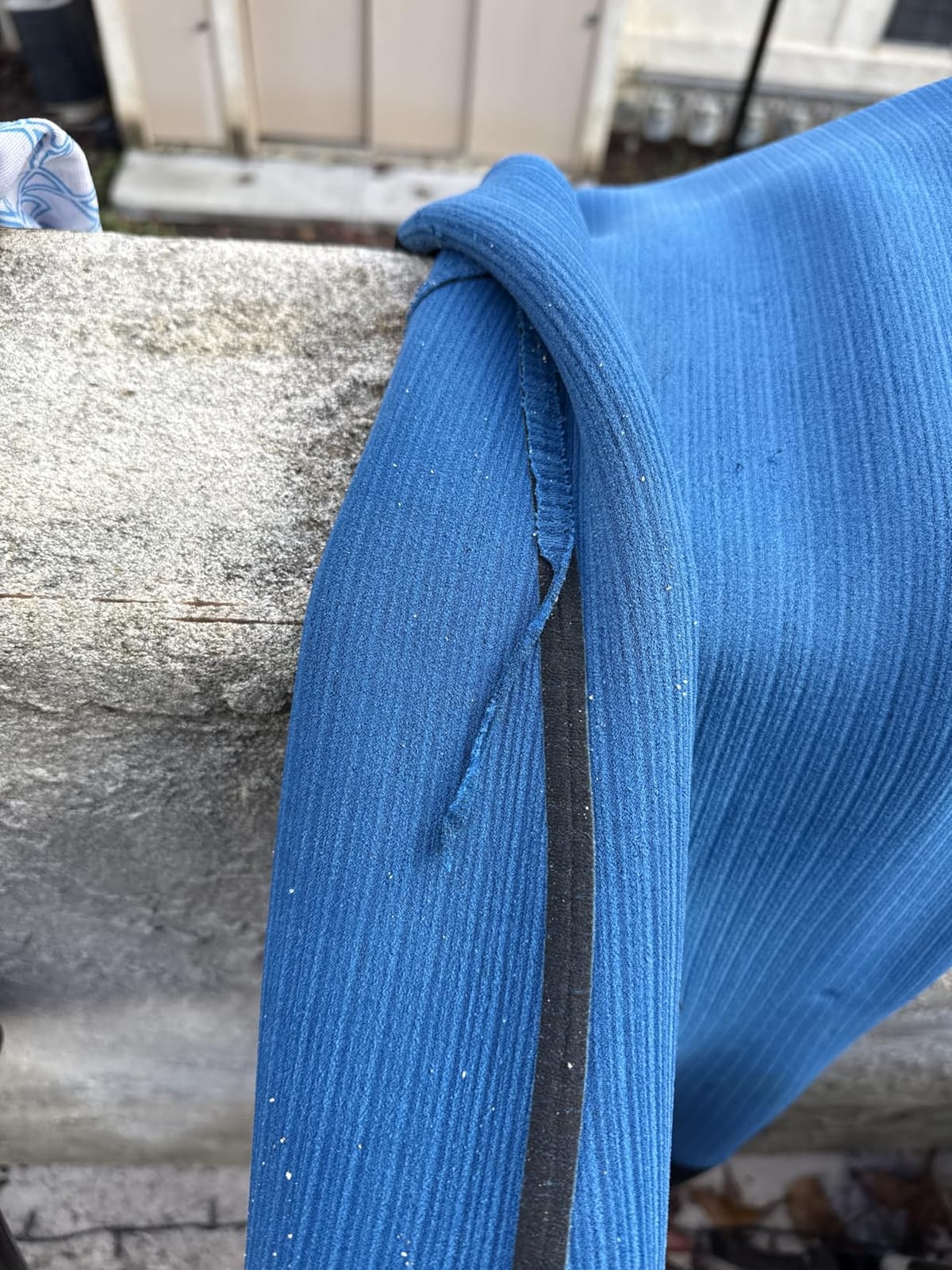
Back zip is easiest and cheapest, and flushes the most through the neck and upper back. Front zip is the easiest to get into and out of and loses a little heat through the chest. Chest zip reduces flush the most because your neck stays sealed, and is the fiddliest to operate, particularly with gloves on.
In cold water the ranking inverts. When you are duck diving in 55F water and sitting in the lineup for 40 minutes, a small reduction in flush beats a small saving in changeover time.
The size range runs from XS through XLT and includes tall and extended sizes, which is genuinely useful for surfers who struggle to get a fitted suit from brands with narrow ranges. The trade-off is that fit varies more across the range, and the one-star share is the largest relative of any suit here, which points at fit and durability complaints at the premium end.
Pick this if you surf long sessions in the 52-60F band, if you duck dive constantly and hate water sitting in your torso, if you need an extended or tall size, or if you want taped seams as standard rather than as an upgrade.
Skip it if budget matters more than construction, if you want a suit you can get into quickly at a cold beach, or if the fiddliness of a chest zip will frustrate you. At this price point the fit has to be right first time, so buy from somewhere that makes sizing straightforward.
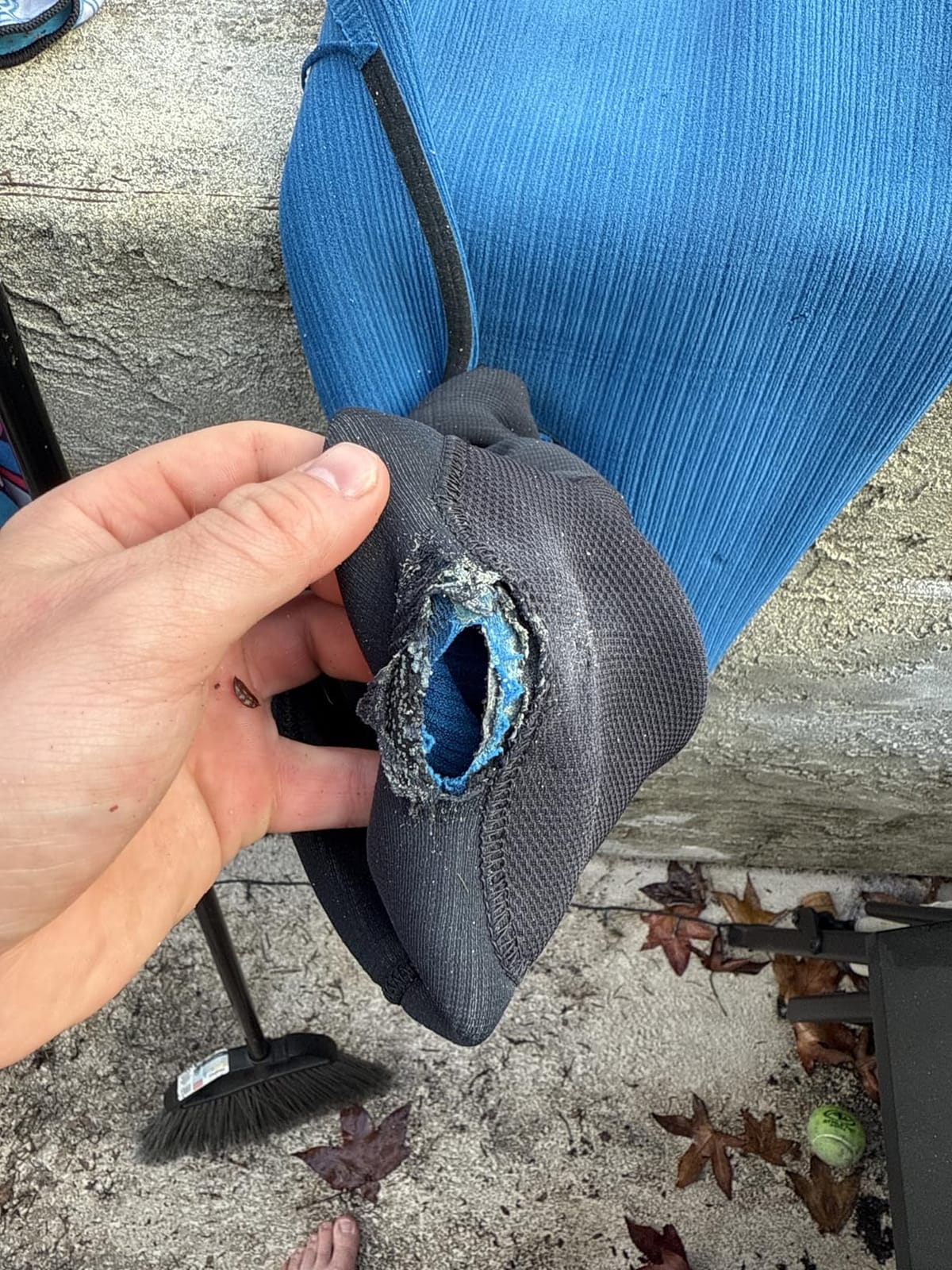
Start with your water temperature, not the label on the suit. Every thickness figure on a wetsuit is a guideline, and the two variables that shift the answer most are wind chill and session length. A surfer on a sheltered beach in the sun with 45-minute sessions is a different problem from a surfer sitting in the wind for three hours on the same water temperature, and cold-water forums are full of people who got this wrong by treating charts as absolute.
The other thing worth knowing before you buy anything is that neoprene only works when it is snug. It traps a thin layer of water, your body warms it, and the suit insulates you from the cold around it. An oversized suit lets that warm layer slosh out and replaces it with cold on every stroke. This is why experienced surfers say fit beats thickness, and it is why a 4/3mm that fits can feel warmer than a 5/4mm that does not.
Internal site links aside, the practical buying sequence runs like this: get your water temperature, pick the thickness band, choose the seam construction, choose the entry, then add accessories.
Use the band list from the introduction as your starting point, then adjust for two things. If you surf in wind, step one band thicker, because wind strips the warmed water layer sitting against your skin and the ambient feels far colder than the thermometer reads. If your sessions are short, you can step one band thinner and save money, because you are not generating enough heat to lose over a long period.
The highest-leverage adjustment is time, not thickness. Cold-water surfers consistently report upgrading thickness only after adding accessories and finding the real problem was their extremities, not their torso.
Back zip is the traditional choice and the cheapest to produce. It is easy to get into if you are flexible, it rarely snags, and it leaves the neck and upper back open so water from a duck dive collects in the torso.
Front zip is the practical choice for anyone who changes frequently. You open from the chest and peel the suit down instead of pulling it over your head, and it adds a chest seam that costs a little heat.
Chest zip is the thermal choice. Your neck stays sealed so you take in far less water, at the cost of a fiddlier closure. Owners of chest zip suits in this roundup report the drain holes limit water trapping, which is the other half of the flush problem.
If you are unsure, ask how many sessions per day you surf. Two or more sessions tilts towards a front zip. One long session tilts towards a chest zip if the budget allows.
Flatlock seams are stitched flat through every layer of neoprene. They are the lightest and most flexible construction and the least water-resistant, which is why they appear in 3/2mm summer suits and rarely in serious cold water.
Glued and blindstitched seams bond the panels first, then stitch the join without piercing every layer. This is the cold-water workhorse and the right default answer for a 4/3mm or 5/4mm at a sensible price.
Taped or welded seams add a further barrier, usually inside the suit at the highest-stress areas. Partial taping on the shoulders, underarms and seat is common at the premium end; full taping is expensive. In very cold water, taping on the torso is worth paying for because it is where your heat lives.
Whichever you choose, check the seams rather than the marketing copy. Look for glue squeeze-out visible from the inside and no gaps or dry patches along the join.
Measure your chest, waist and height, then check the brand’s chart rather than trusting your usual size. Fit varies between models and between years, so the same label can behave differently on different cuts.
Do not size up for comfort. That advice comes from warmer water and it backfires in cold water, because a roomy suit flushes constantly and you will feel colder in it. The correct fit is snug with no gaps at the neck, wrists or ankles, and no restriction through the shoulders when you reach both arms forward.
If you are between sizes, read the reviews for the variant you are buying rather than the brand generally. Most of the fit complaints in this roundup come from charts that push people one size too large or suits that run small, and both are visible in customer photos and review text.
This is the advice surfers give each other most often, and it is the part no roundup explains properly. Work up this list in order rather than buying a thicker suit first, because a thinner suit plus the full accessory set will usually outperform a thicker suit worn bare.
A cheaper suit with 7mm booties and gloves outperforms an expensive suit with bare feet in 58F water. That is the single most useful thing in this guide.
Published charts assume open-ocean water, which is not what most surfers actually swim in. A few examples to help you self-select: Cornwall and the wider UK winter swell typically sits around 9-12C, Newcastle and much of Ireland run close to 10C, Northern California winter water sits around 12-14C, the Pacific Northwest runs 10-12C, Maine and the New England coast sit around 8-11C, and Nova Scotia drops into the 6-9C range. Surfing beside sea ice in Alaska is colder again.
If you surf in more than one of these places, you will want two suits rather than one compromise. Surfers who travel between the US and Wales say a single suit rarely works for both, because one side of that trip is rarely warm.
Used cold water wetsuits are widely described as cooked when they have come from someone who surfed five days a week, with heat-leached neoprene, cracked seams and lost loft. Check the loft by pressing the panel and watching how long it takes to spring back. Check every seam by pulling gently along the join. Check the zipper by running it up and down several times, because zipper failures are common and neoprene stretch around the zipper is usually the real culprit.
For longevity, rinse in fresh water after every session, hang it in the shade, and never dry it in direct sun. Heat is what destroys neoprene faster than any abrasion. Fold the neck velcro back on itself before storing so it does not grab the panels, which is the other top complaint in the reviews above. If you shoot outdoors on those same cold dawns, our guide to power banks that work in cold weather is worth a look as well.
For very cold water below 45F, a 5/4mm with a hood and taped seams is the practical answer, and below 40F you move into 6/5/4mm territory with 7mm booties and gloves. In this roundup the yonsub 5mm hooded suit gives the most face coverage for the least money, while the Hevto 5/4mm holds 40-52F with gloves and socks added.
Use your actual water temperature: 58-65F needs a 4/3mm, 50-58F needs a 5/4mm or hooded 4/3mm, 45-50F needs a hooded 5/4mm plus 7mm booties and 3mm gloves, 40-45F needs taped seams or a 6/5/4mm, and below 40F needs 6/5/4mm with full accessories. Step up one band if you surf in wind or for long sessions.
Yes, because neoprene traps a thin layer of water between the suit and your skin, your body warms that layer, and the suit insulates you from the cold around it. That only works if the suit fits snugly, since an oversized suit flushes the warm layer out and replaces it with cold water on every stroke, which is why fit matters more than thickness.
A 5/4mm full suit is designed for water roughly between 45F and 58F. Add an integrated hood and you can push the lower end toward 40F, which owners of the Hevto and Aunua suits confirm in practice. Below that range most recreational surfers step up to 6/5/4mm or add a second layer at the extremities.
Shark risk is highest in warm tropical water, not cold water, and there is no wetsuit colour that reliably reduces it. If you are surfing somewhere with documented shark activity, check your local guidance and avoid surf at dawn, dusk, and near bait, rather than relying on colour choice alone.
If you want one suit that covers most of winter without overthinking it, the O’Neill Epic 4/3mm is the pick: it is the most thoroughly owner-tested model here, works from the low 50sF into the upper 70sF, and gives you one suit that stretches into milder months. If your water sits in the 45-55F band, the Hevto 5/4mm delivers more warmth per pound than anything else on this list, with properly taped seams. If you paddle hard and duck dive constantly, the Aunua 5/4mm SuperStretch or the Ocealite 5/4mm front zip will keep your shoulders free.
For the coldest sessions, the yonsub 5mm hooded is the only suit here that covers your head, and it is the cheapest way to stop cold faces ending sessions early. For the shoulder season, the REALON 3/4mm covers cool water comfortably. And if you surf once a day in long sessions and want the least flush in the water, the O’Neill Hyperfreak 4/3mm+ chest zip is the right build.
Whatever you choose, get the fit right, add 7mm booties and gloves before you step up a thickness, and rinse the suit in fresh water when you get home. Our best wetsuits for cold water surfing rankings for 2026 will keep earning their place in your rack as long as those three things hold.