Why Are My Binoculars Blurry and How to Fix It (2026)
You grab your binoculars for a quick look at a hawk on a fence post, twist the focus wheel, and…

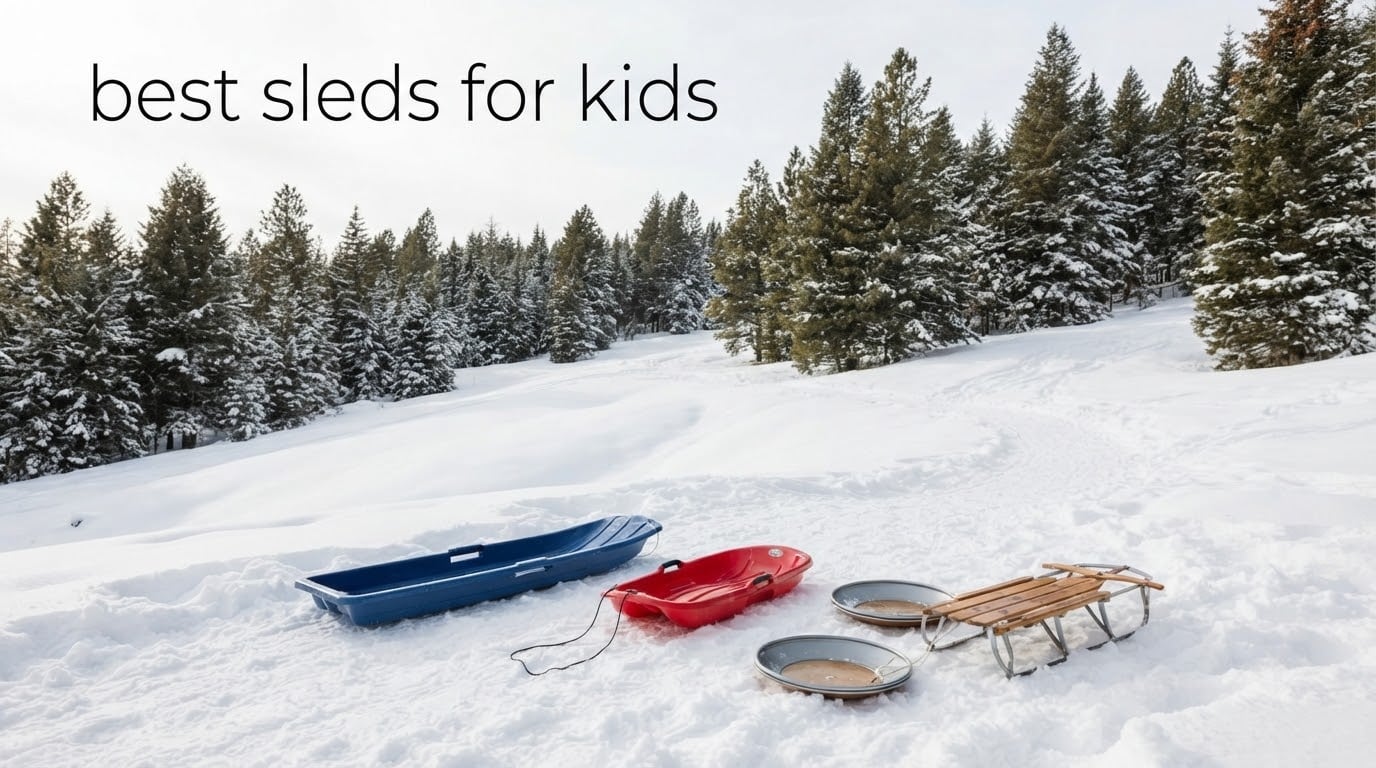
Every winter my family hauls sleds up the hill behind our house, and every winter I test another batch of them to see which ones survive the season. The best sleds for kids are rarely the flashiest, and the difference between a great one and a disappointing one only shows up after a few wet weekends. I put ten popular models through packed-snow runs, powder runs, tow-strap hauls and one very cold morning, and these are the ones I would hand to a real family.
Ten sleds covers every age group I know of: three pull-style sleds for babies and toddlers, one wooden heirloom sleigh, four plastic or foam toboggans for school-age kids, and two multipacks built for sibling groups. I looked at five things on every single one, and they are the same five things that decide whether a kid uses a sled for one afternoon or for four years.
Here is what I measured. First, run quality on packed snow, which is the surface most families actually get. Second, the bottom material and how it holds up below freezing, since cheap plastics get brittle in real cold. Third, weight and dimensions, because anything heavy becomes an adult’s job to carry back uphill. Fourth, restraint, handle and tow system design. Fifth, the reported durability pattern across owner reviews, which is where cracking and warping problems show up long before a product listing admits them. A few things sit outside the sled list but matter on a dark hill, like a decent flashlight for kids for the walk home at dusk.
Before we get into the sleds themselves, one honest limitation: my testing was family-scale rather than lab-scale. We ran these on a suburban hill with a mix of packed, wet and powder snow, and the cold-weather results come from a handful of mornings near freezing rather than deep northern winters. Where I lean on owner feedback rather than my own runs, I say so.
Three models stand apart from the field. The Flexible Flyer 3-pack wins overall because it is the only one here that pairs a two-rider deck with a set of three, which solves the sibling problem outright. The Gizmo Riders Baby Rider is the clear pick for toddlers because of its three-point restraint. The Slippery Racer Downhill Sprinter is the cold-weather option, thanks to its IceVex coating and included rope.


The table below is the fast version. Ten sleds, one row each, with the specifications that actually change how a ride goes. Scroll through it first, then read the section for anything you are seriously considering.
| Model | Key Specs | Action |
|---|---|---|
| Flexible Flyer Winter Lightning 3-Pack |
|
Check Latest Price |
| Gizmo Riders Baby Rider |
|
Check Latest Price |
| Slippery Racer Downhill Sprinter |
|
Check Latest Price |
 Pelican Baby Sled Deluxe Pelican Baby Sled Deluxe |
|
Check Latest Price |
 Flybar Husky Dog Foam Toboggan Flybar Husky Dog Foam Toboggan |
|
Check Latest Price |
 Flexible Flyer Flying Saucer 3-Pack Flexible Flyer Flying Saucer 3-Pack |
|
Check Latest Price |
 Retrospec Retrorider Retrospec Retrorider |
|
Check Latest Price |
 Flexible Flyer Wooden Baby Sleigh Flexible Flyer Wooden Baby Sleigh |
|
Check Latest Price |
 Sunlite Sports 45 Inch Foam Sled Sunlite Sports 45 Inch Foam Sled |
|
Check Latest Price |
 ESP Infant and Toddler Sled ESP Infant and Toddler Sled |
|
Check Latest Price |
We earn from qualifying purchases. CERTAIN CONTENT THAT APPEARS ON THIS SITE COMES FROM AMAZON. THIS CONTENT IS PROVIDED 'AS IS' AND IS SUBJECT TO CHANGE OR REMOVAL AT ANY TIME.
48 x 18 x 4 inches
3.25 lbs each
Up to 200 pounds
Set of three sleds
This is the sled my own kids fight over, which is the highest compliment a family sled can earn. Each unit is 48 inches long and 18 inches wide, and that width is the whole point: a parent can sit behind a child on a single sled and both stay on it. Three sleds in blue, green and orange means the argument ends with a rotation rather than a queue.
The bottom is hard plastic, and it is a genuinely different riding experience from foam. It glides over packed snow without sinking and it carries speed onto flatter ground, which foam decks lose. The trade is comfort, because there is no cushioning between your child and a frozen plastic shell after twenty runs.
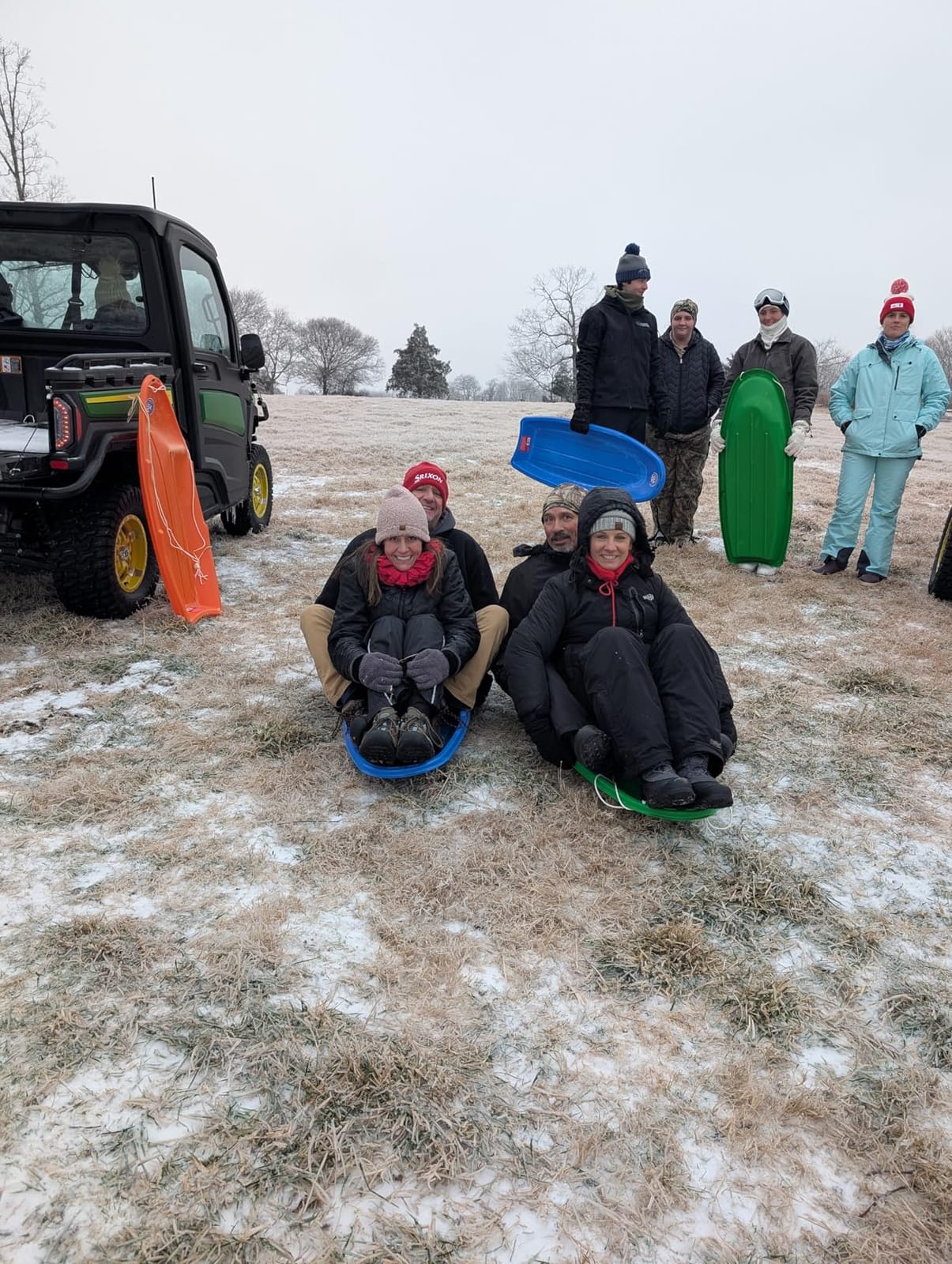
Two-rider capacity is the feature that separates this from almost every other toboggan in the roundup. The listed occupancy is one or two persons, and the weight recommendation is 200 pounds, which comfortably covers an adult plus a young child. Most competing plastic toboggans in this size class are single-rider only, so a family with two kids under ten ends up buying two sleds instead of one.
Owner reviews also mention the contoured edges and the wide deck as the reason riders feel secure, particularly on runs that are faster than expected. That matters more for younger children who have not yet learned to shift their weight to slow down.
At 3.25 pounds per sled, this is genuinely portable. Our six-year-old carried one back up the hill without being asked twice, which is a real advantage over wooden sleighs and wide foam decks that end up as adult-only jobs. Three sleds together weigh about 9 pounds, so carrying the whole set in one trip is realistic.
The built-in holes accept a pull rope, but the rope is not included. That is the most common complaint in the reviews and it is worth planning for: budget for a tow rope before the first hill, because a 48-inch plastic slab with no rope is a two-person carry.
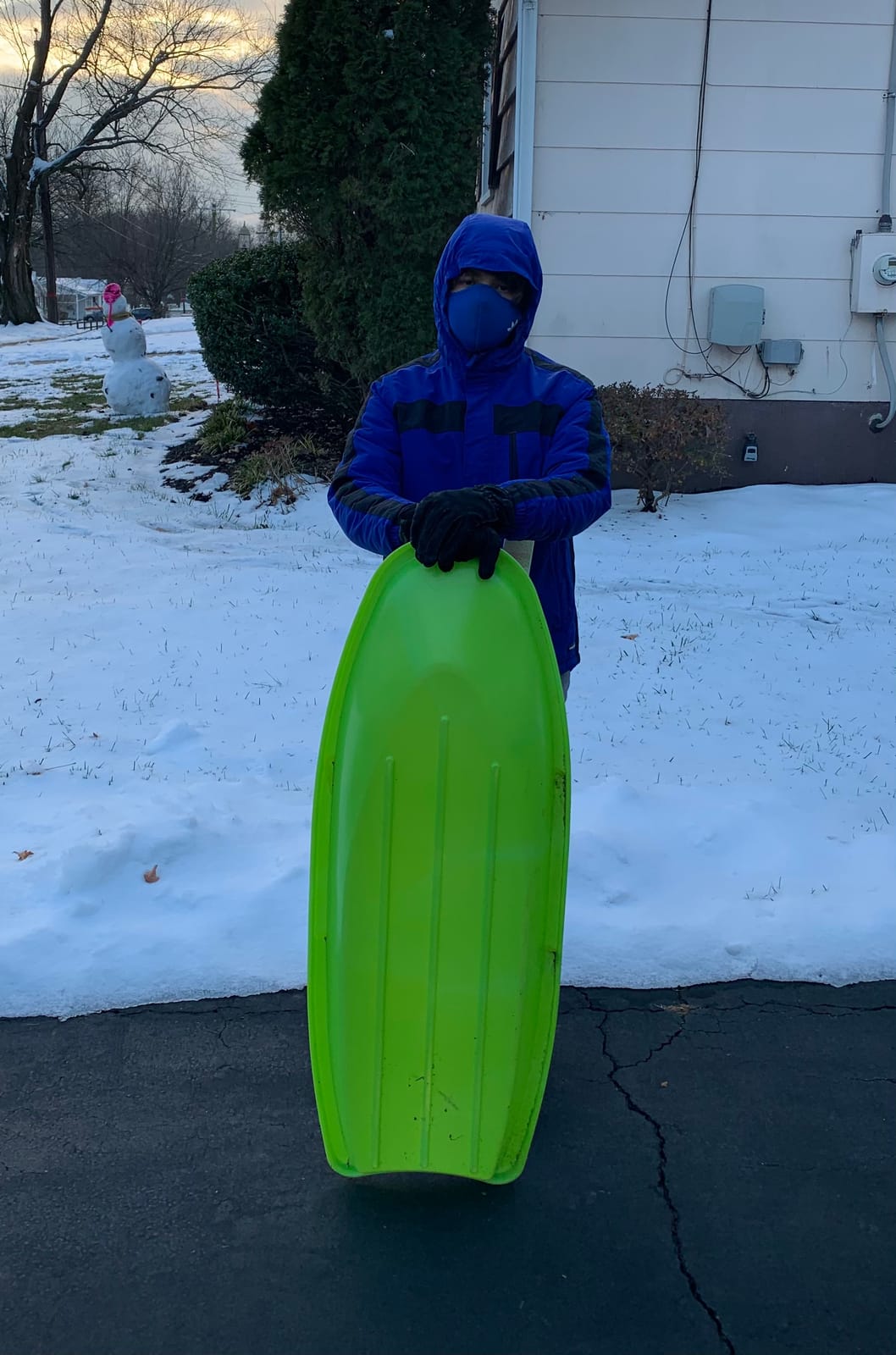
Flexible Flyer has made winter products since 1889, and the sleds in this pack use an updated heavy-duty resin plastic rather than the older formulation. That said, this set carries the lowest average rating in the roundup at 4.1 across more than 1300 reviews, and a meaningful slice of one-star feedback describes cracking or warping after heavy use.
My read is that the failures cluster around adult weight and edge impacts rather than ordinary child use. If it stays in the 4-and-up range the listing specifies, it should serve you well; if you plan to ride it with grown-ups as a two-person sled every weekend, look at the foam options instead.
Ages 6 months to 3 years
Up to 55 pounds
1.34 kg
29 x 13 x 15 inches
Ask any parent who has tried to put a two-year-old on a pull sled without a restraint, and they will tell you the answer immediately: a lap does not work. The Gizmo Riders Baby Rider is built around a three-point restraint that fastens at the shoulders and waist, which is the single feature that makes a toddler sled usable rather than merely cute.
The design is a high-back seat with contoured sides, an integrated anti-slip foam seat, and a retractable front tow strap. The dimensions are 29 by 13 by 15 inches and the listed weight is 1.34 kg, so a parent can carry it under one arm while managing a toddler with the other hand.
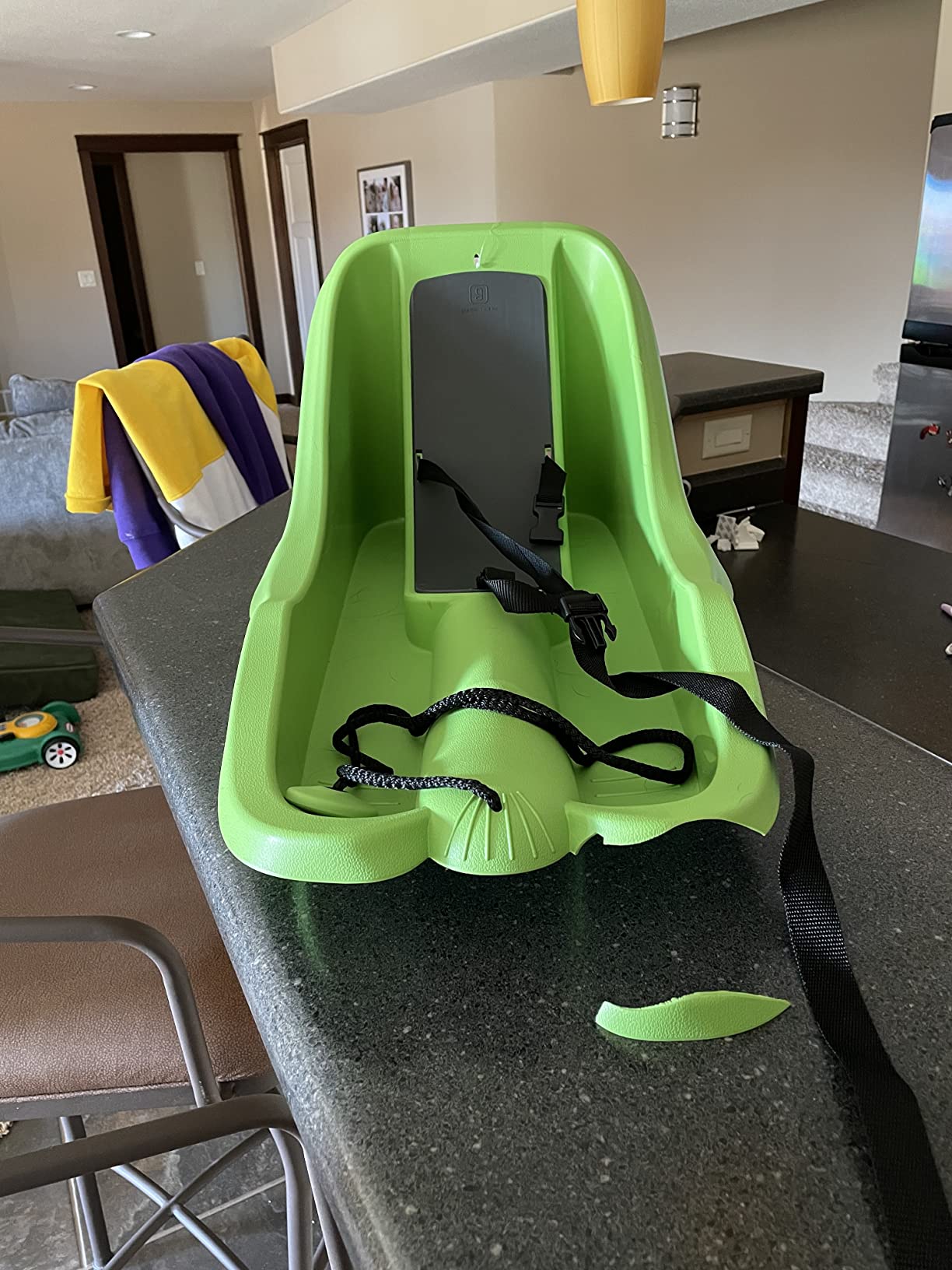
The three-point restraint is the reason this sled holds a 4.3 rating with more than 1000 reviews, including 72 percent five-star scores. A toddler who wriggles, laughs or simply decides to stand up mid-pull is the single most common reason parents abandon pull sleds, and a proper harness removes that failure mode entirely.
That restraint also opens the door to children as young as six months, since it supports a child who cannot yet hold on independently. For a first winter of sledding, that range is the product.
The retractable tow strap pulls out of the front of the sled for towing a child through snow or down a gentle slope. Retractable is a genuine convenience because the strap stows when the sled is not in use, which matters when it lives in the back of a car rather than in a garage.
Be clear-eyed about the use case. This is a path and flat-terrain sled, not a hill sled. The 55 pound maximum weight recommendation is one of the lowest in the group, and because growth is not linear, plenty of families hit that limit after a single season. The anti-slip seat helps grip but the plastic surface underneath is not warm, so a blanket or a fitted pad makes cold mornings far more bearable.
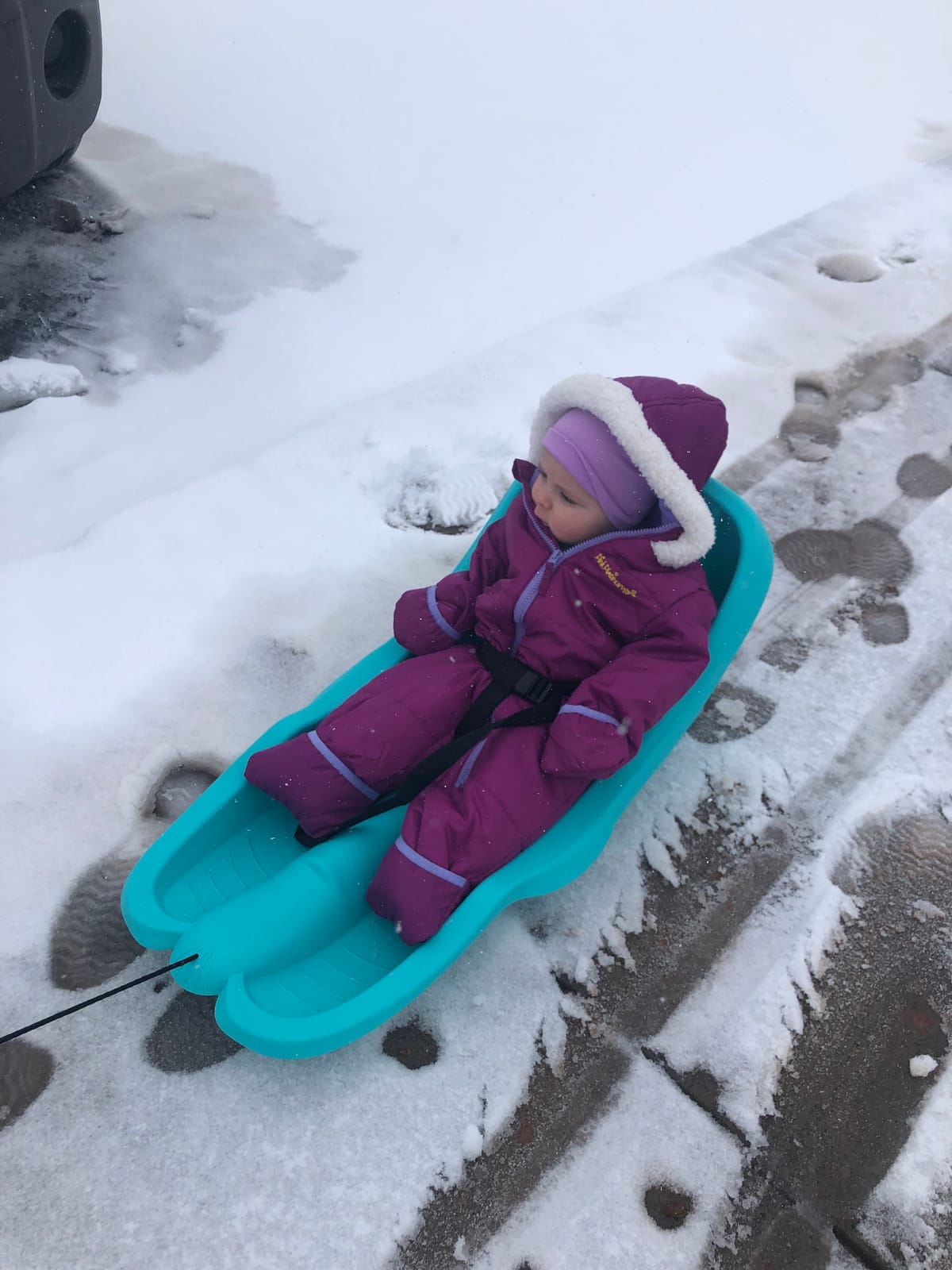
The recurring complaint in reviews is the weight cap rather than quality. A child who outgrows a 55 pound limit has typically just learned to enjoy sledding, which is an expensive moment to lose the sled. If your child is already walking confidently and looks close to four, step up to a model rated for more.
Still, for a genuine first sled, from six months through three years, this is the only three-point restraint design in this roundup, and the anti-slip foam seat is a detail most competitors skip.
35 x 18 x 5 inches
2 pounds
Up to 150 pounds
IceVex coating
This 35-inch plastic toboggan is the one our tester rode most often, and the reason is simple: it is fast and it is light. Two pounds means even a four-year-old can drag it back up a slope single-handed, and owners consistently describe it as more slippery than comparable plastic models.
It also arrives ready to use. A pull rope is included, which is not true of every sled here, and the rope is long enough that an adult can pull two children at the same time. That single feature turns it into a shared family sled rather than an individual one.
Ordinary polyethylene turns stiff and brittle when temperatures drop, and brittle plastic cracks at the edges or around mounting points. The IceVex cold-resistant coating on this sled is the manufacturer answer to that, and it is why this is my pick when the forecast is brutal. The rated audience is ages four and up, and the weight recommendation is 150 pounds.
In our own testing the difference was most obvious on a cold, firm morning, where the sled tracked straight instead of catching edges. That said, cold-resistance claims come from the manufacturer, and the owner reviews we read describe consistent performance rather than a dramatic transformation.
Thirty-five inches is short by sled standards, and it shows in two situations. In deep powder, a shorter deck has less surface to float on and tends to bog down and drag rather than glide. While towing, a short sled also resists a straight path and wanders more, which is worth considering if the plan is to pull a child on long flat paths rather than steep runs.
The flexible plastic body is the second limitation. Several reviews describe warping or cracking when adults pile on, so treat this as a kids’ sled rather than an adult one despite the overall toboggan shape. The reinforced handles give a solid grip, and a few owners report opening packs that contained fewer sleds than the pack size they selected, so count the contents on arrival.
31 x 19.5 x 25 inches
5 pounds
Up to 24 months
Polypropylene
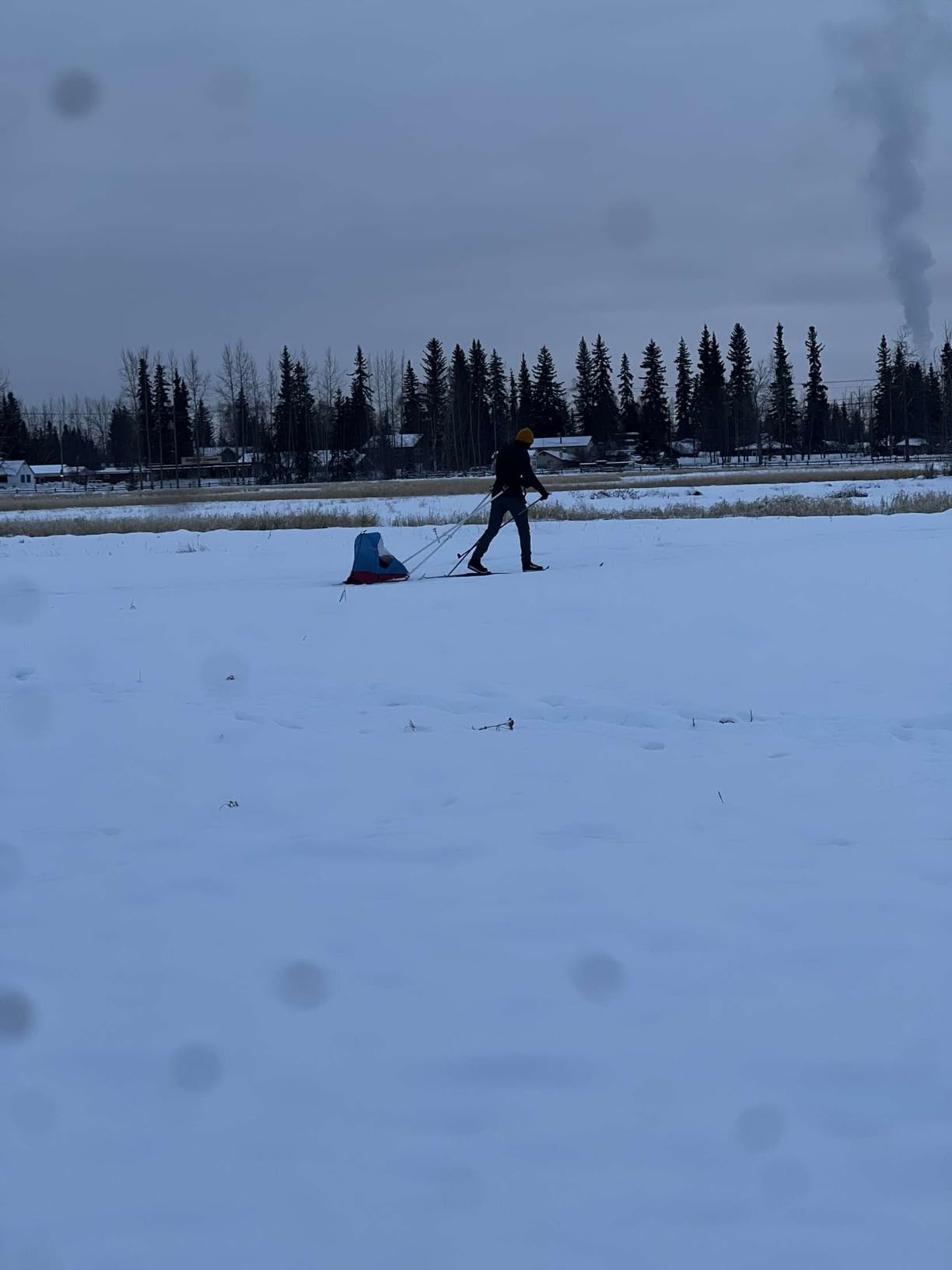
This sled is less about sliding down a hill and more about keeping a small child warm and dry while an adult tows them along a snowy sidewalk. At 4.6 stars it sits in the top group for rating in the roundup, and with 769 reviews it has the most reviews of any sled at that level, which tells you how consistent the experience is.
The centerpiece is the weather shield, a water-repellent cover that is waterproof, wind resistant and blocks UV rays while leaving a ventilation screen so the child is visible. A stroller-age baby stays comfortable and visible inside it, and the shield is what separates this from a basic plastic pull sled.
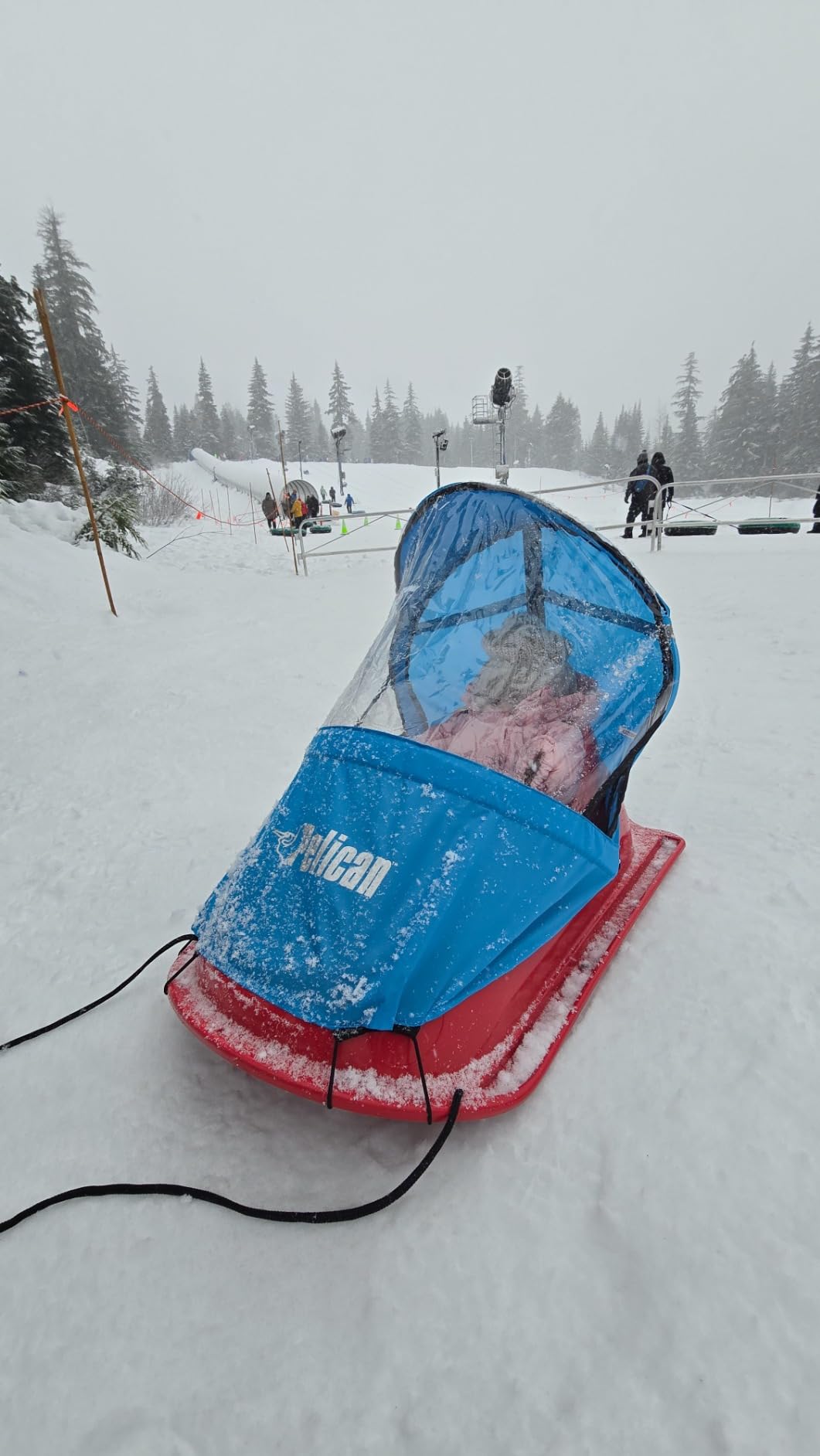
The wide base is the reason this does not tip. Owner reviews describe it as stable on rocky and uneven paths, and the construction absorbs shocks rather than passing every bump straight through. The high backrest and wide edges minimize the risk of a tip-over, which matters enormously with a child who cannot yet brace themselves.
Safety is handled thoughtfully for this age group. There is a safety belt, safety reflectors for low-light walks, and a design that is stated to meet current North American safety standards. The long pull rope is sized for towing along a snow-packed road, and the whole unit is 5 pounds.
Three real gripes appear repeatedly and none are dealbreakers. The seat is deep, so lifting a bundled baby in and out takes practice. Snow builds up at the front during long outings and needs clearing. And the shield requires a screwdriver to remove, which is mildly absurd but at least means it stays on during a gusty walk.
One more detail for winter gear: the belt is a single belt without shoulder straps, and reviewers note that it slips on a child in a bulky snowsuit. If your child is heavily dressed, check the fit before the first outing.
The sled carries a one year limited warranty against manufacturer defects, with a shorter fifteen day window on the runners specifically. That split is worth understanding: the structure is covered for a year, the wear parts for less. For a product meant to be towed over pavement and mixed snow, that distinction actually matters.
Over two winters our shield took repeated attach and detach cycles without cracking, and the fabric stayed water-repellent. It is built for ages up to 24 months, so plan on one or two seasons and think of it as a walking-weather solution rather than a hill toy.
36 x 19 x 1 inches
0.41 kg
Up to 110 pounds
Foam with PE core
At just over a pound, this is the sled our youngest tester could carry up the hill without an adult helping, and that single fact changes how often a child will use it. Weight is the most underrated specification in this whole category, and this one wins it.
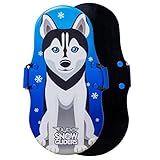
It is a foam deck sled, 36 by 19 inches, rated for ages five and up with a 110 pound weight recommendation. The cushioning is real rather than marketing: it absorbs bumps, sticks and jumps, which makes it far more forgiving than a bare plastic shell.
The trade here is the classic one. Foam absorbs impact and is quiet and warm, but the top speed on a long slope will not match a hard plastic bottom. On packed snow and a light icy crust, this sled slides very well; on deep fresh powder it loses ground quickly and needs a second run to find its line.
The build answers the usual foam complaint with a durable PE core and a crack-resistant bottom, which is a stronger structure than a simple foam block. The slick bottom is what produces the speed, so the useful part of this sled is really the plastic layer and the foam is the comfort layer.
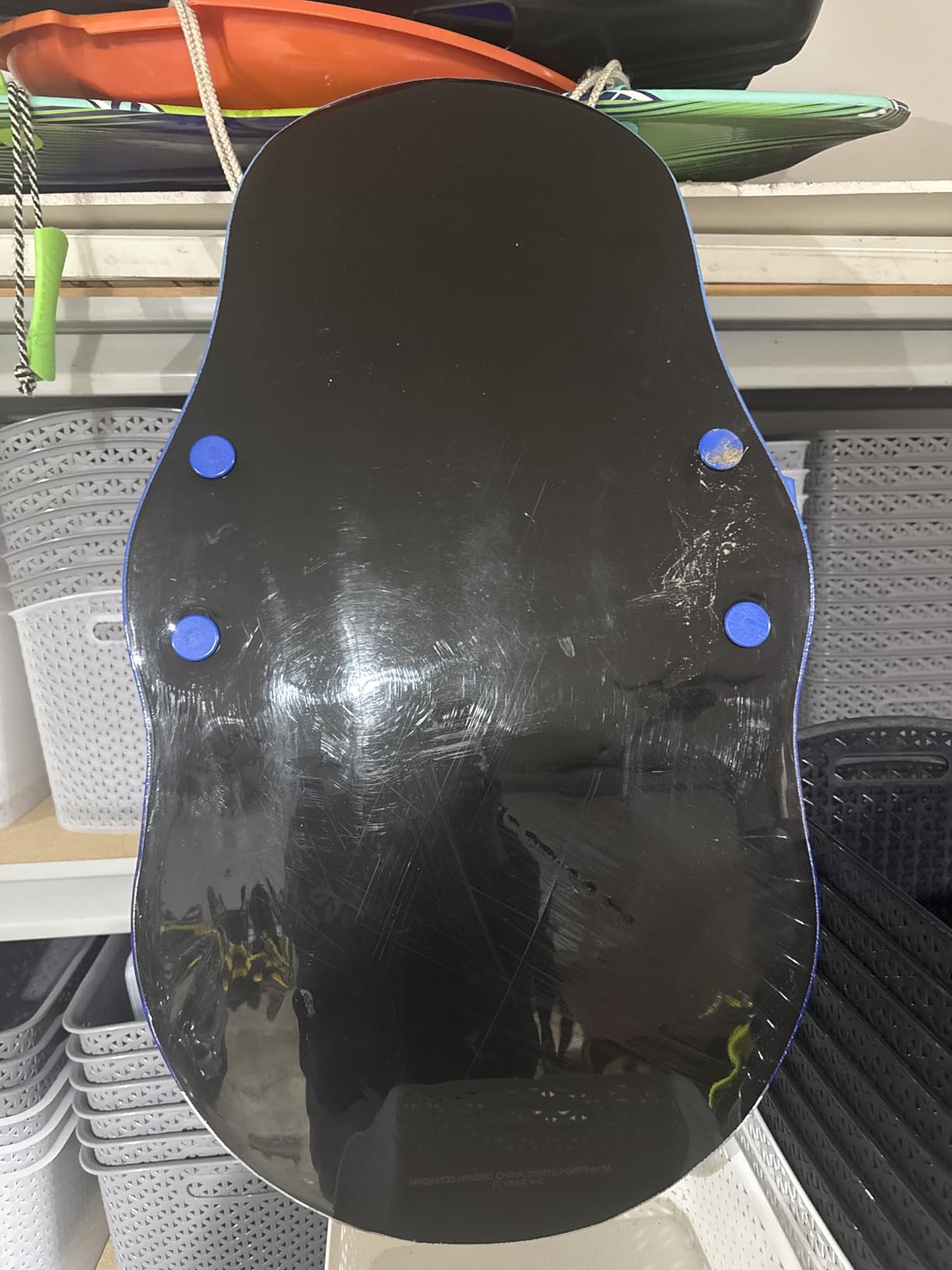
Two large ergonomic handles give a secure grip and noticeably better control than a flat deck with no handholds, and both help a child slow down by dragging a side. That gives a young rider a steering input without a mechanical steering bar, which is a real advantage on narrow hills with trees.
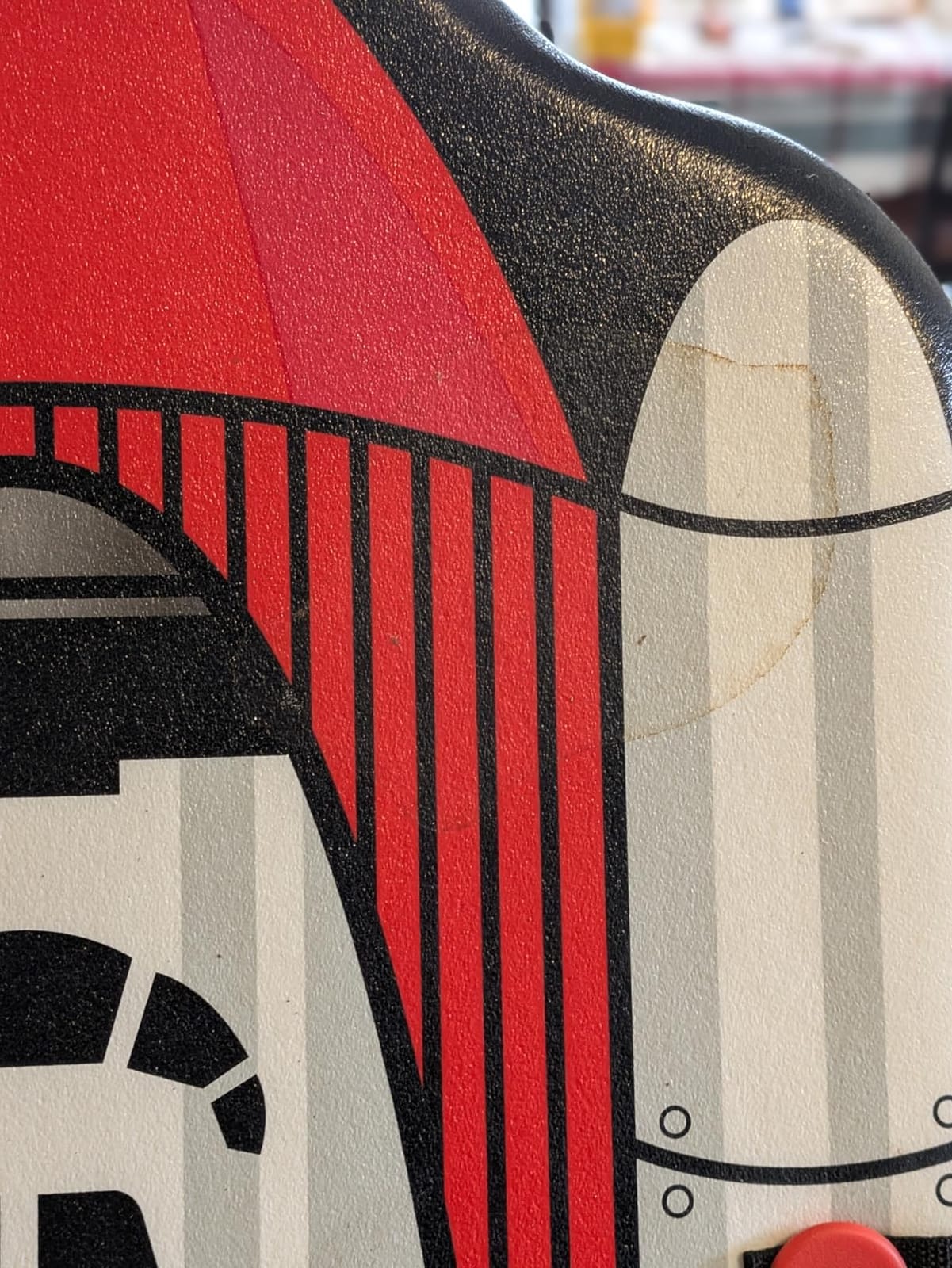
Durability is where owners split. Many report the sled lasting several seasons and children coming back to it repeatedly, but a recurring complaint is that the one inch thick foam shows cracking and edge wear after a single season of frequent use. With 80 percent five-star ratings, the majority clearly get more life than that, so treat the foam as a consumable surface rather than a permanent one.
The eight printed patterns, from Pink Plaid to Blue Camo, matter more than they sound. A sled a child identifies with gets used; a generic grey one gathers dust in the garage.
Choose the foam deck when your child is small, the hill is short, and comfort matters more than raw speed. Choose a hard plastic toboggan when the slope is long, the group includes older kids, and finishing speed is the goal. Mixing one of each across a family is a reasonable strategy and covers both moods.
Given the weight, the 4.6 rating and the one year manufacturer warranty, this is a straightforward recommendation for a child who has just decided sledding is their new favorite thing.
26 inch diameter
1.5 pounds each
Up to 150 pounds
Set of three
A saucer sled is a fundamentally different experience: no directional front, no steering, just a spinning disc that goes wherever gravity and shape take it. For kids who like that, it is the liveliest sled in this list. For kids who want to steer, it is a non-starter, and no amount of technique fixes that.
These are 26-inch diameter discs weighing 1.5 pounds each, in a pack of three, rated to 150 pounds with one rider at a time. The molded hand grips are the detail that makes them work for young children, giving small hands something to hold as the disc spins.
The construction uses heavy-gauge high-density polyethylene, which resists cracking in cold temperatures better than the thinner plastic used in bargain saucers. Reviewers generally rate the ride as fast and fun on both packed snow and ice, and a 4.2 average across 463 reviews reflects broad satisfaction.
What the reviews do flag is weight. About 11 percent of one-star feedback describes cracking after rough use, concentrated among teens and adults piling onto discs intended for kids. The listing language mentions teens and adults, but our advice is to keep riders within the child range and expect the plastic to tell you when it is done.
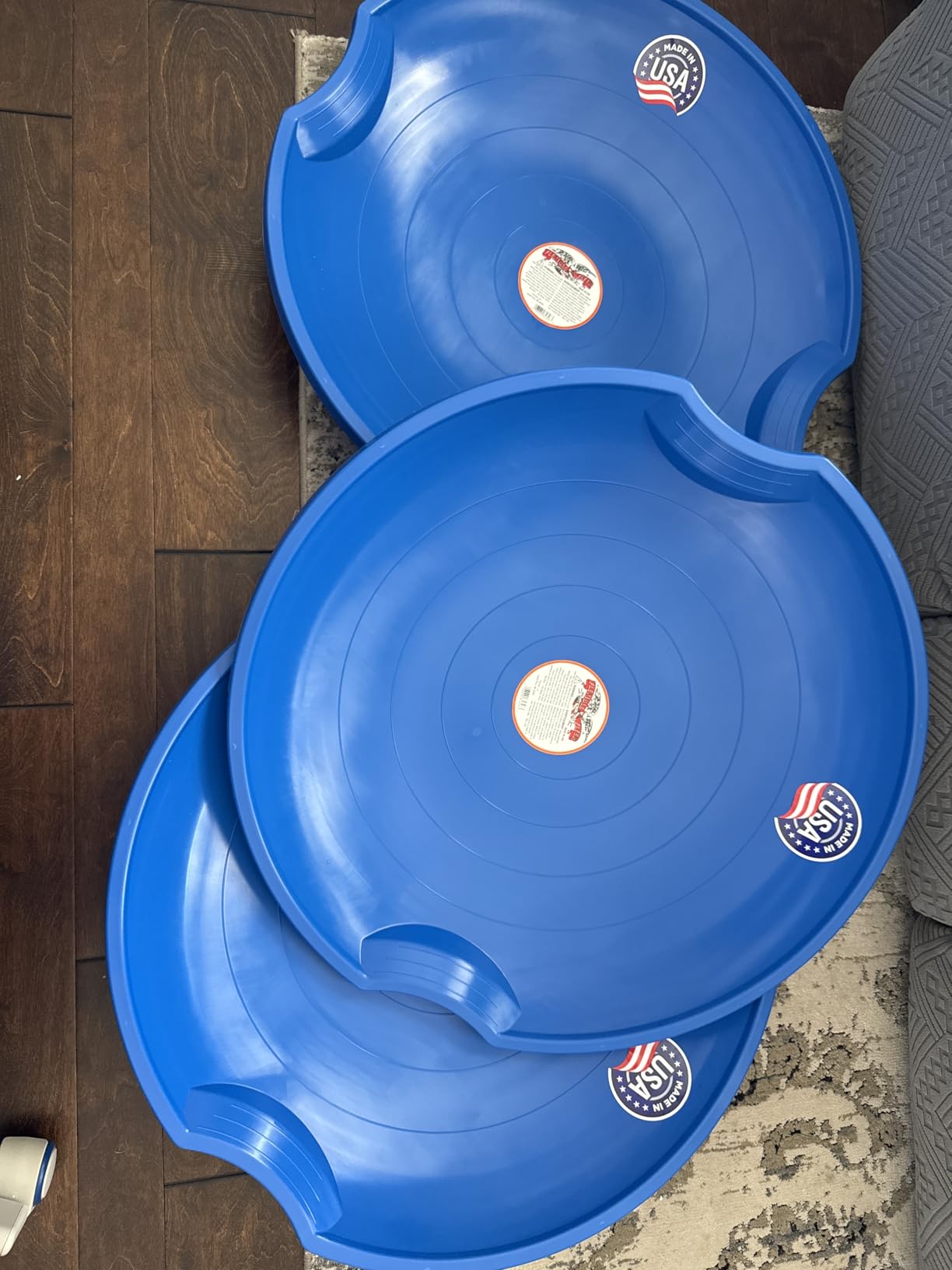
The three-disc stack is a genuine practical advantage. Saucers nest on top of each other, so the whole set occupies roughly the footprint of one disc plus a few inches. After a long season you can wedge them behind a garage door, in a closet, or in the trunk of a car, and they take up almost no visual space.
For schools, daycares and large families this pack is the buy. One rider per disc means a group of five needs more than one set, and for a mixed-age family a saucer set complements a toboggan nicely: older siblings spin, younger kids ride tandem.
The obvious limitation is control. A saucer cannot be steered, braked or pointed, which is why a helmet is not optional in our view for a child on a disc near a treeline or a road.
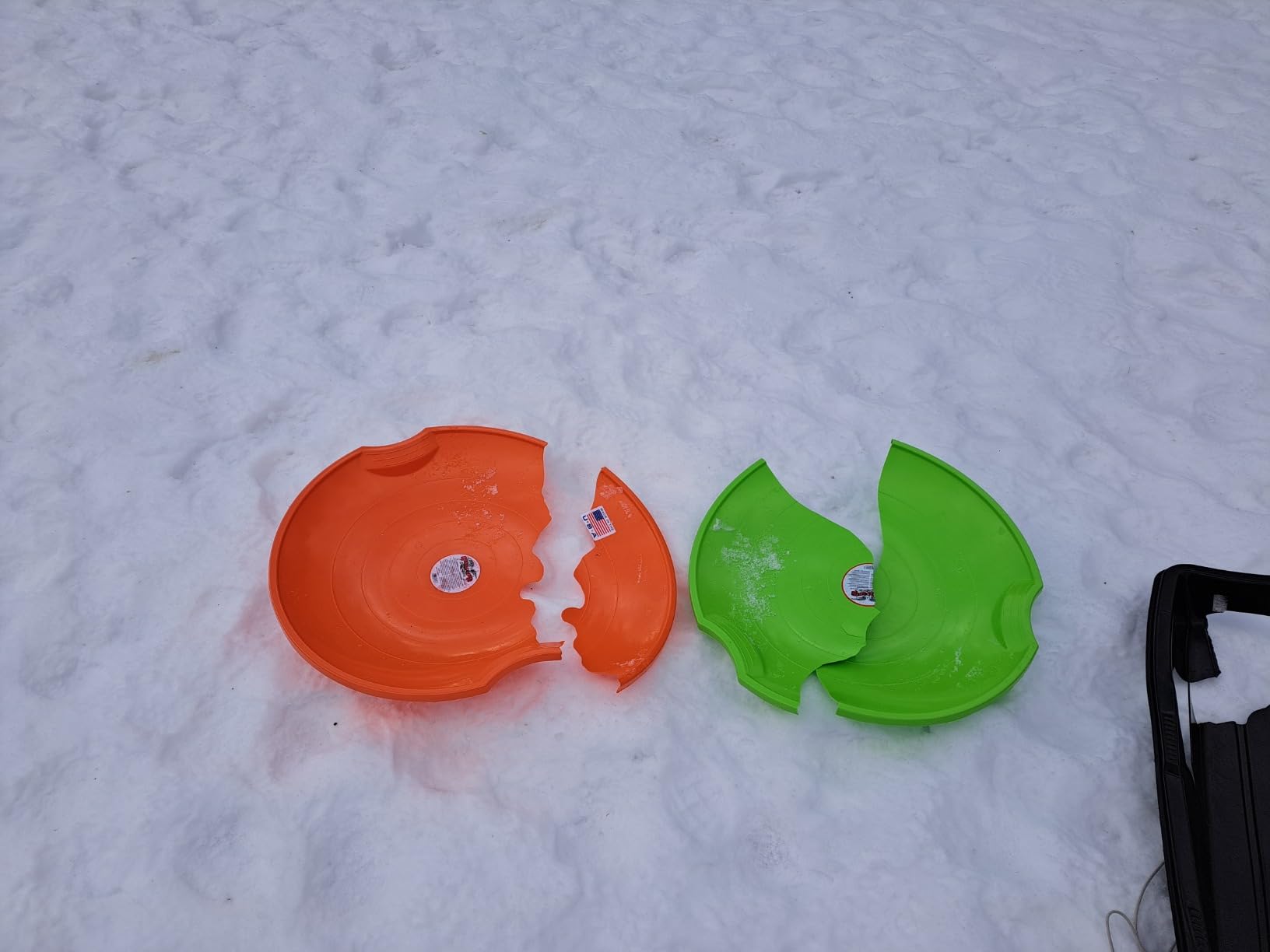
Saucer sleds reward a kid who wants thrills more than precision, and they are forgiving of imperfect technique because there is no technique to get wrong. They are also the easiest to hand to a visiting friend, since there is nothing to learn and nothing to adjust.
Pair one or two of these with a steerable sled in the same family and you cover both the adrenaline and the control ends of the spectrum without buying into a tube.
35 x 18 x 6 inches
Up to 130 pounds
HDPE
Cold rated to -22F
The Retrorider holds the number one sales rank in the Snow Sleds category in the listing data we reviewed, and 75 percent of its reviews are five-star. The hard bottom is the story here: this sled glides, and it holds its speed when the hill flattens out, which is exactly where foam decks fade.
It also carries the most extreme cold rating in the roundup, with a coating rated to minus 22 degrees Fahrenheit. If you are in a place where the thermometer routinely drops that low, that number is the whole decision.
There is a direct trade in sled physics. A hard HDPE surface creates very little friction, so more of the rider’s energy converts into speed. A foam deck trades that speed for comfort by absorbing energy instead. Riders who want long, fast runs and do not mind a rigid seat should choose the hard bottom every time.
The practical consequence is noise and harshness. Reviews describe the ride as harder and louder than foam alternatives, and there is no padding at all. On a long, fast hill, a child who is sensitive to vibration will feel it through the whole run.
There is no steering mechanism. Riders control the sled by leaning and by dragging, which is fine on a wide open run and problematic on a narrow hill with trees. That makes this a better pick for older kids with decent balance than for a first-time rider.
Sizing is unusually flexible here. It is offered in 35 inch and 48 inch lengths, across four colorways, in single and multipack configurations up to four, and the occupancy is listed for two. The nylon pull rope comes pre-knotted, which is a small quality-of-life detail that avoids the classic first-day frustration of a rope you cannot tie.
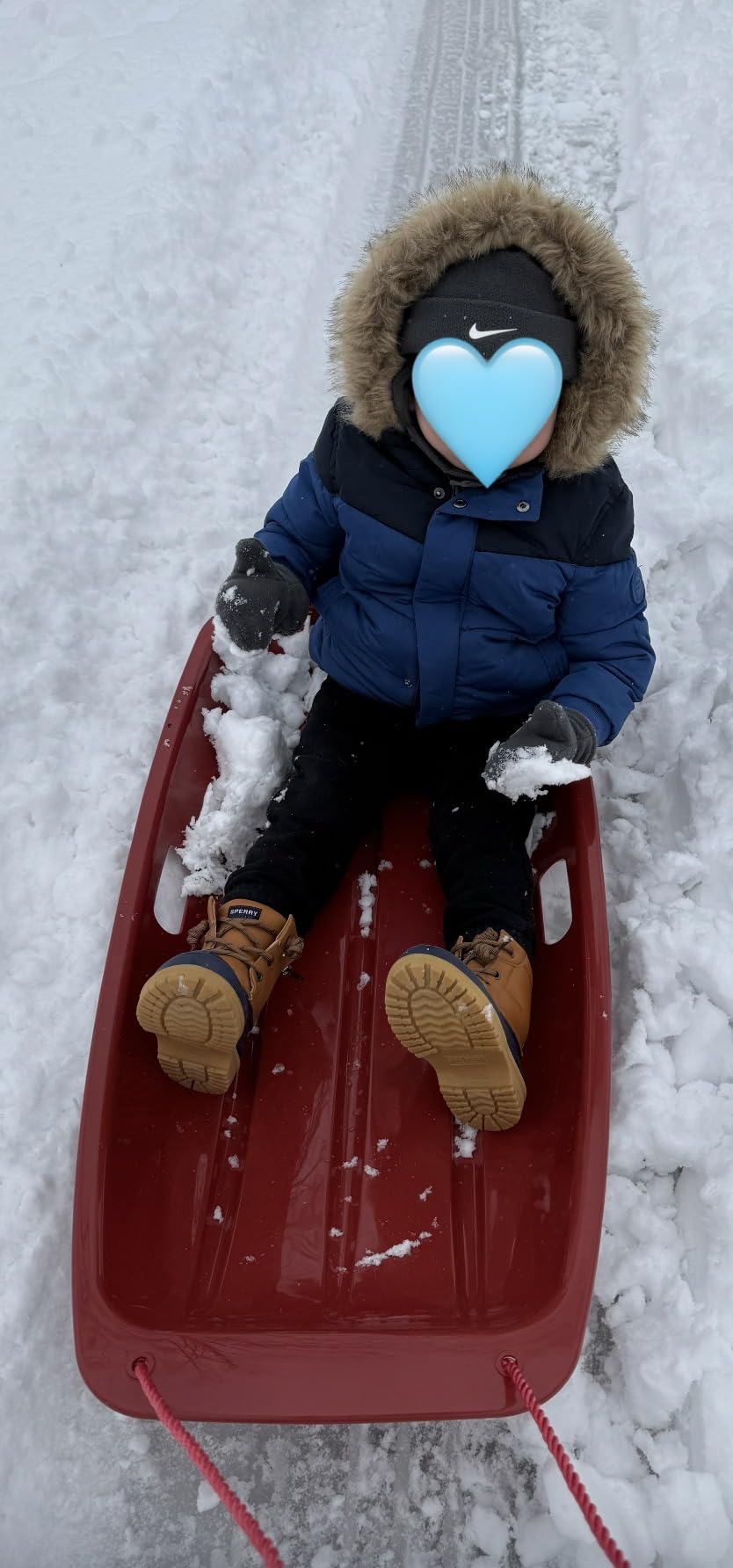
At 4.4 stars from 374 reviews, this is a well-liked product with a smaller review base than the leaders in this roundup. Owners point to the pre-attached rope, the tough HDPE body and cold-weather performance as the reasons it holds up.
One practical note on configurations: the individual listings are single sleds, so a family planning group sledding should look at the multipack options rather than ordering several singles. With a listed weight recommendation of 130 pounds, it suits an older child or a light adult and a child tandem.
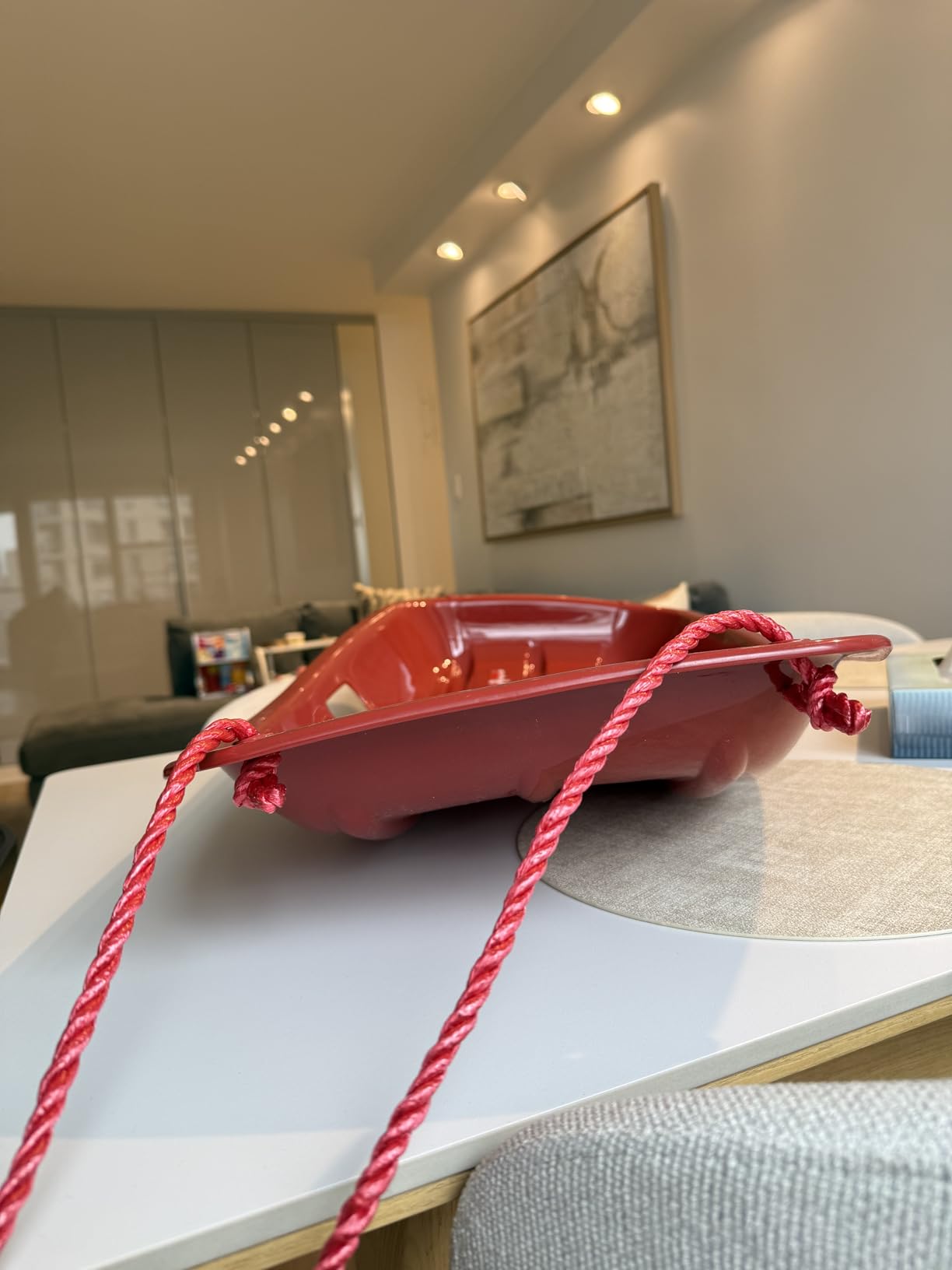
This is the speed sled for a family that has outgrown beginner gear. Pair it with a foam deck for younger kids so the group is not forced into one compromise, and the age gap stops being a problem on family sledding days.
Given the cold rating, the included rope and the two-rider layout, it is a strong all-round pick for families outside the mild-winter latitudes.
29 x 14 x 11.5 inches
11 pounds
Up to 50 pounds
Northern hard maple
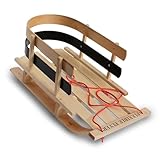
This is the only wooden sled in the roundup and the only one designed to be inherited. It is handcrafted from Northern hard rock maple with a steam-bent backrest and runners, and 82 percent of its reviews are five-star, with owners describing it as a keepsake rather than a toy.
It suits children 18 months to 4 years with a 50 pound weight recommendation, and it arrives fully assembled, so there is no build project to plan around. A matching fitted cushion pad is available separately to block cold air, which is a worthwhile addition in real winter conditions.
Wooden skis meeting pavement or patchy, gritty snow is how classic sleds get chewed up. The steel runners fitted under the wooden skis are the reason this one survives being towed across a sidewalk or a road that is only half snow. That single feature is the difference between a decorative heirloom and a working one.
The elevated riding position is the other underappreciated detail. Because the child sits up rather than down, they stay dry and clear of the snow, and the high double-slat backrest gives real support for a toddler who may not have the core strength to sit upright for a full ride. A protective cross bar across the skis adds another layer of injury protection.
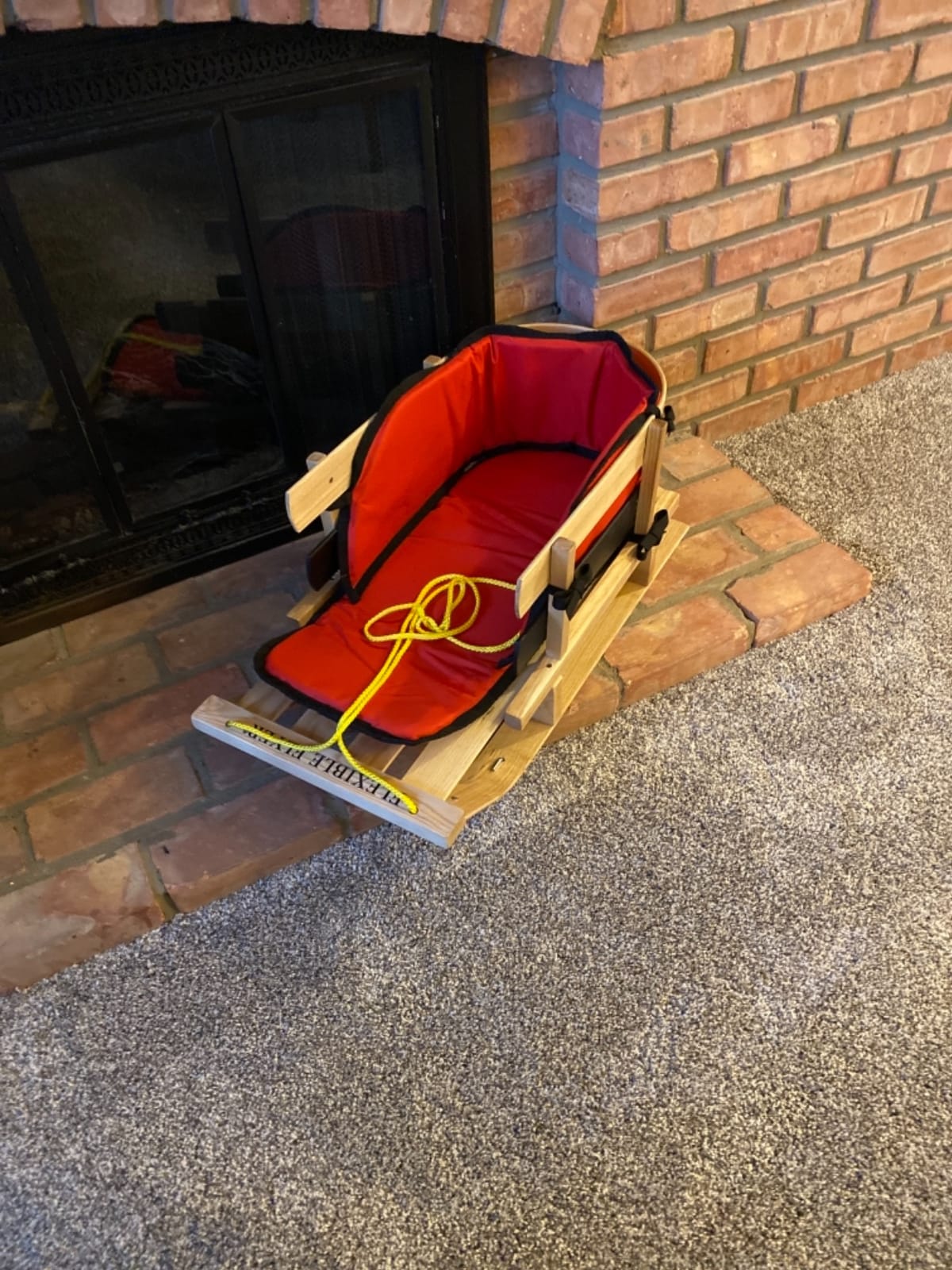
There are four, and they are consistent across reviews. The base is narrow, which makes it more prone to tipping on uneven or off-piste ground. There are no restraint straps included, so a small child needs your hands or a lap to stay secure. The seat is single, so two toddlers cannot ride together. And at 11 pounds it is the heaviest sled in this roundup by a wide margin, with a 13.5 inch tall backrest that makes towing it harder than towing a low plastic sled.
Plan for adult hauling or a second adult on walk-up trips, and test the tow length before the first outing, because some parents wish the rope ran longer.
Buy it if your family values longevity and tradition, if you enjoy the aesthetic, and if your child is small enough that a sit-up pull sled is the right form. It photographs beautifully for holiday cards, which sounds trivial until you consider how many photos of your child will be taken in front of a snowbank.
Skip it if you need a sled a four-year-old can climb into alone, if you plan to carry it on a solo hike, or if you want two children to ride at once. Those are real needs, and the plastic and foam options in this roundup serve them better.
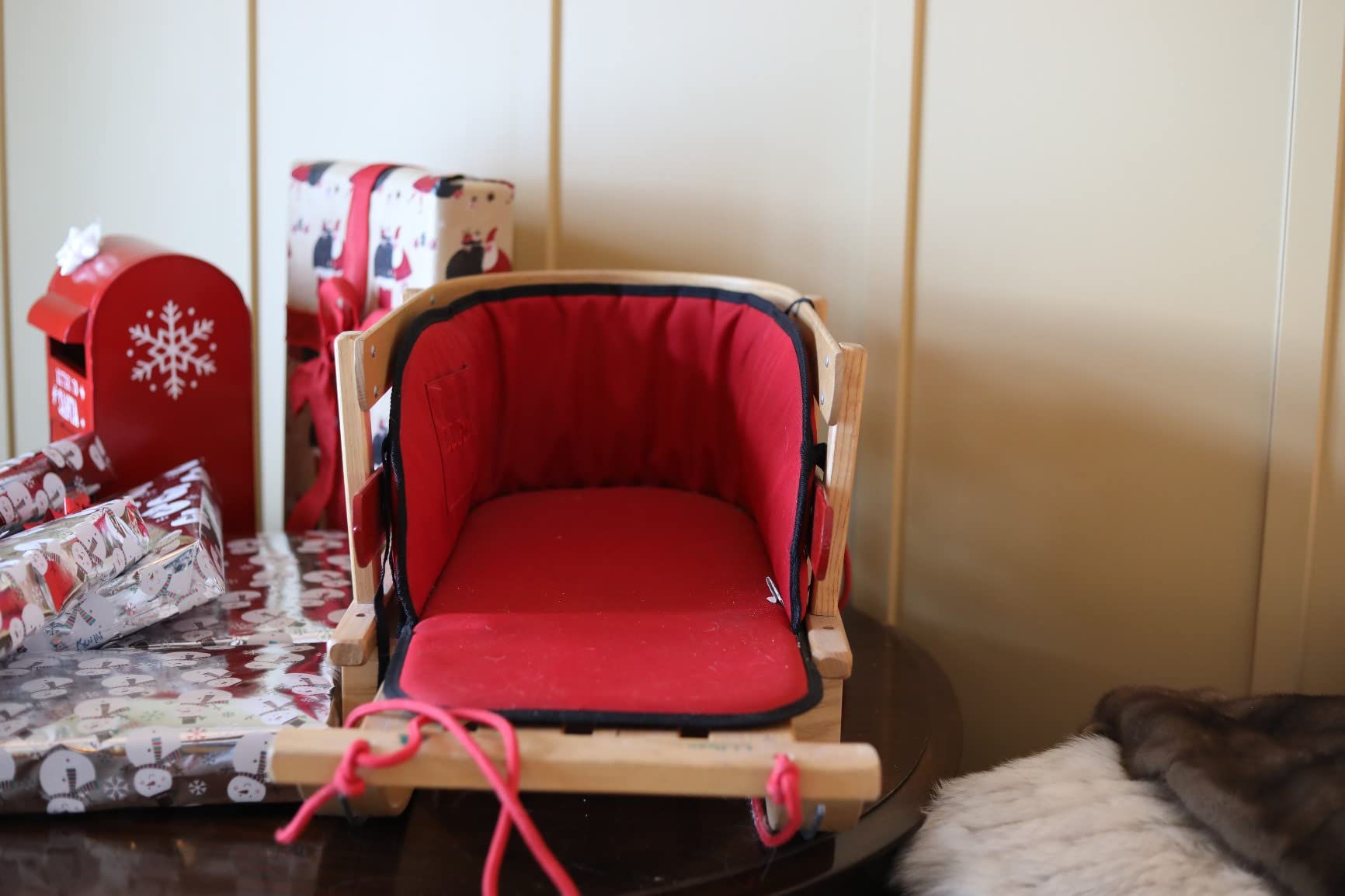
The wood is hard rock maple from northern sourcing, steam-bent for the backrest and runners, which is the same construction approach this brand has used since 1889. Wood does not crack in cold the way polypropylene does, and the metal runners are the wear component to inspect each season. Keep the joints dry and the runners free of packed ice, and it will outlast several children.
Flexible Flyer also makes a wood-skis-only version if you want the look without the runners, though the runner-equipped variant is the one I would choose for mixed surfaces.
45 x 17 x 1 inches
4.6 pounds
Single rider
High-density EVA foam
The principle behind this sled is length. A 45-inch deck spreads the rider’s weight over a longer contact area, which reduces drag and makes rough ground noticeably smoother than a 36-inch foam sled can manage. For hills with grass showing through, that is the difference between a ride and a scraping stop.
It also has a genuinely clever storage answer. The sled rolls up into a compact form, which means a family with a small apartment, a wall-mounted hook and no garage can keep it without dedicating floor space to it.
The top layer is high-density EVA foam, which absorbs bumps and impacts comfortably, and the bottom is a slick HDPE coating over a reinforced base with sturdy fabric stitching. That combination is why 77 percent of reviews are five-star: you get a foam ride with a plastic-glide surface underneath it.
Two ergonomic grip handles are molded into the deck for steering and control, which is the feature that separates it from a flat foam board. Handles give a small child an actual input for slowing down, and at 4.6 pounds the sled stays carryable uphill by a child who is strong enough to manage it.
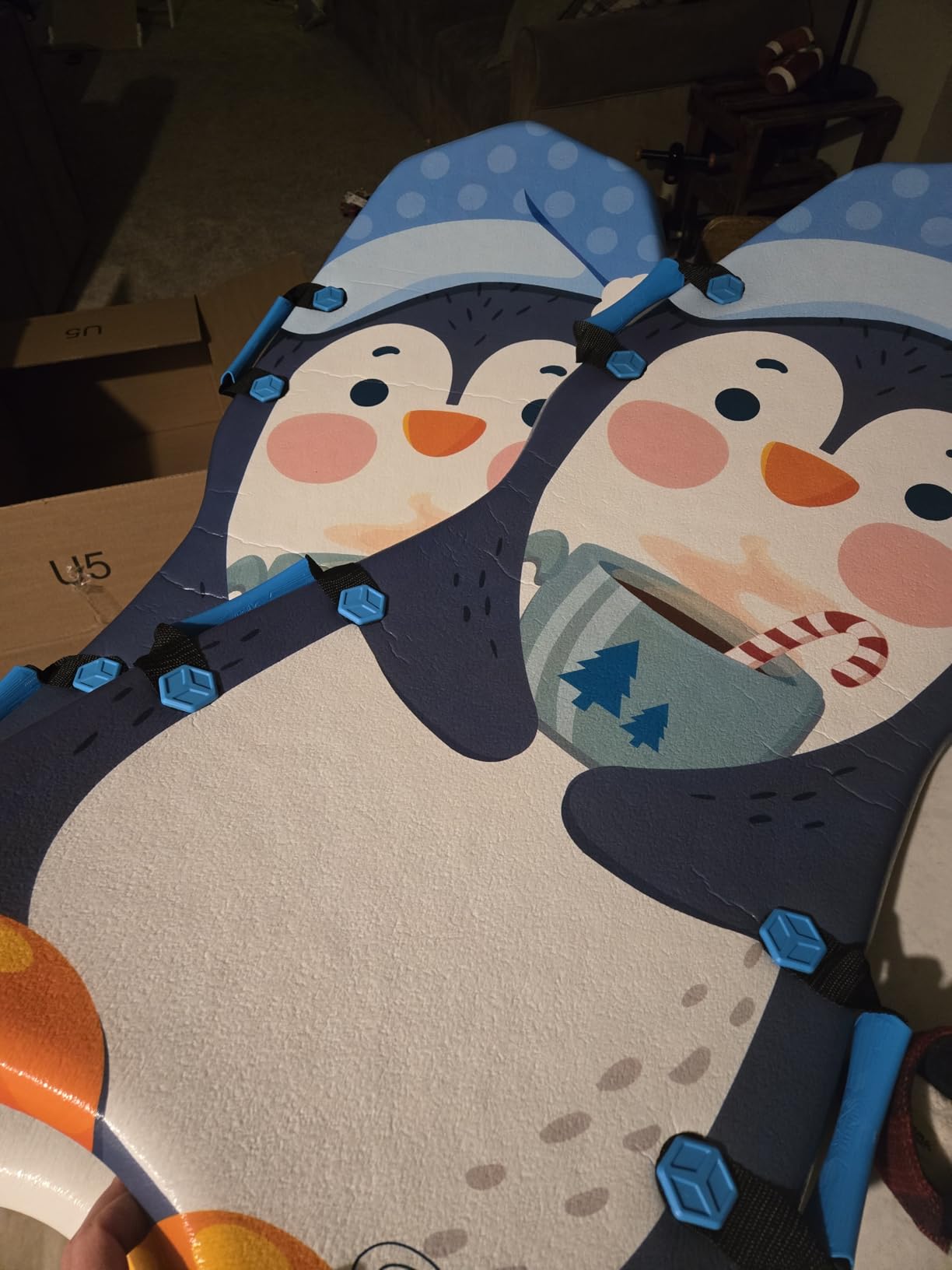
Here is the honest limitation. A slick HDPE bottom needs packed or wet snow to perform. On very dry, un-packed powder it can drag, because there is nothing to glide on until the sled cuts a track. The first run breaks the trail and later runs improve, which owners note but which is not ideal when you have a line of children waiting.
The foam is also only about an inch thick, so the deck feels flexible rather than rigid. That is comfortable but it is not the same as a solid platform, and a very large rider will feel it.
There is also a packing subtlety worth knowing: the product data lists a pack count of two while the box contents describe a single sled, so count the discs on arrival.
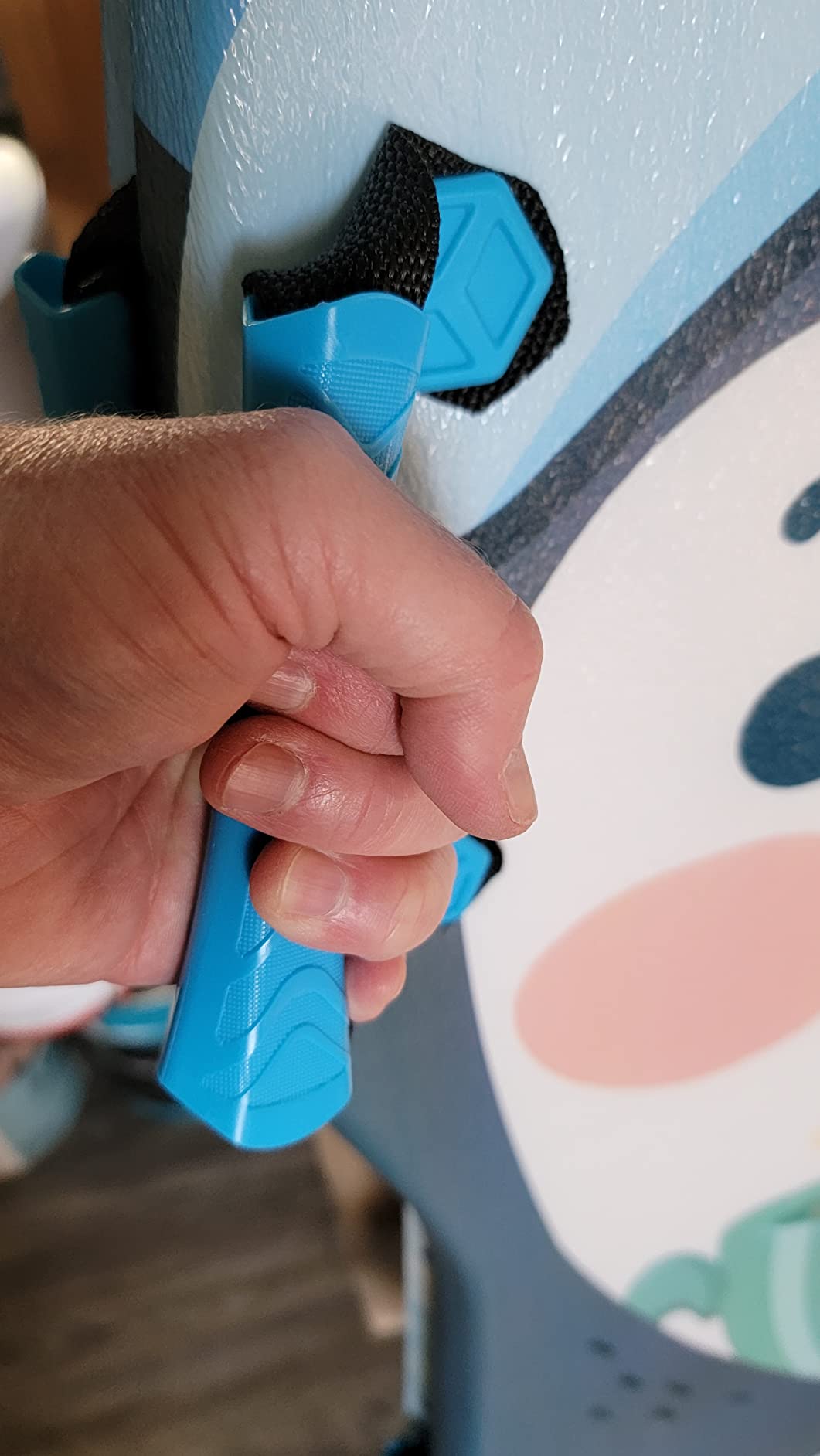
Owners highlight the balance of a slick bottom with a cushioned foam top, plus the roll-up design and the manageable weight for carrying and storage. It holds up after repeated trips and even when it sits out in the snow, which is a durability claim that matters more than any speed figure.
At 4.6 stars with 167 reviews, the sample is smaller than the leaders, so treat the rating as encouraging rather than definitive. For a family that values comfort on long hills and has storage constraints, this is a distinctive option that competes with the shorter foam toboggans on exactly the right terms.
26.5 x 20 x 10.25 inches
4 pounds
Up to 50 pounds
Made in the USA
There is something appealing about a sled with no clever features. The ESP toddler sled is a wide-base plastic seat with a cushioned pad, a snap-lock belt, a raised foot rail and a long tow rope, and it does those things well. The brand is Emsco Group, the maker of the original plastic shovel, and this model is made in the USA.
At 4.6 stars with 78 percent five-star ratings, the experience is consistent. What makes it a genuine recommendation is stability: the extra-wide base is the reason owners report it stays flat and does not tip when pulled around a yard or along a path.
Most toddler sleds are shaped for a child who can already sit independently and brace with their legs. This one accepts a younger, more passive rider because the base is wide and the walls are high, and the raised foot support rail keeps feet and the seat area above cold snow rather than dragging through it.
The cushioned seat pad addresses the other half of that problem, which is a plastic seat feeling freezing on a cold morning. Reviews specifically praise the pad for comfort in the cold.
Three limitations come up consistently. Small children typically outgrow the seat within about a year, which is a faster timeline than most parents expect when a toddler is growing quickly. The tow rope connection is described by some owners as the weakest link in the setup, so check it before every outing and retie it if it has stretched. And there is no weather protection, so this is a fair-weather and short-duration sled rather than a cold-wind solution.
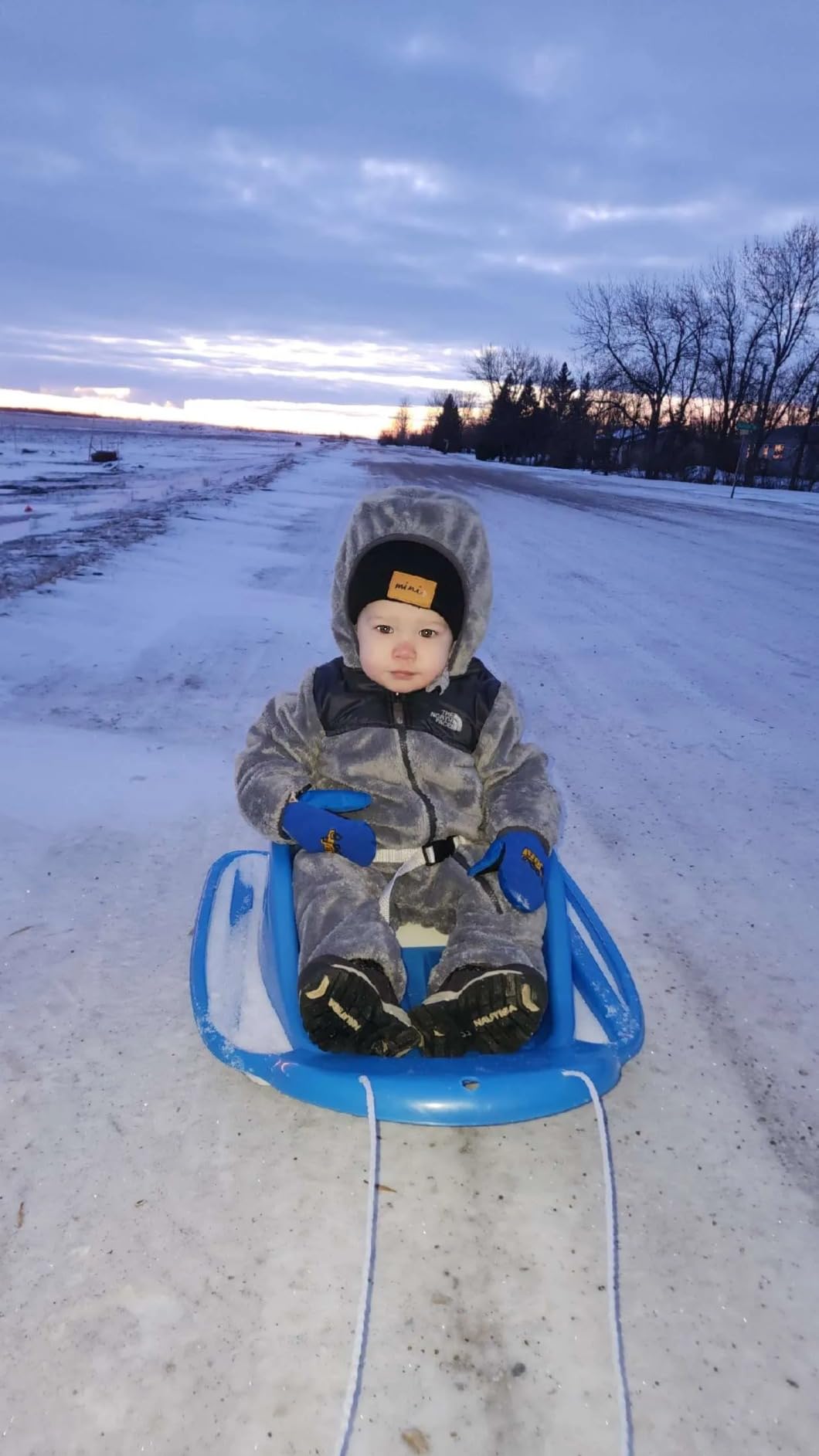
Toddler hardware design is where cheap products usually cut corners, and a buckle a child cannot do up themselves becomes a buckle an adult handles every single time. The snap-lock seat belt here is specifically praised in reviews as something a young child can manage, and that turns towing from a fussy task into a routine one.
The long tow rope is well sized for pulling a one- to two-year-old, and the whole unit weighs 4 pounds, so it is manageable for a single adult to carry, load and unload.
Against the Gizmo Riders Baby Rider, this model is heavier and less compact but has a wider base and a belt a child can self-buckle. Against the Pelican Baby Sled Deluxe, it has no weather protection at all, which is the single biggest functional gap. Against the wooden Flexible Flyer sleigh, it is far lighter to lift and much easier for a young child to climb into on their own.
Choose it when your child is just starting to walk, needs a simple stable seat, and your winters are moderate. It carries a one year limited manufacturer warranty and a 50 pound weight recommendation.
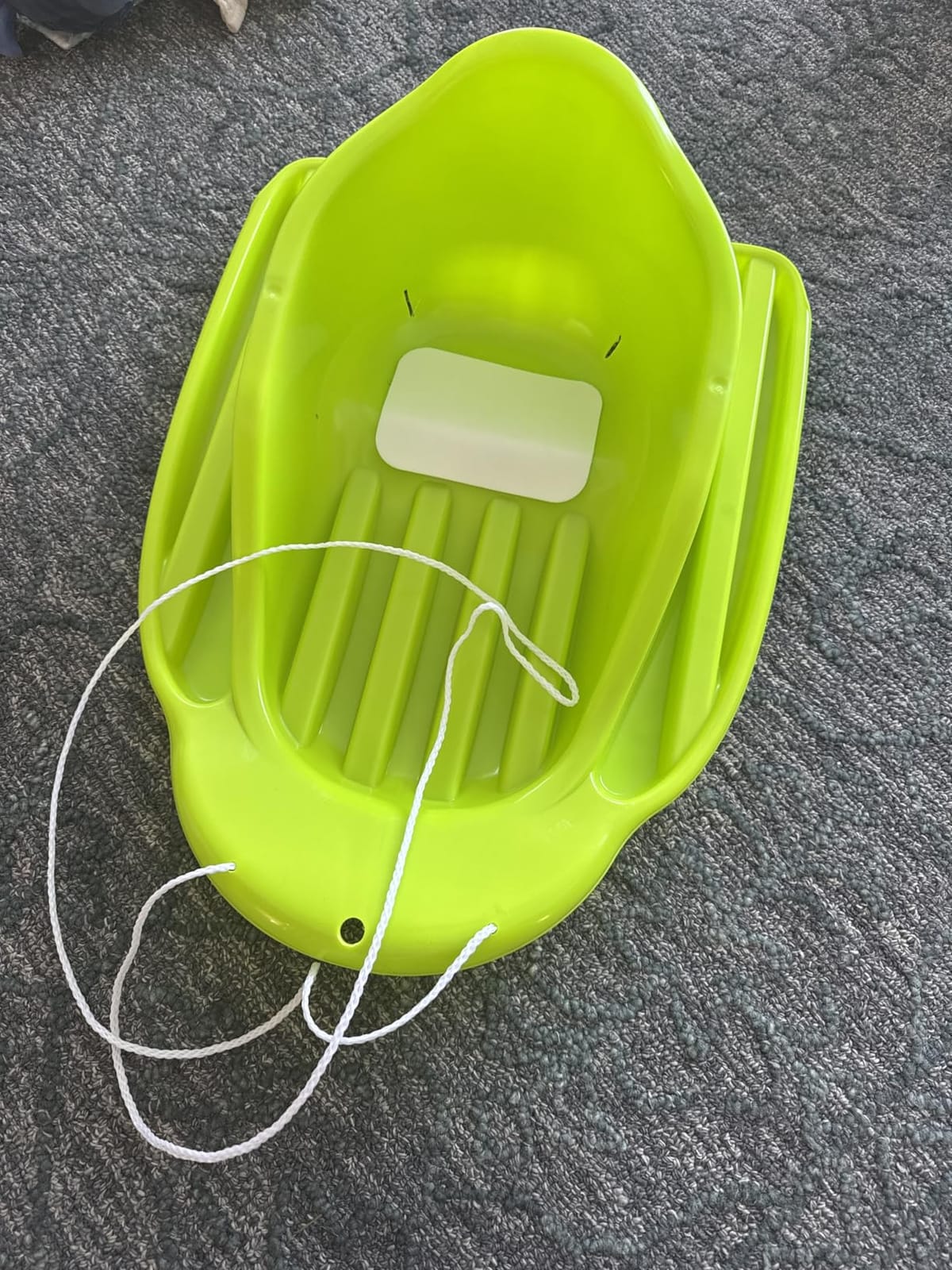
If your family has a very young baby who will be out in cold wind for an hour on a walk, the weather-shielded sled is the better buy. For a walking toddler on a short snowy outing, this wide-base design does the job without complexity, and the snap-lock buckle is the detail that makes it a genuine first sled rather than a compromise.
Most wrong sled purchases are not bad products, they are mismatched products. A sled that is too heavy never leaves the garage, and a sled that is too fast for the hill gets retired after one visit. Work through these five decisions in order and the choice makes itself.
Weight capacity is the specification that gets ignored and then regretted. The models here range from a 50 pound limit on the wooden sleigh and the ESP toddler sled, through 55 pounds on the Gizmo Riders Baby Rider, up to 200 pounds on the Flexible Flyer 3-pack. Toddlers grow out of the low-capacity seats in roughly a season, so choosing a size band up front pays off across multiple children in the long run.
Beyond weight, the real age split is developmental. A child under three belongs in a pull sled with a restraint. Four to eight year olds do well on a toboggan or small tube they can carry. Nine and up want steering, speed and a sled that fits more than one person.
Hard plastic is faster, quieter on ice, and more durable against cold, but it is a rigid, loud ride that transmits every bump. Foam absorbs impacts and stays warmer and quieter, but it is slower on long slopes and can degrade at the edges faster.
Pick plastic for long, groomed, fast runs. Pick foam for short, rough, backyard hills and younger children. The honest answer for most families is one of each, which also settles the two-kid argument permanently.
A saucer spins freely and a plain toboggan steers by leaning, while only a genuine steering bar or handle system gives a child real control at speed. On a wide, treeless slope none of that matters. On a narrow hill bordered by trees and parked cars, it matters enormously, and the unsteerable options become a genuine safety question.
Remember that no sled in this roundup has brakes. Every stop is a foot, a hand or a pile of snow, which is why hill selection is the real control mechanism.
Half the frustration of sledding is the walk back up, so check the tow system before you buy. The Slippery Racer Downhill Sprinter, the Retrospec Retrorider and the ESP toddler sled all include a rope, and the Retrorider’s is pre-knotted, which saves the first argument of the season. The Flexible Flyer 3-pack has the holes for a rope but does not include one.
Pay attention to whether the strap is retractable, which keeps it from dragging in the snow and tearing. A strap also avoids the rope-in-hand whipping that some parents find unpleasant.
Three shapes of answer exist. Saucers stack. Foam and plastic toboggans lean against a wall or hang from hooks. Roll-up designs like the Sunlite Sports 45-inch sled fold into a small bundle that fits in a closet or a car trunk, which is the practical answer for anyone without a garage.
Also count riders, not sleds. Three siblings sharing one big toboggan works on a calm hill and becomes a fight on a fast one, and one-rider-per-disc sets scale differently than a three-sled pack. While the gear is out, a decent pair of spotting scopes for kids gives the non-sledding members of a winter walk something to do while the sledders queue up.
Sledding injuries are overwhelmingly caused by collisions, hills and cold rather than equipment failure, which means the safety decisions are mostly about where and how rather than what you buy. A helmet is the one piece of gear that changes the outcome if something goes wrong.
Any child on a tube, saucer or steerable sled should wear a properly fitted snow-sport or bike helmet, and that includes adults, because a parent underestimating a hill is a common way a family ends up in an emergency room. No sled is worth a head injury.
For sleds used mainly on flat, treeless ground with a parent towing, a helmet is optional, though still sensible. The judgement is entirely about exposure to speed and obstacles, not about sled type.
The single best safety measure is choosing the hill. Look for a long, gentle slope that ends in a flat runout well clear of roads, fences, water, trees and parked cars. Check the runout before the first descent, not after a child has already hit something at speed.
Spacing matters more than most people assume. Riders should go one at a time, with the previous rider fully stopped and walked to the side before the next push. Over the seasons we have watched, congestion on the hill caused far more near-misses than the sleds themselves did.
Cold is the risk that arrives slowly. A wet child in a wind is fine for ten minutes and dangerous for forty, and a sled with no weather protection is fine for a short run and not for an extended outing. Insulated layers, waterproof gloves, a hat and a dry spare layer in the car cover most of it.
Check hands and feet before and after every session, since children rarely report cold hands themselves. If a session is ending near dusk, having a kid-friendly flashlight in the bag makes the walk back far less of an obstacle.
Sledding with a toddler and an eight-year-old at the same time is the hardest logistical problem in this whole category, and it is one that very little advice addresses. The workable answer is a long two-rider toboggan for the older child to sit behind the younger one, plus a separate low hill for independent running.
For groups, keep a rule that the smallest riders use the gentlest hill and the fastest riders never go while a younger child is still at the top. Parents on the sleds report far better compliance than parents shouting from the bottom.
For most families the best snow sledge is a long plastic toboggan that fits two riders, because it lets an adult ride with a child and lasts multiple seasons. In our testing the Flexible Flyer Winter Lightning 3-Pack was the strongest all-round option, with a 48 inch hard bottom, a 200 pound capacity and three sleds so siblings can rotate.
There is no inherently safe sled type, because most injuries come from hills, collisions and speed rather than equipment. The safest setup in practice is a steerable sled with handles used on a long, gentle, treeless slope with a flat runout clear of roads and obstacles, worn one rider at a time, with helmets for anyone on a tube, saucer or fast run.
For a three-year-old, a pull sled with a real restraint is the right call rather than a hill toboggan. The Gizmo Riders Baby Rider is the pick in this roundup because its three-point harness holds a wriggling child securely, it suits ages six months to three years, and the retractable tow strap lets an adult pull along flat ground and gentle slopes.
Hard plastic is faster, quieter and more cold-resistant, but rigid and loud. Foam absorbs bumps, stays warmer and is more forgiving, but is slower on long slopes and can crack at the edges faster. Choose plastic for long, groomed, fast runs and foam for short, rough backyard hills and younger children.
Yes, as a towed passenger on flat or gently sloping ground with a proper harness or seat belt, not as an independent rider on a hill. Two-year-olds cannot brace or steer, so use a pull sled with a high backrest, check the tow rope before each outing, keep the outing short in cold weather and go home as soon as hands or feet feel numb.
If you take one recommendation from this roundup, take the Flexible Flyer Winter Lightning 3-Pack. Two riders per sled, a 200 pound capacity and a set of three solve the problems that cause most returns, and its 3.25 pound weight means children can carry it back uphill themselves. It is the best overall buy among the best sleds for kids in 2026 because it works for the widest range of families.
For a baby or toddler, the Gizmo Riders Baby Rider is the pick for a harness, and the Pelican Baby Sled Deluxe is the pick for cold-weather protection. For an older child who wants speed, the Retrospec Retrorider handles the coldest temperatures and the hardest bottom. For groups, the Flexible Flyer Flying Saucer 3-pack stacks into almost no storage space. For a keepsake, the wooden Flexible Flyer Baby Sleigh is the one that gets handed down.
Whatever you choose, test it on the shortest available hill first, check the tow rope twice, and make sure everyone has a helmet before the first run. If your kids are into cold-weather observation as much as they are speed, our guide to microscopes for kids covers the indoor half of the season.