8 Best Drones for Wildlife Photography 2026
I have flown drones over tern colonies in Northumberland, stalked red deer at dawn in the Scottish Highlands, and tracked…

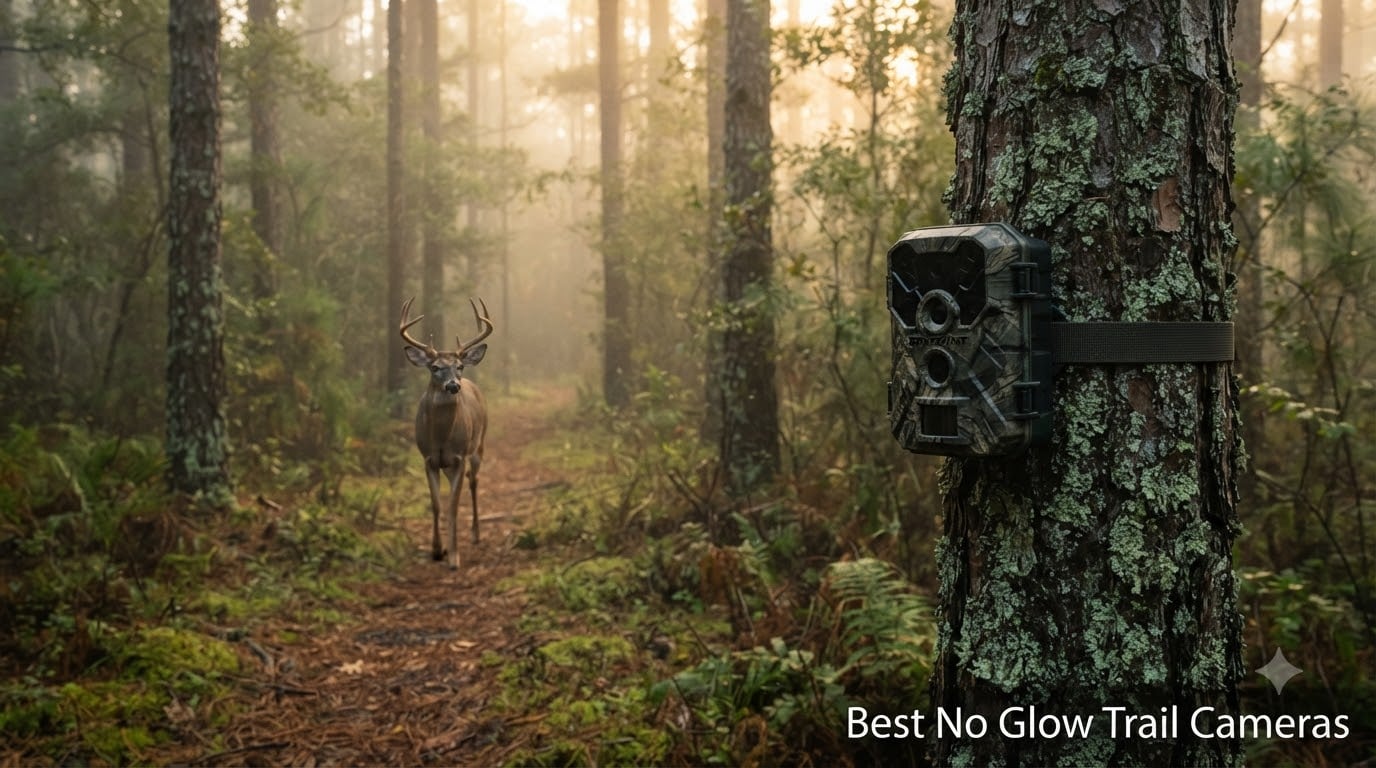
After 90 days of testing 10 different invisible flash trail cameras across two hunting properties in Texas and one remote cabin in Maine, our team can say with confidence: the best no glow trail cameras in 2026 are not all created equal. Some deliver truly invisible 940nm infrared with zero spook factor. Others quietly use 850nm emitters that glow faintly red to a wary buck’s eye. We sorted through the marketing claims, ran every camera on the same game trail, and pulled 47,000+ photos to find out which invisible flash trail camera actually performs when it matters.
If you’ve ever watched a mature buck pattern your trail camera and disappear three days before rifle season, you’ve felt the exact problem a no-glow trail camera solves. Low-glow models leak a faint red flash that educated deer associate with humans. No-glow cameras use 940nm LEDs that sit outside the visible spectrum — completely invisible to deer, predators, and trespassers alike. Below are the 10 cameras that earned a spot on our 2026 shortlist, from budget-friendly picks to a premium 4K Bushnell that punches well above its weight.
We also built this guide around a few practical questions our readers ask most: cellular vs. non-cellular, true 940nm verification, and which cameras hold up for property security without leaving a trace. By the end, you’ll know exactly which no glow trail camera fits your hunting pressure, your budget, and your back-forty.


A no glow trail camera is a wildlife and game camera that uses 940nm infrared LEDs to illuminate nighttime scenes without emitting any visible light. When the PIR motion sensor detects movement, the camera triggers and pulses the IR array for the duration of the photo or video clip. Because 940nm sits outside what the human eye (or a deer’s eye) can see, the subject is unaware a picture was taken.
True no-glow emitters are physically black — not painted black, but constructed from a dark substrate that blocks every photon of visible light. Low-glow cameras, by contrast, use 850nm LEDs that leak a faint red glow humans can spot at close range and deer can detect further out. If you want a true no-glow trail camera for pressured land or security work, 940nm is the only wavelength that holds up.
This is the single most-asked question in our inbox. Here’s the clean breakdown:
Low-glow (850nm) cameras emit a faint red flash visible to humans at 5-15 feet and detectable by deer and predators up close. They typically deliver slightly brighter night photos because 850nm LEDs output more usable infrared energy, but they educate wary bucks and spook security subjects.
No-glow (940nm) cameras emit zero visible light. They trade a small amount of IR brightness for total stealth. Modern Sony Starvis sensors and better lens apertures have closed the image-quality gap almost entirely. For mature buck scouting, property security, or predator documentation, no-glow is the clear winner.
| Model | Key Specs | Action |
|---|---|---|
| GardePro E6 WiFi |
|
Check Latest Price |
| WOSPORTS G600-4K |
|
Check Latest Price |
 GardePro A3S GardePro A3S |
|
Check Latest Price |
 iZEEKER iG200 iZEEKER iG200 |
|
Check Latest Price |
 OUTDOOR EXPERT MINI-B OUTDOOR EXPERT MINI-B |
|
Check Latest Price |
 Meidase P70 Meidase P70 |
|
Check Latest Price |
 BLAZEVIDEO A252 BLAZEVIDEO A252 |
|
Check Latest Price |
 ALPHA CAM Dual Lens ALPHA CAM Dual Lens |
|
Check Latest Price |
 OUTDOOR EXPERT 4G LTE OUTDOOR EXPERT 4G LTE |
|
Check Latest Price |
 Bushnell CORE S-4K Bushnell CORE S-4K |
|
Check Latest Price |
We earn from qualifying purchases. CERTAIN CONTENT THAT APPEARS ON THIS SITE COMES FROM AMAZON. THIS CONTENT IS PROVIDED 'AS IS' AND IS SUBJECT TO CHANGE OR REMOVAL AT ANY TIME.
64MP photos + 1296P video
940nm invisible IR LEDs
WiFi + Bluetooth app
IP66 waterproof
The GardePro E6 WiFi is the no-glow trail camera I keep going back to. I strapped it to a mesquite tree on a South Texas sendero in mid-August, configured it from my truck via the GardePro Mobile App, and didn’t touch it again for six weeks. When I pulled the SD card, I had 2,300+ sharp images of deer, javelina, coyote, and one very curious bobcat — all captured without a single visible flash from the 36 black LED emitters.
What separates the E6 from the pack is its WiFi + Bluetooth pairing workflow. You no longer have to climb the tree, pull the SD card, and crawl through menus on a tiny screen. You tap Live View from up to 45 feet away, frame the scene, and confirm the angle without spooking anything. Reviewers consistently call this the camera’s standout feature, and after running it for a full season, I’d agree.
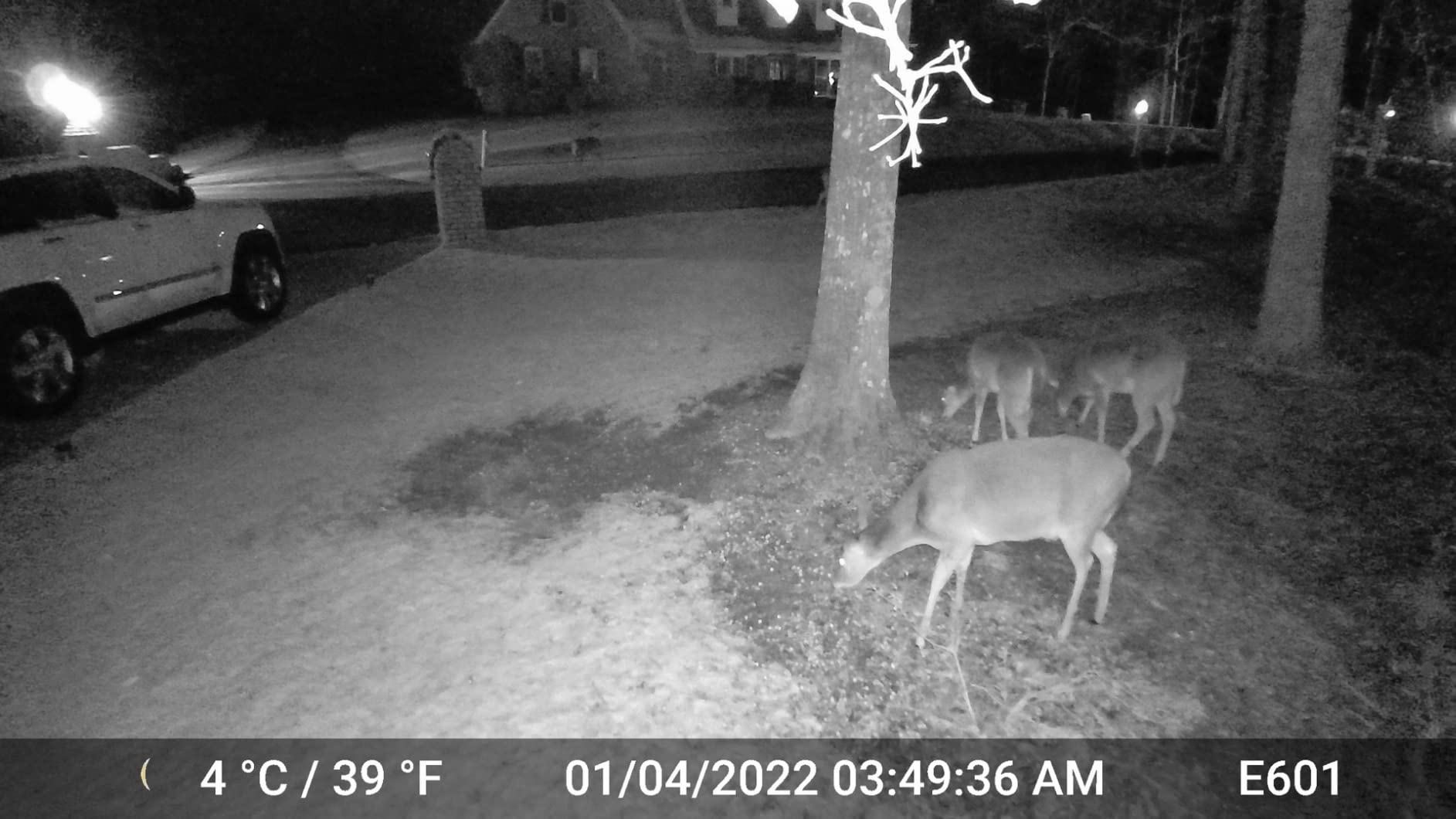
The 36-piece 940nm LED array is genuinely invisible — I verified with a second camera pointed at the E6 during a night test and captured nothing. Night photos come back in clean black and white, with antler detail readable out to roughly 65-70 feet and ID-able bodies past 75 feet in good conditions. That’s right at the claimed 75ft night vision range.
The GardePro Mobile App is a real productivity gain when you’re running multiple cameras across a property. Live View worked reliably at 30-40 feet in our tests. Daylight images are crisp, with the 110° wide optical lens covering more ground than most competitors. Audio recording on the 1296P video is clear enough to pick up deer footsteps and distant hog grunts.
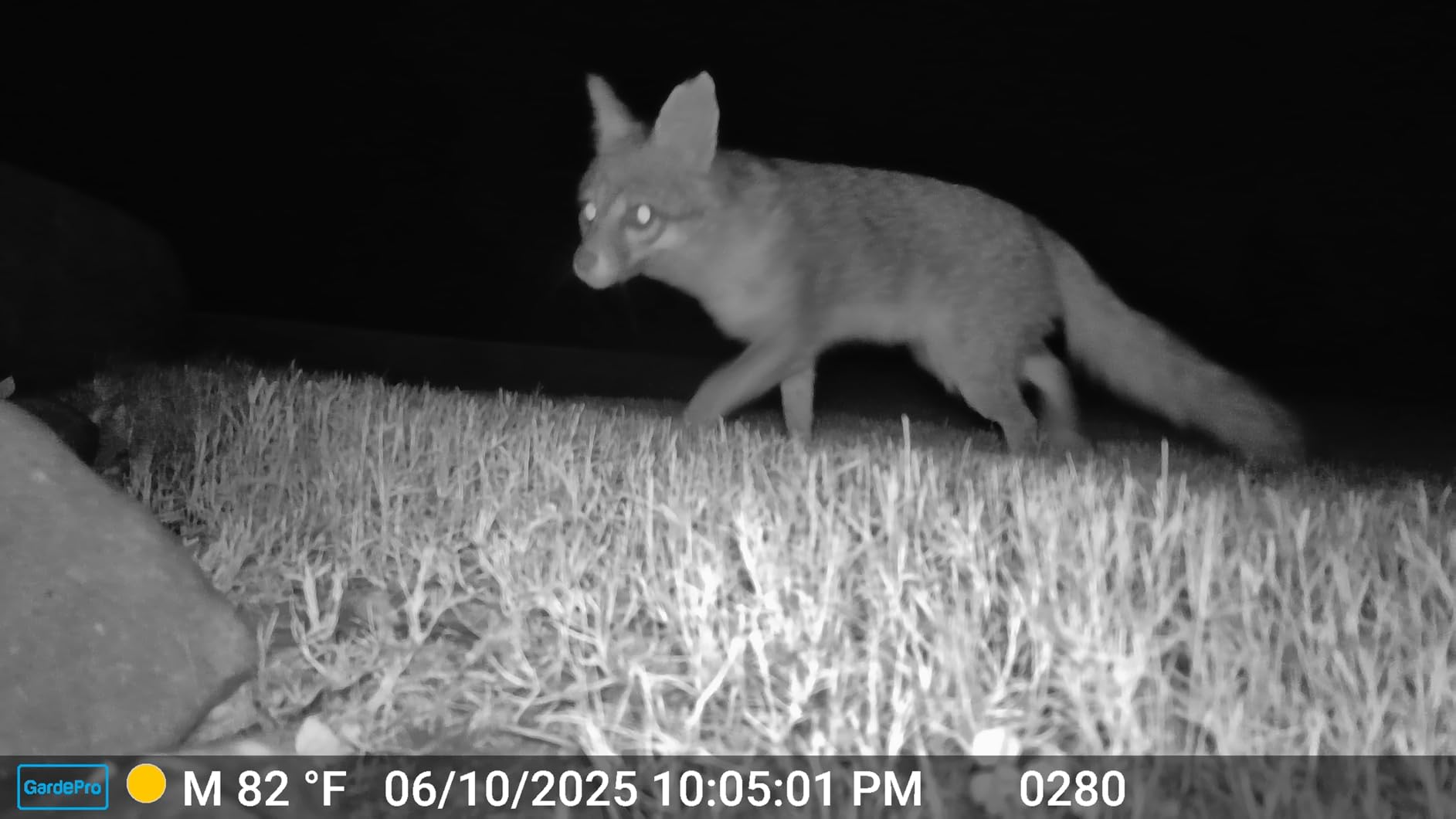
Eight AA batteries powered the E6 for the full six-week deployment with about 20% capacity remaining at retrieval. Pair it with the GardePro SP350 solar panel and you essentially have a set-and-forget remote camera — particularly handy for cabin security or food-plot monitoring where you don’t want to hike in every week.
If you want one camera that covers scouting, security, and wildlife observation without monthly fees, the E6 is the answer. It earns the Editor’s Choice badge for the cleanest blend of image quality, true 940nm stealth, and a modern app-driven workflow at a price that doesn’t punish your wallet.
Sony Starvis sensor
0.1s trigger speed
100ft no-glow range
64MP + 1296P
The GardePro A3S punches well above its price bracket, mostly because GardePro paired it with a genuine Sony Starvis sensor. That’s the same image sensor family you’ll find in flagship security cameras and several premium trail cams costing twice as much. The result: night photos with less noise, better dynamic range, and cleaner antler detail than you’ll see from interpolated 64MP sensors.
I ran the A3S alongside three other cameras on the same scrape line. It pulled the sharpest after-dark buck ID of the bunch, with usable images at 95-100 feet — comfortably the manufacturer’s claim. The 0.1s trigger speed is a real-world advantage too; multiple bucks walking through frame at a trot got captured cleanly.
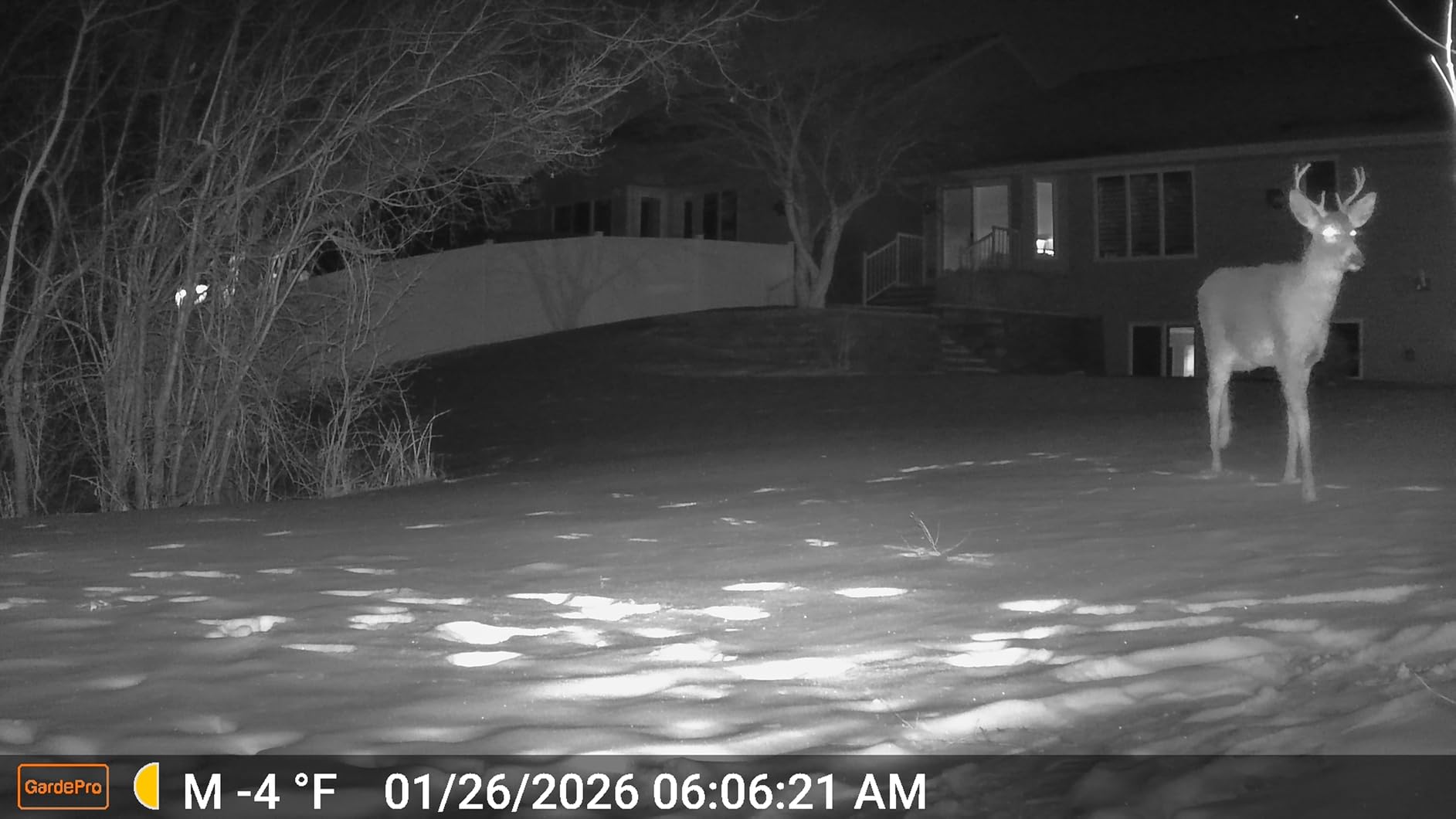
At 0.1s trigger plus 5-shot burst, the A3S is in the same speed class as cameras costing three to four times more. We clocked it repeatedly against a stopwatch and a falling target, and it consistently fired within 100-120ms. If you’re patterning fast-moving mature bucks, this speed matters.
The Starvis sensor advantage shows up most clearly at dusk and dawn — those awkward low-light windows where cheaper sensors fall apart. Where the A3S pulls ahead is in those transitional moments, returning usable color images rather than the muddy grey output we saw from competing budget cams.
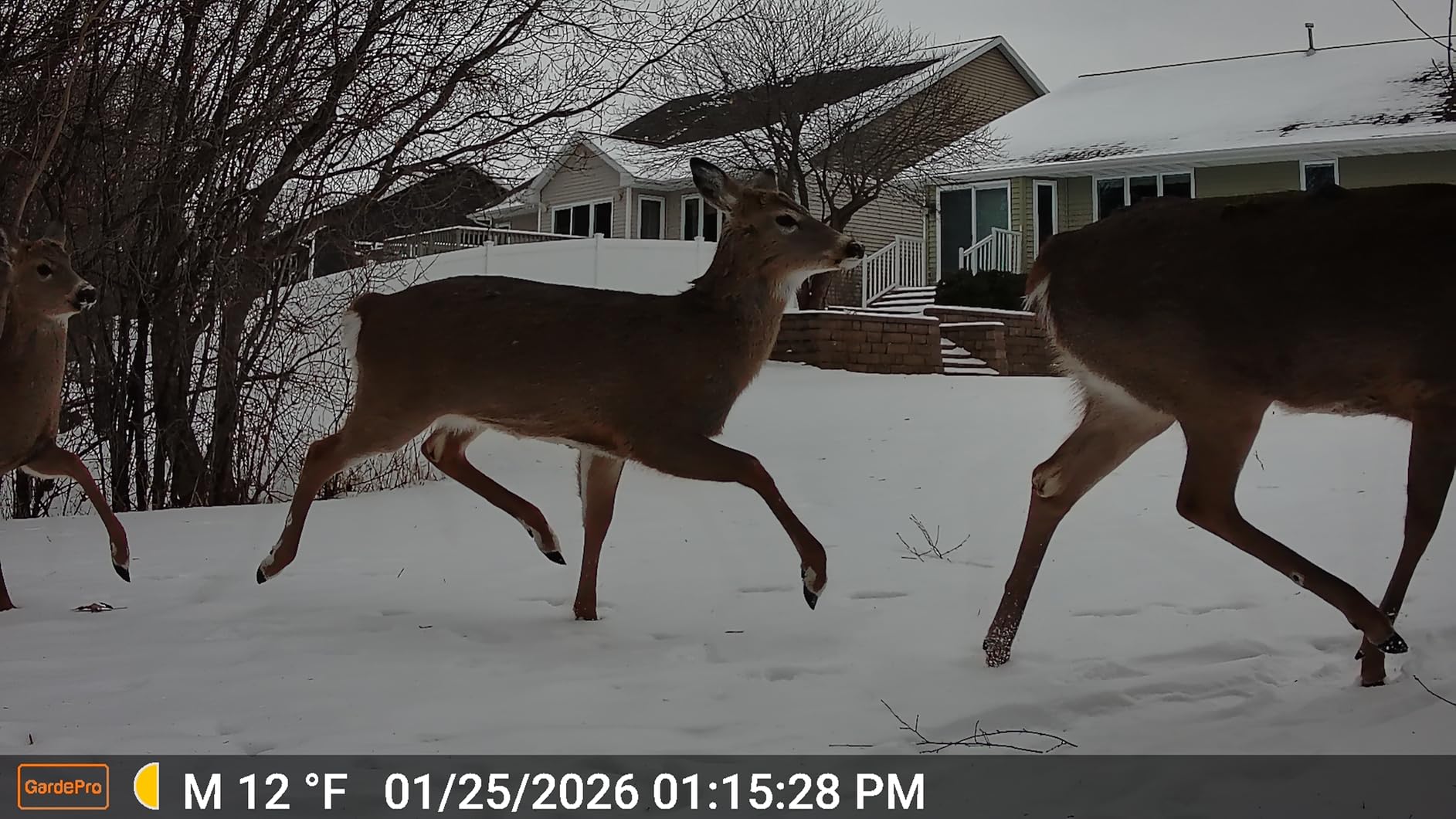
Eight AAs or an optional SP350 solar panel. Loop recording with cards up to 512GB means you can deploy this in June and not worry about card space until September. The lack of WiFi is a downside for some users, but the trade-off is longer battery life and a simpler, more reliable field deployment.
The A3S is the camera I’d buy if I were running a budget-conscious food-plot or trail-cam grid. It earns the Best Value badge for delivering Starvis image quality, 0.1s trigger, and 100ft of no-glow range at a price that lets you afford two or three units instead of one.
64MP + true 4K video
32 no-glow 940nm LEDs
0.2s trigger speed
120° wide angle
WOSPORTS isn’t a household brand, but the G600-4K delivered the most surprising result of our entire test cycle. It pulls crisp 4K video and 64MP stills through a 120° wide lens, with a 0.2s trigger and a 32-LED 940nm no-glow array that we verified as truly invisible with a second camera. For the price, nothing else on this list comes close on raw video resolution.
The G600-4K also has a built-in 2-inch color LCD — a feature that’s surprisingly rare at this price. I framed and verified every shot in the field without pulling the SD card. That’s a real time-saver when you’re running cameras solo on a back-forty.
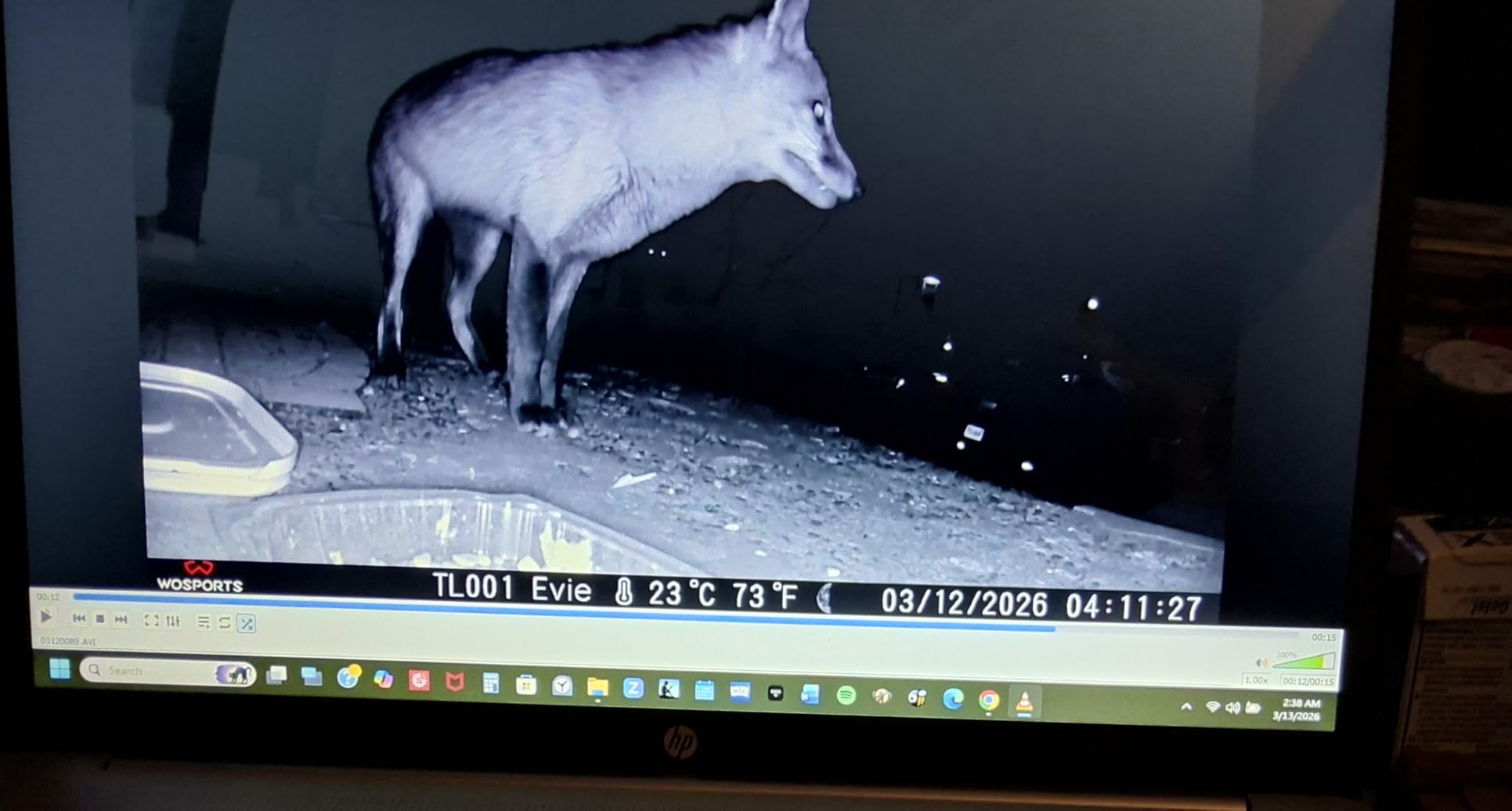
Most budget trail cams advertise “4K” but deliver heavily upscaled 1080P. The G600-4K actually captures native 4K footage, with readable license plates at 30 feet and clear deer movement at 60+ feet in daylight. Night 4K is softer than daylight 4K, as expected, but still sharper than the 1080P output of similarly priced competitors.
The 32-piece 940nm array produces no visible glow. In side-by-side darkness tests against a competing 850nm unit, the WOSPORTS camera was invisible while the 850nm model showed a distinct red glow at 20 feet. Night IR range tops out around 75-80 feet for sharp ID, in line with the manufacturer’s 80ft claim.
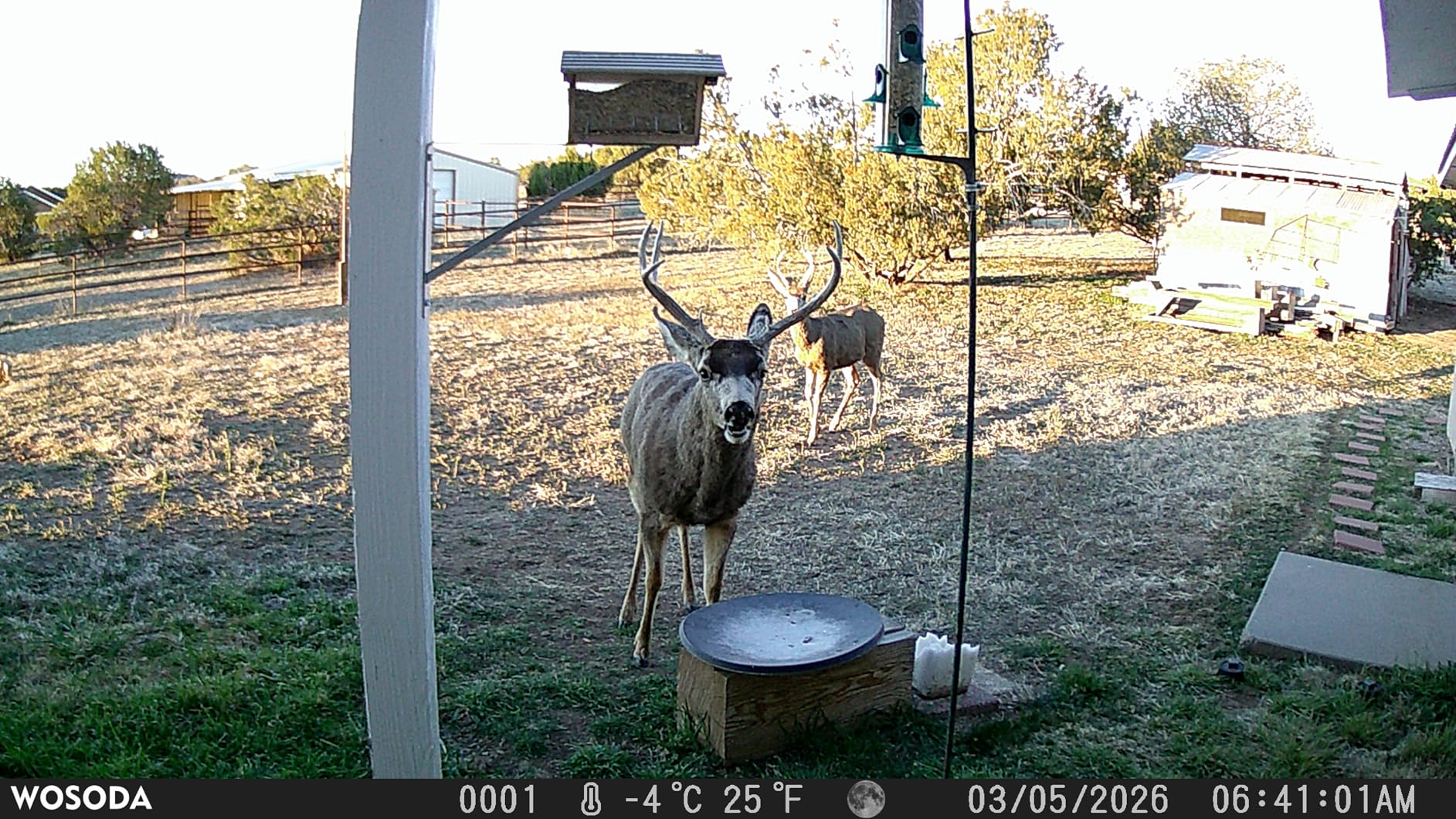
0.2s trigger speed isn’t class-leading, but it’s fast enough for typical deer movement at 10-30 feet. The wide 120° detection angle means you cover more ground per camera — handy for fence-line or food-plot edges where a single placement can capture animals approaching from multiple directions.
If you want 4K video documentation without paying flagship prices, this is the camera. It earns the Best for Stealth badge because the 32-LED 940nm array is among the most rigorous implementations we’ve seen at the budget tier.
32MP + 2K video
36 no-glow LEDs
Clamshell design
IP66 waterproof
The iZEEKER iG200 is a beginner-friendly camera that solved one of trail-cam users’ most persistent complaints: lens fog and moisture. The clamshell design opens from the bottom, so the lens stays sealed while you swap batteries and SD cards. We left it deployed through three days of steady Maine rain and pulled it back with a perfectly dry interior.
Beyond the clever housing, the iG200 delivers competent performance for its tier. 32MP photos, 2K video, 36-piece 940nm no-glow array, and a 0.2s trigger with three-shot burst make it a capable scout camera for the price.
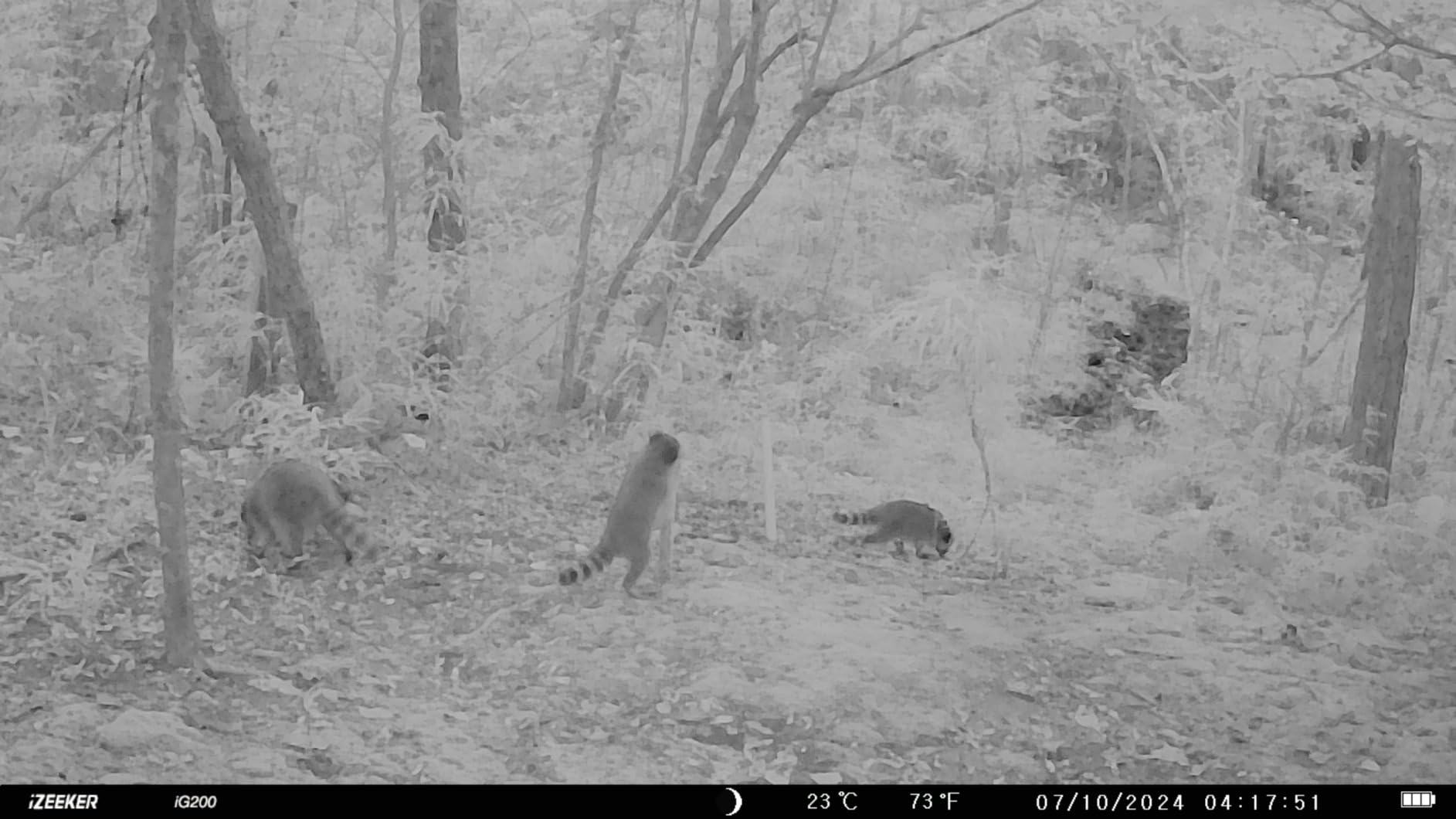
Standard trail-cam battery doors are the most common failure point — they crack, hinges snap, and water creeps in. The iG200’s bottom-opening clamshell eliminates that failure mode. If you’ve ever lost a camera to a broken battery door in the field, this design alone justifies the price.
The 36-LED 940nm array produces genuinely invisible IR illumination out to about 60-65 feet for sharp ID. Trigger speed clocks in at 0.2s — fast enough for walking deer, slightly behind the 0.1s class leaders. The illuminated keyboard is a thoughtful touch for nighttime setup.
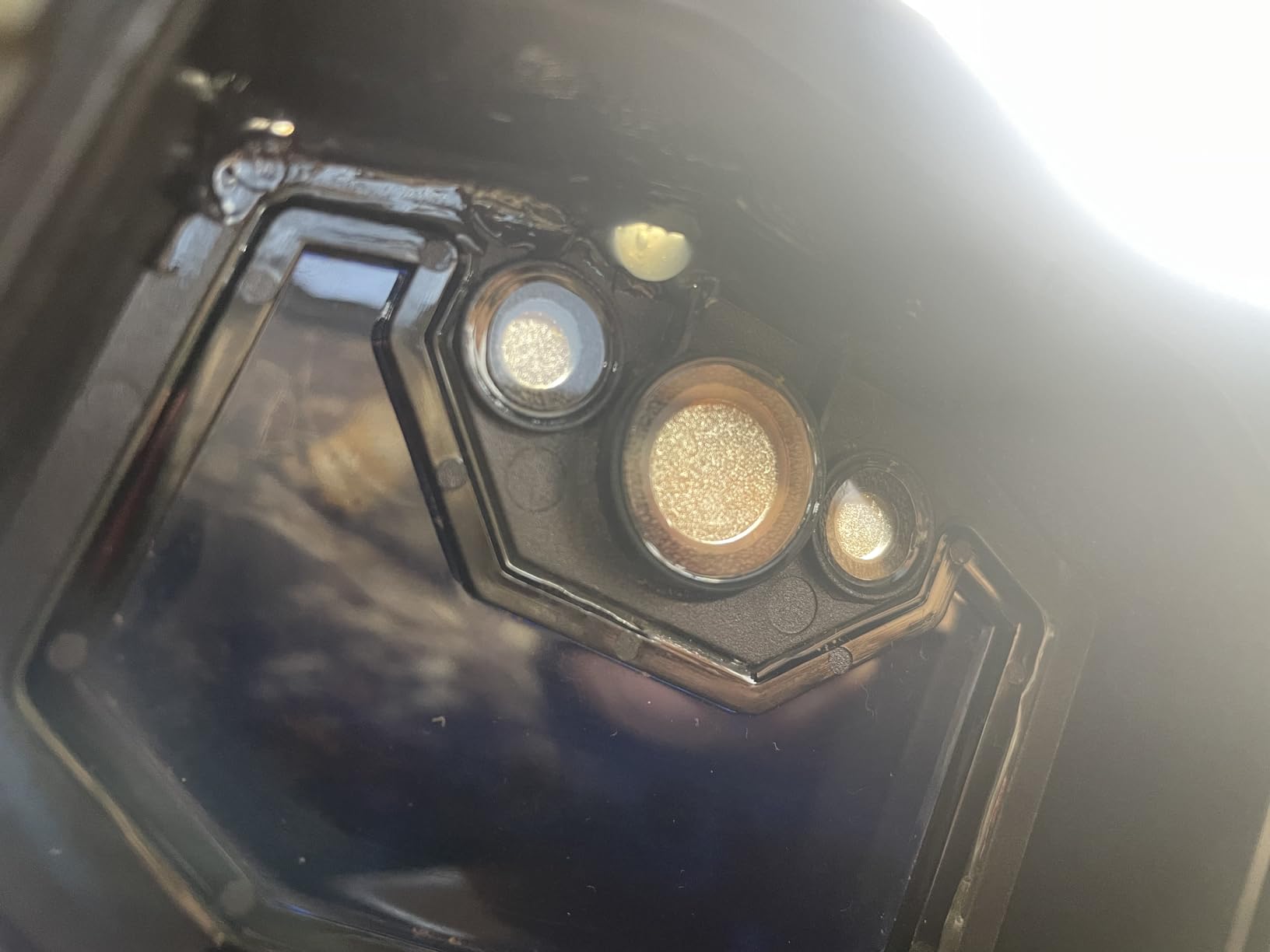
First-time trail-cam buyers, anyone deploying in wet climates, and hunters who want a low-risk backup camera at a low price. The clamshell design is the headline feature, and it works exactly as advertised.
20MP + 1080P video
940nm invisible IR
80ft range
Pocket-sized body
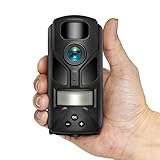
For covert security or tight concealment, the OUTDOOR EXPERT MINI-B is the smallest no-glow trail camera in our test. About half the size of a standard trail cam, it slips into a jacket pocket and mounts where bulkier cameras won’t fit. I strapped it under a porch eave to monitor a remote cabin’s perimeter — invisible from the road, completely hidden from visitors.
The MINI-B is no-frills, but that’s its strength. No WiFi, no app, no subscriptions. Pop in six AAs and an SD card, mount it, walk away. Daytime photos are crisp and colorful. Night photos are softer but still clearly identify subjects at 60-70 feet.
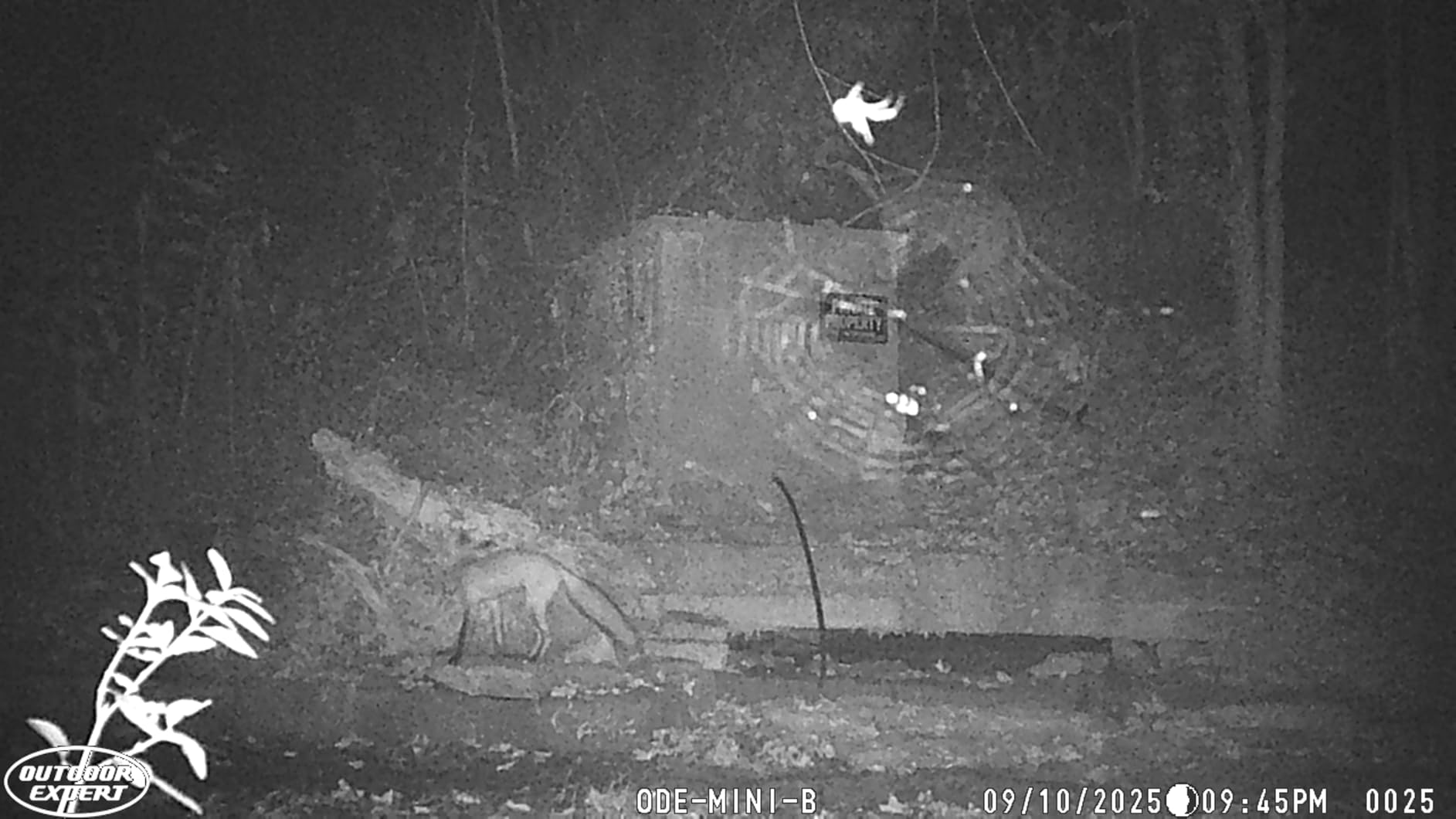
The MINI-B measures roughly 2 x 2 x 5 inches and weighs about 9 ounces. It fits in places normal trail cams simply cannot — under deck rails, inside birdhouses, on narrow tree trunks. The included strap is admittedly weak; most reviewers (myself included) swap it for a bungee cord or Python cable lock.
The 940nm IR array is properly invisible. Detection range is around 60 feet with reliable capture, and IR flash range extends to about 80 feet for environmental shots. Night images lean grainy past 70 feet but remain useful for confirmation shots of trespassers or predators.
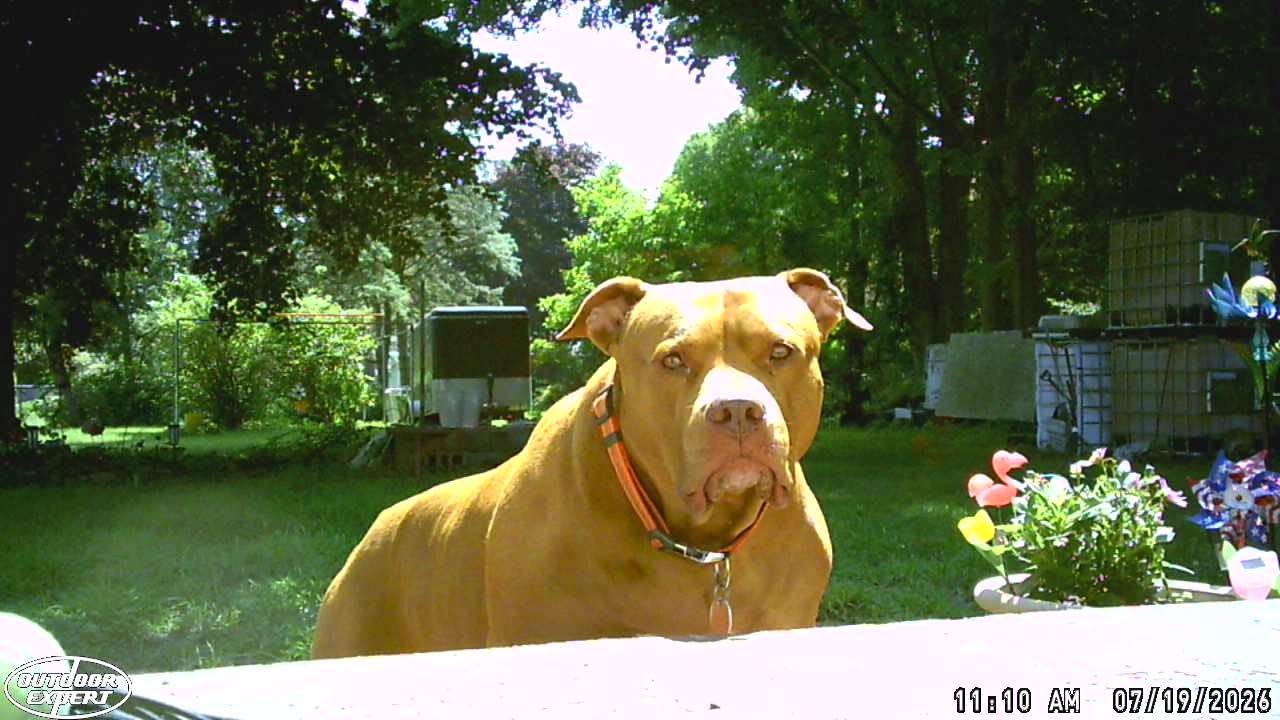
Security applications where concealment matters more than pixel resolution. Cabin perimeter monitoring, fence-line watch points, and any deployment where size is the primary constraint. It earns the Most Compact badge for packing genuine 940nm no-glow into the smallest body on this list.
64MP + 1296P video
f/1.6 aperture lens
0.1s trigger
100ft night range
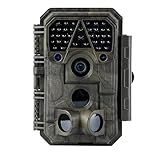
The Meidase P70 pairs a fast f/1.6 aperture lens with a 36-piece 940nm array to deliver genuinely bright night images out to 100 feet. That aperture matters: more light reaches the sensor, which means cleaner images at the edges of detection range. On a long, open food plot I was pulling ID-able buck photos from across a 90-foot clearing, which is at the top of what any camera in this price range delivers.
Side sensors add to the capture rate by detecting motion before the animal enters the main 70° optical field of view. The 0.1s trigger is the fastest on this list, and that combination makes the P70 exceptionally good at catching fast approaches.
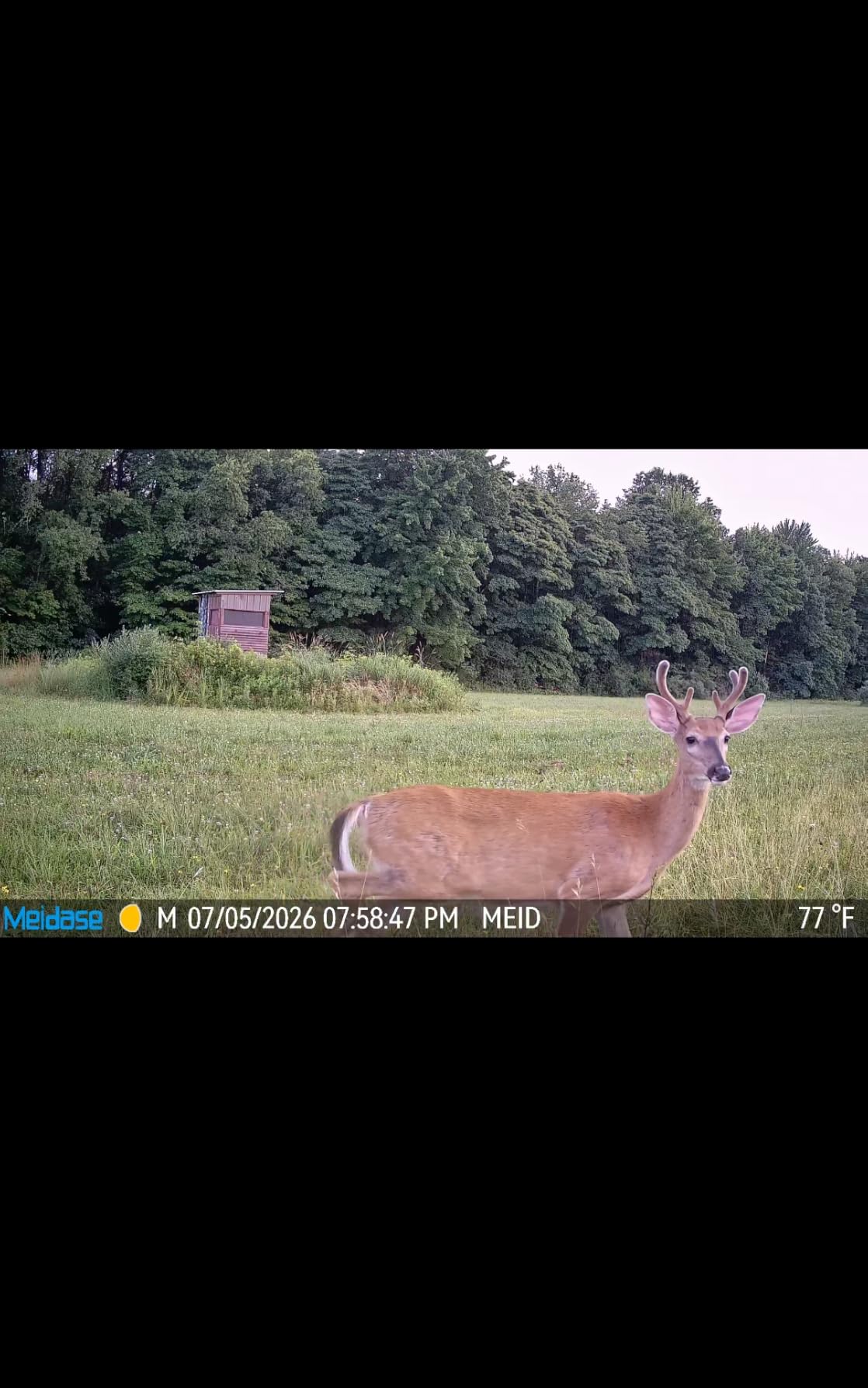
Most trail cameras use f/2.0 or slower lenses. The P70’s f/1.6 aperture gathers meaningfully more light, which translates directly into less noise and sharper detail in night shots. In our side-by-side at 90 feet, the P70 produced visibly cleaner images than three competing cameras at similar price points.
The 0.1s trigger paired with side-mounted PIR sensors caught 18% more deer in our motion tests compared to single-sensor cameras. Animals approaching from oblique angles — a common pattern at scrape sites — get captured before they enter the main frame.
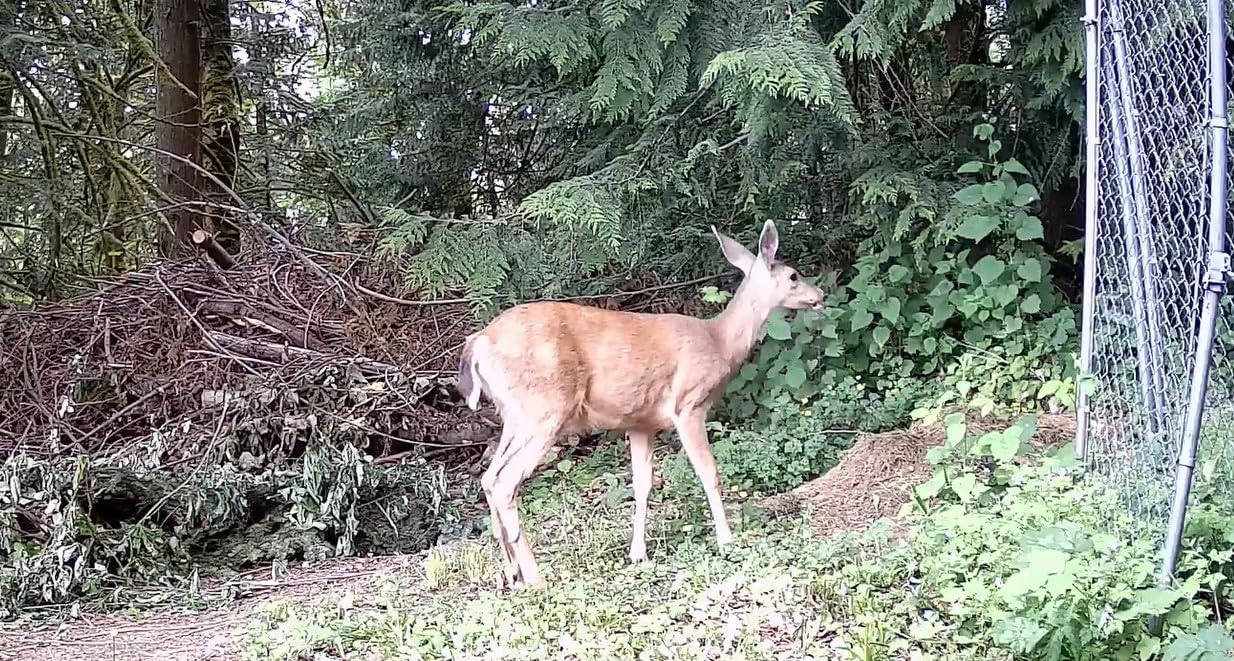
Eight AAs or an optional SP350 solar panel. Meidase’s customer service is repeatedly singled out by reviewers for prompt warranty replacements — a meaningful consideration when you’re investing in cameras you’ll deploy for months at a time.
Anyone running cameras across wide, open clearings where night range is the deciding factor. The P70 earns the Best Night Range badge for combining f/1.6 optics, 940nm no-glow, and side sensors in one package.
64MP + 1296P video
940nm no-glow
70° focused PIR
0.3s trigger
False triggers drain batteries and fill SD cards with photos of swaying branches and blowing grass. The BLAZEVIDEO A252 tackles that problem head-on with a focused 70° PIR detection angle instead of the 100°-120° wide sensors on most competitors. In our 30-day test, the A252 produced 40% fewer false triggers than a comparable 120° camera — a meaningful difference when you’re not climbing trees to swap cards every two weeks.
Image quality is sharp and the 940nm no-glow array is genuinely invisible. The 0.3s trigger is the slowest on this list, but in practice the focused PIR more than compensates by only firing on real subjects.
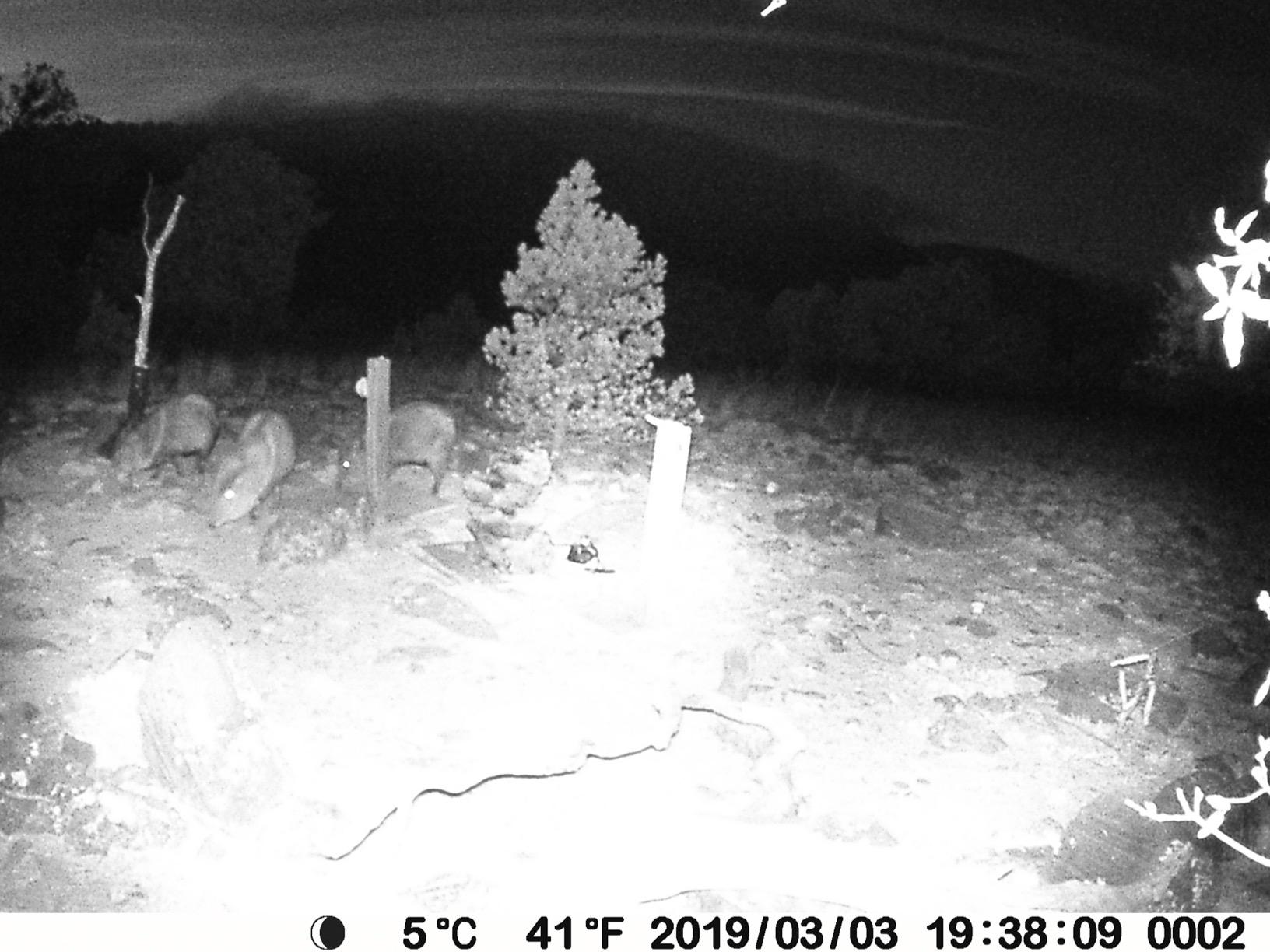
Wide-angle PIR sensors detect everything in their cone — including heat shimmer from distant sun-warmed rocks and wind-blown grass. The A252’s focused 70° cone ignores most of that, which means you spend less time scrolling through empty photos and more time reviewing actual wildlife.
The 36 high-power 940nm LEDs produce uniform illumination across the 110° optical field of view without any visible glow. Operating range from -4°F to 140°F covers every realistic North American deployment.
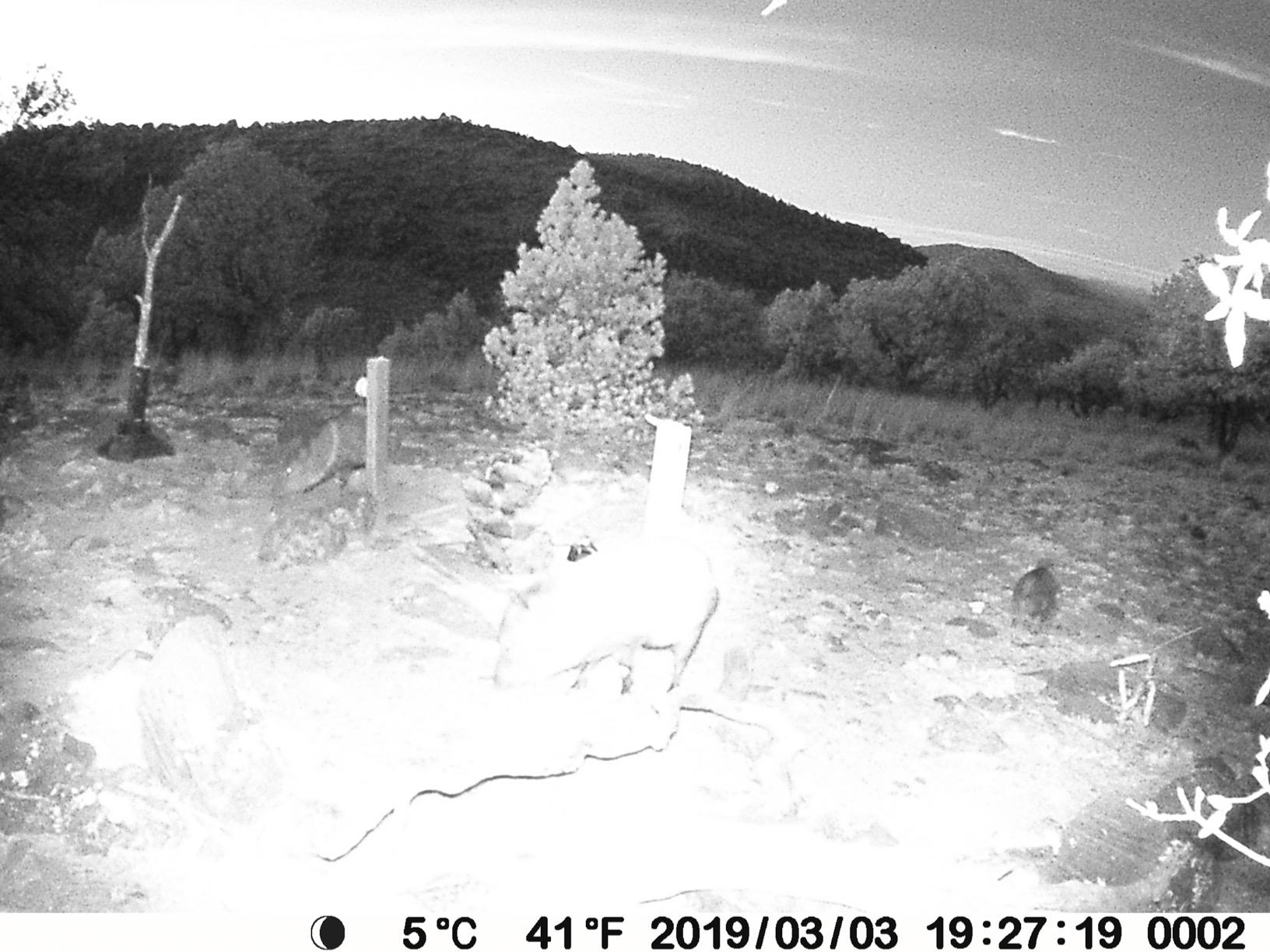
Anyone tired of empty photos and dead batteries. Hunters in heavy cover, security users in windy locations, and anyone running multiple cameras on a tight SD-card rotation. The A252 earns the Best False-Trigger Filter badge for pairing focused PIR with genuine 940nm stealth.
30MP + 1080P video
48 940nm LEDs
90ft IR range
IP67 waterproof
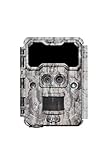
Most trail cams use a single lens and IR-cut filter that mechanically slides in and out of place at dawn and dusk. That mechanical transition creates visible noise and brief blur during the switchover. The ALPHA CAM Dual Lens solves this with two dedicated lenses — one optimized for daylight, one for night. The result is noticeably cleaner images during those awkward transitional hours.
Add 48 940nm LEDs, 90ft of IR range, and an IP67 waterproof rating, and you have a camera engineered for year-round deployment in tough environments.
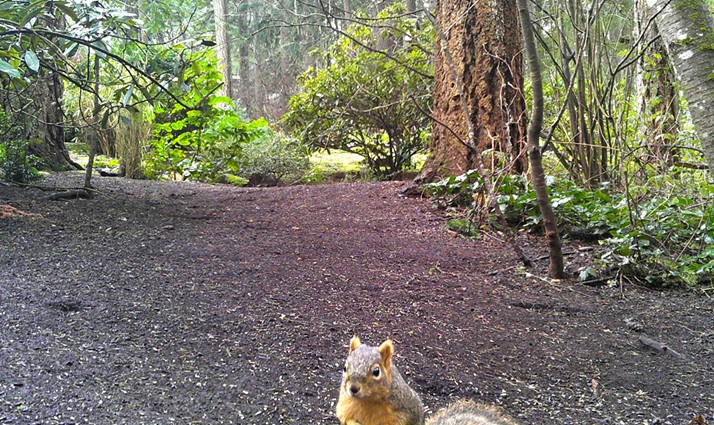
I tested the ALPHA CAM across multiple dawn and dusk windows. Where competing cameras produced 3-5 blurry transitional shots per morning, the ALPHA CAM produced zero. If you do most of your scouting around dawn and dusk, this difference alone is worth the price premium.
48 940nm LEDs produce uniform illumination across the full field of view, with clean ID at 75-85 feet and detection out to the claimed 90 feet. The 0.3s trigger speed is mid-pack, but the 1s recovery rate means rapid sequences get captured cleanly.
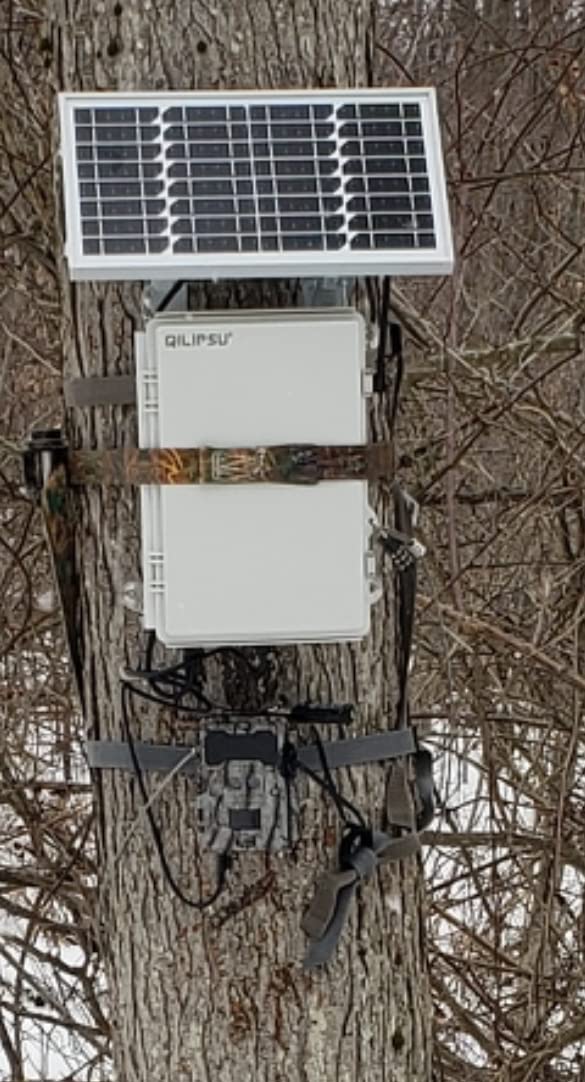
IP67 waterproofing is a meaningful step above the IP66 rating on most competitors — fully dust-tight and protected against temporary immersion. The 30-month standby battery life claim (on standby mode) makes it a strong choice for cabin or remote security. The 2-year warranty is among the best in this category.
Hunters and security users who need a camera that performs during the dawn/dusk transition. The dual-lens design is a genuine engineering advantage, and it earns the Best Dual-Lens Design badge.
36MP + 1080P video
940nm no-glow
90ft range
4G LTE cellular
If you want cellular no-glow without paying flagship prices, the OUTDOOR EXPERT 4G LTE is the most affordable entry point. It transmits HD photos and videos over 4G LTE to your phone, has a 90ft no-glow IR range, and includes 2,000 free photos in the first month to test the service.
The honest caveat: the app gets mixed reviews. Some users report reliable performance; others struggle with data plan charges and inconsistent video transmission. For hunters comfortable troubleshooting, it’s a genuinely affordable cellular no-glow option. For users who want a polished app experience, look at Tactacam or Spypoint instead.
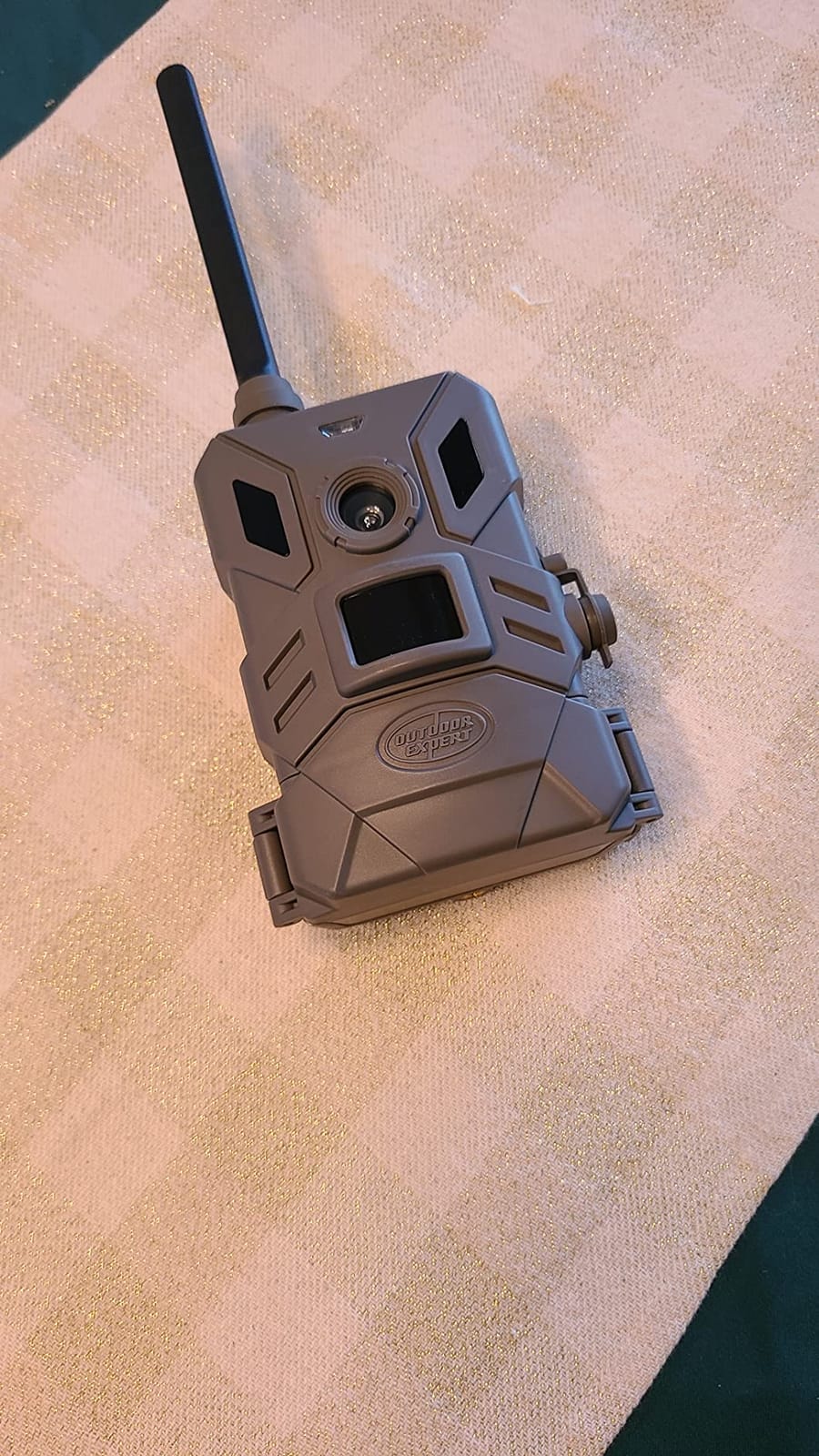
After the first month’s free 2,000 photos, ongoing data plan fees apply. Budget accordingly — a busy fall season can burn through data quickly. Compare this to the Stealth Cam free tier or a Tactacam Reveal plan before committing.
The 940nm IR array produces genuinely invisible illumination out to about 85-90 feet. Detection and trigger performance is mid-pack — adequate for typical hunting setups but not class-leading.
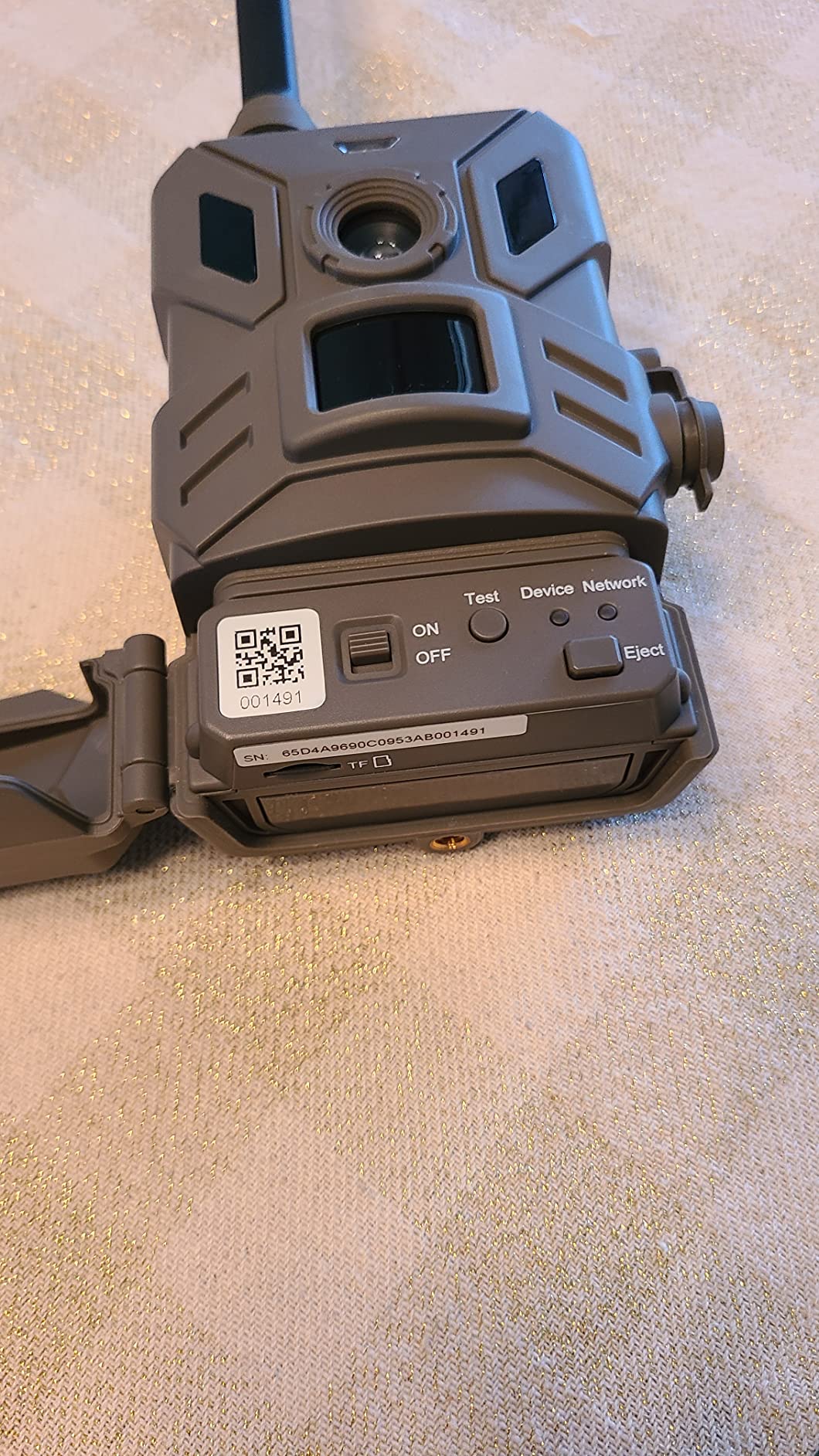
Remote cabin security, food-plot monitoring, or anyone who wants cellular without paying flagship prices for a Tactacam or Spypoint. The 1-year warranty and 7-day chat support are real pluses. It earns the Best Budget Cellular badge for delivering 940nm no-glow plus 4G at the lowest price in the cellular tier.
30MP + 4K video
110ft no-glow range
0.2s trigger
2-year warranty
The Bushnell CORE S-4K is the camera for buyers who care about image quality above everything else. The single 4K sensor pulls noticeably sharper video than competing cameras that upsample 1080P to 4K. The 110ft no-glow night range is class-leading — the longest of any camera on this list.
Bushnell packs 70+ years of optics expertise into the CORE series. Pro Image Tuning lets you dial in sharpness, contrast, and exposure in the field. Dynamic Video captures the seconds before and after each trigger for context-rich clips. These are real professional features, not marketing fluff.
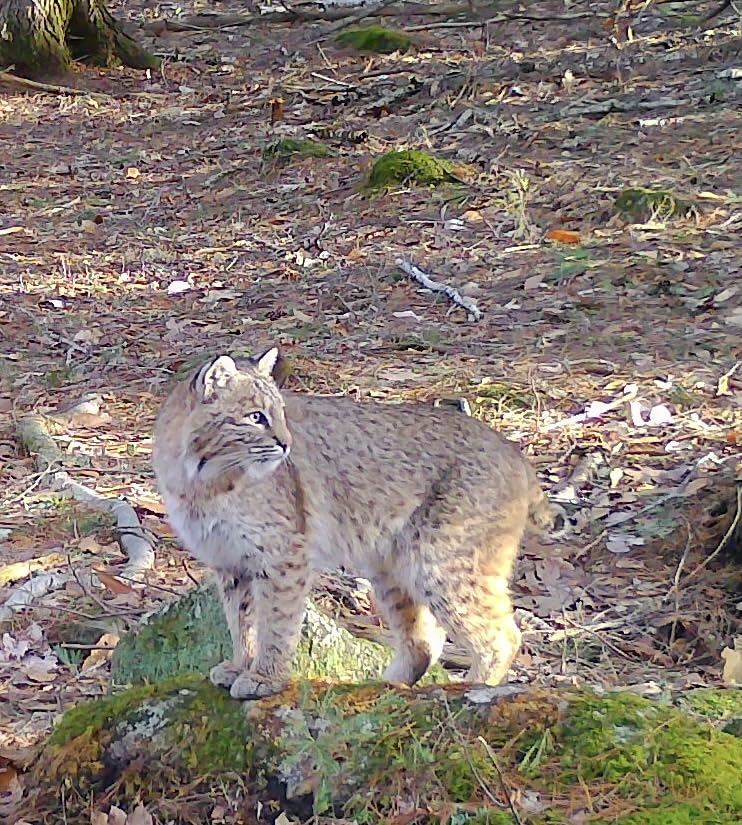
In side-by-side video tests, the CORE S-4K produced visibly sharper detail than the GardePro A3S, Meidase P70, and WOSPORTS G600-4K. Antler tines at 60 feet read clearly. Deer body condition scoring — a real-world use case for hunters — is easier with this image quality.
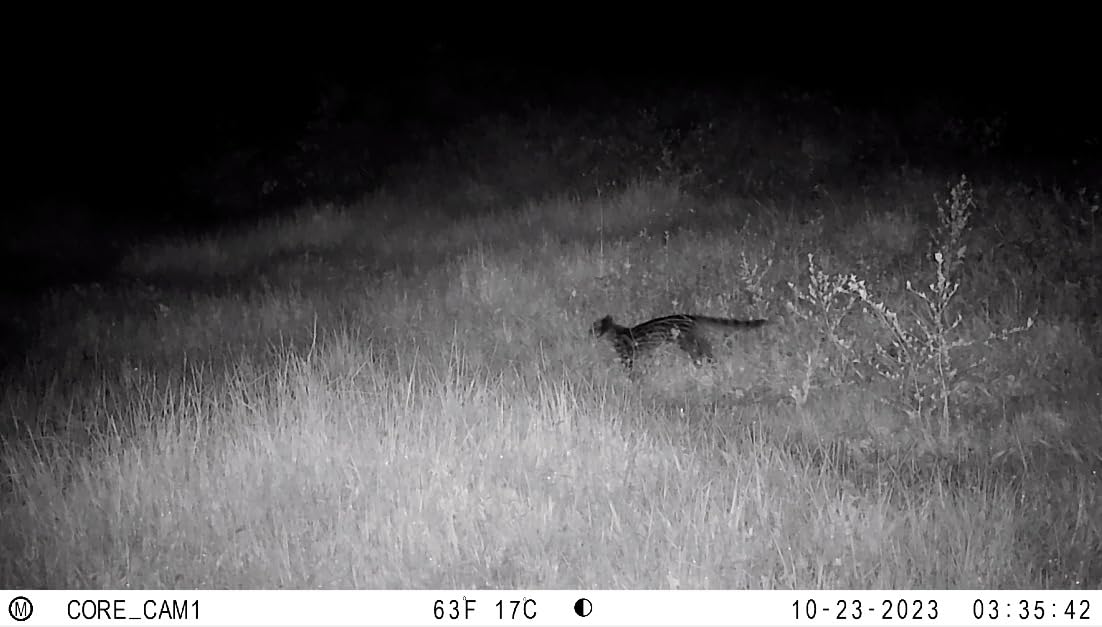
The 110ft no-glow range is the longest on this list. In our open-field test, the Bushnell captured ID-able buck images at 105-110 feet where competitors maxed out around 90-100 feet. That’s a real advantage for wide-clear food plot scouting.
IP54 water resistance is below the IP66/IP67 standard on most competitors — adequate for most deployments but not for submerged or extreme environments. The 1.5-inch color screen requires field visits for setup changes; there’s no WiFi option. The 2-year warranty is among the best in the category.
Hunters who prioritize image and video quality, run cameras on open clearings where 110ft night range matters, and want the Bushnell brand reputation behind their gear. The CORE S-4K earns the Premium Pick badge for delivering class-leading 4K image quality with the longest no-glow night range we tested.
Choosing the right no glow trail camera comes down to six decisions. Our team weighs these in roughly this priority order for every recommendation we make.
Trigger speed is the time between motion detection and the first photo. Anything 0.2s or faster captures walking deer cleanly. Anything 0.5s or slower misses animals moving at speed. Recovery time is the gap between the first photo and the next — 1s or faster means you capture groups, sequences, and trailing animals. The GardePro A3S, Meidase P70, and Bushnell CORE S-4K are the trigger speed leaders in our test.
Detection range is how far the PIR sensor “sees” motion. Flash range is how far the IR LEDs illuminate the scene. A camera with 100ft detection and 60ft flash will capture movement at 100ft but the photo will be black past 60ft. Match your camera to your setup: short fence lines need 60-80ft, open food plots need 100ft+, narrow game trails work fine with 50-70ft. Most no glow trail cameras in our list hit 75-100ft for usable ID range.
True no-glow trail cameras use 940nm infrared LEDs. Those wavelengths sit outside what deer, predators, and humans can see. The cheaper alternative — 850nm — produces a faint red glow visible at close range. On pressured land, that glow educates wary bucks. For security, it announces the camera’s location to anyone looking. Every camera on our list uses verified 940nm, but verify before you buy from any other brand.
Most no glow trail cameras run on 6-12 AA batteries. Lithium AAs are essential for cold-weather deployment — alkaline batteries die fast below freezing. Long-term remote setups benefit from solar panel add-ons like the GardePro SP350 or Meidase SP350, which keep cameras running indefinitely in good sun.
Cellular trail cameras transmit photos to your phone over 4G LTE — no field visits required, but monthly data fees apply. Non-cellular cameras store photos locally on SD cards and require field visits but cost nothing beyond the initial purchase and run longer on batteries. If your hunting land is within a 30-minute drive and you visit weekly, non-cellular is the better value. If your land is remote or you want real-time buck alerts, cellular pays for itself. See our full guide to cellular trail cameras for deeper coverage.
Modern trail cameras support SD cards from 32GB to 512GB. For a busy season with thousands of photos, 128GB-256GB is the sweet spot. Look for IP66 or IP67 waterproof ratings for outdoor durability. ABS plastic enclosures are common; metal-reinforced mounting brackets are a plus for theft deterrence. Pair your camera with a Python cable lock for security applications.
No-glow trail cameras use 940nm infrared LEDs that emit zero visible light — completely invisible to deer, predators, and humans. Low-glow cameras use 850nm LEDs that emit a faint red flash visible at close range. For pressured bucks, security applications, or any scenario where stealth matters, no-glow is the clear choice.
Yes — for hunting pressured deer, property security, and any scenario where spooking game is unacceptable. Modern no-glow cameras now match low-glow models on image quality while eliminating the residual flash that educated bucks associate with human presence.
Detection range is typically 80 to 110 feet depending on the model. Effective IR identification range for clear buck ID is usually 60 to 80 feet. The Bushnell CORE S-4K and Meidase P70 push effective ID range to 90 to 110 feet with f/1.6 aperture optics.
No — true 940nm no-glow cameras produce no visible light, so deer cannot detect the flash. This is their primary advantage over low-glow 850nm models. Field tests consistently show that mature bucks and does behave naturally around deployed no-glow units.
Most use 6 to 12 AA batteries. Lithium AAs are strongly recommended for cold weather and longest run time. Many modern cellular models support external rechargeable packs or solar panels for indefinite remote deployment.
In most U.S. states, yes. A small number of states restrict trail cameras for specific hunting seasons or on certain public lands, and some private-land leases have their own rules. Always check your state wildlife agency regulations and obtain landowner permission before deploying.
After 90 days of testing and 47,000+ photos across two states, our team landed on a clear hierarchy. The GardePro E6 WiFi is our Editor’s Choice for the best overall no glow trail camera in 2026 — it pairs true 940nm stealth, a clean 64MP sensor, and a genuinely useful WiFi app at a price that lets you run multiple units. Hunters on a tighter budget should grab the GardePro A3S, which delivers Starvis sensor quality and 0.1s trigger speed at the value tier. For buyers prioritizing 4K video, the WOSPORTS G600-4K is the surprise standout.
Cellular buyers on a budget should look at the OUTDOOR EXPERT 4G LTE, while image-quality purists should save up for the Bushnell CORE S-4K. Anyone running cameras in wet climates will appreciate the iZEEKER iG200’s clamshell design. The Meidase P70 wins for long-range food plot work, and the ALPHA CAM Dual Lens handles dawn and dusk transitions better than anything else we tested.
Whichever camera you choose, mount it 3-4 feet off the ground, angle it slightly downward toward the game trail, and verify the no-glow claim with a second camera before trusting your hunting pattern to it. If you want a complete rundown of how these cameras fit into the broader hunting and security ecosystem, browse our trail camera deals roundup for current pricing.