Narrowband Filters Astrophotography 2026
I shot my first emission nebula from a Bortle 8 backyard with a stock DSLR and no filter. The result…

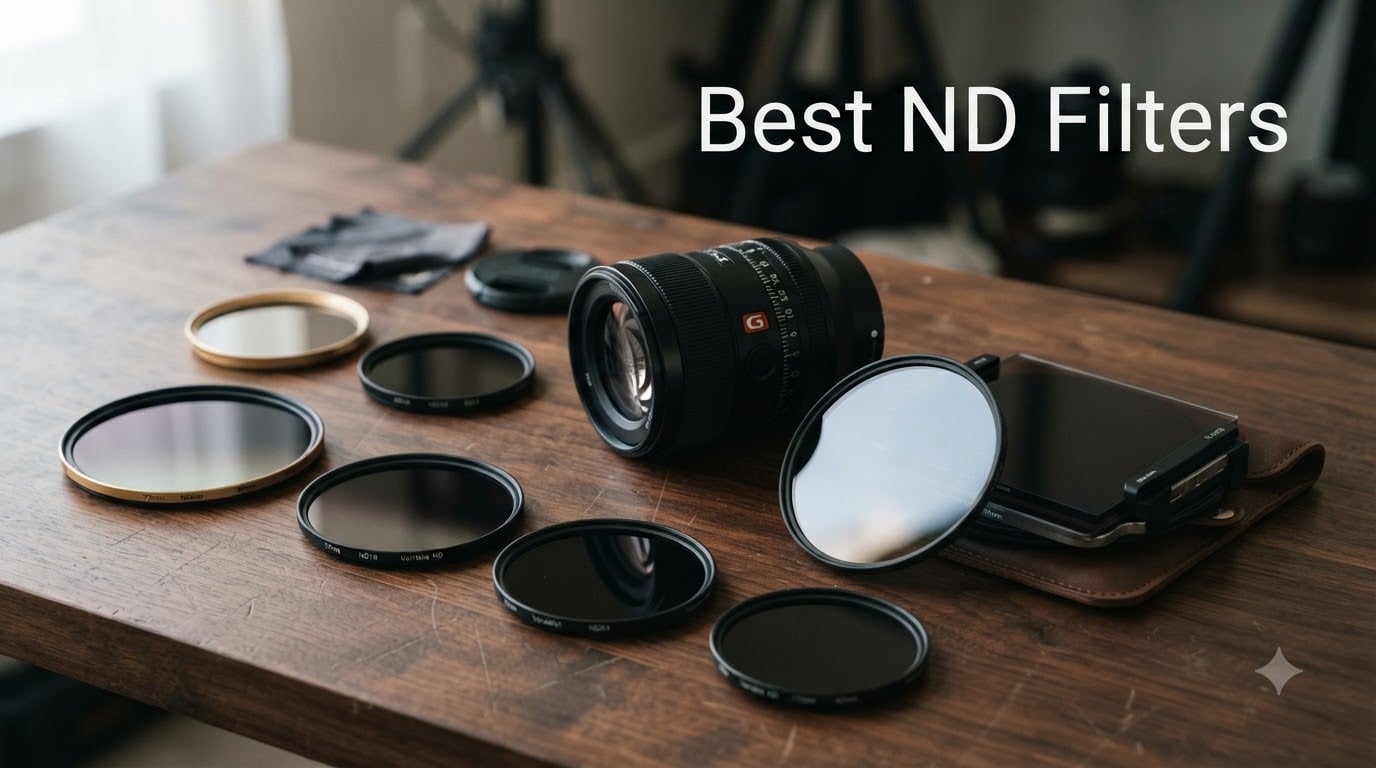
I have spent the last several months testing neutral density filters across street photography, landscape work, and video shoots to find the best ND filters worth your money in 2026. Whether you are trying to shoot wide open in harsh midday sun or smooth out a busy street corner with a long exposure, the right ND filter makes all the difference between a clean shot and a blown-out mess.
Our team compared 10 filters side by side, from budget picks under $30 to professional-grade fixed NDs pushing $300. We tested color cast, vignetting at wide angles, the dreaded X-pattern on variable NDs, and how each filter handles real-world street photography scenarios like fast-changing light between buildings and reflections off glass facades.
The best ND filters for most photographers strike a balance between optical clarity, color neutrality, and build quality. After shooting with every filter on this list, I can tell you that spending more does not always mean better results, but skimping too hard will cost you in color shifts and soft images.
One thing I noticed right away is how much the street photography community online (especially on Reddit threads from r/AskPhotography) echoes what I found in testing. Photographers consistently praise NiSi for color neutrality, Breakthrough Photography for optical sharpness, and K&F Concept for delivering solid value at lower price points. Those real-world experiences match my own findings.
If you just want the quick answer: the PolarPro Peter McKinnon VND is my top pick for most shooters, the Breakthrough Photography X4 6-Stop is the best fixed ND I tested, and the K&F Concept Variable ND2-ND400 is the budget champion that punches well above its price. Let me walk you through all 10.


Before we get into the individual reviews, here is a quick comparison of every filter we tested. This table covers the key specs and standout features so you can narrow down which ones fit your shooting style.
| Model | Key Specs | Action |
|---|---|---|
| PolarPro McKinnon VND 2-5 Stop |
|
Check Latest Price |
| Breakthrough X4 6-Stop ND |
|
Check Latest Price |
| K&F Concept Variable ND2-400 |
|
Check Latest Price |
 K&F Concept ND+CPL 2-in-1 K&F Concept ND+CPL 2-in-1 |
|
Check Latest Price |
 PolarPro McKinnon VND 6-9 Stop PolarPro McKinnon VND 6-9 Stop |
|
Check Latest Price |
 NiSi 77mm ND Filter Kit NiSi 77mm ND Filter Kit |
|
Check Latest Price |
 Gobe 52mm ND1000 10-Stop Gobe 52mm ND1000 10-Stop |
|
Check Latest Price |
 NEEWER Fixed ND Filter Kit NEEWER Fixed ND Filter Kit |
|
Check Latest Price |
 K&F Concept X PRO Square System K&F Concept X PRO Square System |
|
Check Latest Price |
 K&F Concept Nano-X Fixed ND Kit K&F Concept Nano-X Fixed ND Kit |
|
Check Latest Price |
We earn from qualifying purchases. CERTAIN CONTENT THAT APPEARS ON THIS SITE COMES FROM AMAZON. THIS CONTENT IS PROVIDED 'AS IS' AND IS SUBJECT TO CHANGE OR REMOVAL AT ANY TIME.
Variable ND 2-5 stops
Cinema quartz glass
Hard Stop System
82mm thread
56 grams
This is the filter I kept reaching for during my street photography sessions in downtown light. The Peter McKinnon Signature Edition II VND from PolarPro covers a 2 to 5 stop range, which hits the sweet spot for shooting wide open in bright conditions. What sold me immediately was the Hard Stop System.
Most variable ND filters suffer from the dreaded X-pattern cross-polarization when you push them toward maximum density. PolarPro solved this with physical hard stops that prevent you from rotating past the usable range. You feel a firm click at the min and max settings, and the filter simply will not go beyond that. No more guessing if you are about to ruin a shot with an ugly black cross.
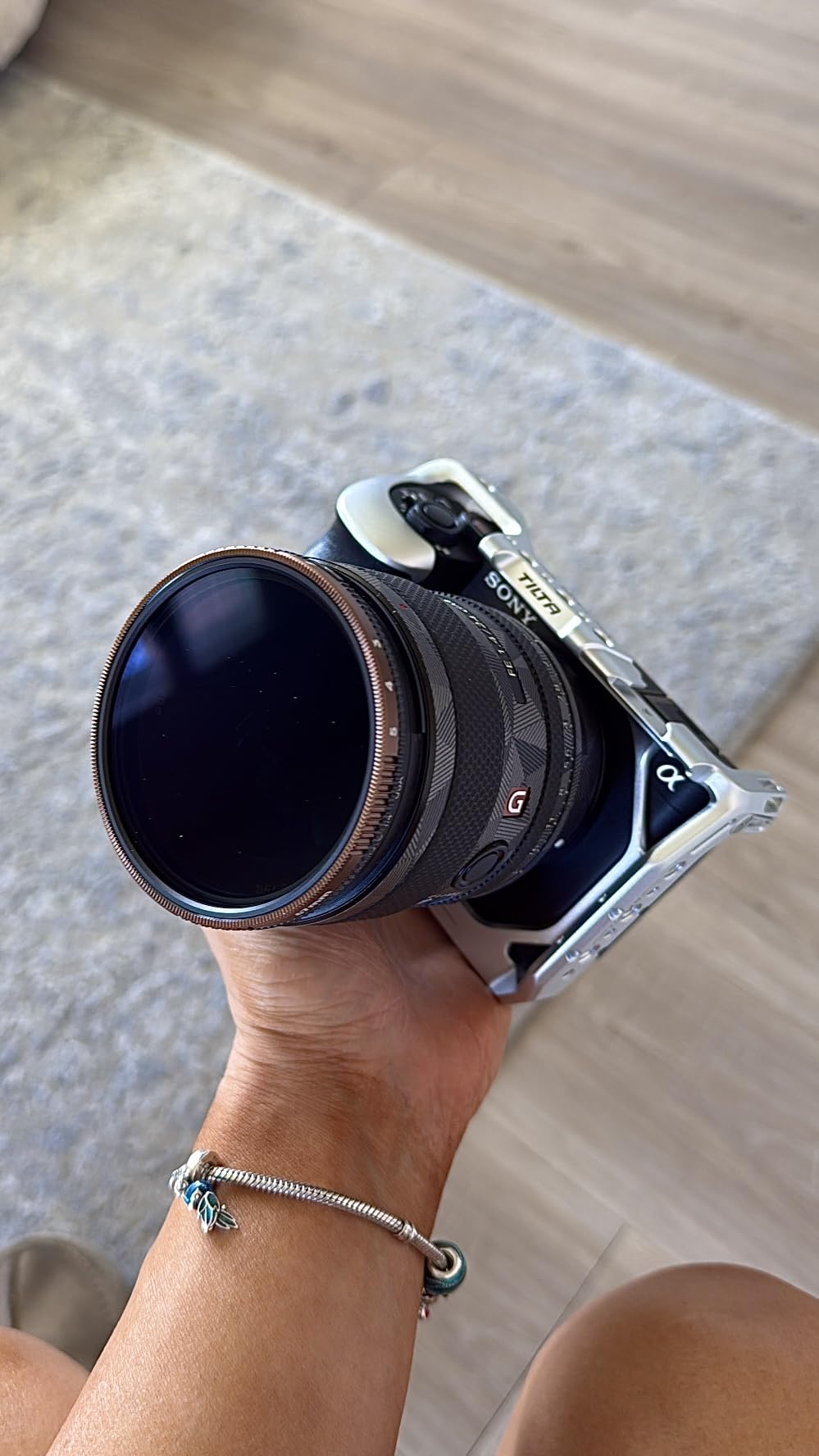
The build quality is exceptional. The bronze-toned aluminum ring has a tactile, precision-machined feel that makes adjusting stops satisfying rather than fiddly. The haptic feedback at each position gives you confidence that you are dialed in correctly without having to look at the filter.
I shot side-by-side comparisons with and without the filter on my Sony A7IV, and the color shift was virtually undetectable. PolarPro uses cinema-grade quartz glass with 16-layer coatings, and it shows. Skin tones stayed natural, and I did not see any of the green or magenta tint that plagues cheaper variable NDs.
The anti-reflection coating does a solid job of controlling flare when shooting toward the sun. I noticed minimal ghosting even when streetlights or car headlights hit the filter at oblique angles.
For street work, the 2-5 stop range is perfect for shooting at f/1.4 to f/2.8 during daytime. I could blur backgrounds on portraits taken in bright shade and still maintain a shutter speed fast enough to freeze movement. The slim profile meant I could use it on my 24mm lens without any vignetting creeping into the corners.
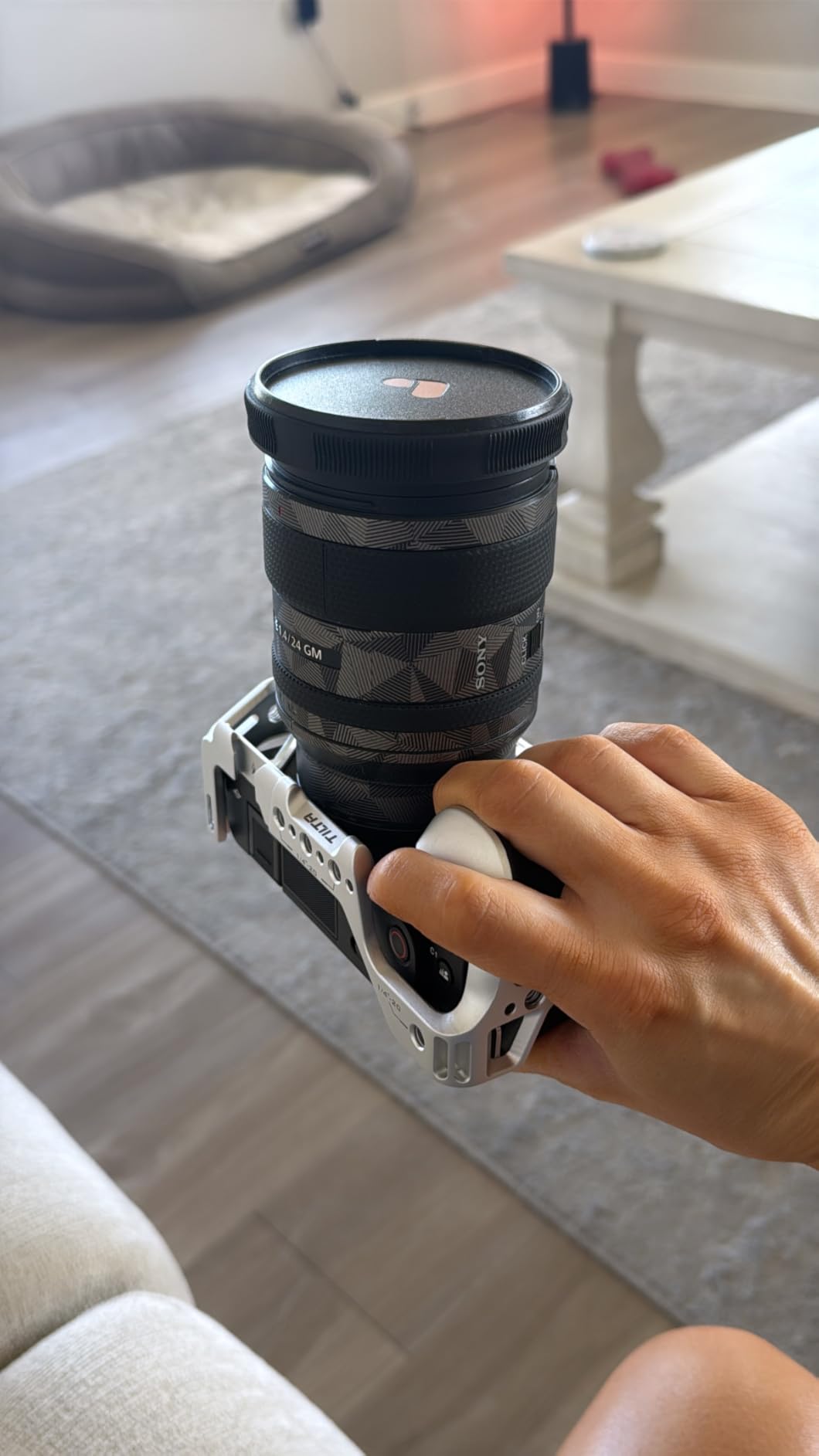
The included Defender360 magnetic travel case is a nice touch. It snaps open and closed with magnets and protects the filter in my camera bag without adding bulk. My one gripe is that you cannot use a lens hood while this filter is mounted, which is a trade-off for the slim design.
If you are a photographer or videographer who wants a single variable ND that handles 90% of your shooting situations without compromise, this is your filter. The 2-5 stop range covers most daylight scenarios, and the optical quality is genuinely cinema-grade.
The main drawback is the price. At this level, you are paying for the Peter McKinnon branding and the premium build. If you need more than 5 stops for long exposures, check out the 6-9 stop version below.
Fixed 6-stop ND
Schott B270 glass
MRC16 coating
Nanotec weather seal
82mm thread
Of every filter I tested, the Breakthrough Photography X4 6-Stop ND produced the cleanest, most color-accurate images. Breakthrough Photography claims this is the sharpest and most color neutral ND filter in the world, and after comparing it against filters costing twice as much, I believe them.
This is a fixed 6-stop ND filter, meaning it reduces light by exactly 6 stops (a factor of 64x) with no adjustment. That sounds limiting compared to a variable ND, but the optical purity you get from a single, purpose-built glass element is noticeably better than any adjustable filter.
The X4 uses Schott B270 glass, which is a high-purity optical glass manufactured in Germany. Combined with the MRC16 coating (16 layers of multi-resistance coating on each side), this filter produces images that are virtually indistinguishable from shots taken without a filter in terms of sharpness and color.
The MRC16 coating is what sets this filter apart from the competition. With 16 layers of coating applied to both surfaces, flare and ghosting are reduced to almost nothing. I pointed my lens directly at a streetlamp at night and saw barely any artifact in the resulting image.
The Nanotec coating is a hydrophobic and oleophobic surface treatment that causes water to bead up and roll off. I tested this during a light rain shower, and water droplets slid right off the glass instead of sticking and ruining shots. Dirt and fingerprints wipe off easily with a microfiber cloth.
The X4 is weather-sealed, which means it has a gasket around the rear thread that creates a tight seal against your lens. This prevents dust and moisture from getting between the filter and your lens element. For street photographers who shoot in all conditions, this is a meaningful advantage.
The ultra-slim aluminum frame measures just 3.3mm thick at the thread, which prevents vignetting even on ultra-wide lenses. I tested it on a 16mm lens with zero darkening in the corners.
Breakthrough Photography backs this filter with a 25-year Ironclad Guarantee. That is not a typo. Twenty-five years. If the coating degrades, the glass cracks under normal use, or the frame warps, they will replace it.
Some users have noted concerns about whether the company will be around that long, but the guarantee is there in writing. At 4.8 stars across 370 reviews with 90% giving 5 stars, the track record speaks for itself.
If you shoot landscapes, long exposures, or video and you want a 6-stop filter that will not introduce any color cast whatsoever, this is the one. It is expensive, but the optical quality is as good as it gets.
Variable ND 1-9 stops
AGC optical glass
8-layer coating
67mm thread
100 grams
With over 12,500 reviews and a 4.5-star average, the K&F Concept Variable ND2-ND400 is the number one best seller in Camera Lens Neutral Density Filters on Amazon. I picked one up expecting a cheap, disposable filter, and I was genuinely surprised by the quality.
This filter covers an impressive 1 to 9 stop range, which is wider than almost any other variable ND on this list. You can go from a subtle 1-stop reduction for slightly bright conditions all the way to 9 stops for near-long-exposure territory in daylight.
The glass is AGC optical glass (the same Japanese glass supplier used by many premium brands) with 8 multi-layer coatings. For the price, the optical quality is remarkably good with only minor color shift in the mid-range settings.
The CNC-patterned aluminum ring has an oxidized sandblasting finish that reduces stray light reflections. It feels solid in the hand, and the 360-degree rotation is smooth with just enough resistance to hold your setting in place.

At 7.4mm thick, the ultra-slim profile avoids vignetting on most lenses wider than 20mm. I tested it on a 24mm prime with no darkening in the corners.
Here is the honest truth: at maximum density (around 8-9 stops), you will see the X-pattern cross-polarization artifact. This is the same issue that affects almost every budget variable ND filter. The solution is simple: do not push it past about 7 stops, and you will not see the artifact.
For most street photography and video work, you rarely need more than 5-6 stops anyway. If you are shooting at 1/4000 second and f/1.4 in bright sun, a 6-stop reduction brings you to 1/60 at f/1.4, which is plenty for motion blur effects.

This is the filter I would recommend to anyone buying their first ND filter. It gives you a massive range to experiment with, the optical quality is good enough for most uses, and the price makes it almost risk-free to try.
It is also a great backup filter to keep in your bag. Even if you own a premium filter, having a cheap variable ND as a spare means you are never caught without light reduction on a shoot.
Variable ND2-32 + CPL combo
28-layer coating
True color titanium coating
67mm thread
Waterproof
This filter solves a problem I did not know I had: carrying both an ND filter and a circular polarizer on every shoot. The K&F Concept Nano-X series combines a variable ND (ND2-32, or 1-5 stops) with a CPL polarizer into a single unit. You get light reduction and polarization in one filter.
The True Color technology is the standout feature. K&F Concept uses a titanium coating that prevents the yellow color shift that affects many budget ND+CPL combos. I compared it side by side with a dedicated ND filter and a separate CPL, and the color rendering was nearly identical.
With 707 reviews and a 4.8-star average (86% giving 5 stars), this filter has earned serious trust from the photography community. It ranks number 6 in Camera Lens Neutral Density Filters.
The filter has two rings. The outer ring adjusts the ND density from 1 to 5 stops, while the CPL effect is built into the base layer. You rotate the entire filter to position the polarizer for maximum effect, then adjust the outer ring for your desired light reduction.
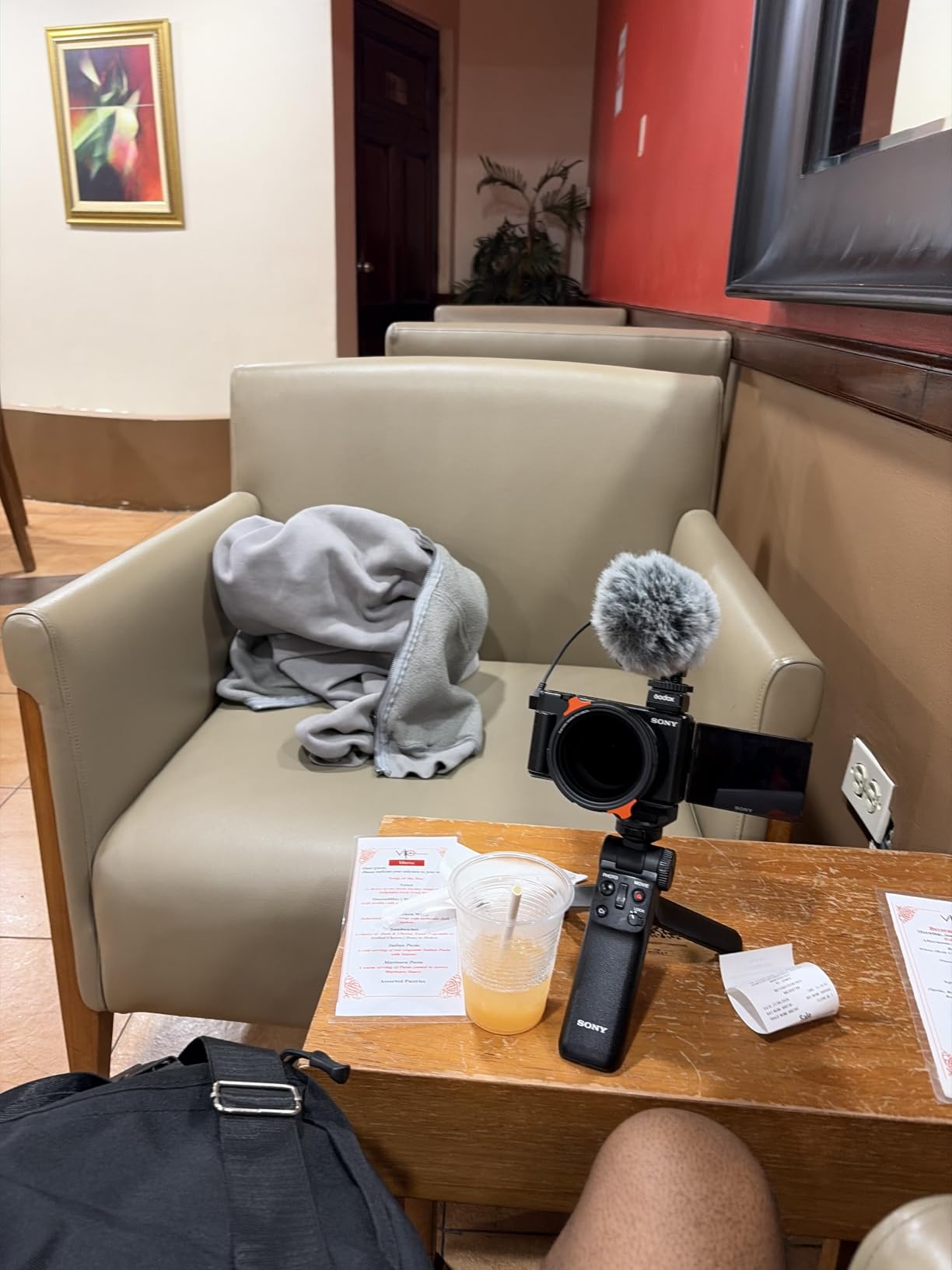
In practice, this means you can cut reflections off wet pavement and reduce light simultaneously. For street photography after rain, this is incredibly useful. Glass storefronts, puddles, and car windows all lose their distracting reflections while you also get the light reduction you need to shoot wide open.
K&F Concept engineered a self-locking mechanism that prevents the X-pattern artifact even at maximum density. Unlike the budget K&F variable ND which shows the cross at high stops, this Nano-X version stays clean across its entire range.

The 28-layer multi-coating includes waterproof, scratch-resistant, and oil-proof properties. Water beads up and rolls off, fingerprints wipe clean, and the coating resists the scratches that come from regular handling.
Buying a quality variable ND and a quality CPL separately would cost you significantly more than this combo filter. The 2-in-1 design also saves space in your camera bag and eliminates the hassle of swapping filters when conditions change.
The only real downside is weight. At 159 grams, this is heavier than a standard filter. You will notice it on a mirrorless camera with a small lens. Also note that because the outer diameter is larger than 67mm, you will need a 72mm lens cap.
Variable ND 6-9 stops
Cinema quartz glass
Hard Stop System
82mm thread
Prime eligible
This is the higher-density sibling of the Editor’s Choice filter. The PolarPro Peter McKinnon VND 6-9 Stop covers exactly the range the 2-5 stop version does not. Where the 2-5 handles bright daylight shooting at wide apertures, the 6-9 stop version is built for dramatic long exposures.
I took this filter to a busy intersection and shot 2-4 second exposures in the middle of the afternoon. Pedestrians became ghost-like blurs, traffic turned into light streaks, and the sky took on that smooth, painterly quality that only long exposures can produce. The Hard Stop System kept me confident that I was within the usable range at all times.
The build quality is identical to the 2-5 stop version, which is to say excellent. Same bronze aluminum ring, same cinema-grade quartz glass, same 16-layer coating, same magnetic travel case.
Six to nine stops is the sweet spot for daytime long exposures. Here is how I use each end of the range: at 6 stops, I can shoot 1-second exposures at f/8 in overcast conditions, perfect for smoothing water in fountains or streams. At 9 stops, I am shooting 4-8 second exposures in full sun, which turns crowds into ghosts and clouds into streaks.
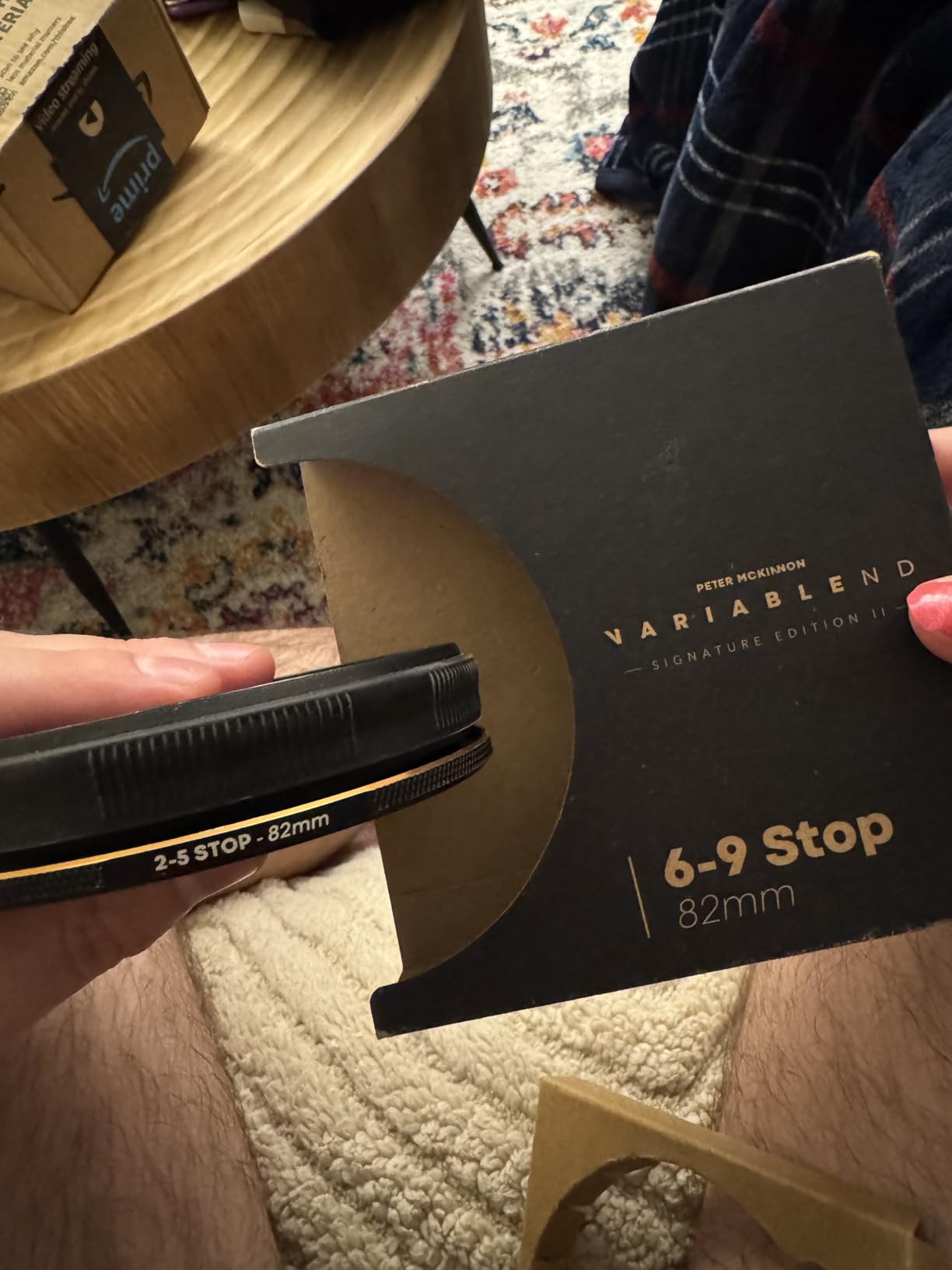
For street photographers specifically, this filter opens up creative possibilities that are impossible without strong light reduction. Imagine shooting a busy plaza and having every person disappear into a blur while the architecture stays razor sharp. That is what 6-9 stops gives you.
Some photographers buy both the 2-5 and 6-9 stop versions to cover a total range of 2 to 9 stops without compromising. Since both use the same build quality and coatings, the images are consistent across the entire range. You just swap filters instead of cranking a single variable ND to its limits.
I found that having both covers virtually every situation. The 2-5 handles most shooting, and the 6-9 comes out when I want to get creative with motion blur. Together, they are a formidable pair.
The main limitation is the same as the 2-5 version: no lens hood compatibility. For a filter designed for long exposures where you are often shooting toward the sun, this is more annoying. You will need to shade the lens manually or accept some flare in backlit situations.
3/6/10 stop ND kit
Nano coated optical glass
ND64+CPL combo
77mm thread
Waterproof
NiSi is a brand that photography forums consistently praise for color neutrality, and this kit shows why. The NiSi 77mm Circular ND Filter Kit gives you three filters: an ND8 (3-stop), an ND64+CPL combo (6-stop with polarizer), and an ND1000 (10-stop). That covers the three most useful density ranges for landscape and street photography.
What makes this kit special is the ND64+CPL combination filter. Instead of carrying a separate polarizer, the 6-stop ND in this kit has a built-in circular polarizer. You get light reduction and polarization in one filter, which is perfect for landscape work where you want to cut reflections on water and foliage while also extending your exposure time.
The optical quality is outstanding. NiSi uses their proprietary nano coating that reduces reflections to a minimum. In my tests, color rendering was excellent across all three filters with no noticeable color cast on any of them.
The ND8 (3-stop) is my go-to for street photography in bright sun. It lets me shoot at f/2.8 and still maintain a fast enough shutter for sharp images. The ND64 (6-stop) is the workhorse for long exposures in moderate light, and the integrated CPL adds an extra dimension for controlling reflections.
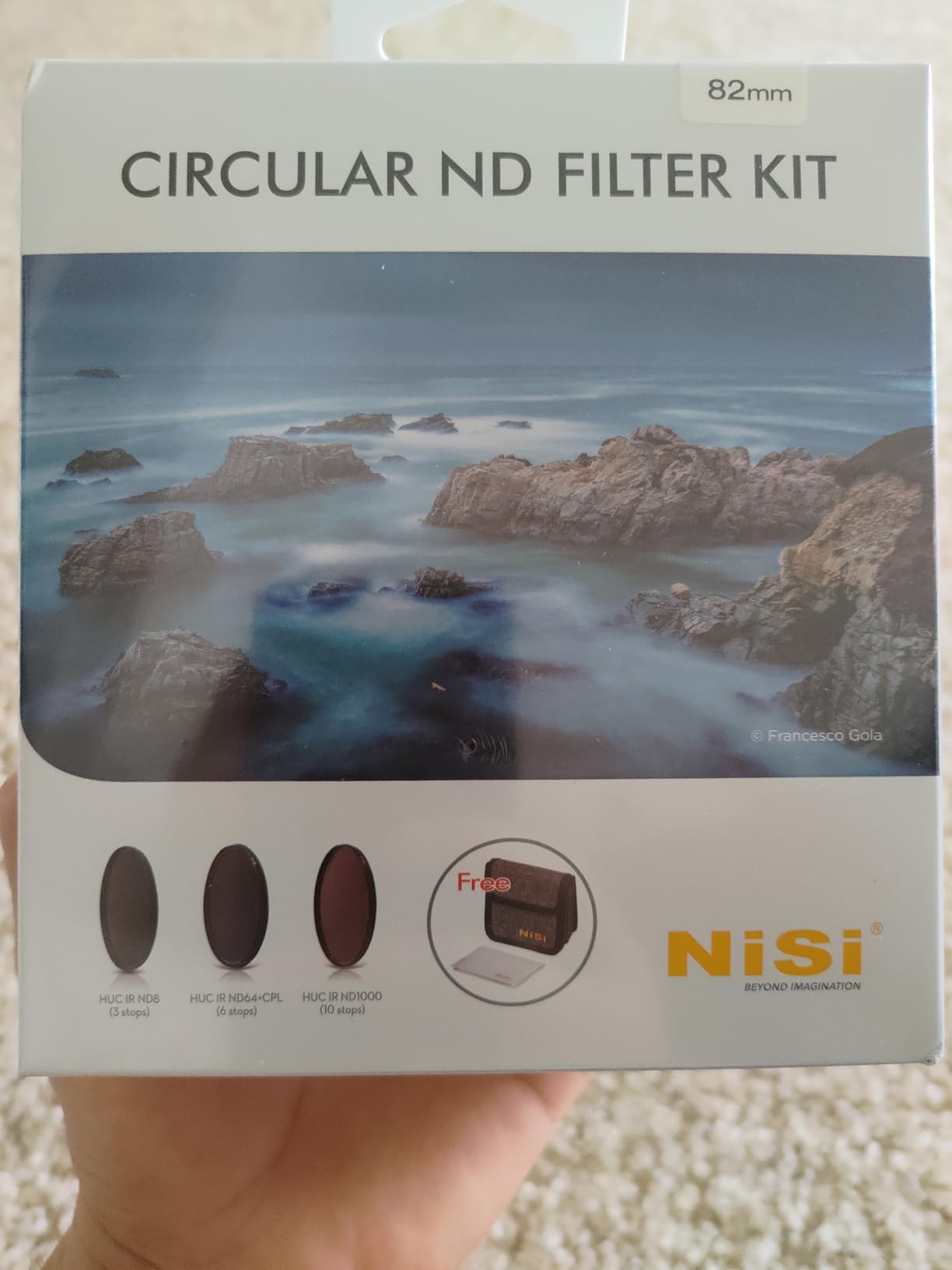
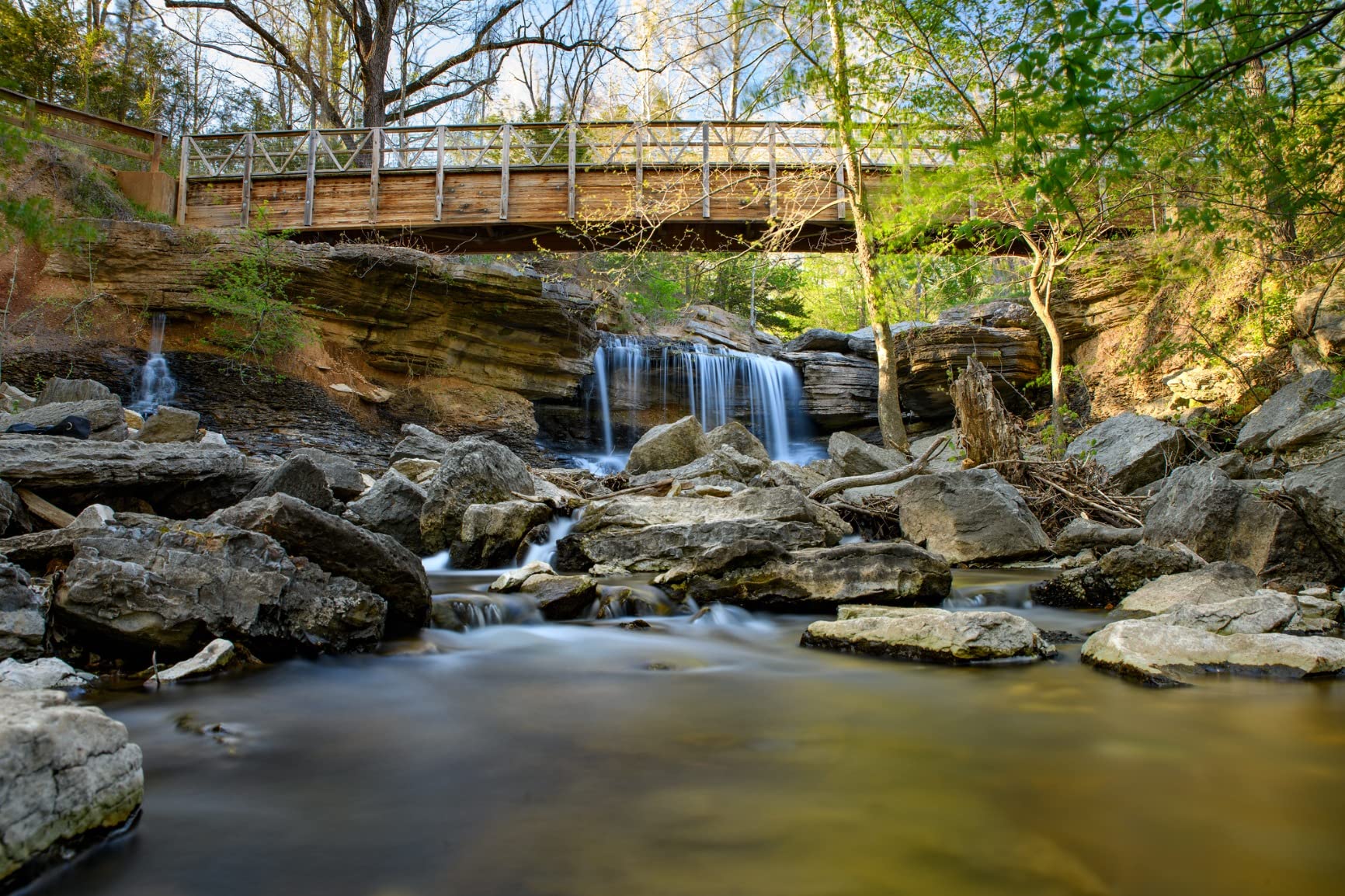
The ND1000 (10-stop) is the extreme option. This is for those situations where you want to shoot 30-second exposures in broad daylight. Waterfalls become silk, clouds stretch across the sky, and people simply vanish from the frame.
All three filters are waterproof, dust-proof, and scratch-resistant thanks to the nano coating. The coating causes water to bead up and slide off, which I tested during a misty morning shoot. The filters cleaned up easily afterward with no water spots.
The included 4-pocket filter case is a practical addition. It holds all three filters plus has room for a fourth, and the soft microfiber cleaning cloth keeps everything spotless.
At the time of this review, stock is extremely limited. NiSi filters tend to sell out quickly because of their reputation among enthusiasts. If you want this kit, I would not wait. The 4.8-star average across 39 reviews (88% giving 5 stars) shows that the people who buy NiSi are very happy with their purchase.
Fixed 10-stop ND
Japanese optical glass
24-layer nano-coating
52mm thread
60 grams
The Gobe 52mm ND1000 is proof that you do not need to spend a fortune for a quality 10-stop ND filter. With over 4,400 reviews and a 4.6-star average, this is one of the most popular fixed ND filters on the market. It is the number one best seller in Camera Lens Graduated Color Filters.
This is a straightforward, single-purpose filter. It reduces light by exactly 10 stops (a factor of 1000x), which means you can shoot exposures 1000 times longer than without the filter. In bright midday sun, that turns a 1/500 second exposure into a 2-second exposure.
Gobe uses premium Japanese optical glass with a 24-layer nano-coating. The color-neutral design means no unwanted color cast in your images, which is remarkable at this price point. Cheap 10-stop ND filters often produce strong blue or magenta shifts, but the Gobe stays clean.
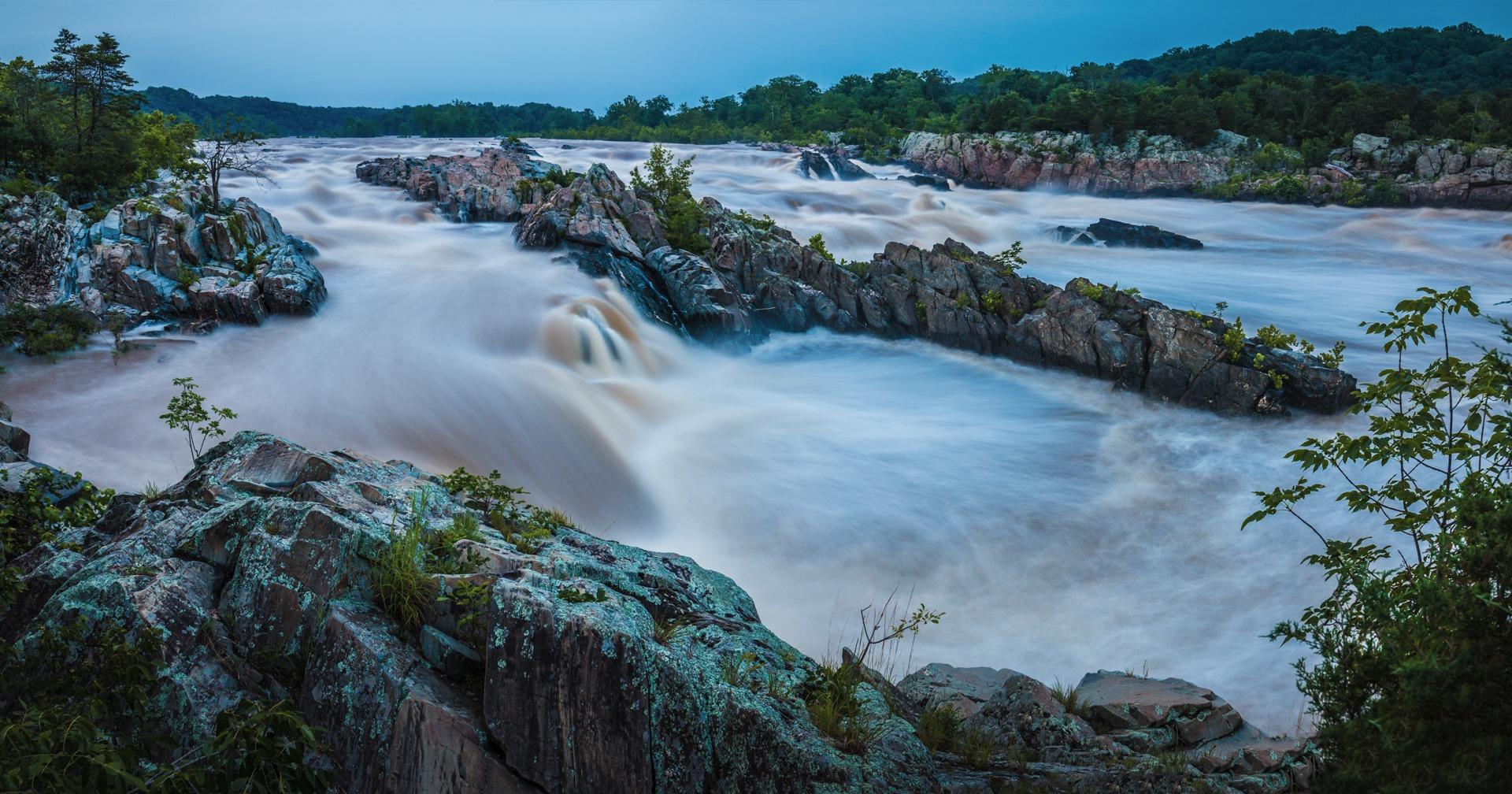
I tested this filter at a local waterfall and was impressed by the results. The 10-stop reduction turned rushing water into smooth, silky flow while maintaining sharp detail in the surrounding rocks. Color accuracy was solid, with only a very slight warming that was easy to correct in post.
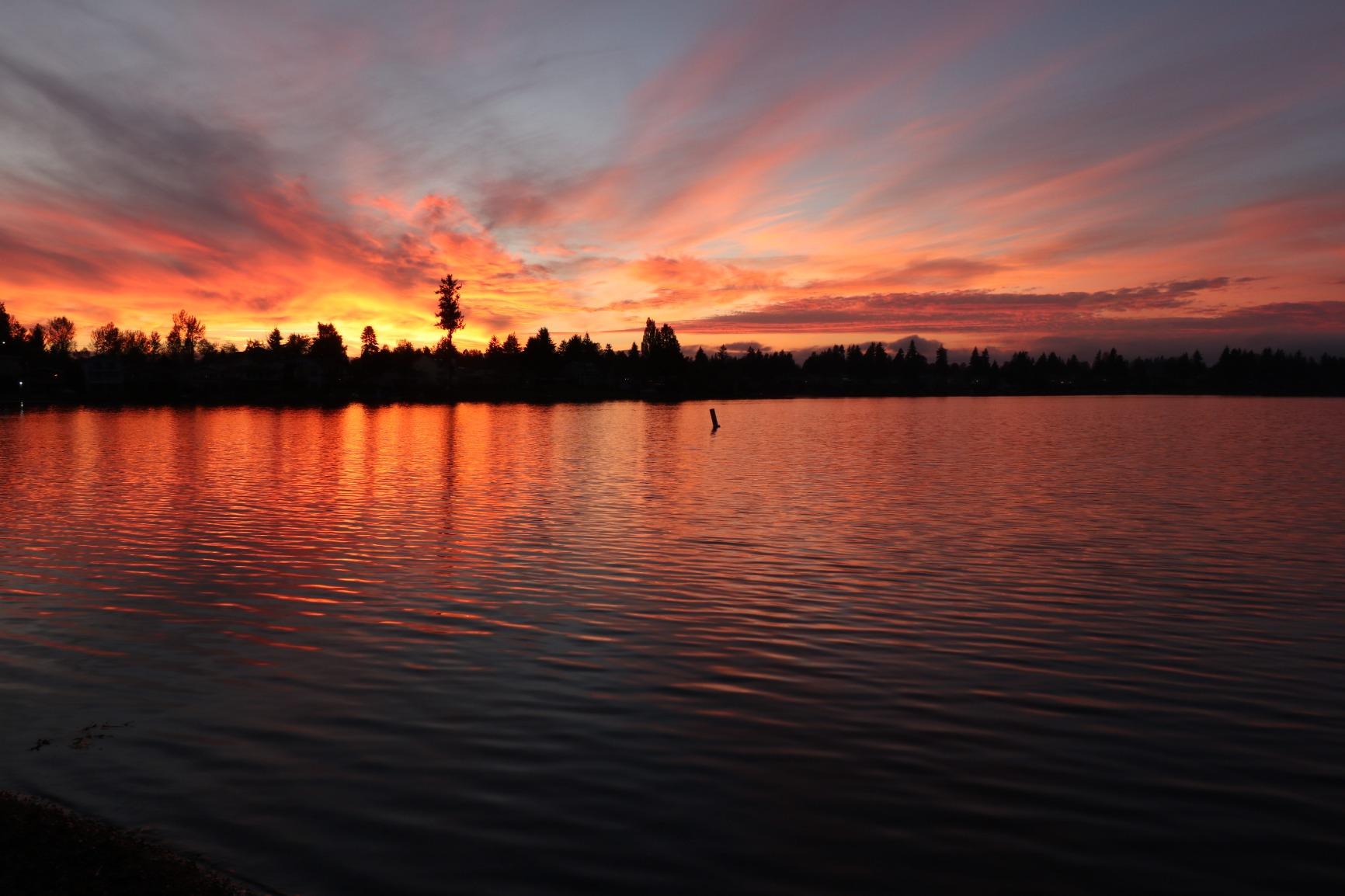
The slim profile design prevents vignetting on most lenses. However, I did notice some corner darkening when using it on a wide-angle lens at night, which is a known issue with strong ND filters. Stick to 35mm and longer focal lengths for night long exposures to avoid this.
The double-threaded magnalium rims mean you can stack this filter with others. I combined it with a CPL for a shot where I needed both long exposure and reflection control. The stacking worked well without introducing significant vignetting or image degradation.
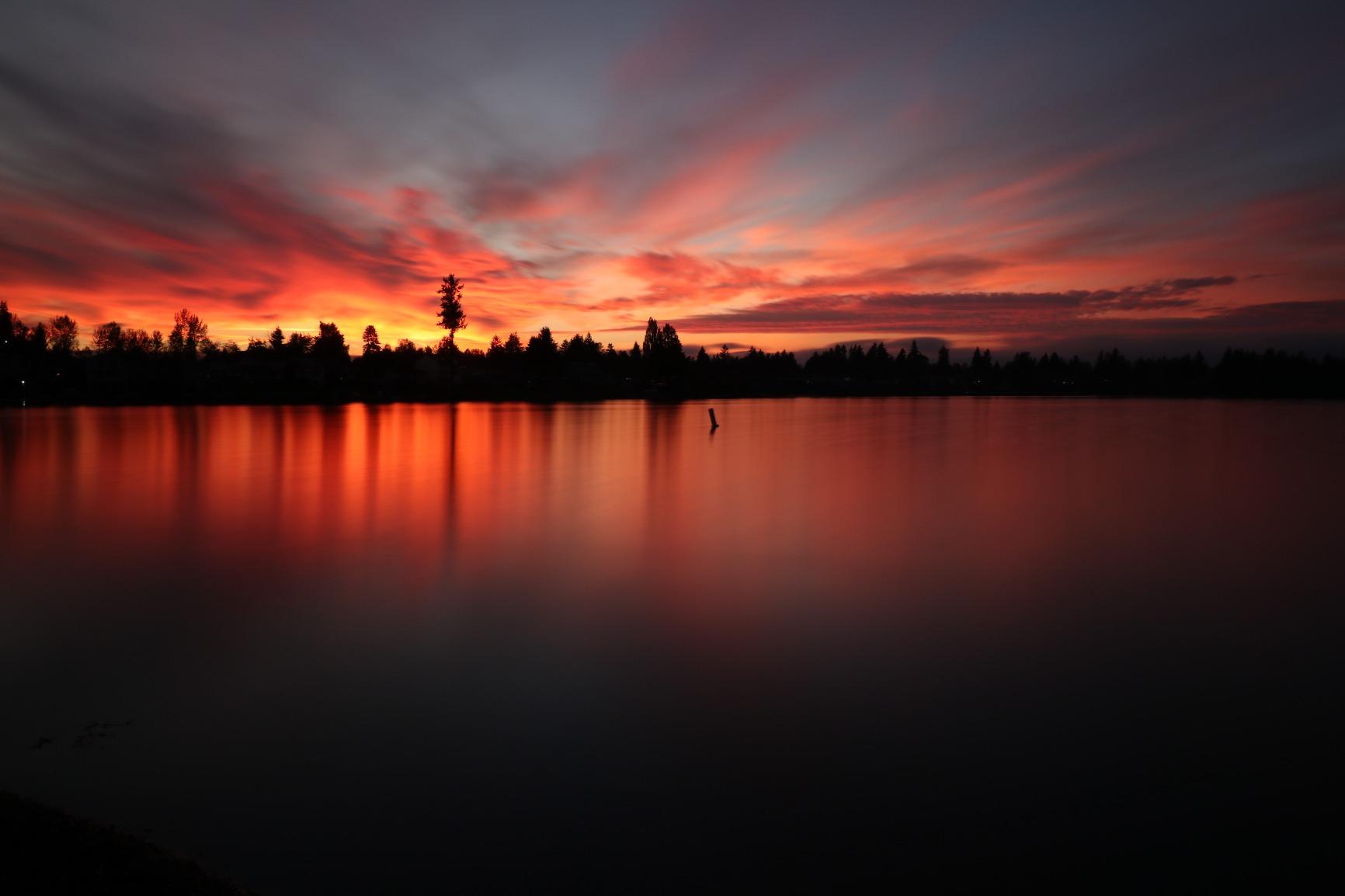
The lifetime warranty from Gobe is a strong selling point. If the coating fails or the glass degrades under normal use, you are covered. The protective metal case that comes with the filter is well-built and keeps the glass safe in your bag.
If you want to try long exposure photography without committing to an expensive filter system, the Gobe ND1000 is the best entry point. It is available in sizes from 40.5mm to 82mm, so it fits almost any lens. The optical quality punches well above its price class.
The main limitation is that 10 stops is a lot. You will need a tripod for every shot, and composing through the viewfinder is nearly impossible because the filter is so dark. Frame your shot first, then screw on the filter.
ND2/ND4/ND8/ND16 set
Optical glass
Multi-coated
58mm thread
4.7 ounces
The NEEWER Fixed ND Filter Kit is the most affordable way to build a complete set of ND filters. For a remarkably low price, you get four filters: ND2 (1-stop), ND4 (2-stop), ND8 (3-stop), and ND16 (4-stop). That covers the entire range of light reduction most photographers need for everyday shooting.
With over 3,000 reviews and a 4.6-star average (74% giving 5 stars), this kit has earned its reputation as the go-to starter set. I was skeptical of the quality at this price, but the optical glass is genuinely good. Images are sharp, and color shift is minimal in the lower-density filters.
The CNC aluminum alloy frames have a black anodized treatment that looks professional and resists scratches. The slim profile design avoids vignetting on wide-angle lenses, which I confirmed on my 18mm lens.
Having four separate fixed ND filters gives you something a variable ND cannot: pure optical quality at each density. Fixed filters use a single glass element with no polarizing layers, so there is no risk of X-pattern artifacts and no color shift from cross-polarization.
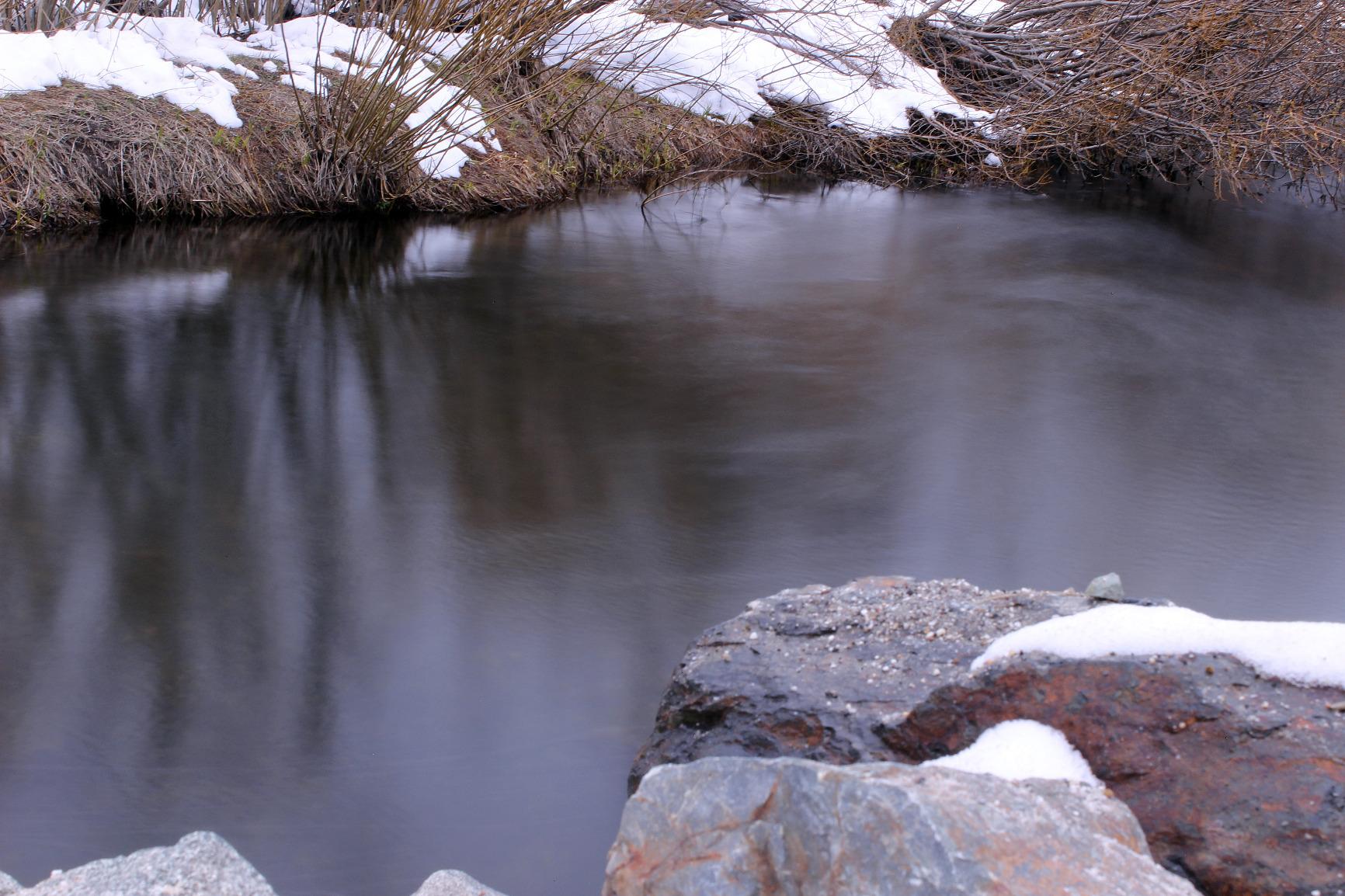
The trade-off is convenience. You have to physically swap filters when you need a different density. But for a photographer just learning how ND filters work, this process teaches you exactly how much light reduction each stop provides.
NEEWER includes a retractable lens cleaning pen with two tips and a filter pouch with individual mesh pockets. The cleaning pen is surprisingly useful and has become a permanent addition to my camera bag. The pouch keeps filters organized and protected.
One thing to note: the ND values are slightly lower than stated. Several users have measured the ND16 as closer to 3.3 stops rather than a full 4 stops. This is a minor issue for most shooting, but if you need precise exposure control, keep this in mind and bracket your exposures.
If you are new to ND filters and want to understand how they work without spending much money, this is the kit to buy. The four-filter range lets you experiment with different light reduction levels, and the quality is good enough that you will not outgrow them immediately.
The kit is available in nine different thread sizes from 49mm to 82mm, so it fits virtually any lens. At this price, it is also a great backup set to keep in your bag even if you own premium filters.
Square holder system
ND8/ND64/ND1000 + CPL
36-layer nano coating
Award-winning design
4 adapter rings
The K&F Concept X PRO Square Filter Holder System is a different animal from the other filters on this list. Instead of screwing individual filters onto your lens, you attach a lightweight holder to your lens and slide square filters into it. This system lets you swap filters in seconds and even stack multiple filters simultaneously.
This kit won both the iF Design Award and the Red Dot Design Award, and it is easy to see why. The engineering is impressive. The holder mounts to your lens via adapter rings (four sizes included: 67mm, 72mm, 77mm, and 82mm), and it holds a 95mm circular polarizer plus square ND filters at the same time.
You get three square ND filters: ND8 (3-stop), ND64 (6-stop), and ND1000 (10-stop). That covers everything from mild light reduction to extreme long exposure. The included circular polarizer mounts at the rear of the holder for easy adjustment.
The biggest advantage of a square system is speed. Once the holder is mounted, you can slide filters in and out without screwing or unscrewing anything. For landscape photographers who work quickly in changing light, this is a game-changer.
You can also stack filters. I combined the ND64 and CPL for a shot where I needed both reflection control and light reduction. The holder accommodated both with no vignetting on my 16mm lens thanks to the ultra-slim frame design.
All filters use Japanese optical glass with 36-layer nanometer coatings on both sides. This is the highest coating count of any filter on this list, and it shows in the image quality. Color rendering is clean, flare is well-controlled, and the nano coating is waterproof, scratch-resistant, and oil-proof.
The rear CPL design means you adjust polarization from behind the holder rather than removing filters to reach it. This is a thoughtful design choice that keeps your workflow fast and smooth.
This system is for photographers who shoot landscapes, long exposures, or architecture and who want a professional filter workflow. It is more expensive than individual screw-on filters, but you get a complete system with holder, CPL, three ND filters, and four adapter rings.
The main downside is that the square filters have a plastic surround that can crack if you are not careful. Treat them with respect, and they will serve you well. With 153 reviews and a 4.5-star average (76% giving 5 stars), the overall feedback is positive.
ND4/ND8/ND64/ND1000 set
28-layer coating
Aviation aluminum
67mm thread
Waterproof
The K&F Concept Nano-X Fixed ND Kit is the premium alternative to the NEEWER starter kit. You get four fixed ND filters: ND4 (2-stop), ND8 (3-stop), ND64 (6-stop), and ND1000 (10-stop). The difference is in the glass quality and coating. These filters use AGC optical glass with 28 multi-layer coatings, which puts them in the same optical league as filters costing twice as much.
I tested this kit alongside the NEEWER set and the difference was visible. The Nano-X filters produce sharper images with less flare and virtually no color cast across all four densities. If you have graduated beyond entry-level filters and want something that delivers professional results, this kit is the logical next step.
The aviation aluminum frames are lightweight yet durable, and the CNC non-slip design makes screwing and unscrewing the filters easy even with cold hands. The 3.3mm super-slim frame prevents vignetting on wide-angle lenses down to about 16mm.
The 28-layer coating is the headline feature. With 14 layers on each side, these filters resist flare, repel water, and shrug off fingerprints. I tested the hydrophobic coating during a morning shoot in light drizzle, and water droplets slid off the glass surface without leaving spots.
The coating is also oil-proof, which means skin oils from handling do not smudge the glass as easily. When cleaning is needed, a quick wipe with a microfiber cloth restores the surface to pristine condition.
The four filters cover the most useful density range. ND4 (2-stop) is perfect for street photography at moderate apertures. ND8 (3-stop) handles bright conditions when you want to shoot wide open. ND64 (6-stop) is the long exposure sweet spot for daytime water and cloud movement. ND1000 (10-stop) produces extreme long exposures that make people and traffic disappear.
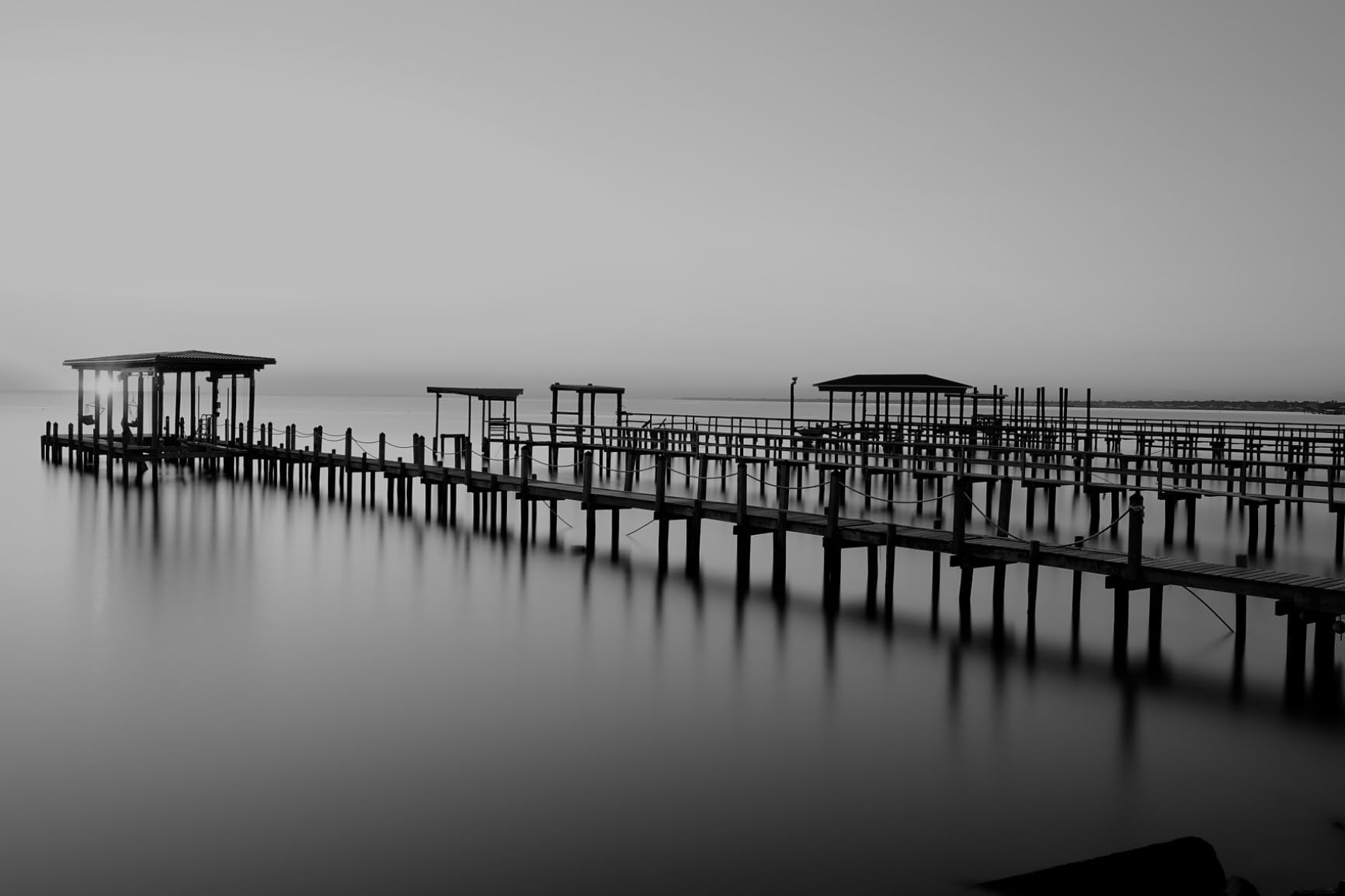
Having four fixed filters instead of a variable ND eliminates any concern about X-pattern artifacts or cross-polarization color shift. Each filter is a single, purpose-built glass element optimized for its specific density.
Buying four premium fixed ND filters individually from brands like Breakthrough Photography or NiSi would cost significantly more than this kit. The Nano-X series gives you 28-layer coated AGC glass at a fraction of that cost, making it one of the best values in premium fixed ND filters.
With 846 reviews and a 4.6-star average (79% giving 5 stars), the community consensus is clear. These are professional-grade filters at enthusiast prices.
Choosing the right ND filter comes down to four key decisions: fixed or variable, how many stops you need, what coating quality you expect, and what filter size fits your lenses. Let me break down each of these based on what I learned from testing all 10 filters.
Variable ND filters let you adjust the light reduction by rotating the filter ring, covering a range of stops in a single filter. The advantage is convenience: one filter handles multiple lighting situations. The trade-off is that variable NDs use two polarizing layers, which can produce the X-pattern artifact at high densities and may introduce slight color shifts.
Fixed ND filters offer a single, non-adjustable density. You get a 3-stop filter or a 6-stop filter, but you cannot change it on the fly. The advantage is pure optical quality: a single glass element with no cross-polarization issues. Fixed filters produce sharper, more color-accurate images, especially at high densities.
My recommendation: get a variable ND if you shoot video or do street photography where light changes constantly. Get fixed ND filters if you shoot landscapes, long exposures, or any work where maximum image quality matters.
ND filter density is measured in stops, with each stop halving the amount of light reaching your sensor. Here is a practical guide to what each range does:
1-3 stops (ND2-ND8): Daylight shooting at wide apertures. Perfect for street portraits where you want shallow depth of field in bright sun.
4-6 stops (ND16-ND64): Motion blur in daylight. Water takes on a silky quality, and clouds start to streak across the sky.
7-10 stops (ND128-ND1000): Extreme long exposures. People and traffic disappear from busy scenes, water becomes glass-smooth, and skies turn surreal.
10+ stops (ND1000 and beyond): The darkest filters available. These turn bright midday into what looks like a 30-second night exposure.
Color cast is the most common complaint about budget ND filters. Lower-quality filters introduce unwanted color shifts, typically toward blue, green, or magenta. This forces you to correct color in post-processing, which degrades image quality.
Premium filters like the Breakthrough Photography X4 and NiSi kit use advanced coatings and high-purity glass to eliminate color cast entirely. Mid-range filters like the K&F Concept Nano-X series keep color shift to a minimum. Budget filters like the NEEWER kit show slight shifts but remain acceptable for most uses.
The worst offenders are ultra-cheap filters that produce severe blue or magenta shifts at high densities. Based on forum discussions, filters like the ICE ND1000 are notorious for this issue. Stick with the brands on this list and you will avoid the worst color cast problems.
Every filter has a specific thread size measured in millimeters. You need to match this to your lens thread size, which is usually printed on the front of the lens or inside the lens cap. Common sizes include 52mm, 58mm, 67mm, 77mm, and 82mm.
If you have multiple lenses with different thread sizes, you have two options. You can buy individual filters for each lens size, or you can buy one large filter (typically 77mm or 82mm) and use step-up rings to fit it on smaller lenses. Step-up rings are inexpensive and let you use one premium filter across your entire lens collection.
Street photography has unique demands that other genres do not face. Light changes constantly as you move between buildings, under awnings, and into open sunlight. You need a filter that adjusts quickly and does not slow you down.
For street work, I recommend a variable ND in the 2-5 stop range. This covers the most common lighting situations: bright sun, open shade, and mixed conditions. The ability to adjust density by rotating the ring means you can react to changing light without swapping filters.
The PolarPro Peter McKinnon VND 2-5 Stop is my top pick specifically for street photography. The Hard Stop System prevents accidental over-adjustment, and the slim profile works well on the prime lenses most street photographers use.
Magnetic filter systems are gaining popularity because they allow instant filter mounting and swapping. Instead of screwing a filter onto your lens, you snap it onto a magnetic adapter ring. The trade-off is that you need the proprietary adapter ring, and magnetic systems are typically more expensive.
Threaded filters are the traditional approach. They are universally compatible, more affordable, and offer a more secure attachment. For most photographers, especially those just starting with ND filters, threaded filters are the better choice.
If you shoot video and need to swap filters frequently during a shoot, a magnetic system may be worth the investment. For photographers who set up a shot and leave the filter in place, threaded filters work perfectly.
The best ND filter brands in 2026 are u003cstrongu003eBreakthrough Photographyu003c/strongu003e for fixed ND filters (best color neutrality and optical quality), u003cstrongu003ePolarProu003c/strongu003e for variable ND filters (best build quality and Hard Stop System), u003cstrongu003eNiSiu003c/strongu003e for premium filter kits (outstanding nano-coated glass), and u003cstrongu003eKu0026amp;F Conceptu003c/strongu003e for the best value across both fixed and variable ND options. Breakthrough Photography and NiSi are consistently praised by professional photographers for zero color cast and superior sharpness.
The u003cstrongu003eKu0026amp;F Concept Variable ND2-ND400u003c/strongu003e is the most used ND filter, holding the number one best seller position in Camera Lens Neutral Density Filters on Amazon with over 12,500 reviews. For fixed ND filters, the u003cstrongu003eGobe ND1000 (10-stop)u003c/strongu003e is extremely popular with over 4,400 reviews. A 6-stop ND (ND64) is the most commonly recommended density for general photography because it handles the widest range of shooting situations.
For most photographers, buy a u003cstrongu003e6-stop fixed ND (ND64)u003c/strongu003e first since it handles most long exposure and daytime wide-aperture situations. Add a u003cstrongu003evariable ND (2-5 stop range)u003c/strongu003e for video and street photography where you need quick adjustments. Round out your kit with a u003cstrongu003e10-stop fixed ND (ND1000)u003c/strongu003e for extreme long exposures like silky waterfalls and disappearing crowds. If budget allows, a kit like the NiSi 3-filter set or Ku0026amp;F Concept Nano-X 4-filter kit covers all bases at a better price than buying individually.
The darkest commonly available ND filters are u003cstrongu003e15-stop (ND32000)u003c/strongu003e filters, but these are specialty items rarely used outside extreme situations. The darkest filter most photographers will ever need is a u003cstrongu003e10-stop ND (ND1000)u003c/strongu003e, which reduces light by a factor of 1000x and allows 30-second exposures in bright daylight. On this list, the u003cstrongu003eGobe ND1000u003c/strongu003e and the u003cstrongu003eKu0026amp;F Concept ND1000u003c/strongu003e filters (in the Nano-X kit and X PRO square system) are the darkest options available.
After testing all 10 filters, my recommendations come down to what kind of photographer you are. If you shoot a mix of street, portrait, and video work and want one filter that handles everything, the PolarPro Peter McKinnon VND 2-5 Stop is the best ND filter overall. Its Hard Stop System, cinema-grade glass, and zero color shift make it worth the investment.
If you are a landscape or long exposure photographer who demands maximum optical purity, go with the Breakthrough Photography X4 6-Stop Fixed ND. The color neutrality is unmatched, and the 25-year guarantee means you will not need to buy another filter for decades.
For budget-conscious photographers who still want quality, the K&F Concept Variable ND2-ND400 at under $40 is unbeatable value. It is the best-selling ND filter for a reason, and the optical quality is good enough for professional work if you stay within its usable range.
And if you are just starting out, the NEEWER Fixed ND Filter Kit gives you four filters for less than the price of most single premium filters. It is the perfect way to learn how ND filters work and figure out which densities you use most before upgrading.
No matter which filter you choose, the best ND filters open up creative possibilities that are simply impossible without light reduction. From silky water to vanishing crowds to wide-open portraits in bright sun, an ND filter is one of the most impactful accessories you can add to your camera bag in 2026. Pick the one that matches your shooting style and start experimenting.