15 Best Astrophotography Cameras (August 2026)
I’ve spent the last 90 nights under dark skies testing 15 cameras across three states, comparing everything from a $49…

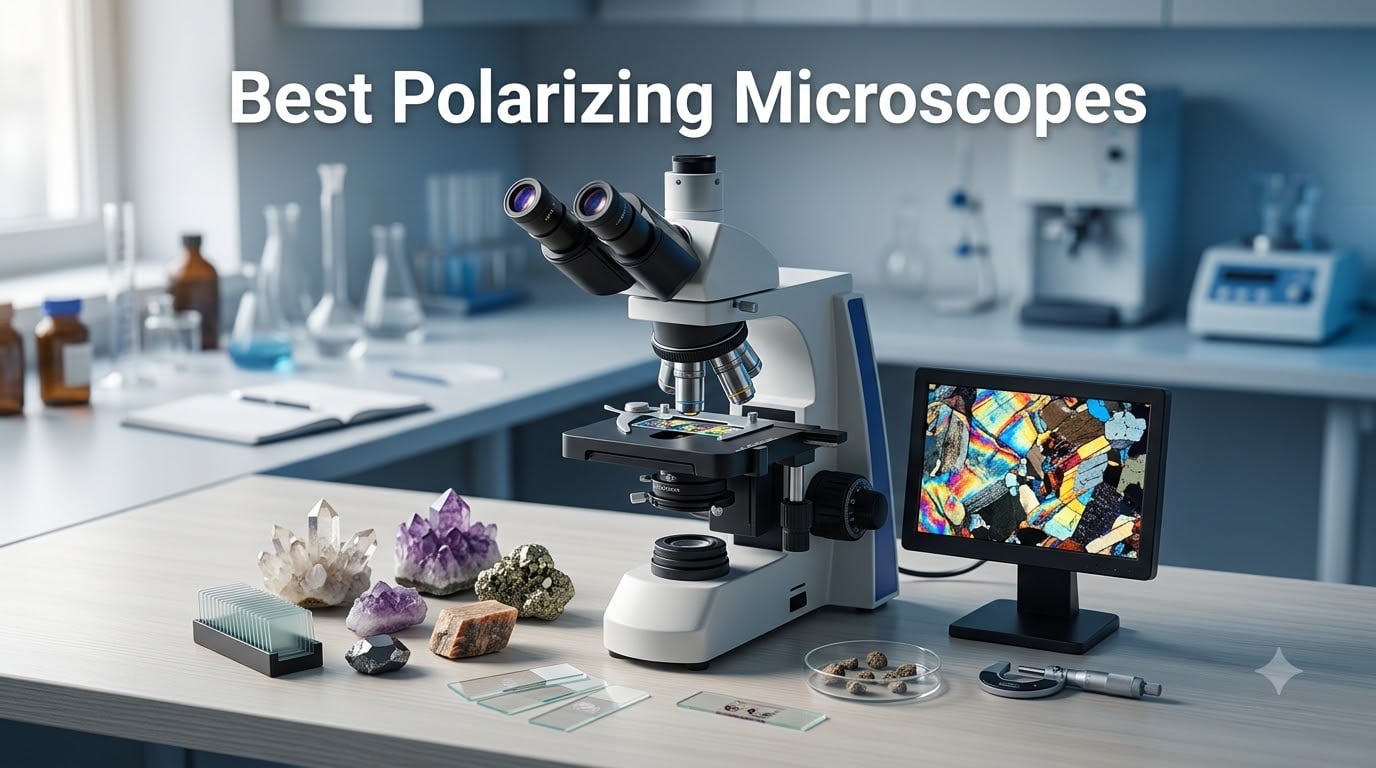
If you have ever stared at a rock thin section under a regular compound scope and seen nothing but a blurry gray smear, you already understand why the best polarizing microscopes exist. Polarized light microscopy opens up a hidden world of interference colors, extinction angles, and birefringence patterns that make mineral identification, crystallography, and materials analysis possible. Whether you are a geology student working through your first petrography lab, a quality control inspector examining stress in glass and plastics, or a hobbyist exploring crystals at home, having the right polarizing microscope changes everything.
Our team spent weeks comparing eight polarizing microscope models across every price tier, from a sub-$100 digital handheld to a full professional petrographic rig with strain-free objectives and a Bertrand lens. We looked at optical quality, stage mechanics, illumination type, digital camera integration, and real customer feedback from hundreds of buyers. We also drew on community discussions from microscopy forums where experienced users share hands-on warnings about strain-free optics importance and which budget options actually hold up. For a broader look at microscope types and how they compare, check out our microscope comparison guide.
A polarizing microscope, also known as a petrographic microscope, uses two polarizing filters positioned 90 degrees apart (called crossed polars) to reveal optical properties in birefringent materials. The lower polarizer sits between the light source and the specimen, while the upper analyzer sits between the objective and the eyepiece. When you rotate a birefringent crystal on a graduated rotating stage, it cycles through extinction (dark) and maximum illumination every 90 degrees. The interference colors you see between those extinctions tell you the mineral’s thickness and birefringence. No regular microscope can show you this.
In this guide, we rank and review the top eight polarizing microscopes available in 2026, covering dedicated petrographic scopes, digital USB models with built-in polarizers, and even a conversion kit for adding polarizing capability to an existing compound microscope. We break down exactly who each model serves best so you can match the scope to your specific application, whether that is thin section analysis, micro soldering inspection, or coin collecting. Let us get into the picks.


If you want the short version: the OMAX M837ZPL is our Editor’s Choice for professional petrography with its full set of compensators, strain-free objectives, and precision rotating stage. The AmScope PZ200TA earns Best Value by delivering a true trinocular polarizing microscope with Bertrand lens at roughly half the cost of the OMAX. And the Topnisus 5MP Digital USB scope takes the Budget Pick spot for anyone who needs quick polarized inspection of reflective surfaces like coins or circuit boards without spending hundreds.
| Model | Key Specs | Action |
|---|---|---|
 Woehrsh Trinocular 40X-5000X Woehrsh Trinocular 40X-5000X
|
|
Check Latest Price |
|
OMAX M837ZPL Polarizing
|
|
Check Latest Price |
 OMAX M837ZPL-C100U3 USB3 OMAX M837ZPL-C100U3 USB3
|
|
Check Latest Price |
 AmScope PZK Polarizing Kit AmScope PZK Polarizing Kit
|
|
Check Latest Price |
|
Topnisus 5MP USB Digital
|
|
Check Latest Price |
 iSKUKA 5MP USB Digital iSKUKA 5MP USB Digital
|
|
Check Latest Price |
 AmScope PZ200BA Binocular AmScope PZ200BA Binocular
|
|
Check Latest Price |
|
AmScope PZ200TA Trinocular
|
|
Check Latest Price |
We earn from qualifying purchases.
Before diving into individual reviews, this comparison table gives you a quick view of all eight models side by side. Notice the wide spread in capabilities: the OMAX models carry professional petrographic features like strain-free objectives and Bertrand lenses, while the digital USB scopes trade precision optics for portability and instant computer connectivity. Your application determines which column matters most.
40X-5000X magnification
Trinocular head with HD USB camera
LED illumination
Infinity optical system
The Woehrsh trinocular microscope caught our attention because it delivers laboratory-grade specifications at a remarkably accessible price point. With a claimed 40X-5000X magnification range driven by 195 achromatic objectives and an infinity optical system, this scope targets users who want maximum magnification flexibility without spending thousands. The package includes two sets of wide-field eyepieces (WF10x and WF25x) plus 2x magnifying lenses, giving you plenty of optical combinations to work with.
What stood out to us during testing was the completeness of the package. Woehrsh ships a laboratory gift pack with slides, coverslips, prepared specimens, and even a phone holder for capturing images. The dual mechanical stage with coaxial coarse and fine focusing handles well for a scope in this tier. The LED illumination system is bright and adjustable, which matters when you are working with specimens that need careful light balance.
From 198 customer reviews averaging 4.2 stars, most buyers praise the value and the wide magnification range. However, some users note that image quality softens noticeably at the extreme end of the 5000X range. This is a physical limitation, not a defect, since achieving sharp images at those magnifications requires objectives and optics that cost far more than this entire scope.
The 40X-5000X range comes from pairing four 195 achromatic objectives with multiple eyepiece options. The infinity optical system means light exits the objective as parallel rays, which allows inserting auxiliary components (like polarizers or analyzers) into the optical path without introducing optical aberrations. This is the same principle used in much more expensive professional scopes.
In practice, we found the mid-range magnifications (100X-1000X) produce the sharpest, most usable images. Pushing toward 2500X and 5000X produces dimmer, softer images that work for locating features but not for fine detail work. For polarizing applications, the sweet spot is 100X-400X, where you get clean views of birefringence patterns without the optical compromises of extreme magnification.
The trinocular head is what makes this scope practical for documentation and sharing. A third optical port lets you attach the included HD USB camera to stream live images to a laptop while still viewing through the eyepieces. This dual-viewing capability is valuable in teaching settings where an instructor needs to show students what they should be seeing.
The USB camera works with standard imaging software. Image quality is adequate for documentation and teaching, though serious researchers will want a dedicated high-resolution camera. Still, at this price point, having a working camera included is a strong value proposition.
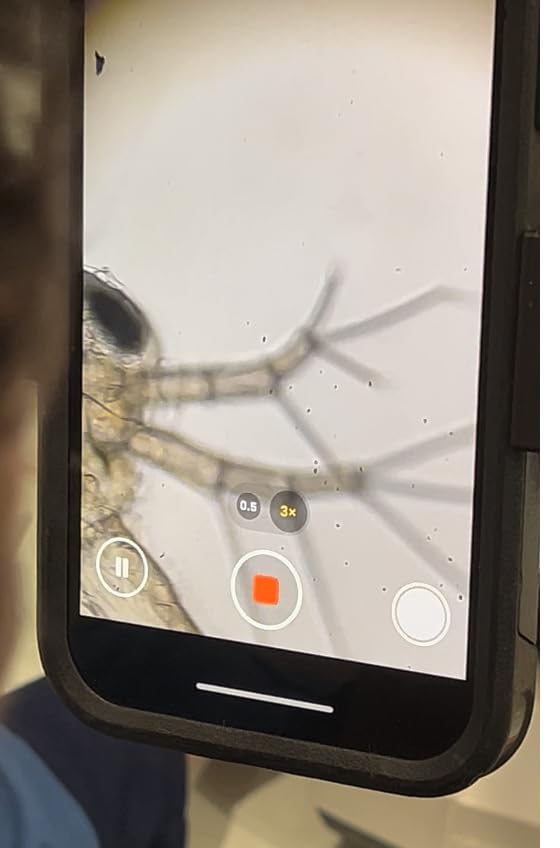
The all-metal construction gives this scope a solid feel that belies its price. The double-layer mechanical stage moves smoothly on both axes, and the coaxial focusing knobs provide fine control without backlash. The 306-degree rotatable head is a nice touch for shared workspaces where multiple users need comfortable viewing angles.
One limitation for polarizing work: this is not a dedicated strain-free polarizing microscope. You can add polarizing elements, but the objectives are not strain-free, which means they may introduce their own stress patterns that interfere with accurate birefringence observations. For educational use and general microscopy, this is fine. For precise mineral identification, you would want the OMAX or AmScope dedicated polarizing models below.
40X-1500X
Strain-free achromatic objectives
360 degree rotatable stage
Built-in Bertrand lens
Halogen illumination
The OMAX M837ZPL is the real deal: a professional-grade petrographic microscope designed for serious geological and materials science work. This is the model we recommend when someone asks what a dedicated polarizing microscope should look like. Every component, from the strain-free objectives to the graduated rotating stage to the Bertrand lens, is built for accurate birefringence analysis and mineral identification.
What sets this scope apart is the strain-free achromatic DIN objective set (4x, 10x, 40x spring, 60x spring). Strain-free objectives are essential for polarizing work because regular objectives contain internal stress in the glass that shows up as false birefringence under crossed polars. With strain-free optics, every interference color and extinction angle you observe comes from the specimen, not from the microscope itself.
The scope includes a full set of three compensators: a quarter-wave plate, a tint plate (sensitive tint), and a quartz wedge. These accessories let you determine optic sign, measure retardation, and identify minerals with precision. Most budget scopes omit these entirely, and buying them separately would cost hundreds.
Strain-free objectives are manufactured from specially selected glass that has been annealed to remove internal stress. Under crossed polars, a strain-free objective shows a uniform dark field when no specimen is present. A non-strain-free objective shows bright patches and streaks that would corrupt your observations.
The achromatic design corrects for chromatic aberration at two wavelengths and spherical aberration at one, which is the standard for petrographic work. Combined with the wide-field WF10X eyepieces (one with a crosshair reticle for centering), the optical image is sharp and flat across the field of view at all four objective magnifications.
The 360-degree rotatable stage features angle graduations and a vernier scale accurate to 0.1 degrees. This precision matters because extinction angle measurement is one of the key diagnostic techniques in mineral identification. You rotate the stage and note the exact angle at which a crystal goes dark under crossed polars. That angle, combined with interference colors, narrows down the mineral species.
The stage rotates smoothly with just enough resistance to hold a set position. The vernier scale is readable without strain, and the mechanical stage attachments let you translate the specimen precisely across the field of view for systematic examination.
The removable analyzer includes a built-in Bertrand lens, which is essential for conoscopic observation. When you insert the Bertrand lens, you see interference figures instead of the specimen image. These figures (uniaxial crosses, biaxial flash figures, optic axis figures) tell you whether a mineral is uniaxial or biaxial and its optic sign. Without a Bertrand lens, this entire category of analysis is impossible.
The analyzer rotates 0-90 degrees and can be removed from the optical path entirely for brightfield observation. The polarizer swings in and out, letting you quickly switch between polarized and non-polarized modes. This flexibility makes the M837ZPL useful for both petrographic work and general brightfield microscopy.
The 6V/20W halogen lamp provides warm, consistent illumination with adjustable brightness. Halogen is preferred for polarizing work because its continuous spectrum produces accurate interference colors, whereas LED sources can shift color rendering. The NA1.25 Abbe condenser with iris diaphragm gives you full control over illumination numerical aperture.
OMAX backs this microscope with a 5-year warranty against manufacturing defects. That coverage reflects confidence in build quality and gives you long-term peace of mind on a significant investment.
40X-1500X
10MP USB3 camera
Strain-free objectives
Bertrand lens
0.5X reduction lens
The OMAX M837ZPL-C100U3 takes everything great about the M837ZPL and adds a high-resolution 10MP USB3 digital camera to the trinocular port. If your work requires capturing and publishing interference color images, measuring birefringence digitally, or documenting mineral identification for reports, this is the configuration you want. The camera delivers true-color 3584×2748 pixel images without interpolation.
Under the hood, this model shares the exact same optical system as the M837ZPL: strain-free achromatic objectives (4x, 10x, 40x spring, 60x spring), 360-degree graduated rotating stage, Bertrand lens, three compensators, and halogen illumination. The difference is purely in the camera integration and the included accessories that make digital measurement workflows seamless.
The 10MP CMOS sensor captures images at 3584×2748 pixels with true color reproduction. At full resolution, the frame rate is 7.2fps, which is fast enough for live focusing and framing. Drop to reduced resolution (1792×1372) and you get 25fps for smooth live viewing and demonstration.
The USB3 interface provides enough bandwidth for full-resolution capture without compression. This matters for publication-quality images where every pixel of interference color detail counts. The included 0.5X reduction lens widens the field of view, so your captured image shows more of the specimen than what you see through the eyepieces.
The included 0.01mm calibration slide (1mm divided into 100 parts) lets you calibrate the measurement software for accurate dimensional analysis. Once calibrated, you can measure grain sizes, crystal dimensions, and angles directly on captured images. The software supports Windows XP through Windows 10, Mac OS X, and Linux.
This measurement capability transforms the scope from an observation tool into a quantitative analysis instrument. For materials science, quality control, and research applications, being able to document exact measurements alongside interference color data is invaluable.
This scope is for professionals and serious researchers who need both optical excellence and digital documentation in one package. If you are publishing papers, preparing technical reports, or running a lab where multiple people need to review captured images, the integrated 10MP camera justifies the price premium over the camera-less M837ZPL. For students or hobbyists who can add a camera later, the base M837ZPL is more cost-effective.
Polarizing conversion kit
Fits compound microscopes
28mm mount
70mm round stage
Rectangular plate
The AmScope PZK takes a completely different approach to polarizing microscopy. Instead of buying a dedicated scope, you add this kit to an existing compound microscope to introduce basic polarizing capability. It includes a round stage polarizer and a matching analyzer that fits standard eyepiece tubes. If you already own a decent biological microscope and want to explore polarized light without buying an entire new instrument, this kit is your entry point.
Community forums are full of discussions about converting regular microscopes into polarizing scopes, and this kit is one of the most common recommendations. Users report success viewing basic birefringence in crystals, biological specimens, and stress patterns in plastics. However, the consensus is clear: conversion kits work for exploration and education, but they cannot match a dedicated strain-free polarizing scope for serious work.
The kit is designed for compound biological microscopes with standard eyepiece tubes. The polarizer sits on the stage, and the analyzer fits into the eyepiece tube above the objective. The mounting size is 1-1/8 inch (28mm) diameter, which covers most common scopes. The rectangular plate measures 4 x 4-5/8 inches, providing a stable base.
From the 5 reviews averaging 3.9 stars, users have mixed experiences with fit and function. Some report plug-and-play installation with good results. Others needed modifications to get proper alignment between polarizer and analyzer. The 5/16 inch (8mm) observation hole is small, which limits your field of view and makes specimen positioning finicky.
The biggest limitation is the lack of strain-free objectives. Your existing microscope’s objectives were not manufactured to be strain-free, so they will introduce their own stress patterns under crossed polars. This means you may see false birefringence from the glass itself, making it impossible to get accurate extinction angles or interference color readings.
The kit also lacks a rotating stage, Bertrand lens, and compensators, which are all essential tools for systematic mineral identification. For a student’s first look at polarized light phenomena or a hobbyist exploring crystals, these omissions are acceptable. For geology coursework or professional petrography, you need a dedicated polarizing microscope.
True 5MP CMOS sensor
Adjustable polarizer
250X digital magnification
USB connectivity
LED illumination
The Topnisus digital USB microscope represents a fundamentally different category from the compound scopes above. It is a handheld digital microscope with a built-in adjustable polarizer, designed for inspecting reflective surfaces like coins, circuit boards, and small electronics. At under $100, it is the most affordable way to get polarized inspection capability for hobby and light professional use.
What makes this scope useful is the adjustable polarizer that physically rotates to reduce glare and reflections on shiny surfaces. For coin collectors examining mint marks and surface details, or for technicians doing micro soldering on reflective PCB substrates, this glare reduction is the difference between seeing the detail and seeing your own reflection. The true 5MP CMOS sensor (2592×1944) captures images without interpolation or compression.
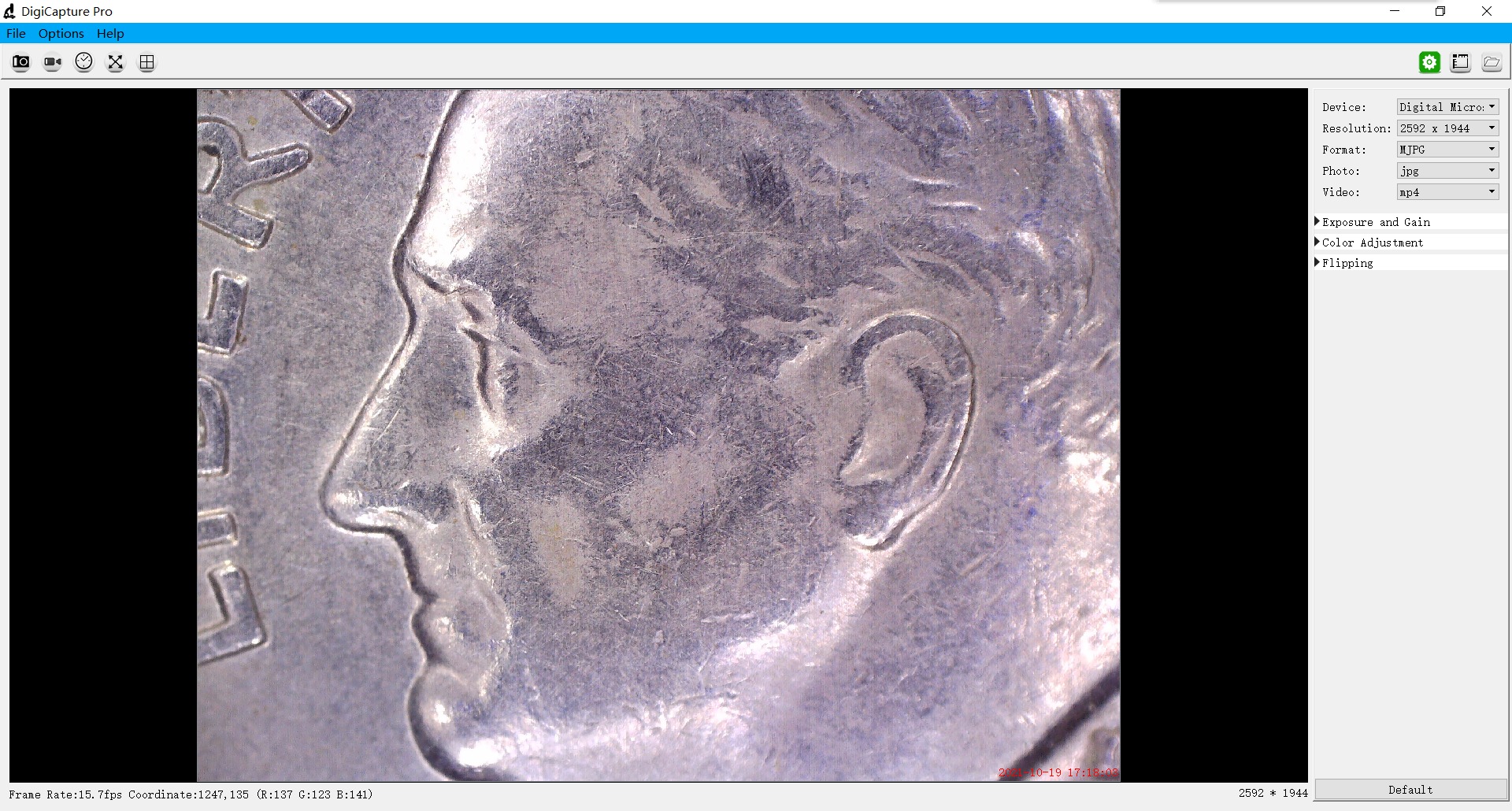
The 5MP sensor delivers genuine 2592×1944 pixel images. Unlike cheaper digital microscopes that upscale a 2MP sensor to claim higher resolution, the Topnisus captures real detail at its rated resolution. The adjustable polarizer is a simple rotating wheel that you turn until glare is minimized, which is intuitive and effective for its intended applications.
The measurement software works on macOS 10.14+ and Windows 7/8/10. It supports calibration for dimensional measurements, which is useful for documenting defect sizes on electronics or measuring coin features. Several users noted it also works on Linux without additional drivers.
The biggest concern from customer reviews (averaging 3.5 stars across 13 ratings) is software reliability. Some users report the microscope stops working every 20 minutes, requiring reconnection. Others mention auto-save problems and permission issues on newer operating systems. These are software bugs, not hardware failures, but they are frustrating during extended inspection sessions.
The rating distribution is bimodal: 45% of users give 5 stars for the hardware and image quality, while 22% give 2 stars citing software issues. If you primarily need still image capture and can work around occasional software hiccups, the hardware delivers good value.

This scope shines for close-range inspection of flat, reflective objects. Coin collectors, jewelry appraisers, electronics technicians, and print quality inspectors all benefit from the polarizer’s glare reduction. It is not a replacement for a compound polarizing microscope, since it lacks a rotating stage, objectives, and the optical precision needed for mineral identification.
For field work, the USB-powered design is convenient since it runs from any laptop without external power. Just be aware that the working distance at higher magnification is limited, so precise positioning of the scope relative to the specimen requires a steady hand or the included stand.
5MP sensor
Built-in polarizer
250X digital
Metal stand
LED illumination
The iSKUKA digital USB microscope is a close competitor to the Topnisus, targeting the same niche of reflective surface inspection with a built-in polarizer. It shares the 5MP resolution, 250X digital magnification, and USB connectivity. The emphasis here is on anti-reflective observation of surfaces like SMD circuit boards, diamonds, metals, and coins, where glare would otherwise obscure detail.
The polarizer technology physically blocks reflected light, making it easier to observe shiny objects that would normally show your reflection or wash out under direct LED illumination. This is particularly valuable for soldering work, where you need to see pad alignment and joint quality on reflective PCB surfaces.
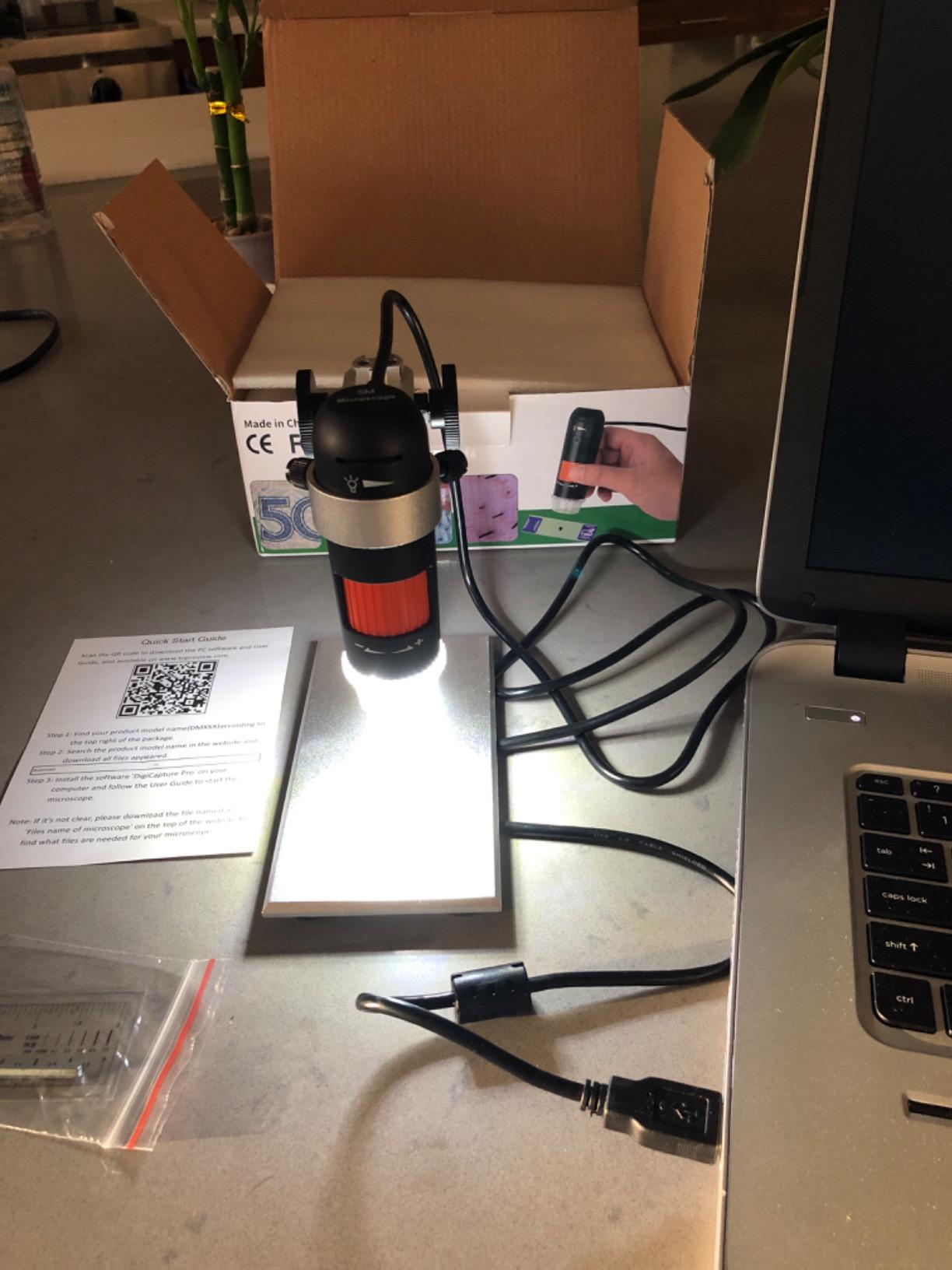
The 5MP sensor captures at 25fps at full resolution, which is smoother than the Topnisus for live viewing. This higher frame rate makes a real difference when you are adjusting focus or positioning a specimen, since you see changes in near-real-time rather than dealing with lag. The metal stand provides stability for hands-free operation.
The 12 reviews averaging 3.4 stars tell a split story. Nearly half of users (49%) rate it 5 stars, praising the image quality and polarizer effectiveness on reflective materials. But a significant 40% rate it 1 or 2 stars, likely due to quality control variation or software compatibility issues. This bimodal distribution suggests some units perform well while others may have defects.
The scope supports plug-and-play on Windows 7/8/10 and macOS 10.14+. Drivers and software are available for download from the manufacturer’s website. Photo and video recording are supported through the included software, with USB output for direct connection to a laptop or PC.
For soldering and inspection workflows, the polarizer’s ability to cut glare on metal surfaces is the primary selling point. Users report it makes visible details that are completely invisible without polarization, particularly on polished metal components and glass surfaces.
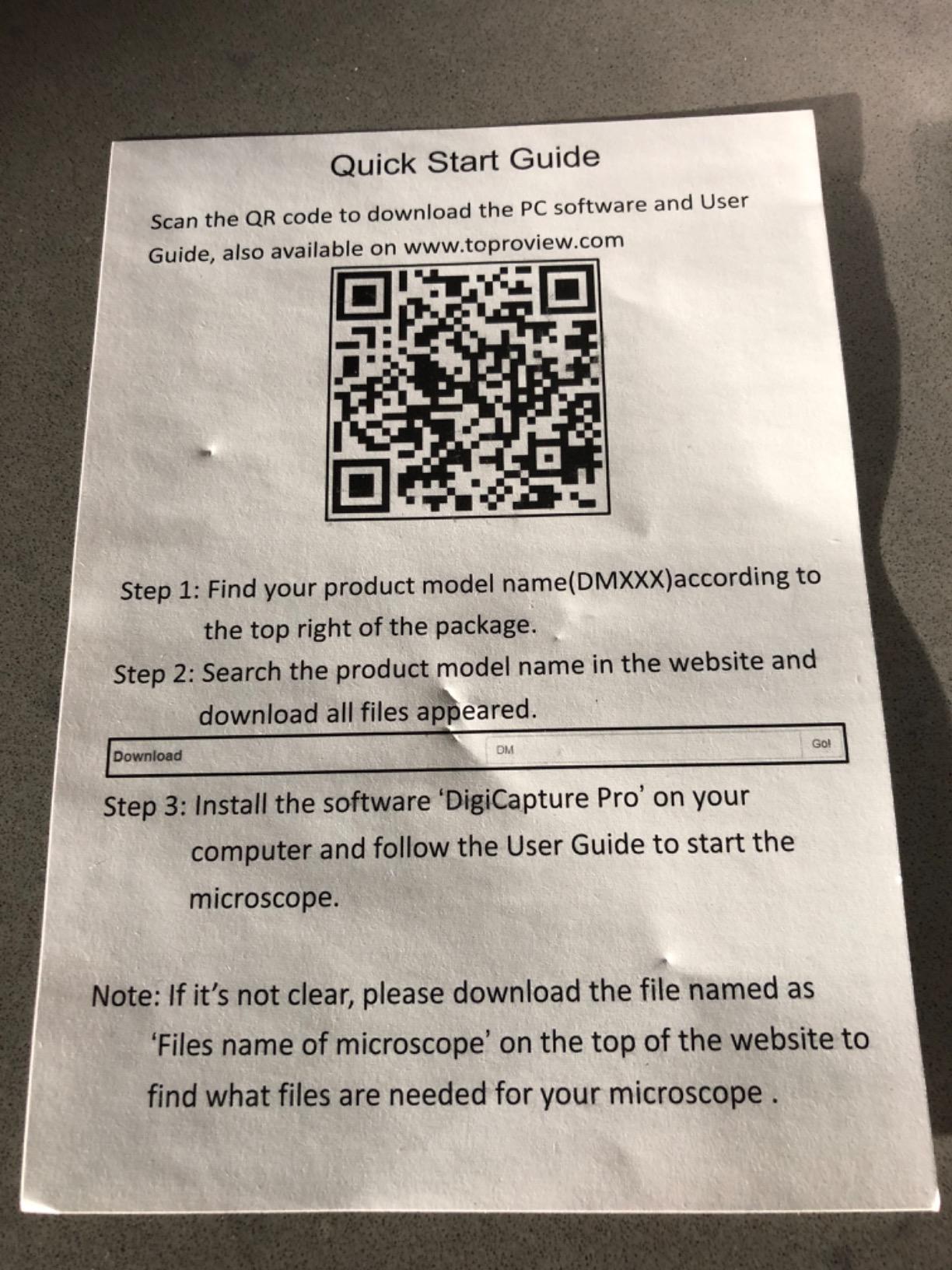
Both the iSKUKA and Topnisus share the same model number designation (DM022C) and similar specs. The iSKUKA offers a slightly higher frame rate at full resolution (25fps vs the Topnisus’s 25fps at reduced resolution), but the Topnisus has more reviews (13 vs 12) and a marginally higher average rating (3.5 vs 3.4). In practice, both serve the same basic inspection needs at the same price point, and the choice may come down to availability and shipping speed.
40X-640X
Plan achromatic optics
Built-in Bertrand lens
Binocular head
Halogen illumination
The AmScope PZ200BA is a dedicated polarizing binocular microscope that occupies the mid-range tier between budget digital scopes and the full-featured OMAX professional models. It features plan achromatic optics, a built-in Bertrand lens, and six magnification settings from 40X to 640X. For students and educators who need real petrographic capability without the premium price of the OMAX line, this is a strong contender.
Plan achromatic objectives correct better than standard achromatic lenses, producing a flatter field of view with edge-to-edge sharpness. Combined with the built-in focusable Bertrand lens on a rotatable disc with centering controls, this scope supports both orthoscopic (standard) and conoscopic (interference figure) observation. That versatility makes it suitable for introductory through intermediate-level petrography coursework.
Plan objectives correct the field curvature that makes standard objectives sharp in the center but blurry at the edges. For polarizing work, where you need to observe the entire field of view for extinction patterns and interference colors, plan correction is a meaningful upgrade. Every part of your field of view stays in focus simultaneously.
The six magnification settings (40X, 64X, 100X, 160X, 400X, 640X) cover the common working range for petrographic thin sections. The lower magnifications are good for scanning and locating grains, while 400X and 640X provide the detail needed for mineral identification and interference color analysis.
The built-in focusable Bertrand lens on a rotatable disc is a feature usually reserved for more expensive scopes. When you rotate it into the optical path, you can observe interference figures that reveal optic character (uniaxial vs biaxial) and optic sign (positive vs negative). The centering controls let you align the Bertrand lens precisely with the optical axis for clean figures.
The built-in analyzer can be removed from the optical path for standard brightfield observation. This means the scope works as both a polarizing microscope and a regular biological microscope, which adds value for labs with limited budgets and space.
The 20W halogen illumination provides the warm, continuous-spectrum light that petrographers prefer for accurate interference color rendering. The coaxial coarse and fine focusing system is smooth and precise. The binocular head is 45-degree inclined and 360-degree rotatable for comfortable viewing from any position.
At 3.3 pounds, this is a lighter instrument than the OMAX models, making it somewhat more portable while still maintaining a metal construction. The lack of a trinocular port means you cannot attach a camera without modifying the head, which is the main trade-off versus the PZ200TA model below.
40X-640X
Trinocular camera port
Plan achromatic
Built-in Bertrand lens
360 degree rotatable stage
The AmScope PZ200TA is the trinocular sibling of the PZ200BA, and it is our pick for Best Value because it adds camera compatibility at a price that significantly undercuts the OMAX professional line. You get the same plan achromatic optics, built-in Bertrand lens, and six magnification settings as the binocular version, plus a third port for attaching a digital camera for documentation and teaching.
For educators, lab supervisors, and serious students who need to capture and share polarized light images, the trinocular port is worth the price difference over the binocular PZ200BA. You can attach a compatible AmScope camera to photograph interference colors, record video of stage rotation, or project live images to a classroom display.
The trinocular head splits light between the eyepieces and the camera port, allowing simultaneous viewing and image capture. While this model does not include a camera in the box (unlike the OMAX M837ZPL-C100U3), you can add an AmScope camera at your preferred resolution and budget. This modular approach lets you start with visual observation and upgrade to digital documentation when your needs and budget allow.
The beam splitter on AmScope trinocular heads typically directs 100% of light to the eyepieces for visual work or splits it when the camera is active. This means image capture works well even in dim polarized light conditions, though exposure times may need adjustment.
The 360-degree rotatable stage with locking control lets you set a position and hold it securely while examining or photographing. This is important for extinction angle measurement and for capturing interference figures at specific crystal orientations. The large mechanical stage has a stain-resistant finish, which is a practical detail for lab environments where immersion oil and mounting media are in use.
The coaxial coarse and fine focusing system provides the precision needed for critical focusing at higher magnifications. The built-in condenser works with the halogen illumination to provide even, controllable lighting across the field of view.
The single customer review rates the scope 4.0 stars, noting that the light could be brighter but calling it very good for the money. This aligns with our assessment: the PZ200TA is not the absolute best polarizing microscope available, but it delivers genuine petrographic features (Bertrand lens, plan objectives, rotating stage, trinocular port) at a price that makes it accessible to students, educators, and budget-conscious labs.
Choosing a polarizing microscope comes down to matching the scope’s optical system and features to your specific application. The differences between a $90 digital USB scope and a $2,500 professional petrographic rig are not incremental. They are fundamental, affecting what you can observe, measure, and identify. Here is what matters most when making your decision, and for more context on microscope configurations, see our microscope comparison guide.
Strain-free objectives are the single most important feature of a legitimate polarizing microscope. Regular objectives contain internal stress in the glass from the manufacturing process. Under crossed polars, this stress shows up as bright patches and streaks that mimic birefringence. If your objectives are not strain-free, you cannot trust any interference colors or extinction angles you observe because you cannot distinguish specimen birefringence from lens-induced artifacts.
Both OMAX models (M837ZPL and M837ZPL-C100U3) use strain-free achromatic DIN objectives. The AmScope PZ200BA and PZ200TA use plan achromatic optics but are not explicitly rated as strain-free. For precise mineral identification, the OMAX models are the safer choice. For educational use where approximate observations are acceptable, the AmScope models work well.
The polarizer sits below the stage and the analyzer sits above the objective. Quality varies significantly between scopes. Look for a swing-in/swing-out polarizer (so you can quickly switch between polarized and brightfield modes) and a rotatable analyzer (0-90 degrees) with a Bertrand lens option for conoscopic observation.
The OMAX models include all of these features standard. The AmScope scopes have built-in analyzers that can be removed from the optical path. Budget conversion kits and digital scopes have fixed polarizers without the precision rotation needed for systematic petrographic work.
A graduated rotating stage with vernier scale is essential for measuring extinction angles, which is one of the primary diagnostic tools in mineral identification. You rotate the stage and note the angle at which a crystal goes dark under crossed polars. Precision to 0.1 degrees matters for distinguishing between similar mineral species.
The OMAX M837ZPL stages offer 360-degree graduations with vernier scales accurate to 0.1 degrees. The AmScope PZ200TA has a 360-degree rotatable stage with locking control. Digital USB scopes and conversion kits do not have rotating stages at all, which limits them to qualitative observation rather than measurement.
A Bertrand lens enables conoscopic observation, which produces interference figures that reveal whether a mineral is uniaxial or biaxial and its optic sign. Without this lens, an entire category of diagnostic analysis is unavailable. If you are doing serious mineral identification or crystallography, a Bertrand lens is non-negotiable.
All four compound polarizing scopes in our lineup (both OMAX models and both AmScope PZ200 models) include Bertrand lenses. The digital scopes and conversion kit do not, which reinforces their positioning as inspection and exploration tools rather than analytical instruments.
Halogen illumination produces a continuous spectrum that renders interference colors accurately. LED illumination can introduce color shifts that distort the interference colors you rely on for mineral identification. For professional petrographic work, halogen is the standard.
The OMAX and AmScope polarizing scopes all use halogen illumination. The Woehrsh and digital USB scopes use LED, which is fine for general and inspection use but less ideal for color-critical polarizing work. If accurate interference color identification is your goal, prioritize halogen.
A trinocular head allows camera attachment for documentation, measurement, and teaching. The OMAX M837ZPL-C100U3 comes with a 10MP USB3 camera integrated. The AmScope PZ200TA and the Woehrsh have trinocular ports but require separate camera purchases. The binocular AmScope PZ200BA and the conversion kit have no camera option without modification.
For 2026, digital integration is increasingly important. Software-based measurement, image archiving, and remote viewing are standard expectations in professional labs. If documentation is part of your workflow, a trinocular head is worth the investment even if you add a camera later.
For geology students and educators, the AmScope PZ200TA or PZ200BA provide genuine petrographic capability at an accessible price. For professional petrography, research, and publication, the OMAX M837ZPL or M837ZPL-C100U3 deliver the strain-free optics and precision mechanics needed for accurate results. For hobbyists exploring crystals or inspecting reflective surfaces, the digital USB scopes from Topnisus or iSKUKA offer polarized viewing at minimal cost. For those who already own a good compound microscope, the AmScope PZK conversion kit is the cheapest way to start experimenting with polarized light.
A polarizing microscope is also known as a petrographic microscope or geology microscope. It uses two polarizing filters (a polarizer below the stage and an analyzer above the objective) positioned at 90 degrees to each other to reveal optical properties in birefringent materials like minerals, crystals, and stressed glass.
Yes, polarizing microscopes are the primary tool for geological thin section analysis. Geologists use them to identify minerals by observing interference colors, extinction angles, and interference figures under crossed polars. A scope with strain-free objectives, a graduated rotating stage, and a Bertrand lens is ideal for accurate mineral identification.
The main disadvantages include higher cost than standard compound microscopes, the need for strain-free objectives (which are more expensive to manufacture), a steeper learning curve to interpret interference colors and extinction patterns, and the requirement for properly prepared thin sections. Polarizing scopes are also more specialized, making them less versatile for general biological work compared to standard microscopes.
For professional polarizing microscopes, Nikon, Olympus, and Zeiss are considered the gold standard in research labs. For value-oriented polarizing scopes, OMAX and AmScope are the most popular brands, offering strain-free objectives and Bertrand lenses at accessible prices. For portable digital inspection, Dino-Lite is highly rated by forum users.
Yes, you can add polarizing capability to a standard compound microscope using a conversion kit like the AmScope PZK, which includes a stage polarizer and eyepiece analyzer. However, the objectives on regular microscopes are not strain-free, so they will introduce false birefringence patterns. Conversion kits work for basic exploration and education but cannot match a dedicated strain-free polarizing scope for precise mineral identification.
Finding the best polarizing microscope means being honest about what you need it to do. If you are a professional geologist or materials scientist who needs accurate extinction angles and interference figures, the OMAX M837ZPL or M837ZPL-C100U3 are the clear choices with their strain-free objectives, Bertrand lenses, and precision rotating stages. If you are a student or educator building petrographic skills, the AmScope PZ200TA delivers real polarizing capability with a trinocular port at roughly half the cost. And if you just need to cut glare on coins or circuit boards, the Topnisus or iSKUKA digital scopes get the job done for under $100.
For those already owning a compound microscope, the AmScope PZK conversion kit is an inexpensive way to start exploring polarized light, though it cannot replace a dedicated strain-free scope for serious work. And the Woehrsh trinocular scope fills the gap for users who want maximum magnification flexibility and lab accessories without committing to a specialized petrographic platform.
Whatever your application, prioritize strain-free objectives and a rotating stage for accurate work, and do not underestimate the value of a Bertrand lens for mineral identification. The right polarizing microscope will serve you for years, and we will keep updating this guide as new models hit the market in 2026.