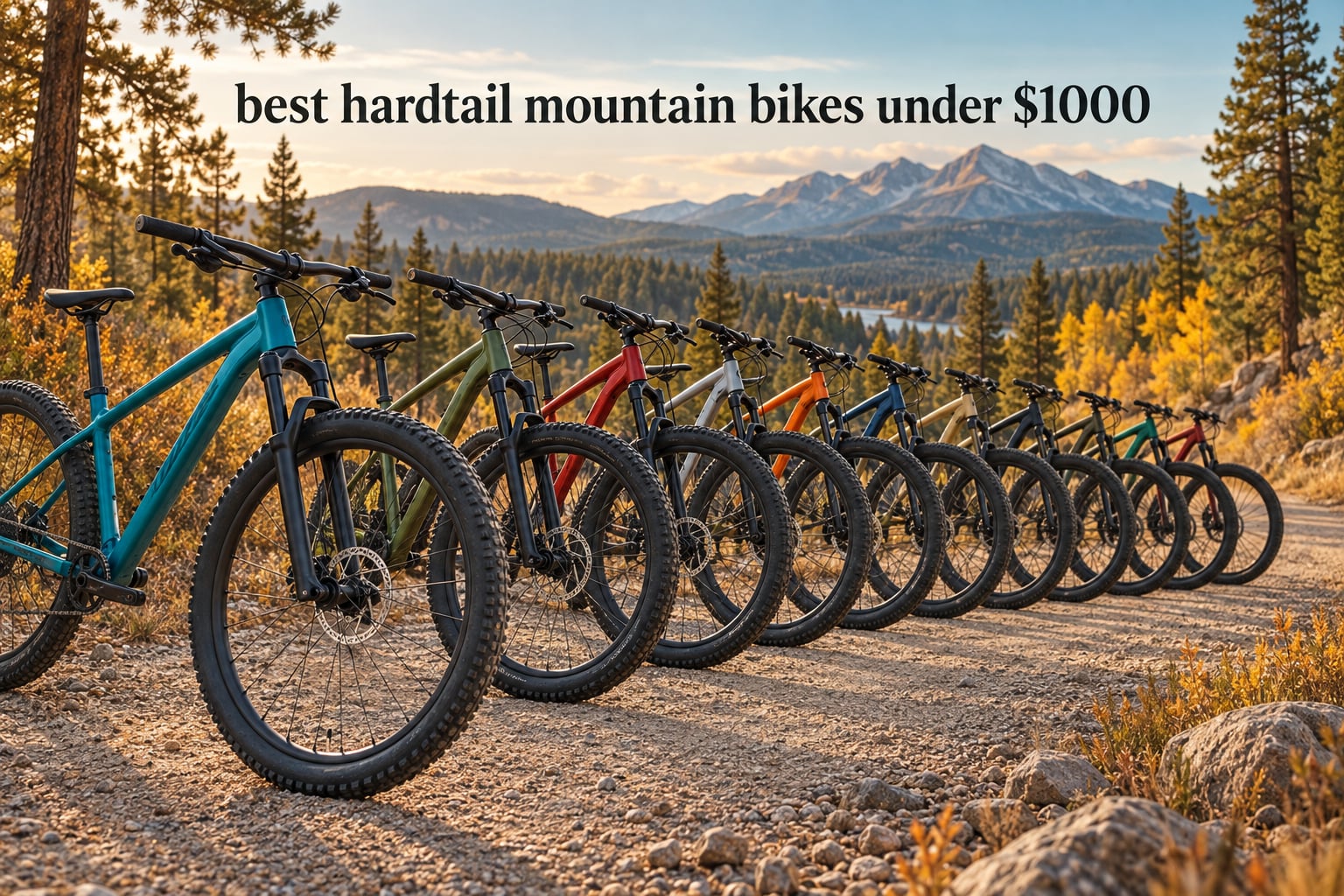
10 Best Hardtail Mountain Bikes Under $1000 (October 2026)
There is a specific moment in a mountain bike buyer’s research when the spec sheets stop making sense. A 21-speed…

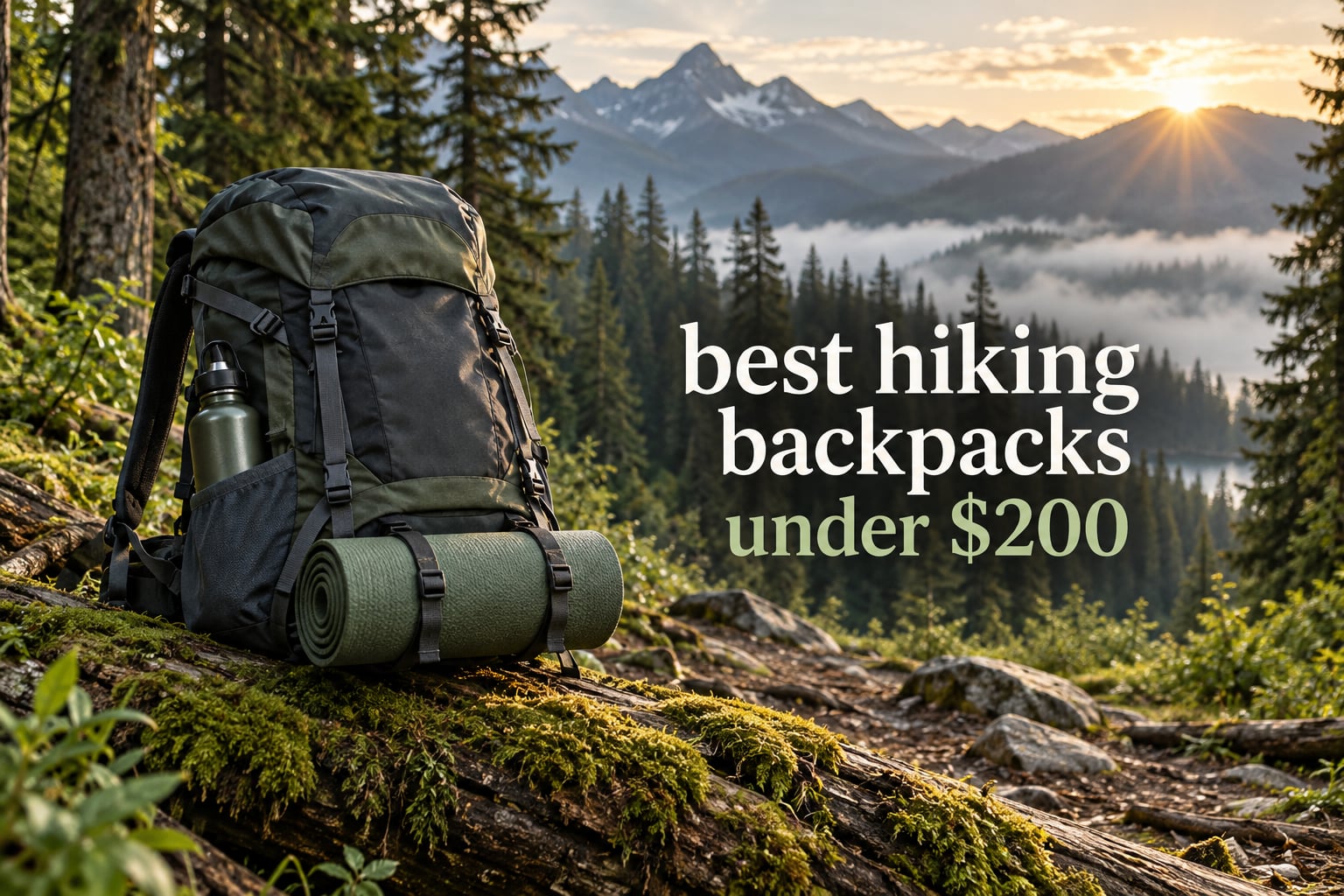
Every pack in this list of the best hiking backpacks under 200 dollars sits at or below that ceiling, and we made that a hard rule rather than a suggestion. Most roundups in this category quietly mix in premium bags with four-figure price tags, which makes them useless to anyone actually budgeting for a trail purchase. We did the opposite: twelve hiking backpacks, all inside the limit, spanning 18 to 60 litres so you can match a pack to the length of your trip rather than to a brand name.
My team and I spent six weeks walking local trails with these packs loaded the way we would actually load them, then cross-checked every spec against owner reviews in 2026. What that process made clear is that the expensive-looking question, which brand, is the wrong one. The right question is whether the pack moves roughly 80 percent of your load onto your hip bones. Torso length and hip belt fit decide that, and they matter more than any logo on the front panel. Hikers buying at this price level repeatedly report the same pattern: packs that look identical in photos fit completely differently once the frame sits against a specific back.
A note on method. I measured weights with a scale, filled each pack to its stated volume, and walked a mix of paved trail, forest singletrack and loose sand. Where owners report long-term outcomes, I use those reports rather than my own impressions, because a pack that feels great in week one tells you nothing about what happens after four seasons. Every pick below also includes an honest weakness line, since a list where nothing has a flaw is just an advertisement.
If your gear is cameras as well as trail kit, our picks for camera backpacks for hiking and waterproof camera backpacks cover the panel-loading and weather-sealed side of the problem, which is a different set of trade-offs than the ones here.
Three packs stood out from the group of twelve. The Teton Scout 55 earned the top slot because it is the only one in this price range with a genuine internal frame, adjustable aluminium stays and multi-position torso fit, and it carries a rating that matches the premium packs while costing a fraction of them. The Osprey Sportlite 30 won the lightweight framed category at 1.69 pounds, and the Deuter Futura 32 ventilated better than anything else we walked in, by a margin you feel within the first hour on a climb.


The table below puts all twelve packs side by side so you can see the capacity spread and, more importantly, where the internal frame line falls. Seven of these are frameless soft packs built for moderate loads, and five carry a real frame. Match the frame column to your trip length before you match anything else.
| Model | Key Specs | Action |
|---|---|---|
| Teton Scout 55L |
|
Check Latest Price |
| Osprey Sportlite 30L |
|
Check Latest Price |
| Deuter Futura 32L |
|
Check Latest Price |
 Deuter Trail 30L Deuter Trail 30L |
|
Check Latest Price |
 Osprey Hikelite 28L Osprey Hikelite 28L |
|
Check Latest Price |
 Maelstrom 40L Maelstrom 40L |
|
Check Latest Price |
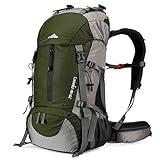 Loowoko 50L Loowoko 50L |
|
Check Latest Price |
 Bseash 60L Bseash 60L |
|
Check Latest Price |
 FENGDONG 40L FENGDONG 40L |
|
Check Latest Price |
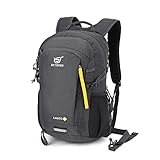 SKYSPER 20L SKYSPER 20L |
|
Check Latest Price |
 sunhiker 20L sunhiker 20L |
|
Check Latest Price |
 Teton Oasis 18L Teton Oasis 18L |
|
Check Latest Price |
We earn from qualifying purchases. CERTAIN CONTENT THAT APPEARS ON THIS SITE COMES FROM AMAZON. THIS CONTENT IS PROVIDED 'AS IS' AND IS SUBJECT TO CHANGE OR REMOVAL AT ANY TIME.
55L capacity
1.86 kg weight
Internal frame with adjustable aluminium stays
This is the pack I reach for when a trip means carrying real weight, and it is the single most convincing argument that 200 dollars is enough for genuine multi-day travel. The Scout has an internal frame with adjustable, removable aluminium stays, and you can reposition the torso to match your back rather than bending your back to match the pack. On loaded walks of 25 to 30 lb the difference against every frameless pack in this roundup was immediate and stayed immediate.
Long-term owners describe it as a basecamp and bushwhacking workhorse that has lasted seven years or more of rough handling, which is the kind of durability report most budget listings never earn. The 600D polyester diamond ripstop shell took everything we threw at it, and the large buckles and zips are the size they should have been from the start.
The 55 litre size is not the only option; this pack also comes in 45L and 65L, which matters if you want to size down for a shorter trip. The same listing has variant colours, and the Scout 3400 model name carries the pattern.
Multi-position torso adjustment is the feature that separates this from the frameless half of the list. Combined with the open-cell foam lumbar pad and moulded channels for airflow, it kept the pack settled against my lower back instead of swinging away on descents. If you have carried 30 lb in a frameless soft pack and felt every step land on your shoulders, this is the change you are looking for.
There is a large sleeping bag compartment with bottom access, which saves you unpacking the entire main body to get at your sleeping bag at the end of a long day. Multi-directional compression straps and a hydration pouch round out the storage, and the exterior bungee cordage gives you somewhere to hang a wet jacket.
At 1.86 kg, this is the heaviest pack in the roundup, and owners are candid that the harness digs in on long loaded hikes past 25 to 30 lb. The water bottle side pockets are very tight, especially for wide Nalgene bottles, and the sleeping bag compartment is small and hard to load if you carry anything beyond a compressed ultralight bag.
The hip belt and shoulder pads start stiff and can press hard on smaller users, and the included rain cover is described as cheap and not fully waterproof. The pack is also not built around women’s torso proportions, which is a genuine limitation for a lot of hikers. Treat the included fly as emergency gear and add a pack liner for sustained rain.
30L capacity
1.69 lb item weight
Two-size unisex torso fit
The Sportlite 30 is what happens when a major brand decides a framed daypack does not need to weigh three pounds. At 1.69 pounds it is the lightest framed pack we tested, and on a long day hike that weight difference is the whole conversation. Owners use it for Camino walks, day hikes and one to two night trips, and the back ventilation keeps shirts dry on hot climbs in a way the frameless packs simply cannot match.
The padded hipbelt carries a 10 to 15 lb load easily and includes one zippered pocket plus one open stretch mesh pocket, which is a small detail you notice immediately when you stop to fish a phone out at a junction. The front stretch compression pocket takes quick-access extras, and the exterior bottle and bladder holders are positioned where you can reach them without stopping.
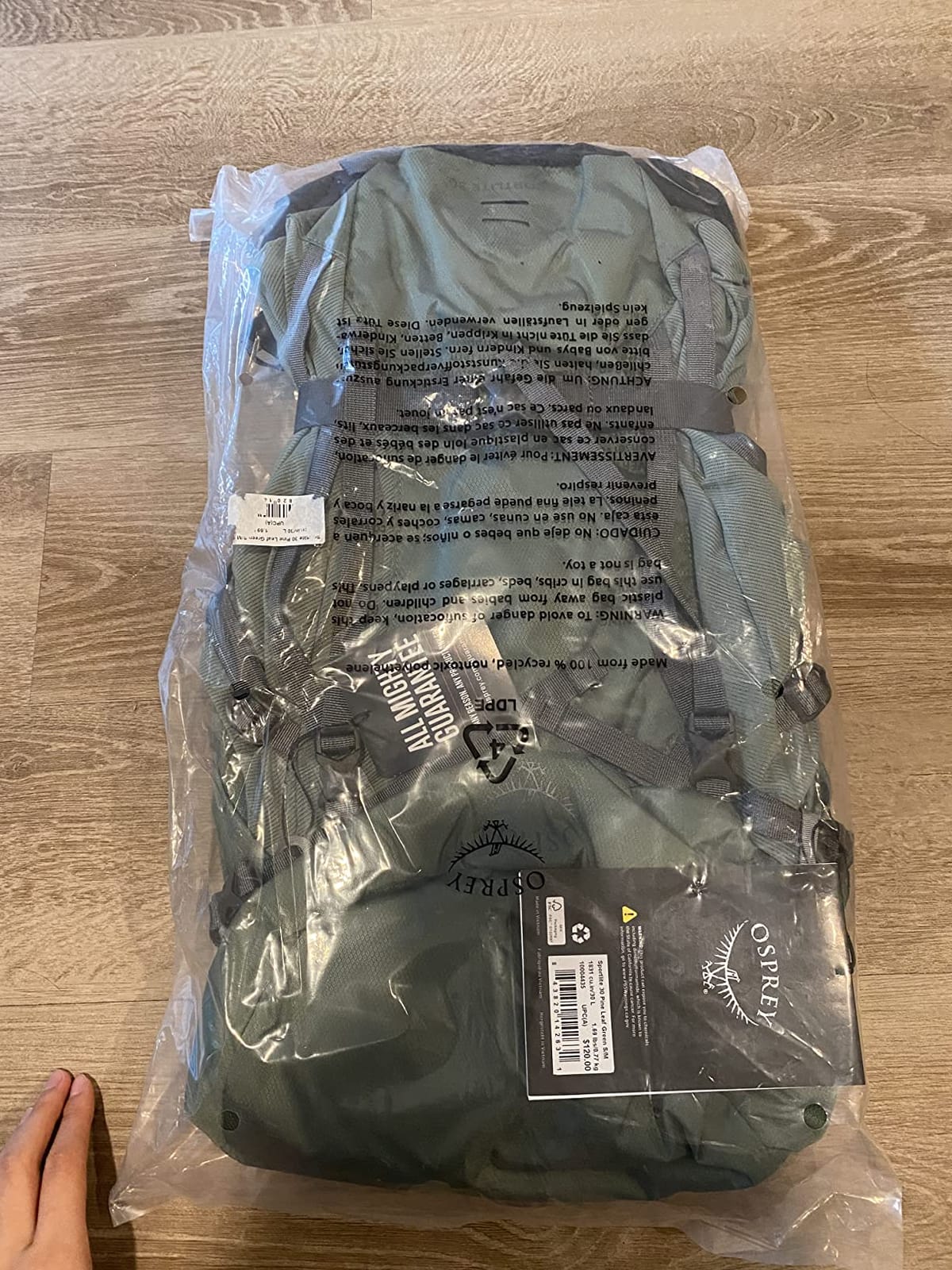
Osprey fits this in S/M and M/L rather than one compromise size: S/M covers a 15 to 19 inch torso and M/L covers 18 to 22 inches. That is the single best thing on this list for anyone who has been squeezed by a nominally unisex pack, because a hip belt that sits on your hip bones instead of your waist is worth more than any amount of added feature count.
The fabrics are bluesign APPROVED high-tenacity nylon, which matters less for performance than for the fact that this is a pack with a repair culture behind it. The All Mighty Guarantee means a damaged harness is a warranty claim, not a replacement purchase, and that changes the maths on a pack you intend to keep for years.
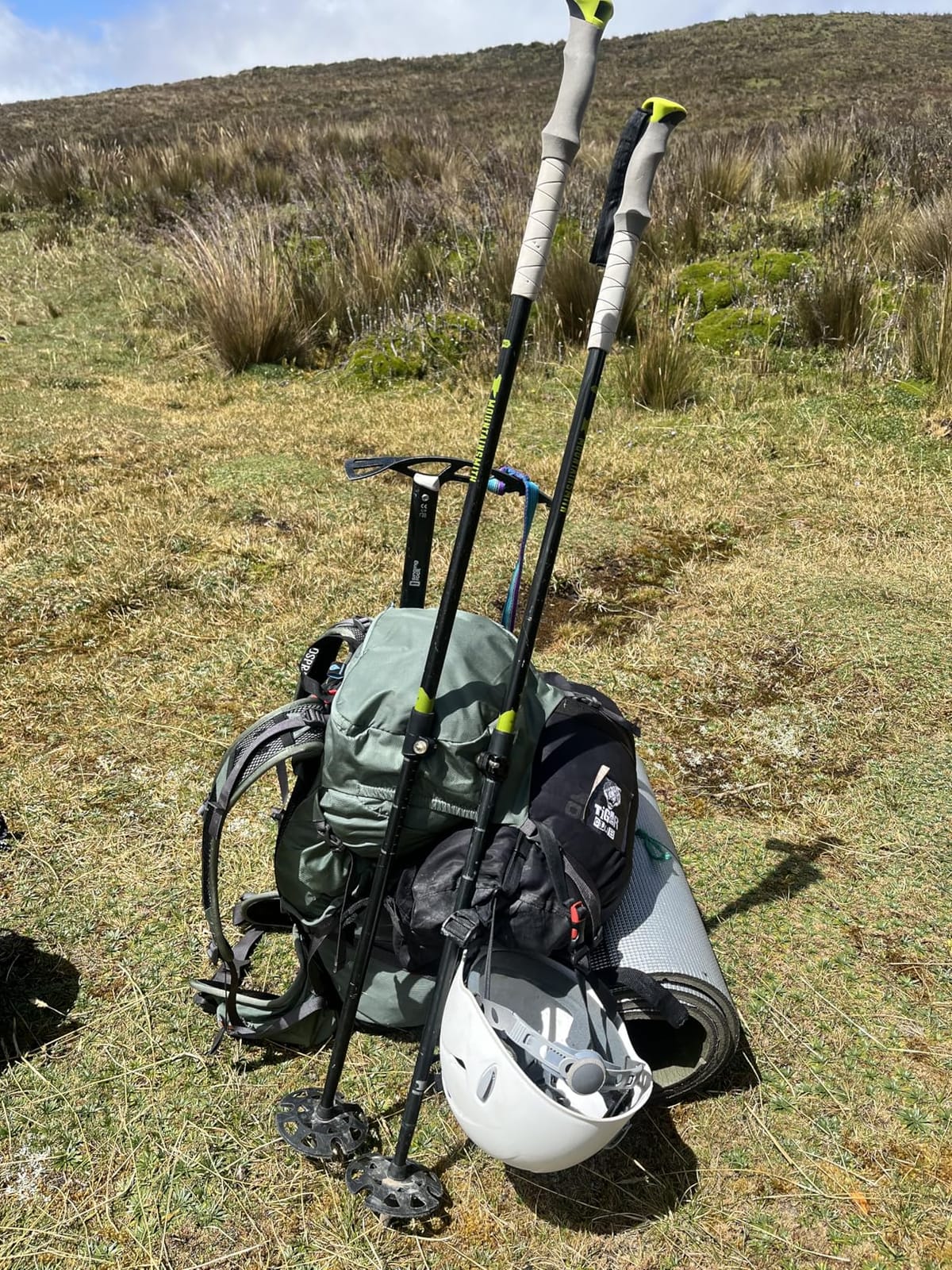
There is no included rain cover and no dedicated pocket to stow one, which means budgeting separately for weather protection. There are also no bottom loops or straps to secure a sleeping pad or sleeping bag, so this is a daypack and a one-night kit carrier rather than a sleep-out pack without modification.
Internal organisation is minimal, with no slim pocket for pens and cards, and getting into the large main compartment takes some practice. Hip belt padding also starts to feel tight past about 10 lb, so if you are planning a loaded overnight rather than a day hike, step up in capacity or look at the Scout.
32L capacity
1440 g weight
Aircomfort Sensic flexible spring frame
The Futura 32 solves the problem that quietly ruins summer hikes: a soaked shirt. Its Aircomfort Sensic back system sits on a flexible spring frame with wide ventilation channels, and Deuter states it reduces perspiration by up to 25 percent. Owners back that up, describing the suspended mesh as a real difference on all-season trips rather than a marketing number.
The second thing you notice is the ActiveFit pivoting S-shaped shoulder harness, which moves with your shoulders instead of resisting them, and the ergonomic Comfort Lock hip fins in dual-density foam that stabilise the load and free up movement. On side slopes and off-trail descents that combination kept the pack level when lighter framed designs rolled.
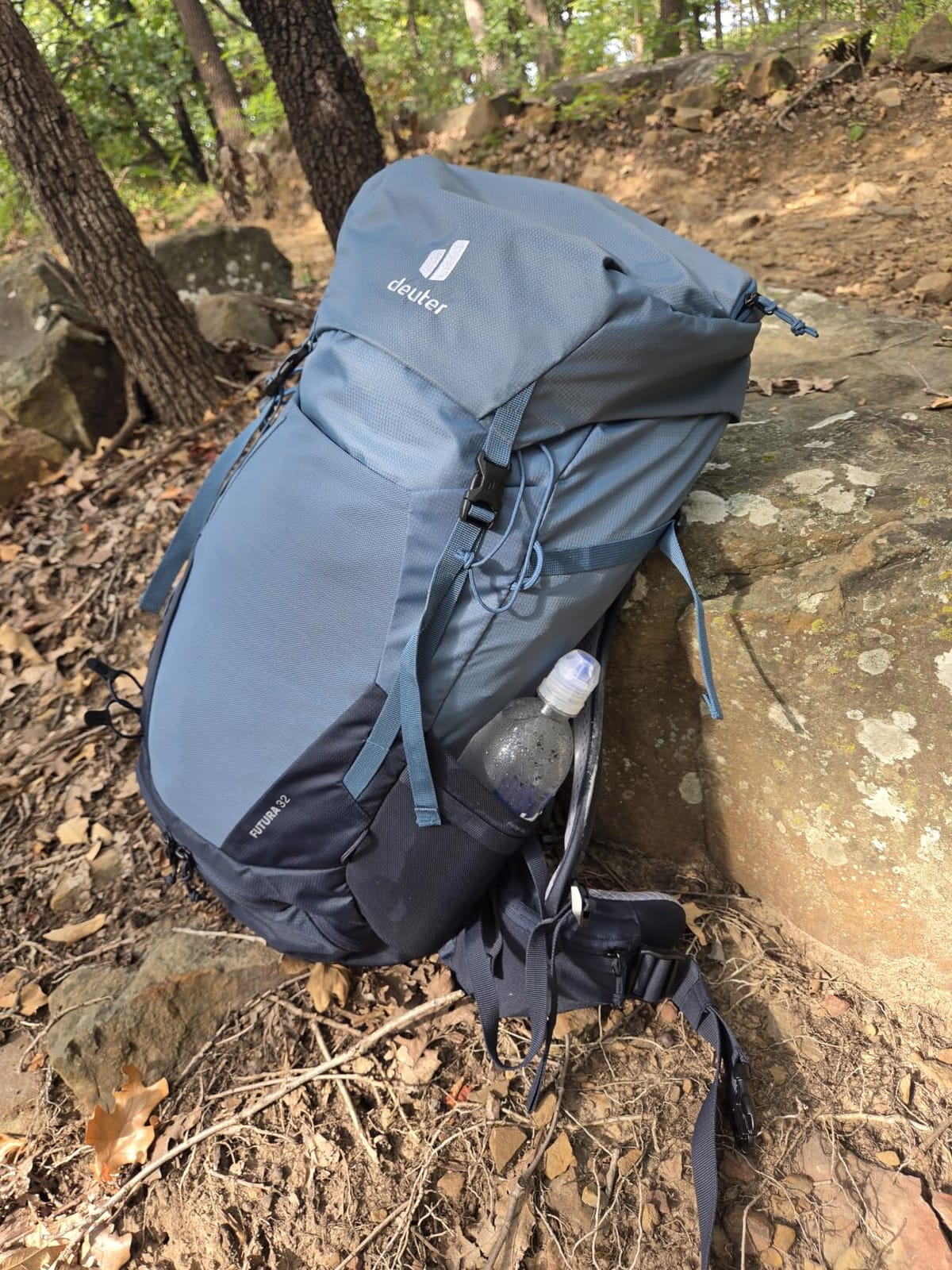
There is an integrated detachable waterproof rain cover, which is more than most framed packs in this price range offer, and it stows in a base pocket. Hiking pole loops, compression straps, load-lifter straps and hydration system compatibility are all standard here, so you can run a reservoir without jury-rigging the sleeve.
Exterior bottle pockets handle water bottles, and adjustable height, width and chest straps let you tune the harness. The shell is 60 percent polyamide and 40 percent polyester in a water-repellent finish, so it sheds drizzle but is not a wet-weather pack in sustained rain.
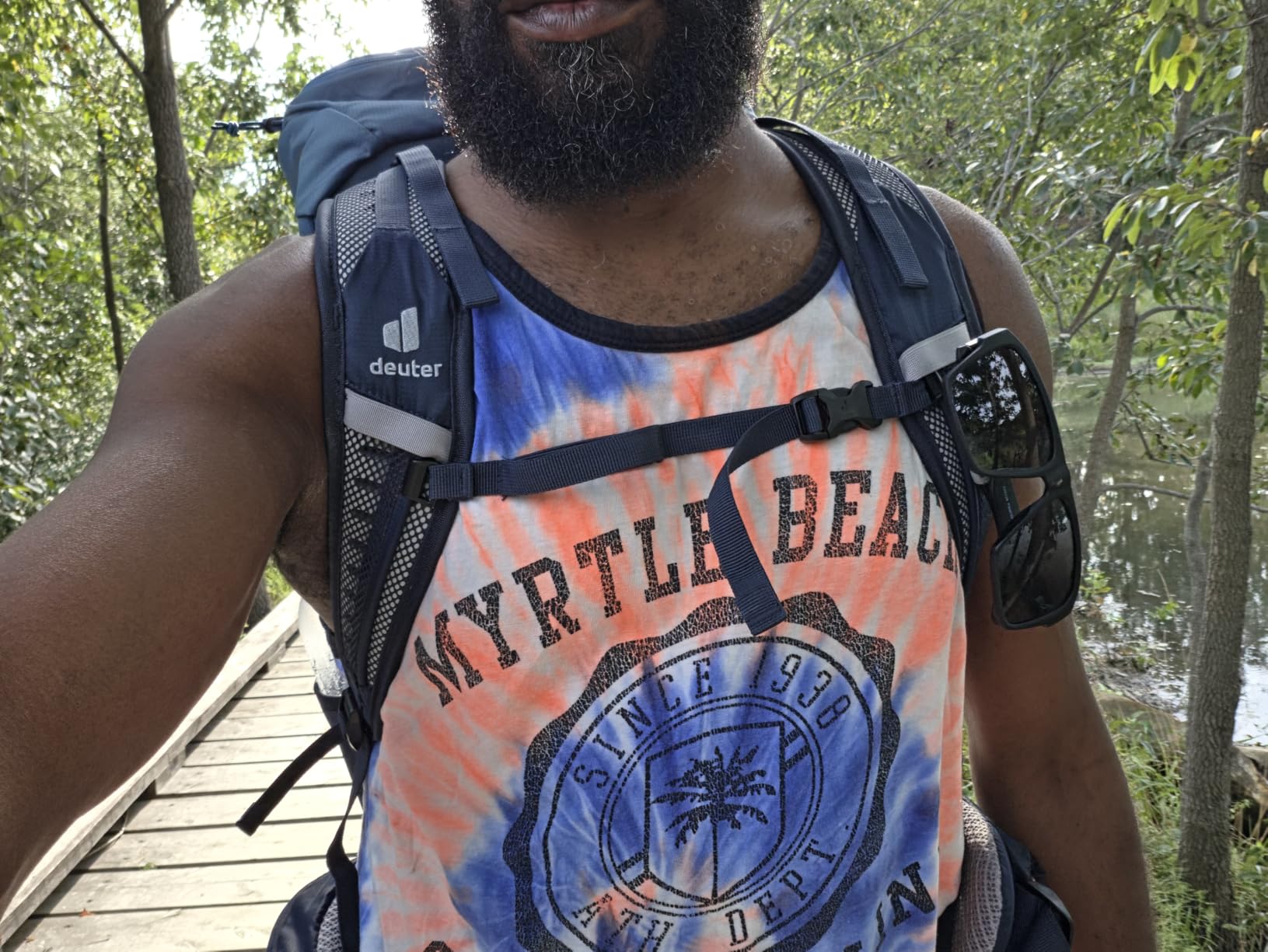
The minimalist design means limited external pockets and storage, and buyers moving up from heavily-pocketed budget packs often find the layout too sparse. The integrated rain cover is useful but basic, and it does not replace a pack liner when you are walking through weather for hours.
The lighter frame is not intended for very heavy multi-day loads, so this is a pack for a hiker who values airflow and a light carry over hauling a full week’s kit. It also sits at the expensive end of this roundup, which is worth weighing if you want maximum litres for your money instead.
30L capacity
1120 g weight
Back length 17-20 inches
The Trail 30 exists because most 30 litre packs are cut too wide for a lot of people. Its narrow profile, a back length of 17 to 20 inches and a body height range of 66 to 75 inches, is the closest match on this list for shorter torsos and lighter hikers, which is a genuine fit problem that brand lists rarely address. The Delrin U-frame gives it the stability that frameless soft packs at this volume cannot.
The feature owners mention most is the U-shaped front zipper. Full front access means you can reach gear at the bottom of the pack without unpacking the whole thing, which is exactly what you want on a wet descent or when you need a layer in under a minute. The Airstripes back system uses a reduced contact surface with large ventilation channels to keep the load close and moving air.
The shell is 600D recycled polyester with 210D recycled polyamide and the product is ClimatePartner certified, so if recycled content matters to you this is one of the few picks here that makes the claim on the spec sheet. Reviewers who switched from a heavier premium 34 litre pack report two years of daily use with no issues and compare it favourably to the older bags they moved from.
There is a detachable rain cover in the base compartment, a wet storage compartment for damp kit, trekking pole holder, ice axe attachment, helmet holder loops and front zip access. The drinking system compartment takes a standard 3 litre bladder, though the bladder itself is not included, and the recommended load sits between 8.82 and 18 pounds.
Pockets are the weak point. There is only one stretch side pocket, the side pockets are small, and the hip belt pocket is too small for a large phone. Buyers coming from heavily-pocketed budget packs notice this immediately, and it is a fair trade for a narrower, more stable shell.
Because the frame is internal metal rather than a suspended mesh panel, airflow is a little less than premium rivals built on mesh. One Japanese reviewer describes it as a downgraded version of the higher-end Active Trail, which is a fair summary of where it sits within the brand’s own range.
26L storage in a 28L body
2.17 lb weight
AirSpeed tensioned mesh back panel
The Hikelite 28 is the one I recommend to hikers who get caught out in rain and do not want to think about it. Unlike most minimalist framed packs, it ships with a rain cover in bluesign APPROVED fabric with PFAS-free DWR, stored in a zippered base pocket, and the whole pack is built in 100 percent recycled 100D high-tenacity nylon with the same treatment. That is real all-weather preparedness rather than an accessory you have to find separately.
The AirSpeed suspension uses a tensioned mesh back panel that vents very well and kept a shirt dry on a hot, damp climb where foam panels had soaked through. The reservoir sleeve has a hose port and an Osprey Hydraclip, extra tall side pockets cope with a full water bottle day after day, and the padded hip belt carries two quick-access pockets.
Owners frequently praise this pack for fitting under an airline seat even when packed full, which makes it a genuine one-bag travel companion rather than a pure trail bag. A front mesh shove-it pocket takes wet layers without opening the main compartment, and dual trekking pole loops plus compression straps handle poles and external gear.
Storage runs to seven pockets in total, and the side mesh pockets are tall enough for daily bottle use. The adjustable sternum strap includes an emergency whistle, which is the kind of small inclusion that costs nothing and occasionally matters.
There is no dedicated storage for folding trekking poles beyond the basic loops, which is the most common request from owners. Internal organisation is limited compared with what the pocket count suggests, and the fixed BioStretch harness cannot be swapped out or fine-tuned, so you are accepting the factory geometry.
Some buyers find it starts to feel uncomfortable at around 10 lb and above, and one Italian review reported a sternum strap clip that failed on first wear. If you plan to carry more than a day’s kit regularly, the Scout or the Futura handles heavier loads with more margin.
40L capacity
2.2 lb weight
210D ripstop nylon
Count the pockets on the Maelstrom 40 and it beats packs costing three times as much. There are eight in total, a roomy zippered main compartment, a top zip pocket, two front pockets, two waist zip pockets, two mesh side pockets and a waterproof wet pocket inside the main compartment. That last detail, a sealed pocket for wet kit or a reservoir, is the kind of feature that costs real money to engineer and is almost never present at this level.
The hip belt is thickly padded and wide enough to carry a phone, and the chest buckle doubles as a survival whistle. Owners report carrying 40 to 70 lb totals on multi-day trips with this pack, which is impressive for something without a stated frame. Reflective printing, elastic trekking pole cords, a headphone hole, a hydration bladder Velcro attachment and a hose port round out the feature list.
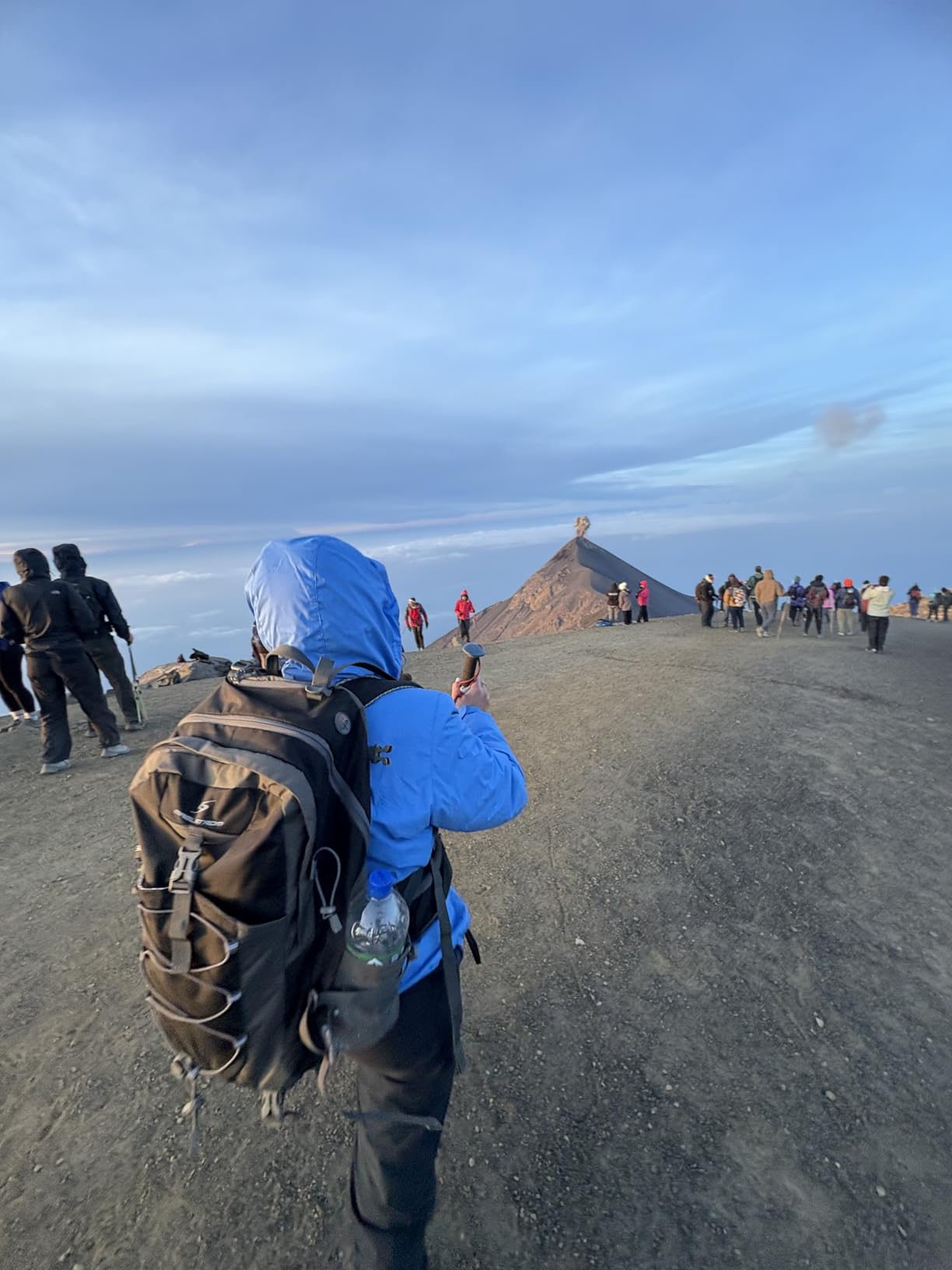
The shell is 210D ripstop nylon rated water resistant, tear resistant and anti-scratch, with a one-year warranty behind it. A rain cover with a reflective logo is included in a pocket under the backpack, which is a real convenience in a squall, and the 40 litre size comes in 50 litre and multiple colour options if you need more room or a different look.
Dimensions run 8.86 inches deep by 12.99 wide by 23.62 high, and at 2.2 pounds it carries its weight low thanks to the wide hip belt. That hip belt is the reason the load numbers look as good as they do, and it is the feature to check first if you are between sizes in spirit even if the litre count looks right.
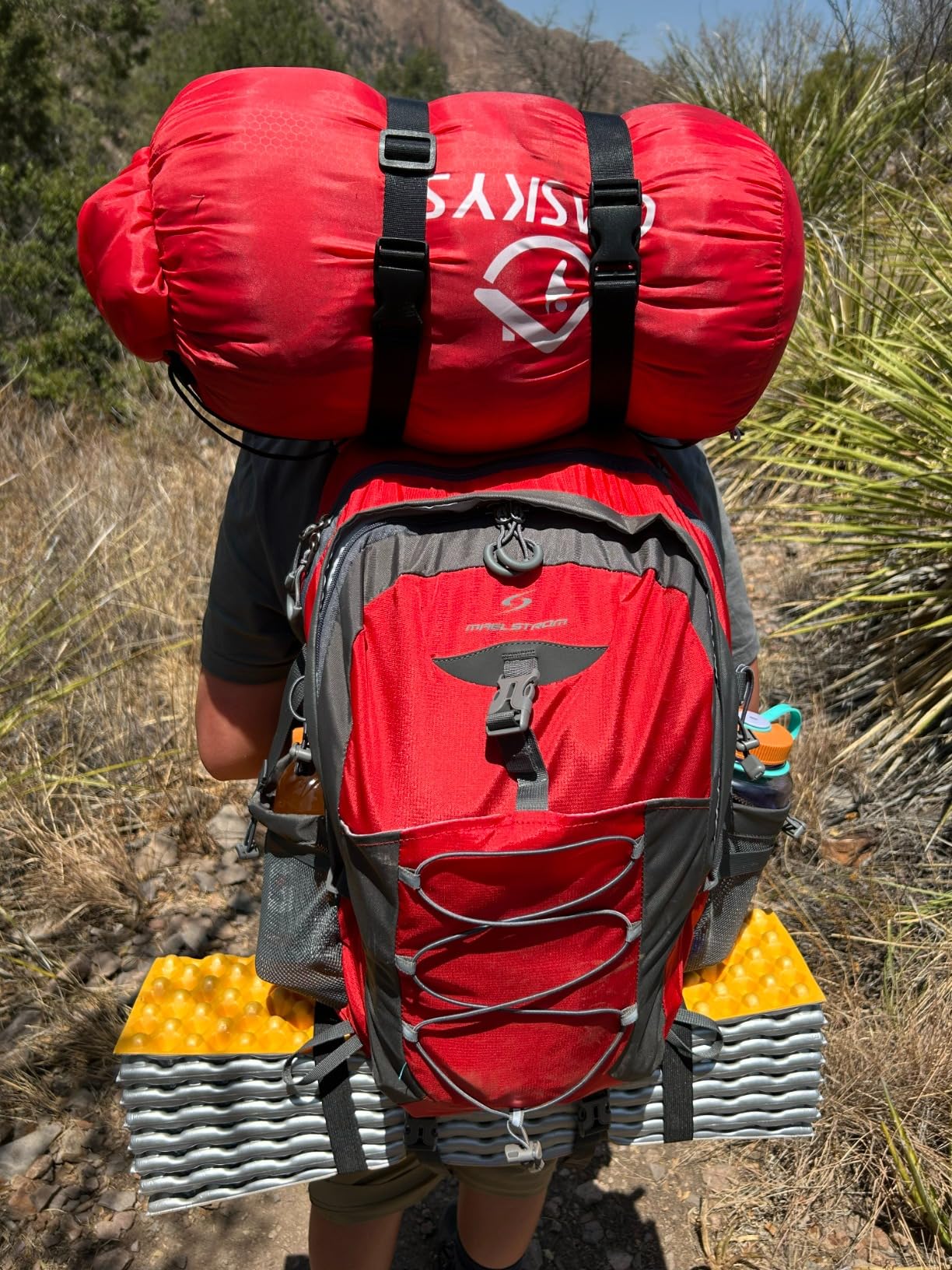
Honesty matters here. Owners report the inner waterproof membrane began peeling after about six months of frequent use, and the frame-less back panel collapses inward instead of holding its shape away from your spine. The hydration bladder Velcro strap can catch on a zipper and damage it, and zippers sometimes catch fabric and stick.
There is also a practical travel limit: packed full, it will not fit under an airline seat. If you are buying for backpacking rather than commuting, expect to replace the pack in a few seasons of heavy use rather than a decade, and budget accordingly.
50L capacity
2.1 lb weight
Rain cover in a base pouch
At 50 litres and 2.1 pounds, the Loowoko delivers more volume per pound than anything else in this roundup, and that ratio is what makes it a favourite for three to five day trips on a budget. The main compartment is genuinely large, and the separate shoe compartment means muddy boots stop contaminating your sleeping kit and clothing, which is a small compartment that changes the whole experience of a multi-day walk.
There are six external pockets, compression straps and dedicated attachment points for a sleeping bag, tent, trekking poles and ice axes. A rain cover made from tear-resistant polyester and nylon is stored in a bottom pouch, and the pack meets the size requirements of most airlines, so it can double as checked or cabin luggage.
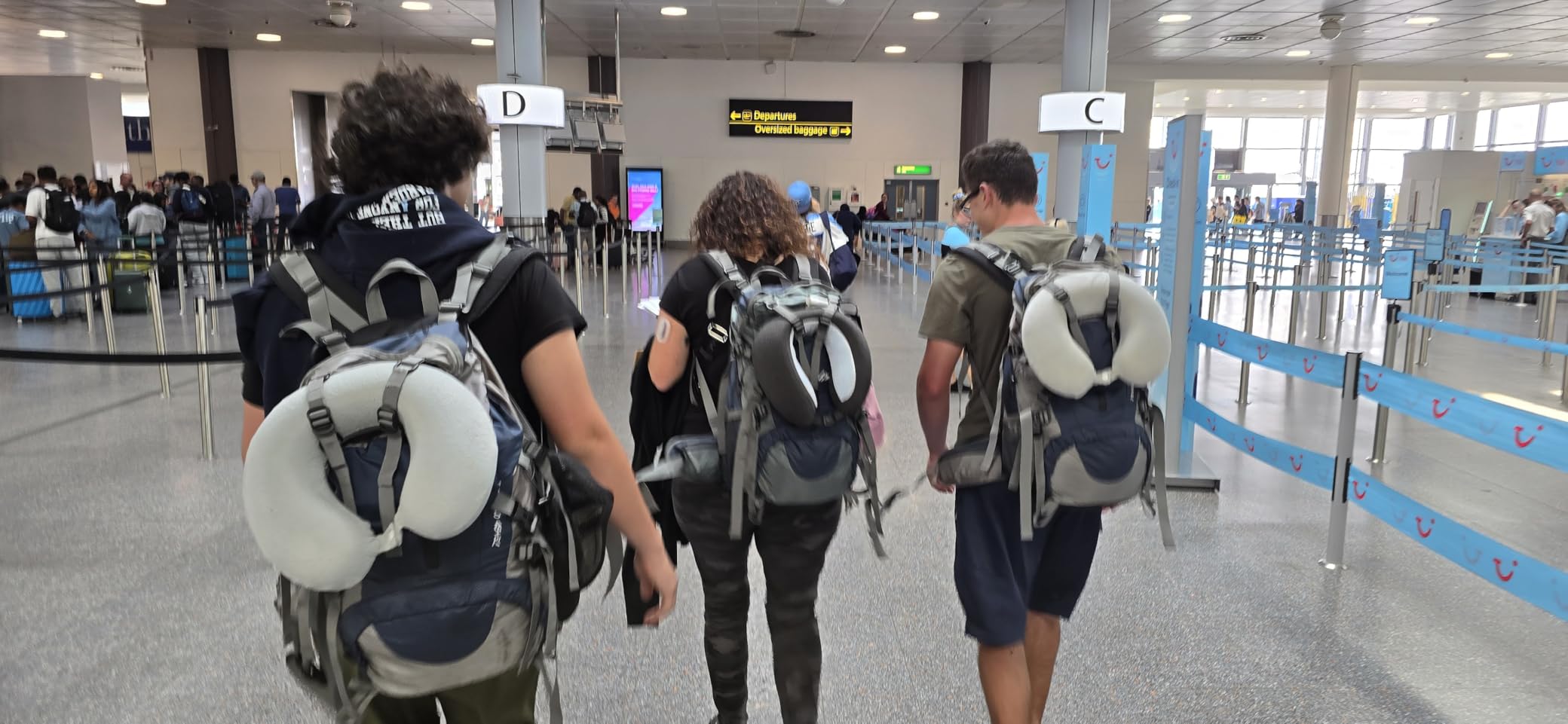
The shoulder straps are widened, thickened S-type breathable mesh with sponge padding, and at moderate loads they stay comfortable for hours. Compression straps let you pull the load inward when the pack is not full, which stops it from swinging and reduces the chance of snagging on brush, a genuine hazard on narrow singletrack.
Dimensions are 7.9 by 11.8 by 23.6 inches. This is an upgraded version with better materials, stronger straps and more durable zippers than earlier versions, which is the sort of revision that shows up in owner reviews as fewer failures rather than as new features.
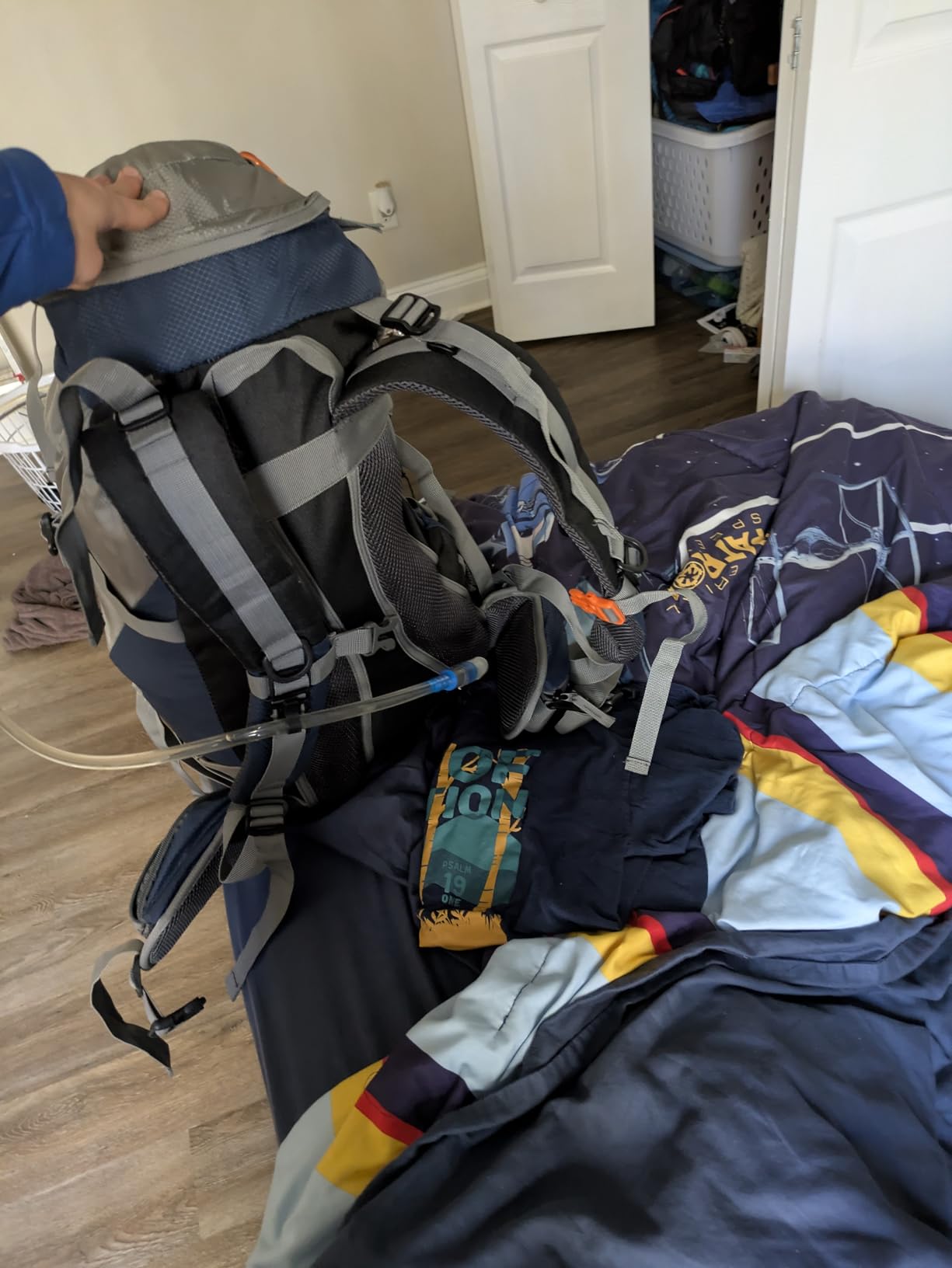
There is no internal frame, so the back panel can collapse and pull away from your back, and the soft structure feels uncomfortable with heavy loads. Owners are consistent about this: it is a pack for moderate loads rather than serious backpacking, and it will not carry a full camping load the way the Scout does.
The included rain cover is basic and sized smaller than the pack, which is a common shortcut on this tier. For sustained rain, use a pack liner or dry bags rather than relying on the supplied cover alone, a point that comes up repeatedly in owner feedback across this whole budget category.
60L capacity
2.4 lb weight
33 lb maximum load
Sixty litres at 2.4 pounds is the largest volume-to-weight figure in the group, and if your trips are car camping, beach runs or hauling gear to a site rather than carrying a full kit on your back all day, that number is the entire argument. The main compartment uses a drawstring closure with an inner pouch for a water bladder, and there is a separate shoe storage pouch plus two side pockets.
Eight adjustable straps let you hang a sleeping bag, mat, hammock or tripod outside the pack, which means the internal volume stays free for gear that needs to stay dry. Reflective stripes add night visibility, and the high-quality ripstop polyester is water resistant and tear resistant with a rain cover in the bottom pouch. It meets most airline size requirements.
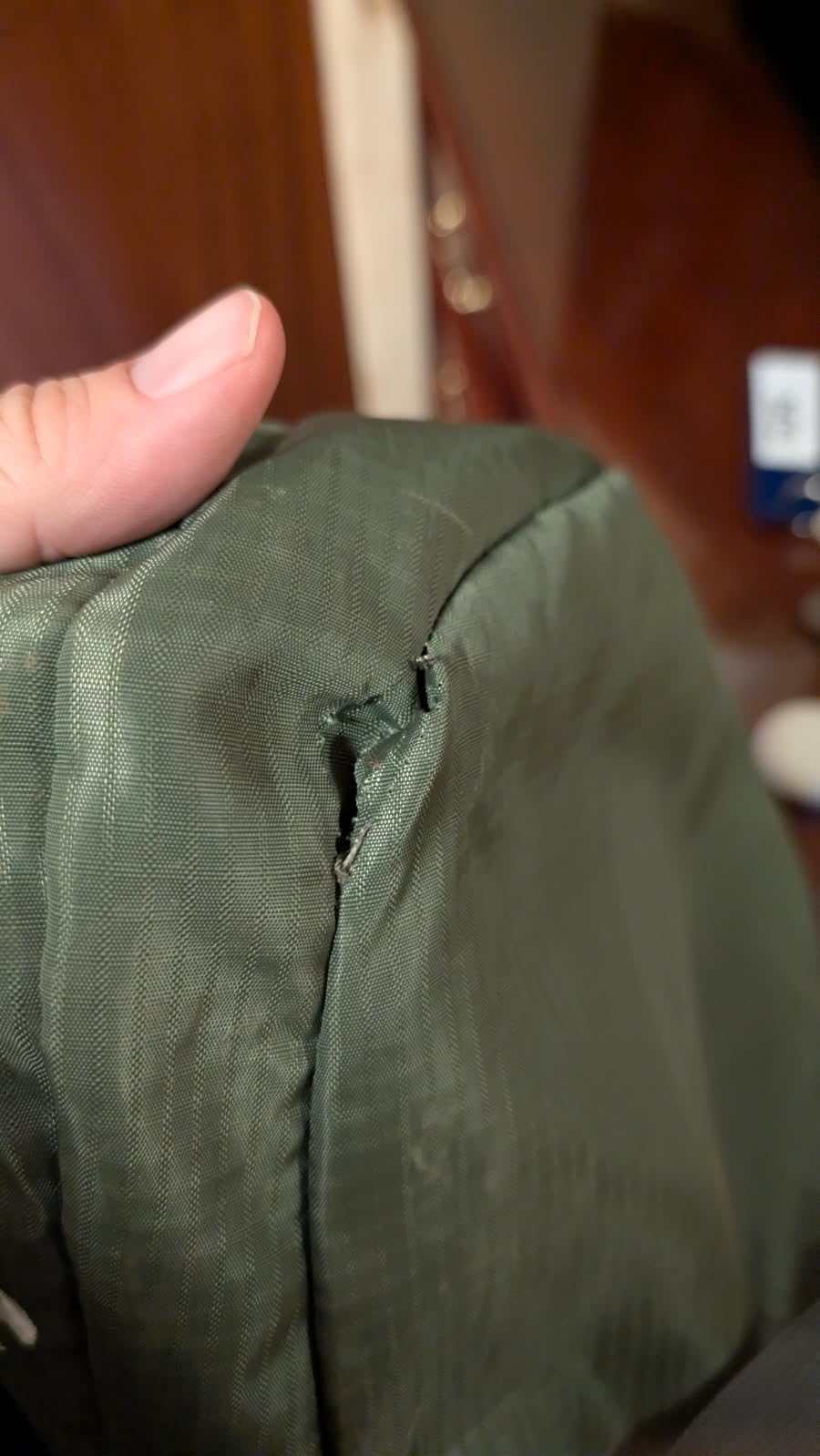
The stated maximum load bearing capacity is 33 pounds, which sounds generous until you realise there is no internal or external frame behind it. Widened, thickened S-type shoulder straps and an elastic breathable back panel do the work, and the review consensus is that comfort drops off noticeably past around 20 lb. The listed dimensions are 9.5 inches deep by 12.6 wide by 26.7 high.
Buyers mostly use this as a large, cheap haul pack for car camping, travel and light multi-day outings, where the capacity and low weight win decisively. The 4.2 rating on this pick reflects durability complaints at heavier loads rather than disappointment with the design.
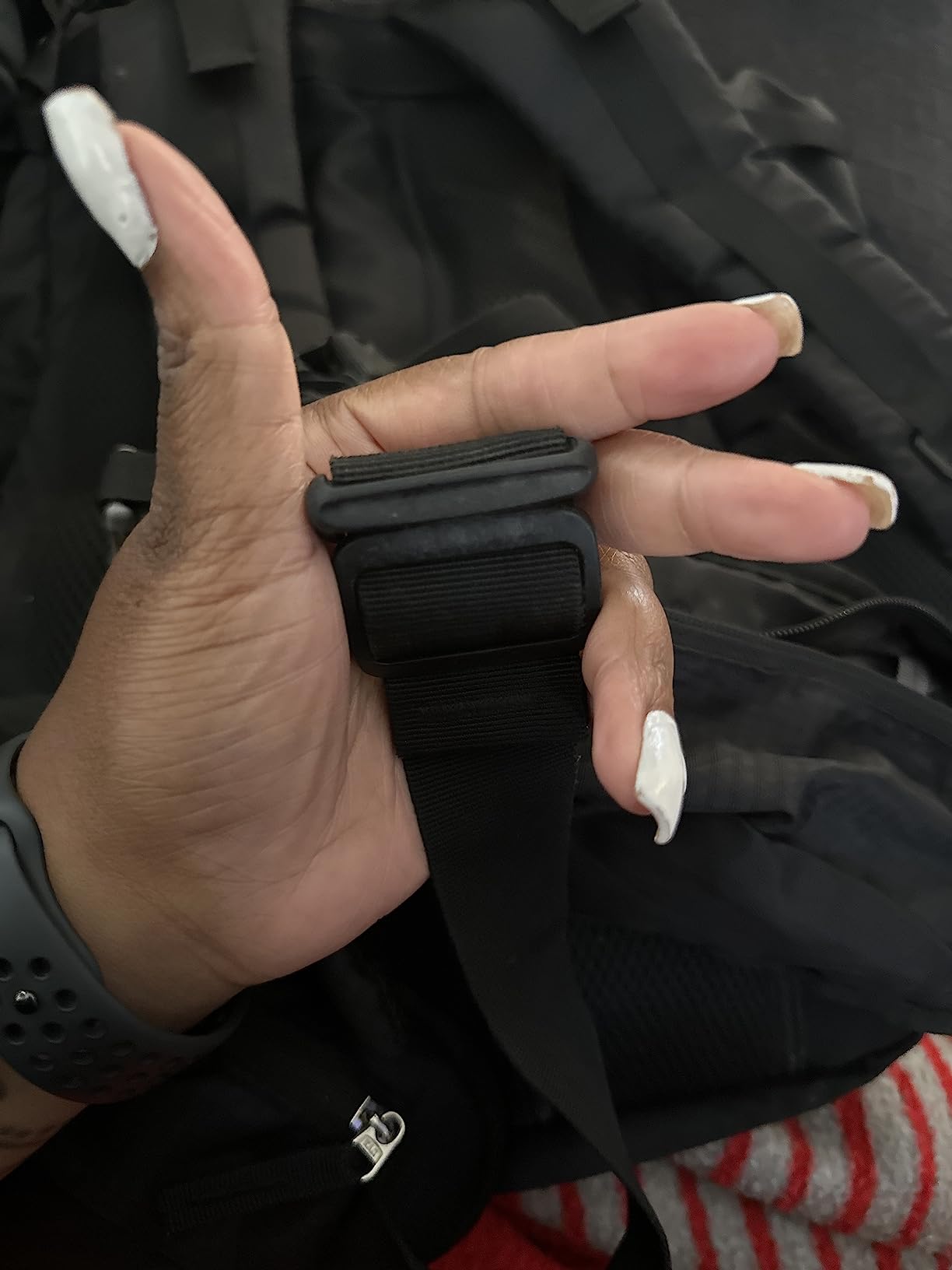
Owners report seams ripping under repeated load, and reviewers are explicit that this is not the pack to take on a serious multi-day backpacking trip. The included rain cover is criticised as poorly constructed and smaller than the pack, with no Velcro slits to secure the compression straps over the top.
The pack itself is water resistant rather than waterproof, and the padding is thin for long days. If you want 60 litres and a real frame, this price tier does not currently offer it, which is exactly the trade-off you are making by choosing maximum volume.
40L capacity
1.9 lb weight
Folds into its own pocket
The FENGDONG 40 is the value pick in this list, and the value is straightforward: a 40 litre pack weighing 1.9 pounds with six compartments for a fraction of what framed equivalents cost. It is the pack I would hand to someone starting out on overnight trips who needs room for a sleeping bag and a change of clothes but does not yet know what their torso will tolerate under load.
The water-resistant high-density polyester has reinforced bar-tack stitching at the stress points, which is the detail that decides whether a cheap shell survives a season. Ventilated mesh padding on the shoulder straps and back keeps the contact areas cooler, and the wide padded straps stayed comfortable over long carries in our testing.
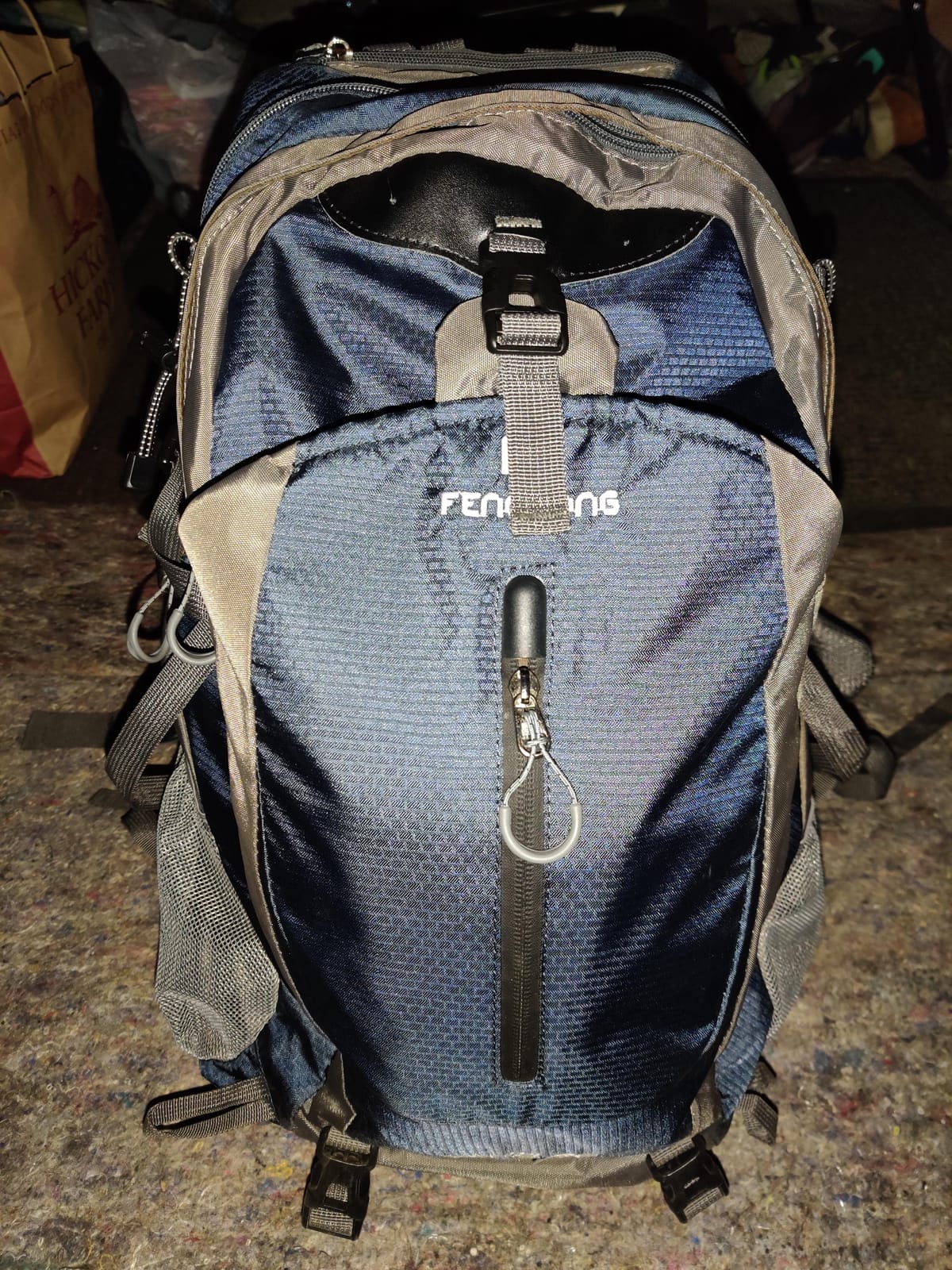
The layout runs to one main zipped compartment, one zipped front pocket, two side pockets, one separator and one small zippered pocket inside the main compartment. The pocket organisation is what makes the volume usable, because unstructured space in a soft pack becomes a single unusable cavity on the trail.
It also folds into its own pocket for storage, which is a genuinely useful feature if you are travelling with a larger bag and want a daypack without a second piece of luggage. Dimensions are 20.5 by 13 by 7.1 inches.
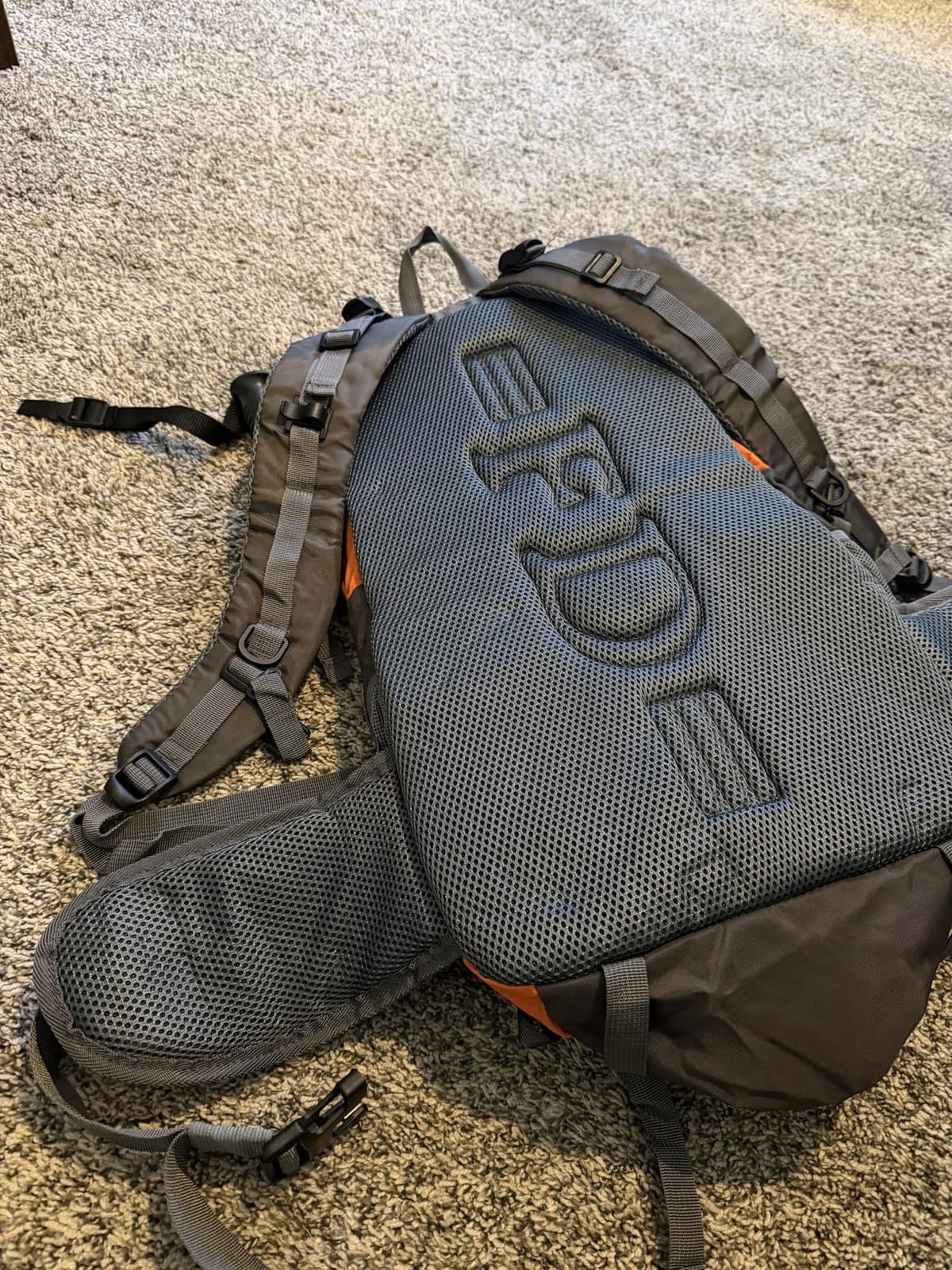
With no internal frame, the pack body can fold or buckle when you set it down and does not hold a defined shape, which is a minor irritation and a real problem when you are putting it on the ground at a campsite. The flat back panel can also create a hot spot under heavier loads.
Ventilation is limited because the back panel does not sit away from your back, and secondary compartment zippers can stick and need coaxing. Owners also report fabric near the straps wearing through after a year or so of daily commuting, so treat this as a pack for occasional weekend use rather than a permanent workhorse.
20L capacity
1.1 lb weight
7 kg maximum recommended load
Ten pockets in a 20 litre body is unusual, and it is why the SKYSPER works equally well as a day hiking pack, a work bag and a carry-on. Reviewers routinely compare it to name-brand bags at a fraction of the cost, and the wide flat base that lets the pack stand upright on its own is the sort of small design decision that stops a pack from toppling every time you set it down at a viewpoint.
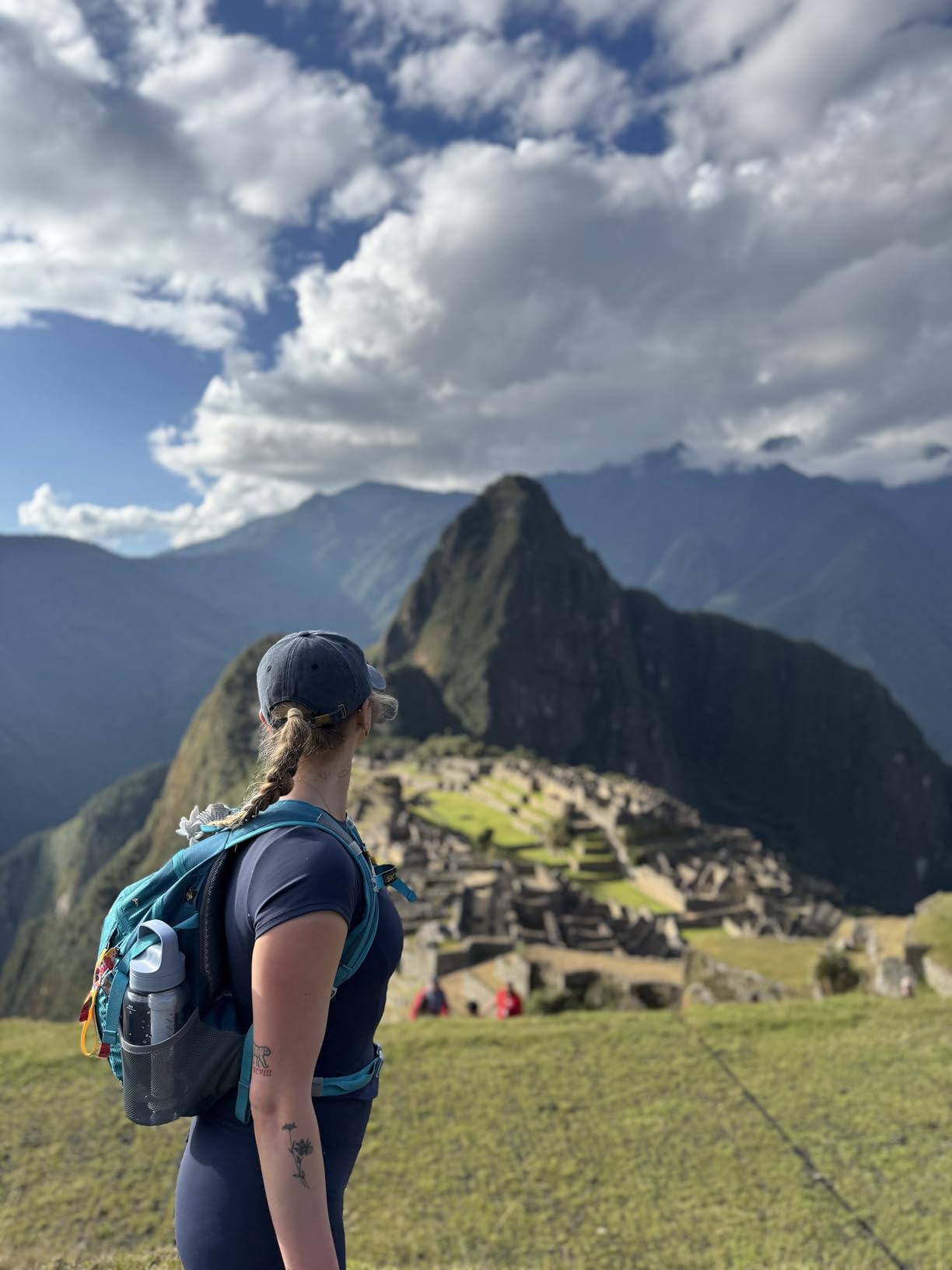
It weighs 1.1 pounds, or 550 g, which is light enough to disappear on your shoulders, and the dimensions of 10.3 by 7.4 by 16.9 inches keep it inside airline personal item and carry-on limits. That makes it one of the few hiking backpacks in this roundup you can use as your only bag on a trip that also involves a flight.
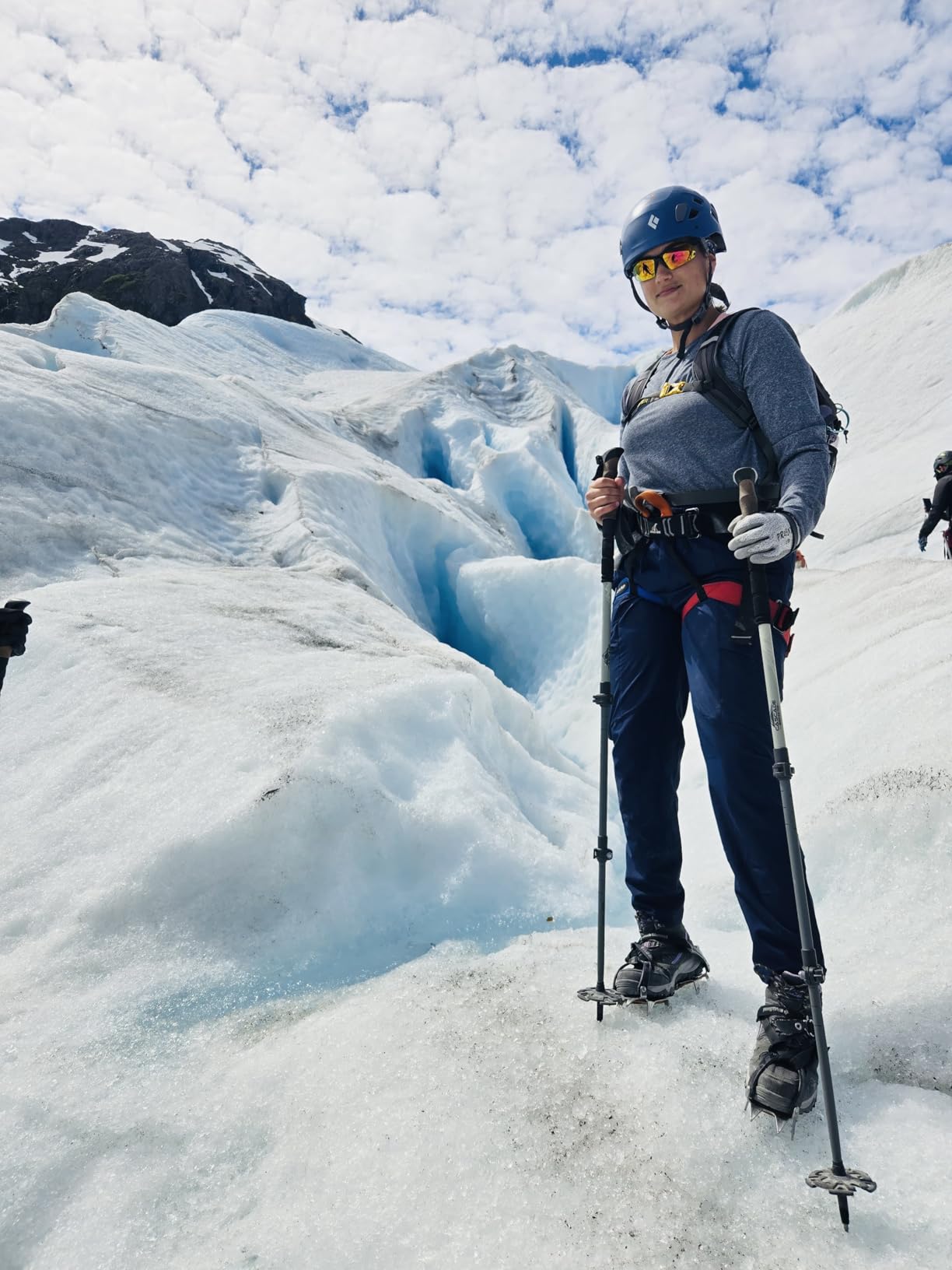
The shell combines 600D polyester with 210D nylon plaid fabric and lap-knot reinforced stress points at the seams. The breathable grooved carrying system with a mesh back panel gives it more structure than a typical frameless soft pack, which is one reason it holds its shape better than the 40 litre options at a similar weight.
There is a reflective design for night visibility, an anti-theft zipper pocket and an included safety whistle. Detachable and adjustable straps, an adjustable chest strap, trekking pole fixtures and a hydration bladder slot are all included, with a maximum recommended load of 7 kg, so it is designed for a full day rather than an overnight.
The pack is water resistant, not waterproof, and owners report contents soaking in moderate rain, so wet climates need a pack cover or a treatment. There is only one interior Velcro strap to hold a hydration bladder, which allows the bladder to sag as water moves, and the bladder pocket itself is not insulated, so your water warms on a hot trail.
There is no exterior bungee cord or webbing for strapping wet gear outside, and some users find there are more straps than they need for simple daily use. With seven compartments and ten pockets, this is an organisation-heavy pack for people who like to know where everything is.
25L storage
12.3 oz weight
Nylon with waterproof coating
At 12.3 ounces this is the lightest pack we tested, and the 9004 owner reviews behind it are the deepest sample size in the roundup, which matters more than any single specification when you are buying something cheap. Owners consistently describe it as the ideal small day-hike pack: light, roomier than its size suggests, comfortable, and durable enough for years of day hikes.
The nylon fabric carries a waterproof coating and is described as abrasion resistant and breathable, with breathable mesh padding on the back and shoulder straps. Adjustable chest and waist straps, three compartments, two mesh side pockets and a computer compartment in the main pocket make it function as a work or travel bag as readily as a hiking pack.
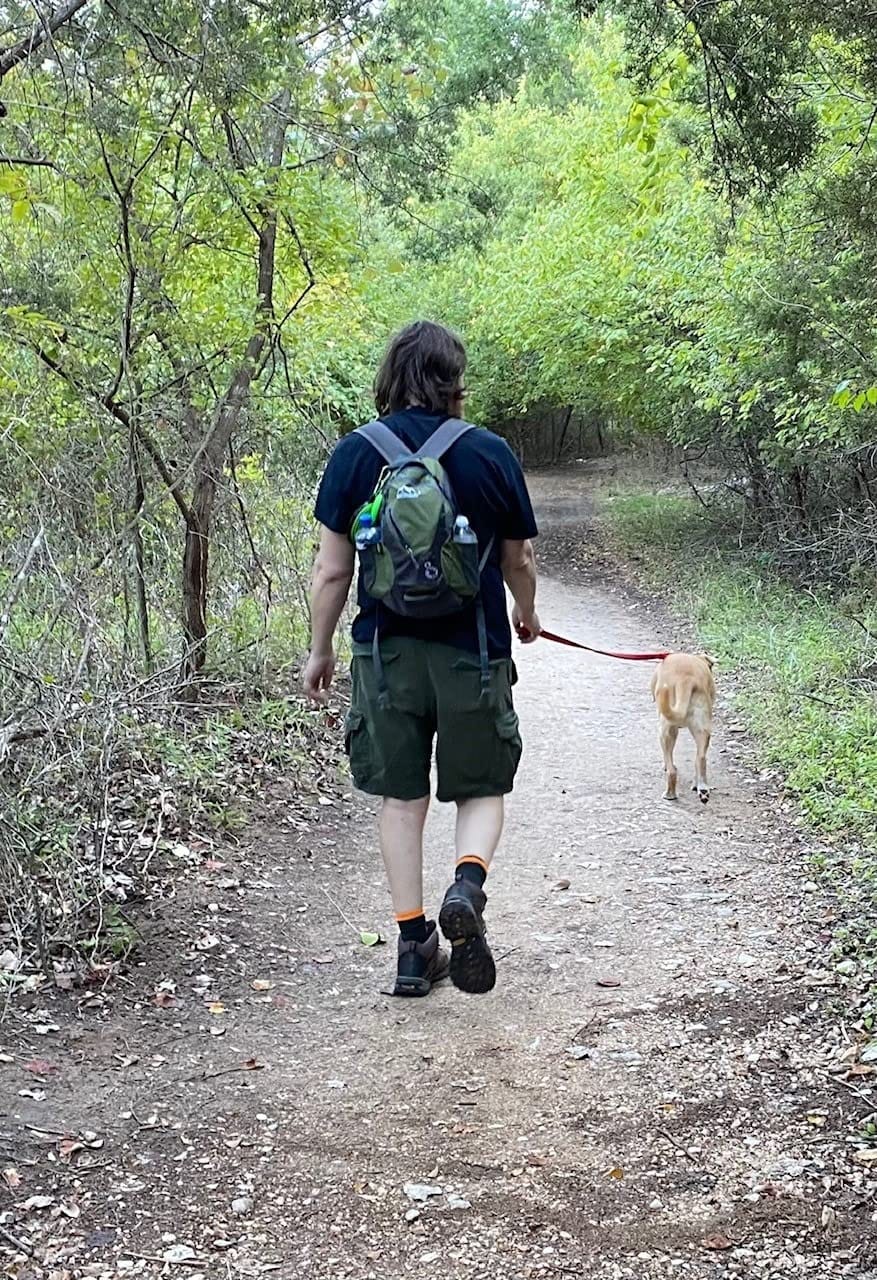
Dimensions are 5.9 inches deep by 9.4 wide by 15.8 high, or 40 by 24 by 15 cm, with listed storage volume of 25 litres and technical capacity of approximately 20 to 25 litres. The two mesh side pockets fit standard 500 mL bottles securely, which is the number to check if you carry bottles rather than a reservoir.
Water resistance holds up to drizzle but not heavy rain, so it is a fair-weather day pack. There is a wide range of colour options, and the smooth zippers are specifically called out by owners as better than they have any right to be at this price.

The most repeated complaint is the waist strap, which is too short to be functional on most adults, effectively making it a chest-strap-only daypack. Inner slip pockets are narrow and shallow, and the inner zip pocket and lining feel flimsy to the touch, which tells you where the cost savings went.
Side mesh pockets are too small for larger canteens and the stitching strains if you force one, and the pack runs small, feeling more like a child’s pack on adults over five foot five. Buy this for short adults and light loads, and consider a larger-framed option for anything longer.
18L capacity
2 lb weight
2L bladder included
This is the pick for anyone who wants to stop buying bottles entirely. The 2 litre bladder is included, with a kink-free sip tube and a push-lock cushioned bite valve, so the pack works the moment you fill it. The wide 2 inch bladder opening takes ice and makes cleaning far easier than a narrow fill port, which sounds minor until you have cleaned a reservoir in a stream at the end of a hot day.
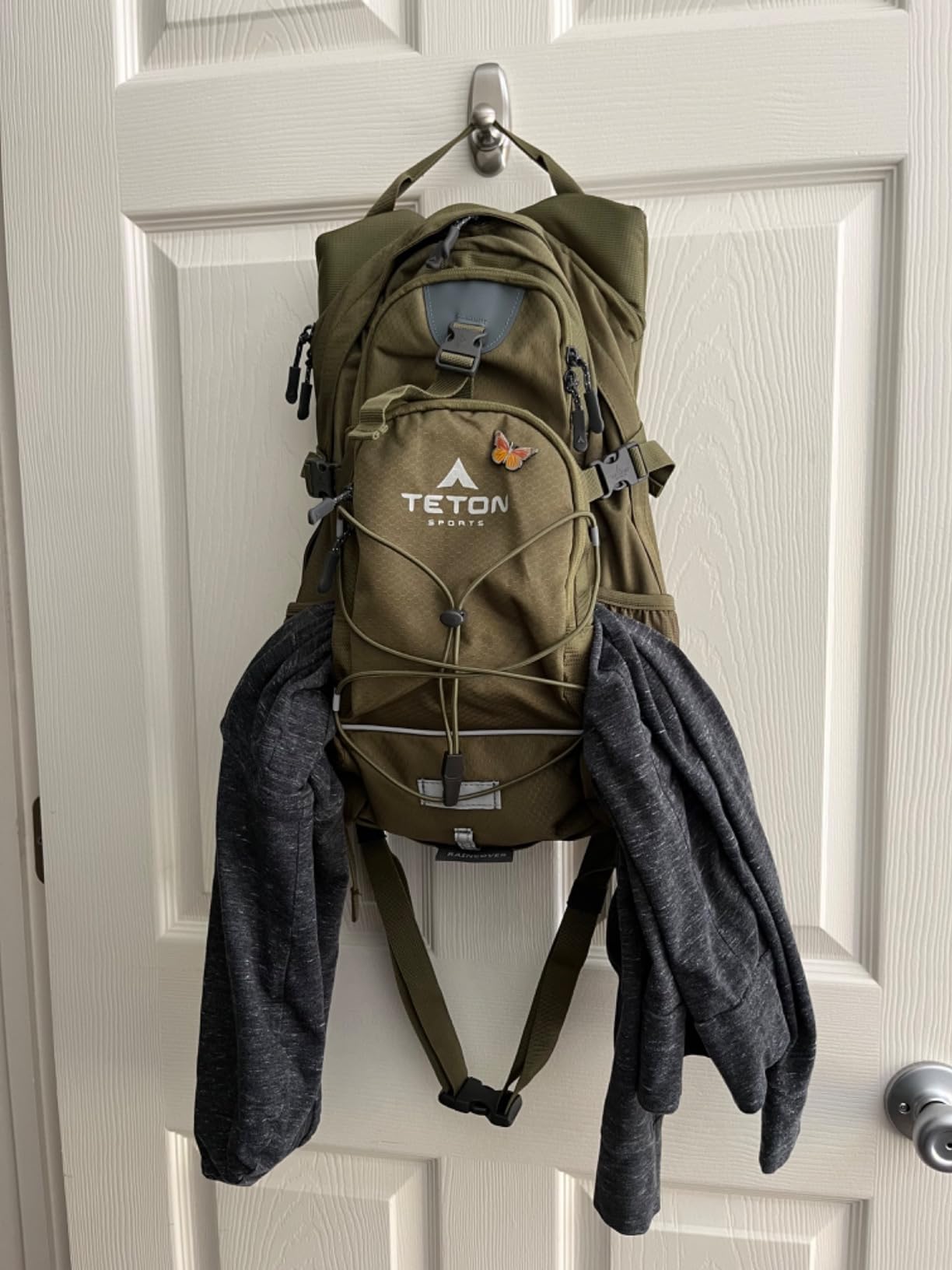
The bladder pocket is insulated, and owners specifically praise that it keeps water cold for hours, which on a summer hike is the difference between water you want to drink and water you tolerate. The low-profile athletic cut and full adjustability suit hiking, running, cycling and biking equally, which is a wider use range than most of the hiking-only packs here.
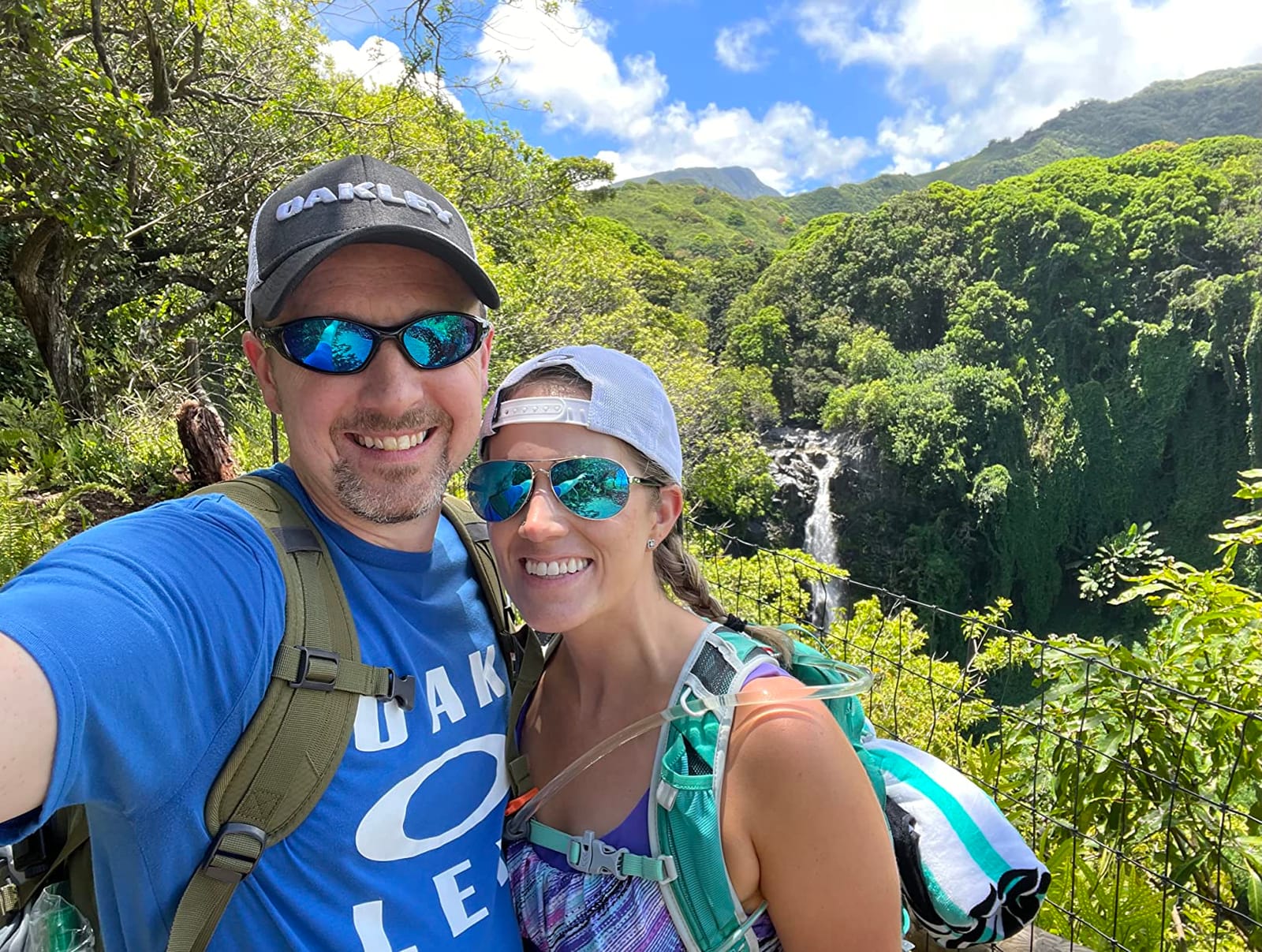
Weather-guarded zippers, a bungee cord system for securing a helmet or jacket and a sewn-in rain cover give this pack more weather readiness than its low price suggests. The cover is sewn in rather than a loose add-on, so it cannot be lost in a side pocket, and the pack carries a limited lifetime warranty, which is unusual at this price.
High-density foam shoulder straps with breathable mesh adjust to fit a range of body types, and 18 and 22 litre sizes are available. The model comes in a burnt orange colourway, and the item dimensions are 10 inches wide by 18.5 high.
The low-profile athletic cut limits capacity for bulky camping gear, and 18 litres is a hydration-day volume rather than a multi-day one. If you are organising a weekend around a reservoir, you will run out of room for a jacket, layers and food.
The hydration hose routing can chafe on the shoulder in some setups, so plan the hose path before a long climb rather than discovering it halfway up. Bladder taste and durability also vary with use, and a reservoir needs regular cleaning regardless of which pack carries it.
Pick the litres first, because capacity drives everything else, and buying a 60 litre pack for a three hour walk is the most common way people end up carrying dead weight. The second decision is frame versus frameless, and the third is fit, which is where the real money is saved or wasted.
Eighteen to 30 litres covers day hiking, a fastpackable overnight and travel use, with 30 litres as the practical ceiling for a single night out. Forty to 50 litres is the overnight and short multi-day range, enough for a sleeping bag, a sleeping pad and two days of food without strapping anything on the outside. Fifty-five to 60 litres is multi-day territory, and it only earns its size if you are genuinely carrying a full load rather than a small one in a large bag.
Across this roundup, 18 to 20 litre picks are the sunhiker, the SKYSPER and the Teton Oasis; 28 to 32 litre picks are the Osprey Sportlite, the Osprey Hikelite and the two Deuter packs; 40 litre picks are the FENGDONG and the Maelstrom; 50 to 60 litre picks are the Loowoko and the Bseash; and the Scout sits at 55 litres.
Torso length is the distance from the top of your iliac crest, the bony shelf at the top of your pelvis, to the base of your neck. Measure it against a wall with a book held at the hip shelf, mark the top, and read the gap. That number determines pack size far more reliably than the litre figure, and it is the reason two packs in this same capacity range can feel completely different.
Buy the pack that puts the hip belt on your hip bones, not your waist. A hip belt that sits low transfers load to your skeleton; one that rides high puts everything on your shoulders and produces the back pain that ends trips early. Two picks here are explicitly cut for narrower torsos, the Deuter Trail 30 at a 17 to 20 inch back length and the Deuter Futura 32, and the Osprey Sportlite and Osprey Hikelite both come in S/M and M/L torso sizes, which is a genuine advantage for shorter or longer frames.
An internal frame with aluminium stays holds the pack off your back, keeps a load stable on uneven ground and distributes weight. A frameless pack is a fabric bag that collapses, which is fine for moderate loads and poor for anything heavy. Frameless ultralight designs also start to feel uncomfortable once the load passes roughly 20 to 25 lb, and that threshold is the number to hold in your head.
Five picks here have real internal frames: the Teton Scout 55 with adjustable, removable aluminium stays, the Osprey Sportlite 30, the Osprey Hikelite 28 on AirSpeed suspension, the Deuter Trail 30 on a Delrin U-frame, and the Deuter Futura 32 on a flexible spring frame. The remaining seven are frameless soft packs, and their fit and load limits are lower.
Capacity tells you space. Weight per litre tells you how the pack will feel. A 40 litre pack at 1.9 pounds gives you roughly 0.85 pounds per litre; a 60 litre pack at 2.4 pounds gives you about 0.8 per litre; the Scout at 1.86 kg across 55 litres is nearly double the weight per litre, and you feel that directly once the load goes above 25 lb.
Low weight per litre usually means less padding and no frame, which is a real trade rather than a free win. High weight per litre usually buys suspension and durability, which pays off if you carry gear often and hurts if you mostly walk with nothing.
Reservoir versus bottles comes down to whether you will actually drink on the move. If you will, the Teton Oasis ships with an insulated 2 litre bladder ready to go, and the Deuter Trail 30 accepts a standard 3 litre system, though no bladder is included. Bottles work well with the Osprey Sportlite stretch pockets, which take a 1 litre Nalgene or a Thermos.
For rain, treat the included cover as a splash guard rather than weather protection, which is the honest read of owner feedback across this whole tier. A pack liner inside the main compartment costs very little and protects your sleeping bag and clothing, and dry bags for electronics cost less than replacing either. Foam back panels soak sweat and stop breathing over multi-day trips, so on hot multi-day walks a mesh or suspended back panel like the Deuter Futura or the Osprey Hikelite is worth paying for.
This budget covers day hiking, overnight trips and light multi-day travel well. It does not cover a hiker carrying 40 lb for a week, a heavy framed pack in a large torso size, or a pack with a lifetime repair guarantee from a brand that services its own products. Buyers in hiking forums regularly note that extended sizes at major retailers can push past this ceiling, which is a genuine conflict between budget and correct fit.
If your trip needs more than a weekend, the practical move is buying a previous-season model or a floor model clearance, which is where size availability opens up. The other option is a framed pack in this roundup plus a separate cover and liner, which costs less than one premium pack and usually serves the same purpose.
The Teton Scout 55L is the best budget hiking backpack in our testing because it is the only pick in this roundup with a genuine internal frame, adjustable and removable aluminium stays, and multi-position torso adjustment. It carries a 4.7 rating across 7375 reviews and is reported by owners to hold 25 to 50 lb without seam or zipper failure. The main trade is weight, at 1.86 kg, which is heavy for its capacity on long loaded days.
Comfort is decided by the hip belt and torso fit, not the brand name. A well-fitted internal frame pack moves roughly 80 percent of the load off your shoulders and onto your hip bones, which is what prevents the back pain that ends hikes early. Measure your torso length from the top of your iliac crest to the base of your neck, then check that the hip belt sits on those bones rather than your waist. The Deuter Futura 32 and Osprey Sportlite 30 both fit two or more torso sizes.
No. Fifty litres is a solid multi-day size and is plenty for two to four nights with a sleeping bag, sleeping pad and food, assuming you are not carrying a full week’s kit or a heavy camera load. Below 30 litres only suits day hiking and a single fastpackable night. Above 60 litres you are usually buying volume you will not fill. Choose 40 to 50 litres for overnight trips and 50 to 60 litres for longer journeys with gear for two.
Among the picks in this roundup, the Teton Scout 55L leads on durability, using 600D polyester diamond ripstop with large buckles and zippers, and owners report it lasting seven years or more of rough handling. The Osprey Sportlite 30 and Hikelite 28 add a manufacturer repair guarantee, which is worth more than fabric denier over a decade. Budget frameless packs show wear in the straps and liners first, typically within a couple of seasons of daily use.
You need one if you will carry more than roughly 20 to 25 lb, or if you walk on uneven ground with a full pack. A frame holds the load away from your back, keeps it stable on descents and transfers weight to your hips. Frameless packs are fine for day hiking, travel and moderate loads, and they save weight and money. Five of the twelve packs here have internal frames; the other seven are frameless soft designs with lower load limits.
If you carry real weight on real trips, the Teton Scout 55L is the pick. It is the only one here with adjustable aluminium stays and multi-position torso fit, it is rated 4.7 across 7375 reviews, and owners report multi-year durability that nothing else in this price tier matches. Accept the 1.86 kg weight or move up a tier, because there is no shortcut around it at this ceiling.
If you want the lightest framed carry for day hikes and one to two night trips, take the Osprey Sportlite 30 at 1.69 pounds with two torso sizes. For ventilation on hot, wet walks, the Deuter Futura 32 is the one I would pick, and if your torso is short or narrow, the Deuter Trail 30 is built for exactly that body. For all-weather travel under a seat, the Osprey Hikelite 28 is the most complete pack here because the rain cover is already in the base pocket.
For weekend and light multi-day trips on a tight budget, the Maelstrom 40 for pocket count, the Loowoko 50L for volume per pound, and the FENGDONG 40L as the straight value choice. Carry-on and travel use goes to the SKYSPER 20L, the lightest day hike goes to the sunhiker 20L at 12.3 ounces, and if you want a reservoir included and insulated, the Teton Oasis 18L is the simplest solution. The Bseash 60L makes sense for car camping and gear hauling rather than for carrying weight on your back.
Every one of these sits at or below the 200 dollar ceiling, so compare the fit first, then the frame, and let the price follow. We re-checked all twelve listings and their owner reviews for 2026, so the specifications above reflect what is currently listed. Our hunting backpack picks cover the quiet, camo-forward side of the market, and our rangefinders under 200 guide rounds out the kit for anyone tracking wildlife on the trail.