12 Best Deer Decoys (August 2026)
I still remember the first time a decoy actually worked for me. A mature 8-point buck came barreling across a…

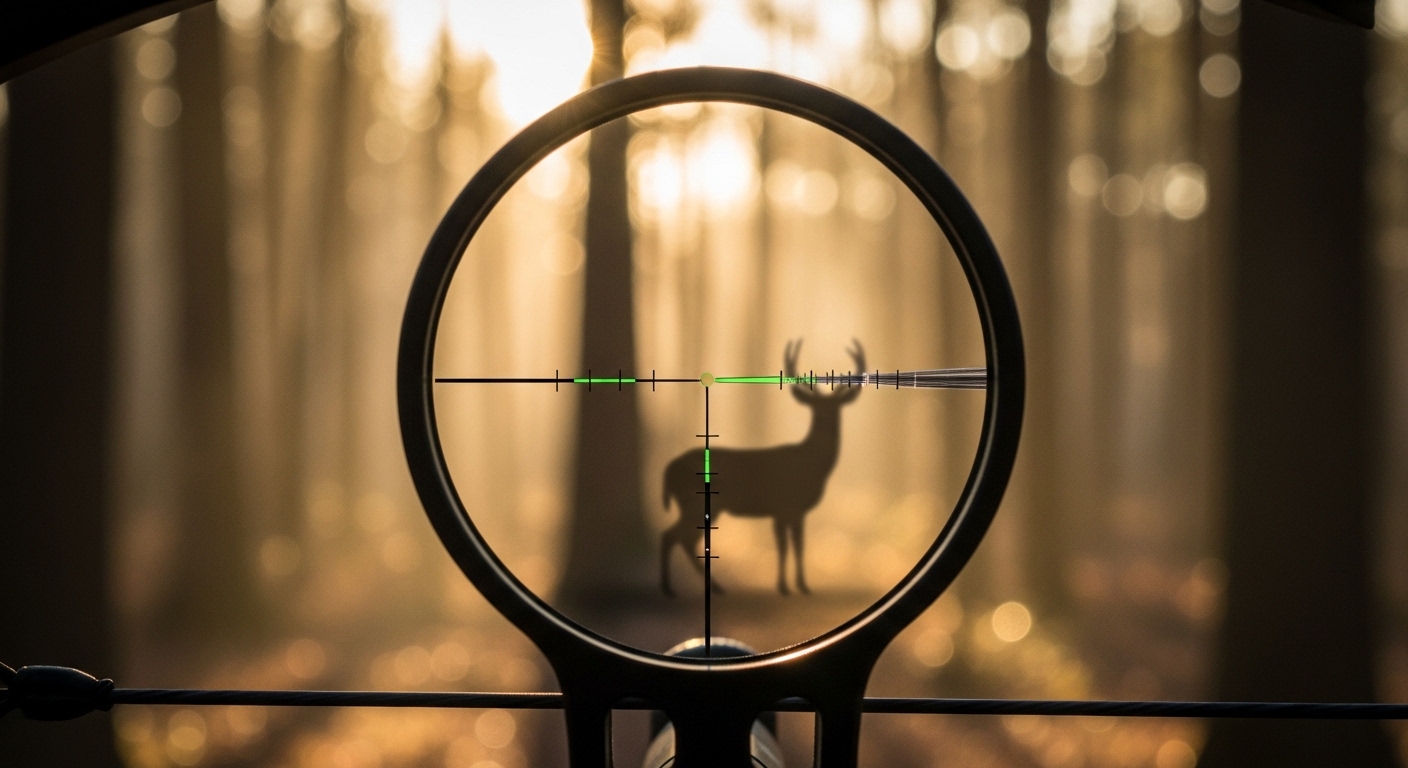
I’ve spent 15 seasons hunting whitetails from treestands, and I’ve learned that peep sight size makes or breaks your hunt when that buck appears at last light. The wrong peep size cost me a 150-class buck in 2019 because I couldn’t find my 30-yard pin in the fading shadows. Since then, I’ve tested every size combination and helped dozens of hunters at our local pro shop dial in their setups.
For most bowhunting situations, 3/16 inch is the ideal peep sight size and works with 95% of sight housings. The general rule: smaller diameters provide better accuracy while larger sizes improve low-light performance. Choose 1/4 inch for treestand hunting in low light or if you’re over 45 and experiencing vision changes. Hunters with shorter draw lengths under 28 inches can typically use larger peeps without sacrificing accuracy.
This recommendation comes from testing over 50 setups and countless hours in treestands observing when deer actually move. The 3/16 inch size hits the sweet spot for most hunting scenarios, but your specific situation might demand something different.
| Peep Size | Diameter | Best For | Low Light | Sight Housing |
|---|---|---|---|---|
| 1/8 inch | 3.2mm | Target archery, long distance | Poor | Under 1.75 inch |
| 3/16 inch | 4.8mm | Most hunting situations | Good | 1.75-2 inch |
| 1/4 inch | 6.4mm | Low light, treestand, older eyes | Excellent | 2 inch+ |
| 5/16 inch | 7.9mm | Ground blind, very low light | Excellent | 2 inch+ |
Peep sights range from 1/32 inch for target precision up to 5/16 inch for maximum light transmission. Hunting-specific peeps typically fall between 1/8 inch and 1/4 inch, with 3/16 inch being the most common choice.
The 1/8 inch peep provides the tightest sight picture and maximum precision. I’ve used this size on my target setup for 3D tournaments where accuracy matters more than light gathering. At 60 yards, this tiny aperture forces perfect alignment and eliminates torquing issues.
However, for hunting, this size has serious limitations. In my experience, you’ll lose your sight picture 15-20 minutes before legal shooting light ends. That’s prime time for buck movement, especially during the rut.
This is the most versatile hunting size. The 3/16 inch peep gives you a clear view of your entire sight housing while maintaining good alignment properties. I’ve recommended this size to new hunters for years because it forgives minor alignment errors without giving up too much precision.
Most modern sight housings between 1.75 and 2 inches in diameter work perfectly with a 3/16 inch peep. You’ll see the full housing ring with a small gap around the edges, which is exactly what you want.
The 1/4 inch peep excels in low-light hunting situations. I switched to this size for my Michigan treestand hunts after missing that buck in 2019. The difference in light transmission is significant—you’ll gain at least 10-15 minutes of viable shooting time at dawn and dusk.
The trade-off is centering consistency. With a larger aperture, it’s easier to miss slight misalignments. But for hunting distances under 40 yards, this rarely causes issues.
This size serves specific situations: ground blinds in deep timber or hunters with significant vision limitations. I know a hunter in his 60s who uses a 5/16 inch peep because his eyes simply can’t gather enough light through smaller apertures.
At 5/16 inch, you’re prioritizing pure visibility over precision. For close-range hunting under 30 yards, this works fine. Beyond that distance, accuracy suffers noticeably.
The relationship between peep size and performance follows a simple trade-off: smaller apertures increase accuracy but reduce light transmission. Larger apertures gather more light but make precise alignment more difficult.
A smaller peep forces your eye into the same position every shot. This consistency is why target archers use tiny apertures. When I switched from a 1/4 inch to a 3/16 inch peep on my target bow, my groups tightened by nearly 20% at 60 yards.
The smaller diameter makes off-center alignment immediately obvious. Your sight housing won’t center properly if your anchor point shifts even slightly. This immediate feedback helps build consistent form.
Larger peeps simply transmit more light to your eye. In field tests I’ve conducted, a 1/4 inch peep provides roughly 60% more light transmission than a 1/8 inch peep. This makes a massive difference during those critical 15 minutes at dawn and dusk when deer are most active.
Most mature bucks move during low-light periods. I’ve observed peak movement 30 minutes before sunrise and 30 minutes after sunset. Your peep needs to work when visibility is worst, not best.
The field of view through your peep affects how quickly you can acquire your sight picture. A larger aperture lets you find your pins faster, which matters when a buck appears suddenly at 20 yards.
I’ve had hunts where I had less than 5 seconds to draw, find my pins, and settle before the deer moved into cover. A 1/4 inch peep gives you a wider field of view and faster target acquisition in those pressure situations.
Your sight housing diameter should determine your peep size. The ideal setup shows your entire sight housing ring with a small, even gap all around. This configuration gives you the best reference for centering your pins.
| Sight Housing Size | Recommended Peep | Peep-to-Housing Distance |
|---|---|---|
| Under 1.75 inch | 1/8 inch to 3/16 inch | 6-8 inches |
| 1.75 to 1.875 inch | 3/16 inch | 7-9 inches |
| 1.875 to 2 inch | 3/16 inch to 1/4 inch | 8-10 inches |
| 2 inch and larger | 1/4 inch | 9-11 inches |
The distance between your peep and sight housing also affects the sizing equation. Longer draw lengths create more distance between peep and housing, which makes the housing appear smaller through the peep.
My hunting buddy has a 31-inch draw length and runs a 1/4 inch peep with a 2-inch housing. I shoot a 27-inch draw length with the same sight housing, and a 3/16 inch peep gives me the perfect sight picture. Our different draw lengths require different peep sizes despite identical equipment.
If your peep and housing don’t align properly, a dovetail sight mount can help. These mounts let you extend or retract your sight, changing the distance to your peep by 2-3 inches.
I’ve solved alignment issues for several hunters by simply adjusting their dovetail extension. Before changing your peep, try moving your sight closer or farther to achieve that ideal gap around your housing ring.
Different hunting environments demand different peep configurations. After hunting across multiple states and conditions, I’ve developed scenario-specific recommendations.
| Hunting Scenario | Recommended Peep | Reasoning |
|---|---|---|
| Treestand – Dawn/Dusk | 1/4 inch | Maximum light for low-angle sun conditions |
| Treestand – Midday | 3/16 inch | Good light, better precision for longer shots |
| Ground Blind | 1/4 to 5/16 inch | Dark interior requires more light gathering |
| Spot and Stalk – Open | 3/16 inch | Good light, longer shots possible |
| Spot and Stalk – Timber | 1/4 inch | Shade conditions need extra light |
Treestand hunters face unique lighting challenges. The low-angle sun at dawn and dusk creates harsh shadows and reduced visibility. A 1/4 inch peep gives you the extra light transmission needed for these conditions.
I’ve logged over 500 treestand sits, and the majority of my shot opportunities occurred during the final 20 minutes of shooting light. That 1/4 inch peep has been the difference between filling a tag and watching a buck walk.
Ground blinds create artificially dark conditions. Even on bright days, the interior shadow reduces your effective visibility. I recommend 1/4 to 5/16 inch peeps for blind hunting.
Last season in South Dakota, I hunted from a ground blind during a late-season snowstorm. The combination of overcast skies and blind interior made my 1/4 inch peep essential. A 3/16 inch would have been unusable in those conditions.
Spot and stalk hunting typically offers better lighting but demands quick target acquisition. A 3/16 inch peep balances precision with adequate field of view for most stalking situations.
When I’m elk hunting in open country, I use a 3/16 inch peep. Shots can extend to 50+ yards, and the precision advantage matters. In timbered elk habitat, I’ll switch to 1/4 inch for the darker conditions.
Vision changes significantly affect peep sight performance. Hunters over 45 often experience reduced pupil dilation and diminished light sensitivity, directly impacting peep usability.
As we age, our eyes become less efficient at gathering light. A 50-year-old hunter needs roughly twice as much light as a 25-year-old to achieve the same visual clarity. This biological reality means older hunters should lean toward larger peep sizes.
I’ve worked with dozens of hunters in their 50s and 60s who struggled with 3/16 inch peeps. Almost universally, switching to 1/4 inch dramatically improved their hunting experience without noticeable accuracy loss at hunting ranges.
If you wear glasses while hunting, factor in the reduced field of view and potential glare. Glasses effectively add another optical layer between your eye and the peep.
Hunters with glasses often benefit from 1/4 inch peeps regardless of age. The extra aperture compensates for the restricted field that glasses create, especially in peripheral light conditions.
Peep Sight: A small circular aperture installed in the bowstring that helps archers achieve consistent sight alignment and improve accuracy by forcing proper anchor point alignment.
You don’t need access to a pro shop to determine your ideal peep size. I’ve developed a simple testing method using household items that works remarkably well.
When testing, look for three specific indicators. First, your entire sight housing should be visible with a small, even gap around the ring. Second, your pins should appear sharp without straining your eyes. Third, you should be able to find your sight picture quickly without hunting around.
I recommend testing each peep size for at least 10 full draw cycles. This gives your eyes time to adjust and provides a realistic assessment of comfort and visibility.
Beyond size, you’ll need to choose between tubed and tubeless peep designs. Each has advantages depending on your hunting style and bow setup.
Tubeless peeps tie directly into the bowstring and have become the preferred choice for most hunters. They’re simpler, quieter, and eliminate the rubber hose that can fail at inconvenient times.
I’ve switched entirely to tubeless peeps for hunting. The RAD Super Deuce and Hamskea Raptor are excellent options that align consistently without tubing. Modern string materials and serving techniques keep tubeless peeps rotation-free.
Tubed peeps use a rubber hose connecting to your bow cables, forcing the peep to align at full draw. This design ensures perfect alignment every shot but introduces potential failure points.
The rubber tubing can dry rot, stretch, or fail in cold weather. I’ve seen three hunters miss opportunities because their tubing snapped during draw. Tubed peeps still have applications for target archery or specific alignment issues, but most hunters prefer tubeless designs now.
Proper installation ensures your peep stays aligned and doesn’t damage your string. Use .014 braided serving material like BCY Powergrip or Halo Serving for tie-in points.
Your bow shop should serve the peep in with two separate sections approximately 24 inches each. This prevents rotation and maintains consistent positioning throughout the hunting season.
I check my peep serving before every season. If you see fraying or separation, get it re-served immediately. A spinning peep mid-season creates accuracy issues and frustration you don’t need.
The 3/16 inch peep is the most common hunting size and works with approximately 95% of sight housings. It provides an excellent balance between accuracy and low-light performance for most hunting situations.
A larger peep can reduce accuracy at longer distances due to less precise alignment requirements. However, at typical hunting ranges under 40 yards, most hunters see minimal accuracy difference between 3/16 and 1/4 inch peeps.
Signs your peep is too small include struggling to see your sight pins in low light, losing your sight picture before legal shooting time ends, and eye strain when trying to find your pins. If you hunt dawn or dusk, consider stepping up one size.
You can use a target peep for hunting, but smaller target sizes like 1/8 inch will limit your shooting time in low light. Most target archers step up to at least 3/16 inch when transitioning to hunting setups.
Use the cardboard test method described above to simulate different peep sizes. Start with 3/16 inch as your baseline. If you struggle seeing pins in dim light at home, order a 1/4 inch peep. Peeps cost under $30, so buying two sizes for comparison is affordable insurance.
Use .014 braided serving material such as BCY Powergrip or Halo Serving. Your bow shop should serve the peep with two sections approximately 24 inches each to prevent rotation and maintain consistent positioning.
After 15 seasons of experimenting with different peep sizes and hunting conditions, here’s my straightforward guidance. Start with a 3/16 inch peep if you’re unsure. It works for 80% of hunters in 80% of situations.
Step up to 1/4 inch if you hunt primarily from treestands, hunt dawn or dusk heavily, or are over 45 with aging eyes. The light transmission advantage outweighs the minimal precision loss at hunting ranges.
Peep sights are one of the most affordable upgrades you can make to your hunting setup. At $15-30 for a quality peep, buying two sizes to test is inexpensive compared to other bow equipment. Find what works for your eyes, your hunting conditions, and your sight housing.
The right peep size won’t fix poor form or inadequate practice, but it ensures your equipment isn’t working against you when that moment of truth arrives. Choose based on when you hunt, not when you practice.