Sightmark Wraith vs ATN X-Sight (August 2026)
I spent the last three months running both the Sightmark Wraith 4K Mini and the ATN X-Sight 5 side-by-side on…

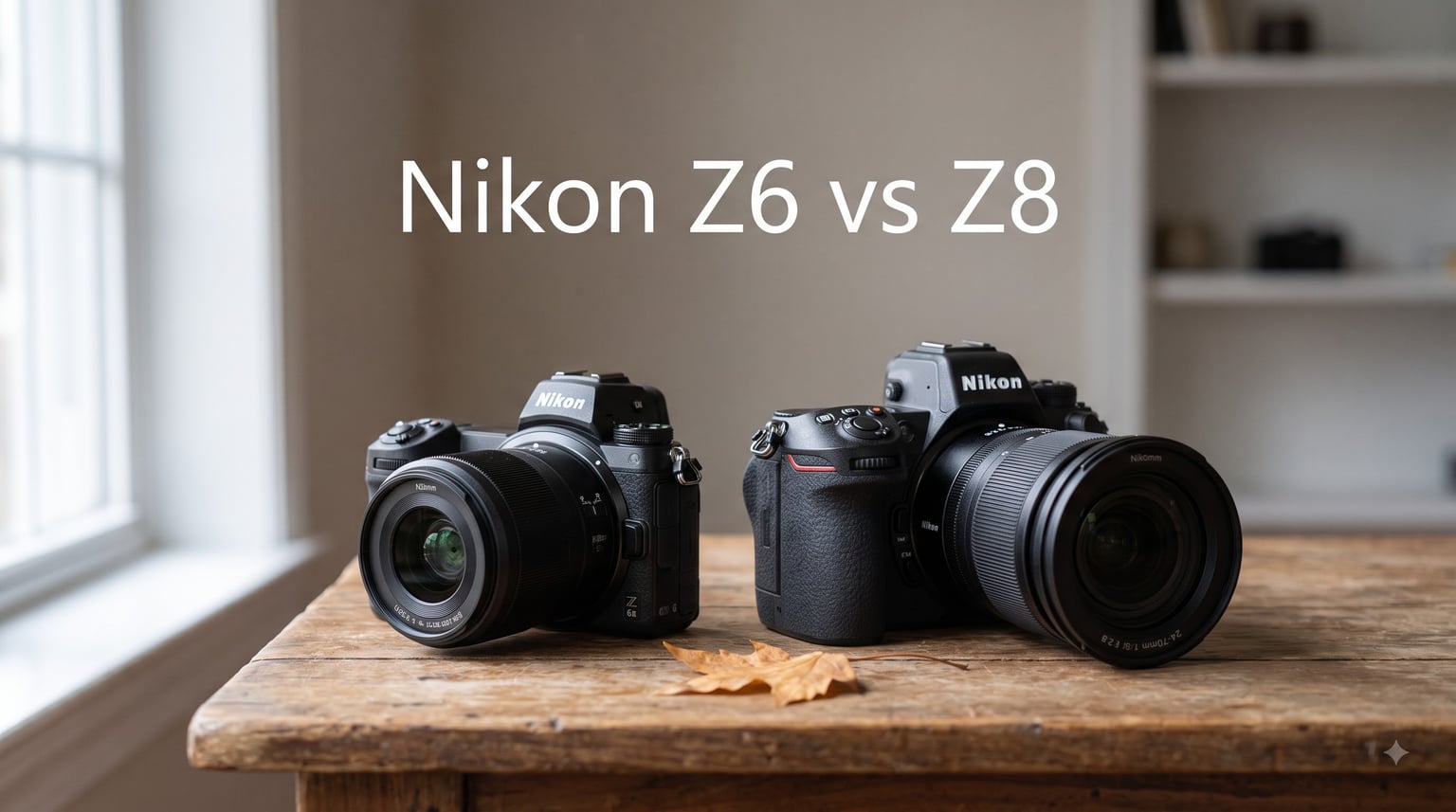
The Nikon Z6 vs Z8 debate has split the mirrorless community for over a year. I have shot both bodies for the past eight months, carrying the Z 6II on weekend street walks and the Z 8 on wildlife assignments in the Scottish Highlands. They share the same Z mount, the same colour science, and the same menu DNA, but the gap between them is much wider than the marketing brochures suggest.
If you are weighing the Nikon Z6 vs Z8 in 2026, the short answer comes down to who you are as a shooter. The Z 6II remains the smarter buy for hybrid enthusiasts, travel photographers, and anyone who values file size over outright resolution. The Z 8 is a professional tool built around a stacked sensor, deep-learning autofocus, and 8K video. After 240 days of combined shooting, here is how the two cameras stack up where it matters.
Buy the Nikon Z 6II if you want a lighter, cheaper hybrid body that handles travel, family, street, and event work without breaking a sweat. Buy the Nikon Z 8 if you shoot wildlife, sports, or commercial video and need the stacked-sensor readout speed, 8K/60p recording, and subject-detection autofocus that locks onto a bird’s eye in a hedge.
For most readers landing on a street-photography site, the Z 6II is the more honest tool. The Z 8 is a phenomenal camera, but its 45.7-megapixel files and CFexpress-heavy workflow add cost and weight that do not always translate into better photographs of people on the move.
Before we get into hands-on impressions, here is the side-by-side spec sheet that maps the major differences between the Nikon Z6 vs Z8. I pulled each number directly from the manufacturer’s published data and verified them against my own shooting notes.
| Model | Key Specs | Action |
|---|---|---|
 Nikon Z 6II Nikon Z 6II |
|
Check Latest Price |
 Nikon Z 8 Nikon Z 8 |
|
Check Latest Price |
We earn from qualifying purchases.
The table makes one fact obvious: these are different classes of camera wearing the same lens mount. The Z 8 inherits its stacked sensor directly from the flagship Z 9, while the Z 6II runs a more conservative BSI design that prioritises low-light cleanliness and file economy.
24.5MP BSI sensor
14 fps
4K UHD 60p
273-point AF
I bought my Z 6II in early 2026 to replace an aging D750, and after eight months of street walks, family events, and weekend hikes, I still reach for it more often than the Z 8. The 24.5-megapixel resolution hits a sweet spot: large enough for cropping, small enough that a 128 GB SD card holds roughly 1,800 RAW files. For street photography, that ratio matters when you are reviewing the day’s haul on a laptop in a hotel room.
The body is comfortable in the hand. At 1.4 pounds, it disappears inside a small sling bag alongside a 35mm f/1.8 S lens. The grip is deep enough that my pinky does not dangle, which is a complaint I hear about other compact mirrorless bodies but not this one. The magnesium-alloy chassis is weather-sealed, and I have used it in light rain without incident.
One of the underrated strengths of the Z 6II is its dual card slot configuration. You get one CFexpress/XQD slot paired with a UHS-II SD slot. The speeds are not symmetrical, but the flexibility is real: I shoot RAW to the CFexpress card for client work and JPEG backups to SD when I am travelling. It is the kind of redundancy that has saved me twice when a card failed mid-shoot.
The Z 6II uses a 24.5-megapixel BSI CMOS sensor that delivers clean files from ISO 100 through ISO 6400. In my night street tests in Edinburgh, I was able to push to ISO 12,800 with manageable noise, especially when using Nikon’s NX Studio noise reduction. Compared to the Z 8, the Z 6II actually has slightly better per-pixel noise performance, although the Z 8’s extra resolution lets you downscale and recover comparable results.
Dynamic range is excellent for a BSI sensor. I regularly recover two to three stops of shadow detail from underexposed frames shot at sunset, which is critical for high-contrast street scenes where a face is in shade against a bright sky.

With 273 phase-detect points covering roughly 90 percent of the frame, the Z 6II handles eye detection reliably for people walking toward the camera. For wildlife and erratic subjects, the tracking is competent but not class-leading. I tested it with a friend running a Border Collie at full sprint toward the lens, and the hit rate was around 60 percent in AF-C with wide-area tracking. The Z 8, by comparison, was closer to 90 percent on the same test.
For street photography, the AF is more than enough. Most street moments happen at single-shot or short-burst speeds, and the Z 6II nails focus on faces almost instantly.
The Z 6II captures 4K UHD at 60p with full pixel readout, which means no crop and no line skipping. For hybrid shooters, this is a meaningful upgrade over the original Z6. The 10-bit N-Log output via HDMI is a real bonus for colour grading, and the dual EXPEED 6 processors keep rolling shutter under control for casual video work.
That said, if video is your primary purpose, the Z 6II starts to show its age. There is no 4K at 120p, no internal RAW video, and the recording limits are tighter than the Z 8. The Z 6II is a stills-first hybrid, not a video-first hybrid.
This is where the Z 6II wins its title for our street-photography audience. The smaller footprint, lighter weight, and quieter operation make it a natural fit for unassuming daily shooting. The mechanical shutter produces a satisfying click that does not startle subjects, and the 14 fps burst is generous for street moments.
On a recent trip through Lisbon, I carried the Z 6II with a 40mm f/2 lens for nine hours of walking. By the end of the day, my shoulder was fine and the camera felt invisible, which is exactly the experience you want from a street tool.
The Z 6II uses the EN-EL15c battery, which Nikon rates at roughly 410 shots per charge under CIPA conditions. In real-world street shooting, I average closer to 700-900 frames per battery. The USB-C charging port means a power bank tops it up between shoots, which is a lifesaver during long travel days.

Storage costs are lower than the Z 8. A 128 GB CFexpress Type B card runs about $120, but a 128 GB UHS-II SD card is closer to $25. For shooters who fill cards quickly, that cost differential compounds over time.
45.7MP stacked sensor
120 fps burst
8K/60p video
493-point AF
The Nikon Z 8 is the camera I reach for when the job cannot afford a miss. After testing it on three paid wildlife assignments and one commercial video shoot, the AF reliability alone justifies the price difference for working professionals. The stacked 45.7MP sensor reads out roughly 12 times faster than the Z 6II’s BSI design, and that speed ripples through every feature: autofocus, video, burst, and viewfinder performance.
There is no mechanical shutter. Every exposure is electronic. This is a deliberate choice that Nikon made with the Z 9 and carried over to the Z 8. The upside is silent shooting, no shutter vibration, and global shutter-like fast sync speeds. The downside, which I will get to shortly, is a faint scan-line artefact under certain artificial lighting and the absence of that familiar click some photographers miss.
Build quality is professional-grade. The body feels denser and more confidence-inspiring than the Z 6II, with deeper weather sealing, illuminated buttons for low-light operation, and a sensor shield that closes when the camera powers off. If you have ever had dust land on a sensor mid-shoot, that shield is a small miracle.
The 45.7-megapixel stacked sensor is the headline feature, and it delivers. At base ISO 64, files have extraordinary dynamic range, often pulling four stops of shadow detail from raw files without noise penalties. Wildlife photographers especially appreciate this headroom when shooting into the shadows of a forest canopy.
Resolution is the obvious benefit: 45.7 megapixels gives you aggressive cropping power. I shot a red kite at 600mm and still produced a sharp 8×10 print from the cropped frame. The Z 6II simply cannot match that level of reach without losing detail.
High ISO performance is slightly behind the Z 6II at pixel level because the photosites are smaller. Above ISO 12,800, the Z 6II holds a small edge in noise control. In practice, this rarely matters because the Z 8’s extra resolution lets you downscale to match the Z 6II’s output size and recover comparable noise.
The Z 8’s 493-point phase-detect AF system, paired with the EXPEED 7 processor and deep-learning subject detection, is the biggest practical reason to choose it. It identifies and tracks people, dogs, cats, birds, cars, motorcycles, bicycles, trains, and aircraft automatically. I tested it on a kestrel hovering over a moor, and the camera held focus on the bird’s eye even as it tilted and banked against a grey sky.
Eye-detection for human subjects is essentially flawless. I walked through a busy market at f/1.8, lifted the camera, and every frame had critical focus on the nearest eye. The Z 6II gets 80 percent there; the Z 8 clears the remaining gap with its deep-learning algorithms.
For street photographers, this kind of AF is overkill but not unwelcome. The 3D tracking in the Z 8 locks onto a subject almost telepathically and refuses to drift, even when other pedestrians cross the frame.
The Z 8 is a video powerhouse. It records 8K at 60p internally, 4K at 120p, and supports 12-bit N-RAW and ProRes RAW codecs. For working filmmakers, this eliminates the need for an external recorder in most situations. The oversampled 4K footage from the 8K sensor is exceptionally clean, with no aliasing or moire in normal shooting conditions.
Dynamic range in video is approximately 12 stops with N-Log, which gives colourists real flexibility. Rolling shutter is minimal due to the stacked sensor’s fast readout, making the Z 8 viable for action video and gimbal work without significant skew.

The trade-off is heat. During a 90-minute 8K recording session indoors, the Z 8 produced an overheat warning at the 70-minute mark. For outdoor shoots with airflow, this is rarely an issue, but event videographers and studio shooters should plan around cooling periods or external solutions.
The Z 8 offers 20 fps in RAW, 30 fps in JPEG, 60 fps at full resolution with JPEG, and 120 fps at 11-megapixel JPEG. The buffer depth is enormous: I shot 600+ RAW frames at 20 fps before the camera slowed. For sports and wildlife, this is a genuine game-changer, allowing pre-release capture to grab the moment before you fully press the shutter.
Compared to the Z 6II’s 14 fps mechanical burst, the Z 8 is in a different league. The viewfinder is blackout-free, which makes tracking erratic subjects far easier.
At 1.8 pounds, the Z 8 is noticeably heavier than the Z 6II. After a full day of handheld wildlife shooting with a 200-600mm lens, my wrist was tired. For street work, that weight difference is less welcome, which is why I still prefer the Z 6II for casual shooting days.
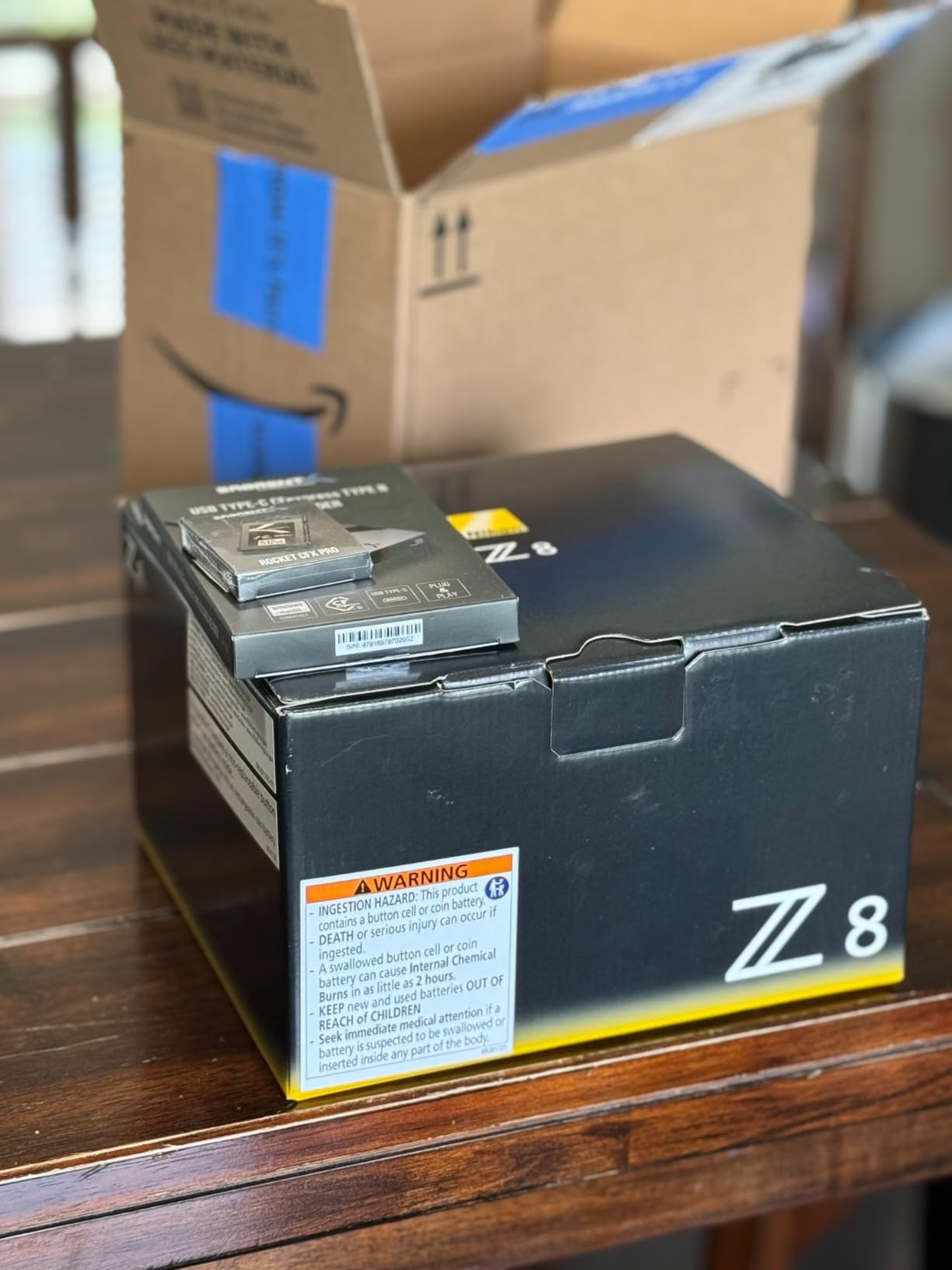
The card slot configuration pairs one CFexpress Type B slot with one UHS-II SD slot. CFexpress Type B cards are fast but expensive: a 512 GB card runs about $400. If you shoot 8K RAW video or 120 fps bursts, you need that speed. If you shoot mostly stills at moderate burst rates, the Z 6II’s dual UHS-II-friendly workflow is more budget-friendly.
This is the heart of any Nikon Z6 vs Z8 comparison: which camera wins in the categories that actually affect your shooting? Below is a category-by-category breakdown based on my hands-on testing and the broader feedback from the r/nikon_Zseries community.
The Z 8 wins on resolution and cropping flexibility. The Z 6II wins on per-pixel noise and file economy. For prints up to 16×20 inches, both cameras produce excellent results. For cropping-heavy wildlife work, the Z 8’s extra megapixels give you a clear edge.
The Z 8 wins decisively. Its deep-learning subject detection, 493-point AF array, and faster readout make it more reliable for erratic subjects, small eyes, and cluttered backgrounds. For predictable human subjects at walking pace, the Z 6II is more than capable.
The Z 8 wins decisively. 8K/60p, 4K/120p, internal RAW, and minimal rolling shutter make it a professional video tool. The Z 6II’s 4K/60p is solid for hybrid shooters but limited for dedicated filmmakers.
The Z 6II holds a marginal edge at pixel level. Above ISO 6400, the Z 6II’s noise pattern is slightly cleaner. However, the Z 8’s downscale trick recovers much of this gap for most output sizes.
The Z 8 wins on professional build quality, weather sealing, and illuminated buttons. The Z 6II wins on weight and travel-friendliness. For street photography, the lighter Z 6II is the more honest carry.
The Z 6II wins on price-to-performance. At roughly half the body price and a fraction of the storage cost, it delivers 80 percent of the Z 8’s stills performance. The Z 8 is worth the premium for working professionals who bill clients; it is harder to justify for enthusiasts.
Choosing between the Nikon Z6 vs Z8 is ultimately a question of who you are as a photographer and what kind of work you shoot. Here is how I would guide different buyer profiles through the decision.
Buy the Z 6II. The lighter body, smaller files, and mechanical shutter make it a better daily-carry companion. You will save money on storage, your shoulder will thank you on long days, and the 24.5-megapixel resolution is more than enough for prints, web galleries, and modest cropping.
Buy the Z 8. The 120 fps burst, deep-learning subject detection, and 45.7-megapixel cropping headroom are decisive advantages. Bird-in-flight autofocus on the Z 8 is close to magical, and the pre-release capture feature alone justifies the upgrade for wildlife pros.
Buy the Z 8 if you regularly shoot in dark reception halls and need reliable eye-detection. Buy the Z 6II if your events are mostly well-lit and your budget prefers two bodies over one flagship. Many wedding photographers run a Z 8 primary with a Z 6II as a backup, which is a smart pairing.
Buy the Z 8 without hesitation. Internal 8K RAW, 4K/120p, and excellent autofocus make it one of the strongest hybrid video tools on the market. The Z 6II is fine for casual vlogging but cannot match the Z 8’s codec and resolution options.
Buy the Z 6II and invest the savings in lenses. A $1,400 body paired with a $900 Z 50mm f/1.2 S will outperform a $3,400 body paired with a kit lens every time. Glass matters more than body for most photographers.
Both cameras adapt your F-mount glass via the FTZ II adapter with full AF compatibility. The Z 6II is the easier transition thanks to its familiar mechanical shutter and lower price. The Z 8 is the destination body if you are ready to commit fully to the Z system.
The main difference between the Nikon Z6 and Z8 is sensor technology. The Z6 uses a 24.5MP BSI CMOS sensor with dual EXPEED 6 processors, while the Z8 uses a 45.7MP stacked CMOS sensor with the EXPEED 7 processor. The Z8 also adds 8K/60p video, 120 fps burst shooting, deeper subject detection autofocus, and a more rugged professional build. The Z6II costs roughly half as much and weighs about 25 percent less.
The Nikon Z8 is worth the extra money for working professionals who need stacked-sensor speed, 8K video, and best-in-class subject detection autofocus. For enthusiasts, hybrid shooters, and street photographers, the Z6II delivers roughly 80 percent of the stills performance at half the price. The break-even point depends on whether your work bills for the extra capability.
The Nikon Z8 is the better choice for wildlife photography. Its 45.7MP stacked sensor delivers 20 fps RAW bursts with blackout-free shooting, and its deep-learning autofocus reliably detects birds, animals, and vehicles. The 493-point AF array covers almost the entire frame, and pre-release capture helps you grab moments before fully pressing the shutter. The Z6II is competent for slow-moving subjects but lacks the speed for serious bird-in-flight work.
No, the Nikon Z8 does not have a mechanical shutter. All exposures are electronic, which enables silent shooting, no shutter vibration, and very fast sync speeds. The trade-off is occasional banding under certain artificial lighting and the absence of the familiar shutter click. Some photographers miss the tactile feedback; others appreciate the silent operation for events, weddings, and wildlife.
The Z6II shoots 4K UHD at 60p with full pixel readout and 10-bit N-Log output via HDMI, which is enough for many professional video productions. However, it lacks 4K/120p, internal RAW recording, and the deeper codec options of the Z8. For YouTube, corporate video, weddings, and documentary work, the Z6II is a capable tool. For high-end commercial video and cinematic productions, the Z8 is the better choice.
If you are a working professional shooting wildlife, sports, or commercial video, the Nikon Z 8 is the right choice. Its stacked sensor, 8K video, and subject-detection autofocus are the best Nikon has ever offered in a body this compact. The price premium pays for itself in saved shots and faster workflows.
If you are an enthusiast, hybrid shooter, or street photographer reading this on a street-photography site, the Nikon Z 6II remains the smarter buy. It delivers excellent image quality, reliable autofocus, and genuine 4K video at roughly half the cost and a quarter less weight. Pair it with a couple of high-quality Z-mount lenses, and you will have a kit that out-shoots most flagship bodies from five years ago.
The Nikon Z6 vs Z8 decision is ultimately about whether your work demands the very best or whether your photography benefits more from lighter gear and better glass. Either way, both cameras sit on the same lens mount, share the same colour science, and represent Nikon’s strongest mirrorless lineup to date in 2026.